
Kristin Thought She Was Burned Out; It Was Stage 4 Ovarian Cancer
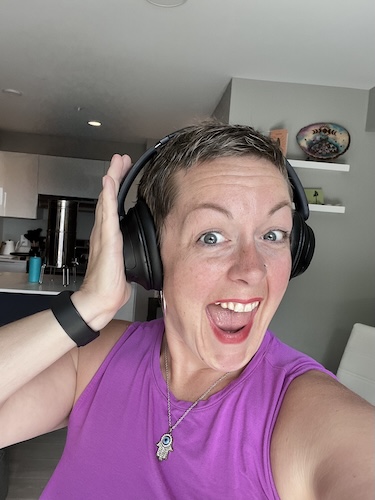
Kristin spent months chasing an explanation for symptoms that never seemed to add up. She was 43, ran her own business, and coached CrossFit. She was short of breath during workouts. Her period would not stop. The bloating got worse every evening. Every doctor she saw in her home province of British Columbia, Canada, offered a smaller answer than what was actually happening: anxiety, exercise-induced asthma, irritable bowel. None of it explained why her body kept getting worse. It took a middle-of-the-night drive to the emergency room, four different doctors in six hours, and her husband, Donovan, running 4 kilometers to be there, before a doctor finally told her what it looked like: stage 4 ovarian cancer. A biopsy later confirmed high-grade serous carcinoma, one of the most aggressive subtypes.
Interviewed by: Taylor Scheib
Edited by: Chris Sanchez
What followed was a race against a healthcare system that told her to move fast while making that nearly impossible. Weeks passed waiting for a referral while fluid built up in her lungs and abdomen, and Kristin lost 10 pounds she could not spare. When a doctor told her that, if she had the means, he would get treatment outside the country, she and Donovan decided to act. She left British Columbia in a wheelchair, crossed into the United States, and was enrolled in VA health care within days. Within two weeks, she was starting chemotherapy at Fred Hutch Cancer Center in Seattle.
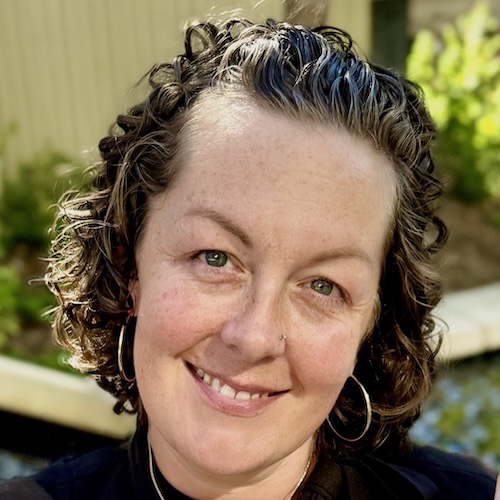
To treat her advanced ovarian cancer, her care team recommended three rounds of chemotherapy, then a 14-hour debulking surgery to remove as much cancer as possible. The operation also included a heated chemotherapy wash of her abdomen. Then she had three more rounds of chemo. A bowel obstruction during recovery nearly killed her, and she and Donovan made the call to discharge her from a Canadian hospital and transport her back to Washington for emergency surgery.
When the cancer came back that December, her doctor told her she would be managing it for the rest of her life. She and Donovan made the move to the United States permanent. They settled in Fort Worth, Texas, to be near VA-covered care and a clinical trial combining the drug mirvetuximab soravtansine with a PARP inhibitor. This drug blocks a protein that can help cancer cells thrive by helping repair damage to their DNA.
Today, Kristin manages the cancer as a lifelong condition, flying to Denver every three weeks for trial treatment. She describes the experience as one that deepened her faith, reshaped her relationship with her adult daughter, and left her, on balance, happier than she was before her diagnosis.
Watch Kristin’s video and read the edited transcript of her interview.
- For six months, Kristin’s shortness of breath, bloating, and irregular bleeding were treated as separate, minor complaints until an ER doctor finally connected them to stage 4 ovarian cancer. Persistent symptoms that show up in different parts of the body at the same time are worth asking a doctor to investigate together, not one at a time.
- Kristin credits her husband, Donovan, with keeping her alive by asking the questions she was too exhausted or scared to ask herself, from pushing an ER doctor to scan her abdomen to chasing down nurses over her lab results during her bowel obstruction. Having someone in the room who can advocate for you, especially when you are too sick to do it yourself, can change the outcome of your care.
- Kristin’s care in Canada was gated behind referrals and waitlists even after doctors told her she needed to move quickly, so she crossed the border, enrolled in VA health care, and started chemotherapy within days. Being told to act fast and having a system built to move that fast are not always the same thing, and it is worth asking what your real options are outside the system in front of you.
- The same illness that once made Kristin believe she had two weeks to live also introduced her and Donovan to their Orthodox Christian faith. This has helped her stay grounded through a recurrence, a permanent move to another country, and a treatment plan she now expects to need for the rest of her life. She describes herself as a fundamentally happier person now than she was before her diagnosis.
- Kristin’s advice to anyone hearing her story is direct: Do not wait for a diagnosis, a remission, or someday to start living the life you actually want. As she puts it, the bucket list you keep putting off has a way of turning into deathbed regret.
Kristin’s Diagnosis Facts
- Name: Kristin L.
- Age at Diagnosis:
- 43
- Diagnosis:
- Ovarian Cancer (High-Grade Serous Carcinoma)
- Staging:
- Stage 4 (Metastatic)
- Symptoms:
- Fatigue
- Bloating
- Shortness of breath
- Increased frequency of urination
- Chest pains
- Bleeding for 30 days straight
- Steady pain on left side
- Treatments:
- Chemotherapy: paclitaxel, carboplatin, gemcitabine, doxorubicin
- Surgery: debulking surgery with hyperthermic intraperitoneal chemotherapy (HIPEC)
- Monoclonal antibody: bevacizumab
- Clinical trial: mirvetuximab soravtansine (antibody-drug conjugate) and a PARP inhibitor
This is not medical advice. Please consult with your healthcare provider to make informed treatment decisions.
- Kristin’s Diagnosis Facts
- Diagnosed with stage 4 ovarian cancer (high-grade serous carcinoma) after months of symptoms
- Why self-advocacy wasn’t enough on its own
- Looking back: The ovarian cancer that was already there before anyone called it cancer
- The morning everything about my life stopped mattering, except staying alive
- Leaving home in a wheelchair, not knowing if I’d come back
- The first doctor who said, “I’m going to take care of you,” and meant it
- Pulling an IV out to save my own life: The bowel obstruction that wouldn’t wait
- When the cancer came back, I decided to leave Canada for good
- Choosing Fort Worth: Veterans’ benefits, affordability, and a drug trial worth chasing
- Flying to Denver every three weeks: Making peace with clinical trials
- Finding God on the way back from the edge
- Being vulnerable in front of my daughter so she wouldn’t be blindsided
- The last thing I want you to know: Your life is a precious gift
- Hear from people living with ovarian cancer
Diagnosed with stage 4 ovarian cancer (high-grade serous carcinoma) after months of symptoms
My name is Kristin. I was diagnosed with stage 4 ovarian cancer, high-grade serous carcinoma, in September 2023.
I had a lot of symptoms that seemed disconnected and vague, and I think a lot of women can relate to that. By March, I was starting to have shortness of breath when I did certain types of exercise. If I was compressing my chest, like laying flat on a bench, I would feel short of breath afterward, and I thought that was weird. I was a pretty active person before this. I was running and lifting weights, and I’d been doing CrossFit the year before, but I was noticing that I wasn’t progressing in my training anymore, and I thought that was weird. You wouldn’t go, “Oh, I’m not progressing in my training. I have cancer.” But it was like a slow buildup at first.
By May, I was starting to have pains in my chest and in my abdomen. They were transient. They would be seemingly disconnected. I’ve got some pain at the top of my chest. Also in May, I had a menstrual cycle, after which I kept spotting for a month. So by this point, I started going to the doctor and talking to her, and I went to the ER. In Canada, they didn’t really run any tests on me at the ER. They did a chest X-ray and said, “You’re not having a heart attack, so you’re good; you have anxiety.” And then my doctor said, “Maybe the shortness of breath is exercise-induced asthma.”
By June, I went back, and I was still having some of these problems. I had a Pap smear done at that point, and that was it. She put in a requisition for an ultrasound, and that ended up getting scheduled for September. The Pap smear didn’t come back for six weeks, and it came back abnormal. This is all run by provincial health care, and the province said the type of abnormality wasn’t urgent enough to warrant getting a further exam, a colposcopy, done until September. So everything was going to happen in September.
For the rest of the summer, I was having all this bloating. I was also having to urinate more often, and that started probably also in May, because I remember asking for a UTI check when I went to the ER in May. So all these things, you don’t think that chest pains, having to pee more frequently, and a long period are connected. I was 43 at the time, so I was like, “Okay, my body’s just doing weird stuff.”
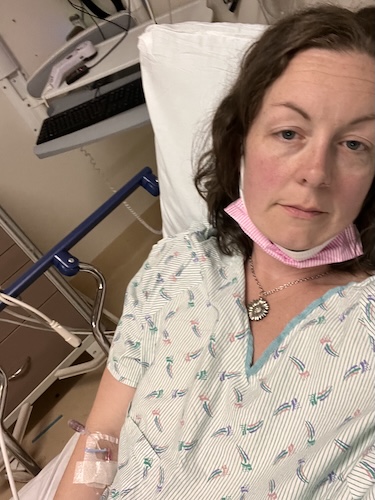
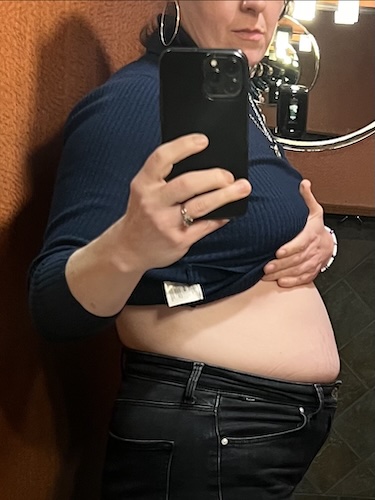
And then the bloating got worse and worse. June, July, August, I was getting bigger and bigger as I got more bloated. In the morning, it would be more resolved, and then by the evening, I’d be a basketball. By July, I wasn’t able to eat as much anymore. So I went to another urgent care in August, and that doctor was just like, “Oh, you have irritable bowel.” I’m not constipated, I don’t have diarrhea, I don’t have gas; it’s just bloating. Again, no tests were done.
And by this point, I was pretty frustrated with the medical system. I was convinced that I had small intestinal bacterial overgrowth or parasites, and I was running all these things on myself. I was doing all these protocols. Eating a restrictive diet just to try to resolve this bloating issue, thinking that’s what’s causing everything else.
And then September 1st, I woke up, and I had this pain in my left side, under my rib cage. It’s a steady pain. It doesn’t change when you move your body around, the way muscle pain does. This didn’t do that. By the end of that day, my husband and I said, “Okay, if this is still present in the morning, I’m going to go to the emergency room to get it checked out.”
The words “It looks like stage 4 ovarian cancer”
I woke up the next morning at around 3:30 a.m. and, like any rational human, I picked up my phone and started Googling what this pain could be. I saw it could be my kidneys, or something like that. So I said, “Okay, if I need to go to the emergency room, I’m going now. I’m going at 4 a.m.” So I snuck out of bed, I got in the car, and I drove myself to the ER. My husband woke up about two hours later and texted me: “Where are you?” By that point, I had been in the ER for a couple of hours, and I have to say, they actually did get me in to get seen pretty quickly and started running tests on me.
They did a chest CT scan only, though. I started explaining to the doctor; I said, “I keep having this bloating, and I think it’s connected to the pain I’m having.” They found that I had fluid in the lining of my lungs, but the doctor declined to do a CT on my abdomen as well, even though I was in the machine. It would have been nothing to do a CT on my pelvis and my abdomen at that time, but he said no. So my husband texted me, “Where are you?” And I said, “I’m in the emergency room. I have fluid in the lining of my lungs.”
Because we only have one car, he ran four kilometers from home to the ER to be there with me, to be my advocate. And I’m really glad he did, because in the span of the time I was in the ER, which was about six hours, I had four different doctors. By the time he got there, we were now on doctor number two, I think. She was great, but she didn’t know about the whole CT scan thing. She’s like, “Okay, they’re doing the CT scan read. You should have your results soon. Just hang tight.” And my husband is like, “Listen. This has been going on for all these months; I think it’s connected. She just has this bloating, and it’s really bad. She looks eight months pregnant. They told her it was irritable bowel; I know it’s not. Can you please just run her through the CT scan for her abdomen and pelvis?” And the doctor kind of reluctantly relented.
By the time I got done with that, I was now on doctor number three, and we were waiting. And then doctor four came in and said, “I’m not allowed to diagnose this for you, but what it looks like is stage 4 ovarian cancer.” And I just felt the floor drop out from under me. It was like I entered into an alternate universe, and I’ve never left.
Why self-advocacy wasn’t enough on its own
I wouldn’t have gotten to the diagnosis without him being there to advocate for me and with me as well. I tell everybody: Yes, you have to advocate for yourself, and I did. We did. Even at that urgent care where the doctor was dismissive about the irritable bowel, he was with me. He was with me when I went to the doctor in June. He was already with me through this experience; something’s not right. And two is better than one.
He’s the kind of person who will be pushy. He will ask questions. So yes, you need to have someone come and advocate with you, and they cannot be afraid to ask questions, to push back, and neither can you. But when you’re the one going through it, it’s not so easy. Throughout my experience, he continued to do that, and it kept helping me stay alive through the whole process. Sometimes I get a little squeamish, like, “Oh my God. The doctor said this. Just let it go,” and he’ll just keep pushing, and it’s never been wrong that he’s done that.
You need someone else. You can’t be the only person, because someone else is going to be thinking more clearly. They’re going to remember things you don’t remember. They’re going to have questions come up that you didn’t think of, because you’re also trying to process at that moment. Once the doctor is telling us that this is what it looks like, he’s jumping through and asking questions already, and I’m just sitting there going, “What did he just say to me?” It’s absolutely important.
Looking back: The ovarian cancer that was already there before anyone called it cancer
I would say clearly six months. But in November of the previous year, I was starting to have weird mood swings and a lot more fatigue. I had attributed that to being burned out. I’m a mom, a wife, and I work full-time, building a business, coaching CrossFit, and working out myself. I was burning the candle at five different ends. So in November, I started having these mood swings. I would just start crying for no reason, and I would have days where I was just so tired I couldn’t do anything.
I really thought I was just burning out, and I think there’s truth in that. But I look back now, I didn’t wake up in March short of breath when I’m exercising; that wasn’t stage 1 ovarian cancer. That had to have been at least stage 3, where there’s fluid in the lining of my abdomen pushing up on my diaphragm, or stage 4, where there’s fluid in the lining of my lungs. Somewhere around November or December, I probably already had cancer, and I just didn’t know it.
I think maybe men are different; I can’t speak for them. But women, when we’re fatigued, we just think, “I’m doing too much, I’m burnt out, I just need to suck it up and try harder.”
Feeling gaslit by a body and a system at the same time
I was extremely disillusioned with the medical system. I was frustrated, and I felt gaslit. I felt like my body was gaslighting me more than the medical system was gaslighting me, even though it was the latter. I would tell my husband, “I don’t want to go to the doctor. I don’t want to go to the ER. I don’t want to go,” and I would be mean about it. I was just like a five-year-old, like, “Please don’t make me do that.”
I felt so patronized when I went to the emergency room and the doctor was like, “You’re not having a heart attack. You have anxiety,” as if those were the only two options this emergency doctor could give me. What’s interesting is I didn’t just feel frustrated and angry at the medical system. I knew there was something wrong with me and that they could be doing tests. They could be doing imaging. They could be getting to the bottom of it. And it was a series of passing the buck and a lack of care.
My doctor was a very nice lady, but it was like she didn’t actually register that something serious was going on and that she needed to investigate it. It was just kind of like, “What do you want? What can I do? How can I help you?” I don’t know. How can you help me? Part of this is the Canadian medical system; it is so overburdened that you are a number. No matter how serious your situation is, you are a number. Care is rationed. Everything that you need done is coming out of the budget of that hospital or that doctor’s office. Doctors get pushed back from radiology. “Why did you order that?” This system is not set up to take care of people and is not designed to get to the bottom of things.
I am far from the only person that this has happened to, and I know it does happen in America too. I’m so frustrated and angry. I felt patronized by that ER doctor and then again by that urgent care doctor. Even Donovan, who is a health coach, said, “I’m a health coach. She doesn’t have any of the symptoms of irritable bowel.” And the doctor was just like, “No, no, no, it’s irritable bowel.” Get out of my office, basically; I’m the doctor here. And that’s the mentality we encounter a lot.
You’re the doctor, but it’s my body, and I know something is wrong, and I know it’s not irritable bowel. I know what irritable bowel feels like. But the reality is he was just a really bad doctor, and there was nothing I could do about it.
The morning everything about my life stopped mattering, except staying alive
It felt like everything was suspended in Jell-O. My life just stopped. Everything stopped with regard to being a mom. Literally, three days before I went to the ER, we dropped my daughter off at college about an hour and a half away. This was her first time flying; she’s got her dorm, and everything’s exciting and new. And now we have to drive down and say, “Hey, your mom’s fighting stage 4 ovarian cancer.”
My work, my business, my coaching, and all of that, none of it mattered anymore. What mattered was my feet being on earth. What mattered was spending time with my husband and my daughter, and getting care. It’s hard to describe, but it was like, at first, there was this suspension period where I was so much in shock that there was part of me that just kept trying to show up and do normal life. But my body, from the point of that ER visit to the next few weeks, started to unravel really fast, and that let me know there was no going back to normal life.
I showed up for work, and I told my boss about what was going on. We cut back my hours for a couple of weeks, and I couldn’t even do that by the end of the two weeks. I had been asked to come into an event to do a presentation as a business coach, and I literally kept that on the calendar until the very last minute. That morning, I called, “I’m sorry. I can’t come. I can’t breathe.” I should have probably told them sooner, but there was a part of me that was like, “No, I’m just going to keep on going.” You’re in denial, and you don’t register what stage 4 cancer means. You don’t know unless you’ve really walked with it or walked with someone through it. You really don’t know what that’s going to look like for your life. I thought I was an invincible person, to be honest. I really carried this sense of, “I’m invincible. Nothing’s gonna ever take me down. I can do all the things. I’m Superwoman.” Turns out I’m not.
Racing a fast-moving cancer through a slow-moving system
Bureaucracy happened next. We asked the doctor, “Can you refer us to the cancer agency?” He couldn’t do that. “Well, how do we get a diagnosis?” “You’re going to have to go see your doctor. She’ll have to refer you to a specialist, and the specialist will have to get a biopsy. Once the biopsy happens, then we can refer you to BC Cancer.” And we’d already been told if this is ovarian cancer, it’s probably high-grade serous carcinoma, which is the most aggressive; it’s fast-moving.
So the doctor is telling us at the same time: You need to move quickly, and the system is not going to accommodate that. My husband was like, “What do we do?” And he said, “Honestly, if you have the means to get treatment outside the country, I would do that,” and we were floored. Of course, I didn’t want to do that. I want to stay home. I want to sleep in my own bed when I’m not feeling well. I want to sit on the couch. I want to be with my husband. I want to be able to visit my daughter. I want to have my community and my mountains. Where am I going to go? It seems incredible when you hear those words, and when you think that thought of “maybe I need to leave.”
We go through this process of playing “let’s find the cancer,” because you have to get it biopsied to get a referral. My doctor referred me to the specialist, who got me in right away. That was a miracle and a blessing, because if you hear the stories, a lot of times that doesn’t happen. But she’s a very nice lady, and he owed her a favor or something like that, so he got me in right away. But you can’t just go and biopsy an ovary; you have to do surgery to do that. So he tries a couple of things. Is it uterine? No. We do a mammogram; nothing there. And he gets the idea, “Let’s try biopsying the fluid in your abdomen and see if that comes back positive.” So he does that, and a couple of weeks later, it does come back positive. By this point, we’re into the latter half of September.
In those more than two weeks, my body was falling apart quickly. I had gone from being able to go up the stairs no problem, walk a couple kilometers no problem, to I couldn’t even get across the parking lot. I had to take breaks going up the stairs because my lungs were so full of fluid. I had painkillers, and I had to sleep on a wedge pillow to sleep at a 45-degree angle. When you have fluid in the lining of your lungs, and you lie on your back, it’s like a crushing weight on your chest, and it’s harder to breathe. All these things are going on, and I’m starting to lose weight really fast now. I’m getting flushed a lot. I’m like, “I’m dying.” There is no question, as you watch this go on, that I’m dying and I’m not going to make it.
The diagnosis comes back: stage 4A high-grade serous carcinoma. The doctor reassured me that he was referring me to BC Cancer for treatment, and they would get me in quickly because I’m young and otherwise healthy. “How long is that going to take?” “I really don’t know,” he told me. “I have no idea.” So now we’re waiting, and we don’t know how long.
I have already heard stories from people who have gotten the worst-case scenarios from the cancer agency. Our neighbor’s sister had gone through cancer with BC Cancer, and they said, “We’re going to observe your cancer for six months because we don’t think you need treatment yet.” And in those six months, it grew so much that when she went back, they said, “It’s too advanced. We can’t treat you now.”
I had another friend who had just basically been left hung out to dry by BC Cancer because he didn’t get the vaccine. They just refused to treat his cancer, and he had tumors all through his neck. He had to basically drive himself to Mexico to get treatment. He couldn’t fly because he didn’t have the vaccine. You hear that, and you hear other stories too, so I was very leery. No idea how long I was going to be waiting, and I’m beyond waiting. I’m wasting away. I can’t keep weight on.
Leaving home in a wheelchair, not knowing if I’d come back
That was the moment when four weeks had gone by since I had been in the ER, and I said, “That’s it. I’m done. I’m leaving. I’m going to go to America.” I talked to my parents, who were in Seattle, and I talked to a friend of mine who is also a US veteran like I am, and she had had thyroid and breast cancer, and the VA had taken really good care of her, which is not what I expected to hear from her, to be honest.
I had already heard horror stories about the VA, and I had never, ever engaged with them to this point. I didn’t have VA benefits; I had just never gotten in their system at all. I had to go to the States to do that, because I wasn’t able to even get an online login while I was in Canada; there were just too many layers to it.
Now I was basically putting all of my eggs in the basket of going to the United States in the hopes that I could get enrolled in the VA quickly enough that they would take care of me, or sit here and wait for Canada to do something. I realized the ball was rolling in British Columbia, no matter what I do. I didn’t have to sit here in this house and wait for that to happen.
By this point, I was in a wheelchair. My husband took me to the ferry, which happened to be where my daughter’s school is, so the three of us are now at the ferry terminal saying goodbye. I was in a wheelchair, and we didn’t know if I was coming back. I’d already lost 10 pounds. My face just looked drawn and gaunt. I couldn’t breathe. It was pretty horrible, and I was crying while they were wheeling me away.
That’s the hardest part. I get the angriest and most heartbroken about it, because what I wanted most was to be with them through treatment. I’m getting on a ferry to go from Vancouver Island over to Vancouver by myself. My parents met me in Vancouver, and my mom told me later, she said, “I saw you when you got off the ferry in a wheelchair, and I thought you had maybe two weeks of life left in you.”
The first doctor who said, “I’m going to take care of you,” and meant it
I went to America, and I went to a VA clinic when I couldn’t breathe, and the doctor came out and met me at the door, wheeled me away into the exam room, looked at me, and said, “I’m going to take care of you. You’re going to be okay.”
He helped me get enrolled in the VA immediately, which was a miracle, because I showed up to do enrollment the next day, and they were like, “You have to fill out this paperwork, and it takes four months.” I looked at her and said, “I’m gonna die. I don’t have four months.” And she was like, “Okay, fill this out.” It was basically saying I’m indigent and in need. I have no job, and I need health care right now. They got me taken care of, which is a miracle. And that doctor went right to the head of oncology for the VA system and said, “This woman needs the best gynecologic oncology we can get her now.” They rushed a referral to Fred Hutch Cancer Center in Seattle, which is just amazing. I can say nothing but good things about them. And I was off and running.
That’s exactly what I felt. I felt seen and cared for by a medical professional for the first time in the entire experience to date, which is not to say the gynecologist I saw in Canada wasn’t good. He was great, and he cared, but he was powerless in the system. When I say seen and cared for, not just by the individual, but by an individual medical professional who was empowered to actually take care of me, not someone who had to try to get me through some hidden back door in a system that would rather I just shut up and die. I’m sure they would have wished that, in retaliation against them, but I really felt so relieved and cared for. That was the first moment where I thought, “Maybe I will live. Maybe I’m going to live.”
He sent me to the ER right away and said, “The VA is going to pay for this,” and because he said that, they actually did have to pay for it. I wasn’t enrolled in the VA when he sent me to the emergency room. I had just shown up at this clinic. He was like, “No, we’re going to send you to the emergency room, because we don’t have emergency facilities here. You can’t breathe, so we’re going to get you over there, taken care of.” I got scans and all these things. It sped things up for me too, because I got those scans in America, which is very different than getting them and trying to bring them across the border. He didn’t just say it; he lived it. He really did take care of me and make sure that I got everything I needed.
Four days from treatment plan to first chemo infusion
They immediately sat me down and said, “Okay, given where you’re at, what we want to do, this is common for ovarian cancer, is three treatments of chemotherapy, then the big debulking surgery, then three more treatments.” So I got this treatment plan. Now we’re in October.
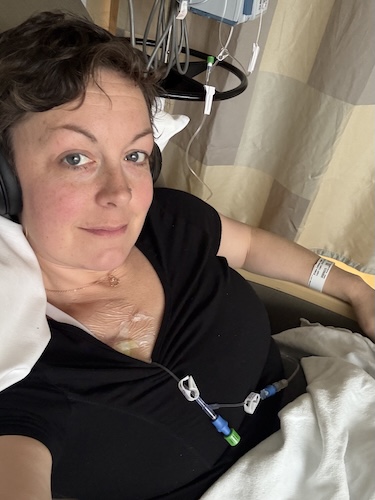
They placed a port, but they didn’t even wait to place the port. They actually did my first treatment intravenously. They said normally they wouldn’t do that, but I was so far advanced in my cancer. I was having trouble breathing; I had to go to the ER, and I was admitted before this appointment because I couldn’t breathe. I had actually gone to the University of Washington for that one so that I would be there, because my Fred Hutch clinic was at UW.
I went to the ER when I couldn’t breathe again, and they admitted me there and kept me for observation. I actually got to see a gynecologic oncologist at the time, and it was just amazing. They got this treatment plan in place and started me right away. I was sitting with the doctor on October 16th doing this planning, and four days later, October 20th, I’m getting my first treatment. As soon as they had my referral and were able to do everything, they made room for me.
After that first treatment, my tumor markers went way down, and the fluid cleared out of my lungs. It was amazing, honestly. I felt better from the treatment. I know a lot of people feel terrible after treatment, but I felt better because it got rid of the fluid in my lungs and reduced some of the cancer in my body.
Fourteen hours in surgery and a Christmas spent recovering
I did three rounds. The surgery was pretty brutal. I was in surgery for 14 hours. I also talked to my doctor about doing a special kind of treatment called hyperthermic intraperitoneal chemotherapy (HIPEC). It’s like a heated chemo wash in the abdomen. That’s not something I would have gotten in Canada. I’ve asked the oncologist in Canada about it, and he said: “No, we wouldn’t have done that.”
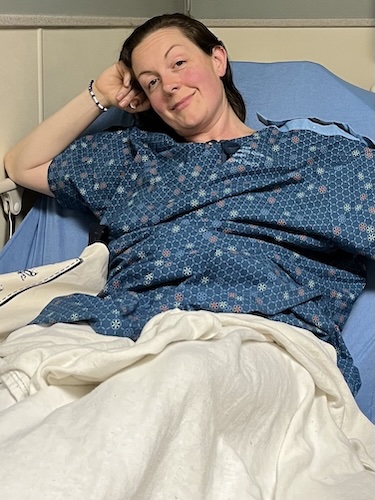
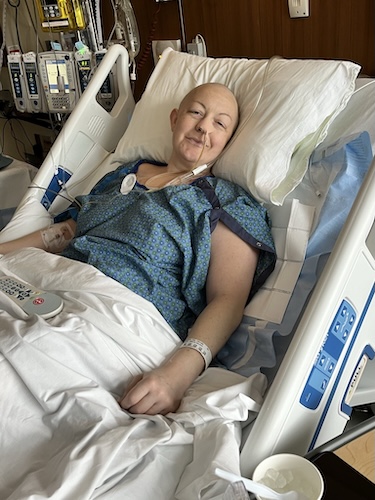
I was in the hospital for nine days over Christmas. I got out the day after Christmas with a catheter, because there was a complication in my surgery where they had cut the ureter. I was not in good shape that Christmas, but I was glad to be out of the hospital and to still be alive, because a couple of months prior, I didn’t think I was going to make it to Christmas.
Pulling an IV out to save my own life: The bowel obstruction that wouldn’t wait
I did have a bowel obstruction before I even finished the chemo. By this point, I was able to go home to visit. I went home in February. I’d done five treatments total: the first three, then the surgery, and then one more after that. While I was home, I had a total adhesive bowel obstruction, which is basically where the scar tissue is strangulating your bowels and choking it off, and nothing could get through.
I was admitted to the hospital at home at the time, but they said they couldn’t do surgery on me there because it was too complicated, given the surgery I’d already had, and they needed to transfer me to Vancouver. But there was a waiting list for that, and it was, as the doctor said, “as long as her arm,” plus they needed a doctor there to pick me up as a patient. She said to me, “We can just leave you here like this for a couple of weeks. You’ll be fine.” Like this, meaning I had a tube up my nose, and they were not doing any nutrition intravenously at all.
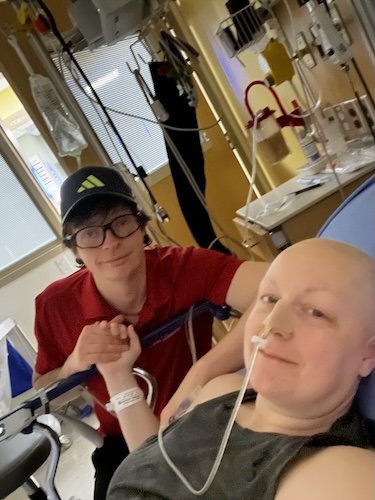
My husband had to keep chasing them down again to do basic electrolytes. Once again, he’s coming in to the rescue, reading my lab results every day and saying, “Why aren’t you giving her magnesium if she’s so low?” He’s having to chase them down for it.
After five days of this, we said that I would die like this. My bowels are going to perforate. They’re going to go septic. Because I’m on chemotherapy, my immune system is compromised. I can’t do this. I’m never going to get out of here like this. This is going to go on too long. We made this decision to have the doctor discharge me and leave the hospital, pull the tube out of my nose, pull the IV out, and self-transport.
Getting an international medical transport was like $35,000; it was not an option. We self-transported. He drove me four hours to my parents. I was vomiting bile on the ferry at this point; it was gross. And then I was in so much pain. I had no ability to relieve the pressure off my bowels at this point. My parents took me the rest of the way back to Fred Hutch, back to UW, and they documented that I was severely malnourished.
I had bowel surgery the next day. They ran nutrition while I was in surgery because I was so malnourished that they were concerned I wouldn’t survive the surgery. Sure enough, my bowels were tearing apart. The decision was a good one, and it saved my life again. At this point, Donovan was like, “Don’t come back.”
But I did go back, because I just wanted to go home. I finished my treatment, and I went home in April. I was there living my life, trying to rebuild everything. But after eight months, the cancer came back in December.
When the cancer came back, I decided to leave Canada for good
I did eventually get an oncologist through BC, through the province, and they lost my referral for treatment. It ended up being a good thing that I was in America getting treatment, because otherwise, I would have died waiting for treatment. It was a complete nightmare. First, I was waiting, and then when I finally did get an oncologist, and he referred me to my local hospital for chemotherapy, the requisition never got there.
But I kept in touch with him anyway, because he was very apologetic, and I kept him as another resource. I talked to him every so often. When I came back to Canada, he helped manage my surveillance. I was getting labs every month. When we started to see the numbers tick up and they crossed the threshold out of the normal range for sure, my cancer tumor markers were showing it was back. This was early December, and he said, “Let’s wait until after the holidays and then we’ll get you in a CT scanner.”
My own oncologist in Washington said, “When can you get here? Because we’ll get you in a CT scanner that day.” I was down there the next day, and that was when Donovan was again like, “You’re not coming back.” That was when my doctor told us this was a recurring cancer now, and I was going to be dealing with this for the rest of my life. That’s when we knew for sure we couldn’t stay in Canada.
It was hard. One of the reasons I didn’t want to leave was because my daughter was there, and I did not want to be that far away from her. I still don’t. She’s 21. She’s an adult, and she’s still in school, but I just didn’t want to leave. I didn’t want to leave my beautiful home and my community that had taken such good care of us.
But in that moment, I realized if I want to stay alive, it’s going to involve being in America. I can’t keep coming and living with my parents. It was time to do the immigration thing. We filed immigration for Donovan, and it took three months because I got a congressperson to help. We did this expedited process on the basis of medical need. It was like three months until he got his interview and had his green card by the time I was finishing treatment.
Choosing Fort Worth: Veterans’ benefits, affordability, and a drug trial worth chasing
As I was finishing up treatment, we were looking for a place we could afford to live. Through this whole process, I was able to apply for disability benefits through the VA. The cancer was rated as service-connected.
Living on a fixed income now, we knew we needed a place that was affordable and good for vets. Texas has no property tax for 100% disabled vets, and it has a lot of other good perks for veterans, like no income tax for my husband, so it just looked like a good place we could afford.
From there, we narrowed it down to places that were running a clinical trial I wanted to get on after my treatment that was showing a lot of promise: this drug called mirvetuximab soravtansine, and then bevacizumab, which is a common maintenance therapy. So we ended up in Fort Worth.
Why moving countries for cancer care was worth every hoop
There are definitely a lot of hoops, because I had to transfer care through the VA system. But I also have an advocate in the VA system, another gynecologic oncologist, who manages things nationally. She and her team helped me get set up with this clinical trial in Texas.
The care in America versus the care in Canada is night and day. They’re able to do more, they’re further along, and they’ve approved drugs and treatments and trials faster than what’s going on in Canada. People aren’t even getting access to mirvetuximab soravtansine in Canada right now, and that’s unfortunate.
But moving to America has given me more chances at beating this cancer, and the care is completely different. It’s better. It’s more hands-on. There’s more expertise. There’s more availability. It’s a faster-responding system, whether I have a medical emergency and I have to go to the ER or seeing my gynecologic oncologist. I would not be here if I had relied on Canada, and I say that not just at a singular point in time. At multiple points in this process, I can see where relying on Canada would have led me to the end of the road a lot faster than being able to come to America and get treatment at the University of Washington or even down here at Texas Oncology.
I had another recurrence down here. I went through treatment again, and coming out of that, my options for remission were either sit and wait or go back on bevacizumab, which I had been on. I got on a clinical trial, but I was put on the control arm, so I only got bevacizumab, not mirvetuximab soravtansine. After nine or ten months, the cancer came back, and we said, “Okay, bevacizumab didn’t do the trick,” so it didn’t look like a good option for me for maintenance, and neither, obviously, is sitting around waiting.
There were no clinical trials around me that I qualified for, and the VA decided to look nationally. They say, “There are these two trials: one’s in Oklahoma City, which is a phase 1/2 trial trying a new drug,” and I didn’t want to do that because there was also a placebo arm in that. “Or there’s this phase 2 trial at the University of Colorado, and it’s trying mirvetuximab soravtansine and a PARP inhibitor together.”
I was like, “Okay, is the VA actually going to let me do that?” Not only are they paying for the medical care, but they’re also paying for my travel. It’s amazing. This absolutely would not have happened in Canada, because mirvetuximab soravtansine isn’t even available. They didn’t have enough tumor sample to determine if I have HRD status or not, and so they would not have given me a PARP inhibitor because I’m not positive for HRD or homologous recombination deficiency.
Flying to Denver every three weeks: Making peace with clinical trials
I fly from Fort Worth to Denver every three weeks now. I just got on it, so I’m excited about it.
I’ve never been opposed once I understood what phase 2, 3, and so on were, and I understood this is not a new medication; it’s just trying it in this way, trying it like this and like that. That made it a little easier for me to swallow.
I didn’t have a problem with it, because I feel like all of these drugs, to some degree, are a crapshoot anyway. I know that with ovarian cancer, there haven’t been many developments in the last 30 years, which is insane compared to some other cancers, where they’re constantly coming out with new things. I feel good that I can participate in these developments.
I was pretty upset, to be honest, to get on the control arm. I had put a lot of faith and hope in mirvetuximab soravtansine, so getting in the control arm and then having the cancer come back again was sad. But I feel now that it’s my best chance. If it’s the choice between trying something and trying nothing, I’m going to go with trying something.
Finding God on the way back from the edge
I’m grateful every day that I’m still alive. Facing death is its own experience. You learn a lot about what’s important to you, about yourself, and about the people around you. Coming out of that, your perspective is forever changed.
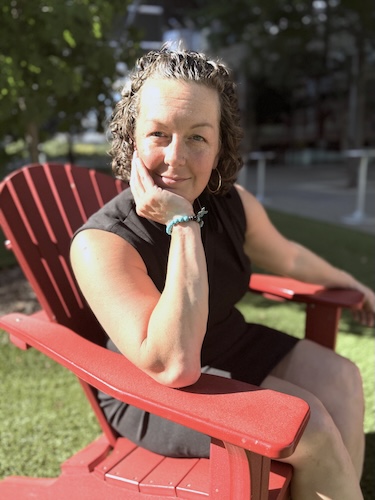
I’m not going to say I don’t have bad days. I’m not going to say I don’t have days where I’m depressed or feel sorry for myself. But generally speaking, I’m a happier person than I was before I had the cancer. And I’ve found God through this as well.
The girl in the wheelchair was not strong in the faith department. I knew something was happening. I knew it was for a reason. Without realizing it, I knew it was God’s hand. When I got the recurrence the first time, I was so angry that I realized I was on my knees screaming swear words at God, which meant that I believed there was a God. From that point, I was like, “Okay, there’s faith to be had here. There’s something to lean into. This did happen for a reason.”
I got to stand up on the news to a healthcare system that left me and thousands and thousands of other people to die. I got to write an open letter to the health care minister because I no longer feared what I used to fear, and that led me to this road of realizing I was walking that road for a reason. God put me on that path for a reason. It led me and my husband to church for the first time in 30 years for each of us, and we just got chrismated in the Orthodox Church in April.
It’s been a transformative experience of proportions I could never have written for myself. I’ve become an entirely different person in many respects, but there were core pieces to who I was at the time: thinking I was Superwoman and indestructible that pitted me against a very formidable cancer. I’m still fighting it, and I think that grit and that determination… When I was diagnosed, I made this public video and said, “They told me this cancer is very aggressive, but you all know me, and you know I’m aggressive, so we’ll just see about that.” I think that characterizes how I’ve navigated the whole process.
Do I get knocked down? Absolutely. But I always get back up.
Living on maintenance, forever: How faith carries the uncertainty
Of course, there’s a part of me that’s like, “Hey, maybe this treatment is the one where it’s going to knock it into a longer remission period, and that’s that.” But at the same time, being able to surrender that outcome to Jesus, to God, and know that it’s not for me to decide, that helps a lot.
I pray often, and I’ve had so many people pray for me that I’m cured of this cancer. But I also know that suffering brings us closer to God, and that we were not asked to not suffer. Jesus said, “Pick up your cross and follow me.” This is my cross, and if that’s what it takes to be closer to God, and that is what brought me closer to God, then I am okay with that.
Do I love it 100% of the time? No, I don’t. When I’m feeling nauseous from treatment, or I’m so tired, I’m like, “I don’t want to anymore.” I let it roll, I let it ride, I let that moment crest and ebb back out into the ocean, and I know that tomorrow will be a different day. But I don’t feel abandoned or anything like that. I feel, in a way, like I said, suffering brings us closer to God, and so I feel blessed in that. That probably sounds very perverse to people, but that’s what I believe.
Being vulnerable in front of my daughter so she wouldn’t be blindsided
She’s one of the things that kept me alive. She and my husband are very close; the three of us. There were times when I had to let myself be more vulnerable than I was willing to be. As the mom, you don’t want your kids to see you as being vulnerable. You don’t want them to have to face your mortality, especially if you don’t think they’re ready for it.
But there were times when she had to help me when I was traveling or coming to see me in the hospital when I was after my surgery; you see the recognition of this in their face. You want to protect them from it and spare them from it, but at the same time, that’s not going to serve them well. If she didn’t know that this was this hard, if I just died, for example, it would be much more jarring for her.
I’ve also tried to make the most of it and see her when I can. We brought her down last summer for her to stay here for a month. She came back for Christmas, and then I visited her in June. So there’s a lot of trying to visit each other, but also letting her live her life. We keep her updated on everything that’s going on. We tell her the truth. We’ve always been very oriented toward being candid and truthful with her.
She’s excited that I’m on a clinical trial right now. She just transferred to a new school. She moved to Toronto to take up film studies, so she’s going to be there for a couple of years. We do our best to encourage her to continue living her life, encourage her to deal with the heaviness that’s come with having a mom with chronic cancer and everything else in her life, but also to seize the moment, seize her life. I want to feel like it has helped her a little bit to realize that you don’t have your whole life ahead of you. You have your whole life ahead of you, but you don’t know how long that is. Even if you think, “Oh, I’ll probably live to be old; you may not,” so don’t muck around. Go live your life.
The last thing I want you to know: Your life is a precious gift
Your life is a very precious gift. Every day counts. You don’t have as long as you probably imagine yourself to have. You were sent to Earth with a purpose and with so many gifts around you.
I used to struggle with gratitude, and cancer has made me grateful for things I would have just overlooked before. Your life is filled with many precious gifts, even if it doesn’t feel like it.
Whatever’s going on now in your life, things do get better. Keep getting up day after day and going forward. Remember that this is your life; it’s no one else’s. Your bucket list will become your deathbed regrets unless you start living your life.
This interview has been edited for clarity and length. The views and opinions expressed in this interview do not necessarily reflect those of The Patient Story. This content does not replace professional medical advice.
Inspired by Kristin’s story?
Share your story, too!
Hear from people living with ovarian cancer
Real experiences with diagnosis, treatment choices, side effects, and life beyond ovarian cancer — in their own words.


Leave a Reply