
Cheryl Had Her Ovaries Removed to Prevent Cancer, But She Was Diagnosed with Ovarian Cancer Anyway
Cheryl had already done everything she could to keep cancer out of her life. Her mother died of ovarian cancer at 48 and her sister died of breast cancer at 41. When a new doctor flagged her family history and found that she was BRCA1-positive, Cheryl chose to have her ovaries and fallopian tubes removed in 2016 and a preventive double mastectomy in 2017. She’d already had a hysterectomy years earlier. When a dull pain settled into her right side in the spring of 2022, she didn’t think much of it. She was traveling, celebrating with family, and dancing all night at her nephew’s wedding. An endoscopy and colonoscopy both came back clean, so she assumed it was something gastrointestinal.
Interviewed by: Tory Midkiff
Edited by: Chris Sanchez
The pain never fully went away, and on December 8, 2022, it forced the issue. Cheryl lay down, had sudden, severe pain, and knew immediately that something was wrong. A CT scan that day found a tumor the size of a baseball and others alongside it, in a body that no longer had ovaries.
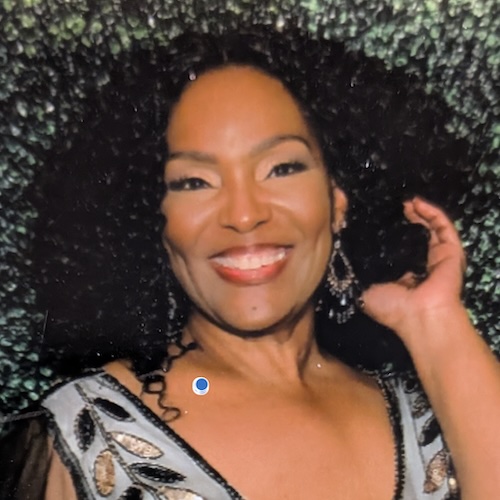
What followed was a fast, disorienting stretch of testing: an MRI, a transvaginal ultrasound, and blood work. On December 30, 2022, her oncologist confirmed ovarian cancer, despite years of prevention. Cheryl still went in for the appointment, hoping it might be something else. Her care team explained that a residual cell or two, left behind after her 2016 surgery, had likely started growing years later in the surrounding tissue.
Cheryl’s treatment began fast and stayed intense. A surgery in January 2023 uncovered 27 tumors and required removing her spleen, parts of her liver, diaphragm, and bladder lining; the seven-and-a-half-hour operation left her in the ICU with atrial fibrillation and kidney complications before she’d even started to heal. Six rounds of chemotherapy followed, then two years on the maintenance drug olaparib, which kept her cancer markers low enough that she traveled, celebrated, and, in her words, “seized the day”. When her numbers began climbing again in September 2025, the disease had returned in her liver, in a spot her surgeons could no longer reach. Radiation and a second full round of chemotherapy came next; she has now completed 12 rounds of chemo in total.
Today, Cheryl is in a surveillance routine: an oncology visit every four months and a scan every three months. She still travels when she can, leans on her family, her therapist, and a community of women with gynecological cancers, and tells anyone who will listen to keep asking their doctors questions.
Watch Cheryl’s video and read the edited transcript of her interview below.
- Preventive surgery doesn’t fully remove your risk. Cheryl had her ovaries and fallopian tubes removed in 2016 specifically to avoid ovarian cancer, and was still diagnosed with it in 2022 after residual cells began growing in the surrounding tissue.
- Maintenance therapy can offer real years of normal life, with real trade-offs to weigh. Cheryl stayed on olaparib for two years while it kept her cancer markers low, and made an informed choice with her care team to continue it past that point, knowing the associated risks.
- Fatigue after chemotherapy can be more disabling than people expect. Cheryl describes losing the strength to walk to her mailbox and back or to open a jar, even after a full night’s sleep.
- Asking to be treated as a person, not just a case, changed how Cheryl approached her own care. She asked her care team directly to see her as a person with a family, and now encourages other patients and the medical students she talks to do the same.
Cheryl’s Diagnosis Facts
- Name: Cheryl S.
- Age at Diagnosis:
- 65
- Diagnosis:
- Ovarian Cancer
- Staging:
- Stage 3C
- Mutation:
- BRCA1
- Symptom:
- Abdominal pain on the right side
- Treatments:
- Surgery: cytoreductive surgery
- Chemotherapy
- PARP inhibitor: olaparib
- Radiation therapy
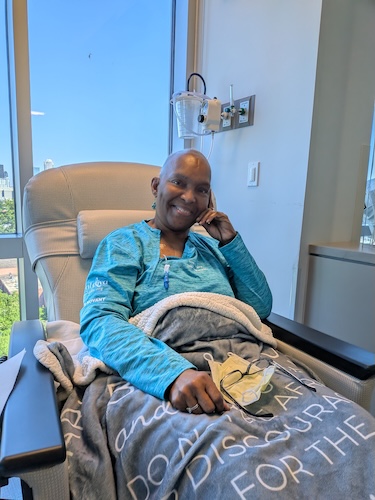
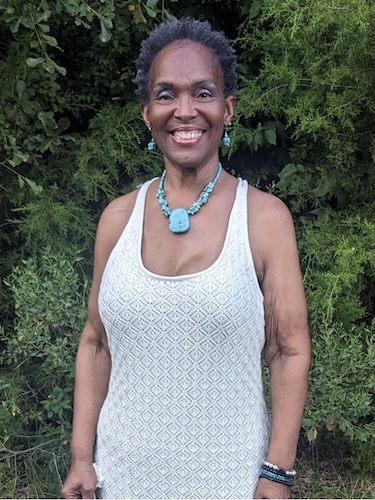
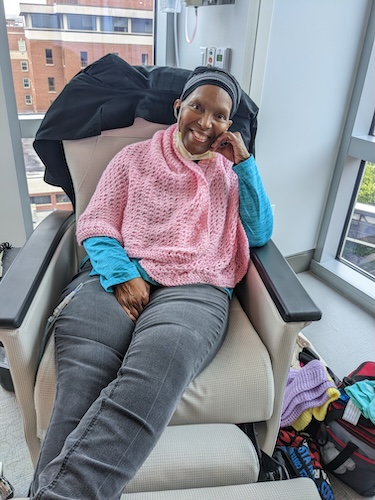
This is not medical advice. Please consult with your healthcare provider to make informed treatment decisions.
- Cheryl’s Diagnosis Facts
- Living in a state of false security
- The night everything changed
- Getting to a diagnosis
- Telling my family that I had ovarian cancer
- Waking up to the truth
- Starting chemotherapy
- Two years on olaparib, seizing the day
- When the numbers climbed again
- Radiation and a second round of chemo
- Living with fatigue
- What I want others to know
- Hear from people living with ovarian cancer
Living in a state of false security
I must admit, I was living in a state of false security. I’d already had surgeries to be proactive about a possible cancer diagnosis. I started feeling pain in May of 2022, but I was traveling, meeting friends, going to engagements. I remember my nephew and my niece’s wedding in November. Three weeks before I was diagnosed, I was having the time of my life, dancing the entire night.
But that pain on my right side never really went away. I think I stopped thinking about it. I’d had an endoscopy and a colonoscopy, and both came back negative, so I thought maybe it was an infection. I was on prednisone for a while. Nothing really helped the pain go away, so I was just thinking it had to be gastrointestinal.
The family history behind my choices
My mom died of ovarian cancer at age 48, and my sister died of breast cancer at age 41. When I relocated from Rochester, New York, to the Carolinas, I got a new doctor, and she said, “I don’t like your family history. I’d like to do genetic testing.” She did the test, and it came back positive for BRCA1, which meant I had an increased risk of both breast and ovarian cancer.
I’d already had a hysterectomy in 1995. I’m 69 now. I had my fallopian tubes and ovaries removed in 2016, and in 2017 I had a prophylactic double mastectomy because I had watched my mom and my sister go through unbelievable experiences, and I wanted to make sure I didn’t go through the same thing. I had done all of this, which is why it was such a shock when I was diagnosed.
Thank you. It’s hard. It really is.
The night everything changed
It wasn’t even a single moment building up. What happened was, I must have laid on the tumor. I will never forget the date: December 8, 2022. I literally leapt out of bed crying and screaming, and I knew something was very wrong. I went straight to my patient portal and said I needed to see someone that morning, that I was in unbelievable pain. My doctor got me right in for a CT (computed tomography) scan, and it showed a tumor the size of a baseball, and there were others.
The other tumors were in the same region.
Getting to a diagnosis
My biggest question, talking with my doctors, was: how did this happen? I don’t have ovaries. After that CT scan, it was a roller coaster. There was an MRI (magnetic resonance imaging) scan, a transvaginal ultrasound, and a blood test the very next day to get a diagnosis. It came back that it was ovarian cancer.
To give you an idea: if your number is somewhere between zero and 15, you don’t have cancer. If it’s around 300, you probably have stage 4 cancer. Mine was 118, so we knew there was cancer in my body. [Editor’s Note: As explained by the research institution City of Hope, although the CA-125 test can be a good indicator of cancer, it does have limitations. “Not all women with ovarian cancer have elevated levels, which means some women with ovarian cancer may show low test levels. Increased CA-125 levels also don’t correspond to cancer stages, so a patient with advanced ovarian cancer won’t necessarily have a higher level than someone with early-stage cancer.”]
When I went in for a consultation, the gastrointestinal oncologist pointed at the screen and said, “That’s a tumor. That’s a tumor. That’s a tumor.” There’s one part I’ve blocked out. I heard him saying it, and I was looking at the screen, but I couldn’t believe there was that much going on for someone who doesn’t have ovaries.
What they explained to me is that when I had my ovaries removed in 2016, there must have been a residual cell or two left behind in the cavity. Six years later, those cells started multiplying. It’s called right peritoneal carcinoma, meaning the whole peritoneal area is at risk.
Twenty-seven tumors
In January of 2023, I had surgery to remove the tumors. They found 27 tumors in my cavity. They removed my spleen, two sections of my liver, part of my diaphragm, and one of the layers of my bladder. There were tumors everywhere. They thought the surgery would take about five hours. It took seven and a half hours because they didn’t expect to find so many. There were three surgeons in the operating room because it was such a massive surgery.
I went into atrial fibrillation (AFib) on the table, and I also went into renal failure because they didn’t expect me to be under that long. I was hospitalized for 10 or 11 days, recovering from the surgery and stabilizing the AFib.
Hearing the word “cancer”
That picture of me in a black and red shawl is from December 30, 2022, when I first met my oncologist. I remember asking my primary care doctor to refer me to someone who would treat this like it was her own family member, because I realized I’m an interesting patient, but I wanted to be treated like a person. I told her that being diagnosed with ovarian cancer with no ovaries is very rare. I found out that 1% to 2.7% of women in the world who have BRCA1 and have had their ovaries removed can still be diagnosed with ovarian cancer. I just wanted that acknowledged.
So it was December 30, 2022. Even though I’d already had the blood test, the MRI, the transvaginal ultrasound, and a CT scan of my abdomen and pelvis, I finally asked the oncologist, “Is this ovarian cancer?” And she said yes.
That’s when my life kind of divided. As long as I was getting the tests and I was still in a question mark, I was still believing this could be something else. I knew I had tumors, but a lot of people can have benign tumors. I wasn’t in la la land. I knew, because of BRCA1, it was a very high probability. But when she said, “Yes, you have ovarian cancer,” on December 30, 2022, I’ll never forget that day. My girlfriend Lisa had gone with me.
Telling my family that I had ovarian cancer
I didn’t even ask my daughter to go with me, because I still wasn’t expecting to receive bad news. My friend Lisa went with me. Everyone has a ride or die, and she is my ride or die. She came with me, and there was silence on the way out. All she could say was, “I’m sorry.” And of course there were tears.
I think that’s when it really hit, when she said it was cancer. I said, “What’s the next step?” She said, “Well, we may be able to do this laparoscopically, or we may have to open you up. I’m going to examine you and see if that tumor, the largest one, is stuck. If it’s not stuck, we can do it laparoscopically.” She examined me and said, “We’re going to have to open you up.” So I have a scar from my breastbone all the way down.
I just remember thinking, “This isn’t happening.” Then I said, “When can I have surgery?” She said, “You’d like to schedule surgery?” And I said, “Absolutely, I want this out.” Before I left her office, I had a date for surgery: January 12, 2023. That’s when the three surgeons were involved.
Waking up to the truth
I remember leaving. I remember saying in recovery, “I hurt,” and the next thing I remember is I’m on a stretcher with my son Alex on one side and my daughter Kirsten on the other. All I said was, “What was the pathology?” I was still dazed, but I said, “What was the pathology?” They both looked at each other, and that’s when I knew it was bad. It was like, “Are you going to tell her, or am I going to tell her?” I said, “Never mind.” I didn’t want either of them to have to say it out loud.
The next day, the doctor came in and said that the number of tumors they found meant they could now diagnose me as stage 3. The next stage is 4, so I knew this was serious. The next step would be starting chemo right away, as soon as I could get strong enough. Surgery was January 12. Chemo started February 9. I wasn’t even really healed yet.
Starting chemotherapy
Depression set in. I’d had postpartum depression with both of my children, so I knew what that felt like, but I also knew I had to pull something up that wasn’t even there and say, “Okay, let’s go.” There was a sense of fear and realization, and you’re physically not well either. It’s this constant daily treadmill. It’s emotionally trying, but it’s also the fire I needed. I fight for my children. I fight for my grandchildren. I fight for my friends.
I didn’t want to tell my family before Christmas, because we have the most amazing Christmases. There are usually around 30 people at my sister Carol’s house. We have a big dinner, then we play family games until the wee hours, and I didn’t want to disturb that. My daughter and her friend Brittany, who’s an ER nurse, knew the diagnosis, and we were bouncing things off her. The three of us knew at Christmas. I had never called a family meeting before. The next day, December 26, I called a family meeting, and that’s when I told them.
My son lives in upstate New York with his wife Candy and their children, so I wanted to tell both of my kids at the same time. My daughter, my son, and his wife got on a Zoom call — the first time I’d ever done a Zoom call with my kids, so they knew it was serious. I told them I’d been diagnosed with ovarian cancer. My son left the screen because he was so close to my sister, and he loved his grandmother, and now his mom had that word too. His wife said, “We’ll sign back on in a minute.” My daughter had 50 million questions, and I didn’t have any answers for her. All I knew was that I was diagnosed. My son came back on. I later found out he had completely broken down but pulled it back together because he knew that he had to be strong for me, which I really didn’t want. I wanted him to fall into it and experience it the way I did, and he has.
It was hard telling my family, and then my friends. I didn’t have the capacity to tell every single person, so it wasn’t until after chemo that I made one Facebook post about it. I said, “The reason I’m telling you this way is I can’t make all the calls. I don’t have it in me to keep saying the same thing over and over.” I apologized for how they found out that way. I don’t often post on Facebook. If I post something, it’s important. And then, of course, I got cards, flowers, and packages in the mail.
I already had a therapist because of other losses: my mom, my dad, and my sister. So now I needed a therapist for myself too. I’m still seeing her because I’m still dealing with the fact that there’s a bully inside of me that’s trying to take my life. You can be a good person, generous, of great character, a hard worker, and it doesn’t matter, because a bully is trying to take me out. It’s a constant battle, physically, because I’ve had two rounds of this: a recurrence in 2025 that meant radiation and then a second round of chemo that ends December 20, 2026. It’s nonstop.
I see my oncologist in September. I very rarely used to read my progress notes, but I read every word of them now. There was a line in one of them, the last line of the progress report: Cheryl will need chemotherapy for the rest of her life. There are no words. When my eyes read that, I understood that there’s no pill, no surgery, nothing else that can stop this.
I’m grateful that my cancer is platinum-sensitive, meaning chemo works. This particular chemo has become, in a strange way, familiar to me. I can’t speak for everyone’s chemo, but mine was brutal. Every joint in your body hurts. You sleep with a pillow between your knees and ankles so the bones don’t touch. There’s nausea. You don’t feel like eating. You can have diarrhea or constipation, depending on the day. There are usually about seven days when I’m literally in bed, getting up only to use the bathroom. My kids make sure I eat something and drink water, and then I go back to sleep. Then you start feeling better, and you get about a week of feeling like yourself. It’s every 21 days, so then you start it all over again. You do that six times.
Two years on olaparib, seizing the day
After the initial diagnosis, the surgery, and the chemo, I was put on a targeted therapy pill: olaparib. It’s a drug they give women who are in late-stage ovarian or uterine cancer. What it does is stop the cancer cells from communicating. If you’re on it too long, more than two years, studies have shown it can cause incurable leukemia. If you get incurable leukemia, you can’t get chemo anymore, because your bone marrow can’t support it. You’re too sick.
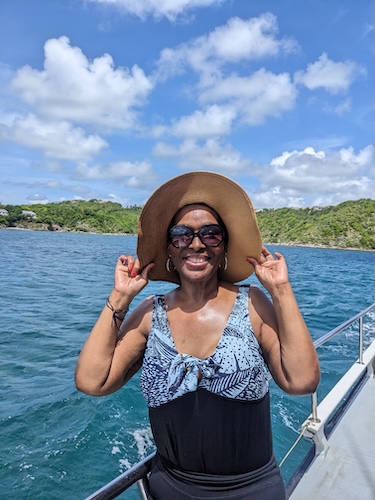
My oncologist said, “We’re going to put you on olaparib. It’s had great results.” I was on it for two years. When I say it was working, my numbers, which started around 118, came down to five, nine, 11, 12. You have such a false sense of security. Cancer is always in the back of your mind. You never forget you’ve been diagnosed, but you still go on with your life. I did several trips to Rochester. I went to Antigua. We went to Jamaica.
I don’t say bucket list; I call it seizing the day. After being diagnosed, I have seized the day. My trips are seizing the day. My memories are seizing the day. I was living that for two years.
At my two-year appointment, after taking olaparib that long, I discussed with my children whether I could stay on it longer, since it was working, even knowing the leukemia risk. My oncologist said it’s up to the patient to make that decision, and I said I wanted to stay on it. This was August 2025.
When the numbers climbed again
The next month, September, since you have blood work every month while you’re on olaparib, my numbers started climbing. That meant olaparib had done everything it could do, and I had to stop it immediately. My children were with me, and my son had flown down. I never screamed or howled, but there was one tear that kept creeping out.
There was a tumor. I had a CT scan first, and it showed a tumor in my liver. Because they’d already removed part of my diaphragm and part of my liver in the first surgery, my liver and my diaphragm are now adhered together. The tumor was in the space between both of them, so we can’t operate. That’s the only reason. That’s why my oncologist said, “Cheryl will need chemo for the rest of her life.” I’m not a candidate for surgery. They can’t reach it.
That’s also what bothers me and my children: I’ve gone through chemo twice, and I’ve been praying for permanent remission. I have blood work at the beginning of September. Right now it’s blood work, seeing my oncologist, and a PET (positron emission tomography) scan: surveillance, basically, because olaparib doesn’t work anymore.
I hope that there are drugs in the pipeline right now, and that the FDA is close to approving several of them. I’m hoping I’ll be a candidate whenever the next option becomes available.
Radiation and a second round of chemo
I had to do another six rounds. When the tumor was found in September 2025, I had radiation first. Because of where the tumor was, they had to put a needle through my diaphragm to place a marker by it, and I had to be awake for that. My blood pressure got so high they almost had to stop the procedure.
There was a lot of pain, and I think that’s one of the things I’d like people to understand: there is a real correlation between a cancer diagnosis and pain. You’re going to go through some physical toll from treatment.
I went through radiation in October. Then I had a PET scan after it, in December, to see if it worked, and the tumor, which had been the size of a pinky nail, was gone. But there was another tumor, in another part of the liver, twice the size of the original. It looked like there might also be a tumor in one of my lymph nodes. You don’t want a tumor in your lymph nodes, because that’s where fluid and blood travel through your body. That’s why sometimes people say someone died of liver cancer, when it really was ovarian cancer that had metastasized to the liver. The liver, for some reason, is like a garden for cancer. It has all the nutrients cancer needs. The good thing is it’s an organ you can remove part of, and it will grow back, but it’s also an organ you have to watch carefully, because cancer is so comfortable there.
So after the radiation and that diagnosis, I went through another six rounds of chemo. I’ve had a total of 12 rounds now, and my body did not recover the way it did the first time. I’m trying to watch my words, because I don’t want to put them out into the world and have them come back to me, but the fatigue is unbelievable. There’s also a real fear of COVID and flu, because your immune system is extremely compromised. I’m probably one of the few people who still wears a mask in the grocery store or in church, which I don’t go to very often, but when I do, I wear a mask, because I know if I were to get something…
During chemo, in February 2026, I passed out in the shower. It was the seventh or eighth time I’d passed out through this whole process. When I was taken to the hospital, they found out I had pneumonia because I had nothing left to fight it with. I was in the hospital for five days. Even though I’m allergic to penicillin, they had to get my permission to give me a drug related to penicillin, because I was so sick I couldn’t fight it any other way. Of course I said yes.
My daughter’s eyes went wide. “You’re giving her what?” I told her, “Kirsten, it’s going to be okay. We have to get control of this.” It was three different antibiotics, one of them related to penicillin. They watched me like a hawk while they administered it, and I didn’t have a reaction. But I was in the hospital for five days because anything could make me that sick.
Living with fatigue
The fatigue is walking to the mailbox and having difficulty getting back. My daughter has come over a few times.
I’ll feel like taking a walk. We’ll walk out, and I’ll go to the stop sign – I remember this so vividly – I grabbed her arm, and she said, “Do we need to go back?” And I said yes.
Even after a very good night’s sleep, you’re still not yourself. You don’t have the energy. I don’t have the energy that I had when I was dancing at that wedding, which feels so far away now. You’re just constantly not strong. Even opening a jar, things I used to be able to pop open, is difficult.
It’s a completely different physical experience after chemo.
Where I am now
The plan for the foreseeable future is seeing my oncologist every four months, and a scan every three months.
We’ll just keep doing that.
What I want others to know
First of all, I would say: Share it with your friends and your family.
I know some people keep these things in, and they get very sick, and they pass, and the family didn’t even know they had cancer. They’d been dealing with it for weeks or months on their own. What I’d say is, try to surround yourself with positive people. Watch the words that come out of your mouth. A doctor may give you six months, but you’ll also hear about people who lived 17 years after a prognosis like that. It’s your mindset, and that’s where I am. I’d encourage you to say, “I’m going to keep going. I’m going to do this for my family, for my kids, for my grandchildren.”
And also ask your doctors to see you as a person. I know they see 30 patients a day, but see me as a person. I have a family. And if you don’t have children, you’re still making an impact on your employees, your church members, your neighbors. Just keep going as long as you can.
I’ve had the conversation about what I want it to look like when I can’t keep going anymore. I tell my kids: give me morphine if I need it. You can’t give me too much if I’m in unbelievable pain or having trouble breathing. I give you full permission for that. But in the meantime, keep going, and know that you’re not alone.
According to the American Cancer Society, 1 in 3 people will be diagnosed with cancer in their lifetime.
Finding support
People are going through this alongside you. I have the unbelievable blessing of being part of a group of women with gynecological cancers, called Teal Diva. We meet, we have retreats, we have outings, we talk. When someone’s going through something, we have a separate Facebook page just for us. Look for some kind of support. I guarantee your oncologist will know where to direct you.
Therapy helps. It really does. I don’t know what I would do without my therapist. She’s brought me through so much. I was crying yesterday, thinking about what the end is going to look like. And even if that’s 20 years from now, it’s still something you need to talk about.
My main focus now is that I want women to know: keep asking the questions. My primary care doctor cried when I was diagnosed. My gynecologist said, “Cheryl, you did everything, and you still were diagnosed,” and she was crying, and I was crying. That’s why I talk to medical students and nursing students. I want them to know that when a patient presents with something, keep asking the questions and keep ordering the exams.
This interview has been edited for clarity and length. The views and opinions expressed in this interview do not necessarily reflect those of The Patient Story. This content does not replace professional medical advice.
Inspired by Cheryl’s story?
Share your story, too!
Hear from people living with ovarian cancer
Real experiences with diagnosis, treatment choices, side effects, and life beyond ovarian cancer — in their own words.
Leave a Reply