
I Thought It Was Just Bloating; It Was Stage 4 Ovarian Cancer
Joy’s experience began with what felt like a muscle sprain from lifting something heavy, followed by sudden, severe bloating that left her exhausted. Assuming it was a minor injury or perhaps a hernia, she tried resting and walking it off, but her stomach rapidly expanded. After a visit to a local clinic and a referral to a gastroenterologist, imaging revealed tumors and massive fluid buildup. A few weeks later, she was facing a diagnosis of stage 4 ovarian cancer. With genetic testing, standard in ovarian cancer, she would also learn that hers would include a BRCA2 mutation.
Interviewed by: Taylor Scheib
Edited by: Katrina Villareal
The scope of her cancer set in quickly when a biopsy of a movable lump in her armpit confirmed the cancer had spread to a lymph node. Joy’s doctors immediately started with targeted therapy, based on her BRCA2 mutation, alongside four rounds of chemotherapy. She opted to have her port that delivers the medicine each time placed in her arm rather than her chest, a choice that gave her a sense of control over her changing body and reduced daily visual reminders of the disease.
Refusing to accept a week-long hospital stay for open surgery, Joy heavily researched her options and sought a second opinion. She found a doctor who successfully performed laparoscopic surgery, removing all visible tumors and allowing her to go home the very same day. Following two more rounds of chemotherapy, Joy transitioned to a maintenance therapy regimen, taking a PARP inhibitor.
Today, Joy focuses on maintaining a low-stress lifestyle, which her surgical oncologist emphasized as a critical component of healing. She recently published a guided journal, “The Exhausted Achiever,” inspired by the women she met during her infusions. Her experience highlights the importance of self-advocacy, listening to your body, and leaning on a strong support system when navigating an advanced ovarian cancer diagnosis.
Watch Joy’s video or read the edited transcript of her interview to find out more about her story:
- Listen to your body when symptoms persist or grow. Joy initially attributed her pain, bloating, and exhaustion to a muscle sprain, but the sudden onset of fluid buildup ultimately led to her seek medical care.
- Explore all your options and seek second opinions. When initially told she only qualified for open surgery requiring a week-long hospital stay, Joy advocated for herself by finding a surgeon who successfully performed a less invasive laparoscopic procedure. Being able to go home the same day significantly reduced her physical and emotional toll.
- A cancer diagnosis reshapes perspectives. Moving through the intense fear of a stage 4 diagnosis and the grueling pace of treatment fundamentally changed how Joy views stress and happiness. She’s learned to protect her peace, eliminate stressors, and find genuine joy even while sitting in the infusion chair.
Joy’s Diagnosis Facts
- Name: Joy K.
- Age at Diagnosis:
- 51
- Diagnosis:
- Ovarian Cancer
- Staging:
- Stage 4 (Metastatic)
- Mutation:
- BRCA2
- Symptoms:
- Sprain-like abdominal pain
- Severe bloating/abdominal hardness
- Ascites (massive fluid buildup in stomach)
- Inflammation
- Treatments:
- Paracentesis (fluid drainage)
- Chemotherapy
- Monoclonal antibody: bevacizumab
- Surgery
- PARP inhibitor: olaparib
This is not medical advice. Please consult with your healthcare provider to make informed treatment decisions.
- Joy’s Diagnosis Facts
- Listening to your body: A sprain, bloating, and unexplained fluid buildup
- Facing the unknown: Referrals, ascites, and hearing the words “You have cancer”
- Processing the unthinkable: Discovering I have ovarian cancer
- The BRCA2 reality: Genetic testing and fearing for family
- My treatment blueprint: Shrinking tumors with chemotherapy and targeted therapy
- A devastating setback: Discovering the cancer had spread
- Reflections for the newly diagnosed: Embracing fear and putting on your armor
- Advocating for a gentler path: Finding the right surgeon for laparoscopic surgery
- My life on maintenance therapy: Olaparib, bevacizumab, and finding joy in the journey
- Hear from people living with metastatic ovarian cancer
Listening to your body: A sprain, bloating, and unexplained fluid buildup
Thinking about it right now, I almost want to tear up because I seriously thought, “Am I pregnant by an alien? Or an insect?” Years ago, I read about someone in Australia who got pregnant that way. I know it sounds crazy, but it was the scariest. I’ve been pregnant before, but I knew there was no way that I was pregnant.
My symptoms didn’t happen rapidly. It was summertime. I had been lifting something and felt I had sprained something, like how you feel when lifting something heavy. At first, I thought it was a little painful. I don’t know if lifting triggered it to happen quicker because I did sprain something. When that happened, after a few days, I felt a little swelling, almost like feeling bloated, but I still thought it was from when I pulled something.
I was doing research, thinking I had a hernia. People were saying that when you lift something heavy, you can sprain something and it takes a few weeks to go away. But at the same time, I was concerned because I wasn’t the type who got bloated. I always had a flat stomach. It wasn’t rock-hard or a six-pack or anything, but it was flat and soft and my stomach was feeling a little hard. I thought maybe I tore something. Then one day, I thought it was because I hadn’t been walking and exercising like I normally do, so I went on a two-hour walk.
When I came home, I took a shower, got up, and said to my sister, “My body is breaking down. I’m so exhausted.” But I thought it was still the combination and moving too fast. Finally, after about three weeks, after trying all these things and none of them working, I went to a clinic at Kroger’s. The lady pressed on my stomach and said, “I don’t feel anything.” I said, “Listen. Something is wrong with my stomach.” I asked her about hernias and she said she didn’t know because she had one of those, never got it fixed, and she’s fine. She gave me a higher dosage of ibuprofen for the pain and said, “If you’re still in pain in a couple of weeks, call this place to see what’s going on with your stomach. They would have to be able to see if that’s what’s going on with it, because you can only see it through imaging.”
I didn’t wait a week or two. As soon as I got back in the car, I called to make an appointment. I called them on a Friday and I was in there by Tuesday. I was telling the doctor everything and she was still being a little lax about it. I said, “Look at my stomach. Feel it.” I know my body and I know how my stomach normally is. I said, “I don’t have that sort of bloating and hardness.” She felt around and said, “We can’t do anything today. We’ll have to schedule you for a CT scan.” I asked, “Can I get up now? Let’s get this done now.” I wanted to figure out what was wrong with me. But I was never thinking of cancer.
By this time, I was starting to feel a little better. She said, “We can’t do it today. We have to do a CT scan. We’ll set that up.” The earliest they could get me in was a week or something, which was fine, though I wanted to get in that day. Before I left, the person who took my blood said, “Listen. We’re going to take your blood. If there’s anything wrong with you, this test will show it.”
The next day, my stomach grew. I thought, “What in the world?” A couple of days later, the doctor called me back and said, “For the most part, everything looks good.” They said my iron was a little low. Before I left, she told me to try this diet that makes you go to the very basics, so you can see what might be causing inflammation. That changed my life, because I believe it helped me during my cancer treatment. I never heard of this, but I started implementing it.
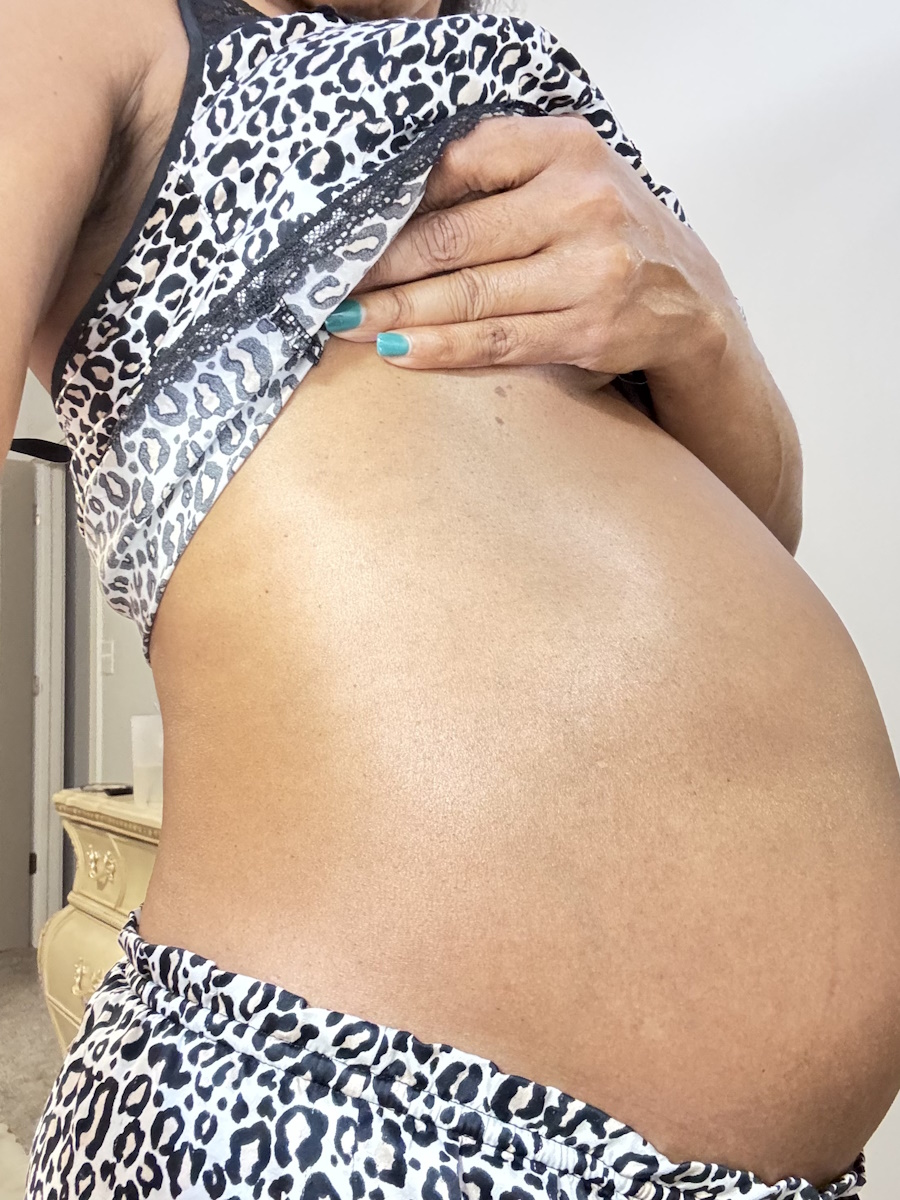
By the time I had my CT scan, my stomach had grown. I couldn’t even wear my clothes. I had to try to do things to camouflage. Then I felt all this inflammation. I thought, “What is wrong with me?” My stomach has gotten so big that when I take a shower, I can’t see my feet. I didn’t even want to go outside because I couldn’t hide it. I didn’t want to tell my family because I didn’t know what was wrong with me, but I was scared. But even with all that, I still wasn’t thinking cancer.
When I finally went to get my CT scan, I was talking to the lady who did it. She was a young lady and was so sweet. With the type of dress I had on, she couldn’t see my bulge. But I told her what was going on with me and she said, “Oh my. Yeah, let’s see.”
That next day, the doctor called me and told me they didn’t know it was cancer, but she said they saw something in my ovaries and stomach. She had already set up a referral with an oncologist and a gynecologist. They didn’t know, but they wanted to schedule both. She made those appointments for me. Then I asked, “What about this stomach?” Because it was so uncomfortable. She said, “That’s fluid. I’ll schedule for you to drain that.” I looked like I was carrying twins, but again, I still wasn’t thinking cancer.
Facing the unknown: Referrals, ascites, and hearing the words “You have cancer”
I’ll be honest. I was used to getting the Pap smear annually, so that was fine. But the oncologist? No, I didn’t know what type of doctor that was. I told my stepdad first because my son was supposed to go to school, but I couldn’t bring him, as my stomach was so big and I was so uncomfortable. I called his Grandpa at the last minute and asked him to take my son. I told my family then, at that point, because I had the appointment set up. I said, “I don’t know what’s going on with me. I have all this fluid inside my stomach. I have an appointment.” When I said that to my stepdad, he said, “Oh, that’s not good,” when I said something about the ovary. Now, I still wasn’t thinking cancer, but I knew something was wrong. I had never even heard about ovarian cancer. The only time I heard about it was when they had commercials that came on. I wasn’t zooming in on what ovarian cancer was. I know it sounds very silly, but it’s the truth.
I started implementing the diet that the gastroenterologist suggested. Even though my stomach was huge, the pain went away, which led me to think that it was a correlation between something that I was eating and the inflammation. My sister lives in New York, but she knew I had to go to the hospital for my drainage. When you have to get the procedure done, you need to have somebody with you to drive you.
God is good. It was so meant for her to be here with me. She arrived the day before the procedure and when she saw me as I turned to the side, she almost passed out. She said, “Do we need to go to the emergency room?” My stomach was so huge, it was unbelievable. At that time, I was feeling good, though. I was feeling so much better, so I wasn’t scared. I said, “No, I’m fine, plus I’m getting drained tomorrow.”
The next day, we go to the doctor. I’ve had the best nurses and the nicest people on my journey. They said to me, “Oh, it’s probably not cancer. There are many reasons why you can have fluid. It doesn’t have to be cancer.” Then this other nurse said, “I thought I had cancer.” She said she did her own ultrasound and saw a 12-centimeter tumor, but when the doctors did her procedure, it wasn’t cancer. They removed the tumor, but it wasn’t cancer.
They’re giving me all this optimism. Another lady had cancer two or three times and she was still positive. They kept saying, “We don’t think you have cancer, but even if you did, you caught it early.” I’m thinking, “Are you sure? With this stomach?” Even though everybody was so positive, I thought I had cancer at that point. I knew something was wrong. At that point, I completely felt it. Even though all these people were saying these positive things, in my heart, I knew I had cancer.
Two days later, I had my appointment with my oncologist. After I did the paracentesis, they were able to test the fluid instead of having to wait for them to call. As the reports were coming in, I wanted to know more. Slowly but surely, I was telling ChatGPT to look at them and analyze them, and it told me that it thought it was ovarian cancer. My sister said, “I don’t believe you have cancer. You look so healthy,” because my stomach was drained. I think they drained 4 or 5 liters. They did the maximum that they could, because if you lose a lot of fluid, you can get very tired.
The day before my appointment, the portal said metastatic. When I saw that, I knew. I knew that was a cancer word. I told my sister, but she still didn’t want to believe it. Part of me was still hoping it wasn’t what it was. My sister said, “I don’t think so. I don’t think so.” But when I went to the doctor, by the time they were getting the reports, they weren’t able to guarantee that it was a female cancer yet because they hadn’t run my CA-125. They wanted to confirm it. But what she said was, “You do have cancer.” There was no preparation. I thought I was going to fall out of my chair. Then she said, “You’re going to lose all your hair.” I thought, “What the hell?”
I was so overwhelmed. I was so grateful that my sister was with me. She came for my drainage. We weren’t thinking anything major, but God knew I was going to find out that I had cancer and I was going to need that support. The day before I went to see the oncologist, even though I felt I had cancer, I was thinking, “God, I don’t want to have cancer. But if I do, get me through this.” You know how you know, but you still hope that, by some miracle, it isn’t true? I knew I would need the strength. I didn’t want to die.
Processing the unthinkable: Discovering I have ovarian cancer
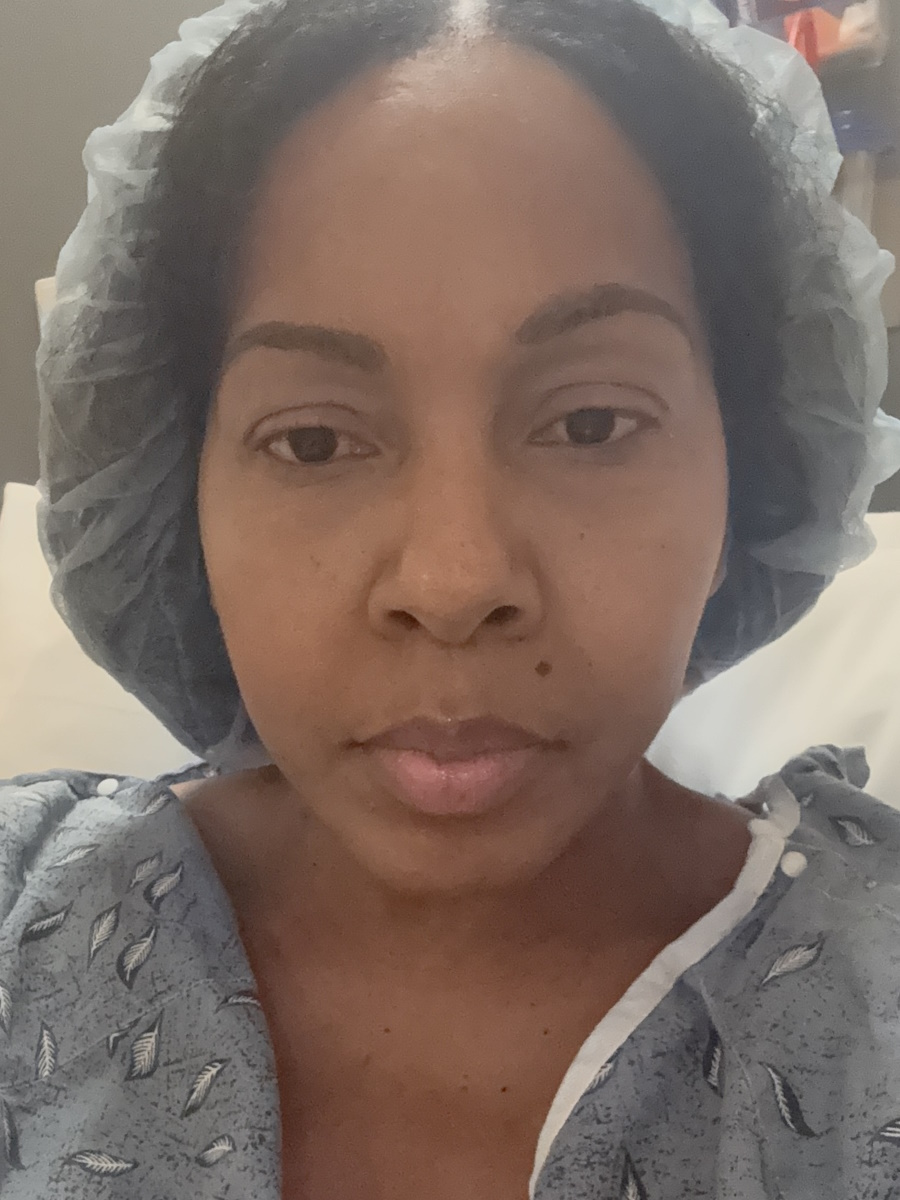
I’ll be honest, I still wasn’t processing. I know this is going to sound so crazy, but even when I had to do my surgery, I didn’t realize everything down there. I feel so stupid. I guess I didn’t pay much attention in school when they discussed the body because it was all so foreign to me.
What helped me process it was going on YouTube and that’s how I found The Patient Story. I started watching other people’s stories. I want to know: What is ovarian cancer? I’m trying to understand. What broke my heart was when I saw so many young women who found out and who weren’t able to save their eggs, which meant that they couldn’t have biological children.
It started dawning on me. I didn’t understand it until I started doing the research. I started getting mammograms at a very young age because we have a history of breast cancer on my father’s side of the family. If I were thinking of cancer, I was never thinking down there. But then immediately, when I went in for my initial appointment, the CA-125 numbers hadn’t come back, so they still weren’t positive. They needed confirmation.
Later that day, they told me to come in the next day because they got my CA-125 and they were through the roof. That confirmed to them what it was. When I was there, they didn’t give me the diagnosis. When you have cancer, time is not your friend. They told me to come in the next day because on the phone, they told me about the CA-125, so they wanted to do the BRCA test, because how they treat you makes a big difference knowing that.
The next day, when they were talking to me, even though I was scared, I felt hopeful. Maybe there was hope because I finally knew what was wrong. They were so quick to make plans for what we were going to do to help me. I didn’t even have the opportunity to dwell because from the time that I got diagnosed to my first chemotherapy was maybe three to four weeks. All I was doing was watching these videos. Although I recommend hearing other people’s stories as they give you so much insight, be cautious because everybody’s journey is different. You want to be informed, but you also want to be optimistic because they have so many things to try to help you.
I was determined to live. I thought, “Whatever they need me to do, I don’t care what it is; I will do anything I have to do to live.” I even told the Lord, “I’m going to give this one good shot,” because I didn’t want my life to just be cancer. I was going to give it my all. Whatever I had to do, I was going to do it and try to win this fight. I’m going to do everything I can. I knew I was going to make some changes, but I knew this fight was going to be it for me because I didn’t want another setback.
The BRCA2 reality: Genetic testing and fearing for family
I found out I had BRCA2. Getting that test done helped me feel relief, but I was also scared for my sister and my niece. I wanted them to get tested. The doctors told me that I just had some bad genes. It’s not that I did anything wrong. With that, you’re almost relieved. For most of my life, I tried to take care of myself. I was very conscious about going to the doctor. I wasn’t the best eater, but I tried to eat pretty decently. I never liked going to the gym, but I believed in walking and doing exercises. I believe that it’s important to take care of yourself. Overall, I felt healthy, but that didn’t matter.
One thing that I felt relieved about was that it happened while I was still relatively young, healthy, and strong enough to fight, because it could have easily shown its face when I was much older and my immune system wasn’t as strong. When it comes to cancer, all of those things matter. You have to be ready to fight.
My treatment blueprint: Shrinking tumors with chemotherapy and targeted therapy
My doctor wasn’t trying to wait. First, I had to get my port in. They weren’t even trying to wait for the results because they said that the initial chemotherapy was basically the same for everyone. The only difference was that they gave me bevacizumab to target the fluid in my stomach. I still had to come back about two or three more times before starting chemo to drain the fluid because it would still come back.
Their plan was chemo first, then surgery, and then chemo again, because they wanted to shrink the tumors. My tumors weren’t massive, but one of them was underneath my omentum. They wanted to shrink everything. The only thing I was praying for was for the chemo to work. Watching videos, I had seen so many patients say that they had bad reactions to the chemo and that something went wrong, so they couldn’t continue. They were trying different things to find the right combination.
A devastating setback: Discovering the cancer had spread
Initially, they thought I had stage 3C ovarian cancer because the CT scan wasn’t showing any spread. However, I had to get my port put in. People usually get it on their chest and I was going to do that too, but I had never had surgery before, so I was very scared. I started watching videos again, trying to find out how painful it was and what you go through. I came upon a video of a doctor who had cancer, and she got her port in her arm. I thought, “Wow, they can put it in your arm.” For me, that would be a much better preference. I understand that you have to do what you have to do, but I believe they should give women more options. At the place where I was going, nobody put it in the arm. None of them knew how to do it. I felt that if I constantly had to see the port on my chest, it would be a constant reminder that I have cancer. If I had to get it on my chest, I would have, but I found a doctor who was trained to put it in the arm. He was able to get it done a week before starting chemo.
I found out that the cancer had spread when I got my port placed. A few days later, as I was in the shower, I felt something in my underarm and it was moving. I didn’t remember it being there. When you have cancer or anything that’s happening with your body, you start to gaslight yourself because you can’t remember all the different things. Even when my stomach was getting big, I started thinking, “Was I ever able to see my feet?” I made a note, since I had to go back to the doctors again, because they wanted to do a biopsy, even though we knew I had cancer.
I told them about this lump. I said, “Can y’all check that out?” They said, “It’s probably nothing. It’s probably your body reacting because you got the port put in. Just monitor it.” It was still moving. I said, “Listen. I want to get this checked out.” They kept on brushing it off, but they finally made the appointment to see it. I thought, “Oh my God, do I have breast cancer?” They did so many ultrasounds and everything. They were not thinking it was cancer because it was movable where it was, but because of my BRCA2 gene, they went ahead and did a biopsy. It took almost a week, but my doctor wasn’t worried because she said, “You’re about to start chemo, but we still want to know if it’s the same or what’s going on.”
And then the doctor said, “It’s not breast cancer. We compared it to the biopsy from your stomach and it’s the same origin.” I said, “You’re saying it spread.” She said yes. That hit me so hard because I had been feeling very optimistic that I was going to get through this. But when they told me it had spread, that meant stage 4. I said, “Oh my God. Am I going to die?” I was so scared. I hadn’t started chemo yet. I was so scared that it could spread even more before I got to chemo. That was a major setback for me. I started thinking all these crazy things.
But one thing that gave me hope was, once again, a patient on The Patient Story. I wish I remembered her name. She had stage 4 and it spread to her lungs. She was saying not to be scared. She was the first one from whom I learned that everybody’s different. I was trying to remember that, but it was so scary. I was praying, “Please let this chemo happen. Please. I need chemo,” because I was worried it would spread even more. It was still moving, which they said was a good thing. I started questioning if I was going to live. When you find out that it’s spread and you haven’t started treatment yet, you’re hoping that it doesn’t spread some more, because cancer can be so sneaky. I was so petrified.
But when I talked to my family, they were so supportive. My doctor and her head nurse never made a big deal of it. It helped me get through it. Even though I was scared, I was still hopeful that this was going to work. Let’s get through chemo and see what’s going to happen.
Reflections for the newly diagnosed: Embracing fear and putting on your armor
I prayed a lot. When you’re going through something like this, you try to make these changes and do everything that you’re supposed to do. The doctors are doing everything you’re supposed to do. All you can do is pray because that’s all you can do.
I cried. I was scared. I would still cry if tell myself that because I believe that it’s okay to cry. Crying can be healing, but don’t fall into a depression. Don’t give in to that. It’s so easy. It’s traumatic because it is. But you can’t allow your natural feelings to take over. You have to embrace the disappointment and the fear, but after that, you have to put your armor back on and be ready to fight. You can’t ever stop feeling that way.
I would tell myself the same thing. Cry and be sad, but follow what you’re supposed to do. Show up because you have to show up. Take the bad news and keep on going. I can’t say I would do anything differently. I would do the same thing because I never stopped. Even though I was scared and felt all these things, I kept praying and wanting to live. That’s the only thing I focused on: living.
Advocating for a gentler path: Finding the right surgeon for laparoscopic surgery
After I did my chemo in December, they did a CT scan and things were shrinking. I was platinum-sensitive. The treatment worked. After the first treatment, I never got ascites again. My doctor said it normally takes a couple of times. Mine never came back after the first treatment. My body responded well. After the third chemotherapy, they felt I was ready for surgery.
Now this comes into the next phase. Again, people have to do their research, but you have to make the decision. I wanted to live. During one of my procedures, I was talking about how nervous I was about surgery because I had never had surgery other than my port. She said, “Oh, don’t worry. They do it robotically now.” I had never heard this. This was new to me.
The next time I had my doctor’s appointment, my doctor said, “I’m sorry to tell you this. You don’t qualify for robotic surgery. With your type of cancer and your advanced stage, we have to make sure.” I said okay, but I was researching because I was so scared about the surgery. She said that I was going to be in the hospital for a minimum of four days to a week. I was more scared of that than anything else. My chemo treatments were going very smoothly. I didn’t have bad reactions. I was so surprised. I couldn’t stand the thought of being in the hospital for a minimum of four days. She also said it’s going to take me a while to get back on my feet.
Again, if I had to go through that to live, that’s what we would have to do, so I was prepared. But after my CT scan, I went to see the head nurse and she was so impressed with everything. She said, “I think you would be an excellent candidate for robotic surgery. You have a normal-sized uterus. Everything has shrunk.” I said, “The doctor’s totally against it.” She said, “Let me speak to her quickly. I think you’ll be a great candidate.” She came back and the doctor said no because it was in my omentum, but she said, “Do your research.”
Let me say this because this is so important. If the doctor who eventually did my laparoscopic surgery told that I would have had to be cut open, I would have done it because I wanted to live. There would have been no hesitation. I would have done it and it would have been that. But you always want to look at all your options because this is your body. You have to go through the pain and the recovery.
The doctor I found was very reputable. They got all my records. I wanted to make sure they thought I was a candidate because the other doctor was saying that I wasn’t. If I wasn’t, I wasn’t. He said, “I think you’ll be the perfect candidate. If you don’t mind, are you committed to robotic surgery? Because I think laparoscopic surgery would be better.” I had never heard of laparoscopic surgery, but I said yes. I asked, “Do you think, even with the omentum, you would get out everything?” He had no hesitation. That’s why it’s so important to talk to other people and do your research. At that time, I had done four rounds of chemotherapy because even though I told them I wanted to do some research on the surgery, they didn’t want to not do anything.
They scheduled me for another round of chemo, which I did. I was about to have another round when he got me in for surgery the following week. He said that ideally, he didn’t want me to do more than six rounds. He’s the most amazing doctor. He got everything out. They said that the only thing left is a little salt sprinkles that hopefully chemotherapy will take out. I got to go home that same day. I hardly had any pain. My healing was so quick.
When people go through cancer, that individual is going through that journey. Almost anything that can happen to you happens. If you can make things a little bit more peaceful to get you through something so traumatic, try to do that. Some doctors aren’t looking at the whole being of what a woman is going through and what we can try to do to make this a bit gentler. After my surgery, I was able to get up and walk to my kitchen. Mentally, it made all the difference in the world for me.
You have to advocate for yourself. There are so many incredible women on this journey. I get it. You’re just trying to live and get through cancer. Sometimes, you don’t have the bandwidth to think about how to get through and still find some happiness or have the opportunity to think about other things. Praise God that I have my family and a good support system because it allowed me to pour into myself and have the strength to advocate for myself. You can’t be exhausted. You need rest.
Cancer is very mentally, physically, and emotionally draining. If you don’t have the right opportunity to focus on what you’re eating, going for your walks, and doing things that can help you heal better, you don’t have the strength to advocate for yourself. It was amazing how these doors kept on opening. If I had to spend a week in the hospital for open surgery, I would have done it. Did I want to do it? No, but I would have if I had to. Luckily, the other doctor said I didn’t have to.
My life on maintenance therapy: Olaparib, bevacizumab, and finding joy in the journey
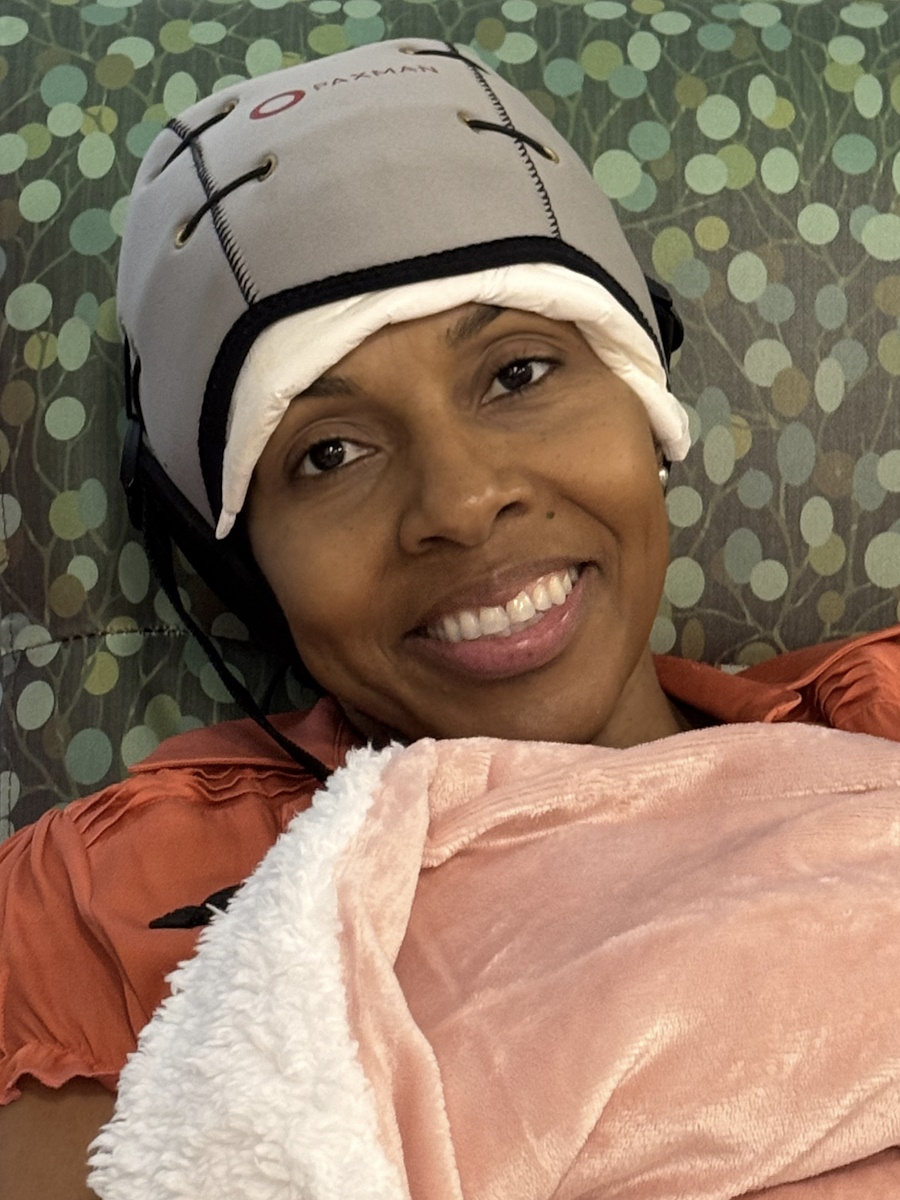
After my laparoscopic surgery, I was supposed to have two more rounds of chemotherapy. My doctor was trying to target seven or eight. But the neuropathy was kicking my butt. When my doctor said I was going to lose my hair, as I was trying to find wigs, I came across cold capping. It works and I totally advocate for cold capping. God is good.
My numbers had dropped. My CA-125 had dropped. Everything was plus, plus, plus. I already knew I was going to be on maintenance. I knew I was going to keep on getting infusions every three weeks and that they were putting me on a PARP inhibitor. I asked, “What is having another chemo going to do other than six with the way that I am?” The doctor said, “You know what? You’re right. If you weren’t going to still be on treatment, I would be more inclined to say let’s do more.”
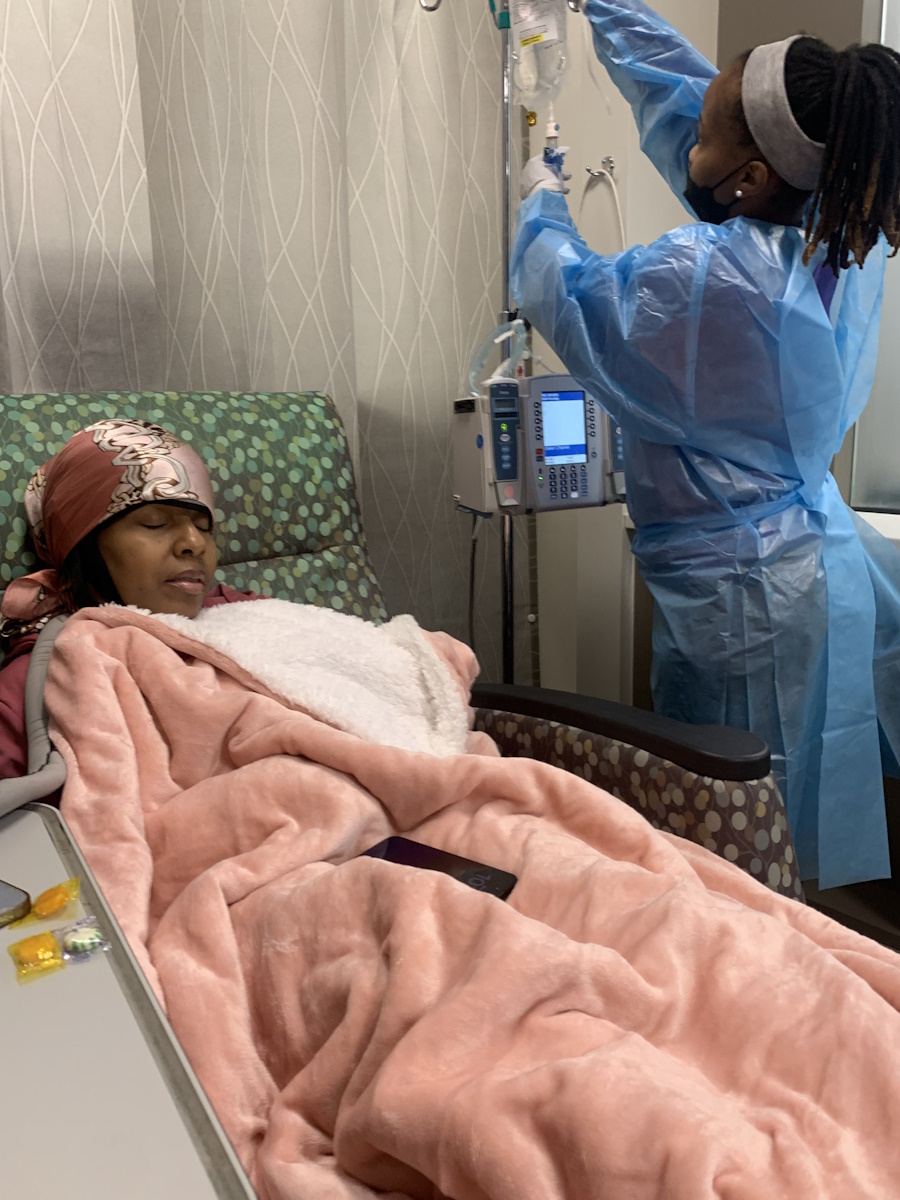
As soon as I finished my last chemo treatment, I rang the bell. Praise God. Then three weeks later, I started bevacizumab. I have to do bevacizumab every three weeks for a year. I also started olaparib, the PARP inhibitor. I take that twice a day and will be taking that for two years. That’s the great thing about BRCA2. You’re destined to get certain things. They have so many things set in place that can help you.
I was so scared about getting sick from the olaparib because I heard a lot of people have side effects from that. I knew I was going to be okay with the bevacizumab because I had that when I was getting chemo. That medicine is $15,000 a month. Luckily, my insurance covers part of the cost. And they have this program with olaparib where they’ll pay a certain amount, but it ends up covering all of mine. God is good. I was a little drowsy at first, but that subsided, so I was happy. That’s what I’ve been doing. I’m on maintenance therapy. But I’m so happy and positive. I’m feeling optimistic.
During this journey, I met so many amazing women: nurses, phlebotomists, and women like myself who are going through cancer treatments. With so many women, when you look at them, you don’t think anything is going on with them. They seem to have it together, but they’re falling apart inside. They’re exhausted. But when you talk to them, they’re so positive and uplifting. They motivated me.
I wrote a guided journal called “The Exhausted Achiever.” It was inspired by these women who are amazing. Never did I think I was going to write a book. There’s nothing sad about it. From meeting so many wonderful women, I realized that though they seem to have it all together, they’re going through different things, but they’re achieving great things and helping other people. Yet they’re exhausted and no one is there to help them. They don’t have an outlet because they look like they have it together.
This has been the most painful, scariest time of my life, but also the greatest blessing. I know that sounds crazy, but it’s the greatest blessing because I realized that you cannot let things stress you out. Get things that are stressful out of your life, if you can.
After my surgery, my doctor was sitting down and saying how everything went well with my surgery. I said, “Doctor, what do I need to do to try to stay cancer-free?” One of the main things he said was no stress. He emphasized that. I don’t think many people know. When I started getting sick, I was going through a stressful period in my life. Avoiding stress is so important.
My doctors and nurses were telling me that they think I’m going to be okay because I have the right attitude. I didn’t know what they meant by that because you think, “How can an attitude change an illness?” But it does because having the right attitude gives you the tools you need to get through. You’re going to war, but you have the right attitude. Listen, this is war. I’m preparing myself for war and I’m going to win. I believe that I can win. We’ll see. I hope I’m right, but we’ll see.
While I’m getting through it, I’m in a happy place, which is the most important thing. Stay in a positive, happy place. I’m sincerely happy. I’m happy even while I’m going through treatment every three weeks. I actually enjoy it. My mom comes with me. It’s become our little date together. I get to chit-chat with the nurses. They’re all so sweet. They always come by everybody, “Do you want a snack?” They’re so positive. I don’t wish cancer on anybody, but it has changed me and made me see things so much differently, and I’m so grateful for that.
This interview has been edited for clarity and length. The views and opinions expressed in this interview do not necessarily reflect those of The Patient Story. This content does not replace professional medical advice.
Inspired by Joy’s story?
Share your story, too!
Hear from people living with metastatic ovarian cancer
Real experiences with diagnosis, treatment choices, side effects, and life beyond metastatic ovarian cancer — in their own words.


Leave a Reply