
Know your options. Shape your care.
Watch the free expert program on PV treatment, then download the PV Webinar Toolkit built from it. The toolkit will help you understand your risk category, the symptoms and lab results to track, and provide an overview of the treatment options covered.

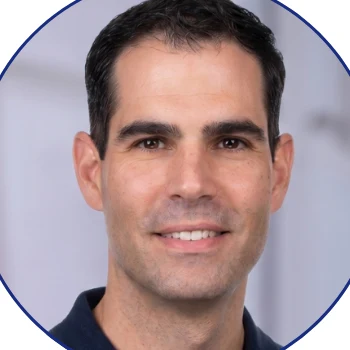
Jennifer Vaughn, MD, MSPH, Associate Professor of Hematology, The Ohio State University Comprehensive Cancer Center – The James, with Nick Napolitano, PV patient advocate, diagnosed in 2016
 PV TOOLKIT
Program toolkit, PV treatment today
Your PV Toolkit starts here
- The full program, on demand, with Dr. Vaughn and Nick Napolitano
- The 6-page PV Toolkit, printable and emailed to you
Next, choose On demand to watch now or Replay to get a link by email.
In the program
Six questions Dr. Vaughn answers
Am I low-risk or high-risk?
How doctors decide your risk of a blood clot (thrombosis), and why that category shapes your treatment.
Why is PV considered a cancer?
PV is a chronic blood cancer, one of the myeloproliferative neoplasms (MPNs). Dr. Vaughn explains what’s happening in your bone marrow, and what that word does and doesn’t mean for your outlook.
What labs should I track?
Hematocrit, hemoglobin, white cells, platelets, ferritin and more: what each one measures and why it matters in PV.
How do I start tracking symptoms to make my appointments better?
From fatigue and itching to night sweats and brain fog, how to log what you notice and turn it into a better conversation with your care team.
How do I bring this up in a short appointment?
Practical language for symptoms, cost concerns and quality-of-life questions.
What are my treatment options today?
Phlebotomy and aspirin, hydroxyurea, interferon therapy and the newest FDA-approved option, explained side by side.
From the toolkit
Look for trends, not single numbers
Dr. Vaughn explains which counts matter between visits. The toolkit’s lab tracker gives you one place to log them, outside labs included, so you and your doctor can see the pattern.
“You can’t overreact to one visit. You have to track over time and see a trend.”
Nick Napolitano, PV patient advocate
What you’ll get
Six pages for every appointment

- Why track my symptoms?Common PV symptoms, what else to note, and a free symptom tracker from Blood Cancer United.
- Shaping your personalized treatment planLow risk vs. high risk, plus a plain-language guide to your labs.
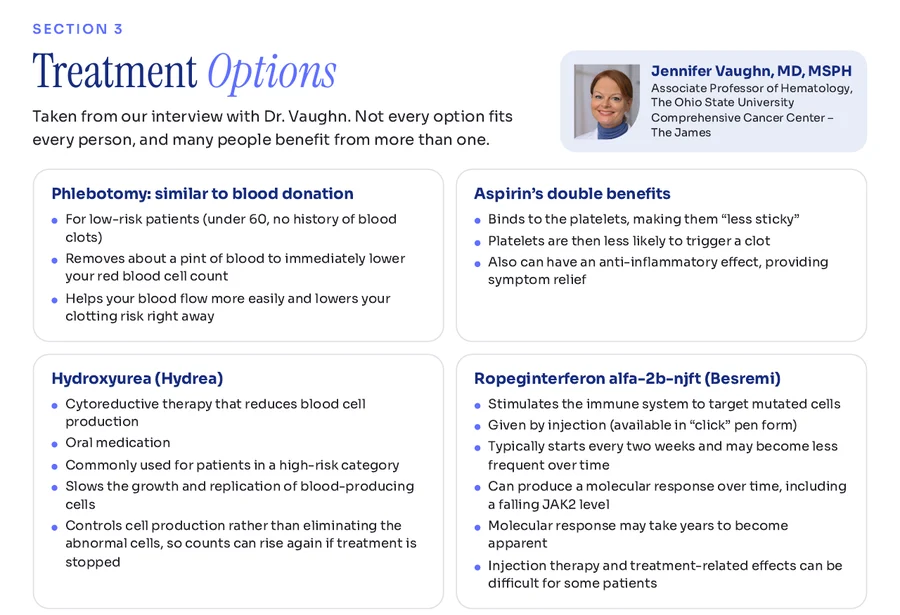
- Treatment optionsPhlebotomy, aspirin, hydroxyurea, ropeginterferon, ruxolitinib and rusfertide, from our interview with Dr. Vaughn.
- Track, prepare, and askA lab tracker and the questions to bring to your care team.
- Your care team and supportWho belongs on your team, and where to find help with cost, trials and support.
Starts with My PV at a Glance, one page for your diagnosis, mutation, risk category and care team.
The program panel
A hematologist and a patient, in one conversation
Jennifer Vaughn, MD, MSPH
Associate Professor of Hematology, The Ohio State University Comprehensive Cancer Center – The James
Hematologist focused on MPNs, including PV. Former community oncologist; published ASH education content on preventing blood clots in PV.
“Thankfully, most patients live for decades with the diseases, and so there are a lot of different considerations we need to have.”
Nick Napolitano
PV Patient Advocate, Moderator, The Patient Story
Diagnosed with JAK2-positive PV in 2016 at age 37. Patient speaker and volunteer leader with Blood Cancer United’s Light The Night.
Program Partners

Founded by a PV patient, MPNRF directly connects patients, researchers, and clinicians while offering educational resources like the You and MPN series to help navigate care options.

Thank you to Blood Cancer United for their partnership. They are here for you with information about clinical trials, resources, and dedicated support through their Information Specialists.
Program Sponsor

Thank you to our sponsor for its support of our independent patient education program. The Patient Story retains full editorial control over all content.
This is not medical advice. Please consult with your healthcare provider to make informed treatment decisions.