
Lauren Heard “No Evidence of Disease” After Treating Stage 3 Colorectal Cancer While Pregnant, Then It Came Back as Stage 4
Lauren’s colorectal cancer story started when she was 37 and 20 weeks pregnant with her third child. She noticed rectal bleeding and consulted doctors. They initially told her it was likely hemorrhoids and sent her home with instructions to take baths. The bleeding did not stop; it got worse, happening up to 10 times a day by the time she was 20 weeks along. Her OB-GYN insisted she go back and push for real answers.
Interviewed by: Taylor Scheib
Edited by: Chris Sanchez
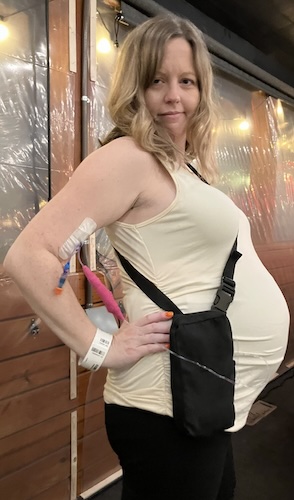
A flexible sigmoidoscopy in December 2024 found a tumor that almost completely blocked her colon. She was told she had stage 3 colorectal cancer. Because she was pregnant, the first oncologist she saw refused to treat her, telling her she would need to go to a bigger city. Lauren drove to Vanderbilt in the middle of the night, and doctors there started her on FOLFOX chemotherapy while she was still pregnant, closely monitoring her and the baby for tumor swelling that could trigger emergency surgery.
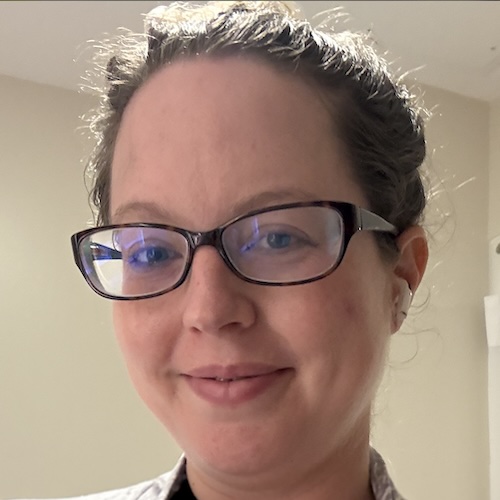
She completed six rounds of chemo before her son was born healthy on April 15, 2025, then returned within weeks to finish two more rounds. Chemo shrank the tumor, and 33 rounds of radiation followed. When a scan later found a small remaining spot, Lauren had surgery to remove part of her colon, temporarily living with an ileostomy bag before a second surgery reversed it. In December 2025, her surgeon told her she was cancer-free.
Less than four months later, in April 2026, everything changed. Lauren’s oncologist found spots on her liver, a compression fracture in her spine, and disease in her lymph nodes above and below the diaphragm. Her colorectal cancer was now stage 4, with metastases to her bone, liver, and lymph nodes. She began FOLFIRI chemo plus the monoclonal antibody bevacizumab, a regimen she now expects to stay on indefinitely. She spent weeks making end-of-life arrangements before her scans started showing progression.
Today, Lauren is down to three areas of remaining disease and is regaining energy between biweekly infusions. She has become an outspoken advocate for earlier colorectal cancer screening and for patients pushing back when something feels wrong. She draws on her medical background from her career and the online patient community that helped her navigate a diagnosis her own doctors said they had rarely seen.
Watch Lauren’s video and read the edited transcript of her interview for more insights into her colorectal cancer story.
- When Lauren’s OB-GYN told her to “shove it in their face” and demand real answers, it was likely the single decision that saved her life. The tumor was found to be millimeters away from a full obstruction that could have killed both her and her unborn son.
- Lauren went through six rounds of FOLFOX chemotherapy while carrying her son. She delivered him healthy at full term and finished her final two rounds within weeks of giving birth.
- Adults being diagnosed with colorectal cancer are getting younger and younger. Lauren was diagnosed nine years before the standard screening age of 45. Her experience is a reminder that persistent rectal bleeding is never something to wait out, no matter how young the patient or how reasonable the first explanation sounds.
- A KRAS mutation, three fired oncologists, and a recurrence that came back faster than anyone expected have not made Lauren an expert on her own cancer, and she is honest about that. What she is certain of is that she has to keep asking questions, keep reading, and keep showing up to every appointment with a list in hand.
- Lauren’s stage 4 diagnosis did not come with a clean timeline or a clear prognosis, and she has had to make peace with not always getting a straight answer. She has found that not knowing gets easier to carry with a community of other patients who understand it without her having to explain.
Lauren’s Diagnosis Facts
- Name: Lauren D.
- Age at Diagnosis:
- 37
- Diagnosis:
- Colorectal Cancer
- Staging:
- Stage 4 (Metastatic)
- Mutation:
- KRAS
- Symptom:
- Rectal bleeding
- Treatments:
- Chemotherapy: FOLFOX, FOLFIRI
- Radiation therapy
- Surgeries: lower anterior resection with temporary ileostomy, ileostomy reversal
- Monoclonal antibody: bevacizumab
This is not medical advice. Please consult with your healthcare provider to make informed treatment decisions.
- Lauren’s Diagnosis Facts
- Diagnosed with stage 3 colorectal cancer at 37 years old and 20 weeks pregnant with my third baby
- Running a business, raising two autistic sons, and then an “oopsie baby”
- I thought I just had to pass gas: My first signs of rectal bleeding
- “I won’t deliver poison to you and your baby”: The diagnosis and the fight to start chemotherapy while pregnant
- Firing two oncologists and learning to treat cancer like my job
- From hearing I was cancer-free to spots on my liver: My cancer recurrence to stage 4
- What my KRAS mutation means and why even my oncologist isn’t fully sure
- “You have to give yourself grace”: My message to anyone newly diagnosed
- Hear from people living with colorectal cancer
Diagnosed with stage 3 colorectal cancer at 37 years old and 20 weeks pregnant with my third baby
Hi, my name is Lauren. I was diagnosed with stage 3 colorectal cancer at 37 years old when I was 20 weeks pregnant with my third baby. I went through chemotherapy, radiation therapy, and two surgeries. The first six rounds of chemo were with the baby still inside me; he turned out healthy, and I was cured.
Before my first three-month scan follow-up, I was feeling terrible again. I went in on April 9, 2026, and the oncologist said I was feeling terrible because I had spots on my liver. I went from no evidence of any disease, from the surgery and all the scans, to a very widespread cancer, which led to me being stage 4, with metastases to the bone, liver, and lymph nodes. Very widespread throughout my body.
Running a business, raising two autistic sons, and then an “oopsie baby”
Being diagnosed at 37 is incredibly young for colorectal cancer in general. Before the diagnosis, I was working full-time in insurance. I was a claims manager in auto insurance for 16 years, working virtually. At the time, I had a six-year-old and an eight-year-old, both on the autism spectrum. My oldest is profoundly autistic. My middle child is moderately autistic; he’s level two. He never stops talking, while his brother can’t talk at all. (EDITOR’S NOTE: According to the World Health Organization, most people who develop colorectal cancer are aged 50 and above. However, the number of colorectal cancer patients who are between 30 and 50 years old is rising in some areas.)
I was doing yoga, spin class, and going on walks every day in the middle of the day. I was very healthy. Leading up to the diagnosis, I opened a brick-and-mortar store as a side project that turned out to be very all-encompassing, as the sole proprietor there. A lot of financial investment. The stresses of operating the store, working full-time, raising two autistic children with 50/50 custody, and then unexpectedly getting pregnant with my partner at the time, on top of all that, a month after the store opened. We’re no longer together, but still. I just think with the very immense stress, the body will respond. And I think the body responded by dividing cells it shouldn’t have.
All of the doctors think the pregnancy and the large colorectal tumor came about at the same time. They can’t say which one started first. I firmly believe my “oopsie baby” saved my life, because where the placenta and everything were pressing, it caused rectal bleeding to show me that it was present.
I thought I just had to pass gas: My first signs of rectal bleeding
I was sitting in my office at the store. I thought I had to pass gas, as one does. I thought I just passed gas, and when I looked down, there was literally a ton of blood and blood clots, and I didn’t know what to do. I went to the bathroom, and it was rectal bleeding. I’ve never had this. I thought it was a crazy pregnancy thing. I got pregnant later in life, at 37, so maybe it’s some weird thing that I didn’t have in my early 30s when I had the other boys.
I go to the emergency room, and they do an ultrasound on the baby and say, “Your baby’s fine. We don’t know what to do with you. Go to the GI immediately.” I go to the GI, and they’re just like, “Yeah, it’s probably hemorrhoids. It’s just hemorrhoids. Just go home.” They sent me home with the discharge instructions that said to take baths. I thought, “Oh, that’s my instruction? To take a bath and come back in six months when I’m about to deliver? That’s my instruction?” I kept on bleeding. I kept on bleeding, and they didn’t do anything.
“I won’t deliver poison to you and your baby”: The diagnosis and the fight to start chemotherapy while pregnant
I disconnected from my body a lot. In my mind, I probably knew the rectal bleeding was bad, but I wasn’t Googling everything, because everyone says, “Don’t Google.” I recommend everyone Google absolutely everything. Put all your questions in ChatGPT. I know that’s sometimes controversial to use these bots, but if I had Googled and I had seen that cancer was a possibility, I would have been raising the roof. I would have been going to specialists in a much bigger town, instead of this very small town. But I wasn’t Googling. (EDITOR’S NOTE: It may be tempting to search for advice about cancer on the internet or on social media platforms. But as Memorial Sloan Kettering Cancer Center points out, information online may be outdated, inaccurate, misleading, or outright wrong. This makes it crucial to be duly diligent about where one gets cancer information. MSKCC offers key advice on how to help ensure that the information one is sourcing is correct, relevant, and up to date.)
I thought it was weird. The bleeding would come and go. Sometimes I would have a few days I didn’t have it, so I thought I was fine, but then it would come back. It wasn’t associated with pain, but it was ramping up. I started bleeding at 14 weeks, and closer to the 20-week mark, I was bleeding profusely, up to 8 to 10 times a day when I would go to the bathroom. It was a lot.
I went to follow up with my OB-GYN, and she said, “What are they doing? What’s happening?” I said, “Nothing! They don’t even want me to come back until I’m almost ready to deliver.” She said, “Something is wrong, Lauren. You have to take pictures of what is coming out of you. You have to go back to the GI, and you have to shove it in their face.” Not aggressively, but she said, “Shove it in their face, and refuse to leave until they do something.” I firmly credit her with saving our lives, mine and the baby’s life.
If I hadn’t had that confidence from her, that here’s what I had to do, I would have just gone along with it. Honestly, probably the baby and I wouldn’t have been here. Because when I went back on December 19, 2024, to the GI, she did another physical. She said, “I can’t feel anything.” I had to do stool testing, and that involved me fishing around through the blood clots and everything, trying to find any solid pieces to even submit, which was insane.
She said, “Your stool testing is great, and your blood work is great too.” I said, “Cool, because I am bleeding profusely 8 to 10 times a day, and this is not okay. I don’t care what your labs say. This is not okay.” She was an NP, which I love NPs; honest to God, I do love NPs. But she would always go out and talk to her superior, come back and say, “We can do a scope, but it’s going to be three weeks because it’s the holidays and we don’t have any room.” I said, “Absolutely not. I’m going to sit here until you decide how to get me that scope immediately.” I was crying.
They were literally scurrying and running around; I could see them in the hall. Finally, the office manager comes in and says, “Okay, fine. You can go across the street. Our lead GI is going to scope you tonight.” I go across the street, and it’s nighttime. They try to do an enema, but that doesn’t do anything. They roll me into the OR, wide awake, no sedation, because I’m pregnant. The nurse is holding my hand. It’s called a flex sig, like a mini colonoscopy, because people say you can’t just go in for a colonoscopy. I know you can’t. When things are very low, like in the rectal area, they can do a flexible sigmoidoscopy. They barely go in to see what’s going on. (EDITOR’S NOTE: A “flex sig” or flexible sigmoidoscopy is a method doctors use to examine a patient’s rectum and the lower part of their colon with a camera attached to the end of a long, thin tube.)
He did it, which was very uncomfortable with no sedation, and the nurse was holding my hand. I should have known something when he said to a nurse, “Pass me something for a biopsy.” But I was zoned out. I had tried to shut my body down from the stress of everything. They wheeled me back to my room. He comes in five minutes later, sits on my bed, has another nurse hold my hand, and says it’s cancer. I said, “Excuse me?” He said, “You have a very serious tumor that’s almost completely blocking your colon. You have to go immediately to Evansville,” which is the next, bigger town over.
I was in shock. I remember my eyes almost bugging out; my eyes got big. The hospital bed was laid out, and I was pushing myself back in the bed, like physically trying to retreat from him and the news. I’ll never forget that room. It was all gray and dark. They didn’t have a lot of lights on in there. What do you mean I have cancer? I thought I was bleeding. He said, “The tumor, if it completely obstructs your colon, you die, and you are very close to a full obstruction. The only alternative is to divert to an ostomy bag, a permanent ostomy bag.”
I was freaked out about that, and the disbelief of him saying that. My first question, which is sad that a lot of cancer patients think this, was: Did I do something to cause this? He said, “No, Lauren. You just got cancer. No one causes cancer.” He leaves the room after I ask him questions. I look at my partner and, again, the silliness, I apologized to him. I said, “I’m so sorry that you’re going to have to go through this with me,” which is silly. Why would I be apologizing to my partner that I got cancer? The silliest things I said in that room. Completely a trauma response.
We leave, and I talk to my older boys’ dad. They were at the play place. I went there and wanted to sit with my boys, and I cried and cried with them. They didn’t know what was going on because they’re both autistic, so they don’t understand what any of that is. But I was sitting there, crying with them. This is my first real brush with mortality, at 37 years old, pregnant, with two other kids, basically working two jobs full-time. It was more than any human could process at the time, and I wasn’t processing it.
Every night, once I got the kids in bed, I would take long baths, not because the GI doctor said to, but because water is my healing response. I would lie in the tub and cry and cry and cry and cry, and think, “I don’t even know if I’m going to get to see this baby delivered. I don’t even know if I’m going to get to see my older kids grow up. I might not even make it through this year. I might not make it at all. This is so serious.” I didn’t know what to do. There wasn’t a clear resource to reach out to. It was like, “You have cancer now. Go and deal with it.” I was befuddled. I didn’t know what to do.
And then it was more trauma on Christmas Eve. They had me go to Evansville to talk to the surgeon, to talk to the high-risk OB, because I was officially high-risk then. I asked my OB, “Am I high risk?” He said, “Absolutely, you’re high-risk. You have cancer! Are you crazy, girl?” But the surgeon said, “I can’t operate on you. We can’t cut this out because you’re pregnant. We have to shrink it with chemo.” The high-risk OB said, “Yes, absolutely, we have to shrink it with chemo. You’re going to be okay. This FOLFOX chemo is relatively safe as far as chemo goes. Your baby’s going to be okay. You’re going to be okay. We’re just going to start your chemo, get this baby delivered, and you’re going to be cancer-free one day.” (EDITOR’S NOTE: A study on the effects of chemotherapy on pregnant women and their babies found that chemotherapy should be avoided during the first trimester of pregnancy due to the risk of congenital malformations. Chemotherapy must be reserved for the second and third trimesters.)
They couldn’t get me in with the oncologist there until December 30th. I went, and she walked in the room and said, “There’s no way I’m treating you.” And I said, “Excuse me?” She said, “You are pregnant and you have cancer, and they are asking me to deliver poison biweekly to you and your baby, and I won’t do it. You either need to go to Nashville or Indy; just because this surgeon here won’t cut on you doesn’t mean one there won’t. Where do you want to go?” And I said, “Why did they both tell me it was fine?” She said, “They don’t see people die every day from chemo like I do.”
The worst bedside manner. If I thought I was brushing with mortality at the diagnosis, at that appointment, I was certain I was going to die, because of the way she delivered it. Yes, people do call it poison. I even call it poison now, but it’s poison that’s saving my life. She had this horrible bedside manner, horrible demeanor.
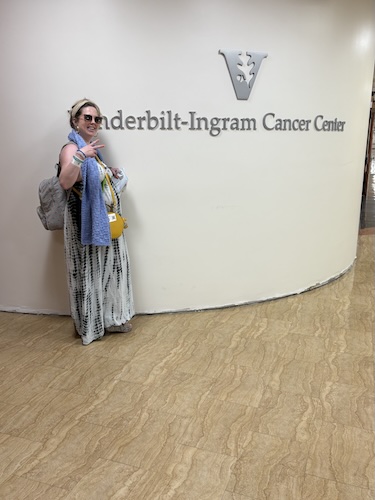
I picked Nashville because I lived there for 10 years, I know a lot of people, and I know Vanderbilt-Ingram Cancer Center. I kept trying to get in there and schedule myself; I was constantly on the phone, saying things like, “I have to get in now. I could feel my body running out of time. I have to get in now, now, now.” The surgeon and the oncologist didn’t have office hours until Tuesday, January 7th. I told the lady on the phone, “I don’t have until January 7th. We have to get me in now. I’m running out of time.” She said, “There’s nothing I can do.” I said, “Do you want to talk to my kids right now and tell them why their mom died because you can’t get me in?” She said, “Listen. If it’s that bad, come in through emergency, and they will take you, and they will start you.” I said, “Thank you.”
The night of January 4th, I woke in the middle of the night with terrible pains in my stomach, and I thought, “This is it. I have to go.” We drove from midnight to 3 a.m. to get to Vanderbilt. I went into Vanderbilt’s ER to check in, and they said, “Are you here to deliver?” And I started bawling. I can’t speak. For five minutes, I was crying, and I couldn’t tell them why I was there. My partner was parking the car; I was by myself, and I couldn’t even speak.
Finally, I calmed myself down to tell them no. At the time, I was 21 to 22 weeks pregnant. “No, I’m not here to deliver. I’m here because I have colorectal cancer, and I need treatment now.” They’re all aware of what’s going on, and they say, “We have to make sure you’re pregnant first.” They do a scope right in the waiting room, because allegedly they’ve seen a lot of crazy things. We wait forever.
Once they finally got me back into an ER room, swarms and swarms of doctors came… Vanderbilt’s a teaching hospital. They all have the doctors, the fellows, and the residents that come in groups. I had to have seen like 50 of them that day. They were all completely freaked out, which I was too. They took me for a CT scan, and they said, “You barely have any room for anything to come through.” The high-risk OB was in there, the NICU came, and they said, “Your baby’s not viable. He has to be at least 22 to 23 weeks to come out viable. If you get obstructed, you have to go into a 7- or 8-hour surgery for an ostomy bag. We can’t monitor the baby during that, because of where he is in relation to it. We just have to see if he makes it.”
I said, “That’s not a good strategy. Start the chemo. Start the chemo now.” They said, “Yes, we will start the chemo now, but we have to admit you for seven days, because there’s a chance the chemo could swell the tumor before it shrinks it. If it swells, you’re going into emergency surgery, because that’s the only way to save both of your lives,” so I was admitted.
They didn’t let me eat or drink for three days. The OBs were very upset about me not eating or drinking, but the oncology side was like, “You could go into emergency surgery at any second. You’re not eating or drinking.” Can you imagine a pregnant woman under this much stress, only having IV fluids? That’s all I had and colonoscopy prep stuff. That’s all I had. I was so mad.
Finally, the lead surgeon came in. They had all been hyping me up about her the whole time: “She’s going to fix it. She’s your person. She’s going to make this right.” She comes in on January 6th or 7th by this point, and she floats in on a cloud. This woman comes in the door with her flock. I swear she floated over to me. She held my hand and said, “I’m here now.” I said, “Thank you so much.”
She was a big part of my treatment team at that time, even though I couldn’t have surgery until later. She said, “Listen. You’re going to have this chemo. You’re going to be okay. We just have to get it going. Or, because there’s the risk of surgery, do you just want me to do the surgery now, and know that you’re done?” I said, “No. Do I want you to give me a permanent ostomy bag and potentially risk my son’s life for a surgery just in case? No, I don’t, thank you very much.” I wasn’t mad at her; she was just giving me options. “But we’re going to do the chemo, and we’re going to make sure it works, and I’m going to be here for you to monitor you through that.”
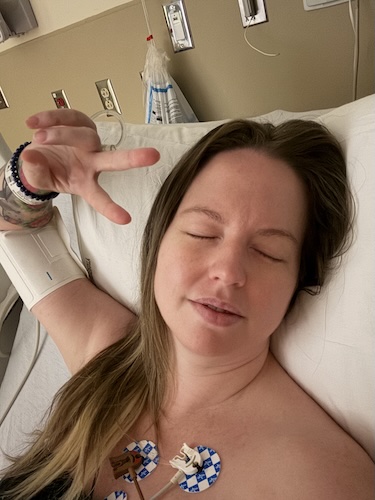
The night of January 7th at 11 p.m. is when the chemo was rolled in. I didn’t even know what chemo was. They put a PICC line in my arm, which they do basically like a surgical procedure right in the room; it’s all so sterile. They put a PICC line in my arm because we didn’t have time for a port, which I have now. I didn’t know what chemo was at all. I had never even Googled it. What does chemo mean? I don’t know.
The nurse rolled in a pole with bags, and maybe she was blowing smoke, but I was crying so much, and she said, “I just had a mom recently that had this done, chemo while pregnant, and she has a toddler now, and the toddler is perfectly healthy.” I said, “Thank you.” She could have made that up. How could she even track that? I don’t know, but I was so grateful she said that. She just held my hand, connected the bags to the line from my PICC, and chemo started. I didn’t know if it was going to be like a flash of lightning, like I was going to feel something crazy, or what was going to happen.
What happened was nothing. Nothing happened. You just sit there, it goes into the line, and you feel absolutely nothing. Down the road, I would get cold sensitivity starting in my fingers. Typically during chemo, you don’t feel a lot; it’s the side effects after. But time doesn’t matter in the hospital. They started at 11 p.m. because it doesn’t matter in the hospital what time you start.
I stayed a whole week. The rounding oncologist kept trying to discharge me every single day, and I said, “No, sir, I’m staying here until my surgeon and oncologist release me. They told me there could be swelling of the tumor, so I’m not going home, and you’re not sending me.” I would be fighting with him. “You’re not discharging me. You’re not. Go talk to them. Go read my records.” Eventually, he said, “I don’t know about the swelling, but also I don’t ever treat rectal cancer.” I said, “Okay, perfect, then listen to me when I’m telling you what the oncologist and surgeon who do treat colorectal cancer, specifically rectal cancer, said. Why are you making me fight you?”
It was just ridiculous. He would have his residents come to tell me I was getting discharged, and I said, “No, I’m not. I’m not going anywhere until my doctor comes.” Finally, one night, my surgeon came in so tired. You could tell she was so tired, because she’d be in day-long surgeries. I’m like, “I kept telling him he can’t discharge me,” and she said, “I know. He doesn’t treat rectal cancer.” I said, “Can I go home or not?” She said, “Yes, you can go home, but here’s my cell phone number.” She was so sweet. The really good doctors will give you their private cell phone numbers; I have many of them. I said, “What am I looking for if I have to come back sooner than every two weeks to get the chemo?” She said, “If you start throwing up a lot, getting pains, or whatever, come back or call me first.”
I didn’t, but then I had to go every two weeks to get the chemo until the baby was born, which was exhausting. Three-hour drives going there, saying several days, and being pregnant was exhausting. I think it was more than any human can handle. I was so dissociated in all of those chemo rounds. Now I’m so present. Now I get anxiety and panic. I’m going through all of this trying to calm myself down, because I’m actually experiencing it.
Back then, I had to shut myself down because I couldn’t handle the amount of trauma I was under. It was too much. Being in the chemo chair at two and four weeks postpartum is a trip. A lot of women don’t even leave the house for a month after they give birth. Not only was I leaving the house, but I was also traveling three hours and sitting in a chemo chair with my newborn at two weeks old. It was unbelievable and still something I’m processing, because it was so traumatic.
Firing two oncologists and learning to treat cancer like my job
I always say, your life is going to come down to how much you’re willing to advocate, or, if you’re lucky enough, to have a caretaker who will advocate for you. I hate that it’s like that, but young people are brushed off so much. “You can’t have that cancer. You’re not old enough.” They don’t even do colonoscopies until you’re 45 years old. I got mine at 37; I would have never lived to 45. I’m passionate about getting the age lowered to 30. I’m passionate about telling people how to get a colonoscopy before 45. It’s on my Facebook page. You can get the testing; you just have to be strategic about it.
I grew up already having some medical knowledge. I did a certified medical transcription course that I never utilized, but I know how to read medical records. For 16 years in my career, personal injury claims and reading medical records every day, I had a very strong familiarity with the medical field, despite having never worked in it. I’m emboldened that I can read my own chart; I can ask questions about my chart. A lot of people have no medical knowledge, and a lot of people are scared to talk to doctors, or overwhelmed by talking to doctors.
Doctors are up on this pedestal. I do respect the training the doctors have. But what people have to remember is no one is the expert on your body except yourself. You are the only one who has lived in your body your entire life. I don’t care what that medical doctor knows or doesn’t know about you. You know more about you than any doctor ever will.
If you are dropping into your intuition, if you are listening to yourself and your body, you know when something is wrong, and you cannot stop until you have answers. Sometimes modern medicine is the answer; sometimes there are a million other things out there you can look at. You have to be open to going as far as you have to go for your health.
Some people get tired of advocating for themselves, or they don’t know how. Every time a doctor comes into the room, if you are overwhelmed, you need to be recording it; not recording in their face, but turn your recorder on, set it next to you, and record everything that is said. If you’re a person who gets overwhelmed, you’re not going to remember one-tenth of what they said. It’s going to go in one ear and out the other, and all you’ll care about is, “What’s my next step? What door do I go in next?” You need to care about absolutely everything the doctor says.
Every appointment I went to, I would keep notes for every visit and the next visit. I always went in with a minimum of 10 questions. I would say in the beginning, “I’m sorry, but I have these questions,” and they never once pushed me off; they never once denied me the chance to ask my questions.
It’s hugely important to join a community. You cannot go through cancer alone; it takes a village. Yes, it takes people coming and helping you in your house, cooking and doing all this stuff. But it also takes you getting in on an online community of people across the world who have the same cancer or at least close to it, if you have a very rare cancer. There are groups for everything.
I don’t even know how I knew about it; somebody probably told me, or I saw a resource at the Vanderbilt resource room, which is cool, by the way. They have a huge resource room attached to the waiting room. I’m sure a lot of the major metro areas have that. You need to go in there and read everything. I know it’s exhausting. I know people get sick of talking about their cancer, sick of living it. But when you’re in the thick of it, initially learning what it means to have cancer, what does my cancer mean, and what do I need to be doing, you have to read everything.
I found COLONTOWN. It used to be on Facebook, and they moved it to a private website to be more private, but over 12,000 people across the world who have colorectal cancer are part of it. You can join different groups in there. I was stage 3, so I joined the stage 3 group. I joined a parents’ group. I would ask them anything and everything, and I would read anything and everything constantly.
Through some of my research, I found what’s called the Cancer and Pregnancy Registry by a specialist in New Jersey. The thing about having cancer while being pregnant is that my oncologist told me each oncologist only has 1 to 2 pregnant patients in the entirety of their practice. My oncologist at Vanderbilt is very high up, and I’m only her second ever pregnant patient, so that’s me being very rare. The odds of getting something like this are something like 1.25 million or something; I can’t remember. But in my exhaustive reading and research, I found Dr. Cardonick, who has followed 400 women who have been pregnant with cancer, which is an amazing number compared to 1 or 2.
People want to say oncologists are like God. They’re not. They’re human. They’re doing their best with what they know. Some of them read more research than others. Some of them are more familiar with certain types of cancer than others. You cannot act like, “Oh, I found my oncologist, and I’m going to do what they say.” People do pass away very quickly when they’re not able to advocate for themselves or no one is. You hear these stories of people who were pushed off for so long; some of them were pushed off for decades. They finally get in front of an oncologist, and it’s like, “You’ve got 30 days to live. Go do your affairs, because it’s far too gone to do anything.”
I’m on my fifth oncologist right now. Not that I’ve fired all of them. I do have oncologists two, three, and five still on my treatment team. I have a lead oncologist at Vanderbilt, I have an oncologist in town where I get my chemo (because I’m not going to Vanderbilt every other week for the rest of my life; it’s too much stress), and I have a radiation oncologist. But oncologist number one and four, fired. It’s no offense to them. I’m sure they help plenty of people; they were not helping me, so I said I’m not going to see them anymore.
Oncologist number four used to walk into the room and say, “Why do you have your hair? You’re not supposed to have your hair. Everyone loses their hair by round three. You’re on round six. Why do you have your hair?” Because I try very hard, I researched very much, and I’m lucky enough that I had a very full head of hair that I could lose. I’m losing it; it’s thinning, but I don’t need that negativity. It was the second visit. She said, “Oh, I didn’t realize you had cancer while you were pregnant.” Excuse me? That’s the entirety of my chart, so you didn’t even look at my chart?
I didn’t badmouth her. I didn’t say, “This is ridiculous, whatever.” I just took it in. The next visit, when I saw the NP, I said, “I need you to make it happen that she’s not my oncologist anymore.” She said, “Done.” She talked to the director for me, and now I have a new oncologist. I loved him when I met him this week for this round of infusion.
You have to be willing to get as many opinions as you need, and you have to be willing to travel. I know some people don’t have the resources for that, and please set up a GoFundMe if you don’t have the resources for it. The bigger the metro area you can go to, the better doctor you’re going to have. I’m not dogging doctors in small towns. We need the doctors here. The money, the research, and the knowledge are at the very big cancer centers. If you can get to LA, Chicago, New York, or Texas, go to those. If I could get up to Chicago, I would, but I’m at Vanderbilt, which, along with Atlanta, is probably the best in the South, and I’m okay with that.
But I believe if the cancer was not shrinking, I would get myself to one of those places to get a sixth opinion. You have to treat it like your job. I did it without a caretaker for the majority of this, because the relationship ended right after I had the baby, unfortunately. If you have a knowledgeable caretaker, there are caretaker groups too. In COLONTOWN, they get in there and talk about everything they know. You have to treat it like your job. I’m sorry. You have to read everything. Oncologists are not God. They do not know everything.
So many times I’ve sat in front of an oncologist and said, “I read this. Can I get this test? Can I get this drug? Can we do this therapy?” And almost always, they say yes, but it’s because I found it in my research. They don’t have time to sit there and give you 50 options. That’s why it comes down to advocacy. Advocacy simply means to speak up for yourself. You have to be ready to go toe to toe with some of these providers, and that’s very hard for people who don’t have the knowledge, education, or even the voice to speak up. If you don’t, you’re going to have to find someone in your circle who’s willing to go with you and do that hard work, like transcribing the notes and researching everything, because that’s honestly the difference between being alive and not.
Sometimes people do everything possible. Sometimes people advocate for themselves so hard, and it still doesn’t work, and the cancer still takes them. People will talk about, “Oh, they lost their battle.” No, they didn’t lose anything. They fought very, very hard and did everything they could, and in the end, it just wasn’t going to work out, no matter what they did, no matter how hard they pushed.
I don’t want to act like if someone passed, they didn’t advocate for themselves to the highest degree. They very well might have. They might have done everything possible, but still, the cancer took them. Sometimes it’s because they did get pushed off. They did try. They did push for so many years. “I need answers, I need answers, I need answers.”
And just like me, they were going to send me away for three more weeks, and honest to God, I might not be sitting here if they did, because it was millimeters from a full obstruction. I didn’t have three weeks. I thank the Lord above that my OB-GYN emboldened me like she did, because I would not have been bucking up like that had she not said, “Do or die,” and I said, “Yes, ma’am.”
Thank God in my story, I had this heroine who came through to save me. If she hadn’t, would I have been bold enough to advocate? I might not have. I might have gone home for three weeks. And that would have been my last Christmas with the boys.
From hearing I was cancer-free to spots on my liver: My cancer recurrence to stage 4
I was diagnosed on December 19, 2024. The rectal bleeding had started six weeks before. I got the diagnosis and went to Evansville. At the end of December, the oncologist said, “I’m not going to treat you; go to Nashville.”
I started my first round of FOLFOX on January 7th, 2025, and I do it biweekly, so every other week, I’m back, and I do six rounds. And then we have to pause for four weeks before delivery. They want as much chemo out of the body as possible. I think March 23rd was the last of the six rounds.
And then I went in for an induction, which I’m not a fan of. I wanted to deliver naturally, but they couldn’t let me go to term. They needed to get the baby to term and get him out of me so I could restart, and they couldn’t risk me going into spontaneous delivery at any time. I go in on April 14th, 2025, even though I told them I wanted April 15th, because it’s tax day, a tax day baby. They didn’t listen to me. But funny enough, I went in, and he didn’t end up coming until April 15th, so I was like, “Haha, told you.”
I hired a doula for the first time for that delivery, which was an amazing experience. I loved my doula. She had like 25 years of experience. She held my hand all night through the contractions because they didn’t set up the epidural correctly or deep enough, so every few hours I’d be in immense pain, and she was right there. I delivered April 15th, 2025. I did all the cord blood banking this time. I didn’t do that with my older kids, but because of all the medical issues, we used a very good company that literally got the cord blood within the hour and flew it by private plane to wherever their facility is. Very official, very cool, and I’m glad I did it, if the kids or I ever need it.
At two and four weeks postpartum, I had to go back to Nashville to finish my eight rounds. Those were my two after delivery. It reduced the tumor to almost nothing, which was amazing, but we had to have it completely gone, so I went into 33 rounds of radiation. I did that in town, in Jasper, Indiana. I wasn’t thrilled about it. I was going to go live in Nashville to do 33 rounds. It’s one a day on weekdays, so it’s like a month and a half-ish, but I found this place in town has very cutting-edge technology. The radiation oncologist is from Denver, and he came here to pilot it. I met with him and felt really good about it, and I thought, “Okay, I will trust you to do the treatment around the corner from my house, so I’m not in another state for half the summer.”
I started the radiation at the end of May and into early July. I would go once a day for 15 minutes, the same time every day. You walk in, you lay out on an MRI-looking thing, but it’s not claustrophobic; it moves around you. They had stars in the sky on their ceiling that would twinkle, and they had tropical scenes on the TVs. It was cool. You lay there for 15 minutes. I didn’t feel anything during radiation whatsoever.
But once it was done, I went back to Vanderbilt in August. I was certain that everything was gone. I was certain it was out of my body. I was like 99% sure. I knew it was almost gone with chemo, so the radiation, I was sure, had taken it away. I was so confident. And then I go in, and she says, “There’s still a tiny red spot. Even the tiniest bit of it, we have to cut it out, because it will come right back, and you’ll have to do all of this again.” I said, “I’m not doing all this again.” She scheduled my first surgery for early November. It was a lower anterior resection. They cut out that part of the sigmoid colon and then they diverted it to an ileostomy bag.
When I woke up from surgery, I wouldn’t look at the bag. I was there eight days, and I wouldn’t look at the bag the first three days. I had it under the blanket. I didn’t want to see it. I didn’t want to know what it was. I was just again in denial and shock, and alone in the stay, which was nice, because it was a little break. I could just sleep whenever. But it was awful pain, because your body has to divert to that instead of the typical bowel movements, and my body wasn’t taking to it.
They cleared me after a couple of days to eat and drink, and every time I would, it would eventually all come back up. I threw up so many times. They said, “Your body’s not going to the bag.” It got to the point where they wanted to suction out all the stuff in my stomach that was resting there, that couldn’t get out, until my body started using the bag, because I was in immense pain from not being able to get this out of my body.
They came in one night; the charge nurse said, “We’re going to do an NG tube through your nose to get it sucked out.” He puts it up; he has three nurses around him, some of them are holding my hand; it’s an ordeal. He says, “Okay, you’re going to drink this as I shove this up.” I said okay. He shoves it up, hits something, and I start pouring blood out of my nose and mouth, profusely. He said, “Oh my God. I hit something. I’ve never felt this amount of pressure in someone’s nose. Have you had your nose broken? What’s wrong?” I said, “I’ve never had nasal problems in my life. I don’t know what to tell you.” He said, “I’m going to do the other side, and if the other side’s like that, you’re not getting an NG tube.” He does the same thing, same impact, same blood. They left the room, and my body started using the bag. It filled up the entire bag. A nurse came in, and I said, “Oh my God, the bag is full! Go tell them! Go tell them!” I guess maybe my body had to get scared, and then I could eat and drink everything, and I was completely fine.
A teaching nurse would come and show me how to use the ostomy supplies, which was a lot to learn and overwhelming being alone, but I figured it out. What choice did I have? I had to figure it out. I had to go home and use this stuff. Home health would come once a week. You have to change it constantly. I went home with an ileostomy bag, and I had the bag for five weeks.
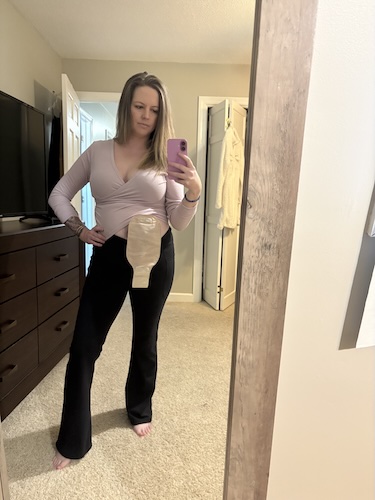
I got used to it. I thought it was this big scary thing, but honestly, it’s not that much trouble. If I had to live with this, it wouldn’t be the end of the world, and so many people do have to live with it. I even posted a picture on my socials, not showing the bulb itself, because it’s basically pulling intestine-looking stuff, a bulb, through your skin. I didn’t show that, but I put the bag over it and took a picture, looking normal, but with this bag. I wanted to raise awareness that it’s not the end of the world. It’s not gross, and it’s not weird. If someone has an ostomy bag, that’s not gross. It’s okay. It was becoming my norm, and I am eternally grateful that they were able to reverse it; I’m not going to deny that. But I realized it is doable to live with, even if you’re a young person.
I think it was right after Christmas when they did the ostomy reversal, which was also not pleasant but not as bad as the first one. I was there five days, discharged right before New Year’s. Luckily, we got everything on the bill for the year. $990,000 is what they billed my health insurance for 2025, and health insurance paid out like $400,000-something. You know how health insurance does. But the surgeon comes in after the surgery and says, “You’re cancer-free!” And I said, “What? Everything’s done?” She said, “Yeah! Go home! We’ll see you in three months. You’re good to go. No evidence of anything.” I posted about it; I would talk about it, but I never thought it was real. I couldn’t identify with it.
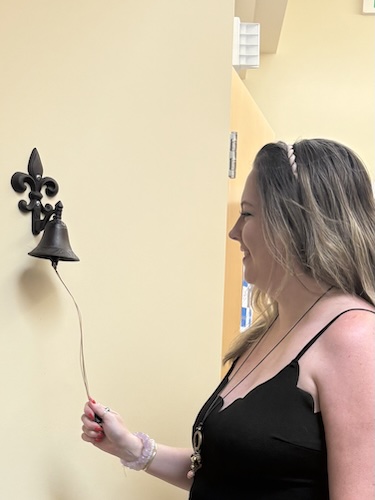
Post-cancer is its own battle and journey. There are so many people online who talk about, “Yeah, I’m cancer-free, but I’m not good. I’m not golden. This isn’t over. This is ongoing. This has changed my life. Don’t act like I rang the bell and we’re going to move on like it never happened. That’s not a thing.” I totally got that.
I went back on April 9, 2026. I had seen my PCP, and he said, “You’re anemic. Your iron is low.” I thought, “Man, this anemia is bad.” I thought I had pulled something in my back. I couldn’t lift the baby all that well. I was hiring babysitters to help me get him up and down the stairs, and I thought, “What did I do to my back? This is so weird.” And I went in, and she said, “Well, there are spots on your liver. There’s a compression fracture on your spine from a tumor. You have mets in your lymph nodes above and below the diaphragm.”
I just found this out recently, because there’s a degree of needing to know everything, and there’s a degree of what you can handle to know at the time. Recently, I started having headaches, and I thought, “I’m going to go back and read the last PET scan.” I have a metastasis in a bone at the back of my skull, so that helps explain that. But from April 9th until now, I am on a round of FOLFIRI, which is a much harsher chemo than FOLFOX, plus bevacizumab.
Bevacizumab, I learned in an online group recently, also causes cardiac issues, which I had last year: blood clots in my lungs. I was being monitored for a pulmonary embolism, which, if it went to my heart, would have killed me. That’s when I started doing a lot of the funeral planning and end-of-life planning. Being in the hospital for that pulmonary embolism was really scary, because at any time it could just go to your heart.
But I started doing FOLFIRI plus bevacizumab around the corner from my house. Thank God I live right here in town by the cancer center. I felt okay doing it here, because my lead oncologist at Vanderbilt was calling in the chemo prescription. She was still over everything; they’re just administering it here. I would love to have all my treatment at Vanderbilt. I would love to see her every other week; she’s so knowledgeable, but it’s not realistic. I think I did round one and maybe two at Vanderbilt, and the second time I drove home on the chemo pump by myself, instead of three hours, it took five hours because of traffic. I said, “Lauren, you’re done. This is stupid.” What person in the world is driving five hours home on chemo? You can’t do this to yourself.
I started doing treatment here, and it’s okay. It’s not as great, but it’s saving me a lot of travel time. I stopped the count, so I don’t know what number round this is. I’m very into numerology and the significance of numbers, angel numbers, and all of that. I felt like giving the round a number was giving it a name, and I thought, “You’re not that special, chemo. You don’t get to have names or numbers assigned to you. I’m not going to give you that power over me.”
I know I’m somewhere around the lower 20s probably or close to 20, I don’t know. Sometimes at the cancer center they’ll count, and I’ll say, “Don’t tell me.” For me now, it’s lifetime chemo. People ask, “When are you done with treatment?” People can’t wrap their heads around what lifetime chemo means. It means, for the rest of my life, every two weeks I have to have chemo. Even though I’ve had an amazing response to this chemo, I’m down to only three lesions or areas of mets: the base of my skull, the thoracic spine, and only one spot in my liver. So I’m having huge, huge progress, amazing progress.
I might have no evidence of disease even within the next couple of months, because of how well it’s going. But people want to put a bow on it. It’s not done. Because of how aggressive it was and can still be, I still have to have chemo every other week. Unless we get really confident, she said we might be able to skip to once a month instead of twice a month, and unless there’s science.
That’s why this research for cancer is so critical. There could be a breakthrough that would prevent me from having to do chemo like this. It’s only 2026; imagine 20 to 30 years from now? There are people with stage 4 cancer who are living decades and decades and decades, and that’s not something people understand. Stage 4 is you’re going to die, basically? No, there are people who go into remission.
I had such a dismal delivery from the April 9th visit. They won’t give you timelines anymore, not usually, unless it’s very clear. I was like, “No, how long do I have?” She wouldn’t tell me. And I said, “Like six months or a year?” And she said yeah. I’m thinking I only have six months to live. I go and prepay the funeral. I go and have a video made of me and the boys at the house with me talking, because I don’t want anybody else to talk at my funeral. I want to run it like I always run everything.
I was getting my affairs in order. I met with an attorney to do a very official special needs trust: over 100 pages, this document, for the boys. He’s 26 years in the industry and he knows everything. I was doing everything because I thought I was dying. Now we’re in September. Being diagnosed in April with stage 4, I was in shock again, crying in the bathtub again every night for a month to six weeks.
But then I got past it, because every chemo round, I started feeling better. It was giving me more energy. Because I had a thought before this chemo started, “Whatever’s in my body could kill me.” I had a very vivid thought at the end of February, and that was scary. Because the year before, I didn’t feel the possibility of death in my body, at least physically. But this year, I felt physically like I might not be able to carry on, and that was scary. I had to go on disability. My appointment was April 9th. I think I made it to like March 24th or something. I told my work, “I can’t work. I don’t know what’s happening, but I can’t work.” I went on disability, still on disability.
As the chemo progressed and I got more and more energy, after how many rounds, I would get disconnected on a Friday and spend the entire weekend in bed. That was my weekend. The kids were with their dad, and I would spend the entire weekend sleeping like 40 out of 48 hours. My body was fighting it hard, trying to recover, trying to heal. I wasn’t even watching TV; I was just in my bed.
But then I started getting energy, and as I got energy, I started getting inspired to do different things, like starting a diet. I had never been on a specific eating plan throughout the whole cancer, because oncologists won’t give you an eating plan. They say, “Eat what you can.” The first thing people say is, “Oh my gosh, you have to starve out the sugar. You have to fast. Don’t eat any meat anymore.” And I’m like, “That’s just the media. The doctors don’t actually say any of that. And there’s no supporting research for any of that.” (EDITOR’S NOTE: While it is true that all cells in the human body feed on sugar, even cancer cells, UT MD Anderson explains that there is no evidence that sugar causes cancer directly. Consuming too much sugar can lead to obesity, which is a risk factor for cancer.)
But I finally started feeling good enough to start cooking at home and eating on a meal plan, and that gave me a lot more energy. I thought, “What do I want to do with my life? I’m 39 years old. I’m on disability.” I signed up for meditation teacher training, so now I’m doing training to be a meditation teacher. I want to go into the prisons, the schools. I’m already leading circles in my community for free. Once I get the certification, I want to go in and do more of that.
I honestly think how much meditation I’m doing is helping me heal, is helping me connect to my body and heal my body. I’m just into a lot of cool stuff that’s not even cancer stuff, like sound baths, feeling the reverberations from the bowls they use and stuff like that. People call it woo-woo stuff, so I guess I’m into woo-woo stuff, but I think it’s helping so much.
I even went on a silent retreat for the first time. In the first two days, complete silence. I learned so much about myself, about my cancer, and about my healing that I never put together before, just being in complete silence. Being able to listen to my mind and body, I learned so much.
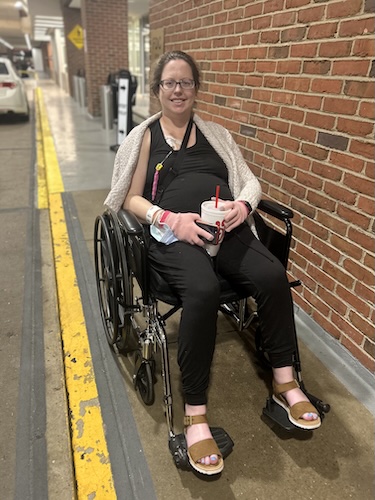
I’m on biweekly chemo for life, but I don’t let it stop me. I’m feeling better, so I’m trying to do one trip a month. My retreat this month and next month: the older boy’s dad and I are taking the kids to Disney World for the first time, a co-parent joint adventure. But I’m going to have to use the automated wheelchair in Disney, and that’s hard to stomach. Being 39 years old, looking the way I look, people say, “You look fine.” I do look fine, because I get ready every day, but that doesn’t mean I feel fine.
I have heavy fatigue. I don’t have the energy to walk even a mile, so I’m building up to it. I jumped for the first time when I got back from the retreat. I haven’t jumped in two years because I haven’t had the energy to. I didn’t even do that much. I did like three hops, and I was so proud of myself, because I hadn’t jumped in two years. I’m just on the healing path now.
What my KRAS mutation means and why even my oncologist isn’t fully sure
I honestly don’t know a lot about my mutation. I know that as soon as I got diagnosed, I had genetic testing done, and they said there’s no specific hereditary gene that led to this, but there is a mutation. Honest to God, I can’t even explain it. I don’t even know what that means. My oncologist is very high up at Vanderbilt. She’s on a lot of boards, she’s involved in a lot of experimental treatment groups, and I wholeheartedly trust her, because I don’t know what the mutation means.
Basically, what she says about it is that because I have this mutation, I might be eligible for other drugs that come out that pertain to it. Specifically, the recent pancreatic cancer treatment drug that came out and is extending people’s lives significantly with pancreatic cancer, which is amazing. She said that could potentially translate to me, because she thinks it has to do with that mutation. I don’t even know for sure why she thinks that, but she thinks it will translate. And I’m like, “Cool. I would love to have whatever it is.” (EDITOR’S NOTE: The recently approved drug Lauren is referring to is daraxonrasib. This is a RAS inhibitor, a medicine that blocks mutated Renin-Angiotensin-System or RAS proteins from activating growth signals in tumor cells. The FDA announced the approval of daraxonrasib on August 26, 2026.)
Because if I stop responding to chemo for any reason, if it’s growing despite the chemo, my only option is to go into a clinical trial, which is an experimental drug, to see. We don’t know if this will work or not, but let’s see if it works on you. It’s this crapshoot that you’re just like, “Okay, let’s do it.” (EDITOR’S NOTE: Clinical trials are stages in medical research that test how effective a treatment under development is on human patients. They offer researchers the chance to understand the potential impacts of drugs being developed, and also give patients access to medicines that they may not be able to access otherwise.)
I’ve made amazing friends across the whole country. We talk outside of COLONTOWN, like on Messenger or FaceTime. I talk to people all across the country that I’ve really grown close to, because there’s such an understanding from someone who’s walking in your same shoes, same treatment, whether they’re a few years ahead or even before you. There’s so much to be said about community. I will never stop harping on the importance of community.
The mutation? I don’t even know, other than the fact that I might be eligible for things because of it. That’s an interesting question I’ve never posed to myself: Did it come back that fast because of the mutation? I don’t know. I’ve asked the oncologist specifically: Why did it come back that fast? Was it ever gone? Was it hiding? She said, “It probably was never gone. It was probably just in a place where we couldn’t see it, maybe in the blood, or different things.” It just came back super fast.
“You have to give yourself grace”: My message to anyone newly diagnosed
The overarching message is you have to give yourself grace. We live in a society that wants to point to a reason why you got this cancer, and they did not. I don’t blame anyone for having cancer. I think it’s a multifaceted reason, even though we don’t exactly know why it happens. I think it’s stress that people are under, cell phone waves that are always around, things in our food, air, and water that shouldn’t be there, potentially genetic predispositions, or lifestyle. I don’t think lifestyle is the biggest factor, and people want to point like it is. “Oh, well, if you had only been vegan.”
I’ll tell people: There are vegans, ultramarathoners, the healthiest people in COLONTOWN, all of whom got this same cancer. There are people who’ve smoked a pack a day for 20 years and who will not get cancer, and there are also people who’ve literally never smoked in their life who will get lung cancer. We just have to have grace and stop the judgments.
It’s so hard, because people have so many judgments. You will hear the craziest things when you get diagnosed with cancer. People telling you this, that, or the other, coming up saying, “Oh, my mother died of that. My grandmother died of that. My uncle died of that.” Don’t tell people that people died of the cancer they have; that’s not helping them.
I was out eating lunch the other day, and I wanted to have a Diet Coke. I know Diet Coke is not good for anyone; no soda is good for anyone, despite everyone drinking it. But I have a diet soda a couple of times a week, because I can. There are guidelines for what you should and shouldn’t do, like smoking or drinking, while on chemo, and yet there are plenty of people who smoke and drink and all of that. You’re living your life.
This person came up to me. I told them I had cancer. They didn’t know before, and they said, “Oh my God, you can’t drink that Diet Coke. That has aspartame and sugar, and that causes cancer.” And I said, “Actually, there’s no definitive research that it does. I understand it’s not that great, but I only do it a couple of times a week because it makes me happy, and I’m going to do what makes me happy.” And she was like, “Oh.” She thought I didn’t know.
You’re constantly having to defend yourself, online and in person. Sometimes you just smile and nod; sometimes you want to educate them that they’re actually talking about something that doesn’t have scientific backing. It’s hard for cancer patients. And I probably said a lot of stupid things over my life that I didn’t think about.
I love when people say, “I don’t know what to say.” Perfect. That’s the perfect response, thank you. Because I don’t know what to say either about having stage 4 cancer at 39 years old. I don’t either, and no one really does. And the fact that you’re willing to admit that you’re here for me, and that you don’t know what to say? Perfect. Let’s sit in silence for a while or go take a walk in silence.
It all goes back to community. As a cancer patient, be willing to embrace your new community. When I progressed to stage 4, I wanted to hide it from the world, and I did, for over a month. I hid it from the entire world. I didn’t want to deal with people. I didn’t want to go through the pity party that people wanted to throw and the sympathy. I didn’t want any of it. I just wanted to squirrel away in my room and be done.
But I eventually realized: Lauren, you have a story to tell. Everyone has a story to tell. And that’s when I finally posted, “Hey, this is me, and I’m stage 4 now.”
I write so much online. Figure out your outlet. If your outlet is writing, reading, or being in nature, find healthy outlets. I drink milkshakes most of the year and watch a lot of Netflix, so I get that too, and I’m totally on board if that is your coping at the moment. But when you feel better, be open to eating nourishing foods for your body. Be open to walking outside barefoot in the grass, connecting with nature. Be open to going to a cancer group. You don’t even have to talk, but being around people, being in nature, just listening to your own intuition. No matter what the doctor is saying, what is your body saying? What is your mind saying? And go from there.
It’s about connecting to yourself, connecting to your community, being willing to tune in. So many of us have just tuned out for so many years. We go to work, come home, watch Netflix, and go to bed. That’s okay. I tuned out for a lot of years too, because of a lot of trauma. But when you can start tuning into your life, start listening to the voice, start listening to your body, start learning where your body is hurting and why, start addressing that and being open to whatever treatment comes about, or at least be able to ask questions about it.
In this cancer journey, as crazy as it is, I’ve connected with my mind, body, and soul. I started dropping into my intuition and listening. For the first time in my life, I’m listening; I’m not tuning out. The more you can listen to yourself, be in community, be in nature, the more beautiful it is. Life is beautiful.
I say I’m deliriously happy now, and I don’t think people believe me. But I’m literally happy every day I wake up, because I’ve had this prolonged near-death experience. I’m totally excited, even if I don’t have plans for the day. “I woke up today! This is super cool!” I get so excited about the smallest things.
Life is really beautiful. And unfortunately, sometimes it takes cancer to get you there. But so many people I know, years into it, are just like, “This is amazing. Life is amazing.”
This interview has been edited for clarity and length. The views and opinions expressed in this interview do not necessarily reflect those of The Patient Story. This content does not replace professional medical advice.
Inspired by Lauren’s story?
Share your story, too!
Hear from people living with colorectal cancer
Real experiences with diagnosis, treatment choices, side effects, and life beyond colorectal cancer — in their own words.
Leave a Reply