Categories
Chemotherapy Feeding tube placement Head and Neck Cancer Lymphadenectomy Metastatic Partial glossectomy Patient Stories Platinol (cisplatin) Radiation Therapy Reconstruction Squamous Cell Carcinoma Surgery Tongue Cancer Tonsillectomy Tracheostomy Treatments

Tongue Cancer at 37: Brittany’s Misdiagnosis, Major Surgery, and Finding Her Voice Again

Tongue Cancer at 37: Brittany’s Misdiagnosis, Major Surgery, and Finding Her Voice Again

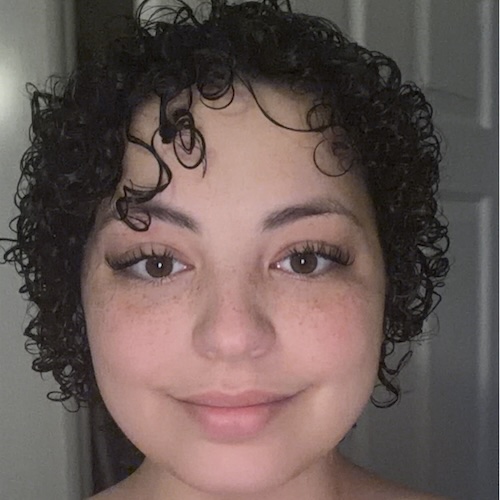
Brittany’s tongue cancer experience began with a simple moment at the bathroom sink and turned into a fight for her own diagnosis, survival, and identity. She was 37, newly married, and thriving as a project manager, actor, and burlesque performer when she noticed a red patch on the side of her tongue and severe ear pain that felt like an infection. Over the next five months, she was misdiagnosed multiple times, dismissed as being “too young for cancer,” and even accused of seeking pain medication, all while the pain intensified and a hidden tumor under her tongue made eating nearly impossible. She lost 35 pounds and watched her body change dramatically before an ENT finally took her seriously, ordered imaging, and confirmed squamous cell carcinoma of the tongue (tongue cancer).

Interviewed by: Taylor Scheib
Edited by: Chris Sanchez

By the time Brittany reached Dr. Michael Moore at Indiana University, the tongue cancer had spread to her lymph nodes. Her team moved quickly. She underwent a 12-hour surgery that removed 70% of her tongue and 22 lymph nodes. Surgeons reconstructed her tongue using tissue from her back, installed a percutaneous endoscopic gastronomy or PEG feeding tube, and performed a tracheostomy so she could breathe while she healed. Later, she went through 33 rounds of radiation with a tight immobilizing mask and six weeks of weekly chemotherapy. Complications like a neck fistula, profound weight loss, and persistent side effects layered onto the already intense treatment.

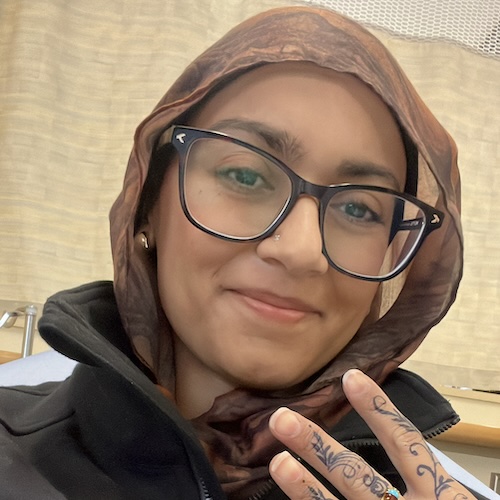
Brittany Z. tongue cancer

Recovery meant beginning again with basic functions. Brittany now works closely with a speech therapist twice a week to relearn how to speak, swallow, and manage food safely. She uses tools to stretch her jaw, practices step-by-step swallowing techniques to reduce the risk of aspiration, and celebrates small but meaningful wins, like the first time she managed to eat Oreos dunked in milk. Socially, she navigates the emotional impact of not being able to eat like others, living with scars, a feeding tube, and a voice that sounds different than before.

Through all of this, Brittany’s transformation is not about becoming someone new but recognizing who she has always been. She describes herself as a “chatterbox” who loves people and connection, and she’s leaned into that strength. Today, she does speaking engagements on side effects, self-image, and self-advocacy, participates in support groups at Indiana University, and hopes to speak at future head and neck cancer symposiums. She urges others to advocate for themselves, ask for help, and remember that “no one can navigate cancer alone.” Brittany has also started blogging about her experience, hearing from readers who feel less alone because of her honesty. She emphasizes that life can even be better after cancer, and encourages patients to seek out community, patient advocates, and peers who truly understand what they’re going through.

Watch Brittany’s video and read the edited transcript of her interview below.

  • Self-advocacy can be life-saving; she was misdiagnosed for nearly five months and believes that insisting on more opinions is the reason she’s still here.
  • Tongue cancer and head and neck cancer treatments affect every part of life, including speech, eating, weight, appearance, work, and relationships; not just the tumor site.
  • A universal truth for patients: no one can navigate cancer alone, and support from loved ones, peers, and professionals is essential for both physical and emotional healing.
  • Brittany’s transformation is about reclaiming her voice and purpose. She’s moved from being a performer to a patient advocate, speaker, and blogger who helps others feel seen.
  • Trauma from delayed diagnosis and aggressive treatment can coexist with hope; she reminds others that life can even be better after cancer and that small milestones (like eating a favorite cookie) matter.

  • Name: Brittany Z.
  • Age at Diagnosis:
    • 37
  • Diagnosis:
    • Tongue Cancer (Squamous Cell Carcinoma of the Tongue and Lymph Nodes)
  • Staging:
    • Stage 4
  • Symptoms:
    • Painful tongue rash
    • Loss of mobility
    • Severe ear pain
  • Treatments:
    • Surgeries: partial glossectomy, lymphadenectomy, tonsillectomy, tracheostomy, feeding tube placement, tongue reconstruction
    • Radiation therapy
    • Chemotherapy: cisplatin
Brittany Z. tongue cancer

This interview has been edited for clarity and length. This is not medical advice. Please consult with your healthcare provider to make informed treatment decisions.

The views and opinions expressed in this interview do not necessarily reflect those of The Patient Story.


Life before my tongue cancer diagnosis

My husband and I met in 2022. His name is Mason, and we met in a murder mystery dinner theater. We were both on the house staff. I was divorced, and I was just like, “I’m going to do what I want to do,” so I joined the cast. And so I’ve been a project manager for years, and was with a company and lived in San Diego at the time.

I also had my own burlesque show in San Diego. So if I wasn’t in dance class, I was producing a show, making a costume, or something like that. So the majority of my time was working, acting, and burlesque. And then my husband and I met, and he rounded me off.

We are tiki bar enthusiasts and karaoke enthusiasts. So if we went out, we were at a bar and just having a great time. So that was pretty much life before this.

From being a performer to losing 70% of my tongue to tongue cancer

I actually started doing speaking engagements now, and what I focus on a lot is side effects and self-image. Cancer affects everyone. In my support group, there are a lot of older people, but that’s not all it is. It’s young people as well. I’m 38, and I was diagnosed at 37.

For me, the biggest part came before. I was actually misdiagnosed four times for many months. So my tongue became very painful, and I couldn’t eat, and I dropped 35 pounds. People don’t realize how much your tongue helps you to eat. So I’m actually learning how to swallow. I still have a feeding tube as well, but that kind of abolished a burlesque career.

I have a tube in my stomach. My neck looks very different. I look very different. I’m 35 pounds lighter. My body is different. I say sometimes I feel like a stranger still when I look in the mirror. There are a lot of scars. For most tongue cancers, they will take tissue from other parts of your body to reconstruct. So for me, it was on my back. I actually tattooed over it, but I don’t look the same.

You don’t feel the same during treatment. So having the energy to do those things is just nonexistent. It’s a completely different life.

My first tongue cancer symptoms and early red flags

I was brushing my teeth. I was like, “Oh, my tongue hurts.” At first, I was like, “Did I bite my tongue?” I was looking at it, and I noticed I almost had a red patch on the side. It was exactly down the right side. I was like, “Oh, that’s bad. I should probably make a doctor’s appointment.” By the time I got to that doctor’s appointment, if I stuck my tongue out, it went to the side. I was like, “Oh, that can’t be good.” Everything for me was on the right side.

I started getting insane ear pain, like down inside my ear in here. I’ve heard that for a lot of people, that’s one of the first symptoms. It was like, “Do I have an ear infection?” That’s what it felt like.

So I went in. I actually went to urgent care, and they told me I had shingles, but they were inside my mouth. Oh, that makes sense. So they gave me medication. It didn’t get better; it got worse. So I went back. I went back twice. First, I was actually told I was just looking for pain meds, and they kicked me out essentially. I was like, “No, something is really wrong.”

I stuck out my tongue, and then finally the doctor was like, “You should see an infectious disease doctor because of the rash.” She wasn’t sure. She did some bloodwork. Nothing came back. And then finally I saw an ENT, and she poked the side of my tongue, and I literally got up out of the chair and was across the room in pain, this blinding pain. She said, “We are going down for an MRI.”

So they put me on the elevator, walked me downstairs, and moved everyone else out of the way. I had an MRI and a CT scan. She biopsied me the next week and confirmed that it was cancer.

Five months of misdiagnosis and severe pain

Awful. It was almost five months. And it got more and more and more painful. There was a tumor, tongue cancer, under my tongue. I couldn’t see it. Anytime I would try to put food in my mouth, the pain would literally radiate up my head, like through my forehead. I was like, “Something is not okay.” I felt very close to death.

When I finally got to surgery, they actually didn’t know if I would survive surgery, just because I had dropped so much weight so quickly, and I had no nutrients in my body. My eyes were actually sinking into my face, and even my friends tell me now they were very worried about me even making it through the surgery. They weren’t sure.

Trying to function while in debilitating pain

I was actually looking for jobs at the time, both remote, but we bought a house and immediately had some big house troubles. So I took on an extra job because I needed to pay to have those problems fixed. But I would sit here in my office and just cry because I couldn’t do anything else.

I went to the emergency room once because the pain was so bad. They gave me some pain meds and an IV and sent me home. They didn’t do anything. Everyone thinks that you’re trying to get pain meds. But I knew something was wrong with me. They were saying, “Oh, no, it can’t be something bad like cancer, you’re too young.”

That’s just not true. Even now, it’s all ages, and it’s happening more and more in other people. Someone I know named Beth, who has cancer, is younger than I am. It happens with people in their 20s. Now I see it all the time from making connections and friends online. It doesn’t discriminate against your age.

An ENT finally believed me

Oh my gosh, it was such a relief. She did a scope on me as well, and she said, “I don’t like it. I don’t like the way that looks.” So we went immediately to the MRI, and then she set me up in just a few days with a biopsy.

I woke up from the biopsy, and everyone in the room was crying. So I was like, “Oh, this isn’t good.” My ENT said, “You have to get out of here and go to Indiana University. There’s an oncologist there, Dr. Moore, Dr. Michael Moore, and if I had cancer, he’s the person that I’d go to.”

I was like, “Oh my gosh, we have a plan now. Someone is taking it seriously.” She referred me to Dr. Moore, who saved my life, who is amazing, who got me in for surgery within two weeks, and said, “I’ll do everything I can.” If it weren’t for him, I would be dead, absolutely. I owe him. I tell him this all the time.

He’s just a great buffer, and he’s a great person. When we finally get into the hands of someone like that, it’s like there’s a glimmer of hope. “Finally, someone’s going to help me, and we can take a breath for the first time in all of it.”

Partnering with doctors and speaking to other patients

I really appreciate Dr. Hansen, too, the doctor who finally took me seriously. If it weren’t for those two, I wouldn’t be here. Both of them are wonderful about being like, “I’m the doctor, I can treat you, but I don’t have tongue cancer. So I will point you to places that support you because I’ve not been through it.”

I appreciate that too, because it’s like, “I can see you, I know how to treat you, but I don’t know how it feels.” Dr. Moore and I might actually pair up now, and I come in and speak to the pre-op patients because he’s like, “You’ve had it, you’ve done it.” I appreciate that he does that. Doctors throw a lot of information at you, and then it’s like, “Okay, are you ready?” And I’m like, “No, I’m not.” Talking to someone who’s been through it is just invaluable.

Hearing “You have tongue cancer” as a newlywed

I was absolutely overwhelmed. When you get a cancer diagnosis, I feel like your brain just shuts off to protect yourself in a way. I went through all of that to get here, and now that was just the start of something else. Everyone is different.

For me, the tongue cancer had already gotten to my lymph nodes as well. I had no idea, but I didn’t know if I was going to live. My husband and I had been married for two months when I got the news, and the only thing I could think of was that there hadn’t been enough time to love him properly. Is this the end of it with us here?

I felt that way for my friends and my family, too. That’s what I thought of first. It just hasn’t been enough time to tell all these people how I feel about them. A positive that came out of it is that I don’t wait anymore to tell people, “I care about you, I love you.” I tell people how I’m feeling. I just don’t wait anymore.

In my case, the tongue cancer was so advanced that I didn’t get to make decisions. Decisions were made for me. “We will come in on this day, and we will have the surgery, and then we will have radiation, and then we will have chemo, and we’ll just do our best, but we don’t know how things will go.”

I appreciate the honesty. I want honesty. But it’s hard to know I don’t get to choose. It’s been chosen for me and scheduled, and now I have to do it. It feels very out of control and overwhelming. So those are really the two main emotions that I went through, even through treatment, like I just have to keep going because this is what has to be done.

The devastation of delayed tongue cancer diagnosis

I think about that all the time because I probably wouldn’t have had to have as much of my tongue removed as I did. And then also from PET scan to surgery was two weeks, and it went from not being in the lymph nodes to being in two of them. That’s how quickly this spreads.

So with cancer, you’re just racing a clock. I’m not going to lie, I was mad when everything happened because I was like, “If we had caught this sooner, I wouldn’t have gone through as much suffering, and my husband wouldn’t have been left with so much.” With cancer, time is everything. Even in a matter of weeks, they don’t know how far it’s going to get. So that is the part that was very devastating for me. It was hard to deal with for a long time.

That’s why I tell everyone, please advocate for yourself. You know when something is wrong. If I had not pushed and gone back and seen five doctors, I would not be here. You know yourself the best, and you know when something is not right. So advocate for yourself until you find the answer.

The details of my 12-hour tongue cancer surgery

My tongue cancer surgery involved removing all of my lymph nodes on the right side of my neck. So they did a neck dissection, and they went up through that to remove the tumor. They removed 70% of my tongue on the right side.

Then they did a tonsillectomy just for precaution. The tongue cancer wasn’t there, but it shows up there a lot if it spreads, so they took my tonsils out. Then they took tissue from my back here and reconstructed my tongue for me. They put in a PEG tube in my stomach because I wasn’t able to eat.

So: neck dissection, 22 lymph nodes out, 70% of my tongue removed, reconstructed with tissue from my back, tonsillectomy, PEG tube, and a tracheostomy. That was temporary, just because there’s so much swelling after that surgery.

Waking up after a tracheostomy and with no voice

A big part that people don’t realize is that you can’t breathe on your own after that. So it’s not only all this to your head and neck, but when you wake up, you’re dependent on a machine to help you breathe. To me, that was also super scary on top of everything else. Even knowing that it’s temporary, you don’t know how you’re going to wake up. They don’t know. Something can change in surgery as well. They have a plan, but they don’t know until they get in there what is actually going to happen.

When I woke up, I couldn’t speak either. My husband and I were writing to each other, and I was like, “What actually happened?” That saved me — finding out this is what happened in surgery, this was the plan, and then this was reality. Knowing 70% of my tongue is gone, in the hospital, they’d be like, “Make a sound.” I was like, “I don’t know if I can.” For that first bit, it was just spit and no sound.

There’s a while there where I thought, “What will normal look like after this? What will happen today?” You’re just at the mercy of everyone else, and that’s a terrible feeling, especially for me. I’m someone who very much needs certainty. I’m kind of a control freak. I want to know what’s happening. I want to have a say.

I say this happened to me in life to be like, “No, you don’t always get to have control, and you have to learn to sit with it.” Sometimes I say that was my life lesson through all of this: you have to slow down and give up some of the control.

I don’t have a lot of patience either. Going through this takes a long time to heal. This month is a year since surgery, and I’ve come a long way, but there are days when it’s like, “When is it going to be better or be okay?” You just have to roll with it and do the best you can. It is what it is.

Relearning how to speak, eat, and swallow

I actually have an amazing speech therapist. I see her twice a week, and we focus on different things. A lot of people don’t realize that with tongue cancer and head and neck cancer, there are radiation aftereffects. I can’t open my mouth all the way. So putting food in my mouth or spitting requires so much other facial structure as well as the tongue and the jaw, and so to do all of that, I’ve had to just start from scratch.

I have a lot of tools that manually stretch my mouth. I do exercises so I can hopefully speak a little bit more clearly. You don’t realize how much you use your tongue to eat. If I put food in my mouth, my tongue doesn’t move it. So how do you put that down?

So I’m taking tiny passes and moving it through enough to chew. Then I have a step-by-step process to swallow food or liquid now, because I can’t swallow and breathe at the same time, or I’ll aspirate. I’ve done that a lot of times now, but it’s things that you do on autopilot, and that’s not how it goes anymore.

Working with therapists and other therapists there, it’s trying to figure out what works for you, what’s worked for other people. Some people have prostheses to help them. Everyone is different, and then you have to make adjustments. For me, I have to use my face a lot more to speak so people will understand me. So it’s things like that. They have to figure out what works for you and sit through it.

All the things that they said beforehand that are just automatic are not automatic anymore, and that’s the toughest part. Life revolves around food. Food is comfort. You feel left out. You feel like you don’t belong. Even social situations are based around food. I’m lucky. Everyone around me is very accommodating. All my friends don’t treat me differently, but I have to remind them that I can’t eat like I used to.

It’s such a work in progress, and it’s a millimeter of progress. It feels slow, but if you look back on it, you’ve gone both sides without realizing.

33 rounds of radiation and weekly chemo

I did 33 rounds of radiation. That’s daily for six weeks. If you’re a head and neck cancer patient, you have to have this mask on, and that is a fresh hell that nobody prepares you for. 

So they can pinpoint it, they put a mask on you and strap it down so they can be very precise. That was as bad as it sounds.

Then I had six rounds of chemotherapy. I was on cisplatin once a week for six weeks.

Complications: Fistula, weight loss, and “If it’s not one thing, it’s another”

I’m a small person. I’ve never been big. I’m 5’3″ and 100 pounds. I was like 130 pounds at my heaviest, so I don’t have a lot to work with. I had the surgery, and then they irradiated me, and then I had a fistula. So it opened up in my neck.

One day, they put me in the mask for radiation, and that had opened. They didn’t feel it, the fluid going down the back of my neck into the back of my shirt. Then they had to put a straw in it and drain it. It’s just, if it’s not one thing, it’s another. All that just compounds. Treatment compounds. That’s how it works.

Even when we’re done, it’s compounding. You still feel bad for a while. I just had every bad side effect you can have. I was like, I just have a bad case of the flu. I can’t do it. But it healed up. It was fine. But that day, I was like, “I don’t know what just happened, but something is wrong.” Then you have to take it from there and figure out what happened.

Self-image and body image after tongue cancer

I love our support group at IU. I spoke last month, and then I’m hopefully speaking at the Head and Neck Cancer Symposium this year.

A big part of it is the weight loss issues for anyone going through it, but for me, I have a PEG tube in my stomach, so I have that tacked onto myself all the time. I have a lot of scars on my neck and on my back as well, just from all the surgery. So it’s hard to see yourself so differently. I sometimes call this my second skin, because I feel like almost every part of me has changed.

Another thing people don’t realize is the way you speak. People take that as if you’re intelligent or not, or people think that I’m deaf, so they yell at me. Just having to explain yourself all the time — this is why I sound this way, this is why I have the scars, this is why all these other things. Sometimes it’s embarrassing or exhausting to be like, “Hey, this is why.”

I was a dancer before. I did burlesque. A big part of that was using my body to express myself. Now it’s not that I can’t do it; just for me, I’m not in a place to continue that at the moment. A lot of it is confidence. I’m not quite there.

I did a lot of acting before. I don’t sound the same. I don’t speak the same. Even getting a job is difficult. It touched every part of my life. It’s not just the self-image of surgery. It’s the self-image of how to express yourself, and now that’s so different. It’s not just the way it looks. It’s all of you.

You really have to figure out who you are at your core. What are the things about me that haven’t changed and won’t change? Navigating those things helps a lot — I’m still me under here, and the people who love you will still love you.

Being married, and being a newlywed, and now your body is completely different — my husband is amazing. He tells me I’m beautiful every day. But there was a time when he was like, “I’m afraid I’m going to hurt you or break you if I touch you.” That was very, very difficult. It’s not that he wasn’t attracted to me. He was legitimately worried about my body. He said, “I would never want to hurt you.”

People who hug me are like, “I’m trying not to hurt you.” You feel different, and people feel differently about you.

What tongue cancer taught me about myself

I love people. I’ve always been a chatterbox, and I said the universe tried to shut me up, and it just didn’t happen, so — sorry. I love knowing things about other people. The reason why I speak and do support groups and all of that now is that I want to know other people’s stories. I want to know how you persevere. I want to know what’s important to you.

I’ve always been that way. I just love getting to know people. I also will have a conversation with people anywhere, in a bar or out and about, because I want to know too. Everyone has been through things. It’s incredible.

That has not changed at all. Just wanting to help people, make people laugh, make people feel better, just having a connection — that’s always been part of me. Now I would say even more so, speaking to people. I look back on a lot of soul-sucking jobs, and now I’m like, “Maybe this was supposed to happen to me to be able to get away from that and do what I’m supposed to do.”

So I started to think of it that way as well. Just being a good person and seeing people find me — that will never stop for me, and never will. It’s nice to know that it’s the thing that won’t change.

My biggest advice for tongue cancer and head and neck cancer patients

I’ve said it before, but you can’t say it enough: advocate for yourself through diagnosis and beyond. For me, I’m always fighting insurance companies and disability and the system and all these things.

I always had trouble asking for help. You will need help. Don’t be afraid to ask for help. The people around you want to help you. Let them do it. You will need it. No one can navigate cancer alone. Support is everything.

Having other people to talk to is super helpful. If you are going through cancer, reach out to a doctor or a nurse, somebody, and ask them, “Is there someone I can speak to who’s going through it?” Or a social worker and a therapist, because it touches every part of your life — not just physically, but in the head and in the heart. You think about things that you wouldn’t before, and having support to advise you will get you through.

The people who love you always will, and they want to help you. Don’t be afraid to ask for help. Ask for what you need.

For people going through tongue cancer or just anything in life, remember who you are and remember that we want to be here and want to live. Don’t be afraid to tell people how you feel. I don’t think we can say I love you enough. Be unapologetically yourself and tell others how you’re feeling all the time, no matter what.

Finding community, blogging, and patient advocacy

There’s such a great support system on the internet for people with head and neck and tongue cancer, either through social media or through certain organizations. They’re wonderful. It’s been super helpful for me. I have my own blog, so writing about it helps me, and it helps other people. I’ve had so many people reach out and be like, “Reading your blog really helps me, and now I’m writing about my experience. I love it. I’m always like, “Please do that.”

I feel like more places should have patient advocates like me and like Beth, the girl I know who has cancer, because doctors say they see you, but they don’t have cancer. I really wish somebody had been there for me who had been through it. It is on my mind a lot. People get very afraid. They said for me I might not have a great outcome, and that is like — they don’t know how this is going to go.

I’m flourishing, and I just had a PET scan. So don’t give up hope because you don’t know what’s going to happen. Life can even be better after cancer. Reach out to other people. They’re happy to tell their stories and help you through it because it’s a route that nobody wants to be on, but once you’re in it, everyone is there to have your back. We’re all here. Find us.


Brittany Z. tongue cancer
Thank you for sharing your story, Brittany!

Inspired by Brittany's story?

Share your story, too!


More Head and Neck Cancer Stories

Vikki F. nasal squamous cell carcinoma

Vikki F., Head and Neck Cancer (Nasal Squamous Cell Carcinoma)


Symptoms: Nosebleeds that persisted for years, nose changed in shape, nasal pain, migraines

Treatments: Surgeries (subtotal rhinectomy, reconstruction surgery including radial forearm free flap, bone grafts, and cartilage), chemoradiation
...
Red S. tongue cancer

Red S., Tongue Cancer (Squamous Cell Carcinoma of the Tongue), Stage 3


Symptom: Persistent tongue ulcer that increased in size

Treatments: Surgeries (partial glossectomy, flap surgery), radiation therapy
...
Alyssa N. feature profile

Alyssa N., Adenoid Cystic Carcinoma


Symptoms: Persistent jaw pain, lightning-like facial pain during the first bite of meals

Treatments: Surgery (tumor removal), radiation
...
Eva G. feature profile

Eva G., Oral Cancer, Stage 4


Symptoms: Sore on the tongue, which caused pain during eating and speaking; changes in the color and texture of the tissue where the sore was located
Treatments: Surgery (partial glossectomy, radical neck dissection, reconstruction), radiation
...
Teresa B. breast cancer survivor experience

Teresa B., Recurrent Breast Cancer (Hormone-Positive), Oral Cancer (Lip Cancer), and Skin Cancer (Melanoma)


Symptoms: Lip cancer: chapped lips & a pimple-like growth on lip, breast cancer: enlarged left breast with lump, melanoma: none

Treatments: Surgeries (bilateral mastectomy with reconstruction, lumpectomy, craniotomy, Mohs, surgery, wide local excision), hormone therapy, radiation therapy
...

Categories
Chemotherapy Colon Colorectal FOLFOX (folinic acid, fluorouracil, oxaliplatin) Partial colectomy Patient Stories Surgery Treatments

Colon Cancer at 24: Meagan’s Story of Listening to One Symptom

Stage 3C Colon Cancer at 24: Meagan’s Story of Listening to One Symptom

At 24, Meagan was a busy graduate student and substitute teacher whose life revolved around lesson plans, a long-term relationship, and building her future. However, she was diagnosed with stage 3 colon cancer after months of noticing small amounts of blood in her stool. She had no abdominal pain, cramping, or major digestive changes. She initially assumed the bleeding was from hemorrhoids, especially as friends and family echoed that explanation. Even as TikTok videos about colon cancer and blood in the stool kept surfacing on her feed, the idea that this symptom could mean cancer still felt distant and unreal.

Interviewed by: Nikki Murphy
Edited by: Chris Sanchez

When Meagan finally saw her primary care physician, she felt heard and taken seriously immediately. Her doctor ordered blood work, a fecal calprotectin test, a CT scan, and a referral to a gastroenterologist (GI specialist), but everything came back essentially normal except for slight anemia. Embarrassed and questioning whether she had pushed too hard, Meagan still kept her GI visit, where the specialist recommended going “all the way” to a colonoscopy. That test revealed a 4-centimeter tumor in her sigmoid colon, and a subsequent surgery showed that seven of 20 lymph nodes were positive, confirming that she had high-risk stage 3C colon cancer at just 24.

Meagan M. colon cancer

Meagan began six months of FOLFOX chemotherapy, an experience that challenged her physically and mentally. Treatment cycles left her nauseated, without appetite, and dealing with severe cold sensitivity and lasting neuropathy in her hands and feet. She also navigated the emotional whiplash of watching friends live “normal” 24‑year‑old lives while her own plans, such as launching a teaching career, moving in with her partner, and starting a family, were put on hold.

Now in remission, Meagan is reshaping her life with intentionality: delaying motherhood so she can prioritize scans and monitoring, committing to exercise and nutrition changes, and seeking therapy and support groups to manage the ongoing fear of recurrence. She is clear that she does not yet call herself a survivor. However, she is learning to give herself grace, accept that she will never be exactly who she was before stage 3C colon cancer, and trust that she can still build a meaningful, joyful future.

Watch Meagan’s video and read the edited transcript of her interview below to take a deeper dive into her story.

  • Even one subtle symptom, like intermittent blood in the stool with no pain, can signal something serious, and getting it checked may lead to an earlier colon cancer diagnosis.
  • A primary care physician and GI specialist who take concerns seriously and push for full diagnostic testing, including colonoscopy, can be lifesaving when other tests appear normal.
  • FOLFOX chemotherapy for stage 3 colon cancer can cause intense side effects like nausea, cold sensitivity, and long-term neuropathy, making everyday tasks and mental health support especially important.
  • Being diagnosed with colon cancer in your 20s can disrupt career, relationship, and motherhood plans, but it can also lead to intentional decisions about fertility preservation, work flexibility, and prioritizing health.
  • For all patients: You may never feel exactly like your old self after cancer, yet with time, self-compassion, and support, you can still move forward and build a meaningful life.
  • Meagan’s transformation shows her shift from brushing off symptoms and assuming she was fine to advocating for herself, restructuring her future, and redefining what it means to live fully while in remission.

  • Name:
    • Meagan M.
  • Age at Diagnosis:
    • 24
  • Diagnosis:
    • Colon Cancer
  • Staging:
    • Stage 3C
  • Symptom:
    • Appearance of blood in stool
  • Treatments:
    • Surgery: partial colectomy
    • Chemotherapy: FOLFOX
Meagan M. colon cancer

This interview has been edited for clarity and length. This is not medical advice. Please consult with your healthcare provider to make informed treatment decisions.

The views and opinions expressed in this interview do not necessarily reflect those of The Patient Story.


Transcript of Meagan’s Interview

Meet Meagan: Stage 3 colon cancer at 24

My name is Meagan, I’m 24 years old, and I was diagnosed with stage 3 colon cancer in 2025, when I was 24 years old.

Life before my colon cancer diagnosis

Before my diagnosis, I was very busy. I was in school to become a teacher, so I was student teaching, which is basically when you teach without pay. It is kind of like an internship. I was doing that the entire full semester before my diagnosis. For the two years prior, I was also doing a master’s program, so I was very busy with school.

I was excited to finish school and be able to actually be a teacher with my own classroom. I am in a serious relationship, so I was looking forward to after graduation and what our life together would look like in terms of moving in, getting engaged, all those things.

First symptoms and taking action

First signs of colon cancer: Blood in my stool

I first started having my only symptom in August of 2024. I noticed a little bit of blood in my stool, but I did not think anything of it. I also was not the greatest in terms of diet, exercise, and water intake, so my family and friends all suggested that it was most likely hemorrhoids, because I also would not go to the bathroom very often. They were thinking it was related to that.

The blood would not be there every time, which was another reason I was not concerned, and it was not in large amounts. Sometimes I almost never noticed it at all. I really, truly — even all the way until when I went to see my doctor in February of 2025 — did not think anything deeper than hemorrhoids. I did not have stomach issues. I did not have pain, cramping, or any inconsistencies. I was just a very constipated girl, so I did not think anything other than hemorrhoids.

Living with symptoms for months before seeing a doctor

From August to February, I did not go to the doctor. I was not using hemorrhoid cream or anything at home. I honestly was just thinking that the symptoms would go away on their own.

By the time I went to the doctor, I had finally gotten to a point where I thought, “Wow, these are very stubborn hemorrhoids. They are not resolving. It is continuing to be something that I am noticing.” So I decided I might as well go see the doctor and see if there was something she could give me or do for me that would help resolve the situation.

Most of that time, I was just in school regularly and working as a substitute teacher. My mind was in a totally different place. I was not focused on my health or thinking that it could be anything serious.

Shortly before I went to the doctor, I started getting a lot of TikTok videos of people having colon cancer. I did slightly have that in my mind. I did not think I was going to have it, but I thought maybe I should think about getting something looked at, because everyone would talk about the symptoms, and blood in the stool was the biggest symptom they mentioned. But because I did not have other symptoms, I still did not think it would be something that would affect me.

TikTok, Google, and the push to see a doctor

I was not searching for my symptoms on TikTok. I had Googled my symptom, but I never did anything related to TikTok, so I was confused how that connection got there. It felt like it was meant to be for me to go to the doctor and for me to see those things.

It honestly felt like it was meant to be that TikTok started showing me colon cancer videos and pushed me to go to the doctor.

Path to diagnosis

The primary care doctor who took my concerns seriously

I saw my primary care physician in February, and luckily, she was amazing. She took my concern seriously and ordered every single step for me from the beginning. I have heard a lot of people say they saw their primary care and were told, “Okay, let’s do blood work and then see what happens,” but she just ordered everything — boom, boom, boom.

I had blood work, a fecal calprotectin test (to detect inflammation in the colon), a CT scan, and an appointment with a GI specialist to refer me for a colonoscopy.

I got the blood work done. The only abnormal thing was slight anemia, not full-blown anemia, but slight anemia, which is also a symptom. The fecal calprotectin test came back normal and did not show any inflammation in my colon. The CT scan also came back normal, but I did have a lot of stool in my body, so I am assuming that had something to do with why it came back normal, because maybe they were not able to see the mass because it was blocked.

After all those tests came back normal, I was feeling a little embarrassed. I still had my GI appointment booked, and I went anyway. I told her, “You know what? I honestly think that I am just fine. I do not know why I went this far. I was having this symptom, and it is still happening, but I do not know.”

Luckily, she took me very seriously, even though I was not taking myself seriously. She said, “We have gone this far. Let us go all the way and do the colonoscopy. There is no harm in it. It is not fun, but at least we can see physically what is happening inside and figure something out for you.”

Those were my steps, and then I got my colonoscopy at the beginning of June, where they found the tumor.

Colonoscopy prep and the day of the procedure

My GI specialist was very kind and did not want me to have to do the Golytely jug, because a lot of people struggle with that. I did SUPREP for my colonoscopy prep, which is two smaller bottles, and most of the prep involves drinking water as opposed to drinking a large, bad-tasting solution.

Even with Suprep, I still had a really hard time. It does not taste good. I got pretty sick drinking it, but I made it through and drank all of it. My parents were very encouraging. They kept telling me, “You are this far. You are doing the prep. You need to push through, keep doing it, go in for the colonoscopy, and have this be over.”

My colonoscopy was very early in the morning, so I went in first thing and went from there.

Hearing “We found a tumor” after my colonoscopy

I was rolled into the room for my colonoscopy and saw the doctor beforehand. He said, “Hey, Meagan, nice to meet you. I am just going to get in here really quickly, check everything out, and we will get you out super quickly. It should be easy-peasy.”

I fell asleep right away. When I woke up in the recovery room, the nurse came in and said they had called my mom to come back, and that the doctor was going to talk to both of us about how the colonoscopy went. That is not typically normal at my clinic. Usually, the person who picks you up just gets you to the car; they never come inside. The fact that they said my mom was coming inside should have been a red flag, but I was still groggy from anesthesia. I was just thinking, “Okay, great, my mom will be here,” and I did not think anything serious was coming.

The doctor came in and said, “Okay, I found something. It is honestly taking a lot for me to gather my words to say this because I have not seen anyone your age in this situation, but I found a tumor.” He said it was four centimeters. The next step was 100% surgery to remove it. He could not take it out during the colonoscopy because it was too large.

He was very hopeful and left it up in the air that it could be cancer or a very advanced polyp. Leaving the appointment, I was terrified, but I was not 100% sure it was cancer. He told me he had taken biopsies from the tumor and was sending them to the lab, and that I would hear in a few days whether it was cancer or not.

How I found out I had colon cancer: My biopsy results online

He sent the biopsies to Quest Diagnostics, and I have an account with them, so I can see my results for blood work and biopsies. He told me we would hopefully get the biopsy results by Friday, since my colonoscopy was on a Tuesday, but if we did not have them by Friday, I would have to wait until Monday, which felt like torture.

On Friday, I was checking Quest every five minutes, just hoping the results would be there. Five o’clock rolled around, and the results still were not there, so I knew he would not be calling me with results that day, and I would have to wait.

At 9 p.m. on Friday, June 6th, I saw the results on Quest. It said it was a moderately differentiated ulcerated adenocarcinoma in the sigmoid colon. Essentially, it meant it was cancer. I had to digest that information without having spoken to the doctor yet.

I was with my mom, my dad, and my best friend, Sarah. I was hysterical. My initial reaction was the same as most people who find out they have cancer: my first thought was, “I do not want to die.” I was absolutely terrified. Looking back, I feel terrible for the people who were there in that moment, because there is nothing you can say that will make the person feel better.

The doctor who performed my colonoscopy took it upon himself to call me on Saturday. He told me it was cancer, thinking I had not seen the results yet. He took time out of his weekend to call me because he knew I was being tortured by the wait. He was really kind to do that, and I appreciated it so much. He told me it was cancer, and that my next steps would be with a surgeon and an oncologist.

Staging, surgery, and treatment decisions

Fears about staging and waiting for surgery

After the colonoscopy, I had to wait a lot. I woke up not knowing if it was cancer and had to wait for biopsy results. Once I found out it was cancer, I had to wait for surgery to find out the stage.

I did have a CT scan following my colonoscopy that showed the lymph node right next to my sigmoid colon, where the tumor was, was enlarged. My colonoscopy doctor told me not to let myself spiral yet, because I was very young and my immune system is extremely active, so my lymph nodes could just be reacting to the tumor and trying to fight it. That could be why they looked enlarged and did not automatically mean they had cancer. That made me feel a little better.

Deep down, though, I had a fear of it being stage 3. At that point, I knew it most likely was not stage 4 because the CT scan did not show anything distant in my body, just in those lymph nodes. It was scary not knowing if it would be stage 3 or not, because stage 3 and stage 4 are later stages, and that sounds very terrifying to hear at 24.

Colon cancer surgery, and finding out it was stage 3C

After finding out it was cancer, my first step before seeing an oncologist was to see a surgeon, because they did not know how to treat me until they knew the stage. Surgery was the main indicator of my next step.

My surgery was scheduled for a couple of weeks after my colonoscopy. They took out 25 centimeters of my colon and 20 lymph nodes around the area to be biopsied. Seven lymph nodes came back positive, which is a lot, so I was considered high-risk stage 3, technically stage 3C.

I then went to see my oncologist. She told me I needed to do six months of FOLFOX chemotherapy, no matter what, because we wanted to really make sure the cancer would not be able to come back. In my surgery, we had clear margins, so all visible cancer was removed, but with stage 3, there could be microscopic cells that are not visible on scans or during surgery. Chemotherapy’s purpose was to kill anything that might not have been removed.

I had a second opinion at UCSD, and that doctor agreed with my oncologist’s treatment plan. For stage 3, FOLFOX chemotherapy is the standard of care. The main difference tends to be how long you do it. In my case, I had to do the longest course to make sure we were being as aggressive as possible.

Chemotherapy and side effects

My FOLFOX chemotherapy schedule and side effects

Chemotherapy was really hard. I struggled a lot. I had to go every other week for six months. I would go in on Wednesday and be connected to an overnight pump that I slept with on Wednesday night and Thursday night. On Friday, I was disconnected from the pump. Usually, I felt very sick from Wednesday through Sunday of my treatment week.

My main side effects were nausea, very little appetite, and severe cold sensitivity from one of the chemo drugs, which meant I could not touch, eat, or drink anything cold.

I even struggled to drink room temperature water after treatment because it felt like I was swallowing razor blades. It was very uncomfortable and made daily tasks hard because I could not touch anything cold.

Another lasting side effect I still have is neuropathy. I cannot feel my fingers or my toes. I have really struggled to do daily tasks now that I am done with treatment. It feels like the gift that keeps on giving from chemo.

The toughest days of treatment: Physical and mental

The thing I struggled with most during treatment was the mental aspect. You feel very sick physically, which makes it hard to stay mentally strong. I had days when I was so nauseous I could not drink water or eat anything. I was just lying on the couch, in and out of sleep.

It was really hard to stay strong mentally and get through those days, but I reminded myself that the following week I would feel better. The breaks between cycles helped me feel more like myself. If I had had six straight months of constantly feeling sick, it would have been a lot harder to get through.

Knowing there was an end in sight, each round, and that it was not too far away, helped me keep going. I tried to look forward to my week off from treatment, make plans, and do things I could look forward to. That helped me move forward through the rough days. I still had days when I was very physically sick, and my stomach was so sensitive that eating was difficult.

Realizing “This is my reality” at 24

I think reality hit me pretty quickly. From the beginning, I was very aware of what I was dealing with. It hit even harder once I started treatment. With surgery, everything was very quick — boom, boom, boom — and then it was done.

During treatment, there was a long stretch of time where I was watching all my friends continue their lives. Their lives kept going, and mine was completely put on pause. That hit me very hard. This was my reality — and it was not a fun reality to be part of.

I also struggled in some friendships. It is frustrating seeing your friends being happy and doing normal 24-year-old things when you are stuck at home, feeling sick, and struggling.

Young adult life, plans, and fertility

How colon cancer disrupted my 20s

Being diagnosed with later-stage cancer in your 20s is especially hard because your 20s are such a pivotal time. There is so much that happens — career, relationships, independence — that cancer completely disrupts.

No one is usually aware of their own mortality until they are in a situation like mine. I get frustrated knowing I have friends who can live as normal 24-year-old women as I used to, where death and mortality feel so far away and not real. When you are young, you feel disconnected from that.

When you get diagnosed with late-stage cancer, you think, “Oh my gosh, I have my entire life left to live. I am not ready for this.” It feels like an immediate threat you have never had to confront before. It is really hard to make that adjustment, especially when you want a career, marriage, and a family, and all of that suddenly feels very out of reach.

How cancer changed my career and motherhood plans

I had planned to become a full-time teacher much sooner. After going through treatment and everything else, I am delaying that. I am going to stick to being a substitute teacher a little longer, because I appreciate the flexibility of readjusting to “normal” life. I can work when I want to or not work when I do not want to, and I do not have a big obligation to a full-time job. I am still employed but can work as much or as little as I want.

In terms of my relationship and motherhood, I had hoped to have kids much sooner than I will now, or at least much sooner than I will be comfortable with. I am now in the monitoring phase and have to get scans every six months, usually PET or CT scans, which are not safe to get when pregnant. So I will have to delay having kids by maybe three to five years because I want to show up for myself, do those scans, and catch anything early if it comes back.

I do not want to put my own health on the back burner for the sake of starting a family, even though that is something I really want. I want to make sure I will be okay before making the choice to bring a life into the world.

Egg freezing before chemotherapy

My oncologist told me in my initial appointment that chemotherapy could damage my eggs. Because I am young, she said that is somewhat in my favor — my ovaries are more resilient than if I were older — but she still recommended that I freeze my eggs just in case. It is much better to have the option there if I cannot naturally conceive.

I went through the egg-freezing process, and now I have eggs frozen, so if I need them, I will be able to use them.

Relationships, friends, and mental health

What my friends do not understand about life after cancer

I think a lot of people my age do not understand the constant fear and anxiety after treatment. During treatment, they do not fully understand how you feel physically or emotionally. They do not understand what it is like to watch them live their normal lives while you cannot, and they do not understand what it is physically like to go through chemo.

They also do not understand what it feels like not to be able to use your hands for daily tasks because of neuropathy. One of the biggest things I struggle with is that they do not understand the constant fear and anxiety that follows you after treatment is over. Being in remission can feel almost debilitating because you live with the worry of, “What happens if it comes back? What am I going to do? I do not want to die.”

People say, “You are in remission. Why would you be worried about dying?” But death is still a very real possibility in stage 3 cancer. It can come back. It does not mean it will, but it can. Everyone says you cannot worry because no amount of worrying will change the outcome. I know that, but it does not change the fact that the worry is there.

Finishing chemotherapy and ringing the bell

Ringing the bell was mostly a really good day. I felt very happy and proud of myself because I had been looking forward to that moment and wanted to give myself some grace. Throughout this journey, I have been very hard on myself mentally.

That day, I felt like I was able to give myself more grace than I ever had because I went through something so hard — something most people do not understand — and I felt like I handled it well. I was proud of how I went through it, and proud of how I maintained my relationship and friendships. Most of that day was good.

Toward the end of the day, the fear started creeping in. It happened quickly — I moved from, “I am proud of myself,” to, “Okay, now what am I supposed to do? I feel like I do not have control over anything.”

I finished treatment and rang the bell on February 6th, which was very recent — just about a week ago.

What survivorship means to me right now

I am very wary of using the term “survivor.” My mom has always been involved in Relay For Life every year, where they raise awareness and do a survivor walk. She asked if I would be willing to participate in the survivor walk, and I told her I am not comfortable with that yet.

It is a mental game for me. I am not comfortable calling myself a survivor before it truly is what it is. I do not think I will consider myself a true survivor until I go five years without it coming back, because that is when I would be considered cured. Right now, I am just in remission.

Survivorship is hard. It is hard to be post-treatment and see people on TikTok — because I am very active on TikTok — who are newly going through the journey, and to try to help them, because so many people helped me. It is also hard to see people who have it worse than you. Your heart aches, and you almost do not know how to speak to them.

I think, “If that were me and someone else had it not as bad, and they were struggling, I would want to say, ‘Be grateful for what you have.’” It is just hard all around. It is a whole complex journey.

How I support myself in remission

Top ways I support my mental health after treatment

Right now, I am trying to be gentle with myself mentally. I am in therapy, where I talk through my feelings, struggles, and anxieties, and I try to stay on top of that. I am planning on joining support groups and being more present in the aftermath of treatment by talking to other people and getting different perspectives.

Most people I am close to — friends, my partner, and family — do not understand certain aspects of what I am going through. They are amazing in many ways, but certain things are only understood by people who have been through it themselves. Support groups help me feel more understood and supported.

I am also working out. I have never been a person who goes to the gym, but I have done a lot of research and learned that exercise can actively lower recurrence risk in colon cancer. I am committing to 120 to 160 minutes of moderate exercise, focusing mostly on brisk walking for a couple of miles at least five times a week.

I am paying more attention to what I consume. I try to limit additives in my food, eat the rainbow with more fruits and vegetables, increase my fiber intake, and really listen to my body — while giving myself grace that my body is trying to recalibrate and learn how it is supposed to be now.

What I eat in a day to support my gut and colon

A typical day of food for me looks like this:

  • Breakfast: Probiotic yogurt, because probiotics promote regularity in bowel movements.
  • Before the gym: A protein bar, since I prefer going in the early or middle part of the day.
  • After the gym: A fruit bowl or avocado toast — something with fruits or vegetables so I have a solid, nourishing lunch.
  • Dinner: This is what I have been working on most. I have never been a big cook, so I am trying to improve in the kitchen and make really healthy meals. I incorporate a lot more fish and chicken now and try to limit red meat, because red meat takes longer to digest and is harder on the colon. I try to have a vegetable in every meal — things like salmon bowls, chicken pasta, and similar meals.

How social media helps me with food and lifestyle changes

I get most of my inspiration and advice from social media. It gives me a lot of good recipes to follow. I am not the type of person who can just grab random ingredients and create a dish. I need a picture and a recipe to follow, so having those examples on social media is really helpful for me.

Honestly, I do not know how I would eat this well without social media giving me recipes and visuals to follow.

Becoming a “workout girl” after treatment

It is nice to be in the gym now, even though I always struggled with working out before. The gym atmosphere used to feel very intimidating. Luckily, I go to a gym that is not very busy. If it were packed and I had to wait for everything I wanted to use, I probably would not go.

Because it is quiet, I can get in, do what I want to do, not talk to anyone, and leave. Since I am very early in my post-treatment phase, I have been focusing only on walking and have not done strength-building exercises yet, because I know I have almost no muscle to work with. I am starting by increasing my endurance with a few miles of walking on the treadmill.

It honestly feels really good to go and be productive. My boyfriend has always been into the gym, and I used to say I did not like going and did not find it fun. But it actually is therapeutic to go, and you feel really good afterward. It is nice to feel good physically, because before I was more lazy and would not do anything. Now I feel like a whole new person.

Giving myself grace and dealing with neuropathy frustration

One of the main things I would tell other people going through this journey is to never stop reminding yourself that it is okay to be gentle with yourself. Now that I am done with treatment, the mental health aspect has been the hardest.

I am extremely grateful for my boyfriend, my family, and his family, because I have not been the best version of myself since finishing treatment. Honestly, I felt like I was better during treatment than I have been afterward. I struggle a lot with neuropathy. It really frustrates me, and I get angry when I cannot open a jar, make the bed, or do the dishes — things I should be able to do and used to be able to do before all of this.

I really appreciate everyone for being so patient. My biggest advice for others is that it is okay, and nothing is going to happen overnight. You are not going to go back to who you were; you never will be who you were. But you will be better eventually. It just takes time.

Genetics and family history

Genetic testing and biomarkers

I did have genetic testing done, but I do not have any genetic mutations.

My family history of cancer

My mom’s mom had gastric cancer. She was in her 70s when she was diagnosed, and it was stage 4 because it had already spread to her liver and lungs. She ended up passing away.

I have talked to my doctors about whether that history is relevant for me. They said that, considering she was diagnosed later in life, they would not necessarily classify it as relevant family history for my situation.


Meagan M. colon cancer
Thank you for sharing your story, Meagan!

Inspired by Meagan's story?

Share your story, too!


More Colon Cancer Stories

 
Meagan M. colon cancer

Meagan M., Colon Cancer, Stage 3C


Symptom: Appearance of blood in stool

Treatments: Surgery (partial colectomy), chemotherapy (FOLFOX)
Joe C. colon cancer

Joe C., Colon Cancer, Stage 4 (Metastatic)


Symptoms: Loss of appetite, fatigue, malaise, severe pain in the abdominal/liver area, back and shoulder pain, lightheadedness

Treatments: Surgery (colon resection), chemotherapy (FOLFOX, capecitabine, FOLFIRI), targeted therapy (panitumumab, a monoclonal antibody), radiation therapy, immunotherapy through a clinical trial
Sydney S. colon cancer

Sydney S., Colon Cancer, Stage 4 (Metastatic)


Symptoms: Constant stomachaches that only went away after bowel movements, pain after eating, changes in bowel size and shape

Treatments: Surgeries (colectomy, temporary ileostomy, ileostomy reversal), chemotherapy (FOLFOX, FOLFIRI, trifluridine and tipiracil), monoclonal antibody (bevacizumab), radiation therapy, hormone therapy
Kristie C. colon cancer

Kristie C., Colon Cancer, Stage 4 (Metastatic)


Symptoms: None per se that she noticed; she experienced constipation and passed narrow stool, but had been experiencing constipation most of her life, and thought that these digestive issues could also have resulted from perimenopause

Treatments: Chemotherapy (including adjuvant chemotherapy), radiation therapy, ablation therapy (liver ablation), surgeries (colectomy, temporary ileostomy, ileostomy reversal, scheduled liver resection)
Briana H. stage 3 colorectal cancer

Briana H., Colorectal Cancer, Stage 3


Symptoms: Periods of constipation initially lasting one week and then extending to two weeks, nausea, pain in lower left abdomen, lack of appetite, vomiting and inability to keep fluids down

Treatments: Surgeries (colon resection, tumor removal, colostomy placement, colostomy reversal), chemotherapy
Kailee O. stage 4 colorectal cancer

Kailee O., Colorectal Cancer, Stage 4 (Metastatic)


Symptoms: Sensitive stomach sometimes leading to vomiting after eating, bleeding during bowel movements, persistent fatigue, back pain, abdominal pain, anemia, significant symptom flare-up during second pregnancy

Treatments: Surgery (colectomy), chemotherapy, targeted therapy

Categories
Central neck dissection Metastatic Patient Stories Subtotal thyroidectomy Surgery Thyroid Cancer Treatments

Metastatic Thyroid Cancer in College: Grace’s Story of Self‑Advocacy and Softball

Metastatic Thyroid Cancer in College: Grace’s Story of Self‑Advocacy and Softball

Grace’s experience with metastatic thyroid cancer (papillary thyroid carcinoma) began quietly during her sophomore year of college, long before anyone said the word “cancer.” She was a lifelong multi‑sport athlete and then a collegiate softball player, used to pushing her body and knowing what it could do. Then came a rapid, unexplained weight gain of around 45 pounds, profound fatigue, and a sense of being weighed down that seeped into every part of her life. The physical changes triggered a mental health spiral so intense that Grace came close to quitting the sport that had always been her anchor.

Interviewed by: Taylor Scheib
Edited by: Chris Sanchez

On the outside, she kept showing up to practice seven to 10 times a week, but inside, she felt shame and confusion. She blamed her symptoms on a past diagnosis of polycystic ovary syndrome (PCOS), cut out gluten and dairy, and tried everything she could to fix what was happening. Nothing changed. She describes feeling as if her brain knew exactly what she needed to do on the field, but her body just would not follow. That disconnect deepened her sense that her body was betraying her and left her emotionally exhausted.

Grace B. thyroid cancer

Eventually, Grace reached a breaking point. An OB‑GYN visit suggested a thyroid issue, but “normal” TSH labs (the hormones that normally tell your thyroid to release it’s own hormones) sent her home with more questions than answers. Refusing to settle for that, she dug into medical articles, found an integrative medicine practitioner, and requested a more complete thyroid panel, including thyroglobulin. Those results, and a follow‑up ultrasound showing two highly suspicious nodules, finally set her on the path to her thyroid cancer diagnosis. Even then, endocrinology appointment cancellations and long waitlists delayed her care until a university connection with the Vanderbilt-Ingram Cancer Center allowed her to get a biopsy and diagnosis.

Surgery revealed spread to a lymph node, shifting her diagnosis from papillary thyroid carcinoma to metastatic thyroid cancer and reshaping her treatment plan and long‑term monitoring. She later started thyroid hormone replacement and worked through the daily realities of scars, sun protection, “scanxiety,” and a body that no longer felt predictable. Through therapy and deep self‑reflection, Grace rebuilt her sense of self, stayed in softball, and now speaks directly to others: listen to your body, keep asking questions, and know that advocating for yourself can change everything in your metastatic thyroid cancer experience.

Watch Grace’s video and read through the edited transcript of her interview to learn more about her story.

  • Listening to persistent symptoms, even when tests appear “normal,” can be crucial in getting a thyroid cancer diagnosis.
  • Shame around weight gain and fatigue can silence conversations in sports and beyond, but naming those changes out loud can open doors to support and care.
  • Self‑advocacy – researching labs, requesting a full thyroid panel, and seeking integrative perspectives – played a pivotal role in Grace’s path to answers.
  • A universal truth: Patients know their own bodies best, and respectfully insisting that something is wrong is not overreacting; it is essential.
  • Grace’s transformation from nearly quitting the sport she loves to feeling mentally stronger and more grounded shows how honoring your experience can reshape your life, even while living with metastatic thyroid cancer.

  • Name: Grace B.
  • Age at Diagnosis:
    • 21
  • Diagnosis:
    • Metastatic Thyroid Cancer (Papillary Thyroid Carcinoma)
  • Symptoms:
    • Significant and unexplained weight gain
    • Persistent fatigue
    • Brain fog
    • Bloating
  • Treatments:
    • Surgery (Subtotal thyroidectomy with central neck dissection)
    • Watch and wait/active surveillance
Grace B. thyroid cancer

This interview has been edited for clarity and length. This is not medical advice. Please consult with your healthcare provider to make informed treatment decisions.

The views and opinions expressed in this interview do not necessarily reflect those of The Patient Story.


Who I am

I’m Grace. I was diagnosed with metastatic thyroid cancer last year in November. I’m originally from Maryland, but I go to school in Tennessee.​

My first thyroid cancer symptoms as a collegiate athlete

The first time that I knew anything was a little bit off was my sophomore year of college. I had gained a lot of weight really rapidly, around 40 pounds, I would say. I’m a collegiate athlete, so it was affecting me in a lot of different ways. Not only did I gain weight, but I also wasn’t feeling well. I was constantly tired, just feeling super weighed down all the time. It got to a point where I knew that I needed to start looking into it. It was really affecting my mental health and also my physical ability to play. That summer is when I knew that I needed to start looking into what was going on with my health.​

Hiding symptoms and shame around weight gain in college sports

I was practicing seven to ten times a week. I was honestly embarrassed, and I didn’t talk about it much. Nobody really addressed it. I would talk about being tired. At the time, I thought that I had PCOS because I was diagnosed when I was really young. I would say, “My PCOS is flaring up this week, I’m not feeling well.” But for the most part, I wouldn’t talk about the weight gain, so it wasn’t really a conversation that was being had.​

Mental health breaking point: almost quitting sports and feeling unrecognizable

There were a lot of other things going on at the same time. In general, I was at the worst mental place that I’ve ever been in my entire life. Sports have always been the biggest part of my life. I genuinely don’t remember a time before sports. I played five sports growing up, all the way until high school, when I switched to three.​

It got to a mental point where I was going to quit, and I never saw myself doing that. It got so bad that I thought my only option for my mental well-being was to quit. My coach doesn’t even know this, but one night I was at my breaking point. I wasn’t understanding what was going on. I was so upset with myself for not being able to perform the way that I wanted to. I had dialed my coach’s phone number, and I was going to call and quit. As I was about to hit call, my club coach from high school texted me. We had a game the next day. He had no idea what was going on. He just said, “Good luck tomorrow. Go be you.” It switched something inside of me where I was like, “Okay, I’m not feeling well, but that isn’t going to define who I am as a person or as an athlete.” It was hard.​

I didn’t even recognize myself. I look back at pictures now, and I don’t recognize myself.​

Feeling “body betrayal” and making lifestyle changes that didn’t help

I felt 100% that my body was betraying me. It was so frustrating. I changed so many things that I was doing. I cut out gluten and dairy completely. I still am gluten-free, because I eventually figured out that it is what works for me with my health. At the time, I was doing everything in my power to make changes, and I wasn’t feeling the changes. It was so frustrating that my brain wanted to do things to get better, and it just wasn’t happening.​

Softball is so mental. When my brain knew what I needed to be doing to perform correctly, but my body wasn’t doing it, it was so frustrating. There’s no other way to describe it other than it was just frustrating.​

Lack of an obvious thyroid lump, and PCOS confusion

Honestly, I couldn’t feel my nodules even after I knew they were there, and I would look for them. I couldn’t feel them.

I had previously been diagnosed with PCOS, so for the most part, I was just blaming it on that, because the symptoms were the same. Other than fatigue and weight gain, there was nothing so crazy.​

OB-GYN visit, “normal” TSH, and turning to integrative medicine

That summer was my breaking point, but I was thinking that it was PCOS-related, so I decided to schedule with a new OB-GYN. I hadn’t had great experiences in the past with my previous one, so I wanted a fresh start. I found a new one, but it took a couple of months to get in, so I wasn’t able to see her until winter break of my junior year.​

That December, I got in, and she mentioned that she didn’t think I had PCOS, but instead that it was maybe something like hypothyroid. She ordered blood work. The blood work confirmed that I no longer had PCOS. There could have been a time when I did earlier in my life, but I had either grown out of it or healed it, which is more common than I knew it was. She tested my TSH as well, which came back completely normal. I left that appointment, honestly feeling pretty frustrated again. I felt like I had been waiting so many months for the appointment, and then I left with fewer answers than I had going into it.​

That is when I started doing research. I found a couple of peer‑reviewed articles that talked about getting tested not only for TSH, but also for T3 and T4. I looked into an integrative medicine practitioner who was able to order a full panel of blood work for me that included thyroglobulin as well. That is what ended up coming back elevated for me. I took that to my PCP, who ordered an ultrasound for me. Through that ultrasound, they found two nodules, one on the right side of my thyroid and one on the left. The radiologist scored them both a five in terms of suspicion.​

Delay in biopsy, canceled endocrinology appointments, and Vanderbilt fast-tracking diagnosis

After that, I was referred to an endocrinologist back home in Maryland. They had a bit of a waiting time to get in for the biopsy. At this point, it was summer before my senior year. By the time I was able to get in and see this doctor, my appointment was canceled three times.​

I finally was able to see her, but it ended up being ten days before I was supposed to go back to school that fall. The appointment wasn’t for the biopsy yet. It was just for getting into their system before they could schedule the biopsy. They scheduled the biopsy for late October, which was the first time I could get in. That was really hard, because I go to school 12 hours away from home, and I really didn’t want to go back to school not knowing what was going on.​

I came back to Tennessee, and I sat down with my coach and told him what was going on for the first time. He got me in to talk to the athletic trainer right away. We had just established a new relationship with Vanderbilt, thank goodness, because Vanderbilt has been so amazing in this whole journey. They got me in immediately to see our sports medicine doctor, who then referred me to the ENT, and I was getting a biopsy within the week of seeing that ENT. I ended up being diagnosed originally with papillary thyroid carcinoma before I would have even had the biopsy back home.​

Telling my coach and realizing that it wasn’t entirely my fault anymore

It was definitely hard, and I pushed it off until the very last minute, until I 100% had to. Weirdly, it made it easier to talk about it because I had an inkling and suspicion that it was cancer at that point. It made it feel like everything that had been leading up to it wasn’t entirely my fault anymore. 

Talking to him about it wasn’t as hard as I expected it to be. He’s awesome. He was super supportive and super helpful.​

Getting “the call” at practice, trauma laughter, and telling my dad while my mom was hospitalized

I actually found out at practice around a week and a half after I had my biopsy done. My coach was aware that I was waiting for news, so I was practicing with my phone in my pocket with my ringer on. We were warming up. I was throwing. Only two of my teammates at the time knew that I was waiting for news. It was the two teammates I live with — my roommates and my best friends. They knew, but my throwing partner at the time did not know.​

My phone started ringing, and I think I was holding the ball at the time. I honestly don’t really remember, but I think I just dropped it, dropped my glove, and ran through the dugout out toward the shed. Right as he called, my two roommates ended up walking onto the field. They were coming to practice late, so they saw me go around back to the shed. Thank goodness they were there, because they were able to come back and be with me for that phone call.​

I had this weird trauma reaction when he told me. I couldn’t stop laughing. It was the weirdest thing I’ve ever experienced. He was asking me serious questions about treatment options, and I was cracking up. I had to mute myself multiple times. I felt so bad, but that’s just how my body reacted. I had no control over it. It was just happening.​

That phone call ended, and that was hard to hear. The hardest part by far was having to call my dad and tell him after I found out. He was 12 hours away from me. I’m his youngest child and his only daughter. At the time, my mom was very sick as well, so he was sitting at her hospital bedside when I called. That was the hardest thing I’ve ever had to do, even though he also had an inkling and kind of knew. Telling him 100% was so hard.​

Validation after diagnosis: “I’m not crazy” and wanting to hug my sophomore self

I had a lot of those moments of feeling like, “I’m not crazy, there is actually something wrong with me.” It took around six months between the original ultrasound and blood work to my actual diagnosis. There were so many tiny moments that continued to affirm it, especially with all the symptoms I had been dealing with for two years at that point — or two softball seasons.​

That moment, especially, and even now, looking at pictures from this season and statistics from this season compared to my sophomore year, is crazy. To think, “Oh, it wasn’t my fault.” After media day this year, we have a historical page on our roster website. I looked back at all my headshots through the years, and I said to my roommates, “I wish, with all of my being, that I could just go back to sophomore year and just give her a hug and tell her it was going to be okay.”​

Living with “easy cancer” comments, scar pain, and ongoing fear of recurrence

It’s hard. There are two sides to it. On one hand, this whole experience has made me so incredibly grateful just to be here and has given me a new perspective on life that I’m so grateful to have and would not have if I hadn’t gone through this journey. On the other hand, there have been people who have tried to diminish it.​

For the most part, a lot of those comments come from a place of wanting to be encouraging and wanting to look at the brighter side of things, which I appreciate. I’m able to have those conversations. I don’t mind, for the most part, being told, “You’re lucky that it’s thyroid cancer.” But there have been a couple of conversations that made me really struggle with the fact that this isn’t something I should be going through. This isn’t something anyone should have to deal with.​

Now, most of the time I don’t really think about it. But every time I go to practice, I either have to wear sleeves or I have to reapply sunscreen to my scar every 30 minutes. It’s either being super hot in my sleeves under my jersey or constantly remembering to put sunscreen on. 

I still deal with a lot of scar pain. This week, I have to get more blood work done, and that has brought up a lot of emotions. I don’t know — what if my blood work comes back not great again? There’s always that fear in the back of my mind that I think I’ll live with for the rest of my life. On one hand, I’m here, and I’m living and still able to play softball and be a college student. At the same time, some things aren’t ideal.​

The plan moving forward

My plan going into surgery had been just to remove the right side of my thyroid because both of my nodules were biopsied, and the left one came back entirely benign. My doctor explained that they won’t label nodules as benign if they are not 100% benign. I was 21 years old at the time, and the thought of being on medication for the rest of my life scared me a little bit. The fact that he was giving me the option to keep half of my thyroid was super important to me because it meant that I might not have to be on thyroid replacement hormone for the rest of my life. That was my plan.​

In addition, I had multiple scans showing that my lymph nodes were clear. There was no concern going into it. Because my thyroglobulin was elevated, he decided to also do a central neck dissection during my surgery. He removed seven lymph nodes, and one came back as cancerous. My diagnosis then switched from papillary thyroid carcinoma to metastatic papillary thyroid carcinoma. That was unexpected, to say the least. If I had known that at the time, I might have gone ahead and removed my whole thyroid, but yeah.​

A little bit after my surgery, I was feeling around, being anxious and overly cautious, and I found a lymph node on my chin that was pretty enlarged and hard. I brought it up to my surgeon at my follow-up, and he had me get another biopsy done because it had spread to a lymph node. That ended up coming back benign as well, so that was okay. I do have to continue to get scans done, and there is a little bit more risk because I still have my thyroid on the left side.​

Starting thyroid hormone medication after my partial thyroidectomy

My TSH came back very elevated after my first follow-up after surgery, and so did my thyroglobulin. We think it is likely elevated because the TSH was elevated. My doctor decided to start me on a very low dose of thyroid replacement hormone, and it has been great. I feel a lot better. After surgery, I was feeling really tired and inflamed, which is understandable after going through surgery. Once I started it, I definitely felt better.​

It’s hard to get the routine down because you can’t eat for an hour after or drink anything other than water for an hour after taking it. That has been difficult, especially trying to fuel my body for practice. It took me a while to figure out a routine because I have class in the morning and then go right to practice. If I don’t wake up early enough to take it, I can’t eat before both of those. For the most part, it has been good, and hopefully at some point I might be able to wean off of it, but we’ll see.​

Growth, therapy, and mental toughness after thyroid cancer

There are so many ways I’ve grown. I’ve done a lot of work mentally and in therapy to get to the point where I am now and to the point where, when I was diagnosed, I wasn’t in a bad mental space. Two years ago, if I’d been diagnosed, I don’t know how I would have handled it.​

The whole journey, and gaining this new perspective on life, has changed the way that I look at everything. I think it has made me much stronger as a person in general. I’m so grateful that I didn’t quit that day that I wanted to, because from a mental toughness standpoint, if I had quit, I never would have been able to get to the point that I am today. In addition, I never would have seen that I was able to get to this point and prove to myself that I can grow from something like this.​

My message to others advocating for answers

I would say to continue to listen to your body. We know our own bodies better than anyone else does. Doctors are amazing, and they have so much knowledge, but they can’t feel the way that you are feeling 100% of the time. If you think something is wrong, if you aren’t feeling like yourself, go get it looked at. Continue to get a second opinion. Just advocate for yourself and your body, because it could make a really big difference in your life.​


Grace B. thyroid cancer
Thank you for sharing your story, Grace!

Inspired by Grace's story?

Share your story, too!


More Thyroid Cancer Stories

Grace B. thyroid cancer

Grace B., Thyroid Cancer (Papillary Thyroid Carcinoma), Metastatic


Symptoms: Significant and unexplained weight gain, persistent fatigue, brain fog, bloating

Treatments: Surgery (subtotal thyroidectomy with central neck dissection), watch and wait/active surveillance
...
Taylor Scheib thyroid cancer

Taylor Scheib, Thyroid Cancer (Oncocytic Thyroid Cancer)


Symptom: Appearance of a visible lump on the neck

Treatments: Surgeries (hemithyroidectomy, completion thyroidectomy), radiation therapy (radioactive iodine)
...
Cyndi F. thyroid cancer

Cyndi F., Thyroid Cancer (Papillary Thyroid Carcinoma), Stage 1


Symptoms: None per se, nodules discovered during thyroid examination

Treatments: Surgeries: hemithyroidectomy, isthmusectomy, mid-neck dissection, parathyroid transplant
...
Laura C. stage 4 follicular lymphoma

Laura C., Follicular Lymphoma, Stage 4 (Metastatic), Grade 1 to 2; Papillary Thyroid Carcinoma


Symptoms: Incidental finding after hysterectomy (follicular lymphoma), thyroid nodule detected on imaging (papillary thyroid carcinoma)

Treatments: Immunotherapy (rituximab and lenalidomide or R² regimen), surgery (thyroidectomy)
...

Categories
Chemotherapy Colorectal FOLFOX (folinic acid, fluorouracil, oxaliplatin) Lung Resection Metastatic Patient Stories Radiation Therapy Rectal Surgery Treatments

Kalei’s Stage 4 Rectal Cancer Story: Has My Cancer Returned?

Kalei’s Stage 4 Rectal Cancer Story: Has My Cancer Returned?

For many people, a stage 4 rectal cancer experience starts with fear and confusion. For Kalei, this is exactly what happened. After two lung wedge resection surgeries with clear margins, her care team suggested another watch-and-wait period. It was the same surveillance approach that had previously ended with lung metastases discovered on the very first scan. This time, with a stage 4 diagnosis and two young daughters at home, the stakes felt even higher.

Interviewed by: Taylor Scheib
Edited by: Chris Sanchez

When new scans in late 2025 suggested possible recurrent rectal cancer in her lung and rectum, Kalei found herself stuck in a gray zone. Radiology reports raised red flags, but multiple doctors were unsure and recommended more waiting. That disconnect pushed her to prioritize something she’d been encouraged to pursue since her first diagnosis: a second opinion. A change in insurance finally opened the door to a new hospital system and a team that took an aggressive, thorough approach to testing. They ordered fresh imaging, bloodwork, ctDNA testing, and even biopsies for suspicious lymph nodes in her neck. Some findings, like a new liver spot that later disappeared, brought terrifying lows followed by profound relief.

Kalei M. rectal cancer

Alongside the medical maze, Kalei’s rectal cancer experience reshaped her home life and marriage. She and her husband learned to support each other on their hardest days — one would stay steady while the other was spiraling. They booked trips all across the country, choosing joy and presence amid uncertainty. At home, she kept working, parenting, and running her photography business to hold onto a sense of normalcy. As she says, “I have cancer, but I’m still a normal person, and I’m still doing normal life things.”

Kalei’s advocacy now extends online, where she shares her symptoms, treatment timeline, and faith with a growing community. Messages from viewers who returned to church, opened a Bible for the first time in years, or finally made that overdue doctor’s appointment have shown her how one rectal cancer experience can ripple outward. She doesn’t romanticize what she’s been through, but she does believe this season has grown her into a different, stronger version of herself, and she’s determined to use that growth to help fewer people feel alone or dismissed.

Watch Kalei’s video and read her edited interview transcript below to find out more about her story. Read about her initial experience here.

  • Second opinions are essential in advanced colorectal cancer, especially when scan reports and doctors’ interpretations don’t align or when recommendations feel unsettling.
  • Being told that you’re young and healthy does not rule out serious disease; noticing and acting on subtle symptoms like bowel changes and rectal bleeding can lead to earlier diagnosis.
  • You’ll always be your strongest advocate, and you deserve testing and explanations that match what you’re feeling, not just what’s on the lab report.
  • Kalei’s experience transformed her relationship, as she and her husband learned to support each other better, communicate more honestly about fears, and find joy through travel and everyday routines.
  • Her stage 4 rectal cancer experience reshaped her faith and purpose, leading her to build an online community where she shares her story, encourages others to seek care, and highlights the power of prayer and connection.

  • Name: Kalei M.
  • Age at Diagnosis:
    • 28
  • Diagnosis:
    • Rectal Cancer
  • Staging:
    • Stage 4
  • Symptoms:
    • More frequent bowel movements
    • Presence of mucus, tissue-like substance, and blood in stool
    • Stomach cramping and sharp pains
  • Treatments:
    • Radiation therapy
    • Chemotherapy: FOLFOX
    • Surgeries: two lung resections
Kalei M. rectal cancer

This interview has been edited for clarity and length. This is not medical advice. Please consult with your healthcare provider to make informed treatment decisions.

The views and opinions expressed in this interview do not necessarily reflect those of The Patient Story.


My stage 4 rectal cancer update: Scans, surgeries, and a new care team

A lot has happened. So yeah, the last time we spoke, I think it was two days after my second lung surgery. So both of those went great. They went really smoothly. We got clear margins on both pieces sent to pathology, so everything was really good. And then my doctors said it was kind of touch-and-go. They were kind of saying, “Maybe after these surgeries, we’ll discuss doing chemotherapy or some type of therapy, since now you are technically a stage 4 diagnosis.” We didn’t find any other spots within my body at that point that had any metastasized disease or anything like that.

So after the surgeries were done, they told us, “We just want to wait, we’re just going to wait, we’re going to monitor.” And I just remember my husband and I, after we had gotten off that phone call with that oncologist, we were like, “This is kind of unsettling.” I just don’t feel great about this because this is what we were told last year when I had finished chemo and radiation. They said, “We’re going to sit you on a wait-and-watch surveillance plan,” and then that first set of scans is when they found the lung mets. So we just were like, “History might repeat itself.” It’s kind of scary. Now we’re dealing with stage 4. I don’t really know, what if the next place it goes is to my brain or something? So we were just, you have all those natural fears in your mind of what could happen.

And so we went along with that. I remember I had gone back and forth with getting a second opinion. I really wanted to get my case in front of another set of doctors. I could talk about that for a long time, but I’ll keep it short and sweet. I didn’t have a good experience, and I think that it’s so difficult for people to get a second opinion when they shouldn’t. When you’re dealing with advanced disease, it should be a given that you are allowed to take your case to another set of doctors just for an opinion. But anyway, I did not get that second opinion, and we sat on the wait-and-watch surveillance plan.

In December of 2025, I had my first set of MRI, CT scans, and all of that since my surgeries. The first result that we got back was the chest CT scan of my lungs. On that report, the radiologist had noted that there was increasing soft tissue within the lower left lung, and there was a concern for recurrent disease. You read that, you get the results straight to your MyChart. I hadn’t spoken to my doctor or anything, so I’m just like, history is repeating itself.

It’s coming back. This is our biggest fear kind of happening. Then I talked to my doctor about it, and he said, “Well, I looked at it. I’m not really impressed with the area that the radiologist notated. I don’t really think that’s what it is. We’re just going to wait and see what it does.” So I’m like, “Okay, we’ll just wait some more, I guess.”

Then I got my MRI results for my rectum. There was a notation on that scan result that said there was a — I forget the measurement — but it was in the same spot my original tumor was, and there was a concern for recurrent disease. I’m like, “Whoa, what’s going on?” I spoke to my colorectal surgeon who ordered that, and he said the same thing. He’s like, “I’m not really impressed with what the radiologist is notating on there. I don’t think that’s what it is.”

So my husband and I are feeling like, “What is going on?” That’s two different test results, two different doctors telling me, we don’t really agree. So I’m like, no one’s agreeing here. That doesn’t make me feel good, and you’re all telling me, let’s just wait and watch again. So that wasn’t great.

But I had ended up switching insurance with my employer, so I moved over to the hospital that I wanted to go to seek that second opinion with. That was really fantastic, and I love my new team of doctors. They’re wonderful. They just went right in and were like, “We’re going to be aggressive with testing for everything. We’re going to order a whole new set of scans, we’re going to compare it with all your history, we’re going to do blood tests, we’re going to do [ctDNA] tests, we’re going to do all these things, the whole nine yards.” I’m like, ”This is amazing, fantastic.”

During those scans and ordering all these tests, I also noticed that my neck was a little swollen. This was another random thing. I was like, “Some lymph nodes in my neck are feeling a little weird. They’re a little swollen, they’re not going down, they’ve never been there before.” I told one of my new doctors, and he goes, “Yeah, we’re going to order an ultrasound because with your history, I just want to be more cautious.”

So I got an ultrasound and everything, and then my doctor ended up saying she wanted to order biopsies because there was a really enlarged lymph node that they had found on the other side. Our minds — mine and my husband’s — were going to the craziest places. We’re like, “Oh my gosh, has this progressed to my lymphatic system? Is this cancer just spreading like a wildfire?” It’s so scary.

Then they end up doing the biopsy that came back all clear. So my lymph nodes were clear, thank God. We were so relieved. They were very aggressive with getting these tests done and moving everything very quickly, which I’m so thankful for.

Then, one of the scans that they had ordered, a result came back on my liver, saying that there was a new spot that had never been detected before. Through all the scans I’ve ever had, I’ve never had any notation on my liver, and liver and lung are the two places that rectal cancer metastasizes to first. So I’m like, “Oh my gosh, this is it. It skipped my liver the first time, but now it’s back.”

Then I got a follow-up for that liver spot, a follow-up MRI. It turned out that the spot disappeared between my first scan and the second one. That was miraculous. So yeah, a lot of really, really lows and then really, really highs have happened. Right now, I’m in a waiting spot to see what this new team of doctors wants to do going forward. So yeah, that’s a little summary of what’s been going on.

Why second opinions matter in advanced rectal cancer

From the beginning, when I was first diagnosed, one of the first things that people who have experienced this said to me is, “Get a second opinion, get a third, fourth, fifth one; whatever you need to do, just get those opinions. Because the more doctors and specialists see your case, the more confident you’ll be in your treatment plan.”

It’s not a slight to any doctors because you don’t trust what they’re saying or anything like that. It’s for yourself, and it comes back to that place where you are your best advocate, and you really do have to push. So second opinions, especially with advanced disease, I think, are the most important thing ever.

I think that also being in a place where there’s a lot of iffy stuff going on with doctors not agreeing with radiologists and this and that, getting in front of another set of doctors, they’ve given me different perspectives that I didn’t get from my last set. Simple things that just change my perspective on my diagnosis in general. So I would 100% always encourage people to go after that second, third, fourth opinion just to help you better understand your disease, but also to give you the confidence in the treatment plan that you’re going with.

Navigating guilt about changing oncologists

I feel bad. I don’t want them to think that I don’t value them as my doctors and everything they’ve done for me, because, obviously, they’ve done a ton for me, and I appreciate them. But for my specific case, I didn’t really tell them that I was switching over. I just had my last set of appointments with them, my last set of scans, and then I just transitioned. That’s kind of where we left it.

It might have been another story on The Patient Story of someone else that you had interviewed, and this stuck with me. She said, “It is their job as healthcare providers and doctors to serve us as the sick people. That is what they are being paid for. That’s what they are there for. It’s not our job to try to tiptoe around their feelings. We’re dealing with our lives and our health.” 

That is what you have to keep at the forefront of your mind when you’re seeking second opinions, maybe thinking about leaving your doctors and things like that.

Coping with stage 4 rectal cancer as a young family

It has been a ride, honestly. It’s so funny because now, where we’re at, we’re in such a wonderful place. Recently, we’ve been talking a lot about how we handle things like waiting for results, the days when we received really bad results, and the days when we were preparing for surgeries or preparing for treatment. We kind of laugh at how we handled those situations because I feel like we’ve grown so much.

I think that you don’t really have a choice when you’re faced with something like this; you have to buckle up and push through it. My husband definitely makes light of everything. He makes me laugh through it all, which is what I need. It makes everything a lot more bearable. But yeah, he’s really incredible.

We had some really tough times. I would say after the stage 4 diagnosis, that was really rough. Then, in December of last year, when we got those test results saying that there was a possible recurrence in my lungs and my rectum, it was a really tough time. He puts on a brave face. But everybody is human, and you’re faced with those dark thoughts of not being around for your family, or in his case, his wife not being here for his children, or to grow old with.

So we’ve had difficult talks, but overall, it’s done nothing but strengthen our relationship, which is kind of crazy. We’re so blessed that it went this way rather than the alternative. We’ve learned that when I’m on a high, I’ll encourage him because he’s most likely on a low, and vice versa. If I am panicking and freaking out, he’s like, “All right, let’s go, we’re going to do something to distract you, we’re going to get you whatever it may be.” It’s a good balance.

I think for any couple that’s going through health issues or things in life like that, it’s good to recognize when your partner needs your strength and vice versa.

Letting loved ones in and building a cancer support community

To the people who are a little bit more closed off and don’t want to burden their family or friends with what they’re going through, I think something that has really given me great perspective is my family and friends. I have a wonderful support system, and they’ve told me throughout the past two years, “We are here for you, anything you need, anytime you want to talk.”

I know that a lot of people can say that to you. But truly, when you let it out, and you talk about your feelings, your fears, your worries, your anxieties with the people that love you most, they will step up, and they will comfort you, and it makes it feel so much more bearable. You can really deal with everything so much easier when everybody around you knows how you’re feeling.

If you keep it inside and keep it to yourself, you’ll eventually get to a breaking point. I’ve learned that the hard way. I’ve gone through periods of time where I keep things to myself when I’m feeling really down about something, and then it just kind of explodes because we’re humans, and that’s what happens.

I really do agree with building a community of people that may not even understand what you’re going through, but they love you. That’s the number one thing. They’re there for you to get all those emotions out.

Distractions, joy, and travel during rectal cancer treatment

A huge thing we did in the second half of last year was we went on a ton of vacations. We were like, “We’re just going to get out of town, because what better way to be distracted from our reality of what’s going on than to literally leave where we are every day?”

We went to a little beach town called Carmel, just the four of us — my husband and I and our daughters. We did a little weekend trip. My husband and I went to Denver, Colorado, for a trip. We took our daughters to Disneyland. We were like, “We have a new perspective on everything, we just need to distract ourselves and live our lives and do these things that are going to bring us joy.” Those were the best decisions that we made. Doing all those trips and staying distracted was great.

Another thing that really helps me is that I love to be busy. I thrive on a full schedule. I continued through all of this to do my photography business. I was working full-time, staying busy with my daughters, and things like that just help me feel like a normal person. I think that’s the best thing. Yeah, I have cancer, but I’m still a normal person, and I’m still doing normal life things, and I think that’s really important.

Diet changes, fasting, and anti-inflammatory eating with rectal cancer

Food is definitely a huge, huge factor, and I don’t think it’s really expressed enough by the healthcare industry, by your doctors, how important everything you’re putting into your body is going to affect you internally. That’s something that I really hope changes because it’s so crucial, especially with colorectal cancer rising in young adults.

It’s the majority of what’s causing these cancers, my doctors have told me, environmental and dietary causes. There’s something that’s going on that’s causing this increase. So I’m doing my own research. There’s a lot of research and information on the internet. I’ve been really focusing on an anti-inflammatory diet. I’m not perfect. Not 100% of the time am I choosing anti-inflammatory meals. But I definitely want to be very intentional about the foods that I’m bringing into my home for my daughters, because now they have a direct link to cancer. I don’t want them to be any more at risk than they already are.

So we’re being really conscious. My husband and I are cooking all our meals at home. When we have to eat out, we’re like, “Oh gosh, we’ve got to eat out, this is going against what we want.” We’ve started going to farmers’ markets, really focusing on organic, clean things. We’ve cut out — I know it’s a very hot topic — seed oils. That’s inflammatory to your gut. We’re cutting those out.

Any of the prepackaged snacks that have preservatives, I’m really steering clear of that kind of stuff, especially for my daughters. We’re trying to do basic fruits, vegetables, meat, protein, homemade bread, just very basic things. I still have a ton to learn, but that’s where we’re making progress, so it’s good.

Early rectal cancer symptoms before diagnosis

When my original symptoms started, they were really minor. I was noticing my bowel habits were changing. I was going more often than I ever did before. To me, that’s so small, but I noticed it. I thought to myself, “Maybe I’m getting more fiber in my diet, I’m drinking more water, things are just flowing better.”

Then I started to have some strange tissue and mucus coming out when I would use the restroom. That was another slight thing that I thought, “I’ve never seen this before, it’s kind of strange.” I’m just keeping it in the back of my mind. Then I started experiencing stomach pain, sharp pains, and rectal bleeding. That progressed to blood clots and all of those classic symptoms.

I just remember at the beginning, those slight changes, I was like, “I don’t really think that’s anything.” I think that in a lot of cases where people don’t get diagnosed until it’s progressed a little more, it’s because they just think, I don’t think it’s that big of a deal. Luckily, in my case, I started bleeding and experiencing pain, so it triggered me to go seek a doctor. Those were the only real symptoms that I had experienced at first.

Being dismissed as young and healthy before a rectal cancer diagnosis

I remember my first appointment, when I saw a doctor for these symptoms. She asked me about my whole history. I told her my whole history: healthy, two pregnancies were the only reason I had ever gone to the doctor. She said, “Okay, we’re doing blood work.”

I remember one of the phrases that she said to me after I got my blood test results. She said, “You’re not anemic, so there’s nothing life-threatening going on. Meaning, you’re not losing a ton of blood where it’s dangerous, your levels are normal, and you don’t have any medical history. It could be an internal hemorrhoid because you’ve had two babies; things change down there.”

Another doctor that I had seen at the ER, he ran blood work as well, and he said the same phrase. He said, “You are not anemic, there’s nothing life-threatening, you are young and healthy, just wait for your next appointment.” Those were the two things that I had heard from two different doctors. I’m like, I’m young and healthy, well, why am I bleeding? Why am I having pain? There’s something wrong.

Advice for patients who feel brushed off by doctors

Looking back on it, I feel very frustrated, more so with myself, because I wish that I had known what would be a good test to request. I know now I could have requested a simple CT scan, and the tumor would have been picked up. I had never had a CT scan before, so I didn’t even know what that was. I didn’t know how to ask these things.

I wish that I had more knowledge so that I could push back a little bit more. So I would say to people who are getting brushed aside with, “You’re young, you’re healthy, you don’t have any history,” or anything like that: truly push. “There is something wrong with my body. I know my body better than anybody else. I need the tests that are going to give me the answers that I need. I don’t know what those tests are, but can you please give me the options?”

Sharing my rectal cancer story on YouTube and building a faith-based community

The community is really incredible. I could have never imagined that this many people would be following along. One of the biggest things that people message me and comment on is that so many people are praying for my health and for my family, which is the biggest blessing because prayer is so powerful. To have that amount of people who are strangers online watching my videos, it’s incredible.

A lot of people message me about that, and then there are a ton of people who say, “Your story is very impactful, and it’s brought me closer to God.” “I’ve started attending church again.” “I’ve opened up my Bible for the first time in ten years.” I’ve had all these testimonies come through of people who are being strengthened in their faith, and that is so important to me.

Another thing is, a ton of people will message me about symptoms they’re having. They ask, “Is this what you experienced?” I’m able to help people go and push to make their doctor’s appointments and seek out healthcare because a lot of people just don’t think anything’s wrong. I’ve seen a lot of stories of very iffy people; they don’t know what they should do, and they ask. Of course, I encourage them.

A ton of people will reach out to me with — it’s actually kind of creepy — the same story as me. The timeline of everything lining up is so similar to my timeline and diagnosis. I’m like, wow, so many people are walking through this exact situation, which is crazy. Those types of people in the online community can support each other.

I’ve asked other people, “What was your treatment plan? Because I’m getting these weird answers from my doctors. Did you ever experience this, or what did you do next?” It’s so important, and it’s so amazing to talk to other people who are going through similar things as you.

Finding beauty and purpose in a rectal cancer diagnosis

I think that is the theme of my whole cancer story, honestly. Before any of this, if I had heard that somebody was diagnosed with cancer, it’s like, “Oh my gosh, what an awful situation.” I can’t even imagine how scary, and their world is probably just crumbling.

For it to be where I am now, where I’ve grown so much in my faith, I’ve grown so much in the strength that I have, confidence in myself. There are so many things: this community that I’ve built online, being able to know that I’m helping other people and encouraging other people, it’s very surreal. Being able to be a good example of walking through suffering with peace is very encouraging to me.

It’s one of the scariest things that you can go through, but I feel like cancer was supposed to happen in my life for a reason. I’m not saying that I’m thankful that I got cancer. You’re never thankful that you got sick. But there are certain things in your life that if you weren’t tested and put through a trial of some sort, you wouldn’t have grown into the person that you are today.

Rectal cancer treatment timeline (radiation, chemotherapy, and lung surgeries)

Originally, when I was diagnosed with stage 2 rectal cancer, I had a grade T3 tumor. I started with 25 rounds of pelvic radiation. During those 25 days, I also did chemo pills. Then we took a little break, and I did four and a half months of FOLFOX IV chemotherapy.

That was every other week. I did infusions for three days. Then that was that treatment. It completely dissolved my original tumor. When they found the lung nodules, I was set to do two lung wedge resection surgeries to remove those two portions. That’s all the treatment I’ve had so far.

Preparing mentally for possible recurrence during watch-and-wait

I think it’s definitely hard being in a waiting period when there are so many “ifs.” There could be a recurrence again or anything like that. I think it really helps to focus on the fact that I have overcome so much so far.

I’ve completed four and a half months of chemotherapy. It was brutal. I completed that. The radiation therapy had awful side effects. I completed that. I had two lung surgeries, and I feel completely normal. I came through that, and I was healed from that. Focusing on those things really helps me prepare myself mentally.

If there were to be a recurrence sometime in the future — it could be next month, it could be a couple of years from now — I conquered those things. Having the mindset that it’s going to be brutal, probably, but I will get through it, I’ll be stronger, and we’ll move forward. That’s something that I hold on to.

What colorectal cancer patients should know about colonoscopies

It’s the most glamorous procedure. No, but okay. It starts with the prep, and I’m sure that’s what everybody hears is the most daunting thing about a colonoscopy.

For mine, you get this giant jug, and you have to fill it up with water. There’s this solution in there, you mix it up, and you have to fast. You can’t eat, I think it’s for a day and a half or something like that. While you have nothing in your stomach, you’re chugging this gigantic bottle, and you have to do eight ounces of it every 15 minutes. You have to drink a lot of it. While you’re drinking it, you’re obviously going to the restroom a lot, a lot, a lot.

I was so nervous about it before my first one because you hear it, and you’re like, you just live on the toilet for two days. That does not sound enjoyable. It sounds awful. Honestly, it’s not that bad. It’s really not that bad. I’ve had four of them. It’s not that bad.

The hardest thing for me was not eating because I get a headache from not having coffee or food for a day and a half or whatever. But you do all that prep, and then you’re starving, you’ve been drained of everything, and then you go in for the procedure. That’s kind of nerve-wracking. You go in, and it’s like you’re getting prepped for a procedure. They get your IV in, and they’re giving you medicine to make you a little bit sedated.

I’ve never woken up in the middle of one, felt any pain, or felt uncomfortable. I just go right to sleep. They go in there, do their thing, look around, and then I wake up, and I’m in recovery. You’re a little drowsy afterwards, but then you just go home. I’ve had pretty okay experiences. They’re not as awful as they sound.

I just want to encourage, if you think that you should go get a colonoscopy, do it. I think you should do it.

One wish for rectal cancer awareness and early detection

That’s a good question. Let’s see. Obviously, the screening age for colonoscopies needs to be lowered. I know it got lowered to 45 or something now, but that’s not low enough. I’m sorry. So many young people are being diagnosed with colorectal cancer. It needs to be way lower.

My other big one would be doctors taking patients more seriously when they come to them with these symptoms, regardless of age, history, or anything. That is something that I really, really hope would change. So many people are like, “My doctor said I’m fine,” and they just move on, and their disease could be progressing. That’s my number one. I hope that doctors will be more cautious.

What Colorectal Cancer Awareness Month means for our family

Colorectal cancer awareness to me is something that will be so important in my life going forward. To me personally, I think it is a representation of the season that I’ve walked through so far.

I don’t want to get all sappy and start crying. I think that it’s really important to me, raising my daughters, for them to be aware, to know that their mom walked through colorectal cancer, walked through treatment, and is going to have this disease for the rest of her life.

I think March in general is important in my family’s story because it has changed the trajectory of our family story in regards to changing our lifestyle habits, in regards to God being at the center of our family, because of this giant trial that we walked through as a family. It’s huge for me because I don’t want other people to have to experience any of this, and spreading awareness about it, I feel like, is kind of a given job that I need to be living out, spreading awareness and sharing my story because it is important.


Kalei M. rectal cancer
Thank you for sharing your story, Kalei!

Inspired by Kalei's story?

Share your story, too!


More Metastatic Colorectal Cancer Stories

Lindsay

Lindsay D., Colon Cancer, Stage 4


Symptoms: Lump in pelvic area, funny-smelling food, weight loss
Treatment: Chemotherapy, colectomy (surgery)

Categories
ALK Cancers Lorlatinib Lung Cancer Metastatic Metastatic Metastatic Non-Small Cell Lung Cancer Patient Stories Targeted Therapy Treatments

Living Every Breath: Megan’s Stage 4 ALK+ Lung Cancer Experience as a Young Mom

Living Every Breath: Megan’s Stage 4 ALK+ Lung Cancer Experience as a Young Mom

For Megan, a young mom from Massachusetts, stage 4 ALK-positive lung cancer arrived without warning. Like many people, she had no idea lung cancer could happen to someone her age, with no symptoms she recognized as warning signs. When chest pain, shortness of breath, and sudden arm swelling led to an ER visit, the scans revealed extensive blood clots, a tumor in her lung, and cancer in her spine and lymph nodes.

Interviewed by: Taylor Scheib
Edited by: Chris Sanchez

Before her diagnosis, Megan’s days revolved around breakfast with her daughters, trips to the gym, errands, and mommy-and-daughter classes. After ALK-positive lung cancer entered the picture, her life narrowed to pain management, hospital visits, and time on the couch when spinal pain made it hard to move by lunchtime. Her children, who were just one and three at the time, did not understand what lung cancer was; they just wanted their mom to read books and play. Even when a coughing fit interrupted a children’s story, Megan kept showing up for them in the ways she could.​

Megan F. ALK+ lung cancer

A turning point came when testing confirmed an ALK mutation, and she met Dr. Flores, a specialist who offered targeted therapy instead of traditional chemotherapy. Within 10 days of starting the oral treatment, Megan was back on her feet, and a month and a half later, her scans showed a 40% reduction in cancer. Subsequent scans revealed more than 50% reduction and, eventually, no visible cancer to the naked eye. Today, she is considered no evidence of disease (NED) and continues taking targeted pills daily, with manageable side effects like neuropathy and bowel changes. She expects to stay on treatment long-term, and finds hope in data showing many people with stage 4 ALK-positive lung cancer remain stable for years on targeted therapies.​​

This experience has reshaped Megan’s priorities. Dishes and chores can wait; if her daughters ask her to play, she says yes. She is vocal about self-advocacy after initially being misdiagnosed with a pulled muscle and anxiety despite worsening symptoms. She encourages others to push for answers, seek second opinions, and surround themselves with a strong support system. With the help of her family, including her husband, who stepped into nearly every household role, and a community that sent cards and bracelets, she now channels her energy into her podcast, “Livin’ Every Breath,” where she talks about cancer, self-advocacy, and finding silver linings in hard times.​​

Watch Megan’s video and read her story below to find out more.

  • Anyone with lungs can develop lung cancer; young people like her who have no known risk factors can be diagnosed with stage 4 ALK-positive lung cancer.​​
  • Targeted therapy can dramatically change quality of life, as Megan went from couch-bound with coughing fits to walking, parenting, and reaching NED within months.​​
  • Self-advocacy is essential: she kept pushing after initial misdiagnoses and used personal connections to access biomarker testing and ALK-targeted treatment.​​
  • A strong support system, from family members moving in to help with childcare to friends and strangers sending small gifts, can lift patients emotionally through a difficult experience.​​
  • A universal truth: many patients discover that priorities shift after a serious diagnosis, with relationships, presence, and small daily moments becoming more important than chores or perfection.​
  • Megan’s transformation shows how living with stage 4 ALK-positive lung cancer moved her from shock and physical limitation to renewed presence with her children, advocacy for others, and creative expression through her podcast.​​

  • Name: Megan F.
  • Age at Diagnosis:
    • 33
  • Diagnosis:
    • Non-Small Cell Lung Cancer (NSCLC)
  • Mutation:
    • ALK
  • Symptoms:
    • Chest pain
    • Anxiety
    • Shortness of breath
    • Arm pain and swelling
    • Back pain
  • Treatment:
    • Targeted therapy: lorlatinib
Megan F. ALK-positive lung cancer

Pfizer

Thank you to Pfizer for supporting our patient education program. The Patient Story retains full editorial control over all content.

This interview has been edited for clarity and length. This is not medical advice. Please consult with your healthcare provider to make treatment decisions.


You never thought you would cheer so loudly for a genetic mutation.

Megan F., ALK-positive lung cancer patient

Biomarkers and ALK-positive lung cancer diagnosis

We found out that I had lung cancer. We Googled it, and we were obviously not happy with what Google was telling us was going to happen. Shortly after, I was linked up with the doctor that I have now, and she mentioned that they were going to test for biomarkers. Once we Googled biomarkers, we were actually relieved, because I feel like it just sends you on a different path. 

I remember the exact time she called me to tell me I was ALK-positive. I was out with my family, and we were all at a restaurant, and I stepped outside. I got the news and was super excited because I know just how far ALK research has come in the last few years. When I went inside and told my family that I had the genetic mutation, everyone went crazy, and we were all laughing afterwards. You never thought you would cheer so loudly for a genetic mutation.

Why I researched lung cancer and biomarkers

I’d say that we were lucky. My husband’s cousin is an oncologist, and from the start, when I was in the hospital before we even knew it was cancer, we were already communicating with him. I was lucky to have him on my team, but he is not a lung specialist, so he did not know as much about ALK or anything like that. 

It is a lot to take on at first. There is a lot out there, especially on social media. You look it up, and somebody is telling you to do this cleanse, and then this other person is telling you that you need to see this person, so it can get a little crazy. I was lucky that the doctor I have now, who is absolutely amazing, specializes in young lung patients, and a lot of them have the ALK mutation. I feel like I was lucky to connect with her early on, and the information was narrowed down from a wide scale.

Megan F. ALK-positive lung cancer

How my biomarker result shaped my treatment plan

From the beginning, the oncologist that I had said, “We’re going to do this, girl.” So I had confidence that it was going to go differently from what Google was telling me it was. But, you know, first, being a young woman, the treatment that I’m on right now, you cannot get pregnant. That was part of the conversation. 

I’m on lorlatinib, and as a first-line treatment, it is proven right now to be the best, although other things are in trial. If you get on that right away, it is the most effective. It does have the harshest side effects. So that was a conversation: you have to weigh your pros and cons. If I wanted to get pregnant, I would have had to go on a different medication. Luckily, at the time, I had a one-year-old and a three-year-old. They’re now two and four. We were totally fine with, “That’s our family. Let’s take the best line of treatment.” So we just went with it.

How biomarkers changed what I thought lung cancer looked like

I thought lung cancer looked like two to four months, and obviously, it was not a good two to four months. I thought I was going to be thrown into chemo and just see how long I could last. 

Once I found out that I had the genetic mutation, I knew that there was treatment out there, targeted therapies. Mine just came out in 2021, actually, and more than 50% of people on my medication after five years still have no progression. I just thought, “That’s huge.” At the time, I was like, “Yes, five years.” I have five years now. I don’t have four months anymore. Now, the more that I’ve educated myself on it and the more chats that I’ve been in, I see people 20 years out. So I no longer limit myself to five years, although at the time, that sounded wonderful.

To really understand and to be an advocate for yourself is so important.

Megan F., ALK-positive lung cancer patient

Why hope matters and how research gives it to me

From the start, I have always had hope. Now, it is easy. I have no evidence of disease.

Of course I am hopeful. Day to day, I don’t really even think about cancer, so that’s great. But even when I first got diagnosed, and I was on the couch because of back pain, and I couldn’t even finish a sentence in my kids’ book, even then, I was hopeful, just looking at the future and the research and the medicine that is coming out. I know there’s some in the works right now. It is hard not to have hope.

What I wish I’d known at diagnosis about biomarkers and community

I was hesitant to join the chat rooms at first. I just think knowing that there is someone out there who has stage 4 lung cancer and they’ve been on medicine for 20 years, and they’re thriving… just knowing that would have been great. 

You have to kind of search through the bad to find the good, and when you’re first diagnosed, I feel like that’s not beneficial to you.

Megan F. ALK-positive lung cancer

Why biomarker testing and “scary” medical terms matter

I think that people should care because it really helps form their treatment, which is obviously the most important part of a cancer diagnosis. To really understand and to be an advocate for yourself is so important. 

I am blessed to have a doctor who fights for me. I know even when I’m not present in her room, she’s out there researching. But not everyone has that connection to their oncologist. For your own research, you need to know these words. I joke that there should be a dictionary out there. There should be a cancer dictionary, because even words like “hospice” sound really scary. If you look at them down to the core, they’re really all here just to support us in our lives.

How my doctor explained my treatment options with ALK

She said, “I think you should get on it right away.” Once we decided that was the path I wanted to take, that that was the medication, she said, “Let’s start it.” 

I did start at a lower dose, because the side effects could become really harsh. Luckily, I didn’t experience the really harsh side effects, just nausea and other things that I wish I wasn’t going through, but they weren’t that bad in the grand scale of things. 

Ten days after starting the medication, I went from being couch-ridden and unable to breathe to playing with my kids in the backyard.

… just looking at the future and the research and the medicine that is coming out… It is hard not to have hope.

Megan F., ALK-positive lung cancer patient

Chemotherapy conversations vs. targeted therapy conversations

When I was originally diagnosed, I was in the emergency room. I talked about chemotherapy with the oncologist I was first linked up with, but I didn’t end up going with them. My first appointment was basically, “We’re probably going to end up with chemo, and we’ll see how long you can tolerate it.”

Later, when we started talking about targeted therapy, the conversations were so different. I also had two different oncologists, and that made a huge difference. My first conversation, when chemotherapy was introduced, was kind of sad. That was the way it was presented to me. There wasn’t a “We’re going to do this, girl.” I personally had hope either way. I was like, I’m 32 years old. This can’t be the end. But there was definitely positivity and an uplifting part of the conversation when biomarkers were talked about.

How I chose my targeted therapy

Honestly, the research decided it for me. I was ready to take on whatever side effects came with something that was going to potentially eliminate my cancer. 

Just looking at the research out there, I also have a couple of lawyers in the family, and I sent them the information. They read what the medication does and how amazing it is. Everyone I talked to said, “You need to go with this. This has the best response rate.” That’s why we went with it. 

Obviously, I have kids, so that would have been a big decision if I still wanted to have a family. I feel like I was blessed to be on the other side of that. Other than that, it was: whatever is going to get us the best results.

Megan F. ALK-positive lung cancer

Key questions I asked about treatment and side effects

I wanted to know the results — how many people have had success with that medication and for how long. I also looked into neuropathy as one of the big side effects, which I did end up getting. Luckily, it was not as bad as some other people’s. 

We were able to change the dose. Those were my questions: if we run into this side effect, what do we do? A lot of it was just changing the dose. Because I had a good response to it, it was easy to adjust as we went.

Questions I’d tell other patients to ask their doctor

It depends on the individual, but I would say to ask your doctor about pregnancy if that’s important to you. That’s one of the big things you should be asking about. Also, ask how to deal with side effects. I would ask ahead of time, “What are the side effects, and if these happen, what do we do?” You might be at your house, and of course, your oncologist is a phone call away, but if you’re experiencing neuropathy for the first time, you’d be like, “What is going on?” 

If you already have in your mind how you can handle these steps, it’s more comforting. I’d also ask what supports are out there. You’re going to be taking this medication; there are Facebook pages, and the drug itself has support groups. If you have access to those, then maybe you don’t even need to call your doctor in a panic, because you’ve already educated yourself, and you have chat rooms and forums to go to.

Ten days after starting the medication, I went from being couch‑ridden to playing with my kids in the backyard.

Megan F., ALK-positive lung cancer patient

The power of my oncologist’s encouragement

My doctor asks if it’s OK to share my story with other patients. She’ll say, “I just got someone your age. Can I tell them about you?” I think that’s super helpful, because she did that with other patients for me as well. She’d say, “I’ve got someone’s permission to tell you this. They’ve been on your medication for the last five years. They’re doing great.”

I remember specifically, once I responded well to the treatment, she called me and said, “Lorlatinib is your drug,” and I was like, ”Yes, it is.” She’s always positive and always coming in with uplifting phrases.

What it meant to go from being couch-ridden to playing with my kids

It was really hard. I was a stay-at-home mom. I was looking to go back to work because I was like, “This is so hard,” because every day I felt exhausted. 

Being a stay-at-home mom is hard, but it was different with stage 4 lung cancer, and I had no idea. From the diagnosis day to the day I took my medication, because there was about a month in between, it was just so hard. 

My in-laws are amazing. They flew home and stayed at our house or at my sister-in-law’s down the street. My mother moved in, and my dad would come to and from work. I had all this help, but I wanted to be a stay-at-home mom. I wanted to play with my children. Watching everyone else was so beautiful and awesome that they came for me, but it felt like I was watching from the outside of things that I wanted to be on the inside doing.

Megan F. ALK-positive lung cancer

When daily mom life became something I could celebrate again

I remember specifically, at that time, I had a one-and-a-half-year-old, and of course, they throw tantrums. During every tantrum, I was like, “That’s fine, everything’s fine.” I was almost happy about the tantrum. Just being involved in it was so awesome. 

I don’t even remember the exact day-to-day; I just remember that on the tenth day, we were running around outside, and I thought, “How many days ago did I start this medication? This is crazy.” When we went back and looked, and realized that I had started just ten days before, I just couldn’t even explain how happy I was.

Scan results, tumor shrinkage, and quiet celebrations

When I had my scans a month and a half after I started the medication, I had a 40% reduction in cancer. My next one was even better; it was more than 50% gone. 

At first, the big medical terms came through in the report as a message before the doctor called. We had to Google everything in there, because if you change a couple of letters in some of those words, they’re actually bad. We had to make sure we saw what we thought we saw. 

We were ecstatic. I remember we read it in my husband’s office, and we were just silently dancing. We had gone in and shut the door, with all the family out there. I don’t even think we told them we were going to read it. We celebrated, and then we talked to our oncologist. She was so excited for us, but it almost seemed like she couldn’t believe it because it was so quick. A lot of people have this response, but it’s over a year or two. She seemed shocked by it, too, which was even more exciting.

When I had my scans a month and a half after I started the medication, I had a 40% reduction in cancer. My next one was even better; it was more than 50% gone

Megan F., ALK-positive lung cancer patient

How I cope with “scanxiety” and waiting for results

Do you know the song “Good News” by Shaboozey? That’s our family song. It came out around the time that I was diagnosed, and now every time we’re going into a scan, we play “Good News,” because that’s what we need. So far, he’s come through. 

I would say I live my life in three-month intervals. I have a scan, it looks really good, and then you’re fine for about two and a half months. Then, for the two weeks before the scan, you’re like, “Everything seems okay, but is that little pain something?” 

For me, the day of the scans is fine. It’s the waiting for the results that causes anxiety. Last time, my husband and I went and shared some lunch, but we didn’t eat it. We just sat at the table and didn’t really speak. We just had the food in front of us and waited for the results to come through. That’s when I get the anxiety — afterwards.

What I knew about clinical trials before targeted therapy

Nothing. I honestly didn’t even think I could get lung cancer. You see the commercials with people who can’t speak, and I had never smoked in my life, so I thought I couldn’t get lung cancer. I didn’t even know it was something I could get. 

Once I was diagnosed, even Googling it right off the bat, they don’t really break it down for you and tell you everything. It wasn’t until I got connected with this doctor, who said we would test for biomarkers, that I started doing the heavy research into what it could possibly be. 

There are multiple mutations. I was most hopeful for ALK because I saw that there were already three generations of drugs out, and they’re working on a fourth. I hear things in other countries that are maybe coming along the line. It seemed like there was a lot of research and time put into ALK. But I know there are others out there, and they’re also coming up with treatments, so I’m happy for everyone in the targeted therapy community.

Megan F. ALK-positive lung cancer

How I humanize the importance of cancer research

I actually spoke at Foundation Medicine, which is the company that does biomarker testing. I said, “You know, there are all these people in the lab, and they’re creating this drug or the latest thing. I’m at home planning birthday parties, and I’m at home running around in the backyard with my kids. This research is great on paper, and it’s great data, and it’s clearly doing us well, but I see it as more time. I see it as more hope, more tantrums that I can celebrate.

What I’d say to people hesitant about clinical trials

I’ve learned that there is extensive research that goes into a drug before it even becomes a real clinical trial that you can enter yourself into. Only a couple of years before I started taking my medication, it was also the subject of a clinical trial. There’s one out there now, and I’m in plenty of groups. A lot of people are responding even better than with the one that I’m on. 

As I said, it’s all about time. I have stage 4 lung cancer with an ALK mutation. My cancer is constantly trying to get smarter than my therapy. You never know when that’s going to happen. 

My next line might be a clinical trial. The reality is, if something happens in the next couple of years, that’s my next line. I understand that it’s scary, but looking at the research and the science and how far we’ve come, I fully put my trust in it.

My go-to support and education resources for ALK-positive lung cancer

I use the Young Lung group a lot. They were a community I joined early on. I would also say ALK Positive. If you go to their website, they have a lot of good forums and places where you can find other ALK‑ies. They also have a Facebook group for patients and their supporters. Other than that, I’ve found other ALK-positive people through Instagram. 

To anyone newly diagnosed, I’d say don’t get discouraged, because there are a lot of people out there who might have, you know, drunk only green juice for three weeks, but they also probably responded well to a treatment. Sometimes it can get scary when you’re following someone on social media, so just be wary that it’s social media and you don’t know the whole story.

This research is great on paper, and it’s great data, and it’s clearly doing us well, but I see it as more time. I see it as more hope, more tantrums that I can celebrate.

Megan F., ALK-positive lung cancer patient
Megan F. ALK-positive lung cancer

Pfizer

Special thanks again to Pfizer for its support of our independent patient education content. The Patient Story retains full editorial control.


Megan F. ALK-positive lung cancer
Thank you for sharing your story, Megan!

Inspired by Megan's story?

Share your story, too!


More ALK-Positive Lung Cancer Stories

Kelsey D. non-small cell lung cancer

Kelsey D., Non-Small Cell Lung Cancer, EGFR+, ALK+, Stage 4 (Metastatic)


Symptoms: Severe back pain, falling due to collapsed spinal vertebrae

Treatments: Radiation therapy, targeted therapy (tyrosine kinase inhibitor, osimertinib), surgery (spinal fusion surgery), chemotherapy (through a clinical trial)
Megan F. ALK-positive lung cancer

Megan F., Non-Small Cell Lung Cancer, ALK+, Stage 4 (Metastatic)


Symptoms: Chest pain, anxiety, shortness of breath, arm pain and swelling, back pain

Treatment: Targeted therapy (lorlatinib)
Clara C. stage 4 ALK+ lung cancer

Clara C., Non-Small Cell Lung Cancer, ALK+, Stage 4 (Metastatic)


Symptoms: Pelvic pain and discomfort, bladder issues related to pelvic tumors, incontinence, pain in the lower back and hip
Treatments: ​Chemotherapy, immunotherapy, radiation therapy, targeted therapy (lorlatinib)
Stephanie K. ALK+ lung cancer

Stephanie K., Non-Small Cell Lung Cancer, ALK+, Stage 4 (Metastatic)


Symptoms: Persistent and intense cough, general feeling of sluggishness

Treatments: Chemotherapy, targeted therapy through a clinical trial, radiation therapy
Ruchira A. ALK+ stage 4 lung cancer

Ruchira A., Non-Small Cell Lung Cancer, ALK+, Stage 4 (Metastatic)


Symptoms: Mild intermittent cough while talking, low-grade fever, severe nonstop cough, coughing up blood, collapsed left lung​

Treatments: Surgery (lobectomy), targeted therapy

Categories
ABVD Autologous stem cell transplant BEAM Chemotherapy Hodgkin Lymphoma ICE Patient Stories Stem cell transplant Treatments

James Faced Recurrent Hodgkin Lymphoma While Becoming a Dad

James Faced Recurrent Hodgkin Lymphoma While Becoming a Dad

Hodgkin lymphoma and a stem cell transplant aren’t what most people expect to face in their early 20s — let alone Hodgkin lymphoma twice — but that’s exactly what happened to James. He was first diagnosed with stage 2 Hodgkin lymphoma at 22, during his senior year of college at the University at Buffalo. He struggled with weeks of night sweats and intense itching, and his younger brother spotted a tennis ball-sized lump on his neck. Within weeks, James was fast-tracked to Roswell Park Comprehensive Cancer Center, where he started ABVD chemotherapy, determined to finish his finals, graduate on time, and hold onto a sense of normalcy even as his hair fell out and his social life became a blur.

Interviewed by: Nikki Murphy
Edited by: Chris Sanchez

James reached remission after six months of treatment for Hodgkin lymphoma, but life after being declared cancer-free was far more complicated than he expected. He describes feeling like a “shell” of himself in college and then struggling to reenter everyday life. To cope, he numbed himself with alcohol and distanced himself from people while “scanxiety” and fear of recurrence quietly grew in the background. Over time, he stopped drinking, went back to graduate school for his MBA, and built a career in sales that had him traveling across the country. He also met his future wife, and they now have a newborn son.

James B. Hodgkin lymphoma

Seven years later, subtle but familiar warning signs appeared again: a small lump, swollen lymph nodes, and the same relentless itching. Initially, his blood work was clean, and doctors thought it was an infection or mono, but scans and a biopsy confirmed that his Hodgkin lymphoma had returned, likely due to reawakened dormant cancer cells. The timing was devastating: his wife was around 29 to 30 weeks pregnant when they learned he would need intensive chemotherapy and an autologous stem cell transplant, necessitating prolonged hospital stays and a long recovery.

Through grueling high-dose chemo, isolation, neuropathy, fatigue, and the emotional toll of being immunocompromised while preparing for fatherhood, James kept getting out of bed each day, walking the halls, and writing down one thing he was grateful for. About two to two and a half weeks after his stem cell transplant, he was declared no evidence of disease (NED) and cleared to be in the delivery room to meet his son. He calls this experience “phenomenal” and is one of the images that kept him going during the hardest nights in the hospital. Today, he is rebuilding life in Buffalo with his wife and baby, navigating isolation, and working from home. He redefines survivorship as giving back to others through events like Ride for Roswell and Light the Night.

Watch James’ video or browse the edited transcript of his interview below. You’ll learn more about his story:

  • Early Hodgkin lymphoma symptoms like night sweats, intense itching, and a noticeable neck lump should never be ignored, especially when they persist or worsen.
  • Community connections and specialized cancer care at centers like Roswell Park can accelerate diagnosis and treatment, helping patients move quickly from fear to a clear plan.
  • A universal truth in cancer care is that recovery is not only physical; mental health support, including therapy and naming depression or anxiety, can be essential to healing.
  • James’ experience shows that life after a stem cell transplant involves lasting changes like isolation, fatigue, and neuropathy, but also new purpose, including fatherhood and advocacy.
  • He focused on small daily wins and practicing gratitude, even on the hardest days. This helped him keep moving, both literally and emotionally, through intensive chemo and stem cell transplant recovery.​

  • Name: James B.
  • Age at Diagnosis:
    • 22; recurrence, 29
  • Diagnosis:
    • Relapsed Hodgkin Lymphoma
  • Staging:
    • Stage 2 (initial diagnosis)
  • Symptoms:
    • Night sweats
    • Itching
    • Persistent lump in the neck
  • Treatments:
    • Chemotherapy: ABVD, ICE, and BEAM
    • Autologous stem cell transplant
James B. Hodgkin lymphoma

This interview has been edited for clarity and length. This is not medical advice. Please consult with your healthcare provider to make informed treatment decisions.

The views and opinions expressed in this interview do not necessarily reflect those of The Patient Story.


Transcript of James’ Interview
  1. Introduction and first diagnosis
  2. My first symptoms during college
  3. The path to my first cancer diagnosis
  4. How quickly my symptoms escalated
  5. When the word “cancer” entered the conversation
  6. Fast-tracked care and community connections
  7. Hearing the first diagnosis and college impact
  8. My ABVD chemo regimen and finishing college on time
  9. Social life, drinking, and being a shell of myself
  10. Remission and the seven years between
  11. My second diagnosis and recurrence
  12. Intensive treatment: ICE, BEAM, and stem cell transplant
  13. The birth of my son and the timing of my recovery
  14. Recovering from a stem cell transplant with my newborn child
  15. Isolation, immunity, and my new routines
  16. Survivorship, scanxiety, and giving back
  17. Encouraging other men to seek help
  18. My message of hope

Introduction and first diagnosis

My Hodgkin lymphoma diagnosis and where I live

My name is James. I was diagnosed for the first time in 2018. I have had cancer twice. The first time I was diagnosed in 2018, it was the end of my senior year of college at UB with Hodgkin lymphoma. It was stage 2 at that point. I went through chemo, came out the other end, and recovered. Fast forward seven years, and it came back in September 2025. This time, the treatment was a lot more intense, but it was the same diagnosis.

Who I am beyond cancer

So I do sales and have been in sales for a couple of years now. I work from home, which has been very flexible with having a newborn. I recently became a dad about ten weeks ago. My son was born on December 2nd, so just a couple of weeks after I finished my last treatment of chemo and my stem cell transplant. I was in the hospital with my wife, holding my newborn. So things went pretty quickly. Outside of all this, I enjoy golfing and supporting the Buffalo Bills and Buffalo Sabres, because I am from Buffalo, New York. There is not much to do here other than support sports, as there is always snow outside.

My first symptoms during college

Early Hodgkin lymphoma symptoms in college

I started waking up in the middle of the night, having sweats, a little drenched. I kind of just brushed it off as maybe I was battling an illness or something. Then it started getting to a point where I was experiencing itching on my legs and my arms, really aggressively. I was starting to have scars, and I thought, “This is probably not normal.” I stayed pretty healthy, and I worked out; I kept myself in shape. But my younger brother noticed a huge lump on my neck. I always thought it was maybe just an inflamed muscle or something I pulled. I never honestly really looked into it too much, but when I finally looked at it, it had grown to probably the size of a tennis ball. That is when I knew that it was not normal, and I had to get that checked out.

The path to my first cancer diagnosis

The first thing I did was go to my primary doctor. I showed them the lump and said, “Hey, I’m not sure really what this is.” They looked at it and said, “We recommend that you do a scan.” I think it was a CT scan first, and then it ended up being a PET scan, and then an overall biopsy at the end. After the first scan, they told me, “We recommend you go to Roswell Park,” which is our cancer hospital in Buffalo, New York, to get this checked out. Things moved pretty quickly. Within a couple of weeks, I was at Roswell for an appointment with the lymphoma team. From there, just based on the sheer size of my neck and how it looked, they immediately ordered a biopsy, which is when they figured out that the tumor was cancerous.

How quickly my symptoms escalated

From the time of the night sweats to the diagnosis, it was about two weeks, so it moved pretty quickly. I think the sheer size of the lump definitely scared my primary doctor to the point where I was getting an appointment with Roswell within a couple of days.

That lump had not just grown over two weeks, though. I looked back at pictures because I was curious: how in the world did I not see this? In all the pictures, there was something there. I just never noticed it. It was the craziest thing. I do not know how I never noticed it or how I was never aware of it, but it had always been there. I just never focused on it until my brother called it out. Then it became very apparent that it was not normal.

When the word “cancer” entered the conversation

When I was recommended to Roswell, deep down, I started to get some fear about whether this was cancer or not. If you are at your primary doctor and they are not able to give you an answer on something, and they are directing you to a cancer doctor, that is usually when fear starts to creep in, and you get a bad feeling about it. That is when I thought, “Oh, this is not good,” because I had gone to my primary for other things, and usually they had an answer. When they do not have an answer, and they are directing you to someone like a cancer doctor who might have an answer, it is never a good feeling.

It was about two weeks of blood work and scans before the full diagnosis. They did blood work first, then a CT scan and a PET scan. I think all of that happened within a week. Based on the scans, they scheduled a biopsy for the following week, and then I had my follow-up with my doctor a day or two later, where they essentially told me, “This is cancer, and we need to get you started on treatment right away.”

Fast-tracked care and community connections

I am very lucky. We have a lot of connections in the community, which is great. One of my neighbors works at Roswell, and I was living at home at that time while still in college. My parents immediately called them, and they were able to get me in really quickly, because I know at times it can be drawn out. I was very fortunate.

Hearing the first diagnosis and college impact

How I processed a Hodgkin lymphoma diagnosis at 22

It is tough when you are 22 years old and in college. You have finals going on, and all your buddies are talking about going out to the bars and living a normal life. You are sitting in the waiting room, and the doctor is telling you, “You have Hodgkin lymphoma, stage 2, and we have to get a port in your chest and start chemo for the next six months. This is your plan; this is the layout.” Every plan you have just goes out the window. 

As a senior in college, you are trying to think about your career: what am I going to do after college? Where am I going to work? Next thing you know, it is, “Okay, how am I going to survive and get through this so that I can have a career and have a life after this?” It was depressing and really tough. But I tried to be positive each day. 

When you are in a hospital, you see people in much worse situations. I tried to have some gratitude that at least there is a cure for my situation, versus some people who have terminal cancer. I tried to consider myself the lucky one, that my body just had to go through a little pain for six months, and then I could come back on the other side stronger and ready to attack life again.

My ABVD chemo regimen and finishing college on time

My treatment was the ABVD regimen. It was chemo every other week, so essentially twice a month for six months — twelve treatments total. Each treatment lasted anywhere from four to five hours. The chemo was a drip with four different kinds of drugs being dripped into your system.

At first, I did not have a port, so it was going through my veins. I do not recommend that, because it was excruciating. Eventually, I did get a port because I could not keep doing that.

I still went to class. I would do chemo, then rest up for a couple of days. The first couple of rounds of treatment were not as bad for me. I was able to do my finals, graduate on time, and walk across the stage, which was great. I did it a couple of days after treatment and was not feeling great; my hair was falling out. But I still made it a priority to walk across the stage. It was something I wanted to do and something to be proud of. It was definitely tough.

Social life, drinking, and being a shell of myself

Looking back, I do feel like I missed out on parts of the college experience. At that time, I was drinking a lot. I do not drink anymore; I am four years sober and have been sober for a while now. I would still go out, which I would not recommend. I would go out every once in a while and feel like s*** most of the time. I would not feel great. 

My social life still existed, but mentally, I was never present. I was physically in places, but I was never actually there. I was a shell of myself. I was in pain a lot, with a lot of joint pain. I was constantly exhausted. I would sleep for days at times. I did not have an appetite. I tried my best to get out and be a part of life, but I just never felt the same.

Remission and the seven years between

Hearing “remission” and post-treatment depression

Hearing “remission” after six months of treatment was huge. When you are in that battle for six months, you start to accept that maybe this is your life moving forward. It becomes the same cycle: you start to feel better after chemo, and then you are back in there again. 

When I heard “remission,” I was just so thankful, because you always fear that your scans will not be clean. I was grateful and happy, but at the same time, I did not know how to live life. I struggled coming out of being cancer-free. I did not acclimate back into normal life well at all. I was abusing a lot of alcohol to numb myself, just being transparent. It was one of the things that made me feel okay and safe. I distanced myself from a lot of people. People do not talk about it much, but you can get really depressed after treatment. There is a lot of fear and anxiety that comes from being cancer-free, because you still have to go back for scans, and there is always the fear of recurrence.

Eventually, over time, I distanced myself from alcohol and was able to start building a life back up for myself. I went back to grad school and got my MBA. I got into a career I love that lets me travel across the United States. I met my now wife, and we now have a beautiful son together. I was able to get married. A lot of great things happened from getting past this. Obviously, it came back, but those things are still great, even though I had to fight it again.

My second diagnosis and recurrence

Signs and symptoms of Hodgkin lymphoma recurrence

Before the recurrence, I was traveling a lot for work. Sometimes I get sick from being on planes. After one trip, I came back home and was not feeling good. Being seven years clean, I did not think it was cancer. I thought I had just caught something on the plane. But it lasted for a couple of months, to the point where I started to get a little lump, and my lymph nodes were swollen. They were not as big as last time, but they were swollen and noticeable in my neck, which definitely alarmed me. Then I started to get that itching again that I had when I was first diagnosed. That really alarmed me.

I went to Roswell. They did some blood work, and my blood work came back clean, which was a relief. They put me on some antibiotics, but nothing really helped. I still had the lump on my neck and was still not feeling good. They eventually said it was mono. They did a scan. Apparently, something I was not aware of then, mono can at times cause dormant cancer cells to reawaken. If your treatment did not work right away, sometimes you have very tiny dormant cells that just exist. Apparently, the mono reawakened those cells. When they did a scan, they saw that. They did a biopsy and confirmed that my cancer had indeed returned.

The emotional impact of a second cancer diagnosis during my wife’s pregnancy

My wife and I had just gone on our babymoon. We went out to Colorado and then to Vegas. We were traveling before the baby came. It was really tough. My wife was pregnant, sitting across from me, and I was in the room while the doctor told us the cancer had returned. 

Instead of an easier regimen of treatment, though the last one was tough, this new treatment plan was very intense. To hear that, knowing we had a baby coming, knowing that I would be spending nights at the hospital instead of just going in for day treatments, and facing a stem cell transplant on top of that, it was tough. It was extremely disappointing to hear. I was filled with a ton of fear, and we did not really know what to do at that moment. It was a really dark moment for us as a family.

She was about 29 or 30 weeks pregnant at that point. She was getting close.

Intensive treatment: ICE, BEAM, and stem cell transplant

My ICE chemo, BEAM chemo, and transplant timeline

The plan was ICE chemo and then BEAM chemo with a stem cell transplant. I would start with ICE chemo. ICE chemo meant three to four days in the hospital, where I would get treatment around the clock. Then I would have two to two and a half weeks to recover, and then I would be back again at the hospital overnight getting the same chemo.

After the second round of ICE chemo, if my scans came back clean, I could proceed to the next phase, which was BEAM chemo. If they did not, I would have to do ICE chemo one more time. Thankfully, after two cycles of ICE chemo, I was good and moved on to BEAM chemo.

I already had a port in my chest and still do, but for BEAM chemo, they needed to put another port in with thicker tubes and wires sticking out. Before I even did BEAM chemo, they harvested my stem cells. They put me on medications that allowed my stem cells to move into my bloodstream. I spent two days having my stem cells harvested. I would go into a clinic at Roswell from about 7 a.m. to 1 p.m., be hooked up to a machine, and they would harvest and freeze the cells. After they harvested enough, I was admitted to Roswell for seven straight days of chemo.

That was the BEAM chemo. I did not fully realize while I was going through it — and I am happy I was not — but the regimen itself is very intense. It completely wipes your system and your bone marrow clean. At the conclusion of that chemo, they reinfuse your stem cells that were frozen back into your body through a drip.

This was a lot different from just going in every other week for a couple of hours. This meant putting the rest of my life on hold. I could not work. I had to have a caregiver after this. My wife, who was pregnant with our child, was driving me to all my appointments. I had to go every day. I was on a ton of meds. The stem cell transplant is no joke. I was in good shape, but going through that, I had complications. I had to go back to the hospital because I started to have a fever. I had to spend a couple of days there getting blood transfusions and platelet transfusions. I had to get multiple of those. It was very tough on the body and mentally, too.

Balancing treatment and preparing for fatherhood

Managing all of that while preparing for a child was challenging. Every day, I tried to be positive. I would try to find one thing to be grateful for each day. 

There were a lot of long nights at the hospital, and you can get into a dark place when you are by yourself with your thoughts and things are not going well. You are losing your hair, your eyebrows are gone, your eyelashes are gone, and your skin looks dead. I was just trying to stay positive each day. I would get out of bed every day and try to walk for miles around in a circle on the unit, or on the treadmill in the hospital wing. I tried to do some workouts. I tried to always eat. I tried to really talk to the nurses and get to know them.

There is no perfect way to handle going through something like this, but I think having a positive mindset is extremely important, especially when your physical body is going through so much. You have to be strong mentally, or it is really easy to give up.

The birth of my son and the timing of my recovery

Being in the delivery room after my transplant

My wife gave birth after they declared me NED this time. It was about two to two and a half weeks after my stem cell transplant that she gave birth. I was able to be in the room for that, which was a phenomenal experience.

Our team of doctors did an amazing job getting all my treatments scheduled. I was very lucky that I did not have to do a third treatment of ICE. If I had, I would not have been able to be in the room for the delivery of our child. It worked out. I got my stem cell transplant, and I had to recover, but I was cleared by the doctors to be in the delivery room and at the hospital. At the end of the day, it was amazing because that was one of the things that was keeping me going throughout all my treatments. I had a picture of our baby from when he was in my wife’s womb, and I had it on the nightstand. I would look at that every night, and it definitely helped get me through everything.

Recovering from a stem cell transplant with my newborn child

Physical and emotional side effects after my transplant

The recovery was tough. There are a lot of side effects I never realized I could go through at a young age. I sometimes have neuropathy in my hands, which causes me to drop things. I was making my wife a bagel a couple of days ago, and I just dropped it and could not explain why. I have dropped iced coffees. I have heard that it is a common side effect that can go away, but early on, it was mostly fatigue. I did not want to get out of bed. Some days, I would just lie in bed, and it hurt to get out of bed.

Sleeping was hard. I could not sleep. I had nightmares and night terrors. I would wake up thinking I was at the hospital because you get woken up every couple of hours for blood work. It was tough. You also cannot see anyone. With a stem cell transplant, you have to isolate yourself because you do not have an immune system. It wipes out every vaccine you have had since you were a child. I was essentially just living within our walls unless I was going to the hospital for checkups. That is tough.

On the newborn part, that keeps you busy. It is one of the greatest feelings ever to be a dad, especially after getting through what I went through. Having my wife’s support throughout all of it is incredible. She was pregnant and my caregiver, which is insane to even think about. It should be the other way around. Unfortunately, these were the cards we were dealt. I had an amazing support system.

Today, I am about 91 days out from my stem cell transplant. My hair is starting to come back in, which is great. I am starting to feel better. But it is something I will have to live with for the rest of my life. I will have to make choices about things I eat, things I put in my body, and take my health a lot more seriously. It does not just go away once you are cancer-free. This is something you live with for the rest of your life.

Tips for recovering after a stem cell transplant

I would say, try to get up each day and do something for your body. It is really easy to get into a mindset where you are just going to rest. Rest is good, do not get me wrong, but you can get into a mindset where you do not get out of bed, and that becomes the norm. I have seen with myself that pushing yourself each day helps, whether it is walking up the stairs a couple of times, walking outside and getting some fresh air, or walking the dog. Just try to get on your feet and get out there. It is tough to just sit in bed and be in pain all the time. My recommendation would be to stay active.

The other thing is to try to find one thing to be grateful for every day. I think that is the most important part: your mindset. I would write down in my notes what I was grateful for each day. That would give me some strength to get out of bed, and from there, I would attack the day. Gratitude is a big part of it.

Isolation, immunity, and my new routines

Living in isolation after my transplant

The biggest challenge for me has been isolation. I do sales for a living, so before my diagnosis, I was hopping on planes and going out to meet customers. Now I am working from home every day, which is phenomenal for spending time with my son and my wife, but I cannot really go out and do the things I used to do. I cannot go to dinners or see people as I used to. I have to be really cognizant of my health and wear a mask whenever I am out and about. These are my new ways of life, at least for the foreseeable future.

You have to stay busy because every day feels like you are living the same day, and that gets taxing after a while.

What isolation means day-to-day

In terms of what isolation means, I actually built a gym in my basement because I will not be able to really be around anyone for a while, so I have been working out there. Isolation is essential until my counts — my blood counts and my system — stabilize. I cannot get vaccines until six months out. Usually, around that point, which will be around May, I should be able to start returning to a new normalcy. When I travel, I will still have to wear a mask, but I will be able to go out more.

For now, I can pick my spots. If I go grocery shopping, I can wear a mask, or if the store is empty, I can keep my distance from people and really make sure I wash my hands and do not touch my face. Truth be told, I do not really have an immune system this early on; it is still developing. If I get anything, what might be a common cold for someone else could be something that lands me in the emergency room. That is the last thing I want to happen at this stage.

On the lighter side, I have a newborn, so I can stay in and help out as much as possible. That is the excuse. It is the newborn and me; we are in the bubble together. The newborn is getting all his vaccines before me, which is pretty insane. My wife loves having a reason to keep visitors away. She has a nice excuse. She has been really happy about that because if that was not the case, I know family would be trying to come over, and it would be a zoo. It is nice to have this time for our family to focus on us and not have to deal with all the chaos that comes with having a newborn.

Survivorship, scanxiety, and giving back

What survivorship means to me

Survivorship for me is about giving back. It has always been my belief that when you get something or are able to get through something in life, you are supposed to give it away. I hope that the experience I had — the pain I went through and being able to come out on the other side — can offer hope and inspiration to someone new who might be going through this and is not sure what to expect. It is a lot to take on mentally when you are told you have cancer. If my message and story can help inspire someone and give them some hope and strength to get through this, then I hope they carry their story and message on to someone else. That is how a fellowship and community are built: people sharing their experience, strength, and hope, and inspiring others that they, too, can get through this.

Without that, it is just a dark place if you do not have folks on the other side sharing their stories and giving you hope. Survivorship is always about giving back. I am active in the Ride for Roswell, which is a cancer bike ride we do every year. That is something I am a part of. This year, they are doing a Light the Night event for lymphoma awareness, and I am going to be the speaker for that event. These are all things I am very excited about. I think it is important to give back when you can, and thankfully, I made it through on the other side, where I am in a position to do that.

Scanxiety and mental health support

There is definitely a lot of anxiety, and I am talking to a therapist about it. I think it is important to take care of your mental health. It is not a weakness to admit that you need to talk to someone and seek help. 

I would recommend that anyone going through something like this consider therapy. I would be shocked if someone did not have PTSD or anxiety after hardcore chemo and seeing the impact and effects it has on your body. I am working through the anxiety, but I have a good support system and a lot of loving people in my corner. I think with time that can ease a bit, and I can become more comfortable in public and get my confidence back. 

Encouraging other men to seek help

Advice for men on mental health and therapy

Mental health affects everyone, whether you are a man or a woman. It does not just affect you; it affects all the people around you. It is really important to recognize that and get help if you need it. There is no shame in getting help for mental health. I can promise you that if you get help, it improves other aspects of your life: your relationships with your family, your kids, your spouse, and your work relationships.

If you are struggling, get help. It took me a while to get to this point. I was always against seeing a therapist, but after seeing the impact therapy had on people close to me, I was willing and open to give it a shot. I have seen benefits from it so far. It is a good tool to have in your toolkit when it comes to recovery. Making sure you get help, being honest, and being open about what you are going through, and not being afraid to share your experience and encourage others to be open too — that is important.

My message of hope

How to stay hopeful through cancer treatment and recovery

My message of hope would be: do not give up. There are going to be really bad days in treatment and even in recovery, but hold on to the small good things every day. It could be waking up and feeling a little less sore, being able to stomach some food that you could not during treatment, being able to go for a walk, being able to work out a little bit, or being able to enjoy your favorite food again. Try to hold on to the little things people take for granted every day. When you are going through treatment, a lot of that gets taken from you.

It is important to celebrate small wins and not get too far ahead of yourself. It is a day-by-day process. If you take it day by day, celebrate small wins, and make the most out of s** situations when they come along, it puts you in a favorable position to conquer this.

At the end, I do not think there is anything more I need to add. That is my story.


James B. Hodgkin lymphoma
Thank you for sharing your story, James!

Inspired by James's story?

Share your story, too!


More Hodgkin Lymphoma Stories

Jessica H. feature profile

Jessica H., Hodgkin’s Lymphoma, Stage 2


Symptom: Recurring red lump on the leg (painful, swollen, hot to touch)

Treatment: Chemotherapy
Rylie G. feature profile

Riley G., Hodgkin’s Lymphoma, Stage 4


Symptoms: • Severe back pain, night sweats, difficulty breathing after alcohol consumption, low energy, intense itching

Treatment: Chemotherapy (ABVD)

Amanda P. Hodgkin lymphoma

Amanda P., Hodgkin’s Lymphoma, Stage 4


Symptoms: Intense itching (no rash), bruising from scratching, fever, swollen lymph node near the hip, severe fatigue, back pain, pallor
Treatments: Chemotherapy (A+AVD), Neulasta


Brescia D., Hodgkin's Lymphoma


Symptom: Swelling in the side of her neck

Treatment: Chemotherapy: 6 rounds of ABVD

Stepheni shares her Hodgkin lymphoma cancer story
Stephenie P., Classical Hodgkin's Lymphoma Diagnosis: Classical Hodgkin's Lymphoma Symptoms: Bumps along the neck, Night sweats, 25-pound weight lossTreatment: Chemo, ABVD, ICE, Brentuximab, Radiation, Stem Cell Transplants
Danielle shares her stage 1 Hodgkin lymphoma story
Danielle D., Classical Hodgkin's Lymphoma, Stage 1 Diagnosis: Stage 1 Classical Hodgkin's Lymphoma Symptoms: NoneTreatment: Chemo, ABVD, Immunotherapy, Nivolumab, Brentuximab, Bone Marrow Transplant

Categories
Chemotherapy Clinical Trials Colon Colon resection Colorectal FOLFIRI (folinic acid, fluorouracil, irinotecan) Immunotherapy Metastatic Panitumumab Patient Stories Radiation Therapy Surgery Targeted Therapy Treatments Xeloda (capecitabine)

From Losing His Appetite to Stage 4 Colon Cancer: Joe’s Story

From Losing His Appetite to Stage 4 Colon Cancer: Joe’s Story

Joe’s stage 4 colon cancer experience began at age 34 with symptoms that were easy to dismiss in the restaurant world: fatigue, loss of appetite, and an indescribable sense of feeling off. He had spent his life on his feet in kitchens, eventually co-founding a popular bagel shop in Austin and living in Georgetown, TX, with his wife Christen. When he suddenly found himself unable to enjoy food on a cross-country trip, he later woke up with the worst abdominal pain he had ever felt and a life-changing CT scan showing his liver completely covered in lesions.

Interviewed by: Tory Midkiff
Edited by: Chris Sanchez

A colonoscopy confirmed that Joe had colon cancer, and urgent surgery removed a mass in his colon that was close to causing an obstruction. He then heard blunt assessments from clinicians suggesting he had widespread disease and little time left, and should simply enjoy what remained. Yet he began chemotherapy and targeted therapy. Against expectations, his first scans after treatment brought an enormous wave of hope: almost all the cancer had shrunk, many liver lesions began to calcify, and soon he reached no evidence of disease (NED), a milestone he never thought he would see.

Joe C. colon cancer

Over time, however, cancer returned; first in Joe’s liver, then his lymph nodes, and later his lungs. He cycled through more treatments, only to see the disease progress again. Today, he is patient number zero on an immunotherapy clinical trial at MD Anderson, describing it as a giant leap of faith rooted in both realism and hope within his ongoing colon cancer experience.

Throughout, Joe and Christen have focused on mental health, nature, and community. From therapy, meditation, and prayer to pushing himself outside for quiet time in beautiful places, he says that getting into nature, zoning out, and being present have been some of the greatest gifts of this experience. Just as importantly, he has become a powerful advocate, volunteering with the American Cancer Society, co-hosting fundraising events, and serving as a Fight CRC Team Crow ambassador with Christen. In Washington, DC, they help install flags on the Capitol lawn to represent lives lost to colorectal cancer and meet lawmakers to push for better funding and earlier screening, especially as colorectal cancer has become the leading cancer killer in people under 50.

Watch Joe’s video or read his edited interview transcript below to find out more about his story.

  • Joe’s experience shows how easy it can be to dismiss early symptoms like fatigue and loss of appetite, especially when they resemble everyday life in a demanding job.
  • Even with advanced disease, he experienced dramatic early responses to treatment, including no evidence of disease, which reshaped his sense of what was possible.
  • Joe learned that being present, especially in nature, and tending to mental health through therapy, meditation, prayer, and rest can be as vital as medical treatment.
  • His perspective shifted from focusing only on his own experience to building community and advocacy through volunteering, fundraising, and policy work.
  • A universal truth in Joe’s story is that feeling less alone and staying connected to others can change how someone moves through serious illness.

  • Name: Joe C.
  • Age at Diagnosis:
    • 34
  • Diagnosis:
    • Colon Cancer
  • Staging:
    • Stage 4
  • Symptoms:
    • Loss of appetite
    • Fatigue
    • Malaise
    • Severe pain in the abdominal/liver area
    • Back and shoulder pain
    • Lightheadedness
  • Treatments:
    • Surgery: colon resection
    • Chemotherapy: FOLFOX, capecitabine, FOLFIRI
    • Targeted therapy (monoclonal antibody): panitumumab
    • Radiation therapy
    • Immunotherapy (clinical trial)
Joe C. colon cancer
Joe C. colon cancer
Joe C. colon cancer
Joe C. colon cancer
Joe C. colon cancer
Joe C. colon cancer
Joe C. colon cancer

This interview has been edited for clarity and length. This is not medical advice. Please consult with your healthcare provider to make informed treatment decisions.

The views and opinions expressed in this interview do not necessarily reflect those of The Patient Story.


Early life, career, and restaurant journey

So my name is Joe Carr. I am 37 years old. I live in Georgetown, Texas, and in 2023, I was diagnosed with stage 4 colon cancer. So I’m living with colon cancer.

Before my diagnosis, I grew up in Michigan. So I lived there for 28 years, went to Michigan State University, grew up in the Lansing, Michigan area, and moved to Austin in pursuit of opening my own restaurant one day. It’s what I’ve always done since I was like 16. My first job was at Pizza Hut. And so I’ve always worked in restaurants, and I helped open a couple of restaurants in the Austin area for a while, and eventually met up with a really good friend of mine who was a business mentor, who was consulting for another guy in the area that wanted to open a bagel shop. He had a really good bagel recipe, but he wasn’t super experienced in the operational side of running and opening a restaurant. So we kind of joined forces, and that was in early 2021 when we opened Rosen’s Bagel Shop in Austin. And then we opened a second one, like five months into it. It was an opportunity that kind of fell in our lap. We weren’t actually planning on opening a second location that fast. And it’s been really great. The bagel business has done really well. 

Travel, music, and life with Christen

We’re really happy with our team and our product, and we’re looking forward to growing Rosen’s. So that’s kind of career-wise where I’m at. Fun-wise, my wife and I love traveling. Her name is Christen. We married in 2021 as well. And we’ve traveled all over the place together, traveled almost completely across the United States at this point. We went to Peru and did a bunch of hiking and sand surfing. We went to Guatemala for our honeymoon and spent like ten days there. It was beautiful. I highly suggest Guatemala; it is very underrated.

And that’s kind of how we looked at our year. Every year, we would try to plan something big like that. We had a trip planned for Spain that got canceled because of COVID. We had a trip planned for Switzerland, and that got canceled because of the cancer diagnosis. But other than travel, I’m a big music fan. We’ve probably gone to 20 or 30 different live concerts together since we’ve been married. So any opportunity to get out and enjoy live music or food is huge. Obviously, being in the restaurant industry, I’m constantly going to new restaurants and trying new things and trying to broaden our food diversity a little bit, keep things interesting. 

Early symptoms, fatigue, and loss of appetite

Yeah. So it was an interesting kind of set of circumstances. Being someone who’s in the food industry, I always have an appetite. And being in the restaurant industry, people who work in that industry know that it’s long hours. You’re on your feet a lot, so you’re tired all the time. So when I started looking back, when I realized what the signs and symptoms were, it was really easy for me to push them off as normal life occurrences because of what I did for a living. The weirdest one was the loss of appetite, though.

We were going on a kind of cross-country trip. We were going to Salt Lake City for a couple of days, and then Boise, and then Florida to attend a graduation. And when we were in Boise, we went to this really nice restaurant, and they brought out the bread, and I took a bite of the bread and, from a technical perspective, I could tell it was really good. It was baked well. It had fantastic flavor, but for some reason, I just didn’t want to eat it. And I’ve never experienced that before in my life, other than maybe when I had the flu or was really sick and just didn’t want to eat. And then the next couple, we ordered probably five or six dishes, and everything was the same thing. I just had no desire to continue eating them, even though they were tasty.

So that night, we boxed up most of our food and went home. And then a few days later in Florida, the same situation happened. We went to this Cuban restaurant. It’s pretty famous down there in the Tampa area. I ordered this monster Cuban sandwich, which I was really excited to try, and I probably had three bites of it, and I was like, I just can’t eat. And it was the weirdest feeling. I was the guy who would not only eat my entire plate normally, but I would also finish Christen’s plate. I love food. And so that was pretty alarming to me.

And I just kind of felt generally off. It’s really hard to explain, but I lacked a lot of energy. The weeks before that, I remember a couple of times driving to different bagel locations of our restaurants and having to pull over in the middle of downtown Austin and just rest for like five minutes. I’d set a five-minute alarm on my phone, pull into a parking spot, and fall asleep. So that was when the signs were really like, something is wrong. I ended up going to a blood testing kind of chain where you just walk in and walk out, and they email you the results, and it’s kind of up to you to decide what to do with those. And there were red flags on there, but most of them pointed towards a pre-diabetic situation.

Misdiagnosis, pain, and rushing to the ER

And so I was like, “Okay, I’ll just eat better and exercise and take care of this on my own.” Still started feeling weird. Went to an urgent care. The doctor gave me a kind of a quick review and saw that the insides of my ears were inflamed, which was really common for me. I’ve had a ton of ear problems growing up as a kid. And he was like, “Yeah, because of all the elevation gain you just had on your trip, you probably had an ear infection. You’re just coming out of that. It might make you feel a little lightheaded and blah, blah, blah. And that’s probably what it is. So we’re going to give you some antibiotics, and hopefully that takes care of it.”

And then everything from there happened really quickly. It was a couple of days later. I was at work, and I started having really bad back and shoulder pain. It felt like I pinched a nerve or something, and I was trying to just stretch it out during the day. We had a business meeting that day. I couldn’t sit down. I was standing flat against the wall while we were having this meeting. It was super awkward. And my business partner Joe looked at me, and he was like, “You need to leave. You don’t look well.” And so I went straight to a masseuse and tried to get them just to hammer whatever I thought was wrong with me out of my shoulder. And that did not work.

I went home, lay on the couch, and fell asleep. This was like 3 or 4 in the afternoon. Woke up around 10:00. My wife was trying to get me to go to bed, and I was like, “No, I’m just going to sleep on the couch. I don’t feel like moving.” And then about 3 or 4 in the morning, I woke up with the worst pain I’ve ever experienced in my stomach, kind of in the liver area. And I couldn’t move. And every breath I took, it literally felt like someone was stabbing me. So I kind of slid off the couch and crawled to the bedroom and propped myself up on the bed, and I’m super awkward because I’m holding my breath. After all, it hurts so bad. And so I’m grunting, making these weird noises that woke my wife up, and she’s like, “What the heck is going on? What are you doing?” And I was like, “We need to go to the hospital right now.”

And so those were the symptoms that led up to it. I never saw blood in my stool, which is a really common occurrence for colon cancer. I never saw changes in bowel habits. I had nothing to do with that stuff. It was all the fatigue and the appetite and then the pain the night before.

ER visit and first CT scan

The hospital was an interesting situation. It was Father’s Day weekend, so there were not a lot of doctors available, we found out. But when we got into the ER, they did the basic vitals and blood tests, and the doctor was like, “I’m not really sure if there’s anything serious. Let’s maybe put you on some pain medications, send you home, and see how you feel.” And that’s kind of been a weird thing for me throughout my entire cancer journey: even when I’m on chemo or things like that, I’ve had pretty good blood test results that look like a healthy human being. So it’s been kind of bizarre.

But before they sent me home, I said, “Okay, I will say, I haven’t been eating, and I’m struggling with energy and that sort of thing.” And so he was like, “Okay, well, then let’s get you into a CT scan just to double-check.” And so I went to a scan, came out of the scan, and the ER doctor just looked at me, and he said, “I have good news and bad news. The good news is chemotherapy is really good these days.” And that’s how the conversation was led off. And I was like, “Are you saying what I think you’re saying? Do I have cancer?” And he was like, “Well, I’m not technically the person who can diagnose you. But it does appear that you have cancer because your liver is completely covered in lesions.”

Colon surgery, official diagnosis, and my first days in the hospital

And so that was how we kind of pre-found out without the official diagnosis. And so I didn’t even know what to think. I think I asked him, “Okay, do I go home, like, what’s happening?” And he was like, “No, you’re here for the weekend for sure, and we’ll go over the next steps.” So they got me into a room. We had to get a colonoscopy the next day. So I went into the colonoscopy prep that night, and it was Saturday. We went and did the colonoscopy. And I remember coming out of the colonoscopy very woozy. And I’ve heard this from other cancer fighters, that it’s very bizarre because they tell you right when you’re coming out of anesthesia what they found, and you’re still trying to figure out where you are. But I remember him very clearly saying, you know, we found a mass, and it’s confirmed that you have cancer.

And so that was Saturday. Sunday was Father’s Day. There weren’t any surgeons available. We needed to do surgery before chemotherapy because my mass was really close to causing obstruction in my bowel pathways, so we needed to get it out of there pretty quickly. So I just had to sit there for two days on pain meds because no one was available to do the surgery, which was really fun. And then Monday came around. We finally got into surgery.

They removed the mass. They only had to take a small amount of my colon out, so I wasn’t required to have a colostomy bag. And then from there, they said, “You need to recover, and then you can start chemo in two weeks.” And so that was kind of the hospital experience. The hospital experience was also like, you have so many questions, but you’re not talking to the right people yet because you don’t have your oncologist. And so I’m asking, “What should I be eating? How should I be helping my body even now, before this all starts?” And I remember the surgeon looked at me and he said, “You know, brother, you’ve got so much cancer spread that you should just go home and have pizza and have beer because it doesn’t look good. You know, just enjoy your life.”

And then the same thing happened, because we couldn’t see an oncologist. After all, no one was available. I received a phone call from an oncologist. And over the phone, he was like, “I looked at your reports, and you’ve probably got about two years left to live. And so all this is happening, and there’s not actually anyone to have that conversation with. So you’re just spiraling mentally. It was… that was definitely the hardest few days of my life.

Lifetime chemo plan and my initial treatment response

So they originally told me I was going to be on chemo for life. And what that means is chemo until it stops working, you know, is what they say. And it’s a frustrating thing for someone with stage 4. All you ever hear is, “We’re going to give you treatment to keep you alive as long as we can, but nothing we’re doing is going to cure you.” And that’s what the standard, I guess, verbiage is coming from the doctors.

Now, people have lived a really long time being stage 4. But it’s just not something I don’t think doctors are comfortable saying, or they’re just so used to the terrible statistics that they kind of treat you like just a number. So I had a port installed in my chest during the procedure when they removed the mass, so we were ready for chemo. We did a drug called FOLFOX, which is one of the most standard lines of treatment for colon cancer. And then the plan was to do six months of that in combination with a targeted therapy called panitumumab. I am somewhat fortunate that my cancer is not mutated, so I had a little bit more options and a hopeful response from the chemo.

So we started chemo, and we got our next PET scan three months in, and the initial PET scan that we received was so great. Almost all the cancer was gone. Everything had shrunk by about 60%, and a lot of the lesions on my liver had started to calcify and die.

No evidence of disease, maintenance chemo, and first recurrences

So it was this huge wave of hope that we really needed. So right from the get-go, we had positive results. And then I think the next PET scan, I had no evidence of disease anywhere, which was something that I never actually expected to get to. After the 12 rounds and going NED, I was kind of like, “Okay, so can I stop? Do I need to stop doing chemo?” And they’re like, no, no, no, you’re in chemo for life. I’m telling you, it’ll come back.

And so we went on maintenance chemo, which was one drug. I think we did that for a few months, and then we switched to an oral pill. And that was a lot better, just side-effect-wise and just quality of life. Then we started seeing the tumor markers in the blood tests rise again, signaling there’s a recurrence coming. And the blood test that we get usually can detect the cancer recurrence, like four to six months sooner than a PET scan can. It’s at a really microscopic, microscopic level. So once that happened, we did see in the PET scan a little spot in my liver come back. So they put me back on FOLFOX because my body had tolerated it well. They felt it was still safe. And, you know, a month or two later, it was gone, and I went back into no evidence of disease. So I started getting this cockiness.

I want to say honestly that I was like, “I can do this.” And it was helpful in a confident way, but I think it made me kind of lose track of how serious this is, and not to take things for granted. Because a year later, after that, now we’re in the second year, there was a recurrence in my liver again, and this time also in my lymph nodes. So the liver spots were still relatively small, so they thought that it would be fine to go off chemo for a little bit, or to take the chemo pills and use radiation to try and get rid of the lymph nodes. So we did three weeks of radiation, 15 treatments, and zapped away the lymph nodes. But while we were on the radiation, and because we weren’t on an aggressive chemo anymore, the liver started spreading more and more.

Progression to my liver and lungs, and moving to new lines of chemo

And then it ended up getting to the point, at the next PET scan, that we saw progression not only in the liver, but now it had spread to my lungs for the first time. And so they were like, “Okay, you responded well to chemo the first time. We’re going to try it again, even though it’s not fun.” And this time we tried it, and, you know, a month or so in, we realized it wasn’t working. So they switched to a different drug called FOLFIRI. It’s still a first-line treatment as far as the lines go. And we did that for a couple of months and saw that that wasn’t working.

And that’s kind of where we are today. But we recently just started a clinical trial, an immunotherapy clinical trial at MD Anderson, two weeks ago. And we’re the patient number zero. We’re the first ones to do this trial at MD Anderson. So there’s been some really positive results in it in other cancers. It’s the first time we’re using it in colon cancer, and being the first one at MD Anderson, it’s a lot like a, you know, we’ll see how it goes kind of thing. So it’s an interesting mental experience. You’re hopeful because you’ve seen positive results, but also, there’s nothing to go on for your cancer. It’s just a giant leap of faith. And that’s where we’re sitting today.

Mental health, nature, and staying present

It is a persistent struggle.

So very early on, we knew that if we were going to have any chance at this, we needed to be as mentally strong as we possibly could be. So we did a lot of the classic stuff: of course, going to therapy, we were doing breathwork, meditation. I was finding myself praying a lot more than I ever had. I never really considered myself much of a super religious person. But there’s something when you’re going through this that brings you to that point.

But what really made the world of difference to me was getting out into nature and reconnecting there and going to it even when I didn’t want to go to it. The side effects from chemo are so intense that it’s giving you every excuse in the world to lie in your bed and rest and feel sorry for yourself and scroll on social media and not have an active lifestyle at all. And you have every right to do that when you’re going through this. You need rest. I think that’s the most critical thing for recovery. But my wife has been so strong in pulling me out of those moments and booking trips and being like, “Okay, this is going to be two days after your chemotherapy, but we can do this, you can do this. And if you feel bad when you get there, we’ll rest. You don’t have to do anything you don’t want to do.”

But when I found that I would push myself to get out there a little more and just spend time in silence in nature, I felt so strong. It’s hard to explain, but I think it was more of the relaxed state. Because if you’re ever going to be present somewhere, what better place to be than when you’re staring at a beautiful landscape or mountains that you can’t describe or paint? And so it teaches you the appreciation of being present, which is what we’ve learned through this cancer diagnosis. You have to be, because as soon as you start thinking too far in advance, whether it’s on the positive side, you start to neglect your day-to-day and your steps and your habits that you’re building to recover. Or if it’s the alternate side, the negative side, where you start thinking about your mortality, then you cause all the stress in your body, and everything gets bad. Then you start making terrible decisions, and you’re not thinking straight. So getting into nature, zoning out, being present has been, by far, I think, our biggest gift that we’ve learned so far.

Community, support system, and advocacy

So I think something I haven’t really touched on is how strong community and a support system are. It’s a lonely experience. And if you allow it to be that lonely experience — some studies show that outcomes are not great with people who isolate themselves in these situations. So my goal from the beginning has been to try to find ways to either prevent this from happening to somebody else or help somebody through it. I’ve felt that I’ve been strong enough mentally and physically to be able to help, and if you’re able to help, why wouldn’t you help?

So we first got into some volunteering. We worked with the American Cancer Society. We’ve helped throw an event called Fought Cancer for the last two years, which has raised money to help cover lodging and transportation costs for patients who are visiting MD Anderson or San Antonio, and they’re outside of the city. And something like that, a lot of people might not realize the impact it has, but any barrier or resistance to going to treatment when you’re mentally weak and physically weak is like giving a kid a piece of candy. It’s like, “If I don’t have to go, or if it’s too hard for me to go, I’m not going to go.” And I’ve heard people saying too many times, “I stopped going to this treatment because it was too long a drive, it was too expensive. So we just gave up.” And it’s heartbreaking.

And so we kind of found some advocacy in there. And then, more focused on colorectal cancer, is the organization Fight CRC. We were nominated to be ambassadors this year, which has been a really amazing experience. Usually, in the past, Fight CRC has done individual ambassadors every year. This year, they did teams. So it got to be a group effort. So my wife Christen and I are a team. We’re called Team Crow. It’s our names put together, Christen and Joe. So you’ll see crows all over our house, too. It’s just a fun name.

Fight CRC, Capitol flags, and screening advocacy

Fight CRC has a couple of goals. One is to raise awareness and advocate. And this week, on March 1st, on Sunday, we’ll be in Washington, DC. There’s a big flag installation on the Capitol lawn where we will put flags down, and it’ll represent the number of deaths expected for colorectal cancer this year. And as we found out through the new statistics that the American Cancer Society just came out with, it’s the number one killer in people under the age of 50 years old now. That was originally expected to be by 2030. So it’s moving faster than even the expectations were. So there’s a huge sense of urgency to make a change.

And so going to the Capitol, doing the flag installation, that’s more of an awareness. You can see it from a plane when you’re flying in, and you can see it when you’re walking by. The representatives in Congress can see it from the windows of the Capitol. So it’s impossible to ignore. And then two days later, there are about 300 of us that will break up into groups, and we will talk to our representatives of our states to try and advocate for more funding and better screening access on the preventative side.

Colorectal cancer funding gaps and “be the buffalo”

And as far as the funding ask when we all meet, if you look at the top ten cancer deaths and diagnoses in the United States, for whatever reason, colorectal cancer is the only one that doesn’t have a dedicated research program. So it’s now, like I said, the number one killer under the age of 50, but it doesn’t have its own research program. So clinical trials are limited, and the standard care practices haven’t changed in a long time. There are things that are happening now; it’s getting a lot better because of the funding that we do have. But we need a lot more. So that’s kind of the main focus.

But yeah, I’m happy we pointed out the nature thing. To sidebar, we’ve got our buffalo here, which is our mascot. The crow is our marriage mascot. The buffalo behind me and the buffalo skull are our mantra and the way we view this journey. We learned that buffalo are one of the few animals that run into storms. If you go into the storm, it passes more quickly than if you run away from it. So every time we’ve hit an obstacle, we’ve absorbed it emotionally, handled it the way we needed to handle it, and then told ourselves, you know, be the buffalo and let’s get after it and go kick some butt. So it’s always been around us.


Joe C. colon cancer
Thank you for sharing your story, Joe!

Inspired by Joe's story?

Share your story, too!


More Metastatic Colon Cancer Stories

 
Raquel A. feature profile

Raquel A., Colorectal Cancer, Stage 4 (Metastatic)


Symptoms: Frequent bowel movements, pin-thin stools, mild red blood in stool
Treatment: Chemotherapy

Steve S., Colorectal Cancer, Stage 4 (Metastatic)


Symptoms: Blood in stool, changes in bowel habits, feeling gassy and bloated

Treatments: Surgery, chemotherapy, monoclonal antibody, liver transplant
Jessica T. feature profile

Jessica T., Colon Cancer, BRAF+, Stage 4 (Metastatic)


Symptoms: Severe stomach cramps, diarrhea, vomiting, anemia (discovered later)

Treatments: Surgery (hemicolectomy), chemotherapy

Jennifer T. feature profile

Jennifer T., Colon Cancer, Stage 4 (Metastatic)


Symptoms: Weight loss, coughing, vomiting, sciatica pain, fatigue

Treatments: Surgeries (colectomy, lung wedge resection on both lungs), chemotherapy, immunotherapy
Kasey S. feature profile

Kasey S., Colon Cancer, Stage 4 (Metastatic)


Symptoms: Extreme abdominal cramping, mucus in stool, rectal bleeding, black stool, fatigue, weight fluctuations, skin issues (guttate psoriasis)
Treatments: Surgeries (colectomy & salpingectomy), chemotherapy


Categories
Head and Neck Cancer Hemiglossectomy Lymphadenectomy Partial glossectomy Patient Stories Radial forearm free flap Radical neck dissection Skin graft surgery Surgery Tongue Cancer Tracheostomy Treatments

From a Small Cut to Tongue Cancer: Katelynn’s Story

From a Small Cut to Tongue Cancer: Katelynn’s Story

Stage 3 tongue cancer (squamous cell carcinoma of the tongue) is not something Katelynn expected to hear at 28, especially when her earliest sign felt like a minor wound on the side of her tongue. She describes initially assuming the sore was from clenching and stress due to temporomandibular joint disorder or TMJ. Then came fast weight loss, reduced appetite, and severe right-sided ear pain that made sleep difficult, all signals that pushed her to seek medical care.​

Interviewed by: Carly Knowlton
Edited by: Chris Sanchez

Katelynn’s primary doctor initially considered stress and even Crohn’s disease, noting that mouth ulcers can be associated with digestive conditions. An ENT visit changed everything: the specialist wanted to rule out tongue cancer and similar kinds of cancer, and performed a biopsy. Katelynn learned the biopsy result alone through MyChart on a Saturday, an experience she describes as deeply traumatizing, before care was coordinated with Oregon Health and Science University in Portland for surgery.​

Katelynn R. tongue cancer

Katelynn had surgery the month afterwards: a 10-hour reconstruction that included a hemiglossectomy (removing about half her tongue), a neck dissection with lymph nodes removed, multiple drains, and a tracheostomy because of swelling. She also had a nasogastric (NG) feeding tube during her 10-day hospital stay and later faced an insurance denial for a necessary skin-graft step, adding avoidable stress and delay until an appeal was approved.​

Radiation began in October 2024: 30 sessions, five days a week for six weeks. Katelynn describes the mask, the mounting fatigue (“dragging metal”), burns on her neck and inside her mouth, nausea, and profound side effects, including significant weight loss (about 85 pounds total across her experience). Over time, she rebuilt: physical therapy for shoulder weakness after reconstruction, speech and swallowing therapy to address a new lisp and limited mobility, and intensive outpatient therapy to process the emotional aftermath. Today, she speaks about living more openly: less ruled by anxiety, more willing to take up space, and more honest about how isolating cancer can feel once the initial wave of support quiets down.

Watch Katelynn’s video and scroll down to read the edited transcript of her interview to delve into her story.

  • A persistent tongue sore, unexplained weight loss, appetite changes, and ear pain can be easy to dismiss, especially when stress feels like a “good enough” explanation.​
  • It’s okay to ask for clarity and next steps when something doesn’t add up; early persistence can change the course of diagnosis and care.​
  • A universal truth for patients: Support often gets quieter over time. Reaching out and naming loneliness can help people show up again.​
  • Healing is both physical and emotional; therapy, mindfulness practices, and rehab services (PT, speech/swallow therapy, lymphedema therapy) can be part of recovery, not an “extra.”​
  • Transformation can be real: Katelynn describes moving from debilitating anxiety to living more authentically and taking up space in ways she couldn’t before.​

  • Name: Katelynn R.
  • Age at Diagnosis:
    • 28
  • Diagnosis:
    • Tongue Cancer (Squamous Cell Carcinoma of the Tongue)
  • Staging:
    • Stage 3
  • Symptoms:
    • Ulcer on the side of the tongue
    • Loss of appetite
    • Extreme weight loss
    • Fatigue
    • Severe right ear pain and pressure
  • Treatments:
    • Surgeries: hemiglossectomy, radial forearm free flap, radical neck dissection, lymphadenectomy, tracheostomy, skin graft surgery
    • Radiation therapy
Katelynn R. tongue cancer

This interview has been edited for clarity and length. This is not medical advice. Please consult with your healthcare provider to make informed treatment decisions.

The views and opinions expressed in this interview do not necessarily reflect those of The Patient Story.


My tongue cancer diagnosis story

My name is Katelynn. I live in Corvallis, Oregon, and I am currently 29 years old. When I was 28 years old, I was diagnosed with tongue cancer: stage 3 squamous cell carcinoma of the tongue.

I’m very passionate about animals. I like to spend time with my dogs; it is my favorite thing to do. And then I’m also passionate about coaching the dance team. I coach a high school dance team, and so that is where I invest a lot of my energy and where I like to spend a lot of my time.

My career as a stylist and cutting my hair after surgery

I began my career as a hairstylist and esthetician about a year before I was diagnosed, so I was kind of just getting started in my career. As far as my hair, I would say it was probably about six weeks ago that I was kind of feeling like I just wanted to cut off whatever hair was from before my surgery, because hair holds a lot, and I really felt like I didn’t resonate with that person anymore. So I went to work and asked my coworker if she would cut my hair. She’s been cutting my hair for a long time, and I asked her if she would cut the remainder of the previous color off my hair, and I was prepared for however short that was going to be. We ended up cutting off about 6 to 6.5 inches. So it was just a fresh start.

My first tongue cancer symptoms and red flags

Originally, what I first noticed was on the right side of my tongue, I had what I thought was just a small wound. It kind of just started as a little bit of a cut. I suffer from TMJ, so I have a lot of teeth clenching, even before all of this, and I just figured that because I was stressed at the time, I was probably clenching and rubbing my tongue a lot on my teeth. So I would say I ignored it. I kind of ignored it and just kept going about my life. I first noticed that probably around February 2024.

The next thing that I started to notice was that I was having some weight loss. Again, I was attributing that to stress in the beginning. Then I started realizing that it was happening pretty quickly. I started going down in clothing sizes pretty quickly, and other people were commenting, “You look like you’re losing weight, you look so good,” and I was like, “Thanks,” but I felt that something wasn’t quite right. That went on for a couple of months. Then my appetite changed. All of that I felt at the time that I could attribute to being stressed because life is stressful, and that is what I was chalking it up to.

Then I started having some pretty severe ear pain on that right side that was not going away, and a lot of pressure. It was making it really hard to sleep at night, with lying down and having pressure on my head. That is what finally, after all of those things, brought me in to ask my doctor.

My initial doctor visit and possible Crohn’s disease

My doctor originally was not sure. I was going through some pretty big life changes at the time, and he said my symptoms could also be stress. But with the weight loss and the lack of appetite, he said that raised a red flag for him for Crohn’s disease or some sort of digestive condition. He said that a symptom of Crohn’s disease can be mouth ulcers, and he thought that that could potentially be what was going on with my tongue.

He put in a referral to the ear, nose, and throat doctor in Albany. He said that I was going to get a swab for Crohn’s disease. When I got there, and the doctor from the ear, nose, and throat office looked at it, he immediately said he wanted to rule out that it was tongue cancer and asked if we could do a biopsy. I was like, “What?” That was the first time that I had heard of it. My doctor and I, that was not the first place that our minds went, and I had never really heard of this type of cancer before either.

I was diagnosed in August. My symptoms originally started in my mouth in February, so it was for a pretty good chunk of time that I was chalking it up to being stressed out.

Reading the biopsy result alone on MyChart

The reaction was pretty traumatizing because I did not actually hear it from anyone. They did not call me. I read it in MyChart when I was home alone on a Saturday, so I could not call the office, and that was pretty traumatic. My mom and my brothers came over and were helping me stay distracted until we could call the doctor’s office on Monday.

We called, and then the ear, nose, and throat doctor called us back and confirmed that tongue cancer is what it was. They got the ball rolling by talking about doing a referral to OHSU in Portland, which is about an hour away. That is where I ended up having my surgery.

I was diagnosed in early August, and my surgery was on September 13th.

The details of my ten-hour tongue and neck reconstruction surgery

We went up to Portland because the surgery was really early in the morning, and all of my family was there waiting for me. It was really helpful to wake up to and have people there. The surgery was ten hours. It was a total reconstruction. I had a total neck dissection with lymph nodes removed because when they got into the surgery, they looked enlarged or inflamed, and so they removed them to be able to get clear margins.

I had two drain tubes on the right side and one drain tube on the left side, and that was pretty gruesome. I had those for almost the whole hospital stay. I also had a tracheostomy tube for my airway because there was so much swelling in my mouth.

As far as the actual reconstruction itself, they removed about half of my tongue; I had a hemiglossectomy. They replaced it with tissue from my arm. There are pictures, but it is a pretty good size. They also used this artery right here in my neck to reconnect the blood flow so that the tissue on my tongue could continue to get blood flow to stay alive.

Originally, when they first did that, my tongue was the color of my arm, which is pretty pale, and now over time it has adjusted. It is still lighter; you can tell, but it picked up color after the first couple of days, which my family and I thought was really interesting. So it was a pretty intense surgery and a lot of anesthesia.

Feeding tube, tracheostomy, and denied skin graft surgery

I was very groggy for a couple of days. They placed a feeding tube in; I had an NG tube in my nose because I was not able to eat at first. The hospital stay was ten days, and I had my NG tube removed on the last day.

The trach tube I got sent home with was an airway for the second surgery because after they took the skin from my wrist and put it on my tongue, they had to replace that skin with something else. Science is very cool. They took a patch of skin from my thigh in the second surgery and replaced it with the tissue here on my arm because that is the most similar.

Originally, I got sent home from the hospital with the trach tube before that second surgery in case of swelling. I got a notification the day before my second surgery that my insurance had denied the second half of the skin graft, which was pretty traumatizing. The trach in the hospital and afterwards was probably one of the biggest sources of trauma for me. It is just not a fun experience, and caring for it at home was not overly fun.

Having to have that for that extended period of time and then going up to the hospital to have it removed without having the surgery was kind of a bummer. I was like, I could have gotten that out a whole week earlier. Of course, we did not know that, but it was tough when they canceled the surgery.

Hospital traumas, an allergic reaction, and panic with a trach

From the jump, I do not want to say every single thing that could go wrong went wrong, but there were a lot of things throughout the hospital stay. From the very beginning, it was kind of a feeling of, “Of course, this would happen to me.” There were a lot of emotions happening, but there was also a lot of pain medication, and I was very confused. I was part of the time checked out, part of the time pretty devastated, and part of the time almost laughing, like, “What is next?”

I went into all of this with pretty big anxiety in general, but specifically around medical needles. I am well over that now because of exposure therapy. But going into it, when I had the IV placed before I was wheeled back for surgery, the nurse had placed the IV, and my surgeon came back to go over paperwork with me and said, “Oh, they placed it in the wrong arm.” I was like, “Do you think maybe we could wait until after I am under for you to move that?” Because I am actually terrified of needles, and that was a big deal for me.

Then a couple of fairly traumatizing things happened in the hospital. The first day, I had an allergic reaction to the IV medication they gave me during my hospital stay. For the first five days or so, while I was adjusting to the trach tube, I was not able to talk.

So I was communicating by writing on a whiteboard to my mom, relaying that way, and writing notes. Having an allergic reaction with it in your bloodstream and not being able to communicate what is going on, and that triggering a panic attack because of the anxiety from the hospital, made it a very exhausting first day. That was pretty emotional because in the moment, there was a lot of “Why is this happening to me? Why is this happening to me?”

Vomiting with a trach and ongoing hospital challenges

The second day, with my NG tube, my stomach was not reacting very well to the tube feed. I kind of have a hard time with eating stuff anyway. Sensory-wise, I have struggled with food already from before, and my stomach was very queasy.

On the second day, my stomach was not having it, and I started projectile vomiting in the hospital room. Having a trach tube in place made that very traumatizing. I could not talk, and the nurse and I were just looking at each other wide-eyed, like, “I really hope this does not turn into a choking situation.” It was very traumatizing.

By the time all of these things had happened, and then for my insurance to say, “Well, actually this is cosmetic,” is what it was first referred to as, I was like, of course, of course that would happen. You get to the point where you are like, yeah.

My emotions throughout were all over the place. Once I started moving more into treatment and radiation, there were a lot more down days and sad days. But freshly after surgery, my emotions were honestly kind of all over.

There was one time when we had first gotten home, and I still had my trach tube in. My mom was driving; I was not driving. All of a sudden, her car just started dying, and we had to pull off onto the side of the road. I do not know if it was the pain meds or part of this mindset of “Of course this is happening,” but I laughed — uncontrollably laughed — for like 15 minutes. She was at the point where she was concerned.

It was just trying to find something light-hearted throughout because, overall, tongue cancer is a very devastating experience. Being able to look back and laugh a little bit at some of the times that were a little light-hearted is helpful in healing.

Appealing my denied surgery and a second skin graft

We ended up not having to pay out of pocket. We had to file an appeal. My mom was helping me a lot through this, so I do not know exactly how it all worked, but I know that we called and filed an appeal. The appeal got denied at first.

During that time, I went up and they removed the trach tube. My surgeon checked in, and I had a bolster on my arm that was covering the donor site while the skin was healing. We did an exam during that time, and my surgeon said, “I have never seen an insurance do this before.” Of course, you have not.

She went to bat for me and wrote a letter for me to send, explaining why this was a necessary surgery. Right, we had already taken the skin off; we had to put it back on. That was helpful. We did a second appeal, and after that, it got approved.

I ended up having my second tongue cancer surgery, I think it was October 10th. My original surgery was on September 13th. I was in the hospital for ten days, so I think it was about two and a half weeks by the time I was able to get in for the second surgery.

Starting radiation for tongue cancer

I started radiation on October 31st, 2024, and I finished on December 11th, 2024. So yesterday was one year since I got to ring the bell after completing treatment.

My daily radiation schedule and mask fitting

I did 30 rounds of radiation. It was every day, five days a week, for six weeks, so Monday through Friday. I remember they gave me an option on the time of day, and I did most of my appointments in the morning so I could get it out of the way.

Thankfully, I was able to have radiation down here in Corvallis instead of up in Portland, so I was not having to commute an hour to go. I was only going to the hospital in Corvallis, about ten minutes away from my house. My mom, my dad, or my partner, whoever was available, would take me because it was a good chunk of time.

Radiation was tough. They had warned me about it. By the time I started radiation, I had healed for about six weeks after surgery. They want you to heal from surgery before you start so that everything can heal before it gets damaged again. During that time, I had started to feel a little better.

I had felt bad for so long with fatigue, ear pain, mouth pain, and all the things. Even though the surgery was gruesome, after I had started healing from it, I was like, “Okay, I am feeling better because I am not feeling all of these things I was feeling before.” I was also on pain medication during that time, which helped. I was starting to feel almost back to normal.

Then I got started with radiation. The first couple of times are anxiety-inducing. For the original appointment, they fit you for the mask, which you have to wear every day. They bolt you down to the table, and it is pretty much as tight as your skin. There are little holes in it that you can kind of breathe through, and then there is a mouthpiece that goes inside your mouth.

The first couple of days were really stressful and scary, but there were not really any physical side effects right away. So I thought, “Maybe this is not as bad as surgery, maybe I got this.” Then you get through the first couple of weeks, and you start to feel a little tired, but it is not so bad. Then, by the third week through the sixth week, it really quickly goes downhill. That was a struggle, after feeling like I was starting to make progress, to start feeling so bad again.

Radiation side effects: weight loss, burns, and fatigue

Some of my side effects during radiation: I continued to lose weight throughout this time. Over my entire tongue cancer journey, I lost about 85 pounds, and that was in a fairly short period of time. I was feeling really puny, frail, and very weak overall.

By the fourth to sixth weeks, I started to get pretty significant burns on my neck. My doctor gave me a cream to help with it, but if you are getting hit with a laser every day for 30 days, it starts to take effect over time. That was happening inside my mouth as well. That contributed to the weight loss because you have to eat to stay sustained, and that is hard to do when you have blisters, burns, peeling skin, and just really not fun stuff.

That was pretty tough. Fatigue was a big one. People warned me, people I know who had not gone through the same type of radiation, but other types. They tried to warn me, but it is like a kind of fatigue where your bones feel like you are dragging metal. It is really hard to even stand up to go to the bathroom because you are so tired.

I have stairs at my apartment, and doing that every day to go to treatment started to get really tough towards the end. I would say those are the major side effects. My nutritionist weighed me once a week during radiation to make sure I was not losing a significant amount of weight, because that is common. It affects your appetite; your taste changes, things taste metallic, and nothing sounds good.

They try to keep an eye on that, and you work with a nutritionist so they can recommend protein shakes or whatever. There were a couple of times that my nutritionist was maybe urging me to consider getting another feeding tube, not an NG tube, but a PEG tube in my stomach, to help balance the nutrition I was lacking.

After my experience at the hospital, I really did not want to do that. Maybe I should have accepted, but it felt like too much for me. So I pushed through and tried to maintain. I was drinking a lot of very high-calorie shakes, lots of smoothies, lots of ice cream, to try to maintain or lose very little weight at a time. That was hard.

The emotional toll of daily radiation with no light in sight

To be honest, there really was no light at the end of the tunnel until weeks after ending treatment. I cried most mornings before I had to go. I experienced a lot of nausea. I would be crying and gagging and saying, “I do not want to go,” and my mom would say, “Honey, you have to.” The people around me literally scooped me up and picked me up and made me go.

It is hard to explain. I have gotten a lot of comments over time, and everything is well intentioned, but I hear a lot of, “At least you’re young, so maybe it is not affecting you as badly, or maybe you can bounce back quicker.” But it was the most tired I have ever been. Even though I was the most frail and the lightest I have ever been, it was the heaviest my body has ever felt. It literally felt like I was dragging around a bunch of concrete bricks.

By the time the burns started happening, it was even more so that I did not want to go. When you put the mask on, you are lying on the cold table, the mouthpiece is inside your mouth, you have burns everywhere, and it tastes bad. There is literally no other way to explain it than you just have to go.

By the time it was, “Okay, you have one treatment left,” that was when I felt a little bit of light. But I did not have it in me to be excited about finishing because of how tired I was.

Ringing the bell after radiation

I was able to ring the bell. I had two radiation providers. I had my oncologist, whom I met with once a week, and that was pretty much just a “hanging in there, okay?” visit. We did medication check-ins, and he was able to prescribe me some lidocaine that I could use on a Q-tip in my mouth. It was short-term, but it helped me try to get nutrition.

I would meet with the nutritionist, but I saw my radiation techs, the same two, every single day. On the last day, they said all of my family could come back, and they were all back there with me when I rang the bell.

That was pretty emotional in a way that felt like a big breath of relief — like, “Okay, that is the last time that I have to do that.” During radiation, both of my front teeth got chipped because dental care is very hard during all of this. There were lots of reasons I was eager to be done.

That final time and ringing the bell for completion was a big sigh of relief that I could go home and sleep for the next week and not have to get up for an appointment the next day. 

Returning to work after tongue cancer treatment and juggling rehab

I am a year out. In the beginning, it was really rough. I returned to work at the beginning of February, about a month and a half after I completed my tongue cancer treatment. Physically, I was not quite ready, but I did not realize how mentally not ready I was until I got back into the swing of things. It is very weird to step back into your old life when you feel like a completely different person.

In the beginning, especially with what I do for work, it was tough. Being a stylist is a lot of standing and using your arms. I did a lot of physical therapy to regain strength in my shoulders because after the reconstruction, all of this was very weak.

I had to rebuild my stamina. It was tough balancing going back to work, tiptoeing back into dance a little bit because I was trying to heal my heart, too, not just my body, and also attending speech therapy once a week, physical therapy for my arms once a week, and lymphedema therapy once a week.

There were so many appointments. It felt like, for my energy level at the time, there were not enough hours in the day to do all of the things, and also rest and give myself permission to rest without being upset with myself if, on a Sunday, I did not have the energy to get up and clean because I was working.

Comparing myself to before tongue cancer and starting therapy

That was tough. I did a lot of comparing myself to my abilities before, which was really hard. I could not see as many people in a day, I could not work as long as I used to, and before, I was building my career and working all the time. Trying to chase that was hard in the first while.

It got to the point where I was really having a hard time around July last year. That is when I got back into therapy, which is something I probably could have used that whole time, but I did not have the energy for one more thing.

When I got to the point where I was a little more physically healed but feeling really mentally bad, I got myself into therapy. I enrolled in an intensive outpatient therapy program, which was ten hours of therapy a week. It was a lot, and I did that for about two months. It was pretty life-changing for me.

I had done therapy in the past, but being able to rebuild my tool belt of ways to process through things was extremely helpful. During that time, I started leaning into acts of mindfulness. I had spent a lot of time in my head and by myself.

I started finding ways for that to be more of an outlet: journaling, yoga, breathing exercises, all that stuff that people say is good for you. It is easy to feel like you do not have time, but I started carving out time to be intentional about finding ways to be present.

A big helpful thing is leaning into gratitude and finding things that I am thankful for. With all of the bumps in the road, I have had to find reasons to be happy to be alive when I was feeling near death. That is something I have tried to continue to lean into now because it helps reshape my mindset to get through the week.

Speech and swallow therapy after hemiglossectomy

I did speech and swallow therapy once a week for maybe three or four months. That was pretty interesting because speech is, for the most part, not something I ever thought about beforehand. It just happens naturally.

We had to find ways to break down how to talk: how to place your tongue, how to push air, and in what direction when you are talking. It was very interesting. When I originally had my surgery, and before I started speech therapy, I had a pretty strong lisp that I had not had before, because when they did my surgery and reconstruction, they essentially tongue-tied one side.

With the limited mobility in my tongue that I did not have issues with before, that really affected my speech. My surgeon had told me that swelling occurs for up to a year, so that was also a big thing: working through things while the swelling continued to go down.

Gradually, as that happened and through the speech and swallowing exercises, my speech improved. I would say if I am speaking to a client and they do not know about my history, and it comes up, most people say, “Oh, I would not even be able to tell.”

I am thankful because there was a point when I would get pretty down on myself if I was out and about or on the phone for doctor’s appointments, and people would say, “What?” or ask me to repeat myself. That was pretty emotional because I was trying.

I took my exercises very seriously. I would go in for my appointments, and they would say, “You have to read these words 30 times, enunciate, and slowly break them down.” I took all of that and went home and did all of my exercises because I am young and hopefully have a long time to live, and I want to be the best I can be for the rest of my life.

Even if I was tired, I was doing all of my physical therapy and speech exercises. My speech therapist told me she could tell I was taking it very seriously.

With the swallowing exercises, during radiation, you can get some restriction in here or even fibrosis in your muscles from not using them and from them getting radiated. My speech therapist said that because I continued to use those muscles during speech therapy, for the most part, everything is operating at normal functioning, whatever that means. I do not have any restrictions, which is good.

The rarity of tongue cancer in young adults and finding peers

Tongue cancer is rare, but it is a lot less rare than you would think. I do not know specific statistics, but it is something that is becoming more and more common. When I was discussing it with my doctor, he said that the reason it did not originally come to mind is that I do not fit the typical criteria for who usually gets tongue cancer.

My surgeon explained that historically, tongue cancer is typically found in people who are 55 and older, people who have smoked for a really long time, and there are other factors. But it is becoming more common in young people.

As far as locally to me, I have not found a support group in person, but I did join several online support groups. Through them, I have been able to make connections and meet people from all over who are closer in age to me, which has been helpful in healing.

Of course, I can resonate with other cancer survivors at the radiation clinic, but when you are the only one below 60 in the room, it can be pretty isolating. Finding connections — being, as I sometimes say, in the club that nobody wants to be a part of — has been helpful when it is people my age.

Being able to see them continue to work, build their lives, and keep going provides me and others with some sense of community and hope. If you are earlier in your journey, seeing people similar in age get back to things they love is very healing.

That is part of why I am open to sharing. I have made connections through support groups with people who are earlier in their journey and looking at what I am doing now. That is why I am open about sharing that there is life afterwards.

Oral cancer walk, giving a speech, and community

Locally, I got connected with the Oral Cancer Foundation. Kyle Isaacs is the local organizer who sets it up and runs it. She works in the dental field and is just a great person. This was maybe the fifth year that they have done an oral cancer walk.

I got connected with her and was able to do that this past September. The walk fell on my first anniversary from my surgery, which was pretty cool. She invited me to come and give a speech, which was pretty cool. That is not something I would have signed up to do before, but it felt like it was meant to be.

That event was really, really cool because I could connect more face-to-face. There were a couple of other survivors or family members of people who had been affected by the same thing. Being able to connect more in person and have that face-to-face interaction was super healing.

I have been keeping an eye out for any other opportunities. It would be cool to find something like a group, because when I did therapy, it was group therapy, but online and not necessarily cancer-related. It was more general, which was helpful.

The feelings that come with having cancer and going through treatment, especially at a younger age, are very complex. It is hard to explain to people. Unless you have been through it, it is hard to fully get it.

That is still something I would be open to: finding something a bit more local because even though I am about a year out, a year and a half out from surgery, and I am doing well, there is still more healing.

Ambivalence, gratitude, and ongoing healing

Something I learned in therapy is tolerating feelings of ambivalence, which is feeling two emotions about a situation at the same time. As I go into my healing journey, there have been times when I have said, “I am healing,” but it is hard to move on.

Understanding that I can be grateful and also grieving and devastated at the same time is something I have had to learn to live with. Although I am having good days and finding ways to be thankful, getting back into the swing of things, and feeling like I am living authentically, I have equally bad days.

I think it would be helpful to find a more in-person, intimate group.

New identity, less fear, and living authentically

I would say that yes, I look at life differently, and I do feel like I have a new identity. Before tongue cancer, anyone who knows me in my personal life would say I was a very anxious person. Going to the grocery store by myself was scary. Playing my music too loudly at a stoplight was too scary. I never wanted to take up space or draw attention.

Now I live authentically, however I want. Within reason — I am very empathetic and deeply feeling — so it is not like I am living wildly, but I will go to a coffee shop, order coffee, and sit there and drink it by myself.

A speech like that oral cancer speech is not something I would have been open to doing before. Now I take opportunities. I say yes a lot more often. I do not live in fear of other people looking at me.

Any time the sky looks pretty, I pull over on the side of the road, get out, and take a picture of it, and I do not care how many cars drive by and see me doing that. Before, I would have never done that because I did not want people to see me or ask, “What is she doing?” I have now realized that none of that stuff matters.

I have said “new identity” a lot, and I have recently been feeling more like I have come back to myself. Day to day, every day, you are a new version of yourself because you are always evolving. But I feel like I live the most aligned and authentic and present that I have since I was probably a kid.

It has been healing, doing a lot of self-reflection. I have spent a lot of time alone, really learning how to get comfortable with myself, appreciate life, and figure out ways to heal and be present and thankful for this second opportunity at living that I was given.

My advice for others going through cancer

That is so hard because everybody is different. Part of me now wants to say, “Try to find the good,” but thinking back to the version of me in the thick of radiation, I am not sure she was able to see anything good. So I am hesitant to say that.

I would say, just hang in there, honestly. From my perspective, even though there have been rough things along the way, I have not had chemotherapy, whereas other people do, and I have never had a recurrence. Some people have a recurrence. Some people have totally different types of cancer.

It is hard to say “hang in there” because I am putting myself in my own shoes. Some people have a harder or more extended journey, or terminal diagnoses. It is hard for me to say “hang in there” if you have a terminal diagnosis.

Overall, if you can, try to find even one thing to be grateful for. Even if it is just, “I am thankful for my dog,” or “I am thankful to be able to take a nap after this treatment.” Find any way to get through the day because it can get pretty dark.

Isolation during tongue cancer and reaching out for support

I think the surgery, radiation, and what comes afterwards are the major pieces. Something I want to touch on a bit, that I have heard as a common theme, and maybe another PSA if you are early on, is that people talk a lot about how isolating cancer and treatment can be.

Going into it, I did not really understand what people meant. There is a period after you get diagnosed when you try to go a while without sharing. I am a pretty private person, and it was hard for me to announce that I had this big change happening. But with work and having to take time off, I had to.

When you first reveal devastating news like that to people, it feels like everybody drops what they are doing and is really there for you. There were so many people who stepped up in incredible ways that I am eternally grateful for.

But there is also this time period when that starts to quiet down, and you are still moving through the motions and going through these changes. Everybody still cares, everybody still reaches out, but they are also living their own lives.

If you are in the thick of that season right now, a piece of advice is to reach out when you have the energy. Try to find community, whether that is through a support group, your family, your friends, or however you need to keep people around you.

There is no ill intent, but it does sometimes feel like, where is everybody, where did everybody go, when it is so loud in the beginning. That was something that was hard for me to process. Looking back, there were still people showing up in beautiful ways all along.

When it is so loud and huge and big, and you are getting hundreds of people reaching out, and then you get into the thick of radiation, and it is real quiet, real dark, real lonely, that is when it feels isolating.

If you have the energy, try to reach out and let people know when you are having those feelings, and do not try to hold onto that by yourself.


Katelynn R. tongue cancer
Thank you for sharing your story, Katelynn!

Inspired by Katelynn's story?

Share your story, too!


More Head and Neck Cancer Stories

Vikki F. nasal squamous cell carcinoma

Vikki F., Head and Neck Cancer (Nasal Squamous Cell Carcinoma)


Symptoms: Nosebleeds that persisted for years, nose changed in shape, nasal pain, migraines

Treatments: Surgeries (subtotal rhinectomy, reconstruction surgery including radial forearm free flap, bone grafts, and cartilage), chemoradiation
...
Red S. tongue cancer

Red S., Tongue Cancer (Squamous Cell Carcinoma of the Tongue), Stage 3


Symptom: Persistent tongue ulcer that increased in size

Treatments: Surgeries (partial glossectomy, flap surgery), radiation therapy
...
Alyssa N. feature profile

Alyssa N., Adenoid Cystic Carcinoma


Symptoms: Persistent jaw pain, lightning-like facial pain during the first bite of meals

Treatments: Surgery (tumor removal), radiation
...
Eva G. feature profile

Eva G., Oral Cancer, Stage 4


Symptoms: Sore on the tongue, which caused pain during eating and speaking; changes in the color and texture of the tissue where the sore was located
Treatments: Surgery (partial glossectomy, radical neck dissection, reconstruction), radiation
...
Teresa B. breast cancer survivor experience

Teresa B., Recurrent Breast Cancer (Hormone-Positive), Oral Cancer (Lip Cancer), and Skin Cancer (Melanoma)


Symptoms: Lip cancer: chapped lips & a pimple-like growth on lip, breast cancer: enlarged left breast with lump, melanoma: none

Treatments: Surgeries (bilateral mastectomy with reconstruction, lumpectomy, craniotomy, Mohs, surgery, wide local excision), hormone therapy, radiation therapy
...

Categories
Chemotherapy Orchiectomy Patient Stories Retroperitoneal Lymph Node Dissection (RPLND) Surgery Testicular Cancer Treatments

Jake’s Testicular Cancer Story, IVF, and the Family He Was Told He’d Never Have

Jake’s Testicular Cancer Story, IVF, and the Family He Was Told He’d Never Have

Jake’s stage 3 testicular cancer experience began when he was a 17-year-old high school football player. He initially thought his back pain and poor sleep were part of the season, so he brushed them off. Two weeks after the final game, he noticed a lump on his testicle, so he finally went to the doctor.

Interviewed by: Nikki Murphy
Edited by: Katrina Villareal

Jake L. stage 4 testicular cancer

In a single Friday, he moved from a morning appointment and scans to hearing the words “testicular cancer” and orchiectomy that same afternoon, with chemotherapy scheduled to start the following Monday. Further scans showed that the disease had spread from his testicle to his lymph nodes and his lungs, leading to an advanced testicular cancer diagnosis and an intense chemotherapy plan.

Jake went through four rounds of chemo (five days a week for eight hours a day), followed by a 10-hour, non-nerve-sparing retroperitoneal lymph node surgery (RPLND) at a testicular cancer center in Indianapolis. The surgery removed a mass roughly the size of two fists, left him with a large abdominal scar, and led to a 70-pound weight loss during recovery. Even in those brutal months, he focused on what he had to do next, while acknowledging how emotionally devastating it was for his parents.

The long-term impact of his stage 3 testicular cancer experience was clearest in his fertility. At 18, Jake was told that there was a significant chance he would never have children naturally, and the lymph node surgery ultimately confirmed that.

For years, he and his wife, Brittany, carried a quiet understanding that kids likely were not in their future. A decade into marriage and in their mid-30s, they decided to explore options, meeting with a male fertility specialist and a female fertility team. Together, they created three high-grade embryos: two boys and a girl.

Today, Jake is a school superintendent and third-generation farmer raising two boys on the same land he grew up on, while honoring the daughter they lost after embryo transfer. He talks openly about hope, scanxiety, and why men need to speak about fertility and survivorship so others know they are not alone. His story underscores that “never say never” is more than a phrase; it’s a way of holding on to life, family, and faith even when the odds feel impossibly long.

Watch Jake’s video or read the edited transcript of his interview to find out more about his testicular cancer experience:

  • Early testicular cancer symptoms like back pain and a lump on the testicle can be easy to dismiss, making it vital to listen to your body and seek care quickly.
  • Jake’s stage 3 testicular cancer treatment permanently affected his fertility, yet he continued to focus on the next step in front of him.
  • IVF and ICSI opened a path to parenthood years after treatment, illustrating how modern fertility options can create possibilities even when doctors say natural conception is unlikely.
  • A universal truth in Jake’s story is that hope grows in community. Honest conversations, supportive partners, and sharing experiences help people feel less alone during and after cancer.
  • Jake’s transformation is visible in how he moved from a stunned 18-year-old patient to a school superintendent, farmer, and father who now uses his voice to encourage other men to talk about exams, fertility, and survivorship.

  • Name: 
    • Jake L.
  • Age at Diagnosis:
    • 17
  • Diagnosis:
    • Testicular Cancer
  • Staging:
    • 3
  • Symptoms:
    • Difficulty sleeping
    • Back pain
    • Leg pain
    • A lump on the testicle
  • Treatments:
    • Chemotherapy
    • Surgeries: orchiectomy (testicle removal), non-nerve-sparing post-chemotherapy lymph node dissection
Jake L. stage 4 testicular cancer

This interview has been edited for clarity and length. This is not medical advice. Please consult with your healthcare provider to make informed treatment decisions.

The views and opinions expressed in this interview do not necessarily reflect those of The Patient Story.


Who Jake is and my life on the farm

Growing up on a dairy farm and becoming a teacher

My name is Jake, and I’m 42 years old. I grew up in a family of six on a dairy farm, which was our livelihood. I’ve worked in education for about 17 years while also working on the family farm. I’m a third-generation farmer.

Childhood dreams, college, and career path

When I was young, I didn’t know for sure what I wanted to do, but one thing was for certain: I wasn’t all that interested in the dairy business. The farming that we did was dairy farming, and I knew that I didn’t want to do that. I was very involved in activities and athletics. My mother was a special education teacher, so I was very involved in education.

When I went to college, I knew that I liked being hands-on, so I thought I would want to be a teacher and a coach. I enrolled in our industrial technology education program, so my teaching career started as a shop teacher.

Why coming back to the farm mattered

It was something that I was always coming back to, even though I went away for college. I came home all the time. I always came back on the weekends and helped in between college classes. I knew that I wanted to come back, live on the farm, and be a part of it.

Being able to be right where my grandparents were is important to us. My wife, Brittany, and I, and the boys have been able to add to the farm, so that’s meaningful to us as well.

Siblings and carrying the farm forward

I’m the only boy. I have three sisters, but none of them live on the farm. One lives about 15 miles away, and the others are a couple of hours away. There’s not a whole lot of interest from them in farming. They’ve always said, “Okay, that’s going to be your deal,” but it’s worked out okay.

Carrying the farm and family name

It was definitely important to carry on the farm and the family name. My dad was the only son of four children. He came along later; his three sisters are quite a bit older than he is. When he came along and was able to continue on the farm and the family legacy, it was a surprise and a blessing to my grandparents. I’ve heard my dad talk about that.

I’m an only boy as well. Being able to continue that legacy and having two boys myself, knowing that it hopefully continues, is pretty cool to think about. But to be honest with you, life is busy, and I probably don’t stop and reflect on that as much as I should.

Size and growth of the farm

We have about 800 acres. We’ve grown it from 160 acres to about 800. We run beef cattle. It’s a cow-calf operation. We’ve added to that throughout the years, and a lot since Brittany and I have been married. But we live on the original 160 acres, and we’re nearing a century with that piece of the farm.

Cancer symptoms, diagnosis, and initial treatment

First signs that something was wrong at 17

I was 17 years old and in my senior year in high school. Throughout the process, I turned 18. My birthday is in November, so this was through the fall.

It was football season and the first thing I noticed was not being able to sleep well at night and having back pain. Being 17, I didn’t think a whole lot of it, especially being in football season. I thought I was sore from that. I went through the season and played, but I still had pain in my legs and my back.

Two weeks after the season was over, I was still having problems. I noticed a lump on my testicle and continued to have back pains, which was what triggered me to go to the doctor.

The one-day path to testicular cancer diagnosis and surgery

I had a doctor’s appointment on a Friday morning, which I remember like it was yesterday. They did an exam and sent me directly over to the hospital that same day. I drank the MRI liquid that highlights your body, and they did a scan.

I went back to my primary care doctor probably mid-afternoon. At that point, they said, “We believe that you have testicular cancer.” They sent me over to a urologist that same day. They did a couple of tests and then said, “We think that you have testicular cancer, and we want to do surgery on you today.”

Later that same day, I had surgery. I had the orchiectomy (testicle removal surgery) and was scheduled to start chemotherapy the following Monday. All of that was in one day.

Hearing the words “testicular cancer” at 18

Being 18, it helped that I thought I was bulletproof. I can remember it being very tough on my parents, though. To this day, I believe the whole process was much harder on them than it was on me from a mental and emotional standpoint.

For me, it was a process-driven experience. What do I have to do? I have to do this, then this, then this, and ultimately, hopefully be okay. I didn’t let it all sink in. My parents thought the worst and expected the worst.

Before going into surgery, I can remember being there with them. They said, “Do you want to get another opinion or delay this and go do something else?” I said, “Let’s just do it,” so I had the surgery that day.

Going into surgery, they told me, “We know you’re just 18, but once we do this and you go through chemo, there’s a chance your sperm cells won’t redevelop and come back, even though you’ll still have one testicle. Do you want to go this weekend and bank some sperm?” I thought, “How in the world am I going to have this surgery and then go do what it takes to bank some sperm?” I opted not to do that at that time because everything was already lined up. I started chemo the following Monday.

Discovering stage 3 disease and the cause of back pain

It was not localized. Throughout the scans, they found that my lymph nodes were enlarged, that the cancer had spread from my testicle to my lymph nodes, and a little spot on my lungs. The spot on the lungs is how they classified it as stage 3 cancer.

The biggest problem was the mass on the lymph nodes, which was causing my back pains because it was pressing against the nerves in the back.

They told me I’d have three rounds of chemotherapy, possibly four, to shrink the mass. I ended up having four rounds. I was receiving treatment five days a week for eight hours a day. Then they gave me a treatment the following two Mondays and I’d have the rest of those weeks off.

Being told I might never have children

Brittany and I were friends/dating at the time this was going on. She remembers it better than I do, but she says we had a conversation where I said, “If it’s meant to happen, it’ll happen some way.”

The prognosis from chemo was basically 50/50 that my fertility would come back. What solidified that I wouldn’t be able to have kids naturally was the post-chemotherapy lymph node dissection. It was non-nerve-sparing; they had to take out part of those nerves that are part of the reproductive process. That’s when they said, “You’re not going to be able to have kids naturally.”

That surgery didn’t happen until about five months down the road. I went to Indianapolis and had the post-chemotherapy lymph node surgery.

Complete treatment timeline and the brutal lymph node surgery

It started with the orchiectomy, which is the removal of the testicle. Then I had four rounds of chemotherapy. That lasted from the end of November through about March of the following year, because each round was about a month.

They gave me a little time to recover from chemotherapy. The chemo made me pretty sick. I remember being sick, nauseous, and vomiting about every day through that process.

Upon completion of chemotherapy, they said, “Okay, we feel like this is good,” and sent me to Indianapolis to Indiana University Health. That’s the same center that treated Lance Armstrong, and they specialize in this surgery and treating testicular cancer. We went there for a consultation first and then scheduled the surgery.

The surgery took about 10 hours. We went back and read the surgery report. They literally have to open you up from the inside. I have about a 10-inch scar from the bottom of my chest going down. They open you, pull out your intestines, set them to the side, and carve out the lymph nodes from the back.

Recovering from that surgery was the hardest part of the whole process, including chemotherapy. I lost about 70 pounds during recovery. It definitely slowed me down.At that age, I did have 70 pounds to lose. I played football, so I was a heavier person. I weighed probably 235–240 pounds and got down to about 165 pounds by the end of the recovery from that surgery.

Finishing treatment and moving into survivorship

I did not have more chemo after that surgery. That surgery was the completion of my treatment. I found out then that they were unable to save the nerves that are part of the reproductive process. It was a non-nerve-sparing post-chemotherapy lymph node removal. They said they took out a mass about the size of two fists put together.

I recovered from that. In the meantime, I was trying to figure out what I was going to do with my life because I was just graduating from high school. I didn’t know what I was going to do until about two weeks before the start of the fall semester. I got a call from a coach at Missouri Southern State University in Joplin, Missouri. He had actually called the day I had my first surgery in November and said, “We’d like to recruit you. Would you like to come down?” I told him, “Here’s the deal. I just got this news.”

He stayed in touch with me. His name was Mark Smith. He’s a Razorback legend and was a coach there at Missouri Southern at that time. Coach Smith stayed in touch throughout my treatments and followed up with me late in the summer. He said, “Hey, come over here.”

I spent the whole first fall season on the video crew. I didn’t practice or participate because I hadn’t been cleared yet. I was part of the video crew and filmed for them. Then I worked out and started rebuilding some of my strength.

Follow-up, scanxiety, and long-term health

Being declared in remission and long-term follow-up

I think it’s 10 years before they say you’re essentially clear. I had to go back every month for the first year, every two months in the second year, every three months in the third year, every four months in the fourth or fifth year, then every six months, and then once a year up to 10 years.

After 10 years, they basically say you have a better chance of developing some other type of cancer than this one returning. That all worked out perfectly for me. No warning signs and no scares along the way. They truly treated it, removed what they needed to remove, and cured me.

Fear of recurrence and scanxiety

There was always a fear that it would come back. Every single time you go in, you think, “What are we going to find out now?” That developed more as I got a little older.

I hate that for anybody who’s been through cancer treatment. Every time you go in for a blood test, you wonder what it’s going to show. The anxiety that you have with that is something you really can’t explain, but it is definitely a real thing.

Staying on top of my health after cancer

I do go to the doctor regularly. I have my annual visit and make sure we get all the markers we need from a blood test standpoint. Anybody I talk to who is having these issues, I tell them, “Don’t delay. Just go do your exams.”

I believe young men should do testicular self-examinations, much like we encourage women to do their self-exams. Men need to be doing the same thing.

Life now: Superintendent, farmer, and daily routine

Balancing school leadership and farming

I work off the farm and I’m a school superintendent. I’ve been in school administration for about 13 years. I love the work. I love helping kids. I love the complexities of the school systems, but I also love the farm. I know those things have to be maintained together.

About every morning between 4:30 a.m. and 5 a.m., I wake up and take care of our chores. Many times, people ask, “How do you do everything? How do you do this?” Between getting kids around and everything else, I’ve learned the processes that have to take place to make sure the chores get done, the cattle get fed, and then we pick up the outlying pieces after work, on weekends, and on holidays.

Morning chores and farm management

Morning chores take about an hour and a half in the winter and about 30–45 minutes in the summer. It’s important to maintain your grass and pastures in ways that keep them as low-maintenance as possible. It’s also important to have a good network of people to help get it all done, like mechanics and fencing folks, to help you accomplish it all.

The hardest and most rewarding parts of cattle farming

The hardest parts are adapting to the market and the cost of inputs you’re using, whether it be feeds, fertilizer, or the market for the cattle you’re raising. Those things are not set in stone, and if you do the same thing over and over again, you’re probably not going to maximize your earning potential.

Knowing how much your inputs cost matters. If you usually take your calves to 850 pounds, sometimes it might not make financial sense to take them that far. It might be better to wean them and sell them. Recently, there have been times when it didn’t make sense even to do that, and you might want to sell them off the cow. Adapting to those ebbs and flows is challenging.

The most rewarding part is simply the work. For the past seven years, it’s been doing it with my family. For the past year, the best part has been Brittany’s involvement and our Faithful Farming marketing and social media aspects, where we’re documenting this and sharing the journey with anyone who wants to follow along. It’s the most fun we’ve had in farming, and I think it’s because all of us, including my dad, have a part in it. It’s been good.

Lasting physical effects of treatment on farm work

I haven’t experienced neuropathy. The biggest thing I’ve noticed through the years is scarring, probably from all the nausea and vomiting. I think I’ve got some long-term effects from that, but those are pretty treatable with proper medication. Outside of that, I consider myself very blessed.

Farm tasks that feel most purposeful

Feeding and caring for the livestock are what make me feel most connected to my purpose. I like doing those the most. That’s the daily grind. Everything else is a one-off project, but the daily feeding and caring for the livestock, and making sure everything is healthy and has the nutrition it needs, is the work I enjoy the most.

A typical workday and farm day

On a workday and a school day, I come in at about 6:30 a.m., turn on the lights, and start waking everybody up. Since having kids, the challenge has been how to slip out quietly so the boys can keep sleeping and get their rest. My oldest knew the second I got up and was with me all the time. Between about ages one and three, he would get up at 4:00 a.m. and go with me, but I knew that was unsustainable once he started school.

When I come back in, that’s when we start getting ready for school. The boys go to school with me. I’m in a small K–8 school here, and I’m very blessed to have them with me in the same building all day long.

On a non-workday or non-school day, it becomes a farm workday. I’ll have a number of projects lined out. The family helps me with that. They usually go and feed with me as well. We pick out some chores and wrap up the day as best we can. Those one-off projects are where I struggle to get ahead, because I feel like I never get as much done on those projects as I want to. But that’s probably life in general.

Working cattle, vaccinations, and weaning

Every now and then, we have to bring the livestock in for vaccinations or treatments. We work the cattle about once a quarter for various health reasons: annual or semiannual vaccinations, deworming, or addressing herd health issues. Weaning is when we take the calves off the mothers, and we have a specific protocol we go through for that.

Evening chores and spending family time outside

When we get home from school, we still have chores to do. In the morning, most of those chores are done in the dark. In the evening, we get an hour to an hour and a half of daylight in the winter and a few hours in the summer. We work on either projects or general maintenance and catching up.

The boys’ favorite parts of farm life

The boys love being around the cattle and working the cattle. They’re always up for an adventure. My oldest likes driving any piece of equipment that exists, and he’s pretty good at it. He loves operating a tractor, the skid steer, or the side-by-side.

As a family, we love to go on an evening cattle check. Those are pretty special to us because all four of us are together, checking the cattle, and making sure everything is good. There’s always something that comes up, though.

Fatherhood, IVF, and the journey to our boys

Discovering fertility options years after cancer

Being a father has been the greatest experience of my life. Brittany and I were married for 10 years before having kids. We were close, and from the beginning, she had been on the journey with me. We knew we weren’t going to be able to have kids naturally.

We were on vacation in 2017 when we said, “We’re not getting any younger.” Time was ticking away. We were both 35, and we said, “If we’re going to have kids or try to have kids, we might want to explore what options are out there.” We didn’t know if there would be any options, but we didn’t want to be 10 years down the road and not have at least explored and tried.

I started with a local urologist and asked what they thought. They referred me to a specialist in Frisco, Texas. Brittany and I went to a male fertility specialist, Dr. Bush, in Frisco.

Here’s a little different part of our journey. We share our in vitro fertilization (IVF) story with couples regarding infertility. We knew where the issue was; it was with me. I think that simplifies the IVF journey for people. Often, couples don’t know where the issue lies, so that allowed us to hone in on what direction to head first.

The needle test and the first miracle: Viable sperm

When we went to see Dr. Bush, he said, “I’m going to take this needle and stick it into your testicle to see if you’ve got any viable sperm.” I said, “Okay.” He numbed me up a little, stuck the needle in my testicle, pulled the sample out, and squirted it into a dish.

He said, “Now I want you to go across the road to a female fertility specialist.” We set up an appointment for Brittany, and they laid out the process of harvesting her eggs and what would come next. We got all the drugs for Brittany to get her set up. That whole process is hardest on her because of the hormone injections and everything that goes into it. It’s a tough process for any woman who has to go through it.

Egg harvest, ICSI, and that unforgettable “pocket” day

We scheduled a date: I’d go back to Dr. Bush, and Brittany would go back to the female fertility specialist on the same day. Brittany would have her eggs harvested, and I’d provide the sperm sample.

Brittany went through the process and had her eggs harvested. I think they got about 30 good eggs. They allowed her time to recuperate. We did intracytoplasmic sperm injection (ICSI), where they put my sperm and her eggs together on the same day.

That day was very interesting. Brittany dropped me off at the male fertility specialist and went on to her appointment, where they were going to harvest her eggs. I went to Dr. Bush. He did just what he had done before: he pulled a sample with a needle out of my testicle, squirted it into a little tube that looked like an old film canister, and put a lid on it.

Prior to that, he said, “Make sure you wear a shirt with a pocket on it.” I said, “Okay, I’ll wear a shirt with a pocket.” He put an ice pack on me, took that tube, stuffed it in my pocket, tapped me on the chest, and said, “Go over there and give that to them,” pointing across the road.

I walked into the embryologist’s office and gave it to them. I said, “Make sure you put my name on that.” At the same time, they harvested Brittany’s eggs.

We knew we didn’t want any more embryos than what we planned to use. We limited the fertilization to 10 eggs. That’s a tough process for anyone. Whether you get zero embryos or 15, the cost is the same. If we had 30 good eggs but only fertilized 10, they could have fertilized all 30, but we did not want any unused embryos with life that we weren’t willing to implant and carry out. We knew beforehand we’d only fertilize 10 eggs.

They fertilized 10 eggs and froze the rest of her eggs. On the way home, we got a call: seven were showing life. That was the same day. On the way home, we said, “We’re going to have to buy a conversion van or a big bus,” joking about the number of kids.

Three days later, we got another call and found out we had lost two; we were down to five. On the fifth day, we lost two more, so we were down to three. On day five, you either implant the embryos or freeze them. We chose to freeze all three embryos.

That same day, we did genetic, gender, and chromosome testing. We found out that all three embryos were either AA grade or AB grade, so they were all of very high grade. We had two boys and one girl. I remember Brittany coming to see me at work. She pulled out baby outfits: a boy outfit, a girl outfit, and another boy outfit. It was a great moment.

Implanting J. Henry, Jack, and Anna Kate

About 30–45 days later, we let Brittany’s body recover and get set up for implantation. We named all three of them from the beginning: J. Henry, Jack, and Anna Kate. They put in the first embryo, our first boy, J. Henry, and everything went great. He was the joy of our life for two years when it was just him, Mom, and Dad.

Then we started the next process. We decided we wanted to go boy-boy-girl in birth order, so Jack was put in next. He was a pill to Brittany during the pregnancy. He pinched off her urethra at one point. He’s been a pill since the day he went in, but everything went well. He was great and healthy.

About two and a half years later, we put in Anna Kate. She made it for about two weeks, and then we lost her. I hadn’t been emotional about that since the whole thing, but we feel very blessed to have the two boys. They are a lot of our lives.

Deciding to be done and not using donor sperm

We decided we were good and that we were blessed to have the boys we have. We never considered using donor sperm. We considered adopting an embryo. We learned how many “snowflake babies” are out there, which are embryos that have been given the blessing of life but are just frozen. We considered that if it didn’t work out with our own embryos.

We only did one round of IVF to get those 30 eggs. Even in preparing for implanting the embryos, Brittany had to go through another process, which was tricking the body to act like it was pregnant. Anytime you’re injecting hormones into any of us, it’s tough. It’s good in one sense because of the outcome, but it’s still hard. The more natural things can be, the better. That’s the way God intended it. But this is what we needed to do.

What Brittany endured through IVF

I don’t think I talked about her enough. None of this would be possible — children or even marriage in the way we know it — without Brittany. What a woman has to go through for IVF, carrying a child, and the anxiety and unbearable weight of going through that same process two more times is nothing I’ve ever been through and nothing most men ever go through.

We were blessed beyond belief, but while the blessings were enormous, the weight that Brittany had to carry, knowing that each round was another round of shots and everything that came with being pregnant, carrying the baby, and everything leading up to it, was huge. In my opinion, what I went through was a drop in the bucket compared to what Brittany had to go through to bring our children to life.

Raising boys on the same farm and the meaning of fatherhood

Who the boys are today

Our two little boys fight like crazy. One moment, you can be furious with them; the next moment, you love them to death and wonder how anybody can be so sweet yet so ornery in the same body. We love them. They are everything to us.

Watching them grow up where I did

Every day, I count the blessings that they’re out there digging in the same dirt that I dug in and playing in the same barns that I played in. Not only that, they’re the same barns my dad played in. We see that as very special.

It’s also very special to have Papaw just down the road. I know they love that. They adore their Papaw. When he wants to get out and cruise around on the side-by-side, or when they want to run down and see him, that’s pretty special. Knowing that we have this place, and knowing how close it was to not happening, makes me feel blessed every day.

Little moments on the farm I never want to forget

Right now, I feel like every day is something I never want to forget. We’re at a good age. They’re both capable. They still want to be around Mom and Dad. They act as if they like us. They’re definitely growing into themselves right now. It’s fun seeing their relationship develop.

For several years, little brother wasn’t as capable as big brother. Seeing big brother recognize that little brother is pretty relevant to his life now and seeing their relationship grow has been very awesome the past couple of years.

What I hope my sons say about me one day

When my boys are grown, I hope they can look back and see the Christian influence I tried to be for them. I hope they recognize what it means to be a good person, what it means to be a Christian, and what it means to be a father, and that they can reflect on their experiences with their dad for that.

What I hope the farm represents for future generations

I would love nothing more than for them to find a way to live here and make it work. Ultimately, I want the farm to be able to support them in whatever direction they want to go. That’s every farmer’s dream, for their kids to come back and carry it on. Why else would we be doing it?

But if they want nothing to do with it, I’m not saying it wouldn’t bother me, but I want it to help them do whatever they want to do.

Reflections on cancer, work, and hope

How the diagnosis-day version of myself would see my life now

The version of me from diagnosis day probably wouldn’t believe where I am today, especially when it comes to the kids. It was a hard “no” from the time of the surgery until Brittany and I were sitting in Ocean Springs, Mississippi, saying, “Do you think we ought to try this?” It was a hard no until that conversation, when the idea was planted that there might be hope. I don’t think that earlier version would believe where we’re at now.

Surviving, fear of other cancers, and family history

I don’t think I face the fear of this cancer returning. I think the fear of a different kind of cancer might be a little stronger than for the average person. I believe what the doctors told me was that there’s a greater chance of getting a different type of cancer than this one returning at this point in my life.

My dad went through prostate cancer treatment. It definitely took a toll on him, but he was able to move through that pretty well. That’s something of concern. You hear horror stories, particularly in men, about colon cancer and pancreatic cancer, and those things are always at the back of my mind.

How cancer changed my sense of a hard day’s work

Cancer definitely made me grow up quicker. At that time, I remember having a different perspective than some of my peers and friends. On the negative side, sometimes I feel like it has made me a little less compassionate about some of the small things we complain about.

I try to be conscious of not getting hung up on small things and of talking with and counseling people to not get hung up on the small things. Things could be worse. However, we each have our own battles.

Messages to other men about fertility, survivorship, and hope

To men who have been told they may never have children

Never say never. At that time, I didn’t even know what options could have been available. The technology is pretty incredible. Life is very incredible. God has a ton of blessings. Never say never about anything. We don’t know.

Why men need to talk about fertility and survivorship

Men need to talk about fertility and survivorship so that others with the same struggles know they’re not alone and can maintain hope. Hope is such an important word when it comes to cancer and when it comes to men being able to have children. Without hope, things can get overwhelming and feel defeating. Conversations, dialogue, and hearing each other’s stories create hope.

What my story says about hope

My story says that hope is there and to never give up. Don’t take no for an answer. Keep the hope alive.


Jake L. stage 4 testicular cancer
Thank you for sharing your story, Jake!

Inspired by Jake's story?

Share your story, too!


More Testicular Cancer Stories

Matt B. testicular cancer

Matt B., Testicular Cancer (Embryonal Carcinoma, Metastatic)


Symptoms: Severe lower back pain, loss of sensation in left leg, dizziness, fatigue, night sweats, heart complications

Treatments: Surgeries (retroperitoneal lymph node dissection or RPLND, orchiectomy, liver resection, hernia repair surgery), chemotherapy

Josh T., Testicular Cancer, Stage 3A


Symptoms: Pain in his chest, lower back, and abdomen; shortness of breath, especially during exercise; mass found on one testicle

Treatment: Chemotherapy

Steven C., Testicular Cancer (Non-Seminoma), Stage 2B


Symptoms: Enlarged left testicle, tenderness in left testicle, lump in back (retroperitoneum)

Treatments: Surgery (orchiectomy and retroperitoneal lymph node dissection), chemotherapy

Matthew O., Testicular Cancer (Non-Seminoma), Stage 3C


Symptoms: Fatigue, one swollen testicle

Treatments: Chemotherapy, surgery

Hugo T., Testicular Cancer (Non-Seminoma), Stage 2B


Symptom: Pea-sized lump on right testicle

Treatments: Surgery (removal of right testicle, lymph node resection), chemotherapy

Steve L., Testicular Cancer (Non-Seminoma), Stage 3C


Symptoms: Grape-sized tumor on neck; hip and pelvis pain; tumor on right testicle

Treatments: Chemotherapy, surgery (removal of right testicle, lymph node resection, and tumor dissection in the neck)
Load More

Rick H., Testicular Cancer (Seminoma), Stage 1


Symptoms: Noticed one testicle larger than the other, dull pain

Treatments: Orchiectomy (surgical removal of one testicle), chemotherapy
Load More

Categories
Chemotherapy Clinical Trials Immunotherapy Lung Cancer Lung transplant Metastatic Non-Small Cell Lung Cancer Patient Stories Radiation Therapy Surgery Treatments

A Double Lung Transplant with Stage 4 Non-Small Cell Lung Cancer: Natalie’s Search for Hope

A Double Lung Transplant with Stage 4 Non-Small Cell Lung Cancer: Natalie’s Search for Hope

For more than five and a half years, Natalie has been living with stage 4 lung cancer as the backdrop of her everyday life, describing the experience as “part one, part two, and part three” of pure survival mode. She was diagnosed with no smoking history and no identifiable biomarkers, and yet her cancer progressed through multiple clinical trials and chemotherapy regimens. Eventually, one of her clinicians raised an option many people, including some clinicians, do not realize exists for certain stage 4 lung cancer patients: a double lung transplant.​

Interviewed by: Taylor Scheib
Edited by: Chris Sanchez

By then, Natalie’s left lung function had dropped to around 3 percent, leaving her body functioning as if she had only one lung. She was told that chemotherapy options were essentially exhausted. Faced with ongoing non-small cell lung cancer progression and worsening day-to-day life, she chose to pursue lung transplant evaluation, relocate to a different state, and live within strict limits while waiting for “the call” that donor lungs were available. When that call finally came, she found herself rushing into surgery without her husband at her side, asking for medication to calm the fear as she was wheeled into an operating room full of people.​

Natalie B. lung cancer

Recovery from the double lung transplant was far rougher than the discharge estimates suggested. Surgeons told her they had to “yank” her severely diseased lungs out through a clamshell incision, leaving her with intense pain and a chest that often felt like it had “bricks” sitting on it. She spent over a year in Chicago, navigating tube feeding, rehab, and the ongoing risk of rejection while trying to reclaim basic movement. Gradually, things improved enough that she could walk more, travel a bit, and eventually return home to Atlanta.​

Just as she began to feel the payoff of the surgery, persistent back pain led to scans that revealed metastases to her spine only a few months after transplant. It was devastating to learn that after such a radical operation to treat her lung cancer, there were still four or five lesions in her spine that now required chemotherapy and radiation. Yet Natalie talks openly about allowing herself to cry, feel anger, and then ask, “What options do we have?” Her team is now exploring potential curative approaches to the spine, and she describes life today, with advocacy work, speaking, travel plans, and new lungs that allow her to stay active, as “actually pretty darn good.”​

Through it all, Natalie has leaned on memories of her grandmother, her husband’s support, and a determination to help others understand that stage 4 does not always mean “no options.” She continues to share her experience to show that surgery may be possible for some people with stage 4 lung cancer, that biomarkers do not always appear, and that it is still worth seeking second opinions, staying close with your care team, and holding onto the possibility that miracles can still happen.​

Watch Natalie’s video and read through her edited transcript below to learn more about her story. Read her previous interview about having been diagnosed with stage 4 lung cancer.

  • Surgery, including a double lung transplant, may be an option for some people with stage 4 lung cancer when systemic treatments stop working, and it can open the door to more time and a better day-to-day life
  • Even with no biomarkers and failed clinical trials and chemotherapies, it can be worth asking about additional options, relocation to centers with specialized programs, and ongoing retesting
  • Recovery from a double lung transplant is often far more intense and longer than the estimates; pain, heaviness in the chest, and lifestyle adjustments can last many months or even years
  • It is normal to feel anger, fear, and the urge to give up, but allowing those feelings, staying connected to your care team, and seeking other opinions can create new paths forward
  • Natalie’s experience illustrates a powerful transformation from barely functioning with 3 percent lung capacity and no clear future to describing life with new lungs, advocacy work, and travel as “actually pretty darn good”​

  • Name: Natalie B.
  • Age at Diagnosis:
    • 33
  • Diagnosis:
    • Non-Small Cell Lung Cancer (NSCLC)
  • Staging:
    • Stage 4 (Metastatic)​
  • Symptoms:
    • Extreme fatigue
    • Severe cough
  • Treatments:
    • Chemotherapy
    • Immunotherapy
    • Clinical trials
    • Radiation therapy
    • Surgery: double lung transplant
Natalie B. lung cancer

This interview has been edited for clarity and length. This is not medical advice. Please consult with your healthcare provider to make informed treatment decisions.

The views and opinions expressed in this interview do not necessarily reflect those of The Patient Story.


Surviving five and a half years with stage 4 lung cancer

I would say in the last five and a half years, it was a roller coaster. I would say part one, part two, and part three, but the last five and a half years have been about survival mode for me. 

I’ve been trying to survive and get to a point where I’m never going to be comfortable, but getting to a point where I feel a little bit more confident in my living situation is the best I can describe it.

Living life despite stage 4 lung cancer

So I did actually have to take a step back. I recently started traveling, probably about three weeks ago. This hasn’t been anything that I’ve been doing regularly because I had to change my lifestyle for probably about, I would say, 12 to 15 months. I had to relocate to another state to get part two of this story done. So that actually put me down; it kind of held me back from doing what it is that I needed to do.

So in the past 12 to 15 months, I’ve been having to focus on rebuilding myself, not only from a physical standpoint, but I would say a mental standpoint as well.

What keeps me going through cancer

So I’m not one of those people who get to the end of their life, and they’re like 80 or however old they are, and they say, “Well, I’ve done everything. I’m okay with passing away,” and so forth. Well, I’m not quite 40 yet, and there are still a lot of things that I want to do. Other than travel, I want to hang around. I want to be around my family. I want to be around my friends.

Now, unfortunately, I do have this disease. But I want to try to make an impact on people’s lives. And not necessarily, most people say, “Oh, well, you can just start a foundation.” Well, I’ve already done that, and I did not want to continue doing it, so I’m not. But I want to continue to share my story, to try to give people hope. And I’m slowly realizing that I am actually helping people by sharing my story. So I want to continue to be able to do that. So as long as I can hang around here and share my story and travel and be with my family and friends, I think that’ll make life worth living.

Why I keep sharing my lung cancer story

I choose to do so for several reasons. Well, number one, especially with my new situation that has occurred, I want people to know that surgery can be an option for a stage 4 cancer patient. Well, let me not say cancer. Let me say lung cancer, because I don’t know about all cancers in general. But for a stage 4 lung cancer patient, if you qualify, surgery can be an option. And with this surgery, it’s an opportunity to help extend, save, or improve your life.

So I think that’s extremely important because so many people don’t even know that this option exists. A lot of medical professionals don’t even know about this, so that’s one reason. The second reason is that I want to show people what a stage 4 cancer patient and advocate can look like. Everyone does not look like me. Everyone doesn’t function like me. Everyone is different depending on treatment stages and all of that. But I want people to know that stage 4 is not always a death sentence. Are you going to have struggles and issues? Of course. Who isn’t? It’s stage 4 cancer.

But I want people to know, I’m sure you’ve heard this phrase a thousand times, but I’m going to repeat it a thousand more, that as long as you have lungs, you still can get lung cancer. You do not have to be a smoker. People also need to know, and which I don’t talk a lot about, which I’m actually focusing on more, is to talk about more things like radon. Radon causes lung cancer. I don’t hear a lot of people talk about that as much as it should be talked about, a lot of environmental factors. So I want to learn more about that and share my story more on that. And also, those are things that I’m working on for educational purposes as well.

The one thing I want people to know about lung cancer

It’s that no matter how healthy you think you are, and no matter how good you think you eat, and no matter how into fitness you are, you work out, you can work out three times a day or do something, something extreme, you can still get lung cancer. It does not matter. It doesn’t matter about anything, because a lot of people always say, “Well, you know, I eat well, and I don’t eat pork, and I don’t eat this and that.” Well, that’s great that you don’t eat a lot of these things. But I know people who literally have the cleanest diet in the world, or the best exercise routines, and they still end up catching something.

So it’s not all about what you do. Sometimes it just happens, unfortunately.

Cancer progression before my double lung transplant

So before this was brought up for me, my cancer had started to progress, meaning, of course, it started to spread and/or get worse, however you want to word it. I had gone through two clinical trials already. They unfortunately failed. I tried two different chemotherapies after I started to progress, and they failed also.

So the idea behind this was, “Hey, well, let’s keep trying different chemos or different clinical trials and see if the progression stops.” Well, we don’t know if the progression is going to stop even if I continue to do these things. So that’s when one of my healthcare providers actually knew about this double lung transplant program, and she brought it up to me, because like I said, I was just going to continue to keep trying these things, but there was no guarantee that they were going to work.

And I was told, “Your disease is spreading slowly, but it is still spreading.” So on one hand, the fact that it was slow was great, but the fact that it was still spreading was not great. And then my health started to decline. So I think my left lung had dropped down to like 3% functionality. So basically, I had two lungs, but my body was only acting as if I had one. So my day-to-day started to get harder. I was not on oxygen or anything like that, but when it started to get difficult for me to do things, I said, “Okay, I think we do need to go ahead and fully entertain this.”

Hearing that a double lung transplant was my option

So my initial reaction was fear. I didn’t know what a double lung transplant was. I mean, obviously, I heard the words ‘double’ and ‘transplant’. If you put two and two together, you figure it out. But it just sounds really scary, like a double lung transplant. Excuse me, on this little itty bitty body. And I was just like, “Am I even going to be able to make this work?”

You know, I was on ChatGPT, and I was reading all this stuff, like the survival rates of transplant patients. And it was just saying all these things, and I’m just like, “Oh my goodness.” However, I thought about it. When I consulted with the surgeon at the hospital, he said, “Your lungs are trashed, and basically you can continue to try these trials and try these chemos.” 

Let me back up for a second. We had pretty much run out of chemo options, so there were no more chemos that were really going to do anything. So we were only looking at clinical trials at the next point.

So he basically was saying, “You can keep trying these trials, but I mean, you either try the trial and go through it, or you just have the transplant if you qualify.” So I said, “Okay, well, let’s just go do the transplant.” So I was very afraid. But once I actually knew how, once I heard him say, “Your lungs are trash,” which I already knew that, I said, okay, let’s move forward with this testing.

Facing lung cancer with no biomarkers

I actually talk about that a lot to my husband and among the people I know. My mom specifically, I always tell her, ”It really sucks that I don’t have any type of biomarker.” And then every time somebody asks me this, they’ll say, “There’s no way that you don’t have one.” They’ll say, “Oh, maybe they missed it.” They didn’t miss anything.

And then, as of today, I still get tested every 90 to 120 days, and there’s still nothing there. So I feel some type of way about it, because I feel like if I did, that would give me, or open me up to, better options as far as treatment. I feel like maybe I wouldn’t have had to have the double lung transplant if I did have some targeted treatment. There are so many things that I think about, and sometimes I think, “Oh, wow, so-and-so is lucky.” And I mean, none of us are lucky because we have this.

But I think about it, just being transparent. It’s like, oh, well, this particular person does have a few more options than I do, just because they have a biomarker. And then they’ll get on the medication, and then maybe in a year or so they’ll say, “I’m no evidence of disease.” And of course, everybody still has their struggles, but sometimes it does make me feel sad because I don’t have that targeted option available. Not one bit. So that definitely still bothers me to this day.

How I cope with not having biomarkers

I just try to move forward. I sit in it for a second. I think about it. I get angry, or I cry, or whatever. When I’m angry, I just have to keep moving and think, “Since that option is not available, let’s talk about what option is available instead of just dwelling on what we have no control over.”

And then I always think, like, maybe one magical day a biomarker will pop up. I mean, anything is possible.

Deciding to relocate for a double lung transplant

I had to relocate for this procedure. That was the first thing that they told me. And I told my husband, “You know, I have to move.” Like, what? I was like, “It’s going to be so cold up there.” And I remember him saying, “You’re worried about the cold? Out of all the things to worry about? Like, girl, come on.” I said, “Yeah, you’re right.”

But yeah, I was thinking about cost, number one, because all the financials are on you. You don’t really get any help or anything for relocating. So that was something that I thought about. I thought about having people up there with me. How often would someone be able to be there? Would I be okay mentally? How long was it going to take me to recover?

It was just so many things. Am I even going to meet the testing qualifications? Because you still have to go through about maybe two to three weeks of testing, maybe a little longer. So I’m thinking, “I still have to get past that.” And once you do that, it’s like the board has to meet to still decide whether or not you’re qualified, even though the results may say one thing.

So there were just so many things that I had to worry about, that I had to think about. I know this is not as important, but I’m thinking about my dog too. I’m going to have to leave my dog because I couldn’t take him, because I couldn’t care for him or anything while I was up there. So it was just so many things because this was like a life-changing surgery. It was risky. I thought about so many things.

Waiting for “the call” for donor lungs

You have to actually be in the state first. So once you actually get there, then that’s when they say, “We have officially put you on the list.” I think I was told that a call could take as quickly as 24 hours, which is unlikely, but it has happened. Or you could be waiting as long as 60 days.

And I’m thinking, “Oh, gosh, I don’t want to be a 60-dayer,” but you just never know how this thing is going to work. So, when I went up there, I had to prepare myself to get a phone call at any time. They said it could be the middle of the night, whatever it is. You gotta stop, drop, and go.

You have to be within X number of miles of the hospital. So this phone call was pretty much controlling everything that you do. So if I wanted to, let’s say, take a day trip somewhere, I couldn’t do that because I would be too far away. There were so many things. Once you actually get put on the list, it’s just basically the beginning of that story.

Getting the call for donor lungs

Yes, I was a little nervous. Well, for one thing, when you go through these procedures, they have what they call a dry run. So there’s a possibility that you could get a call, get to the hospital, and still not be a good match, and you’ll have to go home. So in the back of my mind, I’m thinking about the worst-case scenario anyway. “Hey, they’re going to call me, and then I’m going to get sent home.

Well, my situation was a little different. They called me on a Thursday night at around 8:00 pm, and they said, “We might have a pair of lungs for you, but we don’t know yet. So what you’ll have to do is come into the hospital on Friday morning. We’ll have to do testing for you and see if basically your lungs are going to be a fit. It’s going to be between you and somebody else.”

So, basically, it was me and somebody else at the hospital at the same time, just waiting on whoever was going to get the green light.

The only thing I knew was that the lungs were for a tiny person. So if they didn’t fit me, they were going to the other person, and then the other way around. But no, I didn’t know anything about them.

Being chosen for the lungs and heading into surgery

So they ended up telling me once I was at the hospital for like five hours before I even found out that I was the official person for the lungs. So they called me, and they came into my room and said, “Hey, just to let you know, the lungs go to you.” And I was like, “Yay!” I’m all excited.

And I said, “The next question is, how soon before surgery?” Because my best friend was there with me, but my husband was not there. He literally was getting on a plane, I think, as soon as I called him. So he was hanging out at the airport. And so they said, “We have, I think, three or four, maybe five hours.” And I was like, “Perfect, my husband will be here.” By the time I woke up, my family was there.

But that quickly changed. They came in, and they said, “Hey, we’re ready to go.” And I said, “Wait, my husband is not here yet.” And they said, “Well, you know, we can’t wait. We gotta go.” And I said, “You just told me I had a few hours.”

So my husband, at this point, I think, is about to take off, and I’m about to get wheeled out to start this prep, and he’s not going to make it before I get put to sleep. So I told my best friend, “Bye.” She was crying, and I’m just like, “Oh my gosh, this is really happening.” And I said, “Can you guys please give me some medicine? I’m so afraid.”

So they instantly gave me something to calm me down because I was about to jump out of bed at that point. And they wheeled me in. I talked to the anesthesiologist. They gave me some calming medicine. They rolled me into the room with like 50 other people, and I was just like, “Oh my goodness.” And the next thing I know, I wake up. It’s another day.

I was told it took between six and eight hours, a little longer than it was supposed to take, just because they had difficulty getting my lungs out.

My hope going into the double lung transplant

So my hope is based on what I was told. So first of all, the surgery is considered a clinical trial. So they let you know up front that there is a possibility that this may work, and that it may not work. Obviously, we’re doing this for the greater chance of it working.

But, you know, in my mind, I was thinking, “Hey, I’m going to get these diseased lungs that have lung cancer removed, and I’m going to get them replaced with some brand new lungs. When I wake up, I will no longer have lung cancer.” 

Waking up with new lungs

When I woke up, well, first off, I woke up with a bunch of tubes in me, and another double lung transplant recipient had already told me kind of what to expect. So when I woke up, I was kind of freaking out. I couldn’t talk, but I was telling them to take the tubes and stuff off of me.

And so I remember requesting a sheet of paper and something to write with. And I remember saying, like, “Take this off of me,” or something I said. And I know my mom and my dad and everybody was freaking out and saying, “Please take these tubes off her, because she’s going to end up going crazy from them being in.”

And they were explaining to them that they had to keep them in because I wasn’t breathing on my own or something. And then I wrote on the paper again, “I can breathe on my own.” So finally, after going back and forth on the paper, they ended up taking them off, and they saw that I could breathe on my own.

But those tubes were very frightening for me. I had never had tubes before, so I was afraid.

What recovery from a double lung transplant was really like

So they want you to get out of the hospital quickly. They don’t want you to stay there long-term. They actually want you up and out of bed on day three, basically. So I was in the hospital for a total of two weeks: one week in the ICU and then one week on the stepdown floor.

I would have gone faster than two weeks if my pain weren’t so bad. They couldn’t get my pain under control, which is the only reason why I was there for two weeks. Because I know people who have only been in there one week, and they got released. So a combination of two weeks. I lost a lot of weight in the hospital, of course, because I was tube-fed for about a week and a half, which was awful.

I did really well in the hospital, though, towards the end of my two weeks, because I got out of bed more. I walked. They did have therapy coming to my room, but you can also request that your nurses, of course, walk you around the hospital. So I requested that. And then they determined that I still needed therapy. But instead of me actually staying in rehab, I could just go to rehab like two or three days a week. So that was the good part about it.

The worst, one of the worst parts about it, was the pain. I was told that they had to like, rip — I don’t want to use the word rip — or yank the lungs out. And they had to call in a second surgeon or backup surgeon to help because my lungs were so diseased that they couldn’t just pull them out like they normally would. So I was told that I would have more pain than the average person, just because of the way that they had to pull them out.

So I initially was told that my recovery would probably be about six months, when people started to feel better. But I disagree with that. I would say a partial recovery would take about eight months. As for full recovery, I’m not fully recovered still today, so I don’t know what a full recovery timeline is. I know I’ve talked to a few people who have had this done a while ago, and they said it took them a full two years to feel normal, whatever that is.

But I had to stay in Chicago. You have to do a one-year commitment to stay a part of the program. I was there maybe a little longer than a year, just because I had to go back and forth for testing, for about 12 to 15 months.

But as far as the recovery went, it was extremely rough. With this double lung transplant, they open you up clamshell-style, and a lot of times, your chest feels heavy. So sometimes, you know, I wasn’t able to wear anything under my shirt, no bra or anything like that, just so I could try to feel free. But there’s a heaviness that can come with the transplant. So sometimes, if you’re not even doing anything, it’s like you’re sitting there and you’ve just got bricks on your chest.

So it’s different. I had issues riding in cars. For instance, when I would take Ubers to the doctor’s office, the car had to be big because I had to be able to stretch or lie down across the back seat to get to the doctor’s office. Any bump in the road would make it hurt. There are so many things about the surgery.

A lot of people always say, “You look great.” Well, thank you, but it’s been a lot. My goal is to work out three days a week. But sometimes I can’t work out three days a week.

So I am back in Atlanta now. I got home about a month ago. Thank goodness I’m back home. So I started walking and working out when I first got back home. And then after that, I had some issues with my chest being like it had those bricks on it again, and I had to stop. I just started again yesterday.

So with this lifestyle, you kind of have to make adjustments according to how you feel. And nothing is wrong when your chest is heavy. It’s not what everybody faces; for me, it’s just what comes with the territory.

How I feel about having someone else’s lungs

I would say I don’t think it has bothered me as I heard it might. I heard a lot of people go through this mental situation where it bothers them that they don’t have their original lungs and, you know, they have a deceased donor and all that. God bless the donors.

I haven’t really had that issue that much. I’m extremely grateful for being able to get the lungs. Definitely sorry about how I had to go about getting them. But it doesn’t bother me, I don’t think that much because I think I try to focus on just making sure that the lungs are healthy. After all, these lungs can still go into rejection.

That’s a whole other part of it. You have to take these rejection meds your entire life. So instead of me thinking about the situation, I try to think about the situation this way: “Let’s try to make sure we keep these lungs healthy. Let’s try to work out. Let’s try not to be around certain things that will possibly cause rejection or make things worse.” So I try to focus on the quality of life of the lungs.

When my back pain started after the transplant

Probably about a month after I had surgery, my back started to hurt, and I kept telling them about it. And they would say, “It’s because you’re doing therapy and you’re stretching your muscles and you haven’t really moved.” And I would think, “Okay, that makes sense.” And then they were saying that it was because of the actual surgery.

And I listened to what they were saying for just a small amount of time, and I was just like, “No, something just does not seem right.” So I was already due for scans anyway, just because, still dealing with my history, I’m going to have to get scans for life anyway.

I already had a scan scheduled. So we were probably maybe two months after surgery at that point. And then I went ahead and had a scan, and they called me so quickly. And I already knew something was wrong because they called too quickly.

They asked me how soon I could come in. And I said, “The cancer is back, isn’t it?” They responded, “We really want you to talk to the doctor.” And then my phone went off. It was a MyChart notification.

So I was about to hyperventilate because at this point, I’m by myself right now. And I open it, just scanning it. I didn’t even want to read it in detail, but I saw enough words to say, okay. So I called my husband. I’m screaming. I’m like, “The lung cancer’s back.” I don’t really even know anything, but I’m just like, the cancer is back. And, you know, why did I have this surgery? I’m just, you know, he’s trying to calm me down. Obviously, he’s not there.

So I called a friend of mine who actually lived in the same building as me, and I was like, “Hey, I think my lung cancer is back. Can you go to the doctor with me?” And she’s like, “Wait, wait, wait, what?” So I was like, “I don’t know much. I just need you to go to the doctor with me.”

So we went to the doctor. A bunch of things lit up and this, this, this. “But what we’re mostly concerned about is your spine, your back area. So we need to do a biopsy of the spine.”

And fast-forwarding, we did, and it did come back and say that I have cancer in my spine. I have, I think, four or five lesions, which is why my back was hurting to the extent that it was hurting. So I was angry because at this point I’m like, you know, why did I even get this surgery done for the cancer to come back?

And I’m asking them, “Hey, please tell me why it came back. Just give me something.” And nobody really could give me an answer. We were kind of thinking that maybe this might have already been there, and it was hiding, and then something just made it come up to the surface, because I had been complaining about back pain for years, and we had been checking for years, and nothing ever came up.

So nobody to this day really knows where and how. But in the back of our minds, I’ve just had this major surgery to get rid of lung cancer, and now here we are again dealing with it. So I had to start chemo and radiation. So, imagine me only being two and a half, three months out from surgery, not only having to do chemo, but having to do. I mean, you know, I just had surgery. That was hard.

I lost my grandmother and father-in-law while in treatment

So I think I was thinking about two things at this moment. So I had another rough patch during all of this. Unfortunately, at the beginning of the year, my grandmother and my father-in-law actually passed away on the same day. So while I’m dealing with all this, I lost them, too.

And my grandmother, if anybody knows me, she does. Hands down, my best friend, best person. So that actually set me back mentally. But a lot of the time that I was going through things, I was always thinking about my grandmother. I basically feel like I got the ability to be strong from her.

So anytime any situation comes up, I’m always hearing her in my brain, “Hey, I know you’ve just overcome, you just have another obstacle, but, hey, let’s do this.” Literally, I feel like my grandmother was just always talking to me.

And so I always talk about my husband as well being a good influence, too. So I would think about him, and then I would think about my grandma, and I’m like, “Okay. All right, Grandma, I got this. I can do this.”

That’s the only way I think that I would have made it through. But I mean, obviously, if she had been here, that would have helped me too. But just thinking about her a lot helped me get through this. Definitely. Hands down.

Readjusting to life in Atlanta after Chicago

It’s been a slight adjustment. Number one, because I actually love Chicago. I wanted to leave, but I didn’t. I mean, that’s like my second home at this point. I love that place. But it has been an adjustment, especially coming back home. I have a lot of stairs in my home. So having all these steps has been a lot versus in Chicago, it’s mostly flat. So that’s been crazy.

But I’ve actually been really busy since I’ve gotten back between advocacy and speaking engagements. I’ve been to doctors’ appointments. At one point, I think I had one day where I literally had nothing to do, and that was last week. But every day since I’ve come home, there’s been something to do. And of course, you know, I want to see my friends and everybody else. So we’ve started to get together.

So I’ve been busy, and I haven’t had a lot of problems since I’ve been here. Things have been really good since I’ve been home.

Staying busy after transplant and treatment

I guess you can say I’ve really been busy, even prior to just coming back home. I will say that when I was in Chicago, it had gotten kind of hard for me because I was so involved in everything. I was so tired. It was at a point where I had to say, “I just can’t do it.”

Because Chicago was actually worse than Atlanta. When I was in Chicago, I mean, I was speaking. I was just completely busy in Chicago. And then when I found out when I was going home, I had like a little Chicago bucket list of things that I wanted to do, as if I wasn’t going back, but I wanted to check the box to try to do this, try to do that.

So when people were coming into town, I think the last three or four months of my being there, I had so many visitors. It was amazing. But every time someone came, we were never at my apartment. We were just out.

So it was very hard to try to entertain people, have fun, and go to doctors’ appointments, but still trying to worry about yourself. But once again, in the back of my mind, I’m thinking, “Hey, I’m still here. I’m in much better shape than I was before.”

Before the transplant, I had to take a nap to function. I do not take a lot of naps. As a matter of fact, I have issues going to sleep. That’s a whole other story. But I just have so much more energy now. It’s the strangest thing.

I mean, of course, if I work out, I’m going to be tired. But I know this is going to sound crazy when I say this, but life is actually pretty darn good. I would say that for me, from where I came from to now, there are so many things that have changed. I’m so much happier. Life is just really good.

I’m getting ready to go on vacation again. What did my husband tell me this morning? It’s in like 40 days. You’re ready to get ready. We’re going on vacation again, so of course that makes me excited. But things are just, things are just really good right now.

Continuing to do what I love, even with cancer

It makes me feel really good because I know a lot of people in my situation who are not able to do the things that I’m doing. I’m not even talking about traveling, just in general, because they’re sick and they can’t travel. I mean, not saying I’m not sick, but they just can’t do the things that I can do. Or mentally, they’re just not there. I mean, physically, you can be okay, but mentally, sometimes, if you’re not there, that can really throw things off.

But I’m just so glad that I can do these things and share my story. I’ve gotten more into advocacy. I wasn’t into advocacy as much. I’ve always done it since I got diagnosed, but something has driven me to go more into it. I think maybe last summer is when I started feeling a little better, and I started saying, “Since I feel better, let me go after it.” Because of course, you know, if you’re feeling good, then that’s when you want to try to do what it is that you can do.

So yeah, I don’t know how I’m actually doing it, but I am doing it, and I just feel good. Do I have issues? Yeah. I mean, to be honest, my back hurts right now. But I mean, I went to get a haircut today. I went and ran another errand. So, you know, I can’t just stop because of a little pain or a little something.

Obviously, if it’s drastic, I’m going to relax and not do as much. But overall, I know it sounds crazy, but as I said, I’m just a lot happier than I was before. But I mean, I do have new lungs, so I’d better be happy.

How I look at the future now

So before I had the double lung transplant, I didn’t think much of the future, just being completely transparent. I wasn’t even sure I was going to make it to five years. So the fact that I’m at five and a half just really means a lot to me.

But now I do look at the future differently. I don’t want to say hesitant, but I’m still kind of on the lookout. I still have anxiety, all of these things. But I’m not as scared or as fearful as I was before, because I feel like this surgery has opened up more healthy opportunities for me.

And I do feel like I’ve been talking to my team about my back, and we’re looking at some curative options for it. But that’s all I’ll say, because I don’t really know much about it. I actually have a meeting with them next week.

So things look like they are continuing to get better, or they do have options for me. Like, for instance, we’ve already talked about this particular chemo. Like, if this chemo doesn’t work, what’s next? So we already have another chemo lined up to try if something goes wrong. So the fact that my team is working with me to go to next steps if we need to makes me feel a whole lot more confident about the future.

As I said, I’m still a little shaky about things just because it’s cancer, and you know how that works. But I feel better. And then, with the lung transplant, I don’t want to use the word worry, but rejection is a possibility.

So not only are you thinking about lung cancer, but you’re thinking about rejection as well. So it’s basically like you’ve got two jobs with two different major medical conditions that you’re having to follow. So I do think about rejection a little bit more than I think about cancer, to be honest with you.

Just because, number one, I don’t want to have another double lung transplant. I don’t, even if I technically qualify, because that surgery was the worst one that I’ve done in my life. But you cannot control rejection. You can treat acute rejection, but you just never know when things are going to go wrong. So that does kind of bother me a little bit more than the cancer situation. So those are things that I still think about.

My message of hope to others with stage 4 lung cancer

I would say miracles do happen. It’s funny because I actually said that when I first had the surgery, and then, three months later, my lung cancer was in my spine. But still, piggybacking off of that, miracles still do happen because my doctors or my team have said, “We can look at curative options for you.” That has never been said before. So that’s something brand-new that gives me hope.

So I would just tell people that, try not to give up, because I know giving up is hard. At one point, I wanted to give up, so I’m not going to even act like I just have had it together all along because I haven’t. I wanted to give up.

But I would encourage people to be as close as possible with your medical team. I think that helps a lot. The better the relationship, the closer you are to them. I mean, I don’t mean you gotta bring them brownies every day or anything, but just try to establish a relationship with them so that you could have better options, better connections.

That’s what I do. I love my whole team in Chicago, in Atlanta. I’ve never had any major issues. Of course, you’re going to have some issues because it’s just healthcare, and then it’s the patient.

But I would just encourage people, don’t give up. Try not to give up and try to establish a good relationship with your healthcare team. It’s just extremely important. If you feel something’s not right, go get another opinion. I don’t know how many opinions I’ve had, but I’ve had enough of them. You know, I’ve had a lot. Let me just say that. I wouldn’t just go off one opinion.

So, I mean, there are so many things I could tell people all day, but just try not to give up because things do change. For instance, with the biomarker thing, I haven’t given up on biomarkers. I mean, I still get tested regularly, even though I don’t think anything is going to ever come up. But I still look for hope. Maybe one day.

Why sharing my story matters

As I said, I just try to encourage people not to give up. And then also, I would try to encourage people to share their story if they feel comfortable.

We all have lung cancer in the community, but our stories and our journeys are not the same. So, whereas I’ve had a double lung transplant, you might have somebody who’s been on targeted therapy for X amount of years or clinical trials. So sharing different versions of stories is very helpful and educational.

So if you feel comfortable and you want to, please share your story. You never know who it’ll help, is what I would finally say.


Natalie B. lung cancer
Thank you for sharing your story, Natalie!

Inspired by Natalie's story?

Share your story, too!


Related Cancer Stories

More Lung Cancer Stories
Kelsey D. non-small cell lung cancer

Kelsey D., Non-Small Cell Lung Cancer, EGFR+, ALK+, Stage 4 (Metastatic)


Symptoms: Severe back pain, falling due to collapsed spinal vertebrae

Treatments: Radiation therapy, targeted therapy (tyrosine kinase inhibitor, osimertinib), surgery (spinal fusion surgery), chemotherapy (through a clinical trial)
...
Megan F. ALK-positive lung cancer

Megan F., Non-Small Cell Lung Cancer, ALK+, Stage 4 (Metastatic)


Symptoms: Chest pain, anxiety, shortness of breath, arm pain and swelling, back pain

Treatment: Targeted therapy (lorlatinib)
...
Natalie B. lung cancer

Natalie B., Non-Small Cell Lung Cancer, Stage 4 (Metastatic)


Symptoms: Extreme fatigue, severe cough

Treatments: Chemotherapy, immunotherapy, clinical trials, radiation therapy, surgery (double lung transplant)
...
Stephanie K. ALK+ lung cancer

Stephanie K., Non-Small Cell Lung Cancer, ALK+, Stage 4 (Metastatic)


Symptoms: Persistent and intense cough, general feeling of sluggishness

Treatments: Chemotherapy, targeted therapy through a clinical trial, radiation therapy
...
Jennifer M. EGFR-positive lung cancer

Jennifer M., Lung Cancer, EGFR+, Stage 4 (Metastatic)


Symptoms: None per se; discovered during physical checkup for what seemed to be a sinus infection

Treatments: Radiation therapy (stereotactic body radiation therapy or SBRT), targeted therapy
...
Laura R. ALK+ lung cancer

Laura R., Non-Small Cell Lung Cancer, ALK+, Stage 4 (Metastatic)


Symptoms: Persistent cough, fatigue, bone pain

Treatments: Targeted therapies (tyrosine kinase inhibitors or TKIs, including through a clinical trial)
...
More Non-Small Cell Lung Cancer Stories
Kelsey D. non-small cell lung cancer

Kelsey D., Non-Small Cell Lung Cancer, EGFR+, ALK+, Stage 4 (Metastatic)


Symptoms: Severe back pain, falling due to collapsed spinal vertebrae

Treatments: Radiation therapy, targeted therapy (tyrosine kinase inhibitor, osimertinib), surgery (spinal fusion surgery), chemotherapy (through a clinical trial)
Megan F. ALK-positive lung cancer

Megan F., Non-Small Cell Lung Cancer, ALK+, Stage 4 (Metastatic)


Symptoms: Chest pain, anxiety, shortness of breath, arm pain and swelling, back pain

Treatment: Targeted therapy (lorlatinib)
Roxanne C. stage 3 EGFR+ non-small cell lung cancer

Roxanne C., Non-Small Cell Lung Cancer (NSCLC), Stage 3


Symptoms: None; incidental finding

Treatments: Surgery (lobectomy), chemotherapy (cisplatin), radiation therapy, targeted therapy (tyrosine kinase inhibitor/TKI)
Natalie B. lung cancer

Natalie B., Non-Small Cell Lung Cancer, Stage 4 (Metastatic)


Symptoms: Extreme fatigue, severe cough

Treatments: Chemotherapy, immunotherapy, clinical trials, radiation therapy, surgery (double lung transplant)
Maggie M. stage 4 EGFR+ lung cancer

Maggie M., Non-Small Cell Lung Cancer, EGFR+, MET Amplification & Overexpression, Stage 4 (Metastatic)


Symptoms: Ocular migraines (kaleidoscope vision), partial blood clot (DVT) in the leg, vision and balance problems, minor chest pain

Treatments: Targeted therapy (tyrosine kinase inhibitors or TKIs), radiation therapy (stereotactic body radiotherapy or SBRT), clinical trials, chemotherapy (combined platinum-based regimen)