
A Cancer Biologist’s Own Body Became Her Hardest Case: Endometrial Cancer (Endometrial Stromal Sarcoma)
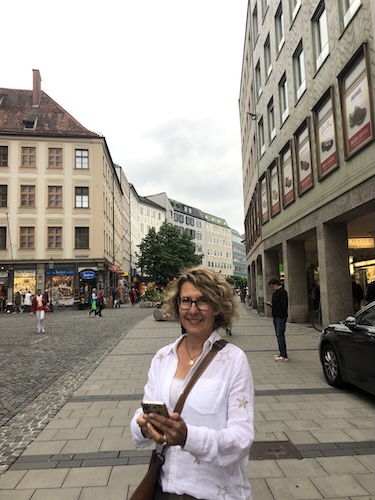
Jen spent her career as a cancer biologist, the kind of scientist who helped hospitals build cancer programs. Her endometrial stromal sarcoma story began in 2017, when she noticed abnormal bleeding. Because she had no family history of cancer, she knew enough to be concerned. She still put off seeing a doctor out of fear. An ultrasound found what looked like a small, benign fibroid. Nobody suspected endometrial cancer.
Interviewed by: Taylor Scheib
Edited by: Chris Sanchez
The fibroid was growing quickly, so Jen scheduled a biopsy. After overhearing some unsettling news from the surgeon, Jen canceled the procedure and asked for a hysterectomy instead. Pathology found areas of necrosis, a sign of possible malignancy. A month later, she learned she had cancer, initially diagnosed as leiomyosarcoma.
A clear CT scan and a reassurance that “this thing’s not going to hurt you” left Jen believing she had “dodged a bullet.” A year and a half later, a nodule in her omentum and spindle cells found during surgery confirmed a recurrence. She understood she was now stage 4, though her doctors never said the words directly. Her new specialist, the head of a sarcoma program, recommended watching and waiting instead of chemotherapy, a plan she carried with her family to London.
A second recurrence surfaced during the COVID pandemic, after her family moved home and back to London again. Chemotherapy couldn’t stop the disease from spreading to her lungs, and doctors said there was nothing more they could do. Further pathology review changed her diagnosis to stage 4B endometrial stromal sarcoma, a rare cancer that develops in the stroma or supporting connective tissue of the uterus. A clinical trial ended when her liver enzymes spiked, new tumors appeared, and a PET scan showed cancer widely disseminated through her bones, liver, lungs, and abdomen. Her oncologist pushed for immunotherapy, and within six weeks, most of her tumors were gone.
Jen had surgery for the one remaining tumor in January 2022 and has had no evidence of disease ever since. She continued treatment for two more years before stopping, crediting conventional medicine, meditation, and a rebuilt relationship with her own body. Today she coaches other patients, shares her story on Instagram, and has written a book about the experience called “Becoming the Experiment.”
Watch Jen’s video and read the edited transcript of her interview for the details of her story.
- Jen’s own scientific background is what saved her from a procedure that could have spread her cancer. She overheard a doctor planning to use a morcellator on her tumor, recognized the risk from her own research, and canceled the procedure before it happened.
- When Jen’s cancer reached stage 4B, it was her sarcoma specialist’s recommendation to watch and wait, rather than start chemotherapy immediately, that let her family make the most of an already-planned move to London.
- Jen spent her career studying cancer in other people’s cells before it appeared in her own, and living with it changed how she thought about healing altogether. She still credits conventional medicine, but she also leaned into meditation, acupuncture, and spirituality, things she says she used to dismiss as a scientist. They’ve helped her get through a decade that included two recurrences and a diagnosis of stage 4B disease.
- Jen’s oncologist in the States fought to get immunotherapy covered by her insurance. Within six weeks, the majority of her tumors were gone. Her experience is a specific, hard-won example of why persistence between doctor and patient, even after the worst possible news, can still change the outcome.
- Jen never rang the bell when she finished treatment, not because she wasn’t grateful, but because she was thinking about everyone who doesn’t get the chance to. Hope, she says, doesn’t have to mean certainty.
Jen’s Diagnosis Facts
- Name: Jen S.
- Age at Diagnosis:
- 46
- Diagnosis:
- Endometrial Cancer (Endometrial Stromal Sarcoma)
- Staging:
- Stage 4B (Metastatic)
- Symptoms:
- Abnormal uterine bleeding
- Coccyx or tailbone pain
- Treatments:
- Surgeries: BSO hysterectomy (bilateral salpingo-oophorectomy with hysterectomy), omentectomy, laparotomy with partial bowel resection
- Chemotherapy: gemcitabine, docetaxel
- Targeted therapy: tyrosine kinase inhibitor through a clinical trial
- Immunotherapy
This is not medical advice. Please consult with your healthcare provider to make informed treatment decisions.
- Jen’s Diagnosis Facts
- Diagnosed with leiomyosarcoma, then finding out it was something else entirely: Endometrial stromal sarcoma
- A career built around cancer and a family life that felt safe from it
- Abnormal bleeding, a “probably nothing” ultrasound, and a tumor that wasn’t there six months earlier
- The phone call that undid the relief: “You have cancer”
- “We caught it early”: A clear scan and the feeling of having dodged a bullet
- A routine scan, a nodule in my omentum, and getting surgery two days later
- Spindle cells, an eerily silent recovery room, and a stage 4 cancer diagnosis
- Meeting the doctor who chose active surveillance over chemotherapy
- Another recurrence in the middle of a global shutdown
- Finishing chemotherapy, then learning it had spread to my lungs
- Strange side effects, then a devastating scan
- From thinking there was nothing more we could do to no evidence of disease
- Learning to work with my body and not against it
- What hope means to me now
- Hear from people living with endometrial cancer
Diagnosed with leiomyosarcoma, then finding out it was something else entirely: Endometrial stromal sarcoma
I’m Jen. I was diagnosed with uterine cancer in 2017. It was originally misdiagnosed as leiomyosarcoma. After a recurrence, it was re-diagnosed as endometrial stromal sarcoma.
A career built around cancer and a family life that felt safe from it
I started my career as a cancer biologist. I have a PhD in cancer biology. I did a postdoctoral fellowship, and my focus was on breast cancer tumors and how they become resistant to endocrine therapies. I was very familiar with cancer in general, the clinical treatment of cancer, basic science research, and translational research. I pretty much dedicated my life to studying cancer.
I went on to do consulting, so I helped hospitals develop cancer programs, everything from the patient experience to technology adoption. Then I worked in medical device companies, helping them market and develop technologies to diagnose cancer. I had a varied background in many different facets of oncology. I have no history of cancer in my family, so it felt very safe to study. It wasn’t something I was worried about developing myself.
During the course of those decades when I was working, I also got married. I had three children, two girls and a boy, and a dog. We lived an average life. We had the opportunity to move to London at one point to do an expatriate assignment, so that was exciting. We were a normal family living our lives until everything shifted for me about 10 years ago.
Twice before, my body had already tried to give me cancer
I was hyper-aware of my health status and my body. When I was in graduate school, I accidentally poked myself with a needle containing proteins that cause multiple sclerosis (MS) in mice, and I was so concerned about developing that. That was what I was worried about. Cancer never crossed my mind.
Although, interestingly, my body did try to give me cancer twice before. I had a lymph node in my neck that was removed, and it was precancerous. My surgeon said it was good that I persisted with the surgery and removal. A colonoscopy in my 30s picked up two polyps, and that was before the guidelines for screening. If I hadn’t persisted in following up on symptoms, it may have been much more advanced when it was diagnosed.
Abnormal bleeding, a “probably nothing” ultrasound, and a tumor that wasn’t there six months earlier
I experienced abnormal bleeding. Most women, when you go to the gynecologist, that’s one of the questions they are asked: Have you had any abnormal bleeding? I knew that, and with my background, I also knew that it could be a concern. But interestingly, I put off going to the doctor out of fear, which I think is relatively common. You’re afraid that something actually might be wrong, so I waited. It was actually 10 years ago that I noticed the first symptoms, and I waited two or three months before I went to see a doctor.
They take any abnormal bleeding very seriously, so they were able to do an ultrasound that same day in the office. They saw a small tumor that looked like a fibroid, which is a benign uterine tumor. They said it’s probably nothing. But interestingly, I’d had an ultrasound just by chance about six months before, for suspected appendicitis. They viewed my uterus, and that fibroid was not there, so that was concerning. Whatever it was, it was growing very quickly, so it was decided that I would undergo further testing.
When intuition finally won out over fear
The persistence of the symptoms made me go to get a checkup.
Women know that you can have variations in the way your body handles hormones and menstruation and things like that. It was probably the third month that my body told me that something was wrong.
Then my intuition just forced me to take action and make that appointment.
Overhearing a conversation that changed my treatment plan
I went to an interventional gynecologist to have what was, at the time, a minimally invasive procedure for a biopsy. At that point, I was so wound up that I just wanted everything out. I was family complete. He said, “Okay, I’ll go in and do an excision biopsy,” which means taking the entire tumor out.
When I went to make my appointment for this procedure, I happened to hear him talking to his assistant about using a new device that morcellates tissue. I knew from my background that morcellation of malignant tissue can potentially upstage you, so it can spread the cancer. He didn’t tell me that; I just happened to overhear him. I canceled that procedure and went back to my gynecologist to get a hysterectomy, a bilateral salpingo-oophorectomy (BSO) hysterectomy, again because I was family complete.
Why the decision to have a hysterectomy was an easy one
It was a pretty easy decision for me because it was something I had been thinking about for a long time.
I’d had other, more benign problems in the past and had asked for a hysterectomy before, and was told there was no indication for it. I know it’s a very safe procedure that many women get, so the risk was very low.
I wanted whatever that was out, in one piece, as quickly as possible.
The phone call that undid the relief: “You have cancer”
I was so wound up about what this was. My gynecologist explained many times that a fibroid sarcoma is extremely rare. In fact, she had never seen one in her practice. But I was so wound up that she ended up doing a frozen section in the OR. When she came to talk to me after the surgery, she said, “It’s a fibroid. It’s benign.” I was so relieved and thrilled.
I had a very, very easy recovery. When I went back to get some stitches out, she said, “The pathologist saw some areas of necrosis (or cell death) in the tumor,” which is an indicator of potential malignancy, but they didn’t know what it was. So they sent it to another pathology department, one where I live and one in Boston, to get second and third opinions on what this was. Even then, I was not concerned.
About a month later, I got a call, not from the doctor, but from her nurse practitioner, who was also a cancer survivor. She said, “You have cancer. It’s called leiomyosarcoma. And we’re referring you to a gynecologic oncologist.”
It really hit me when I heard my husband cry in the shower
I had already convinced myself. I’d had a month where I thought I was okay, but it took a long time to get the surgery, unfortunately. During that time, I had already gone through the grieving process, because I was so sure that it was cancer.
I was just numb. I remember I was at home by myself. My kids were at school. My husband was at the gym. I called him and said, “It’s cancer.” He said, “I’m coming right home.” At that point, I started to feel faint and nauseous, so I went to lie down, and he went to take a shower. I heard him crying in the shower, and that’s when it hit me.
“We caught it early”: A clear scan and the feeling of having dodged a bullet
I had already researched sarcoma, because that was kind of the differential. And that’s how I cope, by looking for information. I’d already done a lot of the research, but I was completely undone.
I had an appointment with the oncologist about a week after I got the phone call. They were able to get me in a little earlier because I was barely able to cope. I wasn’t sleeping. I wasn’t eating. I was just beside myself.
I had to get a CT for staging to see if it had spread. I went to that appointment not knowing the results of the CT, knowing how dire that diagnosis is. He came in and said, “I have great news; we caught it early. Your CT is completely clear. This thing’s not going to hurt you.” That was pretty much it.
I was on hormone replacement therapy because of the complete hysterectomy and BSO. He said he wouldn’t recommend it, since this is an endometrial cancer. Even though it wasn’t hormone receptor positive, I was taken off hormone replacement, so I was put into surgical menopause at that time. But I walked away from that appointment completely void, thinking that I had dodged a bullet.
A routine scan, a nodule in my omentum, and getting surgery two days later
I was scanned every three months, fortunately, and this gynecologic oncologist was at a medical center. Sarcoma is very, very rare, and the sarcoma I was ultimately diagnosed with is extremely rare, even for sarcomas. This doctor had seen uterine sarcomas before, so he knew this was something that needed to be watched. Fortunately, being scanned that often most definitely saved my life.
A year and a half after the diagnosis, I was convinced that I was fine. I went in for a CT scan. I had a friend with me because my husband was traveling. I went in for the appointment to get the results. He breezed in as usual and pulled up the scan. He hadn’t seen it yet, and there was a nodule in my omentum, and he said, “This needs to come out.” This was Wednesday, and I had surgery on Friday.
Spindle cells, an eerily silent recovery room, and a stage 4 cancer diagnosis
There was no discussion of the what-ifs. Of course, I knew. Interestingly, they did a frozen section also in the OR and saw what are called spindle cells, which is the classic cell shape for sarcoma, so it was most certainly a recurrence.
I remember pre-op, when they’re getting you settled and your IV started, you meet with a whole bunch of different specialties. Everybody was very chatty, jovial, laughing. When I came out of surgery, it was completely quiet. It was eerily quiet.
I remember lying on my side, because that was the most comfortable position for me, and I had tears running down my face, going from one eye into the other. I wasn’t even blinking. I wasn’t even really crying. It was just tears. My pillow was all wet. The nurse came in, and she said, “I don’t know what to say.” That was it. Our priest came in, and it looked like he was about to cry. We were very close with him. At that point, I was upstaged. I was stage 4 at that point.
Meeting the doctor who chose active surveillance over chemotherapy
It’s interesting, because I was handled very carefully by my providers because of my background. I would ask a lot of questions that I knew nobody could answer. I don’t know if they ever said stage 4 to me, but I knew, of course, and I was immediately referred to the sarcoma program.
I had this fantastic doctor. He was the head of the sarcoma program, and he was an MD, PhD, so a scientist like me, and we hit it off. My level of anxiety was off the charts, and he was very careful to only answer the questions I asked. He didn’t give me any other information, I think, because he wanted to manage my anxiety.
But even with the stage 4 diagnosis, he gave me hope. I ended up getting a second opinion, and they wanted to do chemotherapy. And he said, “I think we should just watch and wait.” At that point, we were moving to London for a couple of years, and that’s what we decided to do. Sarcoma acts differently than carcinomas like breast cancer, so it was important to be at this center of excellence with this specialist.
Deciding whether and when to tell our children
When I was first diagnosed and told, “This thing won’t hurt you,” we made the decision not to tell our children. After the progression, we knew we had to tell them, and that was the hardest part of all of this. My husband had just lost his mother to pancreatic cancer, and that’s where my kids’ heads went, to their grandmother, so it was excruciatingly difficult.
But you have to, as the British like to say, keep calm and carry on, and we had to continue living our lives. My kids had to go to school. My oldest was starting college. We had this exciting opportunity, and we just decided to make the most of it. I tried to manage my anxiety the best I could, which was an evolution and a journey in and of itself.
Leaning on medication is critical. That’s how I got through it. And because I had a good therapist too.
Another recurrence in the middle of a global shutdown
We were there for a couple of years, and then COVID hit in 2020. We decided to come home because my oldest was in college in the US, and we didn’t want to be an ocean away if the world shut down. We packed up for what we thought would be a couple of weeks, left our dog with a dog sitter, and ended up being home for about five months.
During that time, my care had been transferred to London. My oncologist picked up the phone and called the oncologist in London while I was with him and said, “Oh, I’m sending you a patient,” so I had this great continuity of care. When we went back to the US, I had my scan with my oncologist at home, and they saw something in my pelvis. This was two years after the recurrence. It was too deep in my pelvis to biopsy, so it was decided that we would do another scan in six weeks and see if it grows or regresses.
In that time, we decided to go back to London because they were doing in-person school. My son was young, and we really wanted that for him. We went back to London. I had the scan about six weeks after that other scan, and it had doubled in size, so it was a recurrence. At that point, it was decided that I would do chemotherapy.
Finishing chemotherapy, then learning it had spread to my lungs
I started gemcitabine and docetaxel. The plan was to do six cycles of those, and then hopefully the tumor would go away or completely regress, have a complete response, or I would have the remnants of the tumor removed after I’d finished chemotherapy.
I remember this was January 2021. I was sitting in our living room, and it was a telehealth call. I was excited because I’d finished chemo, though I was quite sick. I’d lost most of my hair and lost a lot of weight, typical side effects from chemotherapy. So I was thrilled to be done and hoping to get the surgery and then be “no evidence of disease,” and get on with my life.
I got the phone call, and he said, “I’m so sorry to tell you this, but it’s spread to your lungs.” I immediately said, “How many tumors? Because if it’s just one, I could still be operable.” He said innumerable. And he said, “There’s nothing more we can do for you. You need to go home.”
My oncologist at home was starting a clinical trial that had just started that week. We got this call on Monday afternoon. By Friday morning, we had landed back home. Again, left the dog with a coworker, left all of our belongings, and pulled my son out of school. He didn’t even get to say goodbye to his friends. We sold our house when we were home during COVID, so we were in a rental apartment that weekend.
Buying a house to die in
We looked at 11 different houses to buy, because we wanted a place for me to be comfortable in dying. We made an offer on one; I couldn’t even remember which one it was. We had friends who got us a mortgage at lightning speed. It was taking a long time because of COVID.
We had no furniture, so we went and bought whatever we could off the floor, because, again, it was COVID and there were tremendous supply chain issues, and we didn’t think I’d be around long enough to see any of that get better. We got settled at home.
I was recruited to the clinical trial, and at this point, the pathology had been read at a couple of different institutions, so the diagnosis was changed to endometrial stromal sarcoma. It has a typical translocation that’s the key characteristic for this cancer.
A quick stat: Sarcomas are less than 1% of solid malignant tumors, and endometrial stromal sarcoma is about 1% of sarcomas, so even within rare, it’s ultra-rare. So I’ve got a rare disease. I was enrolled in this trial as the second patient. It was a two-arm randomized trial with a tyrosine kinase inhibitor, whose mechanism I had studied the mechanism of in graduate school, and then immunotherapy as well.
Strange side effects, then a devastating scan
I was randomized just to the single-agent arm. I was kind of disappointed, but so I started on this drug, and one of the side effects of the drug is that it makes your hair translucent, like clear. I had all these strange side effects, and it made me sensitive to spicy food, so I had to get special toothpaste. It was all these very, very strange side effects.
I was on that drug for about five months. Everything seemed pretty stable. I went in to get blood work, and my liver enzymes were elevated. I had just been on a girls’ weekend, so I thought I was partying too much or whatever. We decided to retest them in a week, and they were even worse. I had a CT scan, and I had larger tumors in my lungs and innumerable tumors in my liver. At that point, I was off the trial.
In the meantime, I had started to have pain in my coccyx, which is at the base of your spine. I didn’t think much of it, because when my first daughter was born, she had broken my tailbone during birth, and it had always bothered me. I mentioned it to my oncologist, and he said, “Let’s do a PET scan.” Of course, I knew exactly what that meant.
Widely disseminated: The PET scan I chose not to see
I had stage 4B disease, widely disseminated: liver mets, lung mets, abdominal, everywhere. It was all over me. After I’d had that PET scan, my oncologist said, “Do you want to see it?” I had worked at a company that developed PET scanners, so I can’t say I could read one accurately, but I know they’re kind of binary. Fortunately, I did not look at that, because that would have probably taken away all my hope.
I was off the trial. I wasn’t able to switch arms. He still wanted to try that immunotherapy on me experimentally. We had trouble getting that approved with the insurance company. My husband works for a pharmaceutical company, so he had a discussion with them about the fact that there are no guidelines for rare diseases, so there wouldn’t be guidelines. It was a long discussion, but they ended up covering it, which is great.
The phone call my oncologist wasn’t supposed to make
I started on that immunotherapy in June 2021. I had blood work probably three weeks after, and you could already see an improvement in my liver function, and I had a CT scan six weeks after.
I got a call. I was in my car, passing my son’s school on my way to get gas before pickup, and got a call from an unknown caller. When you’re sick, you always pick up those calls, because you may not talk to your doctor for another day or two after that. I picked up the phone, and it was him. My heart sank as soon as I heard his voice.
He said, “I had to call someone, and because of HIPAA, I can’t really call anyone, so I decided to call you. I have your scan results, and all of your lung tumors are gone. All of your abdominal tumors are gone except for that little recurrence. The liver is notoriously difficult, but 90% of those tumors were gone in six weeks. I had to call and tell you, because I can’t believe it. This is amazing. I’ll see you at your appointment tomorrow.” Then I went and got gas and picked up my son.
From thinking there was nothing more we could do to no evidence of disease
I stayed on that. The plan was to have a repeat PET scan, because you can’t see the bone mets on the CT. If all of the cancer was gone, the original recurrence was too big for my body to resorb, so the plan was to take that tumor out. It’s literally a year that’s passed, and I’m in the same position now in January 2022, a year later. I had the PET scan, which showed only that original tumor. I had surgery and had that removed.
I asked the gynecologic oncologist, “Did you take my case to tumor board?” He said yes. And I said, “Was I deemed operable?” He said no. And I said, “So why did you operate?” And he said, “I just did what your oncologist told me to do.”
Again, he was advocating for me as a specialist, knowing that sarcomas act differently than a lot of other tumors. At that point, I had no evidence of disease, and that was over four and a half years ago. I continued on the immuno-chemotherapy regimen for another two years, because that’s the ideal period that’s been shown in other tumor types.
I’ve been off treatment now for two and a half years. It’s remarkable.
Learning to work with my body and not against it
Part of my journey was the medical side, but I evolved quite a bit in terms of how I approach healing, essentially. Cancer is your own cells, so you don’t want to fight against your body. What you need to do is try to heal, and that’s through conventional medicine, of course, always.
It’s also through getting enough sleep, eating well, and spirituality. I leaned into a lot of things that I kind of pooh-pooed as a scientist. Things like meditation helped me cope and regulate my nervous system. I think that those were an incredibly important part of my experience. It’s almost an evolution that I’m grateful for now. It allowed me to be balanced enough to still give my kids a normal life for the most part, take part in their activities and holidays.
I was able to function at a pretty high level with things like acupuncture and lots of walking. I just found some things that worked for me to build my resilience and hope. And I read a lot of books about healing, and it was so complementary.
“Becoming the Experiment:” Writing a book about my own case
I’m starting to share my story more openly now. I don’t think people really knew, even my kids, how sick I really was. I have a feeling if I had seen that PET scan, I probably would have given up, but I always thought I was going to be okay. I had this very brave oncologist who advocated for me and took a chance with me. And now, because this therapy has worked for me, other people have access to it.
I’ve written a book called “Becoming the Experiment,” because I used to experiment on cells and in vivo as well, and then I literally became an experiment myself in this clinical trial, and then with this off-label treatment. It’s an incredible story, and I’m very grateful for all the wonderful people who have stood by my side through this.
What hope means to me now
Hope comes in many different shapes and sizes. For me, originally it was about seeing my daughter graduate from college, making it to Christmas, and living without pain. But hope is such a strong and powerful emotion. I worked hard to preserve that hope, and my oncologist also never took that hope away from me.
Importantly, I’ve heard stories of conversations where it might be hard to have hope after. So one thing that helped me a lot too is just gratitude for where you are at any given moment and feeling that gratitude for just being here today.
Why I didn’t ring the bell
I’m telling my story on Instagram, and I’m trying to reach people. It makes sense that people find my story very hopeful.
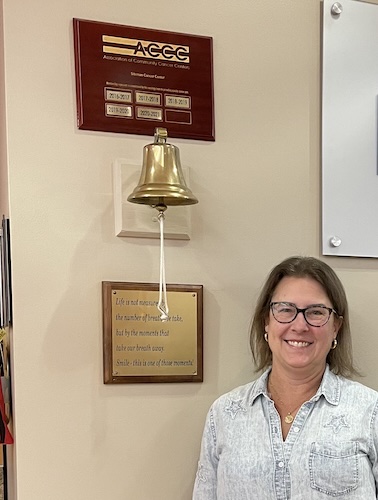
When I finished chemotherapy and immunotherapy, I was by myself, and I didn’t ring the bell because there are so many people who don’t get to ring the bell. It’s always such a happy thing when you hear it, and, of course, everyone cheers, including me.
But it had just been such a roller coaster of being fine and then recurrence and then back and forth. You just can’t take your health for granted, and that’s the most important thing.
I’m reflecting on that and those people who don’t get to do that.
How my story found its way to The Patient Story
I’m doing coaching now. I’ve been certified as a coach, an ICF-certified coach. I’m doing coaching and consulting. I’m writing this book, and I’m trying to tell my story and reach more people.
This interview has been edited for clarity and length. The views and opinions expressed in this interview do not necessarily reflect those of The Patient Story. This content does not replace professional medical advice.
Inspired by Jen’s story?
Share your story, too!
Hear from people living with endometrial cancer
Real experiences with diagnosis, treatment choices, side effects, and life beyond endometrial cancer — in their own words.
Leave a Reply