
Sonya’s Neuroendocrine Cancer Was Misread as Anxiety for Years Before Her Diagnosis
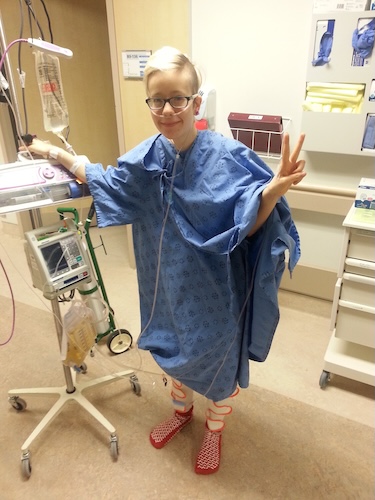
Sonya’s experience with neuroendocrine cancer began early. She started noticing strange symptoms when she was only 10 years old: a racing heart, stomach pain, and spells of facial flushing that made her face turn beet red. Doctors told her repeatedly that it was anxiety and advised her to eat more fiber. By the time she reached college at 19, the symptoms were happening multiple times a day. One doctor even prescribed anti-anxiety medication after watching her have an attack in his office.
Interviewed by: Taylor Scheib
Edited by: Chris Sanchez
It wasn’t until Sonya searched for her symptoms online in 2015 that she found a name for what she was experiencing: carcinoid syndrome, the symptom pattern linked to neuroendocrine tumors (the updated term for what used to be called carcinoid tumors). She asked her family doctor for a urine test that measures serotonin levels. The normal range was under 50; hers came back over 800. A follow-up MRI showed the spots on her liver, thought in an earlier scan to be cysts, had grown. A biopsy confirmed neuroendocrine cancer that had already spread from a small tumor in her small bowel throughout her liver.
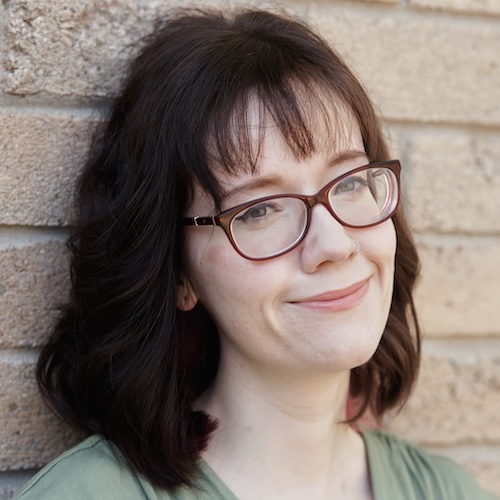
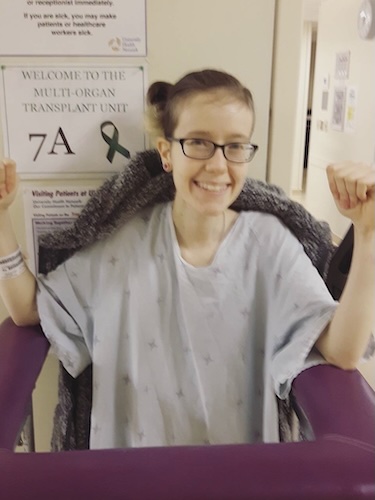
What followed was years of treatment for this rare cancer: a bland embolization to cut off blood supply to the tumors, removal of her primary tumor, and eventually her gallbladder after a medication’s side effects filled it with stones. As her symptoms worsened, she dropped to between 70 and 80 pounds. A newspaper clipping her mother saved led to a referral to a surgeon in Toronto, who recommended a liver transplant.
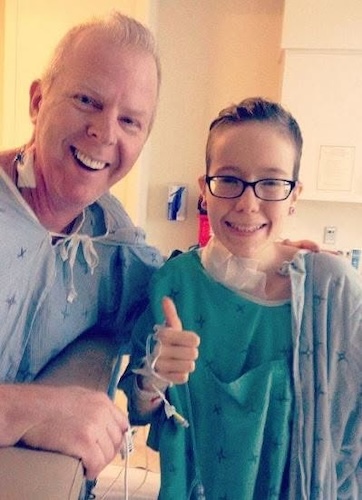
Sonya was placed on the transplant list, and three months later, on Friday the 13th, she learned a living donor was a match. That donor, a stranger named Pete who heard about her case through a bulletin at her mother’s church, gave up part of his liver. The two met for the first time walking the hospital hallway on walkers days after surgery; he later walked her down the aisle at her wedding.
After the transplant, a scan done with gallium-68, a radioactive substance that helps pinpoint cancer cells with high precision, found additional spots in her mediastinum. In 2019, these spots were treated with PRRT, a radioactive therapy. She’s been stable for seven years since. Now 31, married, and pursuing a nutrition degree with hopes of becoming an oncology dietitian, Sonya still manages ongoing care, but she’s learned to build a full life alongside it rather than waiting for it to end.
Watch Sonya’s video and read the edited transcript of her interview for more about her story.
- Sonya’s symptoms were explained away as anxiety for years, including by a doctor who prescribed her anti-anxiety medication while she was having an active attack in his office. It took her own late-night research, not a referral from a provider, to put a name to what she was feeling.
- When Sonya’s liver was almost entirely replaced by tumor, a transplant seemed almost unthinkable to her, until a newspaper clipping her mother kept led to the surgeon who made it possible. The path from a routine embolization to a full transplant took persistence from Sonya and her family at every step.
- Sonya didn’t go back to erasing her cancer history once she felt better. Instead, she built a life that holds both: follow-up visits every six months, medication every three weeks, and also marriage, travel, mountains she climbed, and a return to school. Living with cancer became less about getting back to who she was and more about becoming someone new.
- A stranger named Pete gave up part of his own liver for a woman he’d never met, something Sonya still struggles to put into words. Their bond, which started in a hospital hallway and ended with him walking her down the aisle at her wedding, shows her that the same disease that nearly took her life also connected her to some of the best people she knows.
Sonya’s Diagnosis Facts
- Name: Sonya R.
- Age at Diagnosis:
- 19
- Diagnosis:
- Neuroendocrine Cancer
- Symptoms:
- Flushing
- Rapid heart rate
- Diarrhea
- Abdominal cramps
- Treatments:
- Hormone inhibitor: octreotide LAR
- Surgeries: small bowel resection, cholecystectomy, liver transplant
- Bland liver embolization
- Radioactive therapy: peptide receptor radionuclide therapy (PRRT)
This is not medical advice. Please consult with your healthcare provider to make informed treatment decisions.
- Sonya’s Diagnosis Facts
- Childhood symptoms doctors blamed on anxiety
- A urine serotonin test result of 800; normal is under 50
- Listen to your body’s whispers before they become screams
- Am I going to die? A doctor’s cold, clinical answer
- Embolization, a failing gallbladder, and “Look what happened to Steve Jobs”
- Getting on the transplant list while my body faded away
- A new scan found spots the transplant workup had missed
- Learning to live with cancer instead of pretending that it’s gone
- What I want every newly diagnosed patient to know
- Hear from people living with rare cancers
Childhood symptoms doctors blamed on anxiety
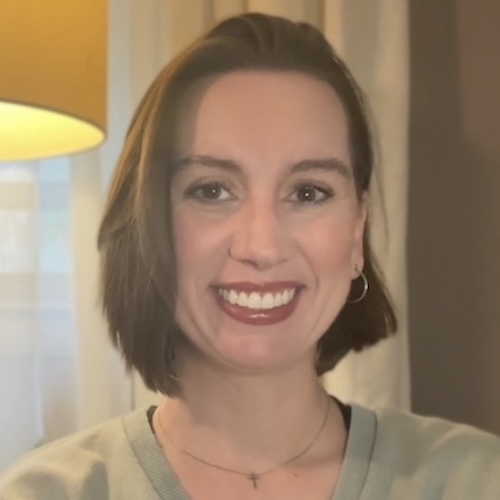
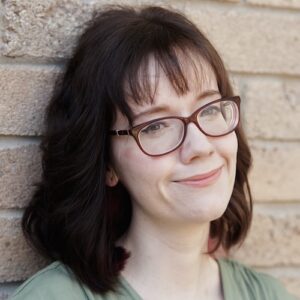
Hi, my name is Sonya. I am 31 years old. I’m a neuroendocrine cancer patient, and I was diagnosed when I was 19.
My symptoms started way before I was 19. They go back to childhood. At maybe 10 or 12 years old, I would get these weird symptoms. My heart would race a lot, and I would get stomach pain and things I guess you could attribute to anxiety. I would tell my parents about it, and eventually, they took me to the doctor. But they didn’t do any extensive testing on why I was getting this pain. They were like, “Oh, just eat more fiber. She’s a kid,” and that kind of thing. So nothing really ever came of them.
When I got into high school, the symptoms started getting a little bit worse. More notably, my skin would flush red like a tomato whenever I would get a little bit nervous or do anything strenuous. Again, you would think a normal person might get flushed at those kinds of things, but my face would just be beet red. This wasn’t something that was typical of me growing up. It just started happening out of nowhere, and people would be like, “Oh my God, Sonya, you look like a tomato. Are you okay?” It didn’t happen a lot at first, so I tried to ignore it, but eventually, I started visiting the doctor a little more.
We never really got any answers from my GP. It was just, “She’s a teenager, she has anxiety. What do you want me to do? This is a young, healthy person.” But, of course, they didn’t really know that for sure, because they weren’t doing any tests. It was a time in my life where I was so excited for the future, because I wanted to go to college. I had so many plans. I was going to move to Toronto and go to school there. It was very up in the air. When you’re young and you graduate high school, you’re not sure what you want to do yet. You want to do five different things, and I was still trying to figure it out.
I ended up taking a year off after high school, and that’s when my symptoms started to explode, when I was about 17 to 18. It went from having these little feelings of discomfort, facial flushing, racing heart, and stomach pains being a one-off, once in a while, to every day, multiple times a day. At that point, I went into my doctor’s office complaining of these symptoms, so they were like, “Okay, we’ll give you an ultrasound. You can have an ultrasound.” It’s so weird looking back at this.
The first thing they did was an ultrasound of my abdomen. When we got the results back, the doctor was like, “Your liver is full of all these little things, but we think they’re cysts, and we don’t think they’re related to your symptoms.” I’m 18, so you don’t want to think it’s something bad. You want to be like, “Okay, great, we’ll just monitor, we’ll just watch and wait, and see what happens.” You don’t want to think the worst. I wanted answers, but I wasn’t prepared to hear anything bad, so I wasn’t thinking, “Oh, I guess I could just go to another doctor, I guess I could just go and ask somebody else.” That never even occurred to me.
This was my doctor. This was who I was supposed to be listening to. And that was it. So my liver had all these little things on it, but I was just being told they were cysts. So I shrugged it off and said, “Okay, I have a cystic liver. All right, that’s okay.” I left the doctor’s office, and it went on for maybe another couple of years, with the symptoms getting so bad.
Doubling over in pain and a doctor who prescribed anti-anxiety medication
I went to college. I started college. I was 19. I was going to be a social worker at the time. And I couldn’t even sit through my classes. I would just double over in pain. I would have to leave class to run to the bathroom. My stomach would hurt so bad, my face would turn beet red, and my heart would be beating out of my chest. I looked like I was having an anaphylactic reaction. I’d start wheezing. And I had no idea what was happening to me.
Eventually, I went back to the doctor and I said, “That’s enough. There is something seriously wrong.” My mom was really worried now too, because she was seeing these things happen to me, and she had no idea they were that bad. She’s also standing beside me at the doctor’s office like, “Okay, this is bad. I’m seeing this happen to her every day.”
I actually had one of these attacks in the doctor’s office, and he had the nerve to ask me, “Are you sure you’re not just having a panic attack? This looks like panic disorder. I can prescribe you some medications for that,” and he prescribed me anti-anxiety medications. I was just so frustrated, because I wanted somebody to validate what I’m feeling. But instead of hearing what I need to hear, I’m getting every possible reason why this is probably something else, because of my age. And it’s probably panic disorder, so I believed it was panic disorder.
Googling my symptoms at night and finding “carcinoid syndrome”
The turning point was when I ended up going online. This was 2015. There wasn’t a ton of information. It wasn’t super easy to Google your symptoms and get a more concise picture of suggestions. But I was told my whole life, “Don’t Google your symptoms. Google’s just going to tell you you have cancer.” I thought, “Well, what if I do? What if that is what’s wrong, and nobody wants to listen to me?”
I ended up looking up all my symptoms, and I went through a few things until I found something that was, to a T, what I was dealing with, with all the symptoms. It was called carcinoid syndrome, which is basically the syndrome associated with having a neuroendocrine tumor. The more updated term is neuroendocrine tumors; it used to be called carcinoid tumors, but they’ve changed it to neuroendocrine tumors, which is the umbrella term now.
It’s basically the syndrome that’s associated with neuroendocrine tumors if they are secreting hormones into your bloodstream. Not everybody who has NETs will have their tumors secrete hormones, but some people, I think about 50%-ish, will. And if it metastasizes to the liver, a patient will have all of these strange symptoms, because they’ll have serotonin or histamine; it can be so many different substances. Everybody’s different, but for me it ended up being serotonin, excess amounts going all through the bloodstream and the body not knowing what to do with it. (EDITOR’S NOTE: City of Hope elaborates that around 40% of NETs produce excess hormones. NETs that do secrete excess hormones are categorized as functional, whereas those that do not are referred to as nonfunctional.)
A urine serotonin test result of 800; normal is under 50
I went to my family doctor, and I pulled up my findings on my phone. I was like, “Can you check me for this? It says there’s a urine test that you have to do, and it can discern whether or not you’re having these excess amounts of serotonin in your body.” He’s like, “Sure, whatever.” He ordered one of those 24-hour urine jugs where you collect your urine for 24 hours and I sent it back.
What it does is measure the levels of, I think it’s called 5-HIAA, which is the abbreviated term for 5-hydroxyindoleacetic acid, another term for serotonin. But I got the results back, and I still remember getting the phone call. They told me over the phone that a normal reading for this lab range would be under 50, and mine was over 800. I’m like, “You’ve got to be kidding me.” Is it actually this?
They ordered another MRI, and they saw that the spots on my liver had grown bigger, so these probably aren’t cysts. I was referred to a surgeon who ordered a biopsy for me of one of the spots in my liver, and it came back as neuroendocrine cancer. My mom and I stepped into his office, and I still remember him saying, “You have cancer. You have a small tumor in your small bowel, and it has spread throughout your whole liver; that’s what those spots are.”
My mom just about passed out. She fell against the wall. I’m her only child. She had me when she was 42, after trying for seven years. She asked, “How could this happen?” Especially since she was the helicopter parent, like, “I’m only going to feed you organic foods. You can’t eat fruit gushers. You can’t eat all the junk food all the other kids are having.” She felt like she did everything right for me, and then this happened, so it was a lot.
He added that because it’s pretty slow-growing, it’s likely that I had this since I was maybe 10 years old, because that’s the amount of time this kind of cancer would have taken to decide that it wants to metastasize. It was very likely going on my whole adolescence, and if someone had just given me a CT scan, they would have seen it.
I was just dumbfounded at that point. A simple CAT scan would have even just seen that little tumor in my bowel before it became metastasized throughout my whole body. I was so angry. My family doctor never faced me after I got the diagnosis. I don’t know if this is just a coincidence. He closed down his whole practice and left. It was just gone. He never followed up with me. He never saw me in person after I got this diagnosis. I’m sure he was considering retiring anyway, but whenever I tell this story, my friends are like, “Yeah, he just couldn’t believe it either. He quit.”
It’s gotta hurt, right? Because this is your patient. I was a patient of his since I was a baby. I’m sure, from a doctor’s standpoint, it’s like, “Wow, I really failed this person, and I should have referred them when I didn’t know what was going on. I should have just referred them elsewhere.” But I don’t know.
I held on to a lot of anger and resentment for such a long time, but I’ve forgiven and I’ve let it go. Doctors are human and they can make mistakes too. When I was a kid, I thought they were all-knowing. They couldn’t make mistakes. They’re supposed to fix you and make you better, but they’re people too. I’m not going to hold a grudge for the rest of my life and make myself sick over it. I can only move forward.
Listen to your body’s whispers before they become screams
There’s a quote I heard for the first time when I got my diagnosis. I ended up putting it on my wall, but it says: “Listen to your body’s whispers before they become screams.” I couldn’t help but think: How many whispers were there until it was something I could no longer put off or ignore? It was like my independence was leaving me. I can’t even do anything. I have to get to the bottom of this. Nobody else will. It has to be me, because no one’s going to fight for me but me.
It was such a wake-up call. I feel like I grew up in that year. I realized I’m not an invincible kid anymore. This can happen to anybody. This could happen to anyone, no matter what age. And not everybody is going to have the privilege of having somebody to speak up for them. I’m fortunate that I was able to speak up for myself, and that I did the research that I did. But knowing that I had to do it, because the doctors weren’t going to, and I was just another number to see for five minutes, it just started to really hit me. I was very alone in this, and it was up to me. This isn’t quick and simple: go to the doctor, get a medication for a sickness, get better, like when I was a child. It’s so much more serious than that and not everything can just be fixed.
I just felt so angry. I really did, for such a long time. I felt so disappointed and so let down by a system that I was raised to have faith in growing up. If you’re having any problems, if you’re feeling sick, go to the doctor, tell the doctor how you’re feeling; they’ll make you feel better, they’ll fix everything. To go from that to this is all me. I am the doctor here. I have to figure it out. I have to ask the doctor to order the tests so that I can get my diagnosis of this rare disease that’s most common in elderly men. We don’t know why you have it. You’re not even in that demographic.
Sometimes we just don’t have the answers for why these things happen. And I think it’s really important to not allow that sadness, disappointment, and regret for what you could have, would have, or should have done to consume you. The best thing you can do for yourself is just pick yourself back up and keep moving forward. This is what we have now. What can we do?
I was so scared. Nobody was able to give me a prognosis because of how rare the disease is. No one was able to really say what this meant, so I had to go by what I read online, which was scary, or what I already knew about cancer. I’m stage 4. How long do I have? I’m 19 years old, and there’s a palliative care nurse coming to my house every day. It doesn’t look good. It doesn’t. And no one’s telling me anything.
I had to do all my research about this disease. There wasn’t really a lot. I’m really thankful for CNETS, which is the Canadian Neuroendocrine Tumour Society. Their website is a wealth of resources. They can help you connect to doctors and connect to information about your disease. If it weren’t for them, I feel like I would have just been so lost in a sea of message boards and people giving maybe not very factual information and just going off of that. It was great to connect with them and get pointed in the direction that I needed to go.
Am I going to die? A doctor’s cold, clinical answer
From what I remember, I had been hospitalized for a couple of weeks. I would end up in the hospital a lot because of my symptoms. They would get so out of control, and we had very limited means to control them at home, so sometimes I would end up hospitalized for many weeks. I remember being in the hospital. It was a hospital with specialists, so there were people seeing me who were well-versed in this specific disease, which I think made it scarier.
But I remember one of the days I was just sitting up, typing on my laptop. I would blog every single day. I wanted to remember this if I made it through, and I wanted to create something that people could find and look back on later, that could be potentially helpful. So I would just be sitting and typing, doing my post of the day, writing a poem, or writing something insightful that meant something to me. I remember I had this thought in my head: How long do I have? How long will I be writing this for? How many more posts am I going to be able to make? Around that time, the doctor who was seeing me came into the room. I don’t remember our conversation, but we had a quick chat. She was about to leave the room, and I was like: “Am I going to die from this? Am I going to survive this?” And the way she looked at me was just so cold and clinical, and it really stuck with me because of how void of warmth the response was. She looked at me and said, “I don’t know. I don’t know,” and she left.
I was all by myself in this hospital room, crying my eyes out. And I’m so scared, because these aren’t moments that you’re preparing yourself for when you’re young. You think you’re going to live a long life. You’re going to become a grandparent. You’re going to do so many things. You’re not prepared to be 19 years old in a hospital room, wondering how many more weeks you have, and nobody’s even able to tell you.
Embolization, a failing gallbladder, and “Look what happened to Steve Jobs”
I’ve had a lot of treatments, a lot of surgeries, more than I can count on one hand, during my time with this disease. The first thing that they did for me, I think they do it for other cancers as well, but it was referred to as a bland embolization of the liver. It’s where they thread a catheter up your hepatic artery, and I believe there are two types: the radioactive kind and the bland kind, which is what I had. But they fire these little beads up the hepatic artery in hopes of killing the tumors, blocking their blood supply, basically, so that they have necrosis and they die.
I had a doctor basically talk about my liver like it was full of watermelon seeds; that’s how extensive. He’s like, “There’s more tumor than there is liver. I don’t know how your liver function is good, because it’s not looking good.” I’m not sure why they chose this treatment, but they decided it was the best thing to do at the beginning. I think it was helpful in making sure the disease didn’t spread further. They had to do it in multiple sessions because of how many tumors there were, so they did different quadrants of the liver. But they did that, and it did kill some of the tumors, and it helped me to stay stable for a while, which was really good, because I was being considered for a liver transplant, which I couldn’t really fathom when I had a doctor say, “You might be a candidate down the road for that.” I was like, “Wait, what? This is that serious? I’m going to have my whole liver taken out and replaced?” But that was a down-the-road thing.
We had this treatment, and it did work quite well. It didn’t really do much for symptom relief, though, because there were so many tumors, so there’s only so much you can do. They took out the primary tumor that had caused the metastases; that was a pretty small surgery. It was my first surgery.
After the embolizations, I think we watched and waited for a little while. I was on a medication that I would take every month that was supposed to help with the symptoms, but again, so much cancer, it couldn’t really help that much. One of the side effects of that medication was that it could cause your gallbladder to fill up with stones, and it did, so I had to get my gallbladder taken out, in the midst of all this sickness.
Then I wasn’t sure what road we were going to go down with this. I was doing my own research. I was in a lot of Facebook groups online, because that’s how you really communicated and met people who were dealing with this disease. I will say that it was so rare to find somebody who was even remotely in my age demographic, even 35 or under. It was mostly a group filled with people who were at a different life stage than me. You could only really have conversations where you could relate so much, because most people with this disease, they’ve had kids, they’re grandparents, they’ve achieved so many of their dreams and goals in life, and my life’s just starting, so it’s a completely different point of view.
But I would go on these groups and ask people what treatment paths they took. Some people would say, for a case like mine where the liver was so full, “You can’t really do anything surgical. You can only do systemic treatments now. You shouldn’t get a liver transplant, because look at what happened to Steve Jobs.” He had neuroendocrine cancer of the pancreas, and he chose a liver transplant. I believe he passed away a year and a half later, I think. But people in the neuroendocrine cancer community will use that as an example of why you shouldn’t get a liver transplant, even though this cancer is so strange, the way that it behaves differently in everybody’s body. You can’t take one case and apply it to everybody. There are different grades of it. There’s low-grade, mid-grade, and high-grade. Different treatments for different people.
Getting on the transplant list while my body faded away
For me, the reason the liver transplant really came about, my mom brought me a newspaper clipping, and it showed this doctor in Toronto who had a lot of success treating cancers of the liver surgically. And I got really excited, and I felt really hopeful. So I asked for a referral to this doctor, a really, really nice guy. My initial thought was maybe he could cut out half of my liver, and then when that grows back, he could cut the other half, because that seemed to be in line with the kinds of surgeries he was doing for cancer.
But when I went to see him, he was like, “Well, your liver is really full of tumors. I don’t really think I could do that, but you might be a candidate for a liver transplant. Would you like me to refer you to the transplant program?” At that point, I was like, “Okay, okay, yeah, let’s figure this out. Let’s see if I truly am a candidate for this.” I got my referral. I did all my assessments. They do a lot of physical assessments to see if you’re in the right shape to handle that kind of surgery. They get all your information to make sure they find a match for you.
After a few months, they ended up listing me. I was put on the list. It feels so strange to say I was excited to be put on the list. You want to get better, but at the same time, you’re thinking, “Me getting better will be the result of someone else passing away.” It’s a very strange feeling, because you don’t want that for anybody, and I don’t want my health to come from somebody else’s misfortune. But at the same time, I tried to look at it in the way that people list themselves as organ donors because they want to do this. They want to help people after they pass away. I came to look at it that way and felt a little bit better about it.
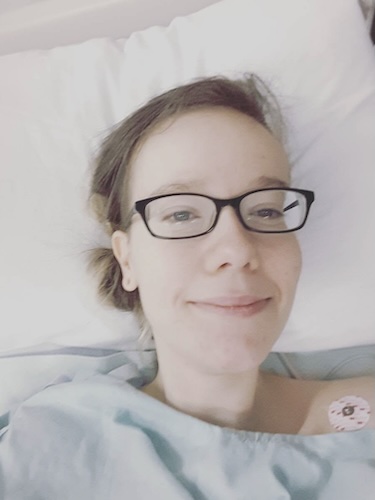
I was on the list for a little while. They had to apply for exception points for me because my score was really low, meaning I would have to wait a really long time. My liver function was good, but everything else wasn’t. My symptoms were so bad to the point that I was allergic to almost every food. I could only eat plain vegetables and a little bit of rice without having these violent attacks where I’d just be wheezing and throwing up and in pain. I was between 70 and 80 pounds. I was just skin and bones. I hate looking back at the pictures, because it’s really hard for me to see that person then and this person now and be like, “Wow, I can’t believe I even survived that.” I didn’t realize how bad it was until I looked back at the pictures.
They were telling me, even with the points, it might be some time before I actually was able to get a transplant. My family could see that I wasn’t going to last much longer, because I was barely even eating one meal a day, and I was gradually fading away. My family got on social media, made a page, and put the word out for a living donor, which I didn’t even know that you could do, donate as a living person. I knew about the kidney, but not the liver. A lot of people don’t know that you can, but you can. You can remove up to 75% of the liver in a person and transplant it into someone else, and because it regenerates, both people will end up with 100% liver at the end of it, which I think is really cool. It’s still a very major surgery for somebody to go through.
Getting a call on Friday the 13th
My family started doing this public outreach, and it was a little uncomfortable for me because I’m like, “Oh my gosh, we’re just out here begging people for their organs.” But eventually, I actually got a call three months after being put on the list, and they’re like, “We have somebody. They’ve been tested. We have a living person, and they’re a match.” I had no idea who they were.
I got this call on Friday the 13th. I always say that it’s like my lucky day whenever it’s Friday the 13th now, because that’s when I got my phone call that I was going to have this surgery. I know a lot of the time that when people get the call for a transplant, they’ll get what they call a dry run. You bring everything, you’re ready to go, and then for whatever reason, the person actually isn’t fully a match, there’s some kind of a problem, or in the case of a living donor, they change their mind. So I wasn’t fully convinced that it was going to happen, but I was very hopeful. I showed up to the hospital a few days later, and I underwent all my tests and everything to make sure everything was good to go.
Pete: The stranger whose liver gave me a second life
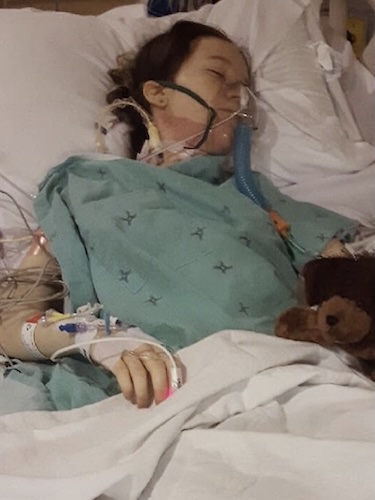
Thankfully, because there was no spread outside of my liver with the disease, they were able to go forward with this surgery, because that was one of the criteria, that the disease doesn’t spread outside of the liver, and that it’s fairly low-grade. I ended up having my surgery. I woke up not even 12 hours later in the recovery room, and I felt so good. I felt better than I had felt in years. I’d just been intubated and it was just bliss. I woke up and I felt great.
I just knew that I was better, and that everything was going to be okay. It was such an amazing feeling. The fact that there was somebody out there who loved me enough to do this for me, who didn’t even know me personally, had never even met me, was just out of this world to me. I ended up meeting him in the hospital. His name is Pete. He found out about my need for a liver transplant through a bulletin at my mom’s church. He’d been considering being a living donor for years. When he saw this, he was like, “Okay, this is the time. This is the person,” and without hesitation, went forward with it. To do this, to give this amazing, incredible gift to a complete stranger.
We met in the hospital when we were both recovering. I think a couple of days later, I got out of bed and started walking. I was feeling so, so good, because I couldn’t even walk before. My heart rate would go up so high just from walking, and I would almost pass out. I’d have to sit to be able to just get up and walk and feel normal. I started walking through the hallway, and I saw this man, and he was walking towards me, and we both got our walkers, and we’re both looking kind of tired and kind of beat up, but we’re smiling. I’ve never seen this person, but I know it’s him. We do the best we can to give each other a hug, and it was just this incredible moment of just: Thank you, because of you, I’m here, and this is happening, and I’m alive.”
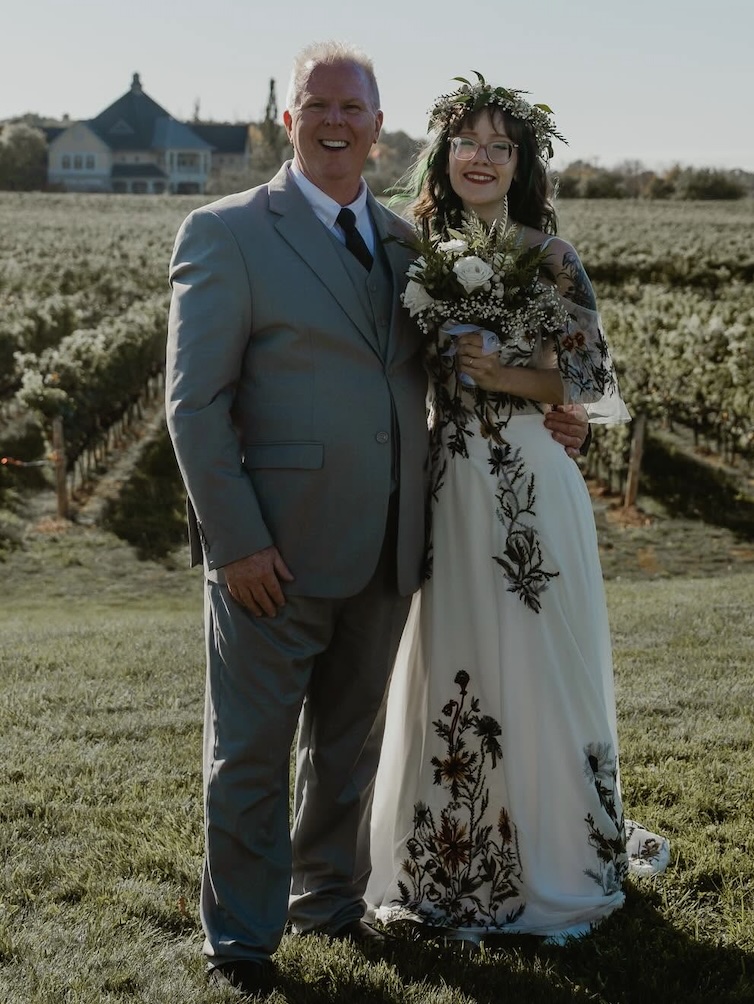
He’s such a fantastic person. He’s like a father to me. We’re still, of course, in contact to this day. He walked me down the aisle at my wedding in 2025. He’s so special to me. I’ve never met such a selfless person, with such a heart of gold. He gives so much of himself and his time to help others. He’s the most incredible person I’ve ever met.
Because of him, I was able to have this surgery, and I was able to have this second chance at life. It’s something you can’t even put into words. I’ve had people say to me, like, “Why would a stranger do that for you? I can’t imagine doing that for somebody.” People have said that to me, and I’m like, “Well, that’s you.” But there are people in this world that will make you believe in the goodness of others and will reinstate your confidence that there are people with kind hearts out there. As if cancer didn’t already change my outlook on life, this is something I’ve carried with me forever. There are people that are this good in the world, that would do something like this and want nothing in return, and that’s the kind of person that I aspire to be.
A new scan found spots the transplant workup had missed
I’ve had one more treatment since I had the transplant. To give a clear picture of my whole medical experience, this happened a couple of years after I had the liver transplant. There’s a special scan for NETs called a Gallium-68 (Ga-68) scan. It wasn’t until recently, at least in Canada, that we’ve had good access to it. In the last 10 years, we’ve been working our way up to making it more accessible for patients. Before that, we were using a more outdated system that couldn’t detect these tumors as well.
I ended up getting my first one of these scans. It wasn’t super long after my transplant, actually, that I got one, and it showed that I lit up in some other areas that they were unable to see before with the other imaging. It turns out I did actually have some other spots outside of my liver. It’s a blessing in a way that we weren’t able to access that scan earlier because I wouldn’t have been a candidate for that liver transplant if we had had access to this high-quality scan that picked up on these tiny other spots.
We found out that I did have a couple of spots in my mediastinum and I ended up getting a targeted radiation treatment in 2019 called peptide receptor radionuclide therapy, or PRRT. It’s a radioactive intravenous treatment where this radioactive material called lutetium goes up the vein; it systemically goes into your body, and it has a substance in it that will bind to neuroendocrine tumors. For me, it was able to bind to those spots and treat them, so that I could be well and keep them from growing or causing me any further problems.
I had that in 2019, and I haven’t had any other treatments since. It’s been seven years. That treatment was so favorable for me. I had really good results with it. I think probably because the disease I was treating was very low volume. But I’ve been good. I’ve been so well. That was the last treatment I’ve ever had to have.
I’m 31 years old and I feel like I’ve lived so many lives since I had my diagnosis. If I could go back and tell my younger self, who was falling apart at 19, thinking that her whole life was over, you’re going to live so many more lives by the time you’re 31. It’s not over for you. You’ve got so much to look forward to. I can’t even begin to scratch the surface of the things I’ve done and the things I hope to do and I hope that can inspire people who feel like their life is over after a cancer diagnosis. It doesn’t have to be that way, and there can still be things to look forward to.
Learning to live with cancer instead of pretending that it’s gone
I’ve been able to learn how to live life with cancer instead of simply trying to erase my history with it and pretend like it doesn’t exist. I’m still a patient. I still go for follow-ups every six months. I still have a medication that gets administered. I have to go to a clinic every three weeks. I’ve been doing that since my diagnosis, and I’ll probably be doing that for the foreseeable future.
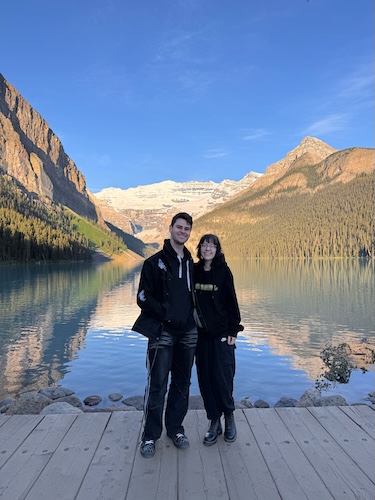
I don’t totally get to forget about the fact that I’m a patient. But in time, I’ve made peace with that and embraced the outlook of living life with cancer instead of trying to erase that. Since my diagnosis and my transplant that saved my life, I’ve traveled to so many different places. I’ve climbed a couple of mountains that I thought I couldn’t climb. But our bodies surprise us sometimes with their capabilities.
I’ve worked a lot of interesting jobs. I actually met my husband in an acting program I took in college. I decided to just go out of left field and get into acting. I did that for a while, and I ended up working in the film industry. I’ve done so much.
Married, back in school, and building the life my 19-year-old self never thought I’d have
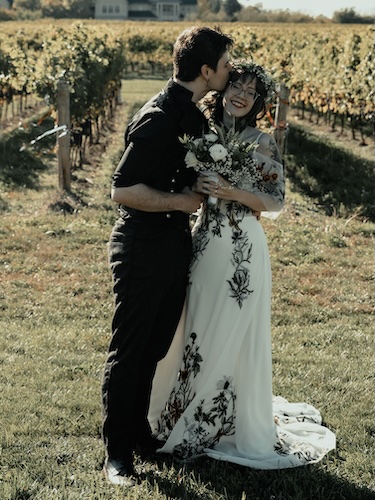
I went to college, married the wrong person, and then married the right person, so I’ve been married twice. I’m married to my best friend, whom I met in college, and we got married in 2025. Our wedding was so beautiful.
I returned to school a couple of years ago. I decided that I wanted to get a bachelor’s degree in nutrition, and that I’d like to become a dietitian one day, so that I can maybe work with oncology patients and help them with the nutrition aspect of the disease. I’m in my second year of university right now.
I’m not slowing down. I’m like the busiest person that everybody knows. I’m always doing something. I’m always working on something or towards something. It’s healthy to always be setting goals for yourself and having things to look forward to or look towards in the future; that’s something that’s always kept a positive outlook for me.
I want people to know that it doesn’t have to be over for you. There’s so much to look forward to in life. Even if you’re doing these things between treatments, make plans, set goals, and be excited, because the future can be bright and the future can look good. At the end of the day, we don’t know what’s going to happen to us. None of us know our fate, and we can only do with what we’re given. We can take what we’re given. We can assess our situation, and instead of looking back in time at what you could have done, look to the future and what you can do now, and be thankful for the people around you.
I started journaling over the summer. I try to make a list at least once a week of things that I do have that I’m thankful for and that I’m really grateful to have. Because being so healthy and being in this healthy body, something I always feared was that I would start to take it for granted again and forget my struggles, forget what I went through, and how badly 19-year-old me would wish to be in the place I’m in now. I always try to be mindful of that, because I feel sometimes that I’m an outlier in medicine, and I confuse my doctors, and I’m thankful for that, because I guess it’s in a good way. I’m really happy to be here. I love being alive, and I want to pass that on to other people. I want to inspire other people to feel the same way, because there is so much worth living for.
What I want every newly diagnosed patient to know
I’m thankful for this opportunity to be able to share my story with more people. It’s what I’ve always wanted to do.
If anyone can take just one thing away from this, I hope that it helps people remember to be in tune with your body and listen to it. If you think that something is wrong, you know yourself better than anybody else does. And if you truly feel like there is something wrong, please, you owe yourself to fight for that. If you’re not getting the proper care, go and find it somewhere else. You owe it to yourself to fight for your health.
Sometimes we do have to be our own advocates. I just want other people to know, especially other young people who get the run-around in the medical system, have to prove that there is something wrong, and get so tired of being dismissed, that you’re worth fighting for. You will figure this out. You just got to keep going, and you got to keep pushing for answers until you get them.
This interview has been edited for clarity and length. The views and opinions expressed in this interview do not necessarily reflect those of The Patient Story. This content does not replace professional medical advice.
Inspired by Sonya’s story?
Share your story, too!
Hear from people living with rare cancers
Real experiences with diagnosis, treatment choices, side effects, and life beyond a rare cancer — in their own words.
Leave a Reply