
Stage 4 Colorectal Cancer and a Second Chance at Life: Caroline’s Story of Hope
It was supposed to be an ordinary hike for Caroline, an avid runner, hiker, and busy mom. When she felt excruciating shoulder pain, she went to the emergency room, where doctors found a mass in her colon and tumors in her liver: stage 4 colorectal cancer.
Interviewed by: Taylor Scheib
Edited by: Katrina Villareal
Caroline went from being a typical mom to a stage 4 cancer patient. She was told that she might have only six months to live. In hindsight, she realized there had been subtle signs that she attributed to parenting and dieting: fatigue, rapid weight loss, abdominal cramping, and changes in her skin color. She never experienced the more well-known colorectal cancer symptoms, like noticeable bowel changes.
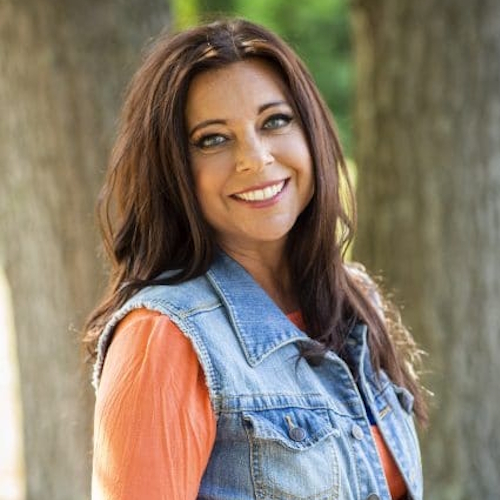
In the early days, Caroline wrestled with shame and self‑blame for missing symptoms. Therapy and focusing on her children helped her redirect those emotions. Learning that she carried a hereditary mutation associated with juvenile polyposis syndrome and that her son and sister are also affected transformed that self-blame into action. She advocated for her family to undergo genetic testing and colonoscopies.
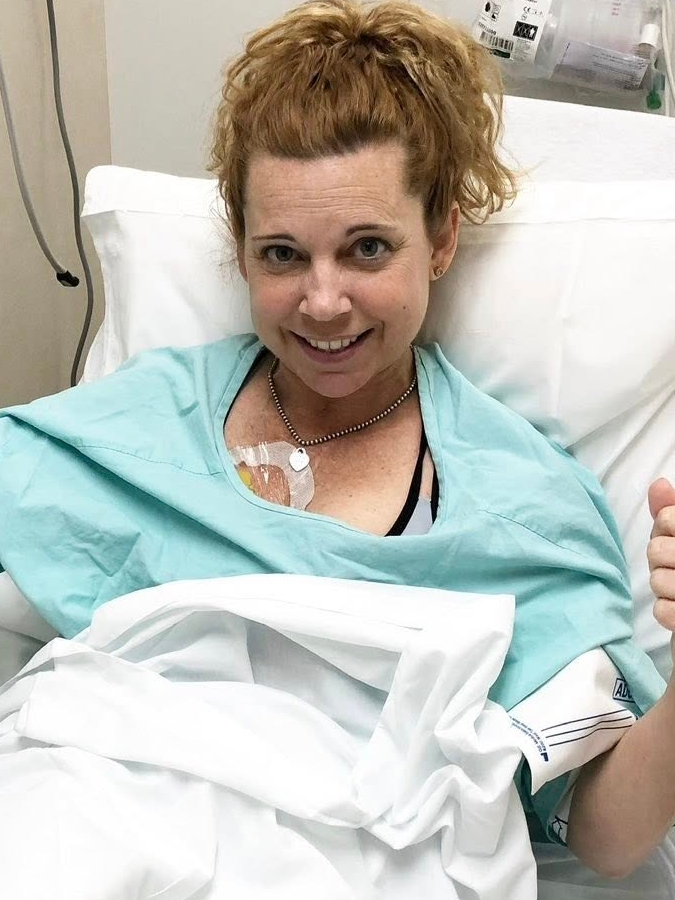
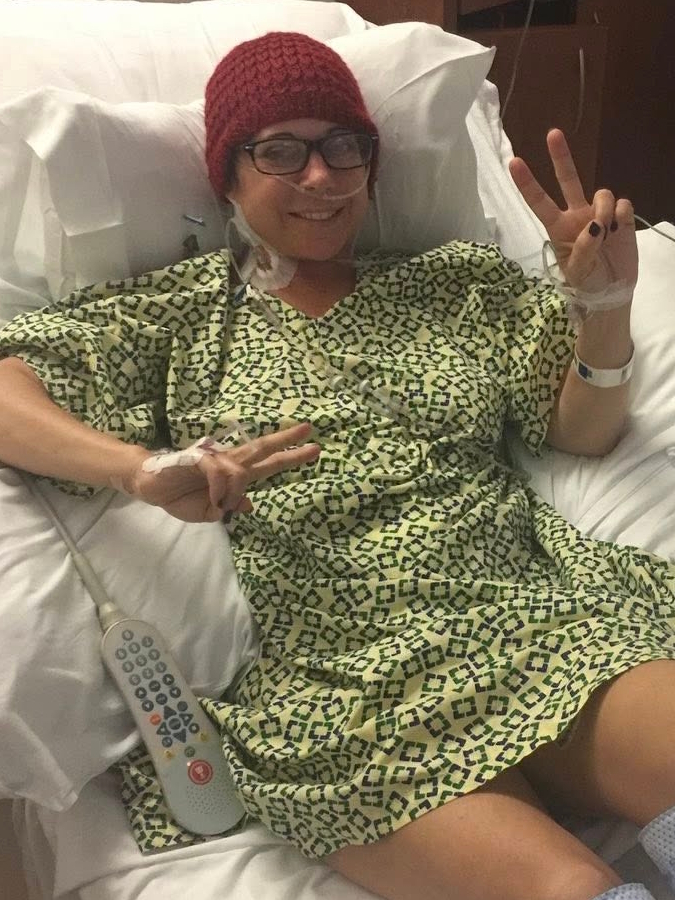
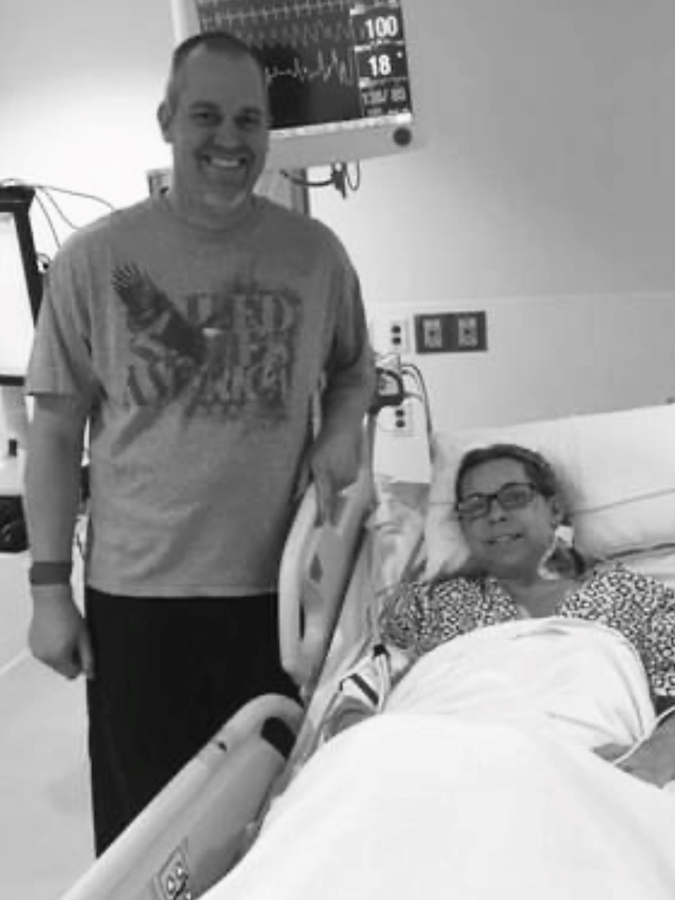
Her stage 4 colorectal cancer experience included 12 rounds of chemotherapy, multiple liver and colon surgeries, an HAI pump clinical trial, and, just when she thought she was past cancer, liver failure. At her lowest point, Caroline’s liver surgeon told her he was out of things in his back pocket and then introduced a new glimmer of hope: an innovative liver transplant approach informed by translational research. With the support of her small community and a living donor named Jason, she received a transplant and, in her words, the chance to live long enough to drive her kids crazy for the rest of their lives.
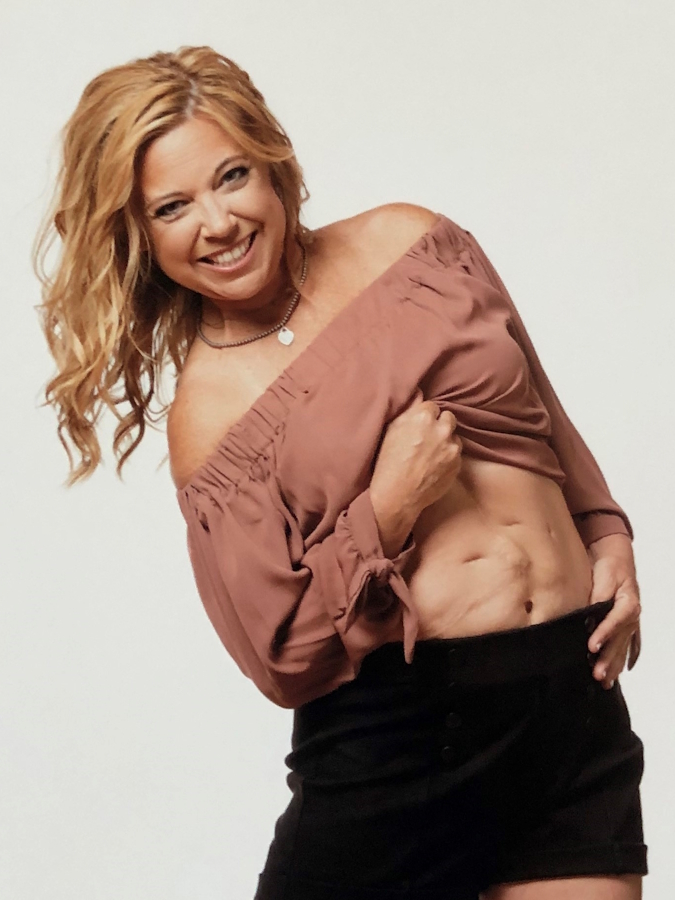
Ten years after diagnosis, Caroline describes herself as both softer and braver. She channels her lived experience into colorectal cancer advocacy, community engagement, and storytelling work with an incredible organization called Fight CRC. For Caroline, telling the truth about symptoms, biomarker testing, clinical trials, and survivorship is not just about her; it is about making sure every patient, every single time, has a real chance at care, connection, and hope.
Watch Caroline’s video or read the edited transcript of her interview to find out more about her story:
- Listening to persistent symptoms, even atypical ones like shoulder pain, rapid weight loss, and fatigue, can be lifesaving in cancer.
- Genetic testing and biomarker awareness helped Caroline uncover juvenile polyposis syndrome in her family, allowing earlier screening and a stage 1 catch for her sister.
- Patients are never to blame for delayed diagnoses; the focus belongs on better screening, clearer information, and more responsive care systems.
- Caroline’s transformation from overwhelmed mom with a new stage 4 diagnosis to seasoned advocate shows how lived experience can evolve into purpose, leadership, and community impact.
- Hope for Caroline is not blind optimism but a practice: allowing space for fear, then using that fear as fuel to ask questions, seek multiple opinions, and keep moving toward the next step in care.
Caroline’s Diagnosis Facts
- Name: Caroline M.
- Age at Diagnosis:
- 42
- Diagnosis:
- Colorectal Cancer
- Staging:
- Stage 4 (Metastatic)
- Mutations:
- Juvenile Polyposis Syndrome (JPS), BMPR1A, SMAD4
- Symptoms:
- Shoulder pain
- Rapid weight loss
- Abdominal cramping and pain
- Jaundice
- Treatments:
- Chemotherapy
- Surgeries: colon tumor removal, multi‑stage liver surgeries including hepatectomy, liver transplant
- Clinical trial: Hepatic artery infusion (HAI) pump/floxuridine
This is not medical advice. Please consult with your healthcare provider to make informed treatment decisions.
- Caroline’s Diagnosis Facts
- My first noticeable symptoms of colorectal cancer
- Letting go of self-blame after a late cancer diagnosis
- Discovering our family’s hereditary cancer risk
- Learning I had cancer while I was in the ER with my son
- Why I sought care at the Cleveland Clinic
- My stage 4 colorectal cancer treatment plan: chemotherapy, surgeries, and a HAI pump clinical trial
- The emotional roller coaster of going from no evidence of disease (NED) to liver failure
- Finding a new purpose in colorectal cancer advocacy
- Ten years later, how cancer made me soft and brave
- My message to women: Put yourself at the top and get screened
- Holding on to hope in the darkest moments
- Hear from people living with stage 4 colorectal cancer
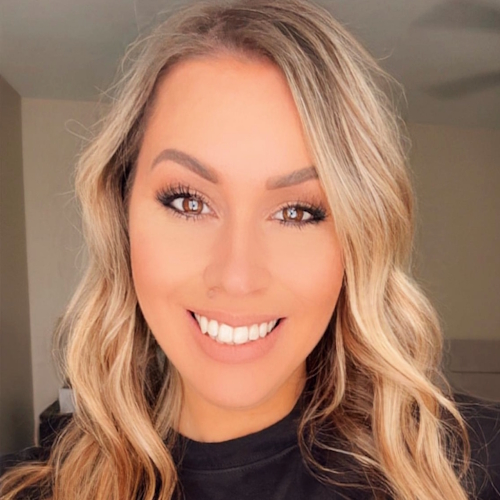
I’m Caroline
I was diagnosed in 2016 with stage 4 colorectal cancer. I’m a Buckeye at heart, born and raised in the Buckeye State of Ohio, and I currently live in Connecticut.
My first noticeable symptoms of colorectal cancer
In hindsight, we learn a lot about ourselves. I didn’t know that I had symptoms. I attributed the symptoms I did have to being a busy mom and having an active lifestyle. But my first noticeable sign that something was wrong was shoulder pain. In addition to being a busy mom, I was an active runner and hiker. We were on a hike one day when I thought I had fallen into a rut. We were on gravel and I noticed pain in my shoulder. It became so intense that I ended up in the emergency room in my small hometown.
Ironically, looking back, I definitely had some symptoms. One of my big things now is if you feel something, know your body and seek attention, because I didn’t and probably would have known more if I hadn’t brushed those symptoms off.
Subtle warning signs of colorectal cancer that I missed
I had gone through a huge weight loss. I had been dieting, though, so it coincided with the diet program that I was on. I thought I was doing well on the weight-loss plan. It turned out that it was the colorectal cancer taking over and consuming all of the energy in my body, so I was dropping weight rapidly. I also had some cramping and abdominal pain.
I didn’t have any blood in my stool, which is a typical sign of a late-stage diagnosis. But I had a lot of cramping, rapid weight loss, and changes in skin color, which was a sign of liver issues. I had extensive disease to my liver. Those are some of the signs that I had that I didn’t notice.
Letting go of self-blame after a late cancer diagnosis
I’ll emphasize this: It was with lots of therapy. Trauma that comes with a diagnosis like this is hard, and the shame that you bear as a woman for not noticing is hard.
The one thing that I found helpful in not blaming myself was putting into action my kids and their lives, and how now knowing can empower us. Instead of blaming myself for what I didn’t know, I can take that and empower myself by equipping my kids with the right things.
The things you don’t know are the things you don’t know, right? My dad carried the gene I have. I’m a genetic cancer patient. Empowering myself helped me overcome the “Why me?” and the sense of shame that came with not knowing and not seeing the signs. Being able to help my kids and knowing that they’re at risk and being able to save their lives is my job as a mother, which is to protect them. I was able to overcome a lot of those fears by knowing that I could equip them with the power to not be me.
Discovering our family’s hereditary cancer risk
I was fortunate. I didn’t realize it when I was diagnosed, but I sought care at the Cleveland Clinic. They’re a learning institution known for their cancer treatments, and they take a holistic approach to a diagnosis.
From the get-go, I didn’t have any of those barriers. When we talked about being diagnosed at a late stage, we looked at genealogy, genetics, and biomarkers right away – something that we focus on because a lot of those components aren’t put into place right away. But for my family and me, we knew right away that we needed to look at our hereditary risk.
My dad died in a car accident when I was five, so we didn’t have the knowledge, and knowledge is power. We did genetic testing on my children. We did colonoscopies for everybody for Christmas. It was a very exciting time. My children were so excited about that part of it.
We determined through biomarker testing, hereditary marker testing, and colonoscopies that we could prevent my kids from ever having cancer. We also identified that my son is a carrier of the gene that could cause early polyposis and polyps. We also discovered through a colonoscopy that my sister had stage 1 cancer, and we were able to catch it early.
What is juvenile polyposis syndrome (JPS)?
I’m considered a juvenile polyposis syndrome patient and survivor. When you have juvenile polyposis, it causes early growth of polyps in your colon. Let me phrase that not necessarily as early in age, but as early and increased production.
They start growing faster. Where a typical person’s polyps start in their 40s and 50s, in a juvenile polyposis patient, they start earlier and they produce more. Diagnosing a polyposis patient is a great tool for screening.
How shoulder pain led to my stage 4 colorectal cancer diagnosis
My shoulder pain opened up Pandora’s box, but in a good way. Looking back, thank heaven that I had that shoulder pain and finally paid attention to my body. Now, as an advocate for women in healthcare, I can tell you firsthand how important it is. If you see something or feel something, you have to ask questions.
My shoulder pain was the beginning of what unfolded into a scary, traumatic diagnosis. I went to the ER because I couldn’t get over the pain. It was so excruciating. In the ER, I had bloodwork done and mine was irregular. I was very fortunate that my ER doctor investigated. He said, “Something’s not right. Let’s do a little bit more looking.”
I had an ultrasound and a CT scan. Ultimately, through that day, we evolved into looking at different things, including my gallbladder, and then ultimately saw spots on my liver. My ER physician came in while my son was with me in the room and said, “I can’t give you a lot of information, but I feel like you have a very large mass on your colon and tumors on your liver that are related to that. I think that you need to see an oncologist.”
At that moment, my son fell on the ground because he heard the news of cancer. Life changed because I didn’t have any answers and I was in the ER. It was a scary time in my life.
Learning I had cancer while I was in the ER with my son
My first thought was of my son, who was melting. When you hear that word, you don’t know anything else but that it’s a scary word, whether it’s stage 0, pre-cancerous, or all the way through stage 4. To hear those words is terrifying and traumatic. He was only 18 years old.
My first thoughts were of my kids: “Wow, what is going on? My life is normal. I’m a mom. I don’t have time for cancer. This can’t be happening to me. Tell me how to fix it, because my kids need their mom.” That drove me into action.
I’m very fortunate that I had the resources. I called a friend and said, “I need help.” My sister is a nurse practitioner, and I said, “Look at my CT scans. What does this mean?” She had done research in molecular genetics and the liver. I pulled together my resources and was very fortunate. I immediately had a colonoscopy to diagnose. I started triaging my family and preparing them for all the unknowns that would now exist in this new life.
It was crushing. I say those things and it wasn’t in an organized fashion. Looking back, there are so many gray and dark areas that I don’t recall, but I think those are some of the high-level points: We have trauma. Now we have my children and my family to think about. We have to think about my care. I was thrust into this upside-down world.
In a week, I went from being a normal mom to a stage 4 cancer patient with six months to live, who had a chemo port, and may need to get her affairs in order. It was a scary time and I didn’t know what to do.
Why I sought care at the Cleveland Clinic
I’m a big advocate of a bazillion opinions. You have to seek out as many as you are comfortable with. Once you have all the information and can make a decision you’re comfortable with based on the information that you have, you can go into care with confidence, driving your care.
The first oncologist I went to told me that I had six months to live and that there was nothing that she could do. That wasn’t good enough for me because I had four children, and they were not going to lose their mom like I lost my father.
I was in Ohio. A friend of mine who is a physician told me, “If you’re going to fight this and you’re going to fight hard, you’re stacked against some heavy odds. The best place for you is the Cleveland Clinic.” I didn’t know what advocacy was, but I knew I had to fight for myself. Now I know that I was becoming an advocate.
I drove three hours to the Cleveland Clinic and insisted on seeing a surgeon. I went all the wrong ways. I was fortunate that people listened to me. I went to a liver surgeon, not even knowing that I needed an oncologist first. The approach was, “Boy, this isn’t great. This isn’t a great situation, so we’re going to get you going on chemotherapy.”
I was fortunate that my surgeon told me and was honest with me about the severity of my situation. She said, “I can take care of your liver. Your liver is a little terrifying.” My liver was covered with disease on both sides, and I had a very complex tumor in the ball of the hepatic arch, which no one wanted to look at.
Cleveland Clinic gave us our first bit of hope, and that was, “Let’s do chemo and see what happens, then maybe we could do a surgical intervention.” That was the first time I had ever heard, “We could take this cancer out of you.” Before that, I had just heard, “You have six months to live. You need to get your affairs in order.” I clung to the hope that I could fight hard through 12 rounds of chemotherapy and that I could get there. And I did. I got there.
Finding a glimmer of hope amidst stage 4 colorectal cancer
The glimmer is definitely a mindset. I can’t tell you that there weren’t dark times when I wanted to curl up into a ball, because there absolutely were. I found space for that. I gave myself the grace to have those fearful times because I couldn’t empower myself with hope and light if I didn’t allow space for the fear.
Sometimes we forget that fear is okay. Fear drove me, and it drove the hope. I was scared that something could happen, so I fought even harder for the opposite effect: to find hope and make it to the next thing.
I think my team saw that in me and gave me a sense of hope, because they were always encouraging me about the next steps. I’m a Type A person. I want to have a plan, and I couldn’t have a plan with cancer. There was no plan. I had to trust everyone else and figure out what I could do myself. Then I had to rely on them for the other pieces of hope that I could provide myself and they could provide me. I hung on to those things.
I always reminded myself, “Okay, you can wallow in self-pity for a minute, Caroline. You get that. But then in the midst of that pity, you pull yourself up, start again, and keep pushing forward.” My kids drove me to do that.
My stage 4 colorectal cancer treatment plan: chemotherapy, surgeries, and a HAI pump clinical trial
The treatment plan started with 12 rounds of chemotherapy, which we did. Afterward, we would look at the results and determine the next steps. I became a surgical candidate after 12 rounds of chemotherapy.
They took a three-stage approach to my liver and colon. It was a pretty complex situation, and I had a great surgical team. I had a liver surgeon and a colon surgeon. The first stage was to remove the tumor from my colon and undergo a three-stage hepatectomy. I got to have a good nap all those times.
The first surgery was the tumor removal in the colon. The second and third surgeries were when they went in and worked on my liver. They took out the right lobe in the first liver surgery. For the second surgery, they removed the complex tumor that was on my hepatic arch. There were four more tumors on my left lobe, so in the next two surgeries, they dealt with all of those.
The final surgery before long-term care was when I was in a clinical trial and received the HAI pump. It was a dose-finding trial, and they were evaluating the effects of floxuridine. I received the chemotherapy through the HAI pump to mop up what might be discovered later or any residual disease in what was left of my liver, which was my left lobe.
That went well. About six months later, I started seeing some interesting liver enzyme numbers, which an oncology team tracks over the years. You’re looking at your liver enzymes, CEA, CA-125, and different levels to see if there’s cause for alarm, alongside the CT scans and all the other care you’re having. My CT scans were clear, but my liver started not wanting to cooperate. Unfortunately, I ended up with liver failure. I had been clear of disease, and now I was in the hospital with liver failure.
The emotional roller coaster of going from no evidence of disease (NED) to liver failure
It’s a roller coaster. The gray and the dark areas that we don’t remember and don’t recall, I used to ask: “Why can’t I remember? Why don’t I know?” I feel like that is a layer of protection, that some of those things aren’t important to remember.
But I do remember worrying about the trauma that I was creating for my kids. Here we were. I had all this surgery done, and we had hope again. The Cleveland Clinic gave us hope that the cancer wasn’t going to come back. I was knee-deep in recovery.
We were celebrating. We were on a high and started making plans again, not in three-month increments as we had been. Things were starting to feel a little bit normal again. Kids were doing well. Life was starting to happen again. But we didn’t know we were in for another blow.
When treatment causes liver failure and a liver transplant
I had no idea. When you’re diagnosed with cancer, for many of us, we have no idea what’s happening. The floodgates just opened. There’s information being thrown at us from all sides, and we have no idea what any of it means. We’re crash-course educating ourselves, or at least trying to.
Liver failure wasn’t on my bingo card. I was trying to live from my cancer, not liver failure. I got a for-sure bingo on that one.
When we were on this very big high of “Oh my gosh, mom’s going to be okay. We’re going to survive this, get through this trauma, and celebrate again,” we were crippled with “Now I need a liver transplant.” The fears all came back again. We sat there, not knowing what to do, and had lost hope again. We had all this hope and we were back to that dark place.
My oncologist and liver surgeon came in. I had been in the Cleveland Clinic. I had a liver aneurysm because my liver was struggling to keep up. I had bilateral biliary drains in an attempt to keep my liver going.
My liver surgeon had become a dear friend. I drove him so crazy and he saw me so much. Every time, I brought a picture of my kids with me. Through the experience, we as patients become connected to our surgeons. Surgeons care about our lives, and they know they’re not just saving our lives; our children and their families are involved as well. He meant a lot to me.
He said, “I have always fought for the next thing for you. I’ve always had something in my back pocket to do next. I’m out of things in my back pocket. I don’t have anything left.” But a glimmer of hope popped in. That’s why I always cling to a glimmer of hope: “You’re probably not going to make it in this traditional form. But my colleague is doing translational research in liver transplantation, and you’re the perfect candidate.”
Mind you, I was in liver failure and had just overcome a cancer diagnosis. He said, “You’re the perfect candidate and I’d like to do this,” and he proceeded to tell me all of the things that I had no idea what they were about. The one thing that stuck out for me was my kids again. There was no question. I was in. I never wanted my kids to ever think I gave up on them. If I were going to die, it was to die fighting. For me, the transplant was another opportunity to keep fighting. I was all in for it. And we hit a home run. It worked.
What it’s like to go through a liver transplant
It was hard at first with the kids, telling them that “This worked, but now mom’s back in the situation again.” They’re all adults, so telling them that was hard.
There was translational research out of Norway, and they were looking for a candidate to try it with. It’s funny when they asked me about it because I said yes immediately. I said, “What do I need to do?” He said, “You need to find a donor.” I was like, “What do you mean? I don’t even understand.”
I had to be my own advocate again and find a donor. My kids were asking everyone; everyone was asking everyone. I lived in a small community and everyone knew my plight. My pastor came to me and said, “I think we should put a note in the bulletin at church, so people understand what’s going on.”
I was against it, but we did that. I said, “I don’t know if that’s the appropriate thing to do,” and he said, “It is.” Fifty people called the clinic and provided their information to become donors. Jason knew the minute that he opened that bulletin that he was the person who was supposed to be my donor, and he was. He was the sixth person that they went through, and he was frustrated. He thought, “I’m supposed to be the person.”
I’m very fortunate. I have Jason’s left lobe now, and he has his right lobe, and I have him and his family as dear friends. I have my life and I have my children. Now I get to do all the things I didn’t think I’d do 10 years ago. I thought that I was not going to see them do any of the things. I thought I was going to have to prepare them for living without me. Now I’m very lucky that I get to live with them. And drive them crazy for the rest of their lives.
Finding a new purpose in colorectal cancer advocacy
I felt the nudge right away. “This can’t be. This isn’t right. This isn’t fair. What is happening?” But I think I needed to get through a space of acute care. Once I came out on the other side, I realized, “My life is never going to be the same. It has changed dramatically,” and that’s okay.
I had to come to terms with “That’s okay.” The things that I had accepted as okay before cancer weren’t the same things that I accepted after cancer. I went through an identity crisis, and that’s okay too. I want to acknowledge that, because cancer completely turns your life upside down. The things that you knew to be true before cancer may still be true, but some are completely different.
It was a hard path, and I owned that. It led me to want more, to want to help. I saw a picture at the Cleveland Clinic, which was impactful for me. There was a sign that said, “Every patient. Every single time.”
I didn’t realize how privileged I was in the way that I received the care I did. I didn’t realize the disparities and inequities we faced as a nation, as a global society, and as humanity in the things that needed to be done for patients, survivors, and caregivers across the continuum of care.
I was immediately thrust into, “I have to do more. I need to find community.” I was alone and in my thoughts. I dug online because I was WebMD-ing way too much. I needed to meet the community and people like me, so I could learn how to do work that helps others.
I had become an advocate, helping myself and learning how to ask questions appropriately. Then I was encouraged to be an advocate for others because everyone deserves the same care I received. I realized that when I was going through my cancer care. I knew that there was work to be done. I knew that I needed to fight for people who didn’t have a voice as I do. I knew that there were a lot of people who didn’t have the courage. I could sit at the table for them, talk to people for them, save space for them, say their name, and tell their stories. That was going to be my job. I knew it right from the minute I had the nudge.
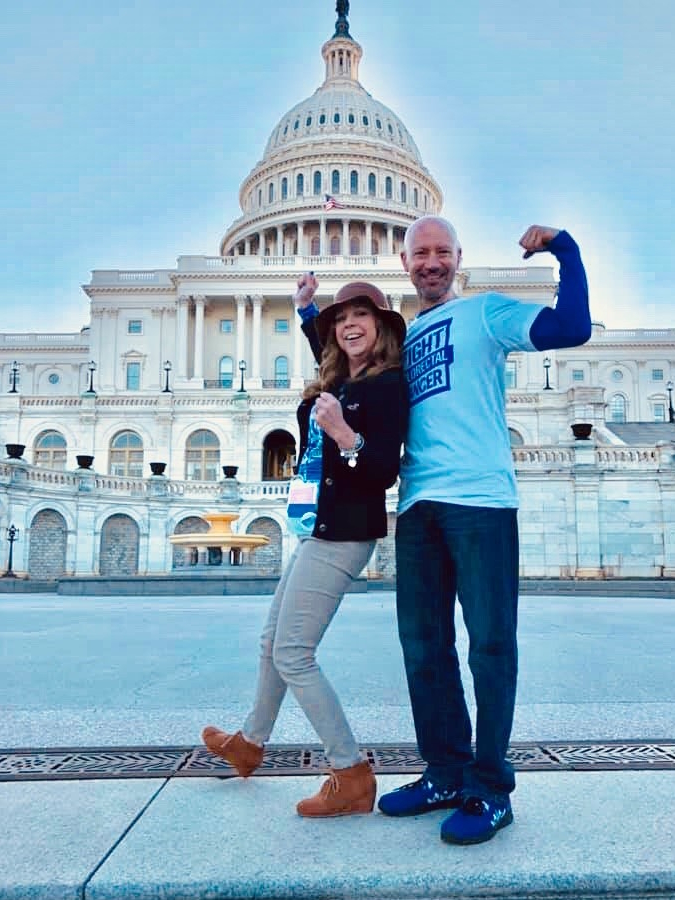
That led me to Fight CRC and their Call-on Congress.
My work at Fight CRC and advocacy priorities
My role at Fight CRC is community engagement, so I’m fortunate to work with the community. We do a lot of work educating our community from prevention through to long-term survivorship. I’m incredibly honored and deeply grateful to have that space.
I get to meet people and learn about their stories. I get to connect them with the right resources, the right hope, and the right people who can uplift them, as happened to me when I found Fight CRC. When I met The Colon Club and Colon Camp, which are part of Fight CRC, I was alone in the world and had no hope; they gave me hope.
My job at Fight CRC is to continue that, meet people, and tell their stories, because the most important part of the work we do is sharing our stories. We can collect data and compile numbers. We can do research. If we do that but we don’t put faces and humanity to it, it’s not worth anything, is it?
I get to put faces to the research. I get to put faces to prevention and early screening that have saved people from a cancer diagnosis. I get to put a face to the story of somebody who has survived against all odds. I love being able to share hope. We’re better together, and that’s my pride and joy in what we’re doing.
Aside from that, we’re doing a lot of stuff. We engage our advocates every year to go to Capitol Hill to do work. We have great momentum on policy, and we’re engaged with all our constituents and representatives to do more.
In 2026, we have some grassroots endeavors to work on, and we’ll convene in Washington, D.C., to discuss them, take action, and plant flags. We have our global event in Washington, D.C., alongside our Call-on Congress.
We’re bringing thought leaders, researchers, and clinicians from across the country and around the globe to Washington, D.C., to engage in conversations, learn from and teach one another, and then go out and do the work to keep that momentum going. We have a lot going on.
Honoring my husband Mike
I never thought that I would be so interested in this work. When I went to Call-on Congress, it changed my perspective. Alongside that little note I saw at the Cleveland Clinic, meeting my husband, Mike, also changed my perspective.
He was a fierce advocate, and we lost him four-and-a-half years ago. I had the same diagnosis as him, and I knew there was work to be done. Mike always told me that if he could change the trajectory of care for the better for one person, whether it’s a little nuance or whatever, it was all worth it.
I carry that and Mike with me all the time. I’ll never lose sight of that piece. If in the end I’ve helped somebody along the way, even if it’s just a smidgen, it’s all worth it.
Ten years later, how cancer made me soft and brave
The girl from 10 years ago, Carol, had a lot of her come along for the ride. We landed 10 years later after cancer as Caroline. She’s a better version. She’s softer. She’s braver.
I wrote this down in a 10-year survivor story. A lot of people think that soft and brave can’t coexist, but they can. I learned that I could be both. Old Carol didn’t know how to do either of those things. Caroline is better equipped to be in the present, live life now, and not look so much to the future, which I think is completely okay as well. That was hard for me to grapple with. How do I look at long-term life like I used to? How do I plan for 20 years from now? I don’t have to do that anymore. I can be present and still be hopeful for the future.
All in all, Caroline is softer and gentler. She’s kind and excited about life. Adversity taught her that the worst situations can bring the most beautiful outcomes. That’s a new opportunity at a new life: a healthier and safer life, a place where I get to save space for others like I never knew how to do before and get to honor living, like I didn’t know how to do before.
We all have to face death. There’s no other option. I see it right in front of me rather than far away, and that drives many of my decisions, including how I treat people, the choices I make, and the person I continue to strive to become. I’m proud of who Carol was, and I’m equally proud of who Caroline is now.
How proud I am of myself and my tribe
I’m not proud of just me. I’m proud of my family, my kids, my sister, my mom, and my Mike; all the people who played roles in my becoming. I’m proud that they hung on to that girl who was suffering, not only from her cancer but in life in general.
Cancer teaches you to quickly figure out what matters most. I had to sort a lot of those things out. I’m not just proud of myself; I’m prouder of my tribe and the people who hung on to me and helped me become the person I can be proud of.
I’m equally thankful because they didn’t have to hold on to me, and they did. That’s the best thing I get out of cancer: this amazing community that understands who I am now, and the people who have clung to me and held me up. If they didn’t hold me up, there’s no way this girl could be standing. I’m proud of all of them for helping me be proud of myself.
My message to women: Put yourself at the top and get screened
As women, we always put ourselves at the bottom of the pyramid. Everything else matters more: our children, our family, our career… I could go on and on, but everything else matters aside from ourselves.
My first message to every single woman listening is this: We belong at the top. That is not a selfish thing. Please, listen to me loud and clear. If we’re not at the top, nothing else can succeed. We have to be selfish. We own that spot. We get to be on top. Everything else falls together.
I didn’t know that the opposite effect was happening to me. The most important thing is to be on top. If we’re on the top of that pyramid, everything else falls into place because we’re going to say, “Oh gosh, I’m not feeling my best. I’m tired. I have a bellyache all the time after I eat. I have blood in my stool.” If we’re putting ourselves at the top, we’re going to seek out attention for those things. We’re going to seek out care.
Prevention and screening are the most important things. You have to know it to screen it and to beat it. If you know your family history and if there’s cancer in your family history, you need to have a conversation with your doctor. It’s an important and easy conversation. If you have a symptom, you need to ask questions. You need to get screened.
If you don’t have the right access, seek advocacy out. There are so many organizations that are willing to help you and can guide you through what it looks like to be screened and which screening modalities are available to you. Seek out care.
Finally, know your body. Trust yourself and your gut. Know your body and screen it. That way, you prevent cancer.
Holding on to hope in the darkest moments
Amidst all of it, hope floats. It’s a true thing, and you have to cling to it as hard as it may be, especially in the dark spaces. I sat there. I see everyone who sits there. Call me, email me, and seek out people like you in the survivor network. We exist. We’re there to help you find that hope because it does exist, even in the dark places. I want to encourage everybody that it will be okay.
Inspired by Caroline’s story?
Share your story, too!
Hear from people living with stage 4 colorectal cancer
Real experiences with diagnosis, treatment choices, side effects, and life beyond metastatic colorectal cancer — in their own words.
Leave a Reply