
“I Have Stage 4 Cancer and I’m Living My Best Life”: Adrienne’s Stage 4 Colon Cancer Story
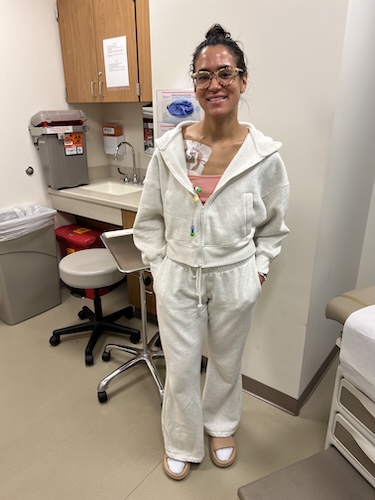
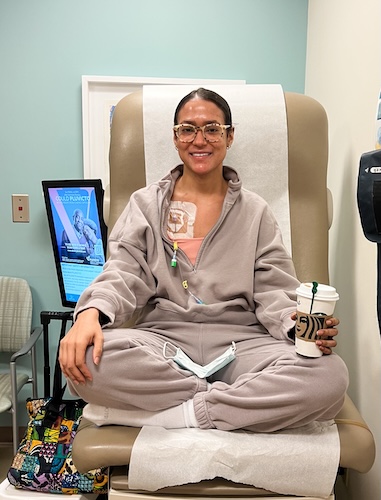
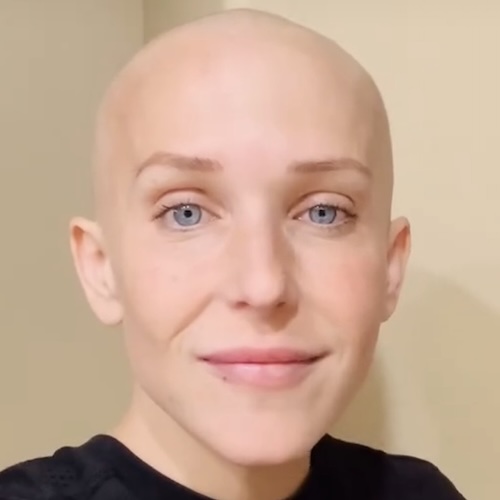
When Adrienne received her stage 4 colon cancer diagnosis in January 2025, nothing in her life had pointed toward cancer; not her routine bloodwork, not her annual physicals, not even the fatigue she had been living with for years. As a physician assistant in Ohio, Adrienne was attuned to her body. But she had quietly dismissed persistent exhaustion as stress, heartbreak, and depression following a major life upheaval. It wasn’t until an evening of ice cream followed by a strange and very specific discomfort in her abdomen that she pressed in, felt a lump, and trusted what her body was telling her.
Interviewed by: Taylor Scheib
Edited by: Chris Sanchez
Adrienne’s path to her colon cancer diagnosis required both self-advocacy and a remarkable bit of circumstance. When she arrived at the emergency room, her labs were perfectly normal, no one else could feel the lump, and there was no medically obvious reason to keep her there. But her best friend, a fellow physician assistant, was working that shift and trusted Adrienne’s instincts enough to order a CT scan. That single decision revealed multiple lesions on her liver: metastatic disease. Adrienne said, “She told me that if it had been anyone else, she probably would have sent me home, which was so scary to think about.”
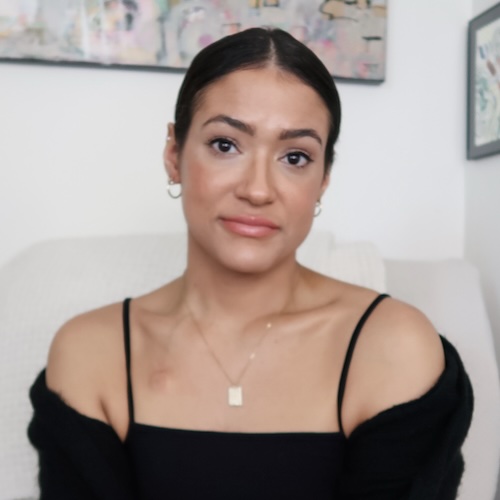
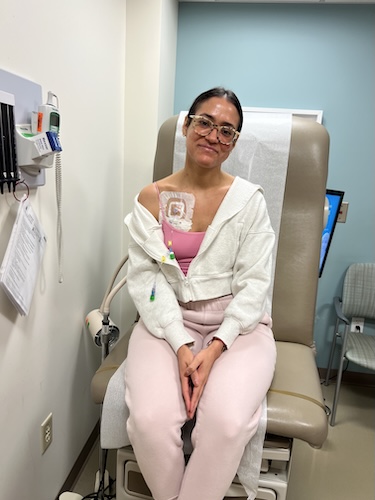
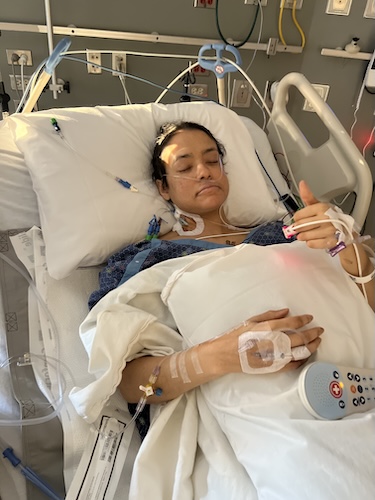
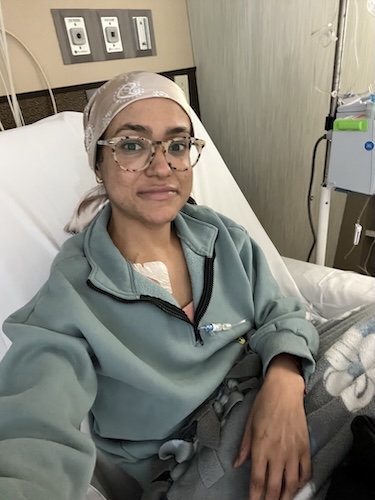
The weeks that followed brought a biopsy, an MRI, and a colonoscopy. The diagnosis was stage 4 colon cancer (colon adenocarcinoma, the most common form of colon cancer). When colon cancer was confirmed, Adrienne felt something unexpected: relief. Treatment began quickly, including chemotherapy, two Y-90 radioembolization and ablation procedures, and a combined colon and liver resection. More recently she went through a second round of chemotherapy and a monoclonal antibody following a recurrence. Through every setback, including a serious drug reaction and a recurrence after being declared no evidence of disease (NED), Adrienne has returned to the same anchoring question: “Why is this happening FOR me?”
What makes Adrienne’s story so powerful is how her mentality transformed. The diagnosis forced a reckoning she’d been postponing for years. Cancer collapsed the distance between dreams she had shelved indefinitely and a version of herself that she had never quite stepped into. Today, Adrienne moves through the world with an intentionality she didn’t have before, building what she calls her dream life even as she continues treatment.
Watch Adrienne’s video and read through the edited transcript of her interview for more on her colon cancer story.
- Persistent, unexplained fatigue can be a silent symptom of cancer. Adrienne experienced debilitating fatigue for years before her diagnosis, fatigue that was dismissed as stress, depression, and heartbreak.
- Self-advocacy and medical access can be lifesaving. Adrienne’s decision to go directly to the ER and the fact that a trusted friend was working that shift are what led to her CT scan and, ultimately, her diagnosis.
- A cancer recurrence after scans show no evidence of disease (NED) does not mean treatment has failed. After her combined colon and liver resection, Adrienne was declared NED. A wound healing complication delayed follow-up chemotherapy, possibly allowing microscopic disease to return: a reminder that recurrence is a disease behavior, not a patient failure.
- It is possible to rebuild identity and find purpose during and after treatment. Adrienne’s transformation from fear and isolation to intentional living is a testament to the resilience available to patients who allow themselves to grieve fully and then choose a new direction. Her story demonstrates that cancer can be both devastating and clarifying.
- Finding community on your own terms matters. From resisting support groups in the early months to building a global online community of fellow young colon cancer patients, Adrienne’s experience shows that connection looks different for everyone and is worth finding in whatever form feels safe and supportive.
Adrienne’s Diagnosis Facts
- Name: Adrienne F.
- Age at Diagnosis:
- 31
- Diagnosis:
- Colon Cancer (Colon Adenocarcinoma)
- Staging:
- Stage 4 (Metastatic)
- Symptoms:
- Years of constant fatigue
- Appearance of a lump in her abdomen
- Treatments:
- Chemotherapy: FOLFIRINOX, FOLFOX, FOLFIRI
- Radiation therapy: Y-90 radioembolization
- Monoclonal antibody: bevacizumab
- Ablation therapy
- Surgery: colon and liver resection


This is not medical advice. Please consult with your healthcare provider to make informed treatment decisions.
- Adrienne’s Diagnosis Facts
- Who I am
- Describing my fatigue: The colon cancer symptom that went unrecognized for years
- Finding the lump
- The moment I heard “metastatic disease”
- Finding the right oncology care team
- My colon cancer treatment timeline: From FOLFIRINOX to resections, Y-90, and recurrence
- Processing the emotional devastation of a colon cancer recurrence after doing everything right
- “Building my dream life while living with cancer”: What that phrase really means
- How I found community: From resisting support groups to building one online
- The mindset shift: Finding purpose in the colon cancer diagnosis, and “Why is this happening FOR me?”
- The “why”: How colon cancer forced me to finally become the person I always wanted to be
- Learning to love my body again: Reframing body image during colon cancer treatment
- Hear from people living with colorectal cancer
Who I am
My name is Adrienne. I was diagnosed with stage 4 colon cancer (colon adenocarcinoma) in January of 2025. I’m from Cincinnati, Ohio.
Describing my fatigue: The colon cancer symptom that went unrecognized for years
The fatigue was my first symptom, and it’s not something that I really realized until after the fact. Looking back in hindsight, at the time when I was feeling fatigued, I just attributed it to stress. “This is just how life is. This is just how we all live now.” I had also battled a little with some depression here and there, and so I thought it was that, too. The fatigue, I would say, probably went on for, honestly, a few years, but it really got significant — I want to say 2024 into 2025. It was like: I would go to sleep, I would get nine, ten hours, wake up, barely be able to wake up. My alarm would go off, and I would just keep sleeping, keep sleeping, keep sleeping. And then when I would get up, I would just be tired throughout the day. It was significant.
How a major change in my life made the symptoms easier to dismiss
At the beginning of 2024, I went through a major breakup of a ten-year relationship. My life turned upside down, and I actually moved back in with my mom. I was trying to figure out what I was going to do next with my life because I had had this whole plan. At that point, with those emotions, I thought it was heartbreak. I thought it was a little bit of depression. I thought I was just so confused about what was going on with my life that I attributed all the fatigue to that. I really attributed all the fatigue to that, and I didn’t think twice about it being a health problem — 100%.
Looking back: Processing the guilt of a late diagnosis
That’s what I think about all the time — that it was most likely the cancer. One of the things I questioned is: How long was it there? And there’s no answer that my oncologist can give me. He has given me estimates of how long it may have taken to metastasize, but not how long it had been there. That’s one of the things I go back and think about.
I did start initially with feeling guilt — could I have caught this sooner? Why did I have to catch it so late? But I had to get out of that, because there was nothing I could have done differently. Around the time that I was feeling that severe fatigue at the end of 2024, I actually did go see my primary care provider for an annual physical. My blood work was perfect. The only thing that was abnormal was that my vitamin D was low. And so I was like, “Oh, this is why I’m fatigued — because of the vitamin D.” Looking back, my perspective now is that I can’t blame myself. I was doing everything that I could. I was going to the doctor’s office for my annual physical. I was told everything was okay. I was paying attention as much as I could to my body. But definitely in the beginning, there was a little bit of guilt — well, what if I had paid more attention? Could I have caught it sooner? I just don’t think that was realistic.
What extreme fatigue actually felt like day to day
I would go to bed at 9, 10, maybe 11 p.m. at the latest. I am not a night owl anymore. I would wake up having had eight, nine, 10 hours of good, deep sleep — this was not disruptive, bad sleep. And then I would wake up, and I just remember — I remember being with my past partner and him being able to just get up and go. I always wanted to do that, and feeling guilty because I couldn’t. I was just so tired. I felt like I could sleep until noon. When I would finally be able to get myself up, it was still this cloud of fatigue throughout the day. I would have my coffee in the morning and then definitely need another coffee or some kind of caffeine beverage in the afternoon, and still, that didn’t really help. I remember always crashing significantly by 2 p.m., needing a nap almost every single day, but still just waking up feeling fatigued. It was like nothing could help the fatigue.
What’s very interesting now, looking back, is: even though I’ve just finished my 26th round of chemo — and you would imagine the fatigue during chemo — I actually have more energy now on my off weeks than I did back in 2024. To compare the difference in how fatigued I was to now — I’m like, whoa. It was very, very significant.
Finding the lump
I always start telling the story of how I found the lump with this: I was eating ice cream. I love ice cream. I’m not lactose intolerant; there was no issue with the ice cream itself — it was just that that triggered the discovery. I remember having a bowl of ice cream one evening, and I don’t want anyone to think that the ice cream caused a problem. This is just part of the story. I started to have what just felt like a slightly upset stomach — indigestion, nothing crazy, nothing painful — but it was noticeable. I finished the ice cream, and that evening, as it didn’t go away, I went to bed and didn’t think much of it. I figured I’d wake up and it would feel better. In the morning, it didn’t go away. The discomfort was pinpointed — I could feel it in just one area of my abdomen. Normally, when you have an upset stomach, you feel yucky all over; this was one area. I started to feel around that area, and I felt an actual lump there. As soon as I felt it, it wasn’t like my heart dropped. I honestly didn’t think I had cancer. I just was like, “This is not normal. I shouldn’t have a lump here.” And that’s how I discovered the lump.
The decision to go to the emergency room
I was naturally anxious, so I was like, “Something’s wrong.” But there actually was a resistance to wanting to go find out what it was. I decided to just wait a little bit. I wasn’t having any other emergent symptoms — no fever, no nausea, no vomiting, no changes in my stool or bowel movements; I was still going to the bathroom regularly. I thought I’d give it a few more days. I started to try to rationalize what it could be — maybe a weird ovarian cyst, maybe a weird hernia. Cancer was in the back of my mind; I didn’t think about cancer.
It took about a week and a half, two weeks for me to finally say, “Okay, I need to go in and check this out. This isn’t going away. This isn’t getting better.” At one point, it actually did start to get more uncomfortable — there still wasn’t severe pain, but it was very quickly getting more uncomfortable. I have a degree in medicine; I’m a physician assistant. I knew I needed imaging. I didn’t want to go through my primary care provider — wait for that appointment, and then maybe get referred, maybe not, maybe be told nothing was wrong. So I decided to go to the ER about two weeks after I felt the lump. That’s when everything happened.
Normal labs, a CT Scan, and multiple liver lesions
I went and saw one of my fellow physician assistant friends — one of my best friends — and I know I’m very lucky in that way. She already knew what was going on; I had been texting her. She knew I specifically wanted a CT scan. First, we did blood work — the full panel. They checked all my blood counts: a CBC, a comprehensive metabolic panel (CMP), where they check your kidneys and liver function, my pancreas enzyme levels, my electrolytes — everything came back absolutely normal, within the normal range.
I’m going to fast-forward and tell you that I had multiple tumors on my liver, and my liver function was completely normal.
When they did the physical exam, nobody could feel the lump besides me. I realized I had to stand in a very specific position for someone to feel it, just given what I had eaten that morning and how things had moved. Nobody could feel the lump. My labs were perfect. I didn’t have a fever. I wasn’t vomiting. There was no real medical reason for me to be in the emergency room. But because it was my friend, she said, “We’ll still get the CT scan — I trust you.” She told me that if it had been anyone else, she probably would have sent me home. Which is so scary to think about.
The moment I heard “metastatic disease”
This part of the story is always traumatic for me to tell. My friend had gotten the call about the CT scan while she was still in the room with me, and I could hear the radiologist on the phone. My friend rushed out, and I was like, “Okay — it’s never good when the radiologist has to call.” That was my first indication that something was wrong. When she came back in, I could tell she had been crying. Her eyes were red-rimmed. I sat down on the bed. She sat with me, grabbed my hand, and said while crying, “Everything’s going to be okay.” And at that point, my heart just sank.
The attending doctor walked in and said, “We don’t see a mass in your abdomen on the CT scan, but there are multiple lesions on your liver that look like metastatic disease.” I remember just hearing the word “metastatic,” and my heart dropped even further. But there was also this denial — “No way. You’ve got the wrong scan. You’ve got the wrong person.” My mom was there with me. We looked at each other. She was out loud saying, “No way — she’s so healthy.” But yeah, that’s what they found.
Metastasis is when there is a solid primary tumor, and it has gone to another organ. That’s basically what it means — there is another tumor, or multiple tumors, in other places other than where the cancer originated.
Waiting for a diagnosis: From liver lesions to colon cancer (colon adenocarcinoma)
Initially, because they couldn’t see the mass on the CT scan — they could only see the lesions in the liver — they didn’t know what type of cancer it was or where it was coming from. The ER doctor started saying, “We’re going to have to do a colonoscopy. You’re going to need a PET scan, a mammogram, a full oncology workup.” And I was still thinking, “It’s parasites.”
The very next day, they set me up with oncology. I remember walking in and seeing “Cancer Institute and Parking for Cancer Patients,” and I’m just thinking, “This is just not my life. This is not real.” We saw a general oncologist first. She said, “Let’s biopsy one of the liver lesions. In the meantime, we’ll also get an MRI of the abdomen — maybe we can see this lump you’re feeling.” They got the MRI and were able to see the mass; it was in my abdomen, but at that point, they still could not tell exactly where it was coming from.
The biopsy results came back as adenocarcinoma. That’s when I found out it was cancer. My chart is a blessing and a curse — I still thought I was going to open it and get relief. When I clicked on it and saw “adenocarcinoma,” that is when everything really hit me.
I ended up having a colonoscopy and an endoscopy, and that’s where they confirmed it was colon cancer. When I woke up, my mom was sitting next to me. She looked at me and said, “It’s not pancreatic.” I tried to cry, but I don’t know if anybody knows this, but they give you medicine to dry you out during a colonoscopy, so I was sitting there trying to cry, but no tears came out.
Finding the right oncology care team
This was such a blessing — it just kind of unfolded naturally. I didn’t really have to go looking. It all started with going to that specific ER where my friend worked. From there, they referred me to a general oncologist within their system, and she referred me to their director of GI oncology — and he’s been my oncologist ever since. Right off the bat, I loved his bedside manner and his demeanor. He’s very compassionate, very knowledgeable, stays up to date on the latest research, and runs clinical trials. It was a blessing — it really unfolded. We didn’t have to go looking.
My colon cancer treatment timeline: From FOLFIRINOX to resections, Y-90, and recurrence
Processing the emotional devastation of a colon cancer recurrence after doing everything right
“Building my dream life while living with cancer”: What that phrase really means
The isolation of a colon cancer diagnosis in your 30s — and how it feels when the world keeps moving
How I found community: From resisting support groups to building one online
The mindset shift: Finding purpose in the colon cancer diagnosis, and “Why is this happening FOR me?”
The “why”: How colon cancer forced me to finally become the person I always wanted to be
Learning to love my body again: Reframing body image during colon cancer treatment
Inspired by Adrienne’s story?
Share your story, too!
Hear from people living with colorectal cancer
Real experiences with diagnosis, treatment choices, side effects, and life beyond colorectal cancer — in their own words.



Leave a Reply