
Diagnosed at 35: Zed’s Stage 3 Colon Cancer and the Power of Early Screening
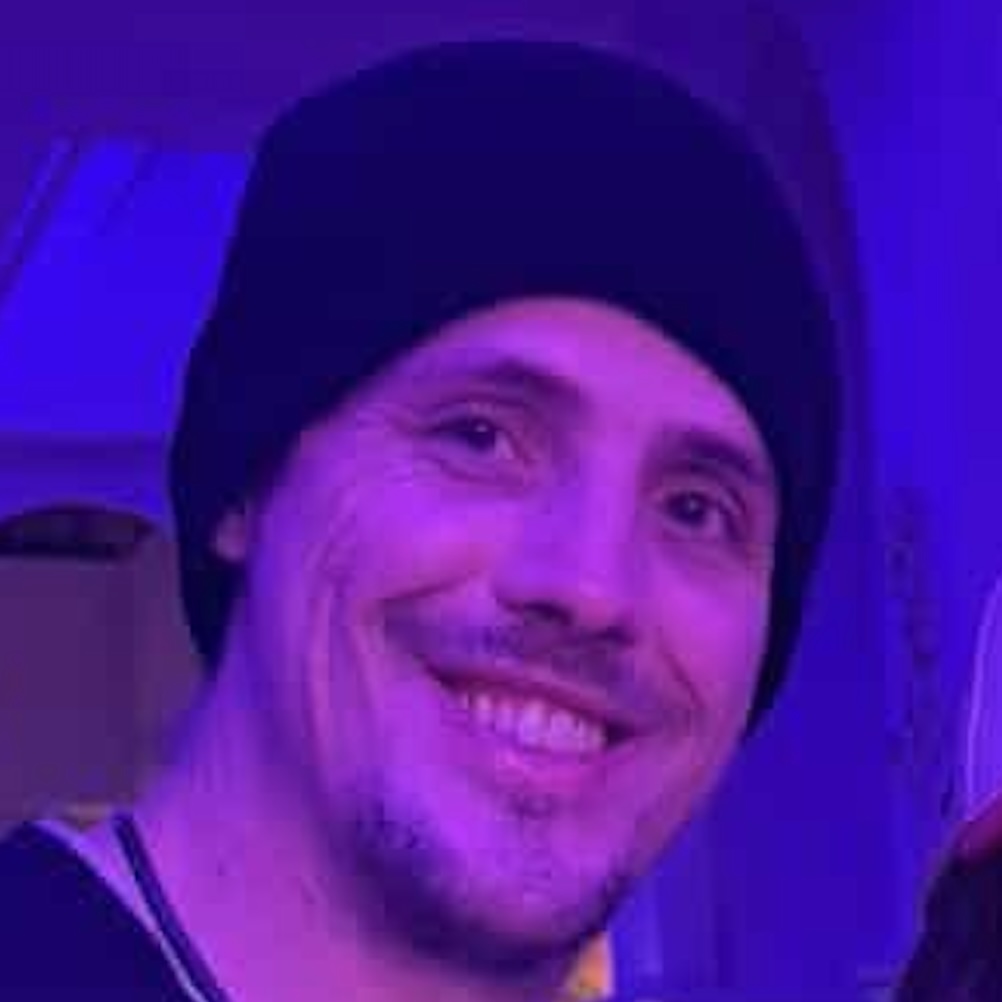
Zed’s stage 3 colon cancer (stage 3B) experience began unexpectedly at age 35, despite leading an active and healthy lifestyle. Like many younger adults, he was initially denied screening due to his age, which he now reflects on with a goal to help others like him. His early symptoms included blood in his stool and persistent fatigue. Between caregiving for his mother and managing daily life, he attributed the changes to stress and burnout rather than something more serious. At the time, he also did not know that he had a condition called Lynch syndrome, a hereditary condition that greatly increases the risk of getting many kinds of cancer, including colon cancer.
Interviewed by: Tory Midkiff
Edited by: Chris Sanchez
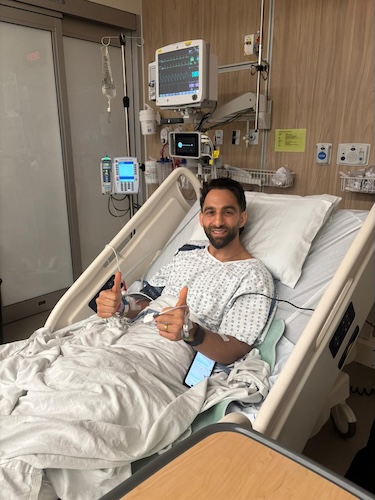
As symptoms persisted, Zed pursued testing, beginning with a fecal immunochemical test, followed by a colonoscopy that revealed a tumor severely obstructing his colon. The diagnosis came quickly after: stage 3B colon cancer. Within a short time, he underwent a total colectomy and began an aggressive chemotherapy regimen. His experience was physically intense, marked by significant weight loss, severe nausea, and an emergency surgery due to a bowel obstruction.
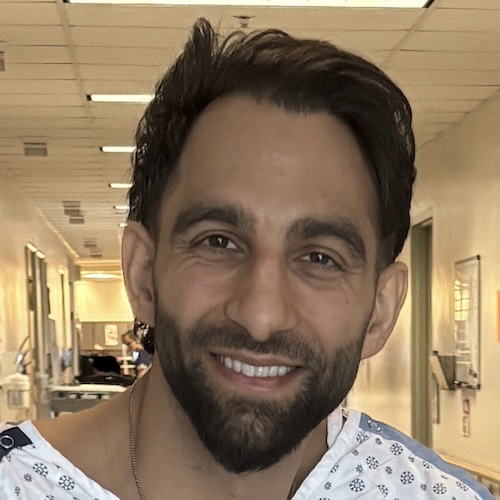
Beyond the physical toll, Zed’s colon cancer experience was layered with profound emotional challenges. During treatment, he lost his mother to ovarian cancer, just days before suffering a torn ACL and undergoing emergency knee surgery. All taking place in less than a week, those events tested him mentally, physically, and emotionally in ways he describes as unimaginable. Support from his wife, counseling, and a growing awareness of mental health became essential parts of how he navigated those moments.
Now in surveillance with no evidence of disease (NED), Zed reflects on how his perspective has shifted. He emphasizes the importance of mental resilience, practicing gratitude, and reframing his mindset from “I have to” to “I get to.” His experience also fueled a mission: increasing access to colorectal cancer screening so others can catch the disease earlier. Through it all, he returns to a guiding belief, which is that “tough times don’t last, but tough people do”.
Learn more about Zed’s colon cancer story by watching his video and reading the edited transcript of his interview below.
- Early symptoms like blood in the stool and fatigue should not be ignored, even in younger, otherwise healthy individuals.
- Screening saves lives; delayed screening can significantly impact outcomes and quality of life.
- Patients often face both physical and emotional challenges simultaneously, so support systems are critical.
- Mental health care, including counseling and mindfulness, can be just as important as medical treatment.
- Patients’ perspectives can shift profoundly after diagnosis, leading to a deeper appreciation for everyday life.
- Zed’s transformation includes turning personal hardship into purpose by advocating for accessible cancer screening.
Zed’s Diagnosis Facts
- Name: Zed D.
- Age at Diagnosis:
- 35
- Diagnosis:
- Colon Cancer
- Staging:
- Stage 3B
- Genetic Condition:
- Lynch Syndrome
- Symptoms:
- Fatigue
- Blood in stool
- Inconsistent bowel movements
- Treatments:
- Chemotherapy
- Surgeries: total colectomy, bowel obstruction surgery

This is not medical advice. Please consult with your healthcare provider to make informed treatment decisions.
- Zed’s Diagnosis Facts
- Introduction: Stage 3B colon cancer diagnosis at age 35
- My early signs of colon cancer: Blood in stool and fatigue
- My path to colon cancer diagnosis: FIT test, colonoscopy, and tumor discovery
- My colon cancer treatment plan: Surgery and chemotherapy
- The emotional impact of colon cancer beyond treatment
- Understanding Lynch syndrome and genetic risk
- The hardest week: Loss, injury, and emergency surgery
- Life after treatment: Surveillance and “no evidence of disease”
- My advice to others facing cancer or adversity
- How colon cancer changed my perspective on life
- Hear from people living with colorectal cancer
Introduction: Stage 3B colon cancer diagnosis at age 35
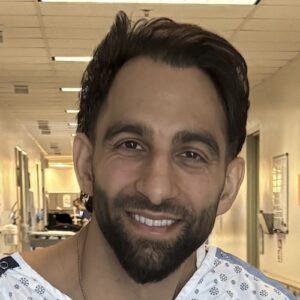
My name is Zed. I was diagnosed with stage 3B colon cancer in 2025 at 35 years old.
Being denied cancer screening due to age
I actually got denied screening a couple of years ago, which is something that I regret. I wish I had pushed harder, but I got denied for screening because I was too young. I was objectively healthy. I didn’t expect cancer to be on my bingo card last year or part of my life — until it was.
My early signs of colon cancer: Blood in stool and fatigue
I think our bodies speak to us more than we think in so many ways, and my case was no different. I’m just a stubborn male who thinks, “No, I’m fine. I’m too young. I’m totally okay.” The first signs that made me realize something wasn’t right were that I had blood in my stool for about a month and a half.
I was also noticing that when I was playing sports, I was starting to get fatigued. I thought it was just Father Time catching up with me. I thought, “Why am I not like LeBron James? He can do it at 41 — I’m only 35.”
But that wasn’t the case. There’s still hope for me in that regard, but the fatigue was coming from this big tumor inside me.
What cancer-related fatigue feels like in active adults like me
Looking back, I noticed fatigue in varying capacities for months. For me, it looked like not having that extra gear I had in the past, especially in basketball. I noticed I didn’t want to make cuts or couldn’t play as many minutes as I used to.
When I played squash two months before diagnosis, I was getting really lightheaded and needed a break between points. It was the craziest thing. I told my playing partner, “Can you imagine if I had cancer?” I said something along those lines one day when I was extremely fatigued.
What finally prompted me to visit the doctor
I was caregiving for my mom at the time, who was also going through cancer. I thought a lot of my symptoms were stress-related or just burnout from work and family.
But there was another factor at play that I didn’t know about. What prompted me was the persistence of my symptoms. That’s when I knew I had to go see a family doctor and get tested.
Navigating colon cancer while being my mom’s caregiver
It was tough. Really tough. I think even through my own cancer, it’s toughest on caregivers because you have to be emotionally and mentally strong. You have to be incredibly generous with your time and energy and compassionate toward others.
Part of my cancer journey is my wife, who wore that as a badge of honor. She had to show up for me and put her own life on hold so she could focus on me while I focused on myself.
Between starting my own company, caregiving for my mom, and dealing with my own diagnosis, it was a challenging year to say the least.
The meaning behind “Tough times don’t last, tough people do”
I truly believe that adversity is a gift. I’m glad cancer happened to me at an earlier age, so I can apply what I’ve learned for the rest of my life.
There were moments where it was important to meet myself where I was. It’s not about being positive all the time — it’s about recognizing your feelings first.
After my first surgery, I had my full colon removed — a total colectomy. I spent eight days in the hospital. For the first four days, I had an NG tube, couldn’t eat, walk, or drink water, and I had lost 45 pounds.
One of the worst nights, I had uncontrollable nausea and pain. I wrote down how I felt and reminded myself: “Tough times don’t last. Tough people do.”
During chemotherapy, I kept asking, “Will I always feel this way?” And the answer is no. You won’t always feel that way. That reminder was everything.
My path to colon cancer diagnosis: FIT test, colonoscopy, and tumor discovery
My symptoms included blood in my stool, bowel changes, some weight loss, and fatigue. I got a screening test called a fecal immunochemical test (FIT test), which confirmed there was blood.
That led to a colonoscopy, where they found a tumor the size of a small plum that was almost fully blocking my colon. I had a near-full obstruction.
Shortly after, I had surgery to remove my entire colon.
Hearing “It looks like you have cancer”
During the colonoscopy, even while sedated, I could tell something wasn’t right. I asked the gastroenterologist to give it to me straight.
He said, “It looks like you have cancer.” Biopsies had to confirm it, but he showed me images of a large bleeding tumor that blocked the scope.
I was in shock. I couldn’t imagine it happening to me. I’ve always been someone who felt invincible, but cancer doesn’t take that into account.
I filmed a video afterward, telling myself, “This is the start of the comeback, and the comeback is always greater than the setback.”
Telling my wife was harder than hearing it myself. That night we cried, and the next morning we got to work and made a complete lifestyle change.
My colon cancer treatment plan: Surgery and chemotherapy
Being stage 3 meant there was lymph node involvement. My tumor biology was moderately aggressive. The waiting period for information was the worst part.
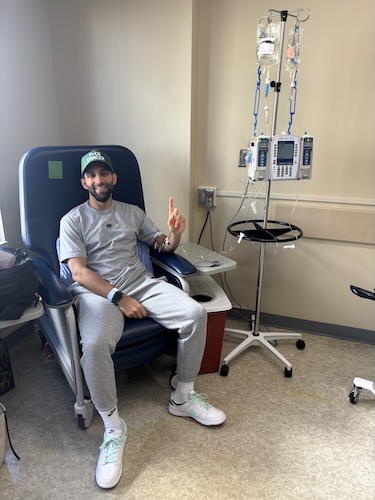
I did aggressive adjuvant chemotherapy for just over four months. I had five cycles.
After my first chemo treatment, I had a small bowel obstruction and needed emergency surgery within hours. Luckily, they were able to save my small bowel.
It was a rough road — two surgeries and multiple chemo cycles. I finished treatment about three months ago.
Finishing chemotherapy: What it feels like
Relief. Knowing I wouldn’t feel nauseous anymore. For me, nausea was the worst side effect.
It felt like reaching the top of a mountain — like things were finally going to get better. During treatment, you live cycle to cycle. You get better, then worse again.
Finishing felt like, “Okay, it’s all going to get better from here.”
The emotional impact of colon cancer beyond treatment
Many moments don’t move as quickly as you want, and you’re left alone with your thoughts. That’s challenging.
Cancer is more than tumors, surgery, and chemo. It affects your sense of self, confidence, family planning, and work. There are so many layers.
Understanding Lynch syndrome and genetic risk
Lynch syndrome is a genetic mutation that made me more susceptible to colon cancer at a younger age.
My tumor showed markers suggesting Lynch syndrome. It gives me about a 50% lifetime risk of colon cancer and increases risks for other cancers.
The positive side is increased surveillance. Anything new can be caught early.
The hardest week: Loss, injury, and emergency surgery
There was one unimaginable week. On November 1st, I lost my mom to ovarian cancer after five years. She was 65.
She never knew about my diagnosis. That was one of the hardest parts.
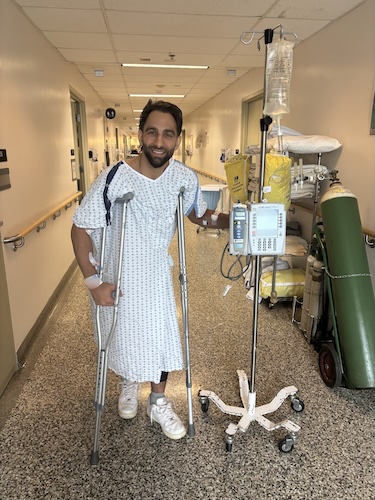
Two days later, I tore my ACL playing basketball. Then, 36 hours after that, I had emergency surgery due to severe abdominal pain.
Within 72 hours, I lost my mom, tore my ACL, and had emergency surgery.
I had to beg the hospital to discharge me early so I could attend my mom’s funeral — on crutches and bandaged.
It was tough mentally, physically, and emotionally.
Finding support: Therapy, community, and caregivers
I share that week not for sympathy, but to show we’ve all survived our hardest days.
I got counseling — three counselors during treatment. My wife was incredible. Having a support system is everything.
You realize how many people truly care about you.
Life after treatment: Surveillance and “no evidence of disease”
I’m in surveillance mode with no evidence of disease. I don’t love the word “remission.”
Surveillance includes colonoscopies and scans. I’ll celebrate being cancer-free when my scans confirm everything is clear.
Scanxiety and mental health
Scanxiety is real. Any small pain can make you worry.
Cancer teaches you mental strength. I use mindfulness, gratitude, meditation, hypnotherapy, and counseling.
Your normal changes — and that’s okay.
My advice to others facing cancer or adversity
Adversity is a gift, even when it doesn’t feel like it. You can’t control what happens, but you can control what you do with it.
You can still enjoy life and choose your attitude. Win the day, whatever that looks like.
Men’s mental health and reframing perspective
Especially for men, mental health is often ignored. I never prioritized it before.
A simple shift helped me: instead of saying “I have to,” say “I get to.”
Even chemotherapy becomes something you “get to” do — because some people don’t have that option.
The importance of early cancer screening and advocacy
Screening saves lives.
I would still have my colon if I had screened earlier.
Advocate for your health. Don’t wait.
Finding purpose through pain
This pain has to be worth something, so I’ve turned it into purpose.
How colon cancer changed my perspective on life
Perspective changed the most. I didn’t have a big epiphany, but I started noticing the small, beautiful things.
We often compare ourselves to others, but it’s more important to appreciate what we still have — our ability to wake up, walk, and live.
That perspective makes all the difference.
This interview has been edited for clarity and length. The views and opinions expressed in this interview do not necessarily reflect those of The Patient Story. This content does not replace professional medical advice.
Inspired by Zed’s story?
Share your story, too!
Hear from people living with colorectal cancer
Real experiences with diagnosis, treatment choices, side effects, and life beyond colorectal cancer — in their own words.

Leave a Reply