
Managing Neuropathy and Chemotherapy for Stage 3B Colon Cancer
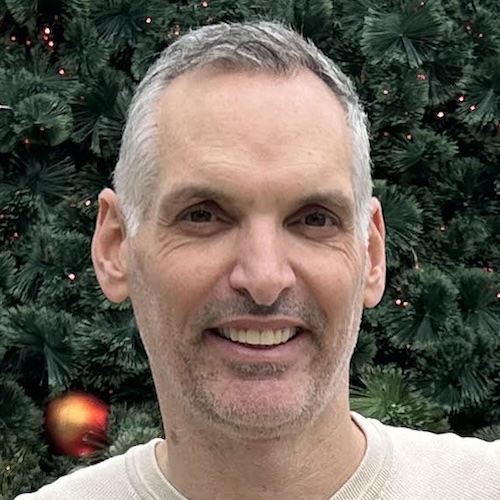
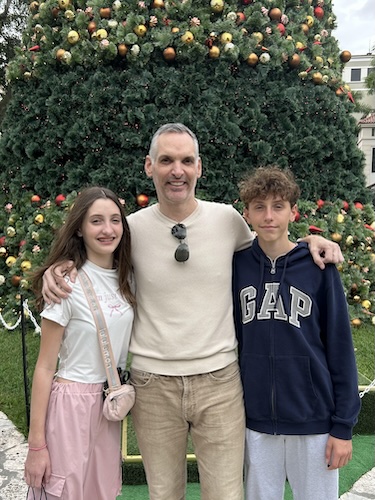
At 47 years old, Mario lived a highly active, healthy life, balancing a busy career with raising his two teenage children. Because his father had passed away from colon cancer, Mario knew he needed to be proactive about screening. After experiencing bouts of profound lethargy and jabbing stomach pains while traveling, he decided to take an at-home screening test. The test came back positive, prompting a colonoscopy. During the procedure, doctors discovered a blockage that led to a diagnosis of stage 3B colon cancer.
Interviewed by: Tory Midkiff
Edited by: Chris Sanchez
The initial surgical plan was daunting. Imaging suggested a possible second tumor on the right side of his colon, leading his surgeon to prepare to remove three-fourths of his colon. Just days before his scheduled operation, Mario was admitted to the emergency room with a severe intestinal blockage. Fortunately, his surgeon flew back into town to perform the surgery early. In a remarkable turn of events during the operation, the surgeon discovered that the second suspected tumor was actually chronic appendicitis. The surgeon removed the appendix and the cancerous tumor, sparing the majority of Mario’s colon and helping him avoid a colostomy bag.
Determined to get through his colon cancer treatments quickly, Mario opted for a highly aggressive chemotherapy regimen. The side effects were intense, including severe cold sensitivity, intense fatigue, and neuropathy in his hands and feet. Recognizing that many patients succumb to malnourishment during chemotherapy, Mario focused heavily on forcing himself to eat and maintain his weight despite the intense nausea.
Today, Mario is in the surveillance phase of his experience and recently received a clear report on his follow-up colonoscopy. Though he still navigates lingering neuropathy and the anxiety of regular scans, he refuses to let the disease define him. Instead, he leans heavily on what he calls “Vitamin P,” which are the people and support systems that carried him through, and actively encourages every man he meets over the age of 45 to schedule a preventive colonoscopy.
Mario’s video and the edited transcript of his interview provide more details regarding his colon cancer story.
- At-home screening tests are a good starting point, but they are not a replacement for a colonoscopy. Mario’s screening test detected an issue, but it took an incomplete colonoscopy to locate the actual tumor and severe blockage. Relying solely on at-home tests can delay necessary clinical visualizations.
- Focus relentlessly on nutrition during chemotherapy to prevent dangerous weight loss. Mario realized that malnourishment is a massive risk during treatment, so he prioritized eating even when extreme nausea and cold sensitivity made it incredibly difficult. Maintaining weight is a critical part of tolerating aggressive therapies.
- A cancer diagnosis forces you to relinquish control and rely entirely on your support system. As a self-described type-A professional, Mario had to learn to step back from work, let his sister manage his cancer center appointments, and embrace the healing power of “Vitamin P” (his people).
Mario’s Diagnosis Facts
- Name: Mario P.
- Age at Diagnosis:
- 46
- Diagnosis:
- Colon Cancer
- Staging:
- Stage 3B
- Symptoms:
- Fatigue
- Stomach cramps at night
- Vomiting
- Treatments:
- Surgeries: partial colectomy, appendectomy
- Chemotherapy
This is not medical advice. Please consult with your healthcare provider to make informed treatment decisions.
- Mario’s Diagnosis Facts
- A normal life disrupted by stage 3B colon cancer
- Family history, screening, and going in for a colonoscopy
- Waiting for the biopsy and the agony of “scanxiety”
- The fear of two tumors and losing my colon
- An emergency room visit and a “quarterback audible” during surgery
- A seven-day hospital recovery and proving myself on crutches
- Electing to take a double-dose, aggressive chemotherapy regimen
- Finding comfort in “vitamin P” and refusing victim mentality
- Ringing the bell but knowing that the colon cancer experience is not over
- “Fear is useless, faith is necessary, and love is everything”
- Hear from people living with colorectal cancer
A normal life disrupted by stage 3B colon cancer
So my name is Mario. I’m 47 years old. I have two teenage kids, a boy and a girl. I was diagnosed with stage 3B colon cancer. And that was back in October of last year.
I would say my life before cancer was pretty normal. I have always had a busy career, but I always make time to spend time outdoors with family and friends. I love sports, so that keeps me busy. I travel as well. I just go about taking care of my family and doing what normal people do.
Recognizing the first warning signs of colon cancer
My story is a little bit different than most, because it came about from a preventative standpoint. My father passed away last year. I had gone back to South America. He had had colon cancer as well, but it had spread after having a period of remission to his lungs. So he had “beaten it” for a certain time. And then unfortunately, it came back into his lungs, and he passed away pretty quickly from that, but he was in his 80s.
I had genetic testing, and it actually came back negative even though my father had had colon cancer. We’ve had cancer in the family. My mother had pancreatic cancer as well. So it was something that was always in the periphery for my sister, who is my only sibling, and me. So it was something I always had in the back of my head, but since I’ve always led a pretty healthy life and I was an athlete, it didn’t concern me as much.
But when this episode happened, I came back from South America and started thinking about it because I had turned 46, and the age to start looking at colon cancer is 45. It dropped from 50 to 45 a few years back. So I did start thinking about it without having any episodes or symptoms when I came back. There were a few months that I led just a normal life.
I did have two particular episodes I remember very well during which I didn’t feel right and felt very lethargic. Both of them happened while I was traveling. During the first one, I was at my cousin’s farmhouse, and I literally could not get off his couch. I was so tired. I was visiting him with my daughter, and I didn’t do anything that weekend. My family was joking around, “Hey, you might have the flu.” I was just literally very lethargic, had no energy. And I couldn’t eat either. I had lost my hunger, which is rare for me. I’m a big guy. I’m six-three, 200 pounds. And again, I thought this might be the flu or something equally normal.
What’s interesting about colon cancer is that sometimes the symptoms go away. So I had months during which I experienced nothing. And then I had the second episode, again while I was traveling. This time, I was at a friend’s house, and I was having a lot of stomach pains, stabbing pains. I spoke about it with my friend, and everybody thought it was heartburn or some type of diverticulitis. So I started thinking, “Hey, maybe I need to talk to a doctor about this.” For some reason, I still was not thinking it was something with my colon, which is what we do. We think we’re invincible. And a lot of times, we don’t correlate something so simple. But that’s when my mind started thinking I should maybe get tested for something. I had seen the ad that we see in the commercials all the time for Cologuard, which is that at-home test. And I did that test first. And that test was the one that recommended the colonoscopy.
Family history, screening, and going in for a colonoscopy
I think having cancer in my family made me proactive about it in a way. I tell people, I think I saved my life. But also, it’s a strange thing to say because I was declared stage 3B, which is a weird diagnosis. After all, it’s not stage 3A, which would be closer to stage 2, but it’s also not stage 4. Now, I’ve been told by a few doctors that if I had waited longer, I would have been stage 4. Stage 4 is pretty scary — some people diagnosed with stage 4 cancer do recover from it, but it can be a very tough fight.
So it was interesting. I immediately scheduled a colonoscopy. I wanted to take it seriously. Even though I spoke to some friends and they were like, “Hey, this could be a false positive. There’s nothing there.” I still went to my colonoscopy, thinking that it was just going to be a ten-minute procedure, and I was just going to go home afterward. So that’s the genesis of this journey. And then it started getting more serious.
Waking up from the colonoscopy to unexpected news
So I went in so casually that I had somebody else drive for me. I just hired a driver, thinking that I was going to come back that same day. And then I had the colonoscopy. There were so many people there. I was one of the younger people who were scheduled that day. And I think even the doctor was joking around. I had mentioned to one nurse that I had had some symptoms, and again, everybody played it off to maybe I had some diverticulitis or heartburn or nothing. Nobody took it that seriously.
But immediately when I woke up from the colonoscopy, I had a nurse sitting to my right, and she was waiting for me. She had a serious expression on her face. I was under anesthesia, so it was a really weird feeling. She said to me, “Hey, you need to wait. We’re not going to discharge you yet. We need you to talk to the doctor.” And I was like, “Talk about what?” I didn’t realize what they were going to talk to me about, but in that moment, they didn’t tell me exactly what was going on.
He basically told me, “Hey, we weren’t able to perform the full colonoscopy. I wasn’t able to complete it because you’re blocked.” And that concerned me. And he said, “There’s a tumor, and it’s tiny. It’s small.” They didn’t give me the measurements at that point, obviously. “We took a biopsy.” They never said the C-word or cancer. “We need to get the results back from the biopsy. We want to let you know you’re going to go home, but we wanted to let you know that we didn’t finish the colonoscopy, and that’s concerning.”
Waiting for the biopsy and the agony of “scanxiety”
I got pretty concerned. I reached out to my family and let them know what was going on. My sister, who’s been involved in this journey with my dad and my mom, got a little more concerned. Everybody wants to get results fast. And it’s a little bit of a frustrating thing with cancer because a lot of the things are out of your control, and you just have to wait. It’s what they call scanxiety. You’re anxious because you’re waiting for scans or whatever tests have been performed on you.
So we were waiting for this biopsy, and it took a while. I had to wait two days. I thought I was going to get it in 12 hours. And when the doctor called me, it was his tone. I could tell he was very serious about it. And he said, “Hey, we did find that it’s a cancerous adenocarcinoma. Your tumor obviously is not staged because they only stage it after your surgery. We want you to have surgery as soon as possible.” And that’s when I started doing a lot of research, and I also communicated this to my family. And I was in shock. I thought it was going to be an ulcer or something else. I didn’t think I had colon cancer.
Surrendering control and finding an angel in my sister
I like to be in control. Especially with the way I manage my life and my career, my children. We juggle a lot of things, and we want to have control. With diseases like cancer, it’s very difficult because the disease is really running the show. And it’s putting a lot of hurdles in the way, as far as timeframes go. Now the medical community manages it very well because they do it all the time and know how to handle pauses and communicate these things. But for an average civilian like us, it’s hard because we don’t have that control. So getting the diagnosis and trying to plan out the next steps was very hard.
I share this with everybody. I had an angel, who was my sister, who immediately went into crazy execution mode. She got me registered at Moffitt Cancer Center. It’s incredible. Without telling me, basically, she had found out what my insurance was. She called me early one morning and had the nurse on the line, trying to schedule me for my first meeting with the surgeon who was going to perform my surgery at Moffitt. And that was crazy because I started hearing, “I’m going to a cancer center now.” And that again was a little bit difficult because it was not me in control. So yeah, it’s a challenging piece of this puzzle.
The fear of two tumors and losing my colon
So before the oncologist, I met the surgeon, and I thought I was going to have multiple appointments, but things moved super fast. During the meeting, I had my sister on speakerphone. There were a couple of nurses there, too, and I could tell the vibe in the room was very serious. The surgeon had a little board he was going to draw on. In my experience as an athlete and a businessperson, I was like, “This is intense.”
He was concerned because he thought I had two tumors. And that was crazy. He opened up with, “Hey, we’re very concerned. We think we see another tumor.” The main tumor that I had was on my left side, in the spleen area. And when they told me where it was, I knew exactly that they were right, because that’s where I had experienced this strange jabbing pain a couple of times. He said, “I think you have another one on your right side,” which is very unlikely. I think less than 3% of cases are like that. And it was very concerning to him because if that happened, he would have to remove my whole colon.
So the original plan was that he was going to open me up, open surgery, not laparoscopic, because I didn’t qualify for the little four holes. They were going to take out three-fourths of my colon to try and get rid of my colon cancer. And that was pretty scary. I walked out of that room not knowing if the second spot I had on my right side was a tumor. And that my recovery would be very lengthy.
An emergency room visit and a “quarterback audible” during surgery
So it was like the perfect storm. You start thinking all these things, “I’m going to have a colostomy bag. My recovery is going to be crazy.” I didn’t care about the scars, but I really was worried about losing my colon. Losing a part of my body. But again, I looked up the surgeon, which is something I recommend other patients do too. It turns out that he’s an incredible surgeon. And I started looking at other people he had treated. I talked to some of the patients that he had operated on before I had my operation. And that was great. I recommend this as well to other patients. And I started having a lot of faith in this guy until the day of.
But within 48 hours, I had another episode where I was completely blocked. So I was actually admitted into the emergency room at Moffitt Cancer Center. My ex-wife took me, thank God — she helped me so much. And it was crazy because my surgeon had a date for my operation, but it had to be moved up by ten days. He was actually skiing somewhere or traveling somewhere, and he had to come back early to operate on me. He asked them to hold me so he could operate on me. He wanted me as his case. Luckily, I was able to hold off at the cancer center. I came back to my apartment, experienced pain, went back to the hospital, and they told me he had flown back from where he was. And then they scheduled the surgery. So it was kind of crazy there for three days. I had people come into town to help me, including my sister. We still had in our heads that he was going to remove three-fourths of my colon, and I was going to have a very lengthy recovery. The people at work, including my boss, found out too. Overall, it was just like a crazy movie.
I thought I was going to die at one point if this continued to progress. It was a roller coaster of emotions. While I was at the hospital, I had genetic testing, which is a high-level molecular testing that they do, and got the results; they were negative. But now I know when my kids will have to get screened for colon cancer, which is going to help them because they’re going to have to get screened earlier. So my cancer, in a way, protected them and can save their lives. So in a way, it was a weird gift to me. And I say this to people, “To me, cancer was a gift. It’s incredible.”
So on to my surgery day. It’s an incredible story. The doctor found out that the pain on the right, where they thought my second tumor was, was actually due to appendicitis. I had been living with appendicitis. So he ended up taking my appendix out. He then only removed the tumor and did not remove three-fourths of my colon as was originally planned. There was no need to, since there was no tumor on the other side. So I have a scar, but I still have my colon. No bag. And a much better recovery, because this genius was able to run an audible like a quarterback — like a last-minute change during football that allowed for a perfect adjustment — during my surgery, and figure out he only needed to remove the tumor. He could connect my colon, which he did, and he removed my appendix.
Solving the mystery of the jabbing pain
I had a lot of pain in my left side, but I didn’t have the typical symptoms that people have with colon cancer, which is blood in the stool. Mine was apparently more the lethargic sort, as well as the jabbing pain. But other symptoms are typical with bowel movements and stuff, none of which I had. Thank God. But when they discovered that I had appendicitis, it also made sense to me. So I’m very happy the surgeon removed it.
And I started thinking, “How long was I living with appendicitis?” Which was a good question, because I had been tired for a while. I had been powering through a very crazy, demanding schedule with work, travel, and kids. And I wasn’t 100%.
A seven-day hospital recovery and proving myself on crutches
I tell people it’s hard for us because we don’t want to get surgery, we don’t want to be operated on, we want this magic pill that’s going to fix this colon cancer. But I knew that I was going to have to be treated. And there was another doctor on site who could have potentially operated on me if my main doctor didn’t come back. Because they always have a backup. But yeah, I felt very comfortable with him. And when I woke up from the surgery, he was there. And he already had his plan. He wanted me to meet with his oncologist. He even thought he knew what treatment I would need, even though he’s not an oncologist. He’s a surgeon. But he had already made the recommendation on which oncologist would be a good fit for my case at Moffitt.
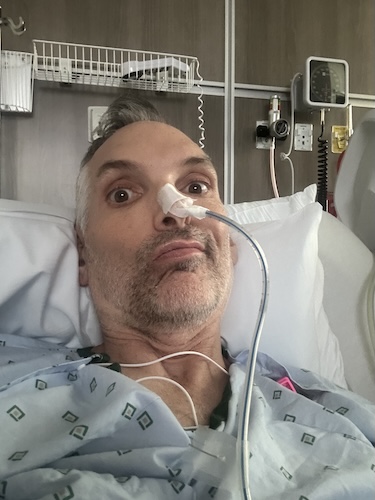
And he wanted to discharge me as fast as possible. So you wake up, and you’re not performing yet. You don’t have any bowel movements. You’re under anesthesia. Your body hasn’t woken up. Basically, you have to go to the bathroom to prove yourself, and you’re on crutches because this part of your body is so sensitive, and you have to recover. I was very lucky. I had this crazy mindset of, “I want to get out of this hospital as soon as possible.” And I was always talking to the nurses to take me out for walks. And how can I get the next colored socks to prove to myself that I’m capable of walking here and there? The physical trainers.
So I was able to get discharged in seven days, and that really helped me because mentally it was the hurdle of, “I can surpass many things. Let’s surpass what’s coming next.” This was going to be the hardest chapter, involving chemotherapy and other treatments.
Electing to take a double-dose, aggressive chemotherapy regimen
Again, I was very lucky because I was assigned an oncologist at Moffitt who was actually my age, a young guy, a straight shooter, which is what I like. And I would say most patients are probably like this, versus being coddled, because you have to go into execution mode. He wanted to know what I thought would be my plan first, and then he was going to tell me what he thought. He wanted to recommend my treatment plan. I was very lucky because I wanted something fast, which is hard for anybody who has cancer. I wanted something fast and intense to try to prove to myself that I didn’t need to be in treatment forever.
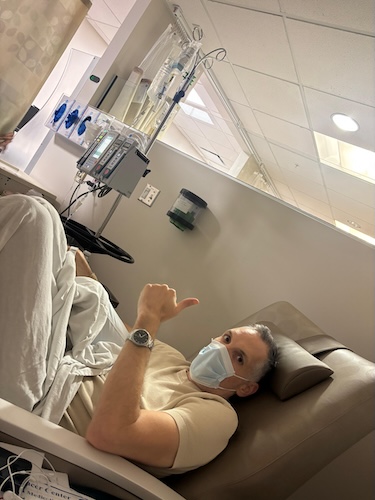
I was fortunate enough that, based on that discussion, I qualified for a very aggressive colon cancer treatment. So what I did was basically what’s called a double dose. I did a six-month treatment of chemo in three months, which included infusions where I had to go to Moffitt Cancer Center and get the infusion on my arm with the liquid, and then chemo pills. But it was all double doses. So instead of taking five pills a day, I was taking ten. And instead of doing a session of an infusion of an hour and a half, I was doing almost three hours, which is very intense. And it’s not for everybody. Not everybody qualifies. And when we aligned on this, he basically said, “If you fail within the first three months, if you get too frail or you don’t have the strength for this, we’re going to have to continue for another three months.” So that was a big bet, I would say.
Partnering with the oncologist and facing the possibility of colon cancer recurrence
I would say it’s tricky, right? Because sometimes oncologists will not give you a lot of agency because they really want you to have this come-to-Jesus moment: “Hey, this is your situation, and you’re going to have to follow me. And this is the plan.” But with him, it was great because I knew, hey, normally this cancer, if you’re in your 50s and 60s, might be a little trickier to deal with. And you will have to do 12 sessions of chemo. Or maybe your recovery is going to take longer after the surgery. I’m in my 40s, and I really wanted to beat this. And right now I’m in what’s called surveillance.
So I’ve been cleared so far, and I was lucky because we really connected on the idea of, “Hey, if you’re able to follow this regimen to a T, if you prove yourself, you’re going to have to have a colonoscopy within six months of finishing chemo, and that has to be cleared up.” You’re on your way to remission. But it’s still not bulletproof, right? You could have a recurrence. It could metastasize, it could show up in a different part of your body. You have a ton of scans within that timeframe. You go to a lot of testing, which tires you out. And then there are the effects of chemo and the treatment.
The reality of double-dose chemo: Neuropathy and cold sensitivity
So first of all, I didn’t get a port. I did all my treatments through my veins, which also you have to be cleared for. So I did it through my arm and then the pills. And what I will say is that nobody can prepare you for chemo. There are no books. The only people who can give you some guidelines are ex-patients. Patients who have survived, patients who are going through it. All the books, all the internet stuff… Unless you’re going through it, it’s not relatable. And it was interesting because I’m a data nerd and I love research, and I wanted to figure out all the side effects and everything that was going to come with it. And to this day, I still have some side effects.
So I started the treatment. At the beginning, you get kind of cocky because you don’t feel as much. But then I started having really bad episodes of just being super tired. The pills tire you out to the point that you don’t want to get out of bed, or if you do manage to get out of bed, all you can do is just go to the bathroom and want to go back to bed. That’s how tired I was. It’s like COVID-19 times ten. That’s what I tell people. Imagine that. And then there are just periods where you start doubting yourself. “How are you going to recover from this?” Because it’s so draining on your body. You’re putting a toxin in your body, a toxin that could save you, which is really weird to think about. So you start having these mental games of, “Hey, I’m doing this, but I’m poisoning my body, but I’m poisoning my body to save myself.” It’s this crazy game.
And then I started having some of the side effects. I didn’t lose my hair, as you can see. Thank God. Even though I didn’t really care if I did or whatever. It’s not the worst thing. For women, I think it’s a bigger thing, obviously. I didn’t have a lot of crazy side effects, but I also started studying and talking to patients about what worked for them. I did have neuropathy, which I still have. It went from my hands to my feet. Funny enough, I still have it in my feet, in my big toes. I don’t have it in my hands. I also had a couple of other symptoms, including cold sensitivity. So anything cold will feel horrible. Especially if you’re actually ingesting it. I remember I went to brush my teeth one of the first times, and the cold water for my toothbrush tore me up. I couldn’t believe it. I have to brush my teeth now with tap water, like warm water. But you start getting used to it, and you start remembering things.
But compared to what other folks experience as side effects, I think I did pretty well. And I had this mindset of, “I have to work out, I have to do exercise.” And I really homed in on the concept of malnutrition that I couldn’t skip meals and had to find a way to eat even if I didn’t feel like it. And chemo can shut you down to the extent that you don’t want to eat because you have so much nausea. I didn’t have the crazy levels that other people have, but I did experience it. And I just said to myself, “I have to figure it out.” Because it seems that some patients end up not dying from the cancer, but from malnourishment, because they start fading away. It’s pretty sad to see. So I wanted to keep my weight as close to normal as I could. I had already lost 20 pounds. But I wanted to survive.
Finding comfort in “vitamin P” and refusing victim mentality
I had met another patient through Moffitt who the same surgeon had also operated on. She gave me a lot of hacks, I would call them. Some were simple things, like just taking a bath in peace and not thinking about colon cancer because it starts taking over; not only yourself, but your significant others, your kids, your friends. So you need a break from it. And she shared other hacks concerning diet and what you can eat. I started looking at what I could eat to really nourish myself, to feel good. Obviously, you don’t want to be downing sugar because sugar’s not great for you, especially with cancer. But I didn’t lose myself, and I followed the protocols that were recommended by my team, the cancer team, but also I wanted to live my life, so I still went out. I went out with my kids, and I traveled. I didn’t do it for work because I couldn’t.
Luckily, I had a great support system. I call it “vitamin P,” P for “people.” And I had great vitamin P friends, people who came to take care of me, people who came from South America to take care of me. People here, too, my boss, my company. I had just really great people who homed in on this mindset that I had, that I’m going to surpass this. I kept saying things like, “I’m challenging cancer,” and I want to beat it, not taking the victim mentality or asking, “Why me?” More like, “I’m going to combat this, and what’s the worst that can happen? I don’t want to die. So let me try to fight this.”
“Liquid gold” and joining the cancer patient club
So nobody can prepare you for what chemo is going to bring to you. And it’s a weird thing because you’re taking these pills or whatever format you’re taking into your body. And it’s not only about side effects, but it’s also the fact that you are a cancer patient and you cannot be in denial anymore, and you become part of this club, no matter what stage you are. So I share with people that my stage was given to me after my surgery, and that was pretty scary too, because I’m like, “I’m at stage 3, and now I have to do these chemo treatments. How long are they going to be? Are they going to be effective?”
Some people call it liquid gold, the infusion bag. And it is, in a way; you’re really looking at that bag saying, “Hey, you’re healing me right now.” Even though you’re hating it in a way. It’s a really bizarre, delirious way of looking at things. You almost find yourself a little bit crazy sometimes about it. But I always said to people, besides chemo, I think with cancer, the mental part has to be strong as well. And the people that I’ve seen defeated at a high stage — like mine is not low, it’s stage 3 — have a very strong mindset and wake up like this every day.
You’re thankful to wake up, grateful even for the little things, like just going to the bathroom. It’s a big deal. It’s really, it’s pretty ridiculous, but little things become a big deal.
The dangers of playing the guessing game with staging
I think a lot of people start guessing or play the guessing game. So you have people saying, “Based on what you shared with me, you’re probably like a stage 2; if you were a stage 4, you would be in the hospital right now.” Well, there is some truth to that, but it’s not 100% correct. You could be stage 3 like me and look pretty normal. And people are shocked when I share that I was stage 3B.
The other thing is, don’t be too cocky if you’re stage 1. Because it could evolve, unfortunately. Get treated, take it seriously. And I would say the same for any type of cancer. Right now, a lot of people are getting diagnosed. One out of two people gets diagnosed with cancer in the United States. That’s high. That’s a high stat. (Editor’s Note: According to the National Cancer Institute, approximately 38.9% of men and women in the U.S. will be diagnosed with cancer at some point during their lifetimes. This is based on 2018–2021 data, not including 2020, due to COVID. Source link.) So you want to take it seriously. But yeah, it’s tricky, the staging part. And until you have that operation and they’re able to 100% diagnose it, you don’t know for sure.
Ringing the bell but knowing that the colon cancer experience is not over
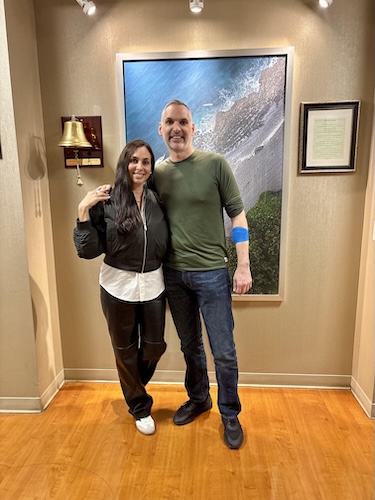
I had all the chemo session dates on a calendar. These sessions were interesting. I went to one of them with my ex-wife. She was great, very supportive. In my last session, where I rang the bell, my sister attended. The second one I went to by myself. The most emotional one, obviously, was the third one. And it was weird because it was on a weekend, so there were not too many people there at the center. But the nurses were there, and I call them the angels because the nurses run the show. The doctors are important, but without the nurses, there’s no hospital. They do so much, and I think sometimes they’re not credited as they should be.
So it was very emotional. But knowing that it’s not 100% over, you ring the bell, you still have cancer. So you’re under surveillance. This is a long experience, and when I tell people about it, their eyes go wide open, and they’re like, “Well, when are you done with cancer?” You’re really not done. You have to have five years after your surgery of basically a clean report, like a clean report card, to be cancer-free, in quotes.
So I tell people I’m not cancer-free. I’m under surveillance right now. I’m on my journey to be cancer-free, and that’s what I’m fighting for. But I’m doing pretty well, and I feel good. And I had a colonoscopy in April. It came back clean. So my colon was intact. So what he operated on looks great. But I have scans coming up. And I will have other colonoscopies. So like I say, don’t rest on your laurels. You’re still going to have to fight. And you become part of a club.
Navigating surveillance and dealing with survivor’s guilt
When you go to the hospital or you see people who are not doing as well, especially younger people, you start feeling a little bit guilty. It’s this really weird, odd feeling: Why are you doing great and they’re not?
But the waiting period is hard. Because you’re again trying to control something that’s out of your control. So you want to do labs, and the labs may show a marker that wasn’t there before, and you’re trying to figure out why, and you’re not going to know why until your doctor tells you why. The great part now is that with technology, they’re able to figure out things pretty quickly. So, for example, I’m anemic, so I take an iron supplement. Iron is a big one for me. So I usually score low there. And I’m able to fight that or try to treat that with an iron supplement. But yes, it’s odd going now to treatment because it’s really not infusions. And I’m not taking the chemo pills. And I counted, I probably took over 1,000 chemo pills during my treatment. It’s crazy when you think about it.
And I’m here, so like I said, I’m super grateful that I’m still being treated at this amazing place with these amazing doctors and just a really good care team.
Working through colon cancer treatments as a distraction
It’s something a lot of people don’t talk about. It’s interesting because in this country, you have some medical leave, of course. I only took a couple of days off during my surgery, to be honest. And I went to a trade show about a month after, and people could not believe that I was there. In fact, some people thought I might have been dead, which is pretty scary. And I kept working. Now, I work for a great company that supported me, and even gave me carte blanche. “Mario, you come back when you’re ready.” That was from the senior leader of our company. Because I’ve been a performer. But it’s not only because of that; they care. They really do care. And that was really important to me because it showed the type of company that I work for.
But I kept working, and I tell people that work helped me because it was a distraction. I wasn’t talking about cancer all the time, or people weren’t asking me about cancer. I didn’t share it. Because I thought if I share it, then I can’t talk about what I’m doing, which is my product and my company. So, weirdly, it was a distraction, but it was hard. It was hard to work during cancer. And I share this because sometimes I couldn’t get out of bed, or had to rely on my team when I couldn’t travel and I was sick, or I would tell my team, “Hey, I had to get an IV today because I was dehydrated.” I had to go a couple of times to get an IV because I was dehydrated. That’s not normal, right? In a normal day of work.
So I think a lot of people don’t talk about this, but it’s really impactful how people work through cancer. And sometimes you don’t even know. I really respect it. And it’s incredible. It really is.
Becoming a colon cancer thriver and refusing to be defined by it
Yeah. So it’s part of me. So I think it’s a layer of my personality now. I’ve become vocal about it. So if I meet people, especially men, if I meet any man that’s over 45 years old, I tell them, “Hey, when’s the last time you had your colonoscopy?” A lot of times, they tell me that they haven’t had one in their life.
I highly recommend a colonoscopy because that at-home test is not 100% foolproof. The only way you can really know is with a colonoscopy. But also, I don’t let cancer define me. It’s a chapter in the book for me. So that is really helpful to look at it that way. Like I’m a colon cancer thriver, but I have way other layers of my personality and other things I want to do. And we don’t have to talk about cancer every time you see me. Because it doesn’t define me. And I believe in God, and I think these things happen for a reason. So it definitely has changed me.
You know, I definitely have slowed down more. And I’m really into thinking about what goes into my body, and about getting enough good rest. What goes into my family’s bodies? How are they treating themselves? How are they resting?
Colon cancer has definitely changed me for the better. Weirdly, I think, as I’ve shared with a couple of people, it’s been a gift. And I wouldn’t want it any other way. It’s really weird. I wouldn’t want the physical pain, of course, but I don’t have a regret. And I think it happened for a reason.
“Fear is useless, faith is necessary, and love is everything”
I think cancer is horrible. It’s a horrible disease. And as we talked about, the stats are high. One out of two people gets it in their life in some capacity. (Editor’s Note: According to the National Cancer Institute, approximately 38.9% of men and women in the U.S. will be diagnosed with cancer at some point during their lifetimes. This is based on 2018–2021 data, not including 2020, due to COVID. Source link.)
But early detection is possible. And there are ways to combat cancer and try to fight it. So I think people need to stay positive. It’s incredible what your mind can do that will reflect on your body when you’re challenged. It’s just an incredible spirit that we have, and I highly recommend people not give up, look at this as a challenge, and try to fight it. And in my case, it was bad luck. They never found the root cause of my colon cancer. But time is everything. We only get one ride. I tell my children, “Time, we only get one ride in this carousel of life.” So really enjoy it. Spend time with your family. And if this happens, try to fight it.
My favorite quote is, “Fear is useless, faith is necessary, and love is everything.” If you have fear, it doesn’t help you at all. But if you have faith, you really can fight this. And then if you have a love and support system around you, you can beat this. And I tell this because it’s not only myself, there are patients that I’ve met and there are doctors that have told me incredible stories. Worse than mine, way worse than mine. So yeah, just have a lot of faith, have a lot of faith. That’s the message that I give everybody.
This interview has been edited for clarity and length. The views and opinions expressed in this interview do not necessarily reflect those of The Patient Story. This content does not replace professional medical advice.
Inspired by Mario’s story?
Share your story, too!
Hear from people living with colorectal cancer
Real experiences with diagnosis, treatment choices, side effects, and life beyond colorectal cancer — in their own words.
Leave a Reply