
I was My Best Advocate: David’s Stage 4 Colon Cancer Experience
David, a saltwater aquarium store owner and father of two, was initially diagnosed with stage 3B colon cancer in March 2023 after enduring nearly two years of medical misdiagnosis. His stage 4 colon cancer symptoms, which included digestive issues, extreme fatigue, blood in stool, and unexplained weight loss of 70 pounds, were repeatedly misattributed by his primary care physician to depression and anxiety. Despite his persistent self-advocacy, doctors prescribed multiple selective serotonin reuptake inhibitors (SSRIs) instead of ordering the diagnostic tests that could have detected his cancer earlier.
Interviewed by: Carly Knowlton
Edited by: Katrina Villareal
The turning point came when a customer who happened to be an oncologist and noticed David’s dramatic weight loss, and a second-opinion doctor who performed a digital rectal exam and immediately recognized that something was seriously wrong. A colonoscopy revealed a tumor that was causing a 99% blockage in his colon. David underwent emergency surgery with an ileostomy, followed by four rounds of chemotherapy that provided temporary relief.
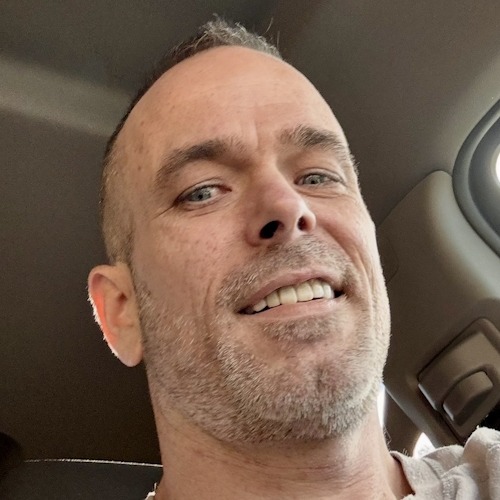
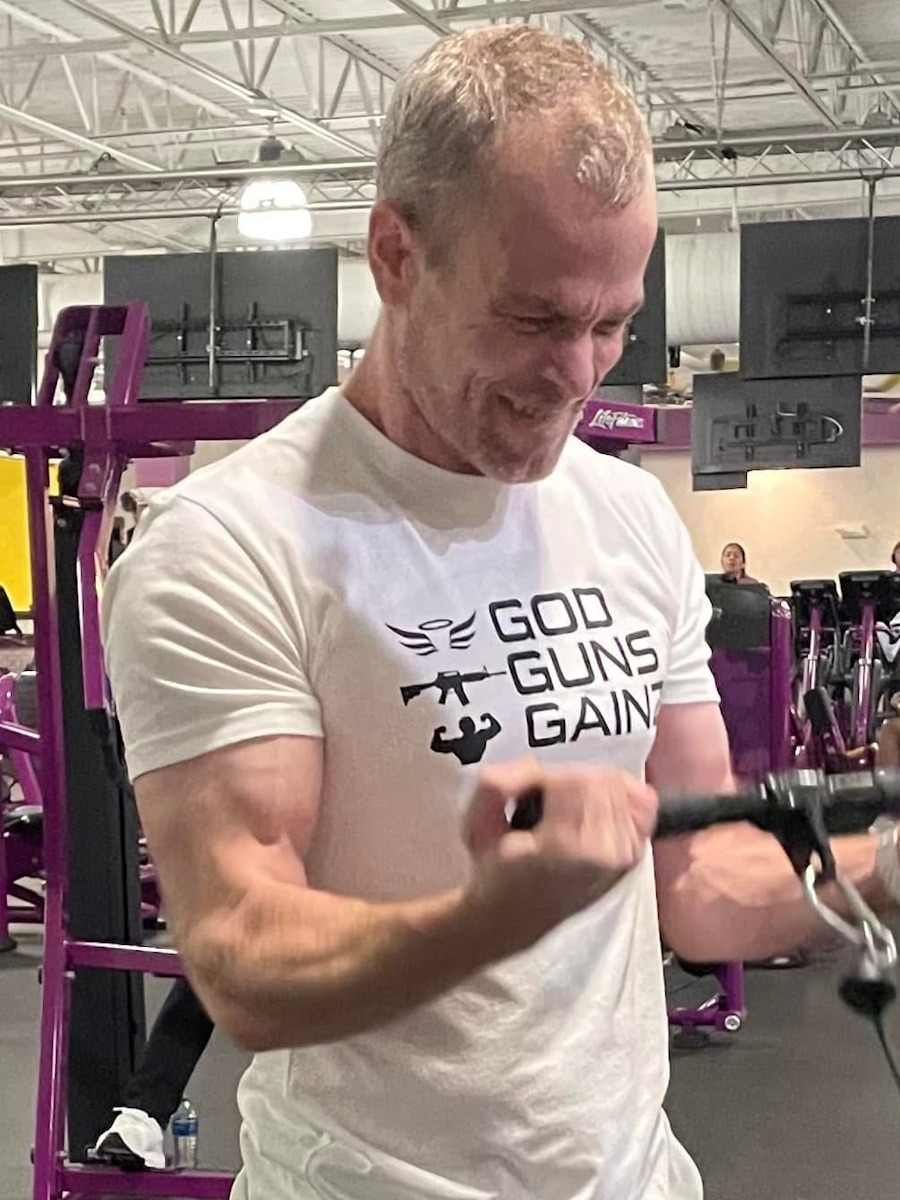
David’s cancer experience took multiple challenging turns. After he achieved no evidence of disease, his cancer returned aggressively by Christmas 2023, spreading to his liver and lungs. He underwent a grueling surgery that lasted nearly 15 hours to remove portions of both organs, followed by radiation treatment that left him severely ill but ultimately restored his mobility. Throughout his treatment, David focused on rebuilding his physical strength, working out intensively at the gym to prepare his body for whatever came next.
In September 2024, David received unexpected news: his lung metastases had disappeared without active treatment. While recent Signatera blood tests suggest possible circulating tumor DNA (ctDNA), he remains cautiously optimistic, advocating for others to trust their instincts and demand proper screening.
David’s message is clear: early detection through colonoscopy saves lives, and no one should accept having their legitimate medical concerns dismissed. Through vulnerability on social media and his powerful hourglass analogy about living in the present, David continues to inspire others facing similar health challenges.
Watch David’s interview or read the edited transcript below to know more about his story:
- Trust your body’s signals: When David knew something was seriously wrong despite doctors’ dismissals, his persistence ultimately saved his life. No patient should be afraid to seek a second or third opinion when symptoms persist.
- Self-advocacy is essential: David’s transformation from a patient accepting medical authority without question to someone who actively fought for proper testing demonstrates that nobody will advocate for your health as strongly as you will for yourself.
- Early screening saves lives: David’s experience highlights the critical importance of colonoscopy screening, especially for younger adults experiencing digestive changes, blood in stool, or unexplained weight loss — symptoms that should never be dismissed.
- Mental and physical preparation matter: David’s dedication to rebuilding his physical strength between treatments, viewing his body as a “fuel tank” for surviving cancer, shows how proactive health management can impact treatment tolerance.
- Living in the present reduces anxiety: David’s hourglass analogy teaches that focusing on the current moment, rather than dwelling on the past or worrying about an uncertain future, provides emotional resilience during cancer treatment.
- Share hope while being authentic: David’s transformation into a social media advocate, sharing both his difficult moments and triumphs, demonstrates how vulnerability and honesty can provide meaningful support to others facing similar diagnoses.
David’s Diagnosis Facts
- Name: David J.
- Age at Diagnosis:
- 38
- Diagnosis:
- Colon Cancer
- Staging:
- Stage 4 (Metastatic)
- Symptoms:
- Digestive issues
- Frequent bowel movements
- Blood in stool
- Ribbon-y stool
- Extreme fatigue
- Unexplained weight loss (70 pounds)
- Nosebleeds
- Elevated blood pressure
- Vomiting
- Treatments:
- Surgeries: colon resection with temporary ileostomy, liver metastasectomy, lung lobectomy (lower third of left lung), hernia repair surgery
- Chemotherapy
- Radiation therapy
This is not medical advice. Please consult with your healthcare provider to make informed treatment decisions.
- David’s Diagnosis Facts
- Introduction
- Early symptoms and initial misdiagnosis
- Colonoscopy and stage 4 colon cancer confirmation
- Initial treatment and first clear scans
- Impact on fatherhood
- Returning to the gym and getting a second recurrence
- Clinical trial and miraculous clear scans
- Current status with Signatera test
- Clinical trials experience
- Advice on self-advocacy
- Hardest moments
- Advice for others going through cancer
- Finding positivity in the experience
- Hear from people living with metastatic colon cancer
Introduction
Hey, my name is David. I was initially diagnosed with stage 3B colon cancer in March 2023.
Personal background and passions
I haven’t been doing a whole lot of anything since my cancer diagnosis, except for online gaming, streaming here and there, and saltwater aquariums. I had a small one installed at the house, but it’s the type of business that I own, too, so it’s always been one of my passions for a long time.
I’ve always had fish tanks growing up. When I turned 18 and got my own place, that’s when I started with saltwater. I wanted to have a store of my own. I was a general contractor for many years; I ended up getting out of that business and started a saltwater aquarium store. That’s officially been open for 10 years now.
I still have the store, but barely. It was very difficult to step away from being the face of the company. It struggled after the COVID pandemic, of course; that was the first blow. Then the big blow was stepping back to deal with cancer. I haven’t been able to work except for an hour here or there every couple of months since my diagnosis. If it’s not surgery, it’s chemotherapy, radiation, or something.
Family and business
I have two kids, with the youngest one still living with his mother. The oldest boy lives with me now and has been running the store for the last year and a half.
My favorite thing about the store is getting to interact with other people who share the same passions, being able to share that experience, and then sharing that experience with their family. We’ve noticed that with the aquarium industry, mainly saltwater, because there’s a lot more involvement. The family will start turning off the TV and spend time together working on the tank, like adding new corals or new fish, rearranging the tank, or cutting the corals, trimming them up, fragging them out.
I’ve owned well over 10,000 fish in my lifetime. At one point in time, I had over tanks inside of my house, breeding fish. I was doing freshwater, too, at that time. It was a little out of control. Then, through the store, we’ve had just as many, if not more. It’s a lot of fun. Every week, we get at least a couple hundred new fish to put on sale and then we have the hobbyists come in and figure out what’s best for their tank.
Early symptoms and initial misdiagnosis
The journey to my diagnosis started a couple of years prior. I took a couple of months off at the beginning of the COVID pandemic, when the shutdowns started happening. I had an amazing store manager working for me who told me to take off and spend time with my kids because I was going through a divorce. It was amazing while I was there. I was starting to run with my oldest son when I started getting nosebleeds. I’ve had surgery done and I shouldn’t have nosebleeds, so it was a little bit of concern then.
I scheduled an appointment with my primary care doctor and they ran some tests and saw that my blood pressure was high, which was alarming to me because my blood pressure had been normal forever. We tried a whole bunch of different medications to get my blood pressure down until we found one. I kept telling them something’s wrong here. It’s not just my blood pressure. My body is telling me something. Something’s going on. I was also having digestive issues. I had to go to the bathroom multiple times a day. They were writing it off on stress and telling me that the pains that I was feeling, too, were potentially hemorrhoids.
It progressively kept getting worse. The doctor felt it was because of the divorce, everything going on with COVID, and driving back and forth to see my kids. She felt that maybe I was experiencing depression and anxiety. I was like, “That’s just not me. I know what it’s like to be depressed.” We didn’t grow up well off or anything, so I’ve had a lot of struggles previously in life, and I was thinking this isn’t one of them. I’m actually happy to get divorced. We just didn’t work out. When you’re with the wrong person and you know it, it’s just not healthy. It was my first time in over 20 years because I had gone from one relationship to the next. I finally had time to myself, so I didn’t agree with it.
But I was naive, and I thought doctors knew best because they went to school for all this, so I went with it. At that point, there were some red flags that were said to me, and I should have gone in and tried to get a second opinion. I wish I did because it took at least six months to get any kind of primary care provider appointment.
Worsening symptoms and continued dismissal
It was probably close to a year of dealing with that part of the misdiagnosis, where the medicine that she tried meant my symptoms were only getting worse and worse. Then, there started to be blood in my stool. All the signs, when you go online and look up these symptoms, point towards colon cancer, saying to go to your primary care doctor and get a colonoscopy. At this point, I was scheduling so many appointments. She ended up sending me to a psychiatrist to confirm her diagnosis. The medicines that I’d already tried were messing with my head.
I went through and tried everything that the doctors kept telling me to do. Every time a new symptom came along, such as the ribbon-y poop or the blood in the stool, it was just getting written off. They’d say, “Oh, well, you’re on this medication, and then you tried this one, so it reset your gut, and that’s why you’re having gut issues, and potentially hemorrhoids are causing the blood.” I’m like, “No, it’s a lot of blood.”
I couldn’t get them to listen. I would go to the emergency room and I couldn’t get them to listen either. I felt alone. I was scared for my life because I knew something was horribly going wrong, especially towards the actual point of getting diagnosed.
My fatigue was insane. I bought a military cot and I would sleep on it for 30-45 minutes just to be able to drive 30 minutes home. A lot of things you want to try to write off, but I got very lucky. I was trying to get second opinions already at this point. Even when I’d go to the doctor or the ER, the schedule was six months out.
The pharmacist and oncologist who helped
I was still trying to go to work as much as I possibly could. I switched pharmacists. He at my prescriptions, what I’d been prescribed, and said, “I can’t give you this,” because they were constantly switching my medication. Every couple of weeks, when something wouldn’t work, they would switch to another one. I pretty much tried every SSRI known to man, but none of them were curing my depression or anxiety. They only made my head 10 times worse.
There was a nine-month period where I didn’t even leave the house. I stopped the medication because the new pharmacist said, “Dave, I can’t give you this. They’re supposed to give you 30-day breaks in between this and this, and you’re supposed to at least have two weeks on this one. You need to get a second opinion immediately.”
A week later, I had to help one of my installers install a fish tank. I was talking to the customer and we talked about what we did for a living. He said, “I’m an oncologist.” I was like, “Cool, that sounds like a fun job. Thanks for helping people.” Then he said, “You know, you’ve lost a lot of weight.” I told him I had lost 70 pounds at that point, and he’s like, “Yeah, you don’t lose that from depression and anxiety. You need to get a second opinion. As a matter of fact, don’t come back out here until you have a second opinion. Call your old doctor.”
I explained to him pretty much everything. No matter where I went, even the ER, they would tell me, “You need to take your medication as prescribed,” thinking that I was overdoing it. I’d always take it exactly as prescribed. If I’m supposed to take it at 4:00 PM every day, I have an alarm set. I was doing everything by the book, but nothing was working.
Getting the correct diagnosis
Ultimately, when I got a second opinion, she said it took her 10 minutes. My jaw dropped when she said, “You have to pull down your pants,” and she was gloving up. I’m like, “What are you doing?” I thought that was only in the movies and whatnot. She was like, “I’ve got to check,” then she asked, “Nobody’s checked?” I said, “You have to be kidding me. No, what are you talking about? I thought you were joking.” She was like, “No, turn around. You have to pull your pants down and turn around.”
She checked, stopped, and said, “David, you need to go to the ER right now.” I explained my previous visits to the emergency room and how they went. I told her that I was the only person left at my business, so I had to be there and couldn’t just take off. She said, “I’m telling you, something’s majorly wrong. You need to go to the emergency room.”
We went back and forth until she said, “Listen. I’m going to call a GI doctor and get something on the books, hopefully, this week or next week. That’s what I’m going to do the rest of the day: call around and find you a doctor who can get you in immediately, because that’s how you’re ultimately going to get diagnosed with whatever’s going on inside of there.”
Colonoscopy and stage 4 colon cancer confirmation
The GI doctor scheduled a colonoscopy, which was for a couple of days later. It wasn’t a long procedure either. I went to sleep. When I woke up, I couldn’t tell how long it had been, but he looked very serious. He said that he couldn’t get the camera past the tumor because I had a 99% blockage that had ruptured and was bleeding badly. He said I needed to get to the hospital right away. They were going to put me in contact with another hospital two towns over.
They ended up taking me in and scheduled me right away. At that point, I guess they always have to give you options. They said, “You need to get the surgery done or you probably have two months left. It’s a pretty big tumor. That’s why you’re throwing up all the time. This is why all these symptoms that you’ve listed off have been happening.” So I said, “All right, let’s get the surgery done.”
I came in a couple of days later for the pre-surgery labs and fainted. I don’t remember anything until I woke up in the recovery room. I remember previously talking about potentially having an ileostomy, which I wasn’t too excited about. I had stopped taking all these mental medications cold turkey, so my mind was still readjusting to reality.
At that point, I felt everything just hit me. I see the ileostomy bag on me and think, “Oh, man, how long am I going to have this?” Because we previously talked about the chance of reversal.
Initial treatment and first clear scans
In the first six months after surgery, we tried chemotherapy, but it didn’t go well because I was having reactions. After surgery, I had no evidence of disease. It was stage 3B.
I had a couple of months off. After the reversal surgery, they told me to live my life and have fun. That’s when I went into the gym and gained my body back. I was down to 123 lbs. I had lost even more weight with the ileostomy because I couldn’t hold anything.
Reaction to stage 3B colon cancer diagnosis
Immediately, I was upset with my previous doctors. I didn’t allow myself to get too upset, though, because I was also relieved. I’d been told that I was too young for cancer during all my visits with my original primary care doctor. Many of our conversations revolved around cancer because everything you look up online shows it. That happens a lot and can scare a person, but in my case, I actually did have it.
The proper tests weren’t done until I went for a second opinion. She is the one who ultimately saved my life. Well, the pharmacist and the oncologist. I actually still go to the hospital where that oncologist practices (or maybe he still does). He got me in and told me there were some amazing people there, and he didn’t lie. They’ve been amazing over there.
First rounds of chemotherapy
The first chemo regimen was supposed to be six rounds, but I think I only did four before they stopped. Those were the ones where you have to take home the little blue bag and the pump. We tried every protocol of chemotherapy for colon cancer over the last couple of years without success. We reached the point where we’ve had to do trials and whatnot. A crowd of nurses and doctors stood around me because I kept blacking out. I think my body’s just super sensitive to chemotherapy.
Impact on fatherhood
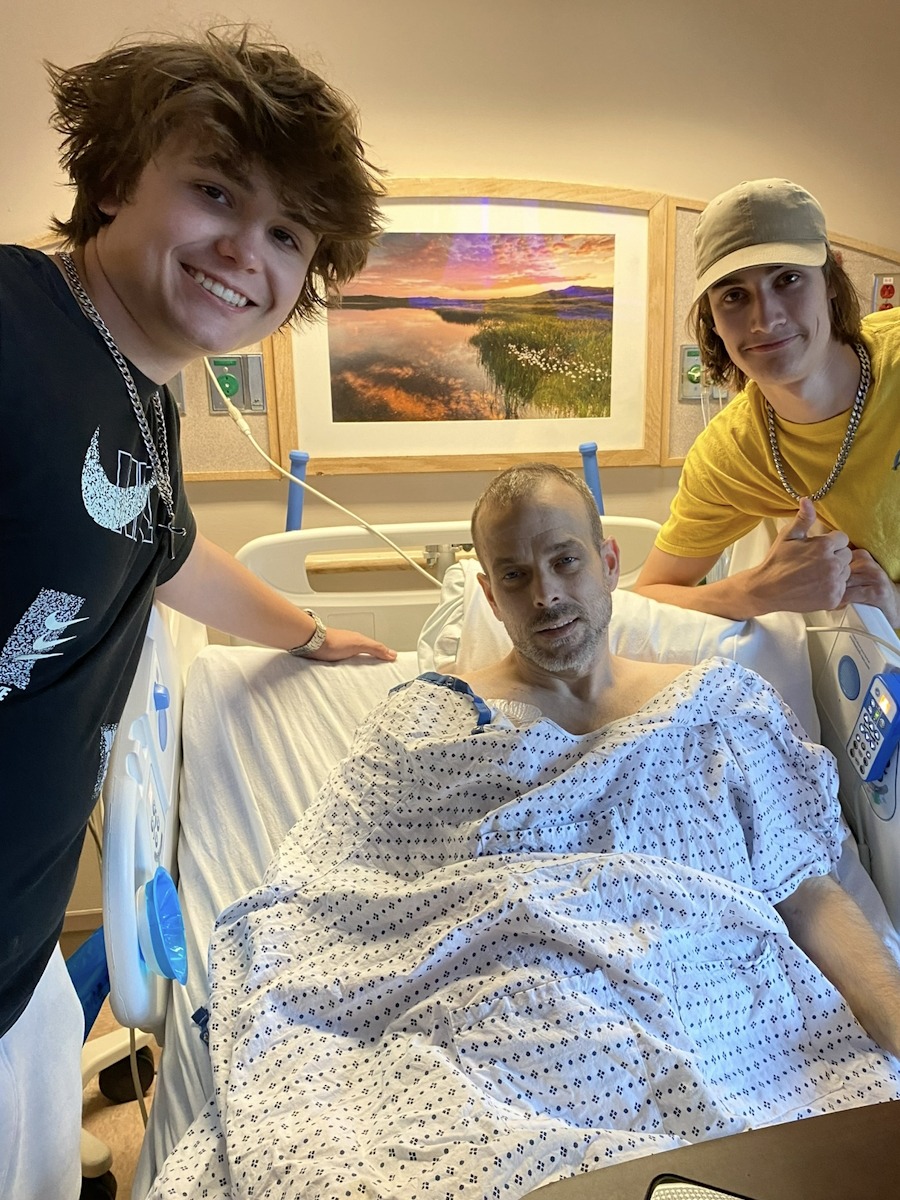
In the beginning, my son wasn’t living with me. I was still getting the kids pretty often, too, because their mother was also experiencing health issues of her own. She was very kind in letting me have them during any longer breaks, and I had them for most of those months where I was deemed to have no evidence of disease. It was challenging. It makes you feel like less of a man, not being able to get up and play with your kids.
Right now, it’s hard for me to talk about because I was stuck in survival mode for so long. I’d think, “I only have so much room on my plate; I can’t dump all this extra stuff on it.” I could only handle so much for the day, and most of that was just about making it to tomorrow. A lot of the emotional stuff you lock away, and it’s only afterward that it comes out. You start to let the walls down, and then everything floods in. That thing where people say you’re strong? That’s just surviving.
It was helpful at the time, being in survival mode and blocking out emotions, because you aren’t always able to block things out. There are times in the middle of the night when things come up and there’s no getting away from them, like panic attacks or breakdowns. Because of what I experienced with the misdiagnosis, I didn’t want those medications. I didn’t want any help, so I did all this without them. They gave me prescriptions. There were times here or there when I would take something for a big day, like when I’d get scans and I felt so overwhelmed that I thought I’d have a panic attack.
Returning to the gym and getting a second recurrence
Ever since getting clear scans again, it was fine for the first couple of weeks because I had that initial wave of excitement where it was just like, “I’m going to go live my life. Bucket list items, here I come.”
They did the reversal after August 2023, and then I went until almost Christmas before I got the scan results back showing that it had come back and spread aggressively. They said I was stage 4. We tried chemo for a few months, and then I believe it was June 4th, 2024, for the surgery on my lung and liver. We tried chemo in between, too, but you have to stop four or six weeks before surgery. That was the last time we tried it, and then they got me on the books for surgery as soon as possible.
After my first clear scans and the surgery where they got clear margins, I went crazy in the gym. My buddy said he was going to help me because I was so tiny and I had such a complex about how small I was. I started eating everything — healthy and unhealthy — but I went healthy after the first couple of weeks and took good care of myself. Everything revolved around getting my body back and getting back into shape.
I have a buddy who is a great trainer, and he was like, “Dave, I’m not going to charge you a dime, but you have to come.” Every time he said to come, I’d be like, “Okay, no problem.” If it wasn’t for him and my other buddies who joined in since it was free training, I wouldn’t have made it. There were six of us going to the gym every Monday, Wednesday, and Friday.
I ultimately felt like something was telling me I needed to do more. I had a second chance at life, and I needed to get back into the gym. I felt that the most alive I’ve ever been is working out because of that adrenaline rush; it’s my happy place.
But I felt I needed to get my body in shape and ready in case it ever came back, so that I could rely on my body for more reserves. I had watched myself waste away in the mirror and I knew that, ultimately, your body is your fuel tank. When you go through an illness and you can’t hold food down, your body is going to use itself to stay alive.
That was my goal. I ended up gaining almost 40 lbs. It was about five months before the scans came back showing multiple spots on my liver and my lower left lung. It was like, “Oh, man.” They told me I needed to get back in and start treatment. We tried different types again to go after the lungs and the liver, but nothing was working. We weren’t seeing results. The treatments that didn’t cause major reactions didn’t show results on the scans, and the stuff I was having reactions to was just too much. They sent me to a dermatologist every couple of weeks to figure out medications for the side effects. I still have scars on my body from those rashes that will never go away. But the treatments didn’t work.
Lung and liver surgery
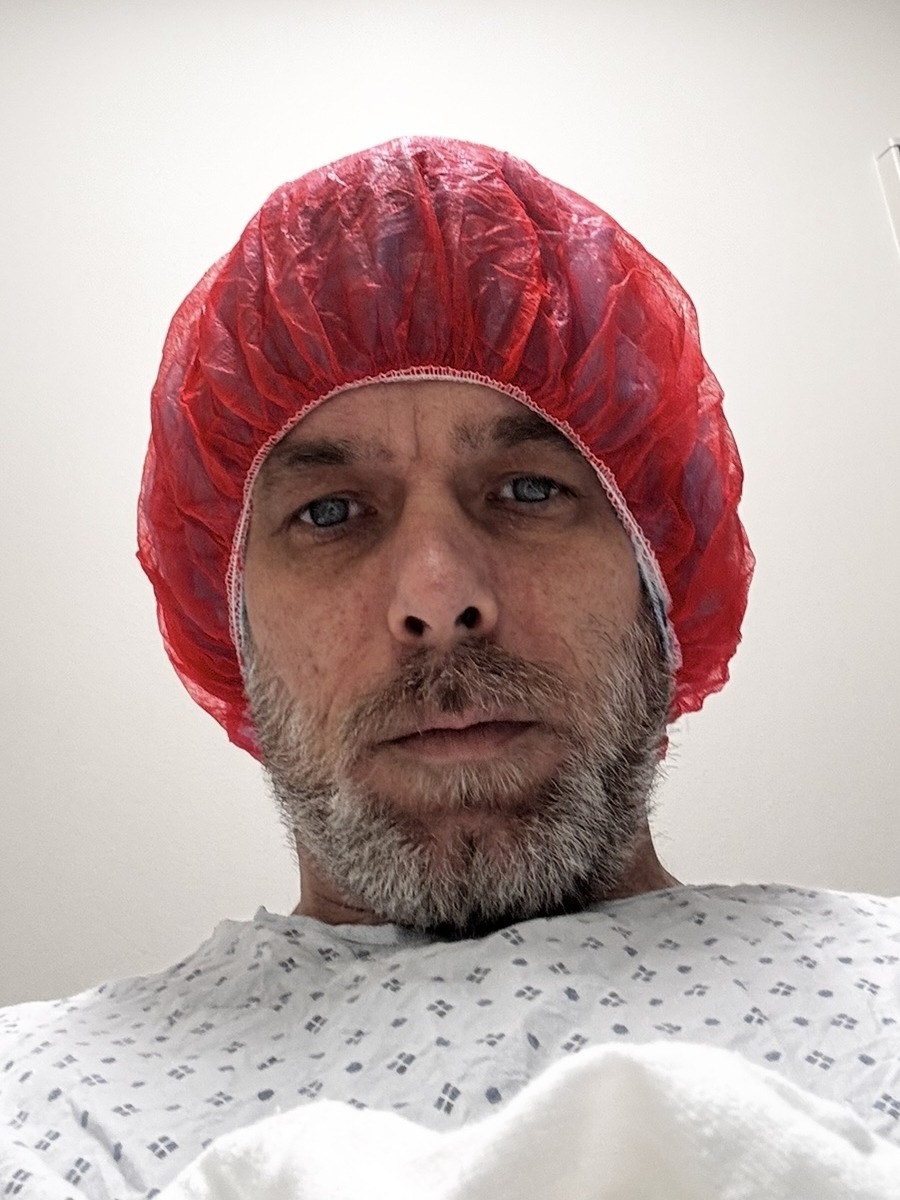
Luckily, I was able to find a surgeon at the hospital who offered to take the spots off my liver and remove the lower third of my left lung. They actually did it back-to-back in the same procedure. I think it was a 14- or 15-hour surgery. It was long and very painful; waking up from that was quite the recovery.
It was a long road, though not as bad as the first one. After my first surgery, I had an ileostomy and intestinal paralysis. My stomach shut down for a week and I had to go back to the hospital. This time was different because of the nerve pain and these weird sensations I’d never felt before. I don’t like taking pain medication, but I learned after that first big surgery to take it when you have to. I tried to do everything by the book; it still hurt a lot, but the pain eventually went away.
For a very short period, I was told there was no evidence of disease. But the very next scans showed a spot on my tailbone and two spots in the upper lobe of my lung. I had to go back for more chemo as soon as I was able, which was about six weeks after that surgery.
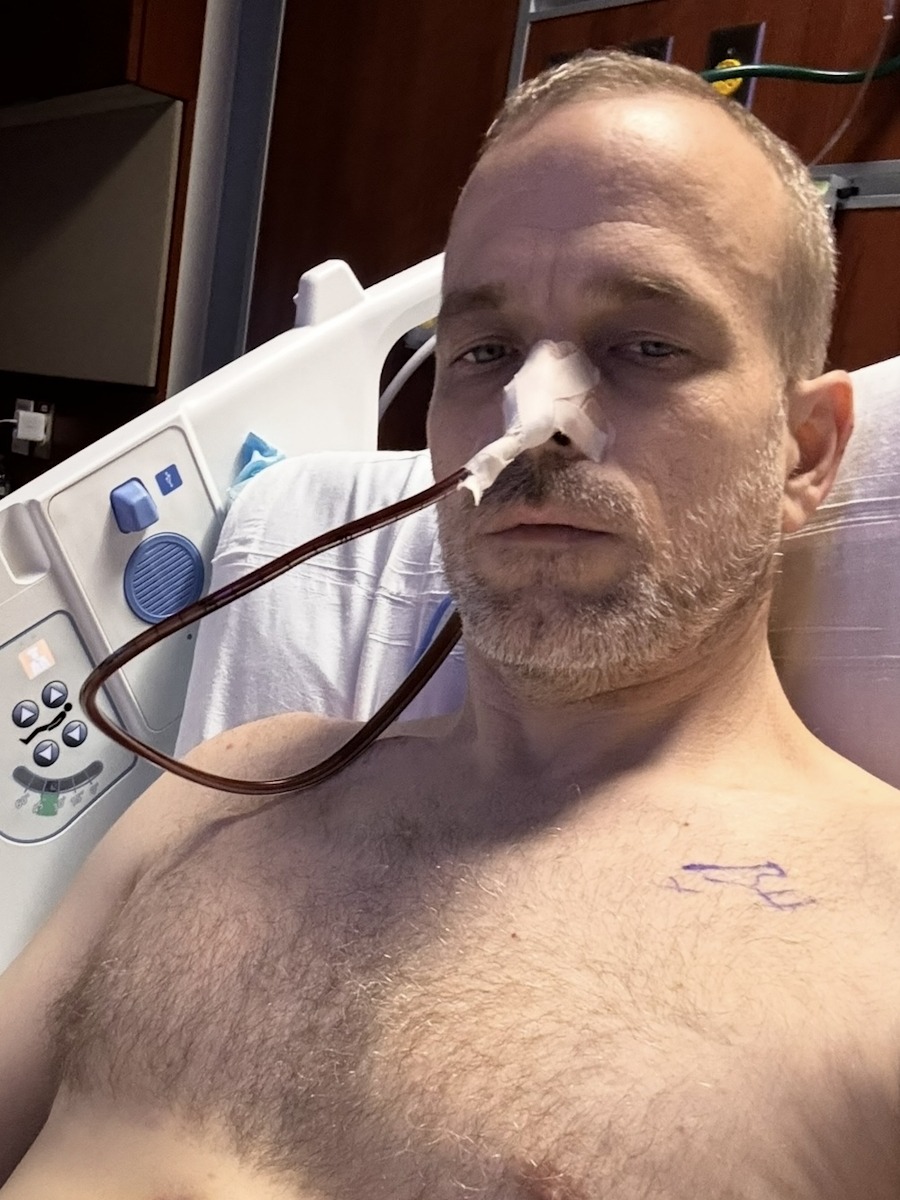
I went right back into chemo, trying different types, but nothing ended up working. I kept getting a hernia that popped out from my prior surgeries, which was causing blockage issues. We had to stop treatment in March of this year to get the hernia surgery done because that was a higher priority. They fixed the hernias, but I had to go back to the hospital because a vein was leaking and formed a big hematoma on my chest. I still got it taken care of the same day. I have amazing surgeons and I love all my doctors and nurses at that hospital.
Radiation treatment
Right after that surgery, we were going to go back on chemo, but I talked to the radiation specialist about doing radiation on that lower tumor. We had to wait for me to recover, and then we did the radiation, which got me way sicker than any chemo ever did. I lived in my bathroom for nine days and nights. There was no way to risk going more than a couple of feet away from the toilet; it was that bad. But as that started improving, things got better. Something with that lower tumor was causing issues with the nerves, and it was getting difficult to walk. Sometimes my left foot would just go to sleep while I was walking and I would “eat it.” That was the reason they wanted to do the radiation so quickly; my mobility was getting so hindered.
Luckily, I had great success with it. As I got a little less sick each day and started feeling better — while still sleeping in the bathroom — I noticed I could move around easier and it wasn’t so painful. Then, slowly, the pain went away. Now I’m walking. I walk decently; I still have issues with long distances, but I’m able to walk to the fridge and to my front door, at least.
Clinical trial and miraculous clear scans
After that radiation, we went right back into chemo to try to get the spots out of my lungs; that’s when I had the reaction with all the doctors and nurses surrounding me. The spots were still there, which is why I went on that trial. It had an 80% success rate, and I was so excited. You want to beat it. You think, “We’re so close. We got all this other cancer beat, and now it’s just these little spots.” In your head, you’re thinking that the day they tell you you’re good, you’re gone. You’re going to travel the world.
They took me off treatment and told me I had to wait three months for my next scans. They were just going to monitor me until they could find another trial, which might not even be in the same state. Everything was up in the air. I prayed a lot more, and this was also when my social media started taking off because I started being honest and vulnerable. I posted real videos of what I was experiencing, like sitting in the bathroom crying because I couldn’t stop throwing up.
The radiation itself wasn’t nearly as bad as the two-week span that came after. Sitting at home with no treatments or doctor’s appointments except check-ins and blood tests was very worrisome. You wonder what’s going to happen. But I ate as much as I could and started working out again because I was getting my energy back. I stayed active.
That’s when I got the scans back, saying I was clear. I was on my way to Florida to hang out with my buddy who streams, and I was freaking out. We were expecting either no growth or, if it was bad news, very little spreading. Those were the two options. Option C would be a miracle where it’s just gone, but nobody was thinking that. When they told me, I freaked out. I have a photo from right after I got the news; I was standing in the hotel room I’d just checked into. I couldn’t believe it.
My doctor called me because he knew I was in shock. I was like, “I haven’t been on treatment, and it didn’t do anything while I was on it, but I finally get off and it disappears?” He said, “Well, you’re a spiritual man. Maybe you’re just blessed.” I told him, “That’s all you had to say. We’re good.” He told me everyone in the office had looked it over and said, “Go have fun,” so I did.
Instantly, there was a huge surge of adrenaline that lasted for weeks. I went and streamed with my buddy. He does online trolling and has a lot of followers, so he made a “Dave cam,” and it did well on his channel. I got to celebrate with him, play pool, and stream. Then I went and picked up my youngest son, hung out with my father for a couple of days, and then my youngest son and I drove back up here to pick up my oldest. We went to the mountains to hang out with my brother for a week, just being alive again and celebrating.
That was the end of September. I was so excited; it was like a huge dopamine rush. I’d wake up every morning with a smile. I still wake up with a smile, but it’s not quite that same initial feeling. I was way overdoing it during that time, and when the energy finally ran out, I ended up sleeping for almost a week straight. I thought I was sick or something, but it was just the exhaustion. It was huge.
Current status with Signatera test
Now I’m at the point, three or four months later, where I’m wondering about my next scans. They were pushed forward because a Signatera test came back positive, meaning there are fragments of circulating tumor DNA in my blood and a high probability that it’s coming back. My doctors are messaging me about getting back in for more treatment, just to be safe, to kill it while it’s microscopic. But I don’t know. I messaged them back asking if we could wait until the next scans. If my body took care of things that actually showed up on a CT scan when I was getting healthier, I want to see if it can get rid of fragments we can’t even see yet. I’m waiting to hear back to see what they say.
My oncologist said that, ultimately, they always go off the scan results. He said the Signatera is more of a preventative test; it’s still so new that they don’t fully understand what the numbers mean yet, though hopefully they will in time. As of right now, he said, if it’s positive, there is a 75% chance it’s going to come back. If it’s negative, there’s a 75% chance you’ll never deal with it again. Both of the tests I’ve taken have come back positive with very low numbers, but again, we don’t know what those numbers mean.
Clinical trials experience
I guess now I’ve done two different clinical trials. They say when your body shows a reaction — when you get the breakouts and everything — that if it’s doing that on the outside, imagine what it’s doing to the cancer on the inside. That means good results.
Advice on self-advocacy
Nobody else is ever going to fight for you like you’ll fight for you. You have to keep pushing. If you know something’s wrong, you can’t accept anything less. I ultimately got to the point where I felt like I couldn’t get help anywhere and couldn’t do anything. I got lucky, but I wish I had pushed harder or thought of doing things differently sooner.
My oncologist asked me, “Don’t you have an old doctor you used to go to as a kid or somebody who can get you in quicker?” That’s what ended up happening. It was an older doctor of mine I’d seen a few times; it wasn’t even her who was available, but someone else in her practice who got me in a couple of days later.
You have to keep pushing. If you know something’s wrong, keep pushing until you get an answer. Don’t let things get swept under the rug or let them ignore symptoms to fit a diagnosis, especially when you know it’s a misdiagnosis.
I had lost myself with the mental health medication; I barely knew who I was anymore. I’m not against those medications, and I think certain people definitely benefit from them; I’ve seen it personally. I just know that, for me, the issue was cancer, and depression and anxiety were side effects of that. That’s another thing: don’t let them just keep treating side effects. Go after the root cause. If it’s cancer, the key to success is catching it early.
Encouraging others to get screened
I’ve helped quite a few friends who have gone in for colonoscopies way too early; they found small precancerous polyps that were easily removed, and they were back at work a day later. They lost one day of work and got to sleep. Most of the younger guys I was going to the gym with were scared, saying, “I don’t want a camera up my butt.” Trust me: You’re not going to like all the other stuff up your butt if you actually do have cancer. A little tiny camera is nothing. Everybody went and did it, and a couple of them came back with findings. Everybody was super thankful, of course.
Whenever I share my story in person, I recommend that for any symptoms you’re feeling, just go. It’s so easy to talk to a doctor, tell them my story, and say, “That’s my buddy, and I want to get a colonoscopy.” Honestly, that’s all that had to be done originally for me, and I could have been caught in earlier stages. Who knows if my life would have been easier? But it definitely would have changed things, considering how fast it spreads and the misery I went through for so many months.
When I got the news, it almost felt like relief because now people could believe and trust me again. When people started seeing me fall apart, lose weight, and act weird because of those medications, they started to believe the doctors, thinking that maybe something was wrong with me mentally. Now, everybody can believe me and we can go forward. I feel like cancer might be a little bit easier to deal with at times than mental health issues because you aren’t constantly chasing something. At least when you have a positive diagnosis, you know what you’re battling.
Maintaining a positive mindset
That’s been tricky. My father’s always been a positive person, and he’s always preached that. I lean on my faith pretty hard for that, too.
You see a lot of people in treatment — and I’m not talking bad about anybody — but you see people who are upset because cancer is horrible. It sucks. You’re miserable. But you have the choice of whether or not to be positive or negative about it, and whether or not you’re going to do everything you can or just be abrasive toward everyone. There are times in the hospital where you see people being very abrasive, but those nurses and doctors are just regular people, just like we all were before we got cancer. They’re just trying to help you survive.
That positivity goes back to just being a regular person who wants everybody else to be happy, too. Making other people smile and sharing a smile with someone else who’s going through a hard time helps boost the day, and it motivates you to do it even more.
It’s challenging. It is. There are times when you’re just sick all day long, and if you’re going to be negative, just stay at home. Everybody has the right to feel that way. If you’re going to be grouchy, stay at home and be grouchy with yourself. You don’t have to share that with anyone.
Hardest moments
I told my doctors, “Take me within an inch of my life if that’s what’s necessary to beat this.” We went hard with the treatment because I was healthy. After coming back from the gym, I felt like my body could handle a lot more.
The hardest part for me was hearing how many years I supposedly had left, the talk about three to five years max. I didn’t want to hear that, and since then, that’s been taken back. But hearing those types of statements, or any talk about only having so much time left, just makes everything flood in. So many things go through your head, and that’s when it becomes mentally challenging.
If you can master the mental side of it, your body will follow. When my mind was overstimulated with those thoughts, I told the doctor, “Let’s not talk about this anymore.” Anything that I would have to lie to my kids about, I don’t want to hear it. My ultimate goal is to beat this. Take me within an inch of my life if you have to, but I want a life to live after this. If I don’t need to hear it, let’s not talk about it unless it’s absolutely mandatory.
Even seven months ago, when I was talking to my palliative care doctor before this last trial came up. We had run out of chemo options. We’d tried them all. He was like, “We have to start the talk to make sure your end-of-life stuff is in order.” That was another hard time. Luckily, the hope of the trial came up right after. I thought, “Oh, I can actually do it,” but then the horrible reactions I had made it a very difficult time for me.
Anytime they tell you that you have X amount of time left, or you have to make sure your affairs are in order, it’s hard. We didn’t even get to finish that conversation because the next time I talked to him was after my clear scans. I said, “I guess we didn’t need to have that conversation after all.” And he said, “Guess not.”
You never know what tomorrow is going to hold. It could be a horrible day, but it could also be the best day of your life. Scan days were hard in the beginning, definitely. But after a certain number of them, you just start to think, “I’m going to get whatever news I’m going to get, and we’ll go from there.” I’m not going to ruin today dealing with news for next week.
Advice for others going through cancer
Share smiles with everybody, because you don’t know who needs it. You don’t know how big or small someone’s community is. You don’t know the person sitting across the hall from you in the other chemo chair. Some hospitals don’t let you talk to other patients, but in my experience, they do, as long as you’re not giving medical advice.
Share a smile with everyone you can. Cancer has taught me so much about real life and what matters: spending time with my kids, hugging them, going places with them, or just watching a movie or sitting in the grass. Who cares?
It’s taught me a lot more about quality time and slowing down. Not everything needs to be done right away; just because I have 20 things on my list doesn’t mean I have to do all 20 today. I’ll get done what I can, and I’ll do the best that I can today. What’s left, I’ll deal with tomorrow. I’m making sure that on the list of people I care about, I’m on that list, too.
That was a hard thing for me to finally start. But if you get diagnosed, experience all the emotions. They’re all real; it’s all real life. Cry in the shower if you need to, and smile as much as you can around as many people as you can. Because, unfortunately, if things go the wrong way, that’s what they’re going to remember you by.
Finding positivity in the experience
It’s about focusing on being happy. There are going to be a lot of negatives with cancer — a ton of them — and it’s almost overwhelming. It’s very challenging, but play it like a game: Seek the positivity out of the negative. There is always a positive in every negative. This or that might have happened, but it also kept you from having to deal with something else. Find that little bit of positivity and count it as a win, even if it’s the smallest win in the world.
Know that every step is another step in the right direction, even if it’s backwards. It’s a step that had to be taken. This journey isn’t a straight line; it has ups and downs. A lot of people call it a roller coaster because it is. So just strap in, be ready, and don’t worry about tomorrow until you get there.
The hourglass: Living in the present
Imagine an hourglass: on top is the future and at the bottom is the past, because the sand’s falling through. The only thing that matters is what’s in the middle. That’s the current time. This is what matters in life. Make sure you’re paying attention to that part, not just the top and the bottom. You can count those little grains of sand as they go through and remember every one of those memories, or you can worry about each grain of sand — when they’re going to come and what they’re going to do — but that’s anxiety. If you’re worried about all the sand at the bottom, that’s just depression. So you have to live for today. Do what you can today. Nobody’s guaranteed tomorrow.
This interview has been edited for clarity and length. The views and opinions expressed in this interview do not necessarily reflect those of The Patient Story. This content does not replace professional medical advice.
Inspired by David’s story?
Share your story, too!
Hear from people living with metastatic colon cancer
Real experiences with diagnosis, treatment choices, side effects, and life beyond stage 4 colon cancer — in their own words.
Leave a Reply