
Diagnosed With DLBCL Months Before His Wedding, Jeff Leaned on His Wife Kat to Get Through
Jeff and Kat were deep into planning a wedding when a short walk home from the gym left him unexpectedly out of breath. He brushed it off as being out of shape, the same way he’d waved away months of hiccups after eating and a pair of startlingly swollen ankles on vacation. The excuses ran out the day he couldn’t make it two blocks to Chipotle without stopping to catch his breath.
Interviewed by: Taylor Scheib
Edited by: Katrina Villareal
An urgent care visit for what looked like a lingering respiratory infection turned into an emergency room visit when his X-ray showed his lungs filled with fluid. Doctors drained more than 4 liters from his chest and found a large mass. He was told it was suspicious for lymphoma, though the exact type wasn’t confirmed until a second, more painful biopsy at City of Hope came back. The diagnosis was diffuse large B-cell lymphoma (DLBCL), an aggressive but highly treatable form of non-Hodgkin lymphoma.
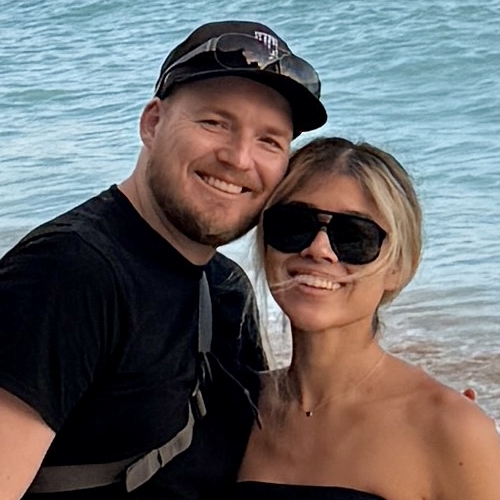
Jeff spent 10 days in the hospital before starting chemotherapy. Treatment brought scanxiety between imaging appointments and a significant round of steroid-driven weight gain. What he believed was only the halfway mark of his chemo regimen turned out to be his penultimate cycle, bringing an unexpected and joyous end to his treatment. Meanwhile, Kat became the one tracking symptoms, fighting with insurance, and catching a medication reaction.
The couple postponed their destination wedding and instead got married over Zoom between chemo cycles, later returning to the original destination to renew their vows about a year into remission. Today, Jeff is coming up on two years since his diagnosis, still watching his scans with his oncologist, Dr. Tycel Phillips at City of Hope, and he and Kat are expecting twins.
Watch Jeff and Kat’s video to find out more about their story’s key takeaways
- Jeff’s early symptoms were each individually easy to explain away. It took all of them arriving together, plus a lungful of fluid, before anyone took a closer look. Looking back, he wonders how long those small signs were adding up before they were connected.
- When Jeff’s medication caused muscle spasms, it was Kat’s research that connected it to a drug reaction. She calls advocating for a loved one’s care, even when it means questioning doctors and nurses directly, one of the clearest lessons of their experience.
- Jeff gained significant weight during treatment, then spent the following year rebuilding what chemo had taken from him. He now describes himself as leaner and stronger in his 30s than he was in his 20s, and credits the experience with showing him how much he’s capable of changing.
- Kat found that caring for Jeff meant managing her own fear quietly, so he could hold onto the relentless positivity he’d asked of her. She leaned on friends by text in the middle of the night rather than let him see her break down, and says now that care partners need their own support system just as much as the patient does.
Free toolkit
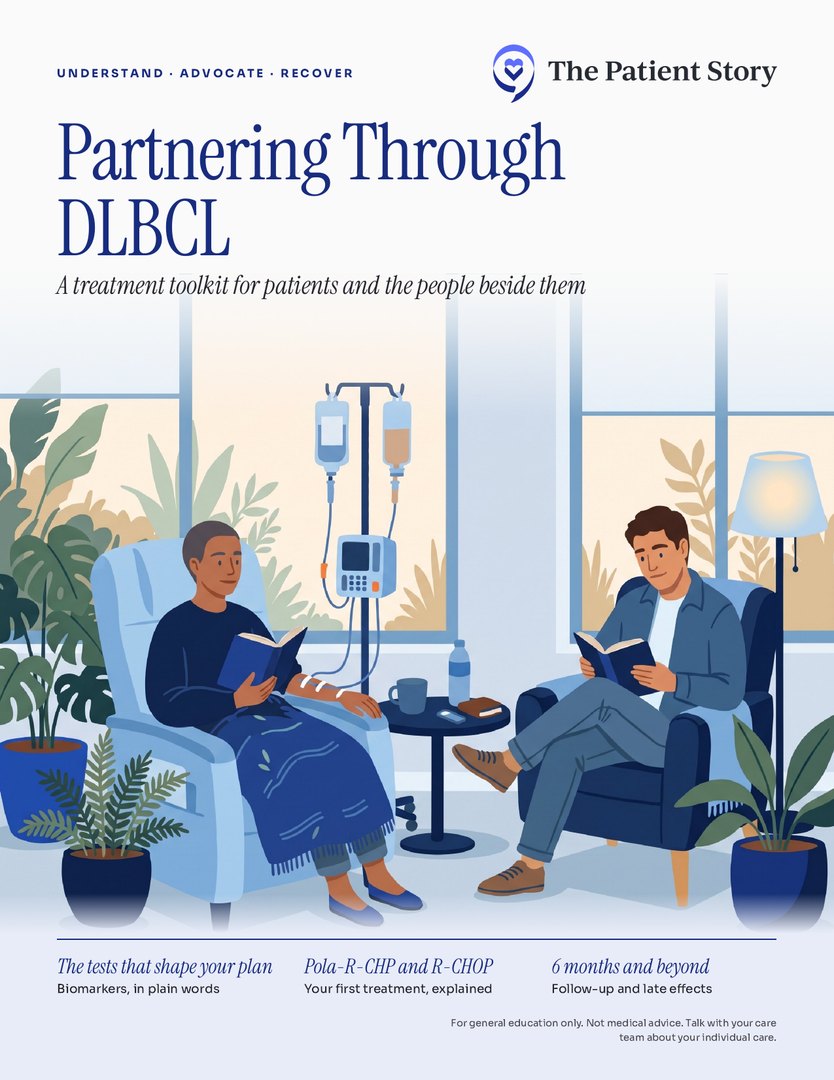
Your Free DLBCL Toolkit
10 printable pages of test explainers, a treatment cycle tracker, and questions to bring to every appointment. Made by patients and care partners, for patients and care partners.
Jeff’s Diagnosis Facts
- Name: Jeff H.
- Age at Diagnosis:
- 33
- Diagnosis:
- Diffuse Large B-Cell Lymphoma (DLBCL)
- Staging:
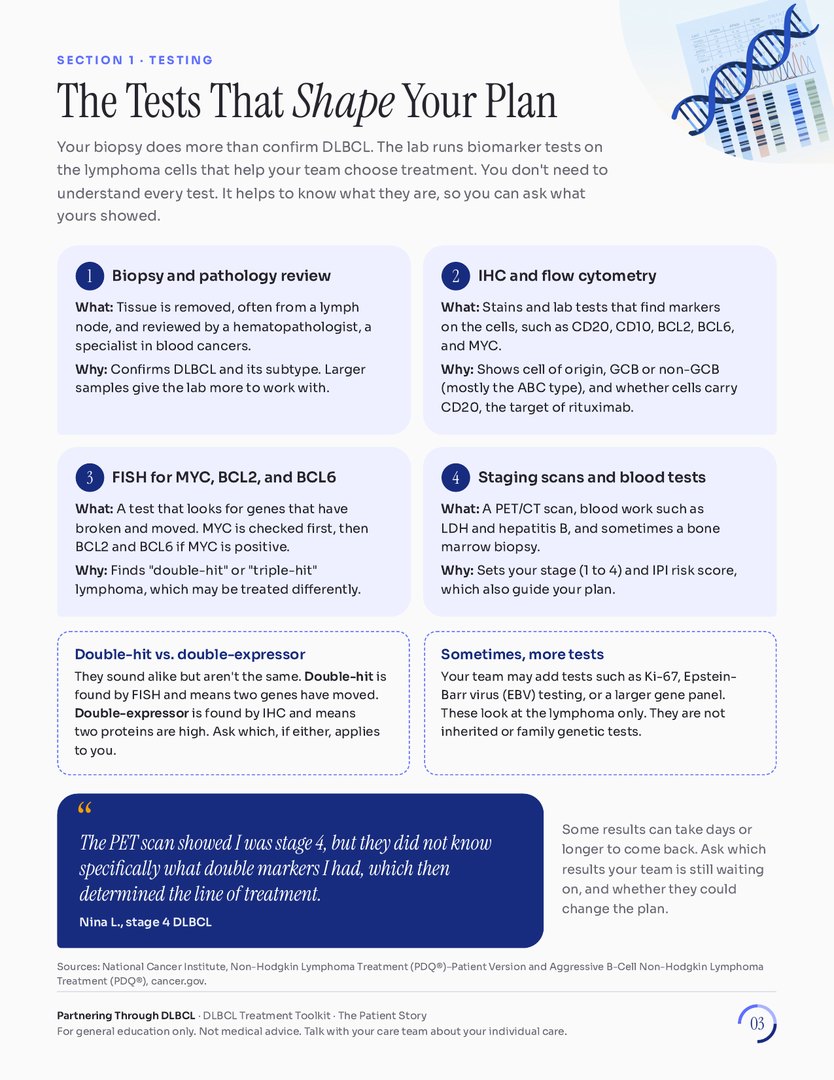
- Stage 4
- Symptoms:
- Progressive shortness of breath and fatigue on exertion
- Recurring hiccups after eating
- Swollen ankles
- Fluid buildup around the lungs (pleural effusion)
- Treatment:
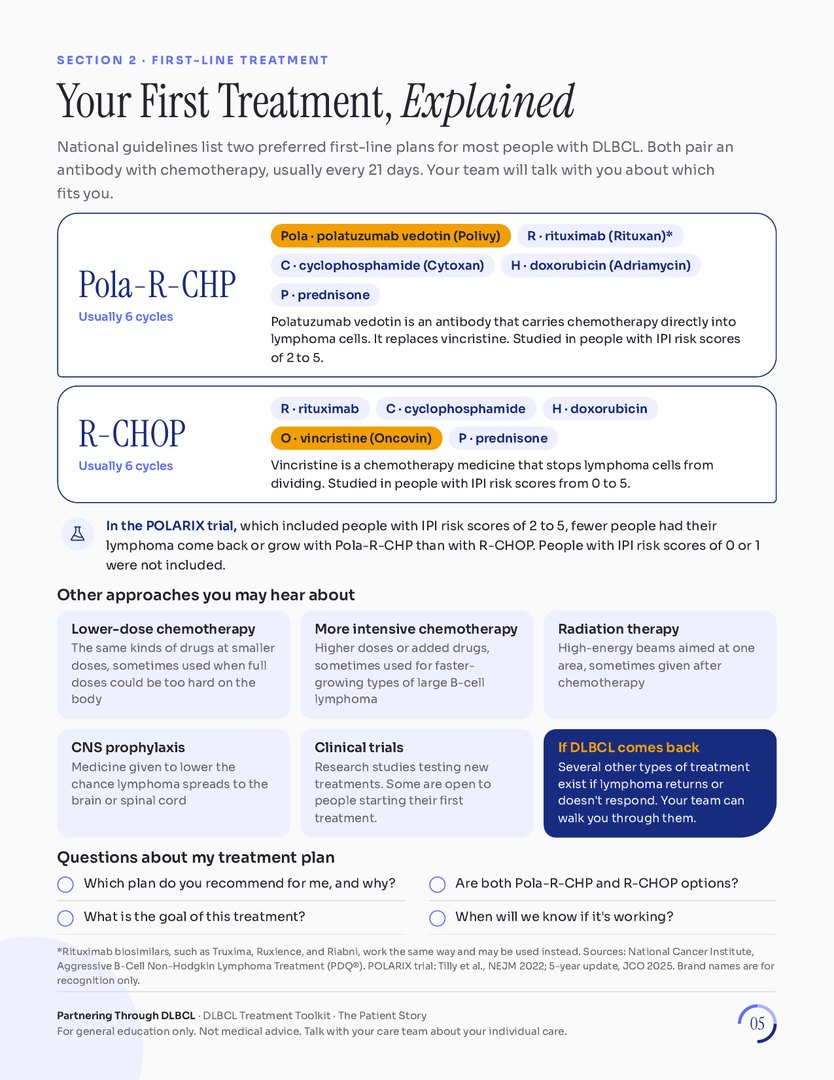
- Chemotherapy: pola-R-CHP
Story Sponsor

Thank you to our sponsor for their support of our independent patient education program. The Patient Story retains full editorial control over all content.
This is not medical advice. Please consult with your healthcare provider to make informed treatment decisions.
- Watch Jeff and Kat’s video to find out more about their story’s key takeaways
- What life looked like before Jeff’s diagnosis
- The call from the emergency room
- Watching Jeff go through it and the helplessness of not being able to fix it
- What Kat carried on her own
- Postponing a destination wedding and getting married via Zoom instead
- Kat’s advice to other care partners
From our first date and something we joke about even until now is that he has such enthusiasm about everything he’s into and talks about.
Kat H., Wife and Care Partner of Jeff H., Diffuse Large B-Cell Lymphoma (DLBCL) Patient
How we met and missed each other for four years at first
Jeff: We lived across the street from each other for many years.
Kat: Like four years.
Jeff: But we did not meet each other. She would be walking her dog around the block and I would be walking to work, but somehow, we did not bump into each other. We met on Hinge and connected the dots that you can literally see my old balcony from the window, and that we had been right next to each other the whole time.
She swept me off my feet right from the beginning, from our first date, and we progressed pretty quickly until we were planning our wedding for December 2024. Then all this happened.
Kat: From our first date and something we joke about even until now is that he has such enthusiasm about everything he’s into and talks about. I know nothing about golf, and on the day of our first date, he came from golf with his friends and was going into elaborate detail.
Jeff: Rambling.
Kat: He calls it rambling, but I always say, “I’m subscribed to your fun facts for life,” and that’s one thing I love about you. It’s been that way since the first date until now.
Jeff: Permission to ramble about Fantasy Football. She knows she can zone out for five minutes while I’m going off about why my roster is the best.
Kat: Our days have been filled with that. I know a lot of random facts about a lot of things. I’m not playing, so I have nothing to do with it.
Jeff: We met at Fogo de Chão down the street. She was drop-dead gorgeous right when she walked in. We sat down at the table and hit it off immediately. I was ready to go on a second date right after our first date, but was nervous about asking too soon because I didn’t want to be weird. But it’s like, “Can I see you tomorrow?” She’s an amazing person and has continually proven over and over again that she’s the most loyal, loving partner that I could have asked for.
Kat: It was nice in the beginning. It’s still nice. He always took initiative. I feel like people don’t call anymore; it’s always texting. But Jeff always called me and asked me how my day was, and then followed up with, “What are you doing in a couple of days? Can I see you?” That was always sweet.
In the weeks leading up to the diagnosis, I was going to the gym frequently. I wasn’t making it through the entirety of my workout like I usually would. I was getting tired sooner.
Jeff H., Diffuse Large B-Cell Lymphoma (DLBCL) Patient
What life looked like before Jeff’s diagnosis
Jeff: She has a travel bug. I was less well-traveled before I met her and that quickly changed. Before the diagnosis, we were on a vacation in Spain to go to a friend’s wedding, and then went to Portugal. That was awesome and one of many vacations.
Other than that, I have a pretty demanding job and the tax season hours were pretty long. I was accustomed to that. It was the stereotypical work hard, play hard.

Kat: I don’t love to cook, so we definitely DoorDashed too much. We then subscribed to HelloFresh, so we started cooking a little bit more. But during Jeff’s busy season, I would take on more of the laundry, the dishes, and making sure everything was as tidy as it could be, especially in times of need. When things weren’t as busy, we’re pretty good about doing things together. If I’m not feeling well or unmotivated, Jeff’s not afraid to take on any of that stuff. But I would say during busy season, I would pull more of the weight because I know he’s so deep in the trenches, working.
I have more of a stable work schedule compared to him, but “work hard, play hard” is our mentality. I have a big family, so I spend a lot of time with them. I see my mom almost every week. I have a good amount of friends, but Jeff has a crazy amount of friends, so our social life also kept us pretty busy, on top of traveling and hobbies. I rode the Peloton.
Jeff: She was a Pilates princess.
Kat: Mentally, I was preparing for a proposal, so I wanted to get fit for that. That started before even wedding planning happened.
I was having difficulty breathing. They did an X-ray and saw that my lungs were filled with fluid.
Jeff H., Diffuse Large B-Cell Lymphoma (DLBCL) Patient
The first signs something was off
Jeff: In the weeks leading up to the diagnosis, I was going to the gym frequently. I wasn’t making it through the entirety of my workout like I usually would. I was getting tired sooner. There’s a large hill walking back home, and I’d be a little winded walking back up the hill, but I’d think, “Oh, I must have done too much,” or whatever excuse.
One day, I was walking two blocks to a Chipotle across the street, and I couldn’t make it without stopping to catch my breath, so I went to urgent care. I had been feeling under the weather and thought it was an upper respiratory infection, so I had gone to urgent care the Friday before. They gave me azithromycin and said, “If it doesn’t get better by Monday, come back,” but they did not do an X-ray.
When I came back, I said I was having difficulty breathing. They did an X-ray and saw that my lungs were filled with fluid. They weren’t sure if it was pneumonia or if my lung was collapsed, so they sent me to the emergency room.
Kat: When he’s sick, he’ll deny it completely. Even when he had COVID and there was a faint line on the test, he said he didn’t have it. I knew he was sick, and I had also gotten sick pretty shortly after. We were sick at the same time. I was starting to get congested and feeling under the weather, so I wrote it off, thinking that we were both sick but he had it a bit more severely. Even when he went to urgent care, I didn’t think much of it.
Jeff: You just thought it was pneumonia.
Kat: Even when I got the call when he was on his way to the ER, I said, “You’re just sick. Everything’s going to be fine.” It’s either complete denial or not understanding what was happening. Plus the fact that I was sick too.
Jeff: There were less obvious things leading up to it too. For months, every third, fourth, or fifth bite, I would get the hiccups. The first bite of food would go down and then once the hiccups started, I’d be hiccupping the food up and down. Apparently, that’s because the lymphoma was pressing on my phrenic nerve, and that can cause you to hiccup. But I dismissed it as having weird 30-some-year-old bouts of hiccups and that they’ll go away.
Kat: I even said, “You’re drinking too much Diet Coke.”
Jeff: Anything but cancer.
Kat: We Googled it, obviously, and everything leads to cancer. We can’t read this.
Jeff: On one vacation, we did a lot of walking and my ankles were huge. We brushed that off as due to too much walking. I don’t know how we brushed that off. They were enormous. She still has the pictures. It’s so concerning.
Kat: We definitely rationalized every symptom you had.
Jeff: Everything. Even in the emergency room, I was still rationalizing everything. Looking back, I feel naïve. I guess when a 30-something-year-old male with no other complications comes in with lungs full of fluid and can’t breathe, it’s probably not a good sign that there’s something else going on there.
I was in the emergency room waiting for my test results to come back, texting, and looking at Fantasy Football. I feel like the nurses and the technicians who did the CT scan knew that something wasn’t right. I was all hunky-dory.
They explained that there was a large mass that they thought was suspicious for lymphoma. That was a breakdown moment for me.
Jeff H., Diffuse Large B-Cell Lymphoma (DLBCL) Patient
The call from the emergency room
Jeff: I was in the emergency room for a while. I didn’t think anyone else was allowed to come in and I also wasn’t concerned. I was sitting there, on my phone, waiting for the test results.
Once the doctor came in, they explained that there was a large mass that they thought was suspicious for lymphoma. That was a breakdown moment for me. I called Kat and my mom. I couldn’t explain what the doctor just explained, so I said, “You tell them again.” That was the first of many difficult hurdles.
It was definitely a numb experience. I was in disbelief. It took a little bit to come around to acceptance there.
Kat: Up until the doctors came and gave the update, I asked, “Should I come?” He said, “No, it’s fine. We’ll just wait for the results. I don’t think you’re allowed back here anyway.” Once we got the call, I was on three-way with his mom, and that’s when I said, “Okay, I’m coming.”
I was also confused. I didn’t know what lymphoma was. No one said cancer in that moment, so my head was thinking cancer, but I didn’t know exactly what any of that meant. We’re walking distance from the hospital, which is nice. I was in the middle of work, so I messaged them and said, “I have to go.”
I packed some of Jeff’s stuff because they said he’d be staying, packed my stuff, walked over to the hospital, and Googled on the way there. I did all the immediate research that I could at the time. I was numb to it. I was in the mode of thinking what we’re going to do about it; it was less processing of what happened and more about the next step.
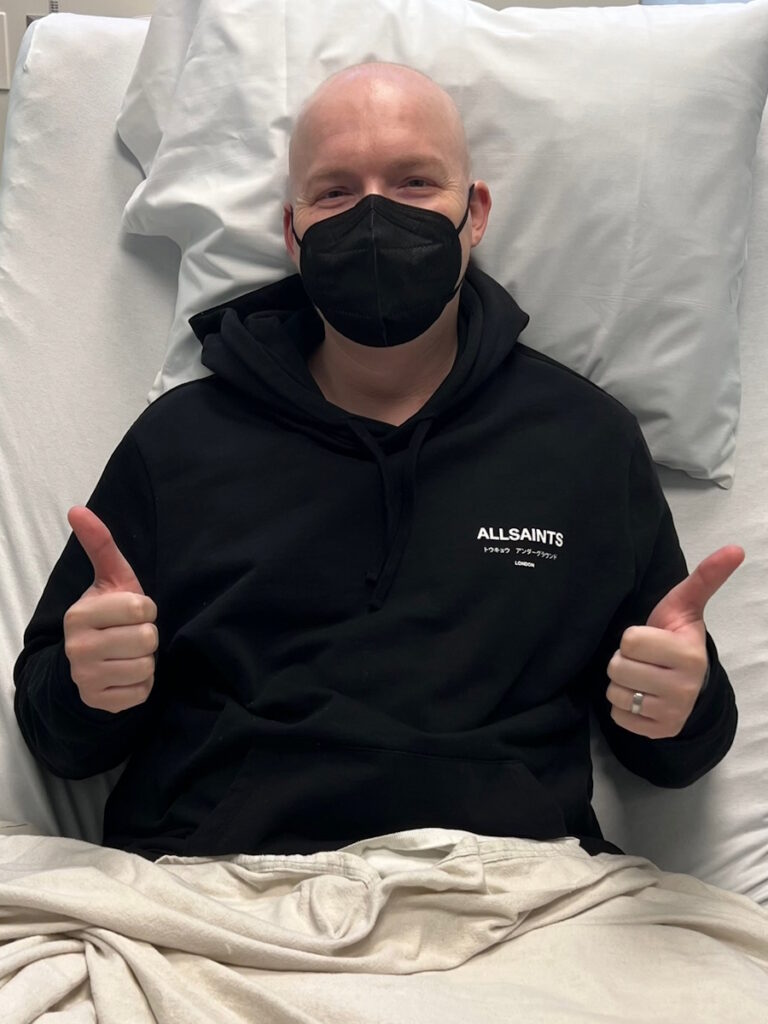
Navigating that downtown hospital is crazy, because there’s security and gun protection. I made my way to his room in the ER. When I arrived, Jeff wasn’t there. He was finishing up the thoracentesis. Once he came, I don’t think we broke down crying or anything either. It was more, “Okay, what’s the plan?”
Jeff: I cried when I called her and my mom, and then moved on to processing what’s next by the time I saw her. But that was a relief to have someone in the room with me finally, because I’d been alone and isolated all day with my thoughts. And there are a lot of intrusive thoughts that come along with this whole thing.
Kat: It was when we got transferred to the hospital room when it was just us two, his parents hadn’t arrived yet, and my mom hadn’t arrived yet. That was when he said very quickly, “We’re going to get through this.” He asked me to think only about keeping the positive thoughts and not focus on the negative thoughts. From that moment, we made that promise to each other and that we’re going to stay strong.
Jeff: Relentless positivity. I did not want to know what the odds were. I was 100% going to make it as far as I was concerned, and we have to let the doctors do their job. I kept chugging along. With the thoracentesis, they drained over 4 liters of fluid from my lungs.
Kat: He took a photo of it.
Jeff: I don’t know how all of that could fit, but apparently that weighs 8-something pounds. I was trying to lose weight and get in shape for the wedding; meanwhile, my lungs were filling up with 8 extra pounds of fluid.
I ended up in the most excruciating pain I have ever been in my entire life. I was sweating profusely. No amount of pain meds was making it go away.
Jeff H., Diffuse Large B-Cell Lymphoma (DLBCL) Patient
Finding out it was DLBCL
Jeff: From the moment we got to the local hospital and found out that it was suspicious for lymphoma, they were wheeling me away to do a biopsy through my back, toward one of the lymph nodes. That was the second time that I broke down, because I was finally away from Kat and my family. My attitude with them was that I needed relentless optimism. While I was getting wheeled away by the nurses, I was getting tired of getting poked and prodded already, and this was just the beginning of getting poked and prodded, and that was overwhelming. The nurses were very kind and comforted me. God bless all of our nurses for everything that they do.
The local hospital got their biopsy done, which was a relatively smooth process. But they didn’t have an oncology department on site, so they sent away the sample and said it might take a week or so to get the pathology report back. They asked their off-site oncology consultant to come by, so we were doing a lot of waiting around at the local hospital without a plan, which was incredibly frustrating.
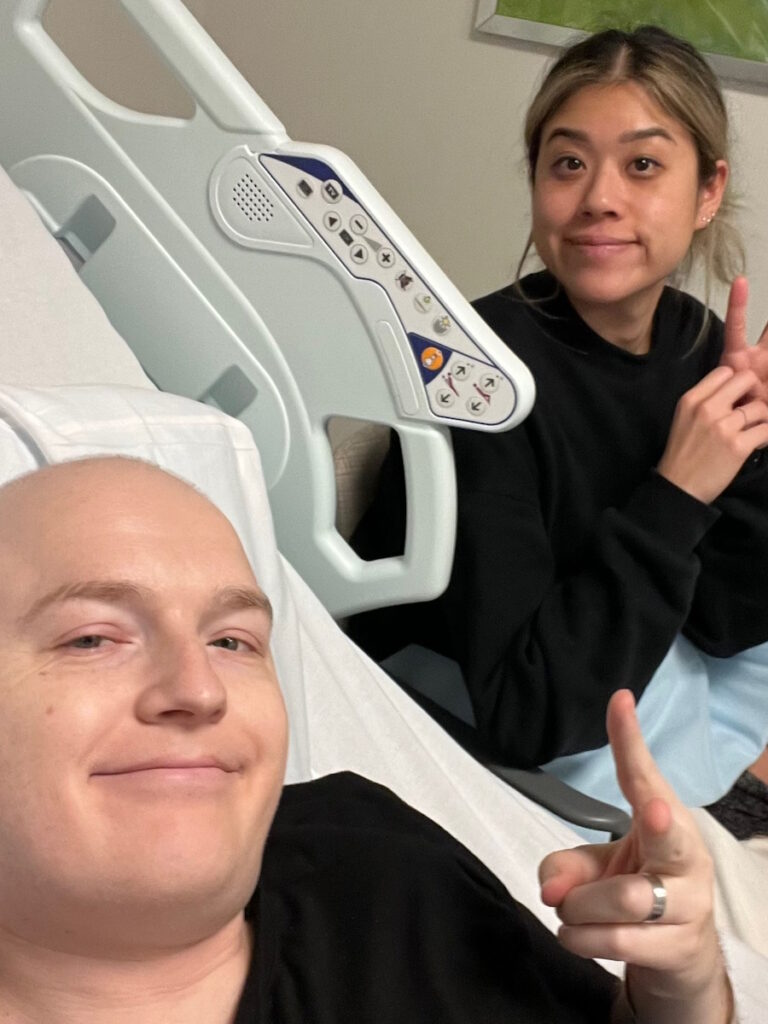
Luckily, we had a friend whose dad worked at City of Hope and was working behind the scenes. You should see this email thread. They were trying to get me a bed and the board of directors and about 30 people were copied on the email. I thank God for them, because somehow, they found me a bed.
As soon as we got there, everything felt so much better. They had to do a separate biopsy and it still took a little bit to get the pathology back to figure out if we were dealing with an aggressive form of lymphoma, which would be good news because those are usually the more treatable ones versus a worse prognosis. The waiting game was not fun. (EDITOR’S NOTE: According to the National Cancer Institute, non-Hodgkin lymphoma can be divided into two prognostic groups. Indolent or slow-growing NHL has a relatively good prognosis but is usually not curable in advanced stages. Aggressive NHL has a worse prognosis in the short term, but a significant number of patients can be cured with intensive regimens.)
Interestingly, the first biopsy was fine. I’d never been under before, so it was scary being on an operating room table, but that went fine. I was expecting something similar for the biopsy at City of Hope. Instead of going from my back, they were going for part of the larger mass in my front, and the doctor changed his mind while I was on the table when he saw the scans. He said, “Actually, looking at everything, we’re going to go in through the front, through the liver.” I’m lying there, thinking, “Through the liver?” You can hear my heart rate go up.
They hit a nerve or took out a chunk of the nerve when they were getting the sample, and I ended up in the most excruciating pain I have ever been in my entire life. I was sweating profusely. No amount of pain meds was making it go away. I thought the biopsy was going to be smooth based on my experience at the local hospital, but it was a run of bad luck, I guess, or it was more important to get a biopsy of the large part of the mass rather than another lymph node.
I’m glad the pathology report came back good from all that, but the biopsy was wild and very visceral. I wish that on no one. I have the tiniest scar ever, but from that pain, we got the biopsy. The pathology found out it was an aggressive form of lymphoma, diffuse large B-cell lymphoma (DLBCL). All we wanted to hear was treatable and curable, and I was locked in. Tell me what to do to beat this thing.
Kat: That was the hardest part throughout the experience. That episode was the most intense Jeff went through and watching him go through it. It’s interesting, because that was at the beginning of all this. We didn’t know what chemo was going to look like. We didn’t know what treatment was going to look like, so that set the bar. His sister’s a nurse and she stayed with us during that time. While he was asleep, we were like, “Is this one of many that we’re going to have to go through and see him suffer from?” That was scary to think about at that stage.
I definitely had a good example of what a true caretaker looks like. I told my mom this too. I thanked her, because I felt like she prepared me for this situation.
Kat H., Wife and Care Partner of Jeff H., Diffuse Large B-Cell Lymphoma (DLBCL) Patient
Watching Jeff go through it and the helplessness of not being able to fix it
Kat: During that time, that was the hardest, watching Jeff go through the recovery after the biopsy. I was always trying to think, “What can I do?” I know I was there for him, but I was trying to get his mind off of the pain. We were doing breathing exercises and that worked, in a sense. It’s interesting reflecting back now, because when I’m going through stuff, I’m not like that. I don’t want you to talk to me about breathing, but I’m glad that worked for him.
Jeff: You should have seen Kat jump into action from the beginning. First of all, dealing with the American healthcare system is a nightmare, so Kat became an insurance specialist, figuring out all of that, which is ridiculous.
Kat: It was so difficult. The hospitals and the insurance companies don’t like each other or something. I’m calling them to get through, and then handing the phone to the doctor, saying, “I’m with the doctor,” because they’re like, “Who are you?” It was a lot to get insurance approval, even though we’re covered by insurance.
Jeff: Then she put her nurse hat on and was basically charting everything in a Google Sheets workbook, because that’s how she keeps track of everything at work. You only see your attending physician so many times per day and you might be a little drugged up, groggy, or tired, so it’s very hard. You have an enormous list of questions and you have 30 minutes or whatever with them when they visit. Kat did an incredible job.
Kat: I kept track of all our questions as they were coming up and I was tracking symptoms too. After the biopsy, he was on a bunch of pain meds and his tongue started having muscle spasms.
Jeff: It was horrifying.
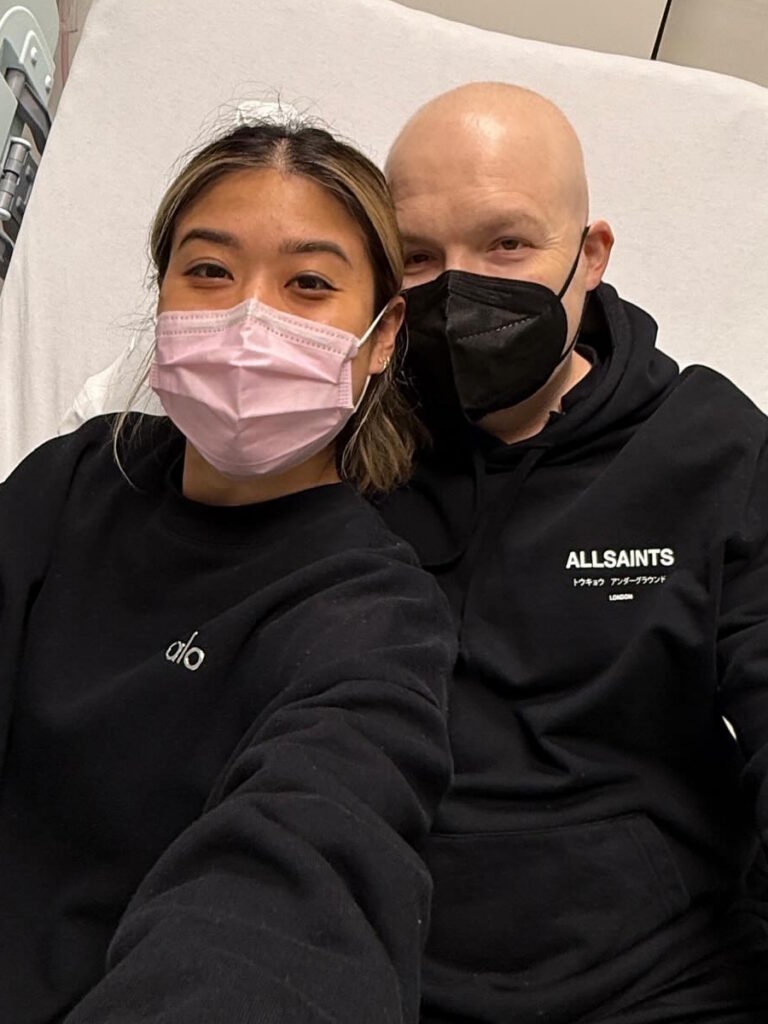
Kat: I can’t remember what the nurses thought it was, but the doctors couldn’t figure out why this was happening or the nurses couldn’t and the doctors on call couldn’t figure it out, so they continued to give him medication. But I was Googling every single thing, and I found research that this one medication may cause muscle spasms unless the patient’s sedated. When he’s asleep, it wasn’t happening, but once he woke up, if he was awake while the medication was working, he would have these spasms. I told the nurse, they discontinued the medicine, and gave him some antihistamine, I think.
Jeff: I’m allergic to prochlorperazine and they were giving me that. My feet and toes were cramping. I could handle that, thinking, “Whatever, I’m on a lot of medication.” But then my tongue started doing it and I thought, “Am I having a stroke?” My grandma had a stroke, so my anxiety was through the roof. One of my friends was visiting at the time, and I said, “I need them to leave. I need to figure this out.” That was another hurdle we had to get over.
Kat: I can’t imagine doing that by yourself.
Jeff: Not having Kat double-checking or looking stuff up… You can’t sit there medicated and ask, “Hey, have you considered that it might be allergic to one of the things you’re giving me?” That’s an enormous emotional, physical, and mental load, if you’re keeping track of everything yourself. Thank God I had her.
Kat: We have friends in healthcare and the advice they were giving us from the beginning was to advocate for yourself, no matter what. Even if you have to question the doctor and the nurses, you just have to do it. You don’t understand it until you’re living it, and that’s one of the biggest lessons we learned. You truly need to advocate for yourself, for what you’re feeling, and your symptoms.
I’m built like this already, in a way, even at work. I care deeply about everything that I do. Growing up, I lived with my grandparents and my mom. I watched her be that for my grandparents, for my grandpa when he was on his way out, and my grandma too. I definitely had a good example of what a true caretaker looks like. I told my mom this too. I thanked her, because I felt like she prepared me for this situation.
Jeff: Her mom is the most selfless woman ever, and that definitely passed down to her. I’m the luckiest guy alive to be married to Kat and to have her on my side to deal with everything we went through with the diagnosis.
Hopefully, we look back 10, 20, 30 years from now, and find out that everything does happen for a reason.
Jeff H., Diffuse Large B-Cell Lymphoma (DLBCL) Patient
Spending 10 days at the hospital and a 3 a.m. breakdown
Kat: It took two to three weeks from that first visit at City of Hope to his first treatment.
Jeff: It took a bit. We were living at the hospital. We had been there for a while, waiting for the diagnosis.
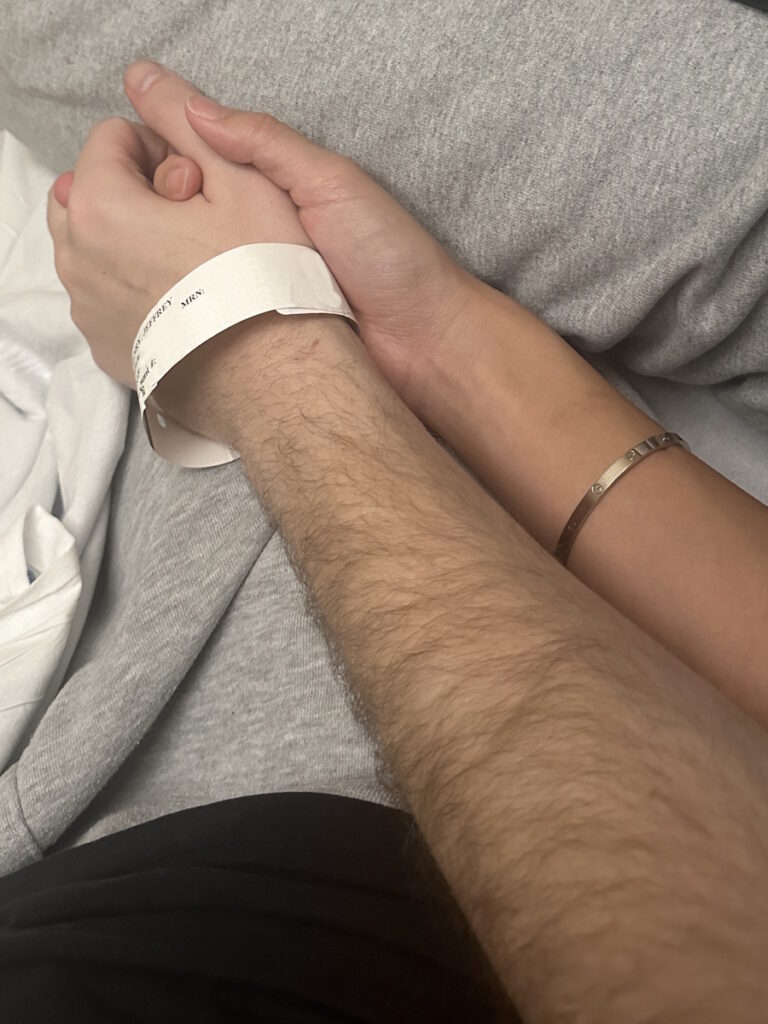
After going through the biopsy, the pain, and being tired of getting poked and prodded, one night, I had my last major breakdown. I said, “Why me? Why now, right before our wedding?” I was lying in bed at 3 a.m., crying, and wrestling with that. Then I thought I could either look at this as random things happening to random people, that it is what it is, and move on with my life, or everything happens for a reason. I don’t know which one is better or worse, but it seems like trying to derive some reason, benefit, or greater good was the conclusion I came to from that breakdown. You become a better person, we become better people, and our families become closer together. I’m going to make something good come from this.
It’s tough, because I don’t think there’s ever necessarily going to be a crystal-clear moment where you went through hell and this is the positive impact you had on people. They may be little things that I’ll notice 10 years from now: small compliments I get from friends that my fitness journey has inspired their fitness, or if I can beat cancer, then they can get through this little issue. That’s an ongoing process.
Hopefully, we look back 10, 20, 30 years from now, and find out that everything does happen for a reason. We had to postpone our wedding, but we ended up having a very beautiful wedding. Maybe if I didn’t meet Kat, I wouldn’t have been working out that hard in October 2024, my lungs wouldn’t have filled with fluid, we wouldn’t have noticed the cancer as early, and I wouldn’t be alive today. Maybe Kat saved my life. We won’t know. But I have to keep that positive mindset, even now, with it behind us.
It was when Jeff was asleep and I was awake by myself that I would break down crying, scared of the future.
Kat H., Wife and Care Partner of Jeff H., Diffuse Large B-Cell Lymphoma (DLBCL) Patient
What Kat carried on her own
Kat: We were in the hospital for 10 days, but it felt longer. When we were awake and his family was around, as they would drive up to keep us company and be a support system, it was easy to not break down and to just think about how we were going to get through this.
But it was when Jeff was asleep and I was awake by myself that I would break down crying, scared of the future. I’m typically a pretty anxious person, so it’s normal for me to have intrusive thoughts. During those moments, I texted our girlfriends to let them know how I was feeling… Not that anyone could do anything about it.
Jeff: I knew that it was a pretty tall ask to say that I needed relentless positivity, so I texted one of our friends, Nicole, and said, “I need you to support my wife, because I told her that I don’t want to think about or see the negative side of things. I know bottling all that up is an enormous emotional drain.” There are definitely both sides to the story, and it’s a huge emotional toll.
Kat: City of Hope gave us a psychologist’s resource for him but also for the caretakers, so it was nice to have that outlet to talk through these things with professional help.
Jeff: Shout-out to Dr. Dawson. She was amazing.
I felt blessed because I was able to take work off during his whole treatment and very blessed that we had that benefit. I was figuring out what our normal was.
Kat H., Wife and Care Partner of Jeff H., Diffuse Large B-Cell Lymphoma (DLBCL) Patient
Starting DLBCL treatment
Jeff: During the first round of treatment, I didn’t react great to the rituximab, so they had to drip it a little slower, which meant that it was going to take a lot longer. It’s scary having all of those different bags. The wait for the PET/CT scan to know if there’s some tangible progress, the scanxiety from that is pretty overwhelming. I asked, “Can we just scan next week to see if it got a little smaller?” They said, “No, we don’t do that, because that gives people more scanxiety if it didn’t get smaller. We do it in these specific intervals for a reason.”
There’s this stereotype in the media where the cancer patient withers away when they’re getting chemotherapy. The steroids they give to offset the negative effects of the chemo beat out the chemo, as far as my appetite and everything, so I was starved. I was eating and eating that I was getting concerned. I said, “Dr. Phillips, I’m getting huge.”
He said, “The last thing we want is your body in a caloric deficit. We’re killing good cells along with the bad cells. Eat. We’ll worry about it on the back end. We need to get you healthy first.” I went from 190 pounds to 224 pounds over the course of my treatment. I was a bald blob who looked like one of the Harkonnens from “Dune.” It was quite the look.
Kat: Also not a stereotypical cancer patient. You would typically think skinny and malnourished.
Jeff: Yeah, and I was plump, but tired. I was exhausted. They want you to walk as much as you can. I could walk around the block, but that was it.
Kat: We did a lot of walks.
Jeff: It was a difficult process. But as soon as we had the diagnosis, knew it was aggressive, and that was a good thing because it was treatable, we locked in and pushed through it.
Actually, in the clinical study that I was in, the European standard of care is apparently eight rounds of chemo versus the US standard of care of six. On my calendar, I had eight rounds of chemo. At the fifth round, I was past the halfway point. I thought, “This sucks, but I got this. I can do this. I’m almost there.” Then I find out from the clinical research nurse, “Oh, we’re actually going to follow the US standard of care. You only have one more.” I’m like, “Oh, I thought I was halfway there,” so spirits were up after that.
As you get deeper and deeper into the sessions, it’s a bigger and bigger drag on your system as everything builds up. I’m very grateful for that administrative calendar issue, because I went from thinking I was halfway done to being at the finish line. That was helpful for pushing through to the end there.
One of the weird things I dealt with again was the damn hiccups. The steroids gave me hiccups, literally.
Kat: For a week.
Jeff: I never stopped hiccupping. I’d be gagging because I’d be out of breath. I’d be hyperventilating because the hiccups wouldn’t stop. There isn’t an anti-hiccup medication, but Dr. Phillips and the team went through anything they could think of that would help.
My mom is a nurse, and was probably providing detailed status updates to her friends. But God bless my mother for doing that, because she sent an update saying they couldn’t figure out the hiccup issue, and one of her nurse friends said, “Have they tried chlorpromazine?” It’s an antipsychotic medication, but apparently it helps with hiccups in some cases, and that was it. That was what saved me from hiccupping for the entire chemo cycle.
Kat: During that time, I felt blessed because I was able to take work off during his whole treatment and very blessed that we had that benefit. I was figuring out what our normal was because we still needed to live our lives and find joys in the everyday. We were going on walks. He was eating a lot, so I was eating a lot with him. Luckily, food is like a love language, so we were trying new food. That worked out for us.
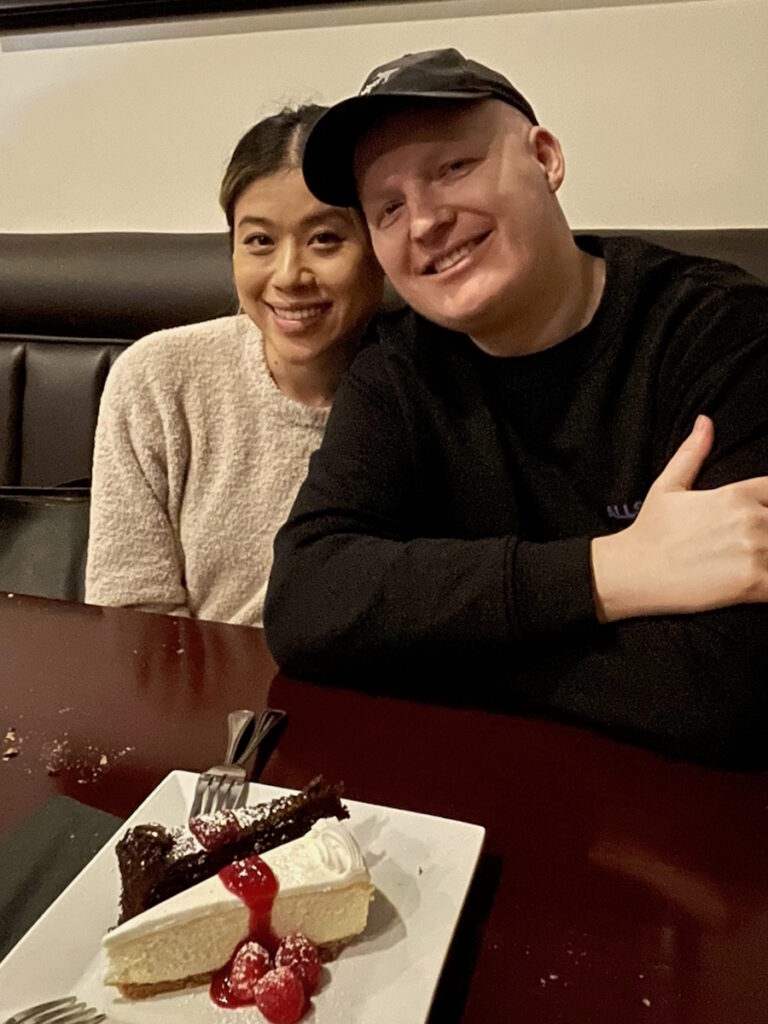
It was also nice because it was during the holiday season. Our friends and family were very kind. We were distancing and luckily, we’re all used to that now, having gone through the pandemic. We met friends outside and were still able to socialize. Jeff played “Call of Duty,” and I learned a new hobby.
It’s interesting. When we learned that his treatment was only going to be six cycles instead of eight, I had a more negative reaction because I was getting used to our new normal life and finally feeling like I had a grasp on what life was like. Then we have to find out what the next new normal is like. I’m going to have to go back to work and navigate those changes. I was happy but conflicted because I felt a bit stressed about what’s to come because more change was happening.
We still got married despite the circumstances. But the actual wedding was so much fun with all of our friends, being a destination wedding and having everyone in one place.
Jeff H., Diffuse Large B-Cell Lymphoma (DLBCL) Patient
Postponing a destination wedding and getting married via Zoom instead
Jeff: Kat asked, “So after Jeff’s second chemo cycle, could he still go to Mexico?” Dr. Phillips said, “No! No, he cannot.”
Kat: “To be clear, do we need to cancel this wedding?” My sister-in-law helped us with that. Planning a destination wedding was already tricky, but they were all very understanding. We had to battle a bit with the travel agent to get our money back, but we got all of our deposits back and everything was fine.
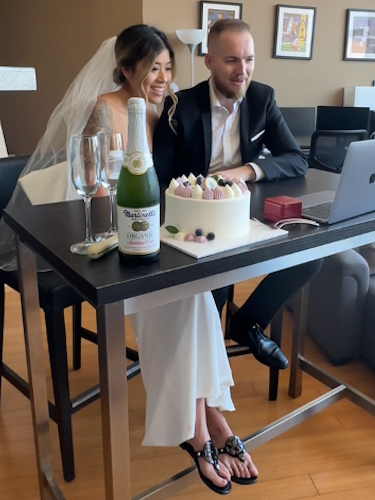
Once we learned we had to cancel, it was a no-brainer. I don’t think it was until the day we were supposed to get married, while Jeff was in the middle of treatment, that I felt a bit sad because we were supposed to be in Mexico getting married. But we got married on Zoom two weeks after we got home from the hospital. They expedited it. Alameda County was still doing online weddings, and they shipped us our marriage certificate the next day; it was so fast. We celebrated before the second round of chemo, which was nice.
Jeff: We had a nice little cake, wore our wedding suit and wedding dress, and had a bottle of Martinelli’s. We still got married despite the circumstances. But the actual wedding was so much fun with all of our friends, being a destination wedding and having everyone in one place, and coming in and out of the suite that we were staying in. We were able to spend a ton of time with everyone.
The common feedback about weddings is that it’s a blur, and you spend so much time saying hi to everyone that came. But with the destination wedding and having a whole weekend, we were able to spend a substantial amount of time with everyone and made incredible memories.
Jeff: I was through treatment and a year in remission. We were going back and forth: Do we still want to do it there? We’re technically married. Do we need to go there? We decided that we weren’t going to let this beat us. We’re still going to go renew our vows there. We changed the plan up a bit, and the remixed plan ended up being a ton of fun.
We’re so grateful to have him and to have that experience and peace of mind that he was able to give us, even with all of that uncertainty.
Jeff H., Diffuse Large B-Cell Lymphoma (DLBCL) Patient
Dr. Tycel Phillips, the hematologist-oncologist who explained it with a pen and paper
Jeff: It was incredible. He’s unique. He has a great way of explaining complicated subjects to us and breaking it down simply. At our first meeting, he took out his pen and a piece of paper, and started diagramming out all the different types of lymphoma and the options, like what happens if it’s A, B, or C.
We had so much uncertainty in our lives at that point. We were looking for answers and concrete solutions. Of course Dr. Phillips couldn’t give it to us until we had the pathology report, the diagnosis, and everything, but he had a clear, concise, and comforting explanation: These are all the options of what it could be, and this is exactly what we’re going to do once we figure it out.
Coming back from the local hospital, getting into City of Hope, and being under Dr. Phillips’ care and expertise was like night and day. We’re so grateful to have him and to have that experience and peace of mind that he was able to give us, even with all of that uncertainty. He’s a special guy.
Kat: Yeah, it’s been great. He’s always been welcoming of all the questions. He’s very patient. I never felt rushed or like a question is too stupid to ask. We’re never afraid to even send him an email. There was a symptom that came up a couple of months after treatment, and we were a little nervous about it. If he’s not available on the portal, he’ll respond via email. He’s always been there and has been a calm voice. He’s very compassionate and doesn’t dismiss anything you say. Any symptom you bring up, he’ll dig into it a little bit more; he never dismisses it for nothing.
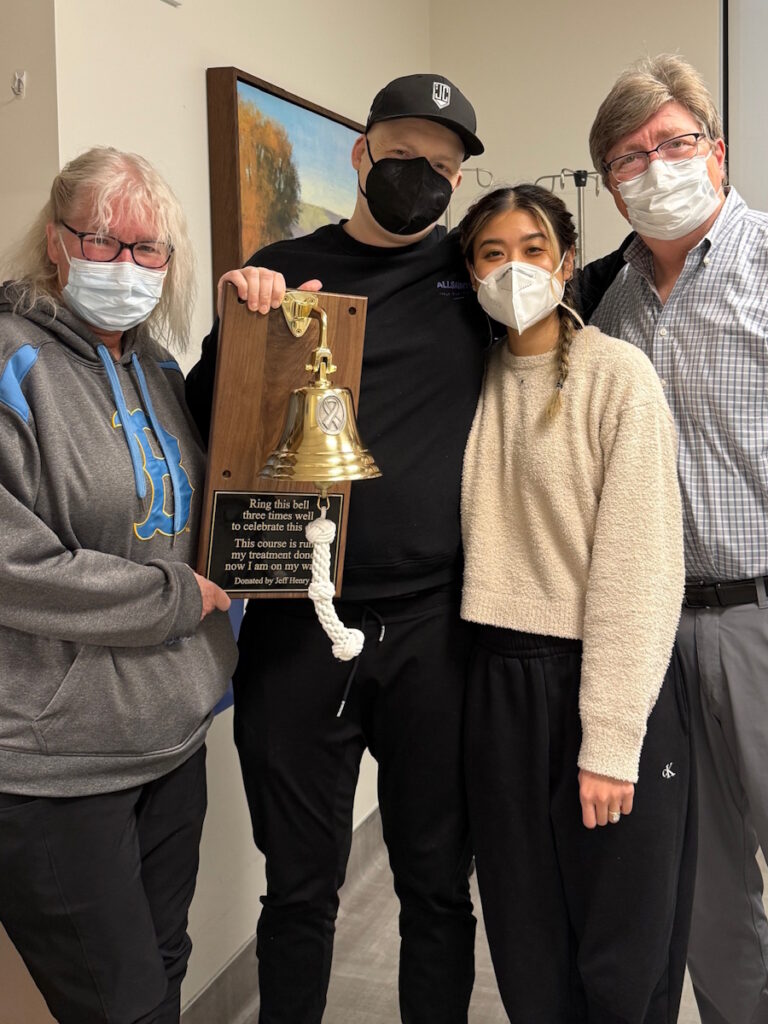
Jeff: I feel like he had a very good understanding of our mental and emotional states, both as a caregiver and patient, and was able to provide exceptional care, and had the delicate hand that you need to provide in a situation like that. It’s incredibly difficult. I’m grateful for him.
Kat: His demeanor about this very stressful situation was that he tells you how it is. He doesn’t sugarcoat anything, but he’s also very caring and rooting for us.
I wasn’t sure what life was going to be like post-treatment, and I’m determined to make something good come from this experience. I’m not sure what it’s going to be yet.
Jeff H., Diffuse Large B-Cell Lymphoma (DLBCL) Patient
Looking back from the other side
Jeff: On the glass-half-full side of things, I don’t want cancer for anyone, but coming out the other side of it, there’s a bulletproof feeling for our relationship and for literally whatever life throws at us. If we dealt with that, we can certainly deal with anything else that comes at us.
I wasn’t sure what life was going to be like post-treatment, and I’m determined to make something good come from this experience. I’m not sure what it’s going to be yet, but relationships with family and friends have certainly had an impact. Health, diet, and fitness have been a huge focus for me with the weight gain after the chemotherapy.
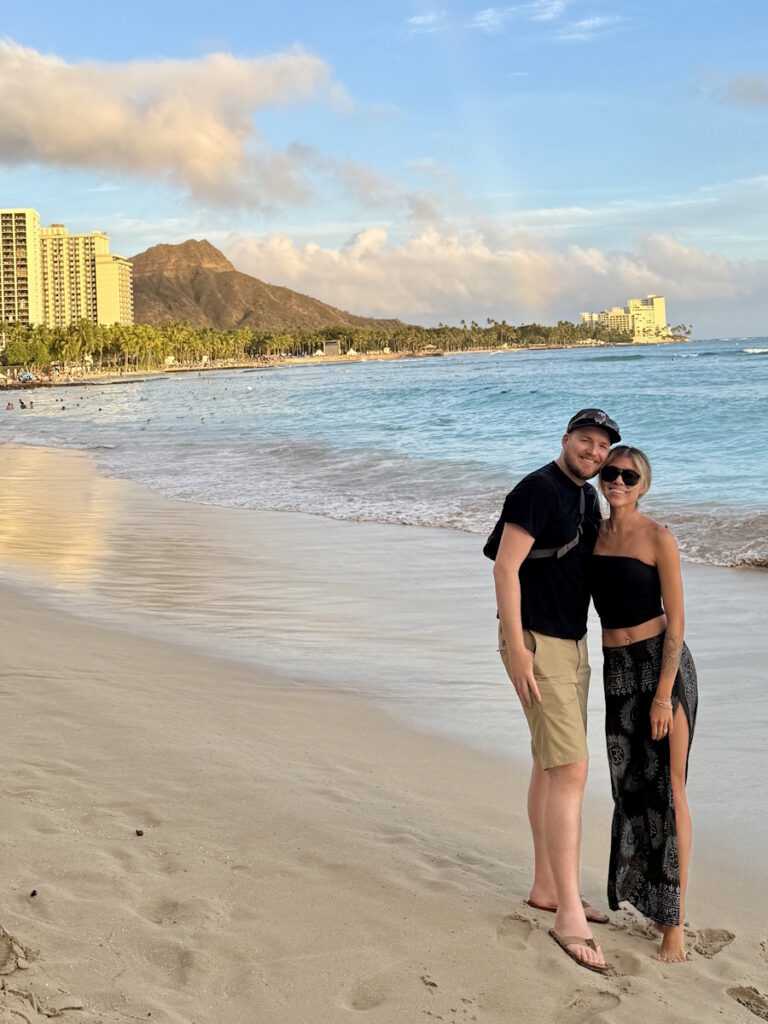
If you had told me before chemo that I needed to figure out how to lose 40 pounds in a couple of months, I don’t know if old Jeff would have believed that new Jeff could have done that. I’ve learned a lot about myself and the discipline that I have. I’m getting older now, but I’m determined to be leaner and stronger even in my 30s than 20-year-old me.
We’re coming up on the second anniversary of the diagnosis, and I’m in way better shape than I was, and I’m going to keep building on that. Hopefully that will rub off on the twins too, and they’ll learn that determination and discipline that their father has. Hopefully, some good characteristics have come from this and I’ve made the lives of the people around me better, and that I’m a better husband to my wife and better son to my parents.
Kat: This whole experience has helped me have a different perspective on hardships in life. Before, work used to be the biggest challenge. Now we’ve been through much worse, so work can chill. It’s definitely helped set boundaries in our lives too and what is best for us as a family versus what we are sacrificing for.
I’m excited for that, because I think that’s going to help with family dynamics too. I think that helped set us up to hopefully be more successful parents. I feel like a lot of good came from the trauma that we went through.
Kat’s advice to other care partners
Kat: Make sure that you’re also taking care of yourself. If you don’t know how, make sure that you have a support system around you who can look out for you. It’s all-consuming when you’re taking care of someone who’s going through cancer. It’s easy to be selfless in those situations, but you have to watch out for yourself too.
Story Sponsor
Thank you to our sponsor for their support of our independent patient education program. The Patient Story retains full editorial control over all content.
This interview has been edited for clarity and length. The views and opinions expressed in this interview do not necessarily reflect those of The Patient Story. This content does not replace professional medical advice.
Inspired by Jeff and Kat’s story?
Share your story, too!
Hear from people living with diffuse large B-cell lymphoma (DLBCL)
Real experiences with diagnosis, treatment choices, side effects, and life beyond diffuse large B-cell lymphoma — in their own words.


Leave a Reply