
From ‘Routine Hernia’ to Rare Cancer: Katie’s Stage 4 Alveolar Soft Part Sarcoma (ASPS) Story
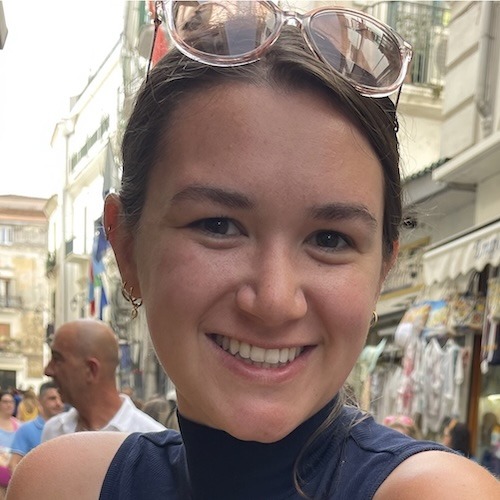
Katie’s experience with alveolar soft part sarcoma or ASPS, a very rare type of soft tissue sarcoma, began in her early 20s. After a bad cough led her to discover a small lump in her lower abdomen, which she thought was a hernia, her general practitioner and surgeon reassured her that it was a standard issue and that an operation would treat it quickly. Instead, the procedure revealed a tumor the size of a smashed tennis ball in her abdominal wall, and pathology later confirmed that she had ASPS.
Interviewed by: Nikki Murphy
Edited by: Chris Sanchez
In the months that followed, Katie navigated a maze of second opinions, specialized sarcoma care, and complex abdominal surgeries that removed a paper‑sized section of muscle and left a large open wound that would take months to close. Because ASPS is so rare and slow‑growing and unresponsive to traditional chemotherapy, her team focused on high‑volume sarcoma centers, radiation, and then a massive resection to reduce the visible disease. Katie describes how confronting scars, mesh, and an abdomen that no longer looked or functioned like her peers’ abdomens became one of her biggest hurdles as a 24‑year‑old woman.
When scans later showed that small lung nodules were metastatic ASPS, she moved into systemic treatment with immunotherapy, the only drug option available for her cancer. Her first infusion triggered a severe liver reaction, forcing a pause and high‑dose steroids before she could cautiously restart. At the same time, she faced deeply emotional fertility decisions, including ovarian tissue surgery and egg freezing, while single in her mid‑20s. She was determined not to close doors on a future family even when her prognosis was uncertain.
Today, Katie continues long‑term immunotherapy and regular scans. She hasn’t had symptoms from the cancer itself, only from treatments and operations, but her emotional work has been profound. She talks about learning to “make friends with the unknown,” redefining hope as the people in the room with her, and insisting that “whatever’s happening in your life, it shouldn’t stop your life.” Through sharing her ASPS experience online, she hopes to help other young adults with sarcoma and other kinds of cancer feel less alone and more empowered to live fully, even in the face of rare disease.
Learn more about Katie’s ASPS experience by watching her video and reading the edited transcript of her interview.
- A “routine hernia” can sometimes be something more; listening to your body and pushing for answers matters, even when symptoms seem minor or unusual for your age.
- Receiving an ultra‑rare sarcoma diagnosis can feel immediately isolating, but specialized sarcoma centers and online communities can create a powerful sense of connection and expertise.
- Fertility and body‑image decisions in your 20s are deeply emotional; Katie’s experience shows that preserving options, in her case through ovarian surgery, egg freezing, and honest therapy work, can be an act of self‑protection and hope.
- People can often find it harder to watch loved ones in pain than to face the disease itself, and cancer truly becomes a “team sport” involving family, friends, and clinicians.
- Katie’s transformation is characterized by moving from fear and shock to acceptance of uncertainty, making peace with living without a prognosis, and reclaiming life alongside cancer.
Katie’s Diagnosis Facts
- Name: Katie L.
- Age at Diagnosis:
- 24
- Diagnosis:
- Alveolar Soft Part Sarcoma (ASPS)
- Staging:
- Stage 4 (Metastatic)
- Symptom:
- Appearance of lump in abdominal area
- Treatments:
- Radiation therapy
- Surgeries: abdominal resection with mesh placement, reconstruction
- Immunotherapy
This is not medical advice. Please consult with your healthcare provider to make informed treatment decisions.
- Katie’s Diagnosis Facts
- Introduction and rare sarcoma diagnosis
- The “routine” hernia surgery that wasn’t
- Learning about my alveolar soft part sarcoma diagnosis and that it’s a very rare cancer
- My sarcoma treatment plan: Radiation, then massive abdominal surgery
- My first fertility preservation decision at 24
- Difficult recovery, open wound, and adjusting to a changed body
- Hearing the sarcoma had metastasized after a year in remission
- Starting immunotherapy and a severe liver reaction
- Living between scans and making friends with the unknown
- Being in my 20s with a sarcoma and “missing out”
- What hope looks like to me now
- Advice for others facing a cancer diagnosis
- Hear from people living with sarcomas
Introduction and rare sarcoma diagnosis
I’m Katie. I was diagnosed in 2022 with alveolar soft part sarcoma, or ASPS for short.
Life in my early 20s before cancer
Life before my diagnosis was very normal. I was diagnosed 11 days after my 24th birthday — I was young. I was still living at home and had just graduated about a year previously in the Chicagoland area. That looked like a lot of traveling downtown on the weekends to see friends. I was a social butterfly, so whatever I got to do, I was down for anything. I worked a full‑time job. I was at home with my parents out in the suburbs, and had a very normal post‑grad life, I would say.
The first symptom: A “hernia” after a trip
I had very few symptoms. It’s a funny story. I had a bunch of friends who were meeting in Madison, Wisconsin, for a weekend. It was an eclectic group, but for some reason, everyone just happened to be there that weekend. So I went to visit, and I ended up getting the flu from that trip, and didn’t get enough sleep either. Then I got such a bad cough. About a week later, I felt this bump in the lower abdomen, kind of in the intestinal area.
My first thought was, “Okay, I clearly got a hernia because I was coughing so badly from this cold.” So that was what I had assumed it was. It was just a harder lump down below. Then, of course, if you go to Google, it says that’s a hernia, even though they’re not very common in women who are 23. Eventually, I got to my general practitioner, and he was like, “Yep, it’s a hernia. Here’s a surgeon. Go schedule. It’s a very routine surgery.” I was like, great. That was my only symptom. My understanding was that it wasn’t getting bigger because I hadn’t felt it until that point in time.
Living with a “hernia” and no pain
There was definitely some strain on it. I first felt it in July of 2022, and then I went and saw a doctor in September, a few months later. I wasn’t too stressed about it. When I was working out or doing anything active, I could feel it was there. It just kind of felt like a lump, but there was no pain associated with it. It wasn’t on any nerves or anything. It was just a nuisance more than anything. It didn’t jut out in any way, so I would have to press on my stomach to feel it.
Everyone kind of assumed the same thing as me. It’s funny, the one person who didn’t wasn’t my friend. She’s now a doctor. She was in med school at the time. I was hanging out with her and my other friend who’s a nurse, and they both felt it. She was like, “That’s not a hernia.” I was like, “Okay, well, that’s what my diagnosis was, so whatever.” But everyone else, because it was just in the perfect area where you get a hernia, assumed it to be very routine. There wasn’t any reason to believe it was anything else.
I had no other symptoms before surgery
Looking back now, I don’t think I was experiencing any other symptoms. To this day, I really can’t think of anything. There was nothing.
It didn’t affect any part of my life, and it wasn’t even jutting out, so it didn’t affect what I could wear or do. It was just a nuisance.
The “routine” hernia surgery that wasn’t
I was referred to the surgeon. He said, “Yep, it’s definitely a hernia. We can operate on you as soon as next week.” I was like, “Great, okay, let’s do that.”
It was Halloween. I remember that because my mom was like, “Are you superstitious?” and I was like, “No, not at all. I just want this thing out.” Again, it was a nuisance.
I went into surgery and woke up. They told me, “Hey, we’re going to have you spend the night in the hospital.” I was like, “Oh, why?” They said, “Oh, you lost more blood than expected,” or whatever. But I went in thinking hernias are very routine. I was expected to go home that night.
I got to my room, and then I heard both of my parents. My mom was the only one who came with me originally, so I thought, “That’s not a good sign that my dad is all of a sudden here as well.”
They told me in the hospital that they had found a tumor the size of a smashed tennis ball. It was a pretty good size and was found in my left abdominal wall.
They called them superficial muscles, like the six‑pack abdominals, not the core abdominal that holds all the organs together. I always refer to them as the six‑pack abs. I didn’t have a six-pack, but I did have those six‑pack abs.
The doctor said that with sarcomas, you are pretty aware that it is a sarcoma based on the consistency. It’s very hard. He said, “I’m 99% sure it’s sarcoma, but I can’t tell you for sure. We have to send it to pathology.”
They did that, and because it was such a big tumor, it took about two weeks to get that diagnosis. About two weeks after the surgery, they called and said, “It’s an incredibly rare cancer. It’s called alveolar soft part sarcoma.” So he did correctly identify it as a sarcoma, and that was my official diagnosis.
Hearing “sarcoma” and waiting for pathology
When I was told I was going to get surgery and thought it was a hernia, I remember going into the bathroom at the doctor’s office and crying. I’m not a crier. I’ve had surgeries before — broken ankles and whatnot — so I wasn’t scared of surgery itself. My mom was like, “Why are you crying?” and I said, “I don’t know.”
I think there is something to be said about your body just knowing at the end of the day. I was a little distraught about going into the surgery, but I decided, “You know what, we’re going to ignore all the fear.”
Waking up and hearing “sarcoma,” there was a part of me that thought, I’ve had a little off feeling, so I feel validated in that. But clearly, it’s not at all what you expect. Before my experience, I felt like you had breast cancer or one specific cancer, and that was it.
When I was hearing it was in my abdomen, I thought, “Okay, maybe it’s stomach cancer.” I couldn’t understand exactly how you have different types of cancer and how it affects different parts of your body. That was a little overwhelming to hear.
I was also told that potentially they removed the whole tumor, and that could be the end of the journey. That was really weird to live with as well. You’re sitting there, and you think, okay, maybe I just had cancer, and that was it. I’ll never have to deal with it again. That will be the end of this journey, and that will be a weird thing to have to deal with, having never known.
I wish that were the case. Unfortunately, it wasn’t.
Two‑week wait, recovery, and family support
I think it was easier to recover given that I had just had major surgery. It was easier to feel sick when you have something to recover from. It was still fairly intense abdominal surgery because he ended up cutting a lot more from me. You could see the scars as they were healing. I had about 40 staples in me.
It was easier to accept a diagnosis in that state and decide that, okay, we just have to start walking again and get our body ready. But those two weeks were tough, because there was a part of me that hoped maybe it was just a fluke, and it’s this weird thing, and it’s benign.
A lot of time was spent with family. Clearly, it was a new normal for my family as well. I’m the youngest of four, so we have a very big, very close family. I remember my brother coming over every day to sit with me. It was so sweet. Because I was still recovering from surgery, he would walk me to the end of our driveway once every four hours because I needed to get up and go.
We talked about what was going on. I remember him telling me, “Every thought that you’ve had, we have also had,” which was very nice. Sometimes I would want to talk about things in that moment, but there were other times I didn’t want to think about death or anything like that, and put that on my family, because I knew they were suffering too. It was nice that there was some unspoken, mutual feeling there as well.
When I did get the diagnosis, it was almost cathartic to be like, “Okay, this is set, and now I can start. This is my new normal. At least I have an answer.” That’s been my whole experience the past few years. It’s easier when you have an answer versus waiting for one, and all the unknowns.
Learning about my alveolar soft part sarcoma diagnosis and that it’s a very rare cancer
Two weeks later, when I got the official diagnosis and heard it’s a very rare cancer that I’d never heard of before, my first reaction was, “Of course. Of course.” I went to Google, and it’s so rare that they say about 80 people get diagnosed within a year. I had no hope of even finding someone nearby that I could chat with regarding it.
Given the fact that I was 24, you don’t see a lot of 24‑year‑old cancer patients. I was super new to that community anyway, so it was overwhelming. I think what got me, and still gets me a little bit, is that it was a sarcoma; it’s such a rare sarcoma, and there’s no known cause.
Sometimes when I’m feeling down, I’m like, if it were lung cancer or something that I might have more actively participated in getting, I’d feel, maybe not better, but more justified in it. This just being a complete fluke was frustrating, to say the least.
At that point, we didn’t know how far the cancer had gotten — if it was just that tumor, if it was completely removed. It was still very up in the air what the next steps were going to be. Having a rare cancer, I thought, this is fine, I guess, but very immediately isolating.
My margins weren’t clear, and finding a sarcoma center
We waited to see if the margins of the tumor were clear, to see if there was any cancer left in that muscle region. The margins were not clear, so there was still cancer left in the body. I met with an oncologist near me, and it became pretty clear that this was so rare that it would require a larger cancer hospital.
I think we just Googled, and my mom honestly did most of this, which I’m very thankful for. I was very overwhelmed. Even when I was in my first surgery, my mom was told while I was being operated on, and she also kind of had a weird feeling about it. She said, “No one’s telling her until I’m there,” and no one did. I would never be upset about that. She said, “She needs her mom there.”
I remember Thanksgiving coming up toward the end of November, and they had literally just Googled the cancer. The first thing that came up was Dana‑Farber in Boston. We went out to Boston and asked, “Have you dealt with this before?” They said, “Yes, it’s incredibly rare, but we have seen cases of ASPS before.”
My sarcoma treatment plan: Radiation, then massive abdominal surgery
We met with them in December in Boston. I’m used to Chicago weather, so it wasn’t terrible, but given the circumstances, I was like, “This sucks.”
They told me I was going to do radiation on the area to really just kill any cancer cells and then have a very, very massive surgery. They would cut out the whole area — pretty much all of my left and some of my right abdominal muscles.
They said it wasn’t too much of a rush. It was December, and I was going to start in March because in February I had a fertility surgery as well, just to prep for the radiation. After all, it is so close to the ovaries.
My first fertility preservation decision at 24
They gave me time to decide about my fertility, and walked me through it. I had a conversation with a fertility specialist. I’ve now done two different fertility things, but that original one was about the radiation over the ovaries. We didn’t know if it would kill the eggs or not.
The choice was either to freeze my eggs and go through that, or remove one ovary, freeze it, and then pin the other ovary up out of the radiation zone and hope that one didn’t get damaged.
I’m 24, single. I’ve always wanted children, but I had no prospects. I wasn’t thinking about family planning at all. I thought, “To me right now, it’s more important to preserve my natural hormonal cycle.” I didn’t want to go through menopause at 24, so I’d rather do the ovarian route.
I worked a lot in therapy on what it means to have a child, grow a connection, and all that good stuff. That was a very tough decision. I remember looking over at my mom, thinking, “Can you make this decision for me?” The doctor patted my leg and said, “You are an adult. You have to.” I didn’t know what to do, but I was very happy with that decision.
What really got me was when the fertility specialist mentioned, in no rude way, that some parents of young children have to make this decision for their children. I thought, how blessed am I that I’m 24 and fully aware and capable of making this decision myself, and it’s not falling on my parents. That changed it for me. It put a lot into perspective, which was needed.
Getting the one ovary removed was a very simple procedure, but that was honestly one of the more emotional parts of this, most definitely — what it implies for my future, my future family, and even dating. This is a difficult thing to tackle.
The first radiation course and the first major abdominal resection
The ovary removal was also at Dana‑Farber. A week later, I started radiation for a month. It was underwhelming in a way. I expected they’d be shooting a laser at me or something. Instead, I lay very still on a table for 20 minutes every day. That was it.
I had some side effects. My skin got a different color, and I lost hair — the normal radiation side effects. I didn’t have a brutal experience as far as side effects. It was pretty average, nothing that wasn’t dealt with by a different diet or just accepting it.
Once the radiation ended, I had a month off because they wanted my body to chill out. Then that May, I had the massive surgery at Dana‑Farber where they removed the radiated area, which ended up being, I think they said, a full piece‑of‑paper‑sized section of my abdomen and that inner part of muscle. A huge chunk was just lifted out.
They did the removal, put mesh down, and then stitched me back together. That was a very intense surgery. Most of my surgeries since the “hernia” one, which is funny, have been very off the books. It’s not routine at all.
For a week or two after, I had to be in a beach‑chair position. I was never allowed to fully stand up. The suture broke open, so I had a hole. It was a mess. But every time I went back to Dana‑Farber for checkups, they’d say, “You’re doing so well. You’re healing so well.”
I thought, “Thank you, you’re stroking my ego.” I finally got to the point where I realized they never fully expected me to recover from the surgery. It was that intense. No one told me that in such a straightforward manner, but I thought, “You’re saying I’m doing so well because this was unexpected.” I don’t think it was as much what I was doing as luck and the right timing.
Difficult recovery, open wound, and adjusting to a changed body
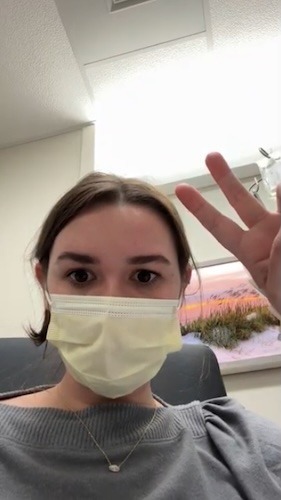
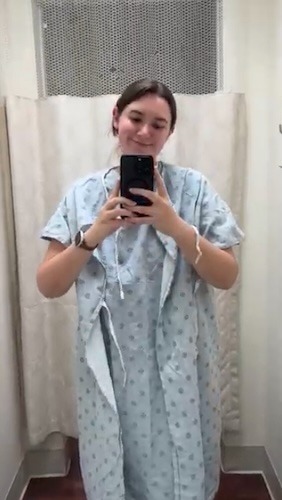
It was about a week in the hospital, and then I spent about a month out on the East Coast, just in my little beach‑chair position. I had only one drain tube. I say “only” because I had four in this last surgery, so it was gross, but the first time you see it, you’re like, “This is disgusting.”
I don’t remember being in a lot of pain, but I remember I got the flu about a week later, and the idea of throwing up or coughing or sneezing — anything that puts pressure on your abdomen — is terrible. I’ve had three abdominal surgeries at this point, and relearning to sneeze and letting yourself sneeze is terrible.
A lot of it was really uncomfortable. Not super painful, but you feel like you’re relearning your body. At that point in time, there was no sign of metastasizing, so in my mind, it was very easy to keep a positive mindset: this is it, once I recover from this, we’re done.
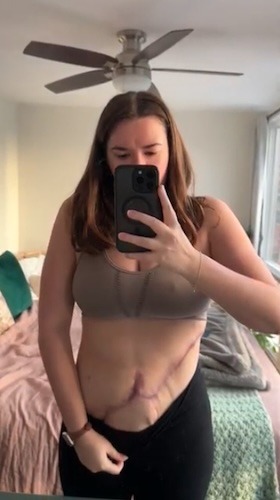
Maybe I have these bad scars. I had a hole in my stomach that looked into the mesh for months. They weren’t going to put a skin graft or anything. They were just going to let that heal because the skin would grow eventually. That was gross, to say the least.
It was six months of changing bandages every six hours and cleaning it out. You don’t ever want to be that comfortable with yourself, I’ve decided. You don’t ever need to see your insides. I’m not squeamish; that stuff doesn’t bother me, but I was too well acquainted with my body at that point.
I think the main focus at that point in my life was, okay, I’m a 24‑year‑old woman, and my body does not look like any other 24‑year‑old woman’s body, and I need to make amends with that. My body can’t do the things that other 24‑year‑old women can do. They did say the surgery would most likely prevent me from carrying a child. That was definitely the acceptance part.
I’m good now. I don’t think too much about scars or whatnot because I’ve got other problems, but then, it was very stressful. That was my big thing to overcome.
Remission, lung nodules, and metastasis to the lungs
I healed up from that and threw a big remission party — a huge one. It was great. I loved it. Right before that party, when I went for my scans, they said, “We’ve noticed some nodules in your lungs. They’re very small, and it is common to have those.” I was like, “Okay.”
I spent a year in remission, which came with its own journey. There was so much to deal with emotionally. Then, in May of 2024, I went back for my normal three‑month scans, and they said the nodules in my lungs, they believed, were the cancer, and it had metastasized.
I had to get a lung biopsy to confirm, but it was one of those situations again where they were like, “This is it, we just need the confirmation.” They removed one of the tumors from the lungs. They confirmed it was the cancer. Then they said immunotherapy is the next step.
My cancer can’t be treated with chemo, so there’s this one immunotherapy drug. It was approved in 2023 to treat this cancer, and they said that’s our next step. They wanted me to wait before starting the drug because the tumors were still so small that if they gave me the drug, they wouldn’t be able to tell if it was working or not. They were worried that the drug would cause inflammation of the tumor, and then it would look like it was growing when it wasn’t.
The plan was to wait and follow me on scans — come back every three months and then decide based on the size of the tumors.
Hearing the sarcoma had metastasized after a year in remission
Hearing that it had metastasized, especially after being in remission for a year, was one of the worst moments of my life.
I remember sitting in the room — those rooms are always so stuffy for some reason — with my mom. It had been so routine for me to come every three months. We’d go to a nice dinner, do Boston stuff, and then go to the appointment the next day.
My oncologist came in with four other people, and I thought, “That’s weird, that’s new.” But my cancer is so rare that I know I have a lot of eyes on me. It’s great for studies and whatnot. He came in and pretty much said, gently, “It’s the cancer.” I immediately started crying.
I said, “I’m so sorry,” to my mom, because if I feel bad for anyone in this situation, it’s my parents. He asked, “Would you like us to leave?” and I said yes, I needed a moment. I’d never cried in the office at that point, never had any kind of breakdown, so I think he was a little surprised.
He left, and I just wanted to be with my mom. I cried for a bit, needed to get water, and was very close to a panic attack. It was not what I was expecting whatsoever. It was clearly my worst fear realized. Honestly, that’s all I really remember from that appointment. I’m sure we talked about the immunotherapy and what it would look like, but it was terrible.
Living a “sitting duck” year before treatment
The conversation was on immunotherapy, but not immediately. He said, “Come back every three months,” and then we’d see how much the tumors would have grown and make a decision, so it was open‑ended. I had no idea — I could be starting in three months, I could be starting in five years. He said, “I understand you feel like a sitting duck,” and I said, “Yeah.”
I think it was a lot harder for my family to accept because they were like, “Let’s get this show on the road, let’s do something about this. Why are we letting it grow more?” Which is a fair point.
But after I found out the cancer was back and got back to Chicago, I slept better than I had the whole previous year. I think there’s something to be said that if your worst fear is realized, there’s nothing to be scared of anymore. You’re not going to bed and having nightmares about the cancer being back, because it’s back.
Weirdly, it resolved all the stress of the previous year and emotionally dealing with that. It was resolved. I had a great year. I tried to live as normally as possible. At that point, I was living downtown with my friends, and I had no physical symptoms. I was recovering from the abdominal surgery. All in all, it was a very non‑dramatic year.
Transferring care to Northwestern, and the second fertility round
In May of the previous year, they said I should start immunotherapy. It would be every three weeks. They didn’t think I should do it in Boston unless I lived in Boston. Yes, I could go out there every three weeks, but I needed an oncologist nearby in case I got any symptoms or needed something done quickly.
The doctor said, “I’m referring you to the best sarcoma oncologist that I know in Chicago.” I started treatment at Northwestern. Everything since then has been at Northwestern. I met my new oncologist, and he’s fantastic.
He said, “We’re going to start immunotherapy in the summer, but do you want to freeze your eggs first? We don’t know what this drug does to ovulation in general.” I said, “That’s reassuring.” I did one full cycle of freezing my eggs this past July.
It was not my favorite thing in the world. I felt like a teenage girl again. I’ll never forget the 4th of July at my brother’s house in the suburbs. I was on probably day five of the shots, and I was crying to my dad in the kitchen saying, “Everyone here thinks I’m a freak.” He said, “No one thinks you’re a freak.” I said, “Everyone thinks I’m a freak.” My brother came in and said, “Is everything okay? Who said that to you?” and I said, “No one said it to me.” I hadn’t felt that way since I was 14.
I remember yelling at my mom the day of the egg retrieval. I feel so bad about it. I don’t even remember what I was yelling about; I was just yelling to yell. The hormones definitely got me. I think I got four eggs. I know they say you need more to most likely have one child, so I don’t know if it was very fruitful, but I thought, if this was an option and I didn’t do it, I didn’t want to be upset with myself later in life.
I even remember asking my oncologist when he suggested it, “Am I going to live long enough to have kids? Is this worth it?” He said, “Some people live a very long time on this drug, so I wouldn’t close any doors.” That’s kind of been my motto from now on — I’m not going to close any doors.
I’d go in to get ultrasounds every few days, surrounded by couples. It was very sweet, but I remember telling my mom, “People think I’m an unwed mother.” She said, “What are you talking about?” I said, “They’re just like, oh, this pregnant girl.” She said, “This isn’t a pregnancy clinic. Everyone here is trying to have a child.” I felt for all the couples — they just want a baby. I’m sure they felt for me as well: who is this young woman here with her mother? There were a lot of feelings, all the hormones. It was a very interesting experience.
Ovarian tissue freezing and preserving hormones
The first time with fertility, I just had an ovary removed and one pinned up, and my cycle continues. They told me there are experiments going on right now to pull mature eggs from a frozen ovary. That’s not approved yet, but maybe someday. The point of freezing the ovarian tissue was that if my hormones stopped — if the one pinned‑up ovary stopped working from radiation — they could put the ovarian tissue back into me somewhere, and it should kickstart my natural hormones so it wouldn’t be like menopause. It’s very odd.
Again, that first time was making the decision of children versus my natural body. My cycle is working for me. In a way, I’ve been fortunate that it just so happens I’ve been single every time I’ve had to make a fertility decision. I’m grateful because it’s been 100% my decision. I don’t feel like I have to be connected to someone else’s desire or not to have a child. In a way, that’s been good. I’ll get back to you if that changes.
Starting immunotherapy and a severe liver reaction
I started immunotherapy at the end of July. I had one immunotherapy infusion, then came back three weeks later. They said, “Your liver is insane. Your levels have gone completely off the charts.”
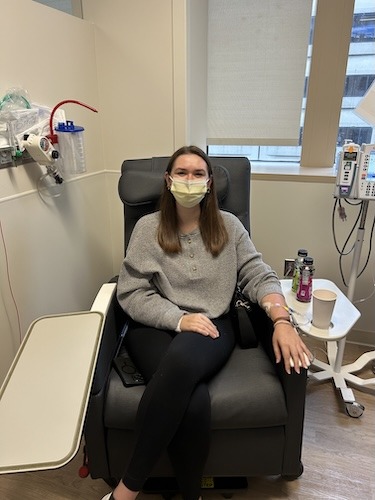
It was a long process of discovering it, which ended up in a biopsy, but pretty much the drug — which is literally you sit down, they give you an IV, it’s just fluids — caused my liver to freak out. There are very few symptoms from the drug itself. Sometimes you get GI issues; it’s not like chemo at all. The symptoms accumulate as you go, but it’s not immediate.
My liver, though, freaked out from the first dose. It was not happy. They said that’s incredibly rare, but I’m hoping that’s a good sign. They said potentially it means it’s really doing its job. I had to stop immunotherapy immediately and go on steroids for about a month and a half to bring down those liver levels.
“Alien belly,” my third major surgery, and wanting to hold my nephew
Before restarting immunotherapy, I wanted to get another surgery. Starting last January, the hole that was left in my abdomen was like a scar. The mesh they put in when they removed all that muscle was biodegradable, so the mesh was gone. My intestines were poking through that hole — not visible, but you could feel them through it. It was like a lump.
The best way to describe it is in the movie “Alien,” when the little alien shoots out of the stomach — that’s what it looked like. It was not pretty, not fun to have. It was another way to consider how my body is different from everyone else’s.
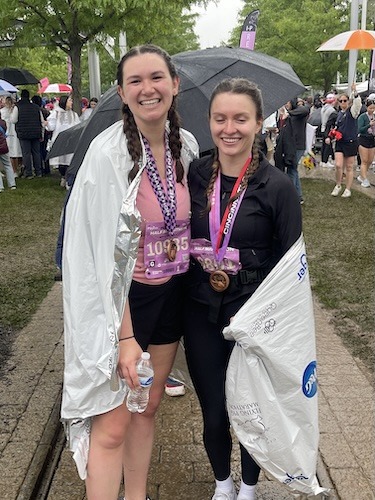
I had to start wearing a brace again, but I will toot my own horn and say I ran a half-marathon last May in a full abdominal brace. It didn’t stop me, but it was frustrating. I wanted a surgery to put everything back in place and secure the hole.
I went in to see my head surgeon and said, “I can’t carry more than 15 pounds right now, and I haven’t been able to since that first major surgery. I have a nephew, and he’s over 15 pounds now. I want to be able to carry my nephew.” He said, “I’m going to do a surgery where you don’t have any limitations afterwards.”
Complex rebuild with mesh, flap surgery, and leeches
The surgery was to help stabilize and rebuild my abdomen. I went in thinking, “This is not my first rodeo; this isn’t even my second rodeo. I understand abdominal surgery.” My main surgeon went in to check the area, moved the muscle around to help with that gap of having nothing there, and then put very strong mesh on. He said, “This mesh has been used since the ’70s, and it works. There’s a reason people still use it.”
Then I had a plastic surgeon whose job was to rearrange the skin and the layers below to make a full abdomen over the hole. Going into surgery, we had a whole plan. They were going to take tissue from my legs to fill that hole. That upset me; I like my legs. I didn’t need another part of my body cut into, but I thought, “I don’t want to be limited anymore.”
In the pre‑op room, they took a Sharpie from my knee all the way to my groin. They were going to cut the whole thing. They said, “We’re giving you an epidural,” then gave me the happy drugs. All of a sudden, my surgeon came in and said, “Can you stand up?” I said, I don’t know, maybe. He was playing with my side and said, “We’re not going to take from your leg. I’m going to try to take from your side.”
There’s nothing routine about these surgeries. He said later that the board of surgeons was looking very closely at this one because it was so unusual. He was working his magic.
I went in on Monday. I woke up thinking, “Great, we’re done.” They said, “No.” They had put the mesh in, everything was good there, put a vacuum seal over it, then cut my side open and lifted it. They were going to twist that flap to cover the whole part and then close me up again. But they cut that side, and it was not happy. I had to spend the night in the hospital, completely cut open.
It was terrible. I wouldn’t even let my parents see it. They said they were hoping the side would “chill out” a little bit, so the next morning they could do surgery and twist it. They were fantastic about getting me in right away. I felt like I was being so cared for. I thought, “You care so much, and I know I’m in good hands.”
In the second surgery, they were able to fully twist it. I have a little twist in my skin right there. It looks better than the hole, but they said, “We don’t know if this part of your skin is going to fully come to life again. It needs to connect with arteries and whatnot.” I was on bed rest. They said, “If it doesn’t take, we’re going to have to cut into your legs.” That was devastating. The last thing I wanted was a third surgery.
They said, “To bring it to life, you’re going to get leeches.” I said, “What’s that?” They said, “Leeches.” I said, “Like medieval leeches?” They said, “Yeah.” So I had leeches on me every four hours.
I have mixed feelings about it. I get that they were there to help, but it was terrible. I’m on bed rest, I can’t move, I’m watching them suck all the blood out of this flap. I thought, “Thanks, I guess.” I even thought, “Should I name them?”
What I didn’t realize is that once the leeches are full of your blood, they put them in a container and immediately kill them, which makes sense as a biohazard, but in my mind, I thought I’d have two leeches for life. I imagined they’d fill with blood, then they’d somehow decompress and go back on. That was not the case. So I had mixed feelings about the leeches, but they did their job, and the flap came to life.
Now I have no limitations in that way. All in all, it was definitely worth it. It was a terrible hospital experience — not because of the workers, but because of being on bed rest and the recovery. I will say it was terrible, but 100% worth it.
Immunotherapy side effects and daily life now
After the surgery and restarting immunotherapy, I’m not having any major limitations. I feel very free. Other than needing to sleep more right after immunotherapy, I can hold my three nephews now, and I can hold all of them at the same time if I wanted to.
Sometimes during the first week after the dose, I get a lot of fatigue — I’m in bed by 8 p.m. every time. I also have some stomach issues, but nothing that doesn’t subside within a week.
The liver reaction was the crazy thing that freaked out early on. Now it’s used to the drug, I want to say. All my blood levels have been completely fine for the past few months. It’s not simple, but it hasn’t affected my daily life much. Every three weeks, I go and get my dose. Within two sessions, they didn’t see any tumor growth, which has been great. I’m going this Wednesday to see how it’s been working over the past month and a half.
My current plan to treat my sarcoma: Long‑term immunotherapy and an uncertain course
I have scans coming up. We have to see what the immunotherapy does. Sometimes it shrinks tumors. In incredibly rare cases, it’s completely gotten rid of them, and that’s what we hope and pray for every day.
If it works, it’s continuous immunotherapy for as long as it can be tolerated. Sometimes when you’re on the drug for so long, it does cause an autoimmune disorder or other side effects, so that’s something we’ll have to keep an eye out for. My oncologist said some people take a year off because they can.
My cancer is slow‑growing. I haven’t had any side effects from the cancer itself at all up until this point. Just the operations and the treatment have caused side effects. I get blood work every three weeks with immunotherapy and scans every three months. It’s really playing it by ear.
My prognosis or living without one
There’s never really been a conversation about prognosis. They haven’t said anything to me. I don’t know if they’re scared or if they just don’t know. The only time I’ve ever asked was, “Is it worth freezing my eggs if I’m not going to live long enough to see a child through adulthood?” He said, “People live a long time.”
I almost think they don’t know either. Clearly, it wasn’t caught as soon as possible, but it sounds like it was still caught sooner rather than later. We’re just living every day.
I have a very different outlook on life now. I’ve lived in a world without a prognosis, and you can assume the worst, and you can assume the best. It changes for me almost on the hour, but it helps give a really good view of what’s important in life and what I want to do, however much time I have. I kind of like not having a prognosis because no one has a prognosis on life.
I think it would change your spirit a bit if you were like, “I’m fighting past five years or ten,” or whatever. I’m happy to be where I’m at.
Living between scans and making friends with the unknown
Waiting for the next scans to figure out the next step used to be terrible. The first round of cancer, it was terrible waiting for those results, waiting to see. Once it came back, it’s kind of just like an annoying friend. It’s something that you deal with every day.
I am here for the journey now, is how I’ll put it. I don’t know what’s going to happen, and I’ve made a lot of peace with that fact. Again, no one really knows what’s going to happen in their lives.
I’ve learned to make friends with the unknown, which is really big because three years ago I could not have said that. I’m at a position now where no one knows the next steps. It wasn’t like, maybe the cancer will come back, and then we start this drug. We’re just at the edge of the known.
All of us are on that journey together — my whole care team and my family — we’re all just sitting there. That makes it a lot less lonely. Maybe I just don’t care anymore, in the best way.
The hardest part was watching my parents go through this
Outside of the diagnosis itself, the hardest part is seeing the people I love go through this, especially my parents. I tell everyone that the only thing I can think of that’s worse than being sick is having a kid who’s sick, and I will say it over and over again. I don’t have children, but knowing I feel this way now, I can’t imagine it from a parent’s point of view.
It’s hard because my parents say, “Don’t worry about us,” and I’m trying not to because they don’t want to put that on me. But I don’t want them to have this on them. Along with my whole family, my parents have been my sidekicks through this. I always say cancer is a team sport, and I’ve got a great team.
When I found out it came back, I remember crying to my mom, saying, “I’m so sorry because I’m putting you through this again.” We’ve adjusted. This is the new normal now, but that’s over and over the hardest part. It will always be the hardest part. It’s not anything physical — that’s it.
Being in my 20s with a sarcoma and “missing out”
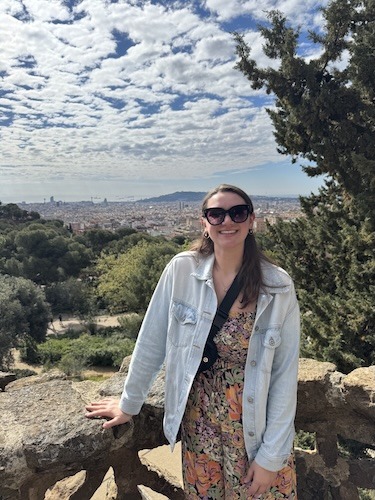
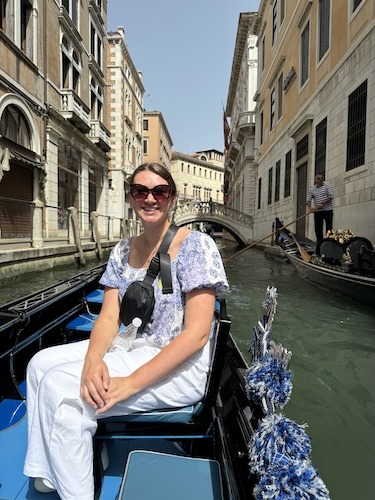
I’m a very social person. I can’t not have plans for 24 hours. When I compare my life to my peers, I’m still definitely doing a lot. I’ve had to, at some points, stop traveling for a bit or stay home and sleep, but I think that just brought me to the same level as a normal person and their schedule.
I’ve been able to maintain a fairly consistent life. I’ve never stopped working. I moved downtown with my friends. I go out, I travel, I do all these things.
In a weird way, the fertility and the body changes and whatnot — I’m waiting for my friends to catch up with that. I’m happy I get to be the friend who will be there with them for all of this, but I think I’m still ahead on that front.
Sometimes, as the youngest of four, I compare my life to my siblings’ lives. The moment I got a diagnosis, I went on a completely different trajectory. I don’t compare myself to them in a negative way, but I think, oh, so‑and‑so got married at this age; maybe that’s something I should consider. Cancer changed everything. I don’t have a model of what things are supposed to look like.
I’m kind of doing what I want at this point and doing what feels right for me. I’d like some sense of normalcy — not that I don’t have it — but yes, I’d love to do the whole marriage‑and‑kids part of life. That’s always going to look different, just in maintaining relationships. I’m hopeful for that. I haven’t shut down any opportunity or goal with that.
I struggle sometimes. When you get cancer, you lose friends and people who are close to you because it’s a lot to handle. You think a lot about life and what you want out of it. It’s taken me a few years, but I’ve realized this also happens to everyone in their 20s. Maybe mine was at an incredibly accelerated rate, but it’s part of growing up, regardless.
What hope looks like to me now
I’ve learned a lot about agency and decisions. My whole life, I had a very go‑getter attitude: everything’s in your control, go, go, go. Cancer sidelined that. It showed me that things are going to happen regardless.
I think of hope as people in my life. I don’t know what’s going to happen, and I’m not sitting here hopeful for a specific diagnosis or that it goes away or whatever is to come. I’m hopeful to continue what I have. That might just be appreciation disguised as hope.
I’ve made a lot of peace with the future being unknown. The hope I need is always sitting in the room with me, which might put pressure on them, honestly, but it’s true. When you have this kind of diagnosis, you sit and think, what would life without me look like? I don’t want to think that, and I know they don’t want to think that, but at the end of the day, I know I’ve given all the love to them that I can, and they have done the same for me. The hope for the future is within them.
Rare sarcoma diagnosis and finding community online
I haven’t really been able to connect much with others who have the same diagnosis. I’m on TikTok, and there was a girl who messaged me from, I believe, England, and she has the same diagnosis. We chatted for a little bit, but I feel like she’s a little younger and we’re at different stages, so it was just a quick connect of “Hey, hope you’re doing well,” and whatnot.
I have found more of an online community, which has been lovely. I would never wish cancer on anyone, and for a while, it was lonely because I couldn’t find anyone in their 20s. People say it’s just uncommon in your 20s — you don’t see young adults with cancer. Having more of an online presence has helped in the sense that I don’t feel like a freak, like I said to my dad in the kitchen that one time.
It’s been nice to see other people learn and accept their cancer as well. I’m still hoping someday to meet someone with my exact diagnosis. I wouldn’t want that, because I’d know what they’d gone through, but it would make it less lonely.
My “cyclist” list: Reclaiming liveliness and showing life with cancer
I have a list I call my “cyclist.” Again, I love doing things. I’ll throw it out that I’m down for whatever. I felt like this past year, with egg freezing, surgery, starting immunotherapy, and all of that, I really put a pause on that. I didn’t recognize myself as much as I would have liked.
I understand I needed rest and needed to, for lack of a better word, get it done. But I thought, “I need to restore my liveliness.” I was initially hesitant to post videos of my life because I hate fear‑mongering, and that was not my goal at all.
I became very passionate about showing that you can still have a diagnosis or something critical happening in your life and still live your life, and be an example of that. I have a very full life.
Now it’s reached a point where I’m saying, “Yes, cancer patients have a full life,” but beyond that, some of the most lively people I know are cancer patients. Cancer has allowed me to continue to do the things I love, but at the same time, find the depth of heartbreak and love and fear and all these feelings you don’t normally get wrapped up in so much over the course of being 27. It usually takes a lifetime to get there.
I’ve experienced so much life, and that’s something I want to share with people — not to scare them and say, “Oh my gosh, you could get cancer too.” Mine is super rare. I’d never say that. I want to say that whatever’s happening in your life, it shouldn’t stop your life. It’s important to be appreciative of the tougher or more extreme ends of life.
Advice for others facing a cancer diagnosis
If I could say something to someone facing a diagnosis, I could go on for days. One important thing is: react how you want to react. There are going to be so many waves of emotions, and no one has a playbook. You’re going off what you feel and how you want to proceed, and that’s very important.
It sounds simple, but be courageous with it all. I’m not a big fan of the whole “you’re so brave,” but I remember a quote that changed things for me: even if you have fear, do it afraid. I think that’s where courage comes from. If there wasn’t something scary, there’d be no need to have courage.
All of this journey — if you’re scared of needles or anything else — you’re going to have to do it afraid, and that courage is well earned. Don’t let anyone take that from you.
You still have a life. It doesn’t have to be everything that you are. That was another hesitation I had with posting. I’m so much more than cancer; there’s so much more to me. It’s the same for anyone who’s experienced any kind of diagnosis.
Life is worth living to the fullest — anything cliché, honestly. People need to know there is no certain way that you need to react. It’s okay to have the full range of feelings. Again, it’s a team sport. Find hope in the people around you and find your community.
This interview has been edited for clarity and length. The views and opinions expressed in this interview do not necessarily reflect those of The Patient Story. This content does not replace professional medical advice.
Inspired by Katie’s story?
Share your story, too!
Hear from people living with sarcomas
Real experiences with diagnosis, treatment choices, side effects, and life beyond sarcomas — in their own words.
Leave a Reply