
College Freshman and Suddenly Fighting Leukemia: Anni’s APL Diagnosis Story
Anni was 18 years old and just three weeks into her freshman year in college when she was diagnosed with acute promyelocytic leukemia (APL), one of the rarest and most rapidly progressing forms of acute myeloid leukemia (AML). What began as severe night sweats and extreme fatigue quickly escalated into an emergency when her white blood cell count dropped to 1.6. (a normal range is 4.0 to 11.0)
Interviewed by: Taylor Scheib
Edited by: Katrina Villareal
The disease was advancing fast. Within days of her bone marrow biopsy, Anni was admitted to a hospital and began treatment immediately, which is common in AML. Her chemotherapy was arsenic trioxide, the same compound found in rat poison, but repurposed as one of the most effective treatments for APL. The disease’s response to treatment triggered differentiation syndrome, causing severe swelling, pain in her side, and body changes that were really difficult to process at 18.
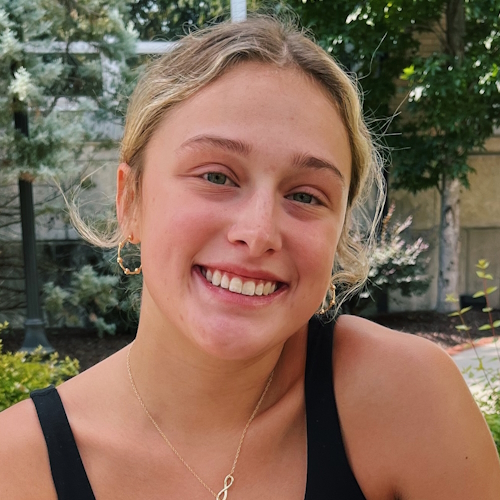
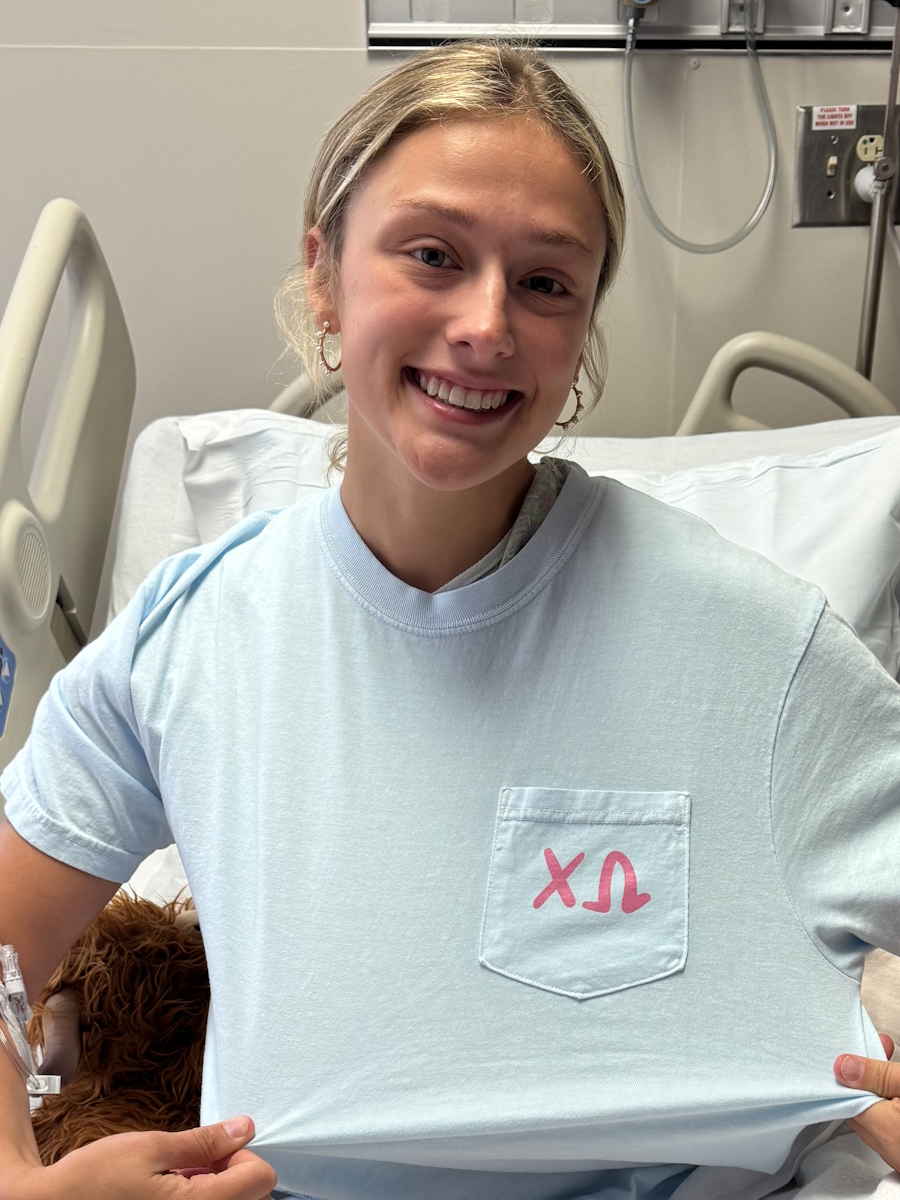
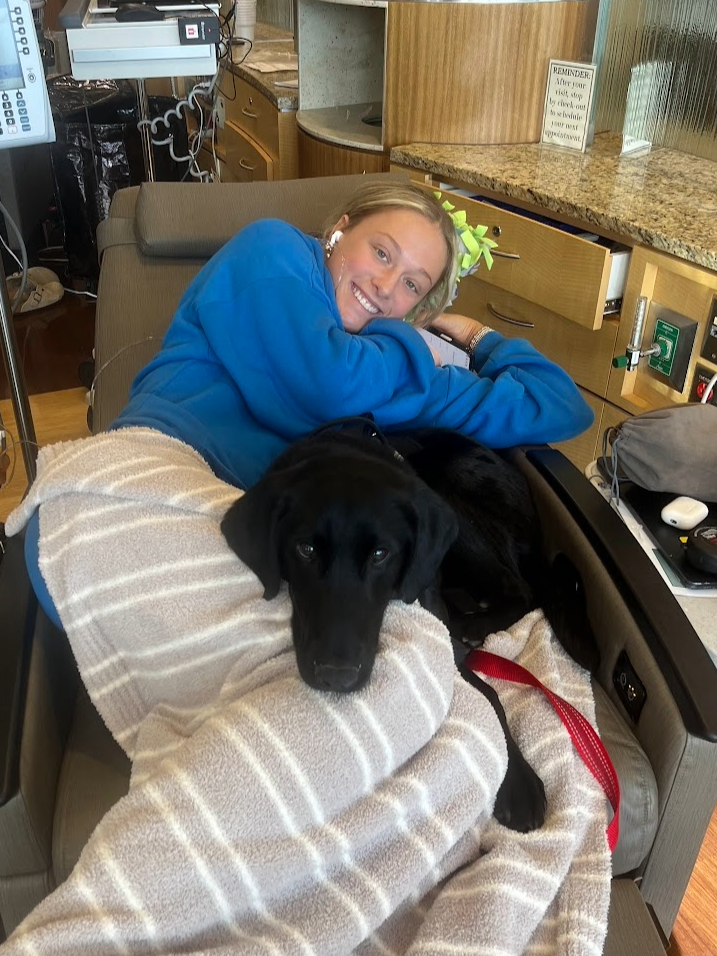
Anni spent an entire month in the hospital, isolated from the college life she had just recently stepped into, the sorority she had just rushed, the friends she had just made, and the independence she had only just begun to taste. After being released from the hospital, Anni continued treatment on a nine-month alternating cycle (one month on, one month off) and set her sights on returning to college for her second semester. She finished treatment while carrying a full course load and earning a 4.0 GPA. Her service dog, Goose, attended every treatment and every appointment alongside her, becoming, in her words, her “other person.”
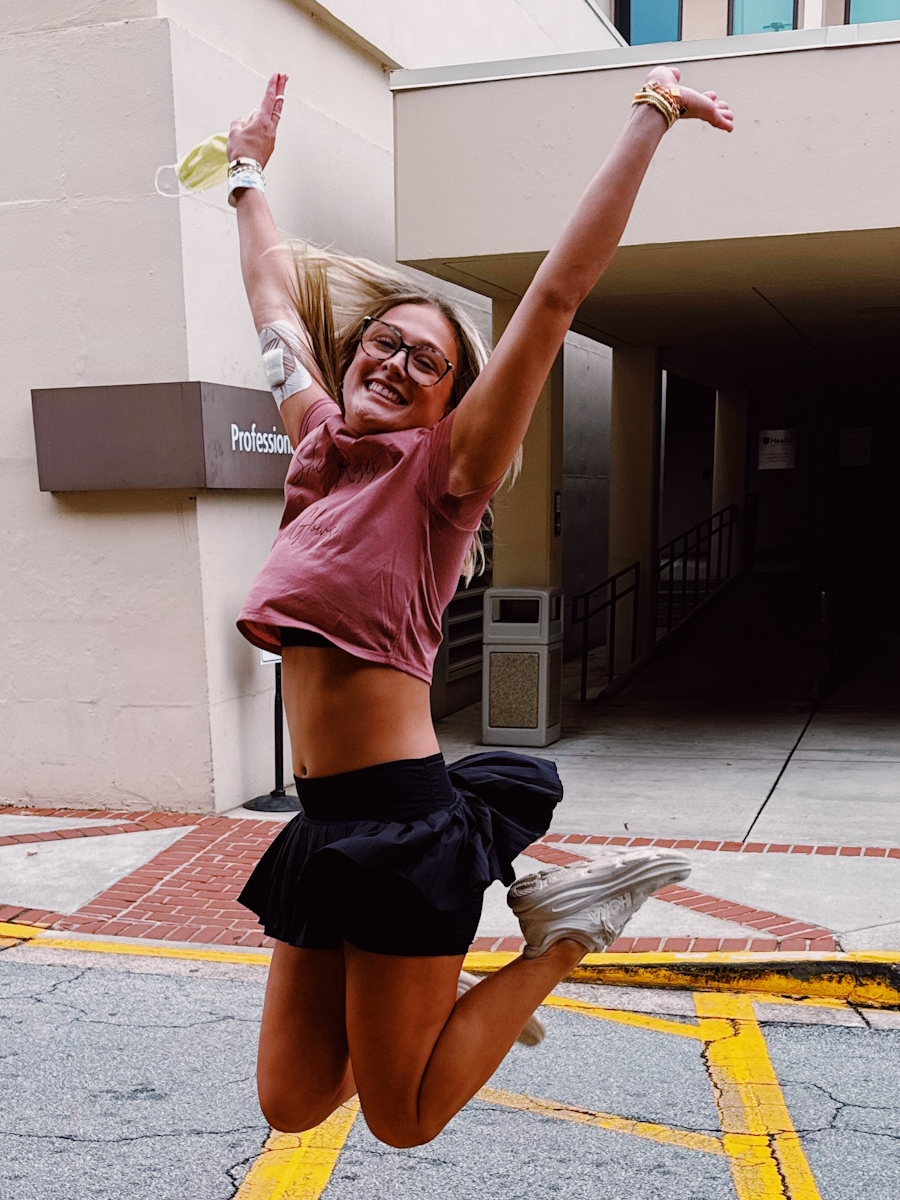
Anni just recently rang the bell, completing her final round of treatment. She is now cancer free. The loneliness of survivorship is real for Anni though. She is honest about grieving the experiences she missed and the version of freshman year she never got to have. But she is equally clear-eyed about what she gained: resilience, perspective, and a certainty that she is far more than her diagnosis.
Now preparing for her sophomore year, Anni’s message to other young patients is direct and hard-won: set a goal, ask for help, and never let a diagnosis become your identity.
Watch Anni’s video or read the edited transcript of her interview to find out more about her story:
- Trust your body and act on unexplained or persistent symptoms. Anni initially dismissed her night sweats as due to sleeping in a hot room and her fatigue as a normal college adjustment. It was only when symptoms became impossible to ignore that she called her mom and sought care.
- APL is a medical emergency that requires immediate treatment. The first month of APL treatment is uniquely critical as the disease progresses rapidly and the immune system is fully compromised. Anni’s experience underscores why time-to-treatment matters so much with this diagnosis.
- Feelings of isolation can come if you are well-supported by loved ones. Even surrounded by loving family and friends, Anni describes a loneliness that never fully went away, a feeling of being fundamentally apart from the world of her peers. Finding even one person who truly understands, as Anni did through her hospital friend Kendall and her online connection Kate, can make an enormous difference.
- Having a concrete goal to work toward can be a lifeline during treatment. Anni made a deliberate choice to aim for returning to college during active treatment. That goal, and her service dog Goose, gave her motivation to move toward when the darkness closed in.
- A service animal can provide more than comfort, as they can restore a sense of agency and hope. Goose attended every single treatment and appointment. He was not just emotional support; he was a consistent, non-pitying presence that allowed Anni to feel like herself and not just a patient.
- Survivorship is not about returning to who you were before cancer; it is the beginning of becoming who you are now. Anni is honest that she will never get back what she lost. But the transformation she has undergone in resilience, self-awareness, and clarity of purpose has produced a young woman who is, in her own words, “excited to become someone I’m excited to see.”
Anni’s Diagnosis Facts
- Name: Anni A.
- Age at Diagnosis:
- 18
- Diagnosis:
- Acute Promyelocytic Leukemia (APL)
- Symptoms:
- Severe night sweats
- Extreme fatigue
- Hypersomnia
- Sudden muscle weakness and leg failure
- Slurred speech
- Inability to raise arms
- Unintentional weight loss
- Critically low white blood cell count
- Treatments:
- Chemotherapy: arsenic trioxide, all trans-retinoic acid (ATRA)
This is not medical advice. Please consult with your healthcare provider to make informed treatment decisions.
- Anni’s Diagnosis Facts
- Anni’s first red flags: Night sweats, extreme fatigue, and a body that gave out
- Finding out I have leukemia at 18: “Why did I deserve this?”
- What APL treatment looks like: Arsenic chemotherapy and differentiation syndrome
- How a service dog named Goose changed everything
- What survivorship feels like
- My advice for young adult cancer patients: You are more than your diagnosis
- Hear from people living with acute myeloid leukemia (AML)
Anni’s first red flags: Night sweats, extreme fatigue, and a body that gave out
I had just moved to Alabama and had gone through the whole rush process. I hadn’t felt that off, but I was having bad night sweats to the point where I’d have to wake up in the middle of the night, strip my bed, take a shower, or change my clothes. I went to my friend’s big day at Ole Miss. We were standing; she came and got her bid, and it’s like my body shut down. My legs gave out. My arms were super weak, and I had to get a rideshare to go back to my car, which was only about a five-minute walk away, but I couldn’t even do that.
When I finally got to the car, I called my mom. At that point, I was slurring my words, and I couldn’t get my arms over my head. That was when it was alarming. She didn’t know what we were dealing with at first. She said, “If you want me to come and take you to the hospital tomorrow, I will.” I said, “Yes, please. I feel awful. I don’t know what’s going on with me.”
The next day, we went to the hospital, and I was in there almost all day. I got my blood work done, and then it came over the intercom saying that they had critical blood work results. My white blood cell count was 1.6 at the time. My mom is a pediatrician, so that definitely helped throughout the entire process. She knew what she was looking at. I went home, and I got more blood drawn the next day, which still had the same result. My mom took me to an oncologist, who is one of her colleagues, and I got my bone marrow tested.
I went back to Tuscaloosa and I was with my friends. A few days later, we found out that I was diagnosed with APL. I remember when my mom and dad first came to break the news to me. I had just gotten back with one of my sorority sisters after eating dinner with my roommates. We had been out for a while, and when we came back, my parents had my whole dorm packed up. My mom was standing by the doorframe and told me they had some bad news. I knew immediately. She told me I was sick.
I remember I hit the floor crying, but I didn’t sit there and sob. I cried for about three minutes. Then I stood up and started trying to make jokes with my roommates and my parents. I was trying to cope in my own way by making jokes and trying to dance around the fact that I was sick. My parents drove me back home that night, and I was admitted into the hospital the next day.
How long I had my symptoms
The night sweats had been going on for about a week before I said anything. At first, I thought my room was too hot. I don’t know why, but that was the first thought in my head. But then I started not wanting to go out with my friends. I would just stay in for three days in a row. That’s when my mom started to get worried, because I felt fatigued and all I would do was sleep. I remember I slept eight hours through the day, woke up, ate a little snack, and then went back to sleep for the rest of the night. I was only getting up to eat a little bit. I’d also lost about 10 pounds in a week.
The emotional weight of being a college freshman when your body fails you
I remember feeling like I was doing myself a disservice by not going out and hanging out with my friends and trying to do as much as I possibly could. When I moved to Tuscaloosa, I wanted a new start. I wanted to make my own life for myself. I had moved four hours away, knowing no one, then rushed an amazing sorority and made an amazing group of friends. So when I felt down and didn’t want to go out, I felt bad about myself, as if I was doing a disservice to my friends. But then I kept feeling worse and worse, and that’s when I knew I needed to tell my mom and go to the doctor. The day at Ole Miss was definitely very terrifying. It was overall one of the scariest experiences I’ve been through.
Finding out I have leukemia at 18: “Why did I deserve this?”
It was definitely like my life had done a complete 180. I remember feeling that this was so unfair. What did I do to deserve this? My life had been looking up so much. I had met an amazing group of friends. When I got diagnosed, I was so afraid. But I was also upset with myself, with the doctors, and with God. I was wondering why this would happen to me. Why me? That was my initial thought.
My mom is in the medical field. She’s a pediatrician. If I were going to get sick, I’m glad that she was a doctor and there to help. But that’s obviously the last thing she would want to hear. She goes through it every day, seeing sick kids, and now she can’t have the break of coming home to love her healthy kids. Now she has to bring work home with her. It was a lot harder because we were in Augusta, Georgia, and I’m from Athens, Georgia, so we weren’t at home. But I still had a lot of people come to the hospital to visit me.
Learning to accept help: Navigating dependency
Moving to college, being able to live by myself and not having my parents, was freeing. Even though I was only at college for about three weeks, I had gotten used to the freedom and the feeling of being independent.
When I got diagnosed and went to the hospital, I was having my parents help me, and the doctors and nurses attending to me constantly, which was an adjustment from how I had been living. It’s not that it was a huge change to adapt to, but being in that environment and having to re-adapt to allowing people to help you, allowing yourself to be dependent on other people, was something I struggled with.
I would say that I’m a very independent person and always have been. Having to depend on the doctors to make me better and depend on my parents to support me was definitely something I had to get used to. That was honestly the hardest part of my diagnosis.
What APL treatment looks like: Arsenic chemotherapy and differentiation syndrome
The doctors told my mom, “I don’t mean to scare you, but I am trying to scare you. You need to get here as quickly as possible.” The first month is extremely crucial. That’s why I spent the whole month in the hospital.
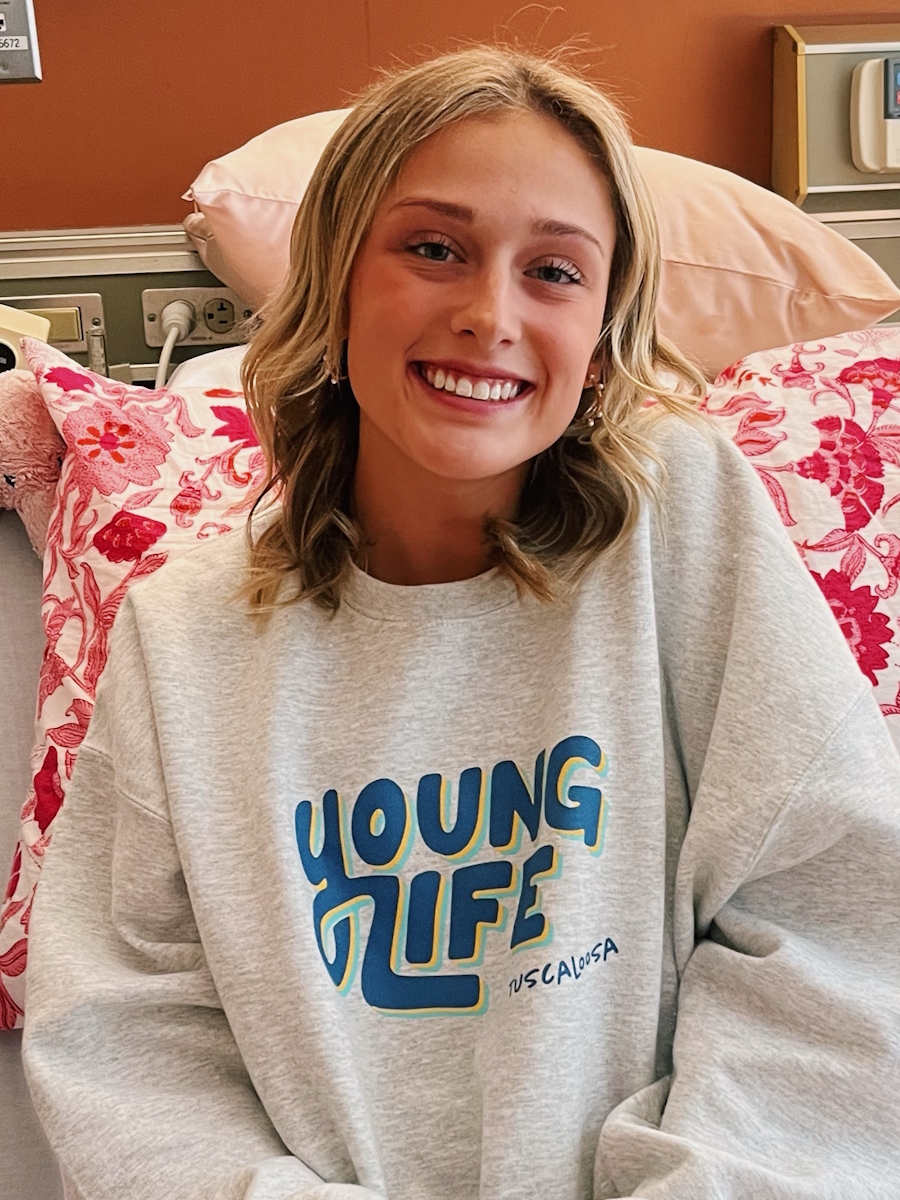
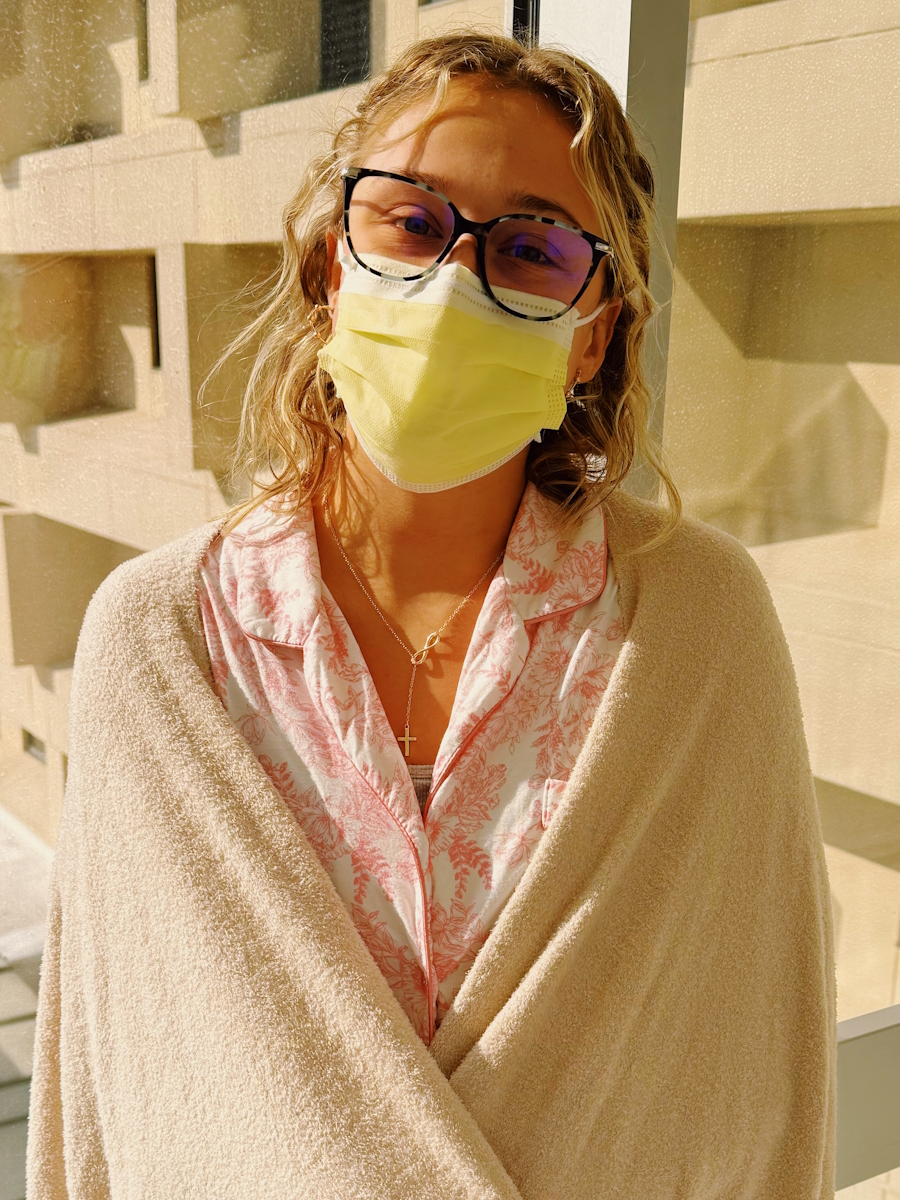
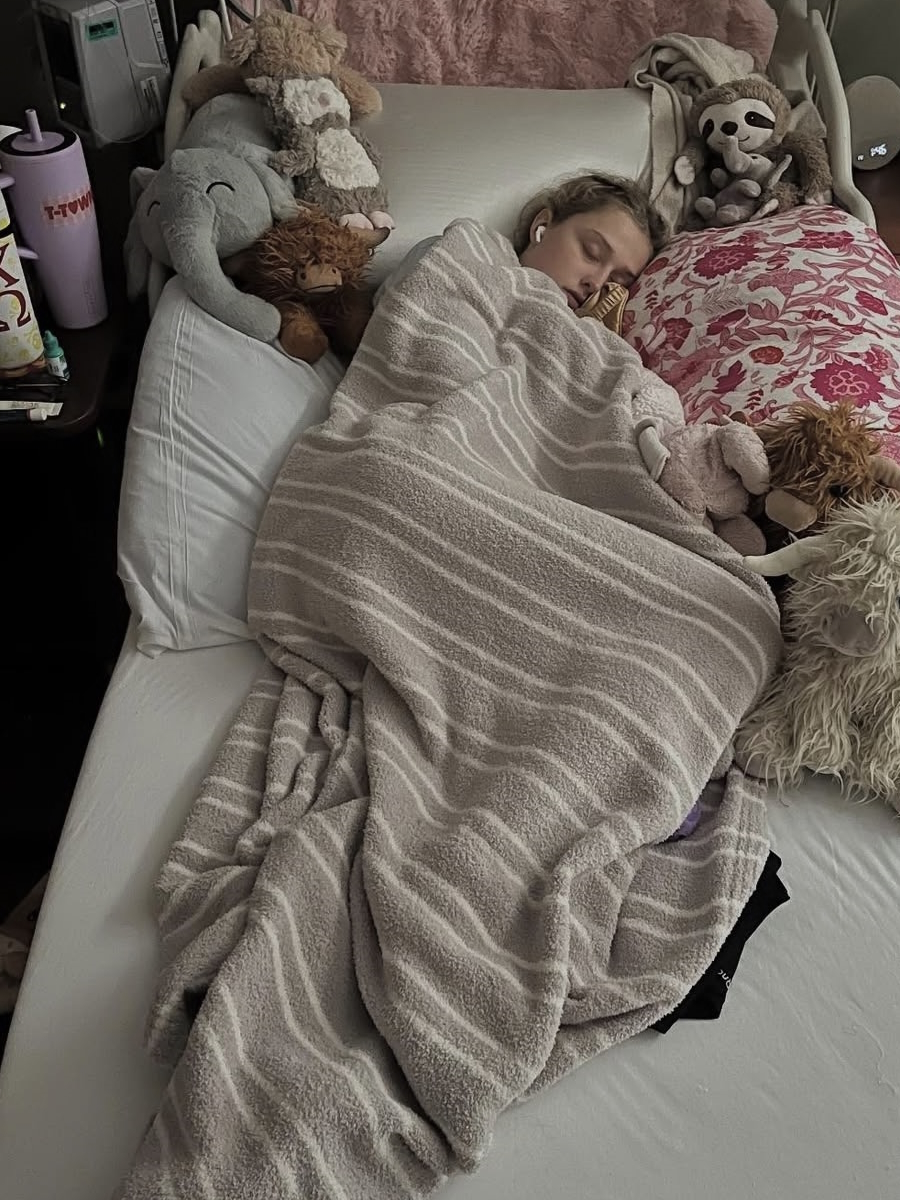
I had to spend that first month in the hospital because my white blood cells and my immune system had completely bottomed out. All my immune system’s defenses were down. I wasn’t even allowed to walk the full length of my hallway. I wasn’t allowed to go outside. If I left my room, I had to have a mask on.
There’s also something called differentiation syndrome in my kind of leukemia. The chemotherapy I received was arsenic, like rat poison. That was my chemotherapy. I also had an oral medication I would take after that. Differentiation syndrome occurs when the medicine can react poorly with your body. You retain a lot of water weight, you swell badly, and you have a lot of uncomfortable pain. I had to stop my treatment for two or three days because I had bad pain in my lower stomach and lower back, and my legs were awful.
Sleeping in the hospital was so hard. Not only was I still having night sweats in that first week, but my legs and my whole body hurt so badly because nothing was working the right way. I lost 10 pounds so fast. All my nutrients were gone. Having to see how your body changes while going through everything was definitely something I struggled with. Being an 18-year-old girl, you already struggle with body image. But that was even harder. The swelling was so bad. My face got swollen.
Feeling lonely inside the hospital and the two people who changed that
It was extremely isolating and extremely lonely to go through. My parents were there the entire time. My friends were always calling, sending gifts, and everything. I will forever be incredibly grateful for that, because it truly did help me get through the time in the hospital. But the lonely feeling never goes away.
I felt even lonelier and more down after I got out of the hospital and returned home. I remember being in my room and feeling so alone, as if there was no one I could talk to and no one who got it. But then there is someone who gets it.
I connected with a girl online named Kate. She had Hodgkin’s lymphoma, and she reached out to me on Instagram. Every time I had a question about anything, like my face swelling up from the medicine, I’d ask her how fast it was going to go away. She had gone through it in high school and was now a senior, so it was a little different in how we navigated school and things like that, but she helped me a lot, and I had a friend in her.
There was also a girl who was in the hospital with me named Kendall. She was 21 and also a patient, but she had a different kind of cancer. She would visit me in my room. It was nice having someone around my age in the hospital and on the floor I was on. Kendall and I were the youngest two on that floor. The next person closest to our age was around 40.
Having someone else also around my age, who had been in a similar position and had been going through it a lot longer than I had, was refreshing. We had each other to talk to, and not even about cancer or being sick. We talk about TikTok videos we’d seen or what we were watching on Netflix. It wasn’t about being sick all the time. She could relate, so I never felt a sense of pity when I talked to her about it. People look at you differently because they think that you’re a completely different person after everything. But that’s so far from the truth.
Returning to college in active treatment
I was admitted on September 4th and started treatment. I have a port, and I received treatment throughout my hospital stay. When I went home, I continued treatment on a cycle of one month on, every single day, then one month off. I did that for nine months. When I got out of the hospital, I continued my treatment in November. I had all of December off, I believe, and then I started back in January or February.
In late 2025, my main goal was to move back to school and live out my second semester as much as I could. Cancer had already taken so many things from me and had completely stripped me of my first semester and of the new life I was trying to build. But I didn’t want that to stop me.
I also knew that if I didn’t have a goal for myself, I don’t know what would have happened. It gets dark and lonely. Being able to have something to look forward to and work toward was inspiring for me.
How a service dog named Goose changed everything
I did a lot of training with Goose when I was home, before I went back to school. Having him completely changed the game. In the facility he was at, the people there also had service dogs. It changed everything for me. Having him gave me a sense of hope, knowing that everything was going to be okay, and that I could go and do this. Yes, I have faced hardships, but being able to see myself pass goals and achieve them was inspiring for me.
When we were in the hospital, my mom had been doing research. She hadn’t brought it up to me yet. She came across Rucker Retrievers’ Instagram profile, went through their whole website, and had been looking into it for a couple of days. Then she brought the idea to me. Of course, I was completely on board. I love animals. We have dogs at home.
We reached out to Rucker Retrievers, explained my situation, and shared my whole story with them. They recently had a new litter that had been bred, and Goose was in that litter. The trainer, Mr. Scott, assigned Goose to me. I met him a couple of weeks after I got out of the hospital, and ever since, it’s been him and me.
He’s definitely more than a dog. He’s my other person, basically. He’s been to every treatment and every doctor’s appointment since I brought him back to school at the end of February. He’s seen every tear. He’s done everything. He has had a huge impact on this entire experience for me. Being able to have him in the Rucker Retrievers community has definitely impacted my life for the better.
Going back to college mid-treatment and navigating “normal’ when nothing is normal
It was definitely a big adjustment. I knew that people at school knew that I had been diagnosed with leukemia. Everyone in my sorority was very aware and super supportive. But I was honestly scared of how people were going to perceive me when I came back and how they were going to treat me. I didn’t want someone to treat me like they were walking on eggshells or like I needed to be in bubble wrap. That was honestly one of the things I was dreading the most.
Going to Tuscaloosa and continuing my treatment at the Lewis and Faye Manderson Cancer Center was definitely an adjustment because the facilities and the nurses were different. You get comfortable with the nurses when you’re going through chemotherapy and sitting there for hours every day. Switching nurses and facilities was an adjustment, but it wasn’t awful.
The hardest part about moving back to school during active treatment was still trying to live life as a normal college student, trying to hang out with friends like before, do all the things I used to do, and seeing that I couldn’t do all of that. Many days, I would have to stay in, get sick from treatment, or I wanted to go get dinner, but I was too sick or I had treatment.
Moving back to school and doing treatment while juggling classes and being away from my family was a time when I felt alone and lonely, because I was in a whole new environment and I still didn’t know anyone well. I was only there for three weeks the first time. When people met me when I came back, they knew me as the girl who had cancer. That was how I was viewed for a long time, until people decided to take the time to get to know me and see that I was much more than my diagnosis.
No matter what you go through, you are a lot more than your diagnosis. That’s what I had to come to terms with. Most of 18- and 19-year-olds have never had to witness anyone go through anything like this, so there were some comments here and there that you have to face. But adjusting to the different environment, the different people, and the different routine I had to build for myself while incorporating classes was definitely challenging.
Finishing chemo, ringing the bell, and what that moment felt like
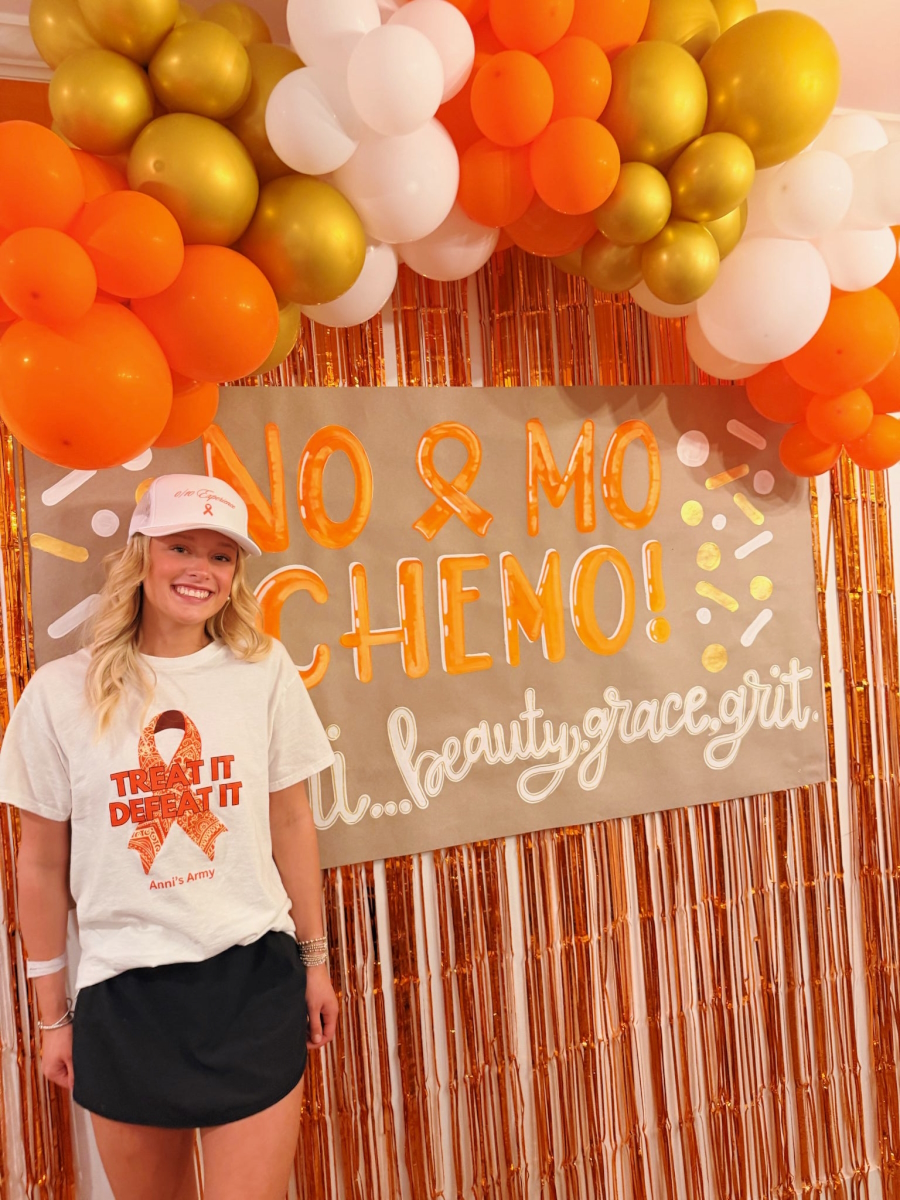
I finished treatment and rang the bell on April 24th, which is hopefully the last round of treatment I will ever do. There are honestly no words for the amount of relief I felt. It felt like a weight had been lifted off of me, my family, and friends, because this battle was not just mine. It was also my family’s and friends’. They were with me every step of the way. They did not bat an eye when things came up. They were always there for me.
Being able to ring the bell and having my friends there, even my hometown friends who went to different schools, and seeing their excitement, happiness, and joy come back was what I had been waiting for since the day I was diagnosed. Ringing the bell was worth everything everyone has always said about it: all the hard work, all the tears, and all the many nights of wondering why. Ringing that bell made all of that go away. It washed it off completely.
The weight taken off my chest was incredible. Being able to walk out and see all my friends made everything feel so worth it. My hardships were noticed, and I came out on the other side happy and healthy. I’m so incredibly proud of how luckily I’ve been able to come through this.
What survivorship feels like
I’m filled with such joy and immense happiness that I am where I am today. But with that also comes still feeling lonely sometimes and still wondering why this happened and why I had to go through that. The hardship of saying, “This wasn’t fair.” I missed so many opportunities I’m never going to be able to get back. It was supposed to be the best time of my life. I missed that, and it was taken away from me in the blink of an eye.
Being on the other side, you’re extremely grateful, but you also look back and realize you’re not over it, and you never will be. And that’s okay. It’s okay to feel that. It’s okay to be by yourself and feel lonely sometimes, and to accept the fact that you were sick and that you did have cancer, but you beat it, and you’re on the other side of it.
That’s what I have to tell myself every time I get upset. I’m allowed to be upset about my circumstances and the battle I went through. But I’m always going to make sure that at the end of the day, I am extremely grateful for the life I have right now.
I’m getting my last bone marrow biopsy, hopefully.
Looking forward to sophomore year and a new start
To be completely honest, I’m looking forward to moving back to Tuscaloosa and living with my friends. I’m living in a house with eight other friends, so there will be nine of us in one house. I’m so excited. It’s exactly what I missed out on in the first half of my first semester: being with people, meeting new friends, and taking in a new environment. I never got to take that all in at the very beginning. I did get more of it in the second semester when I went back, but obviously, being there when it’s fresh and new is something I’ll never be able to get back. I’m super excited for being able to move in with them and start this new chapter.
My friends in Tuscaloosa and my friends back home have been so uplifting. Being able to finally start a new life for myself and mean it this time without being interrupted or having to question things is exciting.
My advice for young adult cancer patients: You are more than your diagnosis
My advice would be to ask for help. Don’t think you’re too mature for that because you’re a young adult and making your own life. If you have a gut feeling, follow it. Don’t be afraid to ask for help.
Know that your diagnosis is just that, a diagnosis. It’s a sickness. It’s not a personality. It’s not a lifestyle. It’s not who you are. No matter the diagnosis, you are so much more, and you will forever be more than your diagnosis. Your diagnosis is a chapter of your book, not the entire story.
Don’t live in the words “I have cancer” or “I am sick.” Live in the words “I want to become healthy. I want to be cancer-free. I want to go hang out with my friends.” If you’re feeling down, give yourself something to look forward to and work toward. That helped me so much. I was determined to get out of the hospital and get better. I was 18 years old, a college freshman, when I was diagnosed in September. I got out of the hospital one week before I turned 19.
This interview has been edited for clarity and length. The views and opinions expressed in this interview do not necessarily reflect those of The Patient Story. This content does not replace professional medical advice.
Inspired by Anni’s story?
Share your story, too!
Hear from people living with acute myeloid leukemia (AML)
Real experiences with diagnosis, treatment choices, side effects, and life beyond acute myeloid leukemia (AML) — in their own words.

Leave a Reply