
Living with an Inoperable Brain Tumor, Jane has Found Ways to Be Happy
Jane was 47 when memory fog, irritability, and trouble sleeping sent her to her doctor. She assumed it was perimenopause. Her doctor wasn’t convinced, and after Jane didn’t fully pass a memory test, grew concerned enough to order a CT scan, the first step toward a brain tumor diagnosis Jane never saw coming.
Interviewed by: Taylor Scheib
Edited by: Katrina Villareal
The scan was supposed to take two weeks. After three, Jane called the hospital herself to close the loop, and the next day, her GP texted asking her to come in that morning. Her doctor described abnormalities on the scan, first suspected as a specific type of glioma, then told her it was brain cancer. When Jane asked what kind, the answer was one word: nasty. They would need more tests to determine what kind of brain cancer. She walked out 10 minutes later into a life that no longer felt like her own.
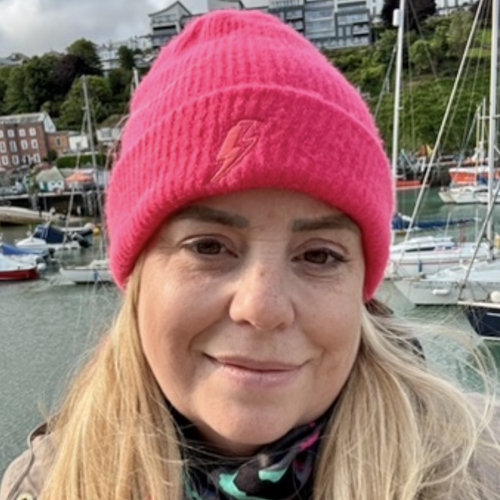
An MRI brought a flicker of relief: what looked like two tumors on the CT scan was actually one. But a follow-up meeting with her neurosurgeon delivered the harder blow. The tumor sits in her thalamus, a location that makes it inoperable, and the situation is rare enough that surgeons see very few cases like hers.
Given the risks tied to biopsy, radiation, and chemotherapy, Jane and her care team chose a different path: watch and wait. Scans every three months have shown stability for more than a year, and for now, that stability is the plan. Each scan still brings its own wave of anxiety, but so far, it has held.
Today, Jane describes herself as fundamentally changed, and not entirely in a bad way. She’s taken up horse riding, open water swimming, and ice baths, things she once would have been too anxious to try. She has built an online community around her diagnosis, and is working, one honest conversation at a time, to help her 11-year-old daughter understand what’s happening without carrying more than she has to. Jane still doesn’t know what comes next. But she knows she’s more herself, not less, than she was before.
Watch Jane’s video or read the edited transcript of her interview to find out more about her story:
- Jane’s GP caught something Jane herself didn’t believe was there. Jane was convinced her symptoms were perimenopause. Her GP became concerned when Jane partly failed a memory test and ordered her a CT scan. That scan is what led to her diagnosis.
- Where a tumor sits can matter as much as its grade. Jane’s tumor is located in her thalamus, a rare and central part of the brain. That location is why her neurosurgeon told her it’s inoperable, and why even a biopsy carries a level of risk they’ve decided isn’t worth taking right now.
- Choosing not to have a biopsy, radiotherapy, or chemotherapy isn’t the same as giving up. Jane and her doctors chose watch and wait, monitoring her tumor with scans every three months instead. More than a year later, her scans have all shown stability.
- A brain tumor diagnosis changed who Jane is, not just what she does. She describes losing a lot of her social anxiety and fear, and has since gone horse riding, open water swimming, and taken a cold water ice bath, all things that used to terrify her.
Jane’s Diagnosis Facts
- Name: Jane R.
- Age at Diagnosis:
- 46
- Diagnosis:
- Low-Grade Brain Tumor
- Symptoms:
- Memory fog
- Irritability
- Itchiness
- Trouble sleeping
- Treatment:
- Active surveillance with scans every three months
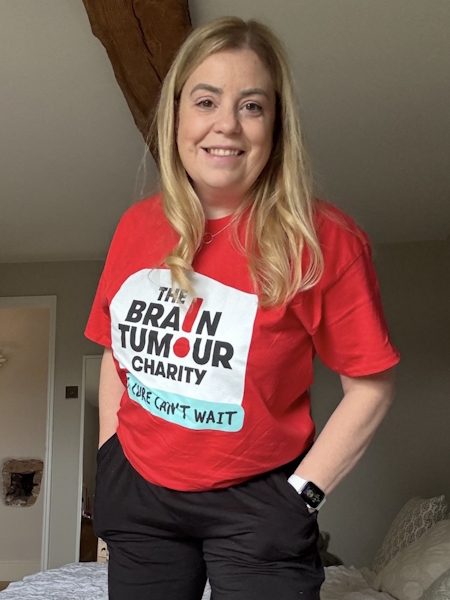
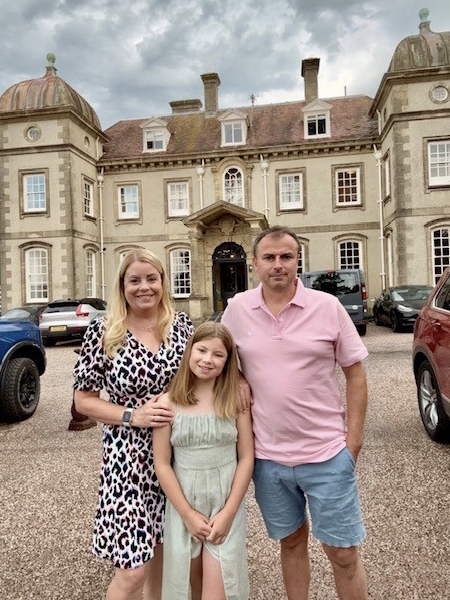
This is not medical advice. Please consult with your healthcare provider to make informed treatment decisions.
- Jane’s Diagnosis Facts
- Mistaking brain tumor symptoms for perimenopause
- Hearing “abnormalities on your brain”
- Meeting the neurosurgeon and finding out that the tumor was inoperable
- Becoming a different person because of cancer
- Why I call The Brain Tumour Charity helpline instead of my friends
- My advice to anyone newly diagnosed
- Hear from people living with brain tumors
Mistaking brain tumor symptoms for perimenopause
When I went to the doctor’s, it must have been about the beginning of 2025. I was feeling a bit perimenopausal, as I believed to be the case. I said, “My memory’s not good. I feel foggy, itchier, and more irritable, and I’m struggling to get sleep.” Our generation talks much more about perimenopause. I’d just had a weekend away with my friends, chatting to them about it, and they had started on hormone replacement therapy (HRT), so I just thought it was that time of life.
I explained to the doctor, but she thought it was perimenopause. She said my cycle was still regular and I wasn’t getting hot flashes, so she wasn’t totally convinced. She was concerned about the memory, though, so she did a memory test. I didn’t quite pass all of the parts of the test. She said, “I’m concerned, and I’d be a little bit worried that it could be early-onset dementia.” I immediately thought no. I don’t know why, but I didn’t feel it was that. She was a bit frustrated and said she wanted to send me for a CT scan.
The three-week wait for CT scan results
I thought, “God, there must be people up and down the country who are desperate for a bit of reassurance or closure, or to have that progression, and they’re not having it.” I felt like it was a complete waste of resources. I was a bit frustrated at the hassle, the energy, and the stress involved in going for the scan, so I was a bit grumpy about it. But I went along and had the scan.
I waited about three weeks, when they’d said it would normally be two weeks. I’m not the most patient, so I was feeling quite proud of myself that I’d managed to wait an extra week. But because I was feeling quite confident that I was okay, I put it to the back of my mind a little bit.
But when it got to three weeks, I rang the hospital and said, “Look, I need to close the loop now. Is everything all right?” I suppose the longer it took, the more confident I felt it probably was all right, but the more irritated I was that I hadn’t had the final answer to close it off. I’m quite an anxious person, so the “what if” stayed with me on repeat, although along the way, I never once thought about cancer.
A text from the GP and a same-day urgent appointment
It hadn’t occurred to me. The very next day after the phone call, I had a text message from my GP, which said something along the lines of, “We’ve had your CT results back. You’ve got an urgent appointment this morning. Can you come in?” I immediately panicked. Then I rationalized it in my head and thought, “Okay, calm down. It’s been three weeks. You don’t feel like it’s dementia. Your symptoms are not that bad. There’s nothing else going on with you. It’s the GP calling, not the hospital.”
I was trying to rationalize what it could be, thinking, “Okay, maybe there’s an image that they want to show me on a screen, or a small infection and they got it quickly.” That’s where my head went, but still with that little bit of, “What is this about?” I told my husband and said, “That doesn’t sound good.” And I said, “Okay, you better come with me then, but stay in the waiting room.”
As I got there, I needed to have a nervous wee. I had a funny feeling. I can’t even begin to explain it. I had a weird feeling, not that I knew exactly what was going to happen, but I felt that something was going to happen. I started my video diaries in the bathroom at the doctor’s, about one minute before I went in.
I completely changed my mind about having my husband come in. I said, “You need to come in with me. I can’t explain it, but you need to come in with me.” I sat in the waiting room. She called me and I said, “I’ve got my husband with me, is that okay?” She went, “Oh yes, good.” Then we had about a four-second walk to her room.
That was the point when I thought, “I’m going to have to be brave. I don’t know why, I don’t know what, but I’m going to have to be brave because something’s about to happen.” I didn’t have it in my head at all about cancer. I wasn’t put on any cancer pathway. No one had mentioned that possibility. I wasn’t having any significant symptoms. She was recapping on where we got to about the original reason for me going, and said, “Unfortunately, the scan has revealed that there are abnormalities on your brain.”
Hearing “abnormalities on your brain”
I thought, “My friends are going to have a right laugh about this,” not understanding what abnormalities on the brain meant, still feeling quite anxious but jovial. I asked, “Well, what is it?” Thinking it was something treatable still. Then she said, “Oh, we think it’s a multifocal glioma, but it later turned out that it wasn’t that, but that’s what they thought it was at the time.
I said, “Was that not down with my brain tumors?” Then she said, “Brain cancer.” I asked what kind of brain cancer. Then she said, “Nasty.” I said, “Oh. Okay, right. What happens next then?” She said, “You’re most likely to have another scan, and then you’ll see the neurosurgeon. It will most likely be surgery, radiotherapy, and chemotherapy; that’s the standard course of action.” That was the end of the 10-minute appointment.
I walked out of there and I was like, “What the hell?” I felt like I was in a soap opera. It was a very surreal experience. For a long time, I didn’t associate with what was happening. I was like, “This is not my story.” I kept waiting for them to say that it wasn’t the case or that it would be an error, because it was such a shock. It was such a U-turn in my life. I couldn’t accept that it was something that could happen out of nowhere for no real reason.
I felt completely disconnected from what she said. I came out of there with my husband, and as soon as we came through the doors and left, he hugged me and I burst into tears on his shoulder. Even then I was in practical mode. I said, “Okay, we’ve got people to tell. We’ve got appointments to make.” I was thinking about all these things. How am I going to tell people? What do I need to do? Is it bad? How bad is it? I don’t know how to feel about this. It wasn’t until I started to tell people that I thought, “Yeah, it’s quite bad news.”
Telling a stranger about my diagnosis
In the early days, I didn’t give people much of a warning. I would blurt it out. I was told on a Friday, and then on Sunday, we decided to do litter picking in the village. My daughter wanted to do it, so we planned to do it. One of the school mums was doing it with her daughter, so we thought the kids could go off and play.
She started to ask, “How are you?” The kids were slightly out of earshot, and I burst into tears on her. I didn’t know her well. I cried the words, “I’ve got a brain tumor,” in her ears. I almost couldn’t breathe with the hug that she gave me afterwards. Ever since then, I thought, “I probably need to warn people, because I’m about to drop some bad news.” After that, I got a bit better about sharing it. I would say, “Look, I’ve had some bad news. Are you somewhere where you can talk? Have you got someone with you?” Because you don’t realize when you’re in it, the ripple effect of how other people are going to feel about it.
I was terrified. To me, it felt like any other health complaint that you normally battle on with. This was the first health complaint I’ve had that felt like everyone was in it with me. It was a very weird, surreal experience of people wanting to know when your next appointment was and what the next steps were. They wanted details and to be in it with you. They wanted to support you.
I also have endometriosis, so I’m very used to quietly dealing with pain and discomfort, so other people’s love and care was quite unexpected. But it was also a little bit triggering, because I was still trying to gauge how bad the news was, and making sure that I hadn’t overreacted. Then when other people were crying, I thought, “Okay, yeah, this is bad.” I didn’t have anything to go on other than she said it was nasty.
Layers of fear: My husband, my daughter, and holding onto hope
It’s layers. I was very upset about myself, then I’ve got a husband and a daughter. She was 10 at the time, and I was thinking, “Oh no, she’s a sensitive little flower. How on earth are we going to tell her?” I was panicking. What if I die? How is she going to cope? How is my husband going to cope? I’m going to have to start planning my funeral. Literally, I felt like I’d been told I was going to die at that point.
I still had quite a lot of hope. I thought, “Okay, there’s a treatment plan. There are next steps. I’m in a system. I’m in a process. They know what they’re doing.” Even though I was absolutely in shock and devastated, I did have a lot of hope. I thought, “Okay, it’s going to be small. It’s going to be a good one. I’m going to be positive. I’m going to manifest. I’m going to pray for it. I’m going to do whatever I need to do. It’s all going to be all good because I feel well.”
For the first couple of months, I felt that this wasn’t my story. This is not how I’m going down. It’s not happening. There’s no way that this is my story. No way. I still had a lot of hope from there.
One tumor instead of two
I went for an MRI scan, which is more detailed. The good news from that was that instead of two tumors that they thought they saw from the CT, it was only one. My very kind GP rang me and said, “I’ve looked it up, and it says it’s only one. I thought I’d let you know.” I thought, “Wow, that’s amazing. One less, one more to go. How do we get rid of the other one then?”
But I didn’t know anything more, so I’d still been left with, “It’s nasty.” The change from two to one did reduce the risk quite a bit, but they hadn’t joined the dots for me on that. I still had this message of, “It’s nasty.” I didn’t know anything about brain tumors. I couldn’t have named even one part of the brain, so I didn’t know at all what I was dealing with.
Meeting the neurosurgeon and finding out that the tumor was inoperable
We had an appointment with a neurosurgeon, which was an incredibly difficult meeting, much more than being diagnosed. He told me that it’s inoperable and explained why. He said that it’s in my thalamus, which is right in the central part of the brain. It’s quite rare and tumors in this location tend to be quite aggressive. He also said he couldn’t take it out.
I had manifested so hard that they were going to take it out, that it was going to be grade one, that it was going to be a good one, and that I was going to be okay, because this was not my story. When he said that it’s inoperable, I thought, “No, you’ve slashed my chances at life and the longevity of my life,” even though I don’t know the odds. I thought, “No, no, no, no, this can’t be. I’ve already had this bad news, then the good news of only having one tumor, and now I’m back to it being bad again.”
I had a follow-up meeting with him. That’s when he laid out all the options for me, which were to have a biopsy, and then I’d need to have radiotherapy and chemotherapy.
Choosing active surveillance over biopsy, radiotherapy, and chemotherapy
He went through all the risks. Again, the reason it’s not operable is there’s more risk associated with the biopsy. It felt like a very negative meeting, where it felt like every next step was probably going to leave me with some lasting disability or death. It felt like all the hope that I’d had coming out of the doctor’s, even though I was completely blindsided, was all gone. I had zero hope. I thought, “Well, I’ve been handed a death sentence.”
There was a lack of humanity to it. There was a support person in there, but they didn’t provide any support at all, which made me quite cross. Again, you have your meeting and you’re left to get on with it. I came out of both meetings barely being able to stand up. I was holding onto my husband, sobbing in his ear so loudly. I completely lost it. I have such vivid memories of that. It was very traumatic coming out of there, walking through the reception area where there were people in the waiting room, and I was literally howling and sobbing in front of everybody. I didn’t care.
My husband quickly turned me around, put me back in the corridor, and hugged me. Then we talked it through. “I’m here for you. I’ve got this. Let’s get home. Let’s talk about it.” It felt like the hope had completely evaporated and it was dead certain that I was just going to die, and that there weren’t any good options. That meeting has given me quite a lot of trauma, even now.
One of the things that my therapist wants me to do is write to my surgeon, which I’ve done. I’ve written it, but I’ve not sent it. She said, “Don’t hit send. Say why you’re feeling frustrated.” For me, it was just focusing on the negatives, on the risks, on the data, and the stats. All of the stats were the negative way around. There was no positivity in there. There was no hope in there.
Since then, I’ve realized that there is hope, because I’m a whole year and a bit on from there, and I’m still well. We decided not to proceed with the biopsy, the radiotherapy, and the chemotherapy, because there’s a chance that the tumor is stable and not growing. We wanted to see if I could have some good years of good health, especially with my daughter still young and in school. That’s what we’ve decided to do, because the risks are so high.
The last three or four scans have all shown stability. In the moment, it’s still the right thing to do. But obviously, every scan that comes up is a very anxious time. You don’t know if it’s going to suddenly change, and then you’re back into the trauma of all the next steps. His messaging plays on a loop in my head. Every time I feel tired or don’t have the resilience to be positive, it’s his voice and his words that echo in there and haunt me. It’s hard once you’ve heard it and you’ve locked in on it. I was so locked in and was paying attention to every single thing that he said.
I would never get one of those meetings back and I don’t quite know mentally how I have moved forward, but I think it’s been a slow burn. I took six months off work because I was a bit of a mess. I had all these scans. I didn’t know what was happening and which way it was going to go.
Finally, once I’d had the last few scans and they were showing signs of stability, I thought, “Okay, I’ve got a chance to breathe out a little bit. I’m still holding everything tight, and very anxious, but I’ve still got to find a life. If it’s a shorter life, then whatever, that’s what my plan is. But I’ve still got a life. I’m still a mum and a wife. I’ve still got a job. I still want to enjoy my life.” I felt that the most important thing was to get back as best as I can to my old life. But it’s not that simple. I realized I’m fundamentally not the same person.
Becoming a different person because of cancer
The things that used to light me up don’t light me up and the things that I used to be afraid of are the things that I lean towards. I almost don’t recognize myself, but it’s not all bad, which is the weird thing. It’s not the typical narrative of a cancer patient to be like, “I’m loving life,” but I am. I feel so alive. I feel like everything’s multicolored.
I feel like there was a ceiling before on things, where you’d say to yourself, “Oh, I can’t do that or can’t say that,” or “I’m too scared to do that.” Now I just feel like I’ve got this life where there are no limits. There’s no ceiling. If I want to go and do something, even if it’s a bit radical, I go and do it. I feel less afraid.
I was very anxious before, and very socially anxious. I was very uncomfortable in those settings. I wouldn’t go to places where I didn’t know people. I wouldn’t go places on my own. I wouldn’t do anything out of my comfort zone. What I’ve been realizing is that when I have been doing stuff out of my comfort zone now, like as a little personal challenge to myself, I can do so much more than I realized I could.
Horse riding, ice baths, and saying yes to things that used to scare me
It’s given me the confidence to keep pushing and trying new things. Horses used to scare me, and now I’ve been horse riding. My daughter wanted to go on holiday, and I was like, “Oh my God, I’m absolutely terrified. They’re big and I’m not in control of them. What if they run off?” Then I was like, “No, I’m going on a horse. I’m going horse riding.”
The same with kayaking in open water. I didn’t want to do that. I’ve been watching all these rescue programs and I keep thinking, “That’s going to be me.” On holiday, I did it, even though I was scared. I did an ice water bath; that’s not me. I don’t like the cold. But I thought, “No, I like a challenge. I’m going to do it.” I’ve done it a few times since and I’ve enjoyed it. I’ve done open water swimming in a lake with fish where I can’t see the bottom at all.
All these things, I would have never done before. I’m not saying they’re like skydiving or anything, but they’re little things that I would have had barriers in place before, and now I don’t have them. I feel like if I decide to set up a business, I could go and do it.
I don’t know if it’s confidence. It feels like I’ve got this life, which is so precious, and it might be short, so I don’t care if I mess it up. I don’t care what people think. That’s why I set up my social media account. I didn’t care. I’ve started crying online wearing no makeup. I feel like a better version of myself. I like this new mindset about myself. I wish I could have had that before and not have this, and then I’d be winning at life.
I almost feel sorry for people who don’t have something like this — not that I would want anyone to have it, obviously, because it is absolutely devastating. I do flip from, “This is the worst,” to, “This is the best worst thing to ever happen to me,” because when it’s good, it’s amazing. I’ve gone off on runs on my own, climbed up the side of a big hill, looked over the cliffs, and said, “I’m alive.” I feel so alive. I feel so good and so grateful to be alive. Before, I think I was sleepwalking through life. I feel so conscious of being more in the moment and trying to enjoy it.
Telling my daughter and recording my voice in a teddy bear
The hardest thing was telling her. We spoke to one of the charities and got some good advice along the lines of being honest and using proper language, that kids are resilient, and being open with them, and saying if we’re scared or upset and that’s okay. We told her that she could ask us any questions and we’re going to be open with her. We tried to build that trust up, so that she doesn’t feel like we’re hiding anything. That was important to me, to get that bit right.
I went to one of these teddy bear factory places, where you go and you fill it with the stuffing, and I put a little heart in it, and you can record your voice. I remember going in there and doing that. It was in the very early days. I was feeling pretty negative about my future, thinking, “She’s never going to hear my voice. She’ll forget my voice,” and I wanted to have my voice forever in a teddy bear.
I had to go to the back of this busy shop and record something soppy onto this tiny little microphone. I went with my best friend. I didn’t even know if I could get through with it. I went in the corner and said, “I love you, baby girl,” and put it in.
When I gave it to my daughter, she loved it. Kids are a little bit awkward about that kind of stuff, but she loved it. She holds it and takes it to counseling, again with one of the charities, and it’s just a nice thing. She seemed to appreciate that gesture, that there’s something that went along alongside it.
We have decided to be quite open with her, based on the advice. I can’t cry in front of her. My therapist told me off for that and said, “You need to be role modeling.” I know probably that’s the right advice, but I can’t do it. I need to learn to trust her that she can handle it.
Navigating parenthood, school, and children’s counseling
There have been a couple of lessons at school where they’ve been doing biology. They had an image of the brain and she got upset in class and had to leave, so it comes out in weird ways. She said she’d been watching some YouTube video or something, and some friends shaved their heads when one of their other friends got cancer or something. She suddenly blurted out at the dinner table, out of nowhere, “Mummy, when you have chemotherapy and you lose your hair, I’m going to shave my head.” You don’t ever know what’s going on. I did tell the school as well because I needed eyes and ears on how she’s doing.
We did get some children’s counseling in place, which was hard to secure, but she can go along and do play therapy. It’s good to know that she has someone who isn’t us, who she can be a little bit more honest with about how she’s feeling. She loves going and feeling like she’s got that support. The charity has also done family days, so we’ve gone out, done some nice things, and met with other families.
From the parenting side of things, that’s been our approach. You never know if it’s the right thing to do or not, and I guess you feel your way around. I’m sure there are times when I’m getting it wrong, like not crying enough in front of her, and trying still, naturally, to protect her. I ought to let my guard down a little bit more; that’s one thing I think about, with her getting older. She’s getting older. She’s more resilient and going to be thinking and worrying anyway. That’s one thing my counselor said: It’s not that you’re going to plant seeds in her. You’re not going to start setting her off. She’s already going to be thinking these things, so it’s about giving her a platform and opportunities.
Feeling like a fraud in support groups for brain cancer
In the early days, not having a lane was tricky. There were support groups for this type of tumor, and there was a sticking-together element of people who naturally had things in common, like people who had had surgery. A lot of the questions were about medication side effects or when someone’s about to have surgery, and then people can comment and give their support.
I quite often felt like a bit of a fraud in the community, because it turns out I don’t have any symptoms, so it probably was perimenopause. I haven’t had any treatment or surgery. I don’t have any war wounds. I look well. I am well. It was weird.
I still feel very much like that. I feel like I live a bit out on a limb, desperately trying to always find people who are in the same situation as me. It’s very hard to find people to relate to. I have friends who have had surgery and are now in watch and wait. They’re showing me their scars and they’re on medications. It doesn’t feel the same. I still have 100% of my tumor left, obviously, whereas they’ve only got a little bit. We’re dealing with different things.
Why I call The Brain Tumour Charity helpline instead of my friends
You definitely have the same anxiety when it comes to scans and waiting for the results, but it’s been hard. I haven’t wanted to lean on my husband, family, and friends. I’ve ended up ringing The Brain Tumour Charity. They have a helpline, and I find it so helpful. I ring them so often that when they pick up, they ask if it’s me. I’m not saying I ring them every week; it’s not that often, but it’s a lot.
Partly the reason is I know when they’re available, so after I’ve done the school run, maybe before work or a day off or something, I go for a walk and that’s a bit of time where I’ve got headspace to think about everything. But at 9 a.m., some of my friends are going to be in meetings. People are going to be busy with their lives. They’d always take a call, but I don’t want to interrupt them. I don’t know if they’re genuinely free.
Also, I don’t want them to know how I feel. I don’t want that on them. Whereas I can ring the charity and I know when they’re available. They always answer the phone. There’s no judgment and no emotional load that I’m giving to them. For me, that’s the formula that’s 10 out of 10 for me.
I’ve had counseling and I’m still having some therapy, but in the moment, when I’m feeling overwhelmed, I ring them. Normally, I need 10 minutes. I don’t need to talk for too long. I need to get it off my chest and someone to say, “Wow, that’s tough, I empathize with you.” Then I’m okay and I feel better. That’s what I need and what works for me. I feel guilt-free doing it.
Honestly, my family and friends would be upset if they knew all the thoughts I have in my head. I don’t need to share that with them. They already have their own thoughts about what’s happening to me, their own worries and fears. I feel safe. I don’t know if that’s the right word, but I do feel more comfortable sharing with a stranger than I do sharing with my friends.
Starting an Instagram account and finding my people
It comes back to not caring about my image, the algorithm, or what’s going to be popular and get likes. I did not give a damn. This is my page, this is my thing. If you want to follow, it’s going to be a very depressing page. The clue is in the title. It’s about a brain tumor story, so follow along and support, fully knowing what it’s about. You’re very welcome not to, if it’s not for you.
I have another Instagram account about home interiors, where I would do up a room, buy something new and restyle a room, give some tips, or share some new products. That was my passion before this. That was all about getting your profile raised and the likes and the comments. But I didn’t want this to form part of that, so I branched off into a separate Instagram account.
Talking about cancer is quite triggering for some people, and I fully understand why some people wouldn’t want to follow. There’s absolutely no issue at all with that. I don’t hold that against anyone. It’s absolutely fine if it’s not for them. I knew it was going to be my therapy, because I’d be crying all over it.
The support has been absolutely amazing. People are so kind. Many people don’t know what to say. In the early days, because I was in my “I do not care” phase, I was telling everyone, “Don’t say this if someone’s got this. Don’t say that.”
Things like, “Is there anything I can do to help?” is a lovely kindness, but you’re asking me to make a decision when my head is scrambled. I cannot decide on what to cook or what to eat. Do you ask me to decide what I can ask you for? I don’t know what you would even offer to do. Are you offering to cut my grass? Are you offering to bake me some bread, cook my tea, or clean my house? What if I say yes, can you come and do one of those things? And then you’re like, “Oh, I didn’t mean that one.”
What not to say: Rethinking “Let me know if you need anything”
It felt too hard to say what I wanted. In the end, that statement used to agitate me a little bit, because I thought it was something that people say to feel better or like they’re helping. But a friend of mine had bereavement and she drummed this into us as well. Don’t ever say that. Instead, offer what you’re prepared to offer with a date and a time. For example, “I’m going to come round tomorrow at 5 p.m. and I’m bringing lasagna.” Then it becomes a choice. You can then say, “Actually, I don’t like lasagna,” or, “Don’t have it hot,” or, “Don’t come,” or whatever. But she drummed into me to be quite specific with what you’re offering, and I thought that was good advice.
I was a mess. I couldn’t function. There’s no way I could have thought of what it was that I needed, other than the house was a mess, the grass wasn’t cut, the bins weren’t being put out, and I desperately needed someone to offer something that they would be prepared to do, but it was too generic and felt too impossible.
We default to that within us, because we’re kind and we want to help. Then I corrected myself and said, “Would you like help with this?” But lots of people afterwards were saying, “Oh, thanks for that. I hadn’t thought about it from that perspective.” At the time, I didn’t know if it was the right thing to do, calling people out for being nice, but I was in my “don’t care” era. I wanted people to understand what it’s truly like. I wanted the warts and all, no filters. You’re in an absolute mess of a situation; what is it that you need, and how are you exactly feeling? I needed a lot of help, but I couldn’t articulate what it was.
My advice to anyone newly diagnosed
If you hold on and knuckle through that early phase, at least if you’re in a fortunate position like me, there’s good to come. It’s weird if someone told me that I’d be living the life that I’m living right now. I literally would say, “What are you on about?” I can’t believe the things and opportunities that I’m doing now. I would have never done them before. There’s light as well as dark, and that’s not diminishing how rubbish and miserable and sad the path is, but it’s not the only narrative. There’s good with it; at least that’s been the case for me. I never would have expected that I’d be happy, living with a brain tumor.
Build your army
We’re also in a unique situation where it’s inoperable. There’s a scary biopsy to be had, and it’s a difficult spot. Try and build your army around you, because I’ve leaned on so many people, and they have been amazing and truly kind. It’s not always the people that you expect. It’s not always your immediate family and friends. It could be strangers, people you meet online, or the neighbor that you’ve only ever said hi to who’s cooking your dinner and checking in on you. You’d realize, “Wow, people come out of nowhere,” and they’re there for you and it’s amazing.
This interview has been edited for clarity and length. The views and opinions expressed in this interview do not necessarily reflect those of The Patient Story. This content does not replace professional medical advice.
Inspired by Jane’s story?
Share your story, too!
Hear from people living with brain tumors
Real experiences with diagnosis, treatment choices, side effects, and life beyond brain tumors — in their own words.
Leave a Reply