
Living Longer With Lung Cancer: Jill’s Experience with Targeted Therapy
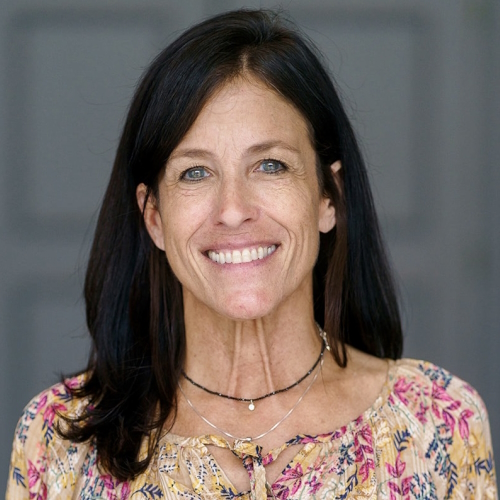
Lung cancer biomarker testing became a turning point in Jill’s experience. With a devastating family history of lung cancer, including the loss of both parents at young ages, Jill was no stranger to the disease. Still, her diagnosis came as a shock, especially because she had no symptoms. What followed was a disorienting period she describes as being drop-kicked in a foreign country, where urgency collided with uncertainty.
Edited by: Katrina Villareal
Unlike her parents, Jill had access to advances in precision medicine. Through lung cancer biomarker testing, doctors identified a driving mutation that opened the door to targeted therapy. That discovery changed everything. Instead of a one-size-fits-all approach, her care became personalized, which is what her oncologist, Dr. Eric Singhi of UT MD Anderson, calls treating your lung cancer. The result: Jill has now lived 17 years beyond her diagnosis, a stark contrast to her parents’ experiences.
The Importance of Comprehensive Biomarker Testing
One of the most emotionally difficult aspects of her experience was waiting for biomarker testing results. That waiting period, filled with fear that the cancer might be progressing, felt unbearable at times. But Jill emphasizes that understanding the purpose of the wait, which is that it leads to the right treatment, helped ease some of that anxiety. Research supports this approach, showing that patients who wait for biomarker results before starting treatment often have better outcomes.
Targeted therapy allowed Jill not only to live longer but to maintain quality of life. Much of her treatment has involved oral medications and less frequent clinical visits, offering a sense of normalcy. Even when her cancer progressed and required the addition of chemotherapy, she approached it with a sense of confidence rather than fear, reflecting the progress made in lung cancer treatment.
Beyond treatment, Jill found strength in community. Through founding EGFR Resisters, a global support network, she helps others navigate lung cancer with shared knowledge and connection. Her experience underscores a powerful message: No one has to face lung cancer alone.
Watch the video or read the edited transcript to find out more:
- Biomarker testing can significantly impact lung cancer outcomes by guiding more precise, effective treatment decisions.
- Waiting for test results can feel overwhelming, but it often leads to better, more personalized care.
- Targeted therapies can allow patients to live longer while maintaining quality of life.
- Community support plays a critical role in helping patients emotionally process and navigate their experience.
- Lung cancer can occur without symptoms, reinforcing the need for awareness and advocacy.
- Patients cannot control the disease, but access to information and support can change how they experience it, and Jill’s transformation reflects that shift from fear to informed empowerment.
Jill’s Diagnosis Facts
- Name: Jill Feldman
- Age at Diagnosis:
- 39
- Diagnosis:
- Non-Small Cell Lung Cancer (NSCLC)
- Staging:
- Stage 4 (Metastatic)
- Biomarker:
- EGFR
- Symptoms:
- None; nodule found during periodic scan
- Treatments:
- Surgery
- Targeted therapy
- Chemotherapy
Story Sponsors


Thank you to our sponsors for their support of our independent patient education program. The Patient Story retains full editorial control over all content.
This is not medical advice. Please consult with your healthcare provider to make informed treatment decisions.
- The Importance of Comprehensive Biomarker Testing
- Jill’s Diagnosis Facts
- My reaction to learning I had lung cancer
- Finding out I had lung cancer without any symptoms
- The importance of biomarker testing and the anxiety of waiting for the results
- Biomarker-driven lung cancer treatments
- Link to the full program
- Targeted therapy vs. chemotherapy
- Finding and building community: EGFR Resisters
- Hear from people living with non-small cell lung cancer
How many times does one family have to hear it’s lung cancer?
Jill Feldman, Stage 4 EGFR+ Lung Cancer Patient Advocate
My reaction to learning I had lung cancer
Jill Feldman: It hits you. “Wait a minute. This is me too.” I remember thinking, “Oh my gosh. How many times does one family have to hear it’s lung cancer?” Immediately, I thought about having to tell my family. I lost my dad when I was 13, so my mind went to my kids. They were six, eight, 10, and 12 at the time, and they were scared.
My dad died at 41, three months after he was diagnosed with lung cancer, and my mom died at 54, six months after she was diagnosed with lung cancer as well. But because of advancements in treatment and the options that I’ve had through biomarker testing and finding a driving mutation, I’ve lived 17 years. The research and these advancements didn’t just extend my life.
You need to listen to your body because people are not aware of all the risk factors of lung cancer.
Jill Feldman, Stage 4 EGFR+ Lung Cancer Patient Advocate
Finding out I had lung cancer without any symptoms
Jill: Were there obvious symptoms? I didn’t have any symptoms, which is important to note as well. You don’t have nerve endings in your lungs. A lot of people may have other symptoms, or there might be something that doesn’t feel right. You need to listen to your body because people are not aware of all the risk factors of lung cancer. It’s never a suspect in people’s or clinicians’ minds, so it’s important to listen to your body.
Because I have an extended family history of lung cancer, I had periodic CT scans. I was an advocate, and I knew that anyone could get it. But I was shocked when I found out that I had lung cancer. It was one of those moments that felt like an out-of-body experience. I was overwhelmed, and I didn’t know what the next steps were.
It’s like being drop-kicked in a foreign country. You don’t know where you are, you don’t speak the language, you don’t know the culture, the terrain is unfamiliar, and yet you have to figure out how to navigate this broken healthcare system without a map. It’s overwhelming for you and your family. It’s very under-recognized.
It doesn’t make it necessarily easier, but if you understand why you’re waiting, it makes you less anxious.
Jill Feldman, Stage 4 EGFR+ Lung Cancer Patient Advocate
The importance of biomarker testing and the anxiety of waiting for the results
Jill: As a long-time advocate, I know firsthand that when you hear the words, “You have lung cancer,” your world begins to spin. Everything becomes urgent. You want answers, you want a plan, and you want it now. And then you’re told, “We need to wait at least two weeks for biomarker testing.”
Let’s talk about timing because this is where patients feel the most stress. You’ve been told you have lung cancer. You’re scared. And to be quite honest, for a lot of patients, all you can think is, “Is my cancer growing bigger and bigger every day? Why am I waiting?” The wait is heavy and can feel unbearable. I still feel it every single time I wait for biomarker results.
It doesn’t make it necessarily easier, but if you understand why you’re waiting, it makes you less anxious.
Real-world studies show that patients who waited to get their biomarker testing results before starting treatment actually lived longer and did better.
Dr. Eric Singhi, Thoracic Medical Oncologist
Biomarker-driven lung cancer treatments
Dr. Eric Singhi is a medical oncologist at UT MD Anderson who specializes in biomarker-driven treatments.

Dr. Eric Singhi: When patients are diagnosed with lung cancer, I tell them, “I don’t just want to treat lung cancer. I want to treat your lung cancer.” Real-world studies show that patients who waited to get their biomarker testing results before starting treatment actually lived longer and did better.
If your cancer is a lock, the biomarker is the shape of that lock and the treatment is going to be the key that opens it and controls it. If we don’t know the shape of the lock, we might use the wrong key. That means the treatment may not work. Or even worse, it could be unnecessary, cause toxicity, and patients get into trouble without getting any benefit.
Jill: I love that lock-and-key analogy because it’s very visual and very universal. Everyone can understand it. I want to emphasize again that most of what we are talking about are changes in the cancer itself, not something that you were born with, inherited, or could pass down to your children.
Link to the full program
Once you get those results and have a plan, you can let out your first breath. You still want to see the first scan after treatment to make sure it’s working. There’s still a lot to get used to. But once you get those results and you have a plan — the right plan, not the wrong plan — you can let out that breath.
Targeted therapy works by going after a very specific weakness in the cancer… We’re going after that signal and shutting it down.
Dr. Eric Singhi, Thoracic Medical Oncologist
Targeted therapy vs. chemotherapy
Jill: How are targeted therapies different than what people initially think of as old-school chemotherapy?
Dr. Singhi: Chemotherapy can cause side effects like nausea, fatigue, and diarrhea. Targeted therapy works by going after a very specific weakness in the cancer. This goes back to biomarker testing. We want to identify what that weakness is, what signal is causing the cancer to grow.
We’re going after that signal and shutting it down. The good news is it’s very precise. Usually, response rates can be very high. Because it targets cancer cells directly, its side-effect profile is often less than that of chemotherapy.
Jill: I have benefited from them. It’s hard to comprehend the words fully, so I try to illustrate it that way so people understand. My parents didn’t have that option, and they didn’t live long. I’ve had that option, and I have lived long.
Let’s talk about what life looks like on treatment. For many people, targeted therapies are a pill. We go every three months. There is real psychological relief in knowing you can take a break and not have to go in every few weeks for treatment. There’s also psychological relief knowing there is a tailored plan for your cancer. It’s not a trade-off between quality of life and treatment. You should be able to live longer and live well.
New treatments are being approved for patients. It wasn’t that long ago that there was chemotherapy only. The field is rapidly moving, and it’s hard to keep up with everything.
I had progression, and since there were metastases in my pleura, we added chemotherapy to target cells that are drug-tolerant or persistent. I’m in the midst of doing. It was the right timing and the right choice. I know chemotherapy works, and it works with the targeted therapy I am on.
If this had happened five or seven years ago, I would have been frozen with fear. But I didn’t feel any fear. More than anything, that illustrates the hope in the progress we are making.
Our goal was to create a community where people could ask questions and we could provide information and best practices.
Jill Feldman, Stage 4 EGFR+ Lung Cancer Patient Advocate
Finding and building community: EGFR Resisters
Jill: EGFR Resisters is a community we founded in 2017. We started as a closed Facebook group, which we still have. Now we have more than 7,000 people globally from about 100 countries.
When we started, our goal was to create a community where people could ask questions and we could provide information and best practices. People could find support and connect with others, and that was the community part of it.
We also have in-person events. For example, we have a meeting in the Chicago area. There’s nothing like connecting with others in the trenches, those who get it in a way that no one else can who hasn’t lived it.
I got involved in advocacy. Before I was a patient, no amount of therapy could have helped me work through my losses like finding a community that understood and didn’t judge. That was what I needed. It was truly life-saving.
You don’t have to know everything. You just need to know that there is information out there. There are communities out there. There are people out there who will help you navigate this roller coaster ride.
That’s what you want: someone who is open to that. One thing I want to emphasize is that treating lung cancer is more complex and complicated than ever before, but no one has to navigate this alone.
Story Sponsors
Thank you to our sponsors for their support of our independent patient education program. The Patient Story retains full editorial control over all content.
This interview has been edited for clarity and length. The views and opinions expressed in this interview do not necessarily reflect those of The Patient Story. This content does not replace professional medical advice.
Hear from people living with non-small cell lung cancer
Real experiences with diagnosis, treatment choices, side effects, and life beyond non-small cell lung cancer — in their own words.


Leave a Reply