
From Pneumonia to Stage 4 ALK-Positive Lung Cancer: How Jennifer Learned to Push Back and Speak Up
When Jennifer first began experiencing rib pain and a stubborn cough, stage 4 ALK-positive lung cancer was the last thing on her mind. She was in her early 40s, juggling a desk job and parenting a preschooler, so it made sense to her and her doctors that it might be a pulled muscle or pneumonia. A CT scan showed haziness in her left lung, so her doctor treated her with antibiotics and referred her to a lung specialist, who ordered more imaging and eventually a bronchoscopy.
Interviewed by: Taylor Scheib
Edited by: Katrina Villareal
That procedure revealed a blockage in her left lung, and just days later, Jennifer received the life-changing call while at the Phoenix airport on the way to her sister’s bachelorette party: she had stage 4 ALK-positive lung cancer. She decided to get on the plane anyway, telling herself that there was no point in sitting at home and crying. Soon after, at her first oncology visit, her team explained the possibility of surgery but then also dropped heavier news: there was a risk that her lung cancer had already spread to her brain. A brain MRI confirmed two larger tumors and smaller spots, and she was sent from the imaging center straight to the emergency room.
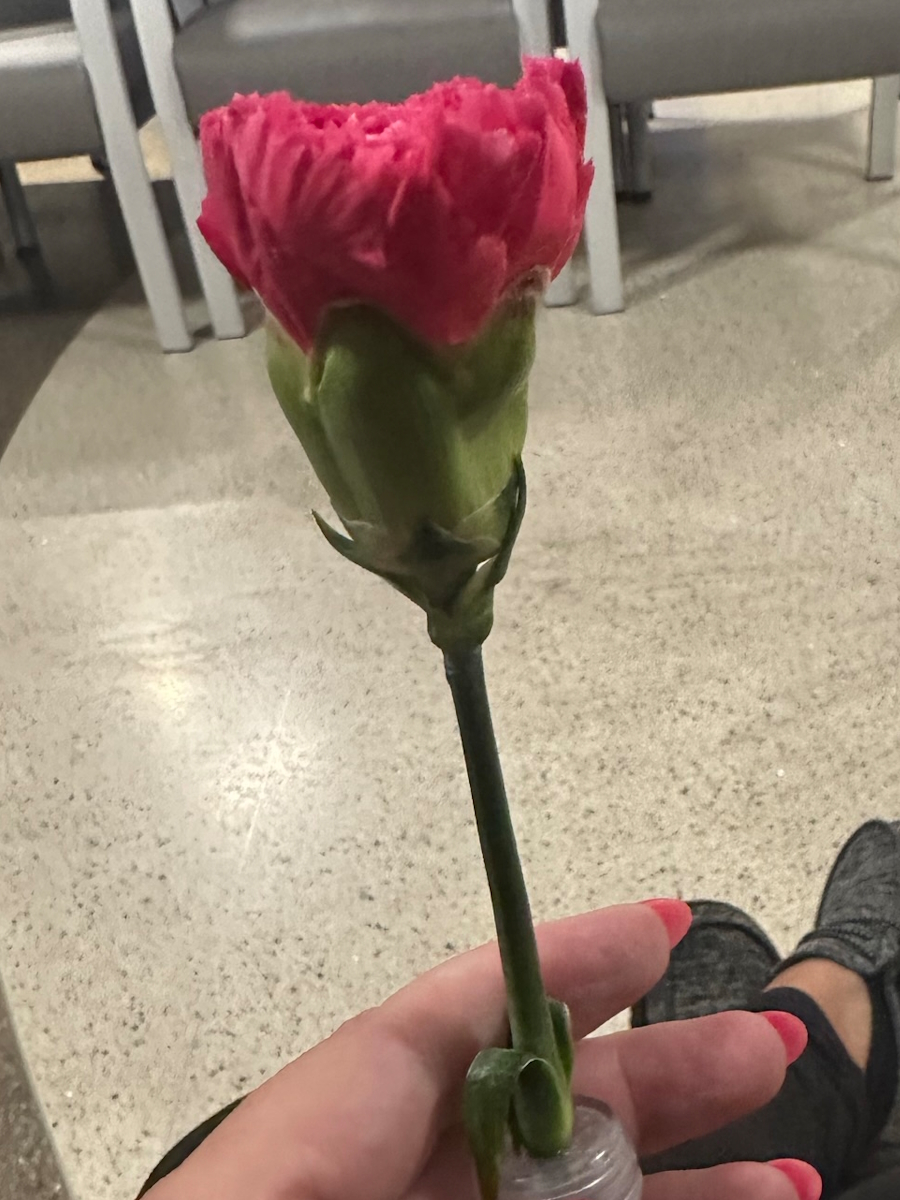
Sitting in the ER holding a carnation flower someone had handed her, Jennifer says she prayed and tried to absorb what the neurosurgeon recommended: radiation to the brain instead of surgery. Overwhelmed, she followed the medical advice before her biomarker testing was complete. Only later did she learn she had ALK-positive lung cancer and was eligible for targeted therapy, first with alectinib, then, after progression and a resistance mutation, with lorlatinib.
Jennifer’s experience with stage 4 ALK-positive lung cancer is not only about treatment decisions but also about learning to advocate for yourself in a complex system. She describes feeling like the patient is stuck in the middle, fighting for every scan, pill, and insurance approval. Over time, support groups, summits, and young lung cancer communities, including those from organizations like ALK Positive, have helped her find language, information, and courage to push back, change doctors when needed, and ask difficult questions. Read below to learn what she holds onto that gives her hope that, even with a stage 4 ALK-positive lung cancer diagnosis, she can and will live a full life.
- Listening to persistent symptoms like rib pain and a chronic cough, even without classic risk factors, can be crucial in prompting further testing for conditions like cancer.
- Biomarker testing can significantly shape treatment options, and timing matters when deciding between radiation, chemotherapy, and targeted therapies.
- Support groups, summits, and advocacy communities can offer both practical guidance (like insurance and pharmacy navigation) and emotional connection, reducing isolation and fueling hope.
- Jennifer describes a powerful transformation from shy and overwhelmed to a confident self-advocate who enjoys life more, asks tough questions, and makes big life changes to prioritize her own well-being.
Jennifer’s Diagnosis Facts
- Name: Jennifer W.
- Age at Diagnosis:
- 41
- Diagnosis:
- Non-Small Cell Lung Cancer (NSCLC)
- Staging:
- Stage 4 (Metastatic)
- Biomarker:
- ALK
- Symptoms:
- Left-sided rib pain
- Fatigue with the need for daytime naps
- Interruptive, persistent cough
- Treatments:
- Radiation therapy: targeted radiation
- Targeted therapy: alectinib, lorlatinib)
- Monoclonal antibody: bevacizumab
- Bisphosphonate: zoledronic acid
- Chemotherapy (upcoming)
This is not medical advice. Please consult with your healthcare provider to make informed treatment decisions.
- Jennifer’s Diagnosis Facts
- My path to getting diagnosed with stage 4 ALK-positive lung cancer
- Getting my lung cancer diagnosis while at the airport
- Learning about brain metastases and considering radiation
- Getting ALK-positive results and starting targeted therapy
- Navigating stage 4 lung cancer treatment options
- Living with terminal cancer while looking healthy
- How support groups and summits help me as a patient advocate
- Hope for long-term survival and future ALK-positive lung cancer treatments
- What I want people to know about lung cancer and access to treatment
- Hear from people living with stage 4 ALK-positive lung cancer
My path to getting diagnosed with stage 4 ALK-positive lung cancer
I was diagnosed with stage 4 ALK-positive lung cancer in 2024.
I had a desk job at the time, and I would notice a lot of discomfort in the rib area on my left side when I would sit for long periods. I thought it was a pulled muscle, but I wasn’t sure what was going on, so I told my family and friends.
Then I decided that I needed to contact my doctor. I went on a family trip in March and was having a lot of pain. I had a persistent cough. Whenever I’d laugh or talk to someone, I would start coughing; it was embarrassing. I didn’t know what was going on and it wouldn’t go away. I wasn’t sick, so I didn’t understand why that was happening.
I emailed my doctor at the end of April and told him about the side pain. I said I didn’t know if it was a muscle strain from pulling myself in and out of my Jeep or from sometimes chopping wood in the backyard. He referred me to physical therapy.
Within a couple of days, I told him I wanted to get a CT scan because I felt that something was wrong. At the time, I was taking naps during the day. I was fatigued and would have to take breaks from work. He ordered the CT scan, which I ended up getting on May 8, because it was right after my 41st birthday.
When the results came back, there was haziness in my left lung, which they thought was pneumonia. I had never smoked in my life, so the doctors thought that’s what it was and gave me antibiotics. But my primary care physician also referred me to a lung specialist.
I was taking antibiotics and feeling a little bit better. I don’t know if it was mental or if the drug helped, but when I went to the lung specialist, he told me to keep taking them and that he would order a chest X-ray.
From pneumonia to a bronchoscopy
When I went for the X-ray, it showed that the antibiotics did not help at all because I still had that area of concern, so he ordered a bronchoscopy. He did it himself on July 26.
When I woke up, I was shown pictures. My husband and the doctor looked a little worried. I asked what was going on. They showed me that my right lung was clear, but they weren’t able to get into my left lung because there was a blockage. He said, “We hope that it’s something that we can put a stent in. Maybe it’s some sort of problem that’s not related to cancer, but I hope it’s not a tumor.”
I was in shock. I thought, “What do you mean? I’ve never smoked. I’ve never had any risk factors. I didn’t understand.” On August 1, I was going to my sister’s bachelorette party in San Diego. I was at the Phoenix airport with my friend Taylor when I got a phone call. It was the lung specialist who did my bronchoscopy. He asked where I was. When I told him, he said we should talk on Monday when I got back.
Getting my lung cancer diagnosis while at the airport
I said no. I thought I knew what was going on and asked him to tell me, so he did. I was in shock. I thought, “How could this happen? I have a four-year-old.”
I told my friend and she was in shock too. She asked if I still wanted to go or if I wanted to go home. I said I didn’t know and that I was going to call my husband. When I called him, he was also beside himself, but he said that I should come home. I said no and that I needed to go. I said, “What am I going to do, sit at home and cry about it?” So I went. He told me, “Don’t worry. We’re going to fight this.” I told my sister and my mom immediately after because I knew that I would be acting differently. I went to the bachelorette party. It was fun, but I was also distracted.
I came home and went to my first oncology visit, which was on Monday, August 5. The doctors were encouraging. They said I should have brought tissues to this.
My first oncology visit, cancer staging, and getting a brain MRI
They said that they hoped it was localized and that since I was young, they possibly could do just surgery, move on with my life, and get scans every so often. But they also said that with a lot of lung cancers, it spreads and often to the brain, so they ordered a brain MRI, which was going to be done on August 8, a Friday.
When I went for my MRI, I wasn’t expecting there to be anything and that this could get worse. Luckily, I’m not claustrophobic, so I got through the procedure fine. Then I went to my car and as I started the engine, my phone rang and it was the imaging center. They called me back in and said they had already shared the results with my oncology team and that they wanted me to go to an emergency room.
They gave me the CD and I went to the ER. On the way, I got phone calls from my husband, which was crazy because they had already talked to him. He told me that two larger tumors could be dangerous and needed to be looked at. I continued to drive to the ER and he said he would meet me there.
Learning about brain metastases and considering radiation
Then my main oncologist’s partner called me. She told me the same thing my husband did, because she had already told him. When I got to the ER, it was a long wait, and I was worried that I wasn’t going to leave the hospital. Someone was giving out carnations in the lobby, and they gave me one because I was crying.
All I could think of was to pray. I took a picture of the flower and posted it on social media. I asked people to please pray with me.
The good thing was I didn’t have any cognitive issues. I talked to the neurosurgeon, and he said that he thought surgery would be invasive and that the best bet would be radiation.
I waited to get a second MRI because he wanted to get it redone, but it was a little bit different than the first one. They wanted to find out exactly where to target the radiation so that they could precisely find out where to aim. That was a huge deal to me because your brain is so important.
Fear, radiation to brain metastases, and early biomarker testing
I was devastated. I didn’t know how long I was going to live. I didn’t know anything. I felt so scared thinking about my daughter.
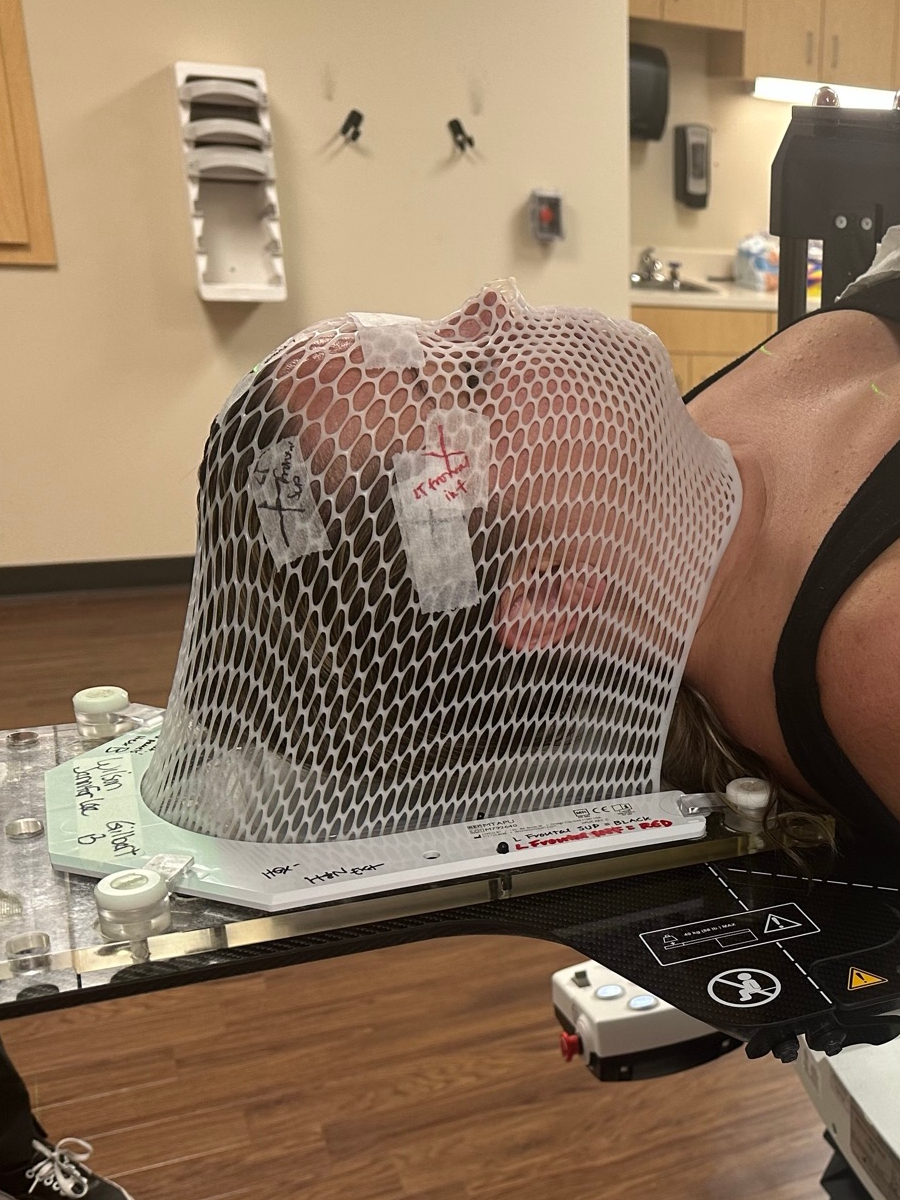
They told me that I needed radiation. I had two larger tumors and some little ones, too, but they only radiated the two big tumors. That’s scary too, because you’re putting radiation into your body, and that can do damage.
I went with what the doctor said. I was so overwhelmed with the diagnosis, but I trusted what they told me to do. Looking back, I should have questioned because we hadn’t had my biomarker results yet.
They brought up biomarker testing the day after I found out I had stage 4 lung cancer. That was on August 9, 2024. I went to the oncology team at the cancer center where I was being treated, and they told me about biomarker testing and how, if you have a DNA mutation, then your cancer is easier to treat than if you don’t have one.
Getting ALK-positive results and starting targeted therapy
The funny thing is, my tissue from the bronchoscopy was tested, and they got those results first, so I found out pretty quickly. It was around August 15 or so when I found out that I was ALK-positive and that I could start on a targeted therapy.
It went pretty quickly. I’m not sure why other options were presented, but that’s in the past. I had gotten some radiation immediately, because I remember that my third round was on August 23. It was strong and intense, and I don’t think they did very many sessions. I can’t remember exactly how many, but they had already done some radiation before I knew my biomarker results.
I was shocked to know that you could take a pill. I was taking eight pills, actually, when I got on alectinib: four in the morning and four at night. I was amazed that you could treat yourself at home by taking a pill like you do a vitamin.
When I was presented with lorlatinib, I didn’t know the difference between the two. I asked my oncologist if one was better than the other. He said there were studies, but there was nothing comparing the two drugs exactly, so he wasn’t sure whether one was better or not, but alectinib would do its job too, so we went with that.
Navigating stage 4 lung cancer treatment options
The radiation started almost immediately, which is still affecting me to this day. It makes you feel like they’re trying not to cover things and that they don’t care about you. You have to push back on every single thing. Even within the system, it feels like things are broken and that they’re not talking to each other. They are putting the patient in the middle, and it’s not right.
I was on alectinib for a year until my scans showed progression in the liver area. They did another blood biopsy to see if I had a resistance mutation, and I did. They prescribed me lorlatinib. I wish I were on it the whole time, as I feel a lot better, and I only take one pill a day instead of eight. It’s been great, and I’ve had a good response. It hasn’t been a year yet, but we’re getting to a year, and I hope it keeps working.
I live my normal day-to-day life. I hang in there, but I can live, travel, and enjoy life.
Living with terminal cancer while looking healthy
It’s a strange conversation because I’m considered terminal, but I’m living a normal life. People see me and see that I look fine. I’m exercising, going on trips, and doing everything, so they think that everything’s fine. If the medication ever stops working, there are other options. But if the cancer is aggressive or smart enough, it’s still scary.
I feel like having support groups is super important. It helps you learn more and makes you feel connected. When I have a scan coming up, I try to take it day by day and not worry about it, because the results are going to be what they are.
As long as I’m taking my medication correctly and trying to take care of myself, there’s always another option. With the way that research is going, there’s already a new one coming out very shortly, which is a fourth-generation tyrosine kinase inhibitor (TKI). I also heard that the maker of alectinib is working on a fifth-generation drug. There’s a lot of hope, and there are other treatment options too, like chemotherapy, that have worked for people with my type of cancer for years. I know so many people who were diagnosed 12 to 15 years ago, and they’re still here, which is amazing.
How support groups and summits help me as a patient advocate
My support groups are amazing. They’ve helped me through the hard times when I’m fighting insurance and specialty pharmacies. They tell me what I can do, what questions to ask, and offer solutions, which is wonderful.
I love going to the summits and connecting with people who are going through the same thing as you. You learn so much. They have so many different vendors, leaders of support groups, and doctors. Everything’s exciting, and everyone’s excited about the new drugs coming out. They’re happy, and they have hope. I love going to those.
The first time I went, I was a bit shy and stayed behind the scenes. But now, I’m full-on out there. Nobody’s going to fight for you except yourself. You have to educate yourself and find out as much information as you can. If one doctor tells you something negative, don’t listen to that and go to the next.
Lung cancer organizations and young patient communities
The first group I became involved in was LUNGevity. One of my friends, whom I first met when I was first diagnosed, was a social media influencer and advocate for lung cancer patients, and she was incredible. She told me about the HOPE Summit, so I went. I went to the ALK+ Summit as well. ALK Positive is great. They have the best support group online on Facebook, and the people are incredible.
I’m also a member of the Young Lung Cancer Initiative (YLCI), and its co-founders, Bianca and Leah, are amazing. It’s for people who are under 50 and diagnosed with lung cancer; most are never-smokers. Those are my top three support groups.
I enjoy life so much more and take better care of myself than I used to. I love learning about everything and the different treatment options, and asking the tough questions to the doctors.
Growing as a self-advocate and making life changes
I’ve definitely become more confident in advocating for myself and pushing back when I either get a “No,” “We can’t cover that,” or “This is the only option.” I ask doctors tough questions, and if they don’t like it, then I’ll move to a more positive doctor.
I’m making a lot of changes now to make my life better and happier. Because I wasn’t happy in Phoenix, we’re selling the house, and I’m happy about that. It’s been great to see my daughter change and grow up. She was in preschool when I was diagnosed, and I got to see her go to kindergarten. I didn’t know if I’d see her graduate from preschool, but I just saw her graduate in May, which was awesome. She’s wonderful.
We’re looking at renting for a while in Prescott, so she’ll get to meet new friends. Her old school was being closed anyway, so that’s somewhat of a silver lining.
Hope for long-term survival and future ALK-positive lung cancer treatments
Finding the right oncologist and team is something I’m looking forward to. I’m doing the Second Opinion Program through the ALK Positive organization, and I can’t wait. I have an appointment in November. In the meantime, I’m being seen at a medical facility that I enjoy so far.
As the future goes on, there’s going to be more and more new treatments. I’m going to live like the people I see at the HOPE Summits who raise their hands when they say 15 years. Fifteen years ago, the treatment wasn’t as good as it is now, so maybe I can live a full life.
What I want people to know about lung cancer and access to treatment
There are a lot of risk factors that aren’t known right now. Our air is very polluted in a lot of populated areas. I don’t know if that’s the cause, but you don’t have to smoke or be old to get lung cancer. It comes quick and fast, and slaps you in the face.
Lung cancer can happen to anyone, including never-smokers. Treatment access can be devastating for patients. No one fighting cancer should have to spend hours a day begging for the medicine that’s keeping them alive. It’s not right.
This interview has been edited for clarity and length. The views and opinions expressed in this interview do not necessarily reflect those of The Patient Story. This content does not replace professional medical advice.
Inspired by Jennifer’s story?
Share your story, too!
Hear from people living with stage 4 ALK-positive lung cancer
Real experiences with diagnosis, treatment choices, side effects, and life beyond metastatic lung cancer — in their own words.
Leave a Reply