Categories
Chemotherapy Clinical Trials EGFR Lung Cancer Metastatic Non-Small Cell Lung Cancer Patient Stories Radiation Therapy Stereotactic body radiotherapy (SBRT) Targeted Therapy Treatments Tyrosine kinase inhibitor (TKI)

Personalized Medicine: Biomarker Testing Guided Maggie in Her Stage 4 Lung Cancer

The Power of Personalized Medicine: Biomarker Testing Guided Maggie in Her Stage 4 Lung Cancer

Interviewed by: Taylor Scheib

In May 2021, Maggie celebrated her 60th birthday with a profound sense of optimism, believing it would be the best year of her life. However, a series of peculiar symptoms — including ocular migraines, a blood clot in her leg, and vision problems — soon derailed those plans. Following a misread EKG and a persistent cardiologist appointment, a CT scan eventually revealed stage 4 non-small cell lung cancer (NSCLC) with metastases in the brain. Despite the devastating news, Maggie’s narrative shifted from a fear of immediate decline to a focus on scientific advancement when a blood biopsy identified an EGFR mutation.

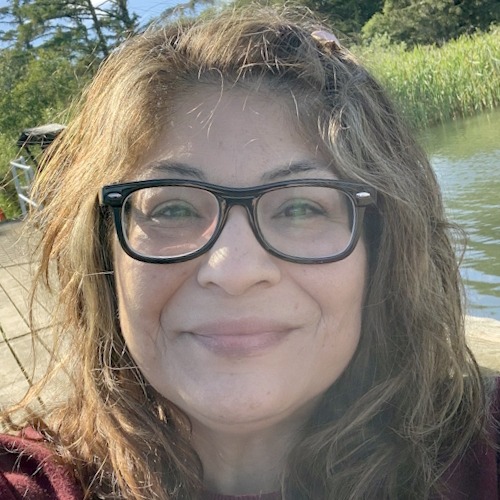
Maggie M. feature profile

The emotional turning point of Maggie’s experience occurred when she realized that cancer treatment is not one size fits all. Initially expecting the carpet-bombing approach of traditional chemotherapy, she was instead prescribed a targeted therapy pill that led to no evidence of disease (NED) within just two months. This revelation transformed her from an overwhelmed patient into a dedicated advocate who views her scans as vital information rather than sources of terror.

Over the last four and a half years, Maggie has navigated five lines of treatment, utilizing repeated biomarker testing to identify new resistance mutations like MET amplification and MET overexpression. Her experience highlights the critical role of genomic testing in accessing cutting-edge therapies, some of which were FDA-approved only a year ago.

Today, Maggie remains focused on the blue sky behind the clouds, using her voice to humanize the statistics for drug companies and providing peer support to those newly diagnosed.

Watch Maggie’s video or read the interview transcript below to know more about her story:

  • Biomarker testing is the gold standard for personalized care: Maggie emphasizes that next-generation sequencing (NGS) and tissue biopsies are essential for identifying specific mutations that can be treated with missile-like targeted therapies rather than broad chemotherapy
  • Persistence in the diagnostic process can be life-saving: Despite being told her heart rhythm was normal and she didn’t need a cardiologist, Maggie kept her appointment, which led to the CT scan that finally caught her cancer
  • Research is the foundation of hope: Maggie views medical research as the engine that provides new treatment options, noting she is currently on drugs that did not exist when she was first diagnosed
  • Scans are information, not just a source of anxiety: By reframing scanxiety as a tool for data collection, Maggie feels more empowered to collaborate with her oncology team on next steps
  • Community is a vital resource for navigating side effects: Joining mutation-specific groups like EGFR Resisters and MET Crusaders allowed Maggie to exchange practical advice on managing treatment-specific issues like skin conditions or edema
  • Even in the face of a terminal diagnosis, it is possible to find a life that is more fulfilled and grounded in gratitude than it was before the illness

  • Name: Maggie M.
  • Age at Diagnosis:
    • 60
  • Diagnosis:
    • Non-Small Cell Lung Cancer (NSCLC)
  • Staging:
    • Stage 4
  • Mutations/Biomarkers:
    • EGFR mutation
    • MET amplification
    • MET overexpression
  • Symptoms:
    • Ocular migraines (kaleidoscope vision)
    • Partial blood clot (DVT) in the leg
    • Vision and balance problems
    • Minor chest pain
  • Treatments:
    • Targeted therapy: tyrosine kinase inhibitors (TKIs)
    • Radiation therapy: stereotactic body radiotherapy (SBRT)
    • Clinical trials
    • Chemotherapy: combined platinum-based regimen
Maggie M. stage 4 EGFR+ lung cancer

AbbVie

Thank you to AbbVie for their support of our independent patient education program. The Patient Story retains full editorial control over all content.


This interview has been edited for clarity and length. This is not medical advice. Please consult with your healthcare provider to make informed treatment decisions.

The views and opinions expressed in this interview do not necessarily reflect those of The Patient Story.


Living fully with stage 4 lung cancer

Hi, I’m Maggie and I live in Northern California. I have stage 4 lung cancer. I was diagnosed in the summer of 2021.

I have an enlarged lymph node pressing against my vocal cords, so it makes my voice sound hoarse.

Passions, purpose, and the healing power of cats

I have several passions. One of my biggest passions is travel. I grew up with my dad working for an oil company, so we lived in various countries around the world. I got used to traveling to exotic places. I love to go on vacations, whether it’s around the world or locally.

Another passion is animals, cats especially. I stopped working in 2022 and was looking for things to do during my free time. A local animal rescue near me, called Joybound, was looking for people to volunteer for cat socializing and feeding. I went through the training and signed up. When I started volunteering, I’d go once a week. It basically involves playing with cats or socializing them; bringing them out of their shells if they’re shy cats or having them learn better behaviors if there are some problem behaviors.

It’s something that has helped me since my diagnosis. When I’m focusing on a cat and in the room with them, if I have upcoming scans, doctor’s appointments, or treatments, those are completely out of my mind because I am so focused on that little animal. It has been helpful. It’s like therapy for me. They give us back unconditional love.

Why advocacy became a core part of my cancer journey

Part of my personality and how I’ve always been is that I like to help others. Not long after I got diagnosed, I signed up with an organization that does peer mentoring for newly diagnosed lung cancer patients. That’s how I started my personal advocacy, by helping other people who were going through a similar experience to what I had gone through to navigate the unknown and how we all feel at the beginning of a diagnosis when we hear those words: “You’ve got cancer.”

I got involved with different advocacy groups: the Lung Cancer Research Foundation, the LUNGevity Foundation, and The White Ribbon Project. I would get to know other people with lung cancer and expand my personal community of friends and learn from them.

The advocacy where I got hooked on telling my story was in 2024. I went to Washington, DC, for the Rally for Medical Research; it wasn’t just cancer, but all kinds of medical issues. We went and talked with our representatives and senators about more funding for the National Institutes of Health (NIH) for different kinds of research. I got to tell my story about lung cancer and the importance of research. If there were a headline for my life, it would be, “Keep hope alive — why research matters,” because without research, we can’t have hope.

I realized that I could have an impact on the lives of others by telling my story. I got more involved with The White Ribbon Project, ribbon builds, and going to various events. With the Lung Cancer Research Foundation, I am part of their peer review, where patient advocates review grants for funding for different research projects. These are things where I feel like I can make a difference and learn.

From birthday optimism to a shocking stage 4 lung cancer diagnosis 

In May 2021, I turned 60 years old. I remember waking up on my birthday and having this feeling that this is going to be the best year of my life. I don’t always feel that on my birthday, but I remember feeling that on my 60th.

About a month and a half later, I had an ocular migraine while I was working. There was no pain involved. It’s like looking through a kaleidoscope with white glass and typically lasts 30 seconds or a minute in one eye and maybe the other. I Googled “kaleidoscope vision” because I remembered experiencing something similar a few years before. Sure enough, it was an ocular migraine. I talked to my optometrist about it several years ago and learned it can be brought on by stress. It was a stressful time at work because we were getting ready for an audit, so I didn’t think anything about it.

Then, a couple of weeks later, I had this pain in my leg after standing up and it didn’t go away. I thought it was a muscle cramp. It turned out to be a partial blood clot in my leg. I continued to have weird symptoms. This was around June and July.

I had other vision problems. I was referred to an ophthalmologist who ran a bunch of tests, including a complete blood count (CBC). The white and red counts were off, but nothing that would raise any big red flags. In the meantime, my optometrist suggested I get a physical because I was having all these weird symptoms, so I made an appointment to see my primary care physician (PCP) at the beginning of August.

A couple of days before the appointment, I experienced pain on the left side of my chest and then again a couple of days later. I mentioned it at my PCP appointment, so they did an EKG. The results indicated some abnormality with my heart rhythm, so I was referred to a cardiologist with an appointment for a couple of weeks out. In the meantime, I got a message from my PCP’s office that either the machine had made a mistake or somebody had misread the results. There was nothing wrong with my heart rhythm, so I didn’t need to see a cardiologist. But I decided to keep the appointment.

I explained to the physician’s assistant in cardiology what had been going on that summer: the vision and balance problems, the deep vein thrombosis (DVT) in my leg, and the pain in my chest. She thought I could be developing a pulmonary embolism, even though I was on blood thinners. She ordered a CT scan and an ECG.

I had the CT scan on August 31st at 8:00 a.m. and got the results in my health portal by 9:30 a.m. Of course, I opened it and immediately read words like “metastases.” I thought, “Wait, what? What’s going on?” I was able to get in to see my PCP at the end of the day. My PCP and the PA in cardiology were very apologetic that I got the results before they had a chance to tell me. I asked my PCP, “What are the chances that this isn’t cancer?” She said, “There’s about a 1% chance that it’s not cancer.”

A subsequent biopsy confirmed that it was non-small cell lung carcinoma. I had a brain MRI that found metastases in my brain, which were causing the vision and balance problems. I never had any lung symptoms, so it was shocking to me to have lung cancer. Of all the cancers to get, it was a complete shock.

Originally, before they found the brain mets, they thought it might be stage 3 cancer. I remember seeing a thoracic surgeon first, thinking I could have surgery. But then they did the brain MRI, so it was now stage 4. In my extended family, nobody had lung cancer, but there were people who have had stage 4 cancer and didn’t live very long. I thought all cancer was the same. I thought, “Stage 4. Okay, it’s September, I’ll get chemotherapy and lose all my hair, then I’ll be dead by Christmas.”

Surprisingly, that’s when I first learned that cancer wasn’t one-size-fits-all. My oncologist fortunately ordered a blood biopsy, which is how I found out that I had an EGFR mutation and that there was a targeted therapy pill I could take. I started taking that pill in October and by December, scans showed that there was no evidence of disease anywhere. There was nothing in my brain and my lungs.

Going back to the pain on the left side of my chest, there was no cancer there. The cancer was in my right lung and right lymph nodes. I never had that pain again. I take it as a sign from above, as if somebody was shaking me, “Maggie, come on. You need to get this tested.” I’m absolutely grateful for a machine that made a mistake.

Learning about my EGFR mutation and that lung cancer isn’t one-size-fits-all

At the time, I remember my oncologist doing a blood draw. I don’t remember her explaining about biomarkers. She might have, but in those first few months, I felt like I was in a fog. It was such a shock to have lung cancer, and then finding out that I wouldn’t have chemo, it was different.

Because I had a mutation, my oncologist had me get a second opinion from an oncologist at the University of California San Francisco (UCSF) who was more familiar with my mutation and explained a little bit more about it. She guided me to some different groups, like EGFR Resisters and Lung Cancer Research Foundation. That was when I also started my quest for knowledge about lung cancer. I’m not an expert, but I sure know a lot more than I did four and a half years ago.

The emotional whiplash of a cancer diagnosis

The brain fog comes in from being so overwhelmed. Part of my personality, in addition to liking to help people, is that I like to be in control of things, so cancer threw me for a loop because it was not part of my plan. When I woke up on my birthday in May and when I felt it was going to be the best year of my life, this was not what I had envisioned.

I started with the targeted therapy pill in October and had scans in December, which showed no evidence of disease. I felt like I’d been punked. Like somebody would come out and say, “Hey, Maggie, sorry; we were kidding,” that the machine made a mistake, or maybe someone else’s test results somehow got dropped into my chart, as crazy as that sounds.

One thing somebody told me early on was to make sure that I brought somebody else with me to my appointments. Fortunately, for all those appointments at the beginning, I had somebody with me who was hearing these words that I wasn’t hearing. But still, having cancer, and then suddenly they couldn’t find the cancer? I remember a friend even said to me, “Maggie, you don’t seem as happy as you should be. You don’t have cancer.” I was thinking, “I’m getting my head around the fact that somebody told me that I did have it. What do you mean I’m not happy enough?”

My treatment journey through five lines of therapy

My targeted therapy resulted in no evidence of disease after two months. I stayed that way from January through September 2022. Then a scan in September showed that the cancer had come back at the original tumor site, which was in my upper right lobe. One of the options was radiation or stereotactic body radiation therapy (SBRT). I had a cruise planned over Thanksgiving, so the radiation had to get done in November before my cruise, which thankfully worked out. Doctors are so accommodating. I find all the cancer doctors are wonderful.

In the spring of 2023, another scan showed some more progression. My oncologist ordered another blood biopsy and also a tissue biopsy from my lung tissue. The blood biopsy came back and showed that I had developed a resistance mutation: MET amplification. This can happen a lot of times for EGFR patients who are on tyrosine kinase inhibitors (TKIs). It’s a resistance mutation that develops.

What was fortuitous was that the clinic I was going to happened to have a phase 2 clinical trial that was opening up and accepting new patients for people in my exact situation: EGFR patients who had progressed on a TKI because of MET amplification. I went on that clinical trial. I was in the control group, so I stayed on the targeted therapy for EGFR and added a targeted therapy drug for the MET amplification. That treatment regimen worked for nine months. It seems I could go in nine-month intervals.

Then a scan showed the cancer had come back. The site had grown more than 20 or 25%, whatever the cutoff was for the trial, so I got dropped from the trial. I had some more SBRT. More scans in the summer of 2024 showed more progression.

The next option was chemotherapy. On World Cancer Day, August 1, 2024, I started chemotherapy. I did six rounds of platinum-based therapy and some more rounds of the other chemo drug alone.

Then in January 2025, a scan showed progression again. The chemo had worked for a while. I had stayed on the targeted therapy pill. Blood biopsies, since the first one in 2023, have never shown MET amplification. But I’ve had tissue biopsies from lymph nodes and those showed that I still had the MET amplification in addition to EGFR. My doctors knew that we needed to treat both mutations in order to be successful in pushing back the cancer.

I was on combined drugs for the MET amplification and a different drug for the EGFR mutation from March through October 2025. But one of the typical side effects of the drug for the MET mutation is edema. I ended up getting severe edema in my lungs as pleural effusion, so I had to have thoracentesis procedures to remove fluid. I was short of breath all the time. The side effect of the drug outweighed the benefit. It was working, but it was just outweighing the benefit, so I had to stop treatment. That was my fourth line.

Recently, I started my fifth line. Another test that my oncologist did was immunohistochemistry (IHC) testing. You do a FISH test to get the MET amplification result, and you can do IHC, which tests for overexpression. In addition to amplification, I also have MET overexpression. It’s a double-edged sword in a way, but this one opened up a new line of treatment, a new drug that will work better for me because it targets the overexpression. I’m going on that and then back on another drug to target the EGFR mutation.

I’ve gotten used to seeing progression in my scans. I look at scans as information. I used to get freaked out by them, but not so much anymore. If something is going on, it’s going to help direct my oncology team and me to figure out the next line of treatment, and I’m always hopeful that there will be a next step.

Why biomarker testing is critical for every lung cancer patient

Biomarker testing is critical for getting patients the right treatment, especially for lung cancer. It’s not one-size-fits-all. It’s not just chemo for everyone. You have to know what your biomarkers are. You have to get genomic testing, next-generation sequencing (NGS), and RNA and DNA testing, because there are drugs out there that have been developed to target specific mutations. If you have a specific mutation, then you can get access to the drug that’s going to work for you.

It’s not throwing everything at it and hoping something will stick; it’s a dart. It’s a little missile attacking your mutation. I have this analogy in my head. The cancer cells are like sleeper cells, the little spies that look like everyone else. They come into a town, and everybody accepts them. They’re a little bit different, but they seem fine. Then suddenly, these sleeper cells get activated and they start killing the other cells in the town.

The first method of attack can be chemotherapy, which I consider like carpet bombing. You’re killing those sleeper cells, but you’re also killing everybody else. But then you’ve got the SEAL team that comes in, the snipers. That’s what the targeted therapies are like. Those are drugs that go in like little missiles and target those cancer cells, leaving the healthy cells alone. The healthy cells can still live and thrive in your body, but the cancer cells will be gone.

How lung cancer communities and mutation-specific support groups change everything

Find your people, people with the same mutation. First of all, finding other people with lung cancer is so important. I went to a LUNGevity Foundation event. They hold an annual event called the HOPE Summit, which I went to for the first time in 2024. I was skeptical. I thought, “What’s this going to be like, being in a room with a bunch of people with cancer? Is it going to be depressing?” On the contrary, it was uplifting. You see other people and they’re thriving. You can learn from other people.

Then, drill down further to the specific groups. There are the MET Crusaders, which I’m involved with, and EGFR Resisters. Within those groups are your people, because those are people who are on the same drugs as you are. They may even be seeing the same doctors and specialists. If they’re on the same drugs, they’re probably having the same side effects. Let’s face it: these drugs are killing cancer, so they’re probably going to have some not-so-pleasant side effects from time to time.

Being with other people in your mutation community, you learn from them. I can also give advice but not medical advice. You can share, “From my experience, these are the lotions that I’ve used that have worked well on this skin situation I had. But be sure to ask your dermatologist first.” You don’t feel alone, like you’re the only person with this situation.

I’ve met so many amazing people since getting diagnosed with lung cancer. I laugh sometimes: get lung cancer, double your friend count on Facebook. It’s an amazing community. I’m sure other cancer communities are exactly like that. I’m not grateful that I have cancer, but I’m grateful that I met all of these wonderful people and have had opportunities presented to me that I wouldn’t have had without lung cancer.

What I learned about biomarkers and personalized medicine

Biomarkers allow for personalized medicine. It’s about finding the right treatment for that patient at the right time. Any time I’ve had progression, I’ve either asked for a blood biopsy. It had been a year since I had a tissue biopsy, so I asked my oncologist, “Can we do another tissue biopsy?” Tissue biopsies are the gold standard to find out what’s going on with the cancer. A blood biopsy is only as good as what happens to be circulating in your bloodstream at the time.

It’s about personalized medicine and tailoring the treatment to the patient. The patient and the oncologist need to be able to work together and come to an agreement on what that treatment will be. Educating myself on what drugs are important for what treatment and what drugs are for what biomarker is critical.

Recently, I was going to go on a drug for the MET overexpression, and I asked about a drug for EGFR. Initially, my oncologist said, “The drug for overexpression has some chemotherapy with it, so it should be able to take care of the other mutation.” I remembered reading something and talking with another oncologist in the past, so I reached out to that other oncologist, who then directed me to a clinical trial that had been done. In that trial, people who had MET overexpression and EGFR did better if they were on drugs for both mutations. I was able to look at the clinical trial results and cite results from that study back to my oncologist. I brought that information to my oncologist and he agreed. Now I’ll be on drugs for both mutations.

How shared treatment decision-making can transform your care

I’ve always gotten second opinions. My oncologists have always been supportive of that. At the beginning, I was seeing a general oncologist, and she encouraged me to get second opinions. When I had progression at the beginning of 2025, I switched my care to a thoracic oncologist. This far in, I want to be with a lung cancer specialist.

My oncologist and I make the decisions together. He never acts annoyed when I bring up other perspectives. The other people I consult with all know each other. If I say, “I talked to Dr. So-and-so,” he can talk with that doctor himself or look up a study.

Not everyone knows everything, even if you’re an expert. I’m so appreciative of my oncologist and the input that I have, because it’s ultimately my life. If he doesn’t agree with something, he explains why he doesn’t agree with it. It’s not like I always get my way, but I feel heard.

How advocacy, research, and letting go sustain me through stage 4 lung cancer

I like to have a plan for things. A friend of mine told me that for someone like me, getting something like cancer, where you can’t control what’s going to happen, has been a good learning experience to let go of some of that control, to let things play out, and see what happens.

I do what I can to control what I can. I can control my advocacy efforts. I can control my research, like looking up new drugs and going to conferences. I like going to lung cancer and cancer conferences. I feel like I can learn a lot about new treatments on the horizon. I can also let people see what someone with stage 4 lung cancer looks like. To the people at the drug companies, this is who you’re making these drugs for. You’re not doing it for some faceless person. You’re doing it for me.

Living fully with stage 4 lung cancer through gratitude and reframing

Even before I had cancer, I learned that we all have emotions. We feel happy, sad, and anxious, among other things, and there are thoughts that go along with those emotions. I learned early on that I can control my thoughts. I can decide how I want to look at something.

The way I chose to look at lung cancer is, “What am I going to learn from this?” I don’t look at it like, “Woe is me.” Some days, I feel that way, but mostly I think, “What can I do to live my best life? What can I do to be fulfilled?”

My life is so much more fulfilled now than it was before I had lung cancer. I have gratitude now that I didn’t have before I got diagnosed, because I know now what it feels like to not know if I’ll have tomorrow or next year. My goal right now is to make it to five years. If I do, I will have gone on this fantastic trip up to Greenland and Iceland to see the solar eclipse; that’s my plan for August.

I’m learning gratitude, how to control my thoughts, and how to reframe things. What can I learn from this situation? How can I look at it differently? Is this a helpful thought? I’m not ignoring my emotions or my feelings, but I’m trying to reframe and think about things in the best way I can.

Why every lung cancer patient should consider clinical trials as an option

Everybody should consider clinical trials. There are different phases of clinical trials and different trials. I’ve been in two clinical trials, and I’m in another one related to the radiation I had. As a patient, make sure the trial is explained to you, especially the benefits and risks. You’re getting access to drugs that you might not otherwise have. There may be drugs that your insurance won’t approve, but you can get through a trial. I feel good about having done the trial because I feel like I’m helping people in the future who will hopefully benefit from the experience I’ve gone through.

Starting a fifth line of treatment and preparing emotionally for a new drug and renewed hope

My biggest concern with a new drug is usually side effects. What are the potential side effects going to be, and how can I manage them if they come up? What’s the plan if the side effects get to be too much? I personally go in thinking that the drug is going to work; that’s not my concern. It’s just something new.

This new drug has been recently approved by the FDA. It wasn’t even available when I got diagnosed four years ago. I didn’t even know I was a candidate for it until October 2025. But when I first got the infusion, I thought that I would feel something. I didn’t, but I know that’s good. No side effects. I hope it’s in there, killing all those cancer cells and doing exactly what it’s supposed to be doing.

My advice for patients who don’t know about biomarker testing

Some of the different lung cancer groups have information on their websites about biomarker testing. Where I learned about it was the Lung Cancer Research Foundation. They have done webinars and past webinars are available on their website. There is one where they talked about biomarker testing and next-generation sequencing, the importance of tissue testing, and the kinds of tests to get for biomarkers.

Definitely ask your oncologist. If your oncologist isn’t doing biomarker testing, then you need to ask for it. There are different blood biopsy companies that do biomarker testing. Though tissue testing is still the gold standard, sometimes it’s difficult to get enough tissue samples. If you’re lucky, like me, to have lymph nodes that are easy to reach, where they can get more tissue, those are great for biomarker testing.

You won’t know what treatment you need without biomarker testing, even to know if you don’t have a biomarker. In addition to biomarkers, there’s PD-L1 and that can direct treatment, too. If you have a higher PD-L1 number, you might be more of a candidate for immunotherapy than someone with low PD-L1 numbers. These are important things to know that can direct your treatment as a new patient. Without that information, it’s like throwing a dart in the dark.

What hope means to me

Hope means a good future. It means research. Research means hope. Hope means research. Without research for new drugs and new treatments, treatment comes to a standstill. I’ve been on two different drugs that weren’t around when I was first diagnosed. Even the way my mutation is treated has changed; it’s treated differently now for newly diagnosed patients. That’s part of hope. For me, it goes along with gratitude and being more in the moment. Hope is so important because without hope, what is there?

My message of hope for anyone feeling hopeless

There was something I learned through meditation: the blue sky is always there. It’s covered by clouds sometimes, but the blue sky will always come back. You might be feeling hopeless in the moment, and it’s important not to ignore those feelings. You have to live that. You have to lean into those feelings. But that’s not a forever feeling. You will feel hopeful again. You will move through it. If you’re in a dark place, you will move through it.

Reach out to friends and family. If you’re religious, reach out to religious support groups. Talk with your oncologist. Talk with your oncology nurse. Talk with other people online. Look for a peer support partner. There is hope. There is blue sky behind the clouds. Trust me, it’s there.

Gratitude, oncologists, and a life without an expiration date

I’m so grateful to be able to tell my story and for people in the field of thoracic oncology. I’m appreciative of anybody who goes into oncology. I’ve been fortunate that everyone I know in oncology has been wonderful.

I’ve also never had anyone give me an expiration date. And I’m grateful for that.


Maggie M. stage 4 EGFR+ lung cancer
Thank you for sharing your story, Maggie!

Inspired by Maggie's story?

Share your story, too!


AbbVie

Thank you to AbbVie for their support of our independent patient education program. The Patient Story retains full editorial control over all content.


This interview has been edited for clarity and length. This is not medical advice. Please consult with your healthcare provider to make informed treatment decisions.

The views and opinions expressed in this interview do not necessarily reflect those of The Patient Story.


More EGFR+ Lung Cancer Stories

Jennifer M. EGFR-positive lung cancer

Jennifer M., Lung Cancer, EGFR+, Stage 4 (Metastatic)


Symptoms: None per se; discovered during physical checkup for what seemed to be a sinus infection

Treatments: Radiation therapy (stereotactic body radiation therapy or SBRT), targeted therapy
Samantha V. stage 2 lung cancer

Samantha V., Lung Cancer, EGFR+, Stage 2, Grade 3


Symptoms: Breathlessness, hoarseness, sinus infections, fatigue, pain in left side

Treatments: Clinical trial (targeted therapy)

Natasha L. stage 4 lung cancer

Natasha L., Lung Cancer, EGFR+, Stage 4


Symptoms: Hoarse voice, squeaky breathing, cough, weight loss, fatigue

Treatment: Targeted therapy


Jeff S., Lung Cancer, EGFR+, Stage 4 (Metastatic)


Symptom: Slight cough

Treatments: Surgery, radiation, chemotherapy, targeted therapy

Jill F., Lung Cancer, EGFR+, Stage 1A


Symptom: Nodule found during periodic scan

Treatments: Surgery, targeted therapy, radiation

Categories
EGFR Lung Cancer Non-Small Cell Lung Cancer Patient Stories Surgery Thoracotomy Treatments

“One Scan Saved My Life:” Shira’s Surprising Diagnosis With EGFR+ Lung Cancer

“One Scan Saved My Life:” Shira’s Surprising Diagnosis With EGFR+ Lung Cancer

Shira was the picture of health. She is a lifelong athlete, a mother of four, and a dedicated runner who logged miles effortlessly. She is also a nonsmoker and had no family history of lung disease, making her eventual EGFR-positive lung cancer diagnosis a complete shock. Her experience began not with symptoms, but with a preventative full-body MRI her husband encouraged her to take. While the scan was intended to offer peace of mind, it instead revealed a “minor” finding on her lung. Because MRIs are not typically used for lung evaluation, the finding was initially dismissed, but Shira’s intuition and the nudge of a family loss pushed her to investigate further.

Interviewed by: Taylor Scheib
Edited by: Chris Sanchez

Leveraging her connections in the healthcare industry, Shira consulted Dr. Kim Sandler at Vanderbilt University Medical Center, who immediately recognized the concern. Within a whirlwind week, Shira went from a six-mile run to a diagnostic CT, a bronchoscopy, and finally, a confirmation of adenocarcinoma. The tumor was “on fire” — fast-growing but fortunately contained. She underwent surgery to remove the mass just days later, bypassing chemotherapy and radiation due to the early detection.

Shira B. lung cancer

Now cancer-free, Shira’s relief has transformed into a powerful advocacy mission. She realized that current screening guidelines miss a vast number of non-smokers like her, leaving them vulnerable until it is often too late. Through her book and non-profit work, she is fighting to change the narrative around EGFR-positive lung cancer and lung cancer in general, dismantling the stigma that it is a “deserved” disease, and pushing for standard CT screenings at age 40, alongside mammograms, to save more lives.

Find out more about Shira’s story by watching her video and reading the edited transcript from her interview.

  • Cancer doesn’t care about lifestyle. Shira’s story illustrates a universal truth: you can eat right, exercise, and never smoke, but if you have lungs, you can get lung cancer. The disease does not discriminate based on how “healthy” you appear
  • Trust your instincts over “minor” findings. Even when a scan result is labeled “minor” or incidental, following up with a specialist, specifically a pulmonologist or thoracic expert, can be the difference between stage 1 and stage 4
  • Advocate for better screening. Current guidelines often exclude non-smokers, yet many newly diagnosed patients don’t fit the criteria
  • Requesting CT scans. Shira urges patients to ask their doctors about CT scans, even if they have to pay out of pocket or push for insurance coverage
  • The power of “scanxiety“: The emotional toll of survivorship doesn’t end with remission. Shira candidly shares the reality of “scanxiety” — the intense fear before check-ups — and how she manages it by stacking appointments to minimize the days she spends worrying
  • Transformation into advocacy. Shira turned her traumatic week of diagnosis into a lifelong purpose, shifting from a private person to a vocal advocate working to change national health policies and lower the cost of life-saving scans

  • Name: Shira B.
  • Age of Diagnosis:
    • 43
  • Diagnosis:
    • Non-Small Cell Lung Cancer (NSCLC)
  • Staging:
    • Stage 1B
  • Mutation:
    • EGFR exon 20 insertion
  • Symptoms:
    • None per se; discovered during a preventative full-body MRI
  • Treatment:
    • Surgery (thoracotomy)
Shira B. lung cancer

This interview has been edited for clarity and length. This is not medical advice. Please consult with your healthcare provider to make informed treatment decisions.

The views and opinions expressed in this interview do not necessarily reflect those of The Patient Story.


Who I am

My name is Shira. I live in Nashville, Tennessee, and I am a lung cancer survivor. I was diagnosed in October of 2025, and I have been cancer-free for three months.

I grew up in Santa Barbara, California, and both my parents are doctors. My dad is actually a lung specialist, which is quite ironic in this whole process. My two brothers are orthopedic surgeons, still in Santa Barbara. My husband and I met in San Francisco, and we have four children. Our oldest is a freshman in high school. I have boy-girl twins, and they lived in seven states before they turned ten, so we moved a lot. They were born in New York, my third was born in San Diego, and my fourth was born in Newport Beach. Then we lived in New Orleans, Washington, D.C., and Montana. Now we live in Tennessee.

I am grateful and hopeful that I am done moving for a little while. Nashville has been great. I have two in high school, one in middle school, and one in lower school, and they are all together at the same coed, non-denominational school on the Vanderbilt campus. It is one drop-off every morning, and I love it. I load them up in the minivan and take them all to school, and the afternoons are insane, running around between all their sports and activities, but it is fun.

Running through an EGFR-positive lung cancer diagnosis

Since I was young, I played sports just like my kids are doing. I always loved running. My dad loves to run too, and one of my brothers loves to run; it is something we have always done. I think it is important, and it is fun because you can do it anywhere you are. Wherever you are traveling for work or for fun, you can always go for a run. It is harder to find a group of nine other people to play a pickup basketball game, but you can always go for a run.

I grew up running and playing a lot of sports. Basketball was my big sport in high school. Even though I am towering at 5’5″, I figured out how to be scrappy enough at point guard. I just love to run. That is my mental health outlet and my saving grace. It is what I do when I am the most stressed out and the most anxious about anything — I go for a run.

When I ended up with EGFR-positive lung cancer, I just kept telling them, “Wrong person, I just ran, I just ran.” I think it is fascinating that I literally went for a six-mile run the morning of my scan. I was the person who showed up at the scan kind of sweaty, and I was like, “Sorry, I’m sweaty. I just ran six miles.” When I went in and had my pulmonary function test after they found the cancer, the surgeon came in and said, “I’ve never seen someone with such strong lung capacity. You are right that you are a runner and that your lungs seem to be operating.” They had compensated for the cancer and taken over, and I was still running. I am still running now. I took off two months and started running again, and I am back to running my six-mile loop with my girlfriend in the mornings.

The decision to get a full-body MRI

My parents are both doctors, my brothers are doctors, my grandfather is a doctor, and my father-in-law is a doctor. We have all been in the medical community forever. I even studied molecular and cell biology in undergrad, so it has always been interesting, and we have always paid attention to it. My husband runs a healthcare investment firm now, and he worked in the government running innovation for Medicare and Medicaid, too.

For example, when 23andMe first came out, we were quick to buy the kits, spit in them, and learn more. We both had our full genomes sequenced about five years ago because we found it interesting. When the Grail Galleri blood test came out for cancer detection, we were doing it every year because we found it interesting. When these full-body scans came out, he ran in to do it, and I didn’t because I am claustrophobic. I have to do a breast MRI every year because my mother is a breast cancer survivor, and I have to wrap my head around that mentally for days before. I sometimes get a Valium pill, and I just hold it in my fingers really tight, hoping for osmosis because I don’t actually want to take the medication. I am really active, and I eat healthy, and I am not somebody who takes medicine, so I don’t want to take it.

I hold it up, and I know that it is just a mental block because no one else runs out of oxygen in the tube, but I have that. I think it is combined with the anxiety of my mom going through breast cancer and going with her for these mammograms and MRIs. When I get into the machine, I completely panic. When he started getting these scans, I rolled my eyes and didn’t want to do them. I would get my blood work done and do the other things.

When we were in New York over the summer, he pushed me again and again to get the scan, and I canceled the appointment again and again. Ultimately, I went for a run, went and got the scan, and held the Valium between my fingers in a total panic for 45 minutes. I know that they are open on both ends now, and I know that they will pump in music, or you can watch a TV show or a movie. It doesn’t matter. My eyes are clenched shut, the Valium is between my two fingers because I don’t want to ruin my day, and I try to sing to myself over and over again to get through it. “That is ultimately the scan that saved my life and found it.”

Full body MRI findings: A “minor” spot on the lung

The scan I got was called Prenuvo. I have worked with them a lot over the last couple of months. What was interesting about it, and what I have learned through this process, is that when you look at somebody’s lungs, an MRI is not as good. An MRI is better for your liver, your kidney, and the bigger organs, your brain, but for your lungs, because your lungs are mostly air, it is not as good.

When the scan came back, it actually found a mass in my lungs, but it said that if I was not symptomatic, I didn’t really worry about it. It is a minor finding. I was not symptomatic. As I said, I was running, and it kind of dismissed it a little. I don’t want to blame them for that. I think there is a missed opportunity because an MRI isn’t great for the lungs, which is something I learned later. When I shared the scan with my dad, who is a lung doctor, he said, “The lungs aren’t… that’s not how we look at lungs. We really use a chest CT.” He said, “You should follow up with that in a couple of months.” To be honest, I kind of put it on the back burner. There was nothing else significant in my scan, and it was considered a minor finding.

I credit a lot — my aunt was sick and dying of stomach cancer, and she and I were very close. She passed away at the end of August. It was after that that I thought more about the scan. I don’t know if she went up there and nudged me a little bit. Ultimately, I went at the very end of September and had a chest CT. I asked for the CD like old school from the doctor, and I took it and actually gave it to a girlfriend of mine. Dr. Kim Sandler is a lung cancer radiology specialist here in Nashville at Vanderbilt. She and I met about four and a half years ago. Her kids go to the same school as mine, but we are all friends, though our kids don’t really overlap.

I continue to keep in contact with her. She is a powerhouse in the lung cancer screening world. We would have sushi once or twice a month, and she would share with me all of her research. She gets to travel all over the world and speak about lung cancer, which is really cool. She would say, “I’m going to Spain and London,” and we would pick out our outfits and discuss what she was talking about. I would read her slides, and we just became friends.

From MRI to diagnosis: Advocating for a chest CT

When I got the CD, I took it to her husband because she is working in the hospital all the time, and he brought it to her. She looked at it on a Saturday night and called me. I learned later that she knew instantly that it was likely lung cancer. She called one of her favorite pulmonologists. She booked me an appointment. She booked me a diagnostic CT scan, which, instead of looking at the tumor with five-millimeter slices, does a one-millimeter spiral slice. She even booked an O.R. room for a bronchoscopy for the next day, but didn’t tell me. She just called and said, “Hey, I’m looking at it. I want you to redo the scan. I want you to meet the pulmonologist. And where is your husband?”

She called him, and she shared more with him than she did with me, and told him to get home immediately. That was a Saturday night.

He flew home on Sunday. I went for my six-mile run on Monday morning. I went and had the spiral CT at Vanderbilt, and then I drove to the pulmonary specialist’s office. Kim called me and said, “My partner read your scan.” I said, “Okay.” And she said, “Where’s Adam?” I said, “He just landed. He’s on his way to the hospital.” She said, “Okay,” and hung up. I think she couldn’t be the one to say it without someone there with me. My husband has a knack for timing. He is always late to everything, but he shows up just in the nick of time. I went through and had the blood pressure, height, weight, and all the prep. I was sitting in the room by myself, and as the pulmonary specialist walked in, he walked in. That is when they said they thought I had lung cancer and that they had booked me a bronchoscopy for the next day. They would put me out, put me on a ventilator, and take a piece of the tumor to test it.

That was kind of the beginning. We told the kids that night. Tuesday, I had my bronchoscopy. When I woke up from the bronch, I even told the pulmonologist, “Wrong person, right? Wrong scan. I don’t have lung cancer. I’m a runner. Is this malpractice?” He just looked at me and said, “No, Shira, you have lung cancer.” Which is still hard for me to believe, to be honest.

Ultimately, on Wednesday, the lab work came back, and it said adenocarcinoma. Thursday, I met a surgeon and did my pulmonary function test, at which point he was like, “They look perfect.” Then Friday, I went in for a PET scan. Actually, my friend Kim’s dad is the nuclear medicine doctor at Vanderbilt. He did my PET scan, and he was awesome. He came in right away and just said, “Look, it’s on fire. I don’t see any lymph nodes. I don’t think it’s spread beyond your lungs, but you need to get it out.” That is the first time that I think I panicked the most. I went straight to my husband, and I was like, “You’re a bulldozer. I need this out. I want it out on Monday. I don’t want to wait anymore.” Even the nuclear medicine doctor said, “You need it out. It’s on fire.” Meaning it appears to be fast-growing. “We don’t see it in your lymph nodes. You have got to get it out as soon as possible.”

Surgery and recovery: “Cancer doesn’t care”

They took it out first thing Monday morning. That was in October. It feels crazy because I only knew that I had EGFR-positive lung cancer for a week, which I think is an insanely short amount of time for people who go through this. I am really lucky, and I think a lot of that is because we are in the healthcare industry. What are the chances that the girl I have sushi with two days a month is also the premier lung cancer radiologist, and her dad is in charge of nuclear medicine? All these things worked out. I say it was meant to be, and it kind of all worked out.

I also think, and I know how lucky I am, that not only are we tied into the healthcare industry, but I could also afford these scans. I know they are not affordable, and that is something I am really working on. After that week, I had it out and was in the hospital for a few days with the terrible chest tube, and then came home. I started doing more research because I wasn’t allowed to run for a couple of weeks, and I had to sit and lie and relax for a little bit.

It was during that research that I really learned that I am not unique in all of this, and that it is not rare. That is when I started to kind of panic. That is why I wrote a book, started social media, and did things like that this month. What I realized was, number one, cancer does not care. It doesn’t matter if you have connections in healthcare and this and that, but if we can scan people earlier, it is just a better outcome later. For example, mammograms — now we all get mammograms at 40. People are still dying from breast cancer, but a lot fewer people because we are catching it a lot sooner. Same thing with the colonoscopy; they just moved it from 50 to 45. It is terrible to go through breast cancer, and it is terrible to go through colon cancer, but we are catching it where we can treat it, and we can survive it.

That is what I realized with lung cancer. In order to be scanned, you have to meet the criteria that are recommended in the guidelines. The guideline criteria is you have to smoke a pack a day for 20 years and be over 55. What I found in my research was that actually less than 30% of people being diagnosed with lung cancer right now qualify for the scan, which means that on the other side, “70% of us, including me, don’t qualify for the scan but are getting lung cancer.” We need to expand that. I was lucky enough that I could pay for it myself, but it is not affordable.

What I started realizing when I was doing all this research was that I was not unique. I was not special. This is everywhere, and people aren’t catching it. What I had a hard time with, which is how I found The Patient Story a little bit, was that I couldn’t find any peers who were lung cancer survivors. It was very difficult to find them because most people catch their lung cancer once it is hip pain, and then the cancer is in their bones and in their brain. That is when I realized I wasn’t unique that I had lung cancer, but I was unique that it was big enough to show up on an MRI, big enough to show up on a CT, and small enough that I could just surgically remove it. I don’t need chemo or radiation. I am not taking any targeted therapies or immunotherapies. They are like, “Okay, we’ll just monitor you. You’re done.” That is the best-case scenario.

I found out today, actually — I started crying at my dentist appointment because I got my teeth cleaned — but my oncologist texted me that my tumor from my surgery just got back, and it was categorized as a low risk of recurrence. I was so glad because that was the last piece of this three-month process of data that I needed. If it were high-risk, they were going to maybe recommend four months of chemo, which I can handle, and I can go through.

The reason I think I was more hesitant about doing the chemo is that to my kids, though they know I had cancer and that I am a lung cancer survivor, they sometimes say, “Well, you didn’t really have real cancer, mom.” I don’t think that is because I didn’t have real cancer, but when they think of somebody with cancer, they think of bald, sick, and tired. I was able to bounce back from surgery, and I am running again, and I didn’t lose my hair. I think it has helped our family and the kids. I don’t think we had that same difficult period that most cancer survivors go through. I feel really lucky. The only reason is that I caught it early. That is the only reason, because cancer doesn’t care. It could have been anyone and everyone. Now I get monitored and checked. My first follow-up check is on Friday. So tomorrow I get my next scan.

Breaking the news to my family and kids

It is interesting; what I found in this whole process is that I am an oversharer, and I tell everyone everything. I have met several lung cancer survivors who don’t want people to know that they are lung cancer survivors and don’t want to talk about it. One didn’t share it with her children. One shared it with her family, but has requested that it never be shared with anyone else. A third shared it with their family but keeps it quiet from the rest of the world. Some of these people are pretty high-profile people who I think would help the lung cancer awareness community. One of them ended up sharing it with her family and friends after we spoke, and she felt like, “I needed you to give me that inspiration to share.”

I think part of it is because when you do share — or for me, with lung cancer — the narrative around it is so negative that it is really fatiguing and hard to hear. When I shared it at first with people that I work with every day — they have known me for four and a half years — their responses were things like, “Oh, I didn’t realize you smoked.” That is really hurtful. I was like, “I’m sorry, you know me so well. Do I even drink alcohol?” And they are like, “No, not really, occasional drink twice a month.” And I am like, “Yes. But you think I’m smoking a pack a day and hiding it from you?” They are like, “Yeah, I guess I’ve never smelled it or noticed it, but you have lung cancer.” I said, “Well, fair, but I’m not a smoker.”

I think that is really hard. It is very fatiguing when people say that, or they say, “Oh, but you’re so healthy, is it that you use a lot of dry shampoo? Oh, is it hairspray? Oh, do you cook a lot in bad cooking oils?” What I found myself doing was defending my behavior. Really, I exercise, I run, I eat healthy, I go for the fridge, not the pantry. I try to do all the things we have been taught to do. What I realized in this whole process is that everyone is protecting themselves. They want to say, “Oh, I don’t smoke, therefore I won’t get lung cancer,” or “I don’t use dry shampoo or hairspray,” and therefore they are protected. It is them protecting themselves, not projecting their negative feelings onto you.

I started realizing that we need to change the whole narrative about lung cancer because people should get their lungs checked. If you have lungs, you can have lung cancer. I never thought to myself when a friend had breast cancer, “Oh, you deserve that,” or “You probably did that to yourself.” What I found with lung cancer is that I have had people tell me that it is a lifestyle choice, that it is a deserved disease, and it is not. It wasn’t my lifestyle choice, and it wasn’t a deserved disease.

When I first told my family that Monday, when they told me it was likely that I had lung cancer, I actually had my husband pick the kids up from school, which was his first time. When the kids came home, and I was sitting on the couch, they walked in, and they said, “Are you guys getting divorced?” We were like, “What? No.” Then they said, “Does mom have cancer?” I was planning on not using the C-word, easing into it. My husband and I froze. We were like, “Why would you say that?” And they said, “Well, Dad’s never picked us up from school before.”

We sat down and walked through that. They found a spot on my lung, and I was having a bronchoscopy. They don’t know what it is. It could be fungal, it could be scar tissue, it could be this or that. My son said, “Well, what is the chance that it’s cancer?” I think he thought we would say like 0.1%. I said 90%. Then they kind of all started laughing. I think it was just a shock that it was like 90% vs 0.1%. Then my youngest started crying. She got scared. We had to calm it down. But it was crazy to hear a laugh at first.

When we told my parents and my in-laws, since they are doctors, it was much more medical. “We want to understand this or understand that.” Even now, I just spoke to my dad in tears after the dentist that my tumor was low risk for recurrence, and he was like, “Well, what did they look at? Did they look at the bronch? Did they look at the tumor from the surgery? What is the metric that they used?” They get very technical.

When we found out it was adenocarcinoma that Wednesday, I was pretty upset. I think that is when reality hit, and it was very scary. That was a Wednesday. On Thursday, it was actually Yom Kippur, and I was hosting 75 people at my house for breakfast. The kids had no school. We went to the temple in the morning, and then I had to leave early because I had to go see the surgeon. I was trying to keep some sense of normalcy with the kids. I would try to make my appointments after I dropped them off at school and picked them up. I was trying to show them that everything was okay.

I walked into the temple, and a bunch of the families we know were kind of walking at the same time. They were like, “Oh, we’re excited for breakfast. Can we bring anything?” I was like, “No.” They were like, “Are you okay?” My hair was in a bun, I hadn’t slept, I had been crying a lot, and I just looked at them and went, “I have lung cancer.” I just blurted it out because I am an oversharer. They froze. My husband is like, “Well, that’s one way to tell people.” They were like, “Well, we’re canceling breakfast.” I was like, “No. Normalcy. I did it last year, I did it the year before, I’m doing it this year.” For me, that is therapy too. So I had 75 friends over. The kids played basketball. We ate bagels, lox, and cream cheese. A lot of the people who came are doctors, so they knew I was going in for surgery. They visited me in the hospital. They were really supportive.

Processing the shock: anger, denial, and gratitude

I still sometimes don’t believe it. I have moments. I cried a lot at first. Then I just needed to fix it and get it out immediately. You get into lockdown mode: protect the children, get it out. Even to this day, I was on the phone with a girlfriend of mine. Her husband is an oncologist, and I didn’t know he was in the background on the call. I called her, and I said, “I think they messed up. I don’t have lung cancer.” She said, “Why do you say that?” I said, “I don’t know. It feels like a bad dream, like that crazy week. And I’m back to running and skiing and going to altitude, and I just feel like they messed up.” Her husband piped up in the background, “Nope, nope. I saw the lab work. You had cancer.”

I think there are moments of denial. Then there are moments where, to be honest, I totally lose it. That happened recently. I lay down in the middle of the hall and started crying because I just felt like I tried to do everything right. I tried to exercise, eat right, and live a balanced life, and spend the time I can with the kids and with my family. Then this happens, and you just think, “What did I do wrong?” As I have done all this research, I have realized that lung cancer research and medicine are actually really far behind other cancers. It is because it was considered a deserved disease and a lifestyle choice. I get very angry about it because I feel like that is not fair. There are other lifestyle choices, and we have medicine for them. I work really hard to make the right choices.

I have moments of being angry, and then I have moments where I am really grateful. I always tell people sometimes, “I’m so lucky, right? That I caught it so early, and then I’m cancer-free now.” It is also really unlucky to have lung cancer. As cancers go, it is not really the best one to get. But I am lucky I got it early.

Advocacy: Pushing for lung scans at age 40

I am really focused on advocacy work and awareness. I am trying to change the narrative for EGFR-positive lung cancer and lung cancer in general, and I am trying to push to get a CT scan like a mammogram. I have really thrown a lot of energy into that. I have a book coming out called One Scan Saved My Life. It is not just my story of the week of cancer, but it is also where our government sits with scans and our healthcare system, and how we can be more proactive and work on being more preventative in our own care. It is a call to action to say we need to get people scanned at 40.

I am trying to enjoy the little things with the kids more, too, because I think sometimes it is all this go-go-go life. You need to stop and say, “Okay, let me just sit and read a book with you.” Every time I get a result, like the tumor today, it brings tears to my eyes. On the other side of it, tomorrow is my big scan. People talk about “scanxiety” — scan anxiety. I am conscious of it, and I try to think about that all the time and pretend that it doesn’t affect me, but it totally affects me.

I think about every little thing. This week, on Tuesday, I was at the breast center because I am now at a higher risk for breast cancer and other cancers. A lot of people don’t realize that if you are a breast cancer survivor, your risk of having a primary cancer in your lung is higher, and vice versa. On Wednesday, I was at the endocrinologist to make sure my thyroid was okay. Today I had a dentist. Tomorrow I will see the pulmonary. They all wanted blood work. I thought, “Okay, do you guys mind putting it in the system, and I’ll do it on Friday?” I never thought in my life that I would think about things like that. I am at the doctor’s every day. Every day they want to prick me. Every day, they want more blood.

Understanding biomarkers: EGFR exon 20

I am doing my surveillance. I get a scan every three months, but I am also doing blood work. Through Tempus, they did a biomarker of my tumor. They check for the liquid biopsy. That is going to be every 6 to 8 weeks.

I have an EGFR exon 20 insertion. EGFR is definitely a non-small cell lung cancer favorite. Unfortunately for me, the exon 20 marker piece is not as good as exon 19. So a lot of the targeted therapies aren’t available for me. They are just coming out with new drugs that are supposed to be on the market this month, but they have only been tested on stage 3 or 4. I am lucky that my EGFR-positive lung cancer is only stage 1B, so they are holding off on giving me those because the side effects are things like pneumonitis and pneumonia, and I am already missing half my right lung. Those aren’t good side effects for me.

I wasn’t educated about biomarkers until I needed to be. I knew a little bit from when my mom had breast cancer. With this, I sat down and learned all of them from a breast cancer oncology specialist in town who is a good friend. Even though she didn’t have a lung, when I first found out and called her, she was like, “Okay, we need to get this, this, this to send to Tempus. The blood work before bronch. The blood work after bronch. The blood works before surgery, and after.” She took control of a lot of that for me until Vanderbilt assigned me to an oncologist who focused on lungs.

I found it really interesting when I started doing even more research on EGFR-positive lung cancer about the prevalence in the non-smoking community, but especially in Asian women. They had done studies in Taiwan that Asian non-smoking women were getting cancer at a faster rate than the Taiwanese men who smoked. They thought it was maybe cooking oil because in Taiwan, the women cook a lot. So they redid the study in New York and found the same outcome. In New York, people don’t cook as they do in other parts of the world. They found the same outcome. When I found out I had EGFR-positive lung cancer, I found it interesting. I am not Asian. It is about more than that, and we need to pay attention to everyone.

Cancer doesn’t care: Challenging the stigma

What I realized in this whole process is that cancer doesn’t care. It doesn’t care who your dad is, if he is a lung doctor, or who your husband works with, or what your connections are. Cancer just doesn’t care. If you have lungs, you can get lung cancer. If you have a thyroid, you can get thyroid cancer. That is what I realized in this whole process.

I am lucky that I caught my EGFR-positive lung cancer early, and I am lucky that I could pay to get that scan. That is why I am talking to people, working on my book, and I have started a nonprofit that will pay for people to get their scans. I am going to put proceeds from the book there because cancer doesn’t care, and everyone should have an opportunity to get a scan when it can help save their life. I couldn’t imagine where my life would be if I had not done it… It would probably be too late in a few more months.

The role of support systems and early detection

I am really thankful for my husband. He is a total bulldozer. For better or for worse; this time it was for the better. 

He pushed me to get the scan, he pushed me to do the follow-up scan, and he pushed to get the surgery set up so that it was quickly done, finished, and out of me. I am extremely thankful. 

Even though I give him a lot of pushback on the scans and roll my eyes when he takes a million vitamins, it worked. 

I am thankful that he had all these connections in the healthcare community that helped me take care of it as quickly as we could.

Advice: Advocate for your health and ask for scans

I think it is important to still exercise and eat right. I think you can ask your doctor for these chest CTs. I have been working with a lot of different hospitals and groups to bring the price down of the lung scan. I know that I have been working with Function Health and Ezra, and they are trying to get it down to just a few hundred dollars. I know that Vanderbilt is working to get it down to just a few hundred.

The way we get it brought down is by asking your doctor for it and telling your hospital you want it. The more we build this groundswell of people from the bottom, and from the American people advocating for themselves, the more it pushes up. Then I think you speak to people at the top, like the Secretary of Health and the head of Medicare and Medicaid, and maybe the top executives in the insurance world, and they start learning about it, and they kind of can come together and hopefully help it.

It doesn’t hurt to ask. It doesn’t hurt for the doctor to put it in and hope that your insurance will cover it, because sometimes they do. You just have to advocate for yourself. You should get your mammograms, your colonoscopies, your pap smears, your PSA, and whatever they encourage you to do because that is the only way we are going to find it.

Finding purpose: My mission to save lives

I am so grateful. It is actually crazy. I have always had social media, but I post a picture of my kids once a year, twice a year maybe. That was about my presence. When I did this whole process and started meeting people and realizing that we needed to change the narrative, I realized that was a new way I had to do it.

I am so grateful that I can sit here and say that I had EGFR-positive lung cancer. I never thought I would want that on my resume. I never planned on being part of that club. But because I can say that I am cancer-free, I am so grateful for that, that I had to stand up and say, “Okay, I’ve got to help other people be there.”

About a year ago, around the end of the year, I was at a friend’s, and they asked, “What do you want for this next year?” I was like, “I don’t know, to be healthy and happy and grateful to be here.” Then, as I dug deeper into it, I said, “I don’t know, maybe I wish I could figure out something I’m super passionate about and dive into something new.” When all of this came to a head in October, I was like, “Oh, maybe that’s what it is.” 

I am so grateful that I found it, and I am so lucky that I just feel like that is what I need to do. It is like my give back. My end goal is for people to get lung CTs like a mammogram. I want people when they’re 40 to go in for a mammogram and a CT… and a CT should be at 40. That is my goal right now.


Shira B. lung cancer
Thank you for sharing your story, Shira!

Inspired by Shira's story?

Share your story, too!


More EGFR+ Lung Cancer Stories

Jennifer M. EGFR-positive lung cancer

Jennifer M., Lung Cancer, EGFR+, Stage 4 (Metastatic)


Symptoms: None per se; discovered during physical checkup for what seemed to be a sinus infection

Treatments: Radiation therapy (stereotactic body radiation therapy or SBRT), targeted therapy
Samantha V. stage 2 lung cancer

Samantha V., Lung Cancer, EGFR+, Stage 2, Grade 3


Symptoms: Breathlessness, hoarseness, sinus infections, fatigue, pain in left side

Treatments: Clinical trial (targeted therapy)

Natasha L. stage 4 lung cancer

Natasha L., Lung Cancer, EGFR+, Stage 4


Symptoms: Hoarse voice, squeaky breathing, cough, weight loss, fatigue

Treatment: Targeted therapy


Jeff S., Lung Cancer, EGFR+, Stage 4 (Metastatic)


Symptom: Slight cough

Treatments: Surgery, radiation, chemotherapy, targeted therapy

Jill F., Lung Cancer, EGFR+, Stage 1A


Symptom: Nodule found during periodic scan

Treatments: Surgery, targeted therapy, radiation

Categories
Chemotherapy EGFR Lung Cancer Non-Small Cell Lung Cancer Patient Stories Radiation Therapy Tagrisso (osimertinib) Targeted Therapy Treatments Tyrosine kinase inhibitor (TKI)

Emily Breaks Stigmas and Builds Awareness Around Stage 4 EGFR+ Lung Cancer

Emily Breaks Stigmas and Builds Awareness Around Stage 4 EGFR+ Lung Cancer

Emily never imagined that a lingering cough would lead to a diagnosis of stage 4 EGFR+ lung cancer in September 2024. As someone who is active and outdoorsy, she initially chalked her symptoms up to Austin’s notorious allergy season. But when she struggled to breathe during a familiar hike and noticed her voice changing, she knew something was off. Even then, cancer wasn’t on her radar until scans confirmed the diagnosis.

Interviewed by: Nikki Murphy
Edited by: Katrina Villareal

At first, Emily felt overwhelmed, thinking her life expectancy had suddenly been cut short. However, her oncologist reassured her that while stage 4 EGFR+ lung cancer is incurable, it’s treatable and treatments have come a long way. That perspective helped her move from despair to action. Emily chose both chemotherapy and targeted therapy, later adding radiation, and now she’s stable with minimal side effects. She enjoys being active again and even swims with her neighborhood team.

Emily N. stage 4 EGFR+ lung cancer

Throughout her experience, Emily has leaned heavily on her friends, family, and wider community. From organizing rides to appointments to surprising her with a fully cleaned and organized house, her circle showed up in ways she never expected. She emphasizes that asking for help is not a weakness; it’s a gift that allows others to love and support you.

Emily also became vocal about advocacy, especially within the Asian community, where awareness about stage 4 EGFR+ lung cancer is still limited. She shares her story and reminds others not to dismiss persistent coughs or shortness of breath. She hopes that by speaking up, more people will push for answers earlier and potentially catch cancer sooner.

Another pillar of her healing has been focusing on mental health. Emily admits that when treatment began, she was too overwhelmed to join support groups, but therapy later helped her process the uncertainty of living with advanced cancer. Practicing mindfulness and giving herself grace has been essential. She’s learning to appreciate everyday moments, like petting her dogs, spending time with her kids, and cherishing the present, without constantly worrying about the future.

Stage 4 EGFR+ lung cancer does not mean life is over. With evolving treatments and community support, it’s possible to live fully and meaningfully. Emily’s story reminds us that resilience often looks like honesty, vulnerability, and the courage to ask for help.

Hear directly from Emily in her video or keep scrolling to read the full interview:

  • How a “simple cough” turned into a diagnosis of stage 4 EGFR+ lung cancer
  • The powerful ways Emily’s friends and family rallied around her
  • Why Emily is raising awareness about lung cancer, specifically within the Asian community
  • How therapy, mindfulness, and giving herself grace helped Emily find peace
  • The hopeful perspective her oncologist shared that changed everything

  • Name: Emily N.
  • Age of Diagnosis:
    • 46
  • Diagnosis:
    • Non-Small Cell Lung Cancer (NSCLC)
  • Staging:
    • Stage 4
  • Mutation:
    • EGFR
  • Symptoms:
    • Chronic cough
    • Persistent post-nasal drip
    • Shortness of breath while doing simple activities
    • Changes in voice
    • Rib pain
  • Treatments:
    • Chemotherapy
    • Targeted therapy: tyrosine kinase inhibitor (TKI)
    • Radiation therapy
Emily N. stage 4 EGFR+ lung cancer

This interview has been edited for clarity and length. This is not medical advice. Please consult with your healthcare provider to make informed treatment decisions.

The views and opinions expressed in this interview do not necessarily reflect those of The Patient Story.


Hi, I’m Emily

I live in Austin, Texas, and I was diagnosed with stage 4 lung cancer with an EGFR mutation in September 2024.

I would say that I’m an ambivert, a little bit quirky, and pretty dorky. I love nature and animals. I try to love my plants, but they don’t always love me back. I love to read, swim, and trail run. I have a very large support network that I have been very blessed with.

When I first felt something was wrong

In the fall of 2023, I started developing a cough, which I didn’t think much of. I live in Austin. The allergies are insane. They’re tough, so I didn’t think much of it.

When the cough persisted into early 2024 again, I didn’t think much of it because now we’re into cedar season. There was always something on top of it. I’m pretty active and healthy, so I never considered that anything was wrong.

Around May 2024, I went to a doctor because I could feel that I had a persistent post-nasal drip, which he confirmed. I mentioned a cough, but he didn’t seem too concerned about it. He prescribed some nasal sprays and sent me on my way.

It was on August 31st when I realized that something was wrong. I went for a hike with my partner and it was hot. But as we were finishing the hike, which had a decent uphill grade, I couldn’t breathe. I was doubled over and couldn’t catch my breath. This is a hike I’ve done many times, so I was a little bit surprised, as was he. I chalked it up to the heat.

But by then, my voice had already started to change. I had no projection in my voice. It was scratchy. Sometimes it would get high-pitched; other times, it would get a little deeper. I didn’t think much of it because I thought it was because I was coughing a lot.

But when I realized I was having some difficulty breathing on a hike that I did all the time, it became my first red flag. Then I started noticing little things like getting winded going up stairs or doing a trail run and having trouble breathing. That’s when I freaked out and realized I needed to see a doctor about this.

The moment everything changed

When I went to a new primary care provider (PCP), I thought she was going to say I have asthma or bronchitis. Never in the realm of possibility did I think I was going to have lung cancer. But she took everything very seriously. She sent me to get a chest X-ray, referred me to an ENT, and ordered blood tests.

I got a chest X-ray that same week and then she called me on the day I was supposed to go with my best friends on a girls’ trip to celebrate a birthday. She said that there were concerns with my chest X-ray. There were nodules and she wanted me to get a CT scan when I returned. She mentioned the possibility of cancer, but she said it also could be nothing. So when my best friend walked in the door to pick me up to go to the airport, the first words out of my mouth were, “I might have cancer,” and we started freaking out. This is a great start to a girls’ trip.

When I got back, I got my CT scan done on a Friday and the physician assistant (PA) called me that Sunday, and it’s never good news when your PA calls on a weekend. I was out and almost didn’t pick up the call because I didn’t know who it was, but I’m glad I did.

She introduced herself and I asked, “Do I need to sit down?” She said yes. She explained that the nodules were cancerous. I had a bajillion questions and rightfully, she said, “I’m not an oncologist. I can’t talk about staging.” She did give me her personal cell phone number for support and then said, “I’m referring you out to Texas Oncology.”

At that time, I hadn’t told anybody other than my two best friends with whom I went on the girls’ trip. I called my sister on my way home, went straight to another best friend’s house, and banged on her door and said, “Let me in. I need you.” We held each other and sobbed. That was a rough day.

The cancer spread

That same best friend took me to my appointment and my oncologist explained that this was stage 4. It metastasized to other parts of my body. I found out later exactly where it all went. There were quite a few places.

One thing she indicated was that I had a spot on my eighth rib bone on my right side, which explained why, over the summer, I apparently had fractured it and had no idea. I thought it was an intercostal rib strain. I would have no reason to think I would have fractured a rib, but she explained why I was in so much pain there.

I went into the appointment saying, “How can I have lung cancer? I’m a nonsmoker. I’m 45 years old. I’m active. I’m healthy.” She explained that I perfectly fit the demographic of EGFR lung cancer. At that point, it was the end of September. I still hadn’t had any biopsies, so she had me admitted to the hospital. I was there for about five days for a bunch of tests. They did a lung biopsy, checked out my pancreas, and did another MRI. That week was a blur.

My oncologist is very well regarded within the community here. Every time I mention her name, other patients would say she’s the best. Other medical professionals I went to also say she’s the best. At one point, she explained that she was considering working at MD Anderson and decided not to. My other thought was to go to MD Anderson, but that would have been logistically very difficult. I completely trusted her judgment and my case seemed like an open-and-shut case.

How I educated myself about my diagnosis

I knew absolutely nothing because in my head, lung cancer was for smokers. When she mentioned that, of course, I started Googling everything I could about EGFR. It came down to the question: Why me? What could I have done differently? It just came down to bad luck. Had I known that a chronic cough was a symptom, I would have gone to the doctor immediately. That’s when I started speaking about this type of lung cancer because I got a sense that it wasn’t well-known, especially in the Asian community.

At the time, I didn’t join any support groups. I thought it would be too overwhelming because initially, it was all too much. A lot of the information, especially before my first appointment with my oncologist, was very grim. There was a two-week period when I had no idea what to do. I just knew I had stage 4 cancer.

At the time, my boys were 12 and 14. I wanted to be as open and honest with my kids as possible. I didn’t want to hide anything from them, so I was very real and honest. I said, “This is scary. I don’t know what’s going to happen. The worst thing that could happen is something bad happening to you guys. The second worst thing is me leaving you too soon.”

I was worried that I wouldn’t see my youngest son graduate from high school. They’re still babies. They’re not full-fledged adults. I wasn’t ready to leave them. I needed to process all the fears and worries by myself. I thought that if I joined a support group, I would spiral deeper.

For my kids, we had them go to Wonders & Worries in Austin. They went through a six-week program, which I think was helpful for them. Once I got through my hospital stay, process, and understood that this wasn’t necessarily a death sentence and it was treatable, my mindset changed. I didn’t need therapy at that time because I needed to survive. I needed to process everything. I’m in therapy now, but at that time, I was in my head too much to even talk about it over and over again.

It was absolutely sobering. My immediate reaction was I’m screwed. I’m dead in a few years. Of course, this was before my oncologist said anything. I thought, “This is it for me.” It’s probably the scariest news someone can get about their health, especially having no idea that you were sick to begin with.

The primary was my left lung. I had innumerable small nodules in my right lung. It had also spread to the rib, sacrum, and pancreas, and I also had a tiny spot on my brain.

I was given options for treatment

She mentioned targeted therapy and a particular drug that worked very well with this type of cancer. However, it’s a little bit slow-acting. She mentioned that if I wanted to be more aggressive, I could do chemotherapy. We discussed the pros and cons of both treatment options. I want to fight this as hard as I can, so I decided to take the aggressive approach and start chemotherapy, which was in November. She agreed with it. She let me drive that discussion and the decision. Afterward, she said, “That’s what I would have chosen for you as well.”

I started the targeted therapy drug and chemotherapy on the same day. I had four rounds of chemo between November 2024 and January 2025. After my PET scan in January, I received good news — she told me I wouldn’t need chemo anymore.

I went back to work and that same week, I received word that after discussing with a radiation oncologist, the two of them decided that it would be beneficial for me to also do a couple of rounds of radiation.

What life is like on targeted therapy

This particular drug that I’m on, I need to take at the same time every day. I take it between 10:00 and 10:30 every morning. I have been very lucky that I haven’t had a lot of side effects with the drug itself. I definitely felt them with chemo. The drug itself has been fine. I don’t feel much of a difference. I feel great right now. I wake up, hang out, take my drug, and go about my day. No major side effects.

The big side effect I had was joint pain. I felt it mostly in my fingers and knees, and occasionally on my hips. It varied from time to time, but mostly my knees and my fingers, which I also wondered about. Coupled with perimenopause, it was a double whammy. I talked to my oncologist about it and she recommended that I go on a supplement. Ever since then, I’ve felt great.

How I feel about being on treatment indefinitely

My oncologist said she would be open to clinical trials for me. It would just have to be the right one. We haven’t discussed it since then, which tells me she has not seen the right one come through. She would want something that has gone through a round or two before getting me in because she does not want me to be one of the first-round folks, which I appreciate.

Part of why I’m in therapy now is that the closer I got to feeling better, the more anxious I became. I’m stage 4 and I know that I’m on this drug until it stops working. Being stage 4, I expect it to come back. I’m in a very good place right now. I’m as healthy as I can be. But it will come back. It’s just a matter of time. Waiting for the other shoe to drop brought me so much anxiety.

I feel great right now. How long am I going to feel great before it creeps up again or before the drug stops working? Is it five years? Two years? 20 years? Having that loom over my head is what was so unnerving. I keep practicing mindfulness in that regard. I talk to my therapist about it and try to stay in the moment. I also tell myself every single day that tomorrow is not guaranteed for anybody, regardless of how healthy they are.

My life will never be the same again

My fitness level completely decreased, especially while going through chemotherapy and radiation. Fall is a great time in Austin to be outside, hiking, and enjoying the weather, and I couldn’t do any of that. I couldn’t trail run anymore. I was told not to hike. I was told to walk around my neighborhood, but walking on sidewalks is not as fun as walking on dirt for me, so that took a hit in terms of my physical and mental well-being.

Once the weather started getting warmer, I also found that I couldn’t be back in the pool immediately. Any sort of exercise was basically gone, other than a nice, leisurely walk, which, for someone who is a pseudo-athlete, is very difficult. Constantly going places, whether it’s the grocery store, felt like the COVID pandemic again, where I had to make sure that I did not get any illness whatsoever from anybody. Even my friends would say, “I’m not feeling well. I need to cancel plans with you.” It’s fine and I thank them, but not having the lung capacity to do basic happy things was tough.

I went through life imagining this beautiful future, growing old with my partner, and becoming a grandma, hopefully. I had to come to grips with the idea that I could get in a car crash the next day, but what I had planned for my future may not happen. I have come to accept that if I get to be 65 years old, I will be lucky. I will be lucky if I live long enough to become a grandmother because that’s all I want right now. I want to get promoted to grandma.

Before, it felt automatic that I’d be here until my kids grow old and then I’m going to help take care of their kids. I get to love my future grandchildren. I realize that may not happen for me, so I appreciate what I have now, as cheesy as it sounds, and enjoy the moment. I appreciate every single day for what it is.

I have been through other hardships recently, but being able to travel and see old friends is a blessing, even if the reason isn’t great. Being able to pet my dogs and waking up in bed are simple things that I’m still able to do. On the flip side, life is too short to put up with a bunch of crap. It’s also important to know when to say you’re not going to deal with certain things or not live in that space and let things go.

I was able to go back to work for a few months. I was laid off recently, so that’s one of the hardships I mentioned. But being on the drug has improved my life so much. I’m back in the pool. We even have a neighborhood swim team and that’s been fun. I look forward to our weekly swim practices and hanging out with the team.

When it’s not a thousand degrees here, I will go back to the trails and do some trail running. I have a sense of normalcy now and it feels different than taking the drug every day. My life feels like it was before I got diagnosed.

Those who were closest to me, my inner circles, were aware. After diagnosis, I told my immediate family, my best friends, and two other close friends, and that was it. Then it became a need-to-know basis. If I went to a party and someone asked why I was losing my voice, if it was someone I knew well enough, I would tell them.

My story slowly came out, but I didn’t go public with it until around March. I realized that I fit the demographic. Had I known that my cough was an indicator of cancer, I would have gone to the doctor immediately and said, “Tell me about lung cancer. I think I’m at risk of this. Please run all the tests.” I would have advocated for myself.

I figured there are plenty of other people like me, so that’s when I started talking about it at work. I posted about it to our Asian network and our women’s network. I posted about it on our neighborhood Facebook page. It was not just the Asian community specifically. My non-Asian friends might know somebody. I’m trying to get the word out there that this was a surprise.

The more I looked into it, the more I realized there are so many people like me who get diagnosed at a late stage because they had no idea. I slowly started putting myself out there. I joined that Facebook group to hopefully have that support system. Now, I feel better, but I’m also reaching out to as many places as possible. Over the course of a few months, I had 4 or 5 people say they had a cough or knew someone who had a cough, and someone else was diagnosed. If you have a cough, go and make that appointment.

I’m so grateful for my support system

If there’s one thing my friends know about me, it’s that I’m not shy about asking for help. My best friend Jenny created a Facebook group for me so we could keep friends and family updated in terms of my appointments, test results, etc. “I’ve got an appointment on this day. Who can take me?” “I’m coming back from chemo. Who wants to bring me food?” I’ve had no shortage of help in that regard. It was one of the greatest gifts I had during that time.

Before I started treatment, my sister took me on a vacation because I needed it. But while I was gone, one of my best friends got an army together to help clean my house. I had previously told her, “Oh, man. My parents are coming in with a one-way ticket. The one thing I’m not looking forward to is cleaning the guest room, organizing it, and organizing the garage.” I, like many people, use the guest room as a storage space. She jumped on it and said, “Oh, absolutely, I will do that for you.”

She did it while I was gone and not only that, she enlisted the help of so many other friends and they did the entire house. When I came back, I thought she was only doing the two spaces. A big group of friends, my partner, my ex-husband, and the kids all contributed to this huge gift, which she still claims is not that big of a deal. It’s a big deal to me.

What I want others to know

My oncologist told me at my first appointment that stage 4, especially with EGFR-positive lung cancer, is not an absolute death sentence. She told me repeatedly that it is incurable, but it is treatable. I do feel like I’m living proof of that. I did not expect to be in such a good place in such a short time. I thought I would still be struggling with this diagnosis, even with my treatments. I was diagnosed in September and here we are, less than a year later, and I’m basically in remission.

It’s a tough pill to swallow, but there’s hope. I was also told repeatedly that lung cancer research is always evolving. It’s a great time right now. We just need to make it to the next breakthrough. Even the drug that I’m on now didn’t exist years ago. Keep making it to the next one.

As cheesy as it sounds, try to stay positive because that mindset is everything. Could we lie in bed and cry, and feel sorry for ourselves? Absolutely. But that doesn’t help the body or the mind. Try to stay positive, enjoy the life we have now, and know that there’s still hope for a life post-diagnosis.

My life expectancy is much shorter. I thought I was only in my midlife at this point. I’m turning 47 soon. I envisioned life until I was 80-something. It undoubtedly will be cut short, but that’s okay because when I think about perspective, hopefully I can see my kids into adulthood, which not everybody can. I can enjoy the life that I have now as much as possible.

Asking for help is not a weakness. People want to do things on their own. They think they can manage or don’t want to bother family and friends. They don’t want to bother people by asking for help. What I’ve learned is your people, your tribe, want to help you. They want to be there for you in times of crisis. Why else would they be your friends? Don’t be afraid to ask for help and support.


Emily N. stage 4 EGFR+ lung cancer
Thank you for sharing your story, Emily!

Inspired by Emily's story?

Share your story, too!


More EGFR+ Lung Cancer Stories

Jennifer M. EGFR-positive lung cancer

Jennifer M., Lung Cancer, EGFR+, Stage 4 (Metastatic)


Symptoms: None per se; discovered during physical checkup for what seemed to be a sinus infection

Treatments: Radiation therapy (stereotactic body radiation therapy or SBRT), targeted therapy
Samantha V. stage 2 lung cancer

Samantha V., Lung Cancer, EGFR+, Stage 2, Grade 3


Symptoms: Breathlessness, hoarseness, sinus infections, fatigue, pain in left side

Treatments: Clinical trial (targeted therapy)

Natasha L. stage 4 lung cancer

Natasha L., Lung Cancer, EGFR+, Stage 4


Symptoms: Hoarse voice, squeaky breathing, cough, weight loss, fatigue

Treatment: Targeted therapy


Jeff S., Lung Cancer, EGFR+, Stage 4 (Metastatic)


Symptom: Slight cough

Treatments: Surgery, radiation, chemotherapy, targeted therapy

Jill F., Lung Cancer, EGFR+, Stage 1A


Symptom: Nodule found during periodic scan

Treatments: Surgery, targeted therapy, radiation

Categories
EGFR Lung Cancer Non-Small Cell Lung Cancer Patient Stories Radiation Therapy Surgery Targeted Therapy The White Ribbon Project Treatments

Jill Feldman’s EGFR Non-Small Cell Lung Cancer Story

Jill Feldman’s EGFR Non-Small Cell Lung Cancer Story

Jill Feldman has become one of the most recognized names in the lung cancer advocacy space, not just for other patient advocates, but also for key lung cancer doctors and researchers.

A dedicated lung cancer advocate from Chicago, Jill’s story begins in her youth, with the losses of her grandparents, father, mother, and aunt to cancer, all within a relatively short time frame. It drove Jill to advocate for lung cancer research and early detection, including through assuming leadership roles at the LUNGevity Foundation.

Then she got her own lung cancer diagnosis.

Interviewed by: Stephanie Chuang
Edited by: Chris Sanchez

In 2009, doctors diagnosed Jill with stage 1A lung cancer during routine surveillance she had pursued due to her family’s history. Her EGFR-positive status allowed her to benefit from targeted therapies, and she highlights the critical role of biomarker testing in personalized cancer care. Her cancer responded to the treatment, but returned some years later.

Jill emphasizes the stigma surrounding lung cancer, often tied to assumptions about smoking. She argues that such misconceptions detract from providing patients and families with proper support and compassion. Her advocacy aims to shift the narrative and ensure that every patient receives understanding, regardless of their history.

Jill underscores the importance of building trust and empathy between medical professionals and patients, advocating for clear and compassionate communication throughout the diagnostic and treatment journey. Her advocacy extends beyond her diagnosis. She continues to educate others, including on social media, about lung cancer screening and the advancements in treatment that save lives. Jill believes that empowering patients with knowledge about biomarker testing can help them make informed decisions and feel more in control during a challenging time.

Jill’s personal life remains a source of joy and motivation. She cherishes time spent with family and friends, outdoor activities, traveling, and volunteering. She explores new hobbies and finds solace in giving back to the community that supported her.

Jill’s message focuses on hope, resilience, and the power of advocacy. She encourages others to confront stigma, share their stories, and lean on one another for strength. Her journey, intertwined with loss and triumph, illustrates the importance of raising awareness, fostering empathy, and supporting ongoing research for better treatment outcomes. Jill concludes by reminding listeners that every story holds power and that no one should face their journey alone.


We would like to thank The White Ribbon Project for its partnership.

This interview has been edited for clarity and length. This is not medical advice. Please consult with your healthcare provider for treatment decisions.

Johnson and Johnson J&J logo

Thank you to Johnson & Johnson for supporting our patient education program. The Patient Story retains full editorial control over all content.


  • Name:
    • Jill F.
  • Age at Diagnosis:
    • 39
  • Diagnosis:
    • Non-small cell lung cancer with EGFR exon 19 deletion
  • Staging:
    • Stage 1A
  • Symptoms:
    • Nodule found during periodic scan
  • Treatments:
    • Surgery
    • Targeted therapy
    • Radiation

This interview has been edited for clarity and length. This is not medical advice. Please consult with your healthcare provider to make informed treatment decisions.

The views and opinions expressed in this interview do not necessarily reflect those of The Patient Story.


Thank you for sharing your story, Jill!

Inspired by Jill's story?

Share your story, too!


Related Cancer Stories

More Lung Cancer Stories
Natalie B. lung cancer

Natalie B., Non-Small Cell Lung Cancer, Stage 4 (Metastatic)


Symptoms: Extreme fatigue, severe cough

Treatments: Chemotherapy, immunotherapy, clinical trials, radiation therapy, surgery (double lung transplant)
...
Stephanie K. ALK+ lung cancer

Stephanie K., Non-Small Cell Lung Cancer, ALK+, Stage 4 (Metastatic)


Symptoms: Persistent and intense cough, general feeling of sluggishness

Treatments: Chemotherapy, targeted therapy through a clinical trial, radiation therapy
...
Jennifer M. EGFR-positive lung cancer

Jennifer M., Lung Cancer, EGFR+, Stage 4 (Metastatic)


Symptoms: None per se; discovered during physical checkup for what seemed to be a sinus infection

Treatments: Radiation therapy (stereotactic body radiation therapy or SBRT), targeted therapy
...
Laura R. ALK+ lung cancer

Laura R., Non-Small Cell Lung Cancer, ALK+, Stage 4 (Metastatic)


Symptoms: Persistent cough, fatigue, bone pain

Treatments: Targeted therapies (tyrosine kinase inhibitors or TKIs, including through a clinical trial)
...
Ashley C. stage 4 HER2+ lung cancer

Ashley C., Non-Small Cell Lung Cancer, HER2+, Stage 4 (Metastatic)


Symptoms: Fatigue, breathlessness, persistent back pain, multiple rounds of bronchitis

Treatments: Chemotherapy, targeted therapy
...
Loryn F. stage 4 HER2 lung cancer

Loryn F., Non-Small Cell Lung Cancer, HER2+, Stage 4 (Metastatic)


Symptoms: Extreme fatigue, persistent back pain, chest pain, joint pain in the feet, hips, legs, shoulders, and elbows

Treatments: Chemotherapy, radiation therapy (foot and elbow to help with mobility), antibody-drug conjugate
...

Categories
Bispecific Antibodies Chemotherapy EGFR Lung Cancer Patient Stories Radiation Therapy Stereotactic body radiotherapy (SBRT) Surgery Treatments

Filipe’s Stage 4 Lung Cancer with EGFR exon 19 Deletion Story

Filipe’s Stage 4 Lung Cancer with EGFR exon 19 Deletion Story

Interviewed by: Taylor Scheib
Edited by: Katrina Villareal

Filipe P. feature profile

Filipe was diagnosed with stage 4 lung cancer at 36. He reflects on the challenges and critical decisions that shaped his treatment path. Being a nonsmoker, he was shocked by his diagnosis following a severe headache that prompted a brain MRI, revealing multiple metastases in the brain and a primary tumor in the lung. Despite disbelief and seeking second opinions, doctors confirmed the advanced stage of his condition.

The treatment began with brain surgery to address a 4 cm metastasis. Biomarker testing revealed an EGFR mutation, enabling targeted therapy that initially worked well. However, disease progression after nine months necessitated further interventions, including chemoablation for kidney metastases and SBRT for lung activity. Eventually, a new line of treatment with a bispecific antibody offered hope when options dwindled.

Managing side effects became a significant focus, especially as the current treatment led to severe skin issues and nail problems. Adjusting the treatment schedule provided some relief. Emphasizing the importance of second opinions and advocating for personalized care, Filipe highlights the need for patients to be informed and assertive. Despite setbacks and fears of running out of options, he remains hopeful, crediting research and innovation in lung cancer treatments for extending his life.


  • Name: Filipe P.
  • Age at Diagnosis:
    • 36
  • Diagnosis:
    • Lung Cancer (NSCLC)
  • Staging:
    • Stage 4
  • Mutation:
    • EGFR exon 19 Deletion
  • Symptom:
    • Headache
  • Treatments:
    • Surgery: to remove brain metastasis
    • cryoablation: to remove kidney metastasis
    • Targeted therapy
    • SBRT
    • Bispecific antibody
Filipe P.

Johnson & Johnson - J&J

Thank you to Johnson & Johnson for supporting our patient education program! The Patient Story retains full editorial control over all content.

This interview has been edited for clarity and length. This is not medical advice. Please consult with your healthcare provider to make treatment decisions.


Introduction

I was diagnosed with stage 4 lung cancer at the age of 36. I’m married and I have a daughter. I have electronic hobbies.

Before my diagnosis, life was well. I was an IT systems administrator for an insurance company. My daughter was five years old when I was diagnosed.

The MRI revealed seven brain metastases and a 4 cm metastasis on the back of my head.

How I Found Out I Had Lung Cancer

I used to say I’m healthy all the time. I don’t have behaviors that justify my diagnosis, so it was a shock.

I was very lucky because my diagnostics took one day. When I had a headache, I went to the doctor and the first thing the doctor asked me to do was a brain MRI. When I was in the MRI machine, the technician asked me to wait because he wanted to call the doctor. I asked him why because the result takes at least one week. He said the doctor needed to see it.

The MRI revealed seven brain metastases and a 4 cm metastasis on the back of my head. For the doctors, it was very easy to diagnose because there was evidence. I had brain surgery two weeks after my MRI. They told me that the primary cancer would probably be lung because lung cancer usually metastasizes to the brain very quickly. They did a CT scan and biopsied the primary site and confirmed that I had stage 4 lung cancer.

At the appointment with the doctor, my wife was with me. When he said that it was cancer, I didn’t want to believe it because I never smoked in my life. I was healthy. I usually don’t go to the doctor, so it was very awkward for me. I started thinking about second opinions, but the doctor said there was no doubt about it. It was a shock.

Filipe P.
Filipe P.

Preparing for Brain Surgery

I went to the hospital. They double-checked everything with a CT scan and confirmed that it was lung cancer.

The first CT scan showed lesions on my liver. Fortunately, it was benign, but they found cancer in my bones, my left lung, and my head. They told me that I needed brain surgery right away because the 4 cm metastasis on my brain wouldn’t go away with other therapies. The brain is the last place a patient wants to have surgery.

The doctor said it was a very easy surgery. When they removed the bone, they were able to immediately take it out.

I started at a private hospital where I was diagnosed. They wanted me to undergo radiotherapy for my brain. I asked for a second opinion at a cancer center and they said the brain metastasis would not respond to radiotherapy and that I needed to have brain surgery. Because I’m a nonsmoker patient, I will probably have a mutation and if I’m eligible to undergo targeted therapy, usually the metastases respond very well to this kind of therapy.

I started to be treated at the cancer center. I had brain surgery to remove the biggest metastasis. After it was confirmed that I had the EGFR mutation, I started with a targeted therapy that’s very common for EGFR patients.

Second opinions are very important. There is a small margin of error in this disease. If you don’t choose the treatment well, you may not be able to choose another treatment. Listening to the doctors is very important. Get a second opinion or even a third opinion.

There were no other options for me at the time. I was very lucky because the metastasis was on the surface, so the doctors didn’t need to navigate into my brain to remove it. It only took 50 minutes. The doctor said it was a very easy surgery. When they removed the bone, they were able to immediately take it out. They didn’t need to do a whole lot.

Brain surgery is tough to think about, but it needs to be done. I wrote a letter saying goodbye to my family for them to open in case I die. Fortunately, everything went well and 24 hours later, I was standing up and walking.

Filipe P.
Filipe P.

Learning About Biomarkers

At the time, I didn’t understand why biomarkers were so important. Knowing your biomarker will define what kind of treatment you can have. It’s an expensive exam, but it’s very much needed because the biomarker will allow you to choose the best treatment for your cancer. The biomarker could save your life.

Targeted Therapy Worked for Nine Months

The average progression-free survival of the targeted therapy that I underwent is 18 months. I had a very short run. It only worked for nine months. The first few months were very good because it cleared four brain metastases. It also cleared my bone and reduced the cancer in my primary site.

After three months, I started to have early progression. A metastasis appeared in my kidney. We did a needle biopsy and a biomarker test to confirm if it was the same cancer because it’s very unusual for lung cancer to metastasize on the kidney. When it was confirmed that it was the same cancer, we did cryoablation on the kidney. We froze the metastasis with argon to kill the cancer cells. I also had SBRT on my lung because my lung started to have activity on the primary site based on a PET scan.

After nine months, in August 2023, I had severe progression. At the time, I had no other options on the market.

Knowing your biomarker will define what kind of treatment you can have.

Finding Another Line of Treatment

I was very lucky because my current treatment, which is a bispecific antibody, is only used for EGFR exon 20 and I am exon 19. I was very lucky because I had no options left. Amivantamab appeared and I had a great response to it.

I was very lucky because the drug came out. It’s frightening to think about running out of options and only relying on drugs that aren’t effective for your disease.

It’s similar to the sensation of when you receive the diagnosis thinking that you’re going to die, but this time, I have more information. I know exactly what my options are and even though they’re very few, I’m more aware of what’s happening. In the beginning, everything is new and you start to collect more information. But when I had the progression, I knew exactly what was going to happen.

Filipe P.
Filipe P.

Side Effects of the Current Line of Treatment

With targeted therapy, you can take one pill a day at home and have a normal life. With amivantamab and chemotherapy, you need to stay at the cancer center for six hours every three weeks. It’s not targeted, so it attacks the cancer cells but also the healthy cells, so you need to deal with the side effects.

It’s not as comfortable as targeted therapy. You need to reorganize your life according to the infusion days. If the toxicity is too high, I can postpone for one week, so sometimes I do four-week intervals instead of three. The major side effect is the skin and that’s why I have these pimples all over my body. I also have a lot of nail problems.

The side effects started to manifest weeks after taking the drug. It started with pimples and because I’m on blood thinners as well, everything was full of blood. After two or three months, I reached the peak of my side effects, and the side effects started to smoothen. Right now, only the nails are my major problem.

I used to have various scalp problems, pimples, and blood, but after almost 11 months, it’s only the nails and scalp. I control it with topical corticoids. I used to put a lot of cream, but it wasn’t enough. I need to take corticoids when I have treatments; otherwise, the skin becomes very red and has sunburn-like pain.

The rash is very tough because, for example, when I take a bath, I cannot use a towel and rub my skin. After all, it hurts a lot. I need to dry it very carefully with a towel. I stopped wearing white because you will see blood sometimes. The pain is also associated with that. Sometimes I’m unable to do normal things when I experience the peak of my side effects. For example, I cannot wear sneakers because it’s closed and I have nail problems on my feet, so I wear flip-flops all the time. The main problem is it doesn’t heal. Whatever you do, it doesn’t heal 100%. It can get better, but it never heals.

The toxicity starts to accumulate. In the beginning, it’s only one or two nails. Nowadays, it’s all of them. I only have one finger without problems. The rash is tough, but at some point, it starts to be manageable because you know your body, so you know what to do and know to avoid some troubles.

I’m a stage 4 lung cancer patient with brain metastasis. Forget the skin.

Communicating with My Doctors About the Side Effects

Doctors need to be careful with how to deal with their patients. They usually say that if they cannot control the side effects, treatment may be stopped and the patient starts to hide their side effects because they’re afraid of stopping treatment.

My dermatologist told me that in the beginning. If my skin becomes very bad, we need to stop treatment. I asked her, “What is the threshold?” I’m a stage 4 lung cancer patient with brain metastasis. Forget the skin. I started to understand when things go very bad with the rash and why we may need to stop treatment.

Treatment can be flexible. Instead of every three weeks, you can do it every four weeks, like I do now. One week can make a lot of difference for patients. A patient needs to know that everything is flexible.

I’m very happy with my current doctor, who’s my third doctor. You need to advocate for yourself. With all due respect, doctors need to understand that they are working for us and not the other way around. The patient has the power. He can stop treatment. He can postpone treatment. It’s our life, so we have a say and we need to be heard. Otherwise, we can change the doctors or change the medical team. Everything can change.

Filipe P.

The Fear of Running Out of Treatment Options

Running out of options is scary. Research is very important. Without research, people would run out of treatments. Treatment can save lives. I’m an example of that. I believe that if it wasn’t for the drug I’m currently on, I wouldn’t be here, so it’s very important to have options.

Cancer is a monster, but there is hope.

My Biggest Advice for Lung Cancer Patients

There has been more development in lung cancer in the last five years than in the last 50, so there are a lot of things happening. Don’t look at the statistics. The data online is outdated. There is a lot of hope. Cancer is a monster, but there is hope.


Johnson & Johnson - J&J

Special thanks again to Johnson & Johnson for its support of our independent patient education content. The Patient Story retains full editorial control.


Filipe P. feature profile
Thank you for sharing your story, Filipe!

Inspired by Filipe's story?

Share your story, too!


More EGFR Lung Cancer Stories

Jennifer M. EGFR-positive lung cancer

Jennifer M., Lung Cancer, EGFR+, Stage 4 (Metastatic)


Symptoms: None per se; discovered during physical checkup for what seemed to be a sinus infection

Treatments: Radiation therapy (stereotactic body radiation therapy or SBRT), targeted therapy
Samantha V. stage 2 lung cancer

Samantha V., Lung Cancer, EGFR+, Stage 2, Grade 3


Symptoms: Breathlessness, hoarseness, sinus infections, fatigue, pain in left side

Treatments: Clinical trial (targeted therapy)

Natasha L. stage 4 lung cancer

Natasha L., Lung Cancer, EGFR+, Stage 4


Symptoms: Hoarse voice, squeaky breathing, cough, weight loss, fatigue

Treatment: Targeted therapy


Jeff S., Lung Cancer, EGFR+, Stage 4 (Metastatic)


Symptom: Slight cough

Treatments: Surgery, radiation, chemotherapy, targeted therapy

Jill F., Lung Cancer, EGFR+, Stage 1A


Symptom: Nodule found during periodic scan

Treatments: Surgery, targeted therapy, radiation