
16 Years, 8 Tumors, 5 Recurrences: How Lisa Learned to Live With Cholangiocarcinoma as a Chronic Illness
Lisa Craine spent 2009 as her mother’s full-time caregiver, and in hindsight, she believes she brushed off her own exhaustion because she assumed everyone felt as tired as she did. When she brought her son to see a gastroenterologist, a family friend, he noticed something was wrong with Lisa. He kept pushing past her deflections until she mentioned tenderness under her right rib that had previously been written off as costochondritis, and sent her for an abdominal ultrasound.
Interviewed by: Taylor Scheib
Edited by: Katrina Villareal
What followed was one of the strangest phone calls of her life: Her gallbladder looked fine, the doctor told her, but a mass was taking up more than 75% of her liver. A local oncologist told Lisa she likely had cholangiocarcinoma, a rare bile duct cancer, and that if it was cancerous, she only had six months to live and should focus on comfort rather than a cure. Lisa and her husband sought a second opinion at Cleveland Clinic, where a surgeon told her the tumor was, in fact, operable.
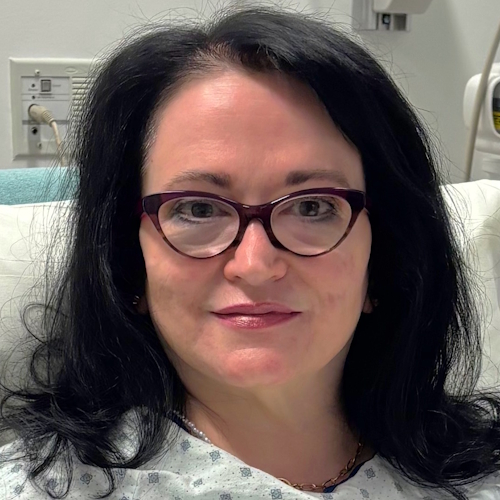
Ten days later, she was in an 11.5-hour surgery that removed 78% of her liver. It was the first of nine abdominal surgeries she has had over the past 16 years, across five recurrences and eight tumors total. That includes a course of stereotactic body radiation therapy (SBRT) that eliminated five tumors at once and a lymph node removal that turned out to be benign.
Lisa describes the isolation of a rare diagnosis almost as vividly as the medical fight itself. She eventually sought another opinion at UT MD Anderson, which she says gave her family peace of mind and access to more clinical trials.
Today, Lisa has shifted her mindset from expecting a cure to managing cholangiocarcinoma as a chronic illness, something she now sees reflected in the treatment landscape too, with new targeted therapies and immunotherapies.
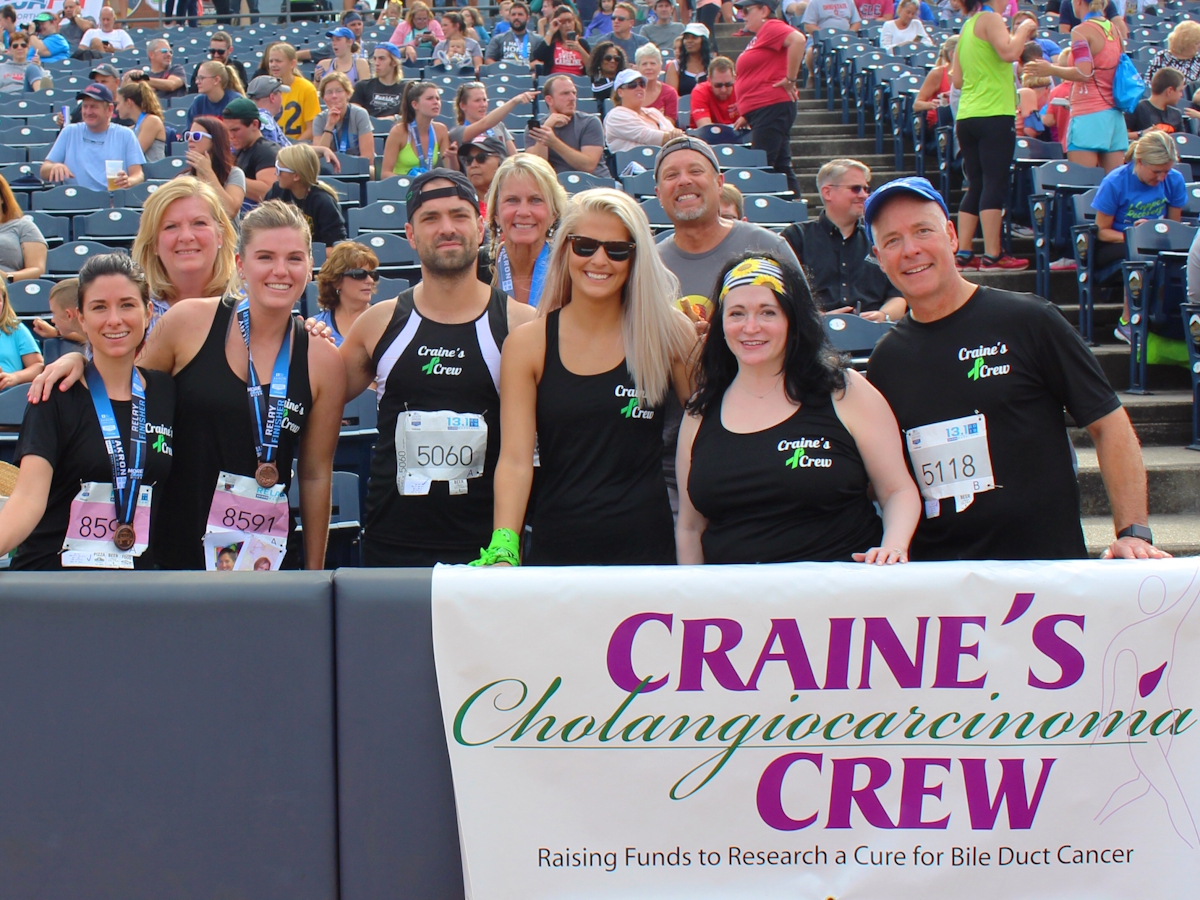
Now 16 years past her initial diagnosis, Lisa has mentored and advocated for more than 1,400 patients through her family’s nonprofit, Craine’s Cholangiocarcinoma Crew, and other organizations. She goes as far as sharing her personal number so newly diagnosed patients never have to feel as alone as she once did.
Watch Lisa’s video or read the edited transcript of her interview to find out more about her story:
- A friend who happened to be a doctor noticed something Lisa had stopped noticing in herself. She brought her son in for an appointment and left with a referral that likely saved her life.
- Being told she had six months to live turned out to be one opinion, not a verdict. A second opinion at Cleveland Clinic found the tumor was surgically removable when her local team had said it wasn’t. Lisa now tells every patient she mentors that a second, third, or even fourth opinion is worth pursuing, especially with a rare cancer where even top specialists may not agree.
- Lisa didn’t just survive eight tumors and five recurrences. She also had to learn that “done” wasn’t a thing. Believing surgery and chemo would be a one-time fix set her up for disappointment each time cholangiocarcinoma came back; reframing it as a chronic illness to manage, rather than a single battle to win, is what let her keep going.
- The isolation of a rare cancer diagnosis can be as hard as the treatment itself. Standing in a room full of people at a gala and feeling completely unseen led Lisa to seek out another cholangiocarcinoma patient through a New York Times article. This connection became one of her closest friendships and shaped the advocacy work she now devotes her life to.
Lisa’s Diagnosis Facts
- Name: Lisa Craine
- Age at Diagnosis:
- 46
- Diagnoses:
- Bile Duct Cancer (Cholangiocarcinoma)
- Staging:
- Stage 4 (De Novo Metastatic)
- Symptoms:
- Pale stools
- Pain under the right breast
- Persistent fatigue
- Noted paleness
- Treatments:
- Surgeries: partial hepatectomy, additional surgeries for recurrences
- Chemotherapy (across several recurrences)
- Radiation therapy: stereotactic body radiotherapy (SBRT)
- Monoclonal antibody (PD-L1 inhibitor): durvalumab
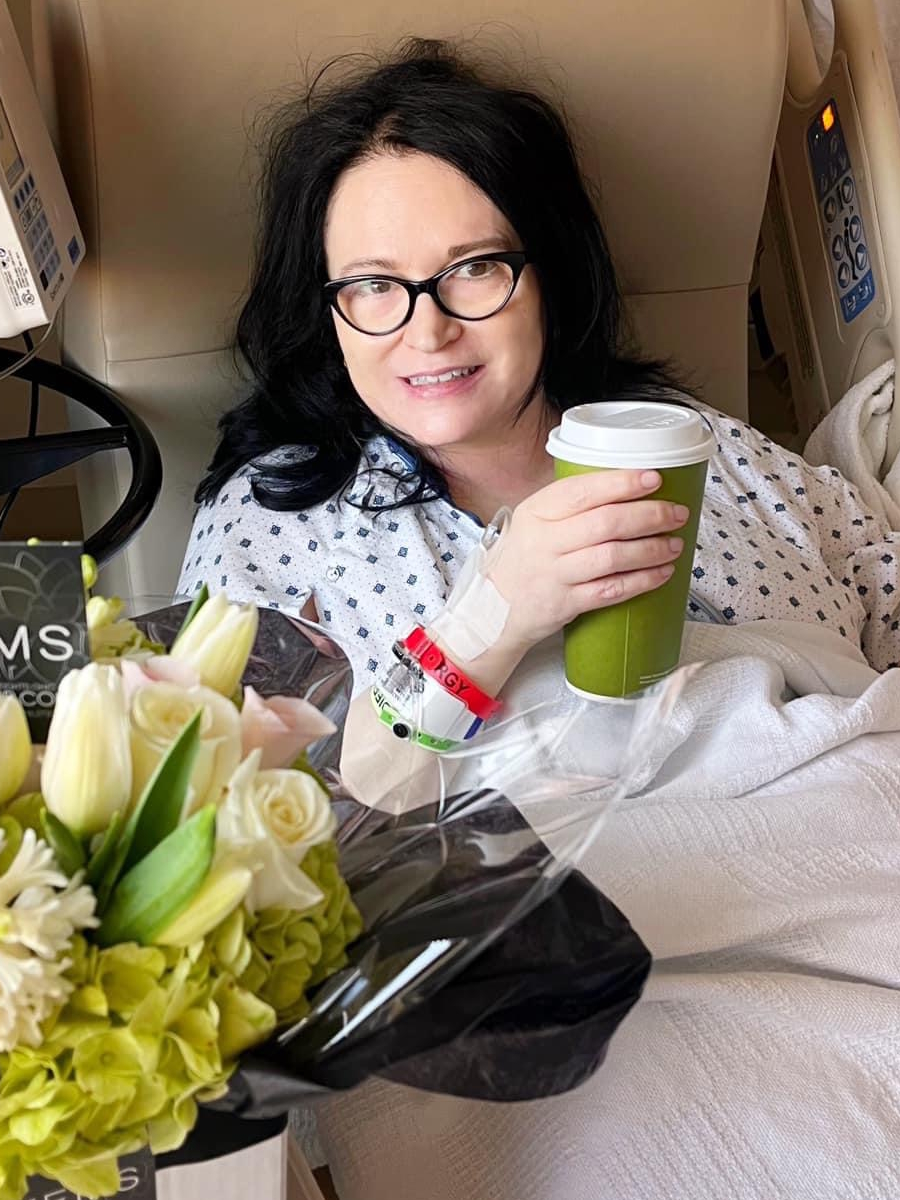
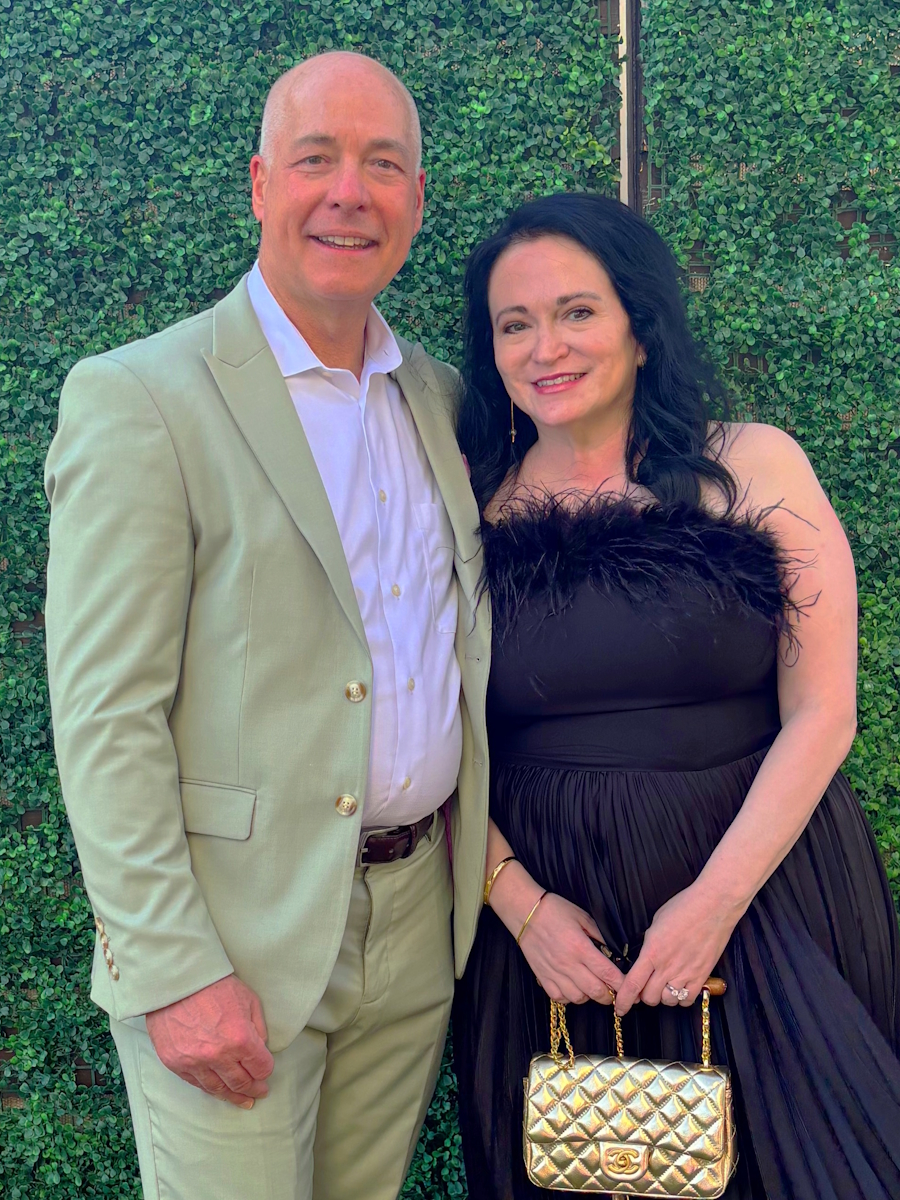

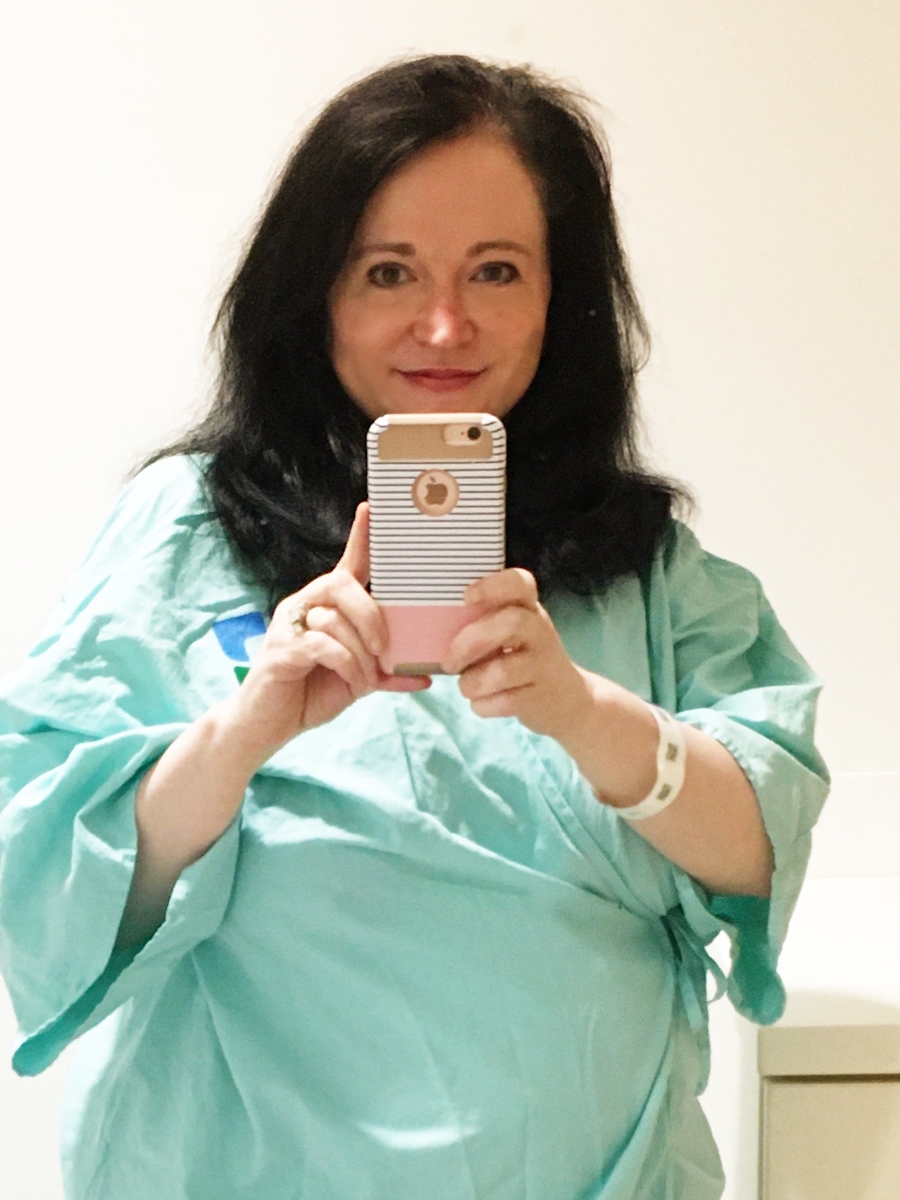
This is not medical advice. Please consult with your healthcare provider to make informed treatment decisions.
- Lisa’s Diagnosis Facts
- Neglecting my own fatigue while I took care of my mom
- Being told I had six months to live and getting a second opinion
- An 11.5-hour surgery removing 78% of my liver and needing 14 units of blood
- Two sons, a rare cancer diagnosis, and an anxiety we still carry
- No clinical trials in 2010 and how much has changed since
- Learning to live with cancer as a chronic illness, not a one-and-done
- Realizing my gift was building relationships
- Killing five tumors with radiation therapy
- How my monitoring has changed over 16 years
- What this diagnosis taught me about other patients’ struggles
- The Italian parents who taught me to give
- Putting my personal cell phone number on the internet
- Doing the right thing for the right reasons
- Discovering that I was stronger than I ever knew
- Learning to just be with my family
- Bargaining with God over Noah’s graduations
- The recurring dream about the empty chair
- Never give up hope
- The advice I give every newly diagnosed patient
- Hear from people living with cholangiocarcinoma and other rare cancers
Neglecting my own fatigue while I took care of my mom
My name is Lisa Craine, and I’m a 16-year survivor of stage 4 cholangiocarcinoma. My story has included eight tumors with five recurrences.
In 2009, my mom was very sick and I was her main caregiver. In hindsight, I think I neglected some signs in my body because it was all about her. When she passed away, I realized that there were probably some things I needed to do.
I was fatigued, but I chalked it up to being a working mom, volunteering, sitting on boards in our community, and taking care of my mom. That’s how I neglected some basic things. I thought everybody was tired. I thought I felt fine except for the tiredness.
Our oldest son was getting ready to go away to college. I took him to see a gastroenterologist because we thought he was lactose intolerant. This doctor is a friend of ours. Our kids have grown up and gone to school together. He looked at me and said, “Lisa, you look tired.” At first I thought, “Wow, that’s not a nice thing to say to a woman.” He asked me if I had pain anywhere. I pushed back and said, “Today’s not about me. It’s about our son, Jake.”
A gastroenterologist friend who wouldn’t let it go
He said, “You look pale and tired. Do you have pain anywhere?” He kept pushing. I finally said, “I do have this tenderness underneath my right rib, but I’ve already had it checked out. They called it costochondritis.” He said, “I think you have some gallbladder issues. I’m going to send you for an abdominal ultrasound tomorrow.”
I’m embarrassed to say I was kind of put out by the whole thing. But I left work in the middle of the day, got the ultrasound, and came back to work. Then they paged me that the doctor was on the phone for me.
“Your gallbladder looks great,” then, a mass taking up over 75% of my liver
He said, “Your gallbladder looks great.” In hindsight, what followed was probably one of the silliest things I’ve ever said. I said, “Great because I don’t have time for gallbladder surgery.” Then he said, “But you have a mass taking up over 75% of your liver.”
I remember grabbing everything off my desk and running out of work, a job I worked at and loved for 22 years. In a state of panic, I bolted.
I’m so grateful. I think in this world, people’s symptoms just get blown away and not taken seriously. He kept pushing with me, as his gut told him that something wasn’t right. I call him one of my angels, because I wouldn’t be here today if he hadn’t pushed and made me get that ultrasound. I’m so grateful to many people.
Being told I had six months to live and getting a second opinion
They sent me to see a local doctor, who thought it was benign. When we got another opinion, they thought for sure it was cancerous. I didn’t know much about cancer except that my mom was a breast cancer survivor. This oncologist they sent me to said he thought it was cholangiocarcinoma, but they hadn’t biopsied anything. The more I researched, the more I thought that I needed another opinion.
My husband suggested we head to the Cleveland Clinic, which was based on a local oncologist saying that if it was cancerous, I had six months to live. Chemotherapy could be palliative but definitely not curative, and that I should go enjoy life.
In a matter of a week, I went from working and feeling fine to being told that I had six months to live. It felt like an out-of-body experience.
A surgeon at Cleveland Clinic said he could remove the mass
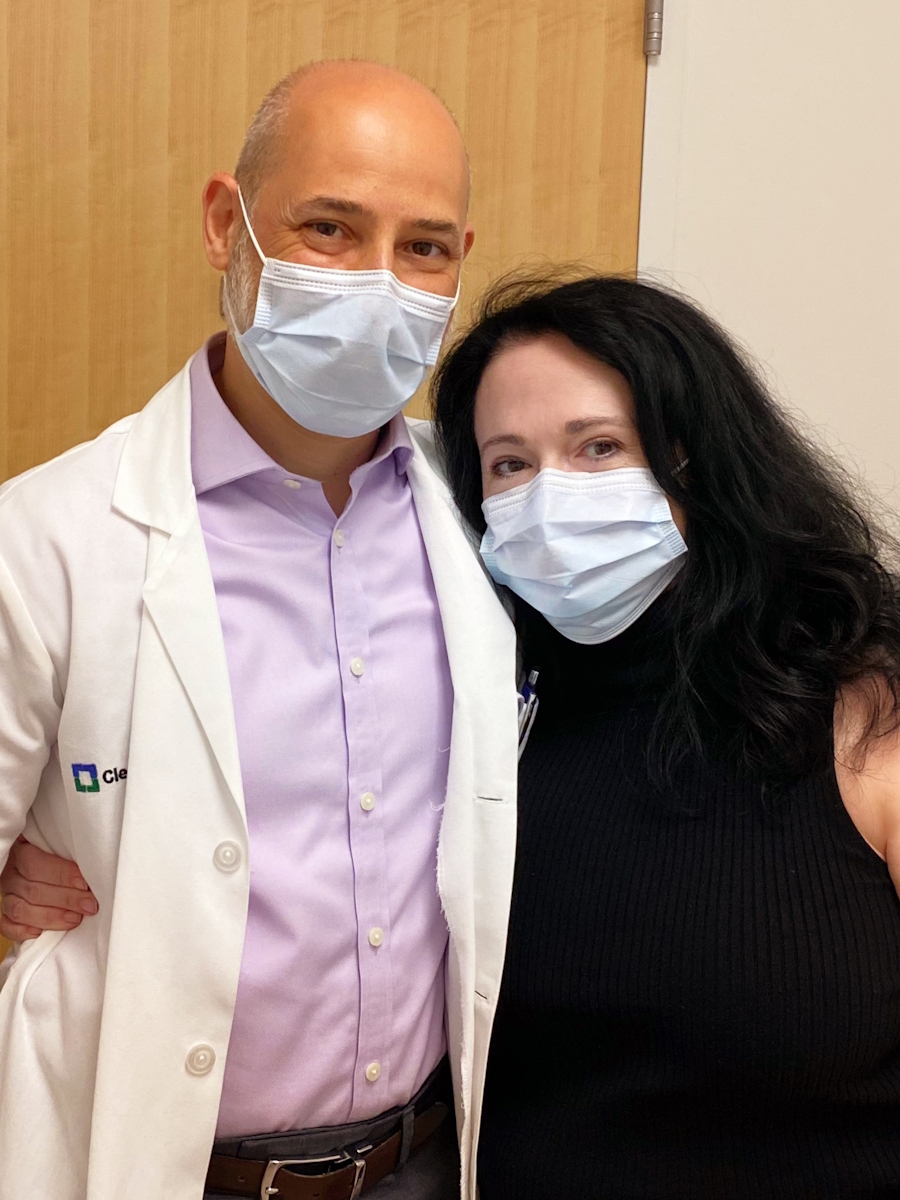
I call the Cleveland Clinic my place of hope. We headed there and met a phenomenal surgeon, who said, “I can surgically remove this.” Locally, I had been told it wasn’t surgically removable, but I had read enough about cholangiocarcinoma to know that a liver resection was considered the only potential curative treatment for it. I was excited to have a big surgery in our cholangiocarcinoma community.
We laugh, because when people say, “Yay, you can have surgery,” they look at us strangely. Why would you be excited that somebody is going to have this massive surgery? Because it’s potentially life-saving; that’s why.
An 11.5-hour surgery removing 78% of my liver and needing 14 units of blood
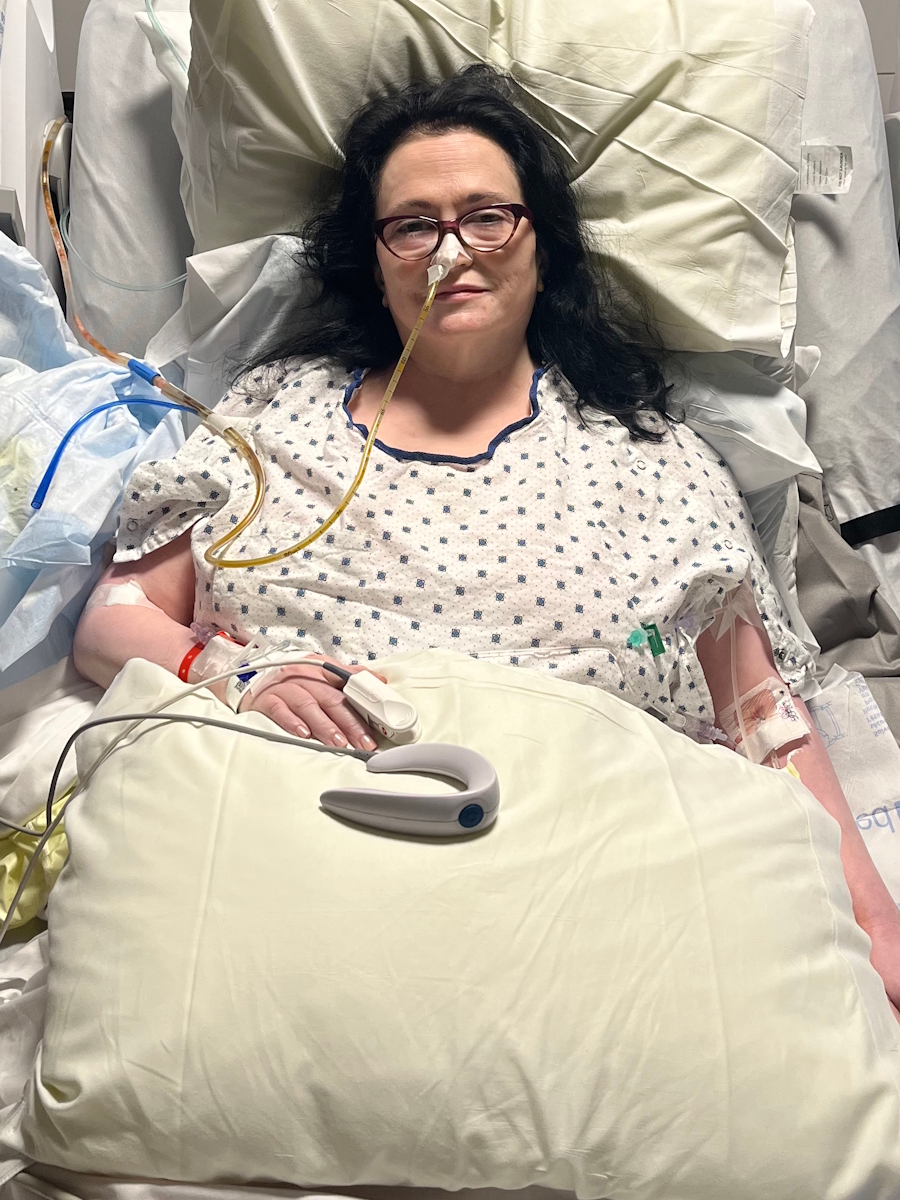
Within 10 days, I was in an 11.5-hour surgery. They took 78% of my liver, and I needed 14 units of blood during the procedure. I didn’t know until later that that’s more blood than we have in our body to start with. I was glad I didn’t know any of that before having surgery.
My husband locked away my laptop and tablet so I wouldn’t watch a video of a liver resection
I then found myself digging and digging, because I love to learn. One day, I couldn’t find my iPad and my laptop. I called my husband at work and said, “Everything’s missing. What is it?” He said, “I saw that you were going to watch a YouTube video of a liver resection, so all your stuff is locked in my trunk.” My husband works an hour away, so I was so irritated.
That’s why I always tell people the internet can be an angel and a devil all wrapped up into one. Patients should be educated. You should learn and have the knowledge. But watching a YouTube video of the surgery I was about to have might have been a bit of an overkill.
Hearing the word cancer and finding Melinda Bachini through a New York Times article
Hearing the word cancer was devastating. I had watched friends and family members lose their lives to cancer. I know people say cancer is no longer a death sentence, but when you’re first diagnosed, your mortality is at stake. I felt like I wasn’t going to make it. I’m a very joyful person, but at that moment, I was scared.
I know people say they never asked God why; I did. I didn’t understand it. I kept thinking: What did I do to bring this on? That’s a slippery slope with cancer patients. We all look at it like: Did I do something to deserve this? Did I eat something? Did I go somewhere? Did I take something? What did I do to cause this pain for myself, for my family, and for everyone who loves me?
And then, finding out it was a rare cancer, I felt alone. I didn’t know anybody who had this cancer. I would Google cholangiocarcinoma every day, and this article popped up in the New York Times about a cholangiocarcinoma patient. Her name is Melinda Bachini and she works for the Cholangiocarcinoma Foundation as an advocacy coordinator, but she was a volunteer at the time. I wanted to meet her, because I wanted to talk to somebody who was going through what I was going through. It was very important to me.
I reached out to the editor of the New York Times and said, “I know you can’t give me her contact information, but would you pass my information on to her?” They did; she called, and we became the best of friends. We still are. We do advocacy work together. We travel together. She had come to my house. I love her to pieces. I hate to say misery loves company, but there was a comfort in knowing somebody else who had this rare cancer.
Two sons, a rare cancer diagnosis, and an anxiety we still carry
I have two wonderful sons who are adults now, but they were 18 and 13 when I was diagnosed. The weekend before my first big surgery, we dropped our son Jake off at college. As we were pulling away, I remember looking in the rearview mirror and seeing him crying. I could probably count on one hand the times I’d ever seen him cry. He said, “Mom, I didn’t know if I was going to see you again.” That was how I felt pulling away, too.
Our then 13-year-old is Noah. He was living in the house with us. I developed severe anxiety and so did he. We both have it to this day. It’s one of those things, like cancer, that’s a gift that keeps on giving.
I explain the loneliness and isolation to people in a couple of ways. One is a silly little thing I always think about, but it came to me when I was diagnosed: I felt like the doll from “Rudolph the Red-Nosed Reindeer and the Island of Misfit Toys.” She just didn’t fit in.
I had friends who had other cancers, and no matter where they went in the United States for treatment, the protocol was set. Yes, it’s important to go to an NCI-designated cancer center and see a multidisciplinary team with specialists who specialize in your type of cancer. But when you’re looking at a rare cancer, you could have specialists from three big teaching and research institutions, and they might not all be on the same page.
Feeling alone in a room full of people
As a cholangiocarcinoma patient, you might hear a doctor say, “You could do this, this, or this. You choose. It’s up to you.” I always tell people: I have a BFA in musical theater and asking me to choose what’s next in my cancer story was mind-blowing. How could I possibly choose?
Shortly after being diagnosed, we were at a gala with a couple hundred people. I remember looking around the room and never feeling so alone. I was surrounded by all these people and nobody understood. People would say, “You’ll be fine. My cousin’s neighbor’s sister had it and she did great. She did these wild, crazy things.”
Even my best friends didn’t understand what I was going through. They couldn’t. But I couldn’t understand what they were going through either, watching my husband, our kids, or anyone who loved me. Sometimes I think watching the person you love suffer is harder than being the patient. I know I might get some pushback on that, but I can’t imagine watching my husband go through what I went through. I almost died several times. I thank God every day that it was me who got cancer and not my children. I’ve watched, mentored, and advocated for families whose children have cancer, and I can’t even imagine going through that.
No clinical trials in 2010 and how much has changed since
Back in 2010, there were no clinical trials for cholangiocarcinoma. The standard of care was borrowed from other gastrointestinal cancers. If you could get a liver resection, that was a good thing. But even with surgery, the rate of recurrence for cholangiocarcinoma is high. I had surgery and chemotherapy. I thought I was done, but I had a recurrence. I had another surgery and more chemo. This went on with five recurrences and eight tumors in total.
Things have progressed. I’m excited about the research that’s happening, but I’ve come to understand that research takes time. The things we’re doing now may not affect patients right now. But in the last five or six years, there have been many trials for cholangiocarcinoma patients and many approved targeted therapies and immunotherapy drugs for specific biomarkers, which is phenomenal. There are new treatment options happening, and new treatments coming out all the time, which is exciting.
Learning to live with cancer as a chronic illness, not a one-and-done
I always tell the patients I mentor and advocate for: Try to get your mind around thinking of this as a chronic illness. It’s not a one-and-done thing. In the beginning, that’s what I thought. I would have surgery and chemotherapy, and then I’m done; it didn’t go away. I kept setting myself up for disappointment. Eventually, I wrapped my head around the idea that this is chronic and something I’m going to have to monitor for the rest of my life. I decided I’m going to choose to live with cancer and not die with cancer. I’m going to choose to live each day to the fullest and pray for good things.
Even the standard of care has changed in the last five years. They’ve now added another drug added to the regimen: durvalumab. Some good things are happening. I’m always impressed when I meet a group of researchers, because these are people who care about our rare community.
My first recurrence hit harder than my original diagnosis
I don’t want to sugarcoat it. Every day isn’t blissful and wonderful. There have been hard, scary, terrifying moments, but you can get through those with a good support system.
My first recurrence was actually more devastating than the original diagnosis. With the initial diagnosis, things moved quickly. Short of watching that liver resection on YouTube, I thought I knew a lot, but I didn’t. When the recurrence happened, I felt like I didn’t beat it, as this horrible, evil thing had come back. The first recurrence was devastating. It was devastating for our whole family. I always tell people cancer isn’t just about me; it’s about my family. It affected all of us.
At one point, I think it was my second or third recurrence, I had a conversation with my husband and said, “I don’t think I’m going to make it. It keeps coming back. I don’t want us to drain every ounce of our finances for me, and then I die and leave you guys with nothing.” My husband was so upset when I said that, because he wasn’t thinking that at all, of course. But I was. I was in my protective mode as a mom. I didn’t know if this cancer would keep coming back. The recurrences were tough.
Telling my oncologist I wanted a second opinion
This was on my second or third recurrence. This is a big topic with patients and I try to help them navigate these conversations with their medical team. I think patients are afraid to hurt someone’s feelings or offend a doctor.
I went to my oncologist and said, “You’ve taken great care of me. I trust you. I want you to be my oncologist, but I’m scared. This is rare and it’s aggressive. It’s come back multiple times now. I want to get another opinion.” His answer was, “Great! Where do you want to go? Let’s talk about it. I’ll help you and I’ll learn along the way.”
My second opinion was at UT MD Anderson. I saw a brilliant, world-renowned oncologist there, and he agreed with everything the Cleveland Clinic was doing. People will say to me, “Wow, what a waste of time and energy,” but I say no. It gave my husband and me the assurance that we were on the right track.
It also put me in the MD Anderson system, which was a good thing, because at the time, they were starting to do a lot more phase 1 clinical trials for cholangiocarcinoma patients. To me, second, third, or even fourth opinions are always important. It’s another set of eyes and another multidisciplinary tumor board reviewing your case.
Realizing my gift was building relationships
That was one of my “Aha!” moments. I thought about what I did at work before I stopped working. I kept thinking I would go back to work, but I kept having recurrences. I thought about what skill I had that could lend itself to helping patients and to me, it was about building relationships. So I’ve made it a point to build relationships with cholangiocarcinoma specialists in every discipline across the United States, so I can help patients navigate that experience. Because it can be scary to think about how you even start a second opinion, how you talk to your current oncologist about it, and whether you’re going to offend them.
Mentoring over 1,400 patients and why hope matters most
I used to think that when I was working full-time, my career defined me. Then when I was diagnosed with cancer, I thought cancer defined me. Then I decided, no, I wasn’t going to let it define me. It took me a little bit to get to that point. But now, what I do is a gift. I get to help and support patients every day.
Everybody’s different. Some patients want love, support, and prayer. I’ve now mentored and advocated for over 1,400 patients through the Cholangiocarcinoma Foundation, our own family foundation, Craine’s Cholangiocarcinoma Crew, Imerman Angels, and Scott Hamilton’s 4th Angel Mentoring Program. What I’ve learned is that patients want knowledge. They want direction to resources. I never give medical information, but I give resources. I think people want to know my story because I’m still here.
I share my story because when I think back to being given six months to live, if my husband and I had believed that, we would have stopped seeking any medical treatment. We wouldn’t have sought a second or third opinion. And we would have given up hope, which is the most important thing. If you’re not hoping for something, what are you moving toward? I would have died with cancer.
It’s so important to talk to somebody who can connect you with another patient and with advocacy organizations. People are living with this disease who are here to help you, support you, and share their story, and then hope that someday, you get to share your story and inspire other people with that same hope.
Killing five tumors with radiation therapy
My last recurrence was in 2014. I had stereotactic body radiation therapy. You only get three to five treatments. In layman’s terms, it’s thousands of beams coming to a very precise, pinpointed area to destroy the tumor. We killed five tumors that way. If you look at my scans now, healthy liver tissue has grown into those pockets.
I always say that everything I’ve been through has molded me to be a more credible and relatable mentor and advocate for people. Sometimes I say to God, “I think I’ve been molded enough. Could we stop for a little bit?”
A scare, an enlarged lymph node, and a 9-inch incision
In October 2025, I went for my six-month scans. I still get nervous after all these years. My blood work was fine, but an enlarged lymph node lit up in the abdominal cavity. They took my case to the Cleveland Clinic’s multidisciplinary tumor board, and they went round and round about it. They ended up doing two endoscopic biopsies, but neither produced enough tissue to give a definitive answer.
They said, “Since you’ve had five recurrences and this cancer does come back, we want to surgically remove that lymph node and the tissue in that area.” When I heard about having a lymph node removed, I thought, “Oh, this will be like a little incision and they’ll pop it out.” No. It’s a nine-inch incision from my breastbone down to my belly button.
Nine abdominal surgeries and being thrilled the answer was benign
It was benign. Someone said, “I bet you’re irritated that you had to have that big surgery and go through all that healing, and it was benign.” I said, “No. I was thrilled, because removing that lymph node would not have been curative. I would have needed something systemic,” so that was a blessing.
I’ve had nine abdominal surgeries now related to cholangiocarcinoma. I’m happy my doctors were aggressive. I’m not a wait-and-see kind of person. When people say, “Oh, my doctor said wait and see,” I cringe. That’s one of a couple of things I cringe about. Or when a patient says, “I did adjuvant and neoadjuvant chemotherapy, and had my surgery. I’m done. My doctor doesn’t need to see me for a year.” In my mind, I try to gently say, “Surveillance is really important in survivorship,” without bursting their bubble. It’s a very gentle line, but surveillance is very important. If we can catch cancer or recurrences early, that’s a lot better than catching it when it’s a behemoth tumor, like my original one.
How my monitoring has changed over 16 years
In the first 10 or 12 years, I had blood work every eight weeks: tumor markers, liver panel, metabolic composite, bilirubin, CA 19-9, and CEA, which are two tumor markers for cholangiocarcinoma. I also have scans at the 12-week or three-month point.
A couple of years ago, we moved the blood work to every three months. My tumor markers trend with disease progression and regression, so I’ve been lucky as not everybody does. If it all looked good and there’s nothing out of the ordinary, then we wait until the six-month point for scans.
But I remember thinking in October: If this is cancer, why were we waiting six months to scan? I started to doubt myself again, thinking I was having another recurrence. That scare brought me right back to understanding and feeling the fear. The further you get from a diagnosis, you still think about it every day, but maybe not every minute, and that scare brought it back.
What this diagnosis taught me about other patients’ struggles
It helps me understand patients. My husband lost his job. We lost our health insurance one time. Now I understand how patients deal with that. We had insurance deny a treatment and had to go to bat with that. That helped me understand patients going through that. Or patients who’ve lost friends and don’t understand: Why did some of my friends back out of my life? Most likely, they had a hard time dealing with it. I tell patients that it wasn’t about them, but about their friends. All of these things help me help other people. I don’t love everything I’ve been through, but I’m grateful for it, because it’s molded me into who I am, and it allows me to help people.
The Italian parents who taught me to give
I grew up with the most wonderful Italian parents in the world. My dad worked two jobs to put us through Catholic schools. My mom worked as a nurse, so there wasn’t a lot of extra. When I went to high school, I went to one where kids were from all over the community, including some very wealthy communities I’d never been exposed to before. I started to hear words like philanthropy, giving, and donations. I thought, “Oh, my parents have never done that.”
Then, as I got older, I realized that my parents were incredible philanthropists. They didn’t give from surplus, because there wasn’t any surplus money. When they gave, it pinched them. My parents cooked meals for people. They gave rides to people. I was brought up with the mentality that our job is to serve others and love others, and part of that was through our Catholic faith. My parents instilled that in me. I’ve always volunteered in the community and helped people, but nothing like what I do now. Back then, it was part of what I did because it was the right thing to do. Now it’s a passion. It’s far beyond doing the right thing. It’s my passion and my calling.
Putting my personal cell phone number on the internet
My kids laugh because I put my cell phone number all over the internet, and people call every day. My kids say, “Mom, what are you doing?” I say, “You don’t understand. When someone’s diagnosed with a rare cancer, waiting for a callback for a day could feel like a year. They’re desperate.”
My phone number is everywhere. I always tell the patients I mentor and advocate for, and I mean it: You can call me anytime, as often as you want. My kids laugh at me for it, more than my husband does, because I put my personal cell phone number everywhere. When I tell people I want to help them, I mean it.
When you have cancer, waiting for a call for five minutes can feel like a week, so I tell people, “Call me anytime. You cannot call me too often. You can ask me anything. I’m an open book. I’m not a medical professional, but I can help you find resources. I can share my story. I can connect you to other people.”
I’m not afraid to put my number out there. This is now my passion and it’s not just about doing the right thing.
Doing the right thing for the right reasons
Something I taught our kids growing up is to always do the right thing, but for the right reasons. Some people do the right thing for the wrong reasons; I’m doing this for the right reasons. I truly love people. I love helping people. I never want anyone to feel as alone or isolated as I did when they’re diagnosed with a rare cancer.
Over the years, I’ve gotten to help patients with other types of cancer too. Through my advocacy organizations, I’ve met advocates with different cancers. I love that I’ve built this network. I can help people get to an advocate who can guide them to the right places, the right treatments, and the right trials. I’m an open book; there are no secrets here.
Discovering that I was stronger than I ever knew
Looking back, I never thought I was this strong. I would have never in a million years guessed I was this strong. It goes back to when I graduated from college. I had these nightmares that I hadn’t gone to class, and I was going to walk on stage and not be able to graduate, but I had done it. Cancer is kind of like that. In hindsight, I look back and think, “Oh, I couldn’t do that again. How did I do that? What happened?” I guess it’s being stronger than I thought I ever could be.
Learning to just be with my family
I was at lunch with a group of friends, and I told them we had this great weekend because our family was all in town. They said, “What did you do?” And I said, “We were all together. We grilled, played croquet, and ran around.” They said, “No, what did you do?” They totally missed it. The great thing was appreciating just being.
It used to be that a big trip was something. But now, being able to spend time with family is the most important thing. Being Italian means feeding them and I’d rather be in the kitchen cooking than anywhere else. Being with my family is such a big thing to me. I’ve become comfortable just being. I don’t feel like I have to accomplish things and impress people, because that’s doing things for the wrong reasons. I do what I do, and I’m okay just being me.
Bargaining with God over Noah’s graduations
I am so grateful to be here. When I was diagnosed, I played these games with God: “Could I just see Noah graduate from high school?” And then, all of a sudden, Noah was graduating from high school, and I thought, “I have to bargain with God again. Can I see him graduate from college?” I keep asking and asking. But I also thank God every day for the opportunity to serve people. I’m very grateful.
The recurring dream about the empty chair
When Noah was graduating from high school, I kept having this recurring dream. I don’t know if it was a dream, a nightmare, or somewhere in between. The camera panned around the room, panned to my husband and our oldest son sitting in the audience, and then there was an empty chair next to my husband. Then they announced, “Noah Craine.” He came across the stage, but I wasn’t there. For me, it was one of those moments where I thought, “I didn’t make it.” Then I’d wake up and think, “Wait, his graduation is next week. I made it.”
Being able to spend time with my family to see weddings and grandchildren, I’m so blessed. I’ve never realized this before: Cancer is not a blessing, but there have been so many blessings along the way. The people I’ve met, the lessons I’ve learned, and the passion I get to put into what I do every single day to help people are all phenomenal gifts. I wouldn’t change anything about my life.
Never give up hope
Never give up hope. It’s a very dangerous place to be, to have given up hope altogether. My husband taught me a lesson that I share with people: Don’t get ahead of yourself. Thank God for today and ask for another day.
I’m type A. I want to get ahead of myself, have everything organized, and be in control. Then you get cancer and you realize you’re not in control, so you try to control other things. I always tell people: Give yourself grace to navigate the experience the way you want to, not the way anyone else is telling you. Navigate it the way you do. There’s no right or wrong way. Sometimes patients don’t want to talk about cancer, and that’s okay.
Then there’s someone like me. My husband and I started our own nonprofit. We raise research money for cholangiocarcinoma. We’ve supported and granted money to some incredible research projects throughout the United States, and we’ll continue to do that.
The hope lies in the future. Never give up hope. Know that there are researchers out there, no matter what type of cancer you have, working on finding better treatment protocols for patients. You can never give up hope. It’s the most important thing to have.
Watching the patient voice shape clinical trials
It’s exciting to watch this research happen, sit on patient advisory panels, and help review clinical trial material from a patient advocacy perspective. The research and progress are exciting. The patient voice is becoming involved at an earlier point in clinical trials and treatment decisions, and that’s very important.
The first time I got asked to do any advocacy work was when I got invited to read clinical trial materials years ago. We went to the facility and sat at a table with all these smart people. In my head, I was thinking, “What could I possibly say that would have any meaning to all these scientists and CEOs?”
They asked me, “What did you think of the materials? Was there anything that stuck out to you that you liked or didn’t like?” I sat there quietly, thinking, “If I tell them what I truly think, is that what they want to hear or am I going to be asked to leave the table and never invited back?” I said it like that.
I said, “Well, I’ll tell you, but then do I have to leave?” They laughed, and I said, “In this material, you mentioned that the patient could die 19 times as a patient. I don’t want to be on your trial. I understand you have to say that, because there are legal issues and your legal department has to look at things. But think of a patient’s perspective reading that, or their family member’s.”
We’re getting better at people understanding that clinical trials are not a last option. You’re not a lab rat. That’s not what a clinical trial is. Clinical trials are saving people’s lives. Eventually, some clinical trials will get moved up in people’s treatment protocols, instead of being toward the end of treatment. The progress is very exciting. Having patients involved from the beginning is making a big difference. The goal is to improve the lives of patients. What better perspective to have than a patient’s?
The advice I give every newly diagnosed patient
Record your visit. People ask me, “Why would I record my oncology appointment or my surgical appointment?”
Let me use this as an example: My husband and I sat in an oncologist’s office when I was first diagnosed, listened intently to everything he had to say, got in the car to come home, and realized we heard two different things. Then, when we read the appointment summary, it said something that neither of us had heard. If you have somebody who can come with you and take notes, that’s important. I do that for patients if they’re local; I have no problem doing that.
Making sure a patient has biomarker testing. This is very crucial, especially as clinical trials become available. If you’re going to have a liver resection, make sure your tumor sample is saved. If you’re not at a teaching and research hospital, your tumor, which tells so much about your cancer, doesn’t always get preserved.
Connect with other advocacy organizations, like the Cholangiocarcinoma Foundation, Craine’s Cholangiocarcinoma Crew, TargetCancer Foundation, and all these other great organizations.
Look at social media. Yes, social media can be good or bad, but if you know which groups to join, it can help. We have a private patient group called Cholangiocarcinoma Warriors. We have over 1,100 cholangiocarcinoma patients in the group, where people share their stories, ideas, and support. It’s a phenomenal group of people. Make sure you get yourself connected in the community, because that’s where you’ll learn a lot about your disease, whether it’s cholangiocarcinoma or any type of cancer.
This interview has been edited for clarity and length. The views and opinions expressed in this interview do not necessarily reflect those of The Patient Story. This content does not replace professional medical advice.
Inspired by Lisa’s story?
Share your story, too!
Hear from people living with cholangiocarcinoma and other rare cancers
Real experiences with diagnosis, treatment choices, side effects, and life beyond bile duct cancer and rare cancers — in their own words.
Leave a Reply