
Caleb’s T-Cell Lymphoblastic Lymphoma Diagnosis Came Five Weeks Before He Died
Caleb was 35, working as a financial advisor in South Alabama, when he started feeling off one spring. He assumed it was a sinus infection. Twice, urgent care agreed, sending him home with antibiotics and a steroid shot. Neither he nor his wife, Robin, had any reason to think it was acute T-cell lymphoblastic lymphoma/leukemia, a fast-growing cancer that often shows up as a mass in the chest.
Interviewed by: Taylor Scheib
Edited by: Katrina Villareal
Then his ear turned purplish, his lymph nodes swelled, and a family trip to California came and went with Caleb feeling worse, not better. On the Tuesday after Memorial Day, he finally went to the emergency room. Within hours, a doctor sat down next to Robin and Caleb and said the words that changed everything: They believed it was lymphoma, and there was a huge mass in his chest.
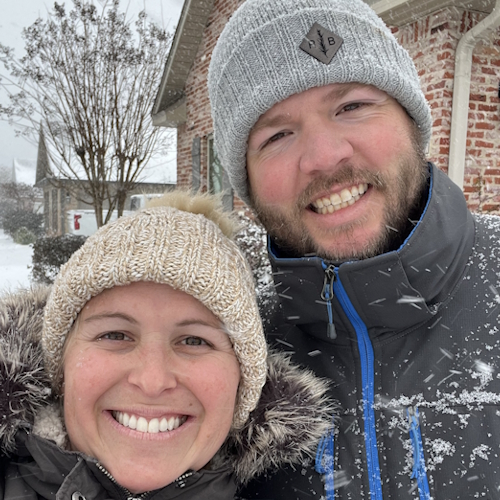
Caleb was rushed into surgery to drain fluid from around his lung and heart, then airlifted to the University of Alabama at Birmingham when his condition outpaced what the local hospital could treat. There, doctors confirmed acute T-cell lymphoblastic lymphoma, sometimes classified as leukemia depending on how much of the disease involves the bone marrow. The mass had already caused superior vena cava syndrome, cutting off normal blood flow to his upper body. There was no time to search for a second opinion or a clinical trial. There was only one hospital, one plan, and one question: Would it work?
Caleb spent five weeks in the ICU. He received one full round of chemotherapy, but the tumor never shrank. He was too unstable for radiation, then his kidneys failed and he needed continuous dialysis. He briefly woke from sedation long enough to mouth Robin’s name and tell her he loved her. In the final week, as his organs began failing, Robin made the decision to withdraw life support and focus on his comfort, letting him go peacefully, surrounded by his parents, his brother, and her.
Caleb died five weeks to the day after his diagnosis, leaving Robin a widow at 32 with two sons under two years old. More than a year later, Robin manages grief by talking openly about Caleb rather than avoiding his memory, and by connecting with other young widows who understand what she’s living through. She’s also become an advocate for something simpler: going to the doctor, even when nothing seems seriously wrong.
Watch Robin’s video or read the edited transcript of her interview to find out more about Caleb’s story:
- Caleb went to urgent care three times in three weeks and each time, he was told that he had a sinus infection. It took a trip to the emergency room and a scan of his chest to find the real cause: a large mass pressing on his heart and lungs.
- Doctors couldn’t say for certain how long Caleb’s cancer had been growing, but they told Robin that T-cell lymphoblastic lymphoma can advance from nothing to life-threatening within a matter of weeks.
- A surgeon bluntly told Robin that death isn’t always the worst thing. For a 35-year-old former college athlete who would have faced a lifetime on dialysis and a ventilator, that one sentence helped her make the hardest decision of her life.
- A persistent symptom that doesn’t resolve with a standard urgent-care visit and a course of antibiotics is often the signal to push for imaging or a second opinion, whatever your age.
- Robin found relief in something she once felt guilty about: the peace of knowing Caleb was no longer suffering. Grief doesn’t always look the way people expect it to.
- Since Caleb died, Robin has become the kind of person who says the hard thing when it needs to be said. She credits losing him with teaching her that life is too short to let things slide.
Caleb’s Diagnosis Facts
- Loved One’s Name: Caleb R.
- Age at Diagnosis:
- 35
- Diagnosis:
- Acute T-Cell Lymphoblastic Lymphoma (T-LBL)
- Symptoms:
- Head and sinus pressure
- Purplish discoloration of the ear
- Spider veins on the chest
- Swollen lymph nodes
- Shortness of breath
- Chest heaviness
- Fluid buildup around the lungs and heart
- Treatments:
- Chemotherapy
- Comfort care/end-of-life care
This is not medical advice. Please consult with your healthcare provider to make informed treatment decisions.
- Caleb’s Diagnosis Facts
- How a cancer society connection led me to Caleb
- How an undiagnosed chest mass led to a sudden diagnosis of T-cell lymphoblastic lymphoma
- The moment Caleb passed and the unexpected relief I felt
- What grief has looked like for me, one year later
- Who Caleb was beyond the T-cell lymphoblastic lymphoma diagnosis
- My words of wisdom for anyone facing a great loss
- Hear from people living with related cancers
How a cancer society connection led me to Caleb
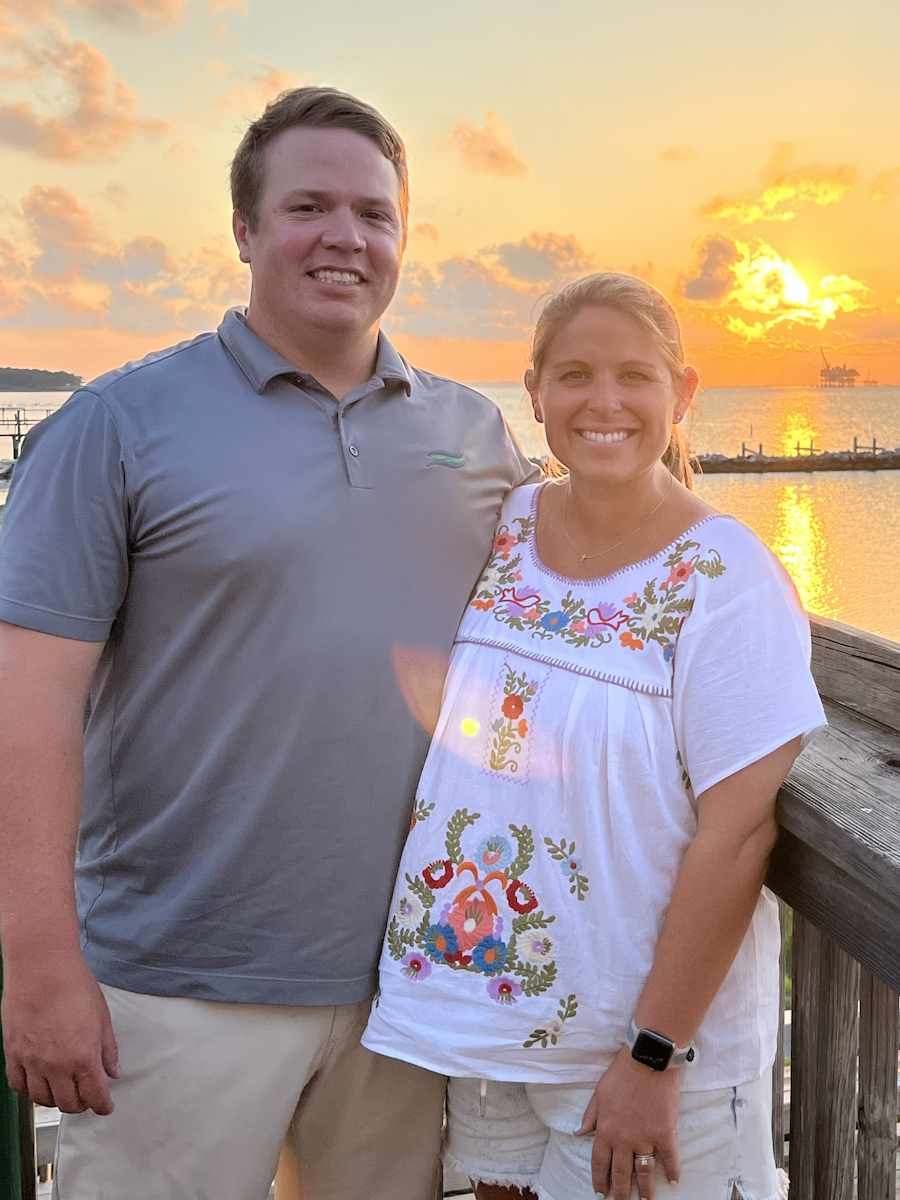
We met in 2018. Ironically, I was working for the American Cancer Society and one of Caleb’s coworkers at the time was a cancer survivor. If I remember correctly, she had breast cancer. If you know anything about the American Cancer Society, it’s a volunteer-run organization, and I relied very heavily on my volunteers to help me plan events and do fundraising. This woman worked with Caleb, and she introduced Caleb and me together.
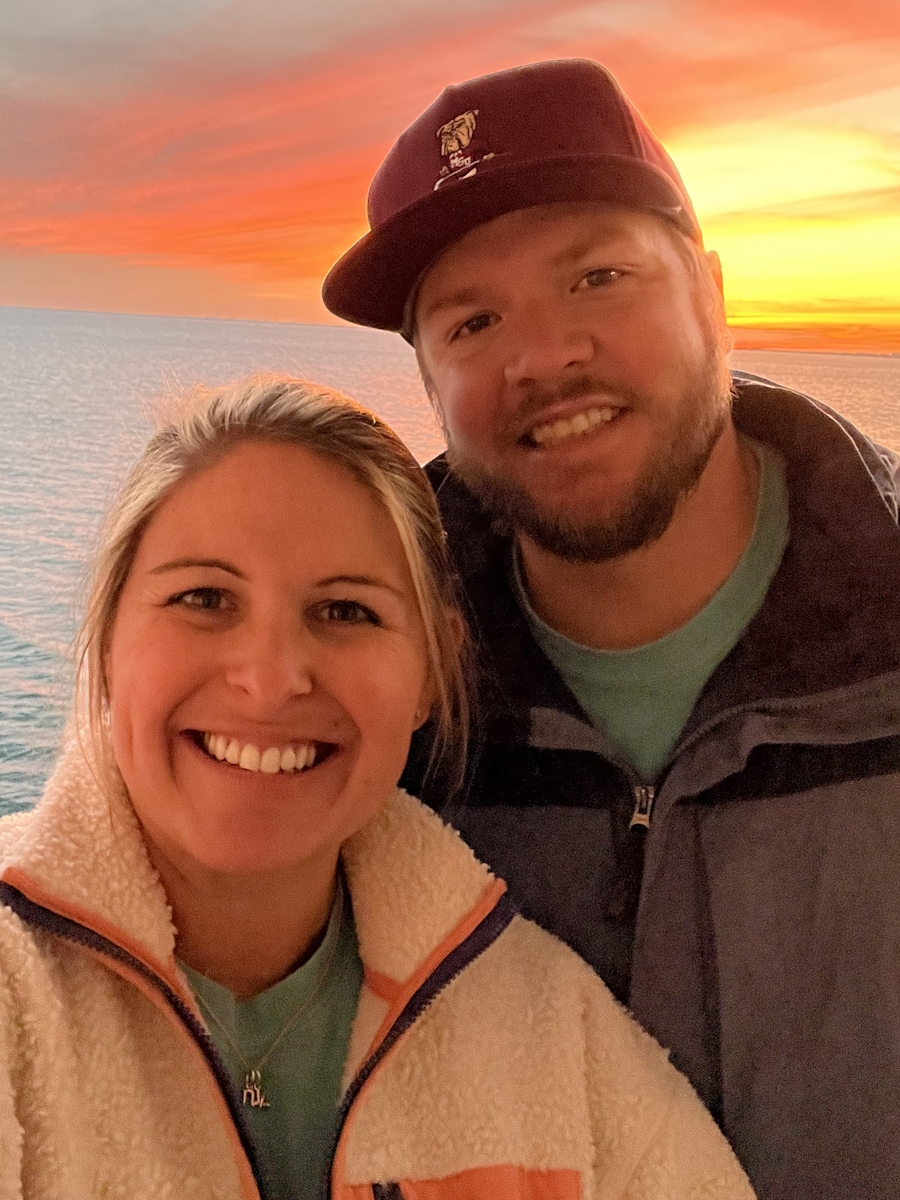
A few weeks passed and I honestly didn’t think much of him, but I ran into him in my apartment complex. I had just moved from Nashville to South Alabama. My roommate and I at the time were saying we needed friends. This guy literally lived at the back of my apartment. If you were in my roommate’s closet and you knocked on the door, if you were in Caleb’s closet, you could hear it. We were back to back. It’s very funny. We started hanging out, and that was how we started dating. The rest was history.
The steady, safe kind of love that made me sure
He was so easy to talk to. I feel like I never had a relationship before that was that easy. I just knew. I felt very comfortable around him. He made me feel safe. When you’re young and dating, you’re used to people ghosting you or at least waiting hours to text you back. Caleb was calling me. I was like, “Who is this dude? Why is he calling me? I just met him yesterday.” He was very confident in himself, and it was like a breath of fresh air. I appreciated that about him, and it clearly made me stick around, because I always say he was very persistent. If he wasn’t, I probably would have let it go. But since he was so persistent, I was like, “Hold on. I think I like this guy.” I started hanging out with him more and realized he was a good one.
How an undiagnosed chest mass led to a sudden diagnosis of T-cell lymphoblastic lymphoma
It was pretty normal, I would say. Caleb is one of those guys who’s probably like a lot of other people. He doesn’t want to go to the doctor. But if one of us were sick, he would freak out. He’d say, “Are you okay? Do you need to go to the doctor?” I remember he started not feeling great around the beginning of May, or at least that’s when I noticed it, because I also wasn’t feeling great. I went to the doctor, and I remember I got amoxicillin or something. He asked, “Can I have one?” I told him to go to the doctor and get his own.
The months leading up were very normal. Caleb and I were in a blended family that has changed a lot since Caleb passed. He coached sporting teams in the months prior. He was very active at work. Literally a week before Caleb was diagnosed, we flew from Alabama to California for one of his work conferences. That’s a three-hour flight. It’s crazy to me that we were able to do all this normal stuff.
Meanwhile, Caleb wasn’t feeling great. On Mother’s Day, he went to urgent care. He didn’t have a primary care doctor, but I did. We tried to get him in, but there was some wait, so he decided to go to urgent care. I noticed his ear was purplish, and I said, “That isn’t normal. You need to check that.” I don’t know why I thought this, but I literally said, “I think you need to get your oxygen checked.” That freaked him out enough, since he hadn’t been feeling well for a week to a week and a half, so he decided to go to urgent care. Who knows what Caleb told them there? I don’t blame urgent care at all for misdiagnosing him. I remember Caleb’s text was, “I have everything.” I asked him what everything meant. He said, “Respiratory infection, sinus infection, all that.” They prescribed him amoxicillin, gave him a steroid shot, and sent him on his way. He said, “Okay, I’m going to be better.” The following week we went to California.
To my knowledge, he was fine. He wasn’t a complainer, and he definitely didn’t want to make me nervous. I think he downplayed his symptoms. But after he passed, I looked through his Google history because I was trying to find out everything, and he was Googling things like “shortness of breath” and “feeling heavy on my chest.” While we were in California, he said he wasn’t feeling good again, so he went back to urgent care, thinking they could give him another steroid shot and kick it while we were there. I remember him being so nervous to go and I asked why. I think deep down, he thought it was something bigger, but he wasn’t expressing that to me.
In California, they were much more concerned about him having COVID, but he tested negative, so they told him they thought he had a severe sinus infection, since he had pressure in his head. In hindsight, it makes sense for what he actually had. We made it back on a Wednesday and by Saturday his lymph nodes were swollen. I said, “I’m no doctor, I’m not in the medical field, but that isn’t normal. You need to stop going to urgent care and go to an ER.” He literally said, “I don’t want to go to the emergency room. They’re going to laugh at me because I have a sinus infection.” That’s what he told me, so he ended up going back to urgent care.
It was funny, because in his job, Caleb was a financial advisor and specifically worked with doctors, fellows, and residents; that was his niche. He helped them get life insurance, disability insurance, investments, and all that. One of his clients ended up being his doctor at the urgent care and he told him, “You have severe sinusitis,” or whatever, and gave him another steroid shot. I know steroids help with inflammation from cancer. He came home still not feeling well.
It was Memorial Day weekend, and he said, “If I don’t feel better by Tuesday, I’m going to the emergency room.” We had a normal week. We had people over at our house that weekend, swimming in our pool. Caleb cut the grass in the heat of May. He went on a run. This is bizarre, knowing what we know now. On Tuesday, he got up and said, “I’m going to the emergency room. This is annoying; I can’t deal with this anymore.”
I went to work that day. I was working for Caleb at the time, helping him send emails and I did not go with him. I sent the boys to daycare and stayed home to work. He called and said he’d gotten an X-ray and a CT scan, and I thought maybe he had mono or pneumonia. I finished work early and called my mom, and she told me I needed to go sit with him so he wasn’t alone. I’m so thankful she told me to do that.
I didn’t even call Caleb; I just drove up to the hospital and saw him sitting in the hallway of the little hospital ER. Probably within 15 minutes of being there, a doctor came out, sat down, and said, “We believe that you have lymphoma. You have a massive mass in your chest.” I remember Caleb looking at the doctor, looking at me, and saying, “I have cancer.” The doctor was the nicest and he said, “I believe so. It’s looking that way.”
I remember being in shock. For one, I was so grateful I was with him. Caleb didn’t want me to touch him. He was like, “I can’t even believe this is real.” They put us in a room and told us they were going to transfer him to a bigger hospital about 30 to 45 minutes away. I asked if I could go with him and they said I couldn’t be in the ambulance.
It was around 3 p.m. and our little boys were still in daycare, so I had to pick them up. It was so surreal. We were probably there for 15 minutes. I was trying to get in touch with my family and he was getting in touch with his to let them know what was happening. It was truly all such a blur. He ended up being wheeled away in the ambulance, and when he left, I left to pick up the boys.
I finally got a hold of my mom and had to meet her at the daycare. Then I raced to the other hospital, not even knowing where Caleb was. I went to the ER department and said, “I have no idea where my husband is. Y’all are going to have to tell me.” He ended up being in the surgical ICU, which had very limited visiting hours, maybe 30 minutes left.
The next day, he needed emergency surgery because one of his lungs was filled with fluid. His heart had fluid around it as well. He had a mass in what I believe is called the mediastinum (Editor’s Note: The mediastinum is in the middle of the chest, which contains the heart and other structures), which is s why they suspected lymphoma. He ended up having a condition called superior vena cava syndrome. The mass was pressing on his superior vena cava, one of the biggest veins that goes into the heart, and it was limiting blood flow to his upper extremities. That’s why I noticed his ear was purple.
I noticed all of these things. A few weeks prior, he had spider veins pop up on his chest. I thought it wasn’t normal. When I looked back at his Google history, he had Googled it, and one of the last things on it was superior vena cava syndrome. Of course, you’re never going to think the worst-case scenario is the actual scenario, especially for a 35-year-old male.
I could only stay with him a little longer, because, thankfully, the doctors and nurses let me. But I had to go home, which was horrible. He had surgery the next morning and he didn’t want to talk to me much. I’m sure he was trying to process it all. I barely got any time with him before the surgery, probably 30 minutes to an hour, and his mother was with me, so I didn’t have full room to talk to him about everything.
When he came out of surgery, the doctors called us into a room. My mother-in-law was spiraling, saying he died, and I was trying to hold it together. They told us the next 24 hours would be critical because his oxygen tanked when they drained the fluid out of his lung and his body didn’t recover well after. They drained about a Coke can’s worth of fluid out of his heart. They said they got a sample of the mass, but at this point, the mass was like sludge — it was everywhere. They said they believed he needed to go on ECMO. (Editor’s Note: According to Cleveland Clinic, ECMO is artificial life support that helps your lungs and heart function by adding oxygen to your blood and removing carbon dioxide.)
The hospital did not have ECMO. The closest was either at the University of Alabama at Birmingham (UAB), which is about four hours away, or Ascension Sacred Heart in Pensacola. The doctor there advocated for Caleb, which I’m so grateful for, and said UAB is the place to be. They airlifted Caleb to UAB and that’s where he spent the rest of his days. I had to make the tough decision to stay back that night, since it was already 10 p.m. and I had my boys. I didn’t know when I’d be able to see them again and wasn’t going to bring them up there yet.
I went up the following morning. The Life Flight team called and told me he’d arrived safely. Caleb’s dad and brother drove straight from north Mississippi, also about four hours. They were able to meet him at the hospital, but he was sedated and on a ventilator. They couldn’t talk to him, but at least they were there when he arrived.
I drove up the next day with my mother-in-law and arrived at around 11 a.m. He was in the cardiac ICU. That is when I found out what kind of cancer he had. A team came in and let me know he was diagnosed with acute T-cell lymphoblastic lymphoma (also called lymphoblastic leukemia). They weren’t sure if it was lymphoma or leukemia, because they had to do a lumbar puncture to figure out which one it was. But the treatment protocol was the same for both, so they said they were going to start him on treatment.
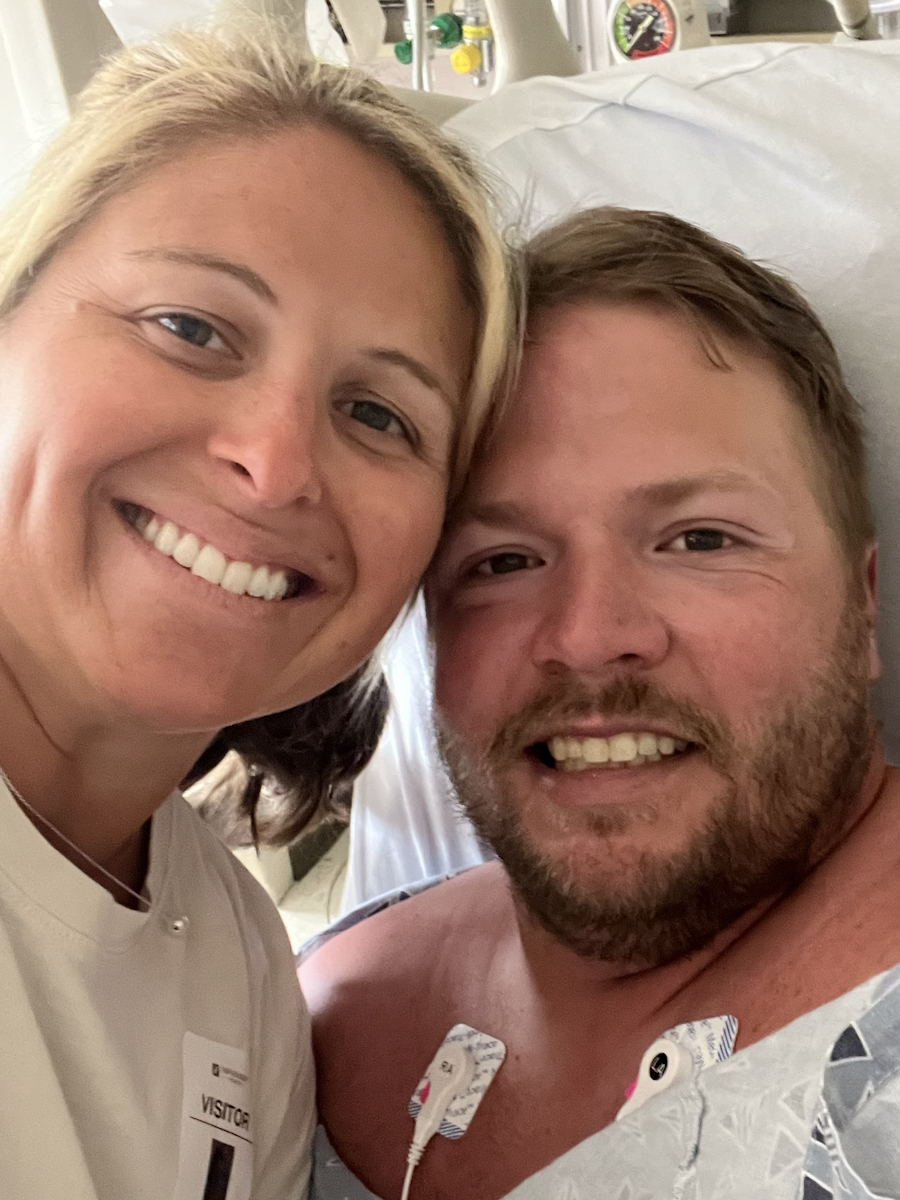
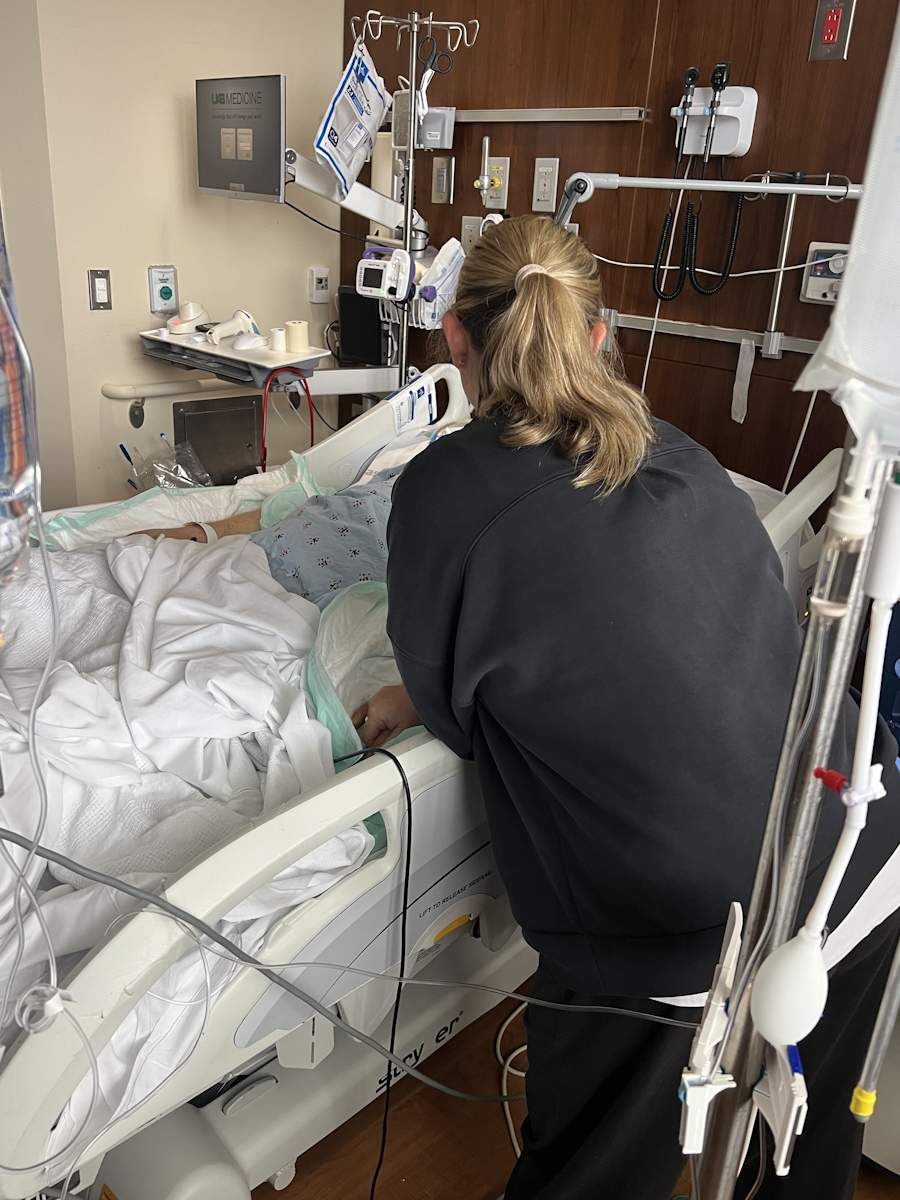
When he got there, he didn’t need ECMO, which was such a blessing. He was still on the ventilator and on what I felt like every single machine, but not on ECMO, which was great. I felt like that was a little win. He was then moved to the bone marrow transplant unit, because that was their cancer ICU department. I’m so grateful he was in that unit; those doctors and nurses were amazing.
He was there for five weeks. He was able to get one round of chemo. He was too unstable to get radiation, especially because the tumor was so close to his heart and lungs. I think they were nervous about the placement. The chemo did not shrink the tumor at all. They weren’t sure if it was dead or not; they couldn’t tell, because he was too sick for a PET scan, but it was still the same size.
While we were in the BMT unit, he was put on dialysis because his kidneys started failing, so they had to put him on the continuous renal replacement therapy (CRRT) machine for continuous dialysis. A nurse came in and asked what was going on with the machine. I told her what I thought needed to happen, and they did it and it worked. She said she didn’t even need to get the doctor. He was on dialysis and on a ton of blood pressure medicine to keep his blood pressure up, because it was so low.
One night, they called me in at around midnight and said, “He’s on the highest blood pressure medicine we can give him. If he codes, what do you want us to do?” I don’t want to see that. I don’t want to see you give my husband chest compressions. I don’t want that ingrained in me. Thankfully, they figured out he had a bleed or something, and he had to go for emergency surgery. I think that happened twice.
Towards the end, we would have some good days. He ended up waking up from sedation, which was good. He probably had a good week where he wasn’t talking, because he had the ventilator, and they ended up moving him to a trach (Editor’s Note: Short for tracheostomy, according to Mayo Clinic, a trach is a hole that surgeons make through the front of the neck and into the windpipe to place a tube to keep it open for breathing.)
For a minute, they were talking about getting him a voice box, because he was trying to communicate with us, but it was hard to piece together what he was saying because I couldn’t read his lips. His hands were so filled with fluid that even when I tried to get him to write, he couldn’t do that. He did mouth some things. The doctors asked him who I was and he mouthed, “Robin,” and that he loved me, which I’m so grateful he was able to do. He could still manage simple commands. He was alert for a small period of time in the hospital, and I was very grateful for that.
A week before he passed, he wasn’t responsive at all. He wasn’t waking up when they took him off sedation. His organs were failing. I guess his blood pressure medicine pulled the blood from the outer extremities to the most important organs, like the heart, lungs, and brain. His gut was suffering. His doctors thought his gut may have died, which was huge because if your gut dies, they can’t do anything for you. But on the same day, one doctor came back and said his gut was not dead, that they thought he had a pancreas bleed.
It was such a whirlwind of a day. His parents and I were almost laughing because we were like, “What is happening?” It was wild. They ended up finding out his gut was not dying, but the blood flow was being restricted to it. If he had to continue being on blood pressure medicine, it would eventually die. Every day in the last week of his life, we didn’t know what was going to happen. Some days the doctor would say, “We’re not sure. He’s in bad shape,” then they’d come in the next day and say he’s doing a little better than yesterday, so you have hope.
The day before he passed is when the doctors said they believed his time on earth was coming to an end and that they didn’t think they could do anything else for him. That was a hard pill to swallow. Thankfully, I’m strong in my faith. Caleb wouldn’t want to be like this for the rest of his life.
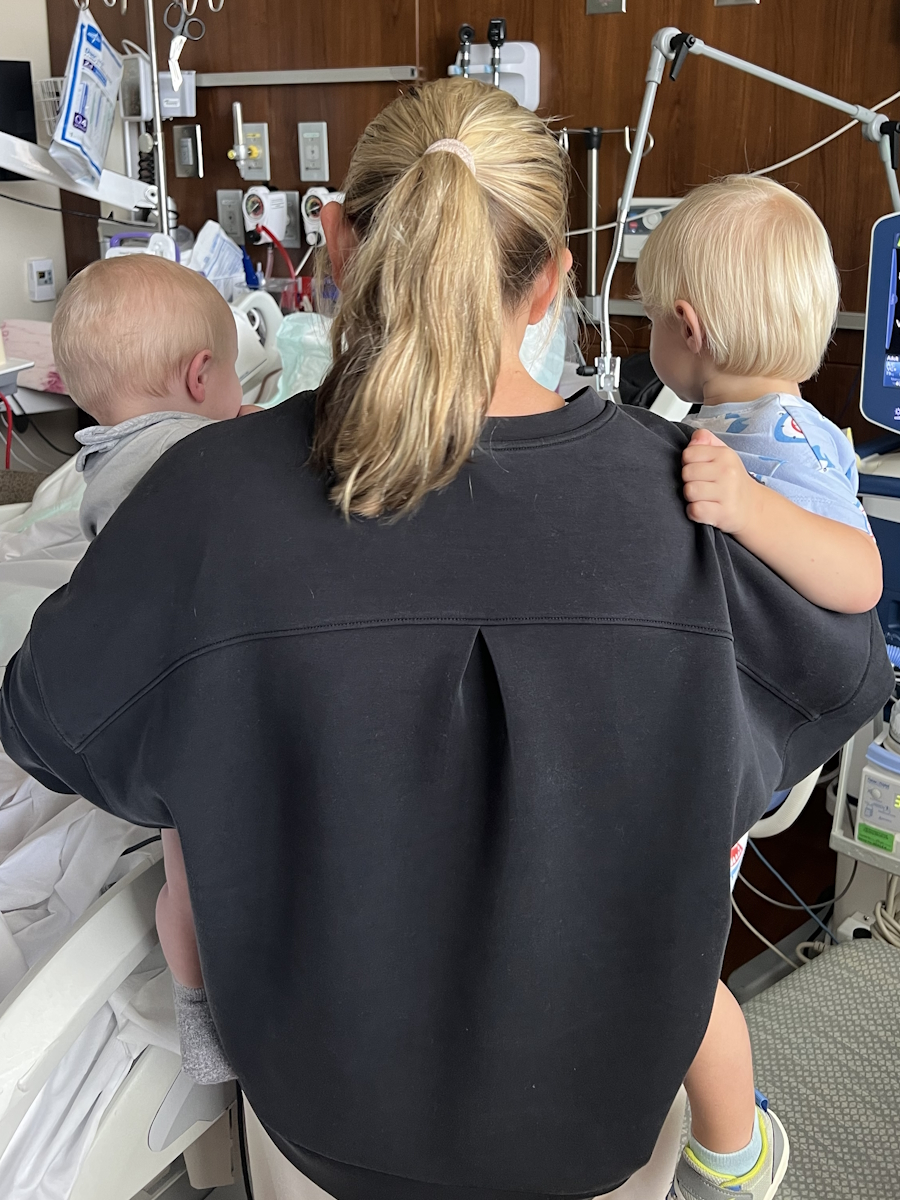
I stayed in the hospital that last week; before then, I’d stayed in a hotel. We had friends in Birmingham, so I also stayed with them. But that last week, I was there around the clock. I’ll never forget: A surgeon came in one morning, looked at his gut, and was the first person to tell me he believed this was terminal.
Surgeons can be very blunt at times, but I appreciated it. He said death isn’t always the worst thing. That stuck with me, because Caleb would not have wanted to be a vegetable in a bed. The other doctor, the sweet one who broke the news that they believed this was the end, said even if a miracle were to occur, he would have to get a kidney transplant. He would be on dialysis. He would be on a ventilator for the rest of his life.
Knowing my husband, who played D1 college baseball for Mississippi State University years before this — God gets the credit for that — and who was very active, he would not want to be confined to a bed for the rest of his life and possibly unable to move. That doctor’s words always stuck with me. I’m grateful he said that, because it helped me let go. I didn’t want to have to make those decisions. But unfortunately, when you’re in that situation and it’s so sudden, Caleb never could tell me what he wanted, even though I know what he would want. He couldn’t verbalize it to me, so I had to make those decisions. In the end, I had to decide to go on palliative care and to pull all the plugs from all the machines.
It’s something I would never wish on anyone, but people have told me that it’s the nicest thing I could have ever done for him, to let him go peacefully, and he did, so I’m grateful for that. In the very end, the doctors were doing everything they could. They kept saying, “He’s 35 years old. He’s so strong. If anybody can beat this, it’s him. He has age on his side.” When Caleb was in the hospital, he was primarily a medical ICU patient, with cancer on the back burner, which sounds weird, but his main doctor team was the medical ICU team, and his oncology team was more like their support.
In the very end, they told us they had one radiation oncologist who was willing to give him radiation if we wanted, but that only one doctor in the entire hospital — and UAB is a pretty large hospital — was willing to do it, and that he could die on that table. They couldn’t get to him fast enough.
I had to make the hard decision not to go through with that, which in the beginning I felt very guilty about. I thought, “Why didn’t I try that?” But I would have hated for Caleb to have died in a room all by himself, without us there. We were able to let him pass peacefully with me, his parents, and his brother. I was also able to bring my boys to the hospital to see him.
Our boys were so young. Our oldest was a year and a half and our second child was nine months old when Caleb passed. They didn’t understand what was happening, but I’m so grateful they were there, because I hadn’t seen them in five or six weeks. It was an out-of-body experience.
Five weeks from start to end: Making sense of how fast it all happened
It was bizarre. It was five weeks to the day. He went into the ER the day after Memorial Day, on a Tuesday, and he passed away July 1st, which was also a Tuesday. We went through that whole experience for exactly five weeks. I don’t think I could wrap my head around it.
I could imagine if Caleb had been there and speaking, it would have been different. Maybe I would have been researching. I wasn’t doing any of that, because he was in such critical condition that we were where we were. We honestly had no other options, which, weirdly, I’m grateful for. I’m thankful I didn’t have to be researching to no end and wondering if we were picking the right place, because we definitely were in the right place. It left me sitting in his hospital room, pondering my thoughts, becoming friends with the nurses, taking it day by day, and asking them what they thought.
A lot of the time they’d say, he’s going to pull through. I would say probably every one of his nurses, at least in the beginning, said he was going to get through this, especially after he had gone through a big hurdle. When you’re in the ICU, you’re kind of on a roller coaster with ups and downs, and we definitely had that. When we were on an up, the doctors would say he’s doing well and he’s not the sickest patient anymore. There were times when the doctors said he’s the sickest patient in the hospital, and that was hard for me to hear. He’s 35 years old. We just went to California the week before. It’s bizarre.
When he did pass, it was very much a shock. I couldn’t believe he had died. It felt very surreal. I’m a little over a year out now, and I still feel like, “Caleb’s not here. What is this?” It’s such a wild experience. You don’t know until you know. It’s crazy. You can’t wrap your head around it, especially when it happens that fast. A lot of my friends thought he was able to communicate with me those five weeks. He mouthed a few things to me, and that was about it. Other than that, he was lying in the hospital bed, unresponsive and sedated.
Why Caleb waited: A widow’s honest take on men avoiding the doctor
Go to the doctor. Caleb started not feeling well around the beginning of May, because I didn’t feel well at the same time. I thought we caught something from the boys. I went immediately to the doctor. Caleb eventually went to the doctor too.
I don’t blame urgent care. I’ve thought about that many times. Should I blame them? I don’t. When a 35-year-old male comes in, has never had any issues before, and talks about pressure in his head, they’re probably not going to order an X-ray and a CT scan. In Caleb’s situation, he did what he could. He should have had a primary care doctor. If he had had one, maybe they would have said, “You know what, for the heck of it, we’re going to run blood work, because you haven’t been here in a long time.” Since he didn’t have a primary care doctor, he kept going to urgent care, and the urgent cares were probably going off his symptoms. Who knows if Caleb told them it was hard for him to breathe when he bends over. I wasn’t with him, so I don’t know what he told them.
Caleb definitely did not want to inconvenience his family. Who knows? It wouldn’t surprise me if he said, “I have pressure, a headache, and a cough,” and they thought to do a strep test, rule out RSV and COVID. Obviously, when he ended up getting to the emergency room, which was too late, if you will, they did all the things they needed to do and that’s when they caught it.
I have wondered many times, “What if he had gone on Mother’s Day, a few weeks prior? Would that have changed anything?” I have to tell myself it wouldn’t have. The mass was already there. The doctors asked me a lot of questions, like when the symptoms started and how long I thought this could have been going on. I told them he wasn’t feeling well at the beginning of May.
I asked them, “Could this have grown since the beginning of May?” They said it could have, because acute T-cell lymphoblastic lymphoma is such an aggressive form of cancer that they said they’d never be able to know for sure. Is it possible? Yes, it can grow that fast.
I have to constantly not beat myself up and be mad at Caleb, because I definitely have been mad at him. Why didn’t you go to the emergency room sooner? But I have to tell myself that if he had gone to the emergency room at that time, yes, maybe he would have lived. Who knows? But we wouldn’t have been able to celebrate my birthday, which was a few days after Mother’s Day. We wouldn’t have had that last family trip to California, where he seemed healthy. I have to tell myself those things, and be glad we got to do fun things as a family before our world was completely shattered.
It definitely made me more aware that you need to advocate for yourself if you’re not feeling well. Don’t be afraid to go to the doctor, because Caleb was definitely one of those people. He’d probably hate that I’m saying this. He’d say, “I’m not scared of the doctor. I’ve never been scared.” But he was scared. Normalize going to the doctor once a year and advocating for yourself and for your children.
After Caleb passed, I remember asking my pediatrician, “When do kids get blood work done?” They told me kids only get it at their one-year appointment and then when they’re 11 years old. I said, “Can you do it every year for me, please?” She said that was fine, no big deal, but they go by whatever’s recommended.
Advocate for yourself and your family if you’re not feeling well. Don’t be afraid. I know it can be scary to think of the worst-case scenario, but if you catch it at the right time, it could be treatable. Caleb’s cancer is treatable. It’s not like I was searching for a clinical trial; I didn’t have to do that. There was a treatment plan. It was whether the treatment was going to work.
The moment Caleb passed and the unexpected relief I felt
I used to feel guilty for saying this, but it was almost like a relief. He was literally being poked and prodded all day. They were always trying to get an IV in, even though he was bloated. Especially in the end, he was very bloated. His veins were like paper. Knowing that he wasn’t suffering anymore — as hard as it was and trying to imagine how I was going to continue in this life without my husband — I did have a sense of peace, which I know came from God.
I had a sense of peace knowing that he wasn’t suffering anymore. I had relief, in a way — it sounds bad — but it’s done. I don’t have to live in this hospital anymore. Obviously, I would give anything to still be living in the hospital if it meant he survived. But he passed away peacefully and I’m grateful for that. It wasn’t scary. Unfortunately, I have watched other loved ones pass away and their deaths were not peaceful like Caleb’s. I’m grateful his was like that.
It’s hard to wrap your head around it. You don’t believe it. I almost can’t remember some things, like walking out of the hospital. I was leaving the hospital without Caleb. They told me the funeral home was going to get him and drive him back home, because we weren’t in the same town. It was so weird. I was getting calls from the funeral home the next day, telling me that he was on the road. It was so weird and very surreal. But I felt a sense of relief, because he’s not suffering. I was watching him wither away, going from a strong man who could bench press 300 pounds to looking like a shell of a human. I look at him and think, “That’s not my husband.” That wasn’t Caleb. It’s almost like he was already gone. It’s crazy what cancer can do to somebody in such a short period of time. It’s wild.
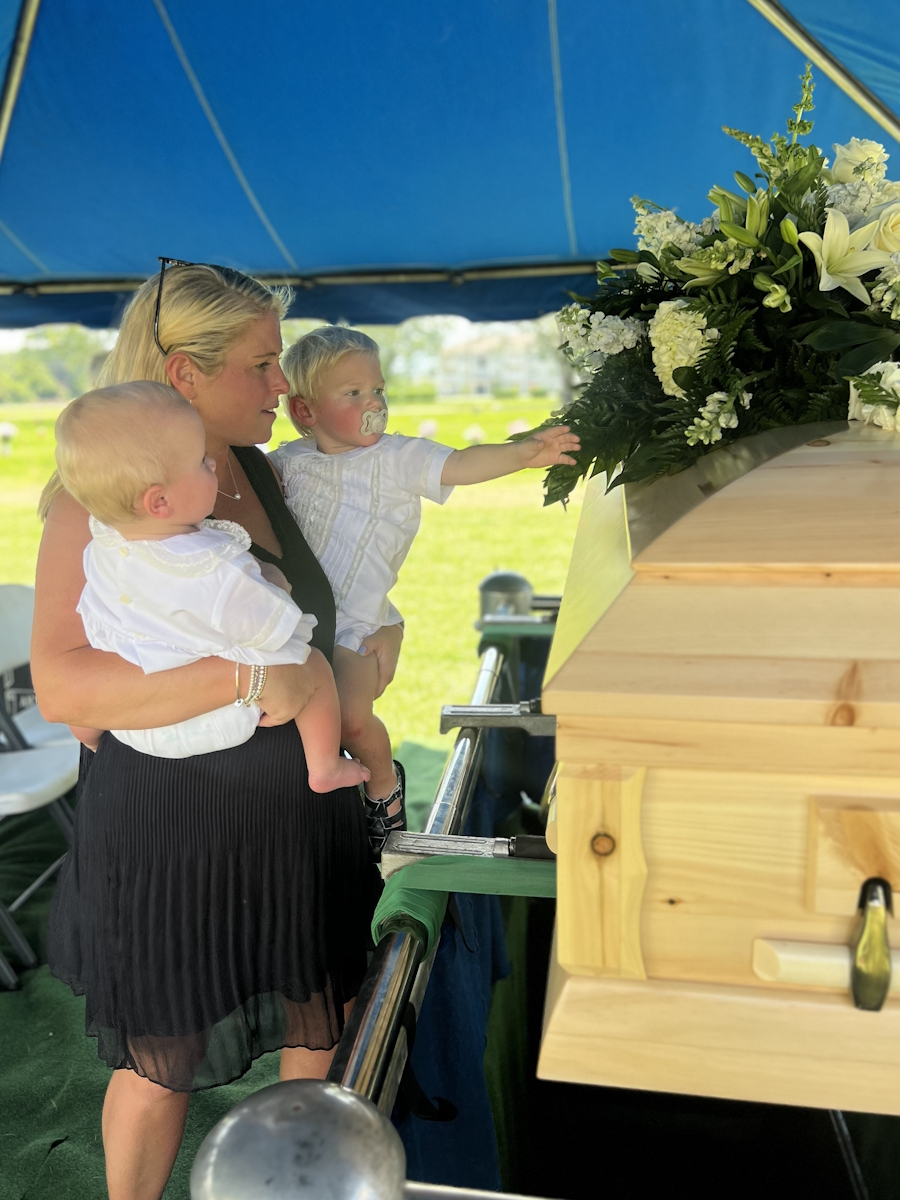
The photo of a hand on the casket: Why I needed to capture that moment
I was trying to get people to take pictures. My mother-in-law and father-in-law didn’t want to be in photos. I know Caleb would also be like, “Why do you want a picture of this?” But him knowing me, he’d say, “Robin needed to have this; it’s fine.”
I wanted pictures because I wanted to look back, so my friend took a photo of the boys and me with our hands over the casket. It was right after his graveside service ended. There was a ton of flowers on the casket, and I wanted the boys to be able to grab one if they wanted. They were staring at the flowers. I was trying to explain, as best I could to a 21-month-old and a nine-month-old, that Dad died, he’s in heaven, and he’s not here anymore. They’ve helped me through this more than they will ever know, because they don’t know much. They don’t understand, but they know more than you’d think. I’ll ask, “Where’s dad?” They always say, “He’s in heaven with Jesus.”
It was a powerful moment and I wanted it documented because I would hate myself if I didn’t get a picture, especially to show them when they get older, to have some memories. They might not be the best pictures, but that’s our life. I wanted to document some pictures from that day.
What grief has looked like for me, one year later
It’s definitely made me more aware. My perspective on life has completely changed. I’m very grateful for the perspective I have now. Without losing Caleb, I wouldn’t have this perspective of not sweating the small stuff because it’s not worth it. I try to be the bigger person.
Unfortunately, I’ve lost several people in my life since Caleb passed, and letting go of that and hoping that later we can have a relationship, but it’s hard. If Caleb hadn’t died, I don’t think I’d be as willing to let it go, if that makes sense. I have to let it go. My perspective has definitely changed. Grief has opened me up. I’ve always been extroverted. Sometimes I probably overshare and shouldn’t, but grief has made me more vulnerable. I’m not afraid to share my emotions and that’s why I started my grief page. I wanted it to be healing for me. I didn’t care if only one person followed it. I wanted it to be healing for me, to get my feelings out there, and to see if it could help somebody along the way.
At times, I’ve felt like I was the only person in the world going through what I was going through. I’m not. I was 32 when Caleb passed. I’ve met so many young widows and knowing that I’m not alone has weirdly helped me, because other people are going through this too.
I’m more willing to say hard things to people if they need to be said. I’m more able to do that. Before, I hated conflict. I’m definitely a people pleaser, but I’ve had to rein that in. Life’s short. We don’t know when we’re going to die. I need to tell them how I’m feeling.
Who Caleb was beyond the T-cell lymphoblastic lymphoma diagnosis
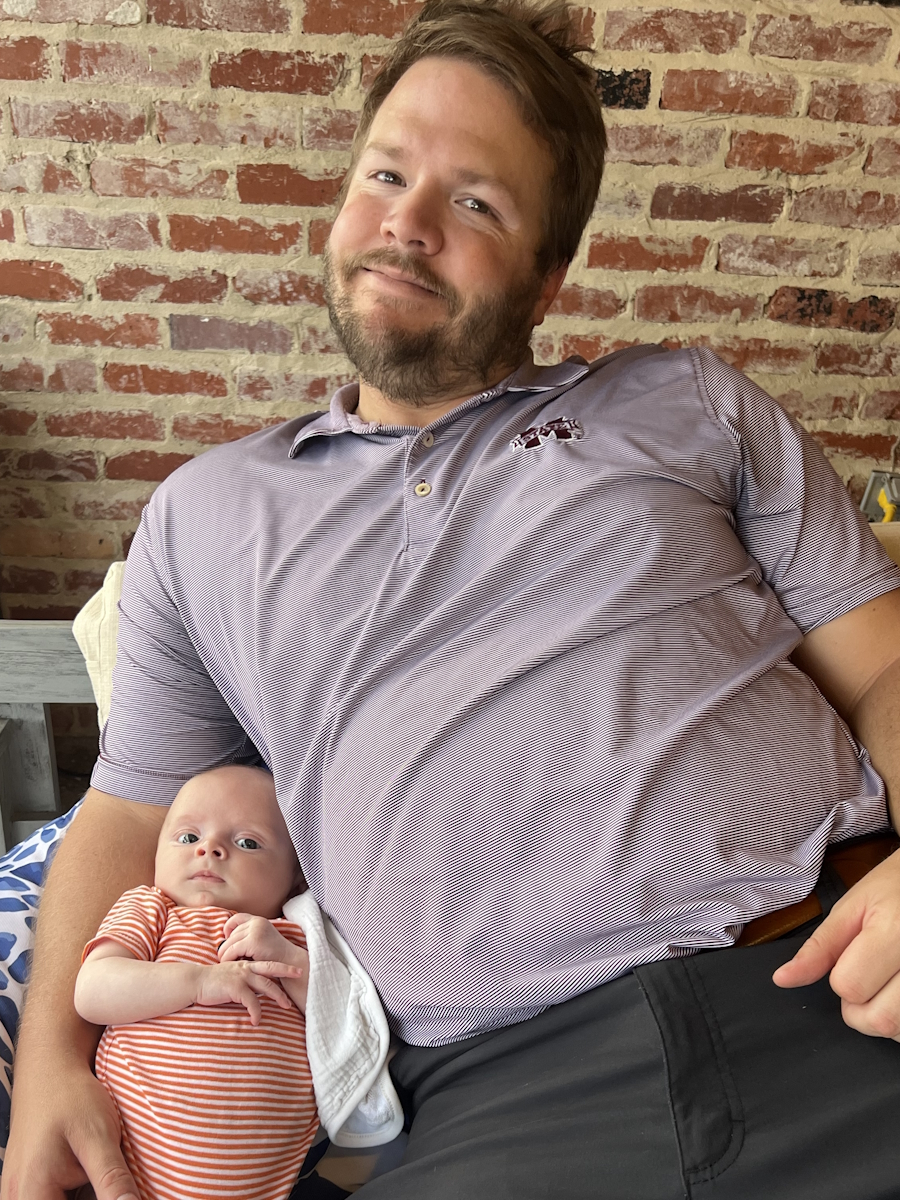
Caleb was very outgoing. He saw the good in people. If I came to him complaining about somebody, he’d always give me the silver lining. I’ve definitely taken that with me. I try to find the silver lining in Caleb’s death by sharing his story and trying to help people. He always wanted to help people, literally. That’s why he loved his job, because he felt like he was helping people, and that’s what he wanted. He wanted to help people.
When we first started dating, I was traveling on the interstate at around 10 a.m. and a coyote ran out and hit my car. I didn’t know what to do. I was with my dad, who had Alzheimer’s at the time, so he couldn’t help. My little sister, who was in high school, couldn’t do anything for me either. I called Caleb. We’d been dating just over a year, and I told him I didn’t know what to do. I was three hours from home and he was three hours away in the other direction. He told me to keep driving and, when I got off the interstate, to go to an auto shop.
Of course, when I got off the interstate, my car started smoking. I had to go to the auto shop and leave my car there. Thankfully, I had other family going to the same football game, so we got rides home, but my car was still up there. Caleb literally drove all the way up there that week and paid to get my car fixed. He got a rental car, drove all the way up, got my car, took the rental car back, and drove my car back to me. We were dating at the time.
He would always help me with my American Cancer Society events. We always needed an extra hand and he was always willing. He was so supportive, very faith-filled, and definitely believed in God, and I know where Caleb is because of that. He helped me grow in my faith when we were together. Now that he’s passed, my faith has continued to grow and I credit that to Caleb. He had such a strong faith and loved God. I have to tell myself that God needed him for something up there and that’s why he took him. He’s a very faith-filled man.
Caleb was the most humble guy. He played D1 college baseball, and I don’t think I knew he played baseball in college for the longest time. He never brought it up. He had championship rings he didn’t even keep. They were with his dad, who treasured them more than he did. Whenever he would win an award at work, he wanted to throw it away. I had to make him keep the awards. I’m so grateful that I did, because he 100% would have thrown them away. He was very humble, almost to an annoying degree. At least give yourself some credit.
Writing his obituary, I knew I couldn’t brag too much about him, because I knew he’d hate that. I know who he is: a humble guy who loved the Lord and who wanted to help people. That’s literally who he was. He obviously had faults, but that’s what I’ll always remember Caleb for. I hope my boys can grow into that legacy and be like him in those ways.
My words of wisdom for anyone facing a great loss
You’re not alone. A lot of the time, you feel like you’re the only one going through something hard, but remind yourself that other people are going through hard things too, maybe even harder things, if that’s hard to believe. I do think people are going through harder things. Finding those people and building a community with them has definitely helped me in my grief. If I didn’t have people to run to and to talk to about what I’m going through, I don’t think I’d be where I am today.
I’m still healing. I think I always will be, especially suffering such a great loss at such a young age. Don’t be afraid of therapy. My therapist has been wonderful and has given me a different perspective on things I may have thought were the only way. She’s shown me I might be wrong about that.
I hold on to hope and faith that I will see Caleb again. For anybody who has lost somebody, you’ll see them again if you believe that you will. I do think Caleb is in a place we can’t imagine. He is not sick and he’s watching over us and helping guide us through this life without him.
Why I want to share Caleb’s T-cell lymphoblastic lymphoma story
It made me nervous to share, but I always feel so much better when I talk about Caleb and share about him. Don’t shy away from talking about the loved ones who you lost. I had to go through a period where I couldn’t tell every single person I met that my husband died. Whenever I talk about Caleb, I truly feel so much better. It’s honoring him, in a way, and keeping his legacy going. I’m so thankful that I’m able to share his story and hopefully help people who are, unfortunately, in the same boat as I am.
This interview has been edited for clarity and length. The views and opinions expressed in this interview do not necessarily reflect those of The Patient Story. This content does not replace professional medical advice.
Inspired by Robin’s story?
Share your story, too!
Hear from people living with related cancers
Real experiences with diagnosis, treatment choices, side effects, and life beyond cancer — in their own words.



Leave a Reply