
How Jesse Faced Early T‑cell Precursor Acute Lymphoblastic Leukemia (ETP-ALL) and a Bone Marrow Transplant
Professional race car driver and coach Jesse heard the words “early T‑cell precursor acute lymphoblastic leukemia (ETP-ALL).” As someone who thrives on data and precision in both life and racing, Jesse dove into medical journals and patient information pages, quickly realizing that this rare, high‑risk subtype of T‑cell leukemia often comes with poor outcomes and intensive treatment. Still in his 20s, he suddenly had to consider that the life and career he had been building since age 13 might end far earlier than he ever imagined.
Interviewed by: Tory Midkiff
Edited by: Katrina Villareal
Jesse traced his leukemia experience back to early 2020, when he found a small lump under his chin. After months of escalating symptoms and a biopsy, he received a diagnosis of T‑cell acute lymphoblastic leukemia (T-ALL). From there came multiple specialists, a hematology‑oncology referral, and a frank conversation with his transplant physician. It was made clear to him that the disease was advanced and aggressive, and waiting any longer was not an option.

Jesse ultimately chose an intensive path: an aggressive induction therapy of hyper-CVAD regimen, followed by an even more demanding chemotherapy regimen when induction failed, then an allogeneic stem cell transplant with a near‑perfect donor match. The transplant conditioning, which included high‑dose total body irradiation and myeloablative chemotherapy, left him with peeling skin, severe gastrointestinal issues, and life‑threatening gum bleeding that required multiple cauterizations. He describes this stretch as hanging onto a bucking bull: trying to stay on until his new bone marrow engrafted.
Supported fiercely by his wife, family, and friends, Jesse endured months in a positive‑pressure room, then the long work of learning to walk normally again after profound muscle loss. Post‑transplant, he faced graft‑versus‑host disease (GvHD) in his eyes, mouth, skin, and muscles, as well as long‑term endocrine effects like thyroid and testosterone problems.
Jesse made his way back into a race car months after his final bone marrow biopsy confirmed deep remission, pausing mid‑lap when tears blurred his vision. He talks candidly about survivor’s guilt, the importance of listening to your body, and the power of advocating for yourself in a complex medical system.
Watch Jesse’s video or read the edited transcript of his interview to know more about his story:
- Listen to persistent or unusual symptoms, such as swelling, fatigue, or feeling “off,” and get them checked early, even when life is busy.
- A strong support system of partners, family, and friends can make an enormous difference in getting through long hospital stays, complications, and the emotional weight of treatment decisions.
- Advocating for yourself, asking questions, and pushing for timely care helps keep your treatment on track in a system that can default to “by the book” rather than urgent.
- Jesse’s transformation from denial and fear to seeing every day as “extra life” and returning to racing with a new sense of purpose shows how profoundly a serious diagnosis can reshape priorities and identity.
Jesse’s Diagnosis Facts
- Name: Jesse G.
- Age at Diagnosis:
- 27
- Diagnosis:
- Early T‑cell Precursor Acute Lymphoblastic Leukemia (ETP‑ALL)
- Symptoms:
- Lump under the chin
- Progressive lymph node swelling above the clavicles
- Facial swelling
- Fatigue
- Malaise
- “Flu‑like” feeling
- Treatments:
- Chemotherapy: Hyper-CVAD, pediatric/AYA regimen
- Allogeneic stem cell transplant
- Donor lymphocyte infusion (DLI) + nelarabine
This is not medical advice. Please consult with your healthcare provider to make informed treatment decisions.
- Jesse’s Diagnosis Facts
- Introduction
- First symptom: A lump under my chin
- Receiving the leukemia pathology report
- Being admitted and hearing the prognosis for ETP‑ALL
- Choosing an aggressive chemotherapy regimen (hyper-CVAD)
- Finding a perfect bone marrow donor match
- Recovering from transplant: GI issues, fall, and engraftment syndrome
- Getting back to racing after leukemia and transplant
- Survivorship, survivor’s guilt, and processing the odds
- Lessons learned: Take your health seriously and don’t delay
- Hear from people living with acute lymphoblastic leukemia (ALL)
Introduction
My name is Jesse. I’m a professional racing driver, driver coach, and now team owner. Back in late 2020, I was diagnosed with early T‑cell precursor acute lymphoblastic leukemia, a very rare subtype of T‑cell leukemia. Mine was the T‑cell stem cell lineage, which is extremely stubborn.
It was weird. I’m a very technically-oriented person, and I’m very specific about knowing things that I have to do. In the racing business and even in life, whether it’s going through my mortgage or taxes, I have to know everything. I’m one of those people, and it was no different for cancer.
When I got my official diagnosis, which was about nine months after I started having symptoms, I went on a Google rampage and started looking everything up. Nothing that you find online is going to be good, so it was quite upsetting. It was right there in bold print: the survival rates, the history of this disease, and the treatment options. Having known a few people who have gone through cancer and unfortunately passed away, it was terrifying, to say the least.
My wife felt the same way. We went through it together because we are very close as a married couple. It was very difficult, especially knowing that this could be the end of my life for myself, my family, and my wife, and then on the more selfish side, the end of my racing career, something that I had been building since I was 13 years old. Now I was looking at the end of it and the end of my life prematurely by magnitudes.
First symptom: A lump under my chin
I would say that my mentality going into this was from a very young person’s point of view. My first symptom was a lump under my chin in April 2020, at the beginning of the COVID pandemic. I was going to get food with my wife and felt my chin for whatever reason and felt a small lump, but it wasn’t visible. I asked her if she had something like that there, too, but she didn’t. I didn’t think about it and just went on with my life.
I went on to coach a client for a five‑day event, so I was there for quite a bit of time. On the third day, my whole chin was swollen. It was bright red. I never had any issues like that before. I did not have insurance at the time, so when I came home, I went to see my primary care doctor. He looked at it and said, “Okay, that might be a salivary gland infection or something weird,” so he gave me antibiotics and steroids.
Nothing worked. It subsided for a week, but I went back for a checkup. He sent me to ENT and he was immediately alarmed. He started checking my lymph nodes. This was October 2020. He said, “I’m afraid it’s lymphoma or something like that because I’ve seen this kind of weird presentation.” But otherwise, I felt fine, so I didn’t think anything of it. He sent me for imaging and, later that month, I got a head CT.
I lymphadenopathy above my shoulders. From the clavicle up, all the lymph nodes were swollen. They were starting to be visible, and I could feel them a little bit if I pushed on them. At that point, he wanted to do a biopsy.
Between October and when I had my biopsy in December, I started feeling everything. I started feeling more tired, very malaise, and not normal. It’s like when you’re about to have the flu, but it never came. It was that feeling over a couple of months.
He wanted to do a biopsy. He ended up taking a lymph node. Before he even finished the biopsy, he called my wife from the surgical suite and said, “This is not good. This lymph node is black. This is very abnormal.” I wasn’t even awake yet and he wasn’t completely finished with the procedure.
By the time I woke up in the recovery room, I was told everything. Things weren’t good and that I needed to make sure this got to pathology. They did what they needed to do. About two weeks later, the week before Christmas, I got the report; it said T‑cell acute lymphoblastic leukemia.
Receiving the leukemia pathology report
I don’t know if it was poor bedside manner or busyness. I got a call from the office staff of the ear, nose, and throat doctor, and they basically said, “Hey, your path report is ready. Come and get it.”
I drove to the ENT, which was about 15 minutes away, and the physician assistant (PA) handed it to me and said, “I’m sorry,” but didn’t explain anything to me. Of course, I had been looking this stuff up, but seeing it on paper was devastating.
When I got back in my car, I sat for about 15 minutes, trying to calm myself down, before I called my wife to let her know the terrible news. That made the intent to look for more information way worse. I started digging into everything: medical journals, case reports, anything I could get my hands on that had anything to do with T‑cell leukemia, whether it was the kind I had or any other kind. It was a lot.
I was in denial. I half accepted it and half wanted to act like it never happened and did not exist, which obviously is not realistic.
Researching leukemia and facing terrifying information
They could not tell exactly what subtype I had initially because they needed more data and do more testing. At this point, this is where I was looking up everything. I was looking up all the different types of T‑cell leukemia, how bad it was, and the different types of treatments.
It was extremely scary to see all that. It says you will be admitted for at least a month for chemo, this is going to last six, seven, eight months, and then you will have a bone marrow transplant. That was when I started having those questions and looking everything up.
Finding an oncologist and my first oncology visits
I met a doctor who lives in Jacksonville. I talked to him quite a bit throughout this whole period. He basically raised the idea: “I have this colleague who is an oncologist in Jacksonville at St. Vincent’s. Let me see if I can talk to her and see if she can give you a call. Maybe you can come in, do a consult, she can look at the path, do some blood work, etc.” I said okay.
It ended up being on my wife’s and my first wedding anniversary when we were in there. She is not a hematologist, but a solid tumor oncologist, so she couldn’t help me. She said, “Yes, you have something going on, but none of this is typical for leukemia or lymphoma. I have a colleague at another St. Vincent’s location who is a hematologist, so I’m going to send you to him.”
I kept looking into everything, scaring myself more and more as this went on. My wife was doing the same thing. She was upset. I was upset. Everything was put on pause right before Christmas, which was terrible timing, especially with the first wedding anniversary. My birthday is on the 24th, so that didn’t help either. I turned 27 while going through this.
Bone marrow biopsy and being sent to a transplant center
I went to see the hematologist in January 2021. He looked at everything and said, “I have not done it in a while, but I’ll do a bone marrow biopsy.” He did the biopsy and another CT scan; this time, a full-body scan.
About two weeks later, he called me, personally. He said, “I only have half the results from everything, but it’s not great. You definitely have T‑cell leukemia. I do not know what kind yet, but we need to act fast. I taught this doctor who is now the lead of the bone marrow transplant unit at AdventHealth Orlando. I taught him in fellowship, so it has been a little bit, but I still have contact with him. I’m going to give him a call, so you might get a call.”
Two days later, I got a call. At this time, I still did not want this to be real, so I was doubting it, thinking, “No, it’s just a bad infection,” or “I have some random weird disease from bacteria or whatever.” I was still in denial.
They called and said, “Can you come in this morning?” I said, “Sure, what time?” They said, “Get here as soon as you can. And bring clothes.” I said, “Bring clothes? Okay, it’s just a checkup, right?” “No, we’re admitting you.”
I said, “I can’t do that today,” and started listing excuses: I have to feed the dog, I have to do this. It was bad enough that the doctor called me personally about an hour later and said, “This is not good. From what I’ve read from my colleague that sent you to me, you are in a bad way. This is very severe. This is not playtime anymore. We need to do something about this, like yesterday. I want you to promise me you’ll come in tomorrow morning.” I said, “Yeah, okay. I’ll be there at 8 a.m.”
Being admitted and hearing the prognosis for ETP‑ALL
I went there and they redid everything. They were doing ultrasounds to make sure I did not have a mass on my chest or my thymus. They redid the bone marrow biopsy and all the blood work, everything you could think of. By this time, it was eight or nine months into it, and I was starting to feel the symptoms. From there, they told me, “You’re going to be here for a month and a half or so.”
They sat down with me about the type of T‑cell leukemia that I had and told me everything that I had ever read, confirming my worst fears of what it was. With ETP‑ALL, the five-year survival rate traditionally and historically is very poor compared to other leukemia types.
They gave me two options. They said, “We can do this the easy way, but the easy way might not work, which is going to be very easy chemo that tries not to damage the body as much as we can. Or the hard way, which is we’re going to hit you as hard as we can with as much chemo, with the highest dosage you can take, and then go from there and see what happens.”
Honestly, it didn’t hit me until I was sitting on the bed on the day of admission. The doctor called me, and then I had been quarterbacked down a line of doctors. Finally, there was this doctor at the end of the line. He did not frighten me, but he definitely confirmed that this is a very serious situation and I need to stop playing around. No form of mind games is going to help me at this point. I needed to see this through.
The way I thought about it at that point was sometimes, the only way through something is just to go through it. The only way out of the fire is to go through the fire. I knew it was not going to be fun, and I knew the odds were not on my side, but I had to do something. I resigned myself to surviving, and that is the best you can do.
Choosing an aggressive chemotherapy regimen (hyper-CVAD)
My wife and I make a lot of decisions together, so she was there with me on the day of that big discussion. She took off work. Thankfully, her job as a veterinary nurse was very understanding. We never had issues with her being available for important things.
She was there with me, and we both had a lot of questions for the doctor. He sat down and said, “I understand if you go with small doses. That might make you feel better right now. But you need to understand that with cancer, the best line of defense is to hit it as hard as you can the first time. If you do not, your body builds immunity to these drugs, and there’s a chance that it will not work anymore, or it’s going to be so aggressive that it overpowers what the medications can do anyway. Your treatment might be for nothing.”
He said, “I’m going to do something. I’m going to put you on a regimen called hyper-CVAD,” which is basically a four‑stage regimen of cyclophosphamide, vincristine, doxorubicin, and dexamethasone. He was going to do that for my induction therapy.
Induction chemotherapy failure and switching to a pediatric/AYA regimen
The induction period was going to be from mid‑January to about March. I spent a month and a half in the hospital, got out in the third week of February, and then spent a week out. I lost all my hair and went back in for another two weeks.
The induction had failed. I went in originally with about 60 to 70% bone marrow involvement. Their hope was that by the end of induction, it would be 2% or less. I was at 28 or 30% still.
From that point, he pivoted hard and went to the other extreme. We tried a pediatric/young adult regimen, the hardest chemotherapy for leukemia available on the market and the most involved regimen. The purpose was to knock down the bone marrow involvement to as close to zero as possible before the allogeneic stem cell transplant.
Those next two steps of the regimen took another three to three and a half months, basically from mid‑March to mid‑June. The treatment knocked it down to about 2 or 3%, which is still not great for transplant. They want it to be about 0.2 or a flat zero.
It involved a lot of high‑dose steroids, PEG‑asparaginase, vincristine, cyclophosphamide, all those kinds of drugs. I had to do intrathecal treatment of 11 spinal chemos to prevent CNS (central nervous system) involvement. Those were not fun. I can attest that having a needle in the spine is not fun, especially when they have to take a sample of your spinal fluid to make sure you do not have any cancer cells in it before they give you the chemo.
I spent a lot of time either doing it in interventional radiology or in the doctor’s office where they went in blind and did everything by feel. Neither is fun.
From there, their whole purpose was to prep me for the stem cell transplant. During this time, they started going out to bone marrow donor registries. They got my DNA profile, did all the matching, and cleared me for the stem cell transplant, which is a whole process. You have to meet with three or four different administrators, plus the doctor and the PA, and they have to clear you for everything because it is such an intensive process.
Finding a perfect bone marrow donor match
Insurance had to be set, and everything had to be organized. It’s probably akin to a physical organ transplant. It’s a huge undertaking.
When it came time for the transplant meeting, they approved me and gave me the good news. Surprisingly, I had four exceptional matches for bone marrow donors. The one they picked, which was the best of all of them, matched my DNA across the board. He had the same body type, same hair, same weight, same height — everything matched. He was from where my family is from. My family is from Austria, and he is from Central Europe. I have not met him yet. I would like to in the future, but I am waiting for that time.
We went ahead with it. When you go into the transplant process, it’s like a big meeting where a lot of work goes into it and you go to a bunch of different appointments. I had to see a radiation oncologist, do breathing tests so they could make sure my lungs were good enough for the process, and make sure they were not too damaged from chemo.
I had to do X‑rays, CT scans, and another bone marrow biopsy. It was two weeks of back‑to‑back testing every single day, going from where I live all the way to Orlando, which is about an hour to an hour and a half, every day.
Total body irradiation and transplant conditioning
Finally, the day came. The first thing you do when you are admitted is go to the radiation unit, which is in a different building but connected to the same hospital system, and you do your first dose of myeloablative total body irradiation.
I had fractionated total body irradiation, which means I went twice a day for three days. It was 13.2 Gy. If I remember correctly, 5 Gy without medical intervention is fatal. I knew this was going to be rough and quite the undertaking.
They wait a few days and then you do your cyclophosphamide, which is high myeloablative doses. That is also not terribly fun. I had lower doses of it before and it never affected me. I was very lucky through most of my chemo that I did not feel like I was going to be sick to my stomach. I did not have a lot of issues with vomiting. I felt like I had the flu or a cold the entire time, but no major gastrointestinal (GI) issues like many people do. I actually gained weight through the process somehow instead of losing weight.
Going into the transplant process was not too bad initially. It was one of those moments where you do something now, and you do not regret it until later. All the myeloablative chemotherapy and radiation did not hit me until about three weeks later. Basically, they hit you with all of that and then wait.
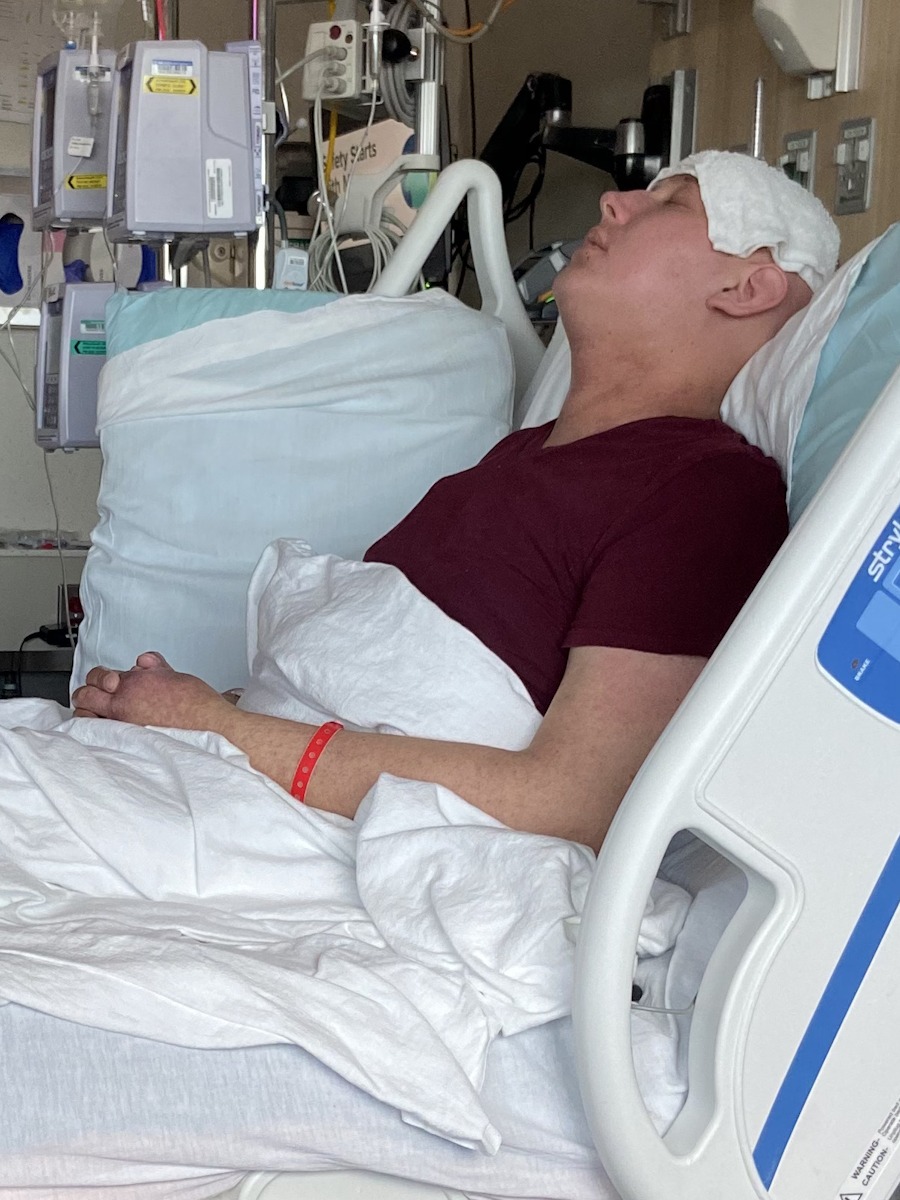
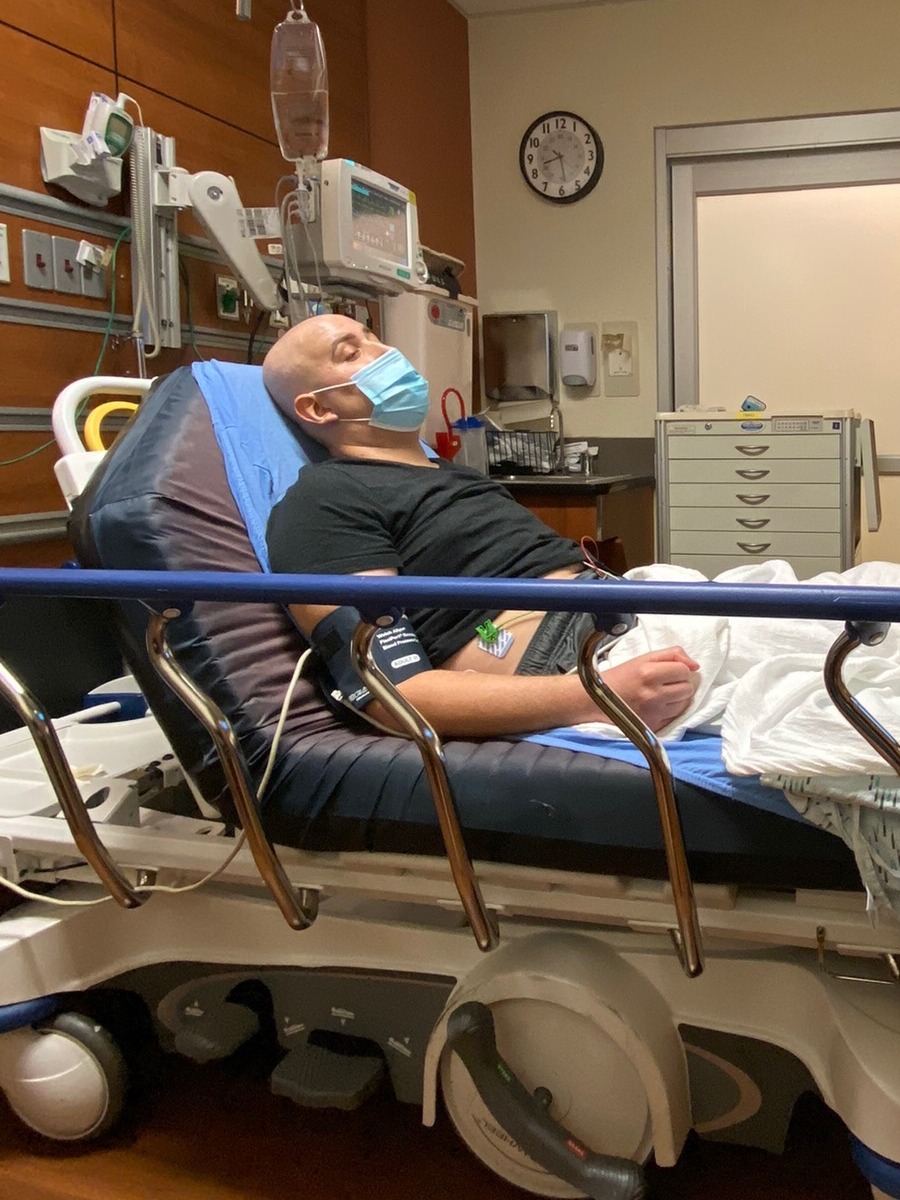
Every day, I was in the hospital in a positive pressure room. You can only have one person come, which was my wife as caregiver. It was in the middle of COVID, so we were terrified of her getting COVID and bringing it to me or a family member coming sick and giving it to me because I had no immune system.
Bone marrow transplant day: My “rebirth”
The day came: July 7, 2021, was my bone marrow transplant day. That was what they call your “rebirth day.” My donor, whoever he is, is an angel. He gave 1.5 liters of bone marrow for me. It was one of the largest bone marrow donations and transplants that unit has ever done. A nurse had to sit by my bedside for six hours to let the whole 1.5‑liter bag flow down.
That was it for the transplant process itself. Everything after that is just hanging on. It’s like you’re on a bucking bull. You hang on for the rest of the time and hopefully, everything comes together.
I started going through all the side effects about a week after. You start getting what I would call radiation‑sickness‑type symptoms. You start getting a lot of GI problems. Your skin starts to peel. You start not feeling well.
Severe mucositis, bleeding, and gum cauterization
It got to a point where I could not eat anymore. I physically could not keep anything down. At this point, I had a double port in my chest on one side and a diffusion line for the actual bone marrow transplant on the other side, with three lines coming out of another artery. Both were in two different arteries, and all of them were being used.
One line was pain medicine, one was IV medications or fluids, one was total parenteral nutrition (TPN) because I could not eat anymore, and the other two were for fluids and others. I think they left one for blood draws in the morning when they make you get up, weigh yourself, and do blood work.
At that point, something terrible started happening: I developed oral mucositis. Everything was starting to be affected by the large dose of radiation. I was brushing my teeth one morning and got a gum bleed and did not think anything of it. It took about 15 minutes to get it to stop.
My platelets were way lower than they should have been. They were counting down basically every day. That night when I brushed my teeth, the same thing happened, lasting 20 to 30 minutes. It did not bother me too much. I could taste blood, which is terrible, but it stopped.
The next morning when I brushed my teeth, it never stopped bleeding. I did not have any clotting factor. I did not have platelets left. I essentially started bleeding to death out of my gums. I let it go for about 30 minutes and when the nurse came in, I said, “I’m bleeding; it won’t stop.”
She looked at everything, and they gave me a suction tube. At this point, I was starting to have blood congeal in my mouth. Two to three hours after it started bleeding, it was still not stopping. It just kept bleeding. I was actually taking the blood out of my mouth and throwing it in a trash can.
It got so bad I was having difficulty breathing. It was affecting me. They were checking my blood counts, and they were dropping very quickly because my body was not generating enough red blood cells to replace what I was losing.
We got to hour six of this. They brought the doctor in, and he said, “We haven’t done this before, but there’s a cauterization team in the hospital. What do you think about cauterizing it?” I said, “Fine. Do whatever you have to do. I know it’s going to be painful. I understand. Just do it.”
About an hour later, she came in with silver nitrate and it stopped the bleeding. The next morning, it happened again, this time in the back of my mouth and behind my front teeth. She had to come back again and hit both spots. Now I had been cauterized three times in my mouth and gums.
At that point, they told me, “Just don’t brush your teeth. It’s gross, yes, and we understand you are not eating anyway. Here is some mouthwash. Use that. Do not brush your teeth with anything. Do not do anything abrasive to your gums. Just stay cool.”
That stopped. My platelets started to come back about a week after. As it got closer to the end of my stay, it got better.
Recovering from transplant: GI issues, fall, and engraftment syndrome
I started being able to eat again. As soon as they could, they took me off TPN because they did not want me to get a bad infection. For my first meal, I had my wife bring me an instant ramen bowl. My stomach did not agree with it at all. Being the first time eating in about three weeks, I probably should have thought better of it. I had a lot of stomach issues, and that was pretty rough.
I went to sleep and had a dream of going to bed. I decided to jump out of bed, tripped over my trash can, and face‑planted onto the tile. I thought I was smart and caught myself with my arm as I went down, but I did not catch myself as well as I thought. I somehow managed to go from the bed to almost the hallway to the door of the room. I do not know how I did not pull down my IV or anything out.
There was blood all over the place around me, like someone had pools of blood and slipped in it. I did not know where it was coming from. I crawled over to the bed and hit the panic button as hard as I could. About 15 nurses came flying in. As it turned out, I cut my foot on the trash can when I tripped and hit my head. You could already see my face starting to swell.
They did concussion testing and rushed me to CT for head scans. I did not have any brain bleeds. I got very lucky there. Of course, I had to face the wrath of my wife the morning after. She was not very happy with me. The nurses weren’t either. They put me on the bed alarm after that.
From there, it was pretty smooth. They had discussions with me every morning and everything was getting better.
I started running into a couple of small issues. I had engraftment syndrome (ES), which is where your neutrophils engraft too quickly. You get a huge rash all over your body. It looked like measles or something. It was very alarming.
They did biopsies and figured out that my bone marrow took way too fast, much quicker than expected. Two to three weeks after the donation, they were already engrafting. That is a good thing, but it might be too fast, which is why that was happening.
From there, everything got better, even though I was in a lot of pain and still not feeling well. I started coming out of that, came off the pain medicine, and then all my counts started climbing back up to normal amounts.
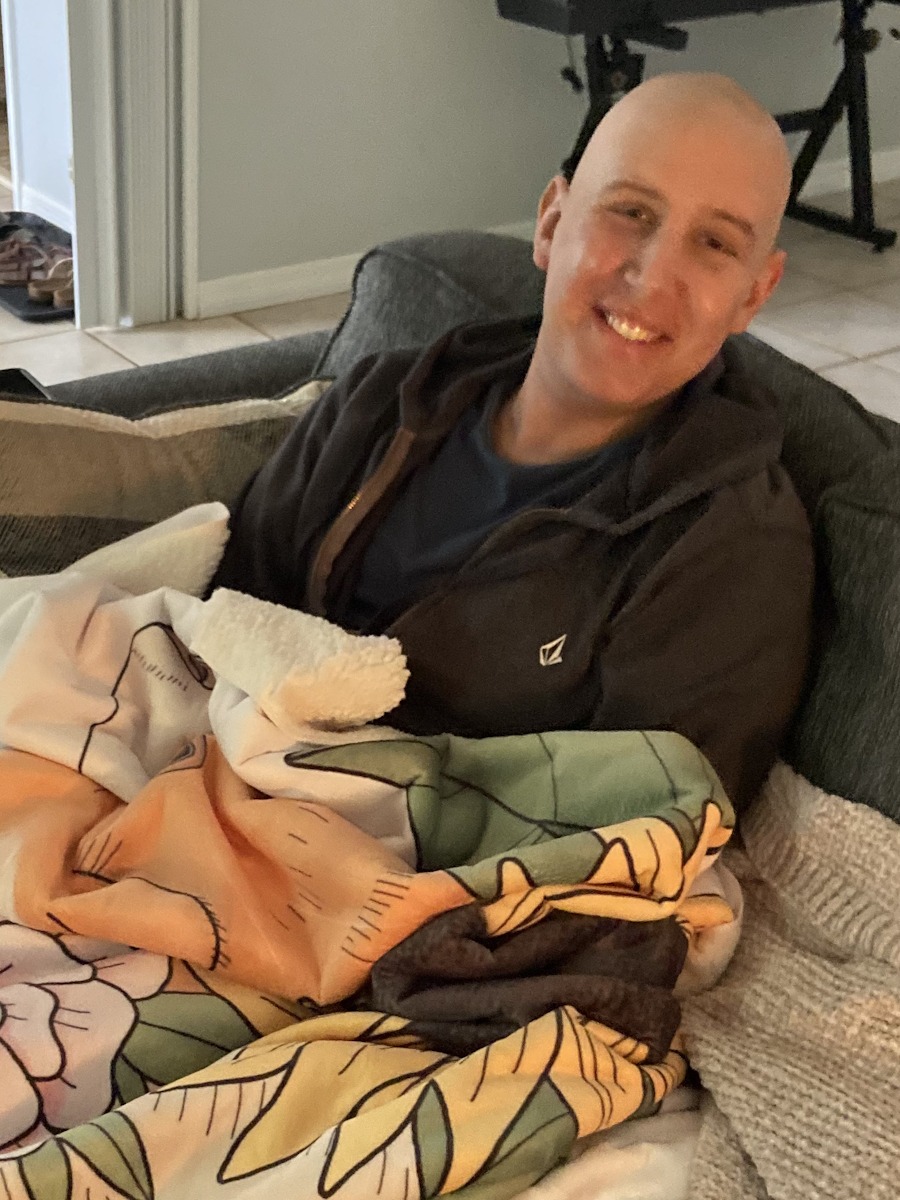
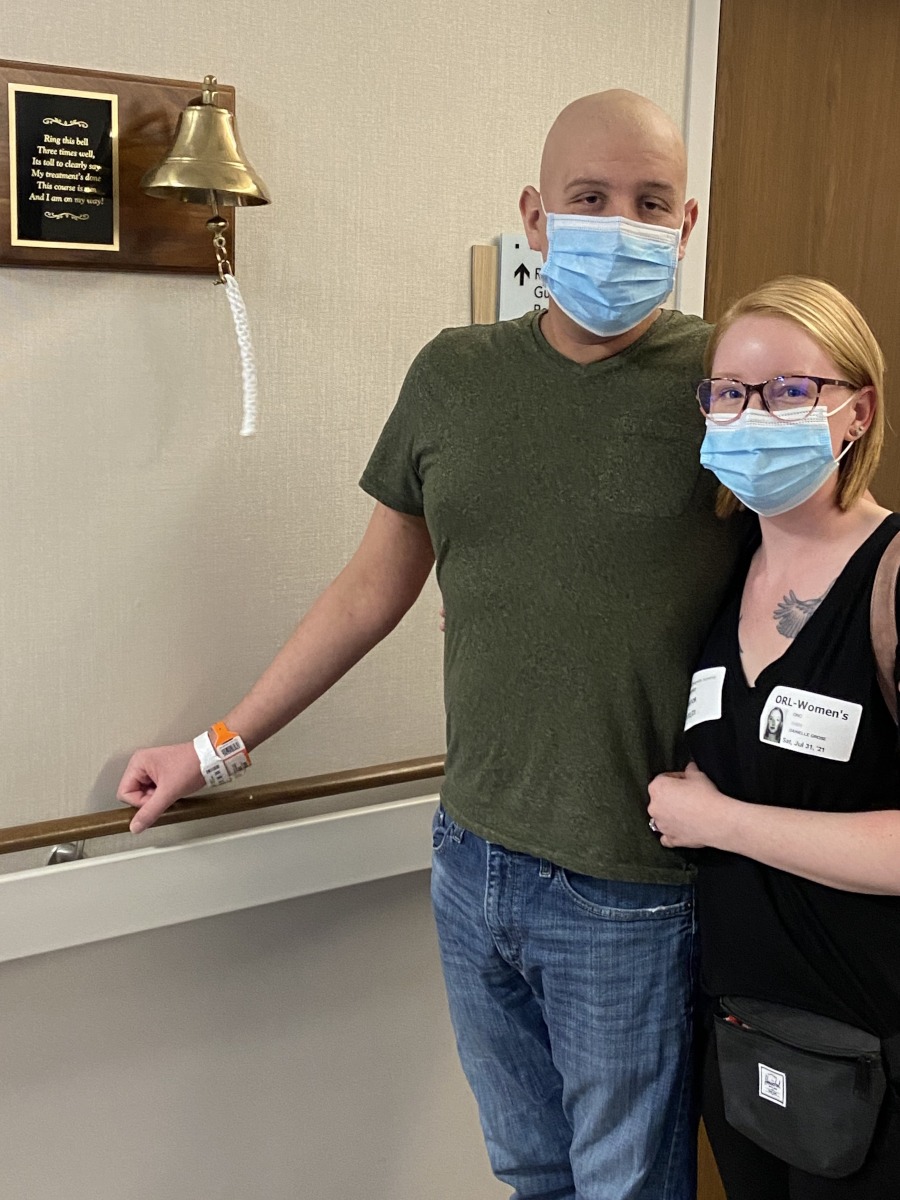
They have a threshold where they can let you go to recover at home. I went through that whole process from the middle of June to maybe the second week of August. I was in the hospital for that period. Then I recovered at home.
Extreme fatigue, muscle loss, and learning to walk again
We could walk around the unit freely. They encouraged it so you could keep some muscle in your legs. I didn’t do it enough. I could barely walk out of there under my own power. It was exhausting.
The first day I left, I had to stop at the park bench in front of the hospital while my wife got the car from the parking garage. I could not walk anymore. I was completely exhausted and blown away.
I could not walk normally. It took months to regain the ability to walk like a normal person. It felt like I had zero muscle mass in my legs and they were just noodles. Even when I did get some muscle back in my legs, it felt like I had dead feet. My feet would go wherever they wanted and I would end up kicking things in the house. It took a while to get that back. I got lucky that I did not end up coming out in a wheelchair. I had a walker at my house just in case, but I never had to use it, thankfully.
They did checkups every week for the first couple of weeks. I was seen three times a week at first and then once a week. Later, you get to the bone marrow biopsies again: you do one at 50 days and one at 100 days post‑transplant.
Post‑transplant bone marrow results and “zombie cells”
The day‑50 bone marrow biopsy was gold. There was no cancer left. Everything was clear, down to 0.000%, very minute. They were using bleeding‑edge technology to do this. I was happy with that. It was in remission so far.
Then we got to day 100. They did testing and did not find cancer cells per se, but they found what the PA referred to as “zombie cells” or “trash cells.” They have the same DNA makeup as the cancer cell, but they do not have anything that makes them work. They are basically half a cell.
They were afraid that if they left that, it would repopulate somehow and come back as relapse. With most leukemia and lymphoma, relapse is quite tragic. Your body is very good at getting used to treatment.
They wanted to do something called a donor lymphocyte infusion (DLI), which is technically a salvage treatment, the last line of defense for any kind of leukemia treatment. They wanted to mix it with a T‑cell‑specific chemotherapy called nelarabine as an experimental process. It was not part of the standard regimen, but my doctor was the head of research and did a lot of work with cancer centers like Moffitt, Mayo Clinic, MD Anderson, Beth Israel, and others. He finds their information, and they all work together on it with the tumor board.
He came up with a plan: “We’re going to hit you hard again. It’s not going to be as hard as before, but enough that you might feel it. Nelarabine is used mainly as salvage treatment for people who have no other options.”
I said okay. They did it three times. They came back and did another small “transplant,” where they put a PICC line and take more of your donor’s lymphocytes and inject them into you. I do not know the exact nuances, but you smell like tomato for a little bit afterward. It traditionally makes you smell like tomatoes or onions, depending on your body chemistry. They paired that with nelarabine, and away I went.
I did a final bone marrow biopsy in March 2022, and it was clear. No more zombie cells or trash cells or anything like that. Everything was clear across the board.
Getting back to racing after leukemia and transplant
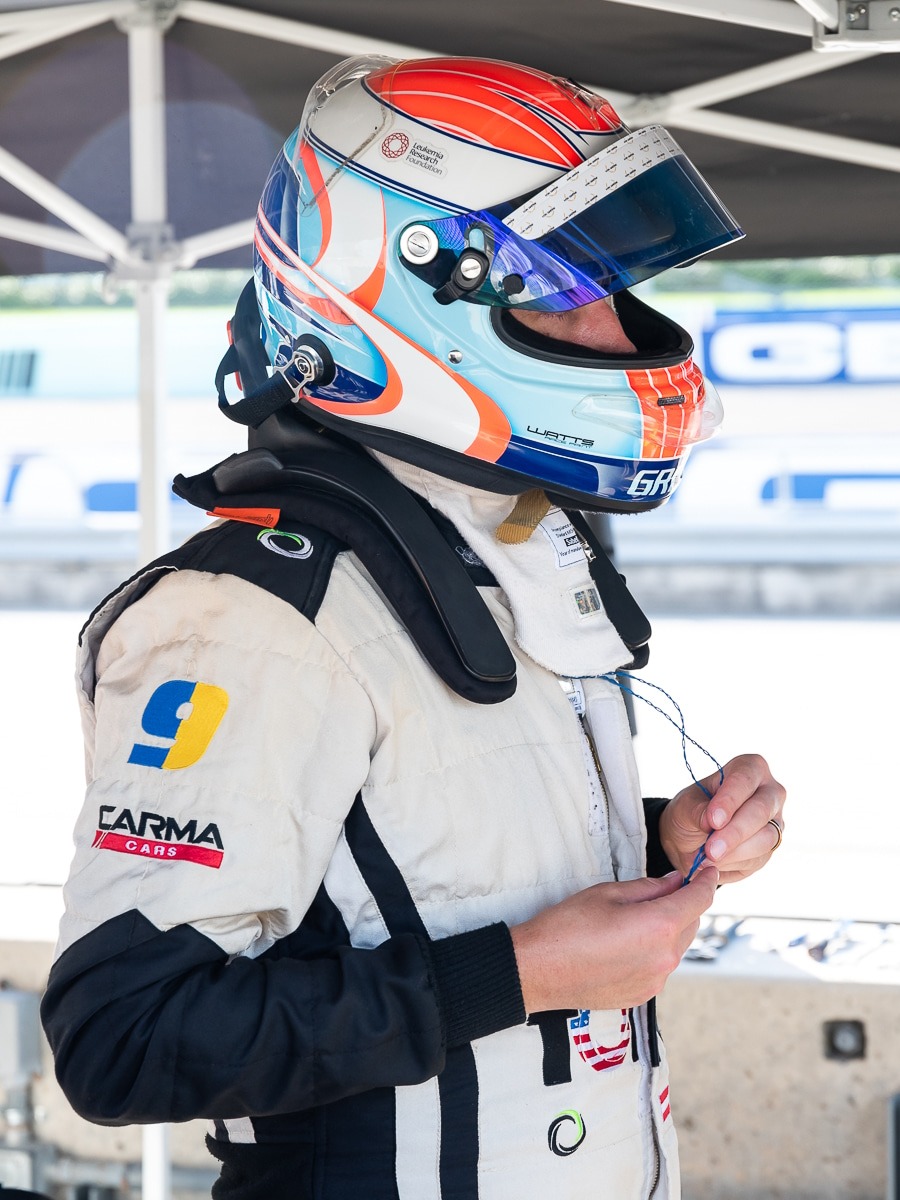
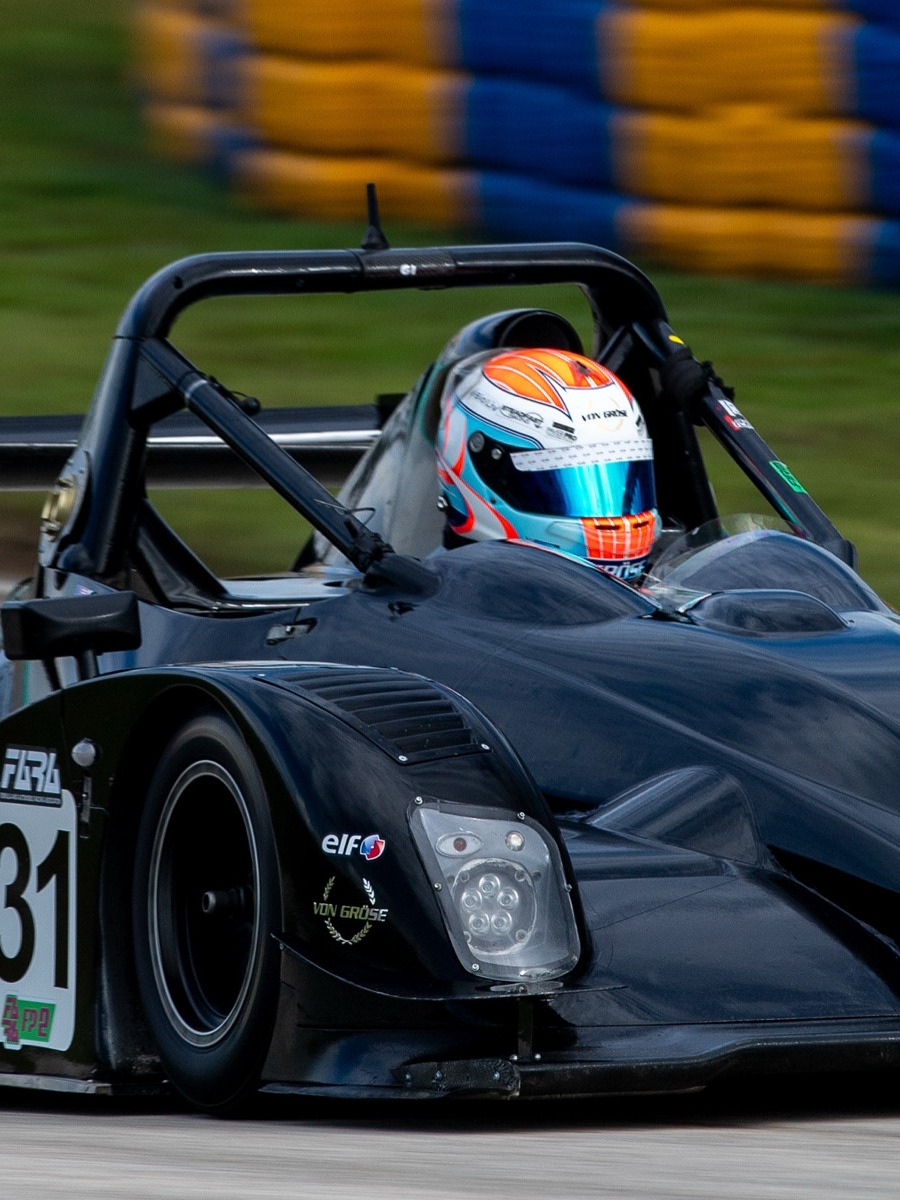
By that time, I was already back in racing. As soon as they said, “You’re good to go; you passed the 100‑day mark post‑transplant,” I gave it a little extra time to build more leg muscle back and feel more like myself. Then I was back in a race car as quickly as I could. I think I was back in the second week of January 2022.
I used to be a national school instructor for a race school. They had a test day for the race series that they have. Traditionally, on test day, all of the school instructors run the cars for about eight hours to set them up and make sure everything is equal. The first car I got back into was one of their formula cars. It was not a high‑intensity car, so it should not have been as difficult as it was.
Coming out of cancer, I just wanted to make the laps; I did not care. I did as many laps as I could and then said, “I can’t do the rest. I’m flat dead. I’m exhausted.” But it was a proud moment. I knew I had overcome and at least beat it for the moment. There is always that lingering chance of relapse or transplant failure, but you cannot live by that.
I tried my best to put it in the back of my head and go on with my life. Whatever happens, happens. Everything after what I went through was extra life, so why waste it?
I went through turns one, two, three, and four. I came out of turn five, and I could not see anymore because I had tears streaming down my face. It got to the point where I thought, “I’m going to be dangerous on this track. I can’t see; I’ve got to pull in.” I pulled in, cleared my eyes, and went back out. It was indescribable. I do not know if I could capture the feeling.
Going from constant travel to being stuck at home
For the majority of my racing career, I have had my own business. I coach and do a lot of traveling. Sometimes I was traveling three weeks out of every month or even every single week.
It went from airports, racetracks, business meetings, and client meetings to sitting around. I tried to do what I could to distract myself with video games, TV shows, and anything I could get my hands on. One of my clients gave me a little model engine, so I built that. People would drop off little things for me, like food and things to do.
When I was going through this process, it became mind‑numbing at a certain point. I was so used to always thinking of the next thing to do, always having to move and shake and do what I needed to do to get work done, build my business, stay busy, bring money into the house, and race. It went from 100 to 0 in a week.
To give you an idea, the day before I did my lymph node biopsy, I was setting up a race car at a racetrack for a customer. It was poetic in a way. That same car, the same week that I got diagnosed, went to Daytona to run the road course. He had a mechanical failure and completely destroyed the car. He was okay, thankfully, but it was like a bomb dropped and blew everything apart with my life and that car at the same time.
I do not know if “poetic” is the word; maybe a Greek tragedy. It was one of those “I can’t believe this is happening” situations. The feeling of being useful for yourself and then not being able to be useful for anybody hurt. That was rough.
Throughout my whole treatment, I tried to do what I could to help my wife. I would still try to cook and clean when she was working, trying to keep up my side of managing the household, but there is only so much you can do when you are not feeling well. That was about as good as it got.
Family, my wife’s support, and a shallow industry
To be honest, my family was there for a lot of it. My parents, my sister, and my wife all took turns taking me to and from Orlando to do daily chemotherapy at the infusion center, checkups, or blood work.
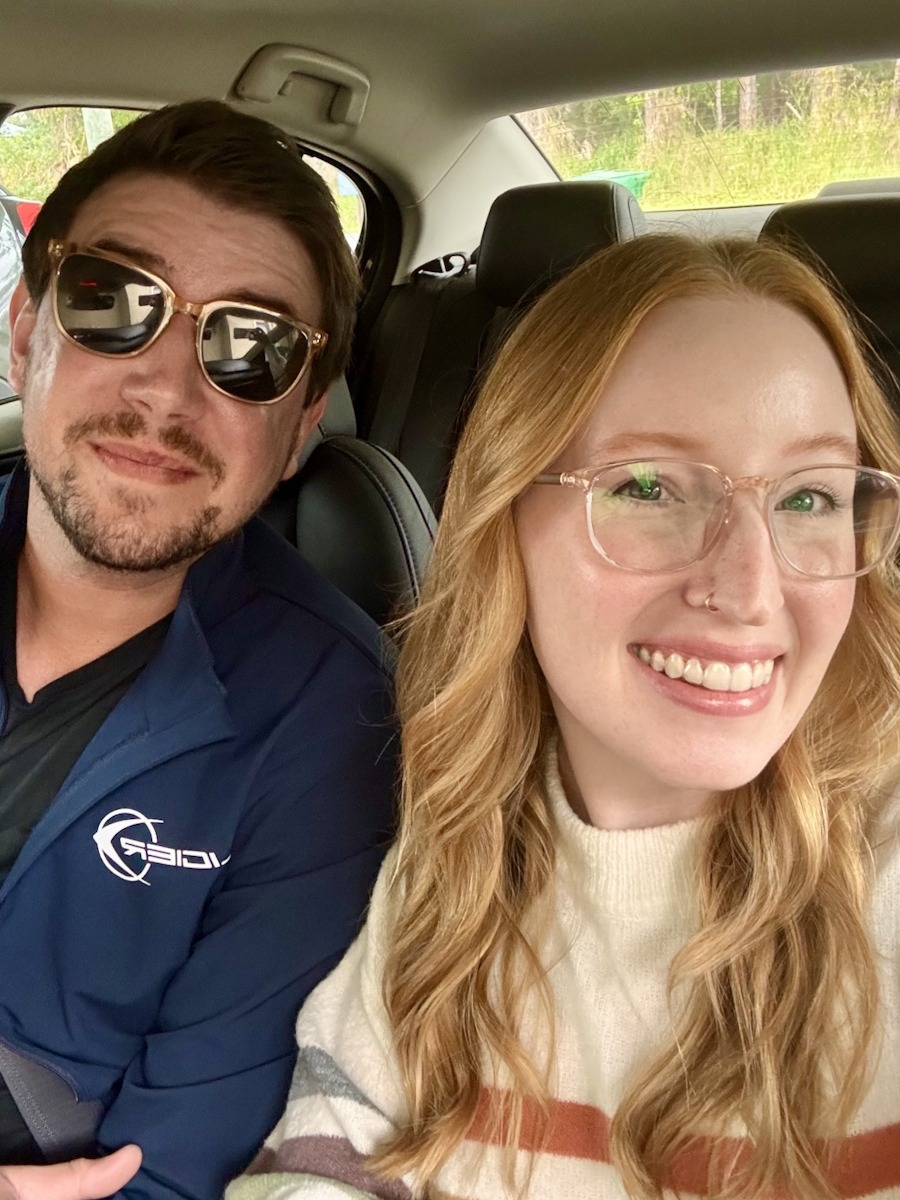
My wife, I would have to say, is the one I leaned on the most. She was there for me the whole process. Every terrible thing that happened, she was there to try to lift me up and be that shoulder to lean on. She is amazing as a person.
I was worried because I had seen other friends go through something similar and their partners left when things got difficult. I can say that I never thought she was going to leave, and she never hinted at it. She took everything in stride and made me feel a lot better about it. If it wasn’t for her, the outcome would have been quite different. She allowed me to have that hope, that fight, and that warrior spirit. She helped foster that by being there and helping mentally, emotionally, and physically with things I could not find the energy to do anymore.
My aunt and uncle came to visit. My grandparents dropped off food. My parents were always there. My sister was there. I had a good support system.
I still had a couple of friends. The disappointing part is I found out how shallow the racing industry is. It’s one of those industries where you are either useful or not. Out of all my clients, only one or two reached out to see how I was doing. When that started happening, I realized that the people I put a lot of time into maybe did not have the best for me in mind, or maybe they did not think about me as a person.
I shut myself off from the racing world. I stopped going into my home office. I shut the door and did not open it for eight months. I stayed out of it. I did not want to think about racing, not because I did not like it anymore, but because it hurt to watch everything go by. On social media, I was seeing all my clients still going. Everyone was still doing it. Life goes on. The realization that no matter what happens, life goes on is a bitter pill to swallow.
A friend’s public support and seeing others alone in the unit
I had a good friend who got me into racing when I was 13 years old. He was racing go‑karts at the time and got me into it as well. His name is Eric Filgueiras. He used his platform to shout me out. I had a national shout‑out from his podium when he won one of the events while I was going through the transplant process. Stuff like that kept me going.
I had a good support system. It’s extremely important to have that support, and I know a lot of people do not. Having had the experience I had, I know what a lot of people go through. In the bone marrow transplant unit, there were a lot of elderly people, and no one ever visited them. It was terrible and heart‑wrenching to see that. Families are not there for everybody.
I consider myself extremely lucky for the people I have around me and the people I have around me now, who still support me.
Survivorship, survivor’s guilt, and processing the odds
I still cannot believe it. Truthfully, sometimes I have thoughts that maybe I am not living in the real world. It feels like I cannot believe it myself. I cannot fathom that I beat the odds to survive.
Even at that point, there is surviving and then there is thriving. I would say I personally feel elated because I am here. I still get this extra life to live, but there is a bit of survivor’s guilt. It’s like, “Why me? How am I lucky enough to get this when I know there are so many others who do not?”
It’s a mix between guilt and happiness.
Lessons learned: Take your health seriously and don’t delay
The only things I can think of are some lessons I have learned through this process, and maybe they will help others. The whole point of why I’m sharing my story is so others can feel hopeful that they can do this or at least not be as afraid of the process.
Always take your health seriously. I did not. The nine months that I dragged my feet could have killed me. The main doctor I ended up going to, Dr. Varela, told me that this usually kills people in three months without medical intervention. Nine months is insane. That is not normal.
My fight would have been a lot easier had I caught it earlier. One of the things I have learned is that you should take care of yourself. When something feels off, go and take care of it.
Money is a tool. Not everyone has a lot of money. A lot of people live paycheck to paycheck. Do what you can because this stuff does not play around. You can figure out the financial stuff later, but you are more important to yourself, your family, and your friends than money is. Do not delay when you have crazy symptoms like I did.
It was ridiculous at the end. My head was huge, and I was still denying it, saying, “Nothing’s wrong.” Clearly, something was wrong. Go get checked.
Grit, determination, and advocating for yourself
Another lesson is grit and the determination and the will to live. You have to reach inside to find that. I was lucky to be in racing because if you do not have grit and determination, you do not last long. There are so many setbacks, failures, crashes, injuries, and times when you run out of money or do not have sponsors. All these things can completely crush you. If you do not learn how to pick yourself up and keep going, you cannot do it. You get kicked off that proverbial bull. You have to have that spirit when you are fighting something like cancer.
It’s easy to sit and do nothing out of fear, but that does not end well. You have to go and do it. It’s like going to the gym or a job interview. There are always anxieties, butterflies, and nervousness. You just have to push through it and do it.
I was extremely anxious about being in the hospital for months at a time. I had shingles and ended up hospitalized in 2022. It took everything my wife had to convince me to go back to the hospital to get IV antivirals.
I understand the nervousness. I have more medical issues now than I did before. Because of the transplant process, you do not have the same allergies or intolerances. You have to relearn everything. Your body has to relearn all the viruses and things you typically go through as a child: colds, flu, chickenpox, herpes viruses, and all these things. You get to experience them all over again.
On top of that, I have GvHD, which is specifically from my stem cell transplant. It is my donor’s DNA fighting my existing DNA. I have it in four different parts of my body: ocular, oral, skin, and muscle. I constantly have issues with different things. My thyroid is done. My pituitary is done. I’m on testosterone replacement therapy now because I had no testosterone after everything was said and done.
You have to take care of yourself. I managed a year and a half to two years after transplant before I started going back to another doctor and seriously figuring out why I could not have any energy. I could only do the bare minimum every day. It took everything I had to go to the airport, fly out, work, or get up at 4 a.m. It was a struggle.
It comes down to finding out what’s going on with your body. It goes back to that first lesson: Take care of yourself.
The last piece is medical advice not in terms of treatment, but in terms of advocacy. You have to advocate for yourself. Doctors know what they are doing, especially highly specialized oncologists. They know exactly what they are doing and how to do things. A lot of it is based on how far you want to push it.
Some of them are very close to the book, and some are like, “We are going to blast this thing wide open and hit every research angle we can and try our best.” You have to advocate for yourself. If you do not, you run the risk of being run over by the medical institution because they will do whatever they can by the book, and there is no emphasis on urgency.
If you do advocate, you can stay on that knife’s edge of trying to get everything done, making sure your prescriptions are correct, dealing with insurance, and all of that. It’s hard, but you need to advocate for yourself.
This interview has been edited for clarity and length. The views and opinions expressed in this interview do not necessarily reflect those of The Patient Story. This content does not replace professional medical advice.
Inspired by Jesse’s story?
Share your story, too!
Hear from people living with acute lymphoblastic leukemia (ALL)
Real experiences with diagnosis, treatment choices, side effects, and life beyond ALL — in their own words.

Leave a Reply