
Justin on Life as a Melanoma Care Partner After His Wife’s Cancer Metastasized
Justin never thought he would become a melanoma care partner. He and his wife, Megan, had been inseparable since a mutual friend introduced them at a restaurant in 2006. They built a life around baseball games, travel, and their dog. When suspicious moles appeared, they were concerned, but it didn’t dominate their minds. Then came the melanoma diagnosis, surgery, scans, and monitoring. As Justin puts it, “All those things that I read about were happening to us, and it was a nightmare come true.”
Interviewed by: Taylor Scheib
Edited by: Chris Sanchez
Then the melanoma, a dangerous kind of skin cancer, metastasized. The cancer came back while the couple was living in Florida, preparing to move home to Maine. Megan flew to Michigan for an appointment, putting a permanent hold on their moving plans. Justin went into what he calls “emergency mode.” He packed their dog and whatever clothes he could find into the car and drove 17 hours straight to Michigan, stopping only for gas.
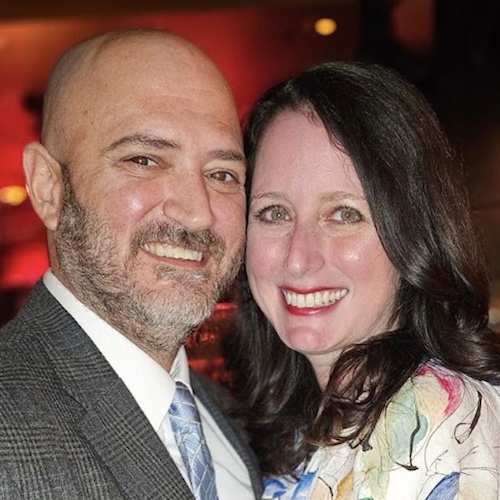
Watching Megan in pain was the hardest part. She rarely talked about it, but he could see it in her face. Justin felt helpless, sad, and horrified, but also hopeful, because they were getting the care they had sought out in Michigan. “I felt hopeful that the doctors would fix her,” he says. “And they did.”
Today, Megan is stable, and the couple lives with her mom and stepdad in Michigan. Justin goes to almost all of her appointments. He also manages his own health as a person living with bipolar disorder, taking his medication every day, protecting his sleep, and reaching out to friends when his thoughts race in hospital waiting rooms. Megan, in turn, got him to have a mole of his own checked and removed, and to cover up in the sun.
His advice to other care partners is simple: “Be patient with yourself and with your person. Get a dog. And take care of yourself, because you can’t take care of other people if you don’t take care of yourself first.”
Watch Justin’s video and browse the edited transcript of his interview below:
- When Megan’s melanoma came back, Justin drove 17 hours straight from Florida to Michigan with their dog and whatever clothes he could grab.
- Justin manages his own bipolar disorder while caring for Megan. He takes his medication at the same time every day, protects eight hours of sleep, and reaches out to friends and family when he feels trapped in his own head.
- He attends almost all of Megan’s appointments, but follows her lead on information. Sometimes Megan doesn’t want to hear every detail, and he respects that. He also avoids reading survival rates, learning instead alongside her and her doctors.
- Even with Megan stable, Justin says he never fully feels safe. Living with the possibility of recurrence is part of the care partner’s experience too, and he answers it by staying present: baseball games, travel, their dog, and a 20-year bond where “just a little touch is enough.”
Diagnosis Facts
- Name: Justin C., Care Partner (Spouse)
- Loved One: Megan C. (Wife)
- Age at Diagnosis: 36
- Diagnosis: Melanoma
- Stage: Stage 4 (Metastatic)
- Mutation: CHEK2
- Symptoms: Itchy mole on the back that changed color and texture, escalating pain in the hip, lower back, and leg
- Treatments: Surgeries (wide excision of mole, removal of 10 lymph nodes from right armpit, orthopedic hardware surgery in the femur), immunotherapy, radiation therapy



This is not medical advice. Please consult with your healthcare provider to make informed treatment decisions.
- Diagnosis Facts
- Watching the moles and hearing the word “metastasized”
- Baseball games, travel, and our dog: Living between diagnoses
- Watching Megan in pain and thinking the worst
- A life in flux: We came for treatment and never left
- Hours in waiting rooms: Going to every appointment
- Managing my bipolar disorder while being Megan’s melanoma care partner
- Sleep, routine, and reaching out: Protecting my mental health
- What my melanoma care partner experience has taught me about family and close friends
- She does it with a smile: Why I’m so proud of Megan
- My advice: Be patient with yourself, and get a dog
- Hear from other cancer care partners and caregivers
Watching the moles and hearing the word “metastasized”
I remember the mole not looking good. And we were concerned, of course. But it didn’t dominate our minds. We weren’t thinking only about that. We let it go, so that’s unfortunate.
I don’t know; it all makes me uncomfortable to talk about. It’s just hard to think about what we’ve been through, and everything that Megan’s been through, and that I’ve been through with her as her melanoma care partner. It’s hard just being by her side, but it’s just a lot to take in. It’s a lot over the years. It’s all come together, and it took the path that it did, and it wasn’t a great path.
But now she’s healthy enough. She’s stable. So here we are. But it metastasized, of course. And that’s what happened.
Before that, I had been reading a little about it, doing some research. So I read about what happened if it metastasizes and everything. In my mind, I thought that it never happened. But then all those things that I read about were happening to us, and it was a nightmare come true.
Baseball games, travel, and our dog: Living between diagnoses
We just lived our lives the best we could. Go to baseball games, do a lot of fun stuff, travel, and just keep busy, and really just not think too much about the diagnosis and everything, and just get on with our lives.
Which was easy to do. We’ve had a lot of fun together. We have our dog; we do a lot of fun things with our dog. We take our dog everywhere we go that we can. And so we just live our life the best we can.
The time in between was good. Until you get another diagnosis, and then kind of everything stands still.
Watching Megan in pain and thinking the worst
She didn’t really talk much about the pain. She didn’t express the fact that she was in pain, but you could see it in her face. She was always in discomfort. Whether it was excruciating pain or just discomfort, she was always in some form of pain for a while, it seems. And that was a terrible time. That was hard. It was awful to see her like that.
And just to think of the worst-case scenario, as her melanoma care partner, you start thinking of the worst things, where it could go, and what would you do, and what would life be like without her. The worst, the total worst-case scenario thoughts come into your mind when you see her like that, because she’s just suffering.
Megan is stable now, but I never feel safe
I think I did think it was melanoma again. Because she’s stable now, but I feel like it could come back any time still.
So that’s kind of the life that I lead, thinking that it could come back anytime, and I don’t feel safe, really, ever.
Packing the car and driving 17 hours straight
We were lucky to have good friends who were in the same town in Florida. And so I had support. But really, I wasn’t thinking it was cancer when she went to her appointment, when she left Florida to go to the appointment that she never came back from.
Once it happened, we just went into emergency mode. I had to pack up the place the best I could, but my friend finished the job for me, and they just sent our stuff along the way. But I packed our dog in the car, and whatever clothes I could find around the apartment that would just hold me over. And I got in the car and drove straight to Michigan, straight through without stopping except for gas.
It was pretty tough. It was 17 hours, I think.
Helpless, sad, and still hopeful the doctors would help her
I felt helpless and sad. I was horrified.
But I was still hopeful, because we were in Michigan and we were getting the care that we were seeking out. And so I felt hopeful that the doctors would fix her.
And they did.
A life in flux: We came for treatment and never left
We were just getting settled in Florida. We were actually on our way to move back to Maine from Florida. So we were on our way to go back to Maine in June. And then in May I came here, and we just never left. But we didn’t know we were staying. We had no idea.
Our life was definitely in flux. Our stuff was in storage. It was still being moved here. We had to get it all here and put it into storage. But we didn’t know that we were staying for a long time. As far as I knew, she was going to get well quickly, and then we’d move back to Maine. But that never happened, obviously.
But I’m happy with the way things turned out, that we’re still here with family, because we get the support we need here. And I really love being with my in-laws. They’re really fun to be around.
Sometimes I don’t say the right thing, so I just hold her
I try to comfort her with some words, but mostly I think it’s just being with her, holding her, being next to her, just being with her and being in her presence.
Sometimes I don’t say the right thing. So maybe just being with her is the best part.
Hours in waiting rooms: Going to every appointment
As her melanoma care partner, I am with her. I take her to almost or maybe even all of her appointments. I go and see the doctors, and I like to be with her. I like to be informed as to what’s going on.
When we want to be informed, that is, because sometimes Megan wants to not be told all the details.
But it’s great to be with her there at appointments. I love taking her. Most of the time I’ll be waiting. So sometimes I’ll go back out to the car and make some phone calls, or call my friend Andrew, who’s in Florida, who’s the same one that helped me move the stuff. We’ve kept in touch.
I just reach out to my family and friends and talk to people when I can, because it gets hard to sit. Sometimes I spend hours in these waiting rooms, and it’s hard. Your mind, your thoughts race. And it’s just good to have someone to talk to.
Managing my bipolar disorder while being Megan’s melanoma care partner
So I do have bipolar disorder.
It’s mostly not an issue, except when I have a manic episode, which only happens every 4 or 5 years, it seems now. Or it could be less than that. But I just manage my own mental health, take my medication, make sure I talk to my doctors, and just make sure that I stay healthy mentally the best I can, at least avoid any manic episodes.
Because that would be like a worst-case scenario. And it has happened since we’ve been here.
Sleep, routine, and reaching out: Protecting my mental health
I think just getting a good routine helps, including going to bed early at night.
Well, it doesn’t have to include going to bed early, but at least getting a good solid eight hours of sleep every night, whenever you get it. And for me, that’s getting up early and just starting the day early. You can plan your day in the early hours. So I think early to bed, early to rise.
Don’t drink a lot. Really, I don’t drink a lot, so that’s good.
And just reach out to people when you feel trapped in your own mind or head. Reach out to people and let them know how you’re feeling. And people are usually very responsive.
Learning about melanoma without reading the survival rates
I do this through reading articles online, mostly articles and opinion pieces. And we’ve gone to a seminar; I forget what it was called, but we went to one on melanoma. But I just learn with Megan, side by side with her as her melanoma care partner, going through it through direct experience.
I tried to stay abreast of it a little, read ahead, but I don’t like to read too much into it. I don’t like to read survival rates or this or that.
So I just learn as I go with the doctors and Megan.
What my melanoma care partner experience has taught me about family and close friends
I just learned the importance of family and close friends, and just people in general, your close people.
I think they are important in this world.
Megan taught me to take my medication and cover up in the sun
Regarding my own bipolar disorder diagnosis, she’s taught me to take my medication religiously, which I do every day, about the same time. Unfortunately, that was a little through trial and error, but I do take my medication all the time now, every day.
And then for my body, with moles, I just had a mole removed that I would never have even gone to get checked if it wasn’t for Megan. And I wear my sunscreen all the time. I just played in a softball tournament, but I still got some sun, but barely compared to what it would have been. I covered up.
She teaches me to cover up in the sun, take my medication, and make sure I get sleep.
I learn a lot from Megan.
She does it with a smile: Why I’m so proud of Megan
It’s unbelievable.
I don’t know if I could do the same thing she does if I had the same diagnosis; I don’t know that I would be able to go through the things that she endures.
I know she has to, and she does it, but she does it with a smile. She’s amazing. I’m so proud of her.
Despite everything she faces every day, she’s still willing to reach out and wants to reach out to people through this format and her podcast now. She’s just amazing.
Caregiving, including being a melanoma care partner, comes naturally when you love someone
It just comes naturally. I wouldn’t do anything differently. I just do that because I love my wife and I want to take care of her.
I’m proud of myself, but I don’t really toot my own horn or anything. I don’t think I’m doing anything that anyone else wouldn’t do.
I’m taking care of myself mentally, which is good. And I’m taking my medication, and that is great.
But as far as taking care of Megan, anyone would take care of their wife, I would think.
20 years together and an unsaid bond
I think that we have an unsaid bond, that we can just look at each other and know each other’s thoughts. And just a little touch is enough to let that person know everything’s okay. Just contact and touch. It’s like we read each other’s minds.
We’ve been together since 2006, so 20 years. I think we’re celebrating 20 years together when we take our trip this August. So yeah, 20 years.
We met 20 years ago. A mutual friend introduced us. We met at a restaurant after hours, and we were inseparable ever since.
What I love most about Megan
What I love the most: the way she makes me feel.
She makes me feel whole and happy and good about myself.
Staying with family, and not knowing what the future holds
I think we’re going to stay here at our in-laws’ house. I don’t know that Megan has any plans to move anytime. We don’t really talk about that.
And I think Megan’s really happy to be here with her mom and Steve, her stepdad. And I am, too. As long as they’ll have us, we’ll stay, I guess, honestly.
But as Megan becomes more stable, and years get added on to stability, then maybe we’ll talk about moving to our own place. But I just don’t know what the future holds.
We are just seeing the near future, staying here in this house with our family.
My advice: Be patient with yourself, and get a dog
Be patient with yourself and with your person.
Get a dog, because it really helps with everything. I really mean that. And just be patient with yourself and your loved ones.
And take care of yourself, because you can’t take care of other people if you don’t take care of yourself first.
This interview has been edited for clarity and length. The views and opinions expressed in this interview do not necessarily reflect those of The Patient Story. This content does not replace professional medical advice.
Inspired by Justin’s story?
Share your story, too!
Hear from other cancer care partners and caregivers
Real experiences with diagnosis, treatment choices, side effects, and life beyond cancer — in their own words.



Leave a Reply