
Tarah’s Stage 4 Ovarian Cancer Was Preceded by Years of Pelvic Pain
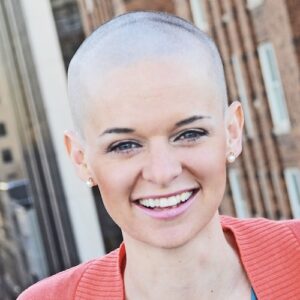
For years, Tarah lived with a dull, constant pelvic pain that left her feeling full and bloated. Her own research told her those can be signs of ovarian cancer. After an exploratory surgery, a general OB-GYN told her she had cysts on her ovaries, and she went back to her busy career. Then a bump on the golf course sent pain through her body. “So I knew then… There’s something else besides a cyst here.”
Interviewed by: Tory Midkiff
Edited by: Chris Sanchez
After seeing three more doctors, Tarah found a specialist in Oklahoma City. An ultrasound suggested a dermoid cyst, a usually noncancerous growth, but a second exploratory surgery found a tumor. On a Friday afternoon, a welcome packet from the cancer center arrived, and Tarah knew what it meant. “You don’t get a welcome packet to the cancer center if you don’t have cancer,” she told her family. On Monday, her doctor confirmed that it was malignant ovarian cancer. She was 29, in her last semester of graduate school.
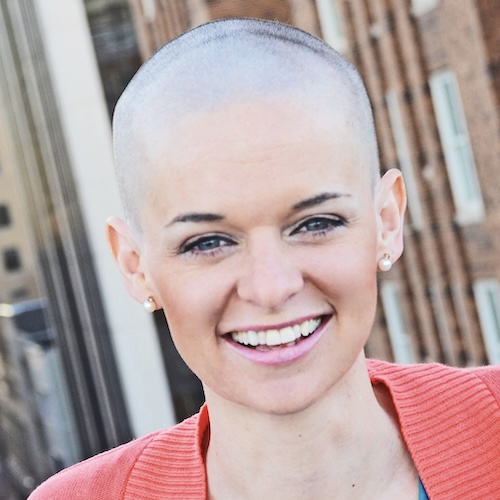
Her oncologist planned debulking surgery, an operation to remove as much cancer as possible, including a hysterectomy surgery to remove her uterus. Tarah wanted to have the surgery as soon as possible. Her surgeon found cancer seeded on her abdominal wall, cancer cells in fluid washed through her abdomen, and a tumor on her colon. Tarah was told it was stage 4, and her oncologist was direct: “It’s very likely you’ll die from this diagnosis.”
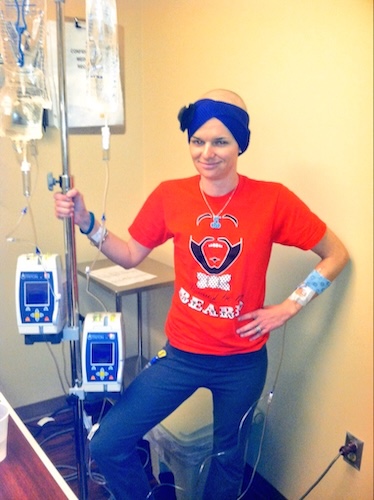
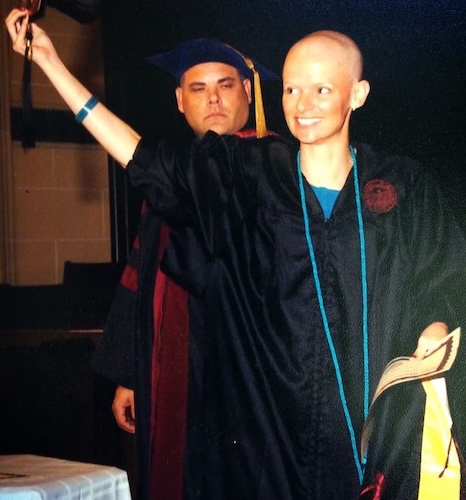
Six weeks later, she began intraperitoneal (IP) chemotherapy, which delivers chemo into the abdomen, through a port on her rib. Sessions ran six to seven hours. She was very nauseous and dropped to about 90 pounds. She signed up for clinical trials, hoping to, “contribute in some way to another family or fighter or person who needs that hope.” After that came about 10 months of maintenance bevacizumab (Avastin), a targeted drug that aims to block the new blood vessels tumors use to grow, for about 16 months of treatment in all.
Tarah has had no definitive evidence of disease since finishing treatment in 2014. Each year, she gets a CT scan and a CA-125 blood test, which measures a protein that can rise with ovarian cancer. “I can’t tell the CT scan what to say,” she says, “But I can have hope.”
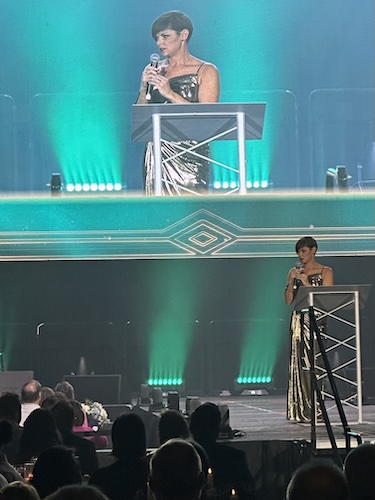
While recovering from surgery, she gave her flowers to patients down the hall with no one sending them any. That led to the foundation of Tenaciously Teal, her nonprofit, which has handed out almost 60,000 care packs.
Watch Tarah’s video and read the edited transcript of her interview for more on her ovarian cancer story.
- A known explanation can hide a new problem. Tarah had already been told she had ovarian cysts, but the jolt of pain on the golf course felt like something else besides a cyst. That change is what sent her looking for a specialist.
- A Pap smear doesn’t check the ovaries. Tarah assumed her annual Pap smear was looking for ovarian cancer, but it screens for cervical cancer. That’s why she puts so much weight on tracking symptoms that keep coming back, like bloating, pelvic pain, and feeling full quickly.
- Treatment can take more of the day and the body than people expect. Each of Tarah’s sessions ran for six to seven hours and by the end of treatment she says she was down to about 90 pounds. Bland food before every infusion and small movements on hard days, even a wall sit, were part of how she got through.
- Some grief arrives late. Before her hysterectomy, Tarah discussed preserving her eggs for IVF, but she chose to have the surgery right away instead. She didn’t deal with that loss until later, at a friend’s baby shower. She has since worked through it in therapy, calling it a trade-off, but something she’s reconciled with.
- Being cancer-free doesn’t erase the fear. 14 years out, scans still set off what Tarah calls a nervous system response. She handles it moment by moment, holding on to what she can control: noticing changes and trusting that she knows her own body.
- A small act of kindness grew into a nonprofit. Her hospital stay showed Tarah that many patients worry less about survival than about gas money, time off work, and getting to treatment at all. Handing out her flowers became Tenaciously Teal, and her own list of chemo essentials, down to a notebook of questions for her oncologist, became the care packs that she now ships to patients all over.
Tarah’s Diagnosis Facts
- Name: Tarah G.
- Age at Diagnosis:
- 29
- Diagnosis:
- Ovarian Cancer
- Staging:
- Stage 4 (Metastatic)
- Symptoms:
- Constant dull (but occasionally sharp) pelvic pain
- Feeling full
- Bloating
- Treatments:
- Surgery: exploratory (tumor removal) debulking surgery with hysterectomy
- Chemotherapy: intraperitoneal chemotherapy
- Monoclonal antibody: bevacizumab (as part of a clinical trial)
This is not medical advice. Please consult with your healthcare provider to make informed treatment decisions.
- Tarah’s Diagnosis Facts
- Diagnosed with ovarian cancer at 29 in my last semester of grad school
- Ovarian cysts and exploratory surgery, and pain that became unbearable
- Learning to advocate for myself the way I advocated for families in child welfare
- An ultrasound and a suspected dermoid cyst: Waking up to learn it was a tumor
- Learning I had ovarian cancer from a cancer center welcome packet
- My first questions after an ovarian cancer diagnosis: Chemotherapy and surgery, and how advanced it was
- Debulking surgery and learning how far the cancer had spread
- Going into debulking surgery with fear and faith, and fighting “like a girl”
- Hearing it was very likely I’d die, and starting intraperitoneal chemo
- What got me through 16 months of ovarian cancer treatment: Gratitude, music, bland food, and small movements
- Declared No Evidence of Disease: CA-125 tests and CT scans after ovarian cancer treatment
- Facing scans 14 years later: Cancer treatment can be traumatic
- No evidence of disease since 2014 and living with survivor’s guilt
- Giving away my hospital flowers: How Tenaciously Teal began
- What I’d tell someone newly diagnosed with cancer: “You are not alone”
- Hear from people living with ovarian cancer
Diagnosed with ovarian cancer at 29 in my last semester of grad school
My name is Tarah. I was 29 years old when I was diagnosed with stage 4 ovarian cancer. I’m coming up on 14 years since that diagnosis.
I was working for child welfare at the time, which is a big catalyst for what I do now to support cancer fighters. I was actually in my last semester of graduate school when I was diagnosed. It was obviously pretty unexpected.
Ovarian cysts and exploratory surgery, and pain that became unbearable
I had been dealing with PCOS, cysts, and pelvic pain for a while before cancer struck. I had been advocating for myself, talking to different doctors. I had actually had exploratory surgery three years before I was diagnosed, and my oncologist believes I had it then.
I don’t believe I had the best referral. I was sent to a general OB-GYN. He told me I had cysts on my ovaries. I went back to work, had a heavy caseload, and poured myself into my career and the families I was serving. But I still always had that pain that I was living with, until a point it just became unbearable.
At that point, I was like, “Do I have cancer?” There’s been cancer in my family before. I remember Googling precancerous doctors in Oklahoma City, where I live, and found a doctor. I remember going in, lying down on the table, and he was like, “Wow, you have a really big cyst on your ovary. I think we need to do another exploratory surgery and address that.” When I came out of surgery, we didn’t know it was cancer at the time, but it was a tumor.
What my ovarian cancer pain felt like: Dull, constant, full, and bloated
So the pelvic pain just felt constant. It would sometimes be acute and sharp, but mostly it would be this dull pain that made me feel really full and bloated, which are all signs and symptoms of ovarian cancer. As I mentioned, the pain just became unbearable.
I liked to golf, so I was golfing and still living an active lifestyle. I always say I was in the best shape of my life when I was diagnosed. But I remember one time golfing and going over a bump and just feeling, “Oh my gosh.” It just resonated through my body, that pain.
So I knew then. I was like, “There’s something else besides a cyst here.”
Researching ovarian cancer on my own and searching for the right specialist
That was absolutely what inspired me to consult a specialist.
I didn’t feel like I was getting the true answers. I had researched on my own and just realized that there wasn’t a detection test for ovarian cancer. Some of my symptoms were lining up with that, so I felt like I had to find the right doctor.
There were several other doctors, like three, between the one who did that first exploratory surgery and actually getting the diagnosis from that specialist. (EDITOR’S NOTE: Ovarian cancer can be hard to find early because its symptoms often don’t appear until the cancer has reached an advanced stage. The American Cancer Society says that even regular pelvic examinations don’t usually detect small tumors in the ovaries. Moreover, no screening test has yet been developed that can find ovarian cancer early in most patients. Researchers continue to work to develop such tests.)
Learning to advocate for myself the way I advocated for families in child welfare
This experience definitely taught me to advocate for myself in the medical space.
I regularly advocate for the families with whom I work. Working in child welfare, I was on the prevention side, so I would come in when children were in situations considered unsafe and when families needed intensive services. A lot of times, I was advocating in court and through service providers, helping and teaching them how to advocate for themselves. I was accustomed to or had the realization that we need to do that in life.
It was a natural progression. Being in my 20s, I trusted the medical professionals. I guess at the time I didn’t equate it with the humanity that is there, that they are practicing medicine. Yes, they have a lot of training and education, but we know our bodies best. That’s pretty much the point I came to: “No, something is wrong. We’ve got to get this figured out.”
An ultrasound and a suspected dermoid cyst: Waking up to learn it was a tumor
When I went to see the specialist, I lay down and he felt something. At that point, it could have still been a cyst. In fact, they did an ultrasound right then, and he believed it was a dermoid cyst, which is a pretty unpleasant type of cyst. It can have cells that grow hair and teeth, so when he told me that, I was like, “Okay, wow. First of all, that’s in my body? Wow.” That’s when we decided we really needed to do that exploratory surgery.
Waking up after surgery, I saw my mom with me, and I could tell something was wrong just by looking in her eyes. She really couldn’t speak and the doctor ended up telling me it was not a cyst. It was a tumor and we would have to send that off for biopsy to determine if it was benign or malignant.
At that point, I did feel validated just from that moment of, “Well, at least we know.” Sometimes the unknowns are the hardest thing to deal with. Feeling like I had a proper understanding of what was troubling me was validating, for sure.
Learning I had ovarian cancer from a cancer center welcome packet
I have a unique way of learning I had cancer. This was almost 14 years ago and they don’t do this anymore. But on a Friday afternoon, after offices had closed, I got a welcome packet to the OU Stephenson Cancer Center, so immediately, I knew that they had received the biopsy results back.
I remember my family was like, “Well, maybe it’s a fluke. It’s just precautions. They’re just trying to be cautious.” And I was like, “No, you don’t get a welcome packet to the cancer center if you don’t have cancer.”
That Monday, I had the follow-up with the doctor. When we went into the office, he was like, “It came back malignant. You have ovarian cancer.” I was like, “Yeah, I got the welcome packet.”
A weekend of waiting: Faith and anxiety, and staying strong for my family
This way of finding out I had ovarian cancer was really hard on me emotionally. In those moments, I felt like I needed to be really strong, because it felt like my family around me was obviously really upset. Sometimes I even say it’s harder for the caregiver in some ways, because they don’t have control over it. Even though it’s your body, you don’t necessarily have control of it either. You are connected to your spirit and you know how strong you can be and your willingness to fight and the tenacity you have.
My faith is really important to me, so I feel like God was giving me a lot of peace during that time. But absolutely, there was a lot of anxiety, a lot of questions, and I had to sit with it, breathe through it, and pray through it, because it was out of my control.
My first questions after an ovarian cancer diagnosis: Chemotherapy and surgery, and how advanced it was
Am I going to have to do chemo? And is there another surgery involved? And how advanced is it? Those were probably my main questions. And obviously, I also wanted to find out which doctor I was being referred to.
I was really lucky that one of the leading researchers in ovarian cancer, Dr. Joan Walker, was in Oklahoma City. She had come from UCLA because she saw she could make a difference here and she really has. Oncologists have sometimes told me that she wrote the book on ovarian cancer, so I was really lucky to have her.
Debulking surgery and learning how far the cancer had spread
At the time I found out, I wasn’t provided with any information on staging. I was quickly referred to Dr. Walker and had a consultation with her. I knew I was going to have a debulking surgery. It’s like they are taking as much out as they can as possible to give you the best chance of survival as possible. Obviously, I was going to have a hysterectomy.
I do not have children, and I was married at the time, so that was a consultation of, “Are we going to save eggs to potentially do in vitro later?” But I pretty quickly made the decision. I just wanted to have the surgery as soon as possible and to take it out.
It wasn’t until after the surgery that she found that it had seeded on my abdominal wall. She found cancer cells in the belly wash that they had done during the surgery. There was also a tumor on my colon. It was very advanced, but I had a successful surgery from the beginning that set me up for success with starting chemo six weeks later.
Grieving motherhood after a hysterectomy at 29
I don’t think I dealt with it until several years later. I was 29, and I remember my hair was just starting to come back. I grew up in San Diego and had gone back to see some of my best friends. It was one of their baby showers and while we were there, our other best friend announced she was pregnant.
It was a weird mixture of emotions, because you’re so happy for them. These are friends that I’ve been friends with for over 30 years. Their kids are my nieces and nephews now. But it was painful that early on, during that time when people were having kids and I just wasn’t. I felt really isolated. A lot of friend groups form from kids’ activities and different things like that.
I will say, though, now, 14 years later, a lot of those kids are teenagers, and I don’t feel as left out on that. Truly. I made a commitment to travel. I’ve invested a lot in the nonprofit I’ve started and I have been able to help so many cancer fighters. I would not have been able to do that with having my own children.
It is a trade-off, but something I’ve reconciled with. I’ve done the hard work of therapy and processing that, and understanding the grief that it was, but also the silver linings, the blessings, and the joy that I’ve been able to experience from not having children.
Going into debulking surgery with fear and faith, and fighting “like a girl”
It was daunting. I think, again, I felt like I had this tenacious spirit, and I was going to fight. I adopted the statement: “Fight like a girl.” But obviously, a lot of fear and uncertainty: “What are they going to find?”
Also managing just the emotions of the people around you who are so upset about it. Again, you can only control your reaction and how you’re going to face it. I was trying to be intentional about staying close to God and prayer, and taking it a moment at a time. Because I think we can spiral very quickly, especially in a situation like that.
I was just trying to trust the process. We had done our due diligence on finding out that I was in really good hands with Dr. Walker, so I felt confident in that. I was really blessed to have a lot of support. I always call those the cancer silver linings. People who I hadn’t talked to in a long time were reaching out, so I did feel very loved during that time.
I know that’s not everybody’s experience, but I know gratitude is something all of us can practice, no matter who you are or what support system you have. That was key in those days: looking at those silver linings, what I did have, and the resources I had to fight.
Hearing it was very likely I’d die, and starting intraperitoneal chemo
The conversation was tough. I have said before that oncologists are charged with telling you the worst news and pretty abruptly. They don’t beat around the bush, nor should they. You want them to be straightforward and transparent. My oncologist was like, “It’s very likely you’ll die from this diagnosis, and it’s very serious.” She said basically, because I was young, she was going to throw the book at me. And she did.
I was scheduled for intraperitoneal chemo. A lot of cancer fighters have their port on their collarbone; mine was on my rib. They would take a thin tube and fill my stomach up with chemo medicine. I did that for six months. It’s a long infusion of several hours; that was something super surprising. They’re telling me, “You’re going to be at chemo for six or seven hours.” You think a chemo session lasts an hour. It’s actually an all-day thing. After these IP chemos, I had to turn for an hour to coat my stomach.
Dr. Walker told me going in that it would make me very sick. I was very nauseous. It was very hard to eat. I lost a lot of weight. I got down to about 90 pounds at the end of those IP chemos.
After that was done, I signed up for a clinical trial. I signed up for several, actually, because part of that for me was if I’m going to die from this, I’m going to contribute in some way to another family or fighter or person who needs that hope at that time. I’m really passionate about clinical trials for that reason.
I was lucky that a lot of the trials I was on I believe are now standard of care for ovarian cancer, and some of the first line of defense, some of the PARP inhibitors. But I did 10 months of maintenance [treatment], bevacizumab, and that was a short infusion of 30 minutes. A total of 16 months and 40 infusions. (Editor’s note: Tarah’s maintenance treatment was bevacizumab (Avastin). PARP inhibitors are a different kind of maintenance treatment; the FDA first approved one for newly diagnosed advanced ovarian cancer in 2018, for people with a BRCA mutation. Your care team can explain which options fit your diagnosis.)
What got me through 16 months of ovarian cancer treatment: Gratitude, music, bland food, and small movements
I found it imperative to find gratitude every day. Some days were really hard. But I would play positive music throughout my home. I couldn’t watch TV, which was probably good, because there’s sometimes a lot of negativity that you can find there. You can control what you hear a little better. But my eyes burned badly, so I couldn’t watch TV. So I would listen to a lot of music instead.
I literally remember some days being so sick and so miserable, but walking into my room and trying to be like, “I’m thankful that I have a closet with clothes I can wear. I’m thankful that I have a bed. I’m thankful that I have a pillow. I’m thankful that I have clean sheets.” If you look around and keep doing that, then all of a sudden you’re like, “Wow.” It just is a mind shift and positivity of, “Yes, all this is really bad and really hard, but good things are happening around me.”
Then just friends, trying to laugh, those connections reaching out. Meeting other survivors when I went to the treatment room and finding so much community in that. Meeting new people and looking at that as a silver lining: “Man, I never would have had this friend or connection if I were not in this situation.”
There are definitely things that helped me as far as what I ate. I would try to eat before every infusion to have something in my stomach to do those belly washes. I would eat a little thin bread with peanut butter, a little protein, or some oatmeal, something bland. I ate a lot of carrots and frozen grapes. Avocados were really good for me too.
I was so weak. I love to stay active, but when I was having chemo, I would just walk around my living room or just stay on the couch. Some days I would try to do a wall sit. That wasn’t every day, but I was just trying to move and not be stagnant, even though that’s all you really want to do, which is lie there. You’re sick and it’s hard, but those were some things that helped me.
Declared No Evidence of Disease: CA-125 tests and CT scans after ovarian cancer treatment
After 16 months, I was declared [no evidence of disease]. I was obviously very celebratory and happy about that and feeling very blessed. I had to come back every three months for the first year. For the first three years, they were watching me very closely. And then it was every six months. Now I go back every year.
I would have a CA-125 test and a CT scan. The CA-125 is a protein indicator for ovarian cancer. Not a perfect test, but it’s a good marker for me. I didn’t know about it until after my diagnosis, but my CA-125 was really elevated before going into surgery, and lower coming out of surgery, and lower throughout chemo.
Facing scans 14 years later: Cancer treatment can be traumatic
Being scanned is still hard 14 years afterwards. You still feel it. It’s a nervous system response. Cancer treatment is a trauma and your body reacts to that, no matter what you do. No matter how thankful you are, no matter how long you’ve been out of treatment, it’ll bring you back to some of those really difficult moments, the hard conversations, the packet showing up that you have cancer, or somebody telling you you have cancer. That all floods back, even if you’re not maybe remembering that specific memory. It’s there. It’s stored.
Again, I try to approach life this way and it’s a practice, and I’m not always good at it, so I don’t want to deceive anyone on that. But it’s moment by moment. Sometimes it’s day by day, but I found that life is moment by moment. Sometimes it’s a block of hours, sometimes it’s an hour, sometimes it’s minutes.
But I try to breathe and let go of that control. I can’t tell the CT scan what to say, but I can have hope and be aware of how my body’s feeling, what’s going on, and if there are any changes, address that, and truly remember that I know my own body. And trusting your gut.
No evidence of disease since 2014 and living with survivor’s guilt
I have had no definitive evidence of disease since I finished my chemo in 2014. I’m very blessed.
It’s hard when you have survived this long, too. I’ve lost so many friends and family, and there is survivor’s guilt in many ways. Although I know my friends who I’ve lost and who are still fighting are happy for me, like I was happy for my friends when they were having babies and I couldn’t. But still, there’s something in your heart where you’re like, “Well, why me? Why not them?”
But again, that’s why I really try to truly live my life to make the most of the days. I’ve dedicated my life to helping people. I believe that’s what we’re all meant to do, whether we’re a lawyer or a judge, a podcaster, or whatever it is. We’re still supposed to love people and help people along the way.
Fourteen years after hearing I would very likely die, and golfing with my retired oncologist
Being where I am now, given how things were when I started out: it’s pretty remarkable to have come so far. I am so blessed.
My oncologist is now retired; that’s how long it’s been. But we have developed a friendship over the years and play golf together. She loves horses, so I’ve been out to see her horses. It makes me feel incredibly lucky and blessed that I’ve had so many opportunities with the traveling, the experiences, and the people I’ve met along the way and been able to help. Truly grateful.
Giving away my hospital flowers: How Tenaciously Teal began
My nonprofit is called Tenaciously Teal. I started it coming out of treatment in 2014.
When I was in treatment, I was working in child welfare. I had 15 families I was seeing and working really intensely with on a weekly basis. I knew how much they struggled and how it was really hard for them to put food on the table or pay their bills. They had a lot of toxic stress within the family unit and home.
When I was coming out of surgery, you have to walk the halls and try to get stronger. I was on the cancer floor and it was impactful to me that every room was filled and every one of us had heard those words, so we were bonded in that way. We all heard, “You have cancer.”
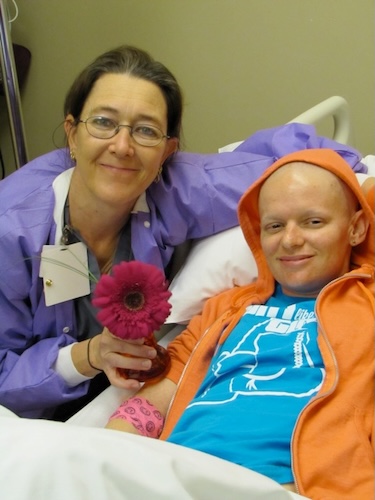
But I noticed from doing this day after day, because I was in the hospital for a week, I had a lot of people coming by and sending me cards and sending me flowers. And then there were people throughout the hall who didn’t have one person to do that for them. There were people that reminded me of my child welfare clients. I could tell that they were marginalized or didn’t have adequate resources, maybe, to also add a cancer diagnosis to it. I was realizing how much that was adding to my plate, my stress, and anxiety, but I was blessed to have a support system.
As I was recovering from surgery, I started passing out my flower arrangements that people had given me and started talking to people, hearing their stories, and realizing they weren’t necessarily worried if they were going to survive. They were worried if they could take off work for treatment, if they could afford gas to get back and forth to treatment, or if they were even going to access treatment, because they couldn’t come into the city and stay for long periods of time.
I recognized, even with all that stress, how much a little act of kindness did for these people. As I was starting chemo, there were so many people by themselves and I wanted to reach out to some of them. I looked at the things I was using and needed daily to fight cancer during those hard days. I always needed a [tissue] nearby, {lip protection], lotion, hand sanitizer, green tea… I like drinking [sports drinks]. I needed a little journal to write in, not even therapeutically, but to write notes, “I need to talk to my oncologist about this next time in front of her.” This is my little cancer book of questions, too, so when I’m having chemo brain in front of you, I remember what I needed to ask you.
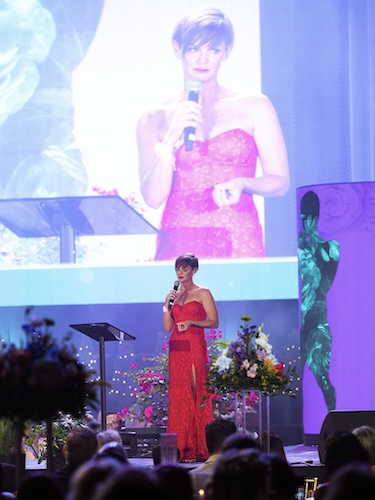
I put all these things in care packs. Now we pass them out. We have fuzzy socks too, and there’s that little journal that we put in, and little Kleenex, a Kleenex cover, a lot of little handmade touches, little caps. They all have a handwritten note. We have a lot of kids that write notes, which is sweet and just encouraging. They decorate bags or we put them in these little fabric bags. We’ve mailed around the world. We’ve done almost 60,000 care packs since my treatment. We go to treatment centers in Oklahoma and have volunteers pass them out and spread some love and light in those difficult situations.
Brave Shave: Supporting people losing their hair to cancer treatment
It’s been a labor of love, with a lot of help from volunteers and God. It’s developed over the years. We’ve actually trademarked a program too. We call it a Brave Shave™. We do private events and consult on those for people who call our office, but we do professional makeup and photography, and give men, women, and kids a supportive atmosphere and the option to be brave in that situation and to take that step. Sometimes you need somebody to come alongside you, take care of the details, and tell you you can do it.
We try to just make that whatever they need it to be. For some, it’s a party. For some, they just want their husband or their sister. We got a request to come to a nursing home, which we haven’t done before. But I was telling our program director that it’s one of the things I love so much about this program: They’re all different, because we’re all different humans. We all need different things, especially when we’re going through something life-threatening.
What I’d tell someone newly diagnosed with cancer: “You are not alone”
Don’t give up. Keep the faith. It’s hard, but there’s hope out there. Trust that the universe, whatever your belief system is, is going to bring you what you need. Maybe that’s a friend on a certain day, maybe that’s the right chemo nurse, maybe it’s a care pack, or maybe it’s a smile from somebody.
Again, it’s really hard, but it’s one step at a time. As I mentioned, sometimes it’s hours in those steps, sometimes it’s minutes. Try not to think about what’s going to come tomorrow or what’s going to happen next month. We have to do that sometimes to plan. We want to just not be like, “Well, whatever happens.” Believe that you’re going to get through this.
There are people who you don’t even know that care about you and love you. There are resources out there. Even though it might feel like it sometimes, you are not alone. You are not alone. Reach out. Reach out to Tenaciously Teal. Reach out to somebody online. There are so many amazing people doing amazing things and amazing content, and they’re doing it because they care. If you don’t have a support system, know that you do, just by being in the cancer club.
Ovarian cancer symptoms that shouldn’t be brushed off
I will say that with Tenaciously Teal, teal is the color for ovarian cancer awareness, but we do help all cancer fighters. But we kept the name because awareness was important. I didn’t know teal was the color for ovarian cancer awareness until I received that diagnosis.
I also didn’t realize how elusive ovarian cancer can be. There is no early detection test for that. I thought when I was going to get my annual Pap smear that it was being looked at. Now, a Pap smear can detect cervical cancer, but not ovarian cancer. There are a lot of amazing groups and research happening, and I hope to see that in my lifetime. But right now, the best chance at diagnosis is knowing your body. If there’s anything that’s persisting for a month or even two weeks, if it’s the same kind of symptoms, definitely advocate for yourself. Talk to a medical professional.
When you look at the signs and symptoms of ovarian cancer, I know a lot of women get scared, because there’s pain and bloating, and things that can just happen. That’s why I say: if it’s persistent, if it keeps happening, and if you notice any changes. You feel full quickly sometimes when you have ovarian cancer. Then look for somebody who specializes in [gynecologic cancers] in your area. That’s usually a pretty quick search to find.
BRCA testing in the past, and why I’m getting my genetic testing done again
I did receive testing for harmful changes in the BRCA gene, which I was negative for. I will say there have been a lot of advancements in some of these genetic tests, so I have scheduled to get those redone and have been needing to do that.
Take care of yourself. If you are like me and were diagnosed more than a decade ago, it’s definitely time to get some of those genetic tests redone. (EDITOR’S NOTE: The Maurer Foundation recommends that those who have undergone genetic testing in the past follow up with a genetic counselor every few years. Although DNA does not change, both scientific understanding and technology continue to evolve.)
This interview has been edited for clarity and length. The views and opinions expressed in this interview do not necessarily reflect those of The Patient Story. This content does not replace professional medical advice.
Inspired by Tarah’s story?
Share your story, too!
Hear from people living with ovarian cancer
Real experiences with diagnosis, treatment choices, side effects, and life beyond ovarian cancer — in their own words.
Leave a Reply