Categories
ALK Cancers Lorlatinib Lung Cancer Metastatic Metastatic Metastatic Non-Small Cell Lung Cancer Patient Stories Targeted Therapy Treatments

Living Every Breath: Megan’s Stage 4 ALK+ Lung Cancer Experience as a Young Mom

Living Every Breath: Megan’s Stage 4 ALK+ Lung Cancer Experience as a Young Mom

For Megan, a young mom from Massachusetts, stage 4 ALK-positive lung cancer arrived without warning. Like many people, she had no idea lung cancer could happen to someone her age, with no symptoms she recognized as warning signs. When chest pain, shortness of breath, and sudden arm swelling led to an ER visit, the scans revealed extensive blood clots, a tumor in her lung, and cancer in her spine and lymph nodes.

Interviewed by: Taylor Scheib
Edited by: Chris Sanchez

Before her diagnosis, Megan’s days revolved around breakfast with her daughters, trips to the gym, errands, and mommy-and-daughter classes. After ALK-positive lung cancer entered the picture, her life narrowed to pain management, hospital visits, and time on the couch when spinal pain made it hard to move by lunchtime. Her children, who were just one and three at the time, did not understand what lung cancer was; they just wanted their mom to read books and play. Even when a coughing fit interrupted a children’s story, Megan kept showing up for them in the ways she could.​

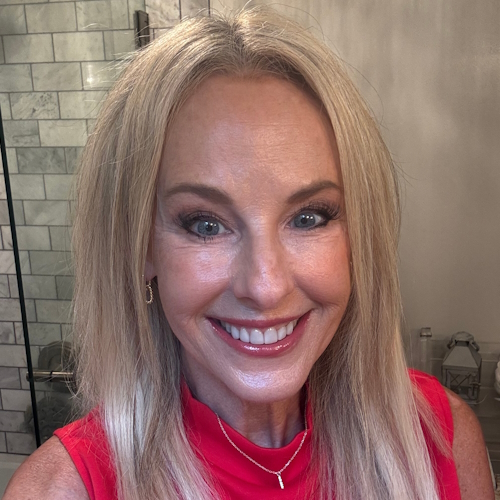
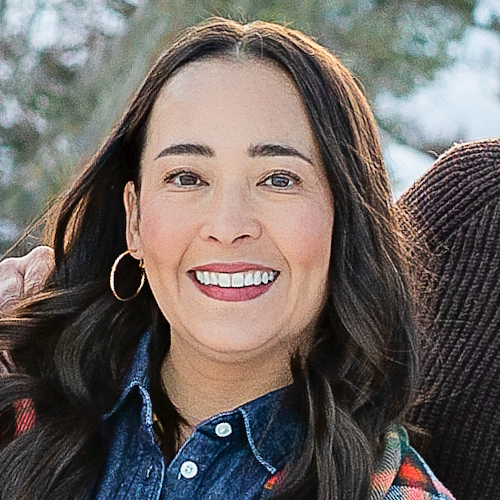
Megan F. ALK+ lung cancer

A turning point came when testing confirmed an ALK mutation, and she met Dr. Flores, a specialist who offered targeted therapy instead of traditional chemotherapy. Within 10 days of starting the oral treatment, Megan was back on her feet, and a month and a half later, her scans showed a 40% reduction in cancer. Subsequent scans revealed more than 50% reduction and, eventually, no visible cancer to the naked eye. Today, she is considered no evidence of disease (NED) and continues taking targeted pills daily, with manageable side effects like neuropathy and bowel changes. She expects to stay on treatment long-term, and finds hope in data showing many people with stage 4 ALK-positive lung cancer remain stable for years on targeted therapies.​​

This experience has reshaped Megan’s priorities. Dishes and chores can wait; if her daughters ask her to play, she says yes. She is vocal about self-advocacy after initially being misdiagnosed with a pulled muscle and anxiety despite worsening symptoms. She encourages others to push for answers, seek second opinions, and surround themselves with a strong support system. With the help of her family, including her husband, who stepped into nearly every household role, and a community that sent cards and bracelets, she now channels her energy into her podcast, “Livin’ Every Breath,” where she talks about cancer, self-advocacy, and finding silver linings in hard times.​​

Watch Megan’s video and read her story below to find out more.

  • Anyone with lungs can develop lung cancer; young people like her who have no known risk factors can be diagnosed with stage 4 ALK-positive lung cancer.​​
  • Targeted therapy can dramatically change quality of life, as Megan went from couch-bound with coughing fits to walking, parenting, and reaching NED within months.​​
  • Self-advocacy is essential: she kept pushing after initial misdiagnoses and used personal connections to access biomarker testing and ALK-targeted treatment.​​
  • A strong support system, from family members moving in to help with childcare to friends and strangers sending small gifts, can lift patients emotionally through a difficult experience.​​
  • A universal truth: many patients discover that priorities shift after a serious diagnosis, with relationships, presence, and small daily moments becoming more important than chores or perfection.​
  • Megan’s transformation shows how living with stage 4 ALK-positive lung cancer moved her from shock and physical limitation to renewed presence with her children, advocacy for others, and creative expression through her podcast.​​

  • Name: Megan F.
  • Age at Diagnosis:
    • 33
  • Diagnosis:
    • Non-Small Cell Lung Cancer (NSCLC)
  • Mutation:
    • ALK
  • Symptoms:
    • Chest pain
    • Anxiety
    • Shortness of breath
    • Arm pain and swelling
    • Back pain
  • Treatment:
    • Targeted therapy: lorlatinib
Megan F. ALK-positive lung cancer

Pfizer

Thank you to Pfizer for supporting our patient education program. The Patient Story retains full editorial control over all content.

This interview has been edited for clarity and length. This is not medical advice. Please consult with your healthcare provider to make treatment decisions.


You never thought you would cheer so loudly for a genetic mutation.

Megan F., ALK-positive lung cancer patient

Biomarkers and ALK-positive lung cancer diagnosis

We found out that I had lung cancer. We Googled it, and we were obviously not happy with what Google was telling us was going to happen. Shortly after, I was linked up with the doctor that I have now, and she mentioned that they were going to test for biomarkers. Once we Googled biomarkers, we were actually relieved, because I feel like it just sends you on a different path. 

I remember the exact time she called me to tell me I was ALK-positive. I was out with my family, and we were all at a restaurant, and I stepped outside. I got the news and was super excited because I know just how far ALK research has come in the last few years. When I went inside and told my family that I had the genetic mutation, everyone went crazy, and we were all laughing afterwards. You never thought you would cheer so loudly for a genetic mutation.

Why I researched lung cancer and biomarkers

I’d say that we were lucky. My husband’s cousin is an oncologist, and from the start, when I was in the hospital before we even knew it was cancer, we were already communicating with him. I was lucky to have him on my team, but he is not a lung specialist, so he did not know as much about ALK or anything like that. 

It is a lot to take on at first. There is a lot out there, especially on social media. You look it up, and somebody is telling you to do this cleanse, and then this other person is telling you that you need to see this person, so it can get a little crazy. I was lucky that the doctor I have now, who is absolutely amazing, specializes in young lung patients, and a lot of them have the ALK mutation. I feel like I was lucky to connect with her early on, and the information was narrowed down from a wide scale.

Megan F. ALK-positive lung cancer

How my biomarker result shaped my treatment plan

From the beginning, the oncologist that I had said, “We’re going to do this, girl.” So I had confidence that it was going to go differently from what Google was telling me it was. But, you know, first, being a young woman, the treatment that I’m on right now, you cannot get pregnant. That was part of the conversation. 

I’m on lorlatinib, and as a first-line treatment, it is proven right now to be the best, although other things are in trial. If you get on that right away, it is the most effective. It does have the harshest side effects. So that was a conversation: you have to weigh your pros and cons. If I wanted to get pregnant, I would have had to go on a different medication. Luckily, at the time, I had a one-year-old and a three-year-old. They’re now two and four. We were totally fine with, “That’s our family. Let’s take the best line of treatment.” So we just went with it.

How biomarkers changed what I thought lung cancer looked like

I thought lung cancer looked like two to four months, and obviously, it was not a good two to four months. I thought I was going to be thrown into chemo and just see how long I could last. 

Once I found out that I had the genetic mutation, I knew that there was treatment out there, targeted therapies. Mine just came out in 2021, actually, and more than 50% of people on my medication after five years still have no progression. I just thought, “That’s huge.” At the time, I was like, “Yes, five years.” I have five years now. I don’t have four months anymore. Now, the more that I’ve educated myself on it and the more chats that I’ve been in, I see people 20 years out. So I no longer limit myself to five years, although at the time, that sounded wonderful.

To really understand and to be an advocate for yourself is so important.

Megan F., ALK-positive lung cancer patient

Why hope matters and how research gives it to me

From the start, I have always had hope. Now, it is easy. I have no evidence of disease.

Of course I am hopeful. Day to day, I don’t really even think about cancer, so that’s great. But even when I first got diagnosed, and I was on the couch because of back pain, and I couldn’t even finish a sentence in my kids’ book, even then, I was hopeful, just looking at the future and the research and the medicine that is coming out. I know there’s some in the works right now. It is hard not to have hope.

What I wish I’d known at diagnosis about biomarkers and community

I was hesitant to join the chat rooms at first. I just think knowing that there is someone out there who has stage 4 lung cancer and they’ve been on medicine for 20 years, and they’re thriving… just knowing that would have been great. 

You have to kind of search through the bad to find the good, and when you’re first diagnosed, I feel like that’s not beneficial to you.

Megan F. ALK-positive lung cancer

Why biomarker testing and “scary” medical terms matter

I think that people should care because it really helps form their treatment, which is obviously the most important part of a cancer diagnosis. To really understand and to be an advocate for yourself is so important. 

I am blessed to have a doctor who fights for me. I know even when I’m not present in her room, she’s out there researching. But not everyone has that connection to their oncologist. For your own research, you need to know these words. I joke that there should be a dictionary out there. There should be a cancer dictionary, because even words like “hospice” sound really scary. If you look at them down to the core, they’re really all here just to support us in our lives.

How my doctor explained my treatment options with ALK

She said, “I think you should get on it right away.” Once we decided that was the path I wanted to take, that that was the medication, she said, “Let’s start it.” 

I did start at a lower dose, because the side effects could become really harsh. Luckily, I didn’t experience the really harsh side effects, just nausea and other things that I wish I wasn’t going through, but they weren’t that bad in the grand scale of things. 

Ten days after starting the medication, I went from being couch-ridden and unable to breathe to playing with my kids in the backyard.

… just looking at the future and the research and the medicine that is coming out… It is hard not to have hope.

Megan F., ALK-positive lung cancer patient

Chemotherapy conversations vs. targeted therapy conversations

When I was originally diagnosed, I was in the emergency room. I talked about chemotherapy with the oncologist I was first linked up with, but I didn’t end up going with them. My first appointment was basically, “We’re probably going to end up with chemo, and we’ll see how long you can tolerate it.”

Later, when we started talking about targeted therapy, the conversations were so different. I also had two different oncologists, and that made a huge difference. My first conversation, when chemotherapy was introduced, was kind of sad. That was the way it was presented to me. There wasn’t a “We’re going to do this, girl.” I personally had hope either way. I was like, I’m 32 years old. This can’t be the end. But there was definitely positivity and an uplifting part of the conversation when biomarkers were talked about.

How I chose my targeted therapy

Honestly, the research decided it for me. I was ready to take on whatever side effects came with something that was going to potentially eliminate my cancer. 

Just looking at the research out there, I also have a couple of lawyers in the family, and I sent them the information. They read what the medication does and how amazing it is. Everyone I talked to said, “You need to go with this. This has the best response rate.” That’s why we went with it. 

Obviously, I have kids, so that would have been a big decision if I still wanted to have a family. I feel like I was blessed to be on the other side of that. Other than that, it was: whatever is going to get us the best results.

Megan F. ALK-positive lung cancer

Key questions I asked about treatment and side effects

I wanted to know the results — how many people have had success with that medication and for how long. I also looked into neuropathy as one of the big side effects, which I did end up getting. Luckily, it was not as bad as some other people’s. 

We were able to change the dose. Those were my questions: if we run into this side effect, what do we do? A lot of it was just changing the dose. Because I had a good response to it, it was easy to adjust as we went.

Questions I’d tell other patients to ask their doctor

It depends on the individual, but I would say to ask your doctor about pregnancy if that’s important to you. That’s one of the big things you should be asking about. Also, ask how to deal with side effects. I would ask ahead of time, “What are the side effects, and if these happen, what do we do?” You might be at your house, and of course, your oncologist is a phone call away, but if you’re experiencing neuropathy for the first time, you’d be like, “What is going on?” 

If you already have in your mind how you can handle these steps, it’s more comforting. I’d also ask what supports are out there. You’re going to be taking this medication; there are Facebook pages, and the drug itself has support groups. If you have access to those, then maybe you don’t even need to call your doctor in a panic, because you’ve already educated yourself, and you have chat rooms and forums to go to.

Ten days after starting the medication, I went from being couch‑ridden to playing with my kids in the backyard.

Megan F., ALK-positive lung cancer patient

The power of my oncologist’s encouragement

My doctor asks if it’s OK to share my story with other patients. She’ll say, “I just got someone your age. Can I tell them about you?” I think that’s super helpful, because she did that with other patients for me as well. She’d say, “I’ve got someone’s permission to tell you this. They’ve been on your medication for the last five years. They’re doing great.”

I remember specifically, once I responded well to the treatment, she called me and said, “Lorlatinib is your drug,” and I was like, ”Yes, it is.” She’s always positive and always coming in with uplifting phrases.

What it meant to go from being couch-ridden to playing with my kids

It was really hard. I was a stay-at-home mom. I was looking to go back to work because I was like, “This is so hard,” because every day I felt exhausted. 

Being a stay-at-home mom is hard, but it was different with stage 4 lung cancer, and I had no idea. From the diagnosis day to the day I took my medication, because there was about a month in between, it was just so hard. 

My in-laws are amazing. They flew home and stayed at our house or at my sister-in-law’s down the street. My mother moved in, and my dad would come to and from work. I had all this help, but I wanted to be a stay-at-home mom. I wanted to play with my children. Watching everyone else was so beautiful and awesome that they came for me, but it felt like I was watching from the outside of things that I wanted to be on the inside doing.

Megan F. ALK-positive lung cancer

When daily mom life became something I could celebrate again

I remember specifically, at that time, I had a one-and-a-half-year-old, and of course, they throw tantrums. During every tantrum, I was like, “That’s fine, everything’s fine.” I was almost happy about the tantrum. Just being involved in it was so awesome. 

I don’t even remember the exact day-to-day; I just remember that on the tenth day, we were running around outside, and I thought, “How many days ago did I start this medication? This is crazy.” When we went back and looked, and realized that I had started just ten days before, I just couldn’t even explain how happy I was.

Scan results, tumor shrinkage, and quiet celebrations

When I had my scans a month and a half after I started the medication, I had a 40% reduction in cancer. My next one was even better; it was more than 50% gone. 

At first, the big medical terms came through in the report as a message before the doctor called. We had to Google everything in there, because if you change a couple of letters in some of those words, they’re actually bad. We had to make sure we saw what we thought we saw. 

We were ecstatic. I remember we read it in my husband’s office, and we were just silently dancing. We had gone in and shut the door, with all the family out there. I don’t even think we told them we were going to read it. We celebrated, and then we talked to our oncologist. She was so excited for us, but it almost seemed like she couldn’t believe it because it was so quick. A lot of people have this response, but it’s over a year or two. She seemed shocked by it, too, which was even more exciting.

When I had my scans a month and a half after I started the medication, I had a 40% reduction in cancer. My next one was even better; it was more than 50% gone

Megan F., ALK-positive lung cancer patient

How I cope with “scanxiety” and waiting for results

Do you know the song “Good News” by Shaboozey? That’s our family song. It came out around the time that I was diagnosed, and now every time we’re going into a scan, we play “Good News,” because that’s what we need. So far, he’s come through. 

I would say I live my life in three-month intervals. I have a scan, it looks really good, and then you’re fine for about two and a half months. Then, for the two weeks before the scan, you’re like, “Everything seems okay, but is that little pain something?” 

For me, the day of the scans is fine. It’s the waiting for the results that causes anxiety. Last time, my husband and I went and shared some lunch, but we didn’t eat it. We just sat at the table and didn’t really speak. We just had the food in front of us and waited for the results to come through. That’s when I get the anxiety — afterwards.

What I knew about clinical trials before targeted therapy

Nothing. I honestly didn’t even think I could get lung cancer. You see the commercials with people who can’t speak, and I had never smoked in my life, so I thought I couldn’t get lung cancer. I didn’t even know it was something I could get. 

Once I was diagnosed, even Googling it right off the bat, they don’t really break it down for you and tell you everything. It wasn’t until I got connected with this doctor, who said we would test for biomarkers, that I started doing the heavy research into what it could possibly be. 

There are multiple mutations. I was most hopeful for ALK because I saw that there were already three generations of drugs out, and they’re working on a fourth. I hear things in other countries that are maybe coming along the line. It seemed like there was a lot of research and time put into ALK. But I know there are others out there, and they’re also coming up with treatments, so I’m happy for everyone in the targeted therapy community.

Megan F. ALK-positive lung cancer

How I humanize the importance of cancer research

I actually spoke at Foundation Medicine, which is the company that does biomarker testing. I said, “You know, there are all these people in the lab, and they’re creating this drug or the latest thing. I’m at home planning birthday parties, and I’m at home running around in the backyard with my kids. This research is great on paper, and it’s great data, and it’s clearly doing us well, but I see it as more time. I see it as more hope, more tantrums that I can celebrate.

What I’d say to people hesitant about clinical trials

I’ve learned that there is extensive research that goes into a drug before it even becomes a real clinical trial that you can enter yourself into. Only a couple of years before I started taking my medication, it was also the subject of a clinical trial. There’s one out there now, and I’m in plenty of groups. A lot of people are responding even better than with the one that I’m on. 

As I said, it’s all about time. I have stage 4 lung cancer with an ALK mutation. My cancer is constantly trying to get smarter than my therapy. You never know when that’s going to happen. 

My next line might be a clinical trial. The reality is, if something happens in the next couple of years, that’s my next line. I understand that it’s scary, but looking at the research and the science and how far we’ve come, I fully put my trust in it.

My go-to support and education resources for ALK-positive lung cancer

I use the Young Lung group a lot. They were a community I joined early on. I would also say ALK Positive. If you go to their website, they have a lot of good forums and places where you can find other ALK‑ies. They also have a Facebook group for patients and their supporters. Other than that, I’ve found other ALK-positive people through Instagram. 

To anyone newly diagnosed, I’d say don’t get discouraged, because there are a lot of people out there who might have, you know, drunk only green juice for three weeks, but they also probably responded well to a treatment. Sometimes it can get scary when you’re following someone on social media, so just be wary that it’s social media and you don’t know the whole story.

This research is great on paper, and it’s great data, and it’s clearly doing us well, but I see it as more time. I see it as more hope, more tantrums that I can celebrate.

Megan F., ALK-positive lung cancer patient
Megan F. ALK-positive lung cancer

Pfizer

Special thanks again to Pfizer for its support of our independent patient education content. The Patient Story retains full editorial control.


Megan F. ALK-positive lung cancer
Thank you for sharing your story, Megan!

Inspired by Megan's story?

Share your story, too!


More ALK-Positive Lung Cancer Stories

Kelsey D. non-small cell lung cancer

Kelsey D., Non-Small Cell Lung Cancer, EGFR+, ALK+, Stage 4 (Metastatic)


Symptoms: Severe back pain, falling due to collapsed spinal vertebrae

Treatments: Radiation therapy, targeted therapy (tyrosine kinase inhibitor, osimertinib), surgery (spinal fusion surgery), chemotherapy (through a clinical trial)

Megan F. ALK-positive lung cancer

Megan F., Non-Small Cell Lung Cancer, ALK+, Stage 4 (Metastatic)


Symptoms: Chest pain, anxiety, shortness of breath, arm pain and swelling, back pain

Treatment: Targeted therapy (lorlatinib)
Clara C. stage 4 ALK+ lung cancer

Clara C., Non-Small Cell Lung Cancer, ALK+, Stage 4 (Metastatic)


Symptoms: Pelvic pain and discomfort, bladder issues related to pelvic tumors, incontinence, pain in the lower back and hip
Treatments: ​Chemotherapy, immunotherapy, radiation therapy, targeted therapy (lorlatinib)
Stephanie K. ALK+ lung cancer

Stephanie K., Non-Small Cell Lung Cancer, ALK+, Stage 4 (Metastatic)


Symptoms: Persistent and intense cough, general feeling of sluggishness

Treatments: Chemotherapy, targeted therapy through a clinical trial, radiation therapy
Ruchira A. ALK+ stage 4 lung cancer

Ruchira A., Non-Small Cell Lung Cancer, ALK+, Stage 4 (Metastatic)


Symptoms: Mild intermittent cough while talking, low-grade fever, severe nonstop cough, coughing up blood, collapsed left lung​

Treatments: Surgery (lobectomy), targeted therapy

Categories
Chemotherapy EGFR Lobectomy Lung Cancer Non-Small Cell Lung Cancer Patient Stories Platinol (cisplatin) Radiation Therapy Surgery Targeted Therapy Treatments Tyrosine kinase inhibitor (TKI)

Roxanne’s Life as a Single Parent with Stage 3 EGFR+ Non-Small Cell Lung Cancer (NSCLC)

Roxanne’s Life as a Single Parent with Stage 3 EGFR+ Non-Small Cell Lung Cancer (NSCLC)

Roxanne was a special needs teacher and an active mother who loved the outdoors when a routine check for an ovarian cyst led to an incidental finding on her lung. Initially, her doctor suggested the spot was scar tissue, but later, a biopsy and surgery revealed stage 3 non-small cell lung cancer (NSCLC). She later learned she had an EGFR mutation, making it possible for her to be on targeted therapy.

Interviewed by: Ali Wolf
Edited by: Katrina Villareal

Roxanne navigated a lobectomy, chemotherapy, and radiation therapy largely on her own due to COVID pandemic hospital restrictions. As a single mother, the physical toll of treatment was compounded by the weight of parenting and financial stress. Roxanne has the same EGFR mutation as her grandmother, who was diagnosed with lung cancer in her early 80s.

Roxanne C. stage 3 EGFR+ non-small cell lung cancer

Today, Roxanne is still on targeted therapy. She is looking to connect with other single parents navigating shared invisible struggles. By sharing her stage 3 non-small cell lung cancer experience, she hopes to empower others to seek support and to advocate for community-based resources that allow parents to focus on healing without the constant fear of financial or emotional isolation.

Watch Roxanne’s video or read the edited transcript of her interview to find out more about her experience:

  • The power of incidental findings: Roxanne’s cancer was caught by accident during a scan for a different issue, highlighting the importance of following up on any unusual imaging results.
  • The reality of single parenting with cancer: Managing treatment side effects while raising a child requires a unique support system that often doesn’t exist in traditional clinical settings.
  • The importance of biomarkers: Understanding an EGFR mutation can change a treatment plan from traditional chemotherapy to targeted therapy pills, offering a different path for long-term management.
  • Advocating for clarity: Patients should feel empowered to ask for clear definitions of their staging and treatment side effects rather than relying solely on their own research.
  • Universal truth: Strength is not the absence of fear or stress, but the ability to keep showing up for those we love, even when our own bodies are under repair.

  • Name: Roxanne C.
  • Age at Diagnosis:
    • 43
  • Diagnosis:
    • Non-Small Cell Lung Cancer (NSCLC)
  • Staging:
    • Stage 3
  • Mutation:
    • EGFR
  • Symptoms:
    • None; incidental finding
  • Treatments:
    • Surgery: lobectomy
    • Chemotherapy: cisplatin
    • Radiation therapy
    • Targeted therapy: tyrosine kinase inhibitor (TKI)
Roxanne C. stage 3 EGFR+ non-small cell lung cancer

AbbVie

Thank you to AbbVie for their support of our independent patient education program. The Patient Story retains full editorial control over all content.


This interview has been edited for clarity and length. This is not medical advice. Please consult with your healthcare provider to make informed treatment decisions.

The views and opinions expressed in this interview do not necessarily reflect those of The Patient Story.


I didn’t have any warning signs.

Roxanne C., Stage 3 EGFR+ Non-Small Cell Lung Cancer Patient

Cancer diagnosis and stage

I’m Roxanne and I have stage 3 non-small cell lung cancer (NSCLC).

Who I am beyond cancer

I’m a mother, and I’m also into camping, being outside, and being active with my children. I was a special needs teacher before I got diagnosed, and you have to be pretty active to be in that field. That’s who Roxanne is; I’m a person, a mother, a teacher, and I love to be outdoors. Oh, and I love antiques; I’m an antique collector.

Why I loved teaching special needs children

You need to have a lot of patience for it and a lot of understanding, and I love it. I love being in that career. It’s very fulfilling to make a difference in someone’s life who needs it.

Roxanne C. stage 3 EGFR+ non-small cell lung cancer

The unexpected discovery of a lung mass

I didn’t have any warning signs. I started to have some pain in my abdomen, which felt similar to an ovarian cyst that I had had before. I went to my gynecologist and said, “I’m having pain here. Can we check?” She did a CT scan on the left side of my ovary. After, she called me back and said, “You need to come in. We found the cyst, but we also caught the bottom corner of your right lung. We see something there and we’d like you to come in.”

When I found out, I was sitting with my seven-year-old. She was telling me and I didn’t even have a clue because I didn’t feel bad; I just had pain in my ovary. When she told me they found something and that it could be scar tissue or something like a collapsed lung, I said okay. I didn’t feel anything. I didn’t feel pain, so I didn’t take care of it right away.

The pain didn’t have anything to do with lung cancer. It was on the opposite side. I wasn’t sick.

Three years prior, my grandmother got diagnosed with lung cancer… she was stage 4.

Roxanne C., Stage 3 EGFR+ Non-Small Cell Lung Cancer Patient

My grandmother’s late lung cancer diagnosis

At that time, I was 43 years old. I didn’t smoke. There was nothing that would make me think what it could be. But three years prior, my grandmother got diagnosed with lung cancer. She never smoked in her life. She found out when she was 84 years old.

She didn’t even get properly diagnosed, either. They were telling her it was anxiety, so they were giving her anxiety pills. My grandma was saying that she was having difficulty breathing, but they never did scans. I don’t know if it was because of her age. She would go down to clean and couldn’t breathe. That’s when we thought that something wasn’t right. We ended up taking her to the emergency room. That’s when we found out that she had it in both of her lungs and, by then, she was stage 4.

Roxanne C. stage 3 EGFR+ non-small cell lung cancer

My grandmother’s mutation and difficult treatment choices

We found out that Grandma had non-small cell lung cancer with a mutation. She was offered a pill. When she was told the side effects of the pill, she didn’t want to take it. After three months, she decided not to take anything. She lasted about a year. Grandma was 85.

Other than that, there’s no history of cancer in our family until I got my diagnosis. I’m the first grandchild of seven children to get the same cancer that my grandma got with the same mutation.

Delaying follow-up after the first CT scan

I did not take immediate action. I think it took me about a year. I didn’t have any symptoms. I actually Googled scar tissue and thought, “Maybe I got sick and didn’t realize it.” I didn’t do anything and went on with my life.

I didn’t know then what an oncologist was… After I Googled it, I said, ‘Why is she having me see a cancer doctor?’

Roxanne C., Stage 3 EGFR+ Non-Small Cell Lung Cancer Patient

Second CT scan and emergency referral to an oncologist

I started to feel something a year and a half after and it was my cyst again. I went back but saw a different gynecologist this time. She did a CT scan and found it again. At that appointment, she said, “You need to make an emergency appointment. We’re going to do this as an emergency for you to go to the oncologist.”

I didn’t know then what an oncologist was, so I had to Google because I didn’t know what kind of doctor that was. After I Googled it, I thought, “Why is she having me see a cancer doctor?”

Roxanne C. stage 3 EGFR+ non-small cell lung cancer

First oncologist visit and biopsy decision

I still hadn’t made any connection to my grandmother’s lung cancer at all. When I went to the oncologist, the gynecologist sent all my CT scans to him, and his words to me were, “It’s so small, I don’t think that it’s cancer.” I said, “Okay, well, that’s good news. What do you think? Should we do a biopsy?” He said, “We can do a biopsy just because you’ve had it for this long.” I said, “Okay, let’s do a biopsy.”

When I went in a week later to have my biopsy done, my lung collapsed during the procedure, so I had to be there for about eight hours afterward. I was still clueless. I was thinking, “Okay, he’s saying no, so it’s probably not.”

There are so many things that you have to think about… There’s not enough information for us out there to help us acknowledge what’s happening with us.

Roxanne C., Stage 3 EGFR+ Non-Small Cell Lung Cancer Patient

Hearing the diagnosis alone as a single mom

I kept waiting for the MyChart notification. I realized that it had been about a week, and there was nothing yet. Then I got a call, and they said to come in. I’m a single mom, so I went in by myself. He came in, turned around, and said to me, “It’s cancer. It’s stage 1.” And I said, “You said that you thought it wasn’t cancer.” He said, “I’m sorry; it’s stage 1, so we’re going to get you in quickly for surgery.”

I didn’t even have time to set anything; it was so quick. It was four days after he told me. I didn’t have time to think about what would happen after. What happens when you have a lobectomy? I didn’t even know what was done to you. It’s not presented in a way where you know what’s going to happen to your body after or even during. Add to that having a small child at home and you’re your only person.

Roxanne C. stage 3 EGFR+ non-small cell lung cancer

Shock, lack of information, and being the only parent

There are so many things that you have to think about. “Is this going to save my life? Wait, he’s saying I’m stage 1. What even is stage 1?” There’s not enough information for us out there to help us acknowledge what’s happening with us.

When I got into the car, I had to call family, which is far from me. My mom lives in Texas. They couldn’t believe it; it was shocking.

My family couldn’t come in. I had to sit in my room alone with my thoughts, and I didn’t even know what was going on.

Roxanne C., Stage 3 EGFR+ Non-Small Cell Lung Cancer Patient

Lobectomy during the pandemic and going through surgery alone

We set up the surgery, and it happened to be right after the pandemic. At that time, nobody could come in with you, so I had to say goodbye to my child in the parking lot. My lobectomy date was May 5, 2022, and I will always remember it because it was also a fiesta day.

I had to go through surgery alone because my family couldn’t come in. I had to sit in my room alone with my thoughts, and I didn’t even know what was going on. I had my lobectomy, where they removed the lower lobe of my right lung. I came out of surgery with an epidural. I didn’t even know they used epidurals until they wheeled me into the room.

Roxanne C. stage 3 EGFR+ non-small cell lung cancer

Postoperative complications and sudden restaging to stage 3

My lung collapsed again, so they had to put a tube. I was so out of it, and no one could be there. It was mostly on the phone. A week later, the doctor said, “I removed some lymph nodes in your mediastinum. You had some cancer there, too, so you are now stage 3.”

Chemotherapy, radiation, and finding out about my biomarker

They threw chemotherapy and radiation at my plate, but I still didn’t know about my biomarker. I didn’t even have an idea. They didn’t tell me there’s biomarker testing. I wasn’t told much in that aspect.

I went through chemotherapy, which was very hard. I was allergic to cisplatin and one of the other drugs started to make me lose my hearing, so they had to cut it down; I didn’t have as much chemo at the end.

That’s when they told me about my biomarker. I was told, “After radiation, you’re going on this targeted immunotherapy for three years.”

When you’re going through chemotherapy and radiation, it’s so hard to think about the next step… For people who don’t have that support, it’s hard to keep track.

Roxanne C., Stage 3 EGFR+ Non-Small Cell Lung Cancer Patient

Learning about biomarkers while being overwhelmed by lung cancer treatment

He let me know that they were going to look for a biomarker, but I didn’t know what that meant. He said to me that if I had a certain marker, I would be able to take a pill that would help it not to come back, and that I would be fine. I remembered my grandma having the same issue with her biomarker and taking a pill.

When you’re going through chemotherapy and radiation, it’s so hard to think about the next step. There should be a person, like an advocate, someone who will be with you along the way because you get so scrambled up. There’s so much you have to handle. A lot of people have support systems, but some don’t. For people who don’t have that support, it’s hard to keep track. “What is this? What does this mean? What’s going to happen to me?”

Roxanne C. stage 3 EGFR+ non-small cell lung cancer

Only hearing “stage 3 cancer” amid the information overload

If the doctor did tell me more, I don’t remember because I was taking in so much information. All I heard was that I have stage 3 cancer.

Researching targeted therapy side effects on my own

The way I see it is that I have done all the treatment. When I was offered the targeted therapy, I wasn’t told how it was going to affect me. I had to do a lot of research because I don’t feel like they gave us enough information about something that’s going to affect us. The targeted therapy affected me a lot.

Everything has taken a toll on my body. I’m a single mother and I don’t have a lot of support, which has been a big issue.

Roxanne C., Stage 3 EGFR+ Non-Small Cell Lung Cancer Patient

The double-edged sword of targeted therapy and finding support online

I feel like there should be more information. We’re sick, so we shouldn’t have to be searching. Some of us have support groups and some don’t. I found a lot of comfort in some Facebook groups, which made a world of difference, and a lot of them are on the same targeted therapy as me. ​

How I learned what EGFR meant

Other patients gave me more information than my own doctor. My oncologist said, “Your biomarker came back as EGFR, which means you get to use a targeted therapy pill,” and that was it. When you have these choices to keep you alive without any information, you do what you have to do.

Roxanne C. stage 3 EGFR+ non-small cell lung cancer

Not feeling heard and worrying about my children’s risk

I felt that I had no voice. I wasn’t heard. If I asked questions, I wasn’t getting full answers. I even asked how it could be connected to my grandmother, because my grandmother had one of the doctors in the same office. I thought, “Could we see how my grandma’s lung cancer is related to mine? We’re in the same bloodline with the same cancer and the same mutation. How is that connected?” It didn’t get talked about and was brushed off. I have children, so I want to know how far this goes down, if it does. If it is a mutation, how do we find this out for my children to know what’s going on in their bodies?

Daily life being on targeted therapy as a single mom

It has been a struggle since the surgery. Everything has taken a toll on my body. I’m a single mother and I don’t have a lot of support, which has been a big issue. I feel that I’m not the only parent out there with children who need some kind of buddy system when you’re going through cancer. It could be any cancer, but it makes it a lot harder because you’re trying to live your life and raise a child at the same time.

If there were support for us single parents, it would be a lot easier to go through it, and the kids who are affected would have a better outcome.

Roxanne C., Stage 3 EGFR+ Non-Small Cell Lung Cancer Patient

The emotional and financial toll of cancer as a single parent

If a child has a sick parent, it’s hard for the child and the parent. Financially, I can’t work because I get sick so often. I try to be the best I can for my child. When I’m better, we go camping and go out for walks to get some normalcy back. But it’s still there. It’s an everyday process.

Once you’re told you have a stage of lung cancer, it doesn’t go away. It’s with you, whether you’re doing great or not. If there were support for us single parents, it would be a lot easier to go through it, and the kids who are affected would have a better outcome.

Roxanne C. stage 3 EGFR+ non-small cell lung cancer

Support programs for my child and the need for support for parents

There are programs that I put my son in that have helped. They center on children with parents with cancer, which is amazing. But as parents, we need to be able to go cry somewhere. We need help to figure out how we’re going to pay rent.

My message to other single parents facing cancer

When I meet other parents who are going through what I’m going through and don’t have help, I feel how much of a struggle it is. We want the best for our kids and when we’re sick, we can’t give them our best. I want to find something or do something like that for my community. I’m not the only one going through cancer alone with their children. I feel like we need to have more support groups, even if they’re online. Maybe hold fundraisers for single parents who have a bill they need to pay and need a little help. Anything like that makes it easier to heal.

I’m not the only one going through cancer alone with their children. I feel like we need to have more support groups.

Roxanne C., Stage 3 EGFR+ Non-Small Cell Lung Cancer Patient

Stress, healing, and my desire to help other single parents

We can’t heal when we’re stressed. We want to, but we can’t. Our body isn’t allowing us, but our mind wants to. Our body’s trying to repair, so the less stress it’s under, the better.

I’d like to do something for single parents who are going through cancer alone. It’s something I feel passionate about. Having this diagnosis has empowered me. I’m a very strong woman now. I’ve gone through a lot. My kids see it.

Finding strength and purpose through cancer

I want to make a difference. That’s why we’re here, right? We’re here to make a difference, but we happened to get sick along the way. We just have to make the best of it.

Roxanne C. stage 3 EGFR+ non-small cell lung cancer

Roxanne C. stage 3 EGFR+ non-small cell lung cancer
Thank you for sharing your story, Roxanne!

Inspired by Roxanne's story?

Share your story, too!


AbbVie

Thank you to AbbVie for their support of our independent patient education program. The Patient Story retains full editorial control over all content.


This interview has been edited for clarity and length. This is not medical advice. Please consult with your healthcare provider to make informed treatment decisions.

The views and opinions expressed in this interview do not necessarily reflect those of The Patient Story.


More EGFR+ Lung Cancer Stories

Jennifer M. EGFR-positive lung cancer

Jennifer M., Lung Cancer, EGFR+, Stage 4 (Metastatic)


Symptoms: None per se; discovered during physical checkup for what seemed to be a sinus infection

Treatments: Radiation therapy (stereotactic body radiation therapy or SBRT), targeted therapy
Samantha V. stage 2 lung cancer

Samantha V., Lung Cancer, EGFR+, Stage 2, Grade 3


Symptoms: Breathlessness, hoarseness, sinus infections, fatigue, pain in left side

Treatments: Clinical trial (targeted therapy)

Natasha L. stage 4 lung cancer

Natasha L., Lung Cancer, EGFR+, Stage 4


Symptoms: Hoarse voice, squeaky breathing, cough, weight loss, fatigue

Treatment: Targeted therapy


Jeff S., Lung Cancer, EGFR+, Stage 4 (Metastatic)


Symptom: Slight cough

Treatments: Surgery, radiation, chemotherapy, targeted therapy
Jill Feldman, Lung Cancer patient advocate

Jill F., Lung Cancer, EGFR+, Stage 1A


Symptom: Nodule found during periodic scan

Treatments: Surgery, targeted therapy, radiation

Categories
ALK Chemotherapy Clinical Trials Lung Cancer Metastatic Non-Small Cell Lung Cancer Patient Stories Radiation Therapy Targeted Therapy Treatments

Living With Incurable Stage 4 ALK+ Lung Cancer: How Stephanie Redefines Hope

Living With Incurable (Not Terminal) Stage 4 ALK+ Lung Cancer: How Stephanie Redefines Hope

When Stephanie was diagnosed with stage 4 ALK-positive lung cancer at 44, she was a busy mom of two teenage daughters, working full time and spending weekends skiing, traveling, and cheering from the sidelines at club sports. The first signs that something was wrong showed up as a stubborn cough after COVID and repeated “pneumonia” diagnoses. Even as she cycled through antibiotics and inhalers, she kept pushing through work and parenting — until she had a coughing spell violent enough to break a rib, which finally sent her to the emergency room.

Interviewed by: Keshia Rice
Edited by: Chris Sanchez

In the hospital, imaging revealed tumors in multiple parts of her body, and a biopsy confirmed non-small cell lung cancer that had already spread, making the diagnosis stage 4. Stephanie, a lifelong nonsmoker living outside a city, had never imagined that lung cancer could be possible for her. Like many, she had absorbed the stigma that lung cancer is an “old person’s” or “smoker’s” disease. Learning that her cancer was driven by an ALK mutation completely shifted that narrative and opened the door to targeted therapy and a very different kind of long-term experience with cancer.

Stephanie K. ALK+ lung cancer

While waiting on genomic testing, Stephanie started chemotherapy. She received the call confirming ALK-positive lung cancer while she was literally in the infusion chair and with an IV already in her arm. Her doctor explained that, in the world of lung cancer, being ALK-positive was considered “good news” because there were effective targeted therapies and active clinical trials. Stephanie chose to enroll in a clinical trial designed to match standard-of-care results with fewer side effects and better protection against brain metastases. She describes that decision as both an act of “paying it forward” and a way to potentially spare herself from harsher side effects.

At home, Stephanie and her husband faced the emotional logistics of sharing the news with their daughters. They first mentioned only that she had lung cancer, intentionally holding off on the stage 4 details until scans began to show real treatment response. Months later, after multiple scans showed shrinking tumors, they sat each daughter down individually to talk about what “incurable but not terminal” would mean for their family. 

Today, one year into treatment, Stephanie describes her cancer as a chronic, managed disease, and herself as an advocate who now centers her time and energy on what matters most: her health, her family, and helping other people living with stage 4 ALK-positive lung cancer feel less alone.

Watch Stephanie’s video and browse the edited transcript of her interview to learn more.

  • Persistent or changing symptoms like a chronic cough or unexplained pain deserve follow-up and imaging, even when they are initially labeled as “just pneumonia” or a lingering infection
  • Lung cancer can affect younger, active nonsmokers; anyone with lungs can develop lung cancer, which is why genomic testing for mutations such as ALK is so important
  • Clinical trials and targeted therapies for ALK-positive lung cancer can offer effective treatment options, sometimes with fewer side effects and additional benefits, like better protection against brain metastases
  • Asking for help from loved ones, care teams, and communities is not a sign of weakness; it is a powerful form of self-advocacy that can make the experience more manageable for both patients and families
  • Stephanie’s transformation includes shifting from a fiercely independent, always-last-on-the-list mom to someone who prioritizes her physical, emotional, and mental health and channels her experience into advocacy and education

  • Name: Stephanie K.
  • Age at Diagnosis:
    • 37
  • Diagnosis:
    • Non-Small Cell Lung Cancer (NSCLC)
  • Staging:
    • Stage 4
  • Mutation:
    • ALK
  • Symptoms:
    • Persistent, intense cough
    • General feeling of sluggishness
  • Treatments:
    • Chemotherapy
    • Targeted therapy through a clinical trial
    • Radiation therapy
Stephanie K. ALK+ lung cancer

This interview has been edited for clarity and length. This is not medical advice. Please consult with your healthcare provider to make informed treatment decisions.

The views and opinions expressed in this interview do not necessarily reflect those of The Patient Story.


I’m Stephanie

I’m from Massachusetts, and I was diagnosed with stage four ALK-positive non-small cell lung cancer in December of 2024.​

My life before cancer was a life full of hope and fun. I have two teenage daughters, and I’m married to my high school sweetheart, and we have been doing all kinds of great things. We go skiing. We travel. We both work full-time, while the girls are in high school and doing their thing. Right before diagnosis, I was very sick, and we thought I had pneumonia. So the right before diagnosis was a lot of coughing and a lot of inhalers and things like that. But the before life was one of more travel, adventure, activity, things like that.​

My early symptoms: coughing and feeling sluggish

As a mom, we put ourselves last. So when I was sick, I just thought it was a quick cold. I had just gotten over COVID, actually, and then I had a couple of great weeks, and then I started coughing again. So I thought it was just a little residual congestion from having COVID, and it just escalated, and the cough just wouldn’t go away. I didn’t really have other cold symptoms. I had just a terrible, hacking cough. It wouldn’t be resolved with any over-the-counter medication. Using cough drops didn’t help. I used an inhaler, like a steam inhaler, at night for some kind of relief, but nothing was doing the trick.​

So I did brush it off for a while and figured, “I’ll just deal with this later because I’m working full-time.” It was a busy time for me at work, and eventually I hit up the urgent care and figured that’s good enough. We’ll just get some kind of antibiotic and move along my way. After a few more weeks with antibiotics, nothing changed. It got worse. I went through more antibiotics and had a chest X-ray. The second time, they said it was pneumonia again, and we had new antibiotics. But again, I was still going to work every day, just going through the cycle of trying to pull yourself together and get everything you need to do done.​

It wasn’t until maybe eight weeks later, from my first visit to an urgent care, that I was coughing so hard that I actually broke a rib. I felt it snap as I coughed, and when that happened, the pain was actually what finally sent me to the hospital instead of an urgent care. The pain of that coughing was intense. I wasn’t going to the hospital with the concern of the cough. I was going because I needed pain medication that was stronger than ibuprofen.​

When I got there, they took a look at me and were like, “Did you have imaging done recently? Because we think it’s important that we do that again.” The ER doctor came in fairly quickly and decided he was going to admit me, which I thought was strange because, again, I still just thought I had a cold. I had pneumonia. I figured he was just admitting me because of the pain from the broken rib. It was actually a couple of days before I realized he was admitting me for more than pneumonia. I think they danced delicately around what they were testing me for at first, maybe to not scare me.​

On my second day in the hospital, when they told me I’d be getting a biopsy the next day, I was like, “Why would I need a biopsy for pneumonia? This is silly.” That was the reality for me of just how I pushed it aside for a long time. I mean, not very long — eight weeks maybe — that I was kind of just pushing it aside as a cold, and then it became real very suddenly for me.​

I was a young nonsmoker: how risk factors were missed

Absolutely, my age played a role, especially not having a history of smoking. That really was part of the lack, I think, of pushing quicker to get the diagnosis because I didn’t have your typical risk factors. I live in a pretty wooded area. I’m not in a city, so they weren’t thinking about air pollution. I don’t use a wood-burning or coal-burning stove in my house, so they weren’t thinking about it like that. I don’t smoke, and I was, again, 44 years old and fairly healthy. So we didn’t go there very quickly.​

What they saw in my lungs on the X-rays at urgent care looked like pneumonia to them. Without those other risk factors, they really didn’t say, “Well, it could be something else, so we should test just to make sure.” They said, “Hey, it’s the season. It’s September, October, November. People get sick. A lot of pneumonia is going around right now. You’re young, you’re healthy. It’s just that. Let’s treat it.”​

I wasn’t diagnosied until that hospitalization. But also very randomly in November, I had a couple of blood clots in my leg. Having the DVT in my leg finally made my PCP say, “Something doesn’t sound right here,” because that shouldn’t be happening. You don’t have any other reasons for that either. She referred me to a pulmonologist and a hematologist, whom I wouldn’t be able to see until February or March because they were booked so far out. Since I didn’t have your typical risk factors, they didn’t see it as urgent.​

For me, it was like, “Well, if you think something’s going on and there are some other puzzle pieces, I’m concerned.” I actually did start making calls to see if there was anybody I could meet with earlier. It was probably a two-week span between when she sent me a referral for hematology and when I actually went into the hospital and found out it was, in fact, lung cancer. I certainly wasn’t thinking lung cancer, though. I was more concerned with, like, why do you want me to see a hematologist? For whatever reason, I wanted to get there faster because, whatever you think this might be, I want to tackle it and get a solution in place quickly.​

I confronted lung cancer stigma as a nonsmoker

When you tell people you have lung cancer, the first question is, “Do you smoke?” I knew nothing of lung cancer before having it myself. I didn’t have any experience with anybody who’d had it before. I also believed in the stigma of, “It’s a smoker’s or old person’s cancer. It’s not something that you can just get out of the blue.”​

I’d never heard of a genomic test for any sort of cancer other than breast cancer and the BRCA gene. That’s the only time I’d ever heard of some kind of cancer test you could get to find out if you have the gene.​

When I was first diagnosed in the hospital, I had tumors on each of my ovaries, lesions in my spine, on my liver, and in my lungs. All I knew, though, was my ovaries, because I had a little sensitivity on my side. When they pushed on my stomach, I’d say, “Yeah, it hurts.” When they said I needed to do a biopsy, it was like, “Oh, it’s got to be something on my ovary.​“

They came back and said, “It’s cancer.” They just said, “It’s cancer.” I obviously was upset. But then my nurse was like, “Yeah, but if it’s ovarian cancer, that’s a quick and easy thing that we’ll just take out. You don’t want to have children anymore, so we can remove all of the parts that could be affected right now. I promise you, you’re going to be in great hands.” So I had this really different hope that it was just a tumor situation. We’d just remove it; we’re going to be fine.​

The following day, I was told that it was actually lung cancer and that they had biopsied my liver. The liver is what showed the lung cancer on the slides. Because I didn’t have the classic risk factors, the concern was that it was probably a genomic defect, a mutation. As we were starting to figure out what this was, the doctor mentioned that there could be these genetic tests that we needed to do, and we needed to button up whether it was just straight-up non-small cell lung cancer or if there was an actual mutation that we were up against, because you treat them differently. I also didn’t know that. In my head, you have cancer, you get chemo. That’s as far as I’d been aware of it.​

I was the first person in my family — my parents, my aunts, my uncles, my grandparents — to get cancer. It’s been a very healthy bloodline to date, and I was just shocked at what we’ve learned. I would say that what I learned about, “Every person with lungs can get lung cancer,” was only once I was one of those people, one of those lungs with lung cancer. That’s when I learned it really can be anyone with any risk factor. All you have to do is be breathing, basically, and you have that risk factor.​

Hearing “Stage 4” at 44, and redefining terminal vs. incurable

Hearing “stage 4” was terrifying. It was shocking. I think shock was probably the first thing, because I didn’t even know I was that sick. I knew I was sick with a cold. I knew I was sick with pneumonia. But to think you’re going to tell me I have cancer and it’s stage four already — how in the world did I not know? In my mind, you must have cancer for a really long time for it to get to be at stage 4. Unchecked cancer for a really long time, for it to grow.​

It was probably a matter of months, to be honest, because I was well in the summertime. To think about the fact that I started coughing in the fall and was diagnosed in early December — that was only a matter of months. It was a horrible shock at 44. When you’re not exposed to cancer with other people you know and your family members, you hear the word “stage 4,” and you immediately go to the word “terminal.” At 44, that’s a really scary thought because you just immediately think, “How long do I have? I am halfway through this existence that I thought I had. How are you telling me I’ve got a limited number of, I don’t know, months? Weeks? What are you even going to tell me?​“

The best thing that my doctors did was they never gave me a date. They never said, “You have an expiration date.” When we got to the point of understanding the mutation that I do have, because I’m ALK-positive, there are so many advancements and treatments that I can have, that people are living longer and longer at the stage four level. We’ve changed our language here at my house. We do not use the term “terminal” at all. We say “incurable cancer.”​

Even if I get to a point where there is no evidence of disease, I will always have this gene that’s just kind of waiting in the wings to come back out and scare me again. I recognize that I will be on medication for the rest of my life, making it more like a chronic illness. I need to keep that gene at bay. Keeping it under control, making sure it doesn’t come back and come up bigger by taking these medications, makes this something for me that I will never beat. It’s always in my system. I will never beat this cancer. That’s why it’s incurable, but not terminal. Because it’s not a timeline for me. It’s not a deadline. It’s not saying you only have so long to go. It’s just saying we’re going to work really hard to keep you as healthy as possible for as long as possible. It’s incurable, but we can manage this.​

Learning about ALK-positive lung cancer and targeted therapy

Because of the timing of when I was diagnosed and how fast it had already gone to so many areas of my body, the doctors felt it would be best to have one round of chemo while I was waiting for the genetic test to come back, because it’s not always guaranteed how fast it’s going to come back for each patient. It was just coming up to Christmas time, so there was also something about not being sure of where that test would end up on a lab bench somewhere, how fast it would get there. We scheduled my first round of chemotherapy for December 23rd last year.​

As I was sitting in that chair with my husband across from me, the phone rang, and I ignored it because it was some weird number from Pennsylvania. Then it rang again, and my husband was like, “That’s weird. Come on, why don’t you just pick it up? It’s probably not a telemarketer.” So he picked it up, and it was the doctor who originally diagnosed me at the hospital nearest my house, because we had gone to a cancer center at this point.​

The doctor called and said, “I wanted to be the one to tell you your genetic test came back. Have you started your chemo yet?” I was literally in the chair, and the nurse had the medicine right here, ready to go — are we doing this or not? He said, “It’s an ALK mutation, which, in this general area of conversation, is the best possible news I could give you, because there’s so much treatment out there and so much research, and you’re going to be okay in the sense of, you’re not going to need to stay with chemo, which can be very hard on your body. We’re going to be on targeted therapy.”​

He told me to go ahead and get that first round of chemo because they wanted to knock it down as much and as fast as they could. “Let’s do one round of chemo today, and then we’re going to see you back in the office in a week after you start to feel a little bit better post-chemo.” The way they explained it to me gave me a lot of hope, and it gave my husband a lot of hope to start to really dig in.​

The IV was in my arm. I’m getting the chemo. We’re both on our phones immediately Googling, “What in the world is ALK-positive cancer?” Not knowing anything about this, we were learning about cancer itself, the word “metastasized,” understanding what that even means, what stage 4 means, what ALK-positive means, and what the different types of treatments are. I was getting chemotherapy at that moment and wondering, “What’s the prognosis for the future?” Nobody was telling me, “You have this many years,” or “You have this many months.” Neither of us was ready to Google that. That’s a scary thing to ask, and neither of us wanted to get that answer because you just don’t know what you’re going to see.​

I found hope in the ALK-positive lung cancer community

We started to learn there was a great big community out there of ALK-positive patients, and they are so kind. They talk to each other about what’s going on. Sometimes the questions are, “I’m having a hard time with something — has anybody else experienced this?” But a lot of the time, it’s super positive. A lot of people are saying, “Hey, I just hit my anniversary. It’s been this many years since I’ve been diagnosed,” which was incredibly hopeful for me — to think that I could receive a stage 4 diagnosis, and here are people who are years into their stage 4 diagnosis.​

It helped us really reframe how we think about it, to think about it as the “incurable” phrasing, because we’re seeing so many other people who are successful in their treatment. Unfortunately, there are a lot of people who are not as successful, and that’s super hard to see. But the majority of what I’m seeing, at least through these communities that I’m a part of now, is just people wanting to help each other, people celebrating the lives that have been through it before, and the treatments that are on the horizon. 

There’s a lot of very promising activity in the space of ALK-positive lung cancer.​

Telling our teen daughters about lung cancer and the ALK mutation

The poor kids. I was in the hospital for a week, so they knew I was sick, but they also knew I had pneumonia. So they thought I was dealing with pneumonia this whole time. It was a Friday that I was discharged. They both had some activities that they had to go to on Saturday that were, believe it or not, fundraising events for childhood cancer at their school that they were helping to run.​

I certainly was not telling them before that. We just told them, “Mom’s better. She’s going to be okay. We’re out of the hospital. We have a plan. We’ll talk about this more later. Go have fun at your event, and we’ll talk.” We sat them down the next morning and said, “The reason I was out and what we found was that I do have cancer.” We did not tell them staging. We told them only that it was lung cancer. We didn’t tell them that it had spread anywhere. We told them just enough, I think, to make them feel included in the conversation but not to overwhelm them, because my husband and I didn’t have answers yet either.​

When we told them, it was before actually meeting with my now treatment team, my oncology team. We had met with the emergency room oncology team. We didn’t have a plan. We knew we were going to get chemotherapy in a couple of weeks. That was about all we knew. So we told them just enough to let them know, because they were 13 and 15 at the time. We said, “Mom has cancer. It is lung cancer.” They were as baffled as we were. We had to explain that there are different ways people can get lung cancer, and we’re going to learn all about it together, and we’re going to figure out what it means for us as a family.​

The next couple of weeks, it was a lot of cuddling, a lot of movie watching. I was sent home with an oxygen tank, so the poor kids had to see me with this thing strapped to me all the time. It was scary for them. Absolutely scary. My older daughter is very interested in becoming a nurse, so she was already tracking to be in the healthcare field prior to me being sick. She was in an anatomy and physiology class as well as a biology class that year. I didn’t want to overshare because I didn’t know quite how much she might actually understand and look up on her own, and panic, to be totally honest. So telling them just “lung cancer” without staging was very intentional.​

We let them get through the school year. We also let them get through a few rounds of me getting scans, and each time I got scans, it was better and better and better. We decided to wait until the school year ended in June. I had been six months into treatment at that point. We’d all celebrated a couple of rounds where I’d had a reduction in my tumor mass. We sat them each down individually to talk about what it really was, which was the hard part. This was telling them it had actually been in all these different areas and was considered stage four.​

We gave them the spiel about “incurable versus terminal.” We told my older daughter first, and she said, “I kind of knew.” She knew it was ALK-positive lung cancer and had started to do her own research, which I knew she would. She started to do a project in her anatomy class around ALK lung cancer, so she was learning a lot about it. What she learned is that one of the first things you see, and I didn’t realize this when we told them it was ALK, is that a majority of patients find out late stage that it’s ALK, because most of those patients don’t have risk factors. They are surprised by their diagnosis because of this mutation. So she sort of knew what was going on but kept it to herself for a while, and she was very strong about it throughout the year.​

When we told my younger daughter, she’s a very different person. She’s the artsy, English-major type versus the sciencey type. She said, “Okay, okay, I hear you, and I am just going to believe that it’s going to be okay because I’ve seen you over the last six months, and you went from having a gray face and being on oxygen and looking sick all the time to being who you are today, which is you seem like yourself again. You seem normal. You do what you normally do. We go on our little adventures again, and everything is going to be fine.” So she basically moved on. My older daughter was like, “Okay, I’m going to think more about this and do research, and I’m going to really understand it.”​

Since then, they’ve both become part of my little advocacy group because I have advocated for people to understand ALK-positive lung cancer better and to help with funding, because it’s a very unique cancer. We need to make sure that as patients, we’re part of the community that’s driving the research.​

So, about testing them. Luckily, this is one of those things where it’s a gene that in me just broke. It just broke on its own and decided to become cancerous. So it’s nothing that they can inherit, nothing that they have a risk factor for — other than being a person with lungs. Thankfully, that’s what we’ve been learning more about and understanding, that it’s very different from the BRCA gene with breast cancer. Anybody can, unfortunately, just have this kind of genomic mutation where it’s not hereditary, but it’s just something in your body that goes awry.​

Why I chose an ALK-positive lung cancer clinical trial

When I met with my oncology team the first time, it was overwhelming because there was so much I still didn’t really understand. I didn’t understand what my options were. I didn’t understand what ALK-positive was. I just didn’t know how to feel about it. To go in there and be presented with options, I thought, was really unique. I didn’t realize that would even be the way this conversation would go. I thought it would just be, “Let’s pick your chemotherapy regimen, and we’ll move along.”​

When they presented me with the different trial versus standard-of-care options, I think my personality is that I want to pay it forward. I’m a person who wants to be a part of what makes things better for more people, coming up with this. Receiving this diagnosis is not fun, but if I can be part of a medication that makes it better for people, because it has really great effects on the cancer but has fewer side effects than some of its predecessors, I want to be part of that movement. That was part of why I decided to be in the trial.​

The other part was very black and white. Part of it is that the drug that’s on market now does A, B, and C, but you’re going to have X, Y, and Z as side effects, and that’s not going to be fun. The clinical trial drug is the same drug that does A, B, and C, but it may have X, and that’s about it. You’re not quite sure; it may have none of those side effects. It felt to me like an obvious choice, almost like, why wouldn’t I take the drug that’s the same as the one on the market, but maybe has fewer problems?​

They told me it is just as good as what’s on the market right now. It is not a placebo. It’s not half as effective or anything like that. It is just as good as what’s on the market today, but hopefully better because you won’t have the side effects. So, between wanting to do the right thing to help others coming after me and, selfishly, not wanting the side effects, I thought, let’s go for it. It also came with a third thing: it was hopefully going to block the ability for this cancer to reach into my brain. ALK-positive cancer very frequently travels up into the brain.​

This new trial drug helps to block that, or that’s what they hope to find at the end of the trial — that it really does a good job of blocking that brain barrier. That’s what I fear every time I have scans: “Oh God, please tell me it didn’t go all the way up to my brain.” That being one of their selling points, in a sense, was worth being on the clinical trial.​

One of the benefits of being on a trial is that my care team felt a lot bigger. There were clinical trial nurses also keeping track of everything I was doing, as well as my standard oncology team. I had more frequent check-ins and scans because of it, and I felt really well cared for in my first year of treatment. Being on that trial meant that I had a dedicated person, on top of my care team, that I could talk to about the drug itself, to say, “Hey, this thing came up. Do you think that’s a side effect worth reporting, or is that just normal stuff?” For me, it felt like a no-brainer.​

Hip radiation, pain, and learning to advocate for my body

One of the lesions I have is at the top of my femur, called the femoral head. It’s right in the socket where you walk. That lesion was really bothering me a lot. It could never get rest because it was always being rubbed. I had been complaining of hip pain for a long time, not realizing it was because there was a lesion there. That was one of those things that was in my initial diagnosis, and I just never read that full-length report. I don’t think, at the time, I could have even digested it if I wanted to.​

Having hip pain that wasn’t really being helped by any medication, I started to ask more questions about what else could be done, because it was getting to the point where it was unbearable. The doctor mentioned that radiation might help. It might; it may not. It might not work, and it might work. Hopefully, it would zap that one lesion, and it would die or shrink, and maybe it would be easier as I walked.​

I found the radiation process to be less scary than I imagined. I think I was more scared going into it because I don’t understand radiation. Then it was super easy. I went for five days in a row. Luckily, the center is very close to my house, so it was about a 20-minute ride back and forth. I’d go, and I’d have the same care team every day, the same people to say hello to. They played nice music while I was in there. The lights were dimmed a little bit. It felt comfortable. They made it feel very casual, which was really helpful if you’re going somewhere every day to get this done.​

The first time was maybe 20 minutes or so, and it was the longest appointment. The rest were maybe 10 minutes after that. At the end, it was a wait-and-see to see if it worked or not, because it also causes inflammation which can itself cause more pain in that area. It was unclear for about eight weeks if it had actually worked or not. Right after having radiation, I had a spike in pain, which was not typical. I was walking with a cane and called the radiation oncologist to ask if this was normal. I knew there was going to be some pain, but this felt like more than “some pain.” This felt scary, like too much.​

Thankfully, she saw me right away, took an X-ray, and looked at everything. They wanted to make sure nothing was fractured, because radiation can also cause some bone brittleness. They confirmed nothing was fractured, so we were just doing the wait-and-see game again to see if maybe that was just more inflammation coming through. For me, I stopped using my leg as much because I was so nervous that maybe it was fractured, and that if I was on it a lot, I was going to suddenly break something, like osteoporosis. I was afraid it was going to just break out from under me.​

What I ended up doing was a disservice to myself, because all the muscles and ligaments around it got super tight. My physical therapist mentioned it was like leather: it gets harder, like leather, and it doesn’t move as freely. I caused myself to have less mobility because I was so afraid of hurting myself more. Now I’m at a point where I’m done with my cane. I don’t have the pain as frequently, but it didn’t resolve what I was hoping it was going to resolve when I initially went for radiation.​

It’s a very individual thing for every patient, how your body reacts and what it does for you. For me, it was trial and error, and I kind of wish I hadn’t done it. I don’t know if it’s the type of thing where I learned a bit about my body, too. After the fact, I asked for a physical therapy script so I could get moving again, get loose again, and that has helped me a lot. The biggest thing for me is learning how to advocate, because I advocated to do the radiation, but then I also advocated to get physical therapy to loosen myself back up.​

Losing independence: oxygen tanks, mobility issues, and asking for help

That loss of independence is tough. It’s really tough to understand that at 44, I was incredibly independent. I was the type of person who, if you went to the grocery store, I’d bring every grocery bag in one haul because I don’t want to go back out and do that. Or if I decide I’m going to move the furniture, I’m just going to do it myself. I don’t want anybody’s help. I was fiercely independent before this diagnosis.​

The way it sidelined me was dramatic. I was literally tethered to an oxygen tank for probably four weeks after my discharge. Talk about the opposite of independence. I was dependent on this machine following me around. I was dependent on anybody helping me carry the stupid thing if we went out and about somewhere, because it got heavy and was arduous to have with me. I wasn’t able to drive at the beginning because everybody around me was nervous that something was going to happen, and I wasn’t able to drive myself because of that.​

Every time I wanted to go anywhere, it was a huge project because somebody would have to drive me. They were kind to do it, but I didn’t like being dependent on somebody else. I want to be able to just go when I want to go. I had a lot of help. I had a lot of wonderful friends and my family who helped me with everything. If there was an appointment, there were a lot of appointments in the beginning.​

My oncologist said at the very beginning that this treatment, especially because it’s a clinical trial, is like a sprint. You’re just going from thing to thing to thing, and over two weeks, you’re going to be in appointments constantly. Then once that’s all done, you turn into marathon mode. You can get into a cadence, and your appointments will normalize. In the beginning, there were so many appointments. My husband also works full-time, so he was trying to juggle his job. I was out on leave from work, focused on my health.​

My parents were really kind. They drove me to appointments just to keep me company and to make sure I wasn’t struggling if I needed help with something. It was nice just to have company. It’s nice to be there with somebody who you can talk to or don’t have to talk to, but they’re there, so you feel that comfort.​

It was also hard because my daughters play club sports in the winter, and that’s my thing. I enjoy going to these club sports. It’s not a tax on me. I enjoy going. That would make us drive all over tarnation, going to tournaments. We’d be driving two hours away. I couldn’t do that anymore. It was disappointing to have to coordinate a ride for her or ask somebody if they’d be willing to come with us. My husband went to all of them because it’s his daughter, of course. But normally, I would just take off and go with her, and maybe he would meet us there halfway through. It was annoying to me to always have to ask for something, to ask for help. I’m not used to doing that.​

Over this past year, I’ve learned it’s okay to ask for help. Nobody’s upset about doing it. People actually want to help; they just don’t know how to. If you’re able to actually ask for the help, then people will happily give you a hand. If they don’t, then those aren’t the people that maybe you need in your close circle at that time. Right now, I just need the people who are going to matter the most when I’m going through the hardest thing I’ve ever gone through. That’s what my circle is to me. They’re the people I would call no matter what.​

How lung cancer changed my marriage

It’s weird to say, but I feel like this has been harder on my husband than on me. I think he internalized a lot of this pain, and I quickly tried to move into “What’s next?” mode. I don’t like to wallow in what’s happening. I’m just, what can I do next? How can I get better next? How can I get to the next thing? What’s the next landmark I can get to?​

In the very beginning, my husband was emotional. I think he just looked at me and was sad. When you think about your future with someone — we’ve been together since we were 15 years old — to be 44 and still together and in love, it’s hard to look at your future and imagine it not with that person. We haven’t known a life without each other. That’s really hard.​

It has probably made us closer, but we were already so close that it’s hard to say we’re closer now. There’s a difference in the kind of respect. I think he sees me as a fighter, and I see him as a fabulous caretaker. Once I started to feel better and feel like myself, we went back into our old roles, which was really nice, but with an extra layer of care. I don’t know that you really get that without having something like this in your family.​

You care for each other and your spouse when they’re sick with a cold, but there’s a whole other way of caring for someone when they’re sick with a chronic illness or with cancer. That deepened the love and care between us.​

Mom guilt, teen sports, and white ribbons

I’ve never put myself first, and that was a very big wake-up call for me — to put my health, my emotional health, and my mental health at the forefront. Those things all needed attention. I took nine months off work while I was battling my first year. During that time, once I started to feel better, I was prioritizing myself. It was the Stephanie Show. I was going to yoga twice a week. I was grabbing lattes with my friends. Whatever made me feel good and filled my bucket, that’s what I wanted to do.​

A lot of what I wanted to do was spend time with my girls. It was amazing to be home for the summer with them. I got to say things like, “Let’s just go run to the beach today because it’s a Tuesday and we can.”​

Part of my mom guilt was that I felt guilty in the beginning, which was silly because I couldn’t help it. I felt guilty that my daughter was on a new team. She didn’t really know anybody yet, and her mom was dragging around an oxygen tank to the games. Her mom was the one who maybe couldn’t be social with people, because I didn’t have it in me. I was exhausted, or I had masks on, which made me look very “don’t approach.” I did feel guilty for that.​

I felt like, “I hope I’m not alienating her with these new friends because they don’t really understand what we’re going through.” I wasn’t sure if she was telling them what we were going through. I might just look weird to other kids. I had that guilt until she showed me something that makes me emotional even now. She showed me that they had all tied white ribbons to their sneakers, the whole team. The white ribbon is for lung cancer. They all tied white ribbons to their shoes, not even knowing me and barely knowing her.​

That let go of that guilt because I realized she wasn’t embarrassed by it. She had told them, and they see me showing up still. So I’m okay. I’m going to be okay. She’s going to be okay, and we’re going to get through this. By the end of her club season, I was great. My tumor burden was down almost 55 percent within those first three or four months. I knew I was on track to become healthy and be myself again. I let go of a lot of that guilt because I recognized quickly that they’re going to be okay. The girls are good. They accept me for who I am, and they understand the diagnosis now. They can explain it to other people, and it doesn’t hold me back from being a good mom for them.​

One year after my stage 4 ALK-positive diagnosis: reflection and advocacy

It has helped me prioritize what’s important to me. I actually had my first anniversary this week, and I spent it at the spa because that’s what I wanted to do. Again, I’m prioritizing what makes me feel good and what makes me feel whole. I took a day to relax and reflect, and unplug from work so that I could really focus on myself and my family.​

At the one-year mark, I recognized that what’s important to me now is my family and myself, but also advocating. I need people to understand that people do not get cancer maliciously. When people look at you and say, “Oh, it must be because you did A, B, or C,” whatever people think a risk factor you’ve “caused” might be — nobody’s asking for cancer. We need to do a really good job of researching and continuing to advocate for those who are fighting it and for those who are living with the people who are fighting it, because those people need to be heard and seen as well.​

My work is in corporate philanthropy, and I have been in that field for about 20 years. Over time, I hadn’t really found my deep connection with one particular nonprofit that I get behind. Mostly because of the kind of work I do, I tend to support whatever I need to in the moment — something I’m running for work or something I’m affiliated with because of work.​

Now I am very clearly driven by my own diagnosis. This is something that I work on communicating about. I want people I know to understand ALK-positive cancer, and I want people to understand lung cancer in general, especially in younger people, more and more often. For me, it’s been an eye-opening experience to turn this into something positive. I have a real driven purpose and mission in life about ALK-positive cancer now.​

My kids have been great about trying to find ways to affiliate themselves with volunteering and getting involved in things. They support a lot of groups and clubs that have to do with cancer in general. What I’m really excited about is a future where I have more time because of the research being done and the drugs and treatments being manufactured now. They will give me more time with my family and more time to advocate on behalf of those who will eventually find out that they also have ALK-positive lung cancer.​

It’s important to me that people who are coming into this and who are young and just starting their families know that they have time with their families. It’s not as terrifying, perhaps, as what we all thought it was when we first got diagnosed. Rather quickly, you learn more about ALK and how you have hope.​


Stephanie K. ALK+ lung cancer
Thank you for sharing your story, Stephanie!

Inspired by Stephanie's story?

Share your story, too!


Learn about Lung Cancer Biomarkers

NSCLC Biomarkers Jill Feldman and Dr. Lovly Interview

What does “biomarker testing” actually mean in lung cancer? How can it change your treatment options? Jill Feldman and Dr. Christine Lovly explain it in plain language, including tissue vs. blood testing and questions to bring to your next appointment.


More ALK+ Lung Cancer Stories

Kelsey D. non-small cell lung cancer

Kelsey D., Non-Small Cell Lung Cancer, EGFR+, ALK+, Stage 4 (Metastatic)


Symptoms: Severe back pain, falling due to collapsed spinal vertebrae

Treatments: Radiation therapy, targeted therapy (tyrosine kinase inhibitor, osimertinib), surgery (spinal fusion surgery), chemotherapy (through a clinical trial)
Megan F. ALK-positive lung cancer

Megan F., Non-Small Cell Lung Cancer, ALK+, Stage 4 (Metastatic)


Symptoms: Chest pain, anxiety, shortness of breath, arm pain and swelling, back pain

Treatment: Targeted therapy (lorlatinib)
Clara C. stage 4 ALK+ lung cancer

Clara C., Non-Small Cell Lung Cancer, ALK+, Stage 4 (Metastatic)


Symptoms: Pelvic pain and discomfort, bladder issues related to pelvic tumors, incontinence, pain in the lower back and hip
Treatments: ​Chemotherapy, immunotherapy, radiation therapy, targeted therapy (lorlatinib)
Stephanie K. ALK+ lung cancer

Stephanie K., Non-Small Cell Lung Cancer, ALK+, Stage 4 (Metastatic)


Symptoms: Persistent and intense cough, general feeling of sluggishness

Treatments: Chemotherapy, targeted therapy through a clinical trial, radiation therapy
Ruchira A. ALK+ stage 4 lung cancer

Ruchira A., Non-Small Cell Lung Cancer, ALK+, Stage 4 (Metastatic)


Symptoms: Mild intermittent cough while talking, low-grade fever, severe nonstop cough, coughing up blood, collapsed left lung​

Treatments: Surgery (lobectomy), targeted therapy

Categories
ALK Chemotherapy Lung Cancer Metastatic Non-Small Cell Lung Cancer Patient Stories Radiation Therapy Targeted Therapy Treatments

Ruchira’s Stage 4 ALK+ Lung Cancer Experience, Biomarker Testing, and Breaking the Stigma

Ruchira’s Stage 4 ALK+ Lung Cancer Experience, Biomarker Testing, and Breaking the Stigma

When a mild, on-and-off cough first appeared in 2021, Ruchira never imagined it would lead to a diagnosis of stage 4 ALK-positive lung cancer. Healthy, active, and a lifelong nonsmoker, she was juggling work, travel, and time outdoors in Vancouver, British Columbia, when her dad urged her to get the cough checked. An X-ray, CT scan, and ultimately a PET scan and biopsy revealed adenocarcinoma in her left lung, shattering her assumption about lung cancer.

Interviewed by: Taylor Scheib
Edited by: Katrina Villareal

The road to that first diagnosis was long and emotionally draining. In Canada’s system, it took about eight months from the initial imaging to confirm lung cancer, as Ruchira cycled through scans, bronchoscopy, and biopsies, while hoping it might be something like tuberculosis instead. “It’s not only me, but also my family that’s along this ride,” she says, recalling how her father even suggested she return to India for faster care. Surgery offered early hope; margins were clear after a lobectomy, and everyone believed the cancer had been removed.​

Ruchira A. ALK+ stage 4 lung cancer

Within months, though, new symptoms surfaced. A low-grade fever, relentless coughing, and eventually coughing up blood led to more tests, the discovery of a collapsed left lung, and the news that her cancer had not only returned but had progressed to stage 4. Ruchira describes this second diagnosis as “mind-boggling,” coming before she had processed the first. She felt exhausted, scared, and deeply aware of how little control she had, even while self-advocating and staying on top of appointments.​

Biomarker testing changed the direction of her experience. Learning she was ALK positive opened the door to targeted therapy, and Ruchira began a once-daily pill that she calls a “miracle drug.” Within a week, her many symptoms eased, and within three months, she was told there was no evidence of disease.

Today, Ruchira frames her stage 4 ALK-positive lung cancer as a serious but treatable condition, one she manages while rebuilding her career, planning future travel, and investing in stress management and spirituality. She now speaks openly about biomarkers, stigma, and the importance of sharing stories so others feel less alone and know that advanced lung cancer is not always a death sentence.​​

Watch Ruchira’s interview or read the edited transcript below to find out more about her experience:

  • How listening to subtle symptoms, like a mild intermittent cough, can lead to earlier testing and answers, even when you feel otherwise healthy​
  • Why long diagnostic wait times can compound fear and uncertainty for both patients and families, making self-advocacy and persistence especially important​
  • How biomarker testing can dramatically change treatment options, opening doors to targeted therapies that may control stage 4 ALK-positive lung cancer with fewer side effects than chemotherapy
  • How a targeted therapy pill transformed Ruchira’s experience from escalating symptoms to no evidence of disease, allowing her to return to many of the activities she loved and to rethink what life with stage 4 cancer can look like
  • Every person’s cancer experience is unique, but no one should feel blamed or shamed​

  • Name: Ruchira A.​
  • Age at Diagnosis:
    • 53
  • Diagnosis:
    • Non-Small Cell Lung Cancer (NSCLC)
  • Staging:
    • Stage 4 (Metastatic)​
  • Mutation:
    • ALK
  • Symptoms:
    • Mild intermittent cough while talking
    • Low-grade fever
    • Severe nonstop cough
    • Coughing up blood
    • Collapsed left lung​​
  • Treatments:
    • Surgery: lobectomy
    • Targeted therapy
Ruchira A. ALK+ stage 4 lung cancer

This interview has been edited for clarity and length. This is not medical advice. Please consult with your healthcare provider to make informed treatment decisions.

The views and opinions expressed in this interview do not necessarily reflect those of The Patient Story.


Who I Am

My name is Ruchira. I was diagnosed with lung cancer. I’m a two-time survivor of ALK+ lung cancer. My first diagnosis was in May 2023, and my second diagnosis came the same year in October. I currently live in Vancouver, BC. I have been in North America for almost 26 to 27 years. I first lived in California and then moved to BC.

I enjoy many things. I enjoy the outdoors, nature, walking, hiking, and photography. I got into photography during the COVID pandemic. I started with food photography, then moved to landscape photography.

Traveling is about experiencing new cultures, new places, and new people. My parents were that way, and I think the love of traveling comes from them. I have traveled to quite a few places before cancer happened.

What My Symptoms Were

I was leading a normal life, a good life. I was working, traveling, and doing all of the regular things. In 2021, I started coughing a little bit when I would talk on the phone. My dad was the first person who noticed. He said maybe I should go to the doctor and have it checked.

I didn’t pay any attention to it because I was healthy. I had no health conditions. I didn’t feel any other symptoms either. The cough was very mild and intermittent. It wasn’t persistent. I thought maybe it was just a bug that I picked up and that it was going to resolve itself. A year went by and sometime in the middle of that year, the cough went away.

Another year went by and I got COVID, which is what made me go to the doctor. I told her that I had this cough and she promptly ordered an X-ray. The X-ray showed something, so the radiologist recommended that I get a CT scan done. She ordered a CT scan and they found a 3.5-centimeter mass on the lower lobe of my left lung.

After that, I was given a referral to a thoracic surgeon. I asked him if this mass was something to be concerned about. He asked me a bunch of questions and based on my responses, he thought that it was benign. I was living in the hope that maybe it wasn’t going to be anything. He ordered some pulmonary tests, a PET scan, a bronchoscopy, and a biopsy. My bronchoscopy and pulmonary tests were fine, but my PET scan and biopsy gave us the confirmation that it was adenocarcinoma and primary lung cancer.

The Shock of My Diagnosis

It was shocking. It was a long diagnostic process, but all throughout, I was hoping that it was a mistake. Maybe there was some confusion. I was traveling to India a lot, so maybe it could be tuberculosis or something else. I was hoping that. When you’re a nonsmoker, young, and healthy, you don’t think that it could be something as serious as lung cancer.

It was shocking. My first reaction was, “Oh my gosh, what do I need to do next? How do we move forward and handle this and solve this problem basically?”

The Agony of Wait Times

There is a big issue here. It took me six months to get my PET scan and another two months to get my bronchoscopy and biopsy. It was eight months in all. A lot of time went by because I was hoping that it would not be lung cancer. By the time the PET scan happened and we found out that there was this spiculated mass, we knew that it was moving in the direction of lung cancer.

It was difficult. It’s not only me, but also my family that’s along this ride. My dad even started to say that maybe I needed to go back to India and get the ball rolling there. It was very difficult.

I Didn’t Know Much About Lung Cancer

I had very little knowledge of lung cancer. We don’t have any family history of cancer. My knowledge was very limited. I had a lot to get up to speed on, not only about the disease but also about biomarker testing and available treatment options.

My original understanding was that lung cancer is one disease and it is treated by surgery and traditional treatments, like chemotherapy and radiation. As I went along the journey, I found that there is biomarker testing and the implications of that on treatment.

The Cancer Came Back

At that point, I didn’t even know about a recurrence. I had gotten my lobectomy done and was getting out of the hospital. My brother was with me and I was coughing again. He jokingly said, “This is why we went and got this surgery done in the first place, and here you are, coughing again.” I didn’t think it was anything because I was just getting out of the hospital.

When I had my follow-up with my surgeon, I told him about this. He responded that it’s something that some patients face after a lobectomy, that I should give it time and it would get better. I started focusing on my recovery and didn’t think anything of it.

In July, the symptoms, even the cough, settled down. August is when new symptoms began to emerge. I had a low-grade fever. The cough then became nonstop from morning to night. It was so bad that I couldn’t even talk to anybody. WhatsApp and emailing were my ways of communicating with people. There was also blood in my cough. I called my surgeon, of course, who began ordering tests again.

By October, I was back in the hospital. We did a bronchoscopy again and found out that I had a collapsed left lung and it would not stay inflated. We also found out that there was another tumor and the cancer was back. We did a PET scan and found out that it was stage 4.

Processing the Second Diagnosis So Soon After The First

It was so mind-boggling that it could come back so soon. You wonder what happened. I had just had the surgery. My margins were clear. The surgery was successful, so you wouldn’t think that it would come back so soon.

I hadn’t even begun to digest the shock of my first diagnosis, yet here I was dealing with a second one.

It was very scary to see blood. I was so mentally and physically exhausted by then, after having the surgery, nonstop coughing, and then seeing blood in it. It’s a lot to handle. The symptoms were the most difficult part of my journey.

I also felt that things weren’t in my control. You’re trying to do your best. You’re self-advocating. You’re on top of things as a patient. Yet the disease is progressing from stage 1 to stage 4. You think you’re curable. One minute, everything has gone fine and the cancer is out. The next minute, you find out that it’s incurable. It’s a lot to deal with mentally and emotionally.

Continued Waiting During the Second Diagnosis

The second time around still took about four to five weeks. As a patient, I was thinking that every day, something must be happening for this to be progressing that quickly, so every day matters. Four or five weeks is still a long time, so it probably contributed.

Discovering ALK-Positive and Biomarker Testing

After I got my first diagnosis, I started to read about the disease. I came across the ALK Positive group on Facebook. I was learning everything and reading everything that I could about this disease. Once I had my lobectomy and went for my follow-up, my surgeon had already ordered a FISH test, which is how I found out that I was ALK positive.

It was good that I found all this information from that Facebook group. I was reading people’s stories there as well. That is where I realized that two people can have lung cancer, but how their cancer behaves is dependent on biomarkers. I also learned how finding out about what gene mutation or fusion you have is so important because it has implications for finding the correct treatment for you.

Targeted Therapy: My “Miracle Drug” 

I am currently on targeted therapy, and it’s amazing. It has been a miracle drug for me. I had so many symptoms by the time my treatment started, but within a week of taking this drug, they all went away. In three months, I was declared to have no evidence of disease (NED).

It’s pretty easy. I take one pill a day, which feels like managing some type of chronic disease. There are fewer side effects than there would have been if I had chemotherapy. It has extended my life. It’s easy to manage. Yes, there are side effects, but there are fewer, so that’s good.

Redefining Stage 4 and Finding a New Normal

When I was going through my cancer year and all these events were happening, it was scary. I didn’t know what my life was going to be. In some ways, things have changed. But in many ways, I have been able to get back to the things in my life from before. That has been remarkable.

I feel so grateful and blessed that a targeted therapy drug exists for me. It’s amazing.

Cancer changes you. You have to go through the process and experience it. You want to get back to your old life, but in many ways, you’re not going to get it back. The changes are so subtle and so deep.

As I’m rebuilding my life after cancer, I’m focusing on stress management. I took some courses on stress management and spent more time on spirituality. I took some courses in breathwork, things that I had not done before. I started to do that. You listen to yourself a little bit more. You try to live fully. The things that used to hold you back before, you don’t allow them to hold you back anymore.

Becoming an Advocate and Sharing My Story

It has taken me some time. Once I found out that I was NED, I wanted to move on. I didn’t want to talk about cancer. I was so mentally and physically exhausted. I had a lot to process, which is what I did.

Around August 2025 or so, I felt like this was an experience that happened in my life and I needed to do something about it. I wasn’t on social media before, so I started an Instagram account and started sharing my experience, what worked for me, and what did not work for me.

Now I am thinking that the least I can do is share my story and educate others. I’m sure some people were like me, who carried a lot of stereotypes about lung cancer. Things like it’s a smoker’s disease or that it’s one disease and you do not know about these gene mutations that cause cancer. You think it is a lifestyle. You think, “Did I do something wrong? How did this come about?” It’s important to realize that there are many risk factors.

Breaking the Stigma Around Lung Cancer

There shouldn’t be any stigma to begin with. It’s not a moral failure. Lung cancer is a biological disease. It can happen to anyone. There are risk factors. Smoking is the number one risk factor, but there are other risk factors, too. Sometimes it could just be a random cell change that makes this cancer happen. For example, for me, ALK-positive is a gene rearrangement that caused this.

Sometimes you don’t have to do anything at all and this can still happen. There shouldn’t be stigma. People should feel comfortable getting themselves checked and getting help. They should not feel that they need to take any blame or shame for it.

Looking “Well” While Living with Stage 4

Strangers look at me and don’t realize that I’m a stage 4 cancer patient. I’m alone all the time.

I had that thought when I got diagnosed. “Is my life over?” But that’s not the truth. It’s not always a death sentence. With all these advances that are being made in treatment options, people are living longer lives. There is nothing to fear, I would say.

Now I’m starting to live my life. The past couple of years have been about adjusting to the side effects, managing them, and getting to grips with everything that has happened. Now I feel like I want to get out there. I want to do some work around this as well.

I’m focusing on building my career and moving forward. I’m looking forward to traveling again.

What I Want Others To Know

Even if you’re a nonsmoker and healthy, listen to your body. If there’s any little sign or change, go to the doctor and have yourself checked. Do not put it off, as I did.

You need to explore your treatment options and not fear lung cancer being a death sentence.

People should also go out and share their stories. I don’t know how many people do. I read somewhere that for lung cancer, people don’t share as much or it’s not mainstream. Recognizing the importance of why every story matters is key. It gives hope to patients and makes them feel less alone. It gives data to the medical community, to researchers, and it’s important for funding. People should share their story, like I am right now.


Ruchira A. ALK+ stage 4 lung cancer
Thank you for sharing your story, Ruchira!

Inspired by Ruchira's story?

Share your story, too!


Learn about Lung Cancer Biomarkers

NSCLC Biomarkers Jill Feldman and Dr. Lovly Interview

What does “biomarker testing” actually mean in lung cancer? How can it change your treatment options? Jill Feldman and Dr. Christine Lovly explain it in plain language, including tissue vs. blood testing and questions to bring to your next appointment.


More ALK+ Lung Cancer Stories

Kelsey D. non-small cell lung cancer

Kelsey D., Non-Small Cell Lung Cancer, EGFR+, ALK+, Stage 4 (Metastatic)


Symptoms: Severe back pain, falling due to collapsed spinal vertebrae

Treatments: Radiation therapy, targeted therapy (tyrosine kinase inhibitor, osimertinib), surgery (spinal fusion surgery), chemotherapy (through a clinical trial)
Megan F. ALK-positive lung cancer

Megan F., Non-Small Cell Lung Cancer, ALK+, Stage 4 (Metastatic)


Symptoms: Chest pain, anxiety, shortness of breath, arm pain and swelling, back pain

Treatment: Targeted therapy (lorlatinib)
Clara C. stage 4 ALK+ lung cancer

Clara C., Non-Small Cell Lung Cancer, ALK+, Stage 4 (Metastatic)


Symptoms: Pelvic pain and discomfort, bladder issues related to pelvic tumors, incontinence, pain in the lower back and hip
Treatments: ​Chemotherapy, immunotherapy, radiation therapy, targeted therapy (lorlatinib)
Stephanie K. ALK+ lung cancer

Stephanie K., Non-Small Cell Lung Cancer, ALK+, Stage 4 (Metastatic)


Symptoms: Persistent and intense cough, general feeling of sluggishness

Treatments: Chemotherapy, targeted therapy through a clinical trial, radiation therapy
Ruchira A. ALK+ stage 4 lung cancer

Ruchira A., Non-Small Cell Lung Cancer, ALK+, Stage 4 (Metastatic)


Symptoms: Mild intermittent cough while talking, low-grade fever, severe nonstop cough, coughing up blood, collapsed left lung​

Treatments: Surgery (lobectomy), targeted therapy

Categories
BRCA1 Chemotherapy Cholecystectomy Gastrectomy HIPEC (Hyperthermic Intraperitoneal Chemotherapy) Hysterectomy Metastatic PARP Inhibitor Partial colectomy Partial gastrectomy Partial hepatectomy Patient Stories Radiation Therapy Splenectomy Stomach Cancer Surgery Targeted radiation therapy Targeted Therapy Treatments

Niccole is Redefining Life After Stage 4 Stomach Cancer

Niccole is Redefining Life After an Stage 4 Stomach Cancer

Niccole is a stage 4 stomach cancer survivor who embraced traveling the world after her diagnosed in 2021. After experiencing stomach pain, acid reflux and vomiting, she went to the doctor for testing that revealed her cancer. Ultimately, Niccole had 80% of her stomach removed, changing the way she lives each day.

Interviewed by: Nikki Murphy
Edited by: Chris Sanchez

Niccole’s tumor was blocking her stomach’s pyloric sphincter, and stomach cancer surgery meant that she might lose her stomach altogether. She initially underwent a chemotherapy regimen that worked by shrinking her tumor before surgery. Through biomarker testing, Niccole also learned that she carries the BRCA1 mutation, inherited from her mother’s side, linking her diagnosis to a known familial risk. 

Niccole B. stomach cancer

Niccole underwent surgery to remove her gallbladder and 80 percent of her stomach. Life afterward required a complete lifestyle change, requiring her to eat much smaller meals.

Two years later, Niccole’s cancer metastasized in her ovaries, liver, spleen, and peritoneum. She faced another uphill climb through HIPEC treatment and further surgery. Now on ongoing immunotherapy and ctDNA monitoring, she continues to live fully in the present, knowing that time is uncertain. Her story embodies acceptance, grit, and the power of patient advocacy. Through Debbie’s Dream Foundation and Hope for Stomach Cancer, Niccole mentors others navigating the unknown. She proves that life after a life-altering diagnosis can still be full of purpose.

Niccole’s story delves into:

  • Small, early symptoms can signal deeper issues. Listening to your body can save your life
  • Treatments may eradicate disease, but often transform how patients live afterward
  • Advocacy and patient communities provide essential emotional support and empowerment
  • True strength is not found in control but in embracing uncertainty with purpose
  • Niccole’s transformation unfolded not just through healing, but through redefining what it means to truly live

  • Name: Niccole B.
  • Age at Diagnosis:
    • 37
  • Diagnosis:
    • Stomach Cancer
  • Staging:
    • Stage 4
  • Mutation:
    • BRCA1
  • Symptoms:
    • Stomach pain after having alcoholic drinks
    • Eating less
    • Slight weight loss
    • Acid reflux
    • Vomiting
    • Getting full fast
  • Treatments:
    • Chemotherapy: hyperthermic intraperitoneal chemotherapy (HIPEC), open HIPEC with cytoreductive surgery
    • Surgeries: partial gastrectomy, cholecystectomy, splenectomy, partial colectomy, partial hepatectomy
    • Radiation therapy: targeted radiation therapy
    • Immunotherapy
    • Targeted therapy: PARP inhibitor
Niccole B. stomach cancer

This interview has been edited for clarity and length. This is not medical advice. Please consult with your healthcare provider to make informed treatment decisions.

The views and opinions expressed in this interview do not necessarily reflect those of The Patient Story.


My name is Niccole

I am a stage 4 stomach cancer survivor. I was diagnosed in August of 2021 at the age of 37, and I live in Arizona.

So, I am huge into travelling. Ever since my diagnosis, we have decided that we are going to travel the world because we do not know who is going to make it to what age. I am a realtor here in the Valley, and I love what I do. I do residential real estate. I work with buyers and sellers out here in the Phoenix metro area. I have two dogs. They are my pride and joy. I love them. No kids, so they are my fur babies. 

Originally, the first trip that we ended up doing was on my bucket list. After I finished my chemo in 2022, we booked a cruise. We did a seven-day cruise to Alaska in May of 2022, and it was amazing. It was beautiful. We want to go back, and we want to do a land and sea cruise.

More recently, last year, we did a Mediterranean cruise. We started in Barcelona. We spent three days in Barcelona and then travelled the whole little coastal area. We went to Pisa and Florence, which were amazing. We ended in Rome, and we spent an additional three days in Rome. I think we were out there for about sixteen days. We have been to Ireland. We went to Lisbon, Portugal. We have been to the Canary Islands, so we have been all over the place. We still have a bunch of stuff to do on our bucket list, but those are some of the most recent trips.

Just getting to learn about the culture is why travel means so much to me. I really think it is important that we get outside of the United States because I really think it opens up our eyes. We really like seeing the churches and the history and just getting to understand where we came from, honestly. It is a lot of fun to see the different sights. There are so many cool things out there that are old.

Ireland was pretty cool. It was very, very wet. It rained a lot. We went in October of 2023, I think. We did a cruise. We are big into cruising, so we have done a lot of different cruises. It allows you to see multiple areas versus going to one location and then trying to figure out your travel and your stay and all that kind of stuff. The cruise line is pretty much your food and driver, and the place you lay your head.

I had a quiet travel year after a cancer recurrence and HIPEC treatment

This year has been quiet because I got busy with work, and then with the recurrence, I had surgery. We are coming up on a year in November. I had surgery in November because I did HIPEC with CRS, and that recovery was really, really rough. It was not until probably March that I was really back into—I do not even want to say normalcy, because I am still somewhat a little different—but I got more consistent with being able to do things and getting my energy back and all those types of things. So this year has been a little bit quieter on the travel front for us.

We have done a couple of things. We just got back from Holden Beach, North Carolina. But otherwise, it has been a soft travel year for us.

My early symptoms, and the first signs that something was wrong

At the beginning of 2021, none of the things that I had were really extremely “boom, in your face.” I was 37. I chalked up a lot of the things that I had going on to maybe stress with work, and just that, as we age, things happen.

We used to go and enjoy margaritas with the girlfriends. We would go out, and I would have a drink, and I would be in agonizing pain. I remember a couple of times we went out with some couples to have drinks. They were going to go out afterwards, after we did dinner and everything. They were going to go to another place, and I had to go home, because I was literally curled up in the fetal position because my gut felt so bad. So that was kind of the start of it.

I had lost a little bit of weight, but it was not significant. It was not a super extreme weight loss. I was struggling a little bit with getting full faster, and then it kind of progressed. That was probably all at the beginning of 2021, January, February time frame.

I had worsening symptoms, including acid reflux

Then things started progressing. Probably about the March-April time frame, I started to get a lot of acid reflux, and I had never experienced acid reflux before. It got to the point where I could not even lie down in my bed anymore. I would have to go sleep in our living room on the sofa, because the sofa was able to prop me up, so I was not lying down. If I lay down, I would wake up vomiting in my mouth.

I had started to take some over-the-counter medications. My family is all kind of in the medical field in one aspect or another. I had reached out to my uncle when I was having some of these problems and asked, “What can I take to calm some of this acid reflux and these intense symptoms? I am just feeling sick.” He advised me and helped me with some stuff, and I started taking some medication.

I am one of those people who reads the bottle and only takes it if I need it. That goes for pain medication and all that kind of stuff. I took it for 14 days, and it made me feel a little bit better. I thought, “Okay, this is great. I am feeling good.” The acid reflux had calmed down.

As soon as I came off of it, it got severely worse, to the point where if I ate anything by mouth, even drinking water, it made me vomit. It was making me so sick. The entire month of July 2021, I essentially spent on the sofa. I could not eat anything. We tried everything from crackers to chicken noodle soup, all of your grandmother’s secrets to help you feel better.

Of course, at the age that I was and with COVID going on, I had been healthy before all of this happened. I had no idea that I would be facing stomach cancer. So I did not have a built-up primary care physician or know where to turn. I was Googling and talking to people, and asking where I should go.

To get into anything then was insane because nobody was taking new patients. I finally got into a GI place.

My initial GI visit and missed testing opportunities

The woman I saw, her first plan for me was, “Okay, we are going to get you in for an endoscopy.” Nothing was leading up to that. We did not talk about H. pylori possibilities. We did not do a breath test. We did not do all these things.

She put me on pantoprazole. I have now learned, after the fact, that the first thing we should have done was test for these things, which I did end up coming back negative for—H. pylori and all that stuff. But I would have had to come off the pantoprazole, which was helping me with some of my acid reflux symptoms. I would have had to come off it for two weeks for them to actually even do the test.

The advice I had gotten from my family was, “Before we go to this extreme where they have to put you under to do the endoscopy, let us see what else we need to do first,” because that is a pretty extreme first step. So I ended up getting into a primary care office about a week after I went for this GI consultation, and that was even worse than my GI thing.

I had an alarming ultrasound and was urged to go to the ER

The only good thing the primary care provider did for me was to send me for an ultrasound of my stomach area. When I went in to get that done, the tech who did it asked, “When was the last time you ate?” I said, “I followed your directions. I have not eaten or drunk anything in the last 12 to however many hours. Why?” She said, “Because your stomach is full.”

She showed me the picture, and it was big and full. I was advised to go to the ER. I thought, “I am not going to go spend $1,000 at the ER when the estimate for doing this endoscopy was like seven or eight hundred bucks. I will just go back to the GI.”

It was a bit of a fight on that aspect, too, because the PCP was saying, “You need to go to the ER right now,” and was very insistent. I ended up going back and getting in with the GI. Instead of seeing one of the physician assistants, the GI actually called me to get me in almost immediately because he looked at my chart and the notes that the other provider had taken, and he got me in immediately.

Rapid escalation: scope, CT, and oncology referral

I went in, I think it was a Thursday, and met with him. The following week, he got me in for my scope. I think I went on a Wednesday for my scope. Friday, he had me in for a CT. The following Monday, he had me connected with his oncologist partner, who I still see today—my current oncologist.

I went in for my oncology consult and my surgical consult on Monday. By that following Thursday—so the same week—after my Monday consult, they had me in for a diagnostic laparoscopy and to place my port. This was all done before we even had my pathology back. We got my pathology back the same day that I met with my oncologist.

My oncologist called it without even having the pathology report back. He said, “You are either going to be a stage two or stage three, depending on what they find—how much it has gone into the stomach lining.” I ended up being a stage three when they went in and did the diagnostic laparoscopy.

The phone call, my panic attack, and hearing “oncologist”

Before I actually went in to meet with the oncologist, I received a phone call. I did not have any idea that it was going to be a cancer diagnosis. My GI doctor did not have the results yet, and he did not have the pathology. He said, “It could be cancer,” but there was no real discussion yet.

He wanted to fast-track me. I received a call from the oncologist’s office. I looked up what an oncologist was because I had no idea, and I literally almost died—or at least it felt like it. I looked it up, and, as I said, I had been struggling to eat. I had lost a bunch of weight.

I think I was at 109 pounds. I used to be about 130–135 pounds. When I started getting sick, I was about 120. By the time I actually got in and was diagnosed, I think I was at about 109 pounds, maybe 105. I cannot remember exactly now. I was not eating, and every time I ate, I was throwing up.

When I got that call, I had a panic attack. I literally had a panic attack to the point where I almost felt like I was going to black out. I could not move my hands. I was trying to text my boyfriend when I got this, and I was just really freaking out about it.

I am very blessed that I have some friends who live really close to me. Instead of me calling 911, I had a girlfriend who came over, and I had a couple of friends who came and visited with me and soothed me and calmed me down. It was a pretty freaky experience. It is not an easy diagnosis to get.

Involving my family and getting a second opinion

My second opinion was pretty much my uncle’s. When all of this started coming down the pipeline, I called him because he is essentially my dad—my dad is not in the picture. 

My uncle has a medical background. He is a retired pediatrician and did a lot of education and other things, so he was my go-to for all of this.

When I found out about this, I called him immediately, and he actually flew out here to be with me for my first appointments.

Understanding the tumor location and the possible removal of my stomach

It is interesting when I talk to different people. When I talk to my significant other, he remembers things a little differently, but we both remember how intense it was.

When we went and met with the surgeon—again, this was all before having the actual pathology report back—my stomach cancer was at the base of my stomach. It was covering my pyloric sphincter. That was why nothing was going through, and it was all coming back up. Nothing could pass into my small intestine. I was not passing bowel movements or doing any of those types of things. It was all coming back up as vomit.

When I met with the surgeon, we were sitting in his office, and he was showing me this diagram. He said, “Okay, I am going to have to cut out probably at least 50, if not more, percent of your stomach. This is where your tumor is. It is at the bottom of the stomach, and down here is where everything is supposed to come through. This is all being blocked off. I am going to have to get clear margins and come up higher to wherever I get clear. I may have to take your entire stomach.”

That was freaky in and of itself. I asked, “What if the chemo works?” We were now having a conversation about both. We would start with chemotherapy and then go into surgery if chemo shrank the tumor, because essentially the plan was: start with chemo, shrink the tumor, and then go in and do the stomach removal to whatever portion he needed to — 30, 40, 50, or even 100 percent of my stomach.

Facing life without a stomach, and my initial treatment plan

My biggest question was, “How am I going to live without a stomach?” It is one of your most needed organs for processing food and nutrition and all those types of things. There are definitely ways around that, because I am still here. But it was terrifying.

We did the surgeon consult with that fear of his taking my stomach out, and then we went and met with my oncologist. The process was to do four rounds of chemotherapy and then have an endoscopy to see how much the tumor had shrunk or reduced in size. Then we would make the plan for getting me in for surgery.

I am a BRCA1-positive. I have BRCA1, which is the gene mutation that usually puts you at a predisposition for either ovarian or breast cancer. I actually do have breast cancer in my family. My mom passed away from breast cancer when I was seven years old. Her mom passed away about a year after her. I have multiple family members on either side who have had breast cancer.

Honestly, I thought that was going to be my cancer. It turned out that BRCA actually caused my stomach cancer.

Tumor disappearance, major surgery, and creating a new stomach pouch

My tumor actually shrank and was gone by the time we did my endoscopy before my surgery in November. I am coming up on four years celebrating my 80 percent removal of my stomach and my gallbladder. On November 4th of this year, it will be four years.

When we did my endoscopy before my surgery, my tumor was completely gone. I was very blessed that my response to chemotherapy was pretty much 100 percent. The surgeon went in and did an 80 percent removal of my stomach. They brought my small intestine up and attached it to my esophagus to whatever is remaining of my stomach up there. Then he created a little pouch for me. I no longer have a full stomach; I have a little pouch that they made with a hole in it that goes down into my small intestine.

He also removed my gallbladder at that time, too. There was no metastasis there, but they say that the gallbladder tends to become an issue with some of the things we have going on with this specific cancer. I am actually very grateful he took it.

Completing chemo and radiation, and my first declaration of NED

We did four rounds of chemotherapy, the surgery, and then I ended up having 25 rounds of targeted radiation. Then I had four more rounds of chemo. It was a process.

I got my first NED—no evidence of disease—in March of 2022. We continued on a PARP inhibitor that is supposed to target the mutation, my genetic mutation. We had me on that for about a year. We continued with scans to make sure nothing was showing up.

A suspicious PET scan and surprise hysterectomy findings

I had a PET scan that came back looking really weird in, I think, August or September of 2023. My oncologist was on me to get my ovaries removed because the PET scan was showing some weird stuff down by my ovarian area. They were uncertain exactly what it was or what it could be.

I finally decided to do a total hysterectomy. In April of 2024, I got scheduled and went in for my total hysterectomy. That surgery was estimated to be an hour and a half, but ended up taking four hours. He brought in a second surgeon because I had metastases to my ovaries, my tubes, and my peritoneal lining. It was on my spleen and my liver. We also found out there was some in my small bowel.

Again, I have been very blessed with my team of doctors. He could have easily said, “I am not touching this,” with the amount of metastases he found. Instead, he brought in somebody else to help, and they removed everything they could within the scope of the hysterectomy.

We proceeded to start me on chemotherapy again, just on a different drug. I asked my oncologist, because it went into my peritoneal area, if we were going to do something called HIPEC.

HIPEC and major cytoreductive surgery

We found the recurrence, and we decided to get me back on the old chemo drug. I talked to my oncologist about doing HIPEC. He referred me to my HIPEC surgeon, who was amazing. We got me qualified.

I think I had five or six treatments of that one particular chemo drug. We ended up having to take me off one of those drugs because I was having some really bad allergic reactions to it. That kind of chemotherapy is intense. It really affects your body.

I met with my HIPEC surgeon in, I think, July of last year and went in to get my PCI score done to make sure that I could qualify for HIPEC, which I did. I think I ended up with a score of 10 or 11. I qualified for HIPEC.

The first HIPEC that we scheduled was at the end of September last year. It was done laparoscopically. They did three incisions, one on either side of my abdomen and one in the middle so they could have the camera in there. Then, five weeks later, they had me come back and do open surgery. He did open HIPEC with CRS, cytoreductive surgery. He went in and removed all of the tumors that he could see or cancerous areas that were questionable.

He also did a splenectomy. They removed my spleen, two feet of my small intestine, the spot that was on my liver, and anything else they could find. That was my big surgery back in November last year.

Ongoing immunotherapy and close surveillance

We have had me on immunotherapy since my recurrence in April of last year. We are also doing a ctDNA blood test called Signatera. Unfortunately, my last Signatera test just came back showing positive. We do not know if it is a false positive or not.

Right now, the plan is to have me on immunotherapy for two years, starting last April when we started it. I still have probably another 6 to 8 months, potentially more, depending on how my body holds up to it. Currently, I go every six weeks for immunotherapy.

We do all the scans. I had a PET scan done in June. We just did a CT scan. I am going for another endoscopy and colonoscopy here in the next month or so. We are on surveillance at this point, along with the immunotherapy.

They cannot really do anything with any of the positive tests until they see something again. That is kind of where we are sitting. Every three months, I am doing a scan. Unfortunately, none of my stuff shows up on my scans. A CT scan is just protocol with this, but I do not ever expect to see anything.

If my next Signatera test comes back positive, the plan would be to go in for another diagnostic lap to see if they can find what or where the potential cause of the DNA showing cancer circulating in my bloodstream is.

I’ve adapted to life without a stomach

The biggest challenge has been the lifestyle change. Losing your stomach is huge. When they first did my stomach removal, there were a lot of things I could not eat. You have to be very cautious and conscientious about what you are putting into your body, which, I mean, we all should be, but especially after this kind of surgery.

When I first had my surgery, I would go into severe dumping if I ate certain things. The first six to eight weeks after my stomach removal, I could not eat any bread products or pastas or those types of things. I could not have coffee because it would just put me in the bathroom.

Now, four years out, I have gotten used to my new way of eating and drinking. I have to have a plan. I feel like I am always continually thinking about eating because I have a very small pouch. I do not have a stomach, so I have to continually eat throughout the day. If I forget, you will know, because “hangry” is definitely a thing. My boyfriend will say, “When was the last time you ate?” and I am like, “Oh, was I that mean? I am so sorry.”

I live with the fear of recurrence, but I’ve chosen joy

It is always at the back of my mind: When is the next recurrence going to happen? I will be completely honest. I live my life, and I live my life to the fullest, but it is always going to be there.

When people ask me, and we talk about it, and I say, “Oh yeah, I have been NED since last year,” they say, “Oh, congratulations, that is great.” And it is. I will live my life to the fullest, and I will do everything every day. I tell people that we could all walk out tomorrow and get hit by a car, to be honest. 

But I feel like I live my life differently because I know that I may not make it another twenty years.

Finding strength and support through family, friends, and stomach cancer communities

I am much more on Facebook than I ever was before this diagnosis, but I had the same question as a lot of people: I had no idea. Stomach cancer is not a very well-known or talked-about cancer. It was actually quite difficult for me in the beginning to find people who were like me.

My family was all very helpful. My cousin’s wife recommended that I get on Facebook and look at some of the different groups that were specific to stomach cancer. I ended up connecting with a couple of different organizations.

One that I am really involved with is called Debbie’s Dream Foundation: Curing Stomach Cancer. They are based out of Florida. We do a lot together. I do mentorship with them because they offer a mentorship program. If people want or need help and want to know about treatment and different things, I am really active with them for that, and for advocacy.

We go to Washington, D.C. every year to talk to our legislators to make sure that they continue funding stomach cancer research and allocate funds to our specific disease. Stomach cancer is one of the top five deadliest cancers, yet it receives a very minimal amount of funding for research.

We go every year for advocacy with them. I am also part of a smaller group called Hope for Stomach Cancer. They also do a lot of education—so does Debbie’s Dream—with different symposiums and things. Hope for Stomach Cancer also does the same thing.

We call each other family, to be completely honest. Next month, I am going out [to Los Angeles] because November is Stomach Cancer Awareness Month, and Hope for Stomach Cancer is doing a patient summit in LA. I am going to see some of my “family” and get some good knowledge on what is going on in the stomach cancer world.


Niccole B. stomach cancer
Thank you for sharing your story, Niccole!

Inspired by Niccole's story?

Share your story, too!


More Stomach Cancer Stories

Andy G. stomach cancer

Andy G., Stomach Cancer, Stage 4 (Metastatic)


Symptoms: Stomach pain, back pain, chest pain, extreme exhaustion, shortness of breath after short walks

Treatments: Chemotherapy, immunotherapy
...
Alyssa B. feature profile

Alyssa B., Stomach Cancer, Stage 4 (Metastatic)


Symptoms: Fatigue, elevated resting heart rate, heartburn, difficulty swallowing, weight loss
Treatments: Chemotherapy, immunotherapy, surgeries (total gastrectomy; partial esophagus removal; bilateral oophorectomy and fallopian tube removal), clinical trial
...

Brittany D., Stomach Cancer, Stage T1b


Symptoms: Choking suddenly while eating and attempting to speak, neck and right shoulder pain, neck tightness, trouble swallowing certain food items

Treatments: Surgeries (subtotal gastrectomy, D1 lymphadenectomy, gastric bypass)
...
Camilla C. stage 4 stomach cancer

Camilla C., Stomach Cancer, Stage 4 (Metastatic)


Symptoms: Issues swallowing, swollen gland in the neck

Treatments: Palliative chemotherapy was offered but declined, nutritional changes to support her comfort and energy, meditation and mindfulness practices, self-directed healing methods

...
Emily D. stage 4 stomach cancer

Emily D., Stomach Cancer (Gastric Adenocarcinoma), Stage 4 (Metastatic)


Symptoms: Persistent postpartum stomachache, early satiety, difficulty swallowing, vomiting

Treatments: Chemotherapy, immunotherapy

...
Alyssa B. hospice update

Alyssa B., Stomach Cancer, Stage 4 (Metastatic) (Hospice Update)


Symptoms: Fatigue, elevated resting heart rate, heartburn, difficulty swallowing, weight loss
Treatments: Chemotherapy, immunotherapy, surgeries (total gastrectomy; partial esophagus removal; bilateral oophorectomy and fallopian tube removal), clinical trial
...

Categories
ALK Lung Cancer Non-Small Cell Lung Cancer Patient Stories Radiation Therapy Targeted Therapy Treatments Tyrosine kinase inhibitor (TKI)

Shauna’s Story of a Cold, a Cough, an X-ray, and Stage 4 ALK+ Lung Cancer

Everything was Fine Until It Wasn’t: Shauna’s Story of a Cold, a Cough, an X-ray and Stage 4 ALK+ Lung Cancer

Shauna was living her healthiest, most active life at 51 when everything shifted. After what seemed like a simple cold in the fall of 2018, she noticed a cough that wouldn’t go away. A quick trip to urgent care during her lunch break led to an unexpected X-ray, and within days, she learned there was a mass in her lung. Not long after, a biopsy confirmed the diagnosis: stage 4 ALK-positive lung cancer.

Interviewed by: Nikki Murphy
Edited by: Katrina Villareal

Naturally, the news was shocking. Shauna had no family history, had never smoked, and had just sent her kids off to start their own lives. She and her husband were busy, working full-time, and looking forward to the next chapter. Instead, she had to face something that seemed impossible.

Shauna D. stage 4 ALK+ lung cancer

From the start, Shauna leaned into both her medical team and the online ALK-positive lung cancer community. She discovered support groups on Facebook, where people openly shared knowledge and resources. That encouragement helped her seek second opinions from specialists in Nashville and Boston, giving her confidence in her care. Although she stayed with her local oncologist for several years for convenience, she eventually transitioned to a larger hospital in Indianapolis to explore clinical trials and gain access to more advanced care.

Shauna’s treatment has centered on targeted therapies. Her first tyrosine kinase inhibitor (TKI) kept her stable for about five years, even though she had to adjust her dosage due to side effects like bradycardia and pneumonitis. She also underwent radiation for specific spots of growth along the way. (Editor’s Note: A tyrosine kinase inhibitor is a type of targeted therapy used to treat cancer. Tyrosine kinases are enzymes that may be too active or found at high levels in some types of cancer cells, and blocking them may help keep cancer cells from growing.)

By 2024, when new nodules appeared, she switched to a second TKI. Thankfully, her scans are stable again, and she feels better on this newer medication, with fewer side effects and more energy.

Through it all, Shauna has prioritized mindset and lifestyle. She focuses on staying as healthy as possible, embracing a mostly vegan diet, exercising, and paying attention to how her body responds. Though stage 4 ALK-positive lung cancer is treatable but not curable, she chooses not to live in fear. Instead, she invests in her relationships, grateful for every moment she’s been able to spend with them.

She’s also thinking ahead about clinical trials, recognizing how important they are for advancing treatment and offering patients more time. Her biggest challenge is knowing her time may be cut short, but she finds peace in her faith and purpose in encouraging others. As she puts it, life is short for all of us. She reminds people to live fully, not to waste days in worry, and to be kind.

Shauna’s story highlights the importance of support, second opinions, staying proactive, and holding onto hope while navigating life with stage 4 ALK-positive lung cancer.

Watch Shauna’s interview to find out more about her story:

  • How a lingering cough led to a life-changing diagnosis
  • Why she turned to online communities for knowledge and support
  • The role her husband and family play in her care and outlook
  • What clinical trials could mean for her and others with ALK-positive lung cancer
  • Her message about choosing hope and living fully each day

Scroll down to read the transcript of Shauna’s interview.


  • Name: Shauna D.
  • Age of Diagnosis:
    • 51
  • Diagnosis:
    • Non-Small Cell Lung Cancer (NSCLC)
  • Staging:
    • Stage 4
  • Mutation:
    • ALK
  • Symptom:
    • Persistent dry cough following a cold
  • Treatments:
    • Targeted therapy: tyrosine kinase inhibitors (TKI)
    • Radiation therapy
Shauna D. stage 4 ALK+ lung cancer

This interview has been edited for clarity and length. This is not medical advice. Please consult with your healthcare provider to make informed treatment decisions.

The views and opinions expressed in this interview do not necessarily reflect those of The Patient Story.


Hi, I’m Shauna

My name is Shauna. I live in Indiana. I was diagnosed with stage 4 lung cancer in 2018.

My family and friends would describe me as dependable and fun-loving.

When I first noticed something was wrong

Early in the fall of 2018, I had an illness, a normal cold, but my cough stayed after a couple of months. It didn’t go away. During lunch break at work, I went to an urgent care clinic where they did an X-ray and found a mass in my right lung. The person who did my X-ray talked to me about seeing the mass and told me I would need to see a pulmonologist and get scheduled.

As you can imagine, I was shocked. I scheduled with a pulmonologist and he scheduled a biopsy. I had a needle biopsy and all the scans that came after, and the biopsy came back positive for cancer.

The moment everything changed

I had just turned 51 that October and I was diagnosed in November. I was in the best shape of my life. My two kids had just flown the nest, and my husband and I were still working full-time. I was shocked. I had been eating well and exercising. I don’t have a family history of lung cancer. I have never smoked. It came out of nowhere. It was upsetting, for sure.

I searched for a different opinion

I live in a more rural area in Indiana, so we’re not close to any big hospitals. I started with a pulmonologist who was local and very good, and he was able to do what I needed done and diagnosed me. Then I found an oncologist who was local as well.

I came across a Facebook group for ALK-positive lung cancer, which helped a lot. It’s very educational, informative, and supportive. The people in that group have a lot of knowledge and that steered me to think of getting a second opinion, so I did. I went to a specialist in Nashville, Tennessee, and at Mass General in Boston, who is an ALK-positive lung cancer specialist.

I stayed with my general oncologist for about five years because I knew I was getting the standard of care. The treatment would be the same as I would get anywhere, and it was convenient being close to home. But since then, I have switched my care to a bigger hospital in Indianapolis because things are getting a little more complicated and I know I’ll have better access to clinical trials. It’s just a better facility.

It was pretty easy for them to tell, even with just the X-ray. They could see that it was in both lungs. I have innumerable little nodules in both lungs and one primary tumor in my right lung, so that made it stage 4.

How I learned about my biomarker

One of my second opinion doctors, who I see now at the Indianapolis hospital, is the one who submitted my sample to a company for biomarker testing. Everyone on my team knew what direction to go. I didn’t have that problem at all. Right off the bat, I’d say within a few weeks, I came back as ALK positive. I knew that there was a mutation and the thoracic oncologist told me that I likely had a mutation because of my age and some other things.

My treatment plan

Immediately, they started me on my first tyrosine kinase inhibitor (TKI) and at the full dose. I had some of the more serious side effects right away, like bradycardia and pneumonitis. My oncologist would lower the dose each time I experience an event like that.

At the time, that was the best and newest TKI available. We decided to stay the course and see because it had been proven with others that you could take half the dose and have it still be effective. In my case, that’s what we found. I was able to take half the dose and all the side effects went away. I was stable. I was never no evidence of disease. It probably shrank my original tumor about 40% and I’ve been stable since that time.

I was also able to scale my dose back up. By the last couple of years on that TKI, I was taking the full dose again with none of the same serious problems. I was on that first TKI for about five years until I started having some new spots in my left lung.

Then I had radiation. I don’t know what year that was exactly. They were about a year apart from each other. The radiation was targeting a certain spot where they thought they saw growth. Then I was stable and continued to stay on my first TKI.

In mid-2024, we started noticing some more growth in different spots. We were beginning to realize we had probably run out of time on my first TKI and that maybe it was time to switch because there was a newer drug out by that time. Research is so important because if I didn’t make that jump, that would have been it.

I started on my second TKI in August 2024 and that’s what I’m on right now. I have had some questionable scans, but my last scan in Indianapolis read stable.

What life is like on a targeted therapy

I haven’t had a lot of problems with side effects on either drug. I know I had a couple of serious ones off the bat because I was probably taking too big a dose for my body to adjust to it, but then I was able to go back to the full dose.

With the first TKI, I had a lot of bloating, awful constipation, and some sensitivity, but the side effects are nothing compared to the drug working. To me, that’s the most important thing.

When I was out in the sun, I learned to wear sunscreen, a rash guard, and a hat. I got used to how long I could stay out in the sun without burning. I found something to use for the constipation.

The second TKI causes a little neuropathy and tingling in the hands. I live with it, but that went away somewhat. I don’t even notice it now. I have so much more energy on this TKI as well and not as much weight gain. I’m very happy with this, as long as it’s working.

I thought that I would throw everything at it and make sure my body was in optimal position to fight what may come. As we know, it’s terminal, so I’m trying to live as long as I can. I’ve always been pretty healthy. I always exercised and took care of myself, but I’ve taken it to a whole new level now. I’m mostly vegan and eat anything that’s anti-cancer and strengthens my immunity.

I’m considering clinical trials

I came back from a conference in San Diego, where they talked a lot about clinical trials. The ALK+ Summit was there. They have a yearly conference that’s so informative because they have amazing doctors and patients who talk.

Clinical trials are the only way these new drugs will ever come into play. They have to go through trials to be approved so that everyone can benefit. I’ve spoken to my oncologist and though it’s not something we’re necessarily looking for yet, it’s definitely on my mind.

What my biggest challenge has been

My future as a grandma is gone. I have seven grandchildren and I was able to see a lot of them be born since my diagnosis. I feel for the younger moms with kids at home. I’m thankful that I was able to raise my kids.

Cancer is so prevalent everywhere you look now, in younger and younger people, and all kinds of cancers. I can’t say I was necessarily that surprised. I was surprised at what type of cancer I ended up with, but it happens everywhere.

I would love to be on treatment indefinitely if it would last that long and if this could be treated like a chronic illness.

My message of hope

I have my faith. My hope is in my eternity. I realize that life is short. It’s short for all of us. It’s but a vapor. My life here on earth may be cut short, but I live each day to the fullest and try to be kind to everyone. I’m enjoying my family and friends, and I try to have a balance in life with this diagnosis.

I have my main people: my two daughters, my sister, my husband, and my parents. Those are the people whom I feel like I could go to right at the beginning and anytime I’ve needed them.

What I want others to know

Life is short. Take each day as a new chance. Don’t be scared. Don’t live your life in fear. It took me about two years before I was able to not worry anymore. I’m not going to worry about this one more day. I’m going to live like I have all the time in the world.


Shauna D. stage 4 ALK+ lung cancer
Thank you for sharing your story, Shauna!

Inspired by Shauna's story?

Share your story, too!


More ALK+ Lung Cancer Stories

Kelsey D. non-small cell lung cancer

Kelsey D., Non-Small Cell Lung Cancer, EGFR+, ALK+, Stage 4 (Metastatic)


Symptoms: Severe back pain, falling due to collapsed spinal vertebrae

Treatments: Radiation therapy, targeted therapy (tyrosine kinase inhibitor, osimertinib), surgery (spinal fusion surgery), chemotherapy (through a clinical trial)
Megan F. ALK-positive lung cancer

Megan F., Non-Small Cell Lung Cancer, ALK+, Stage 4 (Metastatic)


Symptoms: Chest pain, anxiety, shortness of breath, arm pain and swelling, back pain

Treatment: Targeted therapy (lorlatinib)
Clara C. stage 4 ALK+ lung cancer

Clara C., Non-Small Cell Lung Cancer, ALK+, Stage 4 (Metastatic)


Symptoms: Pelvic pain and discomfort, bladder issues related to pelvic tumors, incontinence, pain in the lower back and hip
Treatments: ​Chemotherapy, immunotherapy, radiation therapy, targeted therapy (lorlatinib)
Stephanie K. ALK+ lung cancer

Stephanie K., Non-Small Cell Lung Cancer, ALK+, Stage 4 (Metastatic)


Symptoms: Persistent and intense cough, general feeling of sluggishness

Treatments: Chemotherapy, targeted therapy through a clinical trial, radiation therapy
Ruchira A. ALK+ stage 4 lung cancer

Ruchira A., Non-Small Cell Lung Cancer, ALK+, Stage 4 (Metastatic)


Symptoms: Mild intermittent cough while talking, low-grade fever, severe nonstop cough, coughing up blood, collapsed left lung​

Treatments: Surgery (lobectomy), targeted therapy

Categories
ALK ALK inhibitor Lung Cancer Non-Small Cell Lung Cancer Patient Stories Radiation Therapy Targeted Therapy Treatments

Allison’s Example of Self-Advocacy Living with Stage 4 ALK+ Lung Cancer

Allison’s Example of Self-Advocacy Living with Stage 4 ALK+ Lung Cancer

Allison describes herself as outgoing, energetic, and always on the move, so when back pain began interrupting her workouts and daily activities in late 2022, cancer wasn’t even on her radar, let along stage 4 lung cancer (ALK positive). She pushed through months of pain, assuming it was a muscular issue, until one night in May 2023, when her husband had to carry her to the bathroom. That moment shifted everything.

My Stage 4 Lung Cancer Diagnosis Video

Interviewed by: Nikki Murphy
Edited by: Katrina Villareal

After urgent care scans revealed spinal lesions, Allison’s medical background helped her piece together what was happening before doctors even confirmed it. Within weeks, she learned she had stage 4 ALK+ lung cancer, a diagnosis that felt surreal for someone who never smoked, lived a healthy lifestyle, and was deeply engaged in her family and community. The shock was intense, but Allison quickly realized that information, self-advocacy, and support would be key to moving forward.

Allison Z. stage 4 ALK+ lung cancer

Once biomarker testing identified her ALK mutation, she started an oral targeted therapy. The results were dramatic. Within a week, Allison’s pain diminished, and she was able to sleep comfortably again. However, treatment wasn’t without hurdles. She dealt with side effects like a severe rash, high cholesterol, neuropathy, and swelling, but she leaned on her medical team, expert consultations, and peer support groups to find ways to manage. Alongside medication, she underwent radiation to stabilize her femur and strengthen her bones against further damage.

Throughout her experience, Allison has emphasized the importance of self-advocacy. She highlights the importance of asking questions, seeking second opinions, and bringing ideas to doctors, especially since rare mutations like ALK require specialized expertise. She continues to work closely with her local care team and renowned experts to explore treatment strategies, including potential clinical trials and even surgical removal of her primary tumor.

Living with stage 4 ALK-positive lung cancer has changed Allison’s perspective. She now plans life in 90-day increments between scans, while still looking ahead to milestones with her kids and future adventures. Although the unknowns remain challenging, Allison focuses on hope, community, and joy. She encourages others to face the light, believe in progress, and remember that anyone with lungs can get lung cancer. Her message is one of resilience, empowerment, and choosing to live fully while navigating life with cancer.

Watch Allison’s video to find out more about her story:

  • How back pain turned out to be a sign of stage 4 ALK-positive lung cancer
  • Why never smoking didn’t protect Allison from a lung cancer diagnosis
  • The targeted therapy that brought her relief within just one week
  • How self-advocacy shaped her care and treatment decisions
  • The hope and positivity that guide her every step forward

Biomarkers and Targeted Therapy: How Lung Cancer is Treated Today


  • Name: Allison Z.
  • Age of Diagnosis:
    • 45
  • Diagnosis:
    • Non-Small Cell Lung Cancer (NSCLC)
  • Staging:
    • Stage 4
  • Mutation:
    • ALK
  • Symptom:
    • Severe back pain
  • Treatments:
    • Targeted therapy: ALK inhibitors
    • Radiation therapy
Allison Z. stage 4 ALK+ lung cancer

This interview has been edited for clarity and length. This is not medical advice. Please consult with your healthcare provider to make informed treatment decisions.

The views and opinions expressed in this interview do not necessarily reflect those of The Patient Story.


Allison Z. stage 4 ALK+ lung cancer
Thank you for sharing your story, Allison!

Inspired by Allison's story?

Share your story, too!


More ALK+ Lung Cancer Stories

Kelsey D. non-small cell lung cancer

Kelsey D., Non-Small Cell Lung Cancer, EGFR+, ALK+, Stage 4 (Metastatic)


Symptoms: Severe back pain, falling due to collapsed spinal vertebrae

Treatments: Radiation therapy, targeted therapy (tyrosine kinase inhibitor, osimertinib), surgery (spinal fusion surgery), chemotherapy (through a clinical trial)
Megan F. ALK-positive lung cancer

Megan F., Non-Small Cell Lung Cancer, ALK+, Stage 4 (Metastatic)


Symptoms: Chest pain, anxiety, shortness of breath, arm pain and swelling, back pain

Treatment: Targeted therapy (lorlatinib)
Clara C. stage 4 ALK+ lung cancer

Clara C., Non-Small Cell Lung Cancer, ALK+, Stage 4 (Metastatic)


Symptoms: Pelvic pain and discomfort, bladder issues related to pelvic tumors, incontinence, pain in the lower back and hip
Treatments: ​Chemotherapy, immunotherapy, radiation therapy, targeted therapy (lorlatinib)
Stephanie K. ALK+ lung cancer

Stephanie K., Non-Small Cell Lung Cancer, ALK+, Stage 4 (Metastatic)


Symptoms: Persistent and intense cough, general feeling of sluggishness

Treatments: Chemotherapy, targeted therapy through a clinical trial, radiation therapy
Ruchira A. ALK+ stage 4 lung cancer

Ruchira A., Non-Small Cell Lung Cancer, ALK+, Stage 4 (Metastatic)


Symptoms: Mild intermittent cough while talking, low-grade fever, severe nonstop cough, coughing up blood, collapsed left lung​

Treatments: Surgery (lobectomy), targeted therapy

Categories
Chemotherapy Immunotherapy KRAS Lung Cancer Metastatic Non-Small Cell Lung Cancer Patient Stories Treatments

How Wyatt Navigated a Surprise Diagnosis of Stage 4 Lung Cancer

How Wyatt Navigated a Surprise Diagnosis of Stage 4 Non-Small Cell Lung Cancer with KRAS G12D Mutation

When Wyatt found out he had stage 4 lung cancer in early 2021, he had no idea it would reshape not just his health but also his purpose. Diagnosed during the height of the COVID pandemic, Wyatt’s experience navigating stage 4 non-small cell lung cancer with a KRAS G12D mutation has been anything but typical, and he’s turned that into his strength.

Interviewed by: Nikki Murphy
Edited by: Katrina Villareal

It all started with migraines so intense they’d knock him out for days. Wyatt visited the emergency room multiple times, but doctors told him it wasn’t serious. Then came vision loss and frightening neurological symptoms, so he went to see his neurologist, who told him he had to have his shunt replaced. After a CT scan post-surgery, they spotted the lesions in his lungs.

The initial reassurance of it not being cancer quickly gave way to a life-changing diagnosis: stage 4 non-small cell lung cancer. Wyatt was blindsided. No cough, no pain, no classic signs — just cancer hiding behind confusing symptoms.

Wyatt D. feature profile

From the beginning, Wyatt had to learn the power of self-advocacy. He realized that doctors don’t always connect the dots unless you speak up. At one point, he had to document everything he was eating and throwing up just to be heard. For him, building a relationship with the right oncologist made all the difference.

Living with stage 4 non-small cell lung cancer meant becoming an active participant in his care. Wyatt didn’t know about biomarker testing or what the term “KRAS” meant at first. However, over time, he discovered communities like KRAS Kickers and began connecting with others like himself. That connection was powerful, especially for someone who also lives with HIV and has often felt overlooked in medical settings.

Through trial and error with treatment, Wyatt learned to advocate, adjust, and persist. He’s on his seventh line of treatment now, managing side effects like neuropathy, nausea, fatigue, and chemo brain with humor, creativity, and ginger candy. But what truly fuels him is sharing knowledge and support.

Wyatt’s not just surviving — he’s making sure others don’t have to feel as lost as he once did. He’s working on building an online document of resources, pushing for access and inclusion, and showing up for others. Community has been a lifeline, and Wyatt’s working to strengthen it, one conversation and connection at a time.

Watch Wyatt’s full interview to find out more about his story:

  • Discover how a brain shunt led to an unexpected lung cancer diagnosis.
  • How self-advocacy helped Wyatt reclaim control over his care.
  • Learn why finding the right doctor is more important than just going to a big-name hospital.
  • See how one resource-filled document opened doors Wyatt didn’t know existed.
  • From cancer camps to ginger tea hacks, he shares tips with heart and humor.

  • Name: Wyatt D.
  • Age at Diagnosis:
    • 33
  • Diagnosis:
    • Non-Small Cell Lung Cancer (NSCLC)
  • Staging:
    • Stage 4
  • Mutation:
    • KRAS G12D
  • Symptoms:
    • Intense migraines
    • Vision loss
    • Muscle cramping in the hands
    • Fainting
  • Treatments:
    • Chemotherapy
    • Immunotherapy
Wyatt D. stage 4 non-small cell lung cancer with KRAS G12D mutation

This interview has been edited for clarity and length. This is not medical advice. Please consult with your healthcare provider to make informed treatment decisions.

The views and opinions expressed in this interview do not necessarily reflect those of The Patient Story.


Wyatt D. feature profile
Thank you for sharing your story, Wyatt!

Inspired by Wyatt's story?

Share your story, too!


More Non-Small Cell Lung Cancer Stories

Michelle W. EGFR-positive non-small cell lung cancer

Michelle W., Non-Small Cell Lung Cancer, EGFR+, Stage 2B


Symptoms: None; discovered by chance during a check-up for persistent head and neck pain

Treatments: Surgery (lung resection), chemotherapy (upcoming), targeted therapy (upcoming)
Kelsey D. non-small cell lung cancer

Kelsey D., Non-Small Cell Lung Cancer, EGFR+, ALK+, Stage 4 (Metastatic)


Symptoms: Severe back pain, falling due to collapsed spinal vertebrae

Treatments: Radiation therapy, targeted therapy (tyrosine kinase inhibitor, osimertinib), surgery (spinal fusion surgery), chemotherapy (through a clinical trial)
Megan F. ALK-positive lung cancer

Megan F., Non-Small Cell Lung Cancer, ALK+, Stage 4 (Metastatic)


Symptoms: Chest pain, anxiety, shortness of breath, arm pain and swelling, back pain

Treatment: Targeted therapy (lorlatinib)
Roxanne C. stage 3 EGFR+ non-small cell lung cancer

Roxanne C., Non-Small Cell Lung Cancer (NSCLC), Stage 3


Symptoms: None; incidental finding

Treatments: Surgery (lobectomy), chemotherapy (cisplatin), radiation therapy, targeted therapy (tyrosine kinase inhibitor/TKI)
Natalie B. lung cancer

Natalie B., Non-Small Cell Lung Cancer, Stage 4 (Metastatic)


Symptoms: Extreme fatigue, severe cough

Treatments: Chemotherapy, immunotherapy, clinical trials, radiation therapy, surgery (double lung transplant)

More Metastatic Lung Cancer Stories

Kelsey D. non-small cell lung cancer

Kelsey D., Non-Small Cell Lung Cancer, EGFR+, ALK+, Stage 4 (Metastatic)


Symptoms: Severe back pain, falling due to collapsed spinal vertebrae

Treatments: Radiation therapy, targeted therapy (tyrosine kinase inhibitor, osimertinib), surgery (spinal fusion surgery), chemotherapy (through a clinical trial)
...
Megan F. ALK-positive lung cancer

Megan F., Non-Small Cell Lung Cancer, ALK+, Stage 4 (Metastatic)


Symptoms: Chest pain, anxiety, shortness of breath, arm pain and swelling, back pain

Treatment: Targeted therapy (lorlatinib)
...
Natalie B. lung cancer

Natalie B., Non-Small Cell Lung Cancer, Stage 4 (Metastatic)


Symptoms: Extreme fatigue, severe cough

Treatments: Chemotherapy, immunotherapy, clinical trials, radiation therapy, surgery (double lung transplant)
...
Stephanie K. ALK+ lung cancer

Stephanie K., Non-Small Cell Lung Cancer, ALK+, Stage 4 (Metastatic)


Symptoms: Persistent and intense cough, general feeling of sluggishness

Treatments: Chemotherapy, targeted therapy through a clinical trial, radiation therapy
...
Jennifer M. EGFR-positive lung cancer

Jennifer M., Lung Cancer, EGFR+, Stage 4 (Metastatic)


Symptoms: None per se; discovered during physical checkup for what seemed to be a sinus infection

Treatments: Radiation therapy (stereotactic body radiation therapy or SBRT), targeted therapy
...
Laura R. ALK+ lung cancer

Laura R., Non-Small Cell Lung Cancer, ALK+, Stage 4 (Metastatic)


Symptoms: Persistent cough, fatigue, bone pain

Treatments: Targeted therapies (tyrosine kinase inhibitors or TKIs, including through a clinical trial)
...

Categories
ALK Lung Cancer Non-Small Cell Lung Cancer Patient Stories Radiation Therapy Targeted Therapy Treatments

From Foot Pain to Lung Cancer: Kathrin’s Unexpected Stage 4 ALK+ Diagnosis

From Foot Pain to Lung Cancer: Kathrin’s Unexpected Stage 4 ALK+ Diagnosis

When Kathrin was diagnosed with stage 4 ALK+ lung cancer in 2024, it came as a complete shock. She didn’t have a cough, chest pain, or shortness of breath — none of the symptoms you’d expect. Instead, it all started with subtle signs: persistent fatigue, frequent illness, and a lingering pain in her left foot that she chalked up to an injury.

Interviewed by: Nikki Murphy
Edited by: Katrina Villareal

Being a fitness professional, Kathrin assumed it was nothing serious, but after the pain worsened, an MRI revealed something unexpected: a tumor in her foot. Initially thought to be benign, the biopsy showed it was a malignant metastasis. From there, a full-body PET/CT scan uncovered the real culprit: stage 4 ALK+ lung cancer, which had already spread to her bones, abdomen, and liver.

Kathrin W. stage 4 ALK+ lung cancer

Despite the shock and the immediate fear of not surviving, biomarker testing provided a silver lining. Kathrin was ALK-positive, making her eligible for targeted therapy. Treatment began with radiation on her foot, followed by a daily ALK inhibitor pill. Within weeks, the treatment produced remarkable results.

Kathrin’s scans looked almost clear, which felt like being handed back her life. She describes this part as surreal, going from imagining death to being filled with hope. While the physical treatment has gone well, the emotional part has been more complex. Even though the cancer was under control, the reality of living with an incurable condition remains. She knows it may come back, so she consciously chooses to focus on what she can control: her mindset, her movement, and her moments of joy.

Exercise has been Kathrin’s anchor. Even during radiation, she kept moving. For her, movement isn’t just fitness; it’s therapy. It’s how she reconnects with herself, processes her emotions, and taps into her inner strength. She emphasizes the importance of staying active, not just for the body but for mental clarity and emotional balance.

Her story highlights a powerful truth: stage 4 ALK+ lung cancer doesn’t always look like what we expect, especially in women. Kathrin’s experience is a reminder of the importance of advocating for your health, listening to your body, and honoring your strength, even when life throws something unimaginable your way.

Watch Kathrin’s full interview to learn more about her story:

  • She had no cough, just foot pain. That’s how her stage 4 ALK+ lung cancer was discovered.
  • Kathrin opens up about the emotional whiplash of a sudden diagnosis.
  • How yoga and exercise became her daily lifeline through stage 4 ALK+ lung cancer.
  • Why Kathrin believes powerful treatments and positivity can change everything.

  • Name: Kathrin W.
  • Age of Diagnosis:
    • 44
  • Diagnosis:
    • Lung Cancer
  • Staging:
    • Stage 4
  • Mutation:
    • ALK+
  • Symptoms:
    • Weakness
    • Decline of performance in sports
    • Depression
    • Pain in left foot
  • Treatments:
    • Radiation therapy
    • Targeted therapy
Kathrin W. stage 4 ALK+ lung cancer

This interview has been edited for clarity and length. This is not medical advice. Please consult with your healthcare provider to make informed treatment decisions.

The views and opinions expressed in this interview do not necessarily reflect those of The Patient Story.


Kathrin W. stage 4 ALK+ lung cancer
Thank you for sharing your story, Kathrin!

Inspired by Kathrin's story?

Share your story, too!


More ALK+ Lung Cancer Stories

Kelsey D. non-small cell lung cancer

Kelsey D., Non-Small Cell Lung Cancer, EGFR+, ALK+, Stage 4 (Metastatic)


Symptoms: Severe back pain, falling due to collapsed spinal vertebrae

Treatments: Radiation therapy, targeted therapy (tyrosine kinase inhibitor, osimertinib), surgery (spinal fusion surgery), chemotherapy (through a clinical trial)
Megan F. ALK-positive lung cancer

Megan F., Non-Small Cell Lung Cancer, ALK+, Stage 4 (Metastatic)


Symptoms: Chest pain, anxiety, shortness of breath, arm pain and swelling, back pain

Treatment: Targeted therapy (lorlatinib)
Clara C. stage 4 ALK+ lung cancer

Clara C., Non-Small Cell Lung Cancer, ALK+, Stage 4 (Metastatic)


Symptoms: Pelvic pain and discomfort, bladder issues related to pelvic tumors, incontinence, pain in the lower back and hip
Treatments: ​Chemotherapy, immunotherapy, radiation therapy, targeted therapy (lorlatinib)
Stephanie K. ALK+ lung cancer

Stephanie K., Non-Small Cell Lung Cancer, ALK+, Stage 4 (Metastatic)


Symptoms: Persistent and intense cough, general feeling of sluggishness

Treatments: Chemotherapy, targeted therapy through a clinical trial, radiation therapy
Ruchira A. ALK+ stage 4 lung cancer

Ruchira A., Non-Small Cell Lung Cancer, ALK+, Stage 4 (Metastatic)


Symptoms: Mild intermittent cough while talking, low-grade fever, severe nonstop cough, coughing up blood, collapsed left lung​

Treatments: Surgery (lobectomy), targeted therapy

Categories
Chemotherapy Irreversible electroporation NanoKnife Pancreatic Cancer Patient Stories Radiation Therapy Surgery Treatments

Hope in Pancreatic Cancer Treatment: Biomarkers & NanoKnife

How Biomarkers and the NanoKnife Offered Elise New Hope in Her Pancreatic Cancer Treatment

When Elise was diagnosed with stage 4 pancreatic cancer in 2012, she never expected to be utilizing emerging pancreatic cancer treatments. Through biomarker testing and a newer procedure called the NanoKnife, Elise found options—and hope. 13 years later, she describes the experience as “a gift in a strange package,” which shows how she found purpose through pain and resilience despite the hardship.

Interviewed by: Taylor Scheib
Edited by: Chris Sanchez

Elise’s symptoms began with persistent pain, indigestion, and unintentional weight loss. After countless doctor visits, a CT scan with contrast revealed a large tumor near her pancreas, confirming the diagnosis of stage 4 pancreatic cancer. Her relentless push for answers underscores the importance of self-advocacy in healthcare.

Elise T. stage 4 pancreatic cancer

Elise’s experience also highlights the significant role of genetic and molecular testing, commonly called biomarker testing. She was found to be BRCA2-positive (this is a genetic mutation linked to increased cancer risk). This revelation not only clarified her diagnosis but also opened doors to targeted treatments. She received chemotherapy, radiation, and an innovative procedure called irreversible electroporation, which helped eliminate her tumor.

Through it all, Elise’s positive attitude became her anchor. Her doctor’s encouraging words and approach provided her with the mental strength to face each day. This highlights how crucial a doctor’s words can be in shaping a patient’s mindset. Elise’s faith, family support, and the unwavering belief in hope played key roles in her recovery.

Elise’s stage 4 pancreatic cancer story emphasizes the need for advocacy, the importance of biomarker testing, and the power of optimism. She passionately advises others diagnosed with pancreatic cancer to seek second opinions, advocate for themselves, and never give up hope. As she beautifully puts it, “Hope trumps fear.”

Watch Elise’s video and find out more about:

  • How numerous doctor visits turned into a miracle in her fight against stage 4 pancreatic cancer.
  • The simple words from a doctor that transformed Elise’s outlook.
  • Why biomarker testing can be life-changing for cancer patients.
  • How her positive attitude and faith fueled her recovery.
  • The innovative procedure that helped save Elise’s life.

  • Name:
    • Elise T.
  • Age at Diagnosis:
    • 43
  • Diagnosis:
    • Pancreatic Cancer
  • Staging:
    • Stage 4
  • Symptoms:
    • Severe and persistent back and stomach pain
    • Weight loss
    • Indigestion
  • Treatments:
    • Chemotherapy
    • Surgery: irreversible electroporation
    • Radiation therapy
Elise T. stage 4 pancreatic cancer

This interview has been edited for clarity and length. This is not medical advice. Please consult with your healthcare provider to make informed treatment decisions.

The views and opinions expressed in this interview do not necessarily reflect those of The Patient Story.


Elise T. stage 4 pancreatic cancer
Thank you for sharing your story, Elise!

Inspired by Elise's story?

Share your story, too!


More Pancreatic Cancer Stories


Roger R., Pancreatic Cancer, Stage 2


Symptom: None

Treatments: 5FU (folfirinox), Gemzar, NK cell expansion therapy, Dendritic cell expansion therapy, Neoantigen peptide vaccine
Matthew R. feature profile

Matthew R., Pancreatic Cancer, Stage 4


Symptoms: Dark urine, bone white stool, itching on palms and soles
Treatments: Chemotherapy, surgery

Chris P., Pancreatic Cancer, Stage 4


Symptoms: Significant weight loss, stomach and digestive problems

Treatment: Chemotherapy

Jessica B., Pancreatic Cancer, Stage 1B


Symptoms: Upper abdominal pain, nausea, vomiting

Treatment: Surgery (Pancreaticoduodenectomy or Whipple procedure)
Elise T. stage 4 pancreatic cancer

Elise T., Pancreatic Cancer, Stage 4


Symptoms: Severe and persistent back and stomach pain, weight loss, indigestion

Treatments: Chemotherapy, surgery (irreversible electroporation), radiation therapy