Reclaiming Movement: Kelsey’s Stage 4 EGFR+ and ALK+ Non-Small Cell Lung Cancer Story
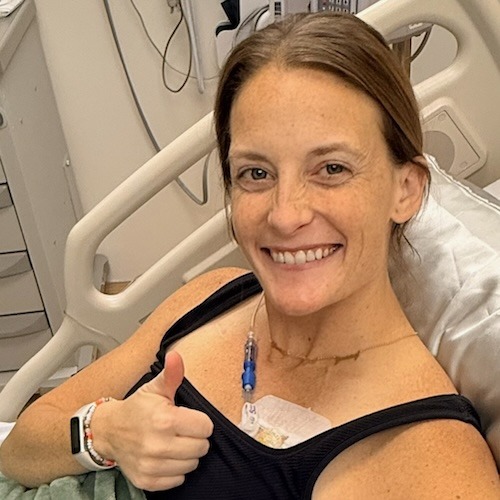
Kelsey was a 36-year-old fitness professional and mother of four living in Lake Stevens, Washington, when she began experiencing debilitating back spasms that would eventually lead to a diagnosis of stage 4 non-small cell lung cancer. A self-described workout junkie and fitness studio manager, Kelsey initially attributed her pain to the physical demands of her job, aging, or a potential injury. However, after several incidents where her back completely collapsed, including one during her sons’ baseball tournament, she realized the issue was far more significant than just a pulled muscle.
Interviewed by: Taylor Scheib Edited by: Chris Sanchez
The emotional turning point in Kelsey’s experience occurred when she received her prognosis in writing through adoption paperwork. While doctors had previously sugarcoated the severity of her lung cancer, seeing the words “prognosis is less than two years” forced her to confront her reality head-on. This moment of clarity shifted her perspective from simply managing metastatic non-small cell lung cancer to “living like she’s dying,” a transition that led her to transfer her care to Fred Hutchinson Cancer Center and prioritize reclaiming her quality of life through advanced treatments and clinical trials.
Today, Kelsey lives with an extremely rare combination of both EGFR and ALK mutations. After a life-changing spinal fusion surgery that replaced her collapsed L5 vertebrae with a titanium cage, she has returned to the physical activities she loves, including riding her Peloton and coaching her boys. By focusing on the “new normal” and leaning on a supportive community, she emphasizes the importance of self-advocacy and treasuring every moment of physical health.
Watch Kelsey’s video or read the edited transcript of her interview below to delve into her story.
Advocate for answers: When initial X-rays came back normal despite her inability to walk, Kelsey pushed for an MRI that ultimately revealed the lesions on her spine and pelvis.
Rare mutations require specialized care: Having both EGFR and ALK mutations is extremely rare, leading Kelsey to join a clinical trial to target the disease when standard data was unavailable.
Surgery can restore quality of life: A spinal fusion surgery allowed Kelsey to move from living an “eggshell life” back to lifting weights and playing with her children.
Let people help you: Kelsey learned to accept care packages, hospital visits, and emotional support without the guilt of “assigning” tasks to her loved ones.
A universal truth: Physical health is often taken for granted until it is restricted; reclaiming movement provides a unique motivation to “leave nothing behind.”
This interview has been edited for clarity and length. This is not medical advice. Please consult with your healthcare provider to make informed treatment decisions.
The views and opinions expressed in this interview do not necessarily reflect those of The Patient Story.
My life as a fitness professional before diagnosis
Before cancer, I was very active. I was almost obsessed with working out. I grew to love fitness so much that I wanted it to become my career.
I started studying to be a personal trainer and group fitness instructor, and I was planning my workouts as if it were my job. I was doing three workouts a day — before work, during lunch, and after work. It just fueled something in me.
I love working out because it just ignites something in me. I feel so strong physically and mentally, and it just makes me a better person. It flips a switch in me that makes me nicer, more motivated, and changes the trajectory of my day every time.
The first signs: Back spasms and physical collapse
Leading up to my diagnosis, I was managing a SoulCycle. In May, I was dealing with really bad back pain that prevented me from working out. I was gaining weight and making excuses — maybe I was getting older or going through menopause. But the pain got so bad that if I took a wrong move, my back and hips would completely spaz and lock up, and I would fall to the ground.
I was at one of my boys’ baseball tournaments, and a sprinkler surprised me. I flinched, my back locked, and I collapsed in front of the whole team.
I played it off as a joke, but deep down, I knew something was really wrong.
Navigating the healthcare system and seeking an MRI
After the first collapse, it happened again at home. I got out of bed and collapsed to my knees; I had to crawl to the bathroom. We realized this wasn’t just a pulled muscle. I went to the chiropractor, but nothing worked.
I was recommended for an X-ray, which came back normal. They told me I had to go to physical therapy for four weeks before I could get an MRI. I went to physical therapy once and said, “I’m not waiting four weeks.”
I pushed for the MRI, and, thankfully, insurance approved it. Those results are what led to my diagnosis.
Receiving the news: “Are you sitting down?”
I was at work when I got the call from the orthopedic doctor.
He asked me if I was sitting down, which is a sign of bad news you only hear in movies. He told me the scans showed lesions in my pelvis and on my spine. I was so blissfully unaware of the cancer world that I asked, “What is a lesion?” I thought it was a scrape. He explained it was like a tumor and told me to reach out to an oncologist.
I sat in my car in silence for an hour and a half on my commute home, just processing. When I got home, I saw my kids first and tried to pretend everything was the same. Then I found my husband, Anthony, in our office and told him, “They think it’s cancer,” and I just collapsed in his arms.
My stage 4 non-small cell lung cancer diagnosis
We were told it was cancer on June 6th, but we didn’t know what kind. That month was spent living in limbo — appointments, scans, and researching.
On July 1, I was at work when my oncologist called and said, “We found your tumor. It’s in your lung. You need to get to the ER immediately.”
I went to work that day as a studio manager and left that night as a cancer patient. They showed me the scans; the tumor was a couple of centimeters large, and we knew it was stage 4 because it was in my bones.
At the time, I didn’t even know that stage 4 meant it wasn’t curable.
Facing a prognosis and transferring care
The reality really hit me when I needed paperwork for the adoption of my two oldest boys. The doctor had to fill out a form asking if I was capable of parenting. The doctor wrote “Yes,” but added that my prognosis was less than two years. That was the first time I had officially heard a timeline.
I ended up transferring my care to Fred Hutch. My new oncologist was amazing; she gave it to me straight. She told me, “Your life will never be the same. You need to get used to a new normal.”
I broke down because it put this invisible pressure on me to live like I’m dying, which is much harder than it sounds.
Reclaiming my life through spinal fusion surgery
My spine was collapsing by over 60%, which is why I kept falling.
In November, I had a spinal fusion surgery. They went in from the front and the back, removed my L5 vertebrae, and replaced them with a titanium cage. I had to relearn how to sit, stand, and walk.
But that surgery gave me back everything. I was living this “eggshell life,” terrified that one wrong move would break me. Now, I can move freely. I can play catch with my kids, go on daily walks, and lift weights.
It was literally life-changing.
Managing rare mutations: EGFR and ALK
I initially started on osimertinib for my EGFR mutation. It was a pill with minor side effects, and I almost felt like I had imposter syndrome because I felt so good. But eventually, the cancer progressed.
I pushed my doctor for more tests because things felt different. When I got my new oncologist, she did biomarker testing again and found I now also have the ALK mutation.
Having both is an extremely rare combination with very little research. We decided on a clinical trial that targets EGFR.
So far, it’s going amazingly. Things are shrinking, and the goal is to stay at this plateau for as long as I can.
The importance of self-advocacy and support
Advocating for yourself was the first piece of advice I received, and it’s so true.
I am on my third oncologist because you need to be with someone who listens to you and believes you. It’s okay to be “annoying” when your life is on the line.
The second piece of advice was to let people help. The people in my corner didn’t ask, “What can I do?” — they just showed up with care packages, texts, and visits during my seven-hour chemo sessions.
I’ve never felt so loved. It’s a beautiful thing to receive that love while you’re still here to feel it.
Awareness: Anyone with lungs can get lung cancer
I want people to know that anyone with lungs can get lung cancer.
I was a non-smoker and fairly healthy; I didn’t even know this was an option for me. It’s not just a “smoker’s disease.”
Spreading that awareness has been a blessing because nobody I know thought I could get this either. Now, I move every day — even if it’s a 30-minute low-impact ride on my Peloton. I tell my kids to take advantage of their healthy bodies.
Getting the right tests can help find your cancer's weakness.
April 21 at
4:00 PM PT / 7:00 PM ET
7:00 PM PT / 10:00 PM ET
If you or someone you love has been diagnosed with non-small cell lung cancer (NSCLC), you’ve likely heard the phrase ‘biomarker testing’ and the need to wait for results. This wait can feel unbearable, but the science is clear: knowing what is driving your specific cancer before you start treatment can change everything about the care you receive.
This program will explain why comprehensive biomarker testing is the foundation of the right treatment plan.
You will learn:
What biomarker testing is and why it’s not inherited genetic testing.
Why waiting for test results leads to better outcomes.
Tissue vs. liquid biopsy: when and why both are needed.
Common NSCLC biomarkers (EGFR, ALK, KRAS, ROS1, MET, PD-L1) and their treatment meaning.
How targeted therapy, immunotherapy, and chemotherapy differ, and when to use each.
What cancer progression means and why retesting is essential.
How to advocate for yourself and be an active partner in your care.
Visit Our Partners
EGFR Resisters is a grassroots patient-driven community, dedicated exclusively to changing EGFR positive lung cancer into a manageable chronic disease. Their community of survivors and caregivers share knowledge and connect with others who are experiencing similar journeys. Find your community.
Program Sponsors
Thank you to our sponsors for their support of our independent patient education program. The Patient Story retains full editorial control over all content.
Discover How Getting the Right Tests Can Change Everything.
This webinar has been completed!
This webinar has not yet been completed.
Lung Cancer and Comprehensive Biomarker Testing
Hosted by The Patient Story Team | 53m
The science is clear: knowing what is driving your specific cancer before you start treatment can change everything about the care you receive. This program will explain why comprehensive biomarker testing is the foundation of the right treatment plan.
Living Every Breath: Megan’s Stage 4 ALK+ Lung Cancer Experience as a Young Mom
For Megan, a young mom from Massachusetts, stage 4 ALK-positive lung cancer arrived without warning. Like many people, she had no idea lung cancer could happen to someone her age, with no symptoms she recognized as warning signs. When chest pain, shortness of breath, and sudden arm swelling led to an ER visit, the scans revealed extensive blood clots, a tumor in her lung, and cancer in her spine and lymph nodes.
Interviewed by: Taylor Scheib Edited by: Chris Sanchez
Before her diagnosis, Megan’s days revolved around breakfast with her daughters, trips to the gym, errands, and mommy-and-daughter classes. After ALK-positive lung cancer entered the picture, her life narrowed to pain management, hospital visits, and time on the couch when spinal pain made it hard to move by lunchtime. Her children, who were just one and three at the time, did not understand what lung cancer was; they just wanted their mom to read books and play. Even when a coughing fit interrupted a children’s story, Megan kept showing up for them in the ways she could.
A turning point came when testing confirmed an ALK mutation, and she met Dr. Flores, a specialist who offered targeted therapy instead of traditional chemotherapy. Within 10 days of starting the oral treatment, Megan was back on her feet, and a month and a half later, her scans showed a 40% reduction in cancer. Subsequent scans revealed more than 50% reduction and, eventually, no visible cancer to the naked eye. Today, she is considered no evidence of disease (NED) and continues taking targeted pills daily, with manageable side effects like neuropathy and bowel changes. She expects to stay on treatment long-term, and finds hope in data showing many people with stage 4 ALK-positive lung cancer remain stable for years on targeted therapies.
This experience has reshaped Megan’s priorities. Dishes and chores can wait; if her daughters ask her to play, she says yes. She is vocal about self-advocacy after initially being misdiagnosed with a pulled muscle and anxiety despite worsening symptoms. She encourages others to push for answers, seek second opinions, and surround themselves with a strong support system. With the help of her family, including her husband, who stepped into nearly every household role, and a community that sent cards and bracelets, she now channels her energy into her podcast, “Livin’ Every Breath,” where she talks about cancer, self-advocacy, and finding silver linings in hard times.
Watch Megan’s video and read her story below to find out more.
Anyone with lungs can develop lung cancer; young people like her who have no known risk factors can be diagnosed with stage 4 ALK-positive lung cancer.
Targeted therapy can dramatically change quality of life, as Megan went from couch-bound with coughing fits to walking, parenting, and reaching NED within months.
Self-advocacy is essential: she kept pushing after initial misdiagnoses and used personal connections to access biomarker testing and ALK-targeted treatment.
A strong support system, from family members moving in to help with childcare to friends and strangers sending small gifts, can lift patients emotionally through a difficult experience.
A universal truth: many patients discover that priorities shift after a serious diagnosis, with relationships, presence, and small daily moments becoming more important than chores or perfection.
Megan’s transformation shows how living with stage 4 ALK-positive lung cancer moved her from shock and physical limitation to renewed presence with her children, advocacy for others, and creative expression through her podcast.
Name: Megan F.
Age at Diagnosis:
33
Diagnosis:
Non-Small Cell Lung Cancer (NSCLC)
Mutation:
ALK
Symptoms:
Chest pain
Anxiety
Shortness of breath
Arm pain and swelling
Back pain
Treatment:
Targeted therapy: lorlatinib
Thank you to Pfizer for supporting our patient education program. The Patient Story retains full editorial control over all content.
This interview has been edited for clarity and length. This is not medical advice. Please consult with your healthcare provider to make treatment decisions.
You never thought you would cheer so loudly for a genetic mutation.
Megan F., ALK-positive lung cancer patient
Biomarkers and ALK-positive lung cancer diagnosis
We found out that I had lung cancer. We Googled it, and we were obviously not happy with what Google was telling us was going to happen. Shortly after, I was linked up with the doctor that I have now, and she mentioned that they were going to test for biomarkers. Once we Googled biomarkers, we were actually relieved, because I feel like it just sends you on a different path.
I remember the exact time she called me to tell me I was ALK-positive. I was out with my family, and we were all at a restaurant, and I stepped outside. I got the news and was super excited because I know just how far ALK research has come in the last few years. When I went inside and told my family that I had the genetic mutation, everyone went crazy, and we were all laughing afterwards. You never thought you would cheer so loudly for a genetic mutation.
Why I researched lung cancer and biomarkers
I’d say that we were lucky. My husband’s cousin is an oncologist, and from the start, when I was in the hospital before we even knew it was cancer, we were already communicating with him. I was lucky to have him on my team, but he is not a lung specialist, so he did not know as much about ALK or anything like that.
It is a lot to take on at first. There is a lot out there, especially on social media. You look it up, and somebody is telling you to do this cleanse, and then this other person is telling you that you need to see this person, so it can get a little crazy. I was lucky that the doctor I have now, who is absolutely amazing, specializes in young lung patients, and a lot of them have the ALK mutation. I feel like I was lucky to connect with her early on, and the information was narrowed down from a wide scale.
How my biomarker result shaped my treatment plan
From the beginning, the oncologist that I had said, “We’re going to do this, girl.” So I had confidence that it was going to go differently from what Google was telling me it was. But, you know, first, being a young woman, the treatment that I’m on right now, you cannot get pregnant. That was part of the conversation.
I’m on lorlatinib, and as a first-line treatment, it is proven right now to be the best, although other things are in trial. If you get on that right away, it is the most effective. It does have the harshest side effects. So that was a conversation: you have to weigh your pros and cons. If I wanted to get pregnant, I would have had to go on a different medication. Luckily, at the time, I had a one-year-old and a three-year-old. They’re now two and four. We were totally fine with, “That’s our family. Let’s take the best line of treatment.” So we just went with it.
How biomarkers changed what I thought lung cancer looked like
I thought lung cancer looked like two to four months, and obviously, it was not a good two to four months. I thought I was going to be thrown into chemo and just see how long I could last.
Once I found out that I had the genetic mutation, I knew that there was treatment out there, targeted therapies. Mine just came out in 2021, actually, and more than 50% of people on my medication after five years still have no progression. I just thought, “That’s huge.” At the time, I was like, “Yes, five years.” I have five years now. I don’t have four months anymore. Now, the more that I’ve educated myself on it and the more chats that I’ve been in, I see people 20 years out. So I no longer limit myself to five years, although at the time, that sounded wonderful.
To really understand and to be an advocate for yourself is so important.
Megan F., ALK-positive lung cancer patient
Why hope matters and how research gives it to me
From the start, I have always had hope. Now, it is easy. I have no evidence of disease.
Of course I am hopeful. Day to day, I don’t really even think about cancer, so that’s great. But even when I first got diagnosed, and I was on the couch because of back pain, and I couldn’t even finish a sentence in my kids’ book, even then, I was hopeful, just looking at the future and the research and the medicine that is coming out. I know there’s some in the works right now. It is hard not to have hope.
What I wish I’d known at diagnosis about biomarkers and community
I was hesitant to join the chat rooms at first. I just think knowing that there is someone out there who has stage 4 lung cancer and they’ve been on medicine for 20 years, and they’re thriving… just knowing that would have been great.
You have to kind of search through the bad to find the good, and when you’re first diagnosed, I feel like that’s not beneficial to you.
Why biomarker testing and “scary” medical terms matter
I think that people should care because it really helps form their treatment, which is obviously the most important part of a cancer diagnosis. To really understand and to be an advocate for yourself is so important.
I am blessed to have a doctor who fights for me. I know even when I’m not present in her room, she’s out there researching. But not everyone has that connection to their oncologist. For your own research, you need to know these words. I joke that there should be a dictionary out there. There should be a cancer dictionary, because even words like “hospice” sound really scary. If you look at them down to the core, they’re really all here just to support us in our lives.
How my doctor explained my treatment options with ALK
She said, “I think you should get on it right away.” Once we decided that was the path I wanted to take, that that was the medication, she said, “Let’s start it.”
I did start at a lower dose, because the side effects could become really harsh. Luckily, I didn’t experience the really harsh side effects, just nausea and other things that I wish I wasn’t going through, but they weren’t that bad in the grand scale of things.
Ten days after starting the medication, I went from being couch-ridden and unable to breathe to playing with my kids in the backyard.
… just looking at the future and the research and the medicine that is coming out… It is hard not to have hope.
Megan F., ALK-positive lung cancer patient
Chemotherapy conversations vs. targeted therapy conversations
When I was originally diagnosed, I was in the emergency room. I talked about chemotherapy with the oncologist I was first linked up with, but I didn’t end up going with them. My first appointment was basically, “We’re probably going to end up with chemo, and we’ll see how long you can tolerate it.”
Later, when we started talking about targeted therapy, the conversations were so different. I also had two different oncologists, and that made a huge difference. My first conversation, when chemotherapy was introduced, was kind of sad. That was the way it was presented to me. There wasn’t a “We’re going to do this, girl.” I personally had hope either way. I was like, I’m 32 years old. This can’t be the end. But there was definitely positivity and an uplifting part of the conversation when biomarkers were talked about.
How I chose my targeted therapy
Honestly, the research decided it for me. I was ready to take on whatever side effects came with something that was going to potentially eliminate my cancer.
Just looking at the research out there, I also have a couple of lawyers in the family, and I sent them the information. They read what the medication does and how amazing it is. Everyone I talked to said, “You need to go with this. This has the best response rate.” That’s why we went with it.
Obviously, I have kids, so that would have been a big decision if I still wanted to have a family. I feel like I was blessed to be on the other side of that. Other than that, it was: whatever is going to get us the best results.
Key questions I asked about treatment and side effects
I wanted to know the results — how many people have had success with that medication and for how long. I also looked into neuropathy as one of the big side effects, which I did end up getting. Luckily, it was not as bad as some other people’s.
We were able to change the dose. Those were my questions: if we run into this side effect, what do we do? A lot of it was just changing the dose. Because I had a good response to it, it was easy to adjust as we went.
Questions I’d tell other patients to ask their doctor
It depends on the individual, but I would say to ask your doctor about pregnancy if that’s important to you. That’s one of the big things you should be asking about. Also, ask how to deal with side effects. I would ask ahead of time, “What are the side effects, and if these happen, what do we do?” You might be at your house, and of course, your oncologist is a phone call away, but if you’re experiencing neuropathy for the first time, you’d be like, “What is going on?”
If you already have in your mind how you can handle these steps, it’s more comforting. I’d also ask what supports are out there. You’re going to be taking this medication; there are Facebook pages, and the drug itself has support groups. If you have access to those, then maybe you don’t even need to call your doctor in a panic, because you’ve already educated yourself, and you have chat rooms and forums to go to.
Ten days after starting the medication, I went from being couch‑ridden to playing with my kids in the backyard.
Megan F., ALK-positive lung cancer patient
The power of my oncologist’s encouragement
My doctor asks if it’s OK to share my story with other patients. She’ll say, “I just got someone your age. Can I tell them about you?” I think that’s super helpful, because she did that with other patients for me as well. She’d say, “I’ve got someone’s permission to tell you this. They’ve been on your medication for the last five years. They’re doing great.”
I remember specifically, once I responded well to the treatment, she called me and said, “Lorlatinib is your drug,” and I was like, ”Yes, it is.” She’s always positive and always coming in with uplifting phrases.
What it meant to go from being couch-ridden to playing with my kids
It was really hard. I was a stay-at-home mom. I was looking to go back to work because I was like, “This is so hard,” because every day I felt exhausted.
Being a stay-at-home mom is hard, but it was different with stage 4 lung cancer, and I had no idea. From the diagnosis day to the day I took my medication, because there was about a month in between, it was just so hard.
My in-laws are amazing. They flew home and stayed at our house or at my sister-in-law’s down the street. My mother moved in, and my dad would come to and from work. I had all this help, but I wanted to be a stay-at-home mom. I wanted to play with my children. Watching everyone else was so beautiful and awesome that they came for me, but it felt like I was watching from the outside of things that I wanted to be on the inside doing.
When daily mom life became something I could celebrate again
I remember specifically, at that time, I had a one-and-a-half-year-old, and of course, they throw tantrums. During every tantrum, I was like, “That’s fine, everything’s fine.” I was almost happy about the tantrum. Just being involved in it was so awesome.
I don’t even remember the exact day-to-day; I just remember that on the tenth day, we were running around outside, and I thought, “How many days ago did I start this medication? This is crazy.” When we went back and looked, and realized that I had started just ten days before, I just couldn’t even explain how happy I was.
Scan results, tumor shrinkage, and quiet celebrations
When I had my scans a month and a half after I started the medication, I had a 40% reduction in cancer. My next one was even better; it was more than 50% gone.
At first, the big medical terms came through in the report as a message before the doctor called. We had to Google everything in there, because if you change a couple of letters in some of those words, they’re actually bad. We had to make sure we saw what we thought we saw.
We were ecstatic. I remember we read it in my husband’s office, and we were just silently dancing. We had gone in and shut the door, with all the family out there. I don’t even think we told them we were going to read it. We celebrated, and then we talked to our oncologist. She was so excited for us, but it almost seemed like she couldn’t believe it because it was so quick. A lot of people have this response, but it’s over a year or two. She seemed shocked by it, too, which was even more exciting.
When I had my scans a month and a half after I started the medication, I had a 40% reduction in cancer. My next one was even better; it was more than 50% gone.
Megan F., ALK-positive lung cancer patient
How I cope with “scanxiety” and waiting for results
Do you know the song “Good News” by Shaboozey? That’s our family song. It came out around the time that I was diagnosed, and now every time we’re going into a scan, we play “Good News,” because that’s what we need. So far, he’s come through.
I would say I live my life in three-month intervals. I have a scan, it looks really good, and then you’re fine for about two and a half months. Then, for the two weeks before the scan, you’re like, “Everything seems okay, but is that little pain something?”
For me, the day of the scans is fine. It’s the waiting for the results that causes anxiety. Last time, my husband and I went and shared some lunch, but we didn’t eat it. We just sat at the table and didn’t really speak. We just had the food in front of us and waited for the results to come through. That’s when I get the anxiety — afterwards.
What I knew about clinical trials before targeted therapy
Nothing. I honestly didn’t even think I could get lung cancer. You see the commercials with people who can’t speak, and I had never smoked in my life, so I thought I couldn’t get lung cancer. I didn’t even know it was something I could get.
Once I was diagnosed, even Googling it right off the bat, they don’t really break it down for you and tell you everything. It wasn’t until I got connected with this doctor, who said we would test for biomarkers, that I started doing the heavy research into what it could possibly be.
There are multiple mutations. I was most hopeful for ALK because I saw that there were already three generations of drugs out, and they’re working on a fourth. I hear things in other countries that are maybe coming along the line. It seemed like there was a lot of research and time put into ALK. But I know there are others out there, and they’re also coming up with treatments, so I’m happy for everyone in the targeted therapy community.
How I humanize the importance of cancer research
I actually spoke at Foundation Medicine, which is the company that does biomarker testing. I said, “You know, there are all these people in the lab, and they’re creating this drug or the latest thing. I’m at home planning birthday parties, and I’m at home running around in the backyard with my kids. This research is great on paper, and it’s great data, and it’s clearly doing us well, but I see it as more time. I see it as more hope, more tantrums that I can celebrate.
What I’d say to people hesitant about clinical trials
I’ve learned that there is extensive research that goes into a drug before it even becomes a real clinical trial that you can enter yourself into. Only a couple of years before I started taking my medication, it was also the subject of a clinical trial. There’s one out there now, and I’m in plenty of groups. A lot of people are responding even better than with the one that I’m on.
As I said, it’s all about time. I have stage 4 lung cancer with an ALK mutation. My cancer is constantly trying to get smarter than my therapy. You never know when that’s going to happen.
My next line might be a clinical trial. The reality is, if something happens in the next couple of years, that’s my next line. I understand that it’s scary, but looking at the research and the science and how far we’ve come, I fully put my trust in it.
My go-to support and education resources for ALK-positive lung cancer
I use the Young Lung group a lot. They were a community I joined early on. I would also say ALK Positive. If you go to their website, they have a lot of good forums and places where you can find other ALK‑ies. They also have a Facebook group for patients and their supporters. Other than that, I’ve found other ALK-positive people through Instagram.
To anyone newly diagnosed, I’d say don’t get discouraged, because there are a lot of people out there who might have, you know, drunk only green juice for three weeks, but they also probably responded well to a treatment. Sometimes it can get scary when you’re following someone on social media, so just be wary that it’s social media and you don’t know the whole story.
This research is great on paper, and it’s great data, and it’s clearly doing us well, but I see it as more time. I see it as more hope, more tantrums that I can celebrate.
Megan F., ALK-positive lung cancer patient
Special thanks again to Pfizer for its support of our independent patient education content. The Patient Story retains full editorial control.
Symptoms: Pelvic pain and discomfort, bladder issues related to pelvic tumors, incontinence, pain in the lower back and hip Treatments: Chemotherapy, immunotherapy, radiation therapy, targeted therapy (lorlatinib)
From Chemo Exhaustion to Targeted Therapy: Clara’s Stage 4 ALK+ Lung Cancer Experience
Living with stage 4 ALK-positive non-small cell lung cancer, Clara has had her entire life reshaped by diagnosis, treatment, and the constant recalibration that serious illness demands. She moved back home to Iowa after years in Colorado, trading her independent adult life for the familiar walls of her childhood bedroom and the support of nearby family. In the middle of all that upheaval, adopting her dog Bernie became a lifeline, giving her structure, purpose, and a reason to get outside, even as medications changed her body and added significant weight gain.
Her early treatment included chemotherapy and maintenance immunotherapy. For a while, the scans looked promising. Her tumors were shrinking or holding steady, which is a meaningful win with advanced disease. When a later set of scans showed worsening metastatic disease and new spread to her spleen, she faced another round of aggressive chemo that repeatedly landed her in the hospital. The physical toll, the constant sickness, and the feeling that she was doing chemo more for others than for herself pushed her to say, “I am done.” She made that choice fully aware that it could mean her cancer might worsen without more treatment.
At the same time, additional biomarker testing revealed that her cancer was ALK positive, opening the door to targeted therapy in place of chemo. Starting Lorbrena (lorlatinib), a third-generation tyrosine kinase inhibitor specifically for ALK-positive non-small cell lung cancer, shifted both her symptoms and her outlook. Instead of enduring relentless infusions and hospitalizations, she now takes a pill once a day with far fewer side effects so far, and she is hoping upcoming scans will show stable or shrinking disease.
Alongside physical treatment, Clara is weighing deeply personal decisions about pelvic tumors, potential surgery that could remove her ovaries, and the grief of likely not having biological children. She is processing the realities of disability, financial toxicity, and a world not built for walkers and wheelchairs, even as she regains independence by driving again and leaving the walker behind. Through her “Cancer Questions with Clara” videos, she speaks candidly about taboo topics, like adult diapers and body image, to help others feel less alone, while reminding herself and her community that evolving research and new treatments can offer real, hard-won hope.
Watch Clara’s video or read the edited transcript of her interview for a follow-up to her story. Read how she first found out about her cancer here:
Targeted therapy for ALK-positive non-small cell lung cancer can offer meaningful options, including oral treatment with fewer day-to-day side effects
You are allowed to prioritize your quality of life and make treatment decisions that reflect your values — even when others may not fully understand
Biomarker testing can change the entire course of care, opening doors to personalized therapies
Clara’s experience shows how serious illness can reshape family roles, home, work, and even geography, while still making room for joy and reclaiming independence
Her transformation included moving away from chemotherapy, which she felt she was doing for everyone else, to advocating for herself, choosing targeted therapy, and using her story to educate and normalize difficult topics for other patients
Name: Clara C.
Age at Diagnosis:
30
Diagnosis:
Non-Small Cell Lung Cancer (NSCLC)
Staging:
Stage 4
Mutation:
ALK
Symptoms:
Pelvic pain and discomfort
Bladder issues related to pelvic tumors
Incontinence
Pain in the lower back and hip
Treatments:
Chemotherapy
Immunotherapy
Radiation therapy
Targeted therapy: lorlatinib
This interview has been edited for clarity and length. This is not medical advice. Please consult with your healthcare provider to make informed treatment decisions.
The views and opinions expressed in this interview do not necessarily reflect those of The Patient Story.
I was living at my mom’s house right outside of Des Moines, Iowa, but now I’m at my dad’s house in a very small town a little further away from Des Moines. My dad still lives in the house I grew up in, so it has been nice to come back to my childhood bedroom.
What’s nice about my dad’s house is that he has a big yard, so I was able to adopt a dog, which has been a great addition to my life. I got him from the Animal Rescue League of Iowa. He has given me so much purpose and has definitely been a reason to wake up in the morning. He has provided me with a lot of structure and routine, and has made me active, taking him outside for walks, which has been great to get outdoors. It has also been great in helping me be active because I gained a lot of weight from cancer medication, so I am trying to lose that weight. Bernie, my dog, has been helpful in that regard.
Leaving Colorado and saying goodbye to my old life
After treatment, I thought that I would just return to my apartment in Colorado, go back to my old life, and everything would be fine. At that time, I learned that I would have to be on immunotherapy for the rest of my life. Traveling back and forth between Colorado and Iowa would be too much, so I decided to give up my apartment. I was unwilling to transfer my care to Colorado because I love my team in Iowa so much. I decided to clean out my apartment and be done with it, which has been a weight off my shoulders financially because I had been paying for it the whole time.
It was very emotional and very bittersweet to leave Colorado because I had spent my entire adult life there. I had a lot of life lived, a lot of memories, and a lot of friends.
It was good to reflect and to reminisce. I invited a bunch of my girlfriends out for dinner while I was there, and we had a “goodbye Clara” party. It was fun and special to have those women there. I wrote each of them a letter about our friendship, why they were important to me, and how sad I was to leave Colorado. We were all in tears at dinner, but it was a good send-off.
It’s good to be in Iowa permanently. I enjoy being close to family, so that has been the biggest perk of being back in Iowa for good, I should say.
How we discovered my cancer progression and changed treatment
The last round of my first cycle of chemo was on July 3rd. That round and the one prior to that sent me into the hospital for 10 days, both times. Obviously, I was glad to be done with chemo and be on maintenance immunotherapy. I was doing immunotherapy throughout the summer.
I had scans in August and they were great. They showed that my treatment had been working. There was a lot of shrinkage. Different parts of my cancer were either shrinking or staying stable, and that’s the goal with stage 4 cancer: to keep things shrinking or stable. Stable is great.
I continued with immunotherapy throughout the fall. I had my next three-month scans in early November, which came back horrible. They showed that everything was growing, and my cancer had also spread to my spleen at that time. The report literally said “worsening metastatic disease,” meaning everything was getting worse. That was devastating news because three months prior, the scans were great. I had a lot of hope and optimism. To get those results in November was devastating.
We had a scheduled surgery on my pelvic tumors for December 1st, but because my cancer had come back so aggressively in terms of growth, we decided to start an aggressive chemotherapy regimen again. It was a different drug. We started it immediately and had to push off surgery indefinitely at that point. That was hard for me because I so desperately wanted to get these pelvic tumors out since they cause so much discomfort and pain. One of my pelvic tumors is on my bladder, which causes me a ton of issues.
I did chemo round seven, which again put me into the hospital for another 10 days. I was getting sick again and again. After that seventh round, I was in the hospital up until the day before Thanksgiving, which was so frustrating. I decided, “I am done. I am done with chemo.” I felt like I was putting my body through so much.
I also felt like I was doing it for the wrong reasons. I felt like I was doing chemo for everybody else and not for me. I felt like they wanted me to do chemo because they wanted me to stay alive. Of course, I want to stay alive too, but I’m the one who has to go through it. I’m the one who has to put my body through treatment. It’s so hard on my body to get that sick all the time.
I decided I was done with treatment. I wasn’t doing it anymore, which was a hard decision because I knew what that meant. That means my cancer may get worse and there is nothing that can be done if I am not willing to do treatment.
At the same time, my oncologist had ordered another set of Tempus testing, which is testing for genetic mutations. They sent another biopsy sample in. We found out that I wasALK positive, which my oncologist was shocked to see because he had not seen anybody evolve into a mutation that was not there previously. The whole reason he sent a biopsy sample again was that Tempus testing can also determine what chemotherapy to use. Not only does it identify genetic DNA markers, but it can also help guide treatment options. He did it for the purpose of making sure he was giving me the correct chemo this time around.
When it showed ALK positive, he said, “Okay, we are going to stop chemo,” which I had already decided to do anyway. He said that with ALK-positive, they have a targeted therapy available. Targeted therapy is a pill that I take every day. It is not chemo at all. It is in replacement of chemo and has far fewer side effects than chemo does.
The specific one that I am on is Lorbrena (lorlatinib), which is a third-generation tyrosine kinase inhibitor (TKI) of the targeted therapies that are available for ALK-positive patients. That is specific to non-small cell lung cancer, I should mention. It is a very specific and very personalized treatment. I started the targeted therapy pills in December 2025. After being on them for about one month, I have had very minimal side effects, and I think I am responding to it pretty well.
With targeted therapy, it sometimes takes a lot longer to show results. Even though my next three-month scans are in February, they may not show exactly if it’s working yet. I am hoping they will at least show that everything is stable, if not shrinking. I am hoping for stable, and then maybe another three months after, the scans will show some improvements and positive results from the targeted therapy.
That has been a good thing. I am so happy that I’m ALK-positive and that the targeted therapy was available. I had decided I was stopping treatment. Who knows what would have happened to me and what that would have entailed?
How cancer research and funding directly impacted my treatment options
I am grateful for the targeted therapy. These drugs are available because of the funding for cancer research, and all of the cancer patients who came before me who participated in clinical trials and research that made these drugs available.
It’s interesting how some of these drugs were only approved within the last couple of years. If I had been diagnosed with cancer a couple of years prior, who knows what kind of treatment I would be on today or if I would be able to be on this? Everything worked in divine timing for me to be on this. It has been going well.
Learning about ALK positive and finding community
I knew about different biomarkers. I had heard of ALK, but I did not know much about the treatment available for them. It turns out there is a whole community of ALK-positive patients. It has been nice to connect with others on social media and other platforms.
I’m on the third-generation TKI. I have talked to other patients who are on the first- and second-generation drugs. Those ones seem to have more side effects. As research progresses, it seems like they are trying to get rid of the side effects, which seems to be working because I have had very minimal side effects. It sucks that every medication for cancer that I take has weight gain as one of the side effects, which has been frustrating. But other than that, it’s going well.
My treatment plan going forward, scans, surgery, and clinical trials
My next scans will be in February 2026. Based on those results, we will determine if I am still eligible for surgery. That’s why I’m hopeful that things are stable or shrinking so that I can have those pelvic tumors removed. They cause me so much discomfort and so many issues. Getting rid of them would be the best for my quality of life.
After that, I will have scans every three months. I don’t know what my options would be if the targeted therapy stops working, but hopefully, I do not have to worry about that. I guess another option would be clinical trials. I am open to them, but I would need a lot of information to make a well-informed decision about whether or not to participate. I am open to it if that is my only option down the road. For me, whatever I have to do to live that is not chemo, I am okay with.
Why surgery is only planned for my pelvic tumors and how it affects my fertility
There has not been talk of surgery on any other organs. They explained to me that if they were to go in and get rid of some of the cancer, it would not make that big of a difference. I have so much cancer in so many places that it would not do much, which is hard to hear.
I am grateful that they are willing to consider surgery on those pelvic tumors. One of them had shrunk back in August, but then in November, it had grown back to its original size, which is the size of a softball. I have a softball-sized tumor on top of my ovaries. If I go through with the surgery, they will remove both of my ovaries, which will deprive me of the opportunity to have biological children. I do not have any kids right now and that is something I have had to wrestle with.
I looked into freezing my eggs, but it is so costly and out of my budget. Plus, with how much I want the pelvic tumors out, I guess I am okay with taking out my ovaries, but that is something you have to grieve —the kids that I thought I would have that I will no longer have. I know there are other ways to have a family, but it’s hard to think that I will never have a kid that looks like me or inherit traits that I have. I am very artistic, and I would want my kid to be artistic and creative. That has been something I have struggled with and talked about a lot in therapy. That is not something I thought that I would have to spend so much time thinking about at 31. It has been a hard topic for me.
The hardest moments and what keeps me going
With the idea of giving up on chemo and feeling like, “If I do this, I do not know what is going to happen,” what gets me through is having faith that it is going to all work out. I lean on my faith and my religion.
Sometimes, I want to give up. It’s hard to be positive all the time about cancer or the fact that I still have cancer. It’s frustrating because I’m a year into this. I have gone through all this treatment. I have done seven rounds of chemo and ten rounds of radiation. It’s frustrating to compare myself to others who, once they are done with treatment, have clear scans and put their cancer journey behind them. I get upset that I still have cancer and that I will always have cancer. Why did this happen to me and to this extent? It’s frustrating that I do want to give up sometimes.
What keeps me going is that I want to keep living. My dad always tells me to focus on the big things and the fact that I am still alive. I’m grateful to still be alive and that I still get to spend time with my loved ones. It has given me this perspective that other people do not have: to focus on what matters. Not that other things do not matter, but at the end of the day, your loved ones and experiencing life are so important and something to be grateful for. I think that’s what keeps me going.
Why I share my story on social media and “Cancer Questions with Clara”
I do a series on TikTok called “Cancer Questions with Clara,” where I answer any questions related to cancer. I am very open. I will talk about topics that other people are uncomfortable with. I do not mind sharing at all.
It’s important because a lot of people do not know anything about cancer. A lot of people have not been touched by cancer in any way. They do not know anybody who has had cancer. Maybe their grandparent had cancer, but they were not close to them or did not see them go through it, so they don’t know anything.
I approach it by speaking to the person who does not know anything. I think that is important because it educates people on what others are going through. I also want to normalize a lot of things because many topics are very taboo.
For example, sometimes I have to wear adult diapers. I’m not ashamed to admit that, but a lot of people would be uncomfortable sharing that. I do not want people out there to feel alone. I know there are plenty of other young women who have to wear adult diapers due to incontinence they developed from something else or from cancer treatment. That sucks, but I do not want people to feel alone. I want people to know that it’s okay and normal, and that other people go through that, too.
That is why I share a lot of this stuff. I want to educate people, to help people feel less alone, and to normalize different side effects. Those are my main motivations for sharing. It’s also a little bit selfish because I share updates on my journey. I got tired of repeating myself all the time to friends and family. It has been nice to point them to my social media to see my latest update about where I’m at with treatment.
Topics I want to talk about more: dating, disability, and financial toxicity
I need to talk more about dating and intimacy for young people with cancer. That is a big one that could be talked about, and I have not touched on it.
Another big one I have shared before is that I was heavily relying on a walker and I have moved away from that. I no longer need a walker or a cane, which has been fantastic. I’m able to drive again, which is so nice and gives me more independence. I could talk more about different tools and things that go along with disabilities.
Using a walker opened my eyes to how this world is not set up for people with wheelchairs or walkers. It was so frustrating to go into a building that only had stairs and no elevator. Maybe that is something I could touch on more because I know a lot of people who get cancer and end up needing a wheelchair or a walker.
Another topic that is uncomfortable for people to talk about is finances. Financial toxicity is a huge thing in the cancer world, with how expensive cancer treatment can be and insurance copays and everything. Some people shy away from talking about money. It is important to share what resources are out there to help lower or decrease costs for cancer patients, and what kind of financial assistance is available.
Ditching the walker, driving again, and getting my independence back
It has been so nice to have that sense of independence back. Using a walker, I had to rely on people to help me all the time, like opening doors and going up the stairs. It has been so nice not to have to do that.
Driving again has been incredible. I do not have to ask people for rides. I do not have to have people load the walker in the car. I did not drive for seven months, which was crazy to think about. It has been such a relief to have my own car back. My brother was borrowing my car since I wasn’t driving, which was fine, but he got a new car, so I got mine back. Now, if I want some pretzels, I can go to the store and get pretzels. It has been such a relief. It’s crazy when you do not have that independence. People take that for granted, being able to get in their car and go somewhere. I will never take that for granted again.
Writing a love letter to my body and coping with weight gain
I wrote a poem about my body, which was therapeutic to write down my emotions on paper. It helped to read it out loud. I hope it resonates with other people.
The cancer medications I have been on, especially steroids for inflammation and pain, did their job, which was great, but the biggest side effect was weight gain. I gained about 30 pounds in total, which is a lot considering I’m 5-foot-9 and usually weigh about 150 pounds. The jump to 180 pounds was a lot for my frame.
I never had weight troubles my whole life. I felt I had a good athletic build and a pretty normal-looking body. I did not worry about my weight until I gained 30 pounds. It was not overnight, but it was a slow increase. It felt like every time I went into my cancer center and they weighed me, I gained another five pounds. It was so frustrating.
I wanted to write this poem as a tribute to my body. Even though my body looks different now, it is not always going to look this way. I am going to lose the weight; it is just going to take time. I will lose it eventually. Bodies are malleable. They bounce back.
I wanted to honor my body for keeping me alive. Maybe I gained weight, but it kept me alive. It survived all these things I went through in the hospital. I went into sepsis. I almost died, yet my body still bounced back. It endured a lot of trauma, and I am still here.
Writing it was a way of getting my emotions out and processing what I had been through. That goes for any journaling. It’s a way to get things out. I sometimes need that release of emotions to fully process everything.
How targeted therapy has given me new hope and my message to others
Targeted therapy has definitely given me a new sense of hope. There are a lot of great things that can come from cancer research. The research is always evolving. They are always coming out with new things, new trials, and new ways of treating cancer.
Funding for cancer research is so important. It has given me a lot of hope. I feel very optimistic. I have seen a lot of good reporting on the statistics and data from the specific drug I am on. The prognosis of my disease has very much improved. I have a better outlook on what is to come, and hopefully, I will live for a long time on this targeted therapy. I’m grateful that they found the ALK-positive biomarker. Biomarker testing is so imperative.
My message for others would be not lose hope. Things are always evolving with cancer research. There may not be an option for you today, but give it time and maybe there will be something approved that can help you then. Do not lose hope. There is something out there that can help.
Living with the uncertainty of cancer and rolling with the punches
It never ceases to amaze me how quickly things with cancer can change. That is the hardest part. There are a lot of surprises with cancer at every turn. For me, it’s about not expecting anything and just rolling with the punches. Hopefully, that method will keep me alive for a long time.
Symptoms: Pelvic pain and discomfort, bladder issues related to pelvic tumors, incontinence, pain in the lower back and hip Treatments: Chemotherapy, immunotherapy, radiation therapy, targeted therapy (lorlatinib)
Living With Incurable (Not Terminal) Stage 4 ALK+ Lung Cancer: How Stephanie Redefines Hope
When Stephanie was diagnosed with stage 4 ALK-positive lung cancer at 44, she was a busy mom of two teenage daughters, working full time and spending weekends skiing, traveling, and cheering from the sidelines at club sports. The first signs that something was wrong showed up as a stubborn cough after COVID and repeated “pneumonia” diagnoses. Even as she cycled through antibiotics and inhalers, she kept pushing through work and parenting — until she had a coughing spell violent enough to break a rib, which finally sent her to the emergency room.
Interviewed by: Keshia Rice Edited by: Chris Sanchez
In the hospital, imaging revealed tumors in multiple parts of her body, and a biopsy confirmed non-small cell lung cancer that had already spread, making the diagnosis stage 4. Stephanie, a lifelong nonsmoker living outside a city, had never imagined that lung cancer could be possible for her. Like many, she had absorbed the stigma that lung cancer is an “old person’s” or “smoker’s” disease. Learning that her cancer was driven by an ALK mutation completely shifted that narrative and opened the door to targeted therapy and a very different kind of long-term experience with cancer.
While waiting on genomic testing, Stephanie started chemotherapy. She received the call confirming ALK-positive lung cancer while she was literally in the infusion chair and with an IV already in her arm. Her doctor explained that, in the world of lung cancer, being ALK-positive was considered “good news” because there were effective targeted therapies and active clinical trials. Stephanie chose to enroll in a clinical trial designed to match standard-of-care results with fewer side effects and better protection against brain metastases. She describes that decision as both an act of “paying it forward” and a way to potentially spare herself from harsher side effects.
At home, Stephanie and her husband faced the emotional logistics of sharing the news with their daughters. They first mentioned only that she had lung cancer, intentionally holding off on the stage 4 details until scans began to show real treatment response. Months later, after multiple scans showed shrinking tumors, they sat each daughter down individually to talk about what “incurable but not terminal” would mean for their family.
Today, one year into treatment, Stephanie describes her cancer as a chronic, managed disease, and herself as an advocate who now centers her time and energy on what matters most: her health, her family, and helping other people living with stage 4 ALK-positive lung cancer feel less alone.
Watch Stephanie’s video and browse the edited transcript of her interview to learn more.
Persistent or changing symptoms like a chronic cough or unexplained pain deserve follow-up and imaging, even when they are initially labeled as “just pneumonia” or a lingering infection
Lung cancer can affect younger, active nonsmokers; anyone with lungs can develop lung cancer, which is why genomic testing for mutations such as ALK is so important
Clinical trials and targeted therapies for ALK-positive lung cancer can offer effective treatment options, sometimes with fewer side effects and additional benefits, like better protection against brain metastases
Asking for help from loved ones, care teams, and communities is not a sign of weakness; it is a powerful form of self-advocacy that can make the experience more manageable for both patients and families
Stephanie’s transformation includes shifting from a fiercely independent, always-last-on-the-list mom to someone who prioritizes her physical, emotional, and mental health and channels her experience into advocacy and education
Name: Stephanie K.
Age at Diagnosis:
37
Diagnosis:
Non-Small Cell Lung Cancer (NSCLC)
Staging:
Stage 4
Mutation:
ALK
Symptoms:
Persistent, intense cough
General feeling of sluggishness
Treatments:
Chemotherapy
Targeted therapy through a clinical trial
Radiation therapy
This interview has been edited for clarity and length. This is not medical advice. Please consult with your healthcare provider to make informed treatment decisions.
The views and opinions expressed in this interview do not necessarily reflect those of The Patient Story.
I’m from Massachusetts, and I was diagnosed with stage four ALK-positive non-small cell lung cancer in December of 2024.
My life before cancer was a life full of hope and fun. I have two teenage daughters, and I’m married to my high school sweetheart, and we have been doing all kinds of great things. We go skiing. We travel. We both work full-time, while the girls are in high school and doing their thing. Right before diagnosis, I was very sick, and we thought I had pneumonia. So the right before diagnosis was a lot of coughing and a lot of inhalers and things like that. But the before life was one of more travel, adventure, activity, things like that.
My early symptoms: coughing and feeling sluggish
As a mom, we put ourselves last. So when I was sick, I just thought it was a quick cold. I had just gotten over COVID, actually, and then I had a couple of great weeks, and then I started coughing again. So I thought it was just a little residual congestion from having COVID, and it just escalated, and the cough just wouldn’t go away. I didn’t really have other cold symptoms. I had just a terrible, hacking cough. It wouldn’t be resolved with any over-the-counter medication. Using cough drops didn’t help. I used an inhaler, like a steam inhaler, at night for some kind of relief, but nothing was doing the trick.
So I did brush it off for a while and figured, “I’ll just deal with this later because I’m working full-time.” It was a busy time for me at work, and eventually I hit up the urgent care and figured that’s good enough. We’ll just get some kind of antibiotic and move along my way. After a few more weeks with antibiotics, nothing changed. It got worse. I went through more antibiotics and had a chest X-ray. The second time, they said it was pneumonia again, and we had new antibiotics. But again, I was still going to work every day, just going through the cycle of trying to pull yourself together and get everything you need to do done.
It wasn’t until maybe eight weeks later, from my first visit to an urgent care, that I was coughing so hard that I actually broke a rib. I felt it snap as I coughed, and when that happened, the pain was actually what finally sent me to the hospital instead of an urgent care. The pain of that coughing was intense. I wasn’t going to the hospital with the concern of the cough. I was going because I needed pain medication that was stronger than ibuprofen.
When I got there, they took a look at me and were like, “Did you have imaging done recently? Because we think it’s important that we do that again.” The ER doctor came in fairly quickly and decided he was going to admit me, which I thought was strange because, again, I still just thought I had a cold. I had pneumonia. I figured he was just admitting me because of the pain from the broken rib. It was actually a couple of days before I realized he was admitting me for more than pneumonia. I think they danced delicately around what they were testing me for at first, maybe to not scare me.
On my second day in the hospital, when they told me I’d be getting a biopsy the next day, I was like, “Why would I need a biopsy for pneumonia? This is silly.” That was the reality for me of just how I pushed it aside for a long time. I mean, not very long — eight weeks maybe — that I was kind of just pushing it aside as a cold, and then it became real very suddenly for me.
I was a young nonsmoker: how risk factors were missed
Absolutely, my age played a role, especially not having a history of smoking. That really was part of the lack, I think, of pushing quicker to get the diagnosis because I didn’t have your typical risk factors. I live in a pretty wooded area. I’m not in a city, so they weren’t thinking about air pollution. I don’t use a wood-burning or coal-burning stove in my house, so they weren’t thinking about it like that. I don’t smoke, and I was, again, 44 years old and fairly healthy. So we didn’t go there very quickly.
What they saw in my lungs on the X-rays at urgent care looked like pneumonia to them. Without those other risk factors, they really didn’t say, “Well, it could be something else, so we should test just to make sure.” They said, “Hey, it’s the season. It’s September, October, November. People get sick. A lot of pneumonia is going around right now. You’re young, you’re healthy. It’s just that. Let’s treat it.”
I wasn’t diagnosied until that hospitalization. But also very randomly in November, I had a couple of blood clots in my leg. Having the DVT in my leg finally made my PCP say, “Something doesn’t sound right here,” because that shouldn’t be happening. You don’t have any other reasons for that either. She referred me to a pulmonologist and a hematologist, whom I wouldn’t be able to see until February or March because they were booked so far out. Since I didn’t have your typical risk factors, they didn’t see it as urgent.
For me, it was like, “Well, if you think something’s going on and there are some other puzzle pieces, I’m concerned.” I actually did start making calls to see if there was anybody I could meet with earlier. It was probably a two-week span between when she sent me a referral for hematology and when I actually went into the hospital and found out it was, in fact, lung cancer. I certainly wasn’t thinking lung cancer, though. I was more concerned with, like, why do you want me to see a hematologist? For whatever reason, I wanted to get there faster because, whatever you think this might be, I want to tackle it and get a solution in place quickly.
I confronted lung cancer stigma as a nonsmoker
When you tell people you have lung cancer, the first question is, “Do you smoke?” I knew nothing of lung cancer before having it myself. I didn’t have any experience with anybody who’d had it before. I also believed in the stigma of, “It’s a smoker’s or old person’s cancer. It’s not something that you can just get out of the blue.”
I’d never heard of a genomic test for any sort of cancer other than breast cancer and the BRCA gene. That’s the only time I’d ever heard of some kind of cancer test you could get to find out if you have the gene.
When I was first diagnosed in the hospital, I had tumors on each of my ovaries, lesions in my spine, on my liver, and in my lungs. All I knew, though, was my ovaries, because I had a little sensitivity on my side. When they pushed on my stomach, I’d say, “Yeah, it hurts.” When they said I needed to do a biopsy, it was like, “Oh, it’s got to be something on my ovary.“
They came back and said, “It’s cancer.” They just said, “It’s cancer.” I obviously was upset. But then my nurse was like, “Yeah, but if it’s ovarian cancer, that’s a quick and easy thing that we’ll just take out. You don’t want to have children anymore, so we can remove all of the parts that could be affected right now. I promise you, you’re going to be in great hands.” So I had this really different hope that it was just a tumor situation. We’d just remove it; we’re going to be fine.
The following day, I was told that it was actually lung cancer and that they had biopsied my liver. The liver is what showed the lung cancer on the slides. Because I didn’t have the classic risk factors, the concern was that it was probably a genomic defect, a mutation. As we were starting to figure out what this was, the doctor mentioned that there could be these genetic tests that we needed to do, and we needed to button up whether it was just straight-up non-small cell lung cancer or if there was an actual mutation that we were up against, because you treat them differently. I also didn’t know that. In my head, you have cancer, you get chemo. That’s as far as I’d been aware of it.
I was the first person in my family — my parents, my aunts, my uncles, my grandparents — to get cancer. It’s been a very healthy bloodline to date, and I was just shocked at what we’ve learned. I would say that what I learned about, “Every person with lungs can get lung cancer,” was only once I was one of those people, one of those lungs with lung cancer. That’s when I learned it really can be anyone with any risk factor. All you have to do is be breathing, basically, and you have that risk factor.
Hearing “Stage 4” at 44, and redefining terminal vs. incurable
Hearing “stage 4” was terrifying. It was shocking. I think shock was probably the first thing, because I didn’t even know I was that sick. I knew I was sick with a cold. I knew I was sick with pneumonia. But to think you’re going to tell me I have cancer and it’s stage four already — how in the world did I not know? In my mind, you must have cancer for a really long time for it to get to be at stage 4. Unchecked cancer for a really long time, for it to grow.
It was probably a matter of months, to be honest, because I was well in the summertime. To think about the fact that I started coughing in the fall and was diagnosed in early December — that was only a matter of months. It was a horrible shock at 44. When you’re not exposed to cancer with other people you know and your family members, you hear the word “stage 4,” and you immediately go to the word “terminal.” At 44, that’s a really scary thought because you just immediately think, “How long do I have? I am halfway through this existence that I thought I had. How are you telling me I’ve got a limited number of, I don’t know, months? Weeks? What are you even going to tell me?“
The best thing that my doctors did was they never gave me a date. They never said, “You have an expiration date.” When we got to the point of understanding the mutation that I do have, because I’m ALK-positive, there are so many advancements and treatments that I can have, that people are living longer and longer at the stage four level. We’ve changed our language here at my house. We do not use the term “terminal” at all. We say “incurable cancer.”
Even if I get to a point where there is no evidence of disease, I will always have this gene that’s just kind of waiting in the wings to come back out and scare me again. I recognize that I will be on medication for the rest of my life, making it more like a chronic illness. I need to keep that gene at bay. Keeping it under control, making sure it doesn’t come back and come up bigger by taking these medications, makes this something for me that I will never beat. It’s always in my system. I will never beat this cancer. That’s why it’s incurable, but not terminal. Because it’s not a timeline for me. It’s not a deadline. It’s not saying you only have so long to go. It’s just saying we’re going to work really hard to keep you as healthy as possible for as long as possible. It’s incurable, but we can manage this.
Learning about ALK-positive lung cancer and targeted therapy
Because of the timing of when I was diagnosed and how fast it had already gone to so many areas of my body, the doctors felt it would be best to have one round of chemo while I was waiting for the genetic test to come back, because it’s not always guaranteed how fast it’s going to come back for each patient. It was just coming up to Christmas time, so there was also something about not being sure of where that test would end up on a lab bench somewhere, how fast it would get there. We scheduled my first round of chemotherapy for December 23rd last year.
As I was sitting in that chair with my husband across from me, the phone rang, and I ignored it because it was some weird number from Pennsylvania. Then it rang again, and my husband was like, “That’s weird. Come on, why don’t you just pick it up? It’s probably not a telemarketer.” So he picked it up, and it was the doctor who originally diagnosed me at the hospital nearest my house, because we had gone to a cancer center at this point.
The doctor called and said, “I wanted to be the one to tell you your genetic test came back. Have you started your chemo yet?” I was literally in the chair, and the nurse had the medicine right here, ready to go — are we doing this or not? He said, “It’s an ALK mutation, which, in this general area of conversation, is the best possible news I could give you, because there’s so much treatment out there and so much research, and you’re going to be okay in the sense of, you’re not going to need to stay with chemo, which can be very hard on your body. We’re going to be on targeted therapy.”
He told me to go ahead and get that first round of chemo because they wanted to knock it down as much and as fast as they could. “Let’s do one round of chemo today, and then we’re going to see you back in the office in a week after you start to feel a little bit better post-chemo.” The way they explained it to me gave me a lot of hope, and it gave my husband a lot of hope to start to really dig in.
The IV was in my arm. I’m getting the chemo. We’re both on our phones immediately Googling, “What in the world is ALK-positive cancer?” Not knowing anything about this, we were learning about cancer itself, the word “metastasized,” understanding what that even means, what stage 4 means, what ALK-positive means, and what the different types of treatments are. I was getting chemotherapy at that moment and wondering, “What’s the prognosis for the future?” Nobody was telling me, “You have this many years,” or “You have this many months.” Neither of us was ready to Google that. That’s a scary thing to ask, and neither of us wanted to get that answer because you just don’t know what you’re going to see.
I found hope in the ALK-positive lung cancer community
We started to learn there was a great big community out there of ALK-positive patients, and they are so kind. They talk to each other about what’s going on. Sometimes the questions are, “I’m having a hard time with something — has anybody else experienced this?” But a lot of the time, it’s super positive. A lot of people are saying, “Hey, I just hit my anniversary. It’s been this many years since I’ve been diagnosed,” which was incredibly hopeful for me — to think that I could receive a stage 4 diagnosis, and here are people who are years into their stage 4 diagnosis.
It helped us really reframe how we think about it, to think about it as the “incurable” phrasing, because we’re seeing so many other people who are successful in their treatment. Unfortunately, there are a lot of people who are not as successful, and that’s super hard to see. But the majority of what I’m seeing, at least through these communities that I’m a part of now, is just people wanting to help each other, people celebrating the lives that have been through it before, and the treatments that are on the horizon.
There’s a lot of very promising activity in the space of ALK-positive lung cancer.
Telling our teen daughters about lung cancer and the ALK mutation
The poor kids. I was in the hospital for a week, so they knew I was sick, but they also knew I had pneumonia. So they thought I was dealing with pneumonia this whole time. It was a Friday that I was discharged. They both had some activities that they had to go to on Saturday that were, believe it or not, fundraising events for childhood cancer at their school that they were helping to run.
I certainly was not telling them before that. We just told them, “Mom’s better. She’s going to be okay. We’re out of the hospital. We have a plan. We’ll talk about this more later. Go have fun at your event, and we’ll talk.” We sat them down the next morning and said, “The reason I was out and what we found was that I do have cancer.” We did not tell them staging. We told them only that it was lung cancer. We didn’t tell them that it had spread anywhere. We told them just enough, I think, to make them feel included in the conversation but not to overwhelm them, because my husband and I didn’t have answers yet either.
When we told them, it was before actually meeting with my now treatment team, my oncology team. We had met with the emergency room oncology team. We didn’t have a plan. We knew we were going to get chemotherapy in a couple of weeks. That was about all we knew. So we told them just enough to let them know, because they were 13 and 15 at the time. We said, “Mom has cancer. It is lung cancer.” They were as baffled as we were. We had to explain that there are different ways people can get lung cancer, and we’re going to learn all about it together, and we’re going to figure out what it means for us as a family.
The next couple of weeks, it was a lot of cuddling, a lot of movie watching. I was sent home with an oxygen tank, so the poor kids had to see me with this thing strapped to me all the time. It was scary for them. Absolutely scary. My older daughter is very interested in becoming a nurse, so she was already tracking to be in the healthcare field prior to me being sick. She was in an anatomy and physiology class as well as a biology class that year. I didn’t want to overshare because I didn’t know quite how much she might actually understand and look up on her own, and panic, to be totally honest. So telling them just “lung cancer” without staging was very intentional.
We let them get through the school year. We also let them get through a few rounds of me getting scans, and each time I got scans, it was better and better and better. We decided to wait until the school year ended in June. I had been six months into treatment at that point. We’d all celebrated a couple of rounds where I’d had a reduction in my tumor mass. We sat them each down individually to talk about what it really was, which was the hard part. This was telling them it had actually been in all these different areas and was considered stage four.
We gave them the spiel about “incurable versus terminal.” We told my older daughter first, and she said, “I kind of knew.” She knew it was ALK-positive lung cancer and had started to do her own research, which I knew she would. She started to do a project in her anatomy class around ALK lung cancer, so she was learning a lot about it. What she learned is that one of the first things you see, and I didn’t realize this when we told them it was ALK, is that a majority of patients find out late stage that it’s ALK, because most of those patients don’t have risk factors. They are surprised by their diagnosis because of this mutation. So she sort of knew what was going on but kept it to herself for a while, and she was very strong about it throughout the year.
When we told my younger daughter, she’s a very different person. She’s the artsy, English-major type versus the sciencey type. She said, “Okay, okay, I hear you, and I am just going to believe that it’s going to be okay because I’ve seen you over the last six months, and you went from having a gray face and being on oxygen and looking sick all the time to being who you are today, which is you seem like yourself again. You seem normal. You do what you normally do. We go on our little adventures again, and everything is going to be fine.” So she basically moved on. My older daughter was like, “Okay, I’m going to think more about this and do research, and I’m going to really understand it.”
Since then, they’ve both become part of my little advocacy group because I have advocated for people to understand ALK-positive lung cancer better and to help with funding, because it’s a very unique cancer. We need to make sure that as patients, we’re part of the community that’s driving the research.
So, about testing them. Luckily, this is one of those things where it’s a gene that in me just broke. It just broke on its own and decided to become cancerous. So it’s nothing that they can inherit, nothing that they have a risk factor for — other than being a person with lungs. Thankfully, that’s what we’ve been learning more about and understanding, that it’s very different from the BRCA gene with breast cancer. Anybody can, unfortunately, just have this kind of genomic mutation where it’s not hereditary, but it’s just something in your body that goes awry.
Why I chose an ALK-positive lung cancer clinical trial
When I met with my oncology team the first time, it was overwhelming because there was so much I still didn’t really understand. I didn’t understand what my options were. I didn’t understand what ALK-positive was. I just didn’t know how to feel about it. To go in there and be presented with options, I thought, was really unique. I didn’t realize that would even be the way this conversation would go. I thought it would just be, “Let’s pick your chemotherapy regimen, and we’ll move along.”
When they presented me with the different trial versus standard-of-care options, I think my personality is that I want to pay it forward. I’m a person who wants to be a part of what makes things better for more people, coming up with this. Receiving this diagnosis is not fun, but if I can be part of a medication that makes it better for people, because it has really great effects on the cancer but has fewer side effects than some of its predecessors, I want to be part of that movement. That was part of why I decided to be in the trial.
The other part was very black and white. Part of it is that the drug that’s on market now does A, B, and C, but you’re going to have X, Y, and Z as side effects, and that’s not going to be fun. The clinical trial drug is the same drug that does A, B, and C, but it may have X, and that’s about it. You’re not quite sure; it may have none of those side effects. It felt to me like an obvious choice, almost like, why wouldn’t I take the drug that’s the same as the one on the market, but maybe has fewer problems?
They told me it is just as good as what’s on the market right now. It is not a placebo. It’s not half as effective or anything like that. It is just as good as what’s on the market today, but hopefully better because you won’t have the side effects. So, between wanting to do the right thing to help others coming after me and, selfishly, not wanting the side effects, I thought, let’s go for it. It also came with a third thing: it was hopefully going to block the ability for this cancer to reach into my brain. ALK-positive cancer very frequently travels up into the brain.
This new trial drug helps to block that, or that’s what they hope to find at the end of the trial — that it really does a good job of blocking that brain barrier. That’s what I fear every time I have scans: “Oh God, please tell me it didn’t go all the way up to my brain.” That being one of their selling points, in a sense, was worth being on the clinical trial.
One of the benefits of being on a trial is that my care team felt a lot bigger. There were clinical trial nurses also keeping track of everything I was doing, as well as my standard oncology team. I had more frequent check-ins and scans because of it, and I felt really well cared for in my first year of treatment. Being on that trial meant that I had a dedicated person, on top of my care team, that I could talk to about the drug itself, to say, “Hey, this thing came up. Do you think that’s a side effect worth reporting, or is that just normal stuff?” For me, it felt like a no-brainer.
Hip radiation, pain, and learning to advocate for my body
One of the lesions I have is at the top of my femur, called the femoral head. It’s right in the socket where you walk. That lesion was really bothering me a lot. It could never get rest because it was always being rubbed. I had been complaining of hip pain for a long time, not realizing it was because there was a lesion there. That was one of those things that was in my initial diagnosis, and I just never read that full-length report. I don’t think, at the time, I could have even digested it if I wanted to.
Having hip pain that wasn’t really being helped by any medication, I started to ask more questions about what else could be done, because it was getting to the point where it was unbearable. The doctor mentioned that radiation might help. It might; it may not. It might not work, and it might work. Hopefully, it would zap that one lesion, and it would die or shrink, and maybe it would be easier as I walked.
I found the radiation process to be less scary than I imagined. I think I was more scared going into it because I don’t understand radiation. Then it was super easy. I went for five days in a row. Luckily, the center is very close to my house, so it was about a 20-minute ride back and forth. I’d go, and I’d have the same care team every day, the same people to say hello to. They played nice music while I was in there. The lights were dimmed a little bit. It felt comfortable. They made it feel very casual, which was really helpful if you’re going somewhere every day to get this done.
The first time was maybe 20 minutes or so, and it was the longest appointment. The rest were maybe 10 minutes after that. At the end, it was a wait-and-see to see if it worked or not, because it also causes inflammation which can itself cause more pain in that area. It was unclear for about eight weeks if it had actually worked or not. Right after having radiation, I had a spike in pain, which was not typical. I was walking with a cane and called the radiation oncologist to ask if this was normal. I knew there was going to be some pain, but this felt like more than “some pain.” This felt scary, like too much.
Thankfully, she saw me right away, took an X-ray, and looked at everything. They wanted to make sure nothing was fractured, because radiation can also cause some bone brittleness. They confirmed nothing was fractured, so we were just doing the wait-and-see game again to see if maybe that was just more inflammation coming through. For me, I stopped using my leg as much because I was so nervous that maybe it was fractured, and that if I was on it a lot, I was going to suddenly break something, like osteoporosis. I was afraid it was going to just break out from under me.
What I ended up doing was a disservice to myself, because all the muscles and ligaments around it got super tight. My physical therapist mentioned it was like leather: it gets harder, like leather, and it doesn’t move as freely. I caused myself to have less mobility because I was so afraid of hurting myself more. Now I’m at a point where I’m done with my cane. I don’t have the pain as frequently, but it didn’t resolve what I was hoping it was going to resolve when I initially went for radiation.
It’s a very individual thing for every patient, how your body reacts and what it does for you. For me, it was trial and error, and I kind of wish I hadn’t done it. I don’t know if it’s the type of thing where I learned a bit about my body, too. After the fact, I asked for a physical therapy script so I could get moving again, get loose again, and that has helped me a lot. The biggest thing for me is learning how to advocate, because I advocated to do the radiation, but then I also advocated to get physical therapy to loosen myself back up.
Losing independence: oxygen tanks, mobility issues, and asking for help
That loss of independence is tough. It’s really tough to understand that at 44, I was incredibly independent. I was the type of person who, if you went to the grocery store, I’d bring every grocery bag in one haul because I don’t want to go back out and do that. Or if I decide I’m going to move the furniture, I’m just going to do it myself. I don’t want anybody’s help. I was fiercely independent before this diagnosis.
The way it sidelined me was dramatic. I was literally tethered to an oxygen tank for probably four weeks after my discharge. Talk about the opposite of independence. I was dependent on this machine following me around. I was dependent on anybody helping me carry the stupid thing if we went out and about somewhere, because it got heavy and was arduous to have with me. I wasn’t able to drive at the beginning because everybody around me was nervous that something was going to happen, and I wasn’t able to drive myself because of that.
Every time I wanted to go anywhere, it was a huge project because somebody would have to drive me. They were kind to do it, but I didn’t like being dependent on somebody else. I want to be able to just go when I want to go. I had a lot of help. I had a lot of wonderful friends and my family who helped me with everything. If there was an appointment, there were a lot of appointments in the beginning.
My oncologist said at the very beginning that this treatment, especially because it’s a clinical trial, is like a sprint. You’re just going from thing to thing to thing, and over two weeks, you’re going to be in appointments constantly. Then once that’s all done, you turn into marathon mode. You can get into a cadence, and your appointments will normalize. In the beginning, there were so many appointments. My husband also works full-time, so he was trying to juggle his job. I was out on leave from work, focused on my health.
My parents were really kind. They drove me to appointments just to keep me company and to make sure I wasn’t struggling if I needed help with something. It was nice just to have company. It’s nice to be there with somebody who you can talk to or don’t have to talk to, but they’re there, so you feel that comfort.
It was also hard because my daughters play club sports in the winter, and that’s my thing. I enjoy going to these club sports. It’s not a tax on me. I enjoy going. That would make us drive all over tarnation, going to tournaments. We’d be driving two hours away. I couldn’t do that anymore. It was disappointing to have to coordinate a ride for her or ask somebody if they’d be willing to come with us. My husband went to all of them because it’s his daughter, of course. But normally, I would just take off and go with her, and maybe he would meet us there halfway through. It was annoying to me to always have to ask for something, to ask for help. I’m not used to doing that.
Over this past year, I’ve learned it’s okay to ask for help. Nobody’s upset about doing it. People actually want to help; they just don’t know how to. If you’re able to actually ask for the help, then people will happily give you a hand. If they don’t, then those aren’t the people that maybe you need in your close circle at that time. Right now, I just need the people who are going to matter the most when I’m going through the hardest thing I’ve ever gone through. That’s what my circle is to me. They’re the people I would call no matter what.
How lung cancer changed my marriage
It’s weird to say, but I feel like this has been harder on my husband than on me. I think he internalized a lot of this pain, and I quickly tried to move into “What’s next?” mode. I don’t like to wallow in what’s happening. I’m just, what can I do next? How can I get better next? How can I get to the next thing? What’s the next landmark I can get to?
In the very beginning, my husband was emotional. I think he just looked at me and was sad. When you think about your future with someone — we’ve been together since we were 15 years old — to be 44 and still together and in love, it’s hard to look at your future and imagine it not with that person. We haven’t known a life without each other. That’s really hard.
It has probably made us closer, but we were already so close that it’s hard to say we’re closer now. There’s a difference in the kind of respect. I think he sees me as a fighter, and I see him as a fabulous caretaker. Once I started to feel better and feel like myself, we went back into our old roles, which was really nice, but with an extra layer of care. I don’t know that you really get that without having something like this in your family.
You care for each other and your spouse when they’re sick with a cold, but there’s a whole other way of caring for someone when they’re sick with a chronic illness or with cancer. That deepened the love and care between us.
Mom guilt, teen sports, and white ribbons
I’ve never put myself first, and that was a very big wake-up call for me — to put my health, my emotional health, and my mental health at the forefront. Those things all needed attention. I took nine months off work while I was battling my first year. During that time, once I started to feel better, I was prioritizing myself. It was the Stephanie Show. I was going to yoga twice a week. I was grabbing lattes with my friends. Whatever made me feel good and filled my bucket, that’s what I wanted to do.
A lot of what I wanted to do was spend time with my girls. It was amazing to be home for the summer with them. I got to say things like, “Let’s just go run to the beach today because it’s a Tuesday and we can.”
Part of my mom guilt was that I felt guilty in the beginning, which was silly because I couldn’t help it. I felt guilty that my daughter was on a new team. She didn’t really know anybody yet, and her mom was dragging around an oxygen tank to the games. Her mom was the one who maybe couldn’t be social with people, because I didn’t have it in me. I was exhausted, or I had masks on, which made me look very “don’t approach.” I did feel guilty for that.
I felt like, “I hope I’m not alienating her with these new friends because they don’t really understand what we’re going through.” I wasn’t sure if she was telling them what we were going through. I might just look weird to other kids. I had that guilt until she showed me something that makes me emotional even now. She showed me that they had all tied white ribbons to their sneakers, the whole team. The white ribbon is for lung cancer. They all tied white ribbons to their shoes, not even knowing me and barely knowing her.
That let go of that guilt because I realized she wasn’t embarrassed by it. She had told them, and they see me showing up still. So I’m okay. I’m going to be okay. She’s going to be okay, and we’re going to get through this. By the end of her club season, I was great. My tumor burden was down almost 55 percent within those first three or four months. I knew I was on track to become healthy and be myself again. I let go of a lot of that guilt because I recognized quickly that they’re going to be okay. The girls are good. They accept me for who I am, and they understand the diagnosis now. They can explain it to other people, and it doesn’t hold me back from being a good mom for them.
One year after my stage 4 ALK-positive diagnosis: reflection and advocacy
It has helped me prioritize what’s important to me. I actually had my first anniversary this week, and I spent it at the spa because that’s what I wanted to do. Again, I’m prioritizing what makes me feel good and what makes me feel whole. I took a day to relax and reflect, and unplug from work so that I could really focus on myself and my family.
At the one-year mark, I recognized that what’s important to me now is my family and myself, but also advocating. I need people to understand that people do not get cancer maliciously. When people look at you and say, “Oh, it must be because you did A, B, or C,” whatever people think a risk factor you’ve “caused” might be — nobody’s asking for cancer. We need to do a really good job of researching and continuing to advocate for those who are fighting it and for those who are living with the people who are fighting it, because those people need to be heard and seen as well.
My work is in corporate philanthropy, and I have been in that field for about 20 years. Over time, I hadn’t really found my deep connection with one particular nonprofit that I get behind. Mostly because of the kind of work I do, I tend to support whatever I need to in the moment — something I’m running for work or something I’m affiliated with because of work.
Now I am very clearly driven by my own diagnosis. This is something that I work on communicating about. I want people I know to understand ALK-positive cancer, and I want people to understand lung cancer in general, especially in younger people, more and more often. For me, it’s been an eye-opening experience to turn this into something positive. I have a real driven purpose and mission in life about ALK-positive cancer now.
My kids have been great about trying to find ways to affiliate themselves with volunteering and getting involved in things. They support a lot of groups and clubs that have to do with cancer in general. What I’m really excited about is a future where I have more time because of the research being done and the drugs and treatments being manufactured now. They will give me more time with my family and more time to advocate on behalf of those who will eventually find out that they also have ALK-positive lung cancer.
It’s important to me that people who are coming into this and who are young and just starting their families know that they have time with their families. It’s not as terrifying, perhaps, as what we all thought it was when we first got diagnosed. Rather quickly, you learn more about ALK and how you have hope.
Symptoms: Pelvic pain and discomfort, bladder issues related to pelvic tumors, incontinence, pain in the lower back and hip Treatments: Chemotherapy, immunotherapy, radiation therapy, targeted therapy (lorlatinib)
Ruchira’s Stage 4 ALK+ Lung Cancer Experience, Biomarker Testing, and Breaking the Stigma
When a mild, on-and-off cough first appeared in 2021, Ruchira never imagined it would lead to a diagnosis of stage 4 ALK-positive lung cancer. Healthy, active, and a lifelong nonsmoker, she was juggling work, travel, and time outdoors in Vancouver, British Columbia, when her dad urged her to get the cough checked. An X-ray, CT scan, and ultimately a PET scan and biopsy revealed adenocarcinoma in her left lung, shattering her assumption about lung cancer.
Interviewed by: Taylor Scheib Edited by: Katrina Villareal
The road to that first diagnosis was long and emotionally draining. In Canada’s system, it took about eight months from the initial imaging to confirm lung cancer, as Ruchira cycled through scans, bronchoscopy, and biopsies, while hoping it might be something like tuberculosis instead. “It’s not only me, but also my family that’s along this ride,” she says, recalling how her father even suggested she return to India for faster care. Surgery offered early hope; margins were clear after a lobectomy, and everyone believed the cancer had been removed.
Within months, though, new symptoms surfaced. A low-grade fever, relentless coughing, and eventually coughing up blood led to more tests, the discovery of a collapsed left lung, and the news that her cancer had not only returned but had progressed to stage 4. Ruchira describes this second diagnosis as “mind-boggling,” coming before she had processed the first. She felt exhausted, scared, and deeply aware of how little control she had, even while self-advocating and staying on top of appointments.
Biomarker testing changed the direction of her experience. Learning she was ALK positive opened the door to targeted therapy, and Ruchira began a once-daily pill that she calls a “miracle drug.” Within a week, her many symptoms eased, and within three months, she was told there was no evidence of disease.
Today, Ruchira frames her stage 4 ALK-positive lung cancer as a serious but treatable condition, one she manages while rebuilding her career, planning future travel, and investing in stress management and spirituality. She now speaks openly about biomarkers, stigma, and the importance of sharing stories so others feel less alone and know that advanced lung cancer is not always a death sentence.
Watch Ruchira’s interview or read the edited transcript below to find out more about her experience:
How listening to subtle symptoms, like a mild intermittent cough, can lead to earlier testing and answers, even when you feel otherwise healthy
Why long diagnostic wait times can compound fear and uncertainty for both patients and families, making self-advocacy and persistence especially important
How biomarker testing can dramatically change treatment options, opening doors to targeted therapies that may control stage 4 ALK-positive lung cancer with fewer side effects than chemotherapy
How a targeted therapy pill transformed Ruchira’s experience from escalating symptoms to no evidence of disease, allowing her to return to many of the activities she loved and to rethink what life with stage 4 cancer can look like
Every person’s cancer experience is unique, but no one should feel blamed or shamed
Name: Ruchira A.
Age at Diagnosis:
53
Diagnosis:
Non-Small Cell Lung Cancer (NSCLC)
Staging:
Stage 4 (Metastatic)
Mutation:
ALK
Symptoms:
Mild intermittent cough while talking
Low-grade fever
Severe nonstop cough
Coughing up blood
Collapsed left lung
Treatments:
Surgery: lobectomy
Targeted therapy
This interview has been edited for clarity and length. This is not medical advice. Please consult with your healthcare provider to make informed treatment decisions.
The views and opinions expressed in this interview do not necessarily reflect those of The Patient Story.
My name is Ruchira. I was diagnosed with lung cancer. I’m a two-time survivor of ALK+ lung cancer. My first diagnosis was in May 2023, and my second diagnosis came the same year in October. I currently live in Vancouver, BC. I have been in North America for almost 26 to 27 years. I first lived in California and then moved to BC.
I enjoy many things. I enjoy the outdoors, nature, walking, hiking, and photography. I got into photography during the COVID pandemic. I started with food photography, then moved to landscape photography.
Traveling is about experiencing new cultures, new places, and new people. My parents were that way, and I think the love of traveling comes from them. I have traveled to quite a few places before cancer happened.
What My Symptoms Were
I was leading a normal life, a good life. I was working, traveling, and doing all of the regular things. In 2021, I started coughing a little bit when I would talk on the phone. My dad was the first person who noticed. He said maybe I should go to the doctor and have it checked.
I didn’t pay any attention to it because I was healthy. I had no health conditions. I didn’t feel any other symptoms either. The cough was very mild and intermittent. It wasn’t persistent. I thought maybe it was just a bug that I picked up and that it was going to resolve itself. A year went by and sometime in the middle of that year, the cough went away.
Another year went by and I got COVID, which is what made me go to the doctor. I told her that I had this cough and she promptly ordered an X-ray. The X-ray showed something, so the radiologist recommended that I get a CT scan done. She ordered a CT scan and they found a 3.5-centimeter mass on the lower lobe of my left lung.
After that, I was given a referral to a thoracic surgeon. I asked him if this mass was something to be concerned about. He asked me a bunch of questions and based on my responses, he thought that it was benign. I was living in the hope that maybe it wasn’t going to be anything. He ordered some pulmonary tests, a PET scan, a bronchoscopy, and a biopsy. My bronchoscopy and pulmonary tests were fine, but my PET scan and biopsy gave us the confirmation that it was adenocarcinoma and primary lung cancer.
The Shock of My Diagnosis
It was shocking. It was a long diagnostic process, but all throughout, I was hoping that it was a mistake. Maybe there was some confusion. I was traveling to India a lot, so maybe it could be tuberculosis or something else. I was hoping that. When you’re a nonsmoker, young, and healthy, you don’t think that it could be something as serious as lung cancer.
It was shocking. My first reaction was, “Oh my gosh, what do I need to do next? How do we move forward and handle this and solve this problem basically?”
The Agony of Wait Times
There is a big issue here. It took me six months to get my PET scan and another two months to get my bronchoscopy and biopsy. It was eight months in all. A lot of time went by because I was hoping that it would not be lung cancer. By the time the PET scan happened and we found out that there was this spiculated mass, we knew that it was moving in the direction of lung cancer.
It was difficult. It’s not only me, but also my family that’s along this ride. My dad even started to say that maybe I needed to go back to India and get the ball rolling there. It was very difficult.
I Didn’t Know Much About Lung Cancer
I had very little knowledge of lung cancer. We don’t have any family history of cancer. My knowledge was very limited. I had a lot to get up to speed on, not only about the disease but also about biomarker testing and available treatment options.
My original understanding was that lung cancer is one disease and it is treated by surgery and traditional treatments, like chemotherapy and radiation. As I went along the journey, I found that there is biomarker testing and the implications of that on treatment.
The Cancer Came Back
At that point, I didn’t even know about a recurrence. I had gotten my lobectomy done and was getting out of the hospital. My brother was with me and I was coughing again. He jokingly said, “This is why we went and got this surgery done in the first place, and here you are, coughing again.” I didn’t think it was anything because I was just getting out of the hospital.
When I had my follow-up with my surgeon, I told him about this. He responded that it’s something that some patients face after a lobectomy, that I should give it time and it would get better. I started focusing on my recovery and didn’t think anything of it.
In July, the symptoms, even the cough, settled down. August is when new symptoms began to emerge. I had a low-grade fever. The cough then became nonstop from morning to night. It was so bad that I couldn’t even talk to anybody. WhatsApp and emailing were my ways of communicating with people. There was also blood in my cough. I called my surgeon, of course, who began ordering tests again.
By October, I was back in the hospital. We did a bronchoscopy again and found out that I had a collapsed left lung and it would not stay inflated. We also found out that there was another tumor and the cancer was back. We did a PET scan and found out that it was stage 4.
Processing the Second Diagnosis So Soon After The First
It was so mind-boggling that it could come back so soon. You wonder what happened. I had just had the surgery. My margins were clear. The surgery was successful, so you wouldn’t think that it would come back so soon.
I hadn’t even begun to digest the shock of my first diagnosis, yet here I was dealing with a second one.
It was very scary to see blood. I was so mentally and physically exhausted by then, after having the surgery, nonstop coughing, and then seeing blood in it. It’s a lot to handle. The symptoms were the most difficult part of my journey.
I also felt that things weren’t in my control. You’re trying to do your best. You’re self-advocating. You’re on top of things as a patient. Yet the disease is progressing from stage 1 to stage 4. You think you’re curable. One minute, everything has gone fine and the cancer is out. The next minute, you find out that it’s incurable. It’s a lot to deal with mentally and emotionally.
Continued Waiting During the Second Diagnosis
The second time around still took about four to five weeks. As a patient, I was thinking that every day, something must be happening for this to be progressing that quickly, so every day matters. Four or five weeks is still a long time, so it probably contributed.
Discovering ALK-Positive and Biomarker Testing
After I got my first diagnosis, I started to read about the disease. I came across the ALK Positive group on Facebook. I was learning everything and reading everything that I could about this disease. Once I had my lobectomy and went for my follow-up, my surgeon had already ordered a FISH test, which is how I found out that I was ALK positive.
It was good that I found all this information from that Facebook group. I was reading people’s stories there as well. That is where I realized that two people can have lung cancer, but how their cancer behaves is dependent on biomarkers. I also learned how finding out about what gene mutation or fusion you have is so important because it has implications for finding the correct treatment for you.
Targeted Therapy: My “Miracle Drug”
I am currently on targeted therapy, and it’s amazing. It has been a miracle drug for me. I had so many symptoms by the time my treatment started, but within a week of taking this drug, they all went away. In three months, I was declared to have no evidence of disease (NED).
It’s pretty easy. I take one pill a day, which feels like managing some type of chronic disease. There are fewer side effects than there would have been if I had chemotherapy. It has extended my life. It’s easy to manage. Yes, there are side effects, but there are fewer, so that’s good.
Redefining Stage 4 and Finding a New Normal
When I was going through my cancer year and all these events were happening, it was scary. I didn’t know what my life was going to be. In some ways, things have changed. But in many ways, I have been able to get back to the things in my life from before. That has been remarkable.
I feel so grateful and blessed that a targeted therapy drug exists for me. It’s amazing.
Cancer changes you. You have to go through the process and experience it. You want to get back to your old life, but in many ways, you’re not going to get it back. The changes are so subtle and so deep.
As I’m rebuilding my life after cancer, I’m focusing on stress management. I took some courses on stress management and spent more time on spirituality. I took some courses in breathwork, things that I had not done before. I started to do that. You listen to yourself a little bit more. You try to live fully. The things that used to hold you back before, you don’t allow them to hold you back anymore.
Becoming an Advocate and Sharing My Story
It has taken me some time. Once I found out that I was NED, I wanted to move on. I didn’t want to talk about cancer. I was so mentally and physically exhausted. I had a lot to process, which is what I did.
Around August 2025 or so, I felt like this was an experience that happened in my life and I needed to do something about it. I wasn’t on social media before, so I started an Instagram account and started sharing my experience, what worked for me, and what did not work for me.
Now I am thinking that the least I can do is share my story and educate others. I’m sure some people were like me, who carried a lot of stereotypes about lung cancer. Things like it’s a smoker’s disease or that it’s one disease and you do not know about these gene mutations that cause cancer. You think it is a lifestyle. You think, “Did I do something wrong? How did this come about?” It’s important to realize that there are many risk factors.
Breaking the Stigma Around Lung Cancer
There shouldn’t be any stigma to begin with. It’s not a moral failure. Lung cancer is a biological disease. It can happen to anyone. There are risk factors. Smoking is the number one risk factor, but there are other risk factors, too. Sometimes it could just be a random cell change that makes this cancer happen. For example, for me, ALK-positive is a gene rearrangement that caused this.
Sometimes you don’t have to do anything at all and this can still happen. There shouldn’t be stigma. People should feel comfortable getting themselves checked and getting help. They should not feel that they need to take any blame or shame for it.
Looking “Well” While Living with Stage 4
Strangers look at me and don’t realize that I’m a stage 4 cancer patient. I’m alone all the time.
I had that thought when I got diagnosed. “Is my life over?” But that’s not the truth. It’s not always a death sentence. With all these advances that are being made in treatment options, people are living longer lives. There is nothing to fear, I would say.
Now I’m starting to live my life. The past couple of years have been about adjusting to the side effects, managing them, and getting to grips with everything that has happened. Now I feel like I want to get out there. I want to do some work around this as well.
I’m focusing on building my career and moving forward. I’m looking forward to traveling again.
What I Want Others To Know
Even if you’re a nonsmoker and healthy, listen to your body. If there’s any little sign or change, go to the doctor and have yourself checked. Do not put it off, as I did.
You need to explore your treatment options and not fear lung cancer being a death sentence.
People should also go out and share their stories. I don’t know how many people do. I read somewhere that for lung cancer, people don’t share as much or it’s not mainstream. Recognizing the importance of why every story matters is key. It gives hope to patients and makes them feel less alone. It gives data to the medical community, to researchers, and it’s important for funding. People should share their story, like I am right now.
Symptoms: Pelvic pain and discomfort, bladder issues related to pelvic tumors, incontinence, pain in the lower back and hip Treatments: Chemotherapy, immunotherapy, radiation therapy, targeted therapy (lorlatinib)
Laura’s Stage 4 ALK+ Lung Cancer Experience Balances Treatment and Quality of Life
For months, Laura managed a stubborn cough, but with a quiet pull from her intuition that something was not right. In South Carolina, where she ran a small handmade jewelry business, she also noticed deep fatigue and strange joint pain creeping into her days. These symptoms appeared slowly and at different times, so no clear connection was made. Intervention would come when, during a routine physical, she mentioned this year-long cough. A chest X-ray and CT scan were ordered right away and that’s when the truth emerged: a six-centimeter tumor and a diagnosis of stage 4 ALK-positive lung cancer.
Interviewed by: Carly Knowlton Edited by: Chris Sanchez
Laura’s treatment for ALK-positive lung cancer initially focused on targeted therapies called tyrosine kinase inhibitors or TKIs. Laura cycled through several options, always balancing side effects against her quality of life. “If this is what my life is going to be like… it isn’t worth it,” she recalls, after struggling with the severe side effects of her first TKI. (Editor’s Note: TKIs work by blocking tyrosine kinases, enzymes that may be too active or may be found at high levels in some types of cancer cells. Blocking tyrosine kinases may help keep cancer cells from growing.)
Encouraged by her physician to prioritize what mattered to her, Laura took breaks, joined a clinical trial, and ultimately found a better fit with her current medication. “Patients should advocate for what works best; if side effects or treatments aren’t acceptable, speak with your doctor about changing things,” she says.
Laura’s ALK-positive lung cancer experience fundamentally shifted her identity and outlook. She speaks candidly about the grief and recalibration forced by advanced cancer, the evolving sense of self, and the acceptance of cancer as a chronic condition, if a life-defining one. Daily life is different, but Laura leans on support groups and prioritizes humor and connection.
“Given any type of tragedy, you either decide to learn from it, rebuild from it, or let it take you down,” Laura says. “And I think more of us decide not to let it take us down.”
Watch Laura’s video above, and scroll down to read through her edited interview transcript for more on:
Why you should advocate for thorough diagnostics if your symptoms persist, regardless of smoking history or age
How quality of life is essential; it’s valid to adjust or pause treatment if side effects outweigh benefits
How proactive support in the form of family, community, mental health, and provider relationships can transform even the hardest experiences
Why humor, connection, and redefining identity are key to sustaining hope and finding meaning
How Laura has learned to accept new limitations, embrace choice, and support others through lung cancer community groups
Name: Laura R.
Age at Diagnosis:
37
Diagnosis:
Non-Small Cell Lung Cancer (NSCLC)
Staging:
Stage 4
Mutation:
ALK
Symptoms:
Persistent cough
Fatigue
Bone pain
Treatments:
Targeted therapies: tyrosine kinase inhibitors (TKIs), including through a clinical trial
This interview has been edited for clarity and length. This is not medical advice. Please consult with your healthcare provider to make informed treatment decisions.
The views and opinions expressed in this interview do not necessarily reflect those of The Patient Story.
I live in South Carolina. I was diagnosed in May of 2023 with stage 4 non-small cell ALK-positive lung cancer.
It’s changed a little bit since my diagnosis, but before that, I owned a small handmade jewelry business. I still own it, but I do that part-time now. What I do for fun is horseback riding. I don’t get to do it as much as I’d like, but hopefully more so in the future now.
I try really hard to be funny. Whether or not I am, I don’t know, but I think I’m funny.
My first symptoms and red flags
It was hard because I overworked myself. I was very focused on work. I should have gone in sooner.
The first sign was a cough that wouldn’t go away. I’d been coughing for almost a full year, but it wasn’t bad. It was just a little bit in the morning. Sometimes during the day, I wouldn’t cough at all. It was just in the morning. Sometimes the cough would produce phlegm, sometimes it wouldn’t. Some days it got better, other days it got worse. It was a persistent cough that didn’t go away.
Over the years before my diagnosis, I became more fatigued, but gradually. I was approaching my late 30s, and I wondered, “Am I just getting old? Why am I tired all the time?” I also had a lot of joint issues, not debilitating, but pains in my wrist. I complained to my doctor, and she prescribed arthritis cream. I was in my 30s and wondered if that was normal. She said, “Yeah, it happens to some people.”
Those were the main symptoms: joint pain, fatigue, but the biggest one was the cough. I was lucky to have a cough because where the tumor was located, it was close to a bronchial opening, so the tumor caused almost an obstruction. I was trying to cough it out, but you can’t cough out a tumor.
I didn’t go to the doctor immediately. I lived with it, hoping it would go away. I was self-medicating. I’d always had allergies, so I kept taking allergy medications, switching between Allegra and others, but nothing helped.
At my yearly checkup, I talked about arthritis and back pain. I brought up the cough, and the doctor was concerned. She asked if I was from a region where there are common fungal infections in the lungs. I wasn’t. She thought a cough that long was unusual, so she sent me for a chest X-ray at the VA. The X-ray found a tiny nodule a few millimeters across. They said it’s common with service members and ordered a CT scan to monitor the size. After the CT scan, instead of a six-millimeter nodule, it turned into a six-centimeter mass, which is very large. That started the diagnosis process in May 2023.
Finding my care team
My first care team was a whirlwind, but I have healthcare through the VA, so it was all covered.
They told me to see a pulmonologist. I was referred to Dr. Nicole Tanner at MUSC in Charleston. She is amazing. She made me feel comfortable. She showed me the CT scan and explained the next steps with biopsy and diagnosis.
The VA is attached to MUSC, so I’ve received excellent care, and everything moved quickly. Waiting two days for a phone call felt long at the time, but the diagnosis from primary care to biopsy was within two weeks. I was given a pulmonologist and an oncologist.
At the VA, you can get a second opinion, so I got recommendations for a local thoracic oncologist. I also researched and found a specific ALK-positive specialist.
My reaction to my diagnosis
The news was given to me over the phone, which was fine. After the CT scan, my primary care doctor called quickly and said, “We’re going to do this.” I asked, “Why do I need to see an oncologist? Could this tumor be something else?” She said, “No, unfortunately, it’s cancer.”
It took me by surprise. I Googled possibilities, but didn’t think it was cancer. I said, “There’s absolutely no way.”
It took me a long time to believe it. I don’t even know when I fully recognized I had lung cancer.
I am a nonsmoker. We all went through COVID and had coping mechanisms, but that was rare and not a daily thing. Cigarette smoke? No.
Being diagnosed and treated for cancer as a woman in your late 30s is intense emotionally, hormonally, and mentally, because you’re aging and things are changing.
You think about childbirth, not being young anymore, friends with kids… it’s difficult to cope with all at once. I had to slow down after the diagnosis. It’s way too much for anybody to take on by themselves.
You have cancer, you can’t do this or that, you have to take medication, and then side effects prevent you from doing things. It’s too much.
Genetic testing impacted my treatment options
We waited to get my PET scan results to stage me.
Since I wasn’t presenting as poorly as some, maybe because of my age, there was no need to start chemo until genetic results came back. The genetic results [ALK positive] gave good news; there was a targeted therapy for me.
I started first-line therapy with my first TKI two years ago. Now I’m on my third.
Surgery isn’t an option, since my cancer is stage 4 metastatic; it has spread to different areas. Some elect to have surgery, but for me, surgery isn’t curative, so it’s not an option.
My experience with TKIs, their impact, and side effects
The first TKI wore me down. I lasted about a year, but couldn’t handle the side effects physically or mentally. I felt worse than before I had cancer, and I almost gave up. My specialist said that no one would force me to take it, which was freeing. I took a break, but the cancer grew back.
Then Dr. Lynn at Mass General told me about a clinical trial with cutting-edge medication. It’s rigorously tested and the latest available. I got on the trial, but my liver couldn’t tolerate the medication, which is common. I had some side effects from the clinical trial drug, but it was much better than the first drug. I loved the medication and was sad to stop.
I stopped and started my third TKI a month ago, and I’m doing pretty well so far. Hopefully, this one will stick. The drug I’m on now has minimal side effects. I increased my dose after consulting with my doctor because I had no side effects and wanted to see if the higher dose would hold.
There’s no end to it; treatment keeps going. TKIs are not a cure but must be taken until they stop working. Monitoring is constant with CT scans every three months to check tumor size. If it stays the same, that’s good news. Residual cells never go away. Researchers are working on vaccines and cures, but it’s a long process.
I kept my care at Duke University Hospital, where the clinical trial was run and supervised by an ALK-positive specialist. Instead of returning to Charleston, I now see the ALK specialist at Duke.
My current work and support system
I’m doing jewelry part-time and have stepped back a lot. Having my own business is great because I can return when I want. The connections are still there, just fewer. I pick when to work.
I have a lot of friends. My recently made friend, Emily, now lives in Washington state and has helped a lot. My sister, my only family member, left before, and our relationship wasn’t good. The diagnosis didn’t improve things, but we worked hard to rebuild our relationship, and it’s gotten much better. That’s one good thing about cancer; it brought my sister and me closer.
The impact of cancer on my daily life
The first year was the hardest; the second year was also difficult, mostly in finding a new normal. It’s like grieving loss, scrambling to survive, and rebuilding. It’s completely overwhelming, but you either do it or you don’t.
I have to do it. With any tragedy, you either learn and rebuild, or let it take you down. Most decide not to be taken down.
The hardest moment I’ve faced so far was deciding to stop the first TKI. I was going through a lot, dealing with side effects, life changes, and reflecting on a year of medication with a worse quality of life. I’d basically given up and stopped medication.
When I spoke to Dr. Lynn, she said, “What are you doing? You don’t have to take it.” I didn’t know that.
I’m fortunate to have supportive friends willing to help whenever I need it. Mental health is very important for people with this diagnosis since it’s life-changing. Some people aren’t sure what to do. There are many who care and want you to fight.
My identity has completely changed because I will always carry cancer; there is no cure. I think about death every day, almost like a built-in ticking time bomb. Not that I expect to die tomorrow, but it’s always there. At the same time, I appreciate life and can do what I want, such as take medication or not.
Therapy experience and my quality of life
I was already in therapy before the diagnosis and continued afterward.
I learned to speak up and eventually switched therapists, which was the best decision. If you don’t like your therapist or aren’t getting better, get another one.
Quality of life is often overlooked in cancer care, but it’s crucial that patients aren’t tortured to death. For me, quality is more important than length of life.
Everyone’s priorities are different. Some want to live at any cost. I think this changes how care should be delivered.
If you don’t like your treatment, talk to your oncologist. There are usually other options.
Advocacy is vital because your life won’t get better until you ask for change.
My advice for others
You’re not alone.
One of the best things I did was find a support group online. A friend recommended it, and connecting with others who understand made a big difference.
We all go through similar things, though differently. Having that support group has helped a lot over the past two years.
Symptoms: Pelvic pain and discomfort, bladder issues related to pelvic tumors, incontinence, pain in the lower back and hip Treatments: Chemotherapy, immunotherapy, radiation therapy, targeted therapy (lorlatinib)
Everything was Fine Until It Wasn’t: Shauna’s Story of a Cold, a Cough, an X-ray and Stage 4 ALK+ Lung Cancer
Shauna was living her healthiest, most active life at 51 when everything shifted. After what seemed like a simple cold in the fall of 2018, she noticed a cough that wouldn’t go away. A quick trip to urgent care during her lunch break led to an unexpected X-ray, and within days, she learned there was a mass in her lung. Not long after, a biopsy confirmed the diagnosis: stage 4 ALK-positive lung cancer.
Naturally, the news was shocking. Shauna had no family history, had never smoked, and had just sent her kids off to start their own lives. She and her husband were busy, working full-time, and looking forward to the next chapter. Instead, she had to face something that seemed impossible.
From the start, Shauna leaned into both her medical team and the online ALK-positive lung cancer community. She discovered support groups on Facebook, where people openly shared knowledge and resources. That encouragement helped her seek second opinions from specialists in Nashville and Boston, giving her confidence in her care. Although she stayed with her local oncologist for several years for convenience, she eventually transitioned to a larger hospital in Indianapolis to explore clinical trials and gain access to more advanced care.
Shauna’s treatment has centered on targeted therapies. Her first tyrosine kinase inhibitor (TKI) kept her stable for about five years, even though she had to adjust her dosage due to side effects like bradycardia and pneumonitis. She also underwent radiation for specific spots of growth along the way. (Editor’s Note: A tyrosine kinase inhibitor is a type of targeted therapy used to treat cancer. Tyrosine kinases are enzymes that may be too active or found at high levels in some types of cancer cells, and blocking them may help keep cancer cells from growing.)
By 2024, when new nodules appeared, she switched to a second TKI. Thankfully, her scans are stable again, and she feels better on this newer medication, with fewer side effects and more energy.
Through it all, Shauna has prioritized mindset and lifestyle. She focuses on staying as healthy as possible, embracing a mostly vegan diet, exercising, and paying attention to how her body responds. Though stage 4 ALK-positive lung cancer is treatable but not curable, she chooses not to live in fear. Instead, she invests in her relationships, grateful for every moment she’s been able to spend with them.
She’s also thinking ahead about clinical trials, recognizing how important they are for advancing treatment and offering patients more time. Her biggest challenge is knowing her time may be cut short, but she finds peace in her faith and purpose in encouraging others. As she puts it, life is short for all of us. She reminds people to live fully, not to waste days in worry, and to be kind.
Shauna’s story highlights the importance of support, second opinions, staying proactive, and holding onto hope while navigating life with stage 4 ALK-positive lung cancer.
Watch Shauna’s interview to find out more about her story:
How a lingering cough led to a life-changing diagnosis
Why she turned to online communities for knowledge and support
The role her husband and family play in her care and outlook
What clinical trials could mean for her and others with ALK-positive lung cancer
Her message about choosing hope and living fully each day
Scroll down to read the transcript of Shauna’s interview.
This interview has been edited for clarity and length. This is not medical advice. Please consult with your healthcare provider to make informed treatment decisions.
The views and opinions expressed in this interview do not necessarily reflect those of The Patient Story.
My name is Shauna. I live in Indiana. I was diagnosed with stage 4 lung cancer in 2018.
My family and friends would describe me as dependable and fun-loving.
When I first noticed something was wrong
Early in the fall of 2018, I had an illness, a normal cold, but my cough stayed after a couple of months. It didn’t go away. During lunch break at work, I went to an urgent care clinic where they did an X-ray and found a mass in my right lung. The person who did my X-ray talked to me about seeing the mass and told me I would need to see a pulmonologist and get scheduled.
As you can imagine, I was shocked. I scheduled with a pulmonologist and he scheduled a biopsy. I had a needle biopsy and all the scans that came after, and the biopsy came back positive for cancer.
The moment everything changed
I had just turned 51 that October and I was diagnosed in November. I was in the best shape of my life. My two kids had just flown the nest, and my husband and I were still working full-time. I was shocked. I had been eating well and exercising. I don’t have a family history of lung cancer. I have never smoked. It came out of nowhere. It was upsetting, for sure.
I searched for a different opinion
I live in a more rural area in Indiana, so we’re not close to any big hospitals. I started with a pulmonologist who was local and very good, and he was able to do what I needed done and diagnosed me. Then I found an oncologist who was local as well.
I came across a Facebook group for ALK-positive lung cancer, which helped a lot. It’s very educational, informative, and supportive. The people in that group have a lot of knowledge and that steered me to think of getting a second opinion, so I did. I went to a specialist in Nashville, Tennessee, and at Mass General in Boston, who is an ALK-positive lung cancer specialist.
I stayed with my general oncologist for about five years because I knew I was getting the standard of care. The treatment would be the same as I would get anywhere, and it was convenient being close to home. But since then, I have switched my care to a bigger hospital in Indianapolis because things are getting a little more complicated and I know I’ll have better access to clinical trials. It’s just a better facility.
It was pretty easy for them to tell, even with just the X-ray. They could see that it was in both lungs. I have innumerable little nodules in both lungs and one primary tumor in my right lung, so that made it stage 4.
How I learned about my biomarker
One of my second opinion doctors, who I see now at the Indianapolis hospital, is the one who submitted my sample to a company for biomarker testing. Everyone on my team knew what direction to go. I didn’t have that problem at all. Right off the bat, I’d say within a few weeks, I came back as ALK positive. I knew that there was a mutation and the thoracic oncologist told me that I likely had a mutation because of my age and some other things.
My treatment plan
Immediately, they started me on my first tyrosine kinase inhibitor (TKI) and at the full dose. I had some of the more serious side effects right away, like bradycardia and pneumonitis. My oncologist would lower the dose each time I experience an event like that.
At the time, that was the best and newest TKI available. We decided to stay the course and see because it had been proven with others that you could take half the dose and have it still be effective. In my case, that’s what we found. I was able to take half the dose and all the side effects went away. I was stable. I was never no evidence of disease. It probably shrank my original tumor about 40% and I’ve been stable since that time.
I was also able to scale my dose back up. By the last couple of years on that TKI, I was taking the full dose again with none of the same serious problems. I was on that first TKI for about five years until I started having some new spots in my left lung.
Then I had radiation. I don’t know what year that was exactly. They were about a year apart from each other. The radiation was targeting a certain spot where they thought they saw growth. Then I was stable and continued to stay on my first TKI.
In mid-2024, we started noticing some more growth in different spots. We were beginning to realize we had probably run out of time on my first TKI and that maybe it was time to switch because there was a newer drug out by that time. Research is so important because if I didn’t make that jump, that would have been it.
I started on my second TKI in August 2024 and that’s what I’m on right now. I have had some questionable scans, but my last scan in Indianapolis read stable.
What life is like on a targeted therapy
I haven’t had a lot of problems with side effects on either drug. I know I had a couple of serious ones off the bat because I was probably taking too big a dose for my body to adjust to it, but then I was able to go back to the full dose.
With the first TKI, I had a lot of bloating, awful constipation, and some sensitivity, but the side effects are nothing compared to the drug working. To me, that’s the most important thing.
When I was out in the sun, I learned to wear sunscreen, a rash guard, and a hat. I got used to how long I could stay out in the sun without burning. I found something to use for the constipation.
The second TKI causes a little neuropathy and tingling in the hands. I live with it, but that went away somewhat. I don’t even notice it now. I have so much more energy on this TKI as well and not as much weight gain. I’m very happy with this, as long as it’s working.
I thought that I would throw everything at it and make sure my body was in optimal position to fight what may come. As we know, it’s terminal, so I’m trying to live as long as I can. I’ve always been pretty healthy. I always exercised and took care of myself, but I’ve taken it to a whole new level now. I’m mostly vegan and eat anything that’s anti-cancer and strengthens my immunity.
I’m considering clinical trials
I came back from a conference in San Diego, where they talked a lot about clinical trials. The ALK+ Summit was there. They have a yearly conference that’s so informative because they have amazing doctors and patients who talk.
Clinical trials are the only way these new drugs will ever come into play. They have to go through trials to be approved so that everyone can benefit. I’ve spoken to my oncologist and though it’s not something we’re necessarily looking for yet, it’s definitely on my mind.
What my biggest challenge has been
My future as a grandma is gone. I have seven grandchildren and I was able to see a lot of them be born since my diagnosis. I feel for the younger moms with kids at home. I’m thankful that I was able to raise my kids.
Cancer is so prevalent everywhere you look now, in younger and younger people, and all kinds of cancers. I can’t say I was necessarily that surprised. I was surprised at what type of cancer I ended up with, but it happens everywhere.
I would love to be on treatment indefinitely if it would last that long and if this could be treated like a chronic illness.
My message of hope
I have my faith. My hope is in my eternity. I realize that life is short. It’s short for all of us. It’s but a vapor. My life here on earth may be cut short, but I live each day to the fullest and try to be kind to everyone. I’m enjoying my family and friends, and I try to have a balance in life with this diagnosis.
I have my main people: my two daughters, my sister, my husband, and my parents. Those are the people whom I feel like I could go to right at the beginning and anytime I’ve needed them.
What I want others to know
Life is short. Take each day as a new chance. Don’t be scared. Don’t live your life in fear. It took me about two years before I was able to not worry anymore. I’m not going to worry about this one more day. I’m going to live like I have all the time in the world.
Symptoms: Pelvic pain and discomfort, bladder issues related to pelvic tumors, incontinence, pain in the lower back and hip Treatments: Chemotherapy, immunotherapy, radiation therapy, targeted therapy (lorlatinib)
Allison’s Example of Self-Advocacy Living with Stage 4 ALK+ Lung Cancer
Allison describes herself as outgoing, energetic, and always on the move, so when back pain began interrupting her workouts and daily activities in late 2022, cancer wasn’t even on her radar, let along stage 4 lung cancer (ALK positive). She pushed through months of pain, assuming it was a muscular issue, until one night in May 2023, when her husband had to carry her to the bathroom. That moment shifted everything.
After urgent care scans revealed spinal lesions, Allison’s medical background helped her piece together what was happening before doctors even confirmed it. Within weeks, she learned she had stage 4 ALK+ lung cancer, a diagnosis that felt surreal for someone who never smoked, lived a healthy lifestyle, and was deeply engaged in her family and community. The shock was intense, but Allison quickly realized that information, self-advocacy, and support would be key to moving forward.
Once biomarker testing identified her ALK mutation, she started an oral targeted therapy. The results were dramatic. Within a week, Allison’s pain diminished, and she was able to sleep comfortably again. However, treatment wasn’t without hurdles. She dealt with side effects like a severe rash, high cholesterol, neuropathy, and swelling, but she leaned on her medical team, expert consultations, and peer support groups to find ways to manage. Alongside medication, she underwent radiation to stabilize her femur and strengthen her bones against further damage.
Throughout her experience, Allison has emphasized the importance of self-advocacy. She highlights the importance of asking questions, seeking second opinions, and bringing ideas to doctors, especially since rare mutations like ALK require specialized expertise. She continues to work closely with her local care team and renowned experts to explore treatment strategies, including potential clinical trials and even surgical removal of her primary tumor.
Living with stage 4 ALK-positive lung cancer has changed Allison’s perspective. She now plans life in 90-day increments between scans, while still looking ahead to milestones with her kids and future adventures. Although the unknowns remain challenging, Allison focuses on hope, community, and joy. She encourages others to face the light, believe in progress, and remember that anyone with lungs can get lung cancer. Her message is one of resilience, empowerment, and choosing to live fully while navigating life with cancer.
Watch Allison’s video to find out more about her story:
How back pain turned out to be a sign of stage 4 ALK-positive lung cancer
Why never smoking didn’t protect Allison from a lung cancer diagnosis
The targeted therapy that brought her relief within just one week
How self-advocacy shaped her care and treatment decisions
The hope and positivity that guide her every step forward
Biomarkers and Targeted Therapy: How Lung Cancer is Treated Today
Name: Allison Z.
Age of Diagnosis:
45
Diagnosis:
Non-Small Cell Lung Cancer (NSCLC)
Staging:
Stage 4
Mutation:
ALK
Symptom:
Severe back pain
Treatments:
Targeted therapy: ALK inhibitors
Radiation therapy
This interview has been edited for clarity and length. This is not medical advice. Please consult with your healthcare provider to make informed treatment decisions.
The views and opinions expressed in this interview do not necessarily reflect those of The Patient Story.
Symptoms: Pelvic pain and discomfort, bladder issues related to pelvic tumors, incontinence, pain in the lower back and hip Treatments: Chemotherapy, immunotherapy, radiation therapy, targeted therapy (lorlatinib)
From Foot Pain to Lung Cancer: Kathrin’s Unexpected Stage 4 ALK+ Diagnosis
When Kathrin was diagnosed with stage 4 ALK+ lung cancer in 2024, it came as a complete shock. She didn’t have a cough, chest pain, or shortness of breath — none of the symptoms you’d expect. Instead, it all started with subtle signs: persistent fatigue, frequent illness, and a lingering pain in her left foot that she chalked up to an injury.
Being a fitness professional, Kathrin assumed it was nothing serious, but after the pain worsened, an MRI revealed something unexpected: a tumor in her foot. Initially thought to be benign, the biopsy showed it was a malignant metastasis. From there, a full-body PET/CT scan uncovered the real culprit: stage 4 ALK+ lung cancer, which had already spread to her bones, abdomen, and liver.
Despite the shock and the immediate fear of not surviving, biomarker testing provided a silver lining. Kathrin was ALK-positive, making her eligible for targeted therapy. Treatment began with radiation on her foot, followed by a daily ALK inhibitor pill. Within weeks, the treatment produced remarkable results.
Kathrin’s scans looked almost clear, which felt like being handed back her life. She describes this part as surreal, going from imagining death to being filled with hope. While the physical treatment has gone well, the emotional part has been more complex. Even though the cancer was under control, the reality of living with an incurable condition remains. She knows it may come back, so she consciously chooses to focus on what she can control: her mindset, her movement, and her moments of joy.
Exercise has been Kathrin’s anchor. Even during radiation, she kept moving. For her, movement isn’t just fitness; it’s therapy. It’s how she reconnects with herself, processes her emotions, and taps into her inner strength. She emphasizes the importance of staying active, not just for the body but for mental clarity and emotional balance.
Her story highlights a powerful truth: stage 4 ALK+ lung cancer doesn’t always look like what we expect, especially in women. Kathrin’s experience is a reminder of the importance of advocating for your health, listening to your body, and honoring your strength, even when life throws something unimaginable your way.
Watch Kathrin’s full interview to learn more about her story:
She had no cough, just foot pain. That’s how her stage 4 ALK+ lung cancer was discovered.
Kathrin opens up about the emotional whiplash of a sudden diagnosis.
How yoga and exercise became her daily lifeline through stage 4 ALK+ lung cancer.
Why Kathrin believes powerful treatments and positivity can change everything.
Name: Kathrin W.
Age of Diagnosis:
44
Diagnosis:
Lung Cancer
Staging:
Stage 4
Mutation:
ALK+
Symptoms:
Weakness
Decline of performance in sports
Depression
Pain in left foot
Treatments:
Radiation therapy
Targeted therapy
This interview has been edited for clarity and length. This is not medical advice. Please consult with your healthcare provider to make informed treatment decisions.
The views and opinions expressed in this interview do not necessarily reflect those of The Patient Story.
Symptoms: Pelvic pain and discomfort, bladder issues related to pelvic tumors, incontinence, pain in the lower back and hip Treatments: Chemotherapy, immunotherapy, radiation therapy, targeted therapy (lorlatinib)