Categories
Breast Cancer CDK4/6 inhibitor Chemotherapy Cold Caps Hormone Therapies Integrative Therapies letrozole Mastectomy Metastatic Patient Stories Radiation Therapy Reconstruction Ribociclib (Kisqali) Surgery Targeted Therapy Treatments

From Hip Pain to Metastatic Breast Cancer: How Mom and Teacher Erica Shows Up for ALL of Her Kids

From Hip Pain to Metastatic Breast Cancer: How Mom and Teacher Erica Shows Up for ALL of Her Kids

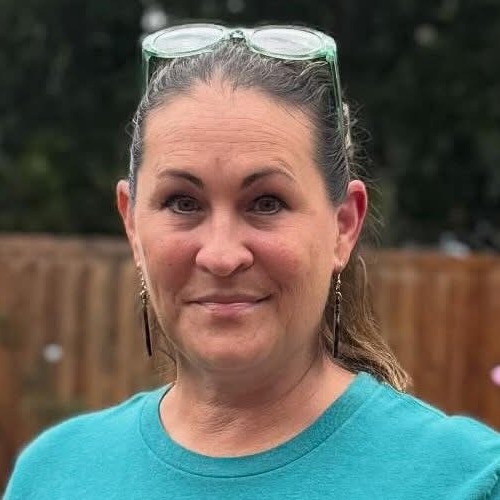
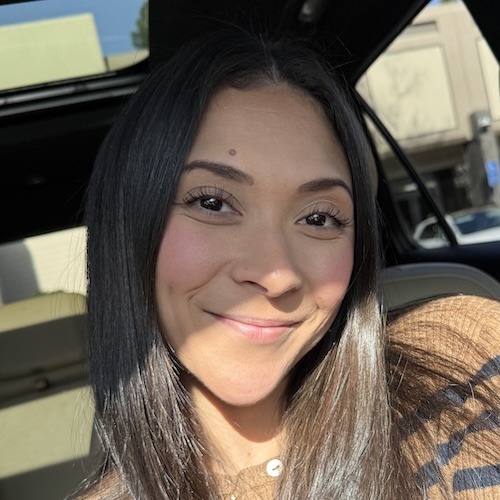
Erica lives with metastatic breast cancer. She describes herself first as an elementary PE teacher and single mom to two active kids, and secondly as a patient. She was initially diagnosed with stage 1 hormone-positive, HER2-negative breast cancer in July 2024, and believed she was finally moving back into “normal life” after chemotherapy, a double mastectomy, and reconstruction. When new, relentless pain in her hip, ribs, spine, and shoulder blade led to an ER visit, scans and a biopsy confirmed metastatic breast cancer that had spread to her bones. The news, delivered abruptly in the middle of the night, felt devastating and unreal. She spent a long time in denial, trying to process what this diagnosis might mean for her future and her family.

Interviewed by: Nikki Murphy
Edited by: Chris Sanchez

Today, Erica’s treatment for metastatic breast cancer includes a monthly hormone-suppressing injection and regular scans, along with integrative care, supplements, and a strict routine to support her health. She previously tried a combination of a targeted therapy and a hormone therapy drug, but the combination caused severe fatigue and low blood counts, so her oncology team adjusted the plan. Targeted radiation to a painful hip lesion around the femoral head gave her back the ability to walk without crutches, teach more comfortably, and be present in the gym again. She also manages hot flashes, tiredness, and brain fog, making daily choices to modify workouts and protect her bones while still staying as active as she safely can.

Erica H. metastatic breast cancer

Erica’s experience with metastatic breast cancer has changed every part of her life: how she parents, shows up in her classroom, and thinks about the future. Her children know she has cancer and see her as a fighter, but she works hard to shield them from the hardest moments, often crying alone in the shower or car instead of in front of them. At school, students and families surround her with cards, T-shirts, fundraisers, and a deeply felt sense of community that has eased some of the financial burden of cancer treatment.

At the center of it all is a quiet, disciplined determination. Erica organizes her days around movement, nutrition, supplements, work, faith, and time with her kids. She talks openly about scanxiety and uncertainty, while also defining hope as being there to see her children graduate, get married, and have kids of their own. For her students, she keeps repeating one message she lives out herself: you can do hard things, even when life looks very different from what you expected.

Watch Erica’s video and read the edited transcript of her story to learn more.

  • Staying connected to meaningful roles, like teaching and parenting, can help some patients with metastatic breast cancer feel more grounded and “normal” in the middle of constant medical appointments and scans.
  • Adjusting treatment plans when side effects become overwhelming is not a personal failure; it reflects how a cancer responds to therapy and the need to find an approach that supports both effectiveness and quality of life.
  • Community support from coworkers, students’ families, and strangers can ease the financial strain of metastatic breast cancer and remind patients that they do not have to navigate the experience alone.
  • A universal truth in Erica’s story is that it is possible to feel deep fear and grief and still practice gratitude, faith, and hope in the same breath.
  • She describes a powerful transformation from denial and shock after her metastatic breast cancer diagnosis to a disciplined, intentional way of living, where she structures her days around her health, her faith, and her children’s future.

  • Name: Erica H.
  • Age at Diagnosis:
    • Stage 1: 39
    • Stage 4: 41
  • Diagnosis:
    • Hormone-Positive, HER2-Negative Breast Cancer
  • Staging:
    • Stage 4 (Initially Stage 1)
  • Symptoms:
    • Stage 1: Appearance of lump in left breast
    • Stage 4: Severe pain in hip, ribs, spine, and shoulder blade
  • Treatments:
    • Surgeries: double mastectomy, reconstruction
    • Chemotherapy
    • Cold caps
    • Radiation therapy
    • Hormone therapy: aromatase inhibitor (letrozole)
    • Targeted therapy: CDK4/6 inhibitor (ribociclib)
    • Integrative care
Erica H. metastatic breast cancer

This interview has been edited for clarity and length. This is not medical advice. Please consult with your healthcare provider to make informed treatment decisions.

The views and opinions expressed in this interview do not necessarily reflect those of The Patient Story.


My metastatic breast cancer diagnosis and teaching career

My name is Erica. I was diagnosed the first time with stage 1 hormone-positive breast cancer, HER2-negative, in July of 2024. The second time I was diagnosed was on October 31st, 2025, with stage 4 metastatic breast cancer, same hormone-positive, HER2-negative. 

I am an elementary PE teacher. I have been doing that for about 12 years now.

A day in the life: Teaching with metastatic breast cancer

A typical morning: I am feeling good enough right now that I like to go to the gym to work out, then come back and get my two kiddos ready for school. They get to go to school with me, so that’s perfect.

I go to my elementary school, and when I get there, I am in charge of setting up the gym for everyday activities. We do different things. Another PE teacher does the parent drop-off while I set up. We have some fifth graders who help us set up every day for PE.

We have ten total classes a day, and they are 30 minutes apiece. Everyone gets to have PE every day at our school, which is awesome. I love that.

After that, I coach basketball. That just ended, but I did coach my daughter and my son. That was my sport too, so I coached both of them. Now we are switching over into the spring sports, so now I am their taxi driver to all their different sports.

Throughout the day, I take different vitamins and supplements four times a day. I am taking a lot of different things. I have another medication, the hormone suppressant that I get injected with every month at my oncologist’s office.

Monthly hormone injections and bloodwork

Usually, when I go get my injections, they do blood work for me every single month, too. Before I get that injection, I get my blood work done to make sure that my levels are still good. Then I get my injection.

I try to do that before school because I’ve missed a lot of school, and I don’t want to miss it if I don’t have to. So I usually go straight to school from there.

This injection hasn’t been very bad. The injection itself isn’t bad. It is sore; they put something on, and they numb me before they do it, but I don’t really have side effects that hinder me from doing my job or anything like that.

Since it’s a hormone suppressant, I have hot flashes. That’s the biggest thing that’s bothering me right now. I haven’t had a ton of joint pain. When I was on ribociclib, I did notice my hair was thinning again and things like that. But I’m not on that anymore, and I’m not as tired. When I was on that, my white blood cell counts were very low, so I was really exhausted.

By just doing this hormone suppressant alone, I’m not having as bad a set of side effects as I was before. I’m lucky that I’m feeling as good as I feel right now. I feel so good.

How my stage 4 diagnosis changed my daily life

When I was first diagnosed, I was in a ton of pain. It was super scary, obviously. There were days when I was thinking, “How am I going to do this?” I was in so much pain.

I had a lesion on my right hip, right where the femoral head goes into the hip socket, and that was causing me a lot of pain. Some days I needed crutches. I couldn’t walk, and I was thinking that was going to be my new normal, and hoping that it wasn’t.

Luckily, I went and met with a radiologist, and they said they thought they could do four sessions and that would be able to help me. That was targeted therapy. Since I was in so much pain, I decided to do that.

My last session was on Christmas Eve. It actually made a difference really quickly. They said it could take weeks, but I was lucky that it did something quickly for me. I was able to walk, and I didn’t have that pain. I had been limping, and everybody was worried about me and asking my kids questions. It looked painful. It was painful. It was hard to walk.

I had to sit down a lot while I was teaching instead of being active like I usually am. Luckily, that has changed. I’m very thankful that that worked out for me.

Why I continued teaching during treatment

I’ve always been an active person, and I know that breast cancer slowed me down. My kids go to the school too. If I just sat at home by myself, that is when my brain starts running with different thoughts. I like to stay busy.

I love my job, and I love seeing my students every day. They have been awesome. They have sent me so many cards, and they are always checking on me. I don’t like them to worry about me either.

I’m in a hard position with the elementary kiddos because they know that I have it, and they’ve said some really silly things to me. They hate that I have it, but I do feel like I’ve been able to show up and still be a good PE teacher.

I do have a little bit of brain fog. If I’m trying to talk to classes about different things that we are doing that day, I’ll lose my train of thought more regularly than I used to. But I need to keep a routine. It keeps me more positive, and I just like being around them.

If I sat at home and did not work, I think that would cause me to spiral a little bit and just sit with what’s going on.

Working around germs during metastatic breast cancer treatment

My doctors, my oncologists, were really concerned about me being around germs. They said that I could wear a mask if I wanted to, to protect myself. I feel like sickness has been so wild lately.

Everybody has been sick. My daughter had flu A, and then a couple of weeks later, she got flu B. In between that, my son had strep. So not only do all the kids in the elementary school have germs, but my own kids do too. Somehow, I have been able to avoid that. I haven’t gotten the sickness, which I’m really surprised about.

They were really worried about that for me. I do think that some of the supplements that I’ve been taking have helped me stay healthy during this. I think that being in the sun and being outside and doing things like that helps keep my natural immune system up too.

Walking into the gym each day with my students

We get every class for 30 minutes a day, so it’s something new every 30 minutes. We are not with the same students all day, and every class is something different. We move on pretty quickly.

I’ve been doing this for so long that I don’t put too much thought into it. This is what I’ve done, so I go to work and do what I normally do. It hasn’t been too different. Now that the kiddos have seen me able to walk without limping, there haven’t been as many questions as there were in the beginning.

They tell me they hope that I feel better and say they are sorry that I have cancer. I had one student who told me that his grandma had what I had, but they had to put her down. He didn’t mean it like that; it was just coming from the mouths of babes. They all mean well.

When I go in, it’s just another day for me. I’m doing what I love to do, and I’m thankful that I have a job that I love. My coworkers are great, and the whole school system has really pulled together for me. They have supported me in different raffles and other ways. They’ve been amazing. I’m lucky with the school district I’m in and with all the students and their families.

Community support, fundraisers, and the financial burden of metastatic breast cancer

One of my coworkers is one of the high school football coaches, and I teach some of the sons of the football coaches. The head football coach and the team always have a breast cancer awareness game. They did fundraising for me that night.

They sold t-shirts that everyone in the district or anyone at all could buy. People bought a bunch of shirts, and they showed me support that way. Everyone in the school was wearing those shirts one day. It was pretty emotional to see that support.

That was the first time around. The second time around, they set up a GoFundMe page for me. It’s shocking to me, the amount that they raised for me, because treatment is so expensive. I never realized how expensive it can be. I’m a single mom and a teacher, so it was very helpful.

Strangers and everybody in the community have shown up. I don’t know how I would have done it without them. My integrative doctor has told me about getting out of fight-or-flight mode. I asked how I was supposed to get out of that when I am thinking about fighting incurable metastatic breast cancer.

I think taking that financial burden off of me has helped me a ton.

How teaching helps me feel normal

Teaching has absolutely helped me. It makes me feel normal. I get to do the things that I love, and I get to see my kids at school interacting and being normal. It makes me forget about cancer, especially when I feel good.

When I was limping, that was a constant reminder. Even just transitioning kids from one class to the next was really tough. Now that I’m feeling much better after radiation and everything, I’ve been able to live my normal life again.

The hidden discipline behind living with metastatic breast cancer

Right now, I have to be so disciplined. People always say, “You’re so strong,” and I do feel like I’m strong, but I don’t feel like I have a choice with my two kiddos.

I am on a special diet, and I take different supplements four times a day. I’m trying to move my body every day. I’m trying to get in the sunlight every single day. I’m trying to keep my house clean, do the normal chores, and take my kids to practices.

It’s very time-consuming to get all the things in to make myself as healthy as I can, so I can try to keep my cancer stable or even shrink the tumors. I have to be very disciplined. I am tired, and I don’t want to work out, but I know if I keep my body strong, I am giving myself a better chance.

I’m not drinking sugary drinks anymore. I’ve been on a keto diet, which is hard for me — no snacks or coffees like I used to have all the time. I have to be really disciplined, and it’s really, really tough.

Finding motivation in my children

My kids are my motivation. They are why I do all of this. I want to see them grow up, and I just want to be here for them. That is my motivation.

I have a ten-year-old girl and an eight-year-old boy. Their birthdays are both in April, so next month she will be 11, and my son will be 9.

My first symptoms and path to my metastatic breast cancer diagnosis

I finished chemotherapy in February of 2025, and I had my exchange surgery because I had a double mastectomy. I had to wait a while to work out, maybe six weeks. After that, I was working out and started to get pain in my shoulder blade and in my hip.

I blew them off. I thought I had injured them somehow from working out. That went on and off for a couple of months. I couldn’t figure out why it wasn’t getting better or what I did to hurt it. Metastatic breast cancer never even crossed my mind.

The pain got pretty bad, and I was sick at a certain time, too. I wondered why I couldn’t get rid of this sickness. My body was aching so badly, and I could not figure out what was happening. The pain kept getting worse and would not go away. Even sitting hurt.

My boyfriend saw me crying because of the pain and said, “We’re going in. We’re going to at least get an X-ray or see what’s going on.” We went to the ER and sat there. We didn’t get checked out until probably 3 a.m. We went in around 11. I was so tired and delusional.

The doctor finally came in. He didn’t really have the best bedside manner and immediately said, “Yeah, it’s all over. We’re assuming it’s metastatic breast cancer.” I asked if he was sure and why he thought that. He said, “With your history.”

I was still not believing that was true. I thought there was no way. We were looking up other causes, like lesions, which could be something else. It wouldn’t have to be that. But they admitted me and did all the scans.

They did CT scans and MRIs with and without contrast. I was in so much pain during all that. They had me on all kinds of pain medications to try to keep me comfortable.

That’s how I found out. That’s what they said there. While I was admitted, they did a biopsy, and that confirmed it. It was very overwhelming and very hard to swallow that it was really happening. I never expected that. I feel like I’m one of the healthiest people I know. I never expected that, but here I am now.

Hearing the official metastatic breast cancer diagnosis

I was in denial. I didn’t believe it. It took me a long time to actually sit with that and cry about it and mourn that this is what is happening now.

I didn’t know what that meant. If you Google it, it’s very scary. When I first found out, it was bad. I was devastated. My whole family was devastated. We thought it was dire. I was thinking it was going to be a short period of time that I would be here. I didn’t know.

It was very scary. I feel like I just numbed out about it. It was really hard to accept.

How far the cancer spread

I had it on my shoulder blade. I had it on my femur. I had it in some places on my ribs. I had been having rib pain, too, and they found I had a broken rib from the lesions.

I had it on my ribs, my sternum, my spine, my femur, and my shoulder blade. My shoulder blade was causing me a ton of pain, too. Somehow, I didn’t have radiation on that one, but I haven’t felt that pain since I was in the hospital when I was first diagnosed. I don’t know why, but I’ll take it. I don’t feel that pain anymore.

All my treatments, from my initial stage 1 breast cancer to now

When I was first treated, I did four rounds of chemotherapy. I don’t know if that’s why I have these little pieces everywhere. I did a cold cap, so my hair’s still kind of wild, but I did cold capping during chemo.

They wanted to put me on a hormone suppressant, tamoxifen. I was on the fence about that and trying to decide. I ended up being diagnosed with metastatic breast cancer before I started taking that. That always makes me wonder if that’s what caused it, but some people have taken it and still had it come back.

There is no real right answer. I’m not going to blame myself for that because that would be even worse for me. I hadn’t started tamoxifen yet because I had heard about other people getting cancer from that as well. It’s a lot to take in and to know what to do. I had no idea, and I was trusting my doctors and trying to see what to do.

After that, when I went back, I had the same oncologist. My sister, right after I finished chemotherapy, was diagnosed with breast cancer as well. She had triple-negative breast cancer, so a different kind than mine, but we both have the same oncologist.

I went back in, and they put me on ribociclib and letrozole. I was not handling that combo well. It was making my numbers drop completely, so they took me off of that.

I am still getting the hormone suppressant injection every month. I have the option to either get my ovaries out or continue the shot. Right now, I’m doing the shot, and my oncologist is on board with continuing this since I’m stable. We’ll probably move on to something else if it shows progression.

Her goal for me is to put the cancer in the trunk. She says it’s always going to try to get back into the driver’s seat, and we just want to keep putting it back in the trunk. That’s our goal.

My treatment schedule around teaching and current side effects

Once a month, or every 28 days, I go get my injection and my blood work. I don’t have to miss school because I schedule that before school. My school doesn’t start until around 9:00, so I have time.

Every Thursday, I go to my integrative doctor and do different supplements and treatments with him. I get adjusted lightly because I have a risk of fractures due to my lesions. I go to him every week, every Thursday. I miss about an hour of school, but my co-teachers cover for me during that time. That’s kind of my plan period. I usually come in during the middle of my daughter’s class after that.

Every three months, I go for my scans. I do have to take off for that. I get different scans to make sure there isn’t progression or to see if there is progression.

Side effects right now, honestly, have not been that bad aside from the hot flashes and being tired. Then I think about how I’m not the same as I used to be. I can’t do the same things. I go to the same gym, but I have to modify a lot. I can’t do all the jumping because I could fracture something due to the lesions.

I’m tired, and the hot flashes make me not get as much sleep. The brain fog makes me feel like I’m not as sharp as I used to be, and that might be from all the medications and the chemo. But overall, I am feeling pretty good right now, and I feel blessed to feel this well.

My thoughts on clinical trials and future treatment options

The only clinical trial they’ve wanted to try with me so far was just a kind of testing. It wasn’t a new drug; it was a different way to test it. I opted out of taking that because I would have had to stay on the combination of ribociclib and letrozole, and I had gone off that anyway because it wasn’t working well for me.

I haven’t been in any trials yet. There is always that option, and I’m open to those things. I feel like even from when I was diagnosed to when my sister got diagnosed, there had already been advances. She was doing different things that I didn’t have the opportunity to do because they weren’t available yet. It’s wild that it’s progressing that fast.

There is always that option, but my oncologist hasn’t found one that fits me right now.

Coping with hard days and mental health

I do feel like I’m a positive person, but I am human. I definitely have rough days. It is hard. That’s why I try to keep myself busy. Being around all these little kiddos keeps me in a better mood.

I do have days where I break down, and it consumes me, but I try not to sit in that. I want to live for the day that I have and try to be grateful.

I’m 41 years old and was diagnosed with metastatic breast cancer at this age, thinking that I’m healthy, and especially thinking I was moving on from having the initial stage 1 breast cancer and that my life would finally go back to normal — and it didn’t. Now this is my new normal, and it’s tough and overwhelming a lot of the time.

I try my best not to sit in it. I believe in God, and that helps me a lot. My faith gives me hope, so that helps me.

How metastatic breast cancer changed my roles as mom, teacher, daughter, and girlfriend

This part makes me emotional. I used to be a high school basketball coach. I’ve been coaching my little ones, and my goal was to get back to coaching high school again. But I worry — am I going to be able to? Am I not going to be able to walk again? I don’t know what’s in the future, so I worry about that.

I am divorced, and about two weeks after I started dating my boyfriend, I was first diagnosed with breast cancer. He hung around, we got through it, and then we celebrated in Mexico. Then I found out I had metastatic breast cancer.

That is hard for me to process as a girlfriend because I want to possibly get married again. He has two young kids as well. I wonder if I even want to put them through that if I might not be here. Those thoughts go through my head.

My parents have been through so much because of this — my sister being diagnosed, me being diagnosed, and me being diagnosed again. That’s a lot of stress on them.

I hate that they’re worried about me. I want them to live their retired life and enjoy themselves, not worry about me. But I know I would worry about my kids, too, so I get it.

My kids, I don’t think they know how serious this is, and I don’t really want them to. They just know their mom as a fighter and think I’m going to beat it again. I want them to think that. This is nothing a little kid should have to think about.

A lot of things I want to do, I’m nervous about doing now. Even going on a field trip with my daughter — the fifth grade gets to go on a Smoky Mountain field trip to go hiking, and I’m going to be a chaperone. My principal said we might need to get somebody else just in case I’m not able to do it. That is hard.

I want to be able to do those things with my kids and have those memories with them. It has changed everything.

Talking to my kids about cancer and protecting their childhood

I bring my kids up in church, too, so I think they have that faith. We pray every night about things like that, and I think that gives them a little comfort. If something were to happen to me, they believe in heaven, so I think that helps them.

I think I’ve been able to hide the hardest parts from them. They haven’t seen me on really hard days. I try to keep that from them. I cry in the shower and in the car, but I don’t try to let them know.

They see me doing well right now. I feel great, so they’re not seeing a lot of the hard parts. I’m going to try to continue to do that for now.

Scanxiety, stable breast cancer, and tumor shrinkage

There has been no growth. I’m stable, and there has been some shrinkage, which makes me feel great. That’s a positive thing.

Since I came off ribociclib and letrozole, my oncologist wasn’t sure how my scans would look, but she was happy with them. She told me to keep going with this plan.

Scanxiety is real. I thought I was fine. We were driving to the hospital, and as soon as we got there, I just lost it. I didn’t realize I was keeping that in. I think I even hid it from myself.

Once we pulled up, it hit me: what do you do if it does progress? I don’t know yet. I know that happens for so many people. It is in the back of my mind, but I try to push that aside and live for the day.

What hope means to me now

Hope for me is seeing my kids graduate, seeing them get married, and seeing them have kids. That’s my hope.

I’m going to do everything I can to be able to do that. I know I don’t have the final say, but I’m definitely going to try. That is what I live for, and that is why I am so strict about everything that I do.

It’s hard, but it’s worth it. That is my hope.

Life lessons I want my children and students to learn

For my students, I always tell them they can do hard things, and I want them to believe that. Things are hard, but the reward of seeing your hard work pay off is worth it.

I want them to believe in themselves and know that they can do hard things. That is what I want to leave them with.

How metastatic breast cancer changed my view of people

I’m such an introvert, so it has surprised me how much people care and how many good people there are out there. I’ve been blown away.

It makes me not want to be as much of an introvert because there is so much good out there. I wish I could do for others what people have done for me. It’s been amazing. It’s wild to me.

I really love people now, even though I’m an introvert.


Erica H. metastatic breast cancer
Thank you for sharing your story, Erica!

Inspired by Erica's story?

Share your story, too!


More Metastatic Breast Cancer Stories

Erica H. metastatic breast cancer

Erica H., Breast Cancer, Stage 4 (Metastatic)


Symptoms: Stage 1: appearance of lump in left breast; Stage 4: severe pain in hip, ribs, spine, and shoulder blade

Treatments: Surgeries (double mastectomy, reconstruction), chemotherapy, cold caps, radiation therapy, hormone therapy (aromatase inhibitor, letrozole), targeted therapy (CDK4/6 inhibitor, ribociclib), integrative care
Christina W. breast cancer

Christina W., Breast Cancer, Stage 4 (De Novo Metastatic), HER2+, ER-


Symptoms: Extreme fatigue, head and neck felt swollen, clogged lymph nodes, appearance of a lump on the breast

Treatments: Monoclonal antibodies (trastuzumab, pertuzumab), radiation therapy
Deb O. breast cancer

Deb O., Breast Cancer (De Novo Triple Positive and ER+ HER-)


Symptoms: First instance: appearance of lump that later on increased in size, orange peel-like skin around inverted nipple, persistent ache under right arm; second instance: appearance of lump

Treatments: First instance: chemotherapy, targeted therapy, hormone therapy; second instance: surgery (mastectomy), chemotherapy, radiation therapy, CDK 4/6 inhibitor
Tammy U. metastatic breast cancer

Tammy U., Metastatic Breast Cancer, Stage 4


Symptoms: Severe back pain, right hip pain, left leg pain

Treatments: Surgeries (mastectomy, hip arthroplasty), chemotherapy, radiation therapy, hormone therapy, targeted therapies (CDK4/6 inhibitor, antibody-drug conjugate)
Nicole B. triple-negative breast cancer

Nicole B., Triple-Negative Breast Cancer, Stage 4 (Metastatic)


Symptoms: Appearance of lumps in breast and liver, electric shock-like sensations in breast, fatigue

Treatments: Chemotherapy, surgeries (installation of chemotherapy port, mastectomy with flat aesthetic closure), targeted therapy (antibody-drug conjugate), hyperbaric oxygen therapy, lymphatic drainage
Dalitso N. breast cancer

Dalitso N., IDC, Stage 4, HER+


Symptoms: Appearance of large tumor in left breast, severe back and body pain

Treatments: Surgery (hysterectomy), vertebroplasty, radiation therapy, hormone therapy, clinical trial
Marissa S. breast cancer

Marissa T., ILC, Stage 4, BRCA2+


Symptoms: Appearance of lump in right breast, significant fatigue, hot flashes at night, leg restlessness leading to sudden, unexpected leg muscle cramps

Treatments: Chemotherapy, hormone therapy, PARP inhibitor, integrative medicine
Janice C. triple-negative breast cancer

Janice C., Triple-Negative Metastatic Breast Cancer, Stage 4


Symptoms: Appearance of lump in left breast near sternum, fatigue, bone and joint pain

Treatments: Surgery (lumpectomy), radiation therapy (brachytherapy), chemotherapy

Categories
Follicular Lymphoma Non-Hodgkin Lymphoma Patient Stories Treatments

Living With Follicular Lymphoma: Tawanna and Barry on Watch & Wait, Marriage, and Faith

Living With (Not Under) Follicular Lymphoma: Tawanna and Barry on Watch & Wait, Marriage, and Faith

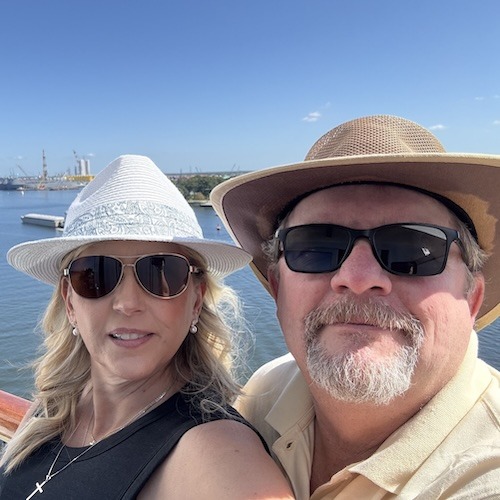
When Tawanna volunteered to donate a kidney to a little girl she loved, she never imagined the testing would uncover follicular lymphoma. Just as surprising, she did not think her treatment plan would be watch and wait, sometimes called active surveillance, to monitor her disease and not start treatment. A routine pre-donation scan found an unusual lymph node, which led to a biopsy and a MyChart message that quietly carried her life-changing diagnosis. In a span of a few days, Tawanna went from being told she was healthy enough to live with one kidney to learning she was living with blood cancer. She describes reading the result at work, turning to her husband Barry, and asking, “Does that mean I have cancer?”

Interviewed by: Taylor Scheib
Edited by: Chris Sanchez

Tawanna never had symptoms before that moment, and her first reaction was shock, fear, and a lot of late-night Googling. Her oncologist explained that her follicular lymphoma, a kind of non-Hodgkin lymphoma. He added that while it’s not considered curable, it is highly treatable and slow growing, which is why he recommended watch and wait for now. Because her disease is present in several lymph nodes but isn’t yet causing symptoms or affecting her bloodwork, immediate treatment could do more harm than good and also limit future options. Instead, she goes in for regular scans and blood tests while living as fully as possible between appointments.

Tawanna T. follicular lymphoma

Emotionally, watch and wait has been “a blessing and a curse” for Tawanna. She leans heavily on faith and on her close-knit support system — Barry, her daughters, grandchildren, friends, and church community — to help her manage the anxiety that flares up around scan time. She talks openly about taking a week to cry and grieve the life she thought she’d have, and then deciding it was time to get up and fight in her own way. In practical terms, watch and wait also gives her time to prepare: to exercise, put legal documents in order, and check off bucket list items in case treatment is needed later.​

Through it all, Tawanna and Barry say their marriage has only grown stronger. They plan small joys around each scan, like a Coke Zero waiting outside radiology and dinner at Cheesecake Factory afterward, to weave light into heavy days. Tawanna describes herself as more extroverted and open-hearted now, choosing to hug more, talk more, and support others facing cancer. For anyone newly told they’ll be on follicular lymphoma watch and wait, she wants them to know that life can still be rich, meaningful, and even more connected than before.

Watch Tawanna’s and Barry’s video and read their interview below for more about their story.

  • Barry’s prior experience with his first wife’s cancer makes this diagnosis uniquely painful, yet he describes watch and wait as “not a death sentence, a life sentence,” and shows how committed caregiving can deepen a relationship over time.​
  • Saying yes to kidney donation testing unexpectedly revealed Tawanna’s follicular lymphoma early, before she had symptoms, allowing her to start care with a strong health baseline.​
  • Her oncologist’s explanation of watch and wait, postponing treatments until the lymphoma is large enough to cause problems, helps her protect future options and avoid unnecessary side effects.
  • Having cancer often means grieving the life you thought you’d have while slowly building a different, still meaningful life around monitoring, scans, and uncertainty.
  • Community, faith, and intentional joy, like planning treats after scans, have helped Tawanna transform from a self-described introvert into someone who hugs, shares, and actively supports others with cancer.

  • Name: Tawanna T.
  • Age at Diagnosis:
    • 50
  • Diagnosis:
    • Follicular Lymphoma
  • Staging:
    • Stage 3
  • Symptoms:
    • Incidental finding during pre-kidney donation scan
  • Treatment:
    • Watch and wait/active surveillance
Tawanna T. follicular lymphoma

Story Sponsor

Thank you to our sponsor for their support of our independent patient education story. The Patient Story retains full editorial control over all content.

Genmab

This interview has been edited for clarity and length. This is not medical advice. Please consult with your healthcare provider to make treatment decisions.


… every time we have something happen, many times it would drive families apart. It drove us closer.

Barry T., husband of Tawanna T., follicular lymphoma patient

How we met and fell in love 

Tawanna: I was divorced, and my daughter said that I needed to get a life. So she signed me up on PlentyOfFish.com. Barry reached out to me and said, “Let’s talk.” He stood me up the first night. So we talked for a couple of weeks, and then one night in January, it was snowing, and we met at a church parking lot. I had pepper spray in my hand, and five months later, we got married in that same church parking lot.  Seventeen years in June.

Two weeks after we met, we were married five months to the day after we met.

I don’t know, it just really clicked. We hit it off from the very beginning. He made me laugh a lot.

Barry: Don’t you know what quality you like about me?

Tawanna: Too many. Too many.

Building a life together in Kentucky

Barry: I had a daughter who was five when her mother passed. I couldn’t ask for a better mother than Tawanna.

Tawanna: I had a 16-year-old who did not like Barry. But we married, and he was starting a real estate career as an agent, and I was actually working at a real estate office. There was no connection between the two. He started selling real estate. I quit that job and started in medical billing. He came and said, “I think we can cover your income if you’ll quit and help me.” And so I quit my job. And we did. We made the income work. Then, a few years later, he decided we would start our own business. So here we are, ten years later, in our own real estate company. My daughter, my 16-year-old daughter, actually likes him better now than she does me. She calls him first. And of course, the five-year-old is now 22 with kids. We’ve been through a lot.

Barry: In 2011, I had an open-heart surgery, a quad bypass.

Tawanna: But we stuck it out. And so we — that’s why we have microphones and the cameras, because of the real estate business. And that’s kind of us in a nutshell.

Barry: And every time we have something happen, many times it would drive families apart. It drove us closer.

Tawanna T. follicular lymphoma

Trust and faith are the foundation of our marriage

Tawanna: He comes up with these crazy ideas, and he’ll say, “You gotta have faith. You just gotta have faith. It’s going to work.” And for the most part, it has. Not everything. Not everything. We’ve been through a lot with his daughter. She had a hard time as a teenager, and we went through a lot with that, many years of counseling. I think losing her mother probably played a big part in that. But if there’s anything that will strengthen your faith, it’s cancer.

His wife, his first wife, had actually stayed at Hope Lodge. I’m not sure if you all have that in your area. So when you’re going through treatment, you can go there and stay for free and be close to your treatment center. And so she stayed there. So we gave back for many years by cooking meals there. And we were there one night cooking, and his daughter went over and picked up an album and found her mother in that photo album.

So cancer has always been something that we’ve tried to give back to — you know, organizations we’ve tried to give back to and do things with — before I knew of my diagnosis.

Losing Barry’s first wife to cancer

Barry: She had lung and breast cancer. Breast cancer was the first one they found, and she had that surgery on a Friday before Thanksgiving, and they got all of that. And she never really came out of that recovery mode. She was still sick. So the Sunday following Thanksgiving, I took her to the University of Kentucky, and they found a ping-pong-ball-size mass on the base of her skull, and it was small-cell lung cancer. 

And for two days, Saturday and Sunday, she didn’t know anybody. And that Saturday night, she woke me up. We had hardwood floors and a plastic toy kitchen. She was sliding it back and forth on the hardwood floor. So I asked her what she was doing. She said, “I’m just trying to find the bathroom.” And she didn’t. She was obviously out of her mind, unknowingly. And then they did the craniotomy on Tuesday, and she woke up and was talking like we are right now. But it was a tough, tough road. And she passed away the following November.

… if there’s anything that will strengthen your faith, it’s cancer.

Tawanna T., follicular lymphoma patient

Tawanna’s experience of becoming a stepmom after loss

Tawanna: I actually joked that I fell in love with Barry’s daughter, and I married him to get her. I loved her from the first time I met her, and people thought we looked alike. We would go out, and they would say, “You look just like your mom.” And she’d say, “I feel like I’m lying, but I don’t want to tell them.” And it was just a very good relationship up until the teenage years, when things got very difficult.

But I mean, I wasn’t able to have more children than just the one, so I thought that was just God’s way of giving me something that I thought I couldn’t have. And we always really strived to make sure that she never forgot her mother. There were always pictures in her room of her mother, always reminding her of her mother and her mother’s birthday, so that she wouldn’t forget her mother, because I wasn’t the stepmother. We never went with those words. But I never wanted her to forget her mother. 

Barry: It’s hard to put into words. The life we built was different than the life I’d had in the past, for various reasons and various complications and stuff. We’ve built a much stronger life on faith and trust in God. That was, I think, our foundation now more than ever. 

Becoming grandparents

Tawanna: It’s kind of an unusual story. He actually has an older daughter. I think she was 19 when we married, so she had already moved out. Her name is actually the same as my daughter’s name, so we have two Ambers. So she has the boys, and they are living right now in New York, but they were in California, so we don’t see them very often. And then our daughter, whom I raised, is about an hour away, and she has the two little girls, and one is just a few months old.

Barry: There’s nothing like it.

Tawanna: It’s the most amazing thing in the world. I wish I could have done it all my life. They are just wonderful. And, actually, the boys, when we first got to meet them, they called me White Grandma. Most people think it’s because they are mixed race, but it’s because at the time, I had blond hair, and no one in their family had blond hair. So they still call me White Grandma.

Tawanna T. follicular lymphoma

How a kidney donation evaluation revealed follicular lymphoma

Tawanna: Many years ago, one of the agents here in our office brought her granddaughter, who was adopted, to the office to meet us. She had kidney disease. She only had one kidney functioning at the time, and it wasn’t functioning as it should. And of course, I fell in love with her. Her name was Sera, and we knew that at some point she would need a kidney transplant.

So at the time, I researched a little bit, and I thought that might be something I’d consider because I just fell in love with her. Well, fast-forward to 2023, and it was time. Sera needed a kidney, so they were taking applications, and I applied. After a lot of prayer and looking into it to see if I felt — I felt like God was saying, “You need to do this.” So I applied, thinking that they were never going to choose me. I was actually the last option because I wasn’t family or any relation. And it just so happened that no one qualified, and it came to me.

And so they called and said, “Do you still want to do this?” And I said, “Absolutely.”

So I went and started the testing, and I passed all the tests absolutely perfectly. It was just a God thing. I was elated. I had a purpose. I was going to exchange my kidney for a kidney for her because she was so young. So I started drinking tons of water. I wanted to give them the best kidney I could possibly give them.

We met with everyone. We met with the pharmacist, and I met with the psychologist and the surgeon. We were meeting with everyone. We were set. They were going to take my left kidney. It would be flown out as Sera’s was being flown in.

At the last meeting with the surgeon, she said, “You know, you have a lymph node that looks a little odd, and I would feel better if we checked it. You probably just had a little virus, but let’s check it.” So the donation lady called, and she said, “You know, you don’t have to go through with this.” It was in my stomach. She said, “You can back out now, or if you want to go forward…”

We’ve built a much stronger life on faith and trust in God. That was, I think, our foundation now more than ever.

Barry T., husband of Tawanna T., follicular lymphoma patient

So I said, “Let me talk to Barry.” And I said, “Do you think God is saying, ‘No, don’t do this’?” And he said, “I don’t think He closed the door. I think He caused a bump.” 

So I did the biopsy, fully thinking, “I’m good.” I told the ladies when they were putting me to sleep, “I’m going to give a kidney. This is what I’m doing.” So they came in after the biopsy, and they said, “You’re going to give a kidney. We don’t see a problem. We think you’re good, but we need to get results.”

About a week later, I got the results in my MyChart and in my email, which were that it was non-Hodgkin’s lymphoma (follicular lymphoma). So that knocked me out of the donation. I was no longer able to donate to Sera. I never had any symptoms. I never had any idea. I would have never known that it was there had I not gone for the donation testing.

So Sera, at the time, said, “You know, you were trying to save my life, but I’ve saved yours.” She did. So that’s how I found out that I had cancer.

Barry: She has always put everybody else first, and this was an ultimate gift. As I said, she loves Sera. They were as thick as thieves. Anytime she was here, they were pushing up and down the hall in cardboard boxes and playing. It was very special. Our Tanya, the grandmother, was the very first agent we hired when we opened our office. So it’s always been a close, close relationship, but Tawanna always puts everybody else first. Always has, since I met her. That’s just who she is. And that’s the ultimate gift — to give a part of you to somebody. And when she couldn’t do it, it was still saving her life. So God has a funny way of working things out. 

Tawanna: Sera did get a kidney. Once I couldn’t, they put out a call because she was running out of time. And a 19-year-old boy in her town was able to donate to her. She is a year and a half out, and she couldn’t be doing any better. She’s grown so much. She’s so beautiful. And she’s doing a lot now with the Children’s Miracle Network and the UK Hospital to promote kidney donation.

So He took care of her, because I was more devastated that I could not give her the kidney than I was that I had cancer. I wanted to do it so badly, but she got better than I was going to be able to provide for her.

Tawanna T. follicular lymphoma

Finding out Tawanna had cancer through MyChart

Tawanna: We had met with the oncologist, but I thought, “He’s just here to initiate the biopsy.” And actually, we were angry with him because he was certain that I was not going to give a kidney, and I was so angry with him. He knew it because he was wrong, you know?

He did not say the words “non-Hodgkin’s lymphoma.” He just said, “You know, I don’t think you’re going to be able to give a kidney, but we can take care of this. We can control this.” I thought, “He has no idea what he’s talking about.”

So when it came through MyChart, and I was sitting in this office, actually, and I read it, and I looked up at Barry — we were together — and I said, “Does that mean I have cancer?” And he said, “Yeah.”

So I started Googling. That’s just what you do. You just start Googling. And I was a wreck. I was a wreck until we got to get back to the oncologist, whom I had to apologize to. And I wouldn’t trade him for anyone. He’s the best.

And he said, “I knew you were mad, and I don’t blame you.” And he said, “I prayed that night — my wife and I prayed — that this would not be cancer. I wanted you to be able to give this kidney.” And so he’s my doctor. “I started Googling. That’s just what you do. You just start Googling.”

He went over things and explained things. Of course, I had to have a PET scan quickly after that. The one good thing about doing the kidney donation process was that it put me on the fast track to get into appointments with oncologists, and they took care of me and got the tests set up quickly. Then they turned me over to the other team.

But to read it on MyChart is not the way you want to find out. I actually had to meet my parents right after that, and I never said a word. I didn’t say anything. I didn’t know how to tell them. Later that afternoon, we let them know once it had kind of settled in. But it was — I was in shock.

Here I went from being told, “You’ll function with one kidney just as well as you function with two, because you’re so healthy,” to “You have cancer” within just a few days. 

Barry’s reaction to the diagnosis

Barry: It’s an ultimate high to an ultimate low. It’s just a bottom. I’d already been there. So that hit a little extra hard.

Tawanna: He knew a lot of the verbiage that was being used. That helped me. It probably did not help him. I’m sure it brought a lot of bad things back. But knowing that he had been through this with someone who had had chemo, who had had radiation, who had been through this process, he knew a lot about what was coming.

Barry: Potentially coming. We’ve not been there yet. Right. And we’ve been getting good reports since then.

I went from being told, “You’ll function with one kidney just as well as you function with two, because you’re so healthy,” to “You have cancer” within just a few days. 

Tawanna T., follicular lymphoma patient

Learning it’s treatable and starting watch and wait

Tawanna: I think by the time we got there — I had had the PET scan and I had seen the results of the PET scan — by that time I had really educated myself on what this cancer was. But I wanted to hear him say, “We can take care of this. While it’s not curable, it’s extremely treatable.” 

He went through a lot of what my future was going to look like. So when I left there, I remember we went to a Mexican restaurant, and we celebrated because it was such a weight lifted that they can treat it. Even though watch and wait is very scary and very mentally draining sometimes, he made me feel very comfortable. I think he answered both of our questions.

Barry: A lot of questions. He broke it down very simply and was in no rush. He talked to us as long as we wanted to talk, and it was very comfortable, just like we’re talking now. He was very personable. And he takes it personally. He has a lot of empathy for what he does. He’s great.

Tawanna: He made me very comfortable with the fact that he wanted me to live my life. “I’ll worry about it. I don’t want you to worry about it. You go on, live your life. I’ll take care of this.” And I felt very good when I left. That doesn’t mean that there are days when I don’t fall apart or get nervous. When it’s time for a scan, I struggle, but I have a very good team. 

Learning about follicular lymphoma

Barry: I’d heard of it, yes, but didn’t understand what it was. The kinds of cancer we typically hear about are breast cancer, lung cancer, and colorectal cancer. That’s the three biggest ones that you typically hear around here, I think. Is that right? Non-Hodgkin’s — you hear it, but it doesn’t register because you’ve not been there. You know, people now have had it for 15, 20 years.

Some people that we know had it, which we didn’t know about. A friend of mine from Northern Kentucky, who is also in the real estate business, saw our post, and he called. We’d been to class together, through training together. I didn’t know he’d had cancer, and I think he’s a 14- or 15-year survivor now.

Tawanna: There were actually two people in our church who, when I was diagnosed, came to me and said, “I have that too.” I had no idea. I had heard the word, but I didn’t know what it was, and I did not know that it didn’t always require treatment. So it’s been a lot of learning. 

Tawanna T. follicular lymphoma

Why watch and wait makes sense for Tawanna’s follicular lymphoma

Barry: I think for me, the way he described it was that the cancer was so small that the chemo they’re using now is like Velcro, and it was so small the Velcro would not stick to it. It wouldn’t be any benefit. It would just make her sick, and she’d go through all those symptoms and side effects that it wouldn’t be of any benefit until later on, when it grew — if it did grow — to the size it got big enough to treat. And he makes us very comfortable, for the most part, with what he’s doing. 

Tawanna: I know a lot of people don’t understand it. They’ll say, “Why are you waiting? Why are you waiting for it to grow?” I only have so many treatment options. If I use up my treatment options now, I’ll run out of treatment options. I’ve got to wait, as he explained it, till it gets to the size that it’s causing a problem.

Right now, I have no symptoms. It doesn’t show up in my bloodwork, even though I have multiple lymph nodes affected. I even have one that I can see, which is a large lump in my collarbone. It still is not enough that I need treatment. I can save those treatments. I’m going to possibly have to have more than one treatment over the course of my lifetime, because I started so young.

And the advancements they’re making right now with blood cancer are amazing, how they’re catching up with it.

I’m really pleased. I have a lot of options, but I can only do so many. You can only do one treatment one time.

When it’s time for a scan, I struggle, but I have a very good team.

Tawanna T., follicular lymphoma patient

Living with the mental side of watch and wait

Tawanna: I pray a lot. I lean on God a lot, because I can get a stomach virus, and I think it’s spread to my stomach. That’s where my mind starts going. Or if my hip hurts, “What if it’s getting in my bone marrow? What if it’s growing?”

But I have to take myself back to, you know, if God hadn’t laid it on my heart to donate that kidney, I wouldn’t even know I had it. He’s taken care of me this far. He’s going to take care of me. He’s given me the best support group that, if I had to choose to give up that support group or be cancer-free, I don’t want to be cancer-free if I have to give up this support group because they are amazing. 

My church family and friends have knocked stuff off my bucket list for me in case I do have to start treatment, because at one point, I was going to have to start treatment. He said, “When you come back, if it’s growing, we’re going to have to start treatment.” I went through the whole process of finding wigs and preparing, and my scan showed that it actually shrank a little bit, which is possible. It can come up and down, and I didn’t have to have treatment.

But it’s a roller coaster. Some days are hard. Some days I struggle with it in my head, and I’ve got to try to get out of my head and think, “You’re okay. They’re watching this, and you’re okay.”

I’ve actually been bumped out now that I can go a year without a scan, as long as my bloodwork is good. I know that one day it’s possible that I could have to have treatment, but I try not to think about that. I just try to put it in the back of my mind, because he did tell me that he has lost more patients to other things than he has lost to non-Hodgkin’s lymphoma, such as COVID or those types of things.

I try to just live my life as normally as I can. My immune system is compromised. My lymph nodes — my body is fighting the cancer to keep it from growing, so I don’t want it to fight a sinus infection right now. So there are times I wear a mask. If we travel, I’ll wear a mask and try to keep from catching anything. But I try not to think about it every day.

Of course, in the beginning, it was hard. I tried to be strong and say, “I’m okay,” until I decided, you know, I’m not okay. I took about a week, and I cried. I cried, I slept, I cried. And at the end of that week, I said, “You’ve got to pick yourself up now. You’ve felt sorry for yourself. Now it’s time to get up and fight.” But there’s a grieving process. I’m sure you know. You have to grieve what life you thought you had, because my life was never going to look the same.

But it doesn’t mean I can’t have a good life. I’ve had more fun since I’ve had my cancer diagnosis than I had the entire first part of my life because — you’ve only got a short time to go, so you may as well fit everything in now. So it’s not all bad. There are blessings in that. You can find a silver lining in there.

Tawanna T. follicular lymphoma

Barry’s caregiver perspective: Pushing scans to one year and managing anxiety

Barry: I don’t miss an appointment. I don’t have to. The last appointment was pretty tough. The watch and wait part — he wanted to go, we’d been going every six months, and he pushed it off to a year. That made me really anxious.

I didn’t say anything. She knew I wanted to stay on the six-month schedule, but it’s not my body. So I support her. Whatever she decides to do, I’ll support it. He was very positive about it, but it makes me nervous, knowing how fast it can change sometimes. It makes me very nervous.

Talking about future treatment options 

Tawanna: I think it will come down to, when it comes time, that decision will be made. But when I thought I was going to have treatment, it would be chemotherapy. It would be very strong. I was going to lose my hair. But then when I went back, I wasn’t going to have to have treatment.

It’s looking more like I will do an immunotherapy, which is long-term, I think, two years. But I would not lose my hair, and it’s not as harsh. Not easy by no means, I don’t think, but it’s not as harsh as the chemo would be. We’ve talked about different things. Some new treatments; there was a trial at one time that he said he thought I would be good for. So when that time comes, I’m sure that decision will be made then.

But I trust him. I trust the decisions he’s making. I do advocate for myself, but this is what he does, and this is the only cancer that he does. So it’s very specialized. So I’m comfortable. 

I know Barry wasn’t comfortable with going a year, but when you’re having scans every six months, it’s almost like every six months you’ve got to go through that anxiety. It’s so hard leading up to it. I’m not a very nice person leading up to it because I’m very stressed. I get a little depressed. I don’t like doing the scans. They’re hard.

I know they don’t take long, but it hits you that it’s real. “How did I get here?” Every time you show up for a scan, I’m thinking, “How did I end up here?” So being able to put it off for a year mentally was really good for me.

I’m very careful. I try to watch for signs. I’ll have bloodwork, but there are signs, and there are symptoms, and I try to make sure that I’m being cognizant of “Am I having any symptoms?” But so far, so good.

I try to have a good sense of humor about it, and I think it helps a lot to lighten a very serious thing. 

Tawanna T., follicular lymphoma patient

How we communicate about the hard days

Tawanna: Most of the time, I try to handle it and not tell him. But we work together. We’re always together, and he’ll always call when I’m crying — always. And I’ll just say, “I’m having a bad day. I’m just having a bad day.” There are fewer bad days than there used to be. But sometimes I just need to feel it. Sometimes you just gotta feel it. Feel the scare. Because I don’t want to ignore that, because then it’s going to build up.

He’ll just say, “What can I do?” I think he’s pretty good at picking up on when I’m having a bad day. But I think I’m pretty good at telling him.

Barry: She thinks she is. Yes, I have to agree with that. She thinks she is. She probably doesn’t tell me nearly as much as it happens, if I were guessing. And probably when I do call, it’s been a bad day. I pick up on it, obviously, because she’s been crying. But there are probably times that she doesn’t mention it, if she’s being truthful.

Tawanna: I think for the most part I do pretty well. Close to scans — PET scans are the worst. The first PET scan was the absolute worst because I had that fear. I had not met with the doctor yet, and I literally — my body shook — for two days. I just sat and shook. I couldn’t eat. I was just an absolute mess.

The second PET scan, I was very nervous and tried not to cry. I got in the machine, and you’re there, it seems like, for so long. I just said, “Lord, please ease my anxiety and calm my nerves.” About that time, the machine kicked off, and I had fallen asleep, and I had slept through the entire thing.

They said, “You’re done.” And I said, “I just got in there.” And they said, “No, you’ve been asleep.” Oh.

So I do very well most days. I have the most trouble closest to scans. There are days I look in the mirror, and I see this lump, and I think, “Oh, it’s bigger,” and I’ll have to come to Barry and say, “Do you think it looks bigger?” And he’ll say, “Let’s look at the picture,” because we took a picture of it in the beginning. He’ll say, “I don’t think it’s any bigger,” and talk me down. But the longer I go, the easier it gets.

Barry: The toughest times are the two weeks leading up to the scan and the week following till it shows up in MyChart, which I think should be against the law. Until you talk to your physician, results should not be in there because it creates so much anxiety each time.

Tawanna: I mean, if it’s not in simple terms, you can read it wrong. The first time I had diagnosed myself on the very first one. I really diagnosed myself completely wrong, and it wasn’t nearly as bad as I thought it was. But you know, when it comes in MyChart, who’s not going to look, you know?

But I think I do pretty well until the scan times. I try not to think about it, and I try to laugh about it a lot. I joke about it a lot. I’ll tell Barry sometimes at night that, “My lymph nodes are wanting some ice cream,” or if I want something, I’ll say, “But Barry, I have cancer,” or I’ll use it. I asked the psychologist if I could use it to get out of a speeding ticket. Which has worked.

This morning in our meeting, I told them, “You need to learn to do some of these things for yourself, because we all know I’m a ticking time bomb.” I try to have a good sense of humor about it, and I think it helps a lot to lighten a very serious thing. 

Tawanna T. follicular lymphoma

How Tawanna describes watch and wait in her own words

Tawanna: It’s a blessing and a curse. It’s a blessing that you can wait, and you can put it off, and you may never have to have treatment. But the mental side of it, knowing it’s sitting in you — every day you wake up with cancer, you’re never going to be in remission — it’s always going to be there. It’s hard.

So I would say it is a blessing and a curse at the same time. There are days when I have said, “I just want to get it out of me. I just want to be done. I don’t want to think about it anymore. I just want it to be over.” But that’s not realistic with this type of cancer because it is not curable. So it’s just something I have to learn. Some days I’m happy that I don’t have to have treatment, and some days I’m like, “I just want to have treatment and get it over with and be done.”

Barry’s caregiver definition of watch and wait

Barry: To me, it’s not a death sentence. It’s a life sentence.

Tawanna: It has not grown to the size that would require treatment. It’s not affecting anything. I’m not having any symptoms. I’m living just like I don’t have cancer. So until it gets to the size that — there is a certain size, that so many of them have to be — there is no reason for treatment. It’s not affecting anything. It’s not hurting anything. It’s not spreading. It’s just hanging out with me, and until it decides to wake up, there’s no reason for treatment.

I will say that with watch and wait, one of the good things is that you can prepare yourself. When I thought I was going to go through treatment, I made sure I was exercising, and I was preparing things at home, and I prepared a living will. You have time with watch and wait to get yourself ready and to get yourself in the best condition that you can be, so that when I go into it, I can be as healthy as possible.

As I was going through the donation process, I lost a lot of weight, and the oncologist said, “Don’t gain it back. Just don’t gain the weight back. That’ll be great for when you start treatment.” So you get to plan and get your body as healthy as possible to go into it, when other people who have been sick while waiting for a diagnosis don’t have that opportunity. Their bodies are already tired when they start treatment. I have the opportunity to make myself as strong and healthy as possible and be ready when it gets here. So that is also a plus of watch and wait. 

… with watch and wait, one of the good things is that you can prepare yourself.

Tawanna T., follicular lymphoma patient

Feeling prepared for future watch and wait phases

Tawanna: I have accepted it. I think he’s accepted it. It’s different from the experience he’s had in the past, and that was something that really bothered me: he’s been through this already, and here I am going to put him through it again. But it is different.

Life is just as normal as it can be. I’m not thinking about it every day. I’m not having to deal with it every day. I try not to. We do have the opportunity to do things — as my bucket list — to get things done, to do all those things I wanted to do, in case in the future I do have to go through treatment, or if, God forbid, it doesn’t go as planned. I can have all that taken care of. I can plan, and I think we have a very good understanding of it.

How this experience differs from Barry’s first wife’s cancer journey

Barry: There’s no comparison. When we found out, after she had the craniotomy, we went from having a normal life to where we, for the most part, lived in Hope Lodge for seven or eight months. We’d come home for a couple of days, then go right back. She was having chemo and radiation at the same time, so the quality of life — there wasn’t any.

We stayed at Hope Lodge. We’d drive to the treatment, we’d do chemo, go downstairs, and do radiation. Some days it was both of them. Some days it was one or the other. But we didn’t really have a life once we got that diagnosis. We lived out of a suitcase.

Hope Lodge is a great place if you need it. But it takes a toll, because everyone around you — it’s a support system, but at the same time, everybody there is fighting the same fight from various levels. There’s really no comparison because this is just totally different.

The part that helped me was the verbiage. What to look for. What to be ready for. The questions to kind of ask. And preparation that way.

Tawanna T. follicular lymphoma

Supporting Tawanna emotionally

Barry: I just want to be there. Do my best to be present. It’s hard with the business. We have to be as present as that demands I be, but when she needs me, I think she knows that when the flag goes up, I’m there. Sometimes it takes her waving it twice. But when she needs me, I think I’m always ready to be there, and everyone knows that when she needs me, that’s top priority. 

Tawanna: I also have my parents, who are elderly, and I don’t want to worry them, but I can always call my parents. My oldest daughter will go to appointments with us, and she’s very involved in it, and she’s been really great through this. As scared as she’s been. I don’t know what I would have done without her.

Then our group of friends that we both can lean on — several of them have been through their own cancer battles, some are going through them right now. Our church family, I’ve got so many people that I could just call. Barry’s always my first, but he’ll always cry with me or say, “We’ve got this. We’ve got this.” He listens to me whine or takes me out to eat.

Self-care for caregivers and patients

Barry: Find a couple of good friends that you can call and talk to, that’s the first tip. And talk to your preacher — find yourself a good pastor. We’ve got, I’ve got two that’s a phone call away, day or night. That’s the important thing.

Tawanna: I’m a little more bougie than he is, so I do take time. I’ve cut my hours back at the office just to enjoy hobbies. Yoga has really helped me. I can go in really down, and I can come out and I feel so much better. That’s been one thing I’ve done. Prayer is really important too.

Spending time with my friends has been great. We’ve gone to the zoo, we’ve gone on weekend trips, we’ve been on a cruise — all of us together. I do a lot more. I think Barry’s self-care, if he would admit it, is work.

I have dogs. I love the dogs, and we just hang out. I’m not opposed to taking a day off. Sometimes I’ll tell Barry, “I just need a break. I’m going to take off.” But I take off a lot, because I can.

I read a lot. I try to learn a lot. And I think one of the best things for me to take my mind off of it is to do things for other people, or just be a blessing to someone else. It makes me feel so good. That’s my favorite thing, to take care of other people. And that’s why he’s spoiled, because that’s what I love to do.

I think that makes me feel better than anything, and can take my mind off of it.

The most important thing is I know I’ll be okay. If this doesn’t work out and it doesn’t go the way that we hope it does, I’ll still be okay. I know where I’m going. I know where I’ll be, and I know who I’ll be with, and I’ll be okay. 

… one of the best things for me to take my mind off of it is to do things for other people, or just be a blessing to someone else. It makes me feel so good.

Tawanna T., follicular lymphoma patient

The hardest part for Barry: Hearing “cancer” again

Barry: Hearing it for the first time. That was by far the hardest for me. But once we heard it, we knew what the plan was, and we bounced back pretty quickly.

Tawanna: There has been some guilt. I do feel guilty. I do worry that I’ll be a burden, which I never want to be. I do feel guilty that he has to go through it. But I hope the good outweighs the bad. He doesn’t have a choice now.

I don’t want to be a burden. That’s probably my biggest fear. I really did feel a lot of guilt for him having to go through it again. But this time is different.

There’s no reason to feel guilty. It’s all part of the master plan. We don’t know what the next chapter is. We just take one chapter at a time. This is the chapter we’re in now.

How cancer changed Tawanna 

Tawanna: I was very introverted. I did not like to get out around people. I did not hug people. I was not going to hug anyone. I hug a lot now. I try to share more. I’m a lot more extroverted now than I’ve ever been, I think.

And my faith has really grown because I need that. I was devastated that I couldn’t donate the kidney. I was upset because I thought that was the plan. But then I came to realize that His plan was for me to find out that I have cancer, and He took care of Sera anyway.

It’s made me more open to talking to people about things and more empathetic. I used to, at church, when they would say, “Welcome and greet your neighbor,” if I could go to the bathroom while they were doing that, that’s what I would do. But now I am hugging and talking to people. It’s important to connect with people now, because I needed people when I found out. I needed people; I needed them to surround me, and I want to do that for others.

Tawanna T. follicular lymphoma

How cancer changed Barry

Barry: I don’t know that it has changed me.

Tawanna: Yes, it has. He puts the phone down a lot more now. There was actually a cruise I went on a few years ago that I went by myself because he chose to work. But now we’ve been on two together. He takes more time, so it has changed him — to see that time is short. We don’t have a lot of time, so he takes time now.

We go to restaurants, and he’ll leave his Apple Watch and his phone in the car, and we actually have dinner, and he doesn’t work. So it has changed.

How cancer strengthened our relationship 

I think this is just another one of the ways that it’s made us much closer. Most couples, when they have the situations we’ve been through — numerous ones — they would be divorced ten times over. Each time we’ve had a situation, whatever it was, it’s always made us closer. And this has definitely done that too.

We laugh our way through. We don’t argue. We’re not arguers. I can go for scans, and I’m nervous, but we always have fun. Even doing a scan, we have fun. We will plan something for afterwards to make it fun.

I am totally addicted to Coke Zero. I love Coke Zero. When you have a scan, you can’t have Coke Zero, and they always have my scans at 2:00 in the afternoon. He’ll walk across a very busy highway to have a Coke Zero waiting for me when I walk out of that scan because that makes me very happy. We always try to have something fun mixed in with the bad.

We always do Cheesecake Factory after a scan.

… if it doesn’t work out, I have peace with that too. At first I didn’t, but I can see now I have peace with whichever way this goes. I’ll be okay

Tawanna T., follicular lymphoma patient

What motivates Tawanna most: Children, grandchildren, and Barry

Tawanna: My girls, my daughters, and my grandchildren. And Barry. I want to be here for them. I want to see my children and my grandchildren have the faith that I have. I want to see where their lives take them.

I have a 16-year-old grandson who is actually in college in New York right now. I think he’s going to do something great. He’s so smart. I want to see who they become.

And I don’t want to leave Barry by himself, because he is not going to give my shoes to another woman. So I’m going to stick around.

But as I said before, if it doesn’t work out, I have peace with that too. At first I didn’t, but I can see now I have peace with whichever way this goes. I’ll be okay. 

Tawanna T. follicular lymphoma

Story Sponsor

Thank you to our sponsor for their support of our independent patient education story. The Patient Story retains full editorial control over all content.

Genmab

Thank you for sharing your story, Tawanna and Barry!

Inspired by Tawanna and Barry's story?

Share your story, too!


More Follicular Lymphoma Stories

Tawanna T. follicular lymphoma

Tawanna T., Follicular Lymphoma, Stage 3


Symptoms: Incidental finding during pre-kidney donation scan

Treatment: Watch and wait/active surveillance
Laura C. stage 4 follicular lymphoma

Laura C., Follicular Lymphoma, Stage 4 (Metastatic), Grade 1 to 2; Papillary Thyroid Carcinoma


Symptoms: Incidental finding after hysterectomy (follicular lymphoma), thyroid nodule detected on imaging (papillary thyroid carcinoma)

Treatments: Immunotherapy (rituximab and lenalidomide or R² regimen), surgery (thyroidectomy)

Hayley H., Follicular Lymphoma, Stage 3B


Symptoms: Intermittent feeling of pressure above clavicle, appearance of lumps on the neck, mild wheeze when breathing and seated in a certain position
Treatments: Surgery, chemotherapy

Laurie A., Follicular Lymphoma, Stage 4 (Metastatic)


Symptoms: Frequent sinus infections, dry right eye, fatigue, lump in abdomen

Treatments: Chemotherapy, targeted therapy, radioimmunotherapy
Load More

Categories
Chemotherapy Colorectal FOLFOX (folinic acid, fluorouracil, oxaliplatin) Lung Resection Metastatic Patient Stories Radiation Therapy Rectal Surgery Treatments

Kalei’s Stage 4 Rectal Cancer Story: Has My Cancer Returned?

Kalei’s Stage 4 Rectal Cancer Story: Has My Cancer Returned?

For many people, a stage 4 rectal cancer experience starts with fear and confusion. For Kalei, this is exactly what happened. After two lung wedge resection surgeries with clear margins, her care team suggested another watch-and-wait period. It was the same surveillance approach that had previously ended with lung metastases discovered on the very first scan. This time, with a stage 4 diagnosis and two young daughters at home, the stakes felt even higher.

Interviewed by: Taylor Scheib
Edited by: Chris Sanchez

When new scans in late 2025 suggested possible recurrent rectal cancer in her lung and rectum, Kalei found herself stuck in a gray zone. Radiology reports raised red flags, but multiple doctors were unsure and recommended more waiting. That disconnect pushed her to prioritize something she’d been encouraged to pursue since her first diagnosis: a second opinion. A change in insurance finally opened the door to a new hospital system and a team that took an aggressive, thorough approach to testing. They ordered fresh imaging, bloodwork, ctDNA testing, and even biopsies for suspicious lymph nodes in her neck. Some findings, like a new liver spot that later disappeared, brought terrifying lows followed by profound relief.

Kalei M. rectal cancer

Alongside the medical maze, Kalei’s rectal cancer experience reshaped her home life and marriage. She and her husband learned to support each other on their hardest days — one would stay steady while the other was spiraling. They booked trips all across the country, choosing joy and presence amid uncertainty. At home, she kept working, parenting, and running her photography business to hold onto a sense of normalcy. As she says, “I have cancer, but I’m still a normal person, and I’m still doing normal life things.”

Kalei’s advocacy now extends online, where she shares her symptoms, treatment timeline, and faith with a growing community. Messages from viewers who returned to church, opened a Bible for the first time in years, or finally made that overdue doctor’s appointment have shown her how one rectal cancer experience can ripple outward. She doesn’t romanticize what she’s been through, but she does believe this season has grown her into a different, stronger version of herself, and she’s determined to use that growth to help fewer people feel alone or dismissed.

Watch Kalei’s video and read her edited interview transcript below to find out more about her story. Read about her initial experience here.

  • Second opinions are essential in advanced colorectal cancer, especially when scan reports and doctors’ interpretations don’t align or when recommendations feel unsettling.
  • Being told that you’re young and healthy does not rule out serious disease; noticing and acting on subtle symptoms like bowel changes and rectal bleeding can lead to earlier diagnosis.
  • You’ll always be your strongest advocate, and you deserve testing and explanations that match what you’re feeling, not just what’s on the lab report.
  • Kalei’s experience transformed her relationship, as she and her husband learned to support each other better, communicate more honestly about fears, and find joy through travel and everyday routines.
  • Her stage 4 rectal cancer experience reshaped her faith and purpose, leading her to build an online community where she shares her story, encourages others to seek care, and highlights the power of prayer and connection.

  • Name: Kalei M.
  • Age at Diagnosis:
    • 28
  • Diagnosis:
    • Rectal Cancer
  • Staging:
    • Stage 4
  • Symptoms:
    • More frequent bowel movements
    • Presence of mucus, tissue-like substance, and blood in stool
    • Stomach cramping and sharp pains
  • Treatments:
    • Radiation therapy
    • Chemotherapy: FOLFOX
    • Surgeries: two lung resections
Kalei M. rectal cancer

This interview has been edited for clarity and length. This is not medical advice. Please consult with your healthcare provider to make informed treatment decisions.

The views and opinions expressed in this interview do not necessarily reflect those of The Patient Story.


My stage 4 rectal cancer update: Scans, surgeries, and a new care team

A lot has happened. So yeah, the last time we spoke, I think it was two days after my second lung surgery. So both of those went great. They went really smoothly. We got clear margins on both pieces sent to pathology, so everything was really good. And then my doctors said it was kind of touch-and-go. They were kind of saying, “Maybe after these surgeries, we’ll discuss doing chemotherapy or some type of therapy, since now you are technically a stage 4 diagnosis.” We didn’t find any other spots within my body at that point that had any metastasized disease or anything like that.

So after the surgeries were done, they told us, “We just want to wait, we’re just going to wait, we’re going to monitor.” And I just remember my husband and I, after we had gotten off that phone call with that oncologist, we were like, “This is kind of unsettling.” I just don’t feel great about this because this is what we were told last year when I had finished chemo and radiation. They said, “We’re going to sit you on a wait-and-watch surveillance plan,” and then that first set of scans is when they found the lung mets. So we just were like, “History might repeat itself.” It’s kind of scary. Now we’re dealing with stage 4. I don’t really know, what if the next place it goes is to my brain or something? So we were just, you have all those natural fears in your mind of what could happen.

And so we went along with that. I remember I had gone back and forth with getting a second opinion. I really wanted to get my case in front of another set of doctors. I could talk about that for a long time, but I’ll keep it short and sweet. I didn’t have a good experience, and I think that it’s so difficult for people to get a second opinion when they shouldn’t. When you’re dealing with advanced disease, it should be a given that you are allowed to take your case to another set of doctors just for an opinion. But anyway, I did not get that second opinion, and we sat on the wait-and-watch surveillance plan.

In December of 2025, I had my first set of MRI, CT scans, and all of that since my surgeries. The first result that we got back was the chest CT scan of my lungs. On that report, the radiologist had noted that there was increasing soft tissue within the lower left lung, and there was a concern for recurrent disease. You read that, you get the results straight to your MyChart. I hadn’t spoken to my doctor or anything, so I’m just like, history is repeating itself.

It’s coming back. This is our biggest fear kind of happening. Then I talked to my doctor about it, and he said, “Well, I looked at it. I’m not really impressed with the area that the radiologist notated. I don’t really think that’s what it is. We’re just going to wait and see what it does.” So I’m like, “Okay, we’ll just wait some more, I guess.”

Then I got my MRI results for my rectum. There was a notation on that scan result that said there was a — I forget the measurement — but it was in the same spot my original tumor was, and there was a concern for recurrent disease. I’m like, “Whoa, what’s going on?” I spoke to my colorectal surgeon who ordered that, and he said the same thing. He’s like, “I’m not really impressed with what the radiologist is notating on there. I don’t think that’s what it is.”

So my husband and I are feeling like, “What is going on?” That’s two different test results, two different doctors telling me, we don’t really agree. So I’m like, no one’s agreeing here. That doesn’t make me feel good, and you’re all telling me, let’s just wait and watch again. So that wasn’t great.

But I had ended up switching insurance with my employer, so I moved over to the hospital that I wanted to go to seek that second opinion with. That was really fantastic, and I love my new team of doctors. They’re wonderful. They just went right in and were like, “We’re going to be aggressive with testing for everything. We’re going to order a whole new set of scans, we’re going to compare it with all your history, we’re going to do blood tests, we’re going to do [ctDNA] tests, we’re going to do all these things, the whole nine yards.” I’m like, ”This is amazing, fantastic.”

During those scans and ordering all these tests, I also noticed that my neck was a little swollen. This was another random thing. I was like, “Some lymph nodes in my neck are feeling a little weird. They’re a little swollen, they’re not going down, they’ve never been there before.” I told one of my new doctors, and he goes, “Yeah, we’re going to order an ultrasound because with your history, I just want to be more cautious.”

So I got an ultrasound and everything, and then my doctor ended up saying she wanted to order biopsies because there was a really enlarged lymph node that they had found on the other side. Our minds — mine and my husband’s — were going to the craziest places. We’re like, “Oh my gosh, has this progressed to my lymphatic system? Is this cancer just spreading like a wildfire?” It’s so scary.

Then they end up doing the biopsy that came back all clear. So my lymph nodes were clear, thank God. We were so relieved. They were very aggressive with getting these tests done and moving everything very quickly, which I’m so thankful for.

Then, one of the scans that they had ordered, a result came back on my liver, saying that there was a new spot that had never been detected before. Through all the scans I’ve ever had, I’ve never had any notation on my liver, and liver and lung are the two places that rectal cancer metastasizes to first. So I’m like, “Oh my gosh, this is it. It skipped my liver the first time, but now it’s back.”

Then I got a follow-up for that liver spot, a follow-up MRI. It turned out that the spot disappeared between my first scan and the second one. That was miraculous. So yeah, a lot of really, really lows and then really, really highs have happened. Right now, I’m in a waiting spot to see what this new team of doctors wants to do going forward. So yeah, that’s a little summary of what’s been going on.

Why second opinions matter in advanced rectal cancer

From the beginning, when I was first diagnosed, one of the first things that people who have experienced this said to me is, “Get a second opinion, get a third, fourth, fifth one; whatever you need to do, just get those opinions. Because the more doctors and specialists see your case, the more confident you’ll be in your treatment plan.”

It’s not a slight to any doctors because you don’t trust what they’re saying or anything like that. It’s for yourself, and it comes back to that place where you are your best advocate, and you really do have to push. So second opinions, especially with advanced disease, I think, are the most important thing ever.

I think that also being in a place where there’s a lot of iffy stuff going on with doctors not agreeing with radiologists and this and that, getting in front of another set of doctors, they’ve given me different perspectives that I didn’t get from my last set. Simple things that just change my perspective on my diagnosis in general. So I would 100% always encourage people to go after that second, third, fourth opinion just to help you better understand your disease, but also to give you the confidence in the treatment plan that you’re going with.

Navigating guilt about changing oncologists

I feel bad. I don’t want them to think that I don’t value them as my doctors and everything they’ve done for me, because, obviously, they’ve done a ton for me, and I appreciate them. But for my specific case, I didn’t really tell them that I was switching over. I just had my last set of appointments with them, my last set of scans, and then I just transitioned. That’s kind of where we left it.

It might have been another story on The Patient Story of someone else that you had interviewed, and this stuck with me. She said, “It is their job as healthcare providers and doctors to serve us as the sick people. That is what they are being paid for. That’s what they are there for. It’s not our job to try to tiptoe around their feelings. We’re dealing with our lives and our health.” 

That is what you have to keep at the forefront of your mind when you’re seeking second opinions, maybe thinking about leaving your doctors and things like that.

Coping with stage 4 rectal cancer as a young family

It has been a ride, honestly. It’s so funny because now, where we’re at, we’re in such a wonderful place. Recently, we’ve been talking a lot about how we handle things like waiting for results, the days when we received really bad results, and the days when we were preparing for surgeries or preparing for treatment. We kind of laugh at how we handled those situations because I feel like we’ve grown so much.

I think that you don’t really have a choice when you’re faced with something like this; you have to buckle up and push through it. My husband definitely makes light of everything. He makes me laugh through it all, which is what I need. It makes everything a lot more bearable. But yeah, he’s really incredible.

We had some really tough times. I would say after the stage 4 diagnosis, that was really rough. Then, in December of last year, when we got those test results saying that there was a possible recurrence in my lungs and my rectum, it was a really tough time. He puts on a brave face. But everybody is human, and you’re faced with those dark thoughts of not being around for your family, or in his case, his wife not being here for his children, or to grow old with.

So we’ve had difficult talks, but overall, it’s done nothing but strengthen our relationship, which is kind of crazy. We’re so blessed that it went this way rather than the alternative. We’ve learned that when I’m on a high, I’ll encourage him because he’s most likely on a low, and vice versa. If I am panicking and freaking out, he’s like, “All right, let’s go, we’re going to do something to distract you, we’re going to get you whatever it may be.” It’s a good balance.

I think for any couple that’s going through health issues or things in life like that, it’s good to recognize when your partner needs your strength and vice versa.

Letting loved ones in and building a cancer support community

To the people who are a little bit more closed off and don’t want to burden their family or friends with what they’re going through, I think something that has really given me great perspective is my family and friends. I have a wonderful support system, and they’ve told me throughout the past two years, “We are here for you, anything you need, anytime you want to talk.”

I know that a lot of people can say that to you. But truly, when you let it out, and you talk about your feelings, your fears, your worries, your anxieties with the people that love you most, they will step up, and they will comfort you, and it makes it feel so much more bearable. You can really deal with everything so much easier when everybody around you knows how you’re feeling.

If you keep it inside and keep it to yourself, you’ll eventually get to a breaking point. I’ve learned that the hard way. I’ve gone through periods of time where I keep things to myself when I’m feeling really down about something, and then it just kind of explodes because we’re humans, and that’s what happens.

I really do agree with building a community of people that may not even understand what you’re going through, but they love you. That’s the number one thing. They’re there for you to get all those emotions out.

Distractions, joy, and travel during rectal cancer treatment

A huge thing we did in the second half of last year was we went on a ton of vacations. We were like, “We’re just going to get out of town, because what better way to be distracted from our reality of what’s going on than to literally leave where we are every day?”

We went to a little beach town called Carmel, just the four of us — my husband and I and our daughters. We did a little weekend trip. My husband and I went to Denver, Colorado, for a trip. We took our daughters to Disneyland. We were like, “We have a new perspective on everything, we just need to distract ourselves and live our lives and do these things that are going to bring us joy.” Those were the best decisions that we made. Doing all those trips and staying distracted was great.

Another thing that really helps me is that I love to be busy. I thrive on a full schedule. I continued through all of this to do my photography business. I was working full-time, staying busy with my daughters, and things like that just help me feel like a normal person. I think that’s the best thing. Yeah, I have cancer, but I’m still a normal person, and I’m still doing normal life things, and I think that’s really important.

Diet changes, fasting, and anti-inflammatory eating with rectal cancer

Food is definitely a huge, huge factor, and I don’t think it’s really expressed enough by the healthcare industry, by your doctors, how important everything you’re putting into your body is going to affect you internally. That’s something that I really hope changes because it’s so crucial, especially with colorectal cancer rising in young adults.

It’s the majority of what’s causing these cancers, my doctors have told me, environmental and dietary causes. There’s something that’s going on that’s causing this increase. So I’m doing my own research. There’s a lot of research and information on the internet. I’ve been really focusing on an anti-inflammatory diet. I’m not perfect. Not 100% of the time am I choosing anti-inflammatory meals. But I definitely want to be very intentional about the foods that I’m bringing into my home for my daughters, because now they have a direct link to cancer. I don’t want them to be any more at risk than they already are.

So we’re being really conscious. My husband and I are cooking all our meals at home. When we have to eat out, we’re like, “Oh gosh, we’ve got to eat out, this is going against what we want.” We’ve started going to farmers’ markets, really focusing on organic, clean things. We’ve cut out — I know it’s a very hot topic — seed oils. That’s inflammatory to your gut. We’re cutting those out.

Any of the prepackaged snacks that have preservatives, I’m really steering clear of that kind of stuff, especially for my daughters. We’re trying to do basic fruits, vegetables, meat, protein, homemade bread, just very basic things. I still have a ton to learn, but that’s where we’re making progress, so it’s good.

Early rectal cancer symptoms before diagnosis

When my original symptoms started, they were really minor. I was noticing my bowel habits were changing. I was going more often than I ever did before. To me, that’s so small, but I noticed it. I thought to myself, “Maybe I’m getting more fiber in my diet, I’m drinking more water, things are just flowing better.”

Then I started to have some strange tissue and mucus coming out when I would use the restroom. That was another slight thing that I thought, “I’ve never seen this before, it’s kind of strange.” I’m just keeping it in the back of my mind. Then I started experiencing stomach pain, sharp pains, and rectal bleeding. That progressed to blood clots and all of those classic symptoms.

I just remember at the beginning, those slight changes, I was like, “I don’t really think that’s anything.” I think that in a lot of cases where people don’t get diagnosed until it’s progressed a little more, it’s because they just think, I don’t think it’s that big of a deal. Luckily, in my case, I started bleeding and experiencing pain, so it triggered me to go seek a doctor. Those were the only real symptoms that I had experienced at first.

Being dismissed as young and healthy before a rectal cancer diagnosis

I remember my first appointment, when I saw a doctor for these symptoms. She asked me about my whole history. I told her my whole history: healthy, two pregnancies were the only reason I had ever gone to the doctor. She said, “Okay, we’re doing blood work.”

I remember one of the phrases that she said to me after I got my blood test results. She said, “You’re not anemic, so there’s nothing life-threatening going on. Meaning, you’re not losing a ton of blood where it’s dangerous, your levels are normal, and you don’t have any medical history. It could be an internal hemorrhoid because you’ve had two babies; things change down there.”

Another doctor that I had seen at the ER, he ran blood work as well, and he said the same phrase. He said, “You are not anemic, there’s nothing life-threatening, you are young and healthy, just wait for your next appointment.” Those were the two things that I had heard from two different doctors. I’m like, I’m young and healthy, well, why am I bleeding? Why am I having pain? There’s something wrong.

Advice for patients who feel brushed off by doctors

Looking back on it, I feel very frustrated, more so with myself, because I wish that I had known what would be a good test to request. I know now I could have requested a simple CT scan, and the tumor would have been picked up. I had never had a CT scan before, so I didn’t even know what that was. I didn’t know how to ask these things.

I wish that I had more knowledge so that I could push back a little bit more. So I would say to people who are getting brushed aside with, “You’re young, you’re healthy, you don’t have any history,” or anything like that: truly push. “There is something wrong with my body. I know my body better than anybody else. I need the tests that are going to give me the answers that I need. I don’t know what those tests are, but can you please give me the options?”

Sharing my rectal cancer story on YouTube and building a faith-based community

The community is really incredible. I could have never imagined that this many people would be following along. One of the biggest things that people message me and comment on is that so many people are praying for my health and for my family, which is the biggest blessing because prayer is so powerful. To have that amount of people who are strangers online watching my videos, it’s incredible.

A lot of people message me about that, and then there are a ton of people who say, “Your story is very impactful, and it’s brought me closer to God.” “I’ve started attending church again.” “I’ve opened up my Bible for the first time in ten years.” I’ve had all these testimonies come through of people who are being strengthened in their faith, and that is so important to me.

Another thing is, a ton of people will message me about symptoms they’re having. They ask, “Is this what you experienced?” I’m able to help people go and push to make their doctor’s appointments and seek out healthcare because a lot of people just don’t think anything’s wrong. I’ve seen a lot of stories of very iffy people; they don’t know what they should do, and they ask. Of course, I encourage them.

A ton of people will reach out to me with — it’s actually kind of creepy — the same story as me. The timeline of everything lining up is so similar to my timeline and diagnosis. I’m like, wow, so many people are walking through this exact situation, which is crazy. Those types of people in the online community can support each other.

I’ve asked other people, “What was your treatment plan? Because I’m getting these weird answers from my doctors. Did you ever experience this, or what did you do next?” It’s so important, and it’s so amazing to talk to other people who are going through similar things as you.

Finding beauty and purpose in a rectal cancer diagnosis

I think that is the theme of my whole cancer story, honestly. Before any of this, if I had heard that somebody was diagnosed with cancer, it’s like, “Oh my gosh, what an awful situation.” I can’t even imagine how scary, and their world is probably just crumbling.

For it to be where I am now, where I’ve grown so much in my faith, I’ve grown so much in the strength that I have, confidence in myself. There are so many things: this community that I’ve built online, being able to know that I’m helping other people and encouraging other people, it’s very surreal. Being able to be a good example of walking through suffering with peace is very encouraging to me.

It’s one of the scariest things that you can go through, but I feel like cancer was supposed to happen in my life for a reason. I’m not saying that I’m thankful that I got cancer. You’re never thankful that you got sick. But there are certain things in your life that if you weren’t tested and put through a trial of some sort, you wouldn’t have grown into the person that you are today.

Rectal cancer treatment timeline (radiation, chemotherapy, and lung surgeries)

Originally, when I was diagnosed with stage 2 rectal cancer, I had a grade T3 tumor. I started with 25 rounds of pelvic radiation. During those 25 days, I also did chemo pills. Then we took a little break, and I did four and a half months of FOLFOX IV chemotherapy.

That was every other week. I did infusions for three days. Then that was that treatment. It completely dissolved my original tumor. When they found the lung nodules, I was set to do two lung wedge resection surgeries to remove those two portions. That’s all the treatment I’ve had so far.

Preparing mentally for possible recurrence during watch-and-wait

I think it’s definitely hard being in a waiting period when there are so many “ifs.” There could be a recurrence again or anything like that. I think it really helps to focus on the fact that I have overcome so much so far.

I’ve completed four and a half months of chemotherapy. It was brutal. I completed that. The radiation therapy had awful side effects. I completed that. I had two lung surgeries, and I feel completely normal. I came through that, and I was healed from that. Focusing on those things really helps me prepare myself mentally.

If there were to be a recurrence sometime in the future — it could be next month, it could be a couple of years from now — I conquered those things. Having the mindset that it’s going to be brutal, probably, but I will get through it, I’ll be stronger, and we’ll move forward. That’s something that I hold on to.

What colorectal cancer patients should know about colonoscopies

It’s the most glamorous procedure. No, but okay. It starts with the prep, and I’m sure that’s what everybody hears is the most daunting thing about a colonoscopy.

For mine, you get this giant jug, and you have to fill it up with water. There’s this solution in there, you mix it up, and you have to fast. You can’t eat, I think it’s for a day and a half or something like that. While you have nothing in your stomach, you’re chugging this gigantic bottle, and you have to do eight ounces of it every 15 minutes. You have to drink a lot of it. While you’re drinking it, you’re obviously going to the restroom a lot, a lot, a lot.

I was so nervous about it before my first one because you hear it, and you’re like, you just live on the toilet for two days. That does not sound enjoyable. It sounds awful. Honestly, it’s not that bad. It’s really not that bad. I’ve had four of them. It’s not that bad.

The hardest thing for me was not eating because I get a headache from not having coffee or food for a day and a half or whatever. But you do all that prep, and then you’re starving, you’ve been drained of everything, and then you go in for the procedure. That’s kind of nerve-wracking. You go in, and it’s like you’re getting prepped for a procedure. They get your IV in, and they’re giving you medicine to make you a little bit sedated.

I’ve never woken up in the middle of one, felt any pain, or felt uncomfortable. I just go right to sleep. They go in there, do their thing, look around, and then I wake up, and I’m in recovery. You’re a little drowsy afterwards, but then you just go home. I’ve had pretty okay experiences. They’re not as awful as they sound.

I just want to encourage, if you think that you should go get a colonoscopy, do it. I think you should do it.

One wish for rectal cancer awareness and early detection

That’s a good question. Let’s see. Obviously, the screening age for colonoscopies needs to be lowered. I know it got lowered to 45 or something now, but that’s not low enough. I’m sorry. So many young people are being diagnosed with colorectal cancer. It needs to be way lower.

My other big one would be doctors taking patients more seriously when they come to them with these symptoms, regardless of age, history, or anything. That is something that I really, really hope would change. So many people are like, “My doctor said I’m fine,” and they just move on, and their disease could be progressing. That’s my number one. I hope that doctors will be more cautious.

What Colorectal Cancer Awareness Month means for our family

Colorectal cancer awareness to me is something that will be so important in my life going forward. To me personally, I think it is a representation of the season that I’ve walked through so far.

I don’t want to get all sappy and start crying. I think that it’s really important to me, raising my daughters, for them to be aware, to know that their mom walked through colorectal cancer, walked through treatment, and is going to have this disease for the rest of her life.

I think March in general is important in my family’s story because it has changed the trajectory of our family story in regards to changing our lifestyle habits, in regards to God being at the center of our family, because of this giant trial that we walked through as a family. It’s huge for me because I don’t want other people to have to experience any of this, and spreading awareness about it, I feel like, is kind of a given job that I need to be living out, spreading awareness and sharing my story because it is important.


Kalei M. rectal cancer
Thank you for sharing your story, Kalei!

Inspired by Kalei's story?

Share your story, too!


More Metastatic Colorectal Cancer Stories

Lindsay

Lindsay D., Colon Cancer, Stage 4


Symptoms: Lump in pelvic area, funny-smelling food, weight loss
Treatment: Chemotherapy, colectomy (surgery)

Categories
Chemotherapy Orchiectomy Patient Stories Retroperitoneal Lymph Node Dissection (RPLND) Surgery Testicular Cancer Treatments

Jake’s Testicular Cancer Story, IVF, and the Family He Was Told He’d Never Have

Jake’s Testicular Cancer Story, IVF, and the Family He Was Told He’d Never Have

Jake’s stage 3 testicular cancer experience began when he was a 17-year-old high school football player. He initially thought his back pain and poor sleep were part of the season, so he brushed them off. Two weeks after the final game, he noticed a lump on his testicle, so he finally went to the doctor.

Interviewed by: Nikki Murphy
Edited by: Katrina Villareal

Jake L. stage 4 testicular cancer

In a single Friday, he moved from a morning appointment and scans to hearing the words “testicular cancer” and orchiectomy that same afternoon, with chemotherapy scheduled to start the following Monday. Further scans showed that the disease had spread from his testicle to his lymph nodes and his lungs, leading to an advanced testicular cancer diagnosis and an intense chemotherapy plan.

Jake went through four rounds of chemo (five days a week for eight hours a day), followed by a 10-hour, non-nerve-sparing retroperitoneal lymph node surgery (RPLND) at a testicular cancer center in Indianapolis. The surgery removed a mass roughly the size of two fists, left him with a large abdominal scar, and led to a 70-pound weight loss during recovery. Even in those brutal months, he focused on what he had to do next, while acknowledging how emotionally devastating it was for his parents.

The long-term impact of his stage 3 testicular cancer experience was clearest in his fertility. At 18, Jake was told that there was a significant chance he would never have children naturally, and the lymph node surgery ultimately confirmed that.

For years, he and his wife, Brittany, carried a quiet understanding that kids likely were not in their future. A decade into marriage and in their mid-30s, they decided to explore options, meeting with a male fertility specialist and a female fertility team. Together, they created three high-grade embryos: two boys and a girl.

Today, Jake is a school superintendent and third-generation farmer raising two boys on the same land he grew up on, while honoring the daughter they lost after embryo transfer. He talks openly about hope, scanxiety, and why men need to speak about fertility and survivorship so others know they are not alone. His story underscores that “never say never” is more than a phrase; it’s a way of holding on to life, family, and faith even when the odds feel impossibly long.

Watch Jake’s video or read the edited transcript of his interview to find out more about his testicular cancer experience:

  • Early testicular cancer symptoms like back pain and a lump on the testicle can be easy to dismiss, making it vital to listen to your body and seek care quickly.
  • Jake’s stage 3 testicular cancer treatment permanently affected his fertility, yet he continued to focus on the next step in front of him.
  • IVF and ICSI opened a path to parenthood years after treatment, illustrating how modern fertility options can create possibilities even when doctors say natural conception is unlikely.
  • A universal truth in Jake’s story is that hope grows in community. Honest conversations, supportive partners, and sharing experiences help people feel less alone during and after cancer.
  • Jake’s transformation is visible in how he moved from a stunned 18-year-old patient to a school superintendent, farmer, and father who now uses his voice to encourage other men to talk about exams, fertility, and survivorship.

  • Name: 
    • Jake L.
  • Age at Diagnosis:
    • 17
  • Diagnosis:
    • Testicular Cancer
  • Staging:
    • 3
  • Symptoms:
    • Difficulty sleeping
    • Back pain
    • Leg pain
    • A lump on the testicle
  • Treatments:
    • Chemotherapy
    • Surgeries: orchiectomy (testicle removal), non-nerve-sparing post-chemotherapy lymph node dissection
Jake L. stage 4 testicular cancer

This interview has been edited for clarity and length. This is not medical advice. Please consult with your healthcare provider to make informed treatment decisions.

The views and opinions expressed in this interview do not necessarily reflect those of The Patient Story.


Who Jake is and my life on the farm

Growing up on a dairy farm and becoming a teacher

My name is Jake, and I’m 42 years old. I grew up in a family of six on a dairy farm, which was our livelihood. I’ve worked in education for about 17 years while also working on the family farm. I’m a third-generation farmer.

Childhood dreams, college, and career path

When I was young, I didn’t know for sure what I wanted to do, but one thing was for certain: I wasn’t all that interested in the dairy business. The farming that we did was dairy farming, and I knew that I didn’t want to do that. I was very involved in activities and athletics. My mother was a special education teacher, so I was very involved in education.

When I went to college, I knew that I liked being hands-on, so I thought I would want to be a teacher and a coach. I enrolled in our industrial technology education program, so my teaching career started as a shop teacher.

Why coming back to the farm mattered

It was something that I was always coming back to, even though I went away for college. I came home all the time. I always came back on the weekends and helped in between college classes. I knew that I wanted to come back, live on the farm, and be a part of it.

Being able to be right where my grandparents were is important to us. My wife, Brittany, and I, and the boys have been able to add to the farm, so that’s meaningful to us as well.

Siblings and carrying the farm forward

I’m the only boy. I have three sisters, but none of them live on the farm. One lives about 15 miles away, and the others are a couple of hours away. There’s not a whole lot of interest from them in farming. They’ve always said, “Okay, that’s going to be your deal,” but it’s worked out okay.

Carrying the farm and family name

It was definitely important to carry on the farm and the family name. My dad was the only son of four children. He came along later; his three sisters are quite a bit older than he is. When he came along and was able to continue on the farm and the family legacy, it was a surprise and a blessing to my grandparents. I’ve heard my dad talk about that.

I’m an only boy as well. Being able to continue that legacy and having two boys myself, knowing that it hopefully continues, is pretty cool to think about. But to be honest with you, life is busy, and I probably don’t stop and reflect on that as much as I should.

Size and growth of the farm

We have about 800 acres. We’ve grown it from 160 acres to about 800. We run beef cattle. It’s a cow-calf operation. We’ve added to that throughout the years, and a lot since Brittany and I have been married. But we live on the original 160 acres, and we’re nearing a century with that piece of the farm.

Cancer symptoms, diagnosis, and initial treatment

First signs that something was wrong at 17

I was 17 years old and in my senior year in high school. Throughout the process, I turned 18. My birthday is in November, so this was through the fall.

It was football season and the first thing I noticed was not being able to sleep well at night and having back pain. Being 17, I didn’t think a whole lot of it, especially being in football season. I thought I was sore from that. I went through the season and played, but I still had pain in my legs and my back.

Two weeks after the season was over, I was still having problems. I noticed a lump on my testicle and continued to have back pains, which was what triggered me to go to the doctor.

The one-day path to testicular cancer diagnosis and surgery

I had a doctor’s appointment on a Friday morning, which I remember like it was yesterday. They did an exam and sent me directly over to the hospital that same day. I drank the MRI liquid that highlights your body, and they did a scan.

I went back to my primary care doctor probably mid-afternoon. At that point, they said, “We believe that you have testicular cancer.” They sent me over to a urologist that same day. They did a couple of tests and then said, “We think that you have testicular cancer, and we want to do surgery on you today.”

Later that same day, I had surgery. I had the orchiectomy (testicle removal surgery) and was scheduled to start chemotherapy the following Monday. All of that was in one day.

Hearing the words “testicular cancer” at 18

Being 18, it helped that I thought I was bulletproof. I can remember it being very tough on my parents, though. To this day, I believe the whole process was much harder on them than it was on me from a mental and emotional standpoint.

For me, it was a process-driven experience. What do I have to do? I have to do this, then this, then this, and ultimately, hopefully be okay. I didn’t let it all sink in. My parents thought the worst and expected the worst.

Before going into surgery, I can remember being there with them. They said, “Do you want to get another opinion or delay this and go do something else?” I said, “Let’s just do it,” so I had the surgery that day.

Going into surgery, they told me, “We know you’re just 18, but once we do this and you go through chemo, there’s a chance your sperm cells won’t redevelop and come back, even though you’ll still have one testicle. Do you want to go this weekend and bank some sperm?” I thought, “How in the world am I going to have this surgery and then go do what it takes to bank some sperm?” I opted not to do that at that time because everything was already lined up. I started chemo the following Monday.

Discovering stage 3 disease and the cause of back pain

It was not localized. Throughout the scans, they found that my lymph nodes were enlarged, that the cancer had spread from my testicle to my lymph nodes, and a little spot on my lungs. The spot on the lungs is how they classified it as stage 3 cancer.

The biggest problem was the mass on the lymph nodes, which was causing my back pains because it was pressing against the nerves in the back.

They told me I’d have three rounds of chemotherapy, possibly four, to shrink the mass. I ended up having four rounds. I was receiving treatment five days a week for eight hours a day. Then they gave me a treatment the following two Mondays and I’d have the rest of those weeks off.

Being told I might never have children

Brittany and I were friends/dating at the time this was going on. She remembers it better than I do, but she says we had a conversation where I said, “If it’s meant to happen, it’ll happen some way.”

The prognosis from chemo was basically 50/50 that my fertility would come back. What solidified that I wouldn’t be able to have kids naturally was the post-chemotherapy lymph node dissection. It was non-nerve-sparing; they had to take out part of those nerves that are part of the reproductive process. That’s when they said, “You’re not going to be able to have kids naturally.”

That surgery didn’t happen until about five months down the road. I went to Indianapolis and had the post-chemotherapy lymph node surgery.

Complete treatment timeline and the brutal lymph node surgery

It started with the orchiectomy, which is the removal of the testicle. Then I had four rounds of chemotherapy. That lasted from the end of November through about March of the following year, because each round was about a month.

They gave me a little time to recover from chemotherapy. The chemo made me pretty sick. I remember being sick, nauseous, and vomiting about every day through that process.

Upon completion of chemotherapy, they said, “Okay, we feel like this is good,” and sent me to Indianapolis to Indiana University Health. That’s the same center that treated Lance Armstrong, and they specialize in this surgery and treating testicular cancer. We went there for a consultation first and then scheduled the surgery.

The surgery took about 10 hours. We went back and read the surgery report. They literally have to open you up from the inside. I have about a 10-inch scar from the bottom of my chest going down. They open you, pull out your intestines, set them to the side, and carve out the lymph nodes from the back.

Recovering from that surgery was the hardest part of the whole process, including chemotherapy. I lost about 70 pounds during recovery. It definitely slowed me down.At that age, I did have 70 pounds to lose. I played football, so I was a heavier person. I weighed probably 235–240 pounds and got down to about 165 pounds by the end of the recovery from that surgery.

Finishing treatment and moving into survivorship

I did not have more chemo after that surgery. That surgery was the completion of my treatment. I found out then that they were unable to save the nerves that are part of the reproductive process. It was a non-nerve-sparing post-chemotherapy lymph node removal. They said they took out a mass about the size of two fists put together.

I recovered from that. In the meantime, I was trying to figure out what I was going to do with my life because I was just graduating from high school. I didn’t know what I was going to do until about two weeks before the start of the fall semester. I got a call from a coach at Missouri Southern State University in Joplin, Missouri. He had actually called the day I had my first surgery in November and said, “We’d like to recruit you. Would you like to come down?” I told him, “Here’s the deal. I just got this news.”

He stayed in touch with me. His name was Mark Smith. He’s a Razorback legend and was a coach there at Missouri Southern at that time. Coach Smith stayed in touch throughout my treatments and followed up with me late in the summer. He said, “Hey, come over here.”

I spent the whole first fall season on the video crew. I didn’t practice or participate because I hadn’t been cleared yet. I was part of the video crew and filmed for them. Then I worked out and started rebuilding some of my strength.

Follow-up, scanxiety, and long-term health

Being declared in remission and long-term follow-up

I think it’s 10 years before they say you’re essentially clear. I had to go back every month for the first year, every two months in the second year, every three months in the third year, every four months in the fourth or fifth year, then every six months, and then once a year up to 10 years.

After 10 years, they basically say you have a better chance of developing some other type of cancer than this one returning. That all worked out perfectly for me. No warning signs and no scares along the way. They truly treated it, removed what they needed to remove, and cured me.

Fear of recurrence and scanxiety

There was always a fear that it would come back. Every single time you go in, you think, “What are we going to find out now?” That developed more as I got a little older.

I hate that for anybody who’s been through cancer treatment. Every time you go in for a blood test, you wonder what it’s going to show. The anxiety that you have with that is something you really can’t explain, but it is definitely a real thing.

Staying on top of my health after cancer

I do go to the doctor regularly. I have my annual visit and make sure we get all the markers we need from a blood test standpoint. Anybody I talk to who is having these issues, I tell them, “Don’t delay. Just go do your exams.”

I believe young men should do testicular self-examinations, much like we encourage women to do their self-exams. Men need to be doing the same thing.

Life now: Superintendent, farmer, and daily routine

Balancing school leadership and farming

I work off the farm and I’m a school superintendent. I’ve been in school administration for about 13 years. I love the work. I love helping kids. I love the complexities of the school systems, but I also love the farm. I know those things have to be maintained together.

About every morning between 4:30 a.m. and 5 a.m., I wake up and take care of our chores. Many times, people ask, “How do you do everything? How do you do this?” Between getting kids around and everything else, I’ve learned the processes that have to take place to make sure the chores get done, the cattle get fed, and then we pick up the outlying pieces after work, on weekends, and on holidays.

Morning chores and farm management

Morning chores take about an hour and a half in the winter and about 30–45 minutes in the summer. It’s important to maintain your grass and pastures in ways that keep them as low-maintenance as possible. It’s also important to have a good network of people to help get it all done, like mechanics and fencing folks, to help you accomplish it all.

The hardest and most rewarding parts of cattle farming

The hardest parts are adapting to the market and the cost of inputs you’re using, whether it be feeds, fertilizer, or the market for the cattle you’re raising. Those things are not set in stone, and if you do the same thing over and over again, you’re probably not going to maximize your earning potential.

Knowing how much your inputs cost matters. If you usually take your calves to 850 pounds, sometimes it might not make financial sense to take them that far. It might be better to wean them and sell them. Recently, there have been times when it didn’t make sense even to do that, and you might want to sell them off the cow. Adapting to those ebbs and flows is challenging.

The most rewarding part is simply the work. For the past seven years, it’s been doing it with my family. For the past year, the best part has been Brittany’s involvement and our Faithful Farming marketing and social media aspects, where we’re documenting this and sharing the journey with anyone who wants to follow along. It’s the most fun we’ve had in farming, and I think it’s because all of us, including my dad, have a part in it. It’s been good.

Lasting physical effects of treatment on farm work

I haven’t experienced neuropathy. The biggest thing I’ve noticed through the years is scarring, probably from all the nausea and vomiting. I think I’ve got some long-term effects from that, but those are pretty treatable with proper medication. Outside of that, I consider myself very blessed.

Farm tasks that feel most purposeful

Feeding and caring for the livestock are what make me feel most connected to my purpose. I like doing those the most. That’s the daily grind. Everything else is a one-off project, but the daily feeding and caring for the livestock, and making sure everything is healthy and has the nutrition it needs, is the work I enjoy the most.

A typical workday and farm day

On a workday and a school day, I come in at about 6:30 a.m., turn on the lights, and start waking everybody up. Since having kids, the challenge has been how to slip out quietly so the boys can keep sleeping and get their rest. My oldest knew the second I got up and was with me all the time. Between about ages one and three, he would get up at 4:00 a.m. and go with me, but I knew that was unsustainable once he started school.

When I come back in, that’s when we start getting ready for school. The boys go to school with me. I’m in a small K–8 school here, and I’m very blessed to have them with me in the same building all day long.

On a non-workday or non-school day, it becomes a farm workday. I’ll have a number of projects lined out. The family helps me with that. They usually go and feed with me as well. We pick out some chores and wrap up the day as best we can. Those one-off projects are where I struggle to get ahead, because I feel like I never get as much done on those projects as I want to. But that’s probably life in general.

Working cattle, vaccinations, and weaning

Every now and then, we have to bring the livestock in for vaccinations or treatments. We work the cattle about once a quarter for various health reasons: annual or semiannual vaccinations, deworming, or addressing herd health issues. Weaning is when we take the calves off the mothers, and we have a specific protocol we go through for that.

Evening chores and spending family time outside

When we get home from school, we still have chores to do. In the morning, most of those chores are done in the dark. In the evening, we get an hour to an hour and a half of daylight in the winter and a few hours in the summer. We work on either projects or general maintenance and catching up.

The boys’ favorite parts of farm life

The boys love being around the cattle and working the cattle. They’re always up for an adventure. My oldest likes driving any piece of equipment that exists, and he’s pretty good at it. He loves operating a tractor, the skid steer, or the side-by-side.

As a family, we love to go on an evening cattle check. Those are pretty special to us because all four of us are together, checking the cattle, and making sure everything is good. There’s always something that comes up, though.

Fatherhood, IVF, and the journey to our boys

Discovering fertility options years after cancer

Being a father has been the greatest experience of my life. Brittany and I were married for 10 years before having kids. We were close, and from the beginning, she had been on the journey with me. We knew we weren’t going to be able to have kids naturally.

We were on vacation in 2017 when we said, “We’re not getting any younger.” Time was ticking away. We were both 35, and we said, “If we’re going to have kids or try to have kids, we might want to explore what options are out there.” We didn’t know if there would be any options, but we didn’t want to be 10 years down the road and not have at least explored and tried.

I started with a local urologist and asked what they thought. They referred me to a specialist in Frisco, Texas. Brittany and I went to a male fertility specialist, Dr. Bush, in Frisco.

Here’s a little different part of our journey. We share our in vitro fertilization (IVF) story with couples regarding infertility. We knew where the issue was; it was with me. I think that simplifies the IVF journey for people. Often, couples don’t know where the issue lies, so that allowed us to hone in on what direction to head first.

The needle test and the first miracle: Viable sperm

When we went to see Dr. Bush, he said, “I’m going to take this needle and stick it into your testicle to see if you’ve got any viable sperm.” I said, “Okay.” He numbed me up a little, stuck the needle in my testicle, pulled the sample out, and squirted it into a dish.

He said, “Now I want you to go across the road to a female fertility specialist.” We set up an appointment for Brittany, and they laid out the process of harvesting her eggs and what would come next. We got all the drugs for Brittany to get her set up. That whole process is hardest on her because of the hormone injections and everything that goes into it. It’s a tough process for any woman who has to go through it.

Egg harvest, ICSI, and that unforgettable “pocket” day

We scheduled a date: I’d go back to Dr. Bush, and Brittany would go back to the female fertility specialist on the same day. Brittany would have her eggs harvested, and I’d provide the sperm sample.

Brittany went through the process and had her eggs harvested. I think they got about 30 good eggs. They allowed her time to recuperate. We did intracytoplasmic sperm injection (ICSI), where they put my sperm and her eggs together on the same day.

That day was very interesting. Brittany dropped me off at the male fertility specialist and went on to her appointment, where they were going to harvest her eggs. I went to Dr. Bush. He did just what he had done before: he pulled a sample with a needle out of my testicle, squirted it into a little tube that looked like an old film canister, and put a lid on it.

Prior to that, he said, “Make sure you wear a shirt with a pocket on it.” I said, “Okay, I’ll wear a shirt with a pocket.” He put an ice pack on me, took that tube, stuffed it in my pocket, tapped me on the chest, and said, “Go over there and give that to them,” pointing across the road.

I walked into the embryologist’s office and gave it to them. I said, “Make sure you put my name on that.” At the same time, they harvested Brittany’s eggs.

We knew we didn’t want any more embryos than what we planned to use. We limited the fertilization to 10 eggs. That’s a tough process for anyone. Whether you get zero embryos or 15, the cost is the same. If we had 30 good eggs but only fertilized 10, they could have fertilized all 30, but we did not want any unused embryos with life that we weren’t willing to implant and carry out. We knew beforehand we’d only fertilize 10 eggs.

They fertilized 10 eggs and froze the rest of her eggs. On the way home, we got a call: seven were showing life. That was the same day. On the way home, we said, “We’re going to have to buy a conversion van or a big bus,” joking about the number of kids.

Three days later, we got another call and found out we had lost two; we were down to five. On the fifth day, we lost two more, so we were down to three. On day five, you either implant the embryos or freeze them. We chose to freeze all three embryos.

That same day, we did genetic, gender, and chromosome testing. We found out that all three embryos were either AA grade or AB grade, so they were all of very high grade. We had two boys and one girl. I remember Brittany coming to see me at work. She pulled out baby outfits: a boy outfit, a girl outfit, and another boy outfit. It was a great moment.

Implanting J. Henry, Jack, and Anna Kate

About 30–45 days later, we let Brittany’s body recover and get set up for implantation. We named all three of them from the beginning: J. Henry, Jack, and Anna Kate. They put in the first embryo, our first boy, J. Henry, and everything went great. He was the joy of our life for two years when it was just him, Mom, and Dad.

Then we started the next process. We decided we wanted to go boy-boy-girl in birth order, so Jack was put in next. He was a pill to Brittany during the pregnancy. He pinched off her urethra at one point. He’s been a pill since the day he went in, but everything went well. He was great and healthy.

About two and a half years later, we put in Anna Kate. She made it for about two weeks, and then we lost her. I hadn’t been emotional about that since the whole thing, but we feel very blessed to have the two boys. They are a lot of our lives.

Deciding to be done and not using donor sperm

We decided we were good and that we were blessed to have the boys we have. We never considered using donor sperm. We considered adopting an embryo. We learned how many “snowflake babies” are out there, which are embryos that have been given the blessing of life but are just frozen. We considered that if it didn’t work out with our own embryos.

We only did one round of IVF to get those 30 eggs. Even in preparing for implanting the embryos, Brittany had to go through another process, which was tricking the body to act like it was pregnant. Anytime you’re injecting hormones into any of us, it’s tough. It’s good in one sense because of the outcome, but it’s still hard. The more natural things can be, the better. That’s the way God intended it. But this is what we needed to do.

What Brittany endured through IVF

I don’t think I talked about her enough. None of this would be possible — children or even marriage in the way we know it — without Brittany. What a woman has to go through for IVF, carrying a child, and the anxiety and unbearable weight of going through that same process two more times is nothing I’ve ever been through and nothing most men ever go through.

We were blessed beyond belief, but while the blessings were enormous, the weight that Brittany had to carry, knowing that each round was another round of shots and everything that came with being pregnant, carrying the baby, and everything leading up to it, was huge. In my opinion, what I went through was a drop in the bucket compared to what Brittany had to go through to bring our children to life.

Raising boys on the same farm and the meaning of fatherhood

Who the boys are today

Our two little boys fight like crazy. One moment, you can be furious with them; the next moment, you love them to death and wonder how anybody can be so sweet yet so ornery in the same body. We love them. They are everything to us.

Watching them grow up where I did

Every day, I count the blessings that they’re out there digging in the same dirt that I dug in and playing in the same barns that I played in. Not only that, they’re the same barns my dad played in. We see that as very special.

It’s also very special to have Papaw just down the road. I know they love that. They adore their Papaw. When he wants to get out and cruise around on the side-by-side, or when they want to run down and see him, that’s pretty special. Knowing that we have this place, and knowing how close it was to not happening, makes me feel blessed every day.

Little moments on the farm I never want to forget

Right now, I feel like every day is something I never want to forget. We’re at a good age. They’re both capable. They still want to be around Mom and Dad. They act as if they like us. They’re definitely growing into themselves right now. It’s fun seeing their relationship develop.

For several years, little brother wasn’t as capable as big brother. Seeing big brother recognize that little brother is pretty relevant to his life now and seeing their relationship grow has been very awesome the past couple of years.

What I hope my sons say about me one day

When my boys are grown, I hope they can look back and see the Christian influence I tried to be for them. I hope they recognize what it means to be a good person, what it means to be a Christian, and what it means to be a father, and that they can reflect on their experiences with their dad for that.

What I hope the farm represents for future generations

I would love nothing more than for them to find a way to live here and make it work. Ultimately, I want the farm to be able to support them in whatever direction they want to go. That’s every farmer’s dream, for their kids to come back and carry it on. Why else would we be doing it?

But if they want nothing to do with it, I’m not saying it wouldn’t bother me, but I want it to help them do whatever they want to do.

Reflections on cancer, work, and hope

How the diagnosis-day version of myself would see my life now

The version of me from diagnosis day probably wouldn’t believe where I am today, especially when it comes to the kids. It was a hard “no” from the time of the surgery until Brittany and I were sitting in Ocean Springs, Mississippi, saying, “Do you think we ought to try this?” It was a hard no until that conversation, when the idea was planted that there might be hope. I don’t think that earlier version would believe where we’re at now.

Surviving, fear of other cancers, and family history

I don’t think I face the fear of this cancer returning. I think the fear of a different kind of cancer might be a little stronger than for the average person. I believe what the doctors told me was that there’s a greater chance of getting a different type of cancer than this one returning at this point in my life.

My dad went through prostate cancer treatment. It definitely took a toll on him, but he was able to move through that pretty well. That’s something of concern. You hear horror stories, particularly in men, about colon cancer and pancreatic cancer, and those things are always at the back of my mind.

How cancer changed my sense of a hard day’s work

Cancer definitely made me grow up quicker. At that time, I remember having a different perspective than some of my peers and friends. On the negative side, sometimes I feel like it has made me a little less compassionate about some of the small things we complain about.

I try to be conscious of not getting hung up on small things and of talking with and counseling people to not get hung up on the small things. Things could be worse. However, we each have our own battles.

Messages to other men about fertility, survivorship, and hope

To men who have been told they may never have children

Never say never. At that time, I didn’t even know what options could have been available. The technology is pretty incredible. Life is very incredible. God has a ton of blessings. Never say never about anything. We don’t know.

Why men need to talk about fertility and survivorship

Men need to talk about fertility and survivorship so that others with the same struggles know they’re not alone and can maintain hope. Hope is such an important word when it comes to cancer and when it comes to men being able to have children. Without hope, things can get overwhelming and feel defeating. Conversations, dialogue, and hearing each other’s stories create hope.

What my story says about hope

My story says that hope is there and to never give up. Don’t take no for an answer. Keep the hope alive.


Jake L. stage 4 testicular cancer
Thank you for sharing your story, Jake!

Inspired by Jake's story?

Share your story, too!


More Testicular Cancer Stories

Matt B. testicular cancer

Matt B., Testicular Cancer (Embryonal Carcinoma, Metastatic)


Symptoms: Severe lower back pain, loss of sensation in left leg, dizziness, fatigue, night sweats, heart complications

Treatments: Surgeries (retroperitoneal lymph node dissection or RPLND, orchiectomy, liver resection, hernia repair surgery), chemotherapy

Josh T., Testicular Cancer, Stage 3A


Symptoms: Pain in his chest, lower back, and abdomen; shortness of breath, especially during exercise; mass found on one testicle

Treatment: Chemotherapy

Steven C., Testicular Cancer (Non-Seminoma), Stage 2B


Symptoms: Enlarged left testicle, tenderness in left testicle, lump in back (retroperitoneum)

Treatments: Surgery (orchiectomy and retroperitoneal lymph node dissection), chemotherapy

Matthew O., Testicular Cancer (Non-Seminoma), Stage 3C


Symptoms: Fatigue, one swollen testicle

Treatments: Chemotherapy, surgery

Hugo T., Testicular Cancer (Non-Seminoma), Stage 2B


Symptom: Pea-sized lump on right testicle

Treatments: Surgery (removal of right testicle, lymph node resection), chemotherapy

Steve L., Testicular Cancer (Non-Seminoma), Stage 3C


Symptoms: Grape-sized tumor on neck; hip and pelvis pain; tumor on right testicle

Treatments: Chemotherapy, surgery (removal of right testicle, lymph node resection, and tumor dissection in the neck)
Load More

Rick H., Testicular Cancer (Seminoma), Stage 1


Symptoms: Noticed one testicle larger than the other, dull pain

Treatments: Orchiectomy (surgical removal of one testicle), chemotherapy
Load More

Categories
External Beam Radiation Therapy (EBRT) Patient Stories Plasmacytoma Radiation Therapy Rare Solitary Plasmacytoma of Bone (SPB) Treatments

Abbie’s Rare Cancer Diagnosis of Solitary Plasmacytoma of Bone

I Have a Rare Cancer Diagnosis: Abbie’s Solitary Plasmacytoma of Bone Story

When Abbie was diagnosed with solitary plasmacytoma of bone at just 21, her world didn’t just pause — it shifted completely. Living in Des Moines, Iowa and studying abroad right before her diagnosis, she went from planning medical school to confronting the realities of a rare blood cancer that most people her age have never heard of. While her condition was caught relatively early, the emotional and mental weight of it all hit just as hard as the physical effects.

Interviewed by: Taylor Scheib
Edited by: Katrina Villareal

It all began with rib pain that seemed minor but wouldn’t go away. Even though a lesion had been spotted years earlier during a scan, it wasn’t until the pain worsened and a biopsy confirmed the diagnosis that everything became real. And like many young people navigating healthcare, Abbie had to advocate for herself before finally finding a doctor who truly listened, which made all the difference.

Abigail W. solitary plasmacytoma of bone

Abbie underwent six weeks of daily radiation, and although treatment was quick and effective, it wasn’t without challenges. Pain became unbearable, landing her in the hospital and on a complex pain regimen. Still, she managed her treatment largely on her own, even driving herself to appointments. Her resilience is clear but so is the mental toll.

Abbie opens up about what it’s like living with constant uncertainty. With a 70% chance her cancer could progress to multiple myeloma, “scanxiety” is real and ever-present. Every six months, she returns to the Mayo Clinic, holding her breath and hoping her scans are clear.

Yet amidst this uncertainty, Abbie has found a new kind of clarity. Her solitary plasmacytoma of bone diagnosis reshaped how she views success, purpose, and even her identity. She no longer chases external expectations; instead, she’s intentional with her time, her relationships, and her choices. She doesn’t take anything or anyone for granted.

Despite feeling isolated at times due to her age and the rarity of her condition, Abbie is committed to sharing her story, hoping others with solitary plasmacytoma of bone or any rare diagnosis feel less alone. Her advice is simple but powerful: Be grateful. Be vulnerable. Be open. And know that even in moments of solitude, you’re never truly alone.

Watch Abbie’s story to find out more about:

  • What it’s like to be diagnosed with a rare cancer at 21 and feel like no one gets it.
  • How one supportive doctor changed everything for Abbie.
  • The emotional rollercoaster of living with “scanxiety” every six months.
  • Why Abbie walked away from her medical school dreams.
  • The unexpected ways cancer redefined her idea of happiness and success.

  • Name: Abigail W.
  • Age at Diagnosis:
    • 21
  • Diagnosis:
    • Solitary Plasmacytoma of Bone (SPB)
  • Symptoms:
    • Lesion on rib visible on earlier scans
    • Persistent rib pain (localized)
    • Fatigue
  • Treatment:
    • Radiation therapy
Abigail W. solitary plasmacytoma of bone

This interview has been edited for clarity and length. This is not medical advice. Please consult with your healthcare provider to make informed treatment decisions.

The views and opinions expressed in this interview do not necessarily reflect those of The Patient Story.


Abigail W. solitary plasmacytoma of bone
Thank you for sharing your story, Abbie!

Inspired by Abbie's story?

Share your story, too!


Clay

Clay D., Relapsed/Refractory Multiple Myeloma


Symptoms: Persistent kidney issues, nausea

Treatments: Chemotherapy (CyBorD, KRd, VDPace), radiation, stem cell transplant (autologous & allogeneic), targeted therapy (daratumumab), immunotherapy (elotuzumab)
...
Melissa

Melissa V., Multiple Myeloma, Stage 3


Symptom: Frequent infections

Treatments: IVF treatment & chemotherapy (RVD) for 7 rounds
...

Elise D., Refractory Multiple Myeloma


Symptoms: Lower back pain, fractured sacrum

Treatments: CyBorD, Clinical trial of Xpovio (selinexor)+ Kyprolis (carfilzomib) + dexamethasone
...
Marti P multiple myeloma

Marti P., Multiple Myeloma, Stage 3


Symptoms: Dizziness, confusion, fatigue, vomiting, hives


Treatments: Chemotherapy (bortezomib & velcade), daratumumab/Darzalex, lenalidomide, revlimid, & stem cell transplant
...
Ray H. feature

Ray H., Multiple Myeloma, Stage 3


Symptoms: Hemorrhoids, low red blood cell count

Treatments: Immunotherapy, chemotherapy, stem cell transplant
...