
Diagnosed With Stage 4 Melanoma: A Mole on Megan’s Back and Two Recurrences
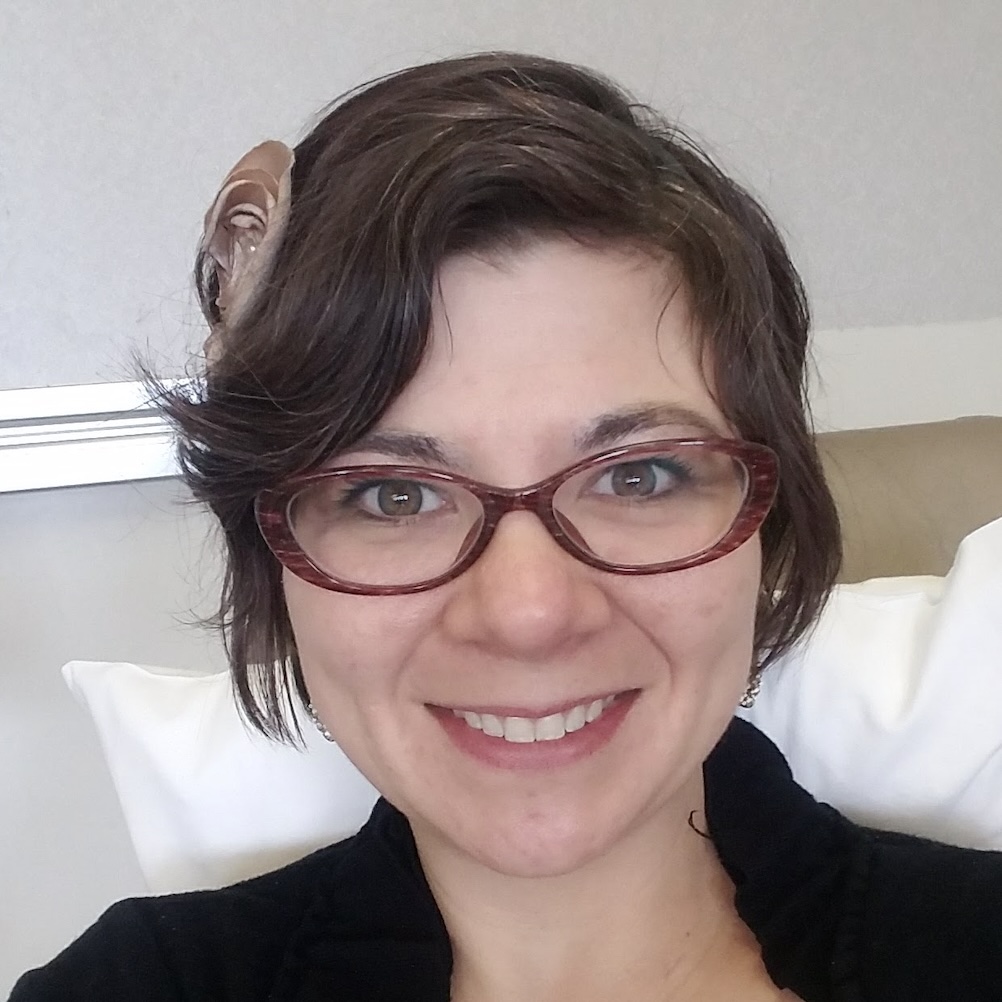
Megan was 35, running her own business, when she noticed the mole on her back changing. She’d had it for as long as she could remember, but it started growing, and if she leaned against a hard chair, it would hurt, then eventually break open. She went to her doctor mainly because it had become annoying. He told her this kind of thing happens as people get older and was probably nothing, but removed it and sent it for testing just in case. It came back positive for melanoma, a kind of skin cancer. Within two weeks, Megan had a full surgical extraction, with lymph nodes removed from both sides, drains, and a skin graft that took so long to heal it delayed the start of her treatment by a month.
Interviewed by: Tory Midkiff
Edited by: Chris Sanchez
With no standard treatment available to her at the time, her oncologist told her about a clinical trial testing double immunotherapy. A teacher for 19 years, Megan was drawn to the idea of contributing to something other patients could learn from later. Four months into the study, she developed Addison’s disease, a lifelong autoimmune condition that left her without any cortisol, a hormone which helps manage stress.
The melanoma came back in March 2020, right as the world went into lockdown. Megan noticed a small spot near her tailbone and had a bad feeling about it. The results took months longer than expected: her first tumor had actually been mis-tested as BRAF-negative, and the lab had to go back and retest it before confirming she was BRAF-positive all along. By the time her doctor called with the news, Megan already knew, a portal glitch having tipped her off first. She qualified for a year of chemotherapy meant to reduce recurrence risk.
The third diagnosis came in the fall of 2025, five months after Megan first noticed a lump in her groin while on vacation in Italy. It grew from the size of a blueberry to the size of a softball in six months. After a long scramble to get scanned, complicated by a recent move to a new hospital network, she had surgery that October, the easiest of her three surgeries so far. She learned then that the cancer had reached stage 4, and that the only treatment available was the same yearlong chemo regimen she’d already been through once. She didn’t want to do it again, but decided, together with her husband and four kids, to go through it one more time.
Megan is now seven months into that year of chemotherapy, taking pills twice a day with no breaks between doses. “All of my scans are clear,” she says. “That’s a really, really great sign. It means everything’s working.”
Learn more about Megan’s story by watching her video and reading through the edited transcript of her interview below.
- Megan’s first mole became sore and was irritated by sitting against hard chairs, nothing that screamed cancer to her at 35. Persistent irritation in one spot, even something that seems minor, is worth having checked.
- Every recurrence asked Megan to make a different call about treatment. What felt like the only option with her first diagnosis felt like a harder trade-off by her third, once she understood the specific risks to her own body.
- Megan describes cancer as something that made her weaker while it made her kids stronger, watching one daughter head toward a career in medical research. A cancer diagnosis in a parent can reshape a family in ways that outlast the treatment itself.
Megan’s Diagnosis Facts
- Name: Megan G.
- Age at Diagnosis:
- 35
- Diagnosis:
- Melanoma
- Staging:
- Stage 4 (Metastatic)
- Mutation:
- BRAF
- Symptoms:
- Mole on the spine that grew, hurt under pressure, and broke open
- Appearance of a new spot near tailbone
- Hip pain
- Appearance of a lump in groin lymph nodes
- Treatments:
- Surgeries: bilateral sentinel lymph node removal, skin graft
- Double immunotherapy (clinical trial)
- Chemotherapy


This is not medical advice. Please consult with your healthcare provider to make informed treatment decisions.
- Megan’s Diagnosis Facts
- Meeting Megan: Living with stage 4 melanoma right now
- A mole on my spine that I thought was a birthmark
- The melanoma diagnosis: Hearing, “It came back positive,” at my desk
- Choosing sentinel node surgery, saying yes to a research study, and getting Addison’s disease
- The BRAF mutation mix-up that took months to sort out
- A third melanoma recurrence in Italy and a move to a new hospital system
- Hearing the melanoma was stage 4
- The day the anger finally came out
- What I would tell someone who’s newly diagnosed with cancer
- The part of cancer no one talks about: Losing fellow patients
- How my diagnosis made my kids stronger
- Hear from people living with melanoma
Meeting Megan: Living with stage 4 melanoma right now
Hi, I’m Megan, and I currently have stage 4 melanoma, and I am undergoing treatment for the third time. So I’ve had cancer three times, three different diagnoses. And it’s now at stage 4.
I was part of a research study, and I did double immunotherapy for four months. And then I did a year of chemotherapy. And I am now on month seven of another year of chemotherapy.
So that is where I am with my diagnosis right now, and all of my scans are clear. So that’s a really, really great sign. And it means everything’s working great.
A mole on my spine that I thought was a birthmark
So the idea of having cancer was the last thing on my mind. And my doctor said, “Hey, this happens when we get older. It’s probably nothing. I’ll take it off, and we’ll just get it tested just in case.” And I’m glad he did, because it came back positive for cancer.
I had a mole ever since I could remember. I actually thought it was a birthmark. It was right in the middle of my back, on my spine, and it started growing. And it was at a spot that, if you leaned on a hard chair or something, it would hurt. And then eventually it would break open. And I just went to my doctor because I thought it was annoying. I was 35.
And yeah, within two weeks I went from being what I thought was a completely healthy, normal 35-year-old person to having a full extraction and then being on cancer treatments.
So I had surgery two weeks after we found out it was cancer. And that was a very intense surgery. I had the mole removed, obviously, and I had lymph nodes removed from under both arms. So I had drains under both arms. I had to get a skin graft to cover the spot where they removed the skin cancer from my first extraction.
It took a very long time to heal, and I actually had to delay starting my treatment because I wasn’t healed in time to start it. So I was pushed back by a month in my treatment because it just took forever. Skin grafts are tough. So yeah, that was the first cancer.
The melanoma diagnosis: Hearing, “It came back positive,” at my desk
I was at work. At the time, I owned my own business, and I was at my computer; I think I was doing inventory or something. And the doctor called and said, “Hey, we got the test from your mole back. And I have to apologize because I led you to believe that it was nothing. It is something.”
And then I just sort of went straight into logistics mode. I just went straight into, “What do we need to do?” And he was a gem. He’d already made an appointment for me the next morning with an oncologist and all these things. And so after I got off the phone with him, I think I sat there for like 15 minutes, and it was just like, “What, what.” And just, yeah, it was a lot.
I mean, I knew nothing really about cancer other than my grandpa had it. This was ten years ago, almost. It was a time when it still felt like something that old people got. It was like you had to be of a certain age or something; it wasn’t on the radar, that kind of idea. So it took a lot of mental adjusting there. And then it was just straight into, oh my gosh, doctors and scans. And pretty much every single day I had a different appointment, because I was only 35. They were very worried.
And I met with just about every kind of oncologist you can imagine, because they really wanted to make sure they knew what they were working with. So yeah, it was pretty intense. It was very intense, very intense. My whole life basically turned to cancer overnight.
Choosing sentinel node surgery, saying yes to a research study, and getting Addison’s disease
I’ll go back to the surgery, because at the time, if you needed lymph nodes removed, they would remove all of them from an area. And they had just, about a month or two before my diagnosis, released a study that indicated they could just remove the sentinel nodes. And so there was a lot of discussion about whether I would have a full lymph node extraction, or if they would just remove sentinel nodes. So that was the first big decision. And we decided to just remove sentinel nodes.
Now, I had to have them removed from both sides, because the melanoma was in the middle of my back. So that was pretty unexpected, but I still have lymph nodes under my arms, which is really great.
So after they removed the cancer, my oncologist was like, “Hey, listen, we don’t really have anything here that we think would be of particular benefit, but we think you qualify for a research study at the University of Michigan.” And so I went up there; I did qualify, and that was for double immunotherapy. And they wanted to see what would happen if they used them together. But it was a double-blind study, so nobody knew who was getting both or just one. But I went up every two weeks to get infusions.
I was supposed to do that for a year. I lasted four months, and I got Addison’s disease. And I went in for my regular infusion, and I was telling my doctor I was just so exhausted, like, paralyzed exhausted.
And they checked my cortisol, and I had none. And I was one of three people at that location in this study who had that. And so they shut the study down and released who got the double immunotherapy. And I was one of those who had gotten it, because that’s what caused my Addison’s disease, which I now have forever. That’s one thing they don’t tell you about cancer: that the disease is horrible, but the treatment often is equally as horrible, or horrible in a different way.
I never expected to get cancer, of course. And then I never expected to have a lifelong and immunocompromising disease. So that took a lot of getting used to.
Oh my gosh, it was a very hard adjustment, very hard adjustment. But it went from a hundred percent cancer all the time, to, “Okay, I can’t be in this study anymore,” “We are stopping immunotherapy, and we’re just going to do scans and watch you,” and everything went to Addison’s disease. How do I control this? How do I function as a regular person? And I did that for a couple of years, until I got cancer again.
And the second time I got cancer, it was March of 2020. So everyone was in lockdown, and I noticed a spot right on my tailbone. And I was like, “This is just weird.” I don’t know, it was very, very little, but I had a bad feeling about it.
Feeling excited about a clinical trial, even though I knew the risks
I was very excited. So it was presented to me in a really nice way. I was actually in another waiting room for a different doctor, and my oncologist came running in, and he’s like, “I want to show you this study. I really, really think you should consider it.”
I was a teacher for 19 years. So the idea of being part of something that would help people in the future, that other people can learn from, was very on brand for me, I guess. I was very excited about it. And I really was very excited to be part of that.
I knew that there could be lifelong health consequences. It’s a research study; you hope for the best, but you expect the worst. And given that there was no other treatment available for me, it was that or nothing. And at the time, it felt extremely scary to just have cancer removed and then not have any sort of treatment. It just felt very scary. So to have a treatment available, that was a relief. So I felt relieved. I felt a little excited. It was a very good thing at the time, when we were facing down potentially just nothing.
A gut feeling about recurrence and getting the news on my patient portal
I did my own research pretty heavily before I even called my doctor. So I knew what recurrence was. I knew it was possible. So it’s something that had been talked about. I can’t remember the first time I heard that. I do remember when I found out that the cancer was positive a second time.
There was a glitch in the patient portal system at the hospital, where they would release your records before your doctor got a chance to talk to you. So I got my records. I was like, “Oh, look, my test results are back.” And by that time, I was like two and a half years into cancer. I was really good at reading medical reports, and I was like, “Oh, well, I know what this means.” And then my doctor called me about two hours later, and I was like, “I already know.” And she’s like, “Okay, I’ll go over the details.”
So I knew before she even told me. She was very mad about that. And I’m pretty sure they fixed it because of that. She was livid about that glitch.
If it had been the first time I’d heard, I would have been very confused and upset. But I guess because it was my second time, it was like, “Well, I knew, I already knew in my heart.” It wasn’t a surprise to me at all. It was a surprise to everybody else, but not to me. So it was just like, “Let’s figure it out. What’s next?”
Teaching middle school through COVID with a compromised immune system
I mentioned I was teaching middle school. That was the only place I went; I went to school and home. Everybody else did the grocery shopping. And I went to the doctor’s office too, of course, but even a lot of those were virtual at that time. Aside from needing to get a blood draw or have a physical checkup, my appointments were largely virtual, which was also very different, because I was like half living at the hospital the first time. I felt like I had appointments all the time. And the idea of a virtual appointment still wasn’t like that well-known of a thing yet. I mean, they are now; it’s not a big deal. But, in 2018, when I was first diagnosed, they weren’t that common. So yeah, it was very different. It was very isolating.
To be perfectly honest, I’m not gonna lie, I found out that I really loved the pandemic. I’m kind of an introvert. So I was like, “This is fine with me.” My daughter, my one daughter and I, we were great during the pandemic. We’re like, “This is fine. We’re gonna craft.” So in that regard, it was okay. But yeah, things were a lot different. And I had to be very, very careful, because the world was like dying, and my immune system was compromised. And I did get very sick. I was in the hospital a couple of times because of side effects and things like that. And it was much more difficult to maintain and manage.
The BRAF mutation mix-up that took months to sort out
I had my biopsy on my second cancer done in March, and I actually didn’t find out. They didn’t give me the results of that until June, which was a very, very long time to go without hearing anything. And the reason is that my first round of cancer tested BRAF-negative, and then my second round of cancer tested BRAF-positive. And they were like, “This is impossible. It’s one or the other.”
So they had to find my first biopsy and retest it. And apparently it had been tested wrong. And it was in fact BRAF-positive, not -negative. So that distinction indicated, A, that it’s hereditary, and B, that I was eligible for the chemo treatment or treatments to reduce recurrence rates. That was really strange, because usually, you get your biopsy done and it might be a couple of weeks, but if it’s more than that, you’re kind of like, what’s going on? And it was a couple of months; it took a long time. And I just assumed it was because of the pandemic, right, like, oh, everything’s shut down, or they’re working on it with skeleton crews, that kind of thing.
So I didn’t really think that much of it until I found out afterward that, oh no, they had to go; it was a whole ordeal for the lab techs. I feel very bad for those guys. It was a big, big deal.
A third melanoma recurrence in Italy and a move to a new hospital system
I was having pain in my left hip, and it just felt like a different pain. It wasn’t muscle. It didn’t feel like regular pain. It felt like a different pain. And that’s when I noticed that little lump in my lymph nodes. I was pretty sure it was in my lymph nodes. And I noticed that in mid-May.
I was actually in Italy on vacation when I noticed it the first time. I was like, “Come on. I guess I’m gonna really enjoy this vacation, because I don’t know what this is gonna be.” So I did really enjoy that vacation. I went home, made an appointment, and oh my gosh, did it take forever to get scans done. Part of it is that I moved between my second and third cancers to a different hospital network.
While they had all of my records already because I had already transferred them, getting everything took a while instead of just saying, “Yeah, we’re going to listen to you and just give you a PET scan straight away.”
“No, you gotta have your CT scan first, and then we’re just going to give you an MRI, just blah, blah. Oh, yep. You need a PET scan. Oh, yeah, your numbers are off with your blood work.” And I’d be like, “I know, can we just get straight to the surgery part?”
So that’s why it took so long to get to surgery. I had surgery October 22nd, and I noticed it like six months before that, five months before that. So it took a long time.
The surgery went very well, actually. It was the easiest one. My other two surgeries were far, far more invasive. I had drains with both of them; I have huge scars. This third one was like the easiest thing ever. It was great. I don’t know if that’s just advancements in technology or placement; I’m not sure. But it was awesome in terms of surgery. And then I was very disappointed to find out that the only treatment they had available still was the treatment that I had already previously been on for a year. But I really did not want to do it.
Choosing chemo again for my husband and four kids
I will not lie, I did not want to do it, because it was horrible. But I have a husband and four kids, and it was a family decision that I would go through this one more time. And I was like, “I’ve got it in me one more time.” So this is the last time I’ll do this treatment.
That said, if there’s something else, technology is constantly advancing, and the medical world is amazing. So if I were to get it a fourth time, I would absolutely consider whatever new treatments are out there. But this one is a bummer. A year of chemo is a long time. It’s a very long time. I take pills every day, twice a day. So it’s like, there’s no reprieve.
How three cancer diagnoses changed the way I make treatment decisions
I would say it’s a big difference between, as I mentioned, finding out about the research study. And I was very excited, because there were no other treatments available. And I would say that’s because that was my first cancer. And I really, really felt like I needed treatment. Like, it was cancer, right?
And now that I’m three cancers in, my opinions on things have changed quite a bit because of my experience and my body. That wouldn’t be the right choice for everybody. But I wouldn’t encourage anybody to choose not to have treatment; I’m like, I have to consider it as well. I’m 44 right now, and there’s a lot left to do. So I would like to be able to do that.
Hearing the melanoma was stage 4
My doctor told me it was stage 4 after I’d had the cancer extracted, and it went for testing and things. And it was like my first appointment back, and he was like, “Yes, it’s now stage 4, but you start treatment on November 11th.”
I was like, it was almost like an offhand comment for him. And I think it’s because I turn a lot of things into humor. And he also knows that I’m pretty well educated about it. I already knew it was stage 4, so I think he probably knew that I did know.
When I heard him say that, I was like, “Oh, okay, cool.” So yeah, I don’t know. It didn’t feel like much of anything. It felt whatever to me. I know that should have felt like a way bigger deal than what it did, but I already knew it.
The day the anger finally came out
The day that I found out I had Addison’s disease was a very scary day, because I got rushed to the ER, and they gave me 450 mg of steroids. And then I had to take like 200 mg of steroids a day. I was basically roided up. And I’d never really been on steroids before. So I was essentially ßhaving roid rage.
But it was also all of the anger that I was feeling about my whole situation. I got cancer at 35; at the time my kids were 9 and 12. They were kids; they were little kids. And then I got Addison’s disease. I was so mad, and I just screamed. I was just so angry.
And I think that there’s an expectation that you’re supposed to be grateful, or happy, for all the support you have, all of these things. Yeah, I have cancer, but I’m surrounded by love. All of those things are, and they’re absolutely true. Absolutely, those things are true.
And I hope they’re true for everybody who has cancer, truthfully. But, you know, it’s also true that you can be p***** off, because it isn’t fair. Like it isn’t, it sucks. It sucks. And it’s like, it’s not discerning; it doesn’t care who you are, where you’re from, how old you are, how much money you have. It’s just, you know, ridiculous.
And, you know, you ask all the normal questions. Why me? Am I being tested? Will I live through this? What if I don’t live through this? You know, all of those things make you mad. Like, I mean, they made me mad.
So yeah, I felt like that for the first time. And it took a lot of steroids to get me there, but it was like the first time I was able to admit that I was really mad about what was happening to me, because I was able to really go into logistics mode and say, “What do we need to do? We’re going to be very pragmatic about this. And the emotional part, I had to be a mom still; I had to be a wife, and all those other things, I really didn’t feel like I could be angry. Until I did, and then it felt very good. It felt pretty good to get angry.
What I would tell someone who’s newly diagnosed with cancer
What I would say to somebody first diagnosed with cancer is, find plenty of people to make food for you, because honestly, it’s helpful.
I know a lot of people don’t like to think about having cancer more than once, but that’s like what my life is. So, that’s how it is.
The part of cancer no one talks about: Losing fellow patients
This is a pretty unexpected reality that comes with cancer that I don’t hear being talked about very much.
When you’re in cancer treatment, you get infusions, and you kind of get on the same schedule as people, kind of by accident, and you sort of see the same people every week or two weeks or however you go; you sort of see the same people. And sometimes those people stop coming, and it’s because they died. And that’s not talked about.
And the first time I realized that, this one lady I’d seen every time just wasn’t there anymore. And I knew she wasn’t getting better. Like, she was still very sick. And it clicked with me, like, “Oh my gosh, she didn’t make it. This disease killed her.” And you deal with survivor’s guilt, you deal with thinking about that loss. You think about those families. You think about the people that sat with them and held their hand.
And, you know, you hear a lot about living with cancer. You don’t necessarily hear a lot about dying with cancer, which is very interesting, because a lot of people die, but it’s not talked about a lot, and it’s definitely not talked about in those infusion rooms. And yeah, when you see people that just, they stop coming, and, you know, it’s because they’ve passed away, it’s very hard.
That’s a very hard and very unexpected thing for me. And I attribute that to my youth at the time. Again, I was only 35. You know, I hadn’t seen a lot of people die in my life yet. And so that’s probably, that was probably my own naivete, but it was still a surprise. It was still surprising to me. Referring to fellow patients, I was like, “We’re in treatment, we’re gonna be fine.” And then people die, and you’re like, what? Like, no, I’m on the same treatment, what’s going on? And that’s a tough one.
How my diagnosis made my kids stronger
My kids are great. They are the strongest people. And honestly, I thought me having cancer would wreck them. And it’s just made them stronger.
I have one that’s going into organic chemistry, so that she can be a medical researcher. I have this realization: cancer made me weak; it made my kids strong, and it was pretty amazing to watch.
So if you get cancer young, it’s not the end of it. You still have lots of time to be a mom.
This interview has been edited for clarity and length. The views and opinions expressed in this interview do not necessarily reflect those of The Patient Story. This content does not replace professional medical advice.
Inspired by Megan’s story?
Share your story, too!
Hear from people living with melanoma
Real experiences with diagnosis, treatment choices, side effects, and life beyond melanoma — in their own words.

Leave a Reply