
A Darker Mole on Her Face: How a Skin Check and Self-Advocacy Caught Cheryl’s Stage 1 Melanoma
Cheryl was diagnosed with stage 1 melanoma (1A) at 37 after noticing that a preexisting mole on the left side of her face, near her ear, looked darker than her other moles. A skin check the year before had already turned up two precancerous moles, and the surgeries that followed pushed her to start educating herself about what skin cancer can look like. When she raised the mole at a dermatology appointment for rosacea, she was told it didn’t look too concerning and that she could wait four months for her next skin check. Something told her not to wait. She pushed for the biopsy, and the result came back as melanoma.
Interviewed by: Tory Midkiff
Edited by: Katrina Villareal
The dermatologist’s phone call was brief: The melanoma was invasive with deep margins, and it wasn’t clear whether it had spread to her lymph nodes. Cheryl requested her biopsy report the same day, researched her Breslow depth, which helps define the stage based on how deep the cancer has gone in her skin, and learned she sat on the borderline between stages 1A and 1B. She pressed to get treatment moving quickly.
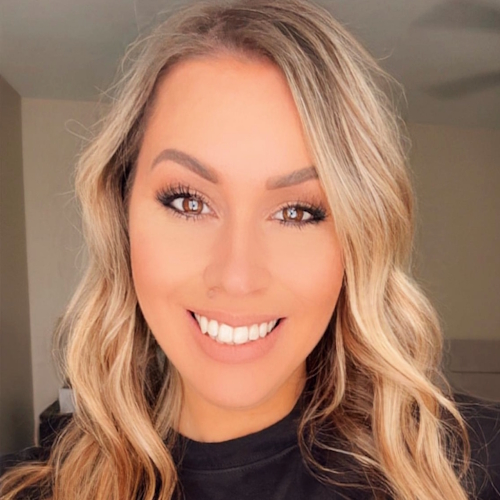
Within about a week and a half, a plastic surgeon performed a wide excision surgery, leaving a lengthy incision running from her cheek to below her ear. She also went through a painful sentinel lymph node mapping, a procedure where doctors injected dye in her face to trace where the cancer may have spread and removed samples for testing.
The week waiting for lymph node pathology was agonizing, made harder by chronic conditions she already lives with that made recovery painful. The call finally came while she sat in the school pick-up line: The cancer had not spread to her lymph nodes. She excitedly told her kids, “Mommy just got the phone call. I’m cancer-free. I don’t have any more cancer in my body.”
Cheryl will mark three years with no evidence of disease in September 2026, though her skin checks continue every six months. In the years since her melanoma, she has had a stage 0 squamous cell carcinoma treated, eight atypical moles removed, and nine surgeries in total by age 40. Today, she channels her experience into melanoma advocacy by speaking to legislators in Washington, D.C., serving as a Melanoma Research Foundation ambassador, and teaching kids about sun safety.
Watch Cheryl’s video or read the edited transcript of her interview to find out more about her story:
- Cheryl’s dermatologist looked at the mole with a dermatoscope and said it didn’t look too concerning, offering to wait four months until her next skin check. Cheryl pushed for the biopsy anyway, and that biopsy found melanoma.
- Cheryl requested her biopsy report the day she was diagnosed and researched her Breslow depth, learning she sat on the borderline between stage 1A and stage 1B. Understanding her pathology gave her a sense of ease during an agonizing wait.
- The people closest to Cheryl kept insisting the lymph node results would be fine, which left her feeling alone. The online melanoma community was where she found people who understood the waiting, the fear, and the reality that it could go either way.
- Three years after hearing she had no evidence of disease, Cheryl still thinks about recurrence, especially because her chronic head pain and POTS symptoms overlap with the warning signs she’s told to watch for. She has turned that reality into advocacy work, from Capitol Hill to elementary school classrooms.
Cheryl’s Diagnosis Facts
- Name: Cheryl M.
- Age at Diagnosis:
- 37
- Diagnoses:
- Melanoma
- Squamous Cell Carcinoma
- Staging:
- Stage 1A (melanoma); Stage 0 (squamous cell carcinoma)
- Symptom:
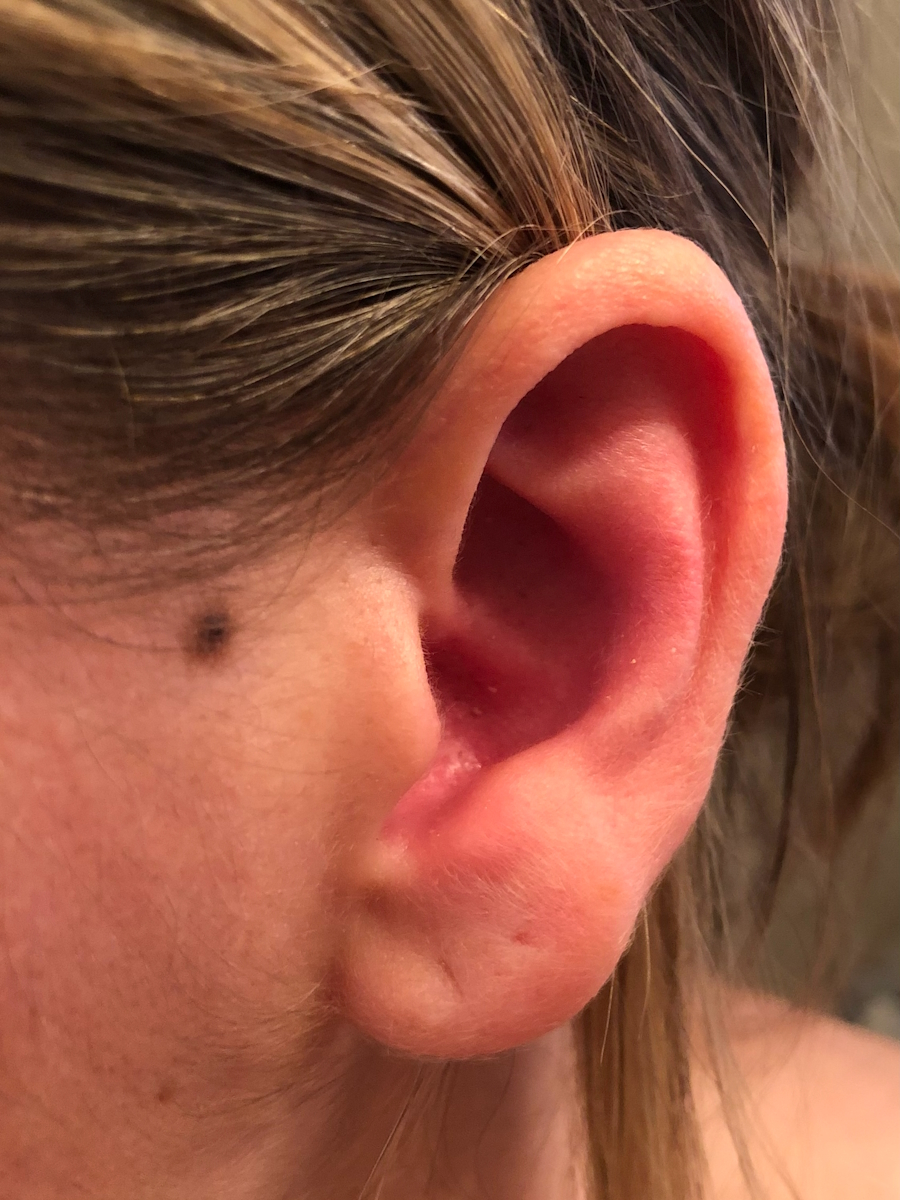
- Preexisting mole that appeared darker than other moles, with shadowing visible around it
- Treatments:
- Surgery: wide excision surgery with sentinel lymph node biopsy
- Cryosurgery
- Chemotherapy: topical cream
This is not medical advice. Please consult with your healthcare provider to make informed treatment decisions.
- Cheryl’s Diagnosis Facts
- The preexisting mole by my ear that looked a little too dark
- “You have melanoma”: The phone call etched in my mind forever
- Preparing to have a large incision on my face
- Finding support in the online melanoma community while feeling alone at home
- Recovering from facial surgery while living with chronic head pain
- What I would tell myself the day I heard “melanoma”: Let go of the guilt
- Life three years later: Advocacy, Capitol Hill, and teaching kids about sun safety
- Nine surgeries by age 40: Why my skin cancer story didn’t end with melanoma
- Hear from people living with melanoma
The preexisting mole by my ear that looked a little too dark
I’m Cheryl and I was diagnosed with stage 1A melanoma.
The spot that I had was on the left side of my face, close to my ear. It was a preexisting mole and had been there for as long as I can remember. I honestly didn’t know much about skin cancer at all. The previous year before I was diagnosed, I had my first skin check, which resulted in two precancerous moles, and I had to have surgeries on those. It made me a little bit more aware of what skin cancer looks like, so I started educating myself. I noticed that this spot looked darker than my other moles. I wouldn’t say it was very big. It wasn’t presenting with a lot of the melanoma criteria, but it was maybe a little bit darker than the rest.
I had an inkling to bring it up. I had a separate dermatology appointment for rosacea, so I brought it up at that appointment. I said, “Can you take a look at this one mole that I think looks a little bit dark to me?” She looked at it with her dermatoscope, which is a magnifying device that they use. She said it didn’t look too concerning to her, but if I wanted to wait four months until my next skin check, I could, or I could choose to biopsy it.
Something was telling me that I needed to biopsy it. She was hesitant to biopsy on the face specifically because of cosmetic reasons, but I pushed for it. As I said, it didn’t meet all the criteria, but it was a preexisting mole. I’m not sure exactly when it turned into cancer. But it was melanoma.
An ugly duckling mole: The shadowing I could only see with a camera flash
Honestly, I’m pretty non-observant, so I couldn’t say whether there were changes. What prompted me to think that something might be different was that I educated myself on what skin cancer may look like. I knew that a darker colored mole, something that looked different than your other moles, was a sign. They call it an ugly duckling: something that doesn’t present like the other moles that you have.
This was just it. It was a darker mole. I don’t know if it changed over time, but it had some shadowing around it as well; that was another thing that caught my attention. Honestly, to the naked eye, it didn’t look concerning. When I took a picture of it with the flash on my camera, that’s when you could see that shadowing around it. But I don’t think there were any changes that I noticed over time.
“You have melanoma”: The phone call etched in my mind forever
That phone call is something that’s etched in my mind forever, hearing that it was melanoma. It’s something I had heard of, but didn’t know much about. The phone call was very quick. She said, “You have melanoma. It’s invasive with deep margins. We don’t know if it has spread to your lymph nodes, so we’re going to refer you to oncology and to a plastic surgeon. We’re also going to get a sentinel lymph node biopsy to see if the cancer has spread further.”
When the phone call ended, I immediately cried. You think of all the bad things. Everything rushes through your head at once. I didn’t know what to think. Immediately, I started Googling, which I think a lot of people do, but they encourage you not to. Now I know why.
I ended up calling them back because I had a lot of questions. It was a Friday and I thought, “If I don’t call them now, I’m probably not going to get any answers until at least Monday.” I was very scared. Hearing that I had two precancerous moles the year before was scary already, but this took it to a whole other level.
There were so many thoughts going through my head. Not knowing the stage was also very scary. We know it’s invasive, but we don’t know how invasive. You think of your family and your kids. I have three children. I don’t sit very well with the unknown. You go into your thoughts and you spiral, which is exactly what happened that day.
Where I was when the stage 1 melanoma phone call came
Thankfully, I was at home when I got the phone call. This was in August, so my kids were either in school or about to go back to school, but I believe they were home that day. I know my husband was getting ready to leave for work. That was very isolating because I needed him to be there. He said, “Everything’s going to be okay. You’re going to be fine.” I said, “I Googled it, and I don’t know if I’m going to be okay.” I don’t think he knew anything about melanoma, as I didn’t either.
He ended up having to go to work, which was hard for me, because I was left alone and didn’t know what to do. But sometimes when I’m emotional or going through things, part of me wants to be alone, so I was going back and forth. Do I want to be alone? Do I want support?
Calling back for my biopsy report and learning about Breslow depth
I went to a melanoma Facebook group, where a lot of people were talking about their biopsy reports and how it reveals something called a Breslow depth. That sometimes can give you a bit more clarity as to how deep the melanoma is. It also gives a couple more things in pathology that help you understand if it’s more or less invasive. I called back to get some clarity on that and asked for a copy of my biopsy report to be emailed to me, which they did right away.
Based on the biopsy report, I was on the borderline of stage 1A and stage 1B. It also revealed that it was an invasive melanoma. Mine said it was 0.6, but they weren’t able to get the edge of the margins, meaning it could have been deeper than 0.6, which is why they were going to do a sentinel lymph node biopsy.
All the other things on pathology seemed to be the best-case scenarios from the research that I did. I was able to get more clarity on my own. I needed my biopsy report to research, so I was more at ease. I thought that we were probably dealing with the best-case scenario, but still don’t know about the lymph node involvement.
Pushing to get surgery on the calendar within a week and a half
When I called them, I said, “We’re on a Friday here. How close are we looking? Because this is something that I want to try to get done immediately.” I was also thinking about the fact that when I noticed that this was something suspicious, we waited for months before I got it biopsied. I thought, “I’ve already waited for months before I even noticed that this was something concerning, so I don’t want to wait any longer.”
They said, “We’re going to try to get things moving pretty quickly.” They also said that I would have to consult with the plastic surgeon first. I said, “Why? Book me for the surgery. I don’t even want a consult. Let’s get this done and out of me.” They said, “No, this is protocol. We have to do that.” I also met with oncology either before or shortly after my surgery.
Thankfully, come Monday, I was able to get a lot more answers. I was able to book my oncology appointment and plastic surgeon consult. The reason for plastic surgery is because it was on my face. It was going to be a lengthy incision with lymph node removal as well. I was able to get those moving forward pretty quickly. Then we were able to get me into surgery within about a week and a half after the phone call. Things were moving pretty quickly, which was amazing. I was feeling a lot better knowing that I had things on the books. The countdown is on; the sooner the better.
Preparing to have a large incision on my face
During the plastic surgeon consult, he was able to tell me how large this might be. He told me, “It’s probably going to start here and go all the way down.” At that time, we didn’t know which lymph node they were going to biopsy. There’s something called lymph node mapping that I would have to go through first. We knew where the incision was going to be, but we didn’t know whether the incision was going to go down or have a separate incision.
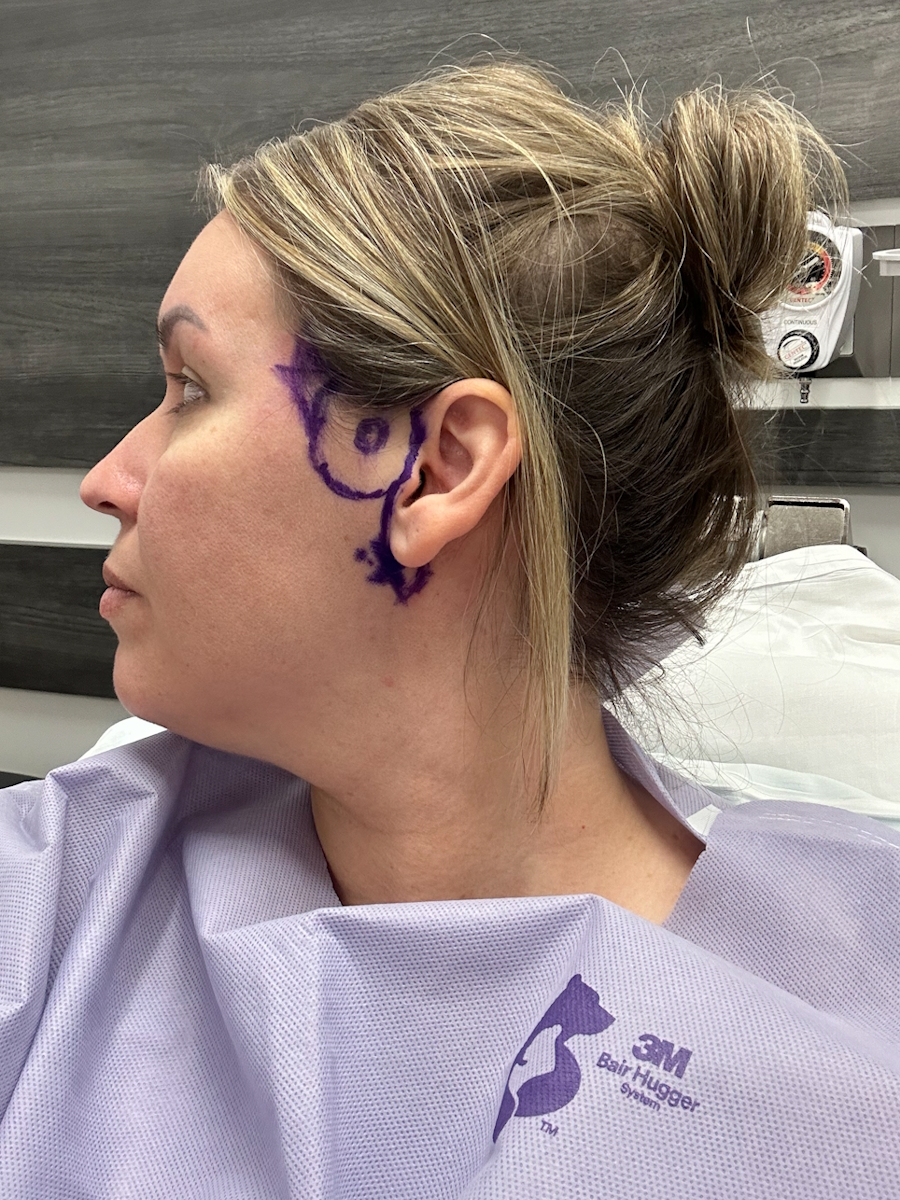
I got a bit of clarity on how serious this was going to be, but once I saw everything after the fact, it was still very shocking. I was prepared, but I also was very shocked after waking up from surgery. He did let me know that it was going to be a pretty large incision, because we were talking about invasive and deep margins, and they would have to do a pretty big excision around it to make sure that we got clear margins.
Surgery day: Painful dye injections and sentinel lymph node mapping
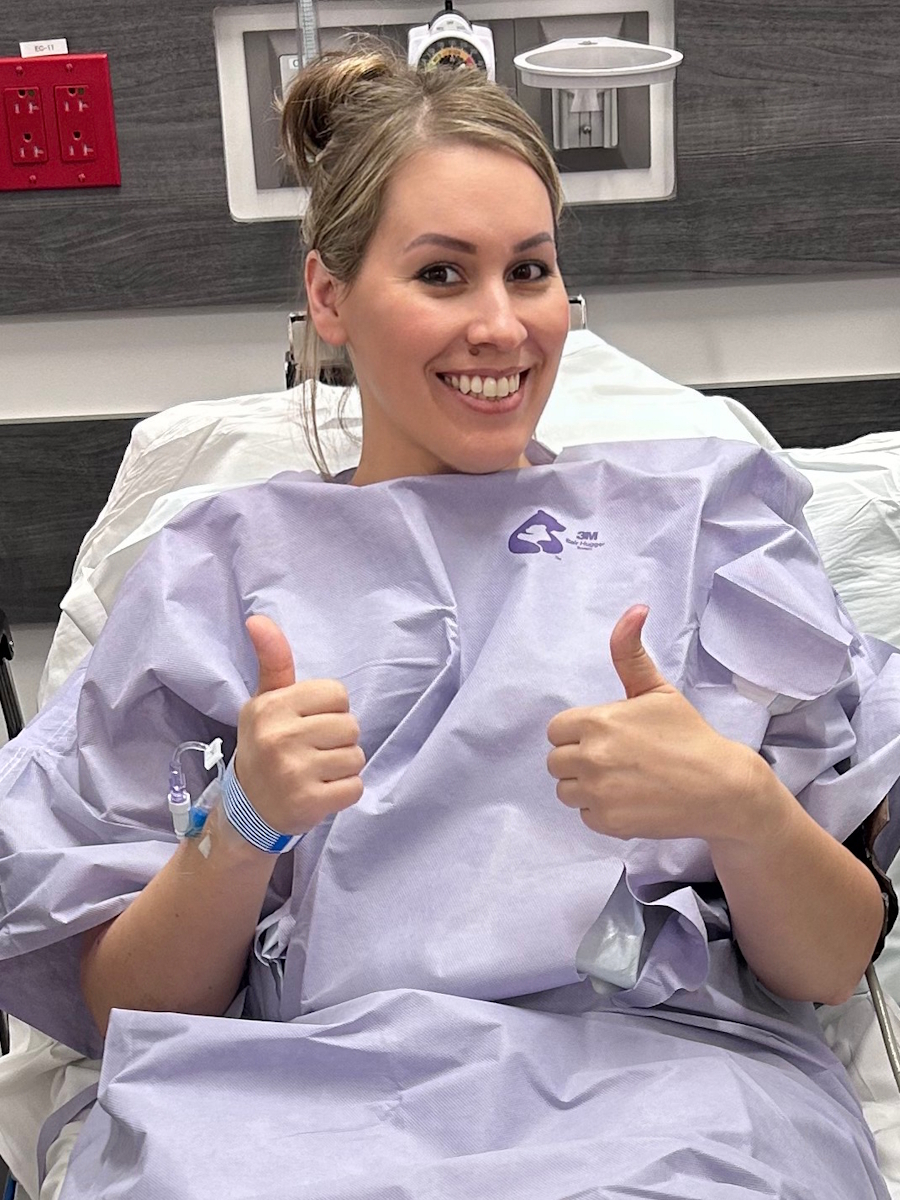
I had to reframe my mindset to say, “This is a good day.” It’s a scary day, and all the feelings were involved with it, but this was a day that I was going to remove cancer from my face.
The first step was to go to the hospital for the sentinel lymph node mapping, before surgery, and then travel to the plastic surgeon’s office from there. They inject this radioactive type of dye into your face, which I call blue dye, and it was extremely painful. They even said, “Did anyone prepare you for how painful this was going to be?” I said no. It was very painful.
I had to have four injections surrounding the tumor. Then I had to wait a while before going under a machine. I’m not exactly sure what the machine is, but it lights up to see where the dye is draining to the nearest lymph node; that’s how they know which lymph nodes to take. In my case, it drained to a lymph node right by my ear, so it was good news because it meant that they could pretty much do one incision all the way down, from taking out the cancer all the way down to removing the lymph node.
After I got that done, I immediately went to the plastic surgeon’s office. They were ready to go, so there wasn’t much waiting. At that point, I was very anxious because I wanted to get it over with. I had to be put to sleep because of the sentinel lymph node biopsy. Plus, it would be very scary to be awake for. Even if the lymph node wasn’t involved, having your face cut open is very scary.
They went over everything with me. He drew on my face to show exactly how much was going to be taken out. My husband took a picture and showed me, and I thought, “Oh my goodness. That’s a big chunk of my face that’s being cut out.” It still didn’t prepare me for what I was about to wake up to, but I did get more of a hint of what it was going to look like. The plastic surgeon said, “We’re going from here all the way down, and then underneath the ear here,” so I knew that it was going to be quite large. He did assure me that the face heals very nicely and that my recovery should be pretty good.
I was very eager to get this done. I was focusing on the positives as much as I could. Hopefully, it was the day that I’m going to be cancer-free. But we had to wait for pathology to come back on the biopsy; that was a very agonizing week. They told me it was going to be about seven days before I got the results back.
Waking up and seeing how much of my face they had to cut
Like anybody waking up from anesthesia, I was a little out of it when I woke up, but my first thought was to see my face. My husband was with me in recovery, so he took a picture and showed me. I was shocked, even though I knew that it was going to be big. I was shocked at how much they had to cut.
I thought, “I can’t wait to show everybody what this looks like, because everyone’s going to be shocked at how big this is.” A lot of people don’t take melanoma seriously. Having it on your face is a little bit more of a shock factor. I thought this would show people that melanoma is very serious. It’s not a tiny cut. They had to take a lot because it’s invasive, so it can spread very quickly and very easily.
I tried to make the best of it. They gave me some cream to put on it. I was focused on recovery. What was it going to look like from here? I’m a side sleeper and I toss to different sides; how’s that going to look? At that point, I was focused on healing and trying to figure out how I was going to be the most comfortable. I was a little underprepared, because once the pain medicine wore off, it hurt way more than I thought. I was prescribed a pain medicine, but I don’t like taking those, so I tried my best to go through the pain without taking medicine as much as possible.
Finding support in the online melanoma community while feeling alone at home
I immediately dove into the online melanoma community through Facebook and Instagram. There’s nobody like someone who’s been through it themselves and understands what it is and how scary it is. I don’t think anybody in my personal life realized how serious this could be. People around me were trying to stay very positive, but as a realist, I’m saying, “It can absolutely happen. That’s the reason they’re doing this, because there’s a possibility.” I like to think positively, but I also am very realistic when it comes to preparing myself for both results.
I felt very alone during this time, because I don’t think anyone in my personal life truly understood what it was like and having to wait for those results. I tried to stay as busy as I could, but that also looked like recovering from home and not doing anything. All I had were my thoughts. As I lay there recovering, I thought about how many more days I had until I found out what my future looks like. Am I going to have to do treatment from here? What is that going to look like?
I leaned into the online melanoma community. Not that I knew anybody, but hearing other people’s success stories, frustrations, and anxiousness helped me get by. Recovering was very isolating. I had a lot of people feeding me the positives, which was great, but I also wanted people to acknowledge my feelings that this also could be not the end of my story. I could be going through treatment in my future. I could be going through spread in my lymph nodes or further organs if this came back positive. I didn’t get the support that I was hoping for as far as validating my feelings. But going through support systems online is something I needed and got me through that week.
Why I started sharing my stage 1 melanoma story on social media
I had already started sharing about my health on social media. I have chronic illness and chronic pain, which was something that I was already sharing on Instagram. I thought this was an amazing opportunity to raise awareness for melanoma and early detection.
Finding the online community motivated me. I saw a lot of other people sharing their stories about melanoma and skin cancer. I thought, “This is a great opportunity. I’m already talking about my health, so this just furthers that.” I had a lot of great feedback from people saying, “Thank you so much for sharing. This opens my eyes. I had no idea that melanoma could be this serious.”
I wanted to let people know that skin cancer — melanoma specifically — can be serious. I want to encourage skin checks. Honestly, what probably saved my life was getting a skin check and advocating for myself. If something feels off, advocate to have it removed. I was told that it didn’t look too concerning, but it ended up being melanoma.
I wanted to touch on early detection, getting skin checks, and advocating for yourself when you feel like something is wrong. It blossomed from there. I became very passionate about advocating for skin cancer and getting the word out there that this can be very serious. Early detection is very key with skin cancer.
Recovering from facial surgery while living with chronic head pain
I deal with a lot of head pain. I have a rare condition called new daily persistent headache (NDPH). Almost five-and-a-half years ago, I woke up with a headache and it has never gone away since then. I live with a 24/7 headache with no break and no relief. I was dealing with occipital neuralgia as well.
It was very difficult recovering from surgery, because I was already dealing with head pain, and having my face operated on furthered the pain. I had a very hard time laying my head back on a pillow to get comfortable, because I was hurting from surgery, my headache, and occipital neuralgia. That very much impacted my recovery too. It made it more difficult.
When your body is going through trauma, your other conditions will flare up as well, so that was definitely harder to deal with. It very much impacted me. That was what a lot of people didn’t understand as well. I was recovering from surgery, but I was also dealing with flare-ups of my other conditions, so it made it extra difficult.
Getting the results of my sentinel lymph node biopsy
Originally, they told me that it was going to take about seven days max. I thought, “This would be great if I find out in four or five days.” When the seventh day came, I thought, “Okay, certainly I’m going to hear today,” but I didn’t, so I called them because I didn’t want to wait another day. The anxiousness and uncertainty were eating me up.
When I called, they said, “Unfortunately, we haven’t gotten them yet, but we promise that we will call you as soon as we do.” The following day was a Friday. If I didn’t hear from them by then, I’m going to have to wait through the weekend.
Thankfully, I heard from them the following day while I was in the parent pick-up line at my kids’ school. When I got the phone call, my heart dropped. I said to myself, “Either way, everything’s going to be okay. Whatever I hear, everything’s going to be okay.” When I answered, it was my plastic surgeon and he said, “Cheryl, I have your results and it’s great news.” I was able to breathe. I probably had the biggest smile on my face. He said, “Your pathology came back, and it was not in your lymph nodes, so go celebrate.” I said, “Oh my gosh, absolutely. I’m going to be smiling all day long.”
It goes to show that even through recovery, I still had to be a mom. I still had to take my kids to school and pick them up. I still had to do things that I normally did as a mom. I’ll never forget when I got that phone call. When my kids got in the car, I immediately said, “Mommy just got the phone call. I’m cancer-free. I don’t have any more cancer in my body.” They were like, “Yay!”
They were pretty young at the time, so I don’t know if they understood the depth of everything, but I was very transparent with them, without trying to scare them too much. Mommy has cancer. Mommy had surgery, but we don’t know if the cancer is gone yet. That’s how I phrased it to them. We were all able to celebrate on the way home. I immediately called my husband to let him know, followed by phone calls to family and friends to update them. It’s a memory I’ll never forget.
With that being said, as I’ve learned more about melanoma, even though you get that good news, there can still be a recurrence in the future. To this day, there’s still uncertainty whether I’ll ever have a recurrence. That’s the fear that people with melanoma live through. Even though we focus on that good news, there’s still a fear of recurrence. Every year is a milestone celebrated that the cancer hasn’t returned. It’s something that I still live with to this day. There’s always uncertainty.
I remember talking to my oncologist and asking him, “How would I know if it metastasized? I’m already dealing with a headache 24/7. How would I know?” Most people would get a headache or a migraine to prompt them to go to an ER to see if they had something going on with metastasis. I also have a condition called postural orthostatic tachycardia syndrome (POTS), so I already have shortness of breath. I already have symptoms that would prompt people to get evaluated if they felt something was wrong with their body.
He said, “The good thing is you were diagnosed with stage 1, so you probably have minimal chance of any spreading or metastasis in your future. But you have to be aware of your body. If something feels different than it normally does, then you would go be evaluated.” That’s something that’s always been on my mind since I heard I was cancer-free. That’s always been a fear to this day. Could I wake up tomorrow and have metastasis? Every time I get a flare in my head pain, I think, “Is this something different? Is this melanoma?”
Even at stage 1, when your chances of metastasis are still low, it absolutely still happens. There’s always that fear for anybody, whether they’re stage 0, stage 1, or further stages. Metastasis can still happen. For me, it’s something that’s on my mind probably daily, to be honest, especially with the symptoms that I deal with. You can’t help your mind going there sometimes. People who don’t go through melanoma don’t realize that that could be a fear someone is still going through, even years later.
What I would tell myself the day I heard “melanoma”: Let go of the guilt
Even if I could go back to the moment when I heard it, I honestly think that I would do the same thing, even after knowing more. There was a lot of guilt that came with my diagnosis, because I thought I caused this. I didn’t protect myself from the sun. I never wore sunscreen. I used to go on tanning beds occasionally. I felt guilty.
I did a good job of telling myself, “It’s going to be okay, whatever the outcome is.” I’ve been through so many things medically. This is just another thing. It’s obviously very scary deal with, hearing the word cancer, but I don’t know if there was much I would change or tell myself.
I would probably tell myself to feel a little bit less guilty. Growing up, there were so many things that I didn’t know about skin cancer. Tanning was big and I fell for that. I wanted to be tan, not knowing what we now know. I would tell myself, “Don’t beat yourself up for something that you didn’t know about”. If I knew what I know now, I would have never made the mistakes that I did growing up. But maybe I would tell myself, “Don’t beat yourself up over this. It is what it is. This happened, and we’re going to get through it.”
Advice for anyone newly diagnosed with melanoma: Educate yourself and find your community
If you’re new to a melanoma diagnosis, educate yourself as much as possible. I’m a medical nerd. I want to know everything about something I’m diagnosed with. Make sure you are looking at the right resources. AIM at Melanoma is a great resource. It even guides you through the steps of different stages and what that looks like. That may ease people’s minds a bit, being educated about the type of cancer they’re diagnosed with.
I’m also a big fan of support groups. These Facebook groups are great for connecting with other people who may have the stage that you were diagnosed with. In the group that I’m in, come there and say, “I was newly diagnosed with whatever stage,” and a lot of times, people will give literature and resources: here’s your stage, here’s what you need to know about it, and go to this to know more.
Connecting with other people is not only less isolating in your new experience, but also informative, educational, and supportive. Most people who get a diagnosis probably don’t get the support they’re looking for from the people in their lives, because those people are trying to be positive. But sometimes, they end up saying the wrong things that may be offensive without realizing they’re offensive.
Learning about your diagnosis and your stage is very important. Find people who will help you feel less alone and give you educational materials to read. That helped me get through those dark days. You’re able to hear success stories too, which is always great, because it gives you hope for yourself. I encourage finding a community of people who will understand what you’re going through.
Life three years later: Advocacy, Capitol Hill, and teaching kids about sun safety
Life’s great now. By September, it would be three years of no evidence of disease. As the years go on, you have a better mindset around recurrence. My main focus now is advocacy work and spreading the word about skin cancer. I try to be educational and go off of scientific facts that sunscreen is safe and effective to use. It should be something that’s in your daily routine to prevent any type of UV damage.
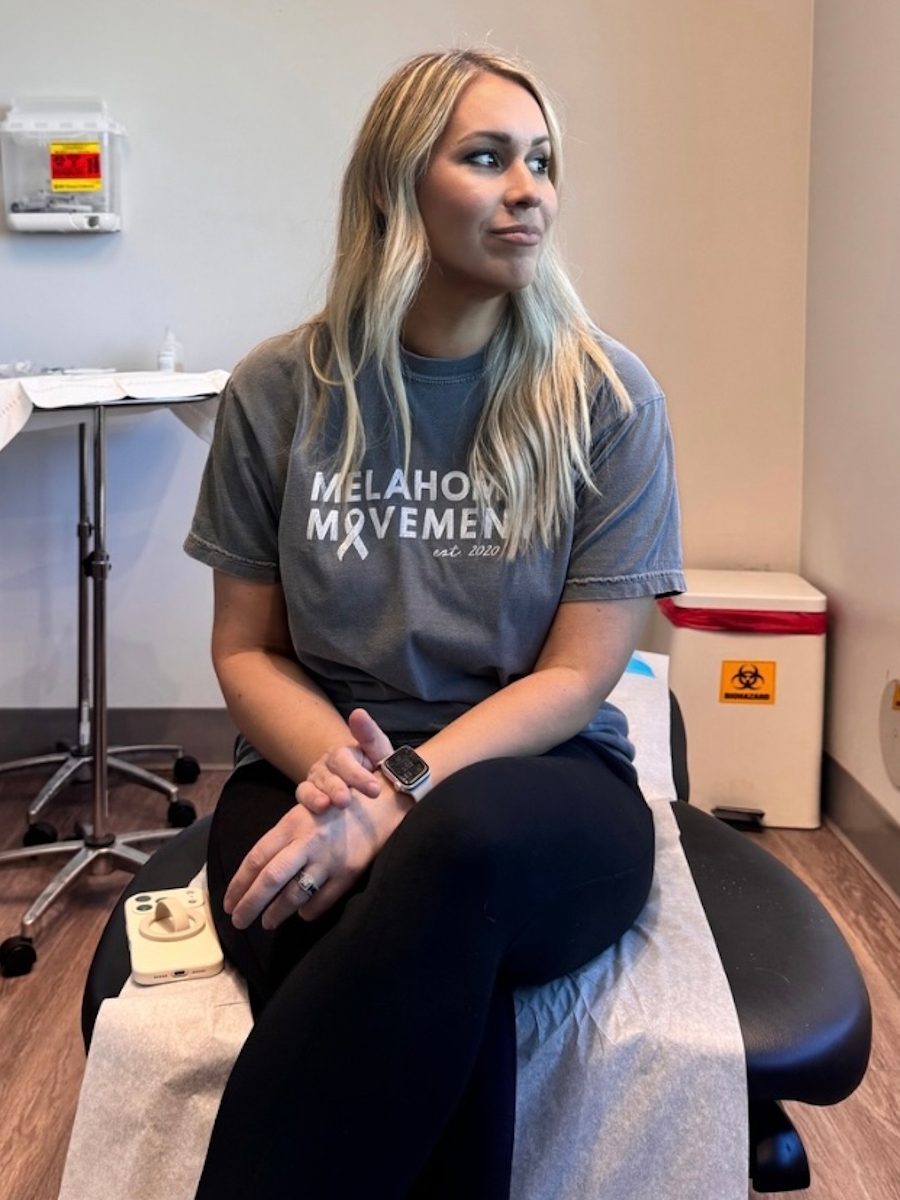
I dove into advocacy work, specifically with melanoma. I traveled to Washington, D.C., to advocate at Capitol Hill with the Melanoma Research Foundation, which was an amazing experience. Not only did I get to meet a lot of what we call our “melahomies” on Instagram, but we’ve built an amazing community of people who are going through the same things. You connect with others with melanoma, a lot of whom travel to Capitol Hill every year to advocate, so I was able to meet some online friends in person. I was able to make a great impact for change, talking to legislative people about melanoma funding and the different things that we advocated for on Capitol Hill that day. It was an amazing experience. It makes you even more motivated to want to do more.
I became an ambassador for the Melanoma Research Foundation. I’m also going to be a guest speaker. I have something set up for next school year to be a guest speaker to talk about sun safety for children, because it does start with our youth. If they grow up knowing that this is what we’re supposed to do, it’s instilled in them to protect their skin growing up.
I’m also volunteering for another melanoma organization. We do a walk every year. I’m going to volunteer with the committee organizing the 5K walk in Arizona to make it as good as possible every year. This year will be the third one, so it’s still pretty new.
I have been involved with volunteering and have turned my experience into advocacy, wanting people to know the dangers of skin cancer, how serious it is, and how to protect their skin. UPF clothing is another great option for people to cover up.
This is impacting millions and millions of people, so I’m using my voice. I hope my story prevents this from happening to them or encourages them to schedule their first skin check. It’s happened where people who I’ve encouraged to do skin checks have found things, which makes my story and my advocacy even more impactful, knowing that I could have prevented this for somebody else. That’s become my mission now: to raise awareness, advocate, and talk about skin cancer prevention.
Nine surgeries by age 40: Why my skin cancer story didn’t end with melanoma
My experience hasn’t stopped with skin cancer. Before my melanoma, I had two precancerous moles or dysplastic nevus (atypical moles). The word precancerous is a nuance, but it’s where this could basically turn into melanoma, though it’s not guaranteed. They excise them to be on the safe side. I had two of those before my melanoma and then I had my melanoma diagnosis.
I’ve had a total of eight atypical dysplastic nevi removed. I’ve also had one squamous cell carcinoma as well, another type of skin cancer, which happened a year after my melanoma diagnosis.
It’s been an ongoing experience. For the first two years, I had skin checks every three months, and then I graduated to every six months, which will probably be for the rest of my life. Almost every single appointment I’ve ever had resulted in more biopsies, more waiting, and more bad news. There have been very rare times when I’ve had good news or no biopsies.
Thankfully, the squamous cell carcinoma was found very early at stage 0, so I was able to get cryosurgery. Then I had to apply a chemo cream for about a month to make sure that all the skin cancer cells were gone. The atypical moles have all resulted in wide local excision surgeries as well. I have scars all over my body now from nine surgeries total.
When I share my story, I share a lot about melanoma, but I also share that I’ve had nine surgeries total and I’m only 40 years old. This can happen to younger people too. It’s more to my story to encourage people to protect their skin and not have to go through what I’ve gone through.
Every three months, I don’t know what the biopsies are going to look like. Is it going to be another melanoma? Is it going to be another type of skin cancer? Every three months, I would go through the unknown and wait for pathology, which is not fun to go through. Protecting your skin is the best-case scenario for prevention, so this doesn’t happen to you.
It has been a continuous experience, which I know hasn’t ended. I’m probably going to get more biopsies at my next skin check, potentially another surgery. In my mind, I think, “Is this going to end? When is it going to end?”
The damage is already there. All I can do moving forward is prevent future damage to my skin.
This interview has been edited for clarity and length. The views and opinions expressed in this interview do not necessarily reflect those of The Patient Story. This content does not replace professional medical advice.
Inspired by Cheryl’s story?
Share your story, too!
Hear from people living with melanoma
Real experiences with diagnosis, treatment choices, side effects, and life beyond melanoma — in their own words.
Leave a Reply