
“I’m Still Here”: Daniel on Hodgkin Lymphoma, MDS, AML, and Learning to Love His Body
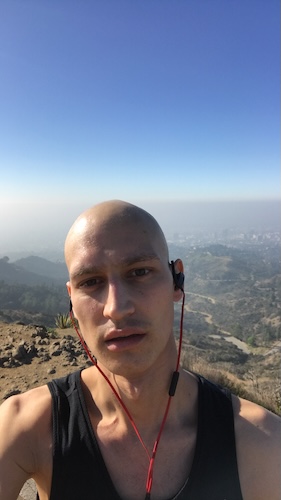
Daniel’s Hodgkin lymphoma, myelodysplastic syndrome (MDS), and acute myeloid leukemia (AML) experience began in his late 20s, just as he was building a new life and launching a creative agency in Paris. He first noticed small, itchy nodes along his neck and pushed for answers, even when a general practitioner initially brushed off his concerns as an infection. When tests revealed a suspicious lung shadow and a specialist calmly named chemotherapy as his “special treatment,” life shifted in an instant from creative plans to scans, protocols, and facing images of himself sick in bed.
Interviewed by: Nikki Murphy
Edited by: Chris Sanchez
Daniel’s first Hodgkin lymphoma treatment in 2008 involved a four‑month chemotherapy protocol, and he tried to protect everyone around him by staying composed and “strong.” When he relapsed soon after remission and was told he would need intensive chemotherapy, hospitalization, and that having children might not be possible, he felt overwhelmed and walked away from the hospital. For a year and a half, he immersed himself in alternative cancer approaches, extreme diets, and the belief that he could heal himself through these treatments. An Ayurvedic doctor reframed Daniel’s experience, suggesting that integrative practices as opposed to alternative therapy could support, but not replace, medical treatment.
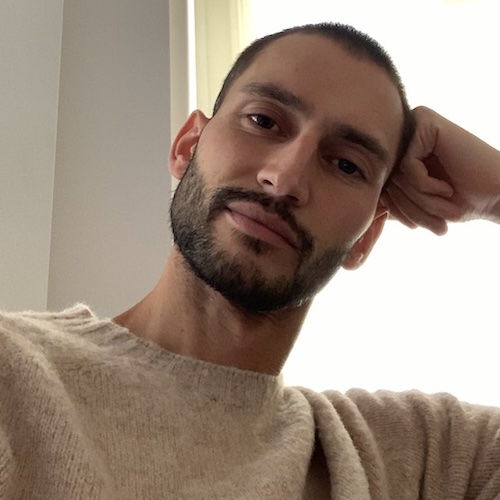
Daniel eventually returned to the hospital for multiple chemotherapy protocols, radiation, and an autologous stem cell transplant. Years later, he faced a Hodgkin lymphoma relapse and another transplant. Through it all, he worked as much as he could, using work to avoid thinking too much about the disease and treatment. Later, during pandemic lockdowns, he finally had the time and emotional space to write hundreds of pages about his life and illness, and to ask loved ones what his illness had been like for them.
In 2024, low blood counts revealed therapy‑related MDS that evolved into AML with a MECOM genetic mutation, leading to an allogeneic stem cell transplant and, after relapse, a second donor transplant in Germany. Today, Daniel talks about respecting and loving his body more, a new willingness to be vulnerable, and a commitment to sharing his story publicly so others facing Hodgkin lymphoma, MDS, or AML can feel less alone in their experience.
Watch Daniel’s video above and read the edited transcript of his interview below for more about his story.
- Listening to your own body and instincts, even when reassured it is “probably just an infection,” can lead to earlier answers and timely Hodgkin lymphoma, MDS, and AML care.
- Alternative and integrative practices can support cancer treatment, but in Daniel’s experience, relying on them alone allowed his tumor to grow until he returned to medical care.
- Chemotherapy, radiation, and transplants affect everyone differently; protocols, side effects, and recovery timelines vary widely from person to person.
- Over time, Daniel moved from emotional “armor” and pushing people away to letting himself be vulnerable, cry, and truly hear how scared and helpless loved ones felt.
- His perspective on his body shifted from blame to profound respect, recognizing how much it has endured through multiple Hodgkin lymphoma relapses, MDS, AML, and stem cell transplants.
- Sharing his story publicly through writing and social media has become a tool for processing his own experience and challenging stigma and misconceptions around cancer and chemotherapy.
Daniel’s Diagnosis Facts
- Name: Daniel H.
- Age at Diagnosis:
- 22
- Diagnoses:
- Hodgkin Lymphoma
- Myelodysplastic Syndrome (MDS) that developed into Acute Myeloid Leukemia (AML)
- Mutation:
- MECOM
- Symptoms:
- Hodgkin Lymphoma
- Chain of small, itchy nodes on neck
- Myelodysplastic Syndrome
- Low blood counts
- Hodgkin Lymphoma
- Treatments:
- Hodgkin Lymphoma
- Chemotherapy
- Radiation therapy
- Autologous stem cell transplants
- Myelodysplastic Syndrome
- Allogeneic stem cell transplants
- Hodgkin Lymphoma

This is not medical advice. Please consult with your healthcare provider to make informed treatment decisions.
- Daniel’s Diagnosis Facts
- My cancer diagnoses over the years
- My first Hodgkin lymphoma treatment plan
- Relapse after first remission
- Discovering that alternative treatments work best alongside conventional care
- My first Hodgkin lymphoma stem cell transplant and recovery
- Another Hodgkin lymphoma relapse in 2017
- Living through a second autologous transplant, and looking ahead
- From Hodgkin lymphoma to MDS: Discovering low blood counts
- When MDS progressed to AML
- Allogeneic stem cell transplant for AML
- Current remission status and preventive treatment
- What my life looks like right now
- How I hope my story helps others
- Hear from people living with Hodgkin lymphoma, myelodysplastic syndrome (MDS), and acute myeloid leukemia (AML)
My cancer diagnoses over the years
Hi, my name is Daniel. I was first diagnosed in 2008 with Hodgkin lymphoma. In 2009, I was diagnosed with a relapse, and in 2017, I was diagnosed with another relapse of Hodgkin lymphoma. After that, in 2024, I was diagnosed with MDS, which then evolved into AML with the MECOM mutation, and that is currently what I am treated for.
Life before my first Hodgkin lymphoma diagnosis
I used to live in Paris. I had a quick stint in Berlin, Germany, and I had literally just moved back to Paris. I wanted to start all over again. I was just about to start and create my own agency, and at that very moment, that is when I received my first diagnosis back in 2008.
The agency was a photo production agency, basically organizing and producing photo shoots in the fashion industry.
My first Hodgkin lymphoma symptoms
I started having some sort of node on my neck, and I did not really have any other symptoms that I was truly aware of. It was a bit itchy, but I had no pain or other symptoms that I could really notice.
We had been on a trip the weekend before, and I thought, “Oh, I fell asleep, and maybe the safety belt cut something off or whatever.” Then, probably a week or two later, I realized that there was actually a whole chain of nodes on my neck. When I first noticed that, weirdly enough, the first word that came into my head was “cancer” out of nowhere.
That is when I went to the general practitioner, who actually laughed me off and said, “Oh, I am sure you googled some stuff,” which was, of course, the case. But he calmed me down and said, “It is probably just an infection. We are going to look into it.” And that is basically when it all started.
Life was basically just figuring things out. I was super excited for this new chapter. But then I started getting worried because none of the tests or exams I had back then could give us any insight into what was going on in my neck.
The path to my first Hodgkin lymphoma diagnosis
I was just starting the agency, still figuring things out, so I was not really that busy. I was quite flexible and could go to all the appointments the doctor gave me. It was probably about two or three weeks until I had an X-ray scheduled.
Once I got out of the X-ray, I was in the waiting room expecting to get the big envelope like everybody else at reception and leave. My name was called. I went to the reception, and the woman said, “Oh, the doctors want to see you.” That is when I thought, “I guess it is more serious than for everybody else who just gets the envelope and goes home.”
I walked into a room full of doctors and people who worked in that laboratory. They said, “We cannot really tell you what is going on in your neck, but there is a shadow in your lung, which we think you should really check out.” That is when I really started freaking out.
In France, people say when you go to the emergency department at a hospital, they are obliged to keep digging until they know what is going on. There was actually a hospital just a few streets away from where my office was, so I went to the emergency department. They looked through everything that I brought and said, “Listen, we do not really know what is going on, but we have somebody who will come and pick you up who might be able to help.”
I was sitting there in the hallway, and suddenly this woman came up to me and said, “Daniel?” I said yes. She said, “Please follow me,” and we walked through the whole hospital until we arrived in her office. She did not really speak to me. She just asked me to sit down and examined me. It felt like something she does every day, almost like this choreography of how she moved her hands all over my body.
Then she asked me to sit down and said, “Well, I am pretty sure I know what you have. You will not have to have surgery. You will not have to be hospitalized. It just requires special treatment.” I was actually really relieved. I thought, “Oh, so it cannot be that serious then. What kind of special treatment do you mean?” And she said, “Chemotherapy.” That is when the wall really hit.
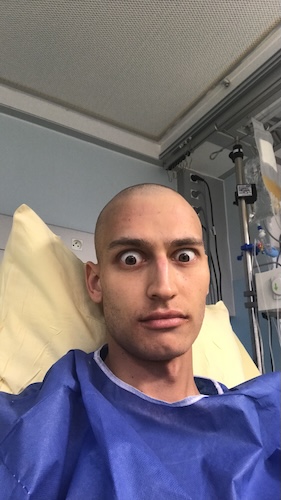
I just found myself having these images of myself bald and sick in bed, surrounded by my loved ones. I could not really process much, to be honest. I really just wanted to wake up from this nightmare.
Hearing “You have cancer” for the first time
She was pretty sure she knew what I had, so I had a biopsy the next day, and then of course all the other examinations. The biopsy basically confirmed it, and then I went to my first round of chemotherapy quite quickly after that.
My first thoughts were mainly these images. I was not really able to process immediately what was going on. I remember leaving the hospital and feeling dazed and not really knowing what I should do. My partner at the time was at work, and when I called, I was just crying. I think he could not really understand what was going on and just said, “Wait for me when I come back home.”
I went straight to a friend’s house. I think I was just crying because I did not know how to react.
My fears at the start of treatment
I think my biggest fear was the unknown: what the treatment would look like and what my life would look like. As I mentioned, I was just about to start my new agency, a new chapter in my life, so it felt like, “Will I be able to still do that?”
It was really the unknown, because the doctor did not really go into what the treatment would actually look like. The first few days, I was just really confused about where this would take me.
My first Hodgkin lymphoma treatment plan
It was a four‑month protocol with chemotherapy every two weeks. Once I announced it to friends and family, I decided to be very brave and tried to protect everybody around me somehow. I was focused on not worrying anybody, which created that armor where I would not allow myself to feel sorry for myself or be scared.
In hindsight, I was really just blocking everything out and just going through it without showing any weakness to others — and not even to myself.
Relapse after first remission
After that treatment, I was officially in remission. About two months later, I woke up one morning — touching my neck had become an automatic thing — and suddenly I found a node on the other side of my neck. I thought, “No, that is just impossible.” The first thing I did was go straight to the hospital.
There was another doctor I was close to. I went to see her and said, “I think it is back.” She said, “What do you mean? It is impossible.” Then she touched the node, and I could see in her face that it seemed like I was right. The tests confirmed that I was already relapsing.
I refused intensive treatment after relapse
That is where a very different kind of journey started. I had an appointment with the doctor who had announced the diagnosis. I sat down in front of her, and she said, “We officially know you have relapsed. The chemo protocol that we did was obviously not sufficient. Now you will have to be hospitalized. You will have to do intensive chemotherapy. You will not be able to have children. You will not be able to work.”
It felt like I was being bombarded with things that would stop me from doing what I was doing, because I had still opened my agency and kept working during the first chemo protocol. It just felt like everything needed to stop, and I had to be patient. At that time, I was still physically quite weak and also mentally. It was as if I had a voice in my head saying, “You will not be able to get through this.” It sounded so drastic.
So I left the hospital, and for a year and a half, I did not answer any of their phone calls or reply to any of their letters. I decided I was going to find ways to treat myself without the hospital.
Discovering that alternative treatments work best alongside conventional care
I think I have read every book about alternative treatments. I tried all the diets and all of these things. Obviously, the tumor kept growing and got bigger and bigger, but at that time, I was so stubborn. I would not listen to anybody. I was convinced I was going to heal myself and would not have to go through medical treatment.
After a year and a half, I did this extreme cure that was all about starving your cancer, but I basically just starved myself and lost a lot of weight. After ten days, I had a complete breakdown. That is when I went to an Ayurvedic clinic just to get back on my feet.
On the last day of that three‑week stay, the doctor said, “Listen, everything you have learned in the past year and a half is about what can support you, but that does not have to exclude actual medical treatment and innovation. How about combining these things to support you in one way, but actually getting you treated for the cancer in a way that will heal and cure you?”
Within that year and a half, that was probably the wisest thing anybody ever said to me, especially in that world. To basically say they do not have to fight against each other; they can actually support each other.
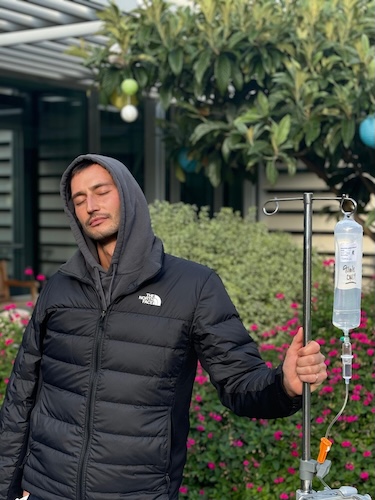
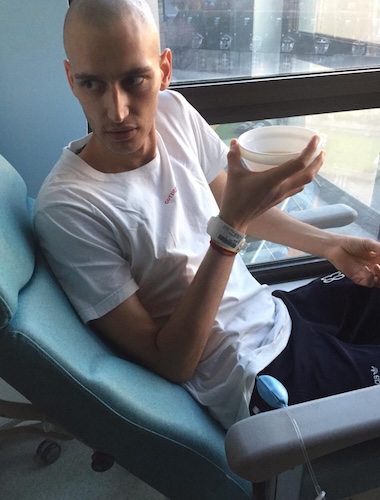
So that is what I did. I went back to the hospital. We first needed to reduce the tumor, so intensive chemotherapy was not possible right away. For about a year and a half, I went through numerous chemotherapy protocols and also radiotherapy, focused on reducing the tumor, which was on my neck and also under my armpits.
Once it was reduced enough, the doctor came to see me and said, “Listen, you can continue like that, or, if you are ready, we will now go into the protocol that requires intensive chemotherapy and an autologous stem cell transplant.” By that time, I was mentally strong enough to say, “Okay, let us do it.”
Living through chemotherapy and radiation
It really depended on the protocol, but the accumulation of all of these treatments definitely had an impact on me. That is what I always say to people: chemotherapy is not the same for everybody. Every protocol is different, every combination of drugs is different, so the effects on each person are also extremely different.
Some protocols led to hair loss, some did not. Some caused nausea, others did not. But there was this overall exhaustion, sometimes not being able to leave the bed or function properly.
My first Hodgkin lymphoma stem cell transplant and recovery
My mom always says I have a really good capacity for making things seem less harmful than they actually were in hindsight. While I was going through the conditioning — which was basically bringing my immune system down to zero for the autologous stem cell transplant to happen — it was probably all the infections you can get during that time.
I was, of course, in the hospital and isolated as much as possible, but the infections still happened. Then there were the side effects when you have a completely confused digestive system, constant diarrhea, and so many side effects that can happen. I had an anal fissure, for example. That was probably one of the most painful things I have ever had in my life and required morphine over a longer period of time. It is really these things that can happen while you are being conditioned.
Stubborn as I am, I tried to keep going as much as I could. By then, I had a few people helping me, so I did not necessarily have to be physically present. Whenever I was not able to be present, I still tried to participate as much as I could on my laptop or my phone, trying to make clients believe everything was fine so they would not worry that a project could not be managed.
Life between transplant and second Hodgkin lymphoma relapse
The autologous transplant happened in 2012. Then, in 2017, I discovered a node again.
I always tried to live as fully as possible — even during treatment. That was always very important to me: to not see myself defined by what I was going through. Once I was in remission, I felt something strange: it did not feel like a huge celebration. I did not organize a big party. I just wanted to move on and go on with my life.
There were definitely moments where I wondered, “What if it comes back?” and dreams where I would suddenly stand in front of a mirror and discover another node, or where I would see myself in the mirror without any hair. These moments were definitely there, but I would not say fear was a big part of those five years before the 2017 relapse.
Another Hodgkin lymphoma relapse in 2017
I had just moved to London. It was very exciting: new city, new people. Everything felt like a new chapter, a new adventure. I still had my agency, of course.
It was a big shock. Even though I had moments where I thought, “What if it comes back?” or had dreams from time to time, I did not really expect it to happen again. One day in the shower, I was applying shower gel and suddenly felt a node on my neck again.
Since I had just moved and knew that the French system would still cover my medical treatments for another two years, I felt it was more appropriate to seek out the French hospital because they knew me as a patient and we had been through so much together. I went back to Paris immediately, and the tests confirmed that it was again Hodgkin lymphoma. We went straight for intensive chemotherapy conditioning and then another autologous stem cell transplant.
Balancing work and another stem cell transplant
Back in 2010, when I went into the hospital and had that year and a half of chemo protocols and radiotherapy, I did wonder, “Is this ever going to end, or is this just going to be part of my life now?” But it is not my personality to think, “This is so unfair, why me?” That is just not who I am.
In 2017, it was almost a satirical kind of questioning: “What have I done wrong? What should I have done differently?” There was a bit of blame, instead of feeling like it was a punishment.
Everyone who knows me knows how much I dedicate myself to work. Sometimes, maybe a little too much, especially back then, when work also compensated for not thinking too much about the disease or the treatment. I was definitely worried that I would lose clients and projects, and whether it was going to work this time or take longer. There was definitely fear about how this renewed treatment would impact everything in my life, especially professionally.
Living through a second autologous transplant, and looking ahead
The second transplant was successful. I was in remission again. There was, of course, some fear around another relapse or something similar coming back, but again, not to an extent that consumed me with fear.
In 2020, when lockdowns started, I suddenly had a lot of time on my hands because I was producing events instead of photo shoots, and during that time, no events were happening in Europe. I thought a lot about past treatments and how they impacted me as well as the people around me. It was a very precious time because, for the first time, I truly processed what I had been through. The pain and fear I had pushed away made it a very healing period. Before 2024, when I got the MDS diagnosis, I was pretty much convinced that I would never have to face anything like that again.
Processing my cancer experience during lockdown
I actually wrote everything down. I think I wrote about 200 pages, really going through everything — not just my cancer journey, but also my childhood, being a teenager, and moving to Paris at age 18. It was basically a reflection of my life until then, very much marked by the disease and the treatments.
At that time, I also spoke with my mom, my ex‑partner, and people who were close to me, to get their view and memories from back then, and to ask hard questions I would never have asked at the time. I will never forget asking my mom, when we had coffee and cake, “Were you scared back then that I was going to die?” Questions that go really deep, which I would have been too scared to ask before. It was also very healing for the people I spoke to, especially friends and family.
Hearing my loved ones’ experiences of my illness
There was one moment I will probably never forget. I had a call with one of my ex‑partners and asked him what it had been like for him during the period when I tried to heal myself. Of course, he had been extremely worried, seeing this thing on my neck and me not wanting to go back to the hospital.
He said, “You were always saying you are fine and that you have everything under control, but every night I would wake up because you were scratching yourself all over while you were sleeping.” Then he started crying and said, “I felt so helpless back then because you would not let me in. You would not talk about your fears. You would only put on a brave face and say you had everything under control. I was just really helpless.”
After that call, I sat down and suddenly saw that my arms were sweating, as if I were doing some sort of workout. I was overcome by emotions and started sobbing. It was that kind of uncontrollable sobbing where you almost cannot breathe anymore. That was probably the first time that I really let it out. There were moments like that for sure, that went much deeper than I had ever allowed myself to go.
How writing and vulnerability helped my mental health
Writing everything down and having conversations with people helped me a lot. Being vulnerable and not trying to be the brave one who can manage it all and protect everybody was important. I allowed myself to be vulnerable with others and to cry.
From Hodgkin lymphoma to MDS: Discovering low blood counts
About every six months, I went to the hospital just to get checked — the usual blood tests and a quick examination. We noticed that my blood counts were really low, and there was no explanation. The analysis of my blood went a bit further. I had another appointment in February 2024 after one of these more thorough analyses.
I came to the appointment and saw two people sitting in the room. I thought, “That is probably not a good sign.” They said, “Chemotherapy and radiotherapy are things we use to cure cancer, but too much of them can also cause cancer. Unfortunately, we found that you have MDS, which is a genetic modification in your bone marrow.”
They transferred me to another hospital in London that specialized in MDS. That is when I started to realize it was back, but in a different way and somehow in a scarier way, because there was a genetic modification, and my bone marrow was basically broken. I was told that an autologous transplant would not be an option anymore and that I would now need a transplant from a donor.
My sister was the first choice, but since she was only a 50% match, they searched the registry and luckily found a 100% match. Being me, I worried about work projects I already had lined up. I asked them what stage I was at and how urgent it was. Since my blood counts were not decreasing too much, it seemed we had some time. They also said they would understand if I wanted to go on a summer vacation and that we could look into treatment after the summer.
So I went on a beautiful summer vacation. Because fashion week is in September, I said, “Let us push it to October.” Then, at the beginning of October, I had a big project in Saudi Arabia, so I said, “Let us do that one, and then we can start treatment.”
When MDS progressed to AML
A few days before I had to go to Saudi Arabia, in early October 2024, I had a scheduled bone marrow biopsy. That morning, I felt extremely sick. When we arrived at the hospital, I felt so sick that I needed to find a bathroom to throw up. Once I got to the room for the bone marrow biopsy, the transplant nurse came by just to have a chat. When she looked at me, she said, “Listen, you are not going anywhere right now.”
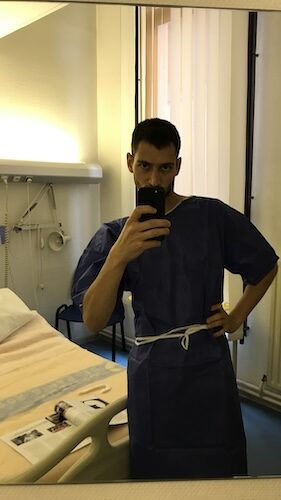
I had a high fever, probably some infection. When they examined my blood and my bone marrow, they saw that the MDS had already developed into AML. That is when we realized I was now at a stage where we could not delay treatment any further. I did not leave the hospital; we immediately started chemotherapy to treat the AML. Then I had a break of about four weeks, and we went into conditioning chemotherapy to prepare for the transplant.
Why AML felt scarier than Hodgkin lymphoma
On the one hand, Hodgkin lymphoma in general seems like a quite treatable disease with a high success rate. Even though I had two relapses, I felt optimistic and confident that we could treat it. MDS, which naturally at some point develops into AML, sounded a lot scarier because bone marrow is so essential for our immune system.
When I was hospitalized and we had the first bone marrow results, someone came to see me and said, “We are still analyzing more, but that will take a few days. There is a possibility that you have a mutation for which we do not have a treatment. In that case, I can only tell you to enjoy your life as much as possible.”
That was a very scary moment. At that moment, my partner had gone home to get some things, because nobody had gone home since I was hospitalized — my partner slept with me in the hospital room. So literally at the moment when I was all by myself, someone said that to me. It was really scary, because until then I had not seriously thought about death in that way. Nobody had ever said something that went as far as, “We might not have a cure for you.”
Allogeneic stem cell transplant for AML
Luckily, I did not have that mutation. I had a mutation that put me in the high‑risk group, but it was treatable with a stem cell transplant. I went through treatment for the AML, then through conditioning and the stem cell transplant. It was definitely a lot harder than what I was used to with the autologous stem cell transplant.
To a certain extent, I was older and had been through many treatments, so it was not as unknown as it had been back then. I was also able to be vulnerable. I had people around me who were able to support me properly, because when I needed help, I voiced it.
The recovery was a lot longer than I was used to. The immune system takes a long time to recuperate, and the body as a whole as well. I got out of the hospital around Christmas and actually the beginning of January 2025, and I would say recovery probably took until the summer. I needed to isolate myself and was not able to go into spaces with a lot of people.
That was not easy, especially not being very social, not being able to travel, because I was used to traveling all the time. I also could not physically participate in the projects we were organizing, but I let my body heal. This time, I knew it was necessary, and I was not as stubborn as I used to be.
Facing AML relapse and being denied a second transplant
When I came back from that summer holiday, my blood counts started to decrease again. We had another bone marrow biopsy. In October 2025, I had an appointment for the biopsy results. I had a feeling something was wrong — a week leading up to the appointment, I sensed I might have relapsed already.
I sat down in front of the doctor, and she said she did not have good news: the AML was back, still with that mutation. Unfortunately, the NHS in the UK would not be able to cover a second transplant because the relapse happened in under a year. The only thing they could offer was another protocol that might delay the advancement of the AML, but ultimately, it would not be a cure.
She kept saying I would have to choose my priorities, and I did not understand what she meant. When I asked her to clarify, she said, “If you live for another year, you will have to think about whether you want to spend six to eight weeks in a hospital.”
That was again a confrontation with death, because she announced something finite. Fortunately, just after that, she said, “But I might have an idea,” and mentioned a clinic in Germany specialized in secondary transplants, especially for high‑risk patients like me. She knew the professor leading that clinic and could contact them. I said, “Of course.”
She contacted them the same day, and they got back to her the next day, having reviewed everything, and said they thought they had two options available for me. I scheduled a call with them the following week, and everything moved quickly because they feared the disease would progress so fast that there was no time to waste.
Traveling to Germany for a second allogeneic transplant
I went to Germany, where my family lives, and we drove up to the clinic and did all the tests. This time, the donor was my sister. I said, “The 100% match did not work, so now we will probably go for somebody who is a sibling or part of the family,” and my sister is my only sibling.
After two weeks, I was already hospitalized. Again, we first treated the AML, then had a short break, and then went into the stem cell transplant, which happened at the end of November. I am currently still in recovery.
This was not really a clinical trial, because there were no drugs or protocols used as part of a trial. It was privately funded, so I had to pay for the treatment. They are known to be extremely specialized in high‑risk patients and secondary transplants.
People around me — friends, family, colleagues — were very alarmed. Many people inquired in Italy, France, and the US, speaking to different hospitals and professors, and many of them recommended the same clinic in Germany without knowing I was already in contact with them. It seemed like they were really the best choice available in Europe.
Current remission status and preventive treatment
That transplant was in November. So far, everything looks really good. For them, there is no sign of the disease. I am 100% donor now; there are basically no cells left from my previous donor or myself.
The plan going forward is based on a drug that was used in two clinical trials in France and China, which I started taking. I had to pause it because I had a very severe lung infection in March, and I am still recovering because I have a hard time breathing. They need my lungs to recover first to continue that medication.
That medication helps the immune system detect the disease better in case it comes back. It is a preventative treatment. It is not indefinite; it is taken over a period of time. That is the plan right now.
The hardest part of my cancer experience
I think the hardest thing for me — and probably the biggest lesson, especially since the MDS diagnosis and the relapse last October — is not even the diagnosis itself.
The hardest thing has always been announcing it to my loved ones.
How cancer changed how I see myself
When the doctor told me that the AML had relapsed after the transplant, I had a friend next to me. We left the hospital and sat in the park, and I said to her, “Well, I guess now it is a choice between being a martyr or a hero.”
For the first time, I truly recognized how incredible my body has been until now — that it went through all of this and keeps being strong again, no matter what it goes through. That appreciation is quite new. In the past, I blamed my body for letting the disease happen or come back. Now I have developed extreme respect and love for my body.
Long‑term side effects from treatment
From the first transplant and the donor transplant, I could not say I fully recuperated until I relapsed again last October. Otherwise, I would say my body always eventually fully recovered, and I always felt stronger. I would not say there were long‑lasting effects that I could still feel one or two years after treatment.
What my life looks like right now
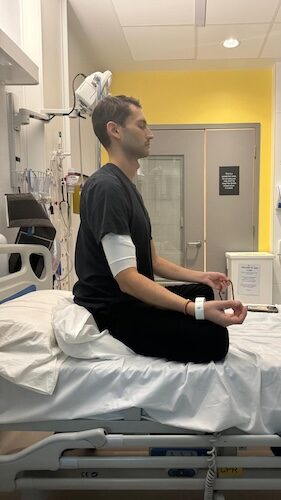
Now it is still about isolation, because my immune system is still building up, and my body is still recovering from the transplant. The lung infection in March was a setback, because I had been recovering and getting progressively better, but then the infection brought me back to the hospital. I was in the ICU for a week. Now I cannot even walk without getting out of breath.
Patience is not something I am known for, but it is something I am learning.
What people may not realize about my journey
I started an Instagram account where I share what is going on. It has been really helpful for me to get it out, and it is a great tool to keep everybody posted without replying to every single message asking what is new.
The thought behind it was that there is so much people do not know. There is so much stigma around cancer and so much generalization, especially around chemotherapy. People are very unaware of how many different types of chemo treatments there are. My goal is to share as much as I can, in a healthy way, and to create awareness and shed more light on what it means to go through treatment.
How I balance fear and hope
Naturally, I am probably more of a hopeful person. I think the fear will probably never go away. But at the end of the day, I have learned to accept fate and say, “Anything can happen at any time.” Somebody can cross the street, and something can happen.
Accepting that anything can happen at any time helps me overcome fear and appreciate the present life a little more. That is not the case every day — I still complain and get stressed about completely irrelevant things — but in general, I try to put things into perspective a lot more.
What keeps me moving forward
People I love, plans that I have, dreams that I have, and work — because I love what I do — all keep me moving forward. Life in general keeps me going. I always say no matter what happens, I have had an incredible life. I really do.
I never held back. I took risks. I traveled a lot. I met a lot of people. I went through scary things and beautiful things. It is really the love of life.
How I hope my story helps others
I would love for people to understand more about the disease itself, what it entails, and the journey. For patients, maybe it helps to feel less alone when they hear someone else’s story and recognize similarities.
For loved ones around patients, I hope it brings a bit more understanding of what somebody is going through.
This interview has been edited for clarity and length. The views and opinions expressed in this interview do not necessarily reflect those of The Patient Story. This content does not replace professional medical advice.
Inspired by Daniel’s story?
Share your story, too!
Hear from people living with Hodgkin lymphoma, myelodysplastic syndrome (MDS), and acute myeloid leukemia (AML)
Real experiences with diagnosis, treatment choices, side effects, and life beyond Hodgkin lymphoma, MDS, and AML — in their own words.
Leave a Reply