
Stage 2 Esophageal Cancer Changed Mark’s Life for the Better
When Mark was diagnosed with stage 2 esophageal cancer in June 2024, his life took a scary, unexpected turn. But despite the initial shock, he was able to find a sense of peace amid all the chaos. That’s because he used his diagnosis as a catalyst to slow down and reflect on what truly mattered to him.
Interviewed by: Nikki Murphy
Edited by: Chris Sanchez
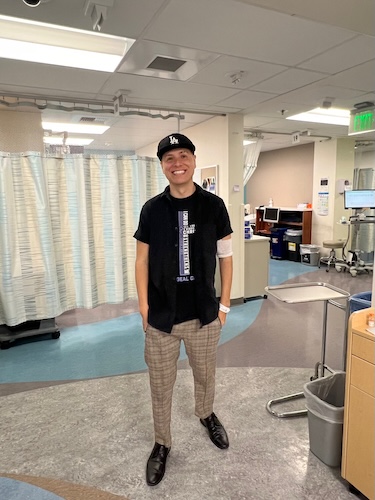
Before his diagnosis, Mark was thriving and healthy. He ran and worked out regularly and was healing from past emotional wounds. However, subtle, ominous signs started to emerge in February 2024. He started to experience difficulty swallowing, and initially dismissed this symptom as being due to dehydration.
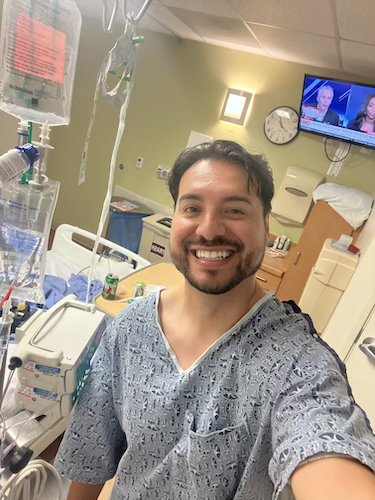
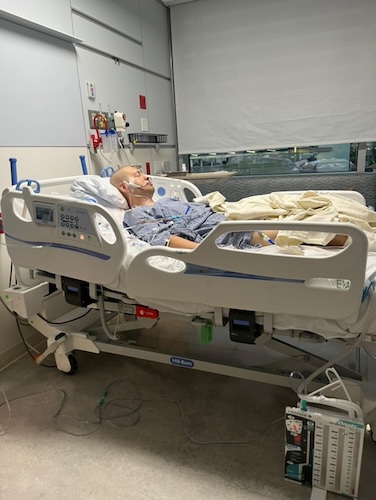
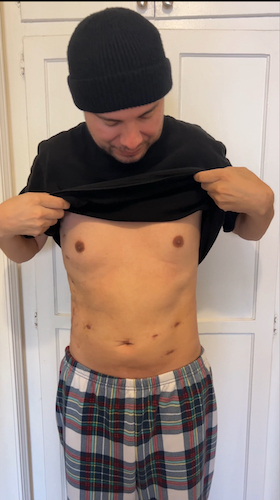
He found it increasingly difficult to swallow, prompting him to seek medical advice. Doctors reassured him, though, due to his young, healthy appearance. It wasn’t until he was unable to swallow liquids that he rushed to the emergency room. A CT scan revealed a mass the size of a strawberry in his chest, and the biopsy confirmed stage 2 esophageal cancer.

Mark received the news alone in his hospital room. He was overwhelmed and faced a deluge of questions, for which he found few immediate answers. However, he didn’t succumb to his fear; he openly communicated with his children, answering their questions honestly and warmly.
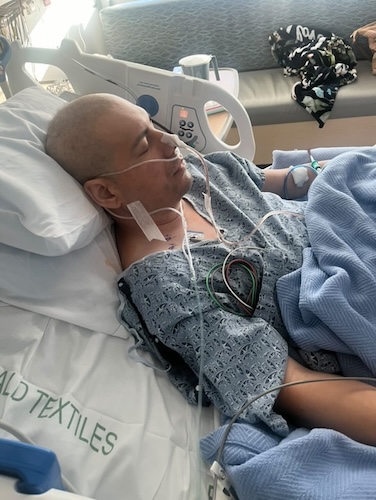
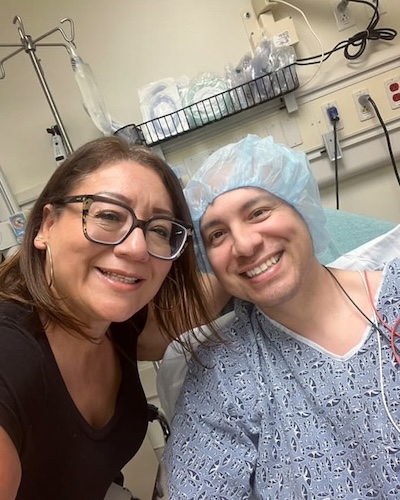
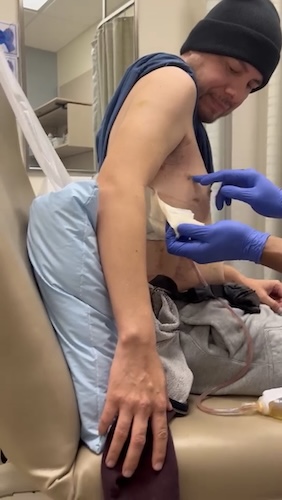
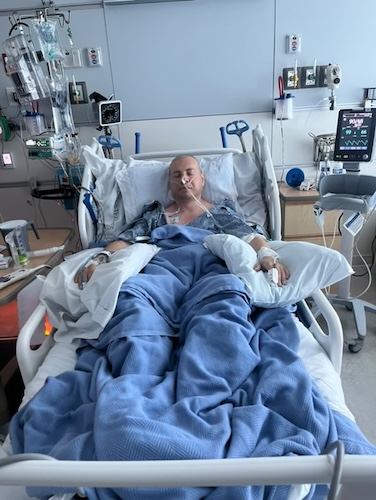
Mark’s treatment plan for stage 2 esophageal cancer included four initial rounds of chemotherapy, surgery, and four additional chemo sessions. Initially, he followed his doctors’ advice without questioning it. But during a break before surgery, when he was able to reflect and research, he learned to self-advocate and make informed decisions about his treatment.
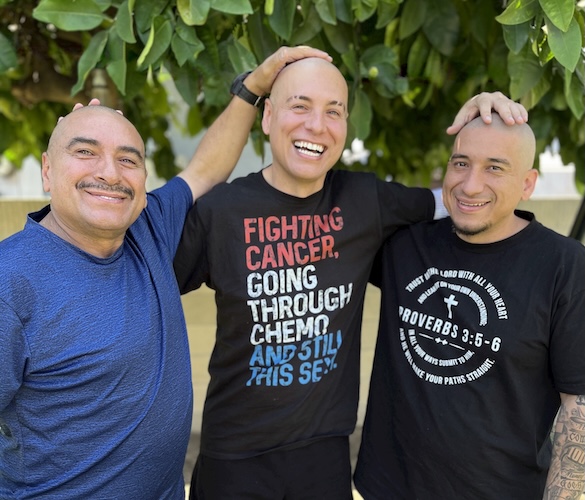
Armed with this knowledge and thinking of his personal health goals, he chose to undergo fewer of the additional chemo sessions. Chemotherapy was grueling. The side effects, like fatigue and nausea, were immense and took both a physical and emotional toll. But Mark was determined to stay positive and present for his family. He managed his stress by focusing on the present, taking each day at a time so he wouldn’t overwhelm himself by worrying about the future.
Mark urges others to realize that he didn’t just survive stage 2 esophageal cancer. He also learned to navigate his life: to live authentically, advocate for himself, and find meaning in adversity. He wants others to know that early detection, listening to one’s body, and seeking second opinions when necessary are all crucial.
Watch Mark’s video and delve into his story:
- Discover how a simple swallowing issue led to a life-changing diagnosis.
- Mark’s candid conversation with his kids will touch your heart.
- See how Mark found peace and clarity through the chaos of cancer.
- Discover the moment Mark realized he could advocate for his health.
- Learn the stress management tips that helped Mark stay positive.
- Name:
- Mark S.
- Age at Diagnosis:
- 40
- Diagnosis:
- Esophageal Cancer
- Staging:
- Stage 2
- Symptom:
- Difficulty swallowing that got progressively worse
- Treatments:
- Chemotherapy
- Surgery: esophagectomy




This is not medical advice. Please consult with your healthcare provider to make informed treatment decisions.
Inspired by Mark’s story?
Share your story, too!
Related Cancer Stories
Louis D., Gastrointestinal Stromal Tumor (GIST)
Symptom: Feeling the need for constant urination
Treatments: Surgery to take out the tumor, maintenance chemotherapy (3 years)
…

Andy G., Stomach Cancer, Stage 4 (Metastatic)
Symptoms: Stomach pain, back pain, chest pain, extreme exhaustion, shortness of breath after short walks
Treatments: Chemotherapy, immunotherapy
…

Alyssa B., Stomach Cancer, Stage 4 (Metastatic)
Symptoms: Fatigue, elevated resting heart rate, heartburn, difficulty swallowing, weight loss
Treatments: Chemotherapy, immunotherapy, surgeries (total gastrectomy; partial esophagus removal; bilateral oophorectomy and fallopian tube removal), clinical trial
…

Brittany D., Stomach Cancer, Stage T1b
Symptoms: Choking suddenly while eating and attempting to speak, neck and right shoulder pain, neck tightness, trouble swallowing certain food items
Treatments: Surgeries (subtotal gastrectomy, D1 lymphadenectomy, gastric bypass)
…

Camilla C., Stomach Cancer, Stage 4 (Metastatic)
Symptoms: Issues swallowing, swollen gland in the neck
Treatments: Palliative chemotherapy was offered but declined, nutritional changes to support her comfort and energy, meditation and mindfulness practices, self-directed healing methods
…
Emily D., Stomach Cancer (Gastric Adenocarcinoma), Stage 4 (Metastatic)
Symptoms: Persistent postpartum stomachache, early satiety, difficulty swallowing, vomiting
Treatments: Chemotherapy, immunotherapy
…

Alyssa B., Stomach Cancer, Stage 4 (Metastatic) (Hospice Update)
Symptoms: Fatigue, elevated resting heart rate, heartburn, difficulty swallowing, weight loss
Treatments: Chemotherapy, immunotherapy, surgeries (total gastrectomy; partial esophagus removal; bilateral oophorectomy and fallopian tube removal), clinical trial
…

Amber K., Colon Cancer, Stage 4 (Metastatic)
Symptoms: Blood in stool, abdominal discomfort, changes in bowel habits, weight loss, dizziness, blurry vision
Treatments: Chemotherapy, immunotherapy, surgeries (colectomy, lymphadenectomy)

Mario P., Colon Cancer, Stage 3B
Symptoms: Fatigue, stomach cramps at night, vomiting
Treatments: Surgeries (partial colectomy, appendectomy), chemotherapy
Zed D., Colon Cancer, Stage 3B
Symptoms: Fatigue, blood in stool, inconsistent bowel movements
Treatments: Chemotherapy, surgeries (total colectomy, bowel obstruction surgery)

Adrienne F., Colon Cancer (Colon Adenocarcinoma), Stage 4 (Metastatic)
Symptoms: Years of constant fatigue, appearance of a lump in the abdomen
Treatments: Chemotherapy (FOLFIRINOX, FOLFOX, FOLFIRI), radiation therapy (Y-90 radioembolization) monoclonal antibody (bevacizumab), ablation therapy, surgery (colon and liver resection)

Ken S., Colorectal Cancer, Stage 4 (Metastatic)
Symptoms: Frequent loose bowel movements, intermittent rectal bleeding, fever and chills, rapid and significant weight loss
Treatments: Surgeries (total colectomy, liver resection), ablation therapy (liver and lung ablations), chemotherapy (FOLFOX, capecitabine, fluorouracil), monoclonal antibody (panitumumab)

Carrie H., Colon Cancer (Signet Ring Cell Carcinoma of the Colon), Stage 4 (Metastatic)
Symptoms: Persistent upset stomach, significant bloating
Treatments: Surgeries (colon resection, oophorectomy, hysterectomy, laparoscopic tumor resection, liver resection, kidney resection), chemotherapy, radiation therapy

Caroline M., Colorectal Cancer, Stage 4 (Metastatic), Juvenile Polyposis Syndrome (JPS), BMPR1A, SMAD4
Symptoms: Shoulder pain, rapid weight loss, abdominal cramping and pain, jaundice
Treatments: Chemotherapy, surgeries (colon tumor removal, multi‑stage liver surgeries including hepatectomy, liver transplant), clinical trial (HAI pump/floxuridine)

Jeffrey R., Colorectal Cancer, Stage 3B
Symptoms: None; diagnosed through routine screening colonoscopy
Treatments: JANUS clinical trial (radiation therapy, oral chemotherapy, chemotherapy infusions)

Helen D., Colon Cancer, Stage 4 (Metastatic)
Symptoms: Pelvic pressure and pain, burning with urination, bloating, constipation for a short period, low energy or fatigue, discomfort sitting, night sweats
Treatments: Chemotherapy (FOLFOX, FOLFIRI, hepatic artery infusion pump therapy), targeted therapy (panitumumab), surgeries (liver resection and ablations, colon resection, full hysterectomy)

Joe C., Colon Cancer, Stage 4 (Metastatic)
Symptoms: Loss of appetite, fatigue, malaise, severe pain in the abdominal/liver area, back and shoulder pain, lightheadedness
Treatments: Surgery (colon resection), chemotherapy (FOLFOX, capecitabine, FOLFIRI), targeted therapy (panitumumab, a monoclonal antibody), radiation therapy, immunotherapy through a clinical trial

Sydney S., Colon Cancer, Stage 4 (Metastatic)
Symptoms: Constant stomachaches that only went away after bowel movements, pain after eating, changes in bowel size and shape
Treatments: Surgeries (colectomy, temporary ileostomy, ileostomy reversal), chemotherapy (FOLFOX, FOLFIRI, trifluridine and tipiracil), monoclonal antibody (bevacizumab), radiation therapy, hormone therapy

Cora V., Colorectal Cancer, Stage 4 (Metastatic)
Symptoms: Fatigue, unintentional weight loss, blood and mucus in stool
Treatments: Chemotherapy, chemoradiation, surgeries (temporary ileostomy and reversal, liver surgeries and ablation)

Laura B., Rectal Cancer, Stage 3B
Symptoms: Rectal bleeding, one instance of pencil-thin stool, fatigue, bowel urgency
Treatments: Radiation therapy, chemotherapy, surgery (rectum and colon resection, temporary ileostomy, ileostomy reversal)

Kalei M., Rectal Cancer, Stage 4 (Metastatic)
Symptoms: More frequent bowel movements, presence of mucus, tissue-like substance, and blood in stool, stomach cramping and sharp pains
Treatments: Radiation therapy, chemotherapy (FOLFOX), surgeries (two lung resections)

Sarah G., Rectal Cancer, Stage 2A
Symptom: Minor and inconsistent rectal bleeding
Treatments: Surgery (low anterior resection or LAR), chemotherapy (FOLFOX)

Kalei M., Rectal Cancer, Stage 4 (Metastatic)
Symptoms: Presence of mucus and tissue-like substance and blood in stool, stomach cramping
Treatments: Radiation therapy, chemotherapy, surgeries (two lung resections)

Jessica A., Rectal Cancer, Stage 4 (Metastatic)
Symptoms: Changes in bowel movements, blood in stool, abdominal pain, back pain, difficulty sitting comfortably, constipation, feeling of incomplete evacuation (as if some stool remained after bowel movements), mucus-like stool consistency, bloating
Treatment: Immunotherapy under a clinical trial

Shiva S., Rectal Cancer, T2, and Renal Cancer, T3
Symptoms: Pressure and urgency of bowels, back pain
Treatments: Chemoradiation (for rectal cancer), surgery (ileostomy, combined bowel and kidney surgery), immunotherapy (for kidney cancer)

Leave a Reply