
After a Year of Unanswered Symptoms, Marcie Learned She Had Stage 3 Adrenal Cancer
For almost a year, Marcie lived with an unexplained low-grade fever and bouts of abdominal pain, vomiting, and diarrhea that doctors couldn’t explain. It was the height of the COVID-19 pandemic, she was in the middle of IVF treatment, and every test came back inconclusive. The answer finally came at an urgent care center, where an abdominal CT scan revealed a large mass. She was later diagnosed with stage 3 adrenocortical carcinoma (ACC), a rare kind of adrenal cancer. The adrenal glands are small, triangular-shaped glands found above both kidneys and are sometimes referred to as “hormone factories.”
Interviewed by: Taylor Scheib
Edited by: Chris Sanchez
Marcie’s path to treatment wasn’t straightforward. A family friend helped get her scan results in front of a radiation oncologist three hours away, who urged her to go straight to Dana-Farber Cancer Institute in Boston rather than stay local for care. At Dana-Farber, a sarcoma specialist found that the tumor had already been visible on an earlier scan that was never reported. After a biopsy and a fast-moving surgical referral, Marcie had surgery to remove her left adrenal gland, part of her pancreas, and her spleen.
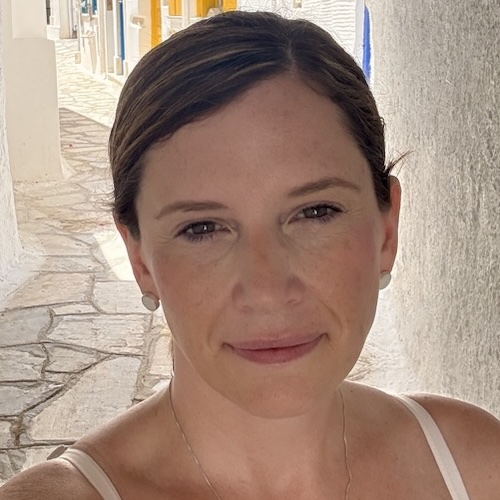
Recovery was difficult, including a long hospital stay, a painful incision, and an unexpected case of thrush, a local infection that usually impacts the mouth and throat. Once Marcie was back home, she started two years of oral chemotherapy alongside 25 rounds of radiation, all while building a second care team near her home in upstate New York so she wouldn’t have to make the three-hour drive to Boston for every appointment.
Today, Marcie is approaching the five-year scan milestone for adrenocortical carcinoma. She’s since dedicated her experience and voice to helping others in the small online ACC patient community, as well as working with the advocacy organization “Let’s Cure ACC.” Marcie says her diagnosis has turned her into her own fiercest advocate, and she has built a life since treatment centered on doing the things that make her happy, from concerts to traveling with friends.
Find out more about Marcie’s adrenal cancer story by watching her video and browsing her edited interview transcript below.
- Her tumor showed up on a scan months before anyone caught it. It wasn’t until a specialist at Dana-Farber pulled up her old imaging that the missed finding came to light, a reminder of how easily a rare cancer can slip through the cracks of a healthcare system that isn’t looking for it.
- After her diagnosis, Marcie had to build two separate care teams: one of ACC specialists three hours away in Boston, and one closer to home in upstate New York to manage day-to-day needs during two years of oral chemotherapy and 25 rounds of radiation. Coordinating both took real effort, but it meant she didn’t have to choose between expert care and a sustainable routine.
- Living with a rare cancer can be isolating in ways that are hard to explain to people who haven’t experienced it. She found that no two adrenal cancer patients’ experiences look alike. This difference, rather than bringing patients together, can sometimes make the disease feel even more invisible.
- Marcie carries a quiet but firm boundary around medical statistics. She allows herself to look at survival data, but she doesn’t let it define her. Holding both things at once, awareness without surrender, is something any patient with a serious diagnosis can take with them.
- Since her diagnosis, she’s stopped weighing her choices against what other people might think and started prioritizing the things that genuinely make her happy, from concerts to trips with friends. That shift, more than any single scan or treatment, is the clearest marker of who she’s become.
Marcie’s Diagnosis Facts
- Name:
- Marcie B.
- Age at Diagnosis:
- 41
- Diagnosis:
- Adrenal Cancer (Adrenocortical Carcinoma)
- Staging:
- Stage 3
- Symptoms:
- Abdominal pain
- Chronic low-grade fever
- Diarrhea
- Vomiting
- Generally feeling unwell
- Treatments:
- Surgeries: adrenalectomy, partial pancreatectomy, splenectomy
- Radiation therapy
- Chemotherapy: mitotane
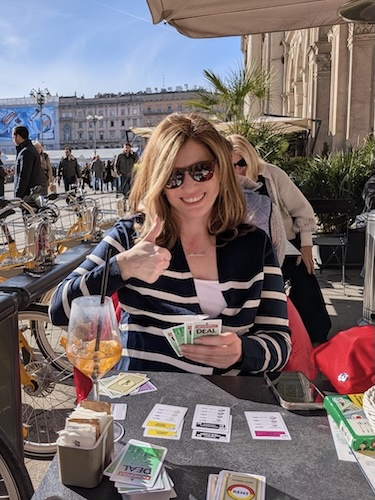
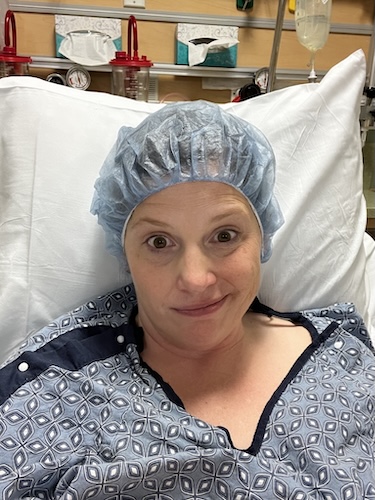

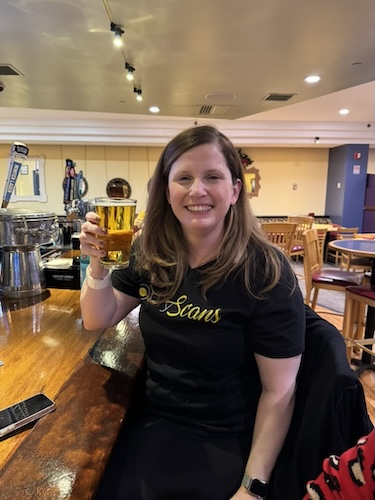
This is not medical advice. Please consult with your healthcare provider to make informed treatment decisions.
- Marcie’s Diagnosis Facts
- Meeting Marcie: A stage 3 adrenal cancer survivor
- A mysterious fever and a year of unanswered symptoms
- An urgent care scan changes everything: “We’re pretty sure it’s cancer”
- Finding the right doctors: The three-hour drive to Dana-Farber
- Surgery, a long recovery, and losing a spleen
- Managing adrenal cancer treatment three hours from home
- What survivorship looks like with adrenal cancer
- Advice for others facing a rare cancer diagnosis
- Hear from people who live with adrenal cancer
Meeting Marcie: A stage 3 adrenal cancer survivor
My name is Marcie. I am a stage 3 adrenal cancer survivor. I was diagnosed in 2021, and I am from upstate New York.
A mysterious fever and a year of unanswered symptoms
The one weird thing for me was a low-grade fever for quite a long time, and that was in the days of COVID, when if you had a fever, you weren’t supposed to go to work. It was very problematic because I think the rule at the time was 99.5. I would have this intermittent fever somewhere between 99.5 and 100, but I wasn’t really sick. I would go get a COVID test, or I’d go to the doctor, and it was just rinse and repeat. But you couldn’t go to work. So I was missing a good amount of work just from this one weird symptom.
But then the symptoms that really led to the diagnosis were intermittent bouts of terrible abdominal pain, vomiting, and diarrhea; just really bad flare-ups. I would either go to the doctor, go to urgent care, or go to the hospital, and they’d say, “Not really sure. Go see your primary care doctor.” I’d say that went on for about a year. Again, this was all during COVID, when they were encouraging you not to go to the doctor unless something was very wrong. So there were a lot of COVID tests, a lot of tests that went nowhere.
I don’t know if I mentioned this in my interview, but I was also going through IVF at the time. I don’t know if I put that in my application.
I was seeing different doctors a lot — not the doctors I probably needed to be seeing — but I was in and out of a lot of doctors’ appointments, getting a lot of blood tests and other things. There was no real answer for quite a while. It was just a lot of back-and-forth with different doctors, with nobody able to pinpoint what was going on with me.
Navigating COVID, IVF, and an unexplained illness all at once
It was super stressful. I think anyone who’s gone through IVF will tell you how much of a roller coaster that is.
The appointments are constant — you have all these monitoring appointments, you’re constantly in and out of doctors’ offices. There was just a lot going on. I felt really busy and confused a lot of the time, with a lot of appointments and not feeling great. And the medications you use for IVF don’t make an average person feel well, so you compound that on top of already not feeling well. I just didn’t feel good at all.
My weight was fluctuating, and things were generally not good — without an answer, though, just a sense that something was wrong.
Holding on to normal life while something still felt wrong
I had a new puppy that kept me very busy — a three-legged Siberian husky with two different-colored eyes. He kept me super busy during that time, just trying to get him to be a normal, well-behaved dog. This was during COVID, when people were adopting dogs, and those dogs were going a little crazy because nothing was going on for them. But he did keep me super busy.
I’m pretty close with friends and family, so I was just living my normal life, but there was always this underlying sense that something was off, something was not right.
I didn’t have the typical symptoms of ACC or adrenocortical carcinoma, where hormonally things are off — a good number of people with this cancer have high cortisol or other elevated hormones related to their adrenal glands. But I think it’s probably less than half of patients who don’t have that.
For me, there were no biomarkers — no tests or anything — showing any hormones were off that would lead to the doctors saying, “Hey, we should probably take a look at her adrenal glands.”
An urgent care scan changes everything: “We’re pretty sure it’s cancer”
This part of the story is crazy. When I tell it to people, sometimes their jaws drop.
I had gotten tired of going to the same hospital and not getting an answer. I’d been very frustrated. I talked to my primary care provider, who was wonderful and always very supportive of me — that was never an issue for me. And she suggested that I go to this other urgent care that has imaging, because she thought maybe getting somebody else to look at it would help. So I went in there and explained my symptoms. They did an abdominal CT scan, and I was feeling really lousy. I was just lying in, you know, a hospital bed — not in a hospital, but at urgent care.
The physician’s assistant comes in and says, “We don’t normally say things like this, but we found a mass in your abdomen, and we’re pretty sure it’s cancer. You need to go to a doctor tomorrow.” I was like, “What?” I’m at urgent care. I thought, “You know, it could be my appendix” — it was on the wrong side, though; I know my appendix isn’t on that side. But I’m like, “I don’t know, it’s got to be something, right?” For them to say that just meant it was so large and consuming that they didn’t even know what to do with it. So that was really strange.
A nurse came in and kind of said a prayer over me. It was very strange — I’m not a religious person, and normally something like that, if I were feeling well, would be icky to me. But I was like, I’ll take it, because this is crazy.
And I mean, I’m a single lady — I don’t have a partner, I don’t have family. So when I go to these doctor’s appointments, it’s just me. There’s no one in the room to look at and be like, “Holy — did you just hear that?” You’re just in it alone. And this experience was like, “Wow.” I actually left that appointment and went to Target, and saw someone I knew in the parking lot, and I was like, “You’re never going to believe what just happened.” That feels funny to me — that I was just walking around, having just been told I probably have cancer, and socializing in the Target parking lot. It was a strange day.
I don’t even remember it. I don’t actually remember it — the person I saw remembers it, and I remember seeing her, but that’s it. I don’t remember anything else that happened.
Finding the right doctors: The three-hour drive to Dana-Farber
I did a lot of the advocating for myself. I’m very lucky — I have good friends whose mother is a retired nurse; she’s like a boss nurse, chief nursing officer level. Not that there’s this hierarchy, but she’s just well-connected. So she took the report, took a copy of it, and sent it to a friend of hers who’s a radiation oncologist — at that point, I didn’t even know what a radiation oncologist was. I had no idea. I thought, “Oh, they do radiology.” That’s all I knew. So she sent it to him, and he read the report and said, “You need to tell her to go to Dana-Farber right now.”
Now, I live in Albany, New York. Dana-Farber Cancer Institute is not close by — we’re three hours away. But at that point, I thought, “Okay, I’m going to listen to this man, since this is his full-time job.” So I bypassed local care immediately, which I actually credit as a big reason why I’m sitting here able to talk to you about this disease, because no one locally has ever really treated it. When I got diagnosed and finally made it to an endocrinologist here who’s an adrenal expert, I was her first patient with this disease. I feel like that’s the turning point in the story for me, because I know I’m very lucky — a lot of people with this cancer don’t have that opportunity, whether for geographic or financial reasons, or whatever else. They just don’t always make it to those cancer care centers that are experts in the disease.
But funny enough, the doctors locally didn’t know what I had at first — they just said, go to Dana-Farber, we think it’s a sarcoma. So they sent me to a sarcoma specialist. First, my doctor had me run around and get all the scans I’d had — she said,” Get all the images, take them with you to this place.” So we went to the sarcoma specialist, and he pulled up the images from months before. What do you know — there was a tumor on one of those scans. It just hadn’t been reported. In that moment, I thought, “I can’t go back to Albany or Troy for treatment. It has to happen here,” because I had no faith at that point. So he sent me in for a biopsy.
He said he was going to test a few of my hormones first, because they didn’t want to do a biopsy if it was adrenal — but he didn’t think it was adrenal — so they did the biopsy anyway. The biopsy was terrible because I was awake for it. Very painful. I lay on my stomach — they were going to go in through the back to get to it, because another concern was that they couldn’t tell where the tumor was stemming from. They just said it was touching my pancreas, my kidney, my adrenal gland, and my spleen. They did not know where it was growing from. So they put me on the table on my stomach, then turned me on my side to get access to it.
Then, you know, it was the waiting. This was all taking time — there’s always time in between appointments. Probably a month between the scan and when I made it to Boston. And then the biopsy, and then waiting for those results.
The results were that it’s adrenal, but they weren’t sure it was even cancer. I was like, “What do you mean that maybe it isn’t cancer?” So that was a weird in-between time. He said he was going to send me to an endocrine surgeon who specializes in adrenal tumors.
I got to that doctor a couple of weeks later. He said, “You’ve got to meet me in the operating room in like two weeks. This has to come out.” And I said, “But what do you mean it has to come out? I was just told it’s probably not cancer, maybe not cancer.” And he said, “There’s no way a benign tumor is going to grow as fast as that thing is growing.” So that was that. I think I was scheduled for surgery within not even two weeks of seeing him — maybe a week and a half later.
Living with the knowledge that the adrenal cancer had been there all along
It’s funny — people will hear stories like this and say, “Oh, you’re so lucky.” And I always say, “I don’t think lucky people get cancer. I don’t think it’s about luck.” But I do feel fortunate. I feel like it has helped turn me into the fiercest self-advocate, living on my own and being independent. No one’s going to look out for you, per se. I mean, yeah, I have people in my corner. But when it comes to this stuff, it’s all on me.
I think I’ve coped by becoming a little obsessive when it comes to my health — reading everything there is to read, finding all the doctors who are well-suited to do the work and who treat me respectfully. I’ve always been like this, but it’s turned me into a different version of me — someone who’s always going to second-guess things, not in a bad way. I just need to know. I need to experience it and understand it and really wrap my head around something, more than I ever did before.
The flip side of that, I guess, is there are some trust issues there — I always joke to my friends that they know what hospital to take me to if something happens. But I think it’s turned me into a better version of myself, because I have to advocate; I have to be the one to take care of things. So I just dig deeper with that kind of stuff.
The relief of finally having an answer
Yes, I did feel that way. I felt that way after they truly found that mass and reported it from urgent care, because I was just like, “Okay, I’m not crazy.”
I also have endometriosis, and that’s another disease where doctors will gaslight you and act like you’re crazy. So I had already lived through that at one point in my life.
Eventually, when I was living in the city, I found a wonderful doctor down there who was an expert and just took care of business for me. So I had already experienced that sort of medical gaslighting, and I was kind of used to it.
So it was a little bit of relief. It was definitely scary, not knowing what it was. But I was relieved, because I truly didn’t feel good, and I had no answers for so long that I started to feel a little crazy, questioning myself.
Hearing “adrenocortical carcinoma” for the first time
It was very strange going into that surgery, because it was implied — this is probably what it is, but we have to go in to take it out. It still felt at that moment like it could be anything. They were still kind of like, “Yeah, we think this is what it is.” But even then, the biopsy hadn’t confirmed it — it just showed that it was malignant adrenal cancer. I had looked up what ACC was, but it was still vague to me. I didn’t really know what it was.
It was very strange to be going to a place like Dana-Farber, because that’s just a transition. I’ve had a lot of medical issues in my life, and I go to a lot of doctors’ appointments, but cancer centers are very different. Especially cancer centers like that — they’re wonderful, but they’re full of people with very, very serious diagnoses. And that’s just very overwhelming in and of itself, to walk into a situation like that.
So it was a lot of overwhelm — just feeling like, “This is wild.” Even though it seemed like it moved slowly, because it had started so long ago, it had moved all of a sudden, within the time between them finding the mass and getting me to the right doctors at Dana-Farber. After that, it felt like everything was moving really fast. So it was very overwhelming. Before the surgery, I had just looked up what ACC was and thought, “Well, I guess we’ll see if this is what’s going on.”
When the doctor was prepping me for the surgery, his biggest focus was, “You’re probably going to wake up without your kidney.” The funny part to me about adrenal cancer is that most people don’t know what their adrenal glands are. I knew what it was, but I didn’t know anything about it — I didn’t really know what it did. It was just a thing in my body. So I was more focused on losing a kidney — for some reason, that was something concrete I could grab onto. He had told me there was a chance I’d also have my spleen removed, as well as part of my pancreas. But he was super focused on the kidney, because the tumor was on my adrenal gland, which sits on top of the kidney.
So when I woke up from surgery, they said, “We took out your tumor, your left adrenal gland, part of your pancreas, and your spleen.” And I was like, “What?” I thought I was going to wake up without a kidney — they had said that might happen, but it wasn’t the focus of the conversation. So that was very strange, because it felt like at every point in the story, things took a turn. There was nothing predictable about this.
Surgery, a long recovery, and losing a spleen
I was in the hospital a while — I want to say 8 or 9 days. I have a scar from my sternum down past my belly button. It depends on the surgery — some ACC patients have a scar that goes across, mine is just straight down, and that’s a tough thing to recover from. It’s really hard. I’m one of those people who doesn’t do well with pain meds after surgery — I get nauseous, and it’s just not fun. So I really was having a hard time in the hospital recovering, because I couldn’t eat, and I felt lousy. When you’re recovering from a surgery like that, and you can’t do anything to make yourself feel better, it’s really tough.
I vividly remember a nurse from that hospital who was so good to me — she was the only one who could really tell it was related to the pain meds. She said, “We’re going to try something different,” and that’s when I finally turned a corner. I somehow ended up — this is just a crazy story — with thrush in the hospital. I kept saying my mouth and my throat hurt, and they said, “Well, you had a tube down your throat, it’s going to happen.” And I said, “No, it’s really bad, I can’t really eat or drink.” Then, finally, I think on the fifth or sixth day I was there, they decided to look in my mouth, and they said, “Oh my God, you have thrush.” I was like, “I told you something was wrong” — that’s the story of my life.
The recovery was tough. It was very painful, very uncomfortable. But once we got the pain managed, and the thrush on the way to being managed, it was like, okay, I was up, I was walking, I just wanted to get out of there. I didn’t want to be there anymore. Before this, despite having a lot of health problems and outpatient surgeries, I had never stayed in a hospital before that surgery. So I was just like, “Get me out of here, I need to be out.”
There are weird things that happen when you don’t have a spleen, all of which I wasn’t prepared for. When you lose your spleen, you have to have all these extra immunizations. So before I left the hospital, I had to have 4 or 5 immunizations. Some of them were shots I’d already had as a child, but you have to have them again, because — I don’t know the technicality of it, but your blood cells and things live in your spleen. So that was a big focus of the recovery: I can’t get sick. So I have to wear a medical ID bracelet, not just for the adrenal stuff, but for the spleen.
That was a big focus of being in the hospital for a while — making sure I was not exposed to things that could get me sick, and being on blood thinners, all these things they send you home with, and you’re just like, “Oh my God, this is my life now.” So they set me up with nurses who would check in with me at home — just a couple of visits, nothing intense, but enough to make sure my scar was healing and that I was feeling okay.
Then, about two weeks after the surgery, I went back to see the surgeon to get the all-clear and get the ports taken out, and he explained what the next steps were. It’s a whole team of different doctors — some of them are even at different facilities. He works out of one hospital, the oncologist is at another, the radiation oncologist is somewhere else, and the endocrinologist is at yet another doctor’s office. So it was, these are all the people you’re going to see, you’re coming back in. I think it was less than a month before I went back there and met all the players, and that was when I learned what all the next steps were for treatment.
Managing adrenal cancer treatment three hours from home
Fortunately, I have friends in Boston, so I had places to stay and people around me. I didn’t feel like I was totally alone.
I would say every visit except the surgery, I drove myself to and from, because I’m just stubborn like that. I’m one of those people who doesn’t want to burden people — and also, sometimes when you have people helping you, and they don’t know how to navigate where you’re going, it’s more work. I just couldn’t do it sometimes. It was so much easier for me to just do things myself. I don’t know, that probably says something about my personality, but it was just easier for me to manage on my own most of the time. I would have people with me for certain visits, and I had friends I would call on the drive, but a lot of times it was just me driving out there and back on my own, because I knew how to get there. I knew what parking garage to get to on the Dana-Farber campus, which is intertwined with Mass General and all these different hospitals.
They would book me — bless their hearts, sometimes — in five different buildings. I’d go to one in the morning for blood work, then somewhere else for scans, then somewhere else for the endocrinologist, then somewhere else for the radiation oncologist, then somewhere else for the oncologist. It was just craziness. Eventually, I think I must have said something to them, because they got the point and tried to consolidate the appointments into closer buildings, because I was like, “This is absolutely crazy.” Fortunately for me, I was never so sick from the treatment that I couldn’t walk or get around. But I always think about that — why do we do this to patients? Why do we make things so hard? Who’s thinking about this, from the lens of, does this make any sense, to make someone who is sick with cancer run around like this?
Building two care teams in two different states
You have to have people nearby when you’re going through this — that’s just an absolute requirement. And your ability to travel could be a concern — for me, my doctors and treatments were a drive away, but for some people, that may not be the case. I don’t know what my story would have looked like without all of these providers I could access.
I had a lot of people to see. It took a long time. Some people weren’t always the right fit — some doctors aren’t interested in being the backup to a larger hospital, that’s just not something they want to do. So it takes some finagling, and I think that’s really hard for some people to think about.
When you’re sick, it’s almost easy to default to the easy option, because you don’t always have the energy to give to finding all this out. I was very lucky — I had people in my life who were willing to help me get to doctor’s appointments and figure all this out, and to set up a situation where I could have the experts who know this very rare disease in my corner, but also doctors who were around the corner to help me.
Two years of oral chemotherapy and 25 rounds of radiation
So I had to meet with the whole band of experts there, and they told me what they were going to do. Interestingly, with ACC, a lot of times it’s the endocrinologist who’s managing the chemo part of it.
So I met with the wonderful endocrinologist, and he explained that I would be taking this terrible medication — an oral chemo called mitotane, made out of a banned pesticide from the 1970s — and that I would need to wear rubber gloves to touch it, which is my favorite part. You can ingest it, just don’t touch it. He’d be the one doing all the monitoring of my bloodwork concerning that medication.
Then I would be going to the oncologist essentially just for scans and checking on symptoms. The radiation oncologist there met with me and explained their plan and what they recommended. Thank goodness he said I didn’t have to do my radiation there — I could do that back home — because otherwise I would have been living in Boston for about five weeks, since it was 25 rounds of radiation. So I was encouraged to also have a team of these same kinds of doctors back home.
I had to search and find an endocrinologist, an oncologist, and a radiation oncologist locally, so that if I needed help day to day, I had someone, and I wasn’t going back and forth. That was a lot to take in — it was like, “Okay, we’re not done, we’re not even close to done, this is basically just the second chapter.” At that same time, the radiation oncologist in Boston is from whom I found out — “Hey, we know you were doing all this IVF; now’s your chance. If you really want to have a kid, you have to do it now, because after this we don’t recommend pregnancy, after the radiation and the chemotherapy.” I said no — and that actually closed that chapter for me so nicely, because I couldn’t bring myself to inject myself with more medications or feel sicker than I already did. It’s bittersweet, I guess, but it was the nicest kind of closure: “Okay, we’re done here, this chapter is closed, and we’re just moving on to the next part of the story.”
My surgery was in November 2021. By December, before Christmas, I had started the chemo. When you start the chemo, you have to start the steroid replacement, so all of a sudden, it was just all these medications in a matter of days. Then in January, I started to meet with the radiation oncologist, and they bring you in, they map everything, and tell you what they’re going to do. My radiation oncologist was local — he basically took the guidance from Dana-Farber and their team, did exactly what he was told, and did those 25 rounds. I was done with radiation by mid-March. I think I started in February, the whole month of February, and into March.
I was working the whole time. That’s another part of the story; after my surgery, I recovered, wasn’t working, and then I worked from home until the end of radiation. I would drive myself to radiation — I think my appointments were at 7:30 in the morning — come home and work most days from bed. I wasn’t doing a whole lot during radiation. Radiation really can take it out of you. I drove myself to and from radiation; I didn’t really want help with that, because radiation to me was just something I had to get over with.
I’d go, I didn’t even have to undress — I would wear a wireless bra so there was no metal on my body, so I could just lie on the table, lift my shirt, and be like, “Okay, get it over with, let’s go,” and get out the door. That hospital had valet parking, too, which was kind of amazing — I would just pull up, get out, walk in, do the radiation, and leave. If I had someone with me, it would take twice as long, and I just needed it over with. That’s how I managed radiation.
I loved my radiation oncologist — I still see him once a year. We’re both like, “We don’t have to do this anymore,” but I’ll say, “Can we do one more?” February will be five years for my scans, so I’ll finally be at that five-year mark and won’t have to keep going for six-month scans. He said, “Okay, we’ll just do one more next year, and we’re done.” Even though he’s not my treating doctor anymore, he’s one of the doctors who explains things to me the best — he’ll pull up my scans, even ones he hasn’t ordered, and show me what everything looks like. So I’m just not ready to let him go yet.
What survivorship looks like with adrenal cancer
It’s a weird, blurred line. Every case with this disease is so unique, but in my case, they essentially got all the cancer out during that surgery, and everything from that point on, the two years of chemo, the radiation, was more of a preventative thing, in case there was microscopic disease living in my body, to kill it with the radiation or the chemo.
So it’s a blurred line for me — survivorship almost started after the surgery, but I was still in treatment. It’s a weird thing. So even during the two years of chemotherapy, during radiation, I wasn’t doing anything; I was in my bed basically. But once that ended, I was living my life, even while still doing the oral chemo. We had a family Alaskan cruise we were supposed to do that got canceled during COVID, and then it got canceled again in 2021, and so it was 2022, and they asked, “Are you going to come on this cruise?” And I said, “Sure, why not?” So I did a lot of things in those first two years — during chemo, feeling lousy — but I was just like, “I don’t know what my life is going to look like.” I could not make it through these two years; I could find out at the next three-month scan that they found something. So I was just living my life, doing whatever.
It was an interesting dynamic, because I think people were like, “Well, you don’t look sick.” That was the bane of my existence. I’d be like, “Well, you didn’t see me throw up this morning; you don’t see that.” I used to get burst blood vessels in my eyes and all around my eyes from throwing up so hard, and I’d cover them up with makeup and go about my day. I didn’t go hard, but I couldn’t stop living.
When you’re faced with a diagnosis like this, if you have the opportunity to do things, you’re just going to do things. The only thing that’s going to stop you is, physically, if you don’t feel up to it. Of all the ACC patients I’ve connected with online — I haven’t met any in person yet — that’s the vibe. We have to live our lives. That’s pretty much what I’ve done. When I was uploading pictures, I was laughing, because there’s no way to tell — there’s no delineation in the pictures; you wouldn’t know what was during and after, because it kind of all blurs together.
Finding community for a one-in-a-million diagnosis
I’m not a Facebook user, so I feel like that keeps me from a lot, because there are groups on Facebook and things like that. So it was all Instagram for me, basically — hashtags, just searching for people.
My surgeon said, “I have a patient who I did this surgery on, an ACC surgery, and she ran a marathon.” And I found that woman. I was like, “They talk about you at the hospital.” But I’m not a runner — I’m never going to run a marathon in my life, so no one’s ever going to say that about me. But I couldn’t believe it; I found this person.
I don’t know, I’m relentless behind a laptop — there’s not much I can’t find. My friends always joke about me being like the FBI. So I went hard on Instagram and found people. Since then, different patient groups, different new organizations have popped up, and those are helpful ways to do that as well. But thank God for that, because you do feel so alone. I don’t know anyone locally who has this disease. My endocrinologist said, I remember at one appointment, that since me, she’s had just one other patient, but it sounded like a very different scenario compared to mine.
It’s hard because no two people have the same experience. I do think ACC patients’ experiences are sometimes so different that it’s an isolating thing. You might be on two years of chemo, but your hair never falls out if you’re just doing the mitotane. I cannot tell you the number of people who say, “You don’t look sick, you look great, why didn’t you lose your hair?” I even remember a stranger on the internet arguing with me when I tried to defend someone about this topic, about people on chemo who may not lose their hair, and they responded, “Tell me you’ve never been on chemo without telling me you’ve never been on chemo.” And I was like, “Dear God.”
So I think that’s part of it — and it actually has been helpful for me to have a broader perspective, that you just don’t know what people are going through. Especially with cancer, you don’t know what people are walking around dealing with. I always joke, but some cancers are — and I don’t mean this to be crude — like “sexy cancers,” because you can make a logo or a slogan about breast cancer. There’s no logo or slogan to be made for some of these rare cancers, no way to drum up attention. So it can be a little frustrating as a patient. I’d say a lot of people in my life probably don’t even know to this day what kind of cancer I had, because it’s so rare and so weird and so not something the average person can hold on to, so it just doesn’t register with them.
What adrenal cancer taught me about living fully
People in general, after COVID, I feel like we’ve lived through so much. People need nostalgia; they need joy and whimsy in their lives, and that’s the center of the things that I do now.
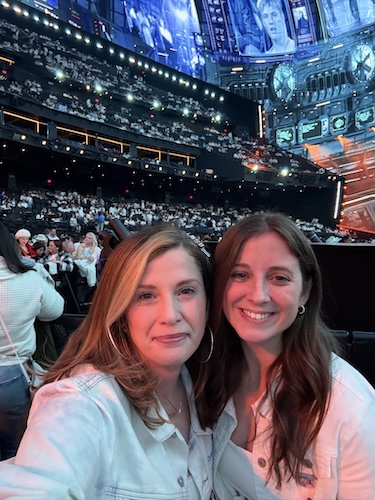
Some of it’s really silly — I’m a huge boy band fan, and I’ve leaned into it so hard since getting sick. Gone to concerts all over, done meet-and-greets, hung out with these bands — it’s this whole parasocial thing where you pretend you’re friends with them and you’re not; you’re really paying to be there. But I’m like, this makes me happy. Going to a concert, screaming these songs, being with my friends, going to Broadway shows, things like that. You have to do what makes you happy. And if other people think what makes you happy is silly, it does not matter — you just have to live your life.
So that’s how it’s been for me. I’m going to go to the concert, I’m going to take the trip, I’m going to spend time with my friends, and I’m going to live my life. It’s not that I wasn’t doing that before, but I was more worried about things — money, what people think of me, what do I have to do, should I act a certain way. Now I just don’t care much.
I just think that everyone is looking to feel happy and healthy and secure, and that’s just part of it for me — doing the things I want and owning it and living my life. My friend and I are going back to the Sphere in Vegas for the third time to see the Backstreet Boys. The first time we went, we did a meet-and-greet and danced with them. Those experiences are the epitome of my life after cancer. If I can afford to do it and it’s not completely insane, I’m going to do it. That’s my life now. And I think anyone who knows me, like my family or friends, would say, “She’s always doing something, always on the go.”
Advice for others facing a rare cancer diagnosis
I don’t think there’s anything else to add. I think that’s the gist of the story I tell people.
I’m working with Let’s Cure ACC. It’s one of those kinds of organizations that you just have to connect with when you have a rare diagnosis.
Another thing I think is important — and my doctor told me this — is when you go online and look up five-year survival rates and all that stuff, to not take it to heart. You have to just look at it and move on. My doctor actually said I shouldn’t even look at it, but I’m the type who’s going to look at it regardless. But I was able to look at it with a healthy lens, knowing that it exists because it’s based on data. I am one person, and my story is going to be what it is going to be. So I think that’s probably one important thing people should remember when they’re looking all this up, because you don’t need to rabbit-hole on the internet into negativity.
This interview has been edited for clarity and length. The views and opinions expressed in this interview do not necessarily reflect those of The Patient Story. This content does not replace professional medical advice.
Inspired by Marcie’s story?
Share your story, too!
Hear from people who live with adrenal cancer
Real experiences with diagnosis, treatment choices, side effects, and life beyond adrenal cancer — in their own words.

Leave a Reply