
Anna’s Bladder Cancer (Urothelial Carcinoma) Was Missed for Three Years; Here’s What Finally Got Her Diagnosed
Anna had blood in her urine for three years before anyone found the cause: urothelial carcinoma, the most common type of bladder cancer. She was 55 when the symptoms started, including recurrent UTIs, burning pain, and blood in her urine. She was told it was a hygiene problem. A colonoscopy found a mass near her colon, and it was called inconclusive. A hematologist got angry when she asked questions and told her not to come back. Anna, a social worker, had spent years advocating for other patients in a hospital emergency department, but could not get anyone to advocate for her.
Interviewed by: Taylor Scheib
Edited by: Chris Sanchez
The answer came from an unrelated appointment. A physical therapist, treating her for constipation, touched her side and told her to go straight to the emergency department. There, a urologist placed a stent to relieve a blocked ureter and told her it looked like cancer. Anna read her own pathology report on a patient portal, at home with her husband, before a doctor called: high-grade, aggressive bladder cancer, muscle-invasive, with one lymph node involved.
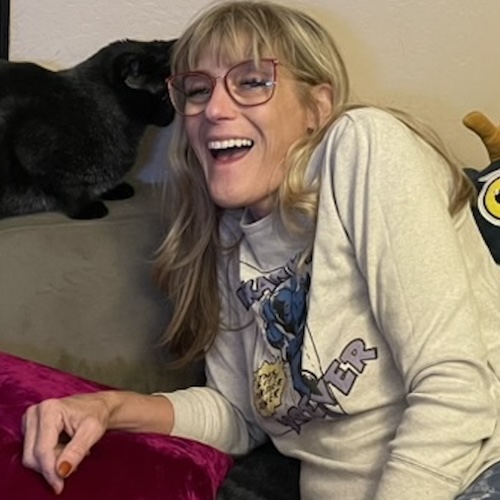
Anna was treated with gemcitabine and cisplatin chemotherapy from September through December 2025, with additional cisplatin delivered directly into her bladder, sometimes called a chemo flush or bladder wash, through mid-January 2026. On January 15, 2026, surgeons removed her right ureter and right kidney. The following day, they removed both ovaries after discovering her ureter had wrapped around her right ovary, sharing a blood vessel with it. She now receives nivolumab once a month through a port, a year-long course that began in February 2026. Losing a kidney left her with stage 3 chronic kidney disease, which she now manages with a nephrologist and a mostly vegetarian, lower-protein diet.
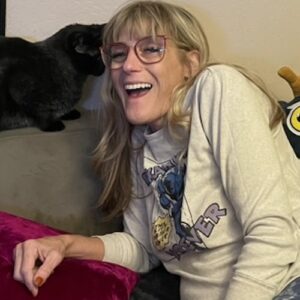
Today, Anna is rebuilding her strength one short walk at a time. She used a scooter to get through Disneyland right after chemotherapy ended; months later, she walked the whole park without it. She dances for fun on TikTok, has gone back to watching Phoenix Mercury games, and has slowly regained the muscle chemotherapy took from her. Her message to anyone still searching for answers is that a test result only tells you whether it found what it was looking for, not whether your symptoms are real.
Watch Anna’s video and scroll down for the edited transcript of her interview to learn more about her urothelial carcinoma experience:
- Three years of blood in her urine got explained away as a hygiene problem before anyone looked for cancer. Anna kept coming back with the same symptoms, and kept getting sent home with the same non-answer, until a tumor had already grown into her muscle tissue.
- When Anna developed sepsis, her oncologist told her it was ‘from using needles.’ She took that to mean he thought she was using illicit drugs, when the needle in question was her Stelara injection for Crohn’s. It took three separate sepsis hospitalizations before he believed her.
- She read her own diagnosis, muscle-invasive urothelial carcinoma, off a patient portal before any doctor called her. She and her husband absorbed the news together, at home, with no one there to help them make sense of it in the moment. It’s what they wanted.
- Losing an organ can be its own form of relief. When her ovaries turned out to be sharing a blood vessel with the tumor, Anna didn’t hesitate to have them removed, especially knowing her mother had died of ovarian cancer. For her, that decision wasn’t a loss. It was one less thing to fear.
- A test result tells you what it was looking for. It doesn’t tell you whether your symptoms are real. That’s the line Anna comes back to for anyone still waiting on answers of their own, and it’s the thread that runs through her entire three-year search for a diagnosis.
- Rebuilding strength after treatment can look like walking to one more chair before sitting down again. Anna went from needing a scooter to get through Disneyland to walking the whole park unaided, one short distance at a time. Small, repeated effort was what got her there, not a single turning point.
Anna’s Diagnosis Facts
- Name: Anna E.
- Age at Diagnosis:
- 57
- Diagnosis:
- Bladder Cancer (Urothelial Carcinoma)
- Symptoms:
- Blood in urine
- Recurrent UTIs
- Pelvic and bladder pain
- Constipation
- Inability to urinate
- Acute kidney injury
- Treatments:
- Chemotherapy: gemcitabine, cisplatin
- Surgeries: nephrectomy (right kidney), nephroureterectomy, oophorectomy (both ovaries)
- Immune checkpoint inhibitor: nivolumab

This is not medical advice. Please consult with your healthcare provider to make informed treatment decisions.
- Anna’s Diagnosis Facts
- Three years of blood in my urine and a colonoscopy that said “no mass”
- Being told it was a hygiene problem: Being dismissed as a woman in pain
- When I couldn’t pee anymore: A stent, sepsis, and a urologist who said it looked like bladder cancer
- Reading “high-grade aggressive invasive urothelial carcinoma” on my patient portal, alone with my husband
- Gemcitabine, cisplatin, and a year of nivolumab: My bladder cancer treatment timeline
- Losing a kidney, a ureter, and both ovaries in two days
- Learning to trust my own body again
- A test result doesn’t determine whether your symptoms are real
- Finding community again through Phoenix Mercury games
- Hear from people living with bladder cancer
Three years of blood in my urine and a colonoscopy that said “no mass”
It’s funny, because the progression of what I now know was urothelial carcinoma in my ureter was blocking my urine. By the time I got diagnosed, I could not pee. I had been complaining. There were different symptoms that came at different points. I think it’s because the tumor got bigger and bigger, and it was blocking my colon.
I already have Crohn’s disease. I’m on ustekinumab for that. I was diagnosed with Crohn’s in 2004. I kept thinking there was something wrong with my colon. We did the colonoscopy, and they said, “No mass.” They saw a mass, but they thought it was in my colon. I think it was probably my ureter pushing into it, so we were looking in the wrong place.
But I had symptoms. I was bleeding in my pee for three years, and I kept having UTIs. The tests would come back inconclusive. I still don’t fully understand that, except I’ve read that there are things like bacteria in the wall of your bladder that can cause that. Now my cancer is muscle-invasive, and by the time they found it, it had already taken my kidney. It had gotten into my muscle tissue. Even though I finished my chemotherapy of gemcitabine and cisplatin, I still have to do nivolumab for a whole year because it’s gotten into my muscle tissue, which means I’ve had it for at least three years, three to four years. That makes sense, because that’s when I started having the blood.
I would get to the point where it hurt so bad I needed antibiotics, and the only thing that took the pain away was the antibiotics. I still don’t understand exactly what the deal was with all that. But I do know I got a cystoscopy. They finally put me back on a prescription vaginal ring that contains estradiol, which did help. Then they took me off because my insurance couldn’t figure out how to do the prior authorization. I knew I needed it still, because my UTIs kept getting worse and worse.
I finally got my urogynecologist to prescribe the vaginal ring again after he did a cystoscopy in which he didn’t find anything, except that something wasn’t working right. I don’t know exactly what. I can’t remember. Something that was supposed to be doing something wasn’t doing it.
I trusted him. I was like, “If you’re giving me the vaginal ring, I’m totally happy, because I know it worked before. I didn’t have this much pain when I was on it.” He said I needed to have hormones inside me or something, and I was like, “Well, that’s why I want it. That’s why I’ve been begging you, please.” He finally figured out how to do the prior authorization, and I got it.
Everything did get a little bit better, except then I started getting constipation. I think it’s because my ureter was growing and going into my colon. I kept thinking maybe the ustekinumab wasn’t working or maybe it was Crohn’s disease. I ended up getting a new GI, which I’m happy about, because I love my new GI so much. That was a blessing in disguise, because I do think my other GI wasn’t listening to me, and it pushed me to get a new one. I’m so happy I did, because I love her. I will never leave her. She’s awesome.
I also got a new OB-GYN. I kept asking myself: How did I lose my right and left ovaries in the surgery? My ureter was wrapped around my ovary, and it was sharing a blood vessel with it. The doctor said something to me, and I said, “My mom died of ovarian cancer.” So they called in the gynecological specialist for the hospital, and he recommended I have both ovaries removed, so I did. There was a cyst in it, and some spots that looked irritated. I have a feeling I dodged a bullet there. I’m glad my urologist noticed that and said something, and that I got a gynecologist involved. I’m 58 years old; they aren’t going to be doing anything anymore, so please take them out. Even if I wasn’t 58, I don’t want to have an organ that’s going to get cancer. If I have high-grade, aggressive, invasive urothelial carcinoma, I want to be here with my husband for as long as I can. I don’t want to die. So I did that.
Now that I’ve had my right kidney out, I only have one kidney left. They’ve been zapping me with all that chemo and everything, and I’m in stage 3 kidney failure. It’s so depressing to me. I have a nephrologist now, and he said it’s due to the nephrectomy. I’ve been having all kinds of odd stuff that’s not necessarily related to the bladder cancer itself, but for me it’s because the cancer took my right kidney.
I’m learning that kidneys are weird. What they like is strange. They don’t like a lot of protein. I used to think protein was the best thing ever, but now I’m basically a vegetarian. I’m not doing as much protein. I’m doing veggies. I found this one local resource that grows all their own vegetables, so I’ve been going there and doing meal preps through them. My creatinine went down. It makes me feel like I have a sense of agency, like I’m not completely powerless.
I used to be a social worker. I am still. I will always be one, but I used to work full time. That was before I got really sick. As a social worker in the medical field, I was in the emergency department, and I would sometimes have to help people get set up for their dialysis, so I know a little bit about kidney failure. It doesn’t usually get better; it usually just gets worse. So it terrified me. I was like, “Oh, I’m doomed. Oh my God, no.”
But when I was able to find this resource, use it, and see real results, that really kind of changed my attitude. I’m feeling like maybe I won’t have to do dialysis. Even if I do have to, I will do my best. Maybe they’ll grow new kidneys or something. I’ll do my best to be a good dialysis patient. There’s this little space between an act, between what happens in life and how you react to it. In that space, you have time before something else happens; that’s when you decide how you’re going to react. I figure if I totally choose the higher road every time, at least I know I did my best, and that’s what I want to do.
Being told it was a hygiene problem: Being dismissed as a woman in pain
I consulted doctors, and you know what they told me? They said it was a hygiene problem. And that was offensive. It’s been three years, so I was 55 when I started complaining about UTIs. I’m not dirty. I stopped taking baths altogether. I do swim, but I’ve always swum my whole life, and it’s usually in a chlorinated swimming pool, so I couldn’t figure out why it was happening to me. I didn’t know what to do about it. I kept going.
When I’d get a bladder infection and I couldn’t stand the pain, I would go to either urgent care or the emergency room. Sometimes it was really bad, like there were more white blood cells and red blood cells one time. They would tell me there were crystals in my pee, but then I would never get any answers as to why. I wanted everybody to be through the same hospital system, but that wasn’t working because not every hospital system has that, so I felt like my care was kind of uncoordinated because of it, and that frustrated me. I kept trying. Now my new OB-GYN is in the same hospital system as my PCP and where I go for my emergency care, because I just think it got messed up because of that.
My urologist was saying, “I’ve never seen that you really have a UTI.” I’m like, “Okay, well, I don’t know what it is, but it hurts really, really, really, really, really, really bad. And the only thing that takes it away is an antibiotic. So you tell me. I am not a doctor. I wish to God I was, but I’m not.” I realized that only having a little bit of information can be dangerous.
But if you’re in pain for that long, you start looking things up, and then I’m like, “You know what? This guy, I don’t think he’s listening to me.” I was ready to go find someone. These are my symptoms: blood in my urine, UTIs, and protein in my urine, and I kept having acute kidney injury. Why? I don’t understand why. My kidney looks fine. Because, on the outside, even in the cystoscopy, my kidney looked fine, I suppose, but what didn’t look fine was my ureter, and it was blocking so badly.
My kidney was full of cancer, so it might have looked fine on the outside, but it didn’t look fine on the inside, and those were the symptoms that were showing up worse. There was protein in my urine. I even tried to ask the hematologist I had. I was getting iron transfusions because I was anemic. I didn’t know why I got it set up through my GI. We did this test to see if I was having a Crohn’s flare. Didn’t show that I was, but I still had anemia. I asked the hematologist, “Why do I have protein in my pee and crystals in my pee?” He got really angry at me and dismissed me, and actually said he didn’t want me back as a patient. So now I go to a different place. What did I do? He probably thought I was wired or something just because I questioned him. And it scares me, because I know how to advocate for people. Not one thing that I wouldn’t have done for any of my patients.
I tried to keep checking myself, because I felt like they were putting me in this category of a Karen or somebody who was over-needy. I’m like, “No, I am telling you the truth, and if you had this pain, you would believe it. You would do something, because you would understand, because it hurts.” Then it ends up so bad that I have blood in my pee, and I don’t know what crystals in my pee mean. I am not a doctor. Help me. But they wouldn’t. I don’t know why. It was weird.
But now I have a good team. It was terrifying. I’m still in therapy. I’ve had some implants, and recently, one of my implants, when I was in Anaheim doing cosplay, came out with the screw and everything, and that kind of thing terrifies me. That’s like, “It’s in my bones too?” It’s in my muscle tissue. They only found one lymph node. I don’t know if it’s in my bones. It might be. I just want to be proactive, but not be taken for an overreactor.
I love my husband. I really don’t want to leave. I want to be here. We’re going on a river cruise in December. I’m not trying to get anyone in trouble. I just want to live.
When I couldn’t pee anymore: A stent, sepsis, and a urologist who said it looked like bladder cancer
The cystoscopy and the colonoscopy were non-conclusive. When I got to the point where I couldn’t pee, it was right when I came back, after going to my brother’s funeral in Portland. I couldn’t bring myself to go to the Portland hospital, but I was in so much pain; it was beyond.
I went to my physical therapy appointment that my amazing new gastroenterologist set me up for, because she was helping me figure out why I was having this horrible constipation. She touched me, and I leaped off the table, and she said, “You need to go to the emergency department.” So I went, and I ended up finding out that they were putting a stent in me because I couldn’t pee. My ureter was all messed up. They knew something was wrong.
That’s when I met the doctor who’s now my urologist, Dr. Stockton. He’s the one who put a stent in me. He said it looked like cancer. Terrified me. I was in the hospital for a few days because I had a really bad, bad, bad infection.
I’ve had sepsis a few times because of this whole thing, because stents can easily turn into infections. When you’re on all this medicine, like chemotherapy and stuff, those infections kept turning into sepsis for me. I’d be passing out, and I didn’t know what was happening. But luckily, I’d go to the hospital, and they’d take care of me. I had to do this one kind of IV antibiotic. But I made it through. I’m so happy. (EDITOR’S NOTE: Infections related to ureteral stents are relatively common. Many patients who have stents experience symptoms like UTIs. A study on urinary tract infections associated with ureteral stents has found that ureteral stent placement carries a comparatively high morbidity, and infection is one of the most common stent-associated morbidities.)
I can see how this could take a person’s life. It’s pretty serious and scary. I would tell people, please, if your one doctor isn’t listening to you, just get another. It’s worth it, honestly. Maybe a woman, I’m just saying, because maybe she’ll understand a little bit more. Because I am 55 years old. I shouldn’t be having blood in my pee or anywhere. Not only that, but this is new, and I don’t understand it. And that’s what was missed when I kept complaining about things, and then being told things that were almost offensive, and that made me want to back away. But I couldn’t. My body wouldn’t let me. My body was like, “Hey, hey, hey.”
Reading “high-grade aggressive invasive urothelial carcinoma” on my patient portal, alone with my husband
I read it on the portal, and I’d been waiting. I’m just that kind of person. I want to know. And that’s just how I am. I didn’t want to wait for the doctor to tell me. I don’t need a doctor to explain things to me. I’ve worked in the medical field as a social worker. I have my LMSW. Having worked in the hospital for five years, I understand a lot. If I don’t understand it, I have friends that I can call who will explain it to me. I couldn’t wait.
I had my portal with my notifications turned on, so that it would beep me. It was on a weekend. I was here at my house with my husband, and it beeped, and I was like, “Okay, here are the results.” I didn’t say anything to him yet. I opened the results, and I looked, and I said, “High-grade, aggressive, invasive urothelial carcinoma. Oh, baby.” And then he came and read it. I couldn’t read it back to him. I was hurt. I was terrified, but my immediate thoughts were about him. I don’t want to hurt him ever, and I don’t want him to hurt. It was a double whammy. It hurt. It was scary, but I was glad to know that I wasn’t losing my freaking mind. Why can’t I go to the bathroom? I don’t know.
Chemo was horrible. I was getting gemcitabine and cisplatin at a very high rate. It seemed like every day to me, but it wasn’t; it was like once a week or something. But it was a lot, and it made me sick. When I could first start pooping again, I was so happy, and that told me the tumors were shrinking. I told my doctor, I’m like, “I think the tumors are shrinking.” My oncologist probably thinks I’m so weird, but I’m totally happy, honestly.
I started eating vegetables again. I was afraid to eat because I knew how bad it was going to hurt. I guess when I started feeling okay about it was when I started being able to poop again. It made me so happy. I didn’t know what I was going to do. It made me really happy. But then I got really sick, and then I got sepsis, and I’m like, “Oh no, I’m not happy again.”
I didn’t like it when I couldn’t stand up, because every time I’d stand up, I’d pass out. I have a particular way I like my house to be, and my husband took complete care of me. He was awesome. His work allowed him to work from home the whole time. He took complete care of me. The thing is, though: My idea of clean is not the same as his idea of clean, and all I could do was sit there and look at things that I thought needed to be done. It was awful because I knew he was working so hard.
It taught me to let go. And that’s a good thing in some ways, because sometimes you have to. And it doesn’t mean I have to change the way I feel about it, but I knew that for then, it was going to be okay. Nobody’s going to die if he didn’t put the clothes away. And I ended up getting this little suitcase that I could ride on, that I’d put the clothes in and I’d ride it to my little couch, because it made me feel productive. I found all these different ways to make myself feel less crazy. My sister came one time, and she folded all my clothes. I was so happy.
My oncologist thought I was a drug addict because of my Crohn’s injections
When my oncologist came into the room, I had sepsis, and I was so happy that he was there, because I wanted to have an oncologist. I thought he was going to be cool, and I was so happy about it. I’m like, “Do you know why I have that?” And he goes, “Well, it’s from using needles.” I’m like, “Okay, this guy thinks I’m a drug addict.” But I do use ustekinumab, so my husband chimes in, “Maybe it was your ustekinumab needle.” I’m like, “No.” This guy, I could tell right away.
Then he asked me about my smoking. I quit smoking in 2004 when I found out that I had Crohn’s. It’s now 2025. I was offended. He didn’t believe me. I could tell he didn’t believe me, and it made me so angry. It really did. I know when somebody has a preconceived idea of you, and it made me terrified, because what’s going to happen? This is in my notes, and people are not going to see me. I got terrified I wasn’t going to get any care.
What ended up happening is I have convinced this man, through us being together, that he is my oncologist since the beginning, that I’m not a drug addict. He actually understands that now and likes me now. I don’t know if he feels bad about it. I don’t care if he feels bad about it. I just need him to see me. I just want him to treat me. I don’t need to be right. I just want to be heard. I’m not going to be mad at you if you change your behavior. I’m going to be happy. Please, listen.
I think what happens is there are certain markers that people have or something. The whole time, every time I’d have an acute kidney injury, they were thinking that I was doing something, that I was taking pills, but my kidneys were not working because they were full of cancer. If they had looked past their prejudice or bias, they might have been able to find it before it got into my muscle tissue, and before I was totally traumatized for years and lost my career. I feel like I’m going to beat it.
My dad was our coach and everything. He passed during the pandemic. He was 88, and he died of prostate cancer. He was having the same thing: every time he’d stand up, he’d pass out, so he couldn’t do the physical therapy. They found out that he had to sit to stand. I have the same thing too. They found that too. It’s when your blood pressure drops. He was describing how frustrating it was, because he was like, “I’m a go guy. If I have something, I find a way to get through it.” I’m that way too. I get it. I think that I’m like him in that way, so I feel I’m like him in a lot of ways. My sisters keep saying, “Anna, you remind me of Dad.”
I’m not the kind that will easily lie down and die. At least, not right yet. I hope that I’m able to make sure all those biases are no longer affecting my care, but I don’t know exactly. I hope. I can just be the very best patient that I know how to be. As I said, it was through time. My oncologist came in and saw me when I had sepsis three times. Three times. Now he’s like, “Oh, I believe her; that is coming from a UTI.” I do not do drugs. I don’t know how to tell you that. I do have marijuana in my bloodstream, maybe, because I do sublingual drops. Because I was getting all this dental work done and I didn’t want to take NSAIDs because it hurts my stomach. To protect my stomach, I was doing sublingual drops of THC, and that showed up. Maybe that made him think, but it’s not like I’m smoking it or shooting it up. It’s like natural. I think it’s better for me than taking codeine or whatever.
Gemcitabine, cisplatin, and a year of nivolumab: My bladder cancer treatment timeline
I did a combination of gemcitabine and cisplatin from September 2025 until December 2025. However, when I got my surgery, I also had cisplatin pushed all the way through my bladder. They had a pump in there or something, so I like to say the end of my chemo really wasn’t until the 15th of January.
I started getting neuropathy, but not until after my surgery. I don’t know if my neuropathy is happening from nivolumab. Sometimes chemo can make it happen as an aftereffect. My oncologist was like, “Yeah, but that would have been too long ago.” But I was like, “But no, because I got it in January.” We still don’t actually know if it’s optimal, because I’m doing nivolumab now once a month in the port. I started in February 2026, and I’ll finish in January 2027.
The nivolumab sounds awesome. I read up on it. It is a targeted chemotherapy that knows where to go. It goes directly to your muscle tissue. And instead of blanketing your body with chemo, it goes right to your muscle tissue and then releases it there and kills the cancer right where it’s at. So I love that. (EDITOR’S NOTE: Nivolumab, which is sold under the brand name Opdivo, is a type of immunotherapy drug. It binds to and blocks a protein on the surface of some cancer cells to keep them from suppressing patients’ immune systems.)
It makes me tired, and it has made my hair fall out too. I had such thick hair. I didn’t realize how lucky I was. But at least I still have hair. I’m on prednisone because if I don’t, I get a really bad rash. I also have to be careful, because in particular it can cause symptoms of Crohn’s, so I’m supposed to still take my Crohn’s medicine and keep in close touch with my GI. If I have symptoms like diarrhea for a long time, then she’ll have to do whatever they do to find out if it’s Crohn’s. I don’t know what would happen then, so I’m hoping it doesn’t happen. I really love the opportunity to get this treatment, and I would hate it if I had to stop. So I’m trying to be as good as I can with all the things I can control, like eating and drinking a lot.
I couldn’t figure out why so thirsty all the time. I think I almost got thrown into type 2 diabetes because of my kidneys. I was so thirsty, they had to prescribe me this pill that makes my mouth less dry, so that when I would go to the dentist, he could work on my teeth. When I went there one time, he tried to fix a tooth and tapped it, and the tooth flew out of my mouth. It was right after chemo. He fixed that, and I got a new implant there too.
Chemo affects a lot of your body, and so does cancer. It affected my ability to pee, and it affected my kidneys. Who knew that was cancer the whole time? It was hiding. My mom’s was too. My dad told me. My mom’s was in her right ovary, but it was inside the ovary, so you couldn’t see it. By the time they found out, she was dead in two months, and she had just gotten done having twins, my little brother and sister. I was six. She went to the hospital and never came home. It was sad.
Losing a kidney, a ureter, and both ovaries in two days
On January 15th, they removed my ureter and my kidney. Because they found that my ureter was wrapped around my right ovary, they had to take a blood vessel that it was sharing. The fact that it was sharing a blood vessel was scary because of the kind of cancer I have. I got my right and left ovaries removed the next day. On the 15th, I got my right ureter and my right kidney removed, and on the 16th, I got my right and left ovaries removed.
I had to use a catheter for three months. I didn’t know what to wear. I understand now why some people, if they don’t get a ride to treatment, end up not going. If they don’t get a ride to chemo, they end up not going. It was hard. I didn’t even know what to wear. Everything was changing. I was exhausted, and I could barely walk. I’m so lucky I had my husband and my sister. I want to do everything right, but it’s different when you’re so tired, and you don’t know what to wear. It makes me want to volunteer to help people who need a ride to treatment, because I’d be that coach for them.
Learning to trust my own body again
I know my body, and I’m smart. When something’s changed in my body, I know. I would have told myself as a client, if I were a social worker, that’s what I preach; I preach that to people all the time. I say, “You know your body better than anyone.” But when it came to me, I questioned myself.
It showed me that I need to trust myself. Before anything else, I have to trust myself. And don’t let anybody intimidate me by saying that it’s hygiene, calling me crazy, or any of that. It doesn’t make any difference in my path to protect myself, because I am my caregiver, and I have to be. I’m taking that role on.
When I’m advocating for other people, I get really excited and upset, and I need to learn how to not get excited and upset. Because when you’re doing it for yourself, it makes you look crazy. I have to be able to say it. I’m not wearing a white coat anymore. I’m not a social worker anymore. Nobody’s going to listen to me. I used to have power, I guess. When I would say something and say, “No, I’m not letting this patient go,” because I could, because I was their social worker. But you can’t really do that for yourself if you’re not wearing a white coat and everything.
I have to be my own advocate, and do it in a way that fits my title, which is patient. It was different. I think I’m doing it well. I’m actually really impressed with myself. I’ve done it this whole year, really well. I’m impressed. I feel like, “You know what, Anna? You can do pretty much anything you set your mind to. You just need to understand where you’re making a mistake, and then go from there.” I learned that I’m teachable, that I am not crazy, and that I’m usually right.
Relearning how to walk, dance, and love life again after cancer treatment
It’s by taking it slow. For a long time, when we celebrated the end of chemo by going to Disneyland, I had to ride a scooter because I couldn’t walk. Every time I would stand up, I would get dizzy. I just felt like I was going to pass out. I did as much as I could. I had chairs throughout the house, so I would walk as far as I could, and then sit down, and then walk as far as I could, and then sit down. I never knew that doing the dishes is a workout when you haven’t done them for a long time. I had lost muscle in the course of all this. I could feel my muscles growing back.
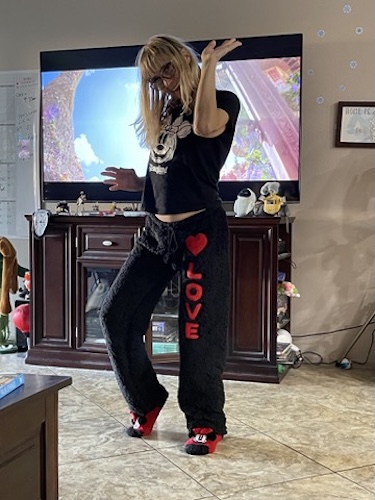
What made me learn to love life again is being able to move again. I dance now all the time. I do this little dance for cancer patients on TikTok. I just dance around because I can, because it was so depressing when I couldn’t. What made me learn to love life again is learning how to move again and getting my body out of bed and moving. I know it doesn’t sound like much, but when you can’t do it, it’s huge. I would sit there and watch people dancing and be jealous.
Everyone says you should exercise during chemo. I couldn’t walk. I felt so bad for my dad too, because I know everybody was trying to push him to do his physical therapy when he was sick, but literally, every time he’d stand up, he’d get this blood pressure drop. I think the same thing was happening to me, because I think your body maybe just says, “Listen. You’re not healed enough to be doing this yet. We need you to wait a little bit.” When I take it slow, I let myself sit down wherever I need to.
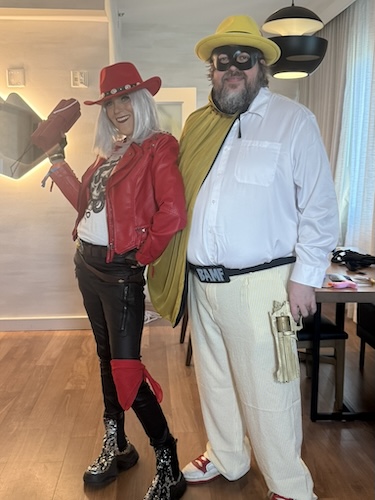
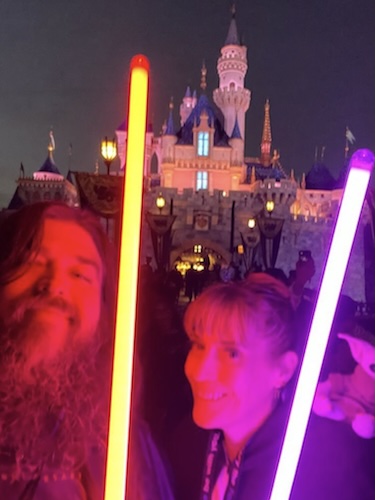
Eventually, I went to Disneyland and walked the whole thing. I was so happy. I didn’t need the scooter; I knew that if I needed to, I could rent one. It made me feel really happy.
A test result doesn’t determine whether your symptoms are real
A test result does not determine whether or not your symptoms exist.
A test result only determines whether or not the specific thing they tested for is what is wrong with you.
Do not let that stop you. Keep going, because your body’s telling you something.
Finding community again through Phoenix Mercury games
The other thing I did was I started watching my Phoenix Mercury games again, and that was fun. That has been fun. If I felt good enough, I would go to the games.
Something that you can do that’s like community and stuff is very important. You get lonely after a while, when you’re going through the chemo and all that. It’s good to have something like that to do.
This interview has been edited for clarity and length. The views and opinions expressed in this interview do not necessarily reflect those of The Patient Story. This content does not replace professional medical advice.
Inspired by Anna’s story?
Share your story, too!
Hear from people living with bladder cancer
Real experiences with diagnosis, treatment choices, side effects, and life beyond bladder cancer — in their own words.
Leave a Reply