
San Francisco Firefighter Tony Survived Bladder Cancer (Transitional Cell Carcinoma) Twice — and Built a Movement to Protect His Brothers and Sisters
For nearly three decades, San Francisco firefighter Tony ran into burning buildings, trained for triathlons, and coached his sons. All the while, he unknowingly accumulated the toxic exposures that would lead to a life-changing bladder cancer diagnosis. His experience with transitional cell carcinoma (TCC) is a powerful example of how occupational cancer in firefighters often goes unrecognized until it’s too late, and why early detection can make the difference between life and death.
Interviewed by: Taylor Scheib
Edited by: Chris Sanchez
In January 2001, Tony was jogging near Lake Tahoe when he was forced to stop, something that had never happened to him before. He walked back to the gym, went to the bathroom, and found blood in his urine. A visit to an urgent care clinic revealed gross hematuria and a suspicious mass in his right kidney. Further evaluation at the UCSF Helen Diller Family Comprehensive Cancer Center confirmed a 1-centimeter TCC tumor in his right renal pelvis, a rare form of cancer in his kidney’s lining. Under the care of Dr. Marshall Stoller at UCSF, Tony underwent a nephrectomy that was complicated by a snapped renal artery clamp. Recovery took six months, and the mental challenge, grappling with the idea that his body had failed him despite a lifetime of discipline, proved far harder than the physical one.
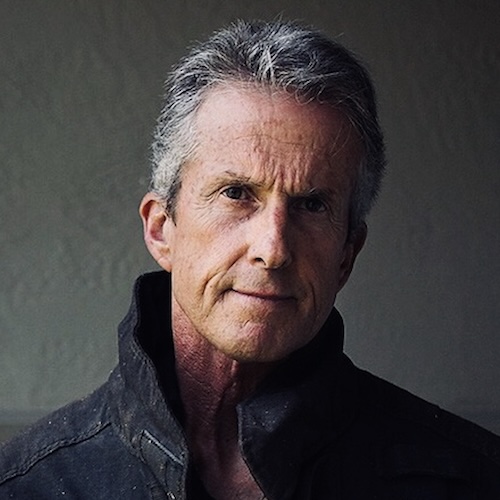
What followed was a two-year workers’ compensation battle with the city of San Francisco, which at the time did not recognize the cancer presumptive law for firefighters. Tony was subjected to a grueling seven-hour medical examination just 30 days after surgery, tests that his UCSF doctor called inappropriate and unnecessary. A state workers’ comp judge eventually validated his claim, but by then, 200 fellow officers had already donated a day of their paid leave to keep his family afloat. That extraordinary act of brotherhood became the seed of something larger.
After retiring, Tony co-founded the SF Firefighters Cancer Prevention Foundation, a nonprofit dedicated to early detection and prevention of cancer in active and retired firefighters. The foundation partnered with UCSF to conduct urine-based screenings, immediately catching three firefighters with cancer, including two with bladder cancer. More than 20 years later, the foundation supports over 150 cancer cases statewide and provides patient navigation, financial assistance, and advocacy at the state and federal levels.
In 2022, more than two decades after his initial diagnosis, Tony used the foundation’s own tools, a hemostick and an NMP22 test he kept at home, to detect blood and elevated protein levels in his own urine. The cystoscopy that followed found tumors. He underwent bladder tumor resection and six rounds of chemotherapy. Today, Tony is living proof of the message he shares with every firefighter and cancer patient he meets: catch it early, accept the reality of your situation, stay moving, and never give up.
Watch Tony’s video and browse the edited transcript of his story below. You’ll find out more about his story.
- Early detection is life-saving, especially with bladder cancer. Blood in the urine is the most common early symptom of bladder cancer and should never be ignored. Tony’s 2022 recurrence was caught early precisely because he monitored himself consistently and knew what to look for. The earlier TCC is found, the greater the chance of successful treatment.
- Occupational cancer in firefighters is documented, real, and underreported. Research from the National Institute for Occupational Safety and Health (NIOSH) and from the Centers for Disease Control and Prevention (CDC) shows that the firefighters with the highest exposures have the highest rates of cancer. For more than a decade, firefighters worked without respiratory protection in a culture that glorified that exposure, with consequences that are only now being fully understood.
- A cancer diagnosis doesn’t have to mean paralysis for any patient. Tony’s experience proves that how you mentally respond to a diagnosis has a measurable effect on outcomes. Accepting the reality of the situation, staying physically active when possible, and refusing to sink into passivity all contributed to his recovery, not once but twice.
- Individual trauma can become collective protection. Tony transformed a deeply personal and painful experience into an institution, the SF Firefighters Cancer Prevention Foundation, which has helped hundreds of firefighters and families navigate cancer. His story is a model of how one person’s advocacy can change an entire profession.
- Don’t wait until diagnosis to build your healthcare team. Tony’s message to every firefighter and patient is to establish a relationship with a general practitioner now, not after a diagnosis. Delays in referral can cost critical weeks or months of treatment time.
- What you put in your body matters alongside what your doctors prescribe. After his 2022 recurrence, Tony researched sulforaphane, grew his own broccoli sprouts, and developed a nutrition and supplement protocol. Patient agency, informed, proactive self-care, is an important complement to clinical treatment, not a replacement for it.
Tony’s Diagnosis Facts
- Name: Tony S.
- Age at Diagnosis:
- 49
- Diagnosis:
- Bladder Cancer (Transitional Cell Carcinoma of the Bladder)
- Symptoms:
- Gross hematuria (visible blood in urine)
- Abdominal cramping and extreme fatigue during exercise
- Treatments:
- Surgeries: nephrectomy, transurethral resection of bladder tumor (TURBT)
- Chemotherapy: gemcitabine

Story Sponsors


Thank you to our sponsors for their support of our independent patient education program. The Patient Story retains full editorial control over all content.
This is not medical advice. Please consult with your healthcare provider to make informed treatment decisions.
- Tony’s Diagnosis Facts
- My life as a San Francisco firefighter
- My first symptoms of bladder cancer
- The nephrectomy decision, surgical complications, and the six-month recovery period
- Processing the diagnosis: Anxiety, depression, and finding a path forward
- The moment it clicked: Realizing the job I loved caused my bladder cancer
- Workers’ compensation battle: Fighting for job-related cancer recognition in California
- Founding the SF Firefighters Cancer Prevention Foundation: Turning tragedy into a mission
- Why early detection is critical for bladder cancer survival
- My 2022 bladder cancer recurrence: How the foundation’s own tools caught it early
- How my second diagnosis was different
- Men’s health and going to the doctor: A message to firefighters and men everywhere
- What I would tell every firefighter: Protect yourself without losing the love of the job
- My final message: Awareness, early action, and the ongoing fight against firefighter cancer
- Hear from people living with bladder cancer
I’m not going to sit at home and say, ‘Woe is me.’ That’s just not my nature.
Tony S., Bladder Cancer Patient
My life as a San Francisco firefighter
Going back to the early 2000s — actually, in the year 2000 — I was going into my 27th year in the San Francisco Fire Department. For the last 13 years before that, I was a captain of Rescue One, a very busy firehouse, one of the busiest firehouses and rescue companies in the United States. Work took its toll. Rest did not happen.
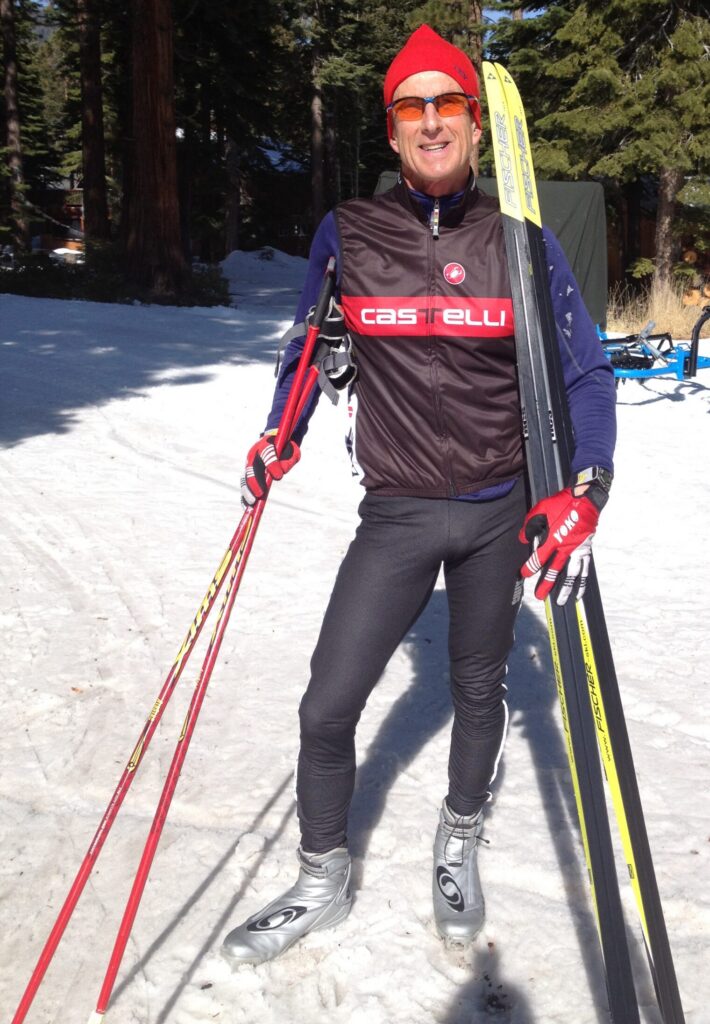
At the same time, I was a competitive athlete. I was a runner on the fire department’s 10,000-meter track team, and I also competed in triathlons. I would train on my days off, and I had two young boys growing up whom I was coaching in their sports. My plate was full.
It was ongoing, nonstop, all the time, whether I was at work or off. To a degree, when I look back now, the on-the-job exposures I was getting, combined with pushing myself to train almost every day, probably had a detrimental effect on my immune system. I was not doing myself any favors.
Then, to fast-forward to January 6th, 2001, I was 49 years old, about to turn 50 in February. We were up in Tahoe, Lake Tahoe, for about a week. I went for a run along the West Shore, went to a gym I was familiar with, worked out there, and then ran four miles out toward a little area called Homewood and made a U-turn and came back.
My first symptoms of bladder cancer
On the way back, I started feeling some abdominal pain, a crampy type of pain, and I was extremely tired. That was nothing unusual, since two days prior, I had just gotten off working 72 straight hours in the firehouse. But I was forcing myself to continue training. I got to a point about one mile from the gym where I had to stop. This had never happened to me before. I stopped running and sat down. I was just totally exhausted. I walked back that final mile to the gym, went to the bathroom, and urinated red blood. I was scared.
I went to an emergency clinic in Tahoe City. They took a urine sample and said I had gross hematuria. They also did an ultrasound and said they saw something in my right kidney, near the top where the ureter is connected to the kidney. I had to have a follow-up.

And that began the journey of being diagnosed and treated for transitional cell carcinoma, which is normally found in the bladder, but in my case, it was in my right renal pelvis.
To a degree, when I look back now, the on-the-job exposures I was getting, combined with pushing myself to train almost every day, probably had a detrimental effect on my immune system.
Tony S., Bladder Cancer Patient
My initial reaction to my bladder cancer diagnosis
It was a “whoa” moment. I was telling myself, “I’m 49 years old. This can’t be cancer.” I didn’t even think about cancer. I thought maybe I had a really bad urinary tract infection, which could have made me tired and caused the abdominal pain. I wasn’t really sure what the situation was until they gave me the ultrasound results and told me they did see something, and I’d definitely need follow-up.
I was sent to a urologist. He did a CT scan, and he said it looked like I had a one-centimeter tumor in my right renal pelvis. He was going to attempt to remove that tumor by going up through the ureter with tools. That failed, but they did get a piece of the tumor and confirmed it was TCC — transitional cell carcinoma.
He then referred me to Dr. Marshall Stoller at UCSF, who was at that time the head of the urology department, a brilliant, compassionate surgeon. The referring doctor wanted Dr. Stoller to determine whether I should have a nephrectomy or whether there was a way to eliminate the tumor without losing the kidney.
The nephrectomy decision, surgical complications, and the six-month recovery period
Dr. Stoller wasn’t totally convinced it was cancer, so he did another biopsy. He went in through my back, got a piece of the tumor, and confirmed it was TCC. He told me I had two options: one was a nephrectomy, which he recommended as a fairly clean operation, to be done laparoscopically. The other option was to go in through the back, remove the tumor, but then have a drain tube in my back for a year-long monitoring period. I asked him what he would do. He said he’d have the nephrectomy, just get rid of the kidney, and I should be fine.
There were complications during surgery. They started laparoscopically but ended up having to go in the old-fashioned way: essentially cutting me from my belly button all the way around my back. The clamp on the renal artery snapped, and I started to bleed out. The only lasting negative effect was that my hematocrit level dropped to 14, which is extremely low. I was told I could get a transfusion or wait for it to recover on its own. I said I’d take my time.
I did not get a transfusion, and it took a good six months before I started to feel right again. It was a long, slow process, and it was not so much a physical challenge as it was a mental one.
It was a ‘whoa’ moment. I was telling myself, ‘I’m 49 years old. This can’t be cancer.‘
Tony S., Bladder Cancer Patient

Processing the diagnosis: Anxiety, depression, and finding a path forward
Not knowing much about how the body functions with cancer, the first thing that came to my mind was: “This is in my kidney, and my blood filters through my kidney — it must be going all over my body.” I had no real awareness of how the body’s physiology works when you’re diagnosed with this disease. It was frightening. I started searching online to try to get answers, and my doctor told me not to look online, that I’d only dig deeper and deeper and worry more and more. Being hardheaded, I kept looking, and it did have a psychological effect on me. I got a little depressed.
Luckily, I was able to avoid serious depression. I asked my doctor if I could continue working out once I felt better, and he said, “Absolutely.” Once I got back on my feet and started moving again, I felt much better mentally. In the back of my mind, though, was what he had also mentioned: “You’ve spent 28 years in this profession and had a lot of dangerous exposures.”
We didn’t wear self-contained breathing apparatus until we were forced to by Cal/OSHA back in 1985. The first 11 years on the job, I went into buildings without any respiratory protective equipment; that was part of the profession, part of the culture. Who was the toughest? Who could stay in the fire the longest? Who could take the heat, the smoke, and the chemicals?
Firefighter cancer culture: The “dirtier you were, the more respect you got”
This was the culture of the profession when I entered the department. World War II veterans were still on the job, just getting ready to retire, and my generation, the Vietnam generation, was coming in. We tried to mimic what the old-timers were doing. These guys were tough as nails. Some were known as “leather lungs”; they could take anything, stay in a building, continually fight the fire, and not have to bail out. They’d be the last to go in and the last to walk out, and they’d be filthy dirty. Their faces would be black with soot and chemicals. The dirtier you were, the more respect you had from other firefighters.

We never cleaned our personal protective equipment. The turnout coats and pants we wore were filthy. The dirtier you were when you pulled up in front of a building, the more respect you got from other companies; they knew you were working at a busy firehouse, on a crew that was always catching fire. That level of respect resonated throughout the entire department and any major metropolitan city in the ’70s and ‘80s, New York, Chicago, Philadelphia, all of them. If your helmet was black with soot and tar, you were one of the hardasses, the tough guys.
The dirtier you were, the more respect you had from other firefighters.
Tony S., Bladder Cancer Patient

The moment it clicked: Realizing the job I loved caused my bladder cancer
When my doctor mentioned that I had 28 years on the job, had lost a kidney, and that transitional cell carcinoma in the renal pelvis, in almost half the cases, had a tendency to migrate into the bladder, he said I might want to think about not continuing to put myself in situations with those exposures. I couldn’t picture myself working at headquarters, sitting at a desk. There was absolutely no way I would ever do that after the job I’d done for 28 years. Having that amount of time, with two sons who were teenagers growing up, it was time to “pull the pin” and retire. I didn’t retire the way I ever thought I would. I always thought I’d do at least 30 years. So I left the department.
And actually, the very first time I was in Dr. Stoller’s office, he didn’t know I was a firefighter. He asked what profession I was in. He said, “Do you work in the chemical industry?” I told him, “No, I’m a firefighter.” And he smiled and said, “Well, you do work in the chemical industry, whether you know it or not.” He was right. All of a sudden, the realization was there that the accumulation of those toxic exposures over the years had had this effect on my situation.
Workers’ compensation battle: Fighting for job-related cancer recognition in California
I filed a workers’ comp claim with the city, asserting, as did my doctor, that this was a job-related cancer. I had had a tremendous amount of on-the-job exposure. My doctor said there was definitely a correlation. At that time, San Francisco did not accept the cancer presumptive law for firefighters. In other words, it was my responsibility to prove to the doctors that I had contracted the disease because of my exposures. As common sense will tell you, we are not epidemiologists. We can’t clinically and chemically document this gigantic mix of chemicals and show the direct correlation between those exposures and the disease.
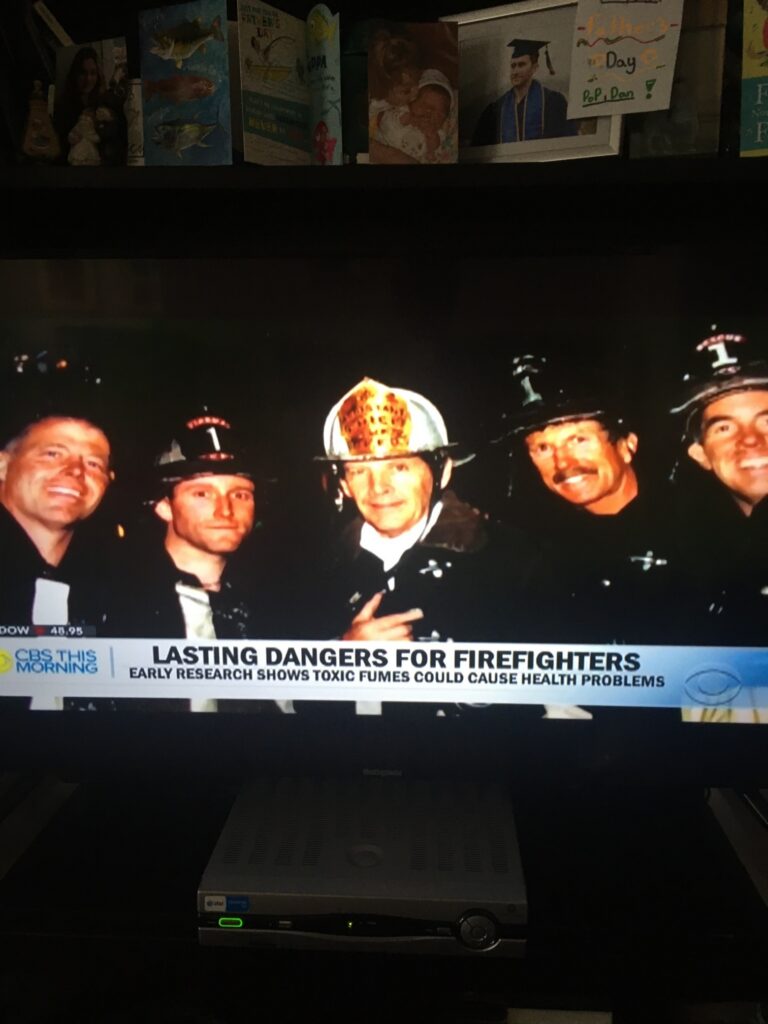
What they did was send me to what they call a “qualified medical examiner” — doctors who work under contract with the city and county of San Francisco — and basically every single one of them denied my cancer claim. I went in for a seven-hour doctor’s visit just 30 days after having my kidney removed, when my doctor at UCSF had told me not to do anything physically active because I was still stitched up. That doctor gave me a 12-lead stress EKG, put me on a treadmill, performed a vital lung capacity test, which was extremely painful given that my kidney had just been removed, and drew a ton of blood work.

I called my UCSF doctor back that evening and told him what they had put me through. He was furious. He said, “There is absolutely no reason why they should ever have done this.” But I saw the reason when the city received a $6,000 bill for that checkup: somebody was making a lot of money. And of course, the qualified medical examiner denied that this was a job-related cancer.
My next step was to get a workers’ comp attorney and present my case before a state workers’ comp judge. My attorney said, “We’ve got documented fire runs. We don’t need the full 28 years. We’ll take a 20-year segment.” They went through all the journals and documented the fires I had worked. The judge absolutely ruled that yes, this was a job-related cancer. But this took two years. During that period, I had to use all my sick time, then all my vacation time, almost six months of time off, and then there was no more income and my case still hadn’t been resolved. Our union representatives knew the situation I was in and solicited other officers in the department to see if they would donate one day of their paid time to me so I could still have a paycheck. Two hundred of them donated one day.
That gave my family the time and the money we needed to continue pushing forward. Within that window of time, the decision was made that this was a job-related cancer, and everything worked out.
Within that window of time, the decision was made that this was a job-related cancer, and everything worked out.
Tony S., Bladder Cancer Patient
Founding the SF Firefighters Cancer Prevention Foundation: Turning tragedy into a mission
After I had fully recovered and was officially retired, I was trying to figure out how to give back to everyone who had donated their time. There was no way I could do it financially. Then something happened: a couple more firefighters at Station One contracted transitional cell carcinoma a few years after my surgery. I was talking to my doctor about it, and he said, “Tony, something has to be done. Do you guys have any cancer screenings in the department?” I said, “There’s nothing out there.” So I thought about it, and we discussed forming a foundation dedicated to the early detection and prevention of cancer in both active and retired firefighters.
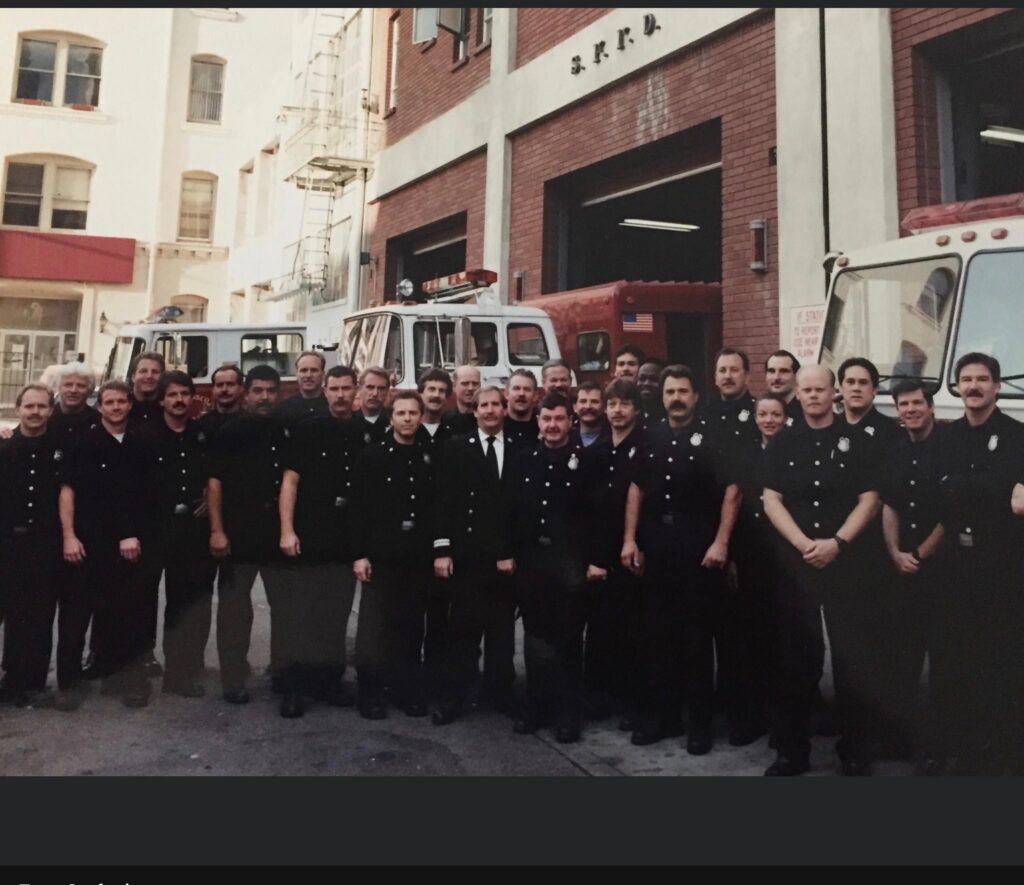
I went before the union executive board and told them my idea. They were totally on board. I went to Chief Joanne Hayes-White, the chief of the department at that time, who was also on board. I wanted to make it clear that we would be a separate entity from the department, not under the department’s jurisdiction, and self-funded, though I had no idea at the time how that funding would happen.
We moved forward in conjunction with UCSF, with those doctors giving us direction on what screenings to pursue. One board member, Tom O’Connor, from Local 798, the firefighters’ union, called me up the day after I had met with them and said, “Tony, we have a general membership meeting next Thursday. I’m going to see if we can get $25,000 of seed money to get this started, get the 501(c)(3) status, and hopefully get our first screening in place.” He called me back after that meeting and said, “I’m sorry. They said no to the $25,000 — but they did give us $100,000!” We were off and running.

The board of directors was assembled, our bylaws were put in place, and we had physician consultants on the board, as well as active and retired firefighters and cancer survivors. The mission was early detection and prevention of cancer. Our first major study focused on cancers of the genitourinary system, in conjunction with the Department of Urology at UCSF.
We used a hemostick to check for blood in firefighters’ urine, and we also used another test called NMP22, which looks at nucleic matrix protein in the urine. It’s a simple four-drop slide test, almost like a pregnancy test: one line confirms the test is valid, and a second line indicates elevated levels of this protein, suggesting that something may be going on. We caught three firefighters, one retired and two active, with cancer: one with the same type I had, TCC in the kidney, and two with bladder cancer.
That gave the foundation a lot of credibility with the membership. Their biggest concern when the foundation first formed was, “You’re going to take a urine sample, what are you going to do with it? Are you testing us for substances?” I said, “No. We are not the department. We are not screening you for anything out of the ordinary. We are looking at this health problem.” We gained all their trust, and for the last 20 years, it has grown stronger and stronger.
[Board Member Tom O’Connor] called me back after that meeting and said, ‘I’m sorry. They said no to the $25,000 — but they did give us $100,000!’ We were off and running.
Tony S., Bladder Cancer Patient
Foundation impact: Supporting 150+ active and retired firefighters statewide
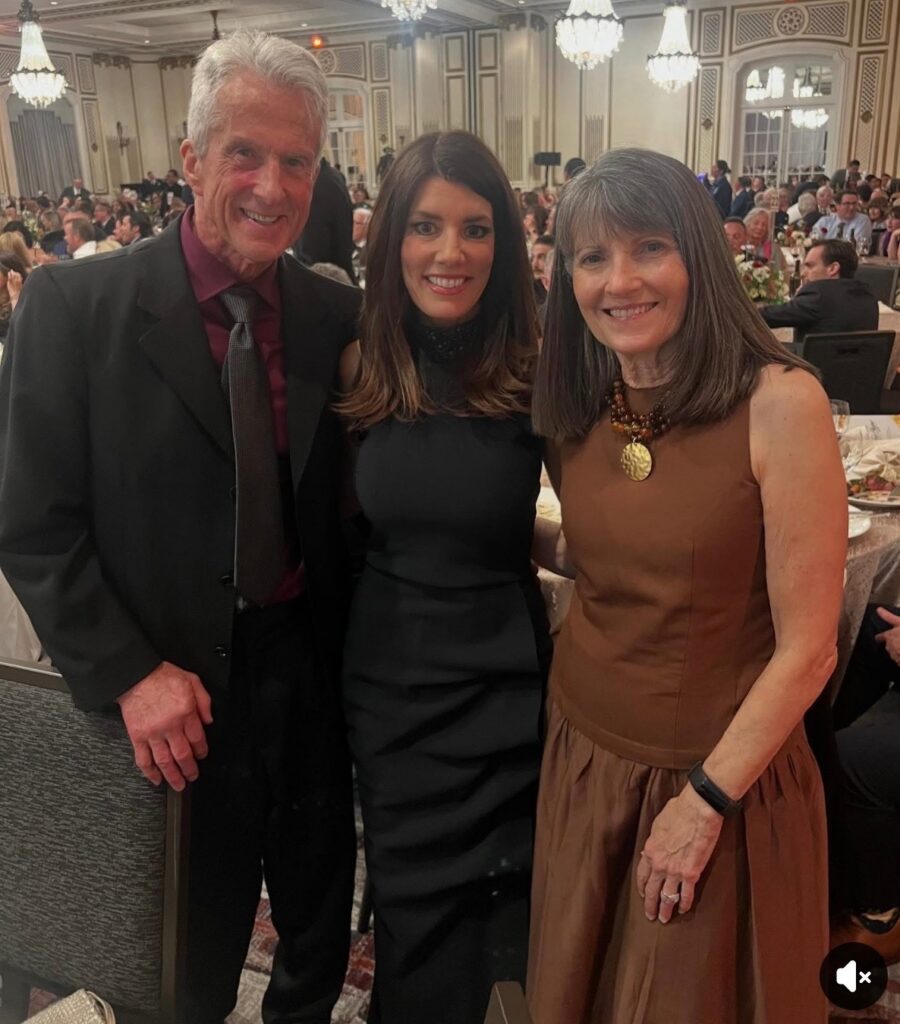
Their stories definitely drive the foundation. They motivate us to keep pushing forward. Right now, we’re working with over 150 cancer cases, both active and retired firefighters, and we now also help family members of firefighters who contract the disease. It’s not only in San Francisco anymore; it’s throughout the state of California, and if someone reaches out from outside of California, we’re there to help them, too.

As far as I know, we are the only nonprofit that is aggressive about screenings and that also provides financial support for a firefighter during that time period when a cancer is not immediately considered job-related. We’re there to help — to make sure they get the right doctors, the second opinion they definitely need, and to verify that the course of treatment they’re receiving is the latest and most successful. We have a navigation team of four individuals, and I also help. We’ll take a patient and walk them through the whole process: answer their questions, give them questions to ask their treating physicians, and make sure the treatment they’re getting is exactly what it should be.
Why early detection is critical for bladder cancer survival
The earlier bladder cancer is caught, the greater the chances are of eliminating it. The same applies to any cancer: the earlier you catch it, the greater the odds of defeating it — especially with what’s available now: immunotherapy, genomic testing to identify targeted therapies where your own immune system does the work without the side effects of chemotherapy. You just hope the immunotherapy doesn’t attack your own body, but it kills the cancer.
The day-to-day progress being made with clinical trials and new medications is phenomenal.
The day-to-day progress being made with clinical trials and new medications is phenomenal.
Tony S., Bladder Cancer Patient
“We don’t let the fire win. We win.” — Mindset, attitude, and fighting cancer head-on
That statement is important for anyone diagnosed with the disease because it sets the tone and the frame of mind: “Okay, I have this disease. I’m not going to back away from it. I’m going to meet it head-on. There’s no backing down. I’m going to defeat it.”
Staying mentally positive when diagnosed with any form of cancer has a tremendous effect on the way the immune system works and helps you get through some really tough times.
We explain to everyone who gets diagnosed: “It’s a roller coaster ride. There are going to be good days and bad days. There are going to be days you’re euphoric, and days you’re going to be down. But if you get to that fine line where there’s just no give-up — where you push forward and say, ‘I’m not going to let this beat me’ — it seems to have a profound effect on outcomes.”
My 2022 bladder cancer recurrence: How the foundation’s own tools caught it early
I went to a local doctor, not my urologist at UCSF, for a routine visit. They always do a urinalysis, which they did. He checked the prostate and said I had an enlarged prostate and suggested I get a PSA test. A couple of days later, I got my urinalysis results through my healthcare system portal, and it noted a small amount of blood in my urine. I don’t typically have blood in my urine — I test myself regularly; I’m a fanatic about this type of thing. I got out a hemostick and tested my urine, and sure enough, I had microscopic hematuria — I couldn’t see it, but it was there.
The next step was to test myself for nucleic matrix protein using an NMP22 slide I had at home. It came up positive. My next phone call was to Dr. Stoller at UCSF. He said, “Come in next week — we’re going to do a cystoscopy and make sure nothing is going on.”
He said, “Tony, I doubt it. It’s been 21 years. We had 12 years of follow-up cystoscopies and then cleared you.” But I went in a week later, and sure enough, there were a couple of tumors. The following week, I had surgery — they scraped and cleaned out the bladder.
I got out a hemostick and tested my urine, and sure enough, I had microscopic hematuria — I couldn’t see it, but it was there.
Tony S., Bladder Cancer Patient
One of the hardest things I’ve ever done was attend a fundraising gala we had scheduled the week after surgery. I had a catheter in for five days. I was going to call our vice president and tell him he’d have to deliver the keynote address — and he was set to do it. But I got my mind working in the right direction again, and I went. It was not easy, but I’m glad I did. We had 500 people at the event, and it worked out really well.

Dr. Stoller sent me to another urologist, an absolutely fantastic woman. She recommended six rounds of gemcitabine chemotherapy injected directly into the bladder, once a week for six weeks. The side effects were minimal because it doesn’t go systemically — it stays in the bladder — although I didn’t feel great the day after each treatment.
I continued going to the gym and maintaining my daily routine, and that helped not only my body but also my mind.
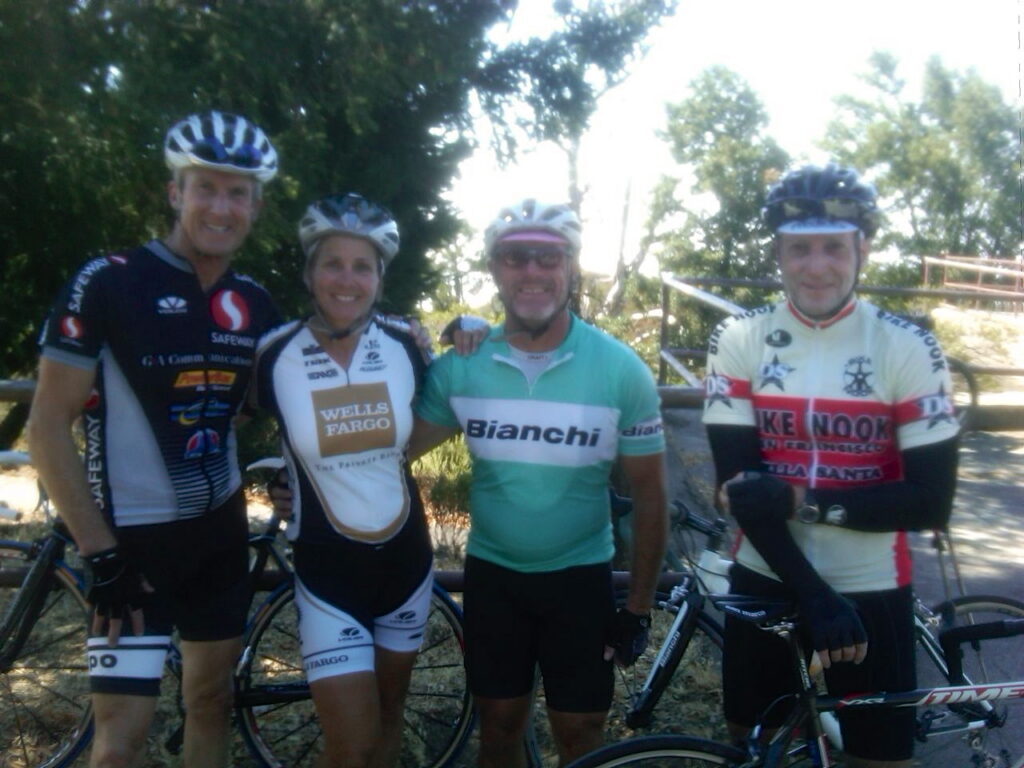
How my second diagnosis was different
It was a shock, but I put it in my mind so I could make use of it. This is useful for other cancer patients, too: “It is what it is. You have to accept the situation. No matter how much you worry, the worrying is not going to change the situation. It might exacerbate it. But you have to accept that it is what it is and push through it.”
Another important aspect is researching for yourself on what you put in your body, what you eat, and how you can support your immune system through diet. The importance of certain nutrients, like sulforaphane found in cruciferous vegetables, and its effect on bladder cancer — I delved deeply into that. I grew my own broccoli sprouts at home and put them in my sandwiches. I take several supplements as well.
You have to have a program. It can’t be one where you’re entirely dependent on your doctor. Once you’re diagnosed, the way you treat yourself from that point forward for the rest of your life is to treat yourself as though you do still have cancer, meaning you’re very aware of what you do, your level of rest, and your level of nutrition, and you give yourself the best odds to push forward.
This is useful for other cancer patients, too: ‘It is what it is. You have to accept the situation. No matter how much you worry, the worrying is not going to change the situation. It might exacerbate it. But you have to accept that it is what it is and push through it.’
Tony S., Bladder Cancer Patient
Navigating cancer as a father: Keeping family strong through a second diagnosis
I tried to make it as light as I possibly could. I didn’t want them to worry. I basically told them: “Don’t worry about me. I’m going to be fine. Nothing’s changed here. It’s a bump in the road, and we’ll get through it.” They accepted it.
My younger son is a battalion chief with 25 years on the job at the West Sacramento Fire Department. He knows the situation in the firefighting profession — the high levels of cancer. He was worried. But I told him, “This is something that was caught early. I was fortunate. Just continue to stay positive and keep moving forward.”
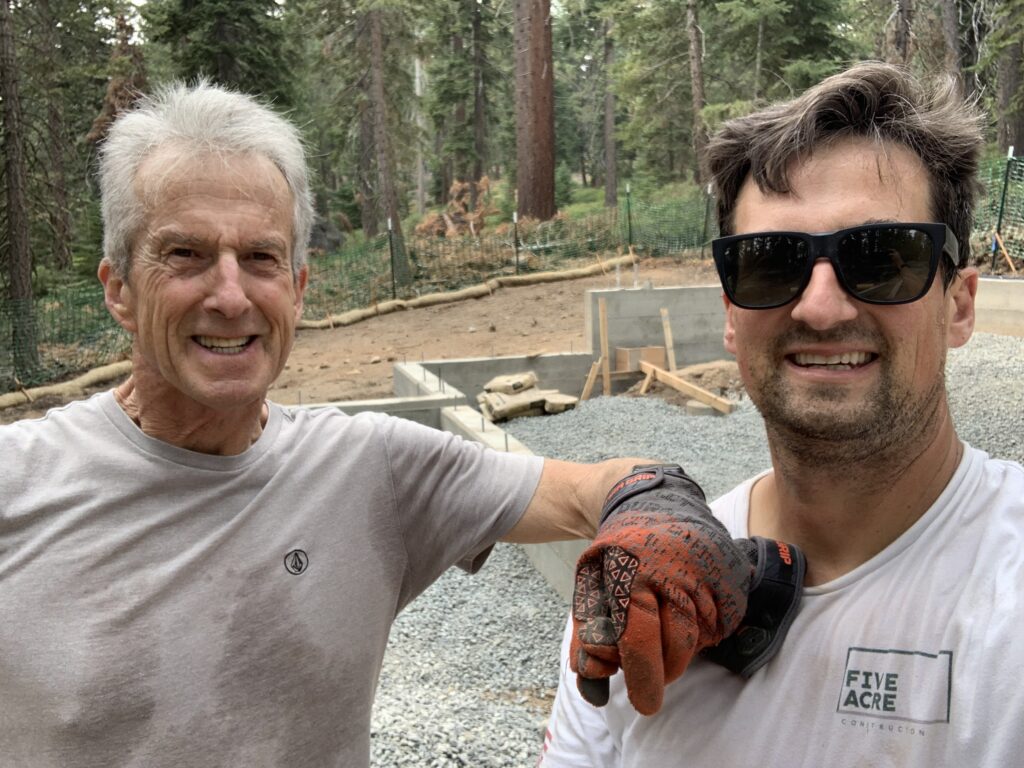
I don’t think the effect on my family was that bad, although they probably didn’t express everything they felt to me. What they felt behind closed doors, I can’t say, but I think we were pretty solid.
Men’s health and going to the doctor: A message to firefighters and men everywhere
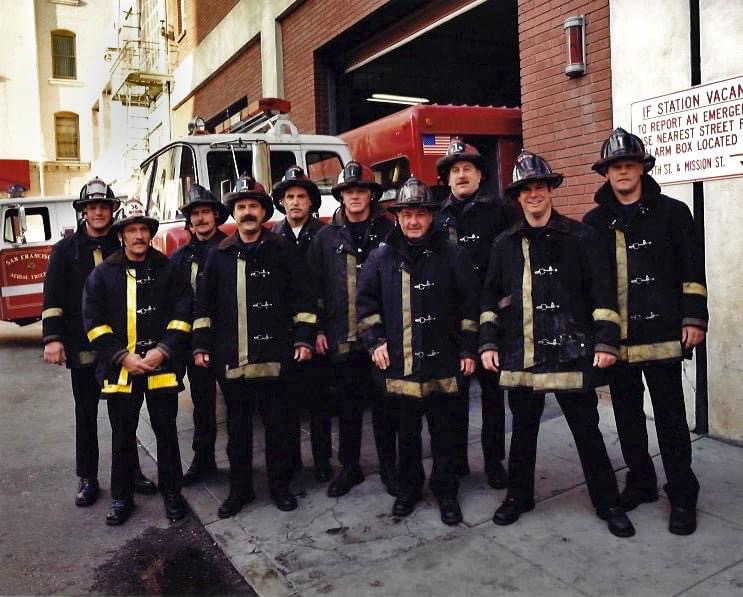
Men — it’s just how we are. I hate going to the doctor myself. When I was younger, I had no problem, but the older I get, the more I don’t want to see them. That said. Every firefighter should be checked yearly, without a doubt. A full, complete blood panel: metabolic panel, complete blood count, looking at red blood cells, white blood cells, platelets, everything. There could be a red flag in there that catches something really early. It’s critically important.
One problem we’ve encountered in San Francisco is that newer firefighters don’t have a general practitioner. It’s getting harder and harder to get a GP as your designated doctor. We stress to them: if you don’t have a GP when you’re diagnosed, who is going to give you the referral to see an oncologist? Getting yourself into that situation without a GP already in place could cost you two or three months before you even walk in the door to get a referral, and you do not want that.
We actually took part in a major screening involving over 1,750 active and retired firefighters, and even a couple of family members, using one of these new blood-based multi-cancer early detection tests. It did not turn out the way we thought it was going to. It’s a phenomenal idea, but at this point in time, these liquid biopsy tests are just not perfected yet.
Every firefighter should be checked yearly, without a doubt… There could be a red flag in there that catches something really early. It’s critically important.
Tony S., Bladder Cancer Patient
How firefighter safety has changed: PPE, decontamination, and toxic chemical reforms
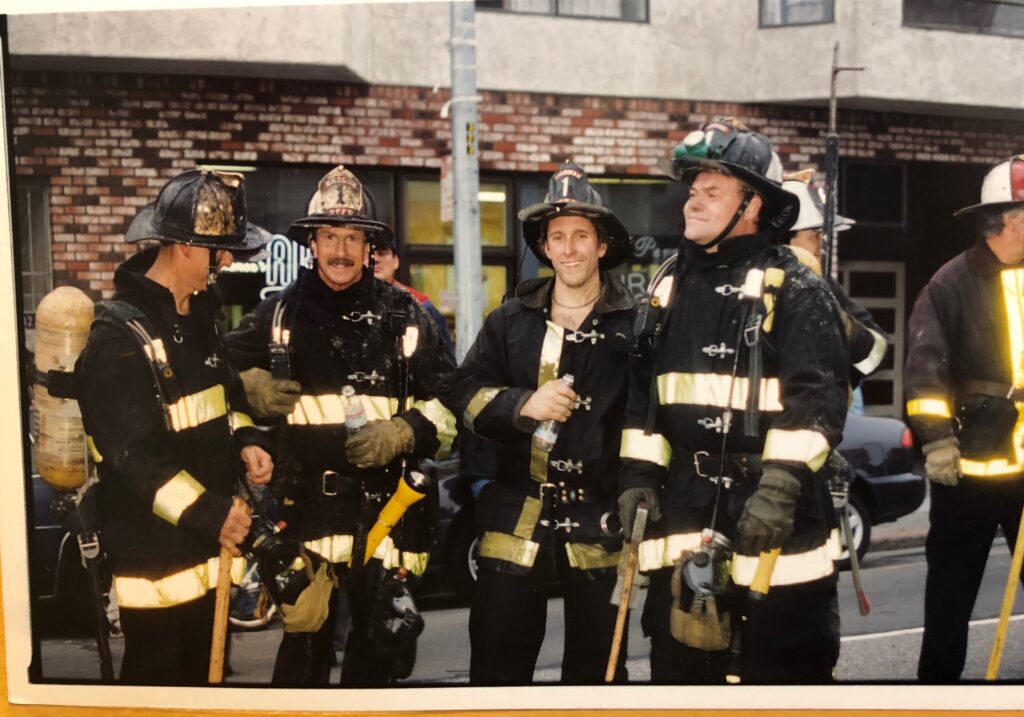
The level of awareness has grown exponentially throughout the entire firefighting profession. They know we are in an epidemic. So, from square one, what we first addressed was the personal protective equipment that nobody was cleaning. Our foundation bought six washer-extractors for the department. They were roughly $9,000 or $10,000 each and almost that much to install in the firehouses. There are 44 stations in San Francisco, and with only six of them having those washers, the chief eventually obtained a grant and put washer-extractors in every firehouse, which was necessary.
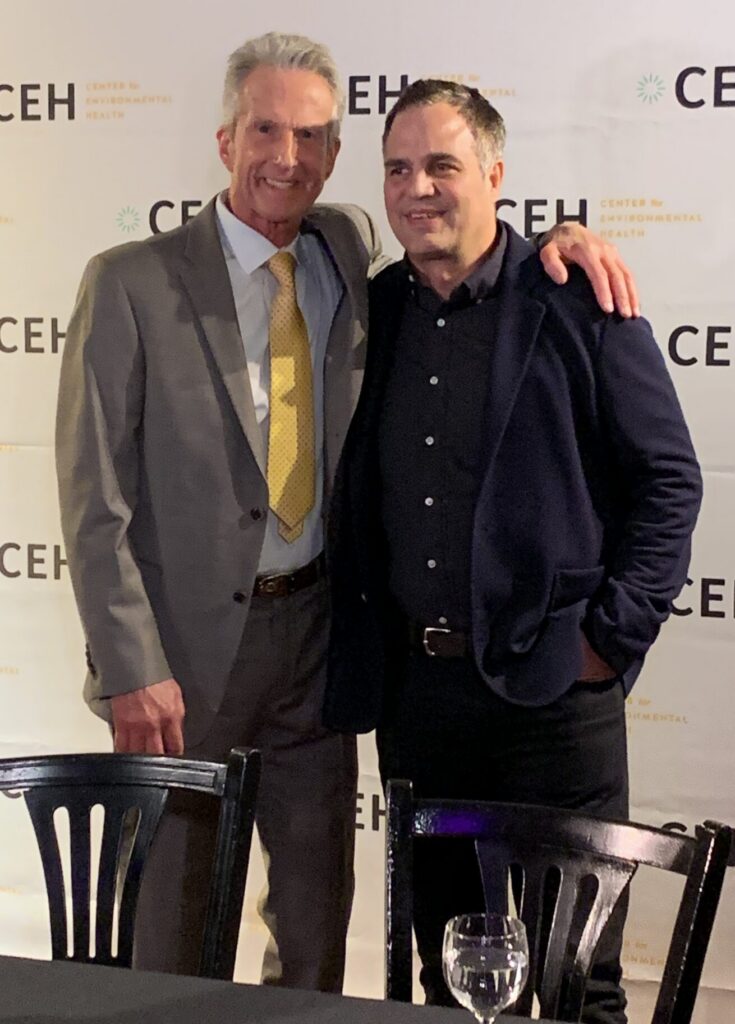
We also identified toxic chemicals in the personal protective equipment itself. San Francisco, I believe, is now the largest city department in the U.S. with toxic-free personal protective equipment: no PFAS chemicals, no PBDEs, no flame-retardant chemicals. This is supposed to be personal protective equipment, not equipment that causes the problem.
The culture now stresses wearing a self-contained breathing apparatus throughout the fire and during the overhaul process. It’s cumbersome; you can’t communicate as well with a mask on your face, but it’s critical. After the fire, you perform gross decontamination: you’re washed down, you bag your equipment, it goes back to the firehouse for the washer-extractor, you immediately shower, and you put on fresh turnouts. In San Francisco, firefighters don’t even have their gear alongside their beds anymore. Everything is on the apparatus floor. Things have changed. They’re doing the best they possibly can to reduce exposure levels. But each firefighter also has to take personal responsibility for themselves.
What still needs to be done
I don’t think it ends. You go from one problem to the next. Right now, we’re about to embark on a study at UCSF on PFAS chemical levels. Everyone has some PFAS in their blood. UCSF is about to begin a study using a drug intended for cholesterol-lowering that didn’t perform well for cholesterol reduction, but has shown an ability to bind PFAS chemicals and excrete them through the urine and stool. This was studied in Norway and Sweden through a large cohort study, and after a three-month trial, subjects reduced their PFAS levels by 60%. That’s unimaginable when you’re talking about a “forever chemical” that typically stays in the body for 35 years. We have about 150 firefighters involved, and we expect to qualify roughly 50 of them with elevated PFAS levels for the study.
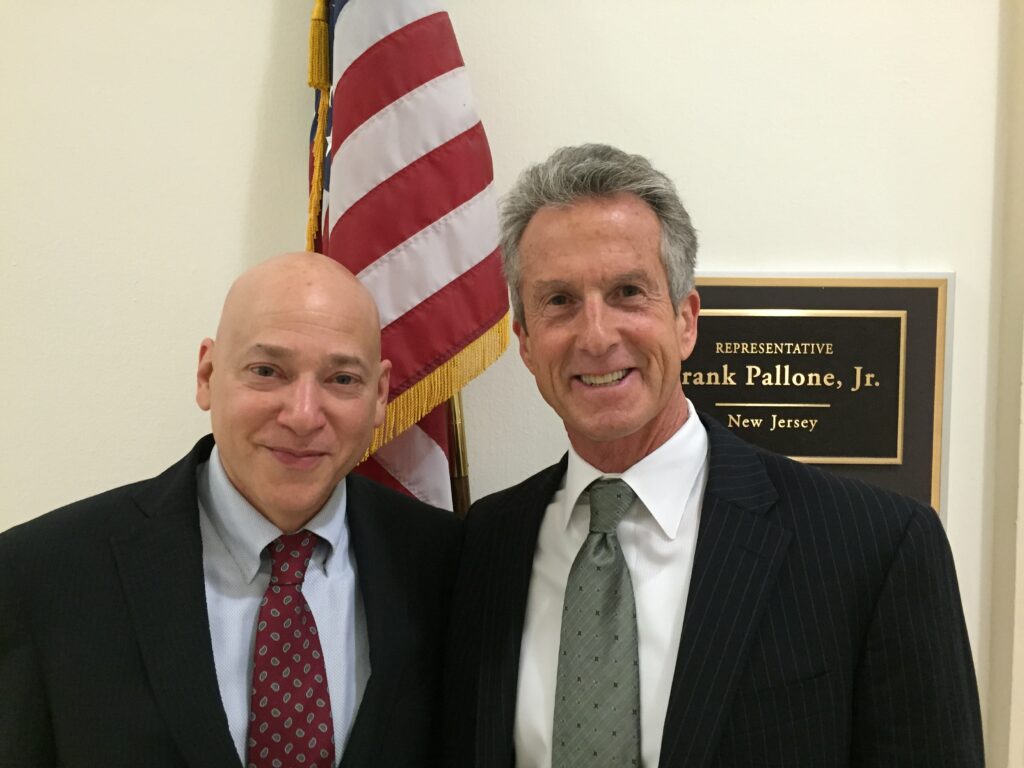
We also became advocates at the state and national level, providing testimony to the California state legislature and before congressional committees in Washington, D.C., on the dangers of flame-retardant chemicals and PFAS, and on how the chemical industry is not regulated the way it should be. There are 80,000-plus chemicals out there that have never been proven safe, and they’re in our faces every day; not just firefighters, but the general population. Without a doubt in my mind, that is why we have such high rates of cancer throughout the general population.
The level of awareness has changed throughout the entire profession. The men and women on the job now know what to expect in the long run if they don’t take care of themselves. It’s not a good idea to shake the dice.
Tony S., Bladder Cancer Patient
What I would tell every firefighter: Protect yourself without losing the love of the job
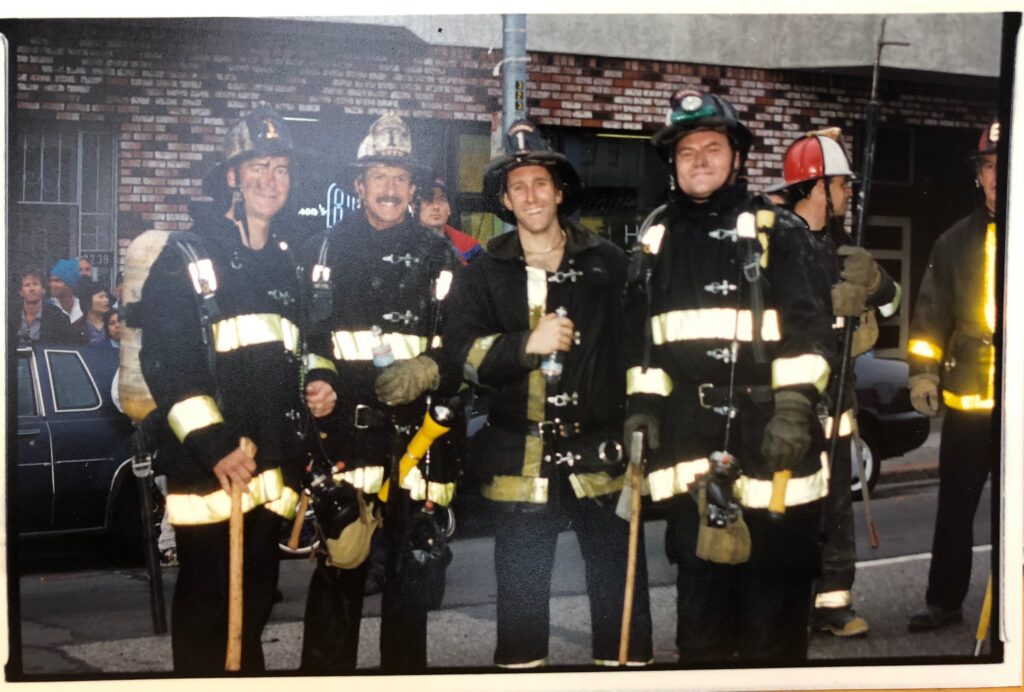
The first thing I would tell firefighters is that they have the greatest profession in the world. There wasn’t a day I did not want to go to work. I loved the laughter, the camaraderie, and the ability, as a Type-A person, to work in extreme circumstances. It’s a wild profession. But you have to be aware of your surroundings and the downside of the job: the toxic exposures that are inevitable, even if you’re wearing a self-contained breathing apparatus; if your neck isn’t covered, you can get dermal exposure. Gross decontamination is simple, and it can make your job much safer.

65% of the men and women on the job right now are going to contract some form of cancer in a lifetime. For comparison: 1 in 2 males and 1 in 3 females in the general population will get cancer — but for firefighters, it’s straight across the board at 65% for both men and women. And that’s not acceptable.
I don’t have regrets. I’d go back today. I love it.
What it means to fight fire and cancer
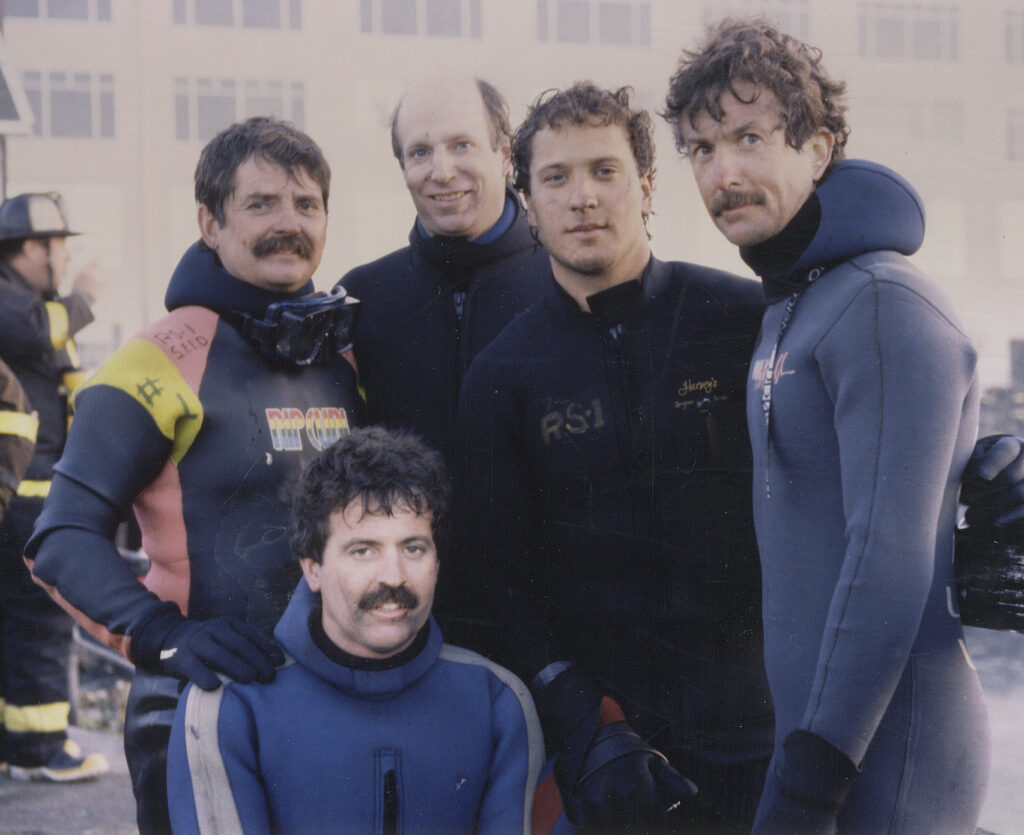
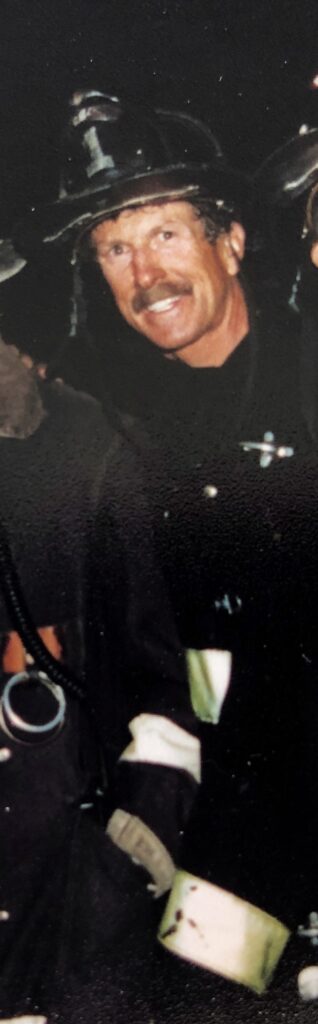
Being on a rescue squad, we had to be certified in multiple disciplines: black-mask diving for rescues in the bay, high-angle rescue, confined space rescue, Rescue Systems I and II used in collapsed buildings, earthquakes, that type of situation. The fires we fought were anything from high-rise fires to one-story structure fires and everything in between. Auto fires can be particularly nasty; they involve plastics and petroleum products, things you definitely don’t want to inhale. Structure fires involve the same: plastics, TVs, appliances, and utensils. The level of chemicals in modern building materials and consumer products is really nasty.
The most exciting fires were the ones where you’re driving down the street and see fire blowing out of a window six stories up — everybody screaming, “Here we go!” A mad rush to get upstairs, get a line in the door, and go to work. On the rescue squad, our primary obligation was search and rescue. We would go into a working fire without a hose line to get people out. Another primary responsibility: if a firefighter was trapped, it was up to us to go in and get them. Multiple disciplines, but at the end of the day, it’s still the number one firefighting job there is. That was a good job.
My final message: Awareness, early action, and the ongoing fight against firefighter cancer
Firefighting is an incredible profession, and it has its downside — we all know what that is. The level of awareness has changed throughout the entire profession. The men and women on the job now know what to expect in the long run if they don’t take care of themselves. It’s not a good idea to shake the dice. You feel indestructible in your 20s, 30s, and 40s, but that’s not the reality.

One major study we participated in, run by NIOSH at the CDC, the largest cohort study in the history of the firefighting profession, with 30,000 firefighters from Chicago, Philadelphia, and San Francisco, showed that we are seeing aggressive forms of cancer in younger firefighters. The firefighters who were most exposed, the busiest ones, had the highest rates of cancer.
The correlation is there. The direct link is there. It’s up to each individual to take care of themselves, in all the different ways we’ve talked about.
I don’t have regrets. I’d go back today. I love it.
Tony S., Bladder Cancer Patient
Story Sponsors
Thank you to our sponsors for their support of our independent patient education story. The Patient Story retains full editorial control over all content.
This interview has been edited for clarity and length. The views and opinions expressed in this interview do not necessarily reflect those of The Patient Story. This content does not replace professional medical advice.
Inspired by Tony’s story?
Share your story, too!
Hear from people living with bladder cancer
Real experiences with diagnosis, treatment choices, side effects, and life beyond bladder cancer — in their own words.



Leave a Reply