
How John Navigated a Muscle-Invasive Bladder Cancer Diagnosis Alongside His Wife and Care Partner, Heike
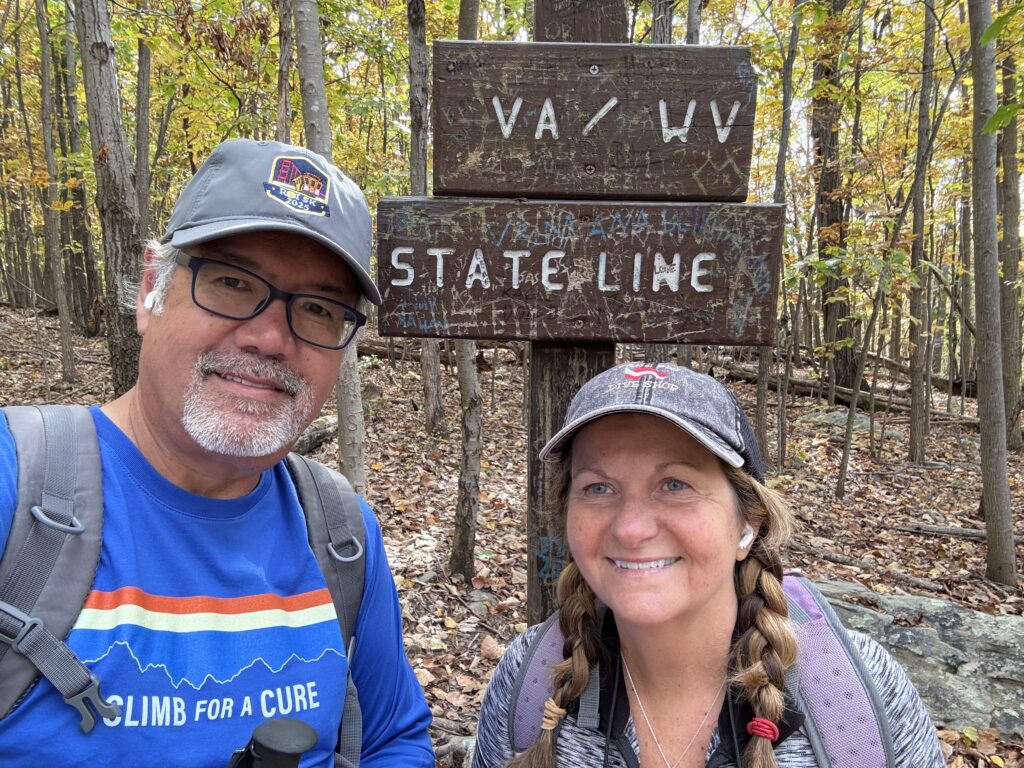
John is an active Navy veteran and marketing professional who enjoys hiking and biking with his wife, Heike. His story began when he started to notice blood in his urine. A urology scope confirmed a diagnosis of bladder cancer. When pathology revealed that the cancer was stage T2 (muscle-invasive and aggressive), what began as a seemingly manageable case had become something far more serious.
Interviewed by: Ali Wolf
Edited by: Chris Sanchez
To address the bladder cancer, John underwent platinum-based chemotherapy, followed by a radical cystectomy and splenectomy at Johns Hopkins Medicine. Throughout this experience, John leaned on his analytical nature, devouring educational resources to move from shock to becoming an “agent of his own care.”
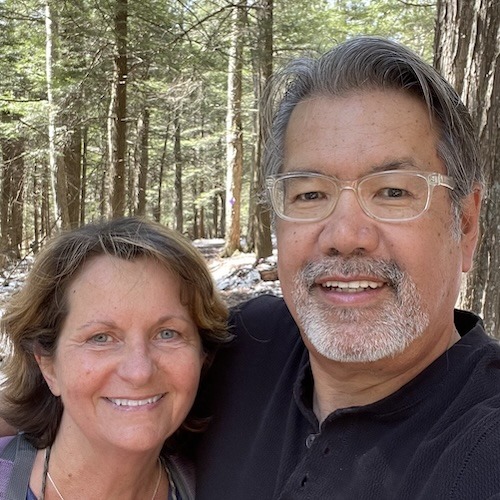
Now three years post-surgery, John uses his background in marketing to advocate for other patients, particularly veterans who face a higher risk of the disease. His experience highlights the importance of mindset, the power of a supportive care partner, and the life-saving necessity of not ignoring early symptoms.
Watch John’s video or read the edited transcript of his interview below for what John and his story can teach us.
- Don’t ignore the signs: Even intermittent symptoms like blood in the urine require immediate medical investigation; early denial can delay critical treatment.
- Knowledge as power: Utilizing reputable resources like BCAN can provide the intellectual clarity needed to reduce anxiety and make informed surgical decisions.
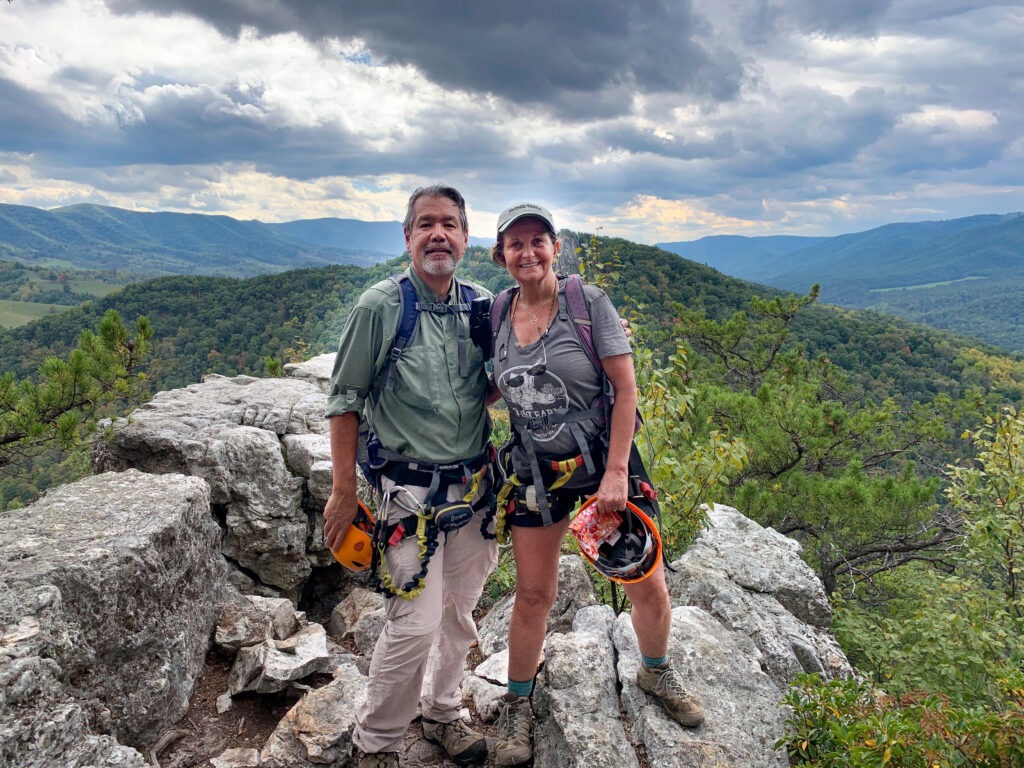
- The “new normal” is possible: Living with an ileal conduit or urostomy bag does not have to limit an active lifestyle; John ran a 10-mile race less than a year after his radical cystectomy.
- Veteran-specific risks: Veterans are at a higher risk for bladder cancer due to environmental exposures, and should be vigilant about screenings.
- Sharing is healing: Helping others navigate their own medical challenges can be a profound part of a patient’s own emotional recovery.
John’s Diagnosis Facts
- Name: John M.
- Age at Diagnosis:
- 60
- Diagnosis:
- Muscle-Invasive Bladder Cancer
- Staging:
- T2
- Symptom:
- Intermittent appearance of blood in urine (hematuria)
- Treatments:
- Surgeries: radical cystectomy, splenectomy, ileal conduit urinary diversion
- Chemotherapy
Story Sponsors


Thank you to our sponsors for their support of our independent patient education program. The Patient Story retains full editorial control over all content.
This is not medical advice. Please consult with your healthcare provider to make informed treatment decisions.
- Our relationship and active lifestyle before bladder cancer
- John’s background, career, and hobbies
- Staying active during treatment and recovery
- Severe bleeding during the cruise, and the first scope
- Initial relief and “good news” in Baltimore
- How John processes news: Logic and research
- John’s life-changing phone call
- Heike’s perspective regarding the emotional roller coaster
- John’s tough decisions after losing his bladder
- Thinking about survival rates and surgical risk
- The day of surgery and being a caregiver
- Recovering at home after radical cystectomy and splenectomy
- Waking up after surgery and sitting in silence
- John’s first meal out after leaving the hospital
- Living with “scanxiety” and reaching three years
- Heike’s view on anxiety and gratitude after each scan
- Mindset, living in the present, and giving back
- Sharing as healing and using marketing skills to help others
Knowledge is power, and understanding has been an incredible weight lifted off our shoulders.
Heike M., Wife and Care Partner of John M., Bladder Cancer Patient
Introduction and diagnosis
John M.: My name is John. I was diagnosed with bladder cancer, stage 2, T2.
Our relationship and active lifestyle before bladder cancer
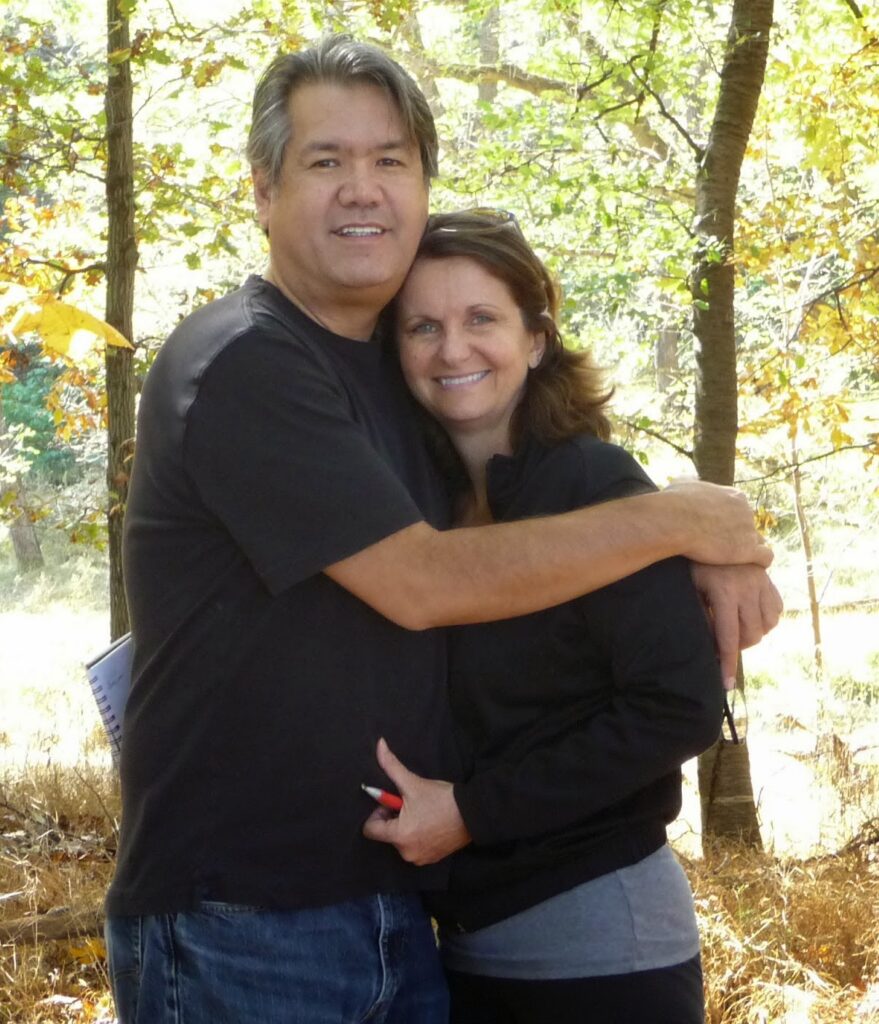
Heike M.: We have a strange, bizarre little story. We actually met and dated in high school. We went to senior prom together and spent the summers together. John joined the Navy. I went on with my life, and that was that.
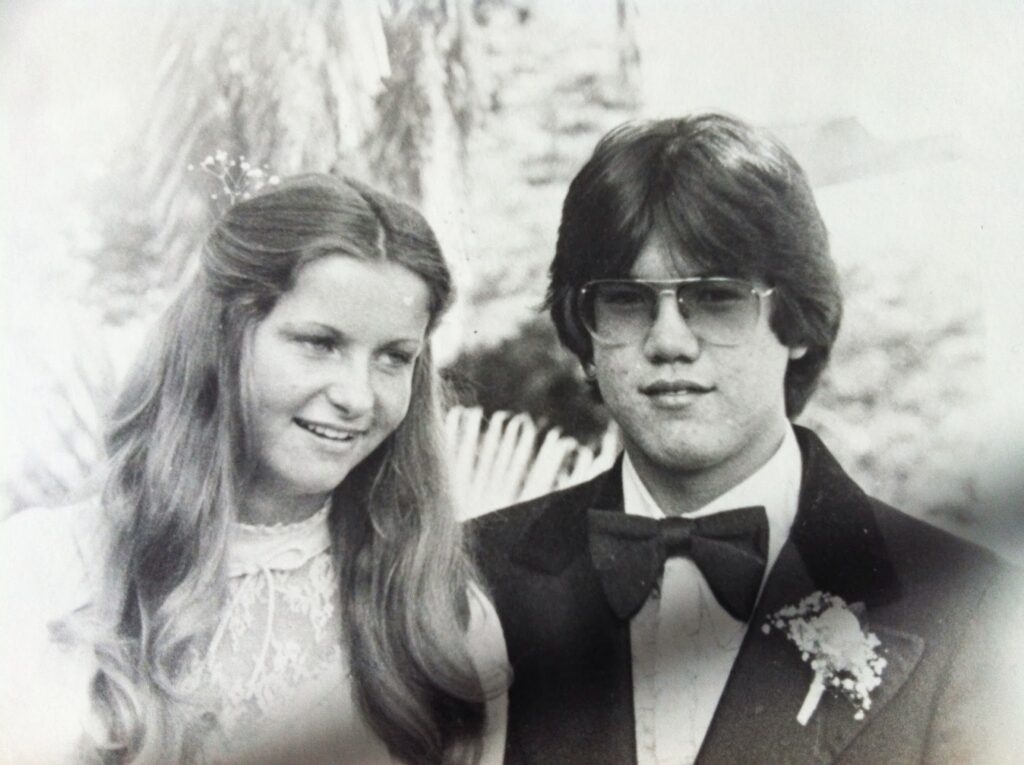
And then, what is it, 30 years after we graduated, we touched base again. John was divorced, I was divorced, and we ended up getting back together. And now we’ve been married; it’ll be 12 years this year.
So, yeah, when I came out here to live with John, we obviously brought both our hobbies together. I love to hike in California. And John says, ” You know, Virginia’s beautiful,” which it is. We spent a lot of time hiking and biking outdoors.
John’s background, career, and hobbies
John: Before everything happened, actually, compared to afterwards, it’s not that different, but I have a different perspective.
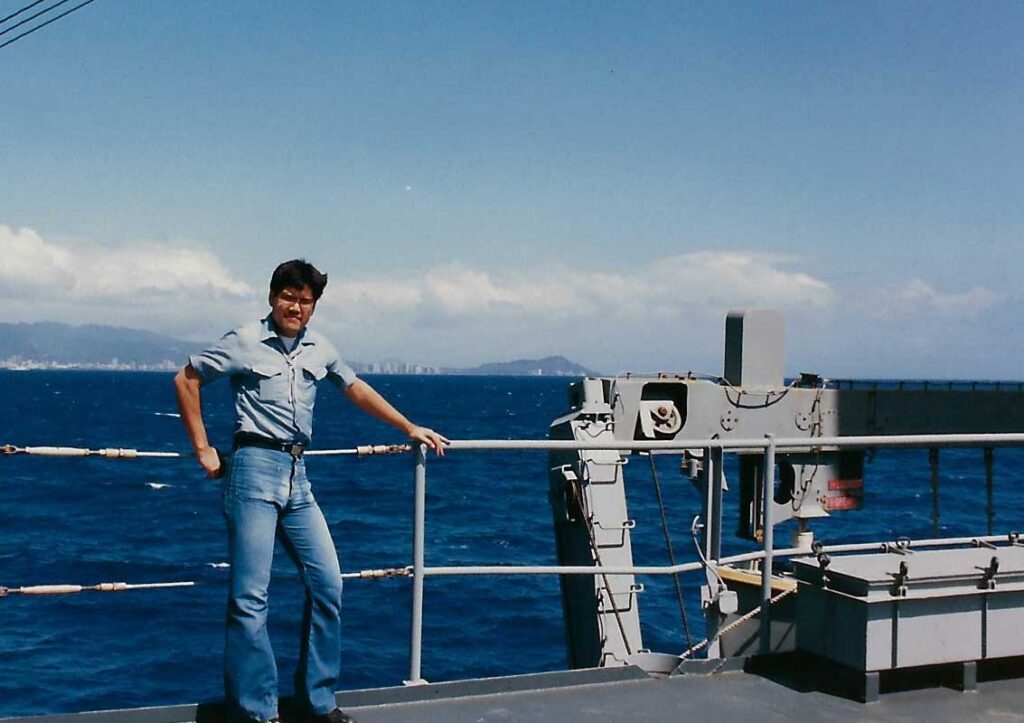
Professionally, I’m a marketing person. I’ve been in marketing most of my professional life. Before that, I was in the military. I’m a Navy veteran.
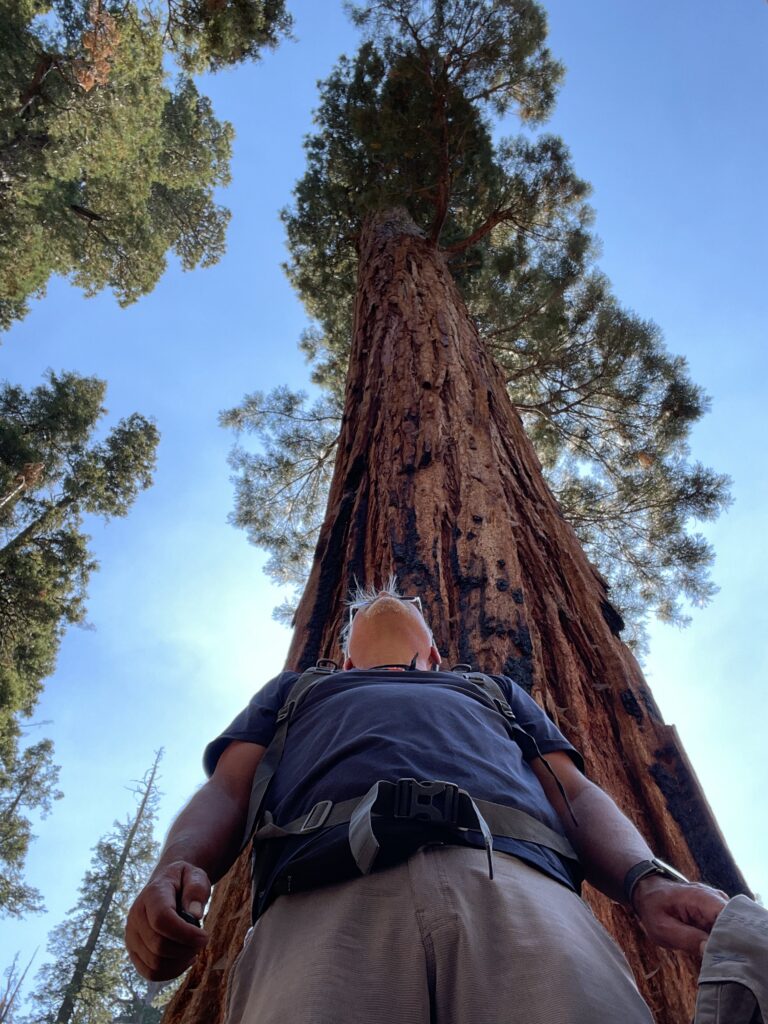
I’ve got a son and two stepchildren. As far as hobbies, I love to go hiking. We recently took up scuba diving as well. Scuba diving is actually something I picked up after going through my cancer journey.
Staying active during treatment and recovery
John: In preparation for this story, I was looking through the calendar, and I said, “Wow, did we actually go hiking two weeks after I’d undergone chemo?”
Heike: He was sick. That was a concern, too, after treatment. You wonder what you will be able to do. And as John said, he was very lucky that he was very healthy before he got sick, and I don’t know if that had a lot to do with it. But his recovery didn’t seem as bad as we expected. He didn’t lose his hair. He didn’t lose tons of weight like you see some people do.
This is the first bout with cancer that either one of us has dealt with in our families. It’s not in my family, and in John’s either. So it’s a scary scenario when you start looking ahead at what’s coming, and you’re expecting the worst. And we try to keep it as normal as possible.
It’s a scary scenario when you start looking ahead at what’s coming, and you’re expecting the worst. And we try to keep it as normal as possible.
Heike M., Wife and Care Partner of John M., Bladder Cancer Patient
John’s first symptom: Blood in urine and initial denial
John: My story started in late October of 2021. I noticed that there was some blood in my urine, but it wasn’t consistent. It was just a little here, a little there. And being a typical guy, of course, I just kind of ignored it and figured, well, that’ll go away on its own.
I had experienced something similar many, many years ago when I used to run a lot and do a lot of physical exercise. I would see blood in my urine after a big event like that, so I figured, okay, it must be something related to that. But then, of course, my days of running half marathons are way over. So I was in a little bit of denial.
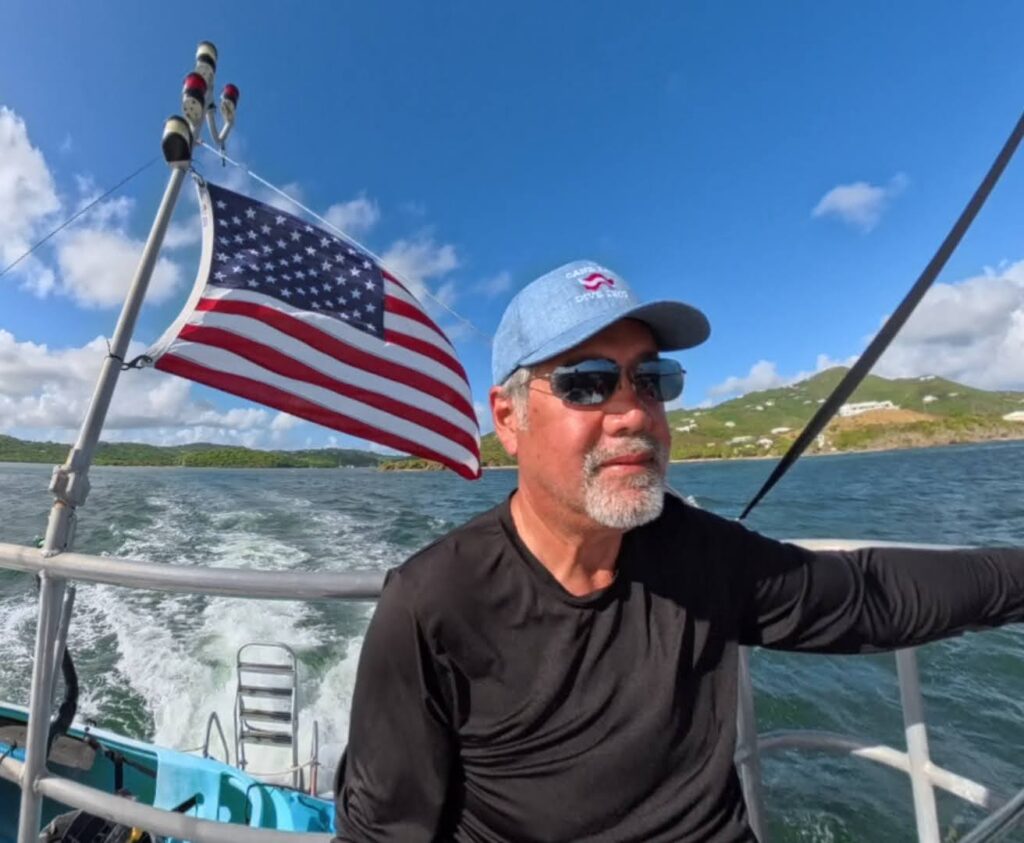
I noticed the blood in late October, and then figured it was probably just a bladder issue, you know, a UTI or whatever. Probably in early December, I went and saw my regular family doctor. He conducted a culture test and said, “No, it’s not an infection.” Then he referred me to a urologist.
In December, I went and had my first urology visit, and he was going to schedule me for a scope. But at that time, Heike and I were getting ready to go on a cruise, so I said, “Well, the scope is going to have to wait.”
Severe bleeding during the cruise, and the first scope
John: We went on the cruise towards the end of December. While we were on the cruise, the bleeding got ridiculous. I was seeing blood everywhere, urinating blood. It was not good. But we were on a cruise, so we were determined to enjoy ourselves.
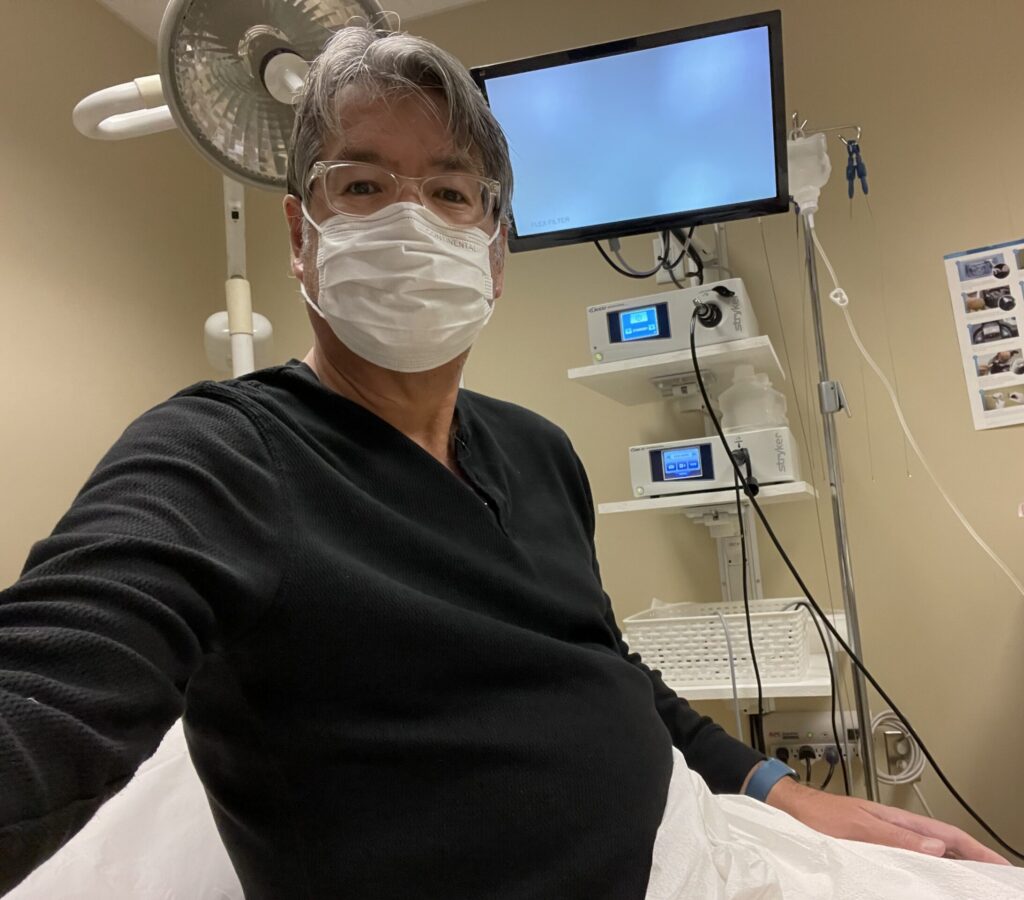
I came back from the cruise in that same month. In January, they did a scope on me, and I always love to tell the story about how nonchalant my urologist was while he was scoping me. I was looking at the big screen there, and he was pushing his camera around. All of a sudden, he pauses and says very nonchalantly, “Oh yeah, that’s cancer.”
I was a little bit like, what? I think he realized that I could hear him; I was in the room, right? And he went, “Oh, well, you know, I mean, we’re going to run a pathology on it.” He kind of backtracked, like, “Oh, maybe I shouldn’t have just been so nonchalant about that.”
He’s a doctor; he probably sees it every day, so I guess for him, it’s no big deal. But for me, who’s never experienced anything like that, to hear, “Oh yeah, that’s cancer.” It was shocking to hear that in the office like that, just nonchalantly.
Initial T1 diagnosis and referral to Johns Hopkins
John: So he did that procedure, and then he scheduled me for another procedure where they went in and removed as much of the tumor as they could, and they ran the pathology on it.
Sure enough, it was cancer. But I was originally diagnosed with what they called T1. In other words, the cancer had not gone into the bladder wall yet into the muscle. It was non-muscle invasive.
He said, “The good news is that it’s non-muscle invasive. The treatment for that is fairly simple. You come in, and we’ll schedule you for these treatments, and it’s all outpatient. But, just to be on the safe side, I’m going to send all your labs up to Johns Hopkins to have them take a close look at it and have their pathology team look at it. I’m also going to schedule you for a meeting with a surgical urologist out there who is fantastic. He’s one of the top people in the field.”
So about a week later, Heike and I hopped in the car, and we drove up to Baltimore. My doctor came out and said, “Hey, from everything I’ve seen, it looks like you’re non-muscle invasive, and you’re going to be able to do outpatient treatments.”
Initial relief and “good news” in Baltimore
John: The prognosis is really good for this kind of stuff, and everything looked really good. So Heike and I kind of breathed a big sigh of relief, and we’re like, “Okay, well, let’s go celebrate.” We went to a crab and lobster restaurant.
But the doctor did say, with a caveat as we were leaving, “However, I’m still waiting to hear back from pathology, but everything I’ve seen looks good. I’m waiting to hear back from pathology and learn exactly what’s going on.” He kind of gave us the impression that it was more of a formality, and he knows what he’s doing, so we’re all good.
I always love to tell the story about how nonchalant my urologist was while he was scoping me. I was looking at the big screen there, and he was pushing his camera around. All of a sudden, he pauses and says very nonchalantly, “Oh yeah, that’s cancer.”
John M., Bladder Cancer Patient
How John processes news: Logic and research
John: I got some lab results, and I was analyzing them like crazy in MyChart and going to Google and doing all that kind of stuff. “What’s a urothelial carcinoma? Okay, that’s bladder cancer,” you know, all that. So I’m doing all my research. I was exploring the different stages, T1, T2, and T3. I kind of had a fairly decent education by the time I went to Baltimore to see my doctor.
Heike: It was interesting with John. He’s not a very emotional guy, kind of typical, I guess. He came home, and he stood there, and kind of did the same thing to me and said, “It’s cancer.” I’m like, what are you talking about? Then he started talking about BCG. I think they were talking about Bacillus Calmette-Guérin therapy.
He is very analytical. As he said, he comes home, and he gets on Google, and starts doing all the research, taking his labs apart, trying to figure it out, because knowledge is power. Understanding that has been an incredible weight lifted off our shoulders because not only did you find it yourself, but you also understand it. You can reread it over and over and over again, take it different ways, maybe go a little bit this way. But it’s really served him, both of us, very well, being able to have that knowledge. Because you can’t just pick up a phone and call a doctor.
He wasn’t involved with the Bladder Cancer Advocacy Network (BCAN) at that point; he wasn’t speaking to anyone. It was just the diagnosis: here’s the treatment, now we have a problem.
The power of education
John: Education really helped me a lot. As a matter of fact, when I met with my doctor the first time, when he said, “Okay, you’re T1 non-muscle invasive, he gave me this orange book from BCAN. He said, “This is a great reference about your condition and its treatments.”
I just devoured that book. It was like a godsend to me because even though I was doing all the Doctor Google stuff, it was from a reputable source, peer-reviewed by doctors. This isn’t just people’s opinions on the internet; this is the real stuff.
I spent a lot of time reviewing that book. I read it cover to cover. It gave me peace of mind. I thought, “Okay, this is what I’m dealing with.” Generally, when I have a problem like that, it’s like, okay, let’s work the problem. What’s the problem? What do I have to do? That book from BCAN really gave me peace of mind. That’s why I’m so involved with them now, because I realized how much it helped me.
I recommend to anyone who’s going on this journey: there are tons of resources for people going through the bladder cancer journey, and many of them are free. The first step is to refer to those materials. They can also get one-on-one help. There are just a lot of things that they can do.
John’s life-changing phone call
John: The next day, I think Heike was at work, and I was working from home or something. I was driving and was nearly home when my phone rang. I saw my caller ID, and it was from Johns Hopkins. I figured it was my doctor’s nurse or one of his assistants. But when I picked it up, it was my actual doctor.
He was like, “Hey, are you driving?” I said, “Yeah, I’m just pulling into the driveway.” When I was parked, I said, “I’m here.” He goes, “Listen, I got your pathology back.” I’m kind of paraphrasing here, but he basically said, “Actually, your lab results show that you are indeed muscle invasive and you have a very aggressive cancer.”
I said, “So that’s going to be a different protocol.” And he’s like, “Yeah. We need to get you in right away. We need to get you started on chemotherapy immediately and schedule you for a radical cystectomy.” Luckily, by then, I kind of knew what all that was because I had done some research on all of it.
Another thing that had come up: by this time, I had been through a couple of CT scans as well. One of the things they found in my CT scan was also a mass on my spleen. They decided that when they did my radical cystectomy, they were going to do a splenectomy at the same time to get this growth out. They didn’t know what the growth in my spleen was, so they were just going to remove that as well.
It was a lot to take in. Before that point, I had been thinking that I was going to have BCG therapy, and it was going to be over. I dodged that bullet. But I realized that I was going to need to have this major surgery. I had never even been in an operating room before in my life, and here I was getting ready to go on this big journey. I remember sitting there in my car, going, “Wow.”
He talked to me for maybe three or four minutes. He said, “My nurse will be contacting you, and we need to get you scheduled, and she’ll give you details. I’m going to refer you to an oncologist so we can get you on chemotherapy right away.”
It was a lot to take in, literally in six minutes. I know he’s a busy doctor, and he’s got to move on. He hung up the phone, and I just sat in the car, going, “Wow.” Six minutes that just kind of changed my life.
I don’t fault my doctor. He had to convey it to me. I don’t know how else he could have conveyed it to me. But he had to tell me, and he had to get me prepared for these phone calls that were going to be coming my way from an oncologist and from his surgical scheduler: “You’re going to get these phone calls, so I’ve got to let you know what’s happening here.”
There are tons of resources for people going through the bladder cancer journey, and many of them are free. The first step is to refer to those materials.
John M., Bladder Cancer Patient
Heike’s perspective regarding the emotional roller coaster
John: I think I just called you right after I talked to you.
Heike: While you were right here in the driveway.
John: Were you in the house?
Heike: I don’t remember, but we were in the room together when you told me about it. You’re right, it is like a roller coaster. You get your brain and your heart all set on one thing with what doctors are telling you, and you always have the trust in the doctors that they know what they’re doing — and they did. But then you had a whole other story that was getting a lot deeper and a lot more dangerous, I guess you could say.
We didn’t know what the prognosis was yet, or how he was going to react to chemotherapy and all that. We’re so fortunate that John had a great job — he still does, same place — that let him do what he needed to do, and my work did as well. I work for a radiation therapy company, and unfortunately, he wasn’t a candidate for radiation therapy. But I had a lot of doctors looking at his scans and saying, “Yes, this is the right way to go. This is absolutely the right plan.”
There was also talk about the neobladder. “Do you really want to go through all that or just get rid of all this and move forward?” You know, it’s not like he’s 24.
Moving quickly toward radical cystectomy and chemo
John: Once I got onto the “I’m going to have a radical cystectomy” train, things went pretty quickly. When they realized how aggressive the cancer was and the size and everything, it was probably within that day or the next that I got a call from the oncologist to get me in for a consult for chemo.
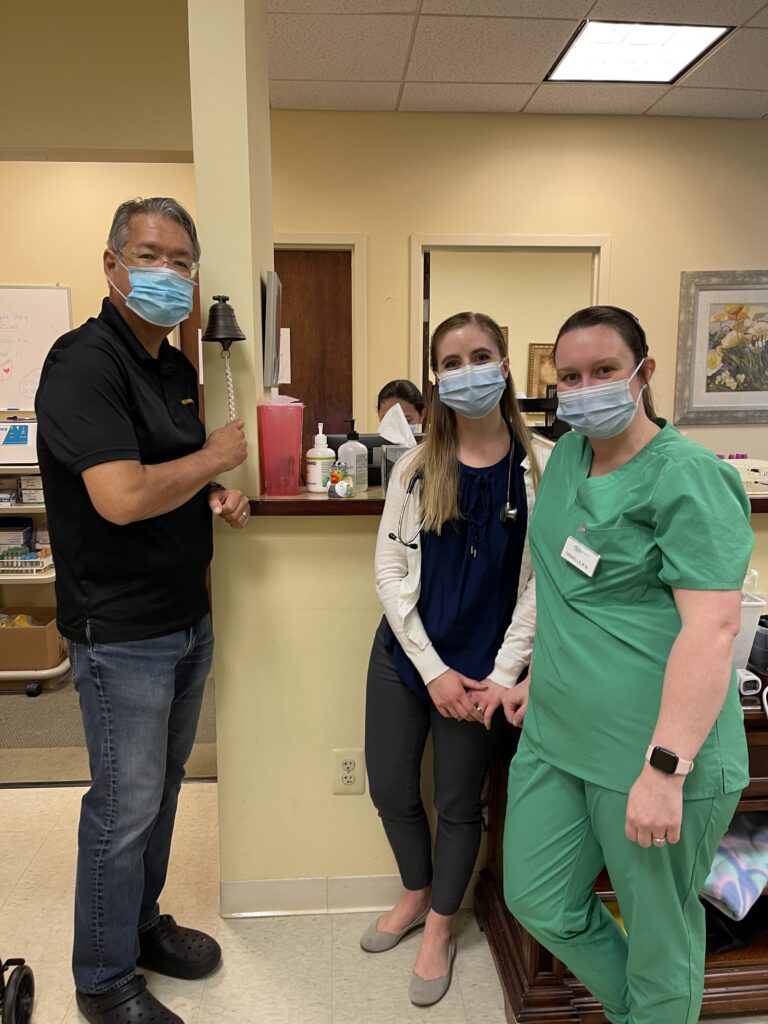
Then I got a call from somebody on his surgical team saying, “How does June 22nd look for you?” I thought, sure, okay. June 22nd, I guess, is just as good as any other day to have a radical cystectomy. June 22nd it was. I knew that on June 22nd, I was going to get a bunch of organs ripped out of me.
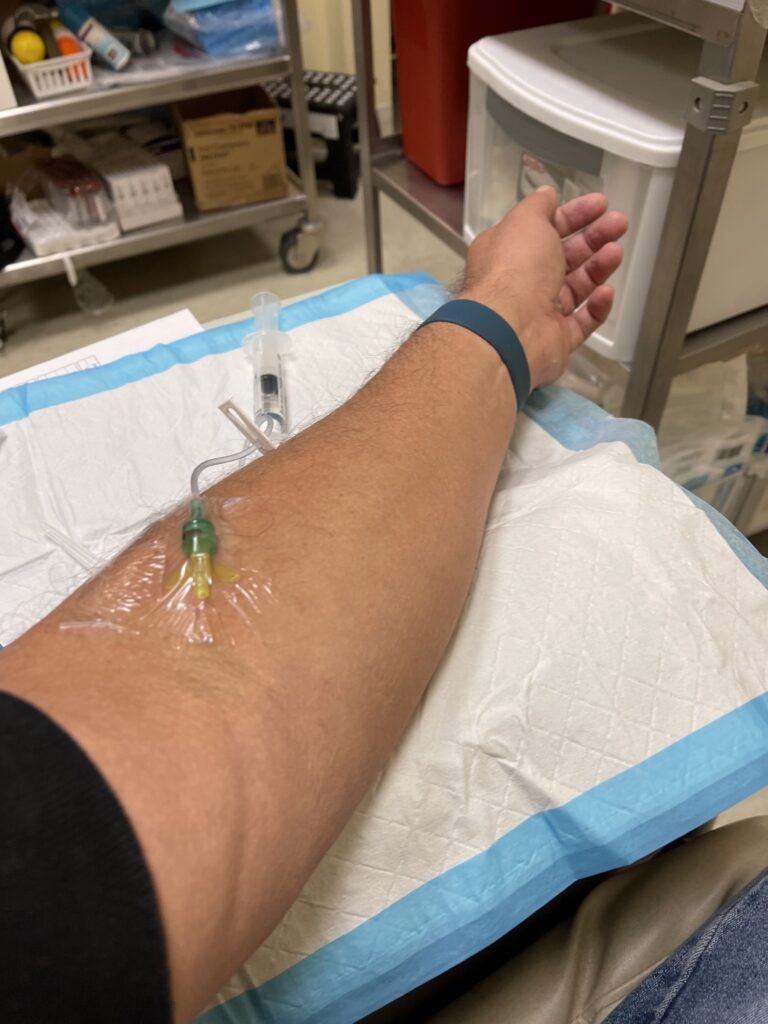
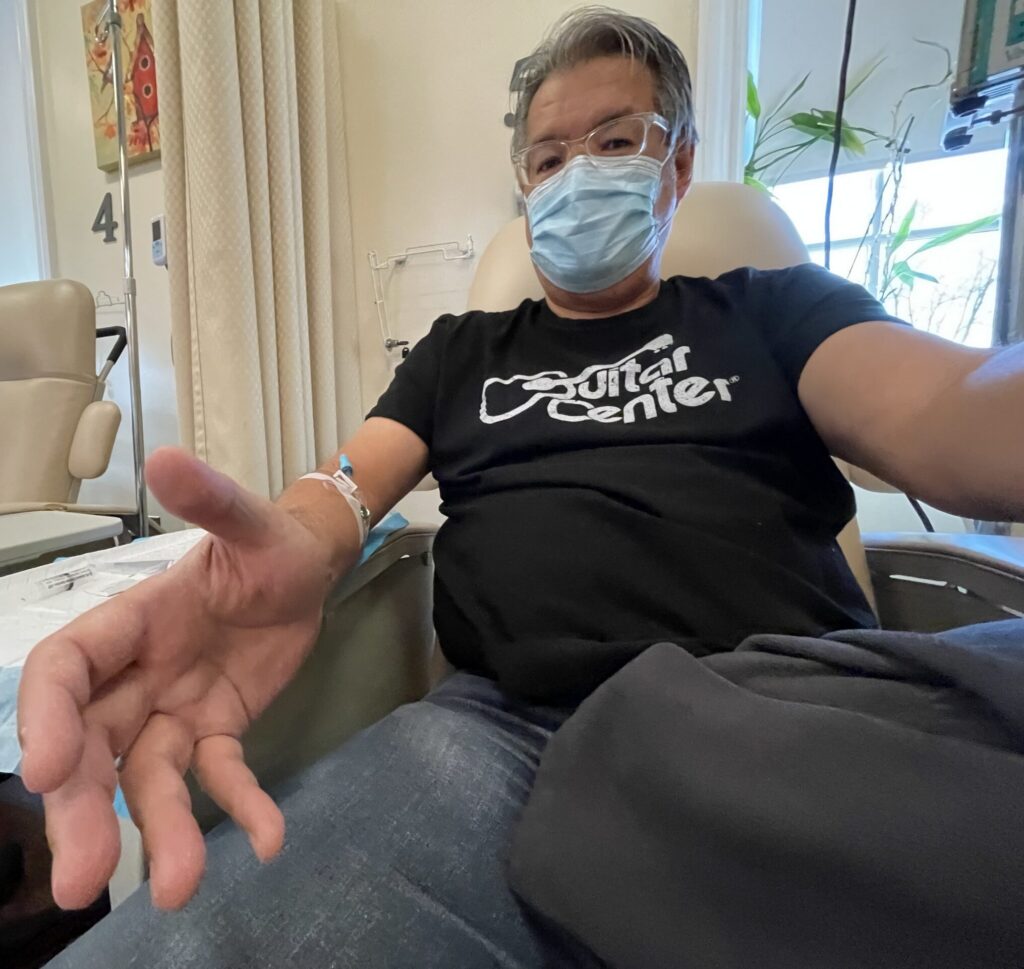
They needed to get me into chemotherapy right away. They wanted to give me two months of chemotherapy, plus time to recover from the chemotherapy, before doing the surgery. So I went right into chemotherapy in March. I started chemotherapy at the end of March, and I did chemotherapy through to about the end of May.
John’s tough decisions after losing his bladder
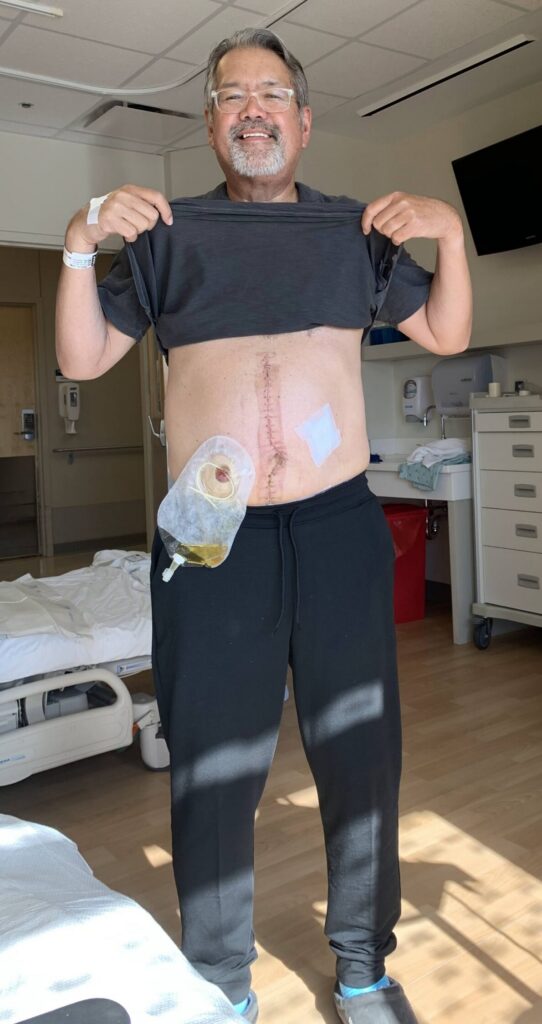
John: The biggest decision I had to make was, since I was going to lose my bladder, what would be the replacement modality I wanted? In the bladder cancer world, you can do an ileal conduit, which is basically a pouch that you wear on the outside of your body with a stoma for the rest of your life, or you can have a neobladder created, a bladder inside your body with your intestines and other things.
Then there’s one called the Indiana pouch. I don’t know a lot about it, but I know it’s another pouch where you have to self-catheterize in order to drain it. With the neobladder, you function typically like normal, but you have to retrain your body to use a neobladder.
I decided to go with the ileal conduit because it’s more old school, and I’m 60 years old. I don’t have a problem wearing a bag for the rest of my life. There’s a lot of community support out there for people who are in the ostomy world.
Heike: We did it together. He talked to me about everything, and we discussed the pros and cons of all of them. I think ultimately the decision was based on what’s your greatest chance of success, right? Some of the other ones didn’t seem real — well, not unreal — but they just seemed unmanageable.
He asked me, “Would you be okay if I had a bag hanging off of me?” I said, “I don’t care.” In retrospect, it has not stopped him one iota, which I’m sure a lot of people need to hear because they get so scared of it, and it is frightening, but it’s not. You’ve got to have the right mindset and understand that this is your cure. This is where you’re headed, and it’s not bad.
Side effects and fatigue during platinum-based chemotherapy
John: We worked together on that, and that was not an issue. I think I handled chemo pretty well compared to other people. I’ve heard other people’s horror stories. I didn’t lose my hair, but it did thin.
I was on the platinum protocol, which I know a lot of people can’t be on because it does wreck you pretty well. But I think I handled it pretty well. I didn’t really lose a ton of weight.
For me, it was really about being very weak. I was very tired all the time. Where we live, we have steps, and I would literally have to go up a few steps and rest on the landing before I could do more steps. It was just a lot of fatigue.
You’ve got to have the right mindset and understand that this is your cure. This is where you’re headed, and it’s not bad.
Heike M., Wife and Care Partner of John M., Bladder Cancer Patient
Thinking about survival rates and surgical risk
John: I knew the five-year numbers. I was asking, “What’s the five-year survival rate for people with this kind of cancer?” I was looking up those kinds of things.
As far as risk factors, I did a little bit of research on people who have stomas and things like that, and it’s not a very low-risk situation. I knew the surgery I was going to have was pretty invasive. I was on the table for quite a while. I had a lot of faith and confidence. I knew I was at one of the best hospitals in the world, and I had one of the best surgical urologists on the planet, so I couldn’t ask for anything more.
I had the surgery on June 22nd. Before that, I had a bunch of MRIs, CT scans, and follow-ups. Every time I had chemotherapy, I had different drug treatments to help me through my chemo as well. They gave me something that helped with my bone marrow and different things along the way, but I think relatively it went pretty smoothly.
The day of surgery and being a caregiver
Heike: The surgeon warned me that the surgery would be long. We had two different surgeons coming in, one for his bladder and one for his spleen. So I was prepared for that. We were staying in town, so I went back to the hotel and then came back shortly before he got out. Seeing him afterwards was obviously a godsend. He came out fine.
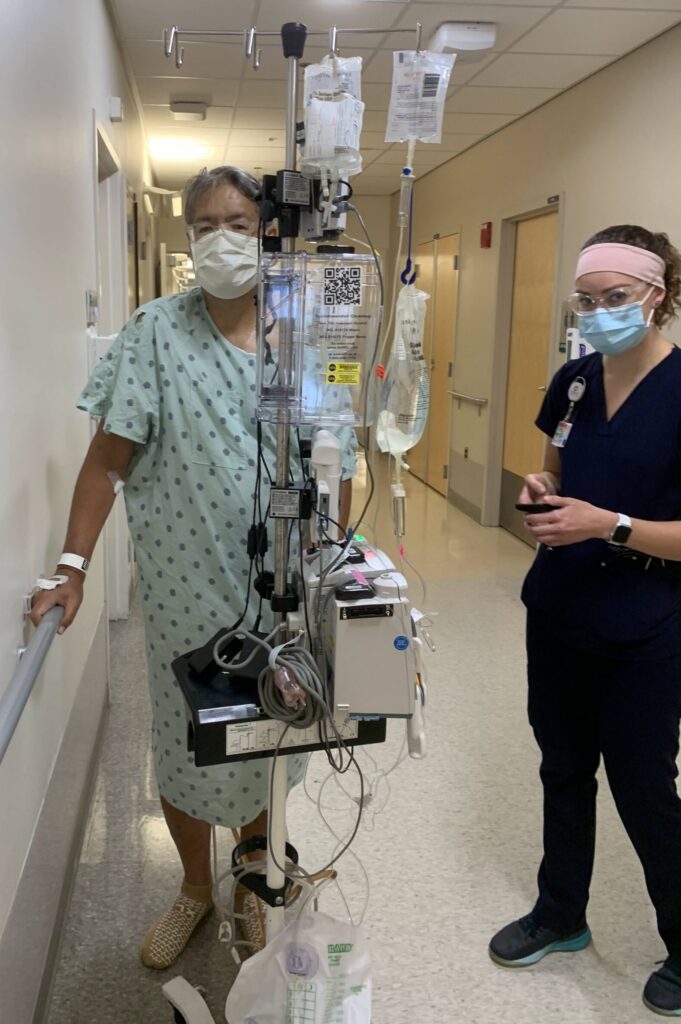
He was higher than a kite with all the painkillers and cut open from here to here. It was crazy. He was going to be in the hospital for another ten days. But once he got home, it was so much better because I got to be the caretaker, and I love doing that. “What do you need, John? I’m right here. What do you need? What do you need? Let’s get you this, let’s get you that.”
Recovering at home after radical cystectomy and splenectomy
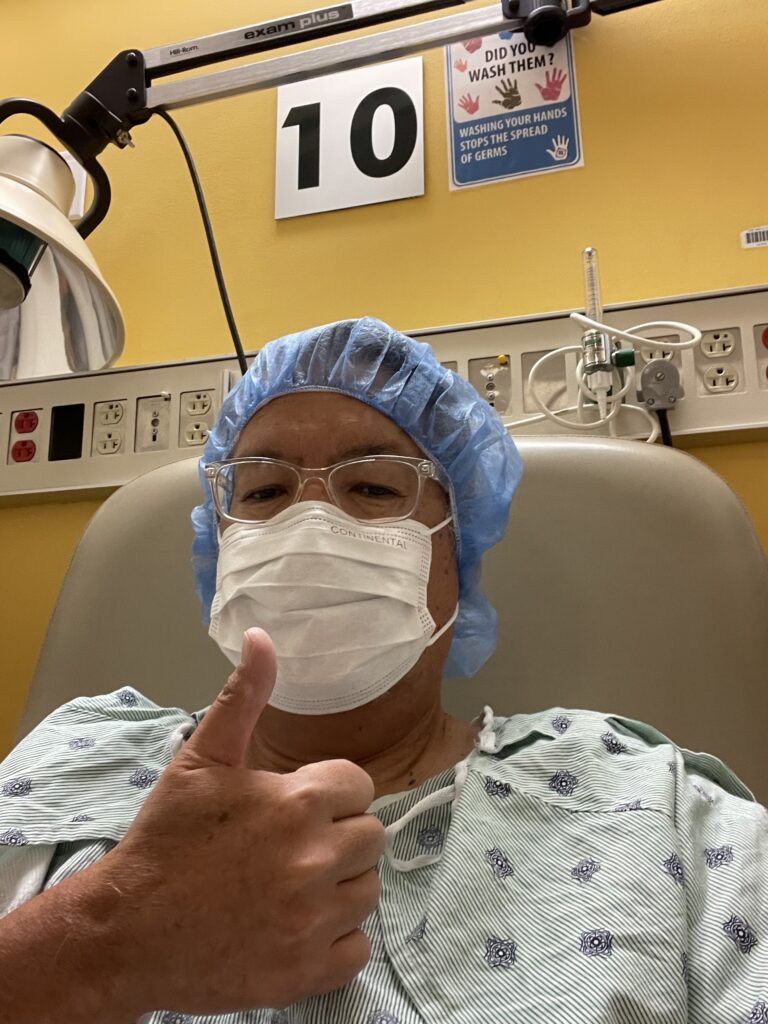
John: Of course, after my surgery, they wanted me up and walking. I was walking in the hallway the next day.
Heike got me set up in the basement on a recliner, and that’s where I lived for a while. I couldn’t really go up and down the steps as much, and I just needed to stay in one place.
Heike: Just having him at home made all the difference. Again, my work allowed me to be home for him as much as I needed to, and he really recovered quickly.
I don’t know if that’s because of the health he was in before, or if he just recovered quickly.
Waking up after surgery and sitting in silence
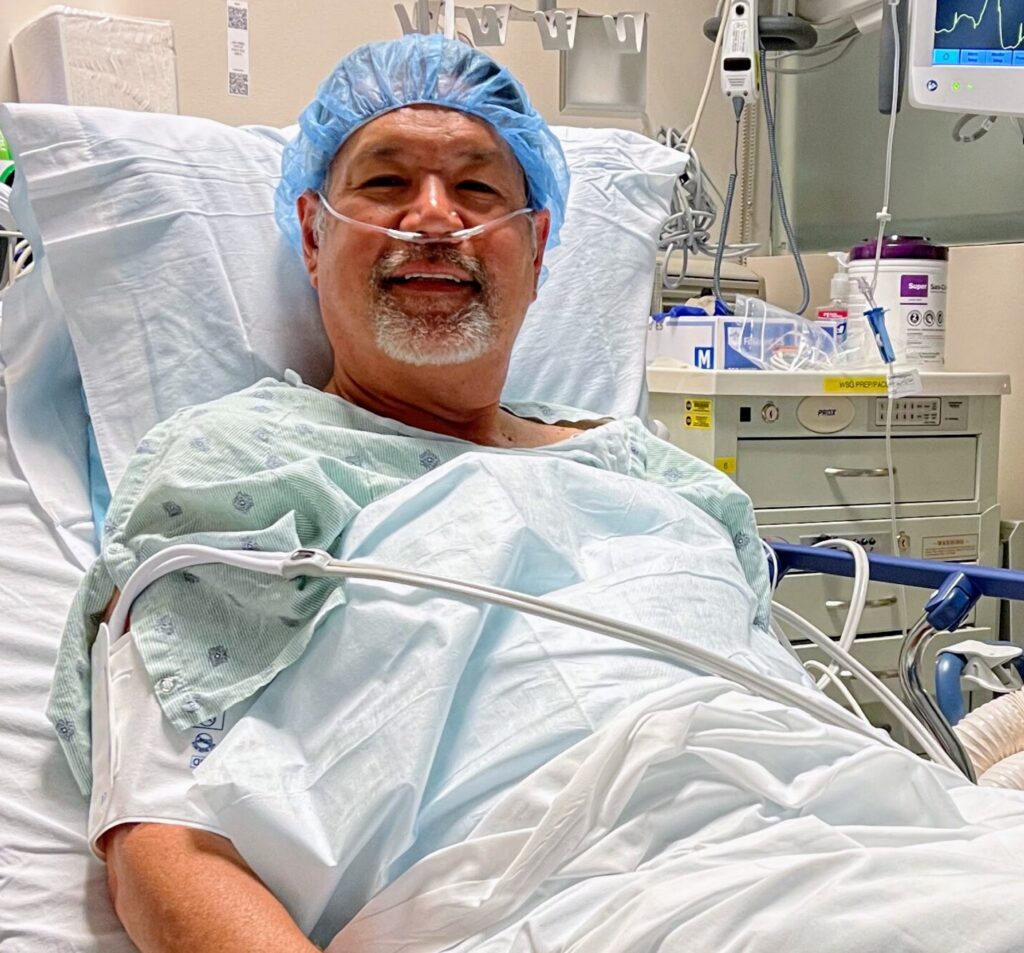
John: It’s always good when you wake up after a surgery, because you realize you made it. I had this gigantic scar straight down my middle, like a gutted deer. I had no abdominal muscles because they cut through so much of my abdomen. I remember trying to sit up, and that was very painful. They put me on quite a pain management regimen, and I was there for a little over a week. Heike was there too. I remember just sitting there in silence.
Heike: I’d come to visit him every day, and I’d say, “Why don’t you turn the TV on or something?” He’d sit in the room all alone. “No, I just want to sit here in silence.” No music, no nothing.
John: That was probably the only time in my life that I just had no media or anything for hours on end, and I was just with myself.
I had a lot of faith and confidence. I knew I was at one of the best hospitals in the world, and I had one of the best surgical urologists on the planet, so I couldn’t ask for anything more.
John M., Bladder Cancer Patient
John’s first meal out after leaving the hospital
John: I was thinking, “Where do we go from here, and what’s next?” But it was good to get out of the hospital.
We even stopped at Busboys and Poets, or one of the restaurants we like that’s right there by Hopkins. Here I am, fresh out of the hospital, didn’t even get home yet, and we stopped and got something to eat. I had a chef salad.
Ongoing surveillance and great post-op news
John: I have surveillance, of course. I get CT scans, ultrasounds, and blood tests to make sure the cancer hasn’t come back. I got really good news a few days after I got home. The doctor told me that all the cultures in my lymph nodes and all that didn’t detect any cancer, so they felt pretty confident that they got it all.
Heike: And the spleen was clean.
John: Yeah, the spleen mass wasn’t cancerous. It was just a gigantic hemangioma. But they had to remove it anyway because it was so large. If I had ever had any trauma to the chest, like if I got in a car wreck or something, I probably wouldn’t have survived it because I would have bled out. So it was good that they removed that.
Living with “scanxiety” and reaching three years
John: It’s been three years. They call it scanxiety, right? Every time you go in for a scan, you don’t know what’s going to happen.
For the first few, I had a little bit, but now I feel really confident — not to get smug or anything — but I feel like I’m through this.
If it does come back, like I told Heike, we’ll just deal with it.
Heike’s view on anxiety and gratitude after each scan
Heike: As John said, there is definitely a level of stress and anxiety, but then you get the results, and everything’s clear.
John would get the results before his doctor even called him because he’s online, looking it all up, and knows his results. He’s like, “I’m clear, it’s all good, nothing’s showing up.”
So we just take each one as a blessing. You just thank God that you’ve gotten this far and you’ve gotten through another scan and everything’s good.
Mindset, living in the present, and giving back
John: I think so much of your recovery is really your mindset. I believed that I was going to get through this, and I was going to give it my best. I know it can always come back, but I don’t think about that. I think about moving forward.
Can it come back? Of course, it can come back. But that’s not what I’m going to worry about. What I’m focused on now is today, and if I get fortunate enough to get tomorrow, tomorrow. That’s about it.
Through my journey, I’ve met a lot of people who have been on this journey through various groups, and it’s really inspired me to give back to the community with what I learned. The education I got from BCAN was amazing, and it really empowered me.
I run the Beating Bladder Cancer Facebook page and website. People come to me and say, “My husband is going through this,” or “I know you’ve been through this,” and I start interacting with them. I push them towards resources. I say, “If you do this, this education will really help you.”
I’m a sponge. Anything I can do to help people out there going through the journey, I point them in the direction: go here, go there. These people can really ease your mind.
So much of your recovery is really your mindset. I believed that I was going to get through this, and I was going to give it my best. I know it can always come back, but I don’t think about that. I think about moving forward.
John M., Bladder Cancer Patient
Sharing as healing and using marketing skills to help others
John: For me, sharing is healing, and I’m still healing. The more I can share my experience with others out there and point them in directions to give them hope and support, the more it heals me as well. The more people that get immersed in this community, the more they can help others, and that’s what we’re all about here.
I created the website because, as I said, my background is in marketing. I thought, “Why can’t I leverage some of what I already know in the professional world and put it to good use in helping others?” That’s why I created the website and the YouTube channel. It’s easy to get to my YouTube channel from my website. My goal is to provide information that hopefully will give people hope.
Higher bladder cancer risk for veterans and new awareness work
John: I’d like to add, because I was in the Navy and being part of the military, veterans tend to get bladder cancer at a much, much higher rate than the civilian population. Part of my work now is focused on them. I’ve received a grant to create an awareness campaign amongst veterans to make sure that they get checked out and don’t ignore the signs as well.
That’s going to be part of the content that I’ll be posting on my website and on my YouTube channel. Veterans typically work in very hazardous environments and are exposed to all kinds of chemical toxins, more than civilians would be. That’s why it’s not just bladder cancer, but all kinds of different cancers that are way more prevalent in the veteran community than in the civilian community. I want to make sure veterans out there know that if you see anything, you need to get on it. Don’t ignore it.
When I was doing my research, I realized that veterans have a much higher propensity to cancer than the civilian population. As a matter of fact, I serve on the BCAN Patient Advisory Committee for military people as well.
Story Sponsors
Thank you to our sponsors for their support of our independent patient education program. The Patient Story retains full editorial control over all content.
This interview has been edited for clarity and length. The views and opinions expressed in this interview do not necessarily reflect those of The Patient Story. This content does not replace professional medical advice.
Inspired by John and Heike’s story?
Share your story, too!
Hear from people living with bladder cancer, and from cancer caregivers and care partners
Real experiences with diagnosis, treatment choices, side effects, and life beyond bladder cancer — in their own words.


Leave a Reply