
Kirsten’s Metastatic Melanoma Story: A Back Injury at 37 That Turned Out to Be Stage 4 Cancer
Months before anyone said the words “metastatic melanoma” out loud, Kirsten knew something in her body had shifted. It started small: a sore back after a rough chiropractic adjustment, the kind of pain that was supposed to fade in a few days but never did. She was told she had a slipped disc, then bursitis, but months of physiotherapy and gym work never touched the underlying problem. Kirsten was 37, a busy mom of two who ran her own cake-decorating business and homeschooled her kids. She wasn’t supposed to be this sick and for eight months, nobody could tell her why.
Interviewed by: Taylor Scheib
Edited by: Katrina Villareal
The turning point didn’t come from a scan, but from a meditation journey she did with her husband. She saw cancer moving down the left side of her body and a message that told her: It’s not your time. She came out of it shaken but had strange clarity. She finally knew what to ask her doctors to look for.
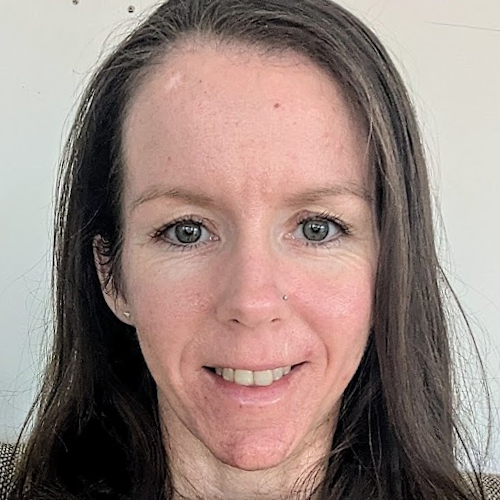
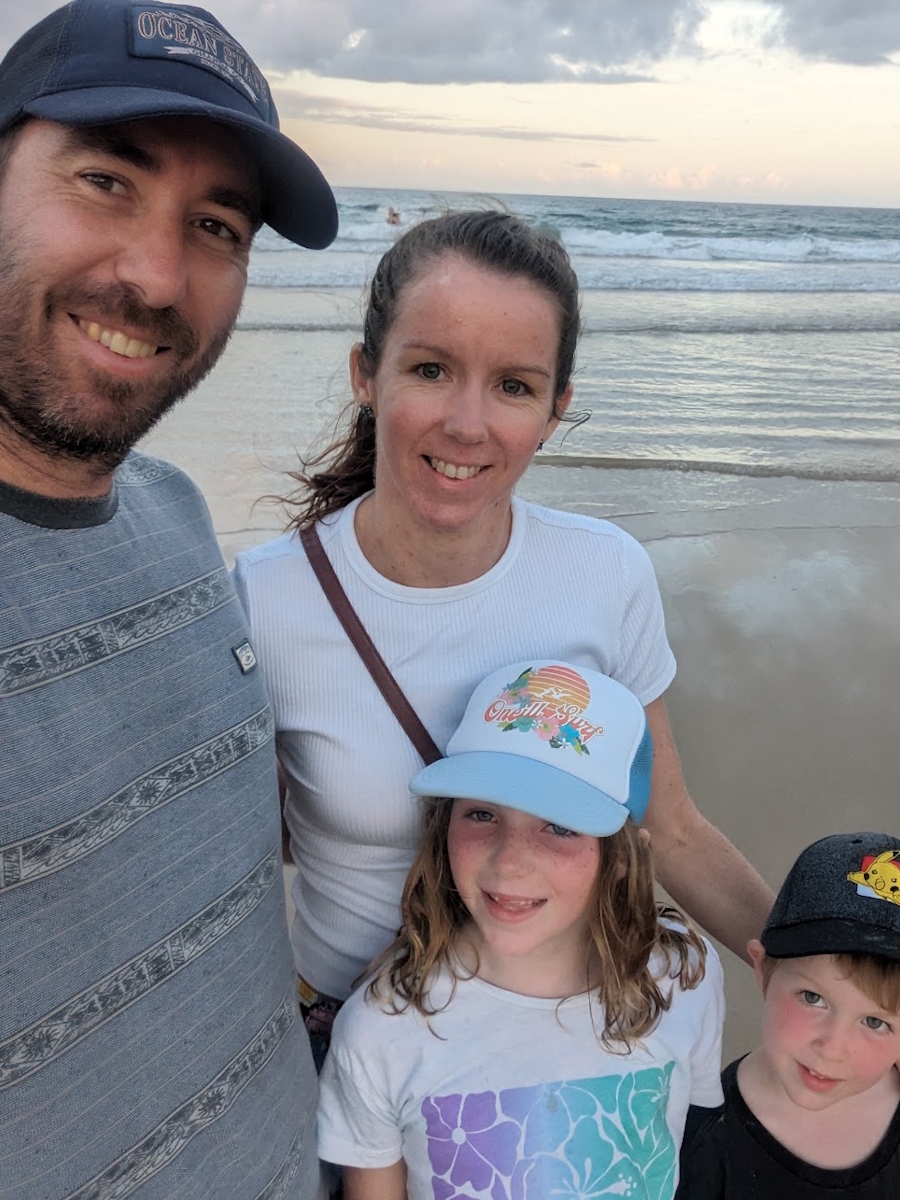
What followed was a hospital admission, a biopsy, and a phone call the day before New Year’s Eve that changed everything: not multiple myeloma, as her doctors first suspected, but metastatic melanoma that had already spread to her bones, with no primary site ever found on her skin. She was told it was stage 4 and incurable. She asked her care team for one thing: no prognosis. She had a 7-year-old and a 5-year-old at home, and she wasn’t ready to carry a number instead of a plan.
Kirsten’s treatment path wasn’t a straight line. When her oncology team wanted to start immunotherapy right away, she wasn’t ready. She’d watched people close to her get sick and die, which felt scarier than the cancer itself. She also preferred to try natural approaches before pharmaceuticals, and spent years working with her sister, who was a naturopath, on other health issues. Kirsten had spinal surgery to place two rods supporting a spine that was starting to collapse, and endured five rounds of radiation that didn’t shrink the cancer. Eventually, about eight months after her diagnosis, she began six rounds of immunotherapy, and by the fourth or fifth round, the cancer was gone.
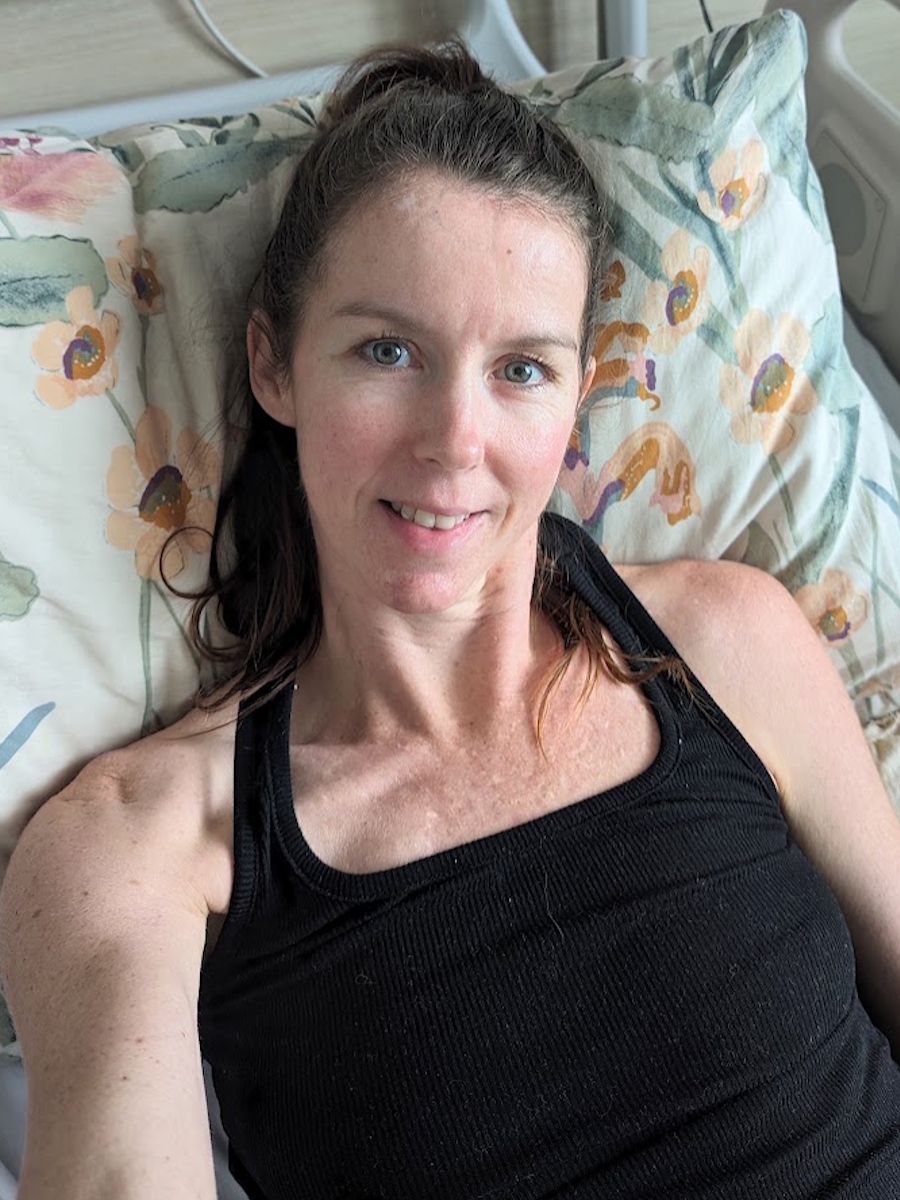
Today, Kirsten has had no evidence of disease for about a year and a half. She spent 18 months largely bedbound and had to relearn how to let other people care for her, a hard shift for someone who had always been the one doing the caring. She’s since moved somewhere quieter, started speaking up for what she actually wants, and is getting ready for a two-month holiday she wouldn’t have let herself imagine a few years ago. She shares her story because she needed someone like her to follow when she was the one stuck in bed, and because the medical system gave her stats and numbers when what she needed was hope.
Watch Kirsten’s video or read the edited transcript of her interview to find out more about her story:
- For months, Kirsten’s pain was attributed to a slipped disc and later bursitis. When it didn’t get better, she kept advocating for an answer until doctors looked further. If something in your body doesn’t add up to you, even after treatment or a scan says otherwise, continue asking questions.
- When her oncology team wanted to start immunotherapy right away, Kirsten said she wasn’t ready. Seeing people close to her get sick and die felt scarier to her than the cancer itself. She also wanted to first try the natural approaches she had long trusted. The decision of what to try and in what order was hers to make with her care team.
- Losing her physical independence for 18 months meant learning to accept help after a lifetime of being the one who gave it. Letting others care for you isn’t a failure; it can be its own kind of growth.
- Kirsten distinguishes between being healed and being in a constant state of healing. Recovery isn’t a finish line she crossed once; it’s something she keeps choosing, including the day she reached out to her physical therapist instead of pushing through alone.
Kirsten’s Diagnosis Facts
- Name: Kirsten R.
- Age at Diagnosis:
- 37
- Diagnosis:
- Melanoma
- Staging:
- Stage 4 (Metastatic)
- Symptom:
- Persistent, migrating burning pain in the back that began after a chiropractic adjustment
- Treatments:
- Radiation therapy
- Spinal surgery (to insert two supportive rods)
- Immunotherapy
This is not medical advice. Please consult with your healthcare provider to make informed treatment decisions.
- Kirsten’s Diagnosis Facts
- It started at the chiropractor
- Getting a diagnosis of metastatic melanoma
- Choosing to wait before starting treatment
- Why my story doesn’t look like everyone else’s
- Getting my first clear scan
- Hitting rock bottom and learning to love myself again
- Why I share my metastatic melanoma story
- Hear from people living with melanoma
It started at the chiropractor
I used to go to the chiropractor about twice a year. I was a cake and cookie decorator, so I was doing a lot of physical, repetitive movements. I’d get adjusted and feel great for six months at a time.
One particular time, I went to a different chiropractor who was filling in for mine. She did a movement in my mid-back and it was painful. I’d never had pain going to a chiropractor before. I said, “Oh,” and she said, “Did that hurt?” I said yes, and she told me to see how I went for a few days, and that it should come good.
It didn’t. I waited until my regular chiropractor was back, and he said he thought she’d been a bit too aggressive. We worked on it gently, but weeks went by and it didn’t get better.
I ended up going to a general practitioner, but not my regular one since she’d moved on. He asked about my family history and checked me. He said that since it had only been about four weeks since the chiropractor appointment, we should wait. If it wasn’t better by 12 weeks, we’d investigate further.
Twelve weeks rolled around and it still wasn’t better. He sent me for a scan, which showed a slipped disc. I was using a foam roller to help with the muscle tension. Looking back now, I was probably causing more damage because I was rolling directly on that spot.
He sent me for another scan because my hip started hurting too. That came back as bursitis. I was going to the gym, working with a personal trainer to strengthen my muscles, and seeing a physiotherapist, but nothing worked. Everyone was at a loss.
Searching for answers
The pain was constant. It was a burning pain that spread across my back, but it would change location from day to day. I started thinking I had fibromyalgia, because I’d been reading a book about different diseases.
I did a 28-day raw food cleanse that I’d read about and the pain disappeared. I couldn’t believe it. I had been limping and could barely do anything, and then all of a sudden, I was back at the park playing with my kids. I thought, “I’ve done it. I’m better.” I didn’t keep doing the raw food cleanse, though, and the pain kept coming back.
I went back to my regular GP. She moved, but I found her. I’ve been seeing her since my son was a baby. I walked in and she said, “This is not you. You’re a fit mum.” She sent me for scans, and they came back with some worrying marks. I was sent for further testing, which showed up as the cancer.
I went to the chiropractor in mid-April 2023 and I wasn’t diagnosed until December 30, 2023, so it was about eight months of searching for an answer. Before I did the cleanse and felt the temporary relief, I started canceling social outings. I’m normally very physical. I was running my business, homeschooling my children, and going to the gym. I love being active, but things had to stop. I had to slow down.
I had been working on my mental health before all of this happened, so that helped. I was frustrated, but I kept asking myself, “What is this telling me? What am I doing that needs to change?” I kept looking for other ways to try to heal.
The meditation that changed everything
I did a meditation journey with my husband. In it, I was shown that I had cancer down my left side. Everything on that side was white and gray, and my hair was long and falling out as I pulled on it. But in that same meditation, my right side was healthy, and I had a message saying, “It’s not your time.”
I came out of that meditation and I don’t know if shock is the word, but it was overwhelming. It also gave me something to hold on to. I thought, “Okay, now I know what to go and ask for. And whatever it is, I’m okay. I’ve been told I’m going to be okay.” There was a moment of, “Do I actually listen to this? Can I trust it?” But I had to, because what else did I have to hold on to?
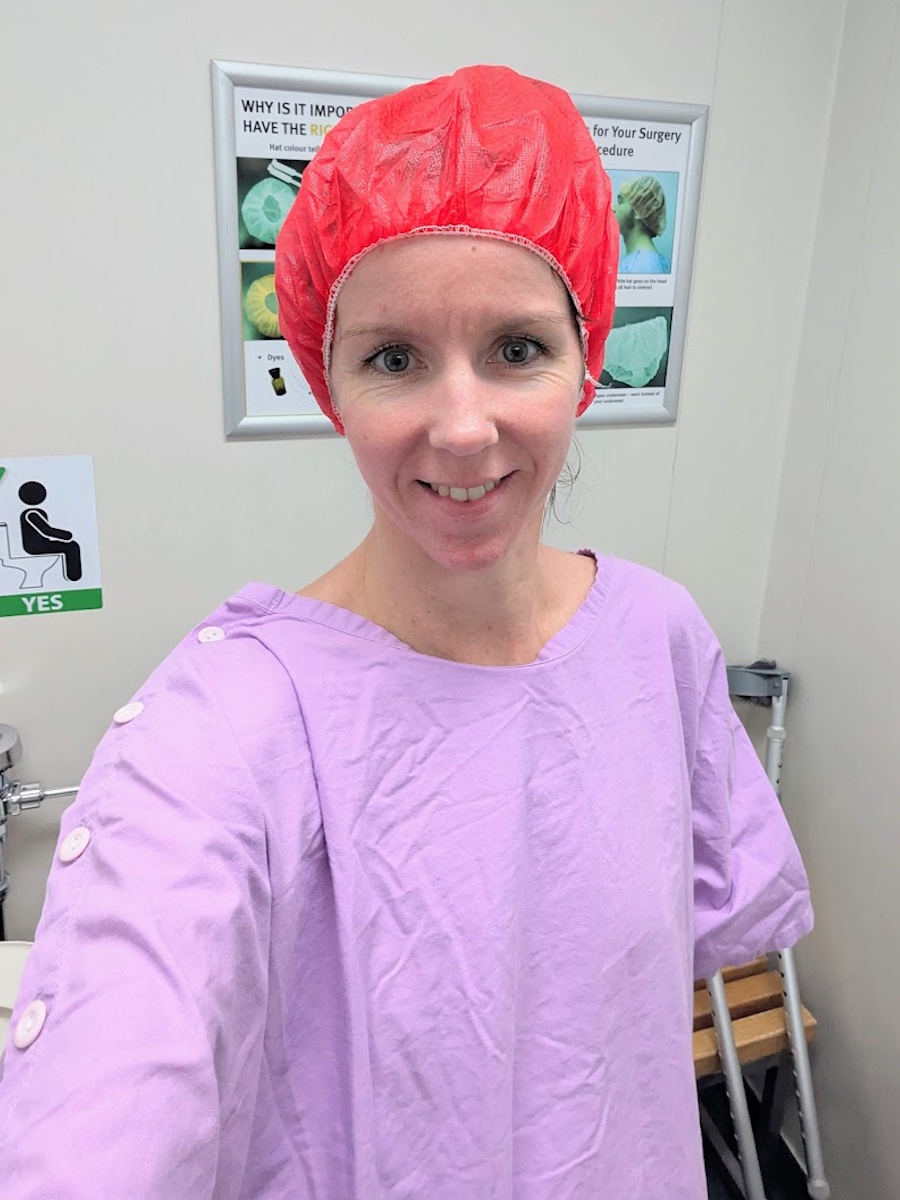
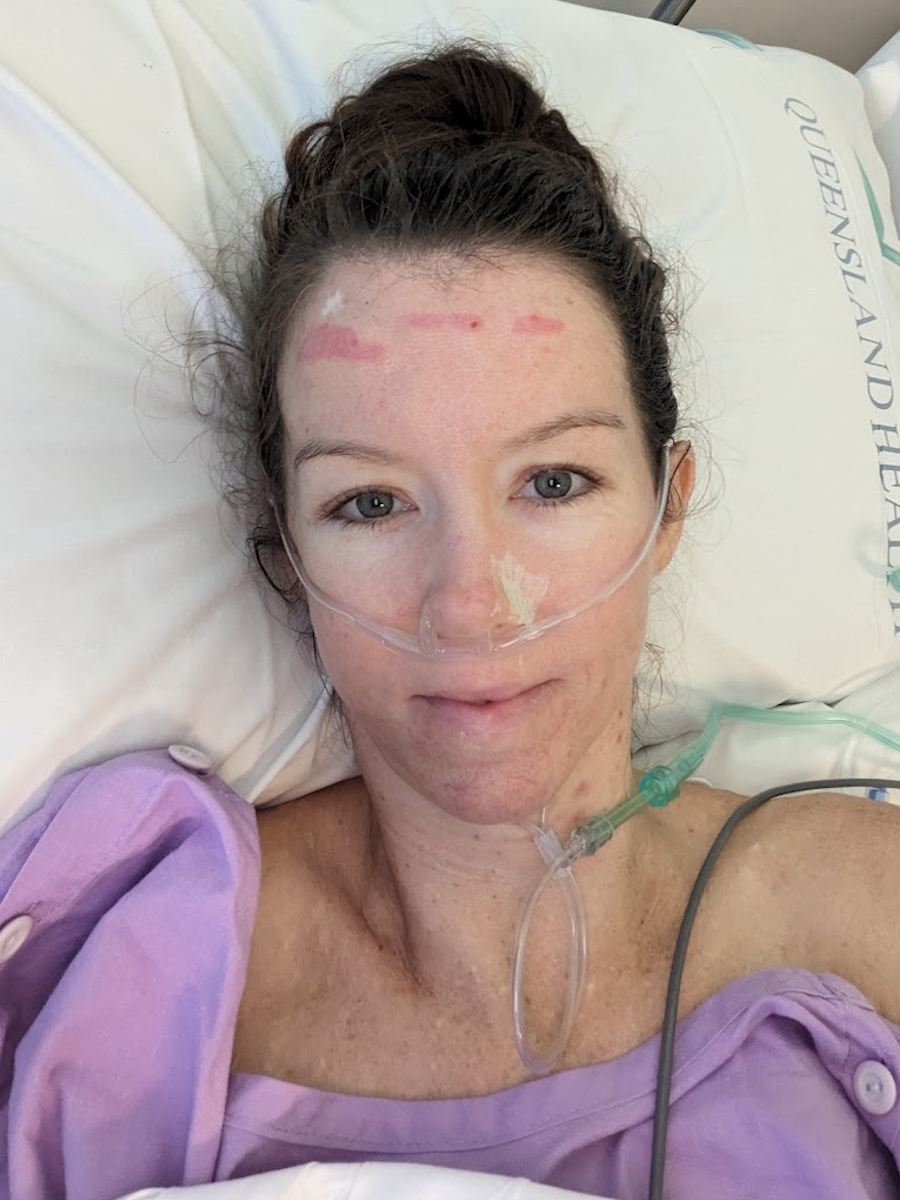
I went in for further testing. I was admitted to the hospital, which was a scary experience. I’d never been anywhere like that before. The first door I walked into had everyone lined up with drips in their arms, and I remember thinking, “I’m not supposed to be here. This isn’t for me.”
Getting a diagnosis of metastatic melanoma
I stayed in the hospital for two nights. They did scans and still couldn’t work out what it was. They ended up doing a biopsy in my hip, but I was sent home without the results. Then, the day before New Year’s Eve, they called and said, “Unfortunately, it’s not what we were hoping for. We thought it was multiple myeloma, but it’s metastatic melanoma, which has spread to your bones.”
A couple of weeks later, I had an appointment with an oncologist, and they told me it was stage 4 and incurable. I asked them not to give me a prognosis. I didn’t want to focus on that. I was in shock. I had two young children; my daughter was seven and my son was five. But I told myself, “I don’t want to know. That’s not helpful for me. I’m just going home to heal,” and that’s what I always focused on.
Learning to advocate for myself
My GP is amazing. She doesn’t hold back on getting tests if she thinks we need them, which is rare. She takes the time to actually know you and your family, and she never forgets anything. These days, you go to a GP and you’ve got 15 minutes, in and out, and they don’t really know you. She’s known my history for years, so when she said, “This is not right; I’m sending you,” it carried weight.
She’s the one who referred me to the hospital. I didn’t have private health insurance, and there was a private doctor available who could see me. I offered to pay out of pocket, but they said no, because she could get more done for me through the public system with a direct hospital referral, so that’s why she admitted me. To this day, she still apologizes, even though it’s not her fault, because it took so long to find out what was going on.
No primary site of melanoma, no clear cause
I knew melanoma was skin cancer, because my neighbor had skin cancer removed from his head six months before, but I didn’t know it could metastasize. With mine, there was no primary location. I never had a skin spot that spread. They checked my entire body and never found where it originated.
Something else stood out to me. My neighbor with skin cancer was in his 50s, spent a lot of time outside, and had a bald head, so that made sense to me as sun-related. But the neighbor on the other side of him was diagnosed with bowel cancer in 2020 and passed away in 2022. Three of us living in that same location ended up with cancer. To me, that wasn’t just a coincidence and it’s part of why I had to get out of there.
I couldn’t point to an obvious reason it happened to me. I’m not a smoker or a drinker. I’ve lived in Victoria most of my life, which has a cold climate, and I have quite light skin, so I’m not someone who sun-bakes. I was 37 at the time. People who get skin cancers are generally thought of as elderly and sun-exposed for years, so I kept asking, “What aspect of my life caused this?” I couldn’t get many answers, because the medical side of things didn’t have time to look into why it happened to a seemingly healthy, young woman. That’s part of what pushed me to look for help and support outside the medical system as well.
Losing and rebuilding my physical ability
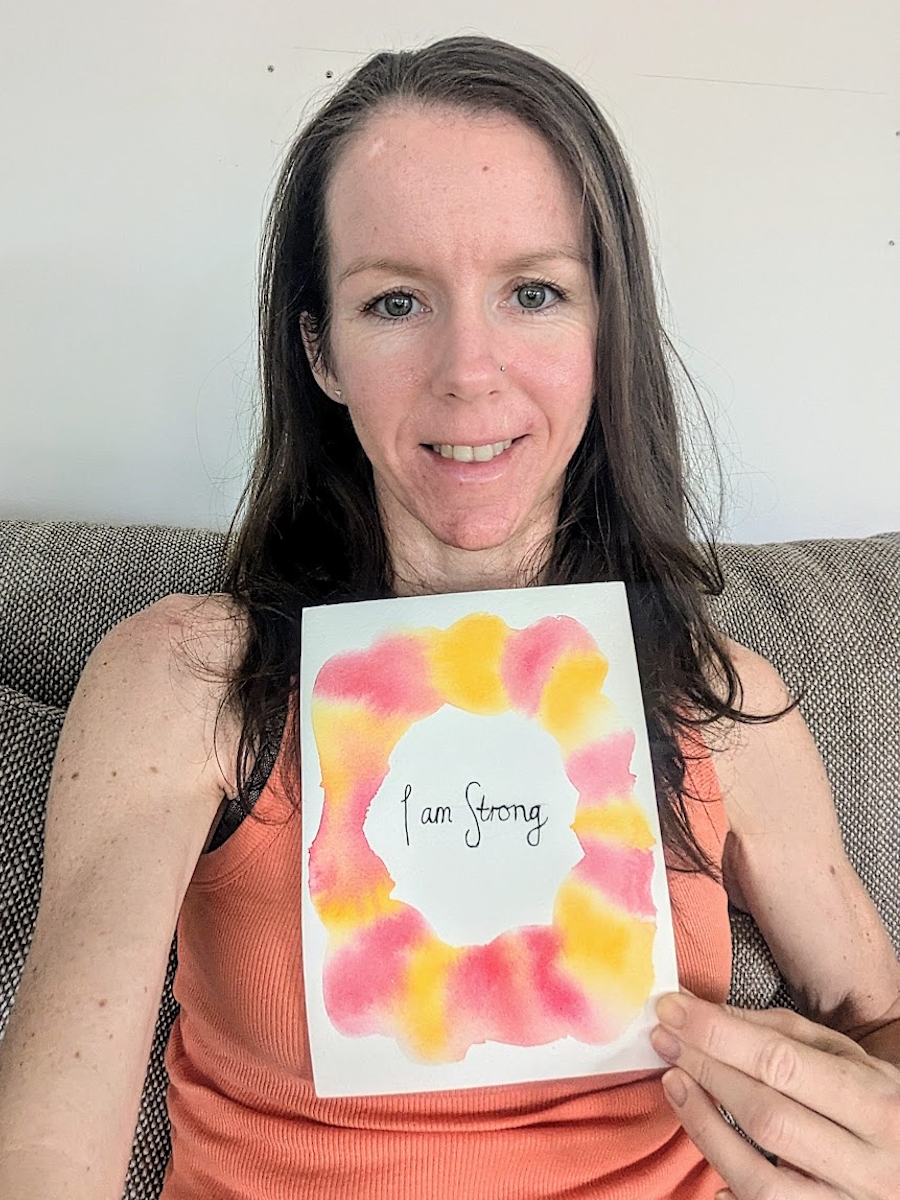
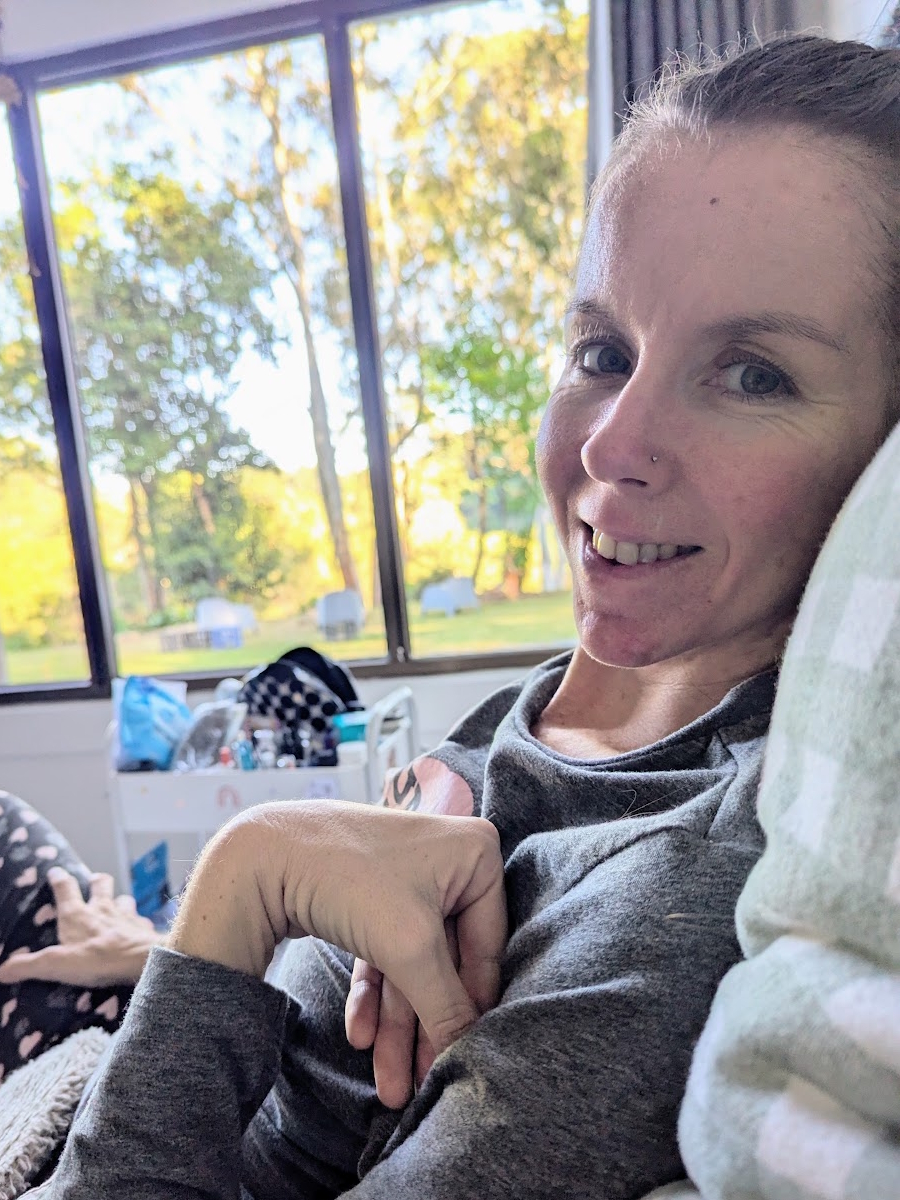
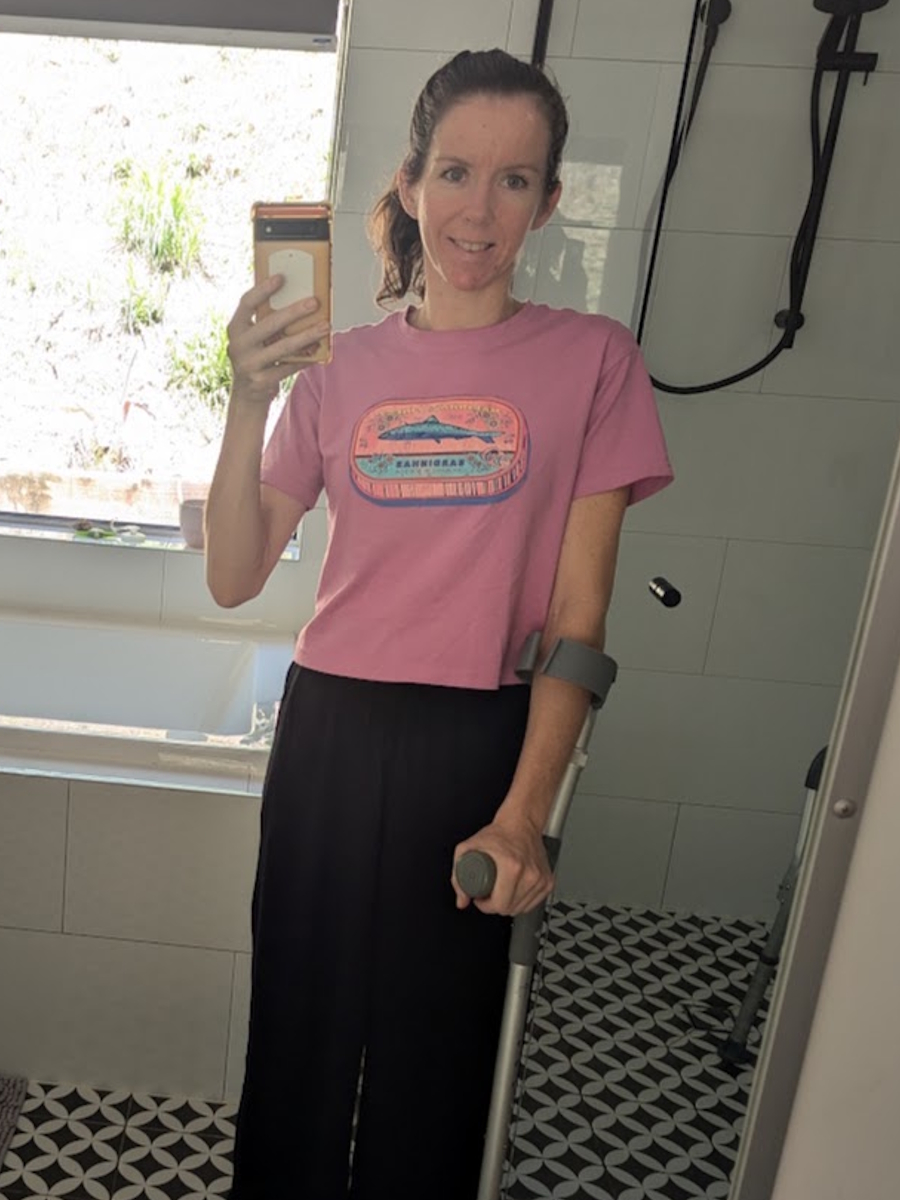
The hardest part has been losing my physical ability. I was bedbound for about 18 months, using crutches to get from my bed to the toilet. I’d do what I called a “cloth wash,” where my husband would bring a bucket of water and a cloth, so I could wash myself at the side of the bed. My mother-in-law and my friends would wash my hair for me. I’d always been the proud, strong woman who took care of everyone else, and suddenly, I was frail and relying on other people for everything.
Just as hard was the fear of not being there for my children. Being a mum is all I ever wanted to do, and being told that could be taken away from me was the hardest thing I’ve faced. But it’s also what drove me to get better, that and wanting it for myself. I couldn’t abandon my babies.
Choosing to wait before starting treatment
After my appointment with the oncologist, they wanted me to start treatment the following Monday. I told them that I wasn’t ready and that I needed to go home and sit with it. They wanted to start me on immunotherapy right away.
My neighbor had passed away the year before after being on chemotherapy, and my husband’s dad also died of cancer. I’d seen people get sick and pass away, so that was genuinely scarier to me than the cancer diagnosis itself. My sister is a naturopath, and I’d already been working with her for years to help manage other health conditions, so I’d seen the benefit of that approach. In my life, I generally try everything natural before turning to pharmaceuticals.
I didn’t start conventional treatment right away. I began a plant-based diet and started seeing a naturopath who specializes in oncology. She had me on supplements, and I started weekly acupuncture and vitamin C IV infusions, along with meditation.
Getting spinal surgery and moving out of the city
About three months after my diagnosis, I was in so much pain that I nearly collapsed in the shower. My husband had to help me out. My spine was starting to collapse, so I agreed to five rounds of radiation to try to shrink the cancer. Unfortunately, that didn’t work for me.
Around the same time, we moved from the city to the country. Everyone packed up our house for us. Before the move, I had spinal surgery because I was on the verge of collapsing. I was told I needed support or I could end up in a wheelchair. I now have two rods, one on either side of my spine. Even the technician doing a recent PET scan was surprised by how much metal was in my back, but that surgery has supported me ever since. I never wanted to do it, but it was absolutely necessary.
Within a week of arriving at our new home, I ended up back in the hospital, likely from the stress of everything. I kept up with different natural therapies and started working with holistic counselors on a lot of trauma I’d been carrying since I was a little girl.
Starting immunotherapy for metastatic melanoma
About eight months after my diagnosis, I started immunotherapy. I did six rounds and after the fourth or fifth round, the cancer was gone. I haven’t had a recurrence since. It’s been about a year and a half since my first clear scan.
Why my story doesn’t look like everyone else’s
One thing I try to do is share my story in a way that shows people there are other options and that healing is possible. I’m not saying it will happen for everyone. I’m not an oncologist. I’m just sharing what I did. In some of my earlier videos, I was 45 kilograms (99 pounds), very frail, and my hair was thinning, and that was even before treatment started. Now I’m moving again, even after multiple surgeries.
Life is different for everyone. We all have different support networks, we’re at different stages with our mental health, and we’re all dealing with different things that may already be affecting us. Financially, if I hadn’t been supported the way I was, I wouldn’t have been able to do a lot of the natural therapies that I think helped me. When I started the treatment from my oncologist, it worked alongside everything else I’d already been doing.
I don’t talk about this openly very often, but I received a life insurance payout because I had that coverage. It was a bittersweet moment. I cried when I got it, because it meant they didn’t expect my life to last past two years. But I changed my thinking. I saw it as a chance to heal the way I wanted to. It meant I could pay for the natural therapies that the hospital wouldn’t provide, but that I wanted to use for myself. A lot of it came down to mindset.
I don’t want anyone to feel like their parent or family member didn’t try hard enough, because a few people have told me they wish their mum had done what I did. It comes down to what you know at the time, and who you have around you to support you. In the medical system, they generally don’t tell you about people who’ve survived or about other therapies you might try alongside their treatment. I never tell people what to do or not to do; I just tell them what I did. That’s part of why I worked with my naturopath, because she’d spent years working alongside conventional treatment, and I saw the benefit of doing what she suggested in addition to everything else.
Getting my first clear scan
I still feel emotional thinking about it. I still remember the song that was playing in my car the day I found out. After the oncologist told me there was no active cancer, I felt free and powerful in a strange way. I did it, and I’m still here.
Even the smallest moments hit me differently now. During my recent PET scan, I wasn’t scared going into it the way I usually was. I was getting ready to go on a two-month holiday, and I thought about not doing the scan at all because I didn’t want anything to change that. But I felt good, so I went.
When I got the call from the oncologist afterward, it was such a relief, even though I’d told myself I wasn’t anxious. There’s always a small part of you, subconsciously, waiting to hear what they’re going to say. I felt on top of the world. Sometimes when I’m driving, I start crying because I’m so happy to still be here.
Hitting rock bottom and learning to love myself again
I’ve always looked at whatever happens to me as a lesson or a message. In another meditation journey, I intended to ask how to heal, but not just physically. The message I got was that I needed to love myself. It was so clear. I’d been my own biggest bully for as long as I can remember, so cruel in the way I used to speak to myself internally. I always felt ugly and unlovable, and I spent a lot of energy trying to impress people and make them like me by doing things for them.
Once I focused on that message, it was life-changing. I don’t think I would have gotten there without what happened to me, because staying busy had always been a way for me to get out of my own head. Once I was stopped in my tracks and couldn’t move, all I had left was to sit with my thoughts. I knew it would be hard and confronting, but I also knew it was what I needed.
By doing that work, I started giving to myself what I’d always given to other people. I started accepting help instead of always being the one who cared for everyone else. That was hard at first, but once I felt how good it was, I wanted more of it. I started showing up for myself and making decisions based on what I wanted, not what other people thought I should do.
That’s part of what led me to move to where I live now, somewhere more peaceful. I never would have spoken up before and said I wanted that. I believe now that I’m worthy of what I want. I used to look at people who had things I wanted and think, “Not little old me.” Now I know I can have that too, if I want it.
How proud I am of myself
I’m proud of myself. I always teach my kids to be proud of themselves too, and I ask them how they feel after they’ve done something. When we were younger, being proud of yourself could get you told to get over yourself. But if you’re not proud of yourself, who’s going to be? We need to be our own biggest supporters. It’s not about showing off. It’s about recognizing how hard you’ve worked, and I know how hard I’ve worked.
Continuing to heal
I don’t tell people I’m healed. I’ve healed from the cancer. But there’s healing from the cancer, and then there’s just healing, period, which never stops, so I say I’m healing. There will always be things that come up, but I know now what I can get through.
Recently, I was trying to relearn a movement to help me walk better, and I couldn’t do it. It felt heavy and frustrating, but I reminded myself to look at how far I’ve come. It became a moment to reach out for help again, which I wouldn’t have done before. I used to think, “My physical therapist doesn’t want to hear from me since I’m not paying for another session,” but I messaged him anyway. He sent me a voice message and so lovingly explained what we’d worked on.
That’s part of what I mean by living: saying yes to what feels good to my heart. I’m no longer scared to ask for what I want or to say no to what I don’t want. I still love supporting and helping people, but not at the expense of my health. If I don’t have the capacity, I say so, and I only offer help when I know I genuinely can.
Why I share my metastatic melanoma story
When I was diagnosed, I needed people like me to follow. My sister would share accounts on Instagram, people who’d been through similar things and were still here. I followed one man who’d been frail and who was now fit and healthy, and that gave me hope. That’s what I needed, because I wasn’t getting it from the medical system. It was all doom and gloom, all stats and numbers, cold hard facts. Nothing was empowering in it. That’s what I want to be for other people.
I sit with it sometimes and wonder if I’m sharing too much, if it makes me uncomfortable. But then I think about needing this myself when I was stuck in bed, watching my family live their lives while I was just there. Knowing I could get better if I found the way kept me going, and that’s what I try to do for others now.
When I share something and start to second-guess myself, that’s usually when people message me to say thank you, and it’s not always people with cancer. Sometimes it’s people going through a hard time in life who say I gave them a different perspective or hope. That’s confirmation to me that what I’m doing is the right thing.
Hold on to hope. If you or a loved one is in this position, hold on to it as your life depends on it, because there is hope.
This interview has been edited for clarity and length. The views and opinions expressed in this interview do not necessarily reflect those of The Patient Story. This content does not replace professional medical advice.
Inspired by Kirsten’s story?
Share your story, too!
Hear from people living with melanoma
Real experiences with diagnosis, treatment choices, side effects, and life beyond melanoma — in their own words.
Leave a Reply