
Abby Expected Eczema Cream, Not Basal Cell Carcinoma and Reconstructive Surgery
In early 2025, Abby, an Australian living in the Netherlands, was crying in her car when she noticed a patch on her cheek that wasn’t getting wet. It felt different from the rest of her skin, so her general practitioner referred her to a dermatologist. At the appointment, the dermatologist said she was more worried about Abby’s nose, where she saw discoloration on both sides that Abby had never noticed. Biopsies were taken from each side of her nose and from her shoulder, and Abby learned she had basal cell carcinoma, the most common kind of skin cancer, on her nose.
Interviewed by: Tory Midkiff
Edited by: Chris Sanchez
She was told she had three basal cell carcinomas: a superficial one on her shoulder and two on her nose that the dermatologist called worrying. One was growing quickly, Abby recalls. The cancers were too big for that hospital, so she was referred to a plastic surgeon at a larger institution. There, Abby heard the plan: a forehead flap and, in her words, removing her nose and replacing it with her forehead.
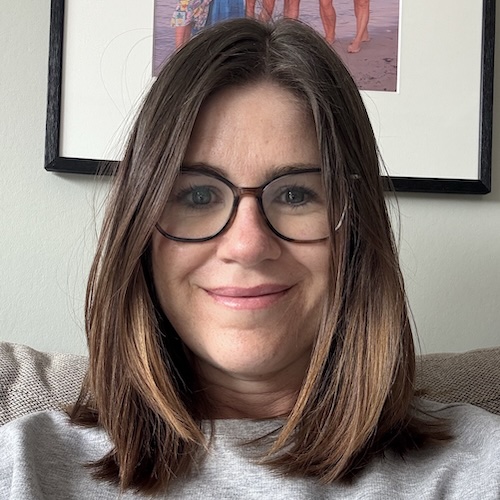
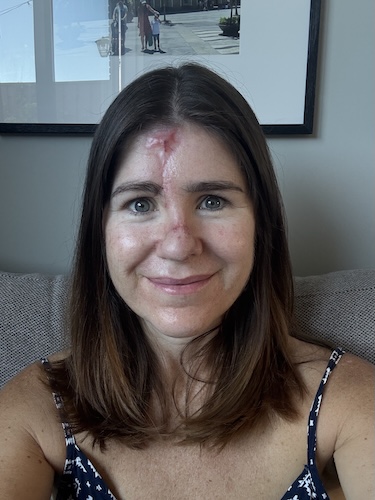
Before her treatment began, Abby took her children to Australia for three weeks to be with family, then threw a “goodbye to my face” party. Surgery came about 10 days later: the cancers on one day, the forehead flap the next, leaving a 5-centimeter hole in her forehead. Her surgeon estimated that it would take three months to heal. Abby made it a mission to beat that with rest, food, and supplements, and it closed in 62 days. After an eight-week wait for her surgeon to return from holiday, she woke to a nurse saying she looked amazing and asked for a mirror.
She had more surgeries to refine the tip of her nose, including one about 10 days before her interview. Abby says she was so focused on how she would look that she underestimated the mental impact of her experience. When her kids went back to school after her fourth surgery, she crashed. Her therapist told her the adrenaline had worn off, and Abby had anxiety for the first time. Today, she sees a dermatologist every six months, is waiting for her second frozen shoulder to unfreeze, and is heading to a walking retreat in Spain. She says she doesn’t want to be “just one thing.”
Find out more about Abby’s basal cell carcinoma experience by watching her video and reading the edited transcript of her interview.
- Abby grew up learning to watch for dark, changing moles, so she never checked for discoloration on her nose. A dermatologist spotted it before Abby could. Her story shows how a skin change can hide in plain sight when it doesn’t look like what you were taught to look for.
- Abby went in for a spot on her cheek and soon afterwards heard about a plastic surgeon and a surgery called a forehead flap. She describes being blindsided by how fast the plan changed. Reconstruction then took a series of surgeries and eight weeks of not knowing what her nose would look like, which she says affected her more than she realized.
- When so much was out of her hands, Abby found something she could control. Her surgeon estimated that it would take three months for the forehead wound to heal, so she tried to heal faster with rest, food, and supplements, and it closed in 62 days. In her words, it’s a small thing, but it helped.
- Abby’s mental crash came after the surgeries and once the adrenaline wore off. She was walking 10 kilometers a day and telling herself she was fine until her kids went back to school, and then anxiety showed up for the first time. Feeling fine right after treatment and struggling later can both be real.
- Abby says she isn’t the same person she was, for good and bad reasons, and that she feels stronger. She has since met other patients through Instagram, including one about to have the same surgery, and she can explain the details nobody tells you ahead of time, like sleeping at an angle while a wound leaks. She also says she doesn’t want to be just one thing.
Abby’s Diagnosis Facts
- Name: Abby B.
- Age at Diagnosis:
- 41
- Diagnosis:
- Basal Cell Carcinoma
- Symptoms:
- A patch of skin on the cheek that felt different and stayed dry when other areas were wet
- A recurring pimple-like spot with a white sheen
- Discoloration on both sides of the nose
- Treatments:
- Surgeries: wide excision, removal of nose, forehead flap surgery to reconstruct the nose, and nasal refinement surgeries
This is not medical advice. Please consult with your healthcare provider to make informed treatment decisions.
- Abby’s Diagnosis Facts
- Living my dream life before basal cell carcinoma and frozen shoulders
- A patch on my cheek, and a dermatologist who was more worried about my nose
- A goodbye party before forehead flap surgery, then a race to heal a five-centimeter wound
- “It’s going to be okay”: Advice for someone who’s going to have skin cancer surgery on their face
- Leaning on my husband and friends’ meal train
- Skin checks every six months and a waiting room full of older patients
- Waiting for my second shoulder to unfreeze, and wanting confidence in my body again
- I don’t want to be “the cancer person” in my early 40s
- Hear from people living with skin cancer
Living my dream life before basal cell carcinoma and frozen shoulders
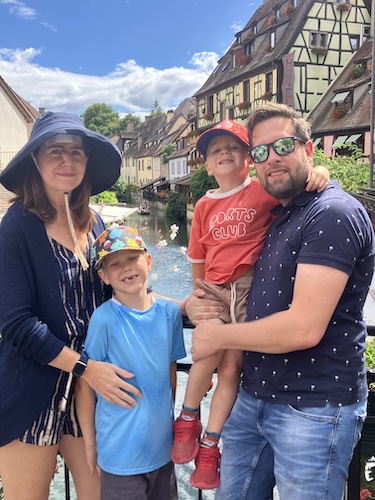
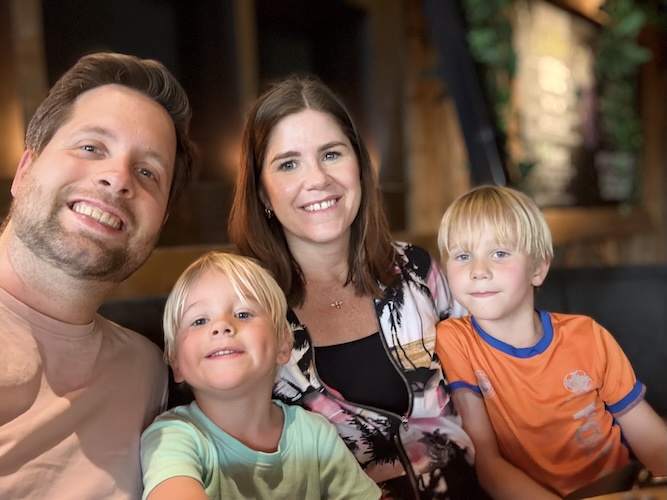
Hi, I’m Abby. I’m an Australian living in the Netherlands. I’m married to a Dutch man, and I have two very blond children.
Life before cancer was honestly a dream. And I still feel like I’ve got a very blessed life. I had an amazing job. The kids are great. My husband is the best person that I know. I was able to travel for work, so I still got a bit of me time. In the year before I got diagnosed, I was in Brazil; I was in the Bahamas. I was really just living my best life.
And then it started with a frozen shoulder. And then that started going on. And then the cancer came in, and then the other frozen shoulder too. And life just took a very steep decline, unfortunately.
A patch on my cheek, and a dermatologist who was more worried about my nose
It was the beginning of 2025, and I thought, it’s time for me to join the gym. I’d never really worked out in public. I was born with one hand, so working out in public spaces was just a bit traumatic for me. I don’t know why, but I just didn’t really like it because I didn’t know what I could use, and then I was limited.
But I was like, this is my year. I’m living my best life. So I joined a pump class. It was Sunday morning, and it did not go well. I ended up leaving after 10 minutes, and I was crying, and I ended up sitting in my car crying. And when I wiped away a tear, I noticed that there was a patch on my cheek that wasn’t getting wet, and it just felt different compared to the rest of my skin. Something wasn’t right about it. And I immediately clocked it, and I thought, I need to get this checked. So I went to my GP, or general practitioner, and she said, “You know what, I’m going to just send you to the dermatologist because it can’t hurt to get checked.”
While I was waiting for the appointment, which was two weeks later, I had this pimple, which came and went every three or so months. It would be there for maybe a week or two, and then it would go, and it popped up just before the appointment. And I thought, oh, maybe I could ask her about this as well. It wasn’t a pimple per se, but there was a white sheen to it. But it wasn’t palpable. It just looked weird. Anyway, I walked into the appointment, and I said, “Oh, look, I’ve got this spot on my cheek.” And she said, “I don’t care about your cheek. I’m worried about what’s on your nose.” And I was like, “My nose? What are you talking about? There’s nothing; this is just a little pimple or something.” She’s like, “No, no, this looks like skin cancer.”
And then she looked on the other side, and she goes, “How long have you had this?” And I was like, “I don’t even see anything.” And she goes, “Look, if you look closely, you can see there’s a discoloration in your skin. It’s really quite big. Have you never noticed it?” And I said no. You look at yourself face on; you hardly ever turn your head. But when she pointed it out, I said, “Oh, okay, I do see that.”
When I was looking for skin cancers growing up, it was always the dark mole. Make sure it’s circular, or if it changes, things like that. I was never looking for discolored skin. She was like, “Okay, we’re going to take biopsies.” That day she took a biopsy from each side of my nose and then one from my shoulder as well. And she goes, “I’ll call you back next week with the results.” So then it started down the track of, okay, this is something. And then the whole world just blew up from there.
Expecting eczema cream, and then the patch on my cheek disappeared
I was just thinking, I’m going to get a little eczema cream or something to clean up that patch. And what was really weird was that three days after the appointment, the little patch on my cheek disappeared.
I was meant to go to see that doctor. Definitely. My body was telling me, you need to go see this. And it worked out. Thank God, even though it was such a traumatic way to go through it. But definitely my body was telling me that I had to go there.
The week of waiting, then three basal cell carcinomas and a plastic surgeon referral
It was horrible. They were going to call on Monday between 1 and 5 p.m., and I was in the office. The whole day I was just looking at the phone. And the whole week it was just, oh, what is it? And where they’d taken the biopsies, I had two holes in my nose. That was also weird to explain. I’ve obviously got kids and work in an office. I was already on edge. And then people would ask me, “Oh, what happened?” It wasn’t great.
I remember I parked in the garage underneath the office, and it was 5:30 p.m., and they hadn’t called. And I’m like, “Oh my God, I’m going to go underground, and they’re going to call, and I’m going to miss this call. I’m going to have no service.” And that was just really stressing me out.
And I ended up leaving. They didn’t call. I got back home, and they still didn’t call. I was like, okay, maybe I’ve missed the date, or I’ve done something wrong. I’ll call them in the morning. And then they finally did call, at 6:45 p.m., I think. Just when we were putting the boys to bed, or trying to, with dinner and upstairs and everything, and they were being really feral, as kids are, and having no idea what I was going through.
She went, “You have three basal cell carcinomas. The one on your shoulder is superficial.” I was like, “Well, that’s my type of cancer, fine, superficial. I get a cream, and then it’s gone.” But she added, “The other two are really quite worrying. One is just normal, and the other one is infiltrative, and it was growing. It’s a lot bigger than we thought it would be.” And I was like, “Okay, well, what does that mean? Are you just going to cut it out and that’s it?” And she’s like, “Well, maybe we’re going to have to take part of your cheek. Well, we’ll just have to see how it goes. I’m going to have to make a plan. I’ll make a plan, and I’ll call you back by the end of the week.” Again, I was like, oh my God, I’ve got to wait longer, until Friday.
How am I going to get through this week? And then she ended up calling on Wednesday, and she goes, “Look, it’s too big for us. We can’t do it here at this hospital. I’m going to have to send you to a plastic surgeon, the dermatologist, and a plastic surgeon in a bigger hospital. And that made me realize that this is really serious. If they’re getting a plastic surgeon involved, then they’re really going to have to do stuff to my face. And even when I had that appointment, when they said, “Okay, we’ll have to take this much out, we’re going to have to do a forehead flap, we’re going to have to go into your hairline,” I was absolutely blindsided.
I was like, but I was just in for a spot on my cheek. That was it. I was just in for the spot on my cheek. And then I’ve gone completely 180, and they’re about to remove my forehead and basically remove my nose and replace it with my forehead. So that turnaround happened very quickly. I was a mess. I could barely have a conversation with anybody. If anyone asked how I was, I would just cry.
A goodbye party before forehead flap surgery, then a race to heal a five-centimeter wound
I asked, “Can we delay it? I want to take my kids back to Australia for three weeks.” And they were like, “Okay, sure. It’s not ideal, but fine.”
I took the kids back for three weeks over the Easter holidays just to be with my family. I remember my mum saying, “Oh, when you’re here, you’re going to see this person, and that person wants to see you.” And I said, “Absolutely not. I’m not here for a social visit where I’m going to putter around everywhere. I said, I’m just here for some strength, having some family time, because I just need that. I can’t socialize.”
I remember my sister’s best friends came down to stay, and I was crying in the bathroom. And then my sister’s partner said to the guy, “Oh, do you guys want to go to Bunnings or something?” Bunnings is an Australian hardware store. And he said, “Yeah, I just want to say hi to Abby first.”
He walks in, and I am just a mess. And he’s like, “Abbs, so good to see you.” And I couldn’t even talk. It was just really, really tough with everything. And also, with the two frozen shoulders, I was in constant pain, and my head was also messing up nonstop.
I was just thinking about everything over and over and over. So then when I came back, I was still a mess. But I ended up throwing a goodbye-to-my-face party, which was one of the best decisions that I think I made.
I had everyone there. On the day of a party, you usually get quite a few cancellations. Every one of my friends showed up, every single one. And even more than I thought. It was such a nice party, and everyone was just so happy. And I felt so supported and so loved that it really got me through. My surgery was about 10 days after. And it gave me this feeling of, “I can do this, I’ve got all of this support, I’m fine, I’m going to be fine.” That all went well.
But on the day of the surgery, it was not good. They wheeled me in, and I remember lying on the bed, and I’d already had trauma from when I had my son. I ended up getting a staph infection through the IV line, and I nearly died from that. So I already have issues with an IV, and they were doing that, and I was just a mess.
And they had talked about taking cartilage from my ear and also from my rib in case they needed it, because some of my cartilage was removed the day before when they actually took the nose off. And then the surgeon came out, and he said, “You’re going to be fine. It’s okay.” And I was like, “Please don’t. I’m already in so much pain with my shoulders. Please don’t, don’t do that to me. I’m so scared of having a whole hairy nose.” That was also one of the really triggering parts for me, to have a full black, hairy nose. I was like, oh my God, I’m just going to look horrible. And then he was like, ”You’re going to be okay. And he was married to an Australian, so that already gave him a few points. I thought, he’s got something going for him.
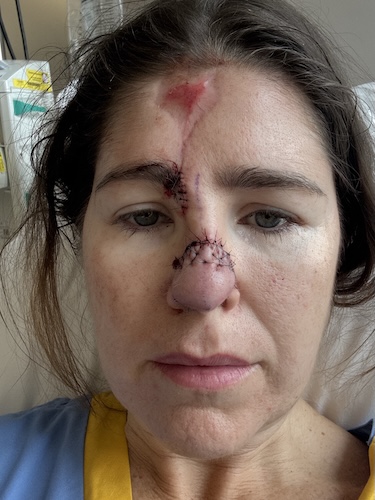
He was so lovely, and he really helped get me through it. But when I came out of the surgery and I saw my face, I was in complete shock. Luckily, he did the best he could, he said. He only took a few hairs into my hairline, which was great, but I had a five-centimeter hole in my forehead.
Usually, with the older patients, they have a lot more skin there to be able to close it, but I have a small forehead. No wrinkles up here, but a wrinkle could have helped me, as I said.
Then, they made the flap, and I said, “Well, how long will this take to heal, this forehead scar, this hole?” He said, “Honestly, we don’t know. We’ve never had to cut a hole in someone so young. We don’t know how you’re going to heal. I’d say three months.” And I said, “I’m going to do it quicker.” And then it became a mission to make that hole heal quicker. That was the goal.
And that was a real distraction, something I could control. I’m going to eat the right foods. I’m going to rest my body. I’m going to take supplements. I’m going to do all the right things. And the hole healed in 62 days. I was like, yes, in your face. That was a nice feeling, to actually be able to control something. It’s a small thing, but it helped.
Eight weeks of not knowing what my face would look like after the forehead flap
The first step was that they removed my nose. I missed that part. On that Monday, they removed the basal cell carcinomas, and they did the nose surgery. They would take out the cancer, and I’d have to go wait while they tested it. And then everyone else got to leave. They said, “Oh yeah, we got everything. And then I had to go back in.”
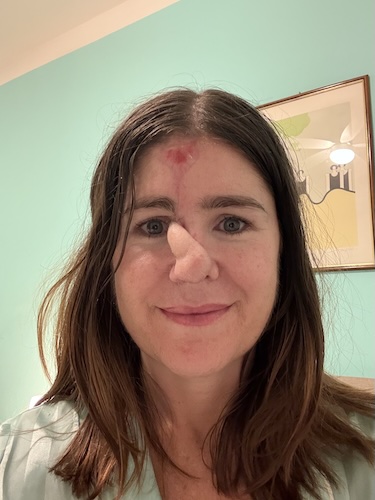
That was horrible. That was probably the most traumatic part, because you could see it, you could smell it, you could feel it. It was right there. You’re awake. And then they send you home. And then the next day is the real big surgery. Day one, they took it off. Day two, they do your forehead flap. And then it’s just rest. Every day someone would have to come to the house and clean the wound. Because of the flap, the tip of the nose was sewn on, but from about the bridge until the actual top of my forehead was an open flap. That had to be wrapped every day and cleaned. There was a gauze that they would push through, which was agony until they realized how to do it less painfully. Every day someone would come to the house and clean that, and they’d also clean out all the gunk that was forming on the forehead wound.
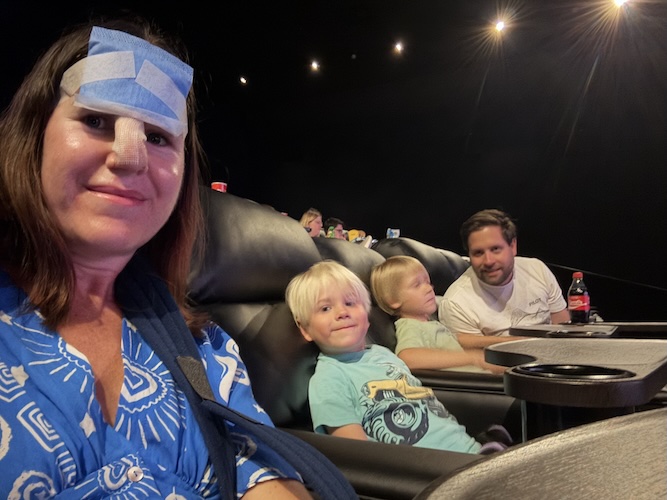
And then I think it was about four weeks later, at the end of June, I was in for the second or the third surgery, where they just refine the tip of the nose. They just debulk it and make it a bit more to size, rather than just a flap. I was a bit disappointed with that one because I didn’t see a whole lot of difference. And then after that surgery, my surgeon came out.
He said, “You’ll be able to have surgery again in four to five weeks. But I’m going to be on holiday. So you can either wait for me, or we can get another plastic surgeon.” And I said, “You know what, I’m just going to wait for you.” So then I had to wait eight weeks for the next one.
And I didn’t know what they were actually going to do, because there was talk of defining the tip again, or cutting it all off. They’ll cut the flap off, they’ll sew it up, and then I’m just out of there. So I didn’t know going in what I was coming out looking like.
And I didn’t realize how much that had affected me. I was in limbo for eight weeks, just not knowing. And when I came out, the nurse said, “Oh my God, you look amazing. Do you want a mirror?” I said, “Absolutely.” And then I looked in the mirror.
It wasn’t my face, but it was a face. There was a nose. The forehead had healed. There was a scar. But I looked like me. I was still full of stitches and everything, but that’s fine. And then the stitches came out a week later. I had a follow-up appointment nine months later, so in April, with him, because it takes nine months for all of the swelling and everything to settle, and the skin to set in place. So I saw him in April, and he said, “God, I’m good.” When I walked in, I said, “I’d just like you to know that I seem to heal well. It’s a pretty s***** way to find out, but I seem to be a good healer.”
He said, “Come and have a seat, and let’s have a look.” I said, “Look, this side is just a little bit bigger than this side. Could you do anything?” And he said, “Yeah, we’ve got to be careful because there’s a fine line between blood supply and beauty.” And I said, “I choose beauty.” He said, “I knew you’d say that. I choose blood supply.”
We planned the next surgery, and I just had it two weeks ago, I think, or just about 10 days ago, the next surgery where he defined the tip a little bit more. He debulked it, and then he removed some of my scar from the top. And now I have an appointment with him again in five weeks. And then we’ll see again, nine months later, what it actually looks like. But I can already see the results. It’s only 10, 11 days later. I’m like, okay, let’s hope that this was the last one. But again, I might have to go through it again. We’ll see.
“It’s going to be okay”: Advice for someone who’s going to have skin cancer surgery on their face
I think everyone is on their own journey, and mine, luckily, wasn’t deadly. I don’t know how I would feel if I also had to add the deadly factor to this. That just breaks my heart.
I think if it was someone in my situation, the same kind of thing, it’s going to be okay. It’s a horrible, long, totally s*** process. But now I’m definitely not the same person I was, for good and bad reasons. But I feel that I’m much stronger. And everyone says, “Oh, you’re so brave.” I did it. I didn’t have a choice.
It annoys me when people say, “Oh, you’re so brave.” Okay. Everyone would be brave if they had to do it. It’s not like I’m just going to sit in the corner and cry. But actually, through Instagram, because I started sharing the story where you found me, I’ve had a few people reach out, and a shout-out to one of them, named Selma. She is about to get the same surgery.
She reached out to me a few weeks ago, and she said, “I’m a mess. Are you able to meet and discuss this with me?” I said, “Absolutely. I’ve met her twice now just to go through it.”
Because obviously they tell you what you’re going to do, but they don’t tell you, “Okay, for two weeks, you have to sleep on an angle, and your wound just leaks the whole night, and you can’t sleep.” It’s all of these little things that you don’t know at the time. But she’s a mess, and I’m like, I get it. I totally see it.
When I first did my story, I think I did it in March, there was a girl from Spain who had it in her ear, and she had just moved to Amsterdam. We were in contact, and she said, “Look, I’ve just moved to Amsterdam. Do you want to catch up?” I was like, “Absolutely.” We met up and discussed it and cried and just went through the process.
It is what it is. We can’t change it, and we just have to go through it, as tough as it is. That’s just what has to happen.
Leaning on my husband and friends’ meal train
My husband is an absolute godsend. He’s been such a rock. I’ve been struggling with the two frozen shoulders; I couldn’t unstack a dishwasher. I couldn’t do a load of washing. I couldn’t bend over. I couldn’t lean over because my face wasn’t able to go in that direction. I wouldn’t go to school pickups or anything because I didn’t want people to see me. He was a huge rock.
Also, all my friends got together and did a meal train, so he didn’t have to cook for basically six to eight weeks before my parents came to visit. That was a huge help, having people cooking. And every night my sons would make a little video saying, “Oh, thanks for cooking,” and we’d send it to them. It became a thing every night, oh, what someone made for us. That was a big help, having people around me to support me.
Skin checks every six months and a waiting room full of older patients
I have a dermatology appointment every six months. My next one’s coming up in November. I just got an email about it today. But every six months they check me over. And if I see something that’s changed or anything, then I need to call, and then I get straight in. So they’re very well aware.
Also, I’m very young in this country to have this cancer. I think if I were in Australia, I would just probably be normal. So they go, “Oh, she’s Australian, let’s get her in.” They’re worried more about me, obviously.
I’m always in the waiting room with all older people. They’re like, “What are you doing here? I go, “I’m Australian.” “Oh, okay. Great to be Australian.”
Waiting for my second shoulder to unfreeze, and wanting confidence in my body again
What am I looking forward to? I’m looking forward to hopefully living without being in limbo. I always knew that I needed this surgery. This time last year, I wasn’t back at work yet, because I knew that this was coming.
And one of my shoulders is unfrozen, so I’ve just got to wait, I think probably seven months, for this other one to unfreeze. And then I’m just going to be unstoppable.
I really am so excited to get my body back. I feel very betrayed by my body. All this happened in the space of two years, and I was like, whoa, what did I do? What bad karma am I reaping here? But I’m excited just to live with the confidence in my body again. That’s a big thing. That’s what I want back.
When the adrenaline wore off: Anxiety and a mental crash after my facial surgery
The mental impact is something I really underestimated. I was so focused on what I would look like physically that I totally underestimated the mental impact that this had on me.
I was fine. They’d done the operation; I was fine; I was doing things. I would walk every day, and I had nothing to do, so I was walking up to 10 kilometers just because I was so bored. I was just waiting around. There was nothing for me to do at home. I couldn’t wear my glasses, so I couldn’t drive or watch TV. I’d do audiobooks, podcasts, music, and just walk or lie on the couch. And it wasn’t until after the fourth surgery that it all came crashing down.
Last year, the kids went back to school. We had gone to Italy for holidays with my parents, so I was out and about. I had a big hat on. People would look, but oh, whatever. This is just my face. I can’t do anything. A few people would ask, but it was fine. And then the kids went back to school, and I absolutely crashed mentally. I was a wreck.
I remember I spoke with my therapist, and she said, “How are you today?” And I said, “Are you going to be really disappointed in me because I’m not doing well?” And she’s like, “Oh, finally.” I was like, “What do you mean?” “You don’t expect to just keep going with all of that energy, right?” And I was like, “Well, yeah, that’s my personality.”
And she goes, “No, honey, that was fight mode. Now the adrenaline has worn off, and this is what’s happening. You will be a mess.” And I just totally didn’t click into that. I just thought, I’m fine. I’m fine. Look at me, I’m in Italy, look at me doing this. I’m walking 10 kilometers a day, and look, I’m out here. But mentally, I was exhausted. I was tired.
Then I got into the phase again where I couldn’t have a conversation with anyone. I would cry. I really couldn’t function. I became really housebound, even though by then I could already wear my glasses and I was able to get out. I just couldn’t function. Anxiety kicked in, and I’d never had anxiety before. It was just never a thing. My sister has, her whole life. I was like, oh, this is what it’s like. It was nice to be able to realize. So when she says something, I sort of get it, obviously not to her level. And I think I’m getting a bit better now with anxiety. Time has gone on. But I had the mental impact. I totally underestimated it, and it’s real. I wish I had planned for it better.
And it really was overwhelming. It totally blindsided me.
Low energy after the latest surgery and a walking retreat in Spain
I’m just now coming out of this last surgery, and I’m feeling good. My energy is low, I’ve noticed. Before, after the summer and before the surgery, I had just gotten my energy back. I was on a roll. I was like, yes, I’m going to do this and this and this. And then I assumed that I would just have this small surgery and I would get back to it.
But I’ve noticed that my body’s like, wait a minute, we’ve just had this surgery. And I’m like, you’re fine. It was just in my face. But again, my body’s trying to tell me something, and I’m not listening because I’m just thinking, again, I’m fine. But I’m now trying to be like, okay, take it one day at a time. You don’t need to rush.
I’m going to Spain on Sunday to do a retreat, a walking retreat. It’s called Purpose Path. It’s for people who are at a crossroads, who don’t really know who they are, but they just need some guidance. And it’s in beautiful Malaga, and it’s walking and breathwork and all of this kind of stuff. I’m really looking forward to that. And I think that’s going to help me get out of my own space. I think that will definitely help me as well. I’m looking forward to that.
I’m so spoiled. We were just in Croatia and Slovenia for the summer. But I haven’t been away alone for a couple of years. I’m looking forward to also getting the confidence back to do that as well.
I don’t want to be “the cancer person” in my early 40s
Having some space away from the family is important. Because it’s just overwhelming.
I think being a woman in her early 40s, I go through life and think, okay, I studied hard, I got the good job. Then I met the guy, and then I had the kids. And then I’m like, well, now what? What’s next for me? And I was already in that phase.
And then I got this cancer, and I was like, so then I became “the cancer person.” So I don’t want to be just one thing. I want to live and find out what more I can do with myself. So that’s the plan.
This interview has been edited for clarity and length. The views and opinions expressed in this interview do not necessarily reflect those of The Patient Story. This content does not replace professional medical advice.
Inspired by Abby’s story?
Share your story, too!
Hear from people living with skin cancer
Real experiences with diagnosis, treatment choices, side effects, and life beyond skin cancer — in their own words.
Leave a Reply