
Hannah’s Rare DSRCT Cancer Diagnosis at 23, After Extreme Fatigue, Weight Loss, and Back Pain
Hannah was 23 and working as a missionary intern in Honduras when she began feeling deeply fatigued, losing weight, and dealing with major back pain. A local doctor attributed her symptoms to chikungunya, a mosquito-borne virus common in the region, and sent her home with acetaminophen and instructions to rest. What she didn’t know yet was that her symptoms were the earliest signs of desmoplastic small round cell tumor, or DSRCT, an extremely rare sarcoma most often diagnosed in boys under 18.
Interviewed by: Tory Midkiff
Edited by: Chris Sanchez
Back home, an ultrasound ordered by her primary care physician to rule out parasites turned into a two-hour ordeal that ended with a message to come back for scans. A CT scan that Monday revealed three tumors: one around her left kidney, one around her left ovary, and a third in her L3 vertebra in her lower back.
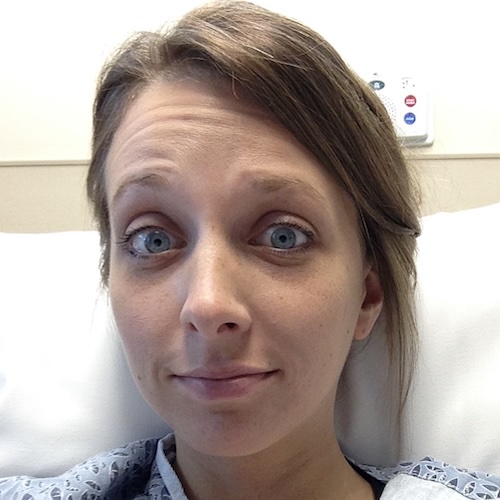
A biopsy confirmed DSRCT. Because the disease is so rare in adults, her local oncology team turned to Vanderbilt-Ingram Cancer Center for a treatment protocol, where she was told she had a 20% chance of survival. When a doctor there proposed a surgery that would remove most of her reproductive organs, Hannah and her family sought a second opinion. That search led them to a clinical trial at Memorial Sloan Kettering.
Over the following years, Hannah went through nine rounds of chemotherapy, an abdominal surgery paired with an experimental radioactive isotope treatment through Memorial Sloan Kettering’s clinical trial, and, after a third recurrence in the same vertebra, a 36-hour spine surgery in 2021 to remove and rebuild her L3 vertebra. A later recurrence in her psoas, a deep core muscle that connects the spine to the thigh, required doctors to cut her femoral nerve to achieve clear margins, leaving her without function in her right quad muscle on her leg.
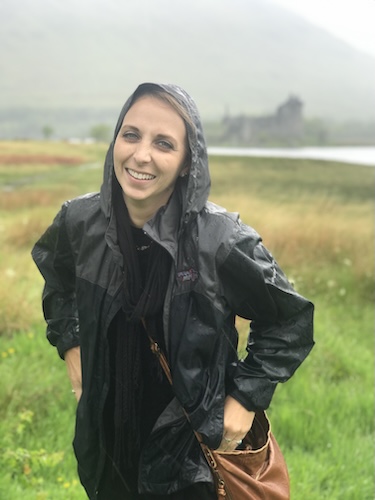
Hannah has been cancer-free since May 2022, though she now manages a rare kidney disease, one she attributes to her treatment, with at-home peritoneal dialysis. She has scans every six months, still travels, and continues mission work in Guatemala. “I don’t let it limit me for long,” she says. “I only get one life, so I have to live it.”
Learn more about Hannah’s experience with DSRCT by watching her video and reading the edited transcript of her interview.
- One opinion isn’t the final word. When a doctor proposed a surgery that would remove most of her reproductive organs, Hannah and her family sought a second opinion, which led them to a clinical trial that changed her treatment path.
- A rare diagnosis can mean traveling for specialized care. Hannah’s local oncology team wasn’t sure what to do after her chemo protocol ended, so her family searched outside Knoxville and found a clinical trial at Memorial Sloan Kettering.
- Trust your body. In December 2020, Hannah sensed something was wrong in her spine even though her October scans had come back clear. She was right. It turned out to be her third recurrence.
Hannah’s Diagnosis Facts
- Name: Hunter D.
- Age at Diagnosis:
- 23
- Diagnosis:
- Desmoplastic Small Round Cell Tumor (DSRCT)
- Symptoms:
- Weight loss
- Fatigue
- Back pain
- Treatments:
- Chemotherapy
- Surgeries: abdominal surgery with radioactive isotope treatment (through a clinical trial), kyphoplasty, spinal reconstruction surgery, spinal fusion surgery, resection of tumor in psoas muscle
- Ablation therapy
- Targeted radiation therapy: proton therapy


This is not medical advice. Please consult with your healthcare provider to make informed treatment decisions.
- Hannah’s Diagnosis Facts
- A life of mission work and the symptoms that followed me home
- A rare diagnosis: Desmoplastic small round cell tumor (DSRCT)
- Chemo and a search for the next step
- Choosing a second opinion
- Inside the clinical trial
- Fertility and what I didn’t know to ask
- The morning of my first surgery
- Building a life after treatment for desmoplastic small round cell tumor
- The first recurrence
- My mother’s diagnosis and another recurrence
- A 36-hour spine surgery
- The hardest emotional stretch
- Losing function in my leg
- Living between scans
- A new diagnosis: Kidney disease
- What I’d tell someone newly diagnosed
- Hear from people living with desmoplastic small round cell tumors (DSRCTs)
A life of mission work and the symptoms that followed me home
My name is Hannah. I work for Fellowship of Christian Athletes, and I’m also a high school Spanish teacher. I wear a lot of hats in life, but I’m never bored.
Here’s the backstory from before I was diagnosed. When I was 16, I went on my second international mission trip, my first time to Guatemala, and I fell in love with the country and the culture. After that, I pursued international missions in college. I wanted to be an international missionary, so I learned Spanish and moved to Honduras for a while, where I worked as an intern doing translation work and other internship-type jobs.
While I was in Honduras, I started noticing I wasn’t feeling great. I was very fatigued, losing weight, and had major back pain, and I couldn’t figure out why. I went to a local doctor. There was, and still is, a mosquito-borne virus going around called chikungunya. You can see it listed at the airport along with dengue, malaria, and Zika. They assumed my symptoms were related to that. They gave me some Tylenol and shots and told me to rest, that I’d get better.
My time in Honduras came to a close, and through a series of events, I came home. Through labs and doctors, I found out I had the cancer that I have, or had, in the past tense.
I had just turned 23 when my symptoms started.
Fatigue for me was extreme lethargy, no motivation, no energy. I was working and living in a hot, tropical country, walking through very hilly villages while I was teaching. It was really, really hard. I was exhausted.
A test meant to rule out parasites
It was actually a wild series of events that led to my diagnosis. My primary care physician at the time, she’s a saint of a human. We ran labs, all different kinds of things: white blood count, everything came back in the average range. Nothing in the labs made it seem like cancer.
She’d exhausted a lot of the options that insurance would cover, so she randomly sent me for an ultrasound of my liver to check for parasites, since I’d been living in a developing country and wasn’t exactly careful. I brushed my teeth with the tap water there.
There were no parasites, but it turned into one of the worst experiences of my life. Over about two hours, for one ultrasound, an ultrasound tech came in, then another, then a doctor who didn’t have the best bedside manner. It wasn’t their fault; they just didn’t know what they were looking at. All I heard was, “Is this the kidney, or is this the kidney? We’re not sure what we’re seeing, but we’re going to send you for scans next week.”
I had the ultrasound on a Friday, and they scheduled scans for Monday. So I had the whole weekend to wonder what was going on inside my body.
Three tumors, one weekend
That Monday, I went in for a CT scan, and my primary care doctor told me I had a cantaloupe-sized tumor around my left kidney, a baseball-sized tumor around my left ovary, and a spot on my L3 vertebra.
I was devastated. But at the same time, there was such peace. I think I just kind of knew.
It happened almost comically. They got the results Monday morning, and by that afternoon the office called and said they needed me to come in that day. I was at work and said I physically couldn’t come in; could I come tomorrow? They said, “Yes, but bring your mom.” So I called my boss, who let me leave early, and called the office back to say I could actually come in that day. They asked if I was bringing my mom. I said, yes, and my dad too. I asked if they wanted me to bring the dog. I’m writing a book, and that’s one of the chapters: bring the dog too. Because I just knew. It wasn’t the fact that they needed me to come in that day; something wasn’t good.
Did I know it was going to be as big a deal as it turned out to be? Absolutely not. But I think if I had known, I would have spiraled pretty quickly into a not-good place.
A verse and a yard full of family
There’s a Bible verse in Philippians I’d sort of forgotten I knew, but driving to the doctor’s office to meet my parents, it came back to me: to live is Christ, and to die is gain. I knew that for me to live, God was going to have a purpose in it. And if I didn’t make it, if something really bad happened, it wasn’t actually the worst thing, because I have hope. It was a beautiful moment.
I found out everything I found out that day, and I have the most incredible community around me. That afternoon, we got home, and all of the families from the church we grew up with — we call ourselves the FOG, the family of God — they all came over. We sat in the yard, or stood in it. We didn’t even set up chairs. A friend of mine who had also battled cancer as a teenager led us in worship. We sang, and they prayed. One of the men who was there that day is actually writing the foreword of the book I’m writing now.
A rare diagnosis: Desmoplastic small round cell tumor (DSRCT)
I was told that Monday that I had tumors, but none of us knew what we were dealing with; my doctor was primary care, not oncology. The first thing she did was schedule a biopsy of the largest tumor that week, that Thursday, and then I had to wait another week for the diagnosis.
I was diagnosed with an extremely rare form of sarcoma called desmoplastic small round cell tumor, DSRCT for short. What I’ve learned over time is that it’s mostly found in pediatric males, and the fact that I was an adult female made it even more unusual. I was in the fifth percentile of anyone having the disease. (Editor’s Note: According to the National Cancer Institute, DSRCT occurs most often in young white males between the ages of 10 and 30.) Statistics have changed over the last 10 years, but that’s where things stood at the onset. I’m from Knoxville, Tennessee, and DSRCT is better-known in this area now, but it wasn’t back then. Medicine is always evolving, and the data is always changing.
I was connected with a local oncology team, who got my treatment protocol from Vanderbilt in Nashville, not far from us. I went and met with the main oncology team there, and it’s there that I was given a 20% chance of survival. (Editor’s Note: According to the National Cancer Institute, the five-year survival rate for DSRCT is 15%. The Institute notes that doctors estimate DSRCT survival rates by how groups of people with DSRCT have done in the past. Because so few people have DSRCT, these survival rates may not be very accurate.) I walked out of that hospital and said, “My God is bigger than a number.” And I’ve been fighting ever since. That was over 10 years ago.
Chemo and a search for the next step
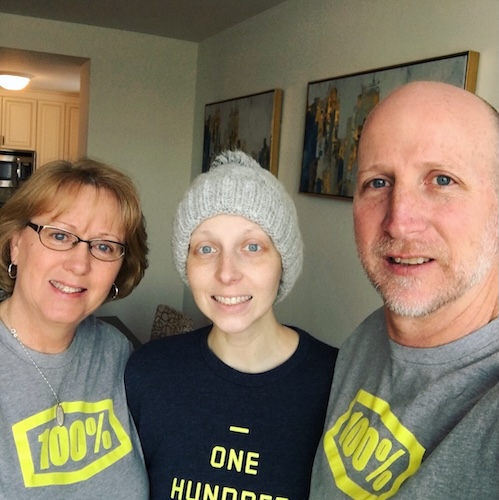
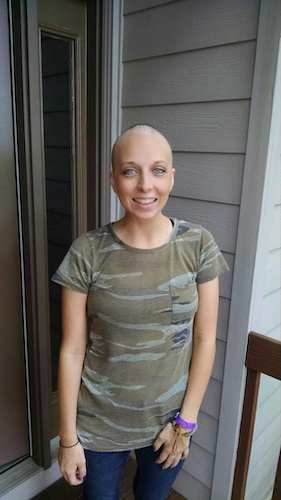
I did seven months, nine rounds of chemo, and it was really intense. It put me in the hospital with hallucinations and a lot of other nasty things. Because my cancer was so rare, we had a protocol for the chemo part, but after that, we didn’t really know what to do next. Or I should say, the local team wasn’t sure. So we started looking outside.
My mom, miraculously, found a clinical trial at Memorial Sloan Kettering in New York through a Facebook group for my type of cancer. My parents, my brother, and I went up to meet the surgeon and the team there. It was actually the pediatric team, since DSRCT is classified as a pediatric cancer, so I ended up on the peds floor, which was sweet. They came up with a really cool plan, and I qualified for the clinical trial. That’s when we started pursuing most of my treatment in New York.
Choosing a second opinion
At the outset, I knew nothing about clinical trials. Before finding this one, I’d been offered another option at Vanderbilt. This isn’t a knock on that doctor, but he couldn’t even say the name of the disease I had. It was one of those “I’m willing to try” situations. What he was proposing has since become more common practice, which is great, but at the time I just didn’t feel confident in his plan. I was 24, and he was telling me he’d have to remove basically all of my reproductive organs. I just knew that wasn’t right for me.
That’s when we found the clinical trial, and it’s now become standard practice, which is a beautiful thing to have been a part of, especially in helping the kids who have this disease. It’s really magical.
Sitting with the unknown
Honestly, I’ve blocked out a lot of that waiting period. I was dating someone pretty seriously at the time, a Marine, and he came to spend time with me during that stretch, so I was somewhat distracted by him and by my community. I know my personality: I’m a very positive person, I tend to see things through a positive lens, and I’m grateful for that. But I also tend to over-distract myself instead of sitting with things when I need to. So I leaned on family and friends, going out to dinners, just not dwelling on it.
I did have one beautiful moment with a small group of friends from my church. We had a small group connect with some powerful prayer time. It was really sweet. The only part I look back on negatively is that I’m no longer with that boyfriend, but otherwise, it was honestly peaceful. I wasn’t fearful in that moment.
Inside the clinical trial
Getting qualified for the clinical trial, I honestly had no hand in it; my mom did it all. I’m so grateful for that, because I can’t imagine how hard it must have been for her to be part of a Facebook group where you see people my age passing away from the same disease. Emotionally, I can’t imagine it, but I’m grateful I didn’t have to be the one doing that. She was a bit of a martyr in that way.
What was really cool is that a friend of mine from church had also battled cancer for a long time and had gone through a clinical trial at Memorial Sloan Kettering. I already knew her story, so I knew this team was more than qualified to help me. Seeing her success influenced my decision to go there.
The treatment itself was completely different from chemo. With chemo, you sit in a chair for a few hours, talk to the people around you, maybe read or nap. The clinical trial involved a major abdominal surgery. There are some pretty wild stories within that surgery itself. After the surgery, they placed a catheter in my peritoneal cavity, and the trial itself was a radioactive isotope wash. They filled my abdomen with a solution of radioactive proteins that were attracted to any microscopic cancer cells left over after the debulking surgery, then filled it with saline, and I’d just roll around and let it slosh around. They checked it periodically after that.
Following that, I did four weeks of daily radiation in New York, Monday through Friday, targeting my abdomen, pelvis, and my L3 vertebra. That feels like an eternity ago now, so much has happened since.
Fertility and what I didn’t know to ask
In hindsight, I wish I’d taken advantage of it, but I didn’t. There was so much happening all at once, and it was confusing. At the time, I only had one viable ovary left, and even that one has since been affected by chemo and radiation. Biological children aren’t in the picture for me, but that’s okay. There are still a lot of sweet humans out there who need a mom, so maybe one day.
At the time, freezing eggs cost around $5,000. In hindsight, maybe I should have done it, but I didn’t, and that’s okay too. There’s still grace and goodness that comes from that. I have a lot of babies in my life that I love: my niece and nephews, my cousins’ kids, my friends’ kids. I get to spoil them in my own way. I don’t feel a loss in that area of my life, which is really cool.
The morning of my first surgery
There’s no way to under-spiritualize this story. It is what it is. This was my first big surgery ever; before this, I’d only had my wisdom teeth out and tubes in my ears. This was an eight-hour surgery, and there were a lot of unknowns.
It was the typical movie-scene feeling: triage, then pre-op, then wheeled back to the OR. I started panicking. My mom and dad were there, and the nurse said, “This is where you say your goodbyes. We’ve got it from here.” As they started wheeling me back, I went into a full panic, which isn’t normal for me.
In that moment, a verse from Isaiah 41:10 came to me: “Do not fear, for I am with you. Do not be dismayed, for I am your God. I will strengthen you and help you. I will uphold you with my righteous right hand.” And in that moment, I saw Jesus walking beside me, on my left side. If he was walking with me on my left, he was holding me with his righteous right hand. I felt complete peace, head to toe, and I went into the OR laughing. I’ve never been afraid of an operation since.
What’s even more incredible: The next day, my parents told me that as my dad was walking away while they wheeled me back, he kept telling himself, “Don’t turn around. Don’t turn around,” until God told him to turn around. At that exact moment, he saw Jesus walking beside me too. There was so much peace in that.
Building a life after treatment for desmoplastic small round cell tumor
After the clinical trial and surgery, I did a long stretch of radiation. I was diagnosed in 2016, and all of this was in 2017. After that, things settled for a little while. When I came home, I got a C. difficile infection and was deathly ill for a couple of weeks, in the ICU for it. I’ve mostly blocked that out of my memory. I also went through a significant breakup around that time, but that was okay too.
After that initial treatment, life started feeling normal again. I started teaching Spanish at a local private Christian school. I also did some proton radiation, very targeted, in some lymph node areas. For almost a year, that was the only treatment I needed.
The first recurrence
In November of 2018, I had a recurrence in my spine, in that same L3 spot, which has been the peskiest. Just a small spot came back. Locally in Knoxville, I had an ablation and kyphoplasty, an outpatient procedure where they basically burned the tumor and put cement in the L3 to stabilize it.
From that point, I was cancer-free for about two years, from November 2018 to December 2020. I got my first serious clear scan in 2019, and I also did a little more proton therapy in that L3 vertebra.
My mother’s diagnosis and another recurrence
Exactly a month after that clear scan, my mom was diagnosed with breast cancer. She fought it for a year: surgery, chemo, all of it. She’s great now; she hasn’t needed treatment in years.
In the one year I was cancer-free, my mom was going through her own treatment. Then, the same month she finished her last chemo treatment, December 2020, I had another recurrence in my L3 vertebra. Because this was the third time cancer had shown up there, the only real option left was to remove the L3 vertebra completely.
A 36-hour spine surgery
In April 2021, I had a 36-hour spine surgery at Memorial Sloan Kettering. Six surgeons came together, from MSK as well as Weill Cornell Medicine.
On the first day, they went in through my back and removed the back half of my vertebra, placed rods and screws from T10 to L5, and did a fusion at L2 and L4. Then they sewed my back muscles together to create stability. All of that was done before they even knew whether they’d be able to do the second half of the surgery, because they weren’t sure if the scar tissue from my previous surgeries and radiation would let them get in through the front.
They were able to get in. On the second day, they removed the front half of the vertebra. I was in one of only about five operating rooms in the world at the time that were lead-lined, meaning they could do radiation right there in the OR. So while I was open, they did targeted radiation to that spot. They also removed my entire left fibula with the blood vessels and used a cadaver femur to build an entirely new L3 vertebra, which is still in my spine today. It’s wild.
I was in the ICU for about a week, and in the hospital for a month. I had to relearn how to walk.
The hardest emotional stretch
That surgery had a huge physical toll, and I still have residual effects from it now. Emotionally, that was the most resentful, bitter, and angry I have ever been at God, at the world, and at life. I’d finally gotten over the hump, and then, honestly, that surgery was the worst of it.
But it’s okay. The Lord was gracious through it, and time does heal a lot of emotional wounds. Therapy helps too. I think showing myself enough grace to feel that anger, and to know it was valid in the moment, mattered.
Losing function in my leg
That surgery was in April 2021. Nine months later, in January 2022, I had a recurrence just outside the surgery site, in my right psoas: one rogue cell. Within about two weeks, the same surgeon who did my spine surgery went in and removed it. But to get clear margins, they had to completely cut my femoral nerve in the right psoas. I’d signed consent for that possibility; I knew it could happen, I hoped it wouldn’t, but it did. At that point, I had zero function in my right quad.
I woke up in recovery and could tell right away that I couldn’t feel anything, but I wasn’t sure yet what that meant functionally. That night, I called the nurse to help me to the bathroom; thankfully, it was a big, strong nurse who came, and I took one step and crumbled to the floor. From that step on, for the last four-plus years, every time I take a step, I have to consciously lock out my knee.
I can walk, but it’s hard, and I fall. I can’t do everything I used to, like running or chasing my niece and nephews, but I don’t let it limit me. For a long time, I let my inabilities limit what I can do, but I only get one life, so I have to live it. I show myself grace, and I rest when I need to.
I still travel, slower than before, but I’ve been to Aruba and Italy. I still do mission work on dirt bikes in Guatemala. I don’t let it hinder what I do in this life because life is too precious not to live. It’s hard to ride a dirt bike without a right quad, but I do it anyway.
Living between scans
I got my first official clear scan after that in May 2022, and I’ve been cancer-free ever since.
I have scans every six months, and I’m honestly only really anxious the week before them. For the most part, I try not to think about recurrence; maybe that’s a little bit of ignorance, but sometimes ignorance is bliss. I live a full life for about five months and three weeks, get a little stressed and pray more in that last week, and then if the scans are good, we move on. Life’s too short to focus on the negatives. I can’t control it.
I do know my body, though. When I found out about my third recurrence in December 2020, I’d had scans in October that came back clear, but I knew something wasn’t right in my spine. I could just feel it. It wasn’t excruciating pain. When you know your body, you just know. I’m thankful I have doctors who trust that I know myself, my discernment, and my peace, even when something doesn’t line up. I usually go less off of feelings, since feelings are fleeting, and more off of an inner peace.
Self-advocacy is the name of the game, because things fall through the cracks all the time. It’s no one’s fault, but I’m the one in charge of me, of my own medical history. I rely on my doctors for wisdom and guidance, but that ownership is my job.
A new diagnosis: Kidney disease
In August 2023, I was diagnosed with a rare kidney disease caused by all of my treatment. I only have one kidney; the other was removed during my first surgery. I’m on dialysis now, but I’m able to do it at home, at night, while I’m asleep, since it’s peritoneal dialysis. It’s kind of neat that my original clinical trial was, in a way, a test run for the same kind of approach I now use for dialysis.
I’ve been doing dialysis for almost three years now, and I still travel with it — to the motocross track, on vacation — I just take my supplies with me. I have the best team. Life is hard, but you can’t slow down either.
What I’d tell someone newly diagnosed
If someone’s just been diagnosed, my first response is: I’m sorry. It’s not something I would have chosen for myself, and I wouldn’t choose it for my worst enemy. But at the same time, I’m so grateful for it, because of the people I’ve met that I never would have met otherwise, and the beauty in humanity and community I’ve gotten to see. I’ve had an impact on people’s lives from a different perspective, and I’ve lived a lot of life in 34 years. In the last 10 years especially, I feel like I’ve lived an entire lifetime. There’s a different kind of wisdom that comes from a season of fighting hard for your life.
Take every moment captive. Someone told me, before I was even diagnosed, to write down the little moments, even the sweet ones inside the difficulty. There’s so much in life to be grateful for. I believe a healthy, positive attitude and finding hope give you a reason to keep going and to live each day fully. Do I have woe-is-me moments? Of course, we’re all human. But living constantly in a negative mindset makes it hard to fight for the life you have.
I believe that God is efficient. I don’t believe everything happens for a reason, exactly, but I do believe He can and is willing to use every moment of our lives, good or bad, for our good and his glory. We just have to choose to see it that way. That’s the biggest lesson I’ve learned over the last ten years.
This interview has been edited for clarity and length. The views and opinions expressed in this interview do not necessarily reflect those of The Patient Story. This content does not replace professional medical advice.
Inspired by Hannah’s story?
Share your story, too!
Hear from people living with desmoplastic small round cell tumors (DSRCTs)
Real experiences with diagnosis, treatment choices, side effects, and life beyond DSRCTs — in their own words.
Leave a Reply