
A Routine Physical Found Craig’s Stage 4 Prostate Cancer Before Any Symptoms Showed
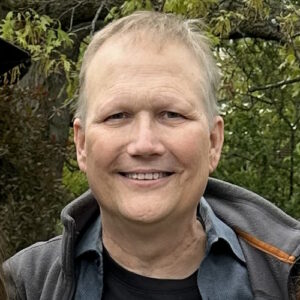
In 2019, Craig went in for a routine physical without a single symptom, only to discover an elevated PSA level that led to an unexpected and highly aggressive stage 4 prostate cancer diagnosis with a Gleason 9 score. At 52 years old, Craig immediately underwent a robotic radical prostatectomy, only to discover afterward that the surgery that should have dropped his prostate-specific antigen (PSA) level to zero was still hovering at 17. This early indicator of aggressive disease thrust him straight into chemotherapy, shifting his and his then-fiancée Michelle’s expectations for the future. He adopted a simple mantra of, “we are here until we are not,” to cope with the daunting reality of an incurable prognosis and a 10-year life expectancy.
Interviewed by: Tory Midkiff
Edited by: Katrina Villareal
Following chemotherapy, Craig began navigating the complex landscape of hormone therapy. To manage his rising PSA, he started taking leuprolide (Lupron) and enzalutamide (Xtandi), plunging him into chemical castration. This profoundly altered his physical and emotional landscape, stripping him of his testosterone and sexual desire, and leaving him managing intense emotional vulnerability and mild anemia. Despite these profound life changes, he and Michelle adapted, finding new ways to connect and support each other, even getting engaged while he underwent chemo.
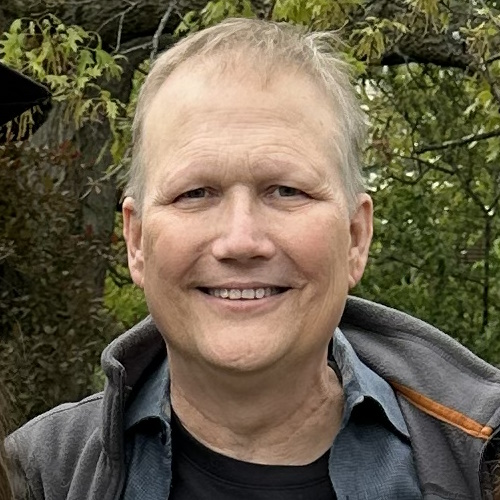
When the prostate cancer eventually became castration-resistant and his PSA spiked to 365, Craig’s medical team had to look for new tools. The cancer had spread to his lymph nodes, pelvis, spine, and skull. Seeking cutting-edge options, Craig enrolled in a first-in-human clinical trial at the University of Chicago. The intense monitoring schedule initially required long days at the clinic, but the trial has shown remarkable promise, lowering his PSA for the first time in two years and reducing his reliance on daily synthetic morphine.
Today, Craig remains fiercely dedicated to living fully despite his physical limitations. Whether he is supporting a local children’s nonprofit or raising funds for the Prostate Cancer Foundation (PCF), he refuses to let scanxiety paralyze him, choosing instead to focus on the time and the medical tools he still has left.
Watch Craig’s video or read the edited transcript of his interview to find out more about his prostate cancer experience:
- Routine physicals can catch aggressive cancers before symptoms appear. Craig had zero pain and felt completely normal when an elevated PSA at a routine checkup led to his Gleason 9 diagnosis. Get recommended annual cancer screenings.
- Hormone therapy causes profound physical and emotional shifts. Enduring chemical castration to starve the cancer of testosterone fundamentally altered Craig’s body, causing emotional vulnerability, mild anemia, and a loss of sexual desire. Navigating these changes required open communication and a willingness to adapt what intimacy looked like in his relationship.
- Clinical trials can offer a vital lifeline at any stage of a diagnosis. When his cancer became castration-resistant and his PSA spiked to 365, a first-in-human clinical trial targeting prostate-specific membrane antigen (PSMA) and STEAP2 indicators became his next step. Even with the rigorous early monitoring schedule, the trial successfully lowered his PSA and reduced his need for daily pain medication.
- Focusing solely on PSA numbers can cause debilitating anxiety. It’s incredibly easy to obsess over a rising or falling PSA, but that number only tells part of the clinical story alongside CT and PET scans. Learning to manage scanxiety and keep living between appointments is essential for maintaining your quality of life.
- Accepting mortality can paradoxically free you to live more fully. Facing an incurable diagnosis and a shortened life expectancy initially caused deep despair, but adopting the mantra of “we are here until we are not” completely shifted Craig’s perspective. He transformed his fear into proactive volunteer work and fundraising, finding immense joy in the time he has left.
Craig’s Diagnosis Facts
- Name: Craig N.
- Age at Diagnosis:
- 52
- Diagnosis:
- Prostate Cancer
- Staging:
- Stage 4 (Metastatic)
- Gleason Score:
- Gleason 9
- Symptoms:
- None; caught elevated PSA at routine physical
- Treatments:
- Surgery: radical prostatectomy
- Chemotherapy: docetaxel (Taxotere)
- Hormone therapies: leuprolide (Lupron) and enzalutamide (Xtandi)
- Radiation therapy
- Targeted therapies: abiraterone (Zytiga) with prednisone, lutetium Lu 177 vipivotide tetraxetan (Pluvicto)
- Clinical trial: antibody-drug conjugate (ADC)
- Monoclonal antibody: denosumab (Xgeva) (planned)
This is not medical advice. Please consult with your healthcare provider to make informed treatment decisions.
- Craig’s Diagnosis Facts
- Routine physicals, a Gleason score of 9, and facing prostate cancer
- Finding the right healthcare team and entering a clinical trial
- Robotic surgery, gas pain, and family dynamics in the hospital
- Chemical castration and adapting to hormone depletion
- When treatments lose effectiveness
- Understanding PSA numbers and recognizing an aggressive cancer
- Finding excitement in action and honoring life through volunteer work
- Dealing with further spread to the lymph nodes, spine, and skull
- Managing anemia, fall risks, and daily quality of life
- Our message to others: Do not skip your physicals and fight scanxiety
- Hear from people living with prostate cancer
Routine physicals, a Gleason score of 9, and facing prostate cancer
Craig: In 2019, I went in for a routine physical and a blood test. They checked my PSA, noticed that the number was higher than it should be, and recommended a biopsy. They used a Gleason score where 9 and 10 are considered highly aggressive. My score was a 9, so they wanted to immediately start chemotherapy after a radical prostatectomy.
We found out in August 2019. My daughter Jess had just gone in for her physical and they had found an issue that they were able to remedy. I hadn’t been for two years, so that triggered me to want to get my physical completed. By November 2019, I had the prostatectomy and started chemotherapy in March 2020.
Navigating the unknown and living by “WAHUWAN”
Craig: There was a lot of concern over the unknown, given they all said how serious it was and the 10-year life expectancy. There’s no cure for it. I don’t have a genetic mutation, though.
I live by a silly mantra: WAHUWAN. It’s simply: We are here until we are not. Any of us could be gone tomorrow due to some accident or because of anything, so I’m still going to be around. A decade sounds long, but now, seven years later, it doesn’t sound so long anymore.
There was a lot of sadness. The first two weeks, I asked, “Why me?” I couldn’t get out of my head. Then I finally realized that I couldn’t live that way, crying every day. I have to be happy. That’s the only way to live out the remainder of your days. I have a very positive outlook on life and love from my wife and my family. I have a lot to live for and I enjoy every day.
I truly believe we’re all here until we’re not. We’re organisms, especially when you think about how long this planet’s been around, which has been hundreds of millions of years. Everybody should be happy every moment they’ve got.
Finding the right healthcare team and entering a clinical trial
Craig: Michelle was with me.
Michelle: They called us in for an in-person consultation, where they said, “You have prostate cancer. You’re a Gleason 9.” It was very nonchalant and routine, as if they had done it a hundred times. I’m sure this doctor had, but our first thought was, “Okay, what? We need to figure out the best treatment plan for us.”
We wanted to look at other doctors who weren’t necessarily in our backyard, so we ended up going to the University of Chicago. We had some great recommendations from family and friends who had been treated there. It’s been a great experience. There are a lot of benefits to being in a teaching hospital.
When we found out, it was a lot to take in. I had just gone through breast cancer with my mom; she was diagnosed the year prior and went through surgery and radiation. I understood a little bit about cancer, which gave us a little bit of an advantage going into it. Prostate cancer and breast cancer are very different, but there are some similarities.
Craig: I was happy with our decision. Unfortunately, more so than ever, it seems like everybody knows somebody who’s got cancer these days. My boss recommended a doctor who performed surgery on her husband, so I went with him. The other doctor that they had worked with was a renowned oncologist, so I felt that I was getting the best care at that hospital the whole time.
We’re at the forefront of new technologies. I’m going through a clinical trial that’s showing promising results and is lowering my PSA for the first time in two years. Over the last seven years, it has been up and down, but always below 47. Until this past year, it blew up to 365. Now, because of the clinical trial, it targets the areas that are lit up by PSMA and STEAP2 indicators. It’s giving me more time. My pain medicine dosage has been lowered. This is all happening for the first time in years. I was down in the dumps a few months ago and I’m encouraged now with this news.
Michelle: It’s a first-in-human trial too, so it’s very exciting and interesting. The results that we’re getting are the first results that we’ve seen in humans, so it’s fascinating to be a part of that process.
The starts and stops of the clinical trial process
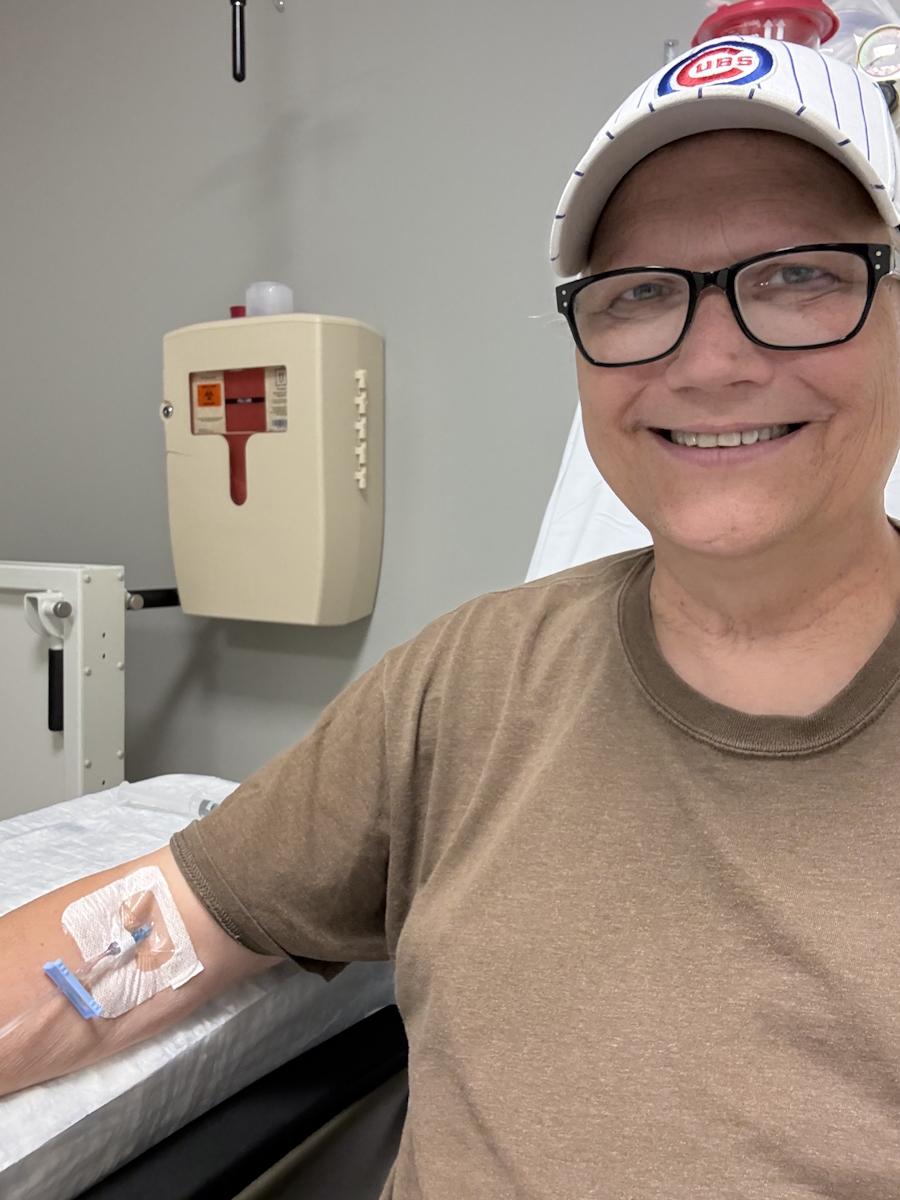
Craig: The very beginning was a little rough. We had a couple of starts and stops where they thought I was eligible, but it turned out I wasn’t. The same thing happened again. Finally, they got us into this one. We were very apprehensive that the rug was going to be pulled out again, but I’ve been on the trial since it started. I go in weekly and get an infusion once every three weeks. It’s a lot of trips from where I live to Hyde Park, Illinois, where the University of Chicago Medicine is located. My whole day is dedicated to getting a blood draw and coming back home sometimes, but I’m not working. I’m on disability, so I have the time. I will do whatever it takes to get better.
Michelle: And it’s worth it.
First-in-human clinical trial infusion days
Craig: They’ve been getting shorter. Because this is a first-in-human trial, for the very first infusion, I was there the entire day for monitoring. They wanted to make sure there were no side effects. I did multiple EKGs. For the next infusion, I had to come back the day after, and the day after that for labs. But for the third infusion, I was there on the day of and didn’t have to come back the next two days. They’re seeing that I’m tolerating it and no longer need to come in for urgent lab draws.
Michelle: I’m sure that a lot of people get scared off looking at that schedule, thinking, “Oh, it’s a clinical trial. This is going to take over my life.” It’s intense at first, but once you get into the groove, the frequency of some of the meetings and tests slows down, and you get your normalcy back a little bit.
Craig: There are a lot of great people who work at the hospital too. I have friends now on the staff, so that’s nice.
Robotic surgery, gas pain, and family dynamics in the hospital
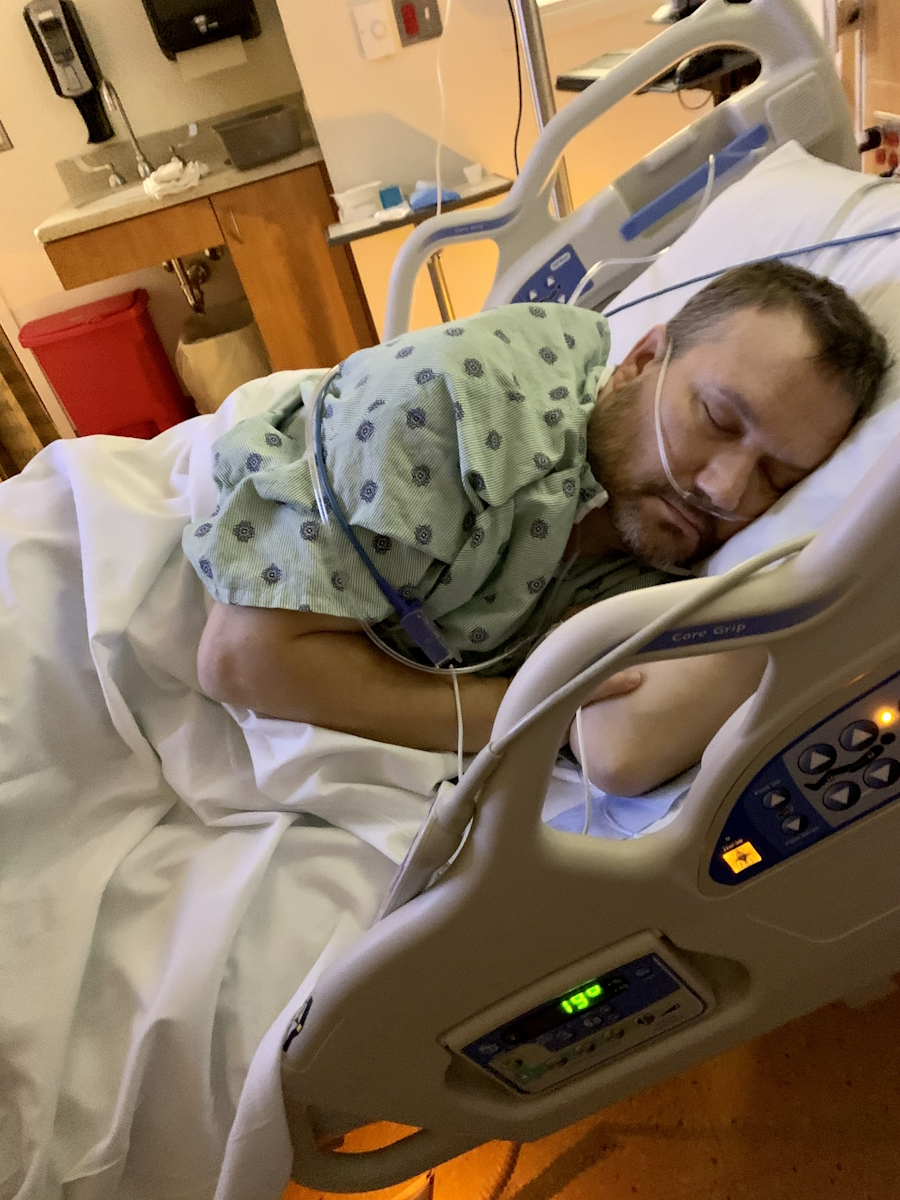
Craig: I would say that the morning of the surgery started ominously, because they blew a vein in my hand and it looked all blown up with the blood. Fortunately, I was put under immediately after that and had no concerns. The surgery used the da Vinci system, so I only had five holes and the recovery was quicker. But the most painful part immediately after was dealing with the gas. I felt like I was going to explode with the gas they pumped in so they could see what they were doing.
My parents passed away in 2025, but they were both there for the surgery. My mother was in rare form of saying the wrong thing at the wrong time. My ex-wife was there, the beautiful love of my life, Michelle, and my kids. Mom was driving all of us crazy. My wife took care of her and it was the best outcome, so everybody won.
Michelle: It was interesting. Being a caretaker of a person with cancer doesn’t stop at that person. Whether they have children who are younger or, in our case, adult children, there’s some care that needs to be taken and some ways that you need to approach things to keep everyone calm. That day, I was playing referee and trying to keep everybody calm. It was quite a task.
Craig: I was anemic, so I had to continuously get blood transfusions. That was one major hiccup that we had, so I had to stay an extra day or two, which wasn’t fun. There’s no rest in hospitals. I was getting a blood draw every two hours.
Chemical castration and adapting to hormone depletion
Michelle: The surgery certainly was life-changing, would you agree? In some ways. Surgery was in November and then we started chemo in February.
Craig: The surgery plus the hormone therapy has changed my whole perspective on life. I don’t have any testosterone due to the depletion of the hormone. I don’t have a prostate, which I’m ashamed to admit I didn’t know what it was until I was diagnosed. Once they took it away, I realized its importance. I wouldn’t have kids without it. I have four daughters, so I’m glad the cancer happened later in life.
Michelle: I met Craig later in life and there’s a 14-year age difference between us, but I knew that starting a relationship with somebody 14 years older, there might be some challenges. We weren’t expecting those challenges to happen so soon in his 50s. We were thinking maybe in the 70s. But you adapt and learn that love comes in different forms. There are ways to be intimate, caring, and passionate as you were before. It takes a different shape.
Craig: I’m thrilled every day. I have tolerated every type of hormone treatment that I have been on, except for the combination of abiraterone (Zytiga) and prednisone. That made me irritable, so I had to stop taking and go back to leuprolide (Lupron). I had to start enzalutamide (Xtandi) immediately and had been on it for years until it stopped working, then they tried abiraterone (Zytiga) with leuprolide (Lupron).
Craig: The changes are profound. It’s known as chemical castration for a reason. For a guy who has had testosterone his whole life, I have a different perspective. I had no sexual desire, to put it bluntly. The timing is amazing with my wife, who is in the same boat.
Michelle: We got engaged while Craig was going through chemotherapy during the COVID pandemic shutdown. We had been together for seven years and realized that if we could spend every single minute together, maybe it’s time to take the next step, so we got engaged.
Craig: COVID sealed the deal.
When treatments lose effectiveness
Craig: The chemo lowered my PSA level.
Michelle: We had a good result from the chemo for about a year and a half. He had chemo with leuprolide (Lupron) and that kept it down for about a year. Then the PSA started to rise a little bit, so enzalutamide (Xtandi) was added, and that brought it back down again. Then it started to creep up a little bit, so they did a dose of radiation. We’re throwing everything and seeing what sticks.
The radiation brought the PSA down a little bit, but after time passed, it started creeping up again. It became castration-resistant. Eventually, the body adapts and doesn’t have the same reaction. Testosterone fuels prostate cancer. Once you adapt to a lowered level, it gets a mind of its own and starts creating its own furnace. You don’t need the testosterone for it to spread.
In the last two years, when we saw a significant rise, we decided to try a clinical trial. Before that, they tried lutetium Lu 177 vipivotide tetraxetan (Pluvicto), which is another brand-new therapy. We had mixed results from that. Some of the tumor indicators went down, but the PSA number continued to rise.
The problem with prostate cancer is that we’re very focused on that number. The PSA number means so much. As a patient, that’s the only thing we can go on to see if that number goes up or down, but that’s not the whole story. There are other indicators, like CT and PET scans. There are other ways to monitor progress. My advice to anybody going through the initial diagnosis with prostate cancer is not to focus solely on the PSA number. You’ll drive yourself crazy.
Craig: I’ve seen numbers reported as high as 2,500. Mine’s up to 365, and I’ve seen worse.
Understanding PSA numbers and recognizing an aggressive cancer
Michelle: It started with, “This is high. This is going to be a challenge because this is an aggressive cancer to treat.” After surgery, you expect that number to be zero. If there’s no prostate, that number should be zero. Craig’s was 17, so we thought to ourselves, “17, that’s so low.” Not when it’s supposed to be zero, so that was our indicator that we had to go back in and keep fighting this. If it’s aggressive, we’re going to have to be aggressive as well.
Finding excitement in action and honoring life through volunteer work
Craig: I was not scared. I was excited, actually, because it meant that things were going to get better sooner, I thought. I got what I expected and I was happy about that after the chemo.
I knew that it was incurable from the diagnosis. Well, not until we got the genetic results back, I suppose, because that was our lifeline. If I did have a genetic mutation, they have medications. I went into a terrible two-week period of crying and feeling sad for myself every day. In 2025, my parents died — mom in January and dad in August — so that was a hard year to get through.
Because of the hormone treatment, I lack testosterone. I cry like a girl now, and I don’t mean that meanly. It’s silly, but I cry at everything. I can be so easily triggered at the thought of one of my daughters thinking about me when I’m gone. I can’t handle it. I try to keep busy going on walks and distracting myself by still working.
Michelle: Craig is very proactive in creating projects for himself and finding things that he’s passionate about.
Craig: I joined an organization called Play Catch with a Dad (PCWAD), which was founded by a gentleman in Pennsylvania. The purpose of it is simply to play a game of catch with a child in the LGBTQ community and perhaps didn’t have a father figure. We play catch with kids at baseball parks across the country. He has volunteers and a team of five in Chicago, and teams elsewhere. Four of the guys who are doing this are my high school classmates and one I reconnected with. He’s the reason that I joined the organization. I’m so excited. We’ll be playing catch, giving hugs, and trying to give everyone a once-in-a-lifetime opportunity to have that at that moment.
Michelle: If it’s not that, it’s WAHUWAN and the massive fundraising effort. We are here until we are not. We live every day to its absolute fullest. But the fundraising efforts and the amount of energy that you’ve taken from that place of pain and put towards something so positive, and the future that hopefully somebody won’t have to go through that pain going forward is so admirable. I’m truly humbled by it.
Craig: WAHUWAN.org takes people to my Prostate Cancer Foundation page, where the proceeds go directly to the Prostate Cancer Foundation. I’m not an in-between guy. I just created a website that pointed to their website. It benefits research into finding a cure.
At the 2026 ASCO, I heard some findings that are related to my line of treatment. I won’t say anything at the moment until more information is learned, but it’s very optimistic. The more money we can get to fuel those types of research efforts to find a cure, hopefully in my lifetime, the more amazing. We’re here until we’re not, so we might as well be happy. It doesn’t feel like much, though. It feels like I should do more.
Dealing with further spread to the lymph nodes, spine, and skull
Craig: The cancer has done the proverbial “lit me up like a Christmas tree.” It’s up through my spine. It’s in the skull. It’s throughout the pelvis. It’s in my lymph nodes. Hopefully, the most recent PSA numbers going down reflect those tumors shrinking. I take pain medicine once a day; it’s an extended-release of synthetic morphine that gets me through the day. Occasionally, I would take an extra four-hour pill if the pain was significant. The doctor asked me when the last time I did that was, and I couldn’t remember, which is good news because I haven’t needed it, so something good must be happening.
Looking for hope in the toolbox
Craig: We were always open to a clinical trial. That was the primary reason we were excited to be at the teaching hospital at the University of Chicago, so we were worried we weren’t going to get in. As I said, there were two opportunities that fizzled out. It seems like I got lucky and got into the one that was most helpful to me.
Michelle: There was a lot of heartbreak looking forward to the clinical trial, doing the research, and then learning that he didn’t qualify. The way I’ve always thought about it is that we have a toolbox and we have so many tools, but you can only use them once, so we need to be very smart and diligent about extending life and using our tools in the most productive way. As long as there are still tools in that box, there’s still hope.
Craig: After this, there’s still more chemotherapy that I can go through.
Michelle: So we still have more tools.
Managing anemia, fall risks, and daily quality of life
Craig: I’ve settled down. I started playing pickleball, but once I heard it was in my spine, I stopped because I was afraid of getting a spinal compression. I don’t want to fall. I still walk, but I don’t lift weights.
I walk and get anemic a lot, with the treatment reducing my blood count. This year, I’ve been in a constant state of mild anemia. I get a head rush easily if I stand up, so I have to be careful. I can’t be in the heat too long either. But I’m alive, so I’ll take that.
Our message to others: Do not skip your physicals and fight scanxiety
Craig: Don’t ignore your annual physicals. I had no pain whatsoever. There were no indications of anything wrong with me. Coincidentally, my daughter reminded me. She found something and got it cured because she went to her physical. Get your annual physical. Don’t miss your doctor appointments. I had one two years before my diagnosis and it was normal. But within two years, my PSA level went up to 47. Go every year.
Michelle: Insist on a PSA test. The guidelines for it are 50 and above, but at 40 and above, you can ask for one.
One of the biggest things about being a caretaker and a supporter of your loved ones who are dealing with cancer is scanxiety. Letting that anxiety of what those numbers and test results are going to be become debilitating to your life. It’s so hard to get over that. I’m certainly not over it, but I try to take it into perspective. Those numbers only show part of the picture, and they will be what they are. Don’t stop living while waiting for that scan result or that PSA number to come through.
We’re still here. Keep smiling. Keep living. Be as active as you can. Stay positive.
Craig: Keep it fun. When I had surgery, I had a catheter for about a week after. My wife painted a bucket pink.
Michelle: I called it Craig’s pee pee party pail.
Craig: Have fun in every way that you can. It’s the small things. Find somebody as beautiful and as amazing as my wife. I’m very lucky in that regard. She’s amazing.
This interview has been edited for clarity and length. The views and opinions expressed in this interview do not necessarily reflect those of The Patient Story. This content does not replace professional medical advice.
Inspired by Craig’s story?
Share your story, too!
Hear from people living with prostate cancer
Real experiences with diagnosis, treatment choices, side effects, and life beyond prostate cancer — in their own words.



Leave a Reply