Categories
Breast Cancer CDK4/6 inhibitor Chemotherapy Cold Caps Hormone Therapies Integrative Therapies letrozole Mastectomy Metastatic Patient Stories Radiation Therapy Reconstruction Ribociclib (Kisqali) Surgery Targeted Therapy Treatments

From Hip Pain to Metastatic Breast Cancer: How Mom and Teacher Erica Shows Up for ALL of Her Kids

From Hip Pain to Metastatic Breast Cancer: How Mom and Teacher Erica Shows Up for ALL of Her Kids

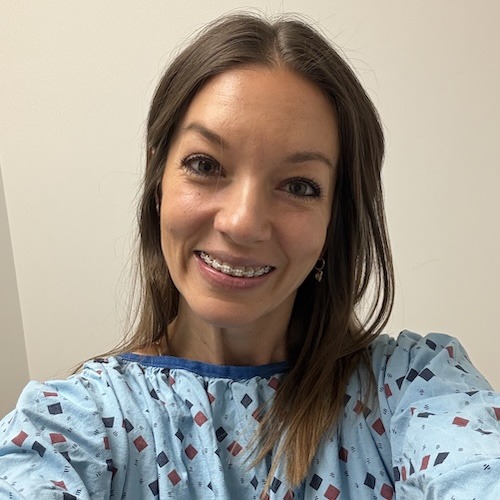
Erica lives with metastatic breast cancer. She describes herself first as an elementary PE teacher and single mom to two active kids, and secondly as a patient. She was initially diagnosed with stage 1 hormone-positive, HER2-negative breast cancer in July 2024, and believed she was finally moving back into “normal life” after chemotherapy, a double mastectomy, and reconstruction. When new, relentless pain in her hip, ribs, spine, and shoulder blade led to an ER visit, scans and a biopsy confirmed metastatic breast cancer that had spread to her bones. The news, delivered abruptly in the middle of the night, felt devastating and unreal. She spent a long time in denial, trying to process what this diagnosis might mean for her future and her family.

Interviewed by: Nikki Murphy
Edited by: Chris Sanchez

Today, Erica’s treatment for metastatic breast cancer includes a monthly hormone-suppressing injection and regular scans, along with integrative care, supplements, and a strict routine to support her health. She previously tried a combination of a targeted therapy and a hormone therapy drug, but the combination caused severe fatigue and low blood counts, so her oncology team adjusted the plan. Targeted radiation to a painful hip lesion around the femoral head gave her back the ability to walk without crutches, teach more comfortably, and be present in the gym again. She also manages hot flashes, tiredness, and brain fog, making daily choices to modify workouts and protect her bones while still staying as active as she safely can.

Erica H. metastatic breast cancer

Erica’s experience with metastatic breast cancer has changed every part of her life: how she parents, shows up in her classroom, and thinks about the future. Her children know she has cancer and see her as a fighter, but she works hard to shield them from the hardest moments, often crying alone in the shower or car instead of in front of them. At school, students and families surround her with cards, T-shirts, fundraisers, and a deeply felt sense of community that has eased some of the financial burden of cancer treatment.

At the center of it all is a quiet, disciplined determination. Erica organizes her days around movement, nutrition, supplements, work, faith, and time with her kids. She talks openly about scanxiety and uncertainty, while also defining hope as being there to see her children graduate, get married, and have kids of their own. For her students, she keeps repeating one message she lives out herself: you can do hard things, even when life looks very different from what you expected.

Watch Erica’s video and read the edited transcript of her story to learn more.

  • Staying connected to meaningful roles, like teaching and parenting, can help some patients with metastatic breast cancer feel more grounded and “normal” in the middle of constant medical appointments and scans.
  • Adjusting treatment plans when side effects become overwhelming is not a personal failure; it reflects how a cancer responds to therapy and the need to find an approach that supports both effectiveness and quality of life.
  • Community support from coworkers, students’ families, and strangers can ease the financial strain of metastatic breast cancer and remind patients that they do not have to navigate the experience alone.
  • A universal truth in Erica’s story is that it is possible to feel deep fear and grief and still practice gratitude, faith, and hope in the same breath.
  • She describes a powerful transformation from denial and shock after her metastatic breast cancer diagnosis to a disciplined, intentional way of living, where she structures her days around her health, her faith, and her children’s future.

  • Name: Erica H.
  • Age at Diagnosis:
    • Stage 1: 39
    • Stage 4: 41
  • Diagnosis:
    • Hormone-Positive, HER2-Negative Breast Cancer
  • Staging:
    • Stage 4 (Initially Stage 1)
  • Symptoms:
    • Stage 1: Appearance of lump in left breast
    • Stage 4: Severe pain in hip, ribs, spine, and shoulder blade
  • Treatments:
    • Surgeries: double mastectomy, reconstruction
    • Chemotherapy
    • Cold caps
    • Radiation therapy
    • Hormone therapy: aromatase inhibitor (letrozole)
    • Targeted therapy: CDK4/6 inhibitor (ribociclib)
    • Integrative care
Erica H. metastatic breast cancer

This interview has been edited for clarity and length. This is not medical advice. Please consult with your healthcare provider to make informed treatment decisions.

The views and opinions expressed in this interview do not necessarily reflect those of The Patient Story.


My metastatic breast cancer diagnosis and teaching career

My name is Erica. I was diagnosed the first time with stage 1 hormone-positive breast cancer, HER2-negative, in July of 2024. The second time I was diagnosed was on October 31st, 2025, with stage 4 metastatic breast cancer, same hormone-positive, HER2-negative. 

I am an elementary PE teacher. I have been doing that for about 12 years now.

A day in the life: Teaching with metastatic breast cancer

A typical morning: I am feeling good enough right now that I like to go to the gym to work out, then come back and get my two kiddos ready for school. They get to go to school with me, so that’s perfect.

I go to my elementary school, and when I get there, I am in charge of setting up the gym for everyday activities. We do different things. Another PE teacher does the parent drop-off while I set up. We have some fifth graders who help us set up every day for PE.

We have ten total classes a day, and they are 30 minutes apiece. Everyone gets to have PE every day at our school, which is awesome. I love that.

After that, I coach basketball. That just ended, but I did coach my daughter and my son. That was my sport too, so I coached both of them. Now we are switching over into the spring sports, so now I am their taxi driver to all their different sports.

Throughout the day, I take different vitamins and supplements four times a day. I am taking a lot of different things. I have another medication, the hormone suppressant that I get injected with every month at my oncologist’s office.

Monthly hormone injections and bloodwork

Usually, when I go get my injections, they do blood work for me every single month, too. Before I get that injection, I get my blood work done to make sure that my levels are still good. Then I get my injection.

I try to do that before school because I’ve missed a lot of school, and I don’t want to miss it if I don’t have to. So I usually go straight to school from there.

This injection hasn’t been very bad. The injection itself isn’t bad. It is sore; they put something on, and they numb me before they do it, but I don’t really have side effects that hinder me from doing my job or anything like that.

Since it’s a hormone suppressant, I have hot flashes. That’s the biggest thing that’s bothering me right now. I haven’t had a ton of joint pain. When I was on ribociclib, I did notice my hair was thinning again and things like that. But I’m not on that anymore, and I’m not as tired. When I was on that, my white blood cell counts were very low, so I was really exhausted.

By just doing this hormone suppressant alone, I’m not having as bad a set of side effects as I was before. I’m lucky that I’m feeling as good as I feel right now. I feel so good.

How my stage 4 diagnosis changed my daily life

When I was first diagnosed, I was in a ton of pain. It was super scary, obviously. There were days when I was thinking, “How am I going to do this?” I was in so much pain.

I had a lesion on my right hip, right where the femoral head goes into the hip socket, and that was causing me a lot of pain. Some days I needed crutches. I couldn’t walk, and I was thinking that was going to be my new normal, and hoping that it wasn’t.

Luckily, I went and met with a radiologist, and they said they thought they could do four sessions and that would be able to help me. That was targeted therapy. Since I was in so much pain, I decided to do that.

My last session was on Christmas Eve. It actually made a difference really quickly. They said it could take weeks, but I was lucky that it did something quickly for me. I was able to walk, and I didn’t have that pain. I had been limping, and everybody was worried about me and asking my kids questions. It looked painful. It was painful. It was hard to walk.

I had to sit down a lot while I was teaching instead of being active like I usually am. Luckily, that has changed. I’m very thankful that that worked out for me.

Why I continued teaching during treatment

I’ve always been an active person, and I know that breast cancer slowed me down. My kids go to the school too. If I just sat at home by myself, that is when my brain starts running with different thoughts. I like to stay busy.

I love my job, and I love seeing my students every day. They have been awesome. They have sent me so many cards, and they are always checking on me. I don’t like them to worry about me either.

I’m in a hard position with the elementary kiddos because they know that I have it, and they’ve said some really silly things to me. They hate that I have it, but I do feel like I’ve been able to show up and still be a good PE teacher.

I do have a little bit of brain fog. If I’m trying to talk to classes about different things that we are doing that day, I’ll lose my train of thought more regularly than I used to. But I need to keep a routine. It keeps me more positive, and I just like being around them.

If I sat at home and did not work, I think that would cause me to spiral a little bit and just sit with what’s going on.

Working around germs during metastatic breast cancer treatment

My doctors, my oncologists, were really concerned about me being around germs. They said that I could wear a mask if I wanted to, to protect myself. I feel like sickness has been so wild lately.

Everybody has been sick. My daughter had flu A, and then a couple of weeks later, she got flu B. In between that, my son had strep. So not only do all the kids in the elementary school have germs, but my own kids do too. Somehow, I have been able to avoid that. I haven’t gotten the sickness, which I’m really surprised about.

They were really worried about that for me. I do think that some of the supplements that I’ve been taking have helped me stay healthy during this. I think that being in the sun and being outside and doing things like that helps keep my natural immune system up too.

Walking into the gym each day with my students

We get every class for 30 minutes a day, so it’s something new every 30 minutes. We are not with the same students all day, and every class is something different. We move on pretty quickly.

I’ve been doing this for so long that I don’t put too much thought into it. This is what I’ve done, so I go to work and do what I normally do. It hasn’t been too different. Now that the kiddos have seen me able to walk without limping, there haven’t been as many questions as there were in the beginning.

They tell me they hope that I feel better and say they are sorry that I have cancer. I had one student who told me that his grandma had what I had, but they had to put her down. He didn’t mean it like that; it was just coming from the mouths of babes. They all mean well.

When I go in, it’s just another day for me. I’m doing what I love to do, and I’m thankful that I have a job that I love. My coworkers are great, and the whole school system has really pulled together for me. They have supported me in different raffles and other ways. They’ve been amazing. I’m lucky with the school district I’m in and with all the students and their families.

Community support, fundraisers, and the financial burden of metastatic breast cancer

One of my coworkers is one of the high school football coaches, and I teach some of the sons of the football coaches. The head football coach and the team always have a breast cancer awareness game. They did fundraising for me that night.

They sold t-shirts that everyone in the district or anyone at all could buy. People bought a bunch of shirts, and they showed me support that way. Everyone in the school was wearing those shirts one day. It was pretty emotional to see that support.

That was the first time around. The second time around, they set up a GoFundMe page for me. It’s shocking to me, the amount that they raised for me, because treatment is so expensive. I never realized how expensive it can be. I’m a single mom and a teacher, so it was very helpful.

Strangers and everybody in the community have shown up. I don’t know how I would have done it without them. My integrative doctor has told me about getting out of fight-or-flight mode. I asked how I was supposed to get out of that when I am thinking about fighting incurable metastatic breast cancer.

I think taking that financial burden off of me has helped me a ton.

How teaching helps me feel normal

Teaching has absolutely helped me. It makes me feel normal. I get to do the things that I love, and I get to see my kids at school interacting and being normal. It makes me forget about cancer, especially when I feel good.

When I was limping, that was a constant reminder. Even just transitioning kids from one class to the next was really tough. Now that I’m feeling much better after radiation and everything, I’ve been able to live my normal life again.

The hidden discipline behind living with metastatic breast cancer

Right now, I have to be so disciplined. People always say, “You’re so strong,” and I do feel like I’m strong, but I don’t feel like I have a choice with my two kiddos.

I am on a special diet, and I take different supplements four times a day. I’m trying to move my body every day. I’m trying to get in the sunlight every single day. I’m trying to keep my house clean, do the normal chores, and take my kids to practices.

It’s very time-consuming to get all the things in to make myself as healthy as I can, so I can try to keep my cancer stable or even shrink the tumors. I have to be very disciplined. I am tired, and I don’t want to work out, but I know if I keep my body strong, I am giving myself a better chance.

I’m not drinking sugary drinks anymore. I’ve been on a keto diet, which is hard for me — no snacks or coffees like I used to have all the time. I have to be really disciplined, and it’s really, really tough.

Finding motivation in my children

My kids are my motivation. They are why I do all of this. I want to see them grow up, and I just want to be here for them. That is my motivation.

I have a ten-year-old girl and an eight-year-old boy. Their birthdays are both in April, so next month she will be 11, and my son will be 9.

My first symptoms and path to my metastatic breast cancer diagnosis

I finished chemotherapy in February of 2025, and I had my exchange surgery because I had a double mastectomy. I had to wait a while to work out, maybe six weeks. After that, I was working out and started to get pain in my shoulder blade and in my hip.

I blew them off. I thought I had injured them somehow from working out. That went on and off for a couple of months. I couldn’t figure out why it wasn’t getting better or what I did to hurt it. Metastatic breast cancer never even crossed my mind.

The pain got pretty bad, and I was sick at a certain time, too. I wondered why I couldn’t get rid of this sickness. My body was aching so badly, and I could not figure out what was happening. The pain kept getting worse and would not go away. Even sitting hurt.

My boyfriend saw me crying because of the pain and said, “We’re going in. We’re going to at least get an X-ray or see what’s going on.” We went to the ER and sat there. We didn’t get checked out until probably 3 a.m. We went in around 11. I was so tired and delusional.

The doctor finally came in. He didn’t really have the best bedside manner and immediately said, “Yeah, it’s all over. We’re assuming it’s metastatic breast cancer.” I asked if he was sure and why he thought that. He said, “With your history.”

I was still not believing that was true. I thought there was no way. We were looking up other causes, like lesions, which could be something else. It wouldn’t have to be that. But they admitted me and did all the scans.

They did CT scans and MRIs with and without contrast. I was in so much pain during all that. They had me on all kinds of pain medications to try to keep me comfortable.

That’s how I found out. That’s what they said there. While I was admitted, they did a biopsy, and that confirmed it. It was very overwhelming and very hard to swallow that it was really happening. I never expected that. I feel like I’m one of the healthiest people I know. I never expected that, but here I am now.

Hearing the official metastatic breast cancer diagnosis

I was in denial. I didn’t believe it. It took me a long time to actually sit with that and cry about it and mourn that this is what is happening now.

I didn’t know what that meant. If you Google it, it’s very scary. When I first found out, it was bad. I was devastated. My whole family was devastated. We thought it was dire. I was thinking it was going to be a short period of time that I would be here. I didn’t know.

It was very scary. I feel like I just numbed out about it. It was really hard to accept.

How far the cancer spread

I had it on my shoulder blade. I had it on my femur. I had it in some places on my ribs. I had been having rib pain, too, and they found I had a broken rib from the lesions.

I had it on my ribs, my sternum, my spine, my femur, and my shoulder blade. My shoulder blade was causing me a ton of pain, too. Somehow, I didn’t have radiation on that one, but I haven’t felt that pain since I was in the hospital when I was first diagnosed. I don’t know why, but I’ll take it. I don’t feel that pain anymore.

All my treatments, from my initial stage 1 breast cancer to now

When I was first treated, I did four rounds of chemotherapy. I don’t know if that’s why I have these little pieces everywhere. I did a cold cap, so my hair’s still kind of wild, but I did cold capping during chemo.

They wanted to put me on a hormone suppressant, tamoxifen. I was on the fence about that and trying to decide. I ended up being diagnosed with metastatic breast cancer before I started taking that. That always makes me wonder if that’s what caused it, but some people have taken it and still had it come back.

There is no real right answer. I’m not going to blame myself for that because that would be even worse for me. I hadn’t started tamoxifen yet because I had heard about other people getting cancer from that as well. It’s a lot to take in and to know what to do. I had no idea, and I was trusting my doctors and trying to see what to do.

After that, when I went back, I had the same oncologist. My sister, right after I finished chemotherapy, was diagnosed with breast cancer as well. She had triple-negative breast cancer, so a different kind than mine, but we both have the same oncologist.

I went back in, and they put me on ribociclib and letrozole. I was not handling that combo well. It was making my numbers drop completely, so they took me off of that.

I am still getting the hormone suppressant injection every month. I have the option to either get my ovaries out or continue the shot. Right now, I’m doing the shot, and my oncologist is on board with continuing this since I’m stable. We’ll probably move on to something else if it shows progression.

Her goal for me is to put the cancer in the trunk. She says it’s always going to try to get back into the driver’s seat, and we just want to keep putting it back in the trunk. That’s our goal.

My treatment schedule around teaching and current side effects

Once a month, or every 28 days, I go get my injection and my blood work. I don’t have to miss school because I schedule that before school. My school doesn’t start until around 9:00, so I have time.

Every Thursday, I go to my integrative doctor and do different supplements and treatments with him. I get adjusted lightly because I have a risk of fractures due to my lesions. I go to him every week, every Thursday. I miss about an hour of school, but my co-teachers cover for me during that time. That’s kind of my plan period. I usually come in during the middle of my daughter’s class after that.

Every three months, I go for my scans. I do have to take off for that. I get different scans to make sure there isn’t progression or to see if there is progression.

Side effects right now, honestly, have not been that bad aside from the hot flashes and being tired. Then I think about how I’m not the same as I used to be. I can’t do the same things. I go to the same gym, but I have to modify a lot. I can’t do all the jumping because I could fracture something due to the lesions.

I’m tired, and the hot flashes make me not get as much sleep. The brain fog makes me feel like I’m not as sharp as I used to be, and that might be from all the medications and the chemo. But overall, I am feeling pretty good right now, and I feel blessed to feel this well.

My thoughts on clinical trials and future treatment options

The only clinical trial they’ve wanted to try with me so far was just a kind of testing. It wasn’t a new drug; it was a different way to test it. I opted out of taking that because I would have had to stay on the combination of ribociclib and letrozole, and I had gone off that anyway because it wasn’t working well for me.

I haven’t been in any trials yet. There is always that option, and I’m open to those things. I feel like even from when I was diagnosed to when my sister got diagnosed, there had already been advances. She was doing different things that I didn’t have the opportunity to do because they weren’t available yet. It’s wild that it’s progressing that fast.

There is always that option, but my oncologist hasn’t found one that fits me right now.

Coping with hard days and mental health

I do feel like I’m a positive person, but I am human. I definitely have rough days. It is hard. That’s why I try to keep myself busy. Being around all these little kiddos keeps me in a better mood.

I do have days where I break down, and it consumes me, but I try not to sit in that. I want to live for the day that I have and try to be grateful.

I’m 41 years old and was diagnosed with metastatic breast cancer at this age, thinking that I’m healthy, and especially thinking I was moving on from having the initial stage 1 breast cancer and that my life would finally go back to normal — and it didn’t. Now this is my new normal, and it’s tough and overwhelming a lot of the time.

I try my best not to sit in it. I believe in God, and that helps me a lot. My faith gives me hope, so that helps me.

How metastatic breast cancer changed my roles as mom, teacher, daughter, and girlfriend

This part makes me emotional. I used to be a high school basketball coach. I’ve been coaching my little ones, and my goal was to get back to coaching high school again. But I worry — am I going to be able to? Am I not going to be able to walk again? I don’t know what’s in the future, so I worry about that.

I am divorced, and about two weeks after I started dating my boyfriend, I was first diagnosed with breast cancer. He hung around, we got through it, and then we celebrated in Mexico. Then I found out I had metastatic breast cancer.

That is hard for me to process as a girlfriend because I want to possibly get married again. He has two young kids as well. I wonder if I even want to put them through that if I might not be here. Those thoughts go through my head.

My parents have been through so much because of this — my sister being diagnosed, me being diagnosed, and me being diagnosed again. That’s a lot of stress on them.

I hate that they’re worried about me. I want them to live their retired life and enjoy themselves, not worry about me. But I know I would worry about my kids, too, so I get it.

My kids, I don’t think they know how serious this is, and I don’t really want them to. They just know their mom as a fighter and think I’m going to beat it again. I want them to think that. This is nothing a little kid should have to think about.

A lot of things I want to do, I’m nervous about doing now. Even going on a field trip with my daughter — the fifth grade gets to go on a Smoky Mountain field trip to go hiking, and I’m going to be a chaperone. My principal said we might need to get somebody else just in case I’m not able to do it. That is hard.

I want to be able to do those things with my kids and have those memories with them. It has changed everything.

Talking to my kids about cancer and protecting their childhood

I bring my kids up in church, too, so I think they have that faith. We pray every night about things like that, and I think that gives them a little comfort. If something were to happen to me, they believe in heaven, so I think that helps them.

I think I’ve been able to hide the hardest parts from them. They haven’t seen me on really hard days. I try to keep that from them. I cry in the shower and in the car, but I don’t try to let them know.

They see me doing well right now. I feel great, so they’re not seeing a lot of the hard parts. I’m going to try to continue to do that for now.

Scanxiety, stable breast cancer, and tumor shrinkage

There has been no growth. I’m stable, and there has been some shrinkage, which makes me feel great. That’s a positive thing.

Since I came off ribociclib and letrozole, my oncologist wasn’t sure how my scans would look, but she was happy with them. She told me to keep going with this plan.

Scanxiety is real. I thought I was fine. We were driving to the hospital, and as soon as we got there, I just lost it. I didn’t realize I was keeping that in. I think I even hid it from myself.

Once we pulled up, it hit me: what do you do if it does progress? I don’t know yet. I know that happens for so many people. It is in the back of my mind, but I try to push that aside and live for the day.

What hope means to me now

Hope for me is seeing my kids graduate, seeing them get married, and seeing them have kids. That’s my hope.

I’m going to do everything I can to be able to do that. I know I don’t have the final say, but I’m definitely going to try. That is what I live for, and that is why I am so strict about everything that I do.

It’s hard, but it’s worth it. That is my hope.

Life lessons I want my children and students to learn

For my students, I always tell them they can do hard things, and I want them to believe that. Things are hard, but the reward of seeing your hard work pay off is worth it.

I want them to believe in themselves and know that they can do hard things. That is what I want to leave them with.

How metastatic breast cancer changed my view of people

I’m such an introvert, so it has surprised me how much people care and how many good people there are out there. I’ve been blown away.

It makes me not want to be as much of an introvert because there is so much good out there. I wish I could do for others what people have done for me. It’s been amazing. It’s wild to me.

I really love people now, even though I’m an introvert.


Erica H. metastatic breast cancer
Thank you for sharing your story, Erica!

Inspired by Erica's story?

Share your story, too!


More Metastatic Breast Cancer Stories

Joelle E. breast cancer

Joelle E., Hormone Receptor-Positive Breast Cancer, Stage 4 (Metastatic)


Symptoms: None per se; attributed to pregnancy (severe pregnancy nausea, very low weight gain in pregnancy, lack of milk production in right breast, intermittent nipple inversion, profound fatigue and bone pain, severe right hip pain and difficulty walking)

Treatments: Targeted radiation therapy, hormone therapies (tamoxifen, leuprolide), targeted therapy (CDK4/6 inhibitor - abemaciclib)
Erica H. metastatic breast cancer

Erica H., Breast Cancer, Stage 4 (Metastatic)


Symptoms: Stage 1: appearance of lump in left breast; Stage 4: severe pain in hip, ribs, spine, and shoulder blade

Treatments: Surgeries (double mastectomy, reconstruction), chemotherapy, cold caps, radiation therapy, hormone therapy (aromatase inhibitor, letrozole), targeted therapy (CDK4/6 inhibitor, ribociclib), integrative care
Christina W. breast cancer

Christina W., Breast Cancer, Stage 4 (De Novo Metastatic), HER2+, ER-


Symptoms: Extreme fatigue, head and neck felt swollen, clogged lymph nodes, appearance of a lump on the breast

Treatments: Monoclonal antibodies (trastuzumab, pertuzumab), radiation therapy
Deb O. breast cancer

Deb O., Breast Cancer (De Novo Triple Positive and ER+ HER-)


Symptoms: First instance: appearance of lump that later on increased in size, orange peel-like skin around inverted nipple, persistent ache under right arm; second instance: appearance of lump

Treatments: First instance: chemotherapy, targeted therapy, hormone therapy; second instance: surgery (mastectomy), chemotherapy, radiation therapy, CDK 4/6 inhibitor
Tammy U. metastatic breast cancer

Tammy U., Metastatic Breast Cancer, Stage 4


Symptoms: Severe back pain, right hip pain, left leg pain

Treatments: Surgeries (mastectomy, hip arthroplasty), chemotherapy, radiation therapy, hormone therapy, targeted therapies (CDK4/6 inhibitor, antibody-drug conjugate)
Nicole B. triple-negative breast cancer

Nicole B., Triple-Negative Breast Cancer, Stage 4 (Metastatic)


Symptoms: Appearance of lumps in breast and liver, electric shock-like sensations in breast, fatigue

Treatments: Chemotherapy, surgeries (installation of chemotherapy port, mastectomy with flat aesthetic closure), targeted therapy (antibody-drug conjugate), hyperbaric oxygen therapy, lymphatic drainage
Dalitso N. breast cancer

Dalitso N., IDC, Stage 4, HER+


Symptoms: Appearance of large tumor in left breast, severe back and body pain

Treatments: Surgery (hysterectomy), vertebroplasty, radiation therapy, hormone therapy, clinical trial
Marissa S. breast cancer

Marissa T., ILC, Stage 4, BRCA2+


Symptoms: Appearance of lump in right breast, significant fatigue, hot flashes at night, leg restlessness leading to sudden, unexpected leg muscle cramps

Treatments: Chemotherapy, hormone therapy, PARP inhibitor, integrative medicine

Categories
Bland embolization CAPTEM (capecitabine and temozolomide) Chemoembolization Chemotherapy Distal pancreatectomy FOLFOX (folinic acid, fluorouracil, oxaliplatin) Hormone Therapies Lanreotide Metastatic Pancreatectomy Pancreatic Cancer Patient Stories Radiation Therapy Splenectomy Surgery Treatments Y-90 radioembolization

Rebuilding Her Identity:  Alicia’s Pancreatic Neuroendocrine Cancer (pNET) Experience

Rebuilding Her Identity:  Alicia’s Pancreatic Neuroendocrine Cancer (pNET) Experience

Stage 4 pancreatic neuroendocrine cancer (pNET) reshaped Alicia’s life in ways she never anticipated. She describes herself as someone who “was always… a healthy person,” a full-time mom, professional makeup artist, and former salon owner who poured her energy into her children, her clients, and her 22‑acre farm. Looking back, she now sees how long she sidelined her own needs. She pushed through escalating symptoms while telling herself it was just stress from a difficult home environment and an emotionally taxing divorce.​

Interviewed by: Carly Knowlton
Edited by: Chris Sanchez

The early signs of pancreatic neuroendocrine cancer, a type of pancreatic cancer, were subtle and easy to dismiss. In Alicia’s case, they included hormonal changes, intense acne despite her expertise in skincare, flushing she did not yet have language for, stomach pain, and nausea so reminiscent of pregnancy that she kept taking pregnancy tests. As her divorce progressed and her health insurance fell away, financial barriers compounded the problem. Even as her stomach pain worsened and her legs became so swollen she could not bend them, she hesitated to go to the hospital.​

Alicia S. pancreatic neuroendocrine cancer

Everything shifted when loved ones physically helped her into the car and drove her to the emergency room. A cascade of scans, GI referrals, and ultimately blood work led to the call that changed everything: she had an urgent appointment with an oncologist that same day. The diagnosis, stage 4, grade 3 pancreatic neuroendocrine cancer, meant starting with oral chemotherapy and monthly hormone therapy injections. She then had surgery to remove part of her pancreas and her spleen, followed by liver-directed treatments. Later, she had chemotherapy infusions with a take-home pump.​

Alongside the side effects of nausea, fatigue, pain, night sweats, and the reality of lifelong treatment, came deep emotional work. Alicia speaks candidly about feeling crushed by the timing of her diagnosis, the impact of a toxic relationship, and the heartache of stepping back from the makeup work that once fueled her sense of purpose. Over time, she rebuilt a new identity centered on integrative care: yoga, meditation, journaling, putting on her own makeup, and intentionally celebrating every victory, no matter how small. Now, she is channeling her experience into videos and advocacy so that others with pancreatic neuroendocrine cancer might recognize symptoms earlier and learn to prioritize themselves sooner than she did.​

Watch Alicia’s video and read through the edited transcript of her interview. You’ll find out more about her story:

  • Listening to persistent hormonal and digestive changes, like flushing, severe stomach pain, and unexplained nausea, can be critical in catching pancreatic neuroendocrine cancer earlier, even when life stress makes symptoms easy to dismiss.​
  • Financial barriers and lack of insurance delayed Alicia’s workup, underscoring how structural issues can slow diagnosis even when someone knows in their gut that something is wrong.​
  • Treatment for stage 4 pancreatic neuroendocrine cancer can include multiple treatments. It is the disease and its response to these treatments, not the patient, that dictate outcomes.​​
  • A universal truth Alicia highlights for patients: you know your body best. When something feels off, it is important to keep advocating, even if you have been brushed off before or are used to putting yourself last.​
  • Alicia’s transformation centers on learning to ask for help and to rebuild her identity beyond work and caregiving. It also includes embracing daily practices, like yoga, meditation, journaling, and doing her own makeup, that make room for joy and small victories alongside lifelong cancer treatment.​

  • Name: Alicia S.
  • Age at Diagnosis:
    • 37
  • Diagnosis:
    • Pancreatic Neuroendocrine Tumor (pNET)
  • Staging:
    • Stage 4, Grade 3
  • Symptoms:
    • Abdominal pain
    • Nausea
    • Swelling
    • Extreme fatigue
    • Hormone-related changes
    • Severe acne
    • Flushing
  • Treatments:
    • Chemotherapy: CAPTEM and FOLFOX
    • Surgeries: distal pancreatectomy, splenectomy
    • Radiation therapy: Y-90 radioembolization
    • Hormone therapy: lanreotide
    • Bland embolization
Alicia S. pancreatic neuroendocrine cancer

This interview has been edited for clarity and length. This is not medical advice. Please consult with your healthcare provider to make informed treatment decisions.

The views and opinions expressed in this interview do not necessarily reflect those of The Patient Story.


My stage 4 pancreatic neuroendocrine cancer diagnosis

Hi, my name is Alicia, and I was diagnosed in June of 2020 with stage 4, grade 3 pancreatic neuroendocrine cancer.

Passion for skincare, makeup, and family

I am incredibly passionate about skincare and makeup. It is something that I have always done, and I have been in the industry since I was about 15 or 16. I am incredibly passionate about that.​

I love animals. I think I gravitate towards them more than people sometimes, and when I am not feeling good, I hug my babies. I also love spending as much time with my family and friends as possible. They are incredibly important to me. Family and friends are everything to me.

Life as a mom, business owner, and farmer before my diagnosis

Before being diagnosed, I was a professional makeup artist and owned a salon. I would go and do on-location bridal and event makeup, and I really loved what I did.​

I have two boys, so I was a full-time mom and a full-time working business owner. I was homeschooling my children; I only did that for a year, but we did try it. About a year and a half before diagnosis, I had moved to a 22‑acre farm, so I had some animals out there. Every day life was, I thought, completely normal. I thought I was doing well. I was incredibly busy, taking care of my kids, taking care of a farm, and doing everything for our household.​

Because of that, I pushed myself to the side. I was never a priority; everything else took priority. Daily life was normal, probably just like everybody else’s: working, taking care of my kids, taking care of my home, and just doing everything.

Early red flags and hormonal symptoms

I had been living in a very stressful environment, and a lot of the symptoms I was experiencing got pushed off because of the type of symptoms this cancer produces. There are a lot of hormonal symptoms, and they are very easy to brush off, especially when you are under so much stress and anxiety.​

It started with emotional symptoms and feeling overwhelmed. My face was completely breaking out, and being a licensed esthetician and makeup artist for as long as I had been, I had always taken very good care of myself. When I could not get that under control, I blamed it on stress and anxiety.​

A little over a year before I was diagnosed, I started having issues when I would eat, and my stomach would be in knots with stomach pains. Again, I thought I was under so much stress and anxiety, so everything was brushed off as that because of the type of symptoms this cancer produces. I was getting flushing, but at that point, I did not know what flushing was, just red splotchiness.​

I had a lot of stomach pain. I was taking pregnancy tests because so many of the symptoms I was having, like nausea and not feeling well when I was eating, were very similar to pregnancy. Because of the hormonal issues, a lot of it felt like pregnancy, and I kept thinking, “How is this negative?​“

Closer to diagnosis, I was going through a divorce, which amplified all the stress and anxiety. I was so encompassed with everything going on that there was so much I was not paying attention to. When you are taking care of your kids, your business, and going through a divorce, you get pushed to the very end of the list. I did not even make my own list of priorities, other than making sure I was put together so I could go to work and function.

Reaching a breaking point and going to the ER

I probably knew for sure by April of 2020 that there was something really wrong. I remember being at Easter dinner at my mom’s house and having to constantly get up and excuse myself to go to the bathroom because my stomach was in so much pain. That evening, I told her that something was not right, and I knew something was wrong.​

Because I was going through a divorce, I did not have insurance, so I kept pushing it off. I did not financially have the means to go, and I did not have insurance, so I ignored it even though I knew something was wrong. Cancer was never on the radar. I always considered myself a healthy person. If I got sick, it was because my kids were sick, and I would go to a minute clinic and say, “My kids have strep; I have strep.” I did not even have a primary care physician and never prioritized my own health, just my kids’ health.​

After April, the symptoms continued to worsen. My legs became so swollen that I could not bend them. People kept telling me I needed to go to the hospital, and I kept saying I was not going, that it would pass. Finally, I realized there was something really wrong, and I needed to go.​

I could not move my legs, so they had to pick me up, put me in the car, and drive me to the emergency room. They did scans and blood work in the ER and then referred me to a gastrointestinal specialist. I was not told that there were any masses. The referral was to a doctor I would not be able to get in with for a couple of months, which was not an option with how I was feeling.​

Fortunately, everything kind of fell into place. My parents had a doctor friend who referred me to a gastrointestinal specialist who could see me much quicker, and I went to see him.

Financial barriers, costly testing, and emotional toll in 2020

I did not have insurance, so I had to pay out of pocket for the appointment. At that point, it was obvious that something was wrong, so I had to find the funds to go.​

I remember the doctor saying he thought it was hepatitis, and I wondered how that could even be possible. He sent me for blood work, and I had to pay for that out of pocket as well. It was incredibly expensive. During 2020, because of COVID, it was very difficult to get into places, and everything was very expensive.​

I remember the nurse telling me she had never cried for a patient before, and she was bawling her eyes out when she had to charge me for my blood work. She looked through all the tests they wanted to run and knew there was nothing she could take off, and we both sat there crying. I felt like I did not have a choice any longer; we had to do the blood work.​

I left still not thinking about cancer at all. Even going to the ER, seeing the GI specialist, and going for blood work, cancer never once popped into my head.

Getting the call and meeting my oncologist

The day after my blood work was done, I got a phone call first thing in the morning from the doctor’s personal phone, which is never good. He told me they already had my blood work back, he had already called and talked to an oncologist, and I had an appointment that day at 2:00. He told me I needed to go that day and meet with him.​

I held it together until I ended the phone call, then I collapsed in my kitchen, bawling my eyes out and feeling completely crushed. I had been getting myself out of a bad situation, going through a divorce, and finally feeling like I was getting to a good place, and then I felt like I was crushed back down. I could not even make the phone call to my family because I was so emotional.​

My now-fiancée was with me. He is the one who picked me up, put me in the car, and took me to the emergency room, telling me I did not have a choice. He really saved my life, because I probably would not have gone and would have continued to push it off. I had to give him the phone to call my family and tell them something had come back on my blood work and that I had an appointment with an oncologist.

Learning I had “the good pancreatic cancer”

I was told I had an appointment with the oncologist that day, and I am so blessed to have an amazing family and support system. My mom and stepdad live two hours away, and they met us at the doctor’s office.​

My mom went in with me. During COVID, nobody could go into these appointments with you, but I was very fortunate that they allowed my mom to come in. I remember talking with the oncologist.​

I am trying to remember whether they already knew at that point that it had something to do with my pancreas, or if I was sent for scans first and then had a biopsy. Either way, the oncologist said if we were lucky, it would be “the good one,” the good pancreatic cancer. There is no good cancer, and I do not think there is any good cancer, but fortunately for me, mine was the “good,” if you want to call it that, type of pancreatic cancer, because it is more slow‑growing.​

The problem with a slower‑growing cancer is that most patients are not diagnosed until they are much further along because the symptoms are so easy to brush off. Another issue with neuroendocrine cancer is that it can appear in places other than the pancreas, and it is a rarer type of cancer. Because of that, most doctors do not immediately think of it, and a lot of patients get pushed off with explanations like “it is just this” or “it is just that,” when it is not.

Rare neuroendocrine cancer and delayed diagnosis

We put a lot of weight into our doctors’ words, especially if we have never prioritized ourselves or our health. Many patients just go with what they are told; if they do not push back, they keep getting brushed off, and time passes until they are diagnosed at later stages.​

Before diagnosis, there was nothing that was a huge standout red flag to me, saying, “You need to go now.” There is no telling how long I had been living with this cancer without realizing it. I am stubborn and push myself through everything, so any symptom that popped up was pushed aside with that mindset.

Feeling dismissed, yet knowing that something was wrong

It can be very frustrating for patients because you know something is wrong, but when you tell a doctor how you feel, and they brush it off as something lesser, you think they know better than you do. In reality, we know our bodies, how we feel, what feels normal, and when something does not.​

If you are not prioritizing yourself or you are not even on your own list of things to think about, you are not in tune with your body. That makes it even easier to ignore or minimize symptoms.

Paying out of pocket and cancer’s financial strain during chemo

Paying out of pocket was not an option I felt like I could avoid. If it meant maxing out a credit card, I still had to do it. During the divorce, I had closed my salon prior to 2020, so I did not have my salon income or anything coming in.​

For me to come out of pocket was nearly impossible, but I still maxed out a credit card to get the blood work done because at that point, I knew I had to. Thank God I did.

My initial treatment: Oral chemo and hormone therapy

Once I met with the oncologist and the staging and pancreatic involvement were clear, I was told my primary tumor was in the tail of my pancreas and had spread to my liver. I was told the masses were too large for surgery, so that was not an option for me initially.​

I was started on chemotherapy, specifically an oral chemo called CAPTEM. I was incredibly grateful for that because I was able to be at home in my own environment, where I felt comfortable, instead of being in a hospital. Being home meant I could have my support system around me, whereas others going through treatment at that time had to be alone in treatment rooms due to COVID.​

I was mentally in a bad place before and after diagnosis, so it was a blessing to do oral chemo at home. I do not think I would have had such a positive response if I had not had my support system around me. We initially discussed 12 rounds of CAPTEM. It is two weeks on, two weeks off, in a repeating cycle. My body made it through 11 cycles and then said that was it; we could not do any more. 

I have been on lanreotide injections monthly since the beginning, and that never stopped.​

Surgery to remove part of my pancreas and spleen

After cycle 11, we did scans. Thankfully, my body responded very positively, and the primary mass at the tail of my pancreas had shrunk enough for me to be a candidate for surgery.​

I had surgery to remove the tail of my pancreas, and they also removed my spleen. After that, I had to focus on recovery. Since the beginning, alongside all this, I continued my monthly lanreotide injections.

Liver-directed treatments: Chemoembolization, bland embolization, Y90

After surgery and a period of recovery, I had a break. About a year after surgery, follow‑up scans showed growth in the masses on my liver.​

Because of that, it was decided that I needed to start treatment again. The treatments then included chemoembolization, bland embolizations, and Y90 radiation. I went through those and was able to have another break, which was really nice.

Starting FOLFOX chemo, infusion pumps, and a changing oncology team

In October of 2024, my scans showed that I again needed to restart chemotherapy. I started on FOLFOX in December 2024, which required me to go into the treatment room for multiple hours.​

After the infusion, I had to leave with a pump that continued to deliver chemotherapy for the next two days. Then I had to go back two days later to have the pump removed, and then I had a week before going back again. So, every other week, I was doing this.​

It is very difficult to have a schedule like that because you cannot plan anything. First, with cancer in general, you never know how you are going to feel or how much energy you will have. On top of that, being connected to pumps, not feeling good, and not sleeping well made it even harder.​

I have dogs, which is amazing, but because my port was connected to a pump, nobody could sleep in the bed with me because we did not want to risk anything getting pulled out. 

In May of 2025, my original oncologist moved to Colorado.​ He referred me to another oncologist who is actually a neuroendocrine cancer specialist. My initial oncologist was not a specialist, but I was incredibly fortunate that he was someone who looked for rare things and was quick to diagnose me. During his care, every time I had a scan, he presented my case to a hospital board, so other oncologists weighed in.​

The oncologist he transferred me to had always weighed in on my case when it was presented. That has been amazing. “

Recovering from major surgery and rebuilding a routine

Recovery from the big surgery was very difficult. I was in the hospital for about a week and then came home and spent a lot of time in bed.​

I tried to do as much as I could to work myself back into a routine, because routine is incredibly important to me. It gives me something to look forward to and a “next thing” that I need to do. All of the things I needed to do were things I needed to put in place to support myself in healing and recovering.​

Side effects from chemo and radiation

With the initial chemotherapy, I was incredibly sick. It was very hard on my body. I was already in pain before starting treatment, and that pain was amplified once chemotherapy began.​

I was very sick and literally had to have a bucket next to me at all times. I was completely drained of energy and slept a lot. Fatigue was huge. I could not eat and had no appetite, whether it was because I was afraid of throwing up or because I could not really taste food.​

I was hurting and uncomfortable, dealing with fatigue, stomach issues, and night sweats. Those are the side effects from that period that I remember the most.

My mental health struggles after diagnosis

To be completely honest, in the very beginning, when I was diagnosed, I was not in a good mental place. I felt like I had just started clawing my way out of a hole and had finally, after over a decade, found some happiness, and then I felt completely crushed.​

On top of the cancer, I was going through a divorce in a toxic situation with a narcissist who was also an alcoholic. Even though I was sick and fighting, that did not stop him from adding to it and doing everything he could to make it worse.​

It was very difficult to get to a good mental place because it was not just the cancer I was battling; there was so much more on my plate that I was trying to work through mentally. In the beginning, I was not in a good mental place at all, and my support system helped me the most because I could not do that for myself at that point.

Parenting teen boys while in treatment

Being a mom during all of this was really difficult. Luckily, my family is incredibly close, both emotionally and in proximity, so I had help when I needed it.​

I tried to function as normally as I possibly could when my kids were there. I was still making their lunches and doing what I could, even if I was crawling up the stairs at the end of the night. I wanted to do everything I could to be the mom they knew, the person I knew, and the mom I did not want to go away. I did not want them to suffer because of what I was going through.​

When I was diagnosed, my two boys, who are 14 months apart, were in eighth and ninth grade. I had just moved them from two hours away back to where we had lived before owning the farm, so at least we were in an area they were familiar with.

The emotional challenge of asking for help

One of the most difficult and emotional things for me in the beginning was coming to terms with the fact that I was going to have to ask for help. I was never one to ask for help and was always the one to do everything. I am very independent and have been that way my entire life.​

I remember either just dropping off my boys with their dad or going to the store. I had to pull over and park my car, and I broke down in tears, realizing I could not do this alone. There was no way I could continue to function at the level I was functioning, do everything, and still try to help myself.​

That was probably the point where I realized I had not been taking care of myself or prioritizing myself. Everyone else had come before me, and I needed to step back, ask others to step in and help with the things I was doing, and focus more on doing things for myself and my body and healing. I needed to do that so I could go back to being the mom I wanted to be and the person I wanted to be. Asking for something was probably the most difficult thing for me.

Transitioning to FOLFOX maintenance and managing side effects

I am still on chemotherapy, and I recently went back on treatment. With FOLFOX, I am currently in maintenance mode.​

Now I am very fortunate that I do not leave with the pump. They tapered back some of what they were doing because I was having a plethora of side effects from the treatment. They wanted to see if backing off a bit would improve the side effects that were greatly impacting my life.

Having to stop doing professional makeup

I am not currently able to do hair and makeup on the side, even though I am so passionate about it and love it so much. My big thing was doing makeup for people because I could see their confidence grow while they were sitting in my chair.​

I would have girls or women who, for whatever reason, had beaten themselves up emotionally, or life had just worn them down, and they did not feel good about themselves. As I did their makeup, I would see a boost in their confidence, and that made me so happy and was so fulfilling for me. I think that is why I was so passionate about it.​

Unfortunately, because I never know how I am going to feel, I can no longer take on clients. You cannot cancel on a bride at the last minute, and I would never do that or put anyone in that position. With my body not being reliable, it is not something I can continue to do. That was very difficult because I got so much joy and fulfillment from providing that boost of confidence for people.

Losing and rebuilding identity after cancer and divorce

We talk a lot about losing our identity. My identity was a wife, a mother, and a business owner. I went through a divorce, my kids were no longer with me full‑time, and I was not able to do makeup, so everything I knew of myself was suddenly gone.​

I had to pivot and figure out what I was going to do that would make me happy. It took a couple of years, and I had a very difficult time. I would say that within the past two to three years, I have really been able to make a mental shift, and that has made all the difference.​

Most recently, because doing makeup and boosting other people’s confidence brought me so much joy and made me feel fulfilled, I decided to find a way to take that feeling and help others. Now I am making videos and trying to get the word out about this type of cancer, about prioritizing yourself, and about creating an environment where you can thrive and that is healthy for you.​

When you are going through chemo, radiation, cancer, or any illness, creating a healthy environment for healing and thriving is so important. I am really excited that I have found that focus, because it has helped fill the void I have felt since no longer being able to do makeup, have the salon, and do all the things I was so passionate about.

Prioritizing yourself, your energy, and a healthy environment

I really hope that people will sit back and think about what they are spending their energy on, who they are spending their energy on, and where they are prioritizing themselves. We get so busy and focused on so many other things that we are not in tune with our bodies and are not prioritizing ourselves or putting ourselves in a position to thrive.​

When we are able to make a mental shift to a more positive place, I really feel like our body listens to that. That is when you start to see more improvements, even if it is as simple as getting up and feeling excited to have something to look forward to instead of waking up and thinking, “I hurt, I do not want to get out of bed.”​

There has to be a mental shift to positivity and things to look forward to, to keep you going and fighting. You have to make that mental decision that you are going to fight.

Even now, I still sometimes push myself too much because I am stubborn and was so used to doing everything and not asking for help. Sometimes I get myself in trouble and realize I am going to hurt later, and then not be able to do something fun.​

I am very blessed to have people in my life who will step in and do the not‑so‑fun things, like laundry or grocery shopping, so I can reserve my energy for things I enjoy, like a date night with my fiancée.

My daily routine: Yoga, meditation, journaling, and makeup

When I talked about my routine and trying to put a routine in place for me, that looks like getting up and doing yoga in the morning and meditation. I journal, and I really try to make sure that every day I am putting myself together and putting my makeup on, even if I cannot do it for other people, doing it for me.​

When I feel like I look good, I feel better. When you are put together, and you walk past a mirror, and you are not feeling good but still look like you, there is a huge difference between that and walking past a mirror looking sick and feeling sick. That can really impact how you feel mentally and how you fight.​

When I can get up and do my yoga, my meditation, my journaling, and my makeup, that is a victory for me. Even if I cannot accomplish all of those things on a given day, because there are days when it is not going to happen, I will pick one or two of those things. Even accomplishing one of those things is a victory.

Celebrating my small victories and tracking my progress

We need to capitalize on every victory, no matter how small it is. That applies to everything in life.​

When I look at my blood work and see that, even if it is not a huge difference, it is moving in the right direction, I choose to be happy and excited about that. If we do not recognize those smaller achievements and only focus on big milestones, we are probably not going to be as happy with our progress.​

Recognizing little victories along the way, no matter how small, makes things more positive.

My long-term treatment plan, and living with chronic cancer

As far as my long‑term treatment plan, I have been told that for the rest of my life, I will have to be on some kind of treatment. That can be incredibly frustrating to hear.​

I do not know if, at some point, the treatment will change from one thing to another. There are so many unknowns when you are going through cancer, especially when it is chronic, and you are going to be living with it for the rest of your life.​

When the oncologist says you will have to be on treatment for the rest of your life until science catches up and comes up with a cure, that is where we are right now. I know what my current treatment plan is, but everything is up in the air, and you have to go with the flow.​

I do not know at what point this treatment will no longer be as effective, and we will need to find something else. For me, incorporating yoga, journaling, doing things for myself, and making plans with friends for lunch dates and activities that bring me joy is just as important as chemotherapy and other treatments.​

It has to be both; it cannot be just one or the other. It really has to be more of an integrative approach because one is not going to be as effective without the other. You need a very strong, motivated mindset to go along with your treatment to get the most out of it, in my opinion.

Reaching a better mindset and helping others get there sooner

I do have a really good mindset about it now, thank goodness. I am hoping that, by other people hearing this, they will be able to get to that point sooner than I did and see the benefits more quickly.​

I wish I could put this message out on a big amplifier for everybody. If people can learn from my mistakes, then they do not have to go through the same things. If they can catch this sooner than I did, or even if it is not cancer‑related but about prioritizing yourself for your mental health, those things are very important.


Alicia S. pancreatic neuroendocrine cancer
Thank you for sharing your story, Alicia!

Inspired by Alicia's story?

Share your story, too!


Regina J. lung neuroendocrine tumor

Regina J., Lung Neuroendocrine Tumor


Symptoms: Wheezing, back pain, coughing that sometimes produced blood

Treatment: Surgery (partial lung resection)
...
Tabbie V. neuroendocrine pancreatic cancer

Tabbie V., Pancreatic Neuroendocrine Tumor (pNET)


Symptoms: Abdominal pain, unusual organ "inflammation" feeling when walking, fatigue
Treatments: Chemotherapy (oral and IV), surgeries (Whipple procedure or pancreaticoduodenectomy, liver resection or partial hepatectomy)
...
Hayley O. neuroendocrine pancreatic cancer

Hayley O., Pancreatic Neuroendocrine Tumor (pNET)


Symptoms: Severe right-sided pelvic pain, nausea, diarrhea
Treatment: Surgery (pancreaticoduodenectomy or Whipple procedure)
...
Drea E. stage 3 neuroendocrine tumor

Drea E., Gastric Neuroendocrine Tumor (gNET), Stage 3, Grade 1


Symptoms: Fainting spells, fatigue, dizziness, anemia, shortness of breath, absence of menstruation, unexplained weight loss, night sweats
Treatment: Surgery (total gastrectomy with a Roux-en-Y reconstruction)
...

Categories
Abemaciclib (Verzenio) Arimidex (anastrozole) Breast Cancer Chemotherapy Clinical Trials Hormone Therapies Invasive Ductal Carcinoma letrozole Lumpectomy Patient Stories Radiation Therapy Ribociclib (Kisqali) Surgery Targeted Therapy Treatments

Samantha’s Stage 4 ER+ PR+ HER2+ IDC Breast Cancer Story

Samantha’s Stage 4 ER+ PR+ HER2+ IDC Breast Cancer Story

Interviewed by: Taylor Scheib
Edited by: Katrina Villareal

Samantha L.

Samantha’s journey with stage 4 breast cancer began in March 2019 when she was 22. Living in Virginia with her husband and young daughter, she first noticed a lump in her breast. Initially dismissed by her primary care physician and an ultrasound tech as an infection, a biopsy eventually confirmed her cancer diagnosis. Despite the initial belief that her cancer was at stage 1, further tests revealed it had spread, making it stage 4 breast cancer.

Her treatment plan involved chemotherapy, which she had to stop early due to severe neuropathy, followed by a lumpectomy, radiation, hormone therapy, and targeted therapy. Despite significant side effects, she managed to maintain no evidence of disease (NED) for some time. After two years of hormone therapy, Samantha decided to take a break to try for a baby, which led to a successful pregnancy in April 2022.

However, during her pregnancy, she and her family moved to Alaska. While there, Samantha’s cancer recurred, causing severe back pain due to lesions in her spine and pelvis. Unable to travel back to Virginia without stabilizing her spine, she underwent surgery and later radiation before returning to her oncologist for a new treatment plan. She joined a clinical trial involving a new radium drug for bone metastases but had to leave it due to mixed results.

Samantha then resumed hormone therapy and targeted therapy with different drugs than before. Throughout her treatment, she emphasized the importance of careful decision-making, the support of her family, and maintaining a positive outlook.


  • Name: Samantha L.
  • Diagnosis:
    • Breast Cancer
    • Invasive ductal carcinoma (IDC)
    • ER+
    • PR+
    • HER2+
  • Staging:
    • Stage 4
  • Initial Symptom:
    • Lump in breast
  • Treatment:
    • Chemotherapy
    • Surgeries: Surgery: lumpectomy, spinal surgery (fractured vertebrae)
    • Radiation
    • Hormone therapy: anastrozole & letrozole
    • Targeted therapy: abemaciclib & ribociclib
Samantha L.

This interview has been edited for clarity and length. This is not medical advice. Please consult with your healthcare provider to make informed treatment decisions.

The views and opinions expressed in this interview do not necessarily reflect those of The Patient Story.


I went to my regular doctor who said it was nothing. I was so young that it couldn’t be breast cancer.

Introduction

My husband and I live in Virginia and have a 1-½-year old daughter. I was diagnosed with stage 4 breast cancer at 22 in March 2019.

Pre-diagnosis

Initial Symptoms

It was the day after Valentine’s Day. My husband and I weren’t married yet. He was my boyfriend at the time. My mom loves to celebrate Valentine’s with the family. The celebration had ended and we were watching TV. He hugged me from behind and squeezed me tight. When he did, I felt some pain in my left breast. I realized there was a lump.

Samantha L.
Samantha L.
PCP Appointment

I went to my regular doctor who said it was nothing. I was so young that it couldn’t be breast cancer. They told me to put a warm compress on it, but that didn’t do anything. They put me on antibiotics thinking it was an infection and, of course, that didn’t help.

They finally sent me for an ultrasound and the ultrasound tech looked at it and said, “This looks like an infection. You’re 22 and I’ve never seen breast cancer in a 22-year-old, so that’s not what it is. But just in case, you can get a biopsy if you want.”

Getting a Biopsy

I almost left the hospital and went home without doing anything about it. He said it wasn’t urgent, but there was an opening so I got the biopsy done.

When you’re 22 and recently graduated college, cancer is not on your mind at all.

Diagnosis

Biopsy Results

The results revealed abnormal cells, so I had to go in for a second biopsy. That was the one that told us that I had breast cancer.

Reaction to the Diagnosis

When you’re 22 and recently graduated college, cancer is not on your mind at all.

My breast surgeon called me on the day the abnormal cells came back and said, “You need to come in again.” I went in and that’s when she started to prepare me that it could be cancer. She ended up calling me when she found out that it was.

She told me she cleared out an appointment for me at the end of the day and that we should get more information about the hormone receptors at that point. She scheduled an appointment so that I could talk to my family and get all of our questions written down before the appointment.

Samantha L.
Samantha L.

Treatment

Discussing the Treatment Plan

I didn’t know anything. I thought it was stage 1. I went through it in stages, always thinking that it was the least concerning thing. I don’t think there’s a big shock. It came about over time as we had more questions and learned more about it.

She was suspicious right when I walked in. She wanted to check the lymph nodes under my arm because that’s the first place cancer spreads. My boyfriend, my parents, and a friend who’s a doctor came to the appointment with me. They all had questions and wanted to help me and know everything. They went into a separate room and she took me back and did the biopsy under my arm.

When we went back, she laid out a plan. It was March and she said we should be done with all active treatment by Christmas. She said the standard is chemotherapy and then surgery, which was going to be a lumpectomy or a mastectomy, and then radiation. Since my cancer was hormone-positive, I would be on hormone therapy for some years after.

The spot was more contained. They said it was probably cancer because the chemo shrunk it. Then we realized I was stage 4 breast cancer.

Chemotherapy

There were a few hiccups. I had to stop chemo early because Taxol (paclitaxel) was causing neuropathy in my fingers. It got too bad and my oncologist didn’t want permanent nerve damage to happen. I was a little bummed about stopping Taxol early because it made me feel like I wasn’t doing everything that I could, but it’s what happens when your side effects get too bad.

Originally, all of my doctors wanted me to do a double mastectomy because I was young. Younger women tend to choose a double mastectomy because it gives people peace of mind to make sure all of the breast tissue is removed and there’s no place for cancer to grow.

I had a scan where they saw a spot in one of my ribs. They weren’t positive it was cancer and it was in a weird location that they wouldn’t be able to biopsy it. We talked to neurosurgeons about removing it, but we weren’t sure if it was cancer.

When I had chemo and scans again, the spot was more contained. They said it was probably cancer because the chemo shrunk it. Then we realized I was stage 4 breast cancer.

Samantha L.
Samantha L.
Lumpectomy

At this point, mastectomy isn’t going to matter too much because the cancer has already spread past the breasts. If I do a lumpectomy, the recovery time is shorter so I could get started with radiation immediately after. They wanted to do radiation on the rib to target the spot that was seen in the scan since it couldn’t be removed with surgery.

I ended up doing a lumpectomy, which is weird because when you think about cancer when you don’t have it, you think you’d do the most drastic option possible. But when you’re faced with your options, you’re not always picking that for yourself and your situation.

Radiation

After the lumpectomy, I did radiation and finished that in November.

My case wasn’t as bad of a stage 4 breast cancer case, so we were hopeful that I was cured at that point and that getting pregnant would be fine.

Hormone Therapy & Targeted Therapy

I started hormone therapy and targeted therapy after radiation and did that for two years. Since I had radiation on that tiny spot on my rib, I had no evidence of disease (NED) on scans.

I was having a lot of side effects with hormone therapy and targeted therapy. Being NED for so long, I didn’t even know if these therapies were doing anything or just making me miserable. It was causing a lot of physical and mental side effects that were the hardest time in my life so far. Way harder than chemo, radiation, and the rest of it.

I wanted to stop early. My oncologist wanted me to get to three years, but I could only make it two.

Samantha L.
Samantha L.

Fertility Post-Treatment

I wanted to try having a baby so I asked him. He cited some recent studies about women who had breast cancer, stopped hormone therapy after two years, took a break, got pregnant, and then went back on treatment. The chances of their cancer reoccurring didn’t increase. Some people had their cancer come back and some people didn’t, but getting pregnant didn’t affect that.

However, the study was for stage 3 and below and not stage 4 breast cancer. Since I only had a tiny spot of cancer and it wasn’t in multiple places throughout my body, my case wasn’t as bad of a stage 4 breast cancer case, so we were hopeful that I was cured at that point and that getting pregnant would be fine.

I got off hormone therapy and targeted therapy. I started in November 2019 and ended in October 2021. I wasn’t having periods the whole time and then my cycles returned to normal. I felt amazing. I think it was because I wasn’t on hormones anymore. Then I got pregnant in April 2022.

You can’t let the fear of cancer coming back control your life. You can’t make every decision based on whether your cancer comes back or not.

Pregnancy was great. I still had all of the same pregnancy side effects, like nausea, but I was so used to being nauseous from treatment that it didn’t affect me. I just felt good that I wasn’t on medication. There were lingering side effects from both chemotherapy and targeted therapy. I still have hot and cold sensitivity in my fingers, toes, ears, and teeth. I have dry eyes.

It can be difficult because people don’t want their cancer to come back. They don’t want their child to be left without a mother. That’s the main worry people have. My philosophy on it is that you’re not a statistic. You don’t know what could happen in your life and you can’t let the fear of cancer coming back control your life. You can’t make every decision based on whether your cancer comes back or not.

If I can, then I will. If I feel good, then I’m going to do this or that. It’s not a decision that I made easily. My husband and I talked through it and we spoke to our doctor about it. We did what was best for him and what was best for our family specifically. It’s not for everybody. You have to figure it out for yourself.

Samantha L.
Samantha L.

There are all these medical questions that you need to ask your doctor, but it can be a good thing and possible. There’s a lot of new research coming out. You don’t have to be afraid of having hormones in your body after having hormone-positive cancer.

Moving to Alaska

In the middle of my pregnancy, we moved to Alaska, so we were away from my oncologist for a while. I was still keeping in touch with him, but we were hopeful that I was cured since I had scans that showed no evidence of disease for so long after my daughter was born. I was breastfeeding, so we didn’t do a lot of monitoring because I was still feeling good and there were no new symptoms.

Several lesions throughout my spine and pelvis were found on the MRI.

Cancer Recurs

We were on a mountain one day taking family photos when I collapsed to the ground. My back hurt so bad that I couldn’t get up. Five guys had to carry me to the car. I went to the ER that day and eventually had a scan. The results showed a fracture in my spine because there was cancer growing in it, crushing the vertebrae, and causing the pain. Several lesions throughout my spine and pelvis were found on the MRI as well.

I couldn’t get on a plane to fly back to Virginia because they were worried that if something shifted, I could be paralyzed, so I needed to have surgery to stabilize my spine before moving back. We couldn’t even think about treating the cancer until that happened. It was scary because we weren’t doing anything to address the cancer.

I had surgery in the middle of August followed by a very painful recovery. I was already in a lot of pain beforehand, but I needed two weeks of recovery. When we got to Virginia, I met with my oncologist and came up with a new plan.

Samantha L.
Samantha L.

New Treatment Plan

They thought I needed radiation on the vertebra that had the fracture because there were other spots throughout my spine and pelvis, but that was the biggest and causing the most problems. We did three rounds of radiation on that first.

My oncologist knew that hormone therapy and targeted therapy made me miserable, so he gave me three options. He said I could go on hormone-targeted therapy, I could take a chemo pill called Xeloda (capecitabine), or I could get on a clinical trial.

I couldn’t start the trial until 14 days after my last radiation, so for two weeks, I wasn’t doing anything and I could feel things getting worse.

Joining the Clinical Trial

He was excited about the clinical trial because it used a new radium drug targeting bone metastases. It was already an approved treatment for prostate cancer with lots of success and this trial was testing it on metastatic breast cancer patients. We went with that because he said it could eliminate what’s in my bones.

The problem was that I didn’t know which group I would be in. They were going to tell me, but I was either going to be in the group getting chemo or in the group getting chemo and the radium drug.

That was a stressful time because there was a period when I had to wait to get approved for the trial. I couldn’t start the trial until 14 days after my last radiation, so for two weeks, I wasn’t doing anything and I could feel things getting worse.

I ended up in the radium arm of the trial, which was good, and I did that for a while. It helped with my pain a lot and decreased some of the markers in my body.

Samantha L.
Samantha L.

I ended up having to go off the trial because my scan showed mixed results. Some areas were better, but some areas were worse. I think it’s because my original scan was in September and not right before I started the trial. There was that two-week period when things got worse, but there’s no way of knowing if that was it or not.

Hormone Therapy & Targeted Therapy

After the trial, I talked with my husband and my family and decided that I was going to give hormone therapy and targeted therapy another try. My oncologist recommended trying a different drug than what I was on before, so that’s what I’m doing now. I’m on anastrozole and abemaciclib, which is slightly different from the letrozole and ribociclib that I did in 2019.

The whole point of stage 4 treatment is to find a treatment that you can tolerate for the rest of your life.

Treatment Decision-Making

People don’t realize how much thought is put into treatment-decision making. You think about it for days, weeks, and months, talking it through and talking to doctors. I think that experience was good because it led me to my decision and made me realize that I’m exactly where I should be.

Having a Strong Support System

I have a supportive husband and family who help talk through things with me. I think about things a lot, pray all the time, and try to get the wisdom to make all these decisions in a way that’s going to be the best for myself, my husband, and my daughter.

It’s not just about patience. It takes a lot of work and it’s not something that you make a split-second decision about. There’s a lot of thinking and praying.

Samantha L.
Samantha L.

The whole point of stage 4 breast cancer treatment is to find a treatment that you can tolerate for the rest of your life. When we went to a new center, found out all the information, and talked with my oncologist more about whether this was realistically going to be the best option for me, that’s what made us think that this is what’s going to be good.

It wasn’t just me. My husband was so afraid of me being on it again. He knew how much I suffered when I was on it. It affects both of us. Going on it for the second time around was nice. It was working better. I don’t know if it’s because I went through a pregnancy, I’m older, it’s a different drug than before, or if I have a different mental attitude towards it.

If I didn’t have a baby who was so dependent on me, I don’t think I would’ve even considered going back on hormone therapy.

Everything happens for a reason. Some people thought it was a dumb decision for me to get pregnant, but having her is what made me do this treatment in the first place. If I didn’t have a baby who was so dependent on me, I don’t think I would’ve even considered going back on hormone therapy. I would’ve done the chemo pill. It could have worked, but it could not have worked. Having her around gave me this huge drive to live for as long as possible. It’s what made me even try it again in the first place. I wouldn’t have even known that it would be better this time around.

A cancer diagnosis is harder on the family than on the person going through it. Your family loves you. A lot of family members feel like they’re being pushed away and that they’re not wanted. My instinct is to do that because I don’t want to put a burden on them. But at the end of the day, it’s important that they’re there. The best thing that a family member can do is be there and listen. What to say and do is going to be different for everybody, but being there is a good place to start.

Samantha L.
Samantha L.

Words of Advice

Don’t wait. If you want to do something, do it. You never know when your life is going to dramatically change. I didn’t realize how much I enjoyed picking up my baby and rocking her to sleep then all of a sudden, it’s taken away from me.

When we moved to Alaska, people asked why we were going. We had an opportunity, so we’re going to move to Alaska for a year. We probably could never do that again because now I need all this treatment so I’m back in Virginia where my original team is.

If you want to do something, do it while you can because you never know when you’re physically not going to be able to do it.

Don’t wait. If you want to do something, do it. You never know when your life is going to dramatically change.


Samantha L.
Thank you for sharing your story, Samantha!

Inspired by Samantha's story?

Share your story, too!


More Metastatic Breast Cancer Stories

Joelle E. breast cancer

Joelle E., Hormone Receptor-Positive Breast Cancer, Stage 4 (Metastatic)


Symptoms: None per se; attributed to pregnancy (severe pregnancy nausea, very low weight gain in pregnancy, lack of milk production in right breast, intermittent nipple inversion, profound fatigue and bone pain, severe right hip pain and difficulty walking)

Treatments: Targeted radiation therapy, hormone therapies (tamoxifen, leuprolide), targeted therapy (CDK4/6 inhibitor - abemaciclib)
Erica H. metastatic breast cancer

Erica H., Breast Cancer, Stage 4 (Metastatic)


Symptoms: Stage 1: appearance of lump in left breast; Stage 4: severe pain in hip, ribs, spine, and shoulder blade

Treatments: Surgeries (double mastectomy, reconstruction), chemotherapy, cold caps, radiation therapy, hormone therapy (aromatase inhibitor, letrozole), targeted therapy (CDK4/6 inhibitor, ribociclib), integrative care
Christina W. breast cancer

Christina W., Breast Cancer, Stage 4 (De Novo Metastatic), HER2+, ER-


Symptoms: Extreme fatigue, head and neck felt swollen, clogged lymph nodes, appearance of a lump on the breast

Treatments: Monoclonal antibodies (trastuzumab, pertuzumab), radiation therapy
Deb O. breast cancer

Deb O., Breast Cancer (De Novo Triple Positive and ER+ HER-)


Symptoms: First instance: appearance of lump that later on increased in size, orange peel-like skin around inverted nipple, persistent ache under right arm; second instance: appearance of lump

Treatments: First instance: chemotherapy, targeted therapy, hormone therapy; second instance: surgery (mastectomy), chemotherapy, radiation therapy, CDK 4/6 inhibitor
Tammy U. metastatic breast cancer

Tammy U., Metastatic Breast Cancer, Stage 4


Symptoms: Severe back pain, right hip pain, left leg pain

Treatments: Surgeries (mastectomy, hip arthroplasty), chemotherapy, radiation therapy, hormone therapy, targeted therapies (CDK4/6 inhibitor, antibody-drug conjugate)
Nicole B. triple-negative breast cancer

Nicole B., Triple-Negative Breast Cancer, Stage 4 (Metastatic)


Symptoms: Appearance of lumps in breast and liver, electric shock-like sensations in breast, fatigue

Treatments: Chemotherapy, surgeries (installation of chemotherapy port, mastectomy with flat aesthetic closure), targeted therapy (antibody-drug conjugate), hyperbaric oxygen therapy, lymphatic drainage
Dalitso N. breast cancer

Dalitso N., IDC, Stage 4, HER+


Symptoms: Appearance of large tumor in left breast, severe back and body pain

Treatments: Surgery (hysterectomy), vertebroplasty, radiation therapy, hormone therapy, clinical trial
Marissa S. breast cancer

Marissa T., ILC, Stage 4, BRCA2+


Symptoms: Appearance of lump in right breast, significant fatigue, hot flashes at night, leg restlessness leading to sudden, unexpected leg muscle cramps

Treatments: Chemotherapy, hormone therapy, PARP inhibitor, integrative medicine