
Jade Thought She Had Appendicitis; When She Found Out It Was Stage 4 Appendix Cancer, Her World Changed Forever
Jade’s appendix cancer experience began not in a hospital, but at a holiday resort three days before Christmas. What started as persistent right-sided cramping and constipation was initially dismissed as postpartum recovery after her daughter was born. When Jade finally went to urgent care, she was told she had appendicitis.
Interviewed by: Taylor Scheib
Edited by: Chris Sanchez
Doctors removed her appendix. Eight days after surgery, a voicemail from her surgeon changed everything. She was diagnosed with appendix adenocarcinoma with mucinous features, a rare kind of cancer that’s commonly just referred to as appendix cancer.
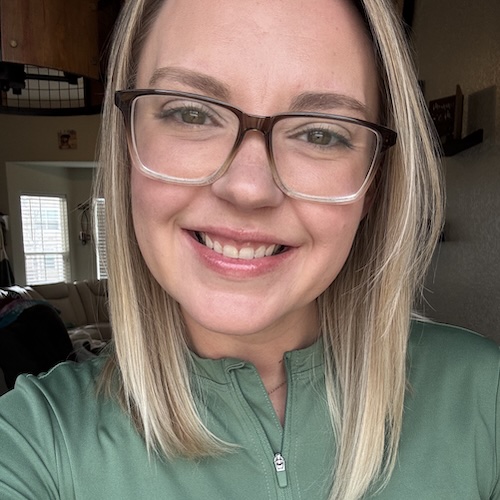
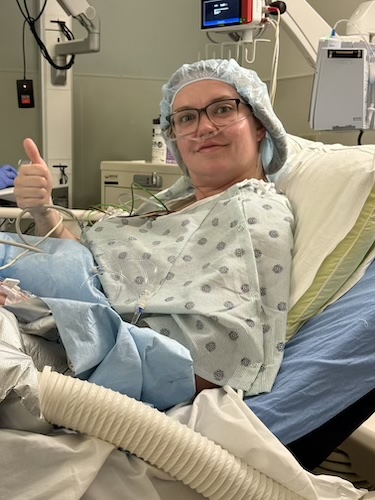
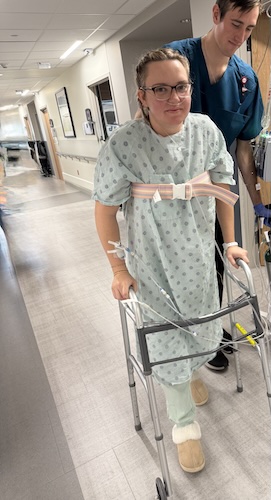
Jade’s path to the right care moved quickly. Within 28 days of her diagnosis, she was on an operating table for eight hours for a combination of cytoreductive surgery, HIPEC (hyperthermic intraperitoneal chemotherapy), and a right hemicolectomy, a procedure sometimes called “the mother of all surgeries.” The cancer had spread to her liver and one of her ovaries. Recovery was tough. She wasn’t allowed to hold her kids for two months and couldn’t eat solid foods for almost two weeks.
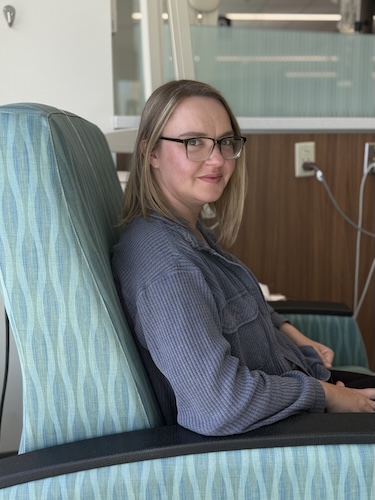
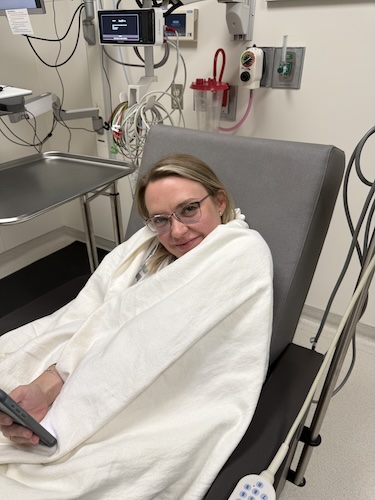
Chemotherapy followed. Jade completed 12 rounds of FOLFOX treatment over six months, going home with a chemo pump every other week. She developed an allergic reaction to oxaliplatin during her eighth treatment, which was ultimately removed from her regimen. Through nausea, fatigue, and the emotional weight of taking care of two young daughters while tethered to a pump, she showed up anyway: to Christmas concerts, to the park, to life. She persevered and eventually got to ring the end-of-treatment bell.
Today, Jade is in a surveillance phase, receiving CT scans every three months and monitoring her blood work. Her doctors told her recurrence is expected rather than possible. Rather than withdrawing from the uncertainty, she has turned toward it, building a TikTok community for others navigating chemotherapy, sharing practical tips about port care, and emotional honesty about the hard parts of survivorship. Jade’s experience has reshaped her sense of identity and purpose, dedicating her voice to connecting those who are part of this rare cancer community.
Watch Jade’s video and read the transcript of her interview below. You’ll find out more about her appendix cancer experience.
- Early symptoms of appendix cancer can mimic common postpartum or gastrointestinal issues. Jade’s cramping, constipation, and irregular periods were present long before her diagnosis and were repeatedly dismissed, highlighting how frequently appendix cancer evades early detection.
- Seeking a specialist matters enormously with rare cancers. Appendix cancer has no dedicated treatment protocol and is typically treated under colon cancer regimens; finding a physician with specific expertise in this disease was a turning point in Jade’s care.
- A strong support system is not a luxury; it is a clinical asset. Jade credits her husband, family, faith, and community as foundational to surviving both the physical and emotional demands of her treatment.
- You can still be present, even during the hardest treatments. A universal truth for patients: cancer does not have to consume every moment. Jade went to school concerts with a chemo pump attached and took her children to the park when she didn’t want to get out of bed.
- Community-building accelerates healing. From a PMP Facebook support group to her own TikTok channel, Jade found that connecting with others who understood her experience transformed isolation into purpose.
- Jade’s transformation is the story itself. She arrived at her diagnosis as a new mother and 15-year hospitality veteran who quietly put her own needs last. She emerged as an advocate, storyteller, and voice for a disease that rarely gets one. She chooses to use her experience to protect others from the silence that almost cost her everything.
Jade’s Diagnosis Facts
- Name: Jade F.
- Age at Diagnosis:
- 30
- Diagnosis:
- Appendix Cancer (Adenocarcinoma of the Appendix with Mucinous Features)
- Staging:
- Stage 4 (Metastatic)
- Symptoms:
- Constant pain on the right side
- Constipation
- Bloatedness
- Exhaustion
- Treatments:
- Surgeries: appendectomy, hemicolectomy, hepatectomy, cytoreductive surgery (CRS)
- Chemotherapy: Hyperthermic intraperitoneal chemotherapy (HIPEC), FOLFOX
This is not medical advice. Please consult with your healthcare provider to make informed treatment decisions.
- Jade’s Diagnosis Facts
- A recent pregnancy and early symptoms of appendix cancer: Cramping and constipation
- How I received my appendix cancer diagnosis: A voicemail that changed everything
- Finding the right cancer specialist: From oncologist to appendix cancer expert
- Preparing emotionally for major cancer surgery
- HIPEC surgery recovery: What those first weeks were really like
- Going through FOLFOX chemotherapy: 12 rounds and a chemo pump
- Keeping normalcy during chemo: Why I refused to stop living
- Life after appendix cancer treatment: CT scans every three months and the watch-and-wait stage
- Old Jade, new Jade: How appendix cancer changed me — and what stayed the same
- Hear from people living with appendix cancer
A recent pregnancy and early symptoms of appendix cancer: Cramping and constipation
I think the first symptom that I noticed was cramping in my right side. It just was constant — it wouldn’t go away. I started getting constipated, and that was a red flag for me as well. I was pregnant five months before my cancer journey started, and I think a lot of those symptoms I was still blaming on having just had a baby. It was probably postpartum, or something like that.
I also spent a lot of time in the emergency room with my daughter — who I had just had — because she was born with a rare eye condition, and I didn’t have time for myself. I was making sure my daughter was okay, making sure she was good, and I wasn’t worried about me.
When I finally said, “Okay, something is going on here,” I went to urgent care. They did a CT scan, and that’s when they told me I had appendicitis. I was like, “Oh, okay, that’s fine — I know multiple people who have had that.” So they removed my appendix, and I woke up, and it was a little more advanced because my appendix had ruptured. I had to have a drain tube for a while, things like that — a little unexpected out of a normal appendicitis. But I still thought I was fine. They never mentioned cancer to me. They never said those words at all.
It was eight days later — from my appendix surgery — I was at the Great Wolf Lodge with my family, my husband and kids, and a big group of our friends. It was three days before Christmas, and they told me I had adenocarcinoma with mucinous features.
How I received my appendix cancer diagnosis: A voicemail that changed everything
When I was at the Great Wolf Lodge, my surgeon — who had removed my appendix — called me, and I actually missed the call. He left me a voicemail that sounded pretty concerning, so I called him back right away.
I hadn’t looked at a pathology report on my appendix or anything like that because I thought it was just my appendix, not cancer. When I called him back, that’s when he told me. They didn’t know how far it had spread. They didn’t know how bad it could be. They just told me, “You need to go see a specialist — right now.” So that’s what I did.
Looking back: Overlooked symptoms and the importance of listening to my body
Now that I know I have cancer, I’ve been looking at my life and all of the symptoms I’ve had over my lifetime. I have had struggles with my period my whole life. I’ve never had a consistent one. I’ve mentioned it to doctors, and they were like, “Oh, it’s probably fine — you’re just an abnormal person,” or whatever. I struggled with that. I didn’t know if I could have kids because I wasn’t having my period regularly. Those were things I was struggling with way before all of this that I didn’t know were significant. Urinary tract infections (UTIs) — I get those a lot. They’ve been making me even sicker because I have cancer now, too, so it makes me more susceptible to everything.
I would say UTIs are super important to get taken care of, and if you don’t, they can harm your body. I just think it’s so important to just go in. I wish I had gone in sooner. Just go in if you think something’s wrong.
I think it’s just important for women to put themselves first, and then they can take care of others. Because if you don’t do that, then it can have serious consequences. I didn’t prioritize myself — and look at me now. But I’m here because I want to help people. I want to bring awareness to appendix cancer. This is rare. There isn’t a dedicated treatment protocol — it’s all treated as a colon cancer regimen, and it doesn’t have its own treatment. And I think that’s been hard.
The emotional shock of going from appendicitis to appendix cancer
Going from appendicitis straight to “this is cancer” was a huge shock. I didn’t even know there was appendix cancer. It was hard because I was surrounded — in the middle of the Great Wolf Lodge — when I got this news that changed my life, when I was supposed to be having fun. It just really, truly flipped my world upside down.
I remember it perfectly — my husband was in the lobby with my daughter, buying her a toy from the Great Wolf Lodge. I was standing outside when they called. I made eye contact with him, and he knew. At that point, he just knew.
The kids stayed with friends, and my husband and I went to the car, and we cried for a while. I called my mom and other people who mean the most to me and shared the news with them, because I have a huge, huge support system in all of this — and that has been a lifesaver for me, for sure.
Navigating next steps after an unexpected appendix cancer diagnosis
Finding and doing the next steps — my husband helped me a lot by researching this type of cancer. I did a lot of ChatGPTing on my diagnosis. I started doing research. I found a page on Facebook that I think is super important and has been a huge help in my journey. It’s an appendix cancer page — PMP or Pseudomyxoma Peritonei. I found a lot of people in there, connected with people, and it’s helped me learn more about my diagnosis and what it means exactly.
Finding the right cancer specialist: From oncologist to appendix cancer expert
Once I got the call and got the diagnosis, I was immediately sent to an oncologist. He explained to me that I needed to find a specialist in this type of cancer. I’m lucky enough to live in Colorado, where there is amazing healthcare for children and adults — I think it’s just a great place to live.
I got in — it was 28 days later — to see an appendix cancer specialist. I was on an operating table for eight hours. They removed cancer from multiple places where it had spread: my liver — not my whole liver, but parts of it — and one of my ovaries. This cancer is like a mucinous cancer, so it goes around and attaches to all kinds of things.
I had a HIPEC surgery, a cytoreductive surgery, and a right hemicolectomy. They call HIPEC the “mother of all surgeries” — because it is. It was extremely hard, but it’s helped save me.
I would do it again and again if I had to.
Preparing emotionally for major cancer surgery
I was spending every minute I could with my kids. Just making sure that in those 28 days — when my life just got flipped upside down — I was spending that time with the people that mean the most to me.
I even got to go on an ice fishing trip before my surgery, because my husband and I love ice fishing. I’m an ice fishing girl. That was a super healing place for me — being in the mountains, getting away with the people I love. My dad was there, and my daughter. Ice fishing is a huge part of my happiness, so I made sure to do that.
Waking up to the reality: How bad the appendix cancer had spread
I didn’t have the full realization of how bad it really was until I woke up from surgery, because I didn’t know going in.
When I was told all this information and began processing how serious it was, I managed because I had my husband. The people I have in my life have helped me get here. And God — definitely God.
HIPEC surgery recovery: What those first weeks were really like
The recovery from this surgery was very hard. I couldn’t go up and down the stairs without running out of breath. I couldn’t hold my kids for six to eight weeks. I couldn’t carry anything. I couldn’t eat for 12 days. In the hospital, I drank a lot of Fairlife protein shakes — those helped me a lot. And the smells — I remember those, too. The smells were hard, just from the chemotherapy they wash your belly with during surgery. It affects every part of you.
It was extremely hard, but I did it, and it’s made me so strong. I’m able to do things that I wasn’t able to do two years ago. It’s helped me. Even as hard as it was, it was worth it.
Why I fought so hard: My “why” through appendix cancer treatment
It’s worth it to me because it’s helping save my life — keeping me here longer.
It’s made me strong. It just makes you really look at your life and see who you are. And it makes you want to change.
Going through FOLFOX chemotherapy: 12 rounds and a chemo pump
When I started chemotherapy, it was about eight to ten weeks after my big surgery — they wanted me to heal from that first. I began the FOLFOX treatment. They wanted me to do 12 rounds over six months, every other week. This was nothing I ever expected — or even knew was a thing. That you can go home with chemo? That is just wild to me.
Coming home with the chemo and having to do that around my children, with them being exposed to how hard and bad this is — it was difficult. The nausea, the fatigue — you feel like you can’t do anything, you don’t want to do anything. But I went to my daughter’s Christmas concerts with chemo on. I would go out and take them to the park. I did anything with my chemo on, because I wasn’t going to let it take that time away from me. Even though I was feeling crappy and maybe didn’t want to get out of bed, I did.
I did have an allergic reaction to the oxaliplatin on my eighth treatment, so they removed that from my regimen, which was good because my body clearly didn’t like it.
My last treatment — I did not want to go to that one, for sure. But when I did, I got this little bell with a bow on it. It was just a huge milestone for me, doing those 12 treatments.
Keeping normalcy during chemo: Why I refused to stop living
I wanted to be normal, right? I wanted to pretend like maybe this wasn’t happening to me — even though it was. I was still in a dark place during my chemo treatments. It was tough, for sure. But I was able to get out of it.
You get cancer, or you have this pump attached to you, or your life is changing — you can still be present. You can still be you. It just makes you appreciate everything more.
A trip to Florida before chemo started: Creating joyful memories amid the fight
Before I started chemo, we took a trip to Florida with my kids, my husband, and a bunch of our family. Just being able to get away and pretend to be normal for a little while was so healing after I had just gone through such a big surgery. My husband even rented me a scooter so I could ride around Universal Parks.
I just think it’s truly important that even when you’re hurting, or you’re in pain, or your fears might take over, you still have to enjoy life.
Having all the people I care about most together, before I went to do another hard thing — it was just a really important trip. Having those memories with my daughters was just a huge, happy time in my life.
Life after appendix cancer treatment: CT scans every three months and the watch-and-wait stage
Right now, I am on three-month CT scans. I get CT scans every three months, I get blood work done, and I am just on watch and wait. I haven’t been told it won’t come back — I’ve been told that it will. And I have just accepted it. It’s just something else I’ll have to get through if it does come back.
I’ll have the people with me: my daughters, my husband. It will be okay. And God will be there with me, too.
Building community on TikTok while living with uncertainty
Finally, just sharing my true self and my journey through my TikTok account — it’s helped me a ton. It’s just me being me, telling things I’ve been through. I’m creating videos for my daughter to have.
It’s so much bigger than just a TikTok page for me. I want to help other people who are going through chemo. I’m sharing videos of how I put cream on my port and how I cover it so I can still wear my clothes, and it doesn’t hurt when I get poked — just simple things that have helped me. And sharing deeper parts of me, hoping it can help someone else.
Finding purpose in the waiting: Faith, advocacy, and using my voice
This waiting stage has been the hardest — just emotionally. It’s hard. Every day I wake up, and I’m thankful. I’ve built this amazing relationship with God, and I just feel like it’s helped me see who I am. It’s made me look at the bigger picture. This is my story, but it could help someone else who is struggling.
I’ve mentioned in some of my videos things like alcohol — that is a struggle for a lot of people, and I think it’s important to talk about those things. I’m not scared to say it anymore, because I don’t know what the future holds for me. But I know I’m going to use my voice and try to help others if they need it.
Who I was before appendix cancer: Bartending, management, and bar rescue
Before cancer, I was a bartender and general manager of a restaurant. I worked there for 15 years — it was my home. The place is called CJ’s. It’s a little family-owned restaurant in Loveland, Colorado — a very homey vibe. I was lucky enough to be on Bar Rescue while working in the service industry. I got to meet Jon Taffer. It was such a cool experience.
I really took pride in my job. Talking to people, hearing other people’s stories from the other side of the bar — I loved being a bartender and a manager. Being on Bar Rescue was definitely a big milestone in my life, and it does show a lot of my heart and who I was.
Old Jade, new Jade: How appendix cancer changed me — and what stayed the same
The old Jade is still here, but there is this new Jade that’s taking over. I still love the old Jade. I love the new Jade. It’s all part of my journey and my life.
I still have the heart. I still love the people who have made an impact on my life. I have such a huge support system.
Cancer has allowed me to talk about the hard things, to say things that are hard to say — because you don’t always have the opportunity to. And I know that sounds a little weird, but I’m here because I want to help people.
I am extremely proud of the woman I am today. I’m so proud of the woman I was back then, too. But this woman is here to help. I want to build people up, talk about the hard things.
I just want to reiterate how important my daughters and my husband are. I’m doing this for them, and for me, and for others. But they’ve really just made me strong and pushed me to do this.
I’m a lover — though I’m actually a fighter, too, because I’m fighting this cancer.
This interview has been edited for clarity and length. The views and opinions expressed in this interview do not necessarily reflect those of The Patient Story. This content does not replace professional medical advice.
Inspired by Jade’s story?
Share your story, too!
Hear from people living with appendix cancer
Real experiences with diagnosis, treatment choices, side effects, and life beyond appendix cancer — in their own words.


Leave a Reply