
“Always Have Hope”: Tiffany’s Stage 4 EGFR-Positive Lung Cancer Experience
Tiffany was working as a registered nurse, which is why she didn’t think much of the exhaustion she felt. She ended up unintentionally losing 70 pounds and experiencing migraines and vision changes, attributing everything to not just her demanding full-time job, but also to her having to care for her brother.
Interviewed by: Taylor Scheib
Edited by: Katrina Villareal
It all changed the morning her eyes and her arm began to twitch as she was getting ready for work. Worried she might be suffering a stroke, Tiffany called 911, unlocked her front door, and tried to lie down while waiting for help to arrive. She later learned she was actually having a seizure, and imaging would show the cause.
In the emergency room, scans revealed a 2-centimeter mass in her brain, a 3-centimeter mass in her lung, enlarged lymph nodes, and additional suspicious spots in several organs. Sedated, intubated, and moved between hospitals, the only message that broke through to her was, “Get your affairs in order… six months to a year-and-a-half at best.”
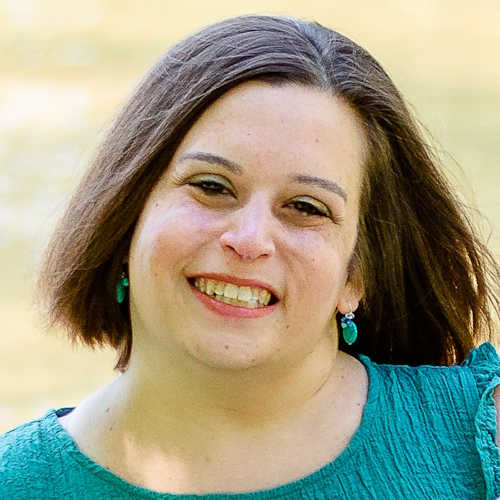
Once she was more awake, Tiffany says she pushed back. She told one oncologist to leave her room and insisted on getting a second opinion at an NCI-designated cancer center. There, a thoracic oncologist fast-tracked her to neurosurgery, tumor board review, and a craniotomy. A bronchoscopy confirmed EGFR-positive lung cancer. Instead of the port and intravenous chemotherapy she had braced for, she was offered targeted therapy pills, first erlotinib (Tarceva) and later osimertinib (Tagrisso), guided by biomarker testing and a T790M resistance mutation.
Today, Tiffany has been on osimertinib since 2019 and is living with no evidence of disease (NED). She speaks openly about the invisible impact of stage 4 EGFR-positive lung cancer, the importance of comprehensive biomarker testing, and why no one should hesitate to seek another opinion. Now a full-time lung cancer advocate, she attends conferences, mentors others, and repeats the mantra that carried her through the darkest days: Always have hope.
Watch Tiffany’s video or read the edited transcript of her interview to find out more about her experience:
- Comprehensive biomarker testing can change the entire treatment plan in stage 4 EGFR-positive lung cancer, opening the door to targeted therapies, like erlotinib and osimertinib, instead of only traditional chemotherapy.
- A second opinion at a high-volume, NCI-designated cancer center led to faster surgery, clearer answers, and ultimately the care that aligned with Tiffany’s needs and values.
- Patients are not to be blamed when treatments stop working. It’s the disease and the limits of treatment, not personal failure.
- Tiffany’s transformation from overwhelmed patient to full-time lung cancer advocate shows how finding your voice and your people can give deep purpose to life after a life-altering diagnosis.
Tiffany’s Diagnosis Facts
- Name: Tiffany F.
- Age at Diagnosis:
- 36
- Diagnosis:
- Non-Small Cell Lung Cancer (NSCLC)
- Staging:
- Stage 4 (Metastatic)
- Biomarker:
- EGFR
- Mutation:
- T790M
- Symptoms:
- Immense fatigue
- Over 70 pounds of unintentional weight loss
- Migraines and ocular migraine
- Vision changes
- Seizure
- Treatments:
- Surgery: craniotomy
- Radiation therapy: CyberKnife
- Targeted therapy: erlotinib, osimertinib


This is not medical advice. Please consult with your healthcare provider to make informed treatment decisions.
- Tiffany’s Diagnosis Facts
- I’m Tiffany
- My early symptoms and missed red flags of lung cancer
- Having a seizure at home and calling 911
- Hearing that I needed to get my affairs in order
- Reaching an NCI-designated cancer center and fast-tracking brain surgery
- Bronchoscopy, biomarker testing, and discovery of EGFR
- Craniotomy, CyberKnife, erlotinib, and my first progression
- Living with no evidence of disease (NED) on osimertinib
- Becoming a full-time lung cancer advocate
- Hear from people living with stage 4 EGFR-positive lung cancer
I’m Tiffany
I currently live in Pennsylvania. I was diagnosed with stage 4 EGFR-positive lung cancer in July 2017.
My early symptoms and missed red flags of lung cancer
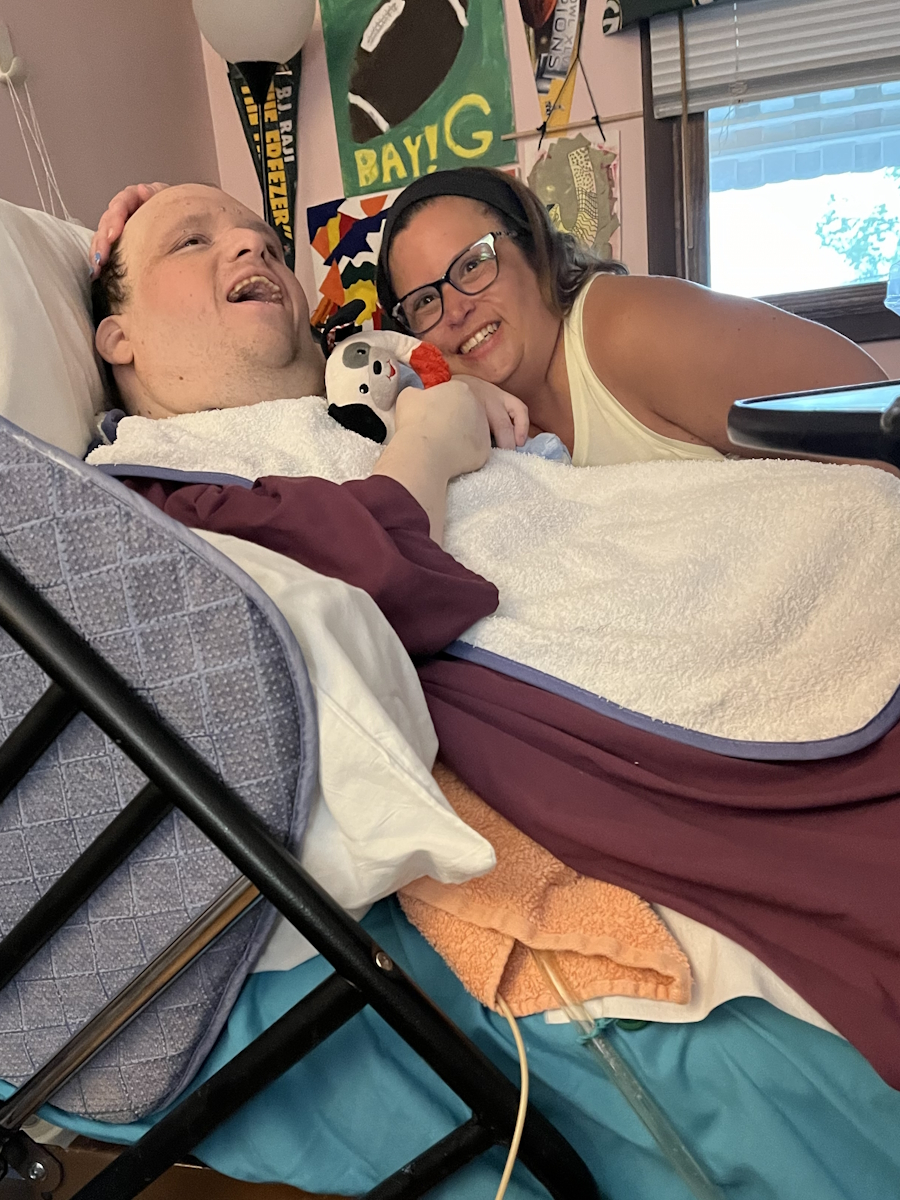
I didn’t know that the symptoms I had were of lung cancer. One of the first symptoms was immense fatigue. I’m a registered nurse. I have a brother with multiple medical issues. The year prior, he had a very simple procedure done. Unfortunately, he had a lot of respiratory complications, so he ended up with a tracheostomy and a feeding tube.
My family lives a little over two hours away from me, so he ended up, in the beginning, being in a nursing home. He was in and out of the hospital quite a bit, and I was still working full time. At first, the fatigue didn’t startle me because I was constantly running around and taking care of him, with my parents living with me while I worked a full-time job.
I lost a lot of weight without trying. I lost over 70 pounds. Again, I didn’t think of it because I was running back and forth, and I wasn’t eating right. Some days I didn’t eat at all because my brother wasn’t doing well and doctors were coming in and out.
I have migraines, and they have increased. But I was under stress, so it’s not unusual for that to happen. I did have an ocular migraine back in December 2016, but I still didn’t think it was anything. Over time, I had some changes in my vision. Unfortunately, I didn’t pursue that because I didn’t have time to go to the doctor. I wasn’t taking care of myself. But I still never thought that stage 4 lung cancer at 36 was a possibility.
When I was in nursing school, during my oncology rotation, it wasn’t what I was taught. Young, healthy women didn’t get lung cancer. Young, healthy men did not get lung cancer. There’s an increase in young, healthy women getting lung cancer. There’s research being done, but they’re not 100% sure why yet. It wasn’t the field I was working in, so I didn’t know about that. I knew nothing about biomarkers.
Caregiver mindset and putting everyone else first
As a nurse, I always put others before myself. But hindsight’s 20/20. Do I wish that when I first noticed the weight loss happening so quickly, I had stopped and thought I needed to call my family doctor and make an appointment? Yes.
But my brother was so fragile. Things weren’t going well for him, and I was trying to take care of him to the best of my ability. A lot of my issues went by the wayside.
Having a seizure at home and calling 911
As I was getting ready for work, I started to get a twitch in my eye and my arm. Originally, I was going to take myself to the emergency room, but I could feel that I was going to lose consciousness. I called 911, unlocked my door, grabbed my migraine medication, and put it in my purse because I knew the paramedics would search. Then I called my boss to say that I wasn’t feeling well.
I thought I was going to lie down for a little bit. I thought I was having a stroke, but I was having a seizure from the mass in my brain.
I was terrified. I knew I was going to lose consciousness, but I wasn’t sure what was going to happen afterward. I always went to the nursing home in the morning because my mom stayed with my brother overnight. I would get her coffee, bring her lunch, and visit my brother before I go to work.
I never made it there that morning. Thinking back, my brother has an intellectual disability. I would always tell him if I wasn’t going to be there for some reason, which was very rare. Since I couldn’t tell him that, he didn’t know what was going on. He would wait, always look by the door, and hear my shoes. If somebody was talking to me, he’d hear my voice and get all excited because he knew I was there. Unfortunately, that didn’t happen for him that morning.
What they found in the emergency room
They called a stroke alert that morning because that’s what they thought had happened. When they brought me in for a CT scan, they immediately found the 2-centimeter mass in my brain and all of the edema around it.
They continued to scan from there. There was a 3-centimeter mass in my lung, on my mediastinum. Lymph nodes were enlarged, and they found multiple other spots in my breasts, ovaries, and liver. Whatever they found could not be ruled out as a neoplasm.
Hearing that I needed to get my affairs in order
I don’t remember anything because I was unresponsive. They gave me lorazepam for the seizure, but after that, I was no longer able to protect my airway, so they had to intubate me. I was in and out of it that whole day. They extubated me later on when I was in the neuro ICU.
I remember bits and pieces; friends have helped fill in some of the blanks, and I’ve read my chart. But it would be about four to five days before I had any knowledge of what was going on. That was the first hospital I was at, but they didn’t accept my medical insurance, so they transferred me to a different medical center the following day.
The only thing that I could remember was to get my affairs in order because things aren’t good and that I had six months to a year and a half at best with treatment.
“There’s no way it’s lung cancer”
I told them they were wrong. I said, “There’s no way.” I said, “I’m 36 and I’m healthy.” The week before everything happened, I thought I had cancer, but I thought I had lymphoma, which is what runs in my family.
The very first oncology patient whom I took care of during my oncology rotation had stage 4 lung cancer. That wasn’t the demographic that I saw myself in.
Rejecting grim prognoses and demanding better care
The first neurosurgeon in the first hospital that they consulted for me was the same hospital where my brother had his surgery. I remember this particular neurosurgeon who only saw the intellectual disability of my brother, so I threw him out of the room. I’m still not fully with it at this point.
There were two neurosurgeons. One of them was my brother’s surgeon, and the other was an attending within the neuro ICU who could not have been any nicer to me. I threw two doctors out of my room, each in a different hospital. It’s the nurse curse in me.
At the second hospital, the oncologist that I was assigned to would spend 20 to 30 minutes by my bedside, trying to hold my hand, and giving me grim statistics. He told me that I wasn’t going to make it and to get my affairs in order. I was alert at this point, and I had had enough. I told him to get out of my room: “I have s*** to do.” When he left, I thought, “Wow, I’m brazen. This is not the field that I work in. I know nothing about the world of oncology, and I threw the doctor out of my room. This should be fun.”
He came back and referred me to an NCI-designated cancer center that was about two hours away from me. That was the best thing that he ever did for me, because if it wasn’t for them, I wouldn’t be here today.
Knowing the care that I should receive and getting another opinion helped me. Getting to a center where my type of lung cancer is treated and where there are great success rates was critical. I had heard great things about where I was going to go, and I knew other people who had been treated there and done well.
Part of it is my nursing background, I would say. I’m a strong, independent woman. I didn’t settle with my brother when things weren’t good. I always pushed the envelope and always advocated for him.
Reaching an NCI-designated cancer center and fast-tracking brain surgery
The thoracic oncologist, who’s still my doctor, couldn’t believe that I was walking around with a mass in my brain and no one had taken it out. He immediately called over to their sister hospital, where neurosurgery is located.
Right away, I was brought over and met with my neurosurgeon. He explained the tumor board to me: “We can wait a week. It’ll be okay, but here are things to watch for.” The following week, I went back to his office and had a craniotomy the following morning.
What is a tumor board?
The best way I can explain a tumor board is as a group of smart people in one room or on a Zoom screen, talking about the patient without names or identifiers. They discuss the case and what everyone thinks is in that patient’s best interest regarding treatment.
Facing a craniotomy and refusing to go down without a fight
I was definitely scared. I make all my brother’s medical decisions. However, I wasn’t going down without a fight. I relayed that to my team. I said, “We’re going to do everything we can.” One thing that everybody kept saying, even at the prior hospitals that had given me the death sentence, was that I was young and healthy. They kept stressing that.
When I had the craniotomy, I came home the next day. I don’t necessarily recommend that, but I was fine. My parents, of course, were living with me at that point, so I knew I wouldn’t be alone.
I remember saying to the attending doctor, the neuro ICU team, and the residents, “I’m not neuro ICU-level care.” I kept doing laps. I said to the nurse, “I know that you have to walk with me because of protocol. Let’s do one lap and then you need to go and chart. If I’m not back within a decent amount of time, then look for me.”
Walking laps around the ICU and insisting on going home
My best friend was with me in the morning because she was there for my surgery as well. She had done a couple of laps with me, but I was going around the neuro ICU while pushing my IV pole.
After surgery, they want to make sure that you can eat and keep it down, you can void, which in layman’s terms is pee, and you’re coherent. The only issue I had was that my right arm was completely numb. I had no feeling. They said to me, “You need to put it up on a pillow.” I told them I could do that at home.
I didn’t want to get an infection. I had the back of my skull open, patients were intubated as I was going around, and there was an infection control cart. I told them that and that I wanted to go home. They made calls and my surgeon said, “All right, she can go home,” so that’s what I did.
Bronchoscopy, biomarker testing, and discovery of EGFR
In the second hospital, they had sent me for a bronchoscopy. This is where one of the things that I’m passionate about comes in: biomarker testing. No one explained to me that they were going to test my tumor for this when they did the bronchoscopy. Everybody kept telling me to get my affairs in order. No one was giving me hope until I landed at the NCI-designated cancer center. At that point, I knew that they had done more in-depth testing. I also had a second opinion from a local oncologist.
I didn’t believe it when they said that I was going to take a pill. Not for stage 4 lung cancer, I thought. I had already told myself I would need a port. I even picked out a tattoo I wanted to go over where the port would be. I was surprised that there’s now targeted therapy for lung cancer where you can just take a pill. That was never the case when I was in nursing school.
Whiplash of expecting chemo but starting targeted therapy instead
I’ll be honest with you: I thought, “Okay, if you say so,” but I wasn’t buying into it. Then, on my first scans, I did have a partial response to it, so I thought, “All right, this is working.” Of course, I didn’t want to have any cancer left in my body, which was not the case, but I was definitely skeptical at first.
Learning about EGFR and the pitfalls of Doctor Google
At that point, I knew nothing. I consulted Doctor Google, which was a very bad idea. Now it would be ChatGPT, which is a little better, but not necessarily.
I was reading research study after research study. The statistics, although they weren’t great when I was diagnosed, were still grim. Cancer is smart, and it eventually outsmarts these medications, so there was that part too.
Craniotomy, CyberKnife, erlotinib, and my first progression
A month after the craniotomy, I had CyberKnife therapy to the brain cavity. It’s delivered as radiation, but it directly targets the area where the tumor was. After that, I was able to start erlotinib, my first-line targeted therapy.
I didn’t have any symptoms when I had my progression. Actually, I saw the report before any of my doctors did. I was waiting to get the disc copied to take to my doctor when I saw the yellow on my PET scan, which is the SUV or standardized uptake value. I didn’t know if that meant cancer or if things were still responding. Unfortunately, that wasn’t the case.
After that, I started on my next line of treatment. I had an endobronchial ultrasound (EBUS) done. They found the T790M mutation, which normally develops with erlotinib, so I started osimertinib.
Long-term osimertinib treatment and living with stage 4 lung cancer
I’ve been on osimertinib since January 2019. It’s surreal, still, knowing that I can take a pill every day. It doesn’t interfere with anything. I take my medicine at the same time every day and nobody knows, which is great.
I was at an event one time and somebody asked, “How did you get connected?” I said, “I’m a survivor.” They looked at me and said, “How old are you?” I said, “I’m 45 now, but I was 36.” They couldn’t get over it. We don’t always look sick, but remember that we do have side effects and we’re not the same as we were before. When you see me, you wouldn’t know that I’m walking around with stage 4 lung cancer.
Hope from research, biomarkers, and advances in lung cancer treatment
I always say, “Always have hope.” That’s my mantra. With what I’ve been through, I wasn’t given hope until I went to the center that I’m at now. There’s so much on the horizon. Osimertinib wasn’t even FDA-approved when I was diagnosed. You had to have the T790M resistance before you were eligible to take it, and now it’s a first-line treatment.
Since then, they’ve even been doing osimertinib and chemotherapy together. So much has changed. There are other lines of treatment. Being within this space and seeing what has developed is exciting.
Living with no evidence of disease (NED) on osimertinib
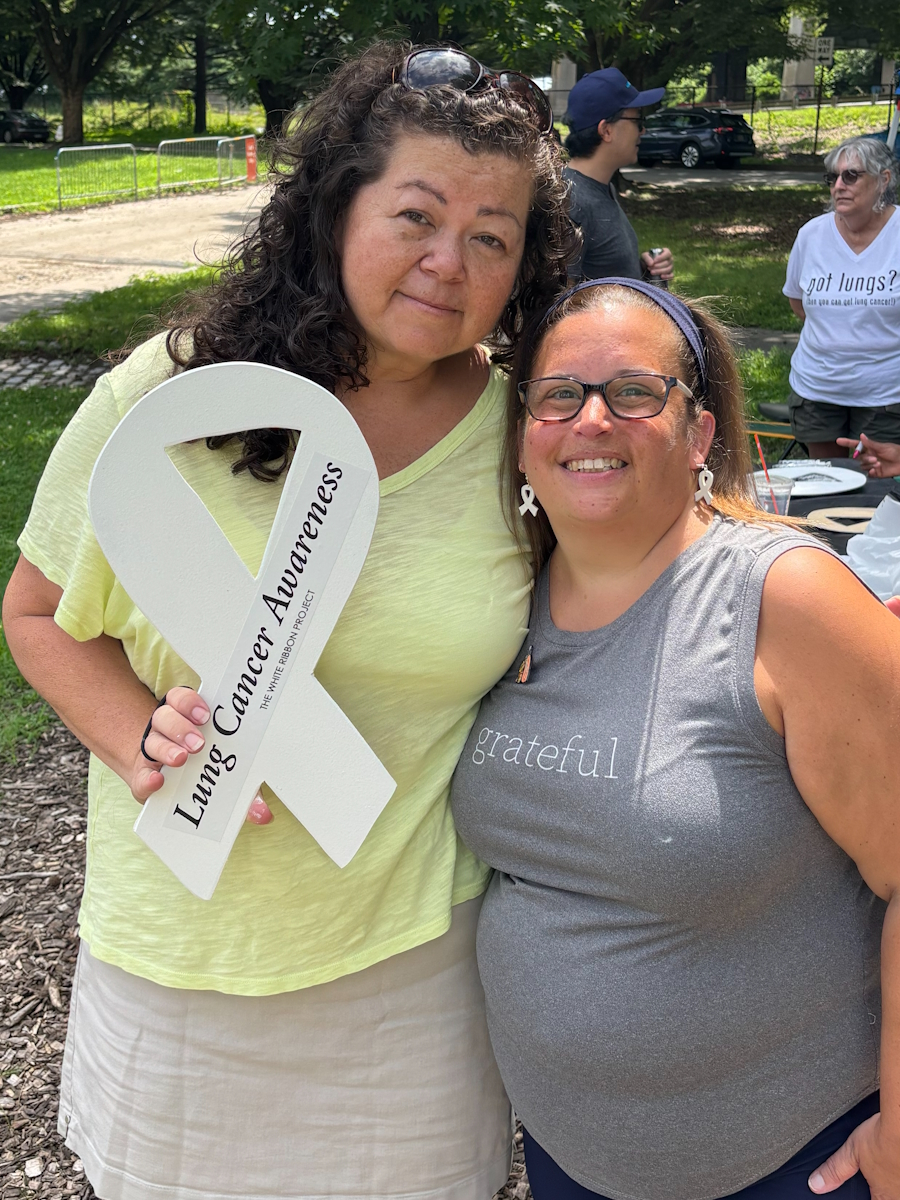
The event I attended was a golf tournament that helped raise money for lung cancer patients. They directly give money to help with groceries and transportation. They also conduct research through the cancer centers they’re involved with and with the physicians.
They asked me to speak. Part of my team was there, and when I got up and went through each of the treatments and when I had my progression, I was able to call them out and say, “You did this, and you did that.” It’ll be five years of no evidence of disease by July 2026 and I don’t think I’ve processed it yet. I’m still a little in shock.
I’m coming up to nine years since my original diagnosis. I was worried that I was going to see a year, because when I had my progression, it was coming up to the year-and-a-half that the original two hospitals had given me. It was the holidays, so I was worried it might be my last Christmas. Of course, I was worried about my brother. What’s going to happen? He lives with my parents, and they have nurses, but I take care of a lot of the other stuff. How would he react?
Slowing down, rest, and redefining how to live
I was constantly on the go. I didn’t stop to enjoy things. In the morning, I have my coffee, shower, get ready for work, and keep going, going, going. I’ve learned that it’s not the way I want to live my life anymore.
When friends visit or when I go someplace, I like to sit and relax. I like to make a plan for the day to set aside time for myself to decompress. I never did that before.
Becoming a full-time lung cancer advocate
Not long after my diagnosis, I had two mentors. Unfortunately, they’ve both since run out of time, but it was such a help to connect with other people my age, with my diagnosis, and on the treatment that I was on, to show me that there was hope.
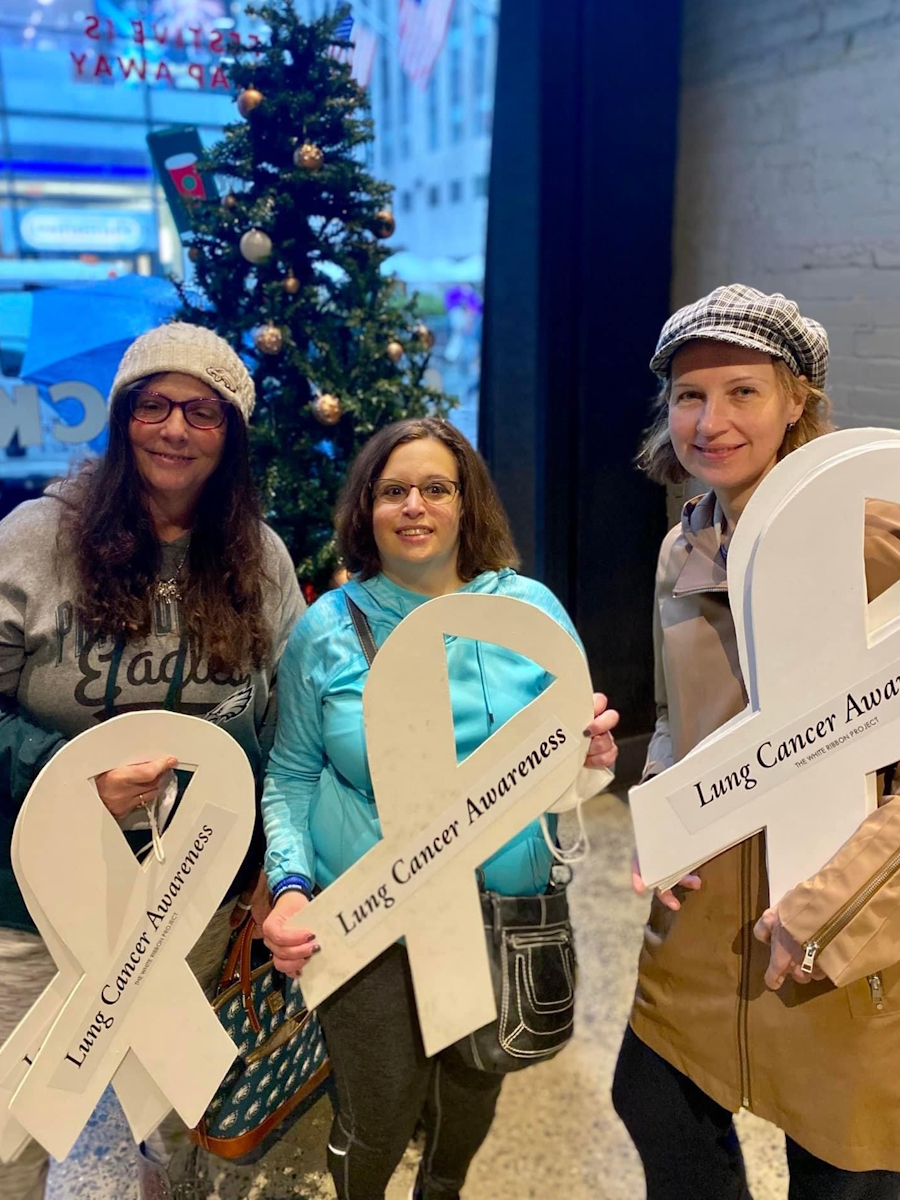
Now I’m a full-time lung cancer advocate. I definitely use my nursing background. I attend as many conferences as I possibly can and learn as much as I can. It gives me purpose.
My key message: Second opinions and an exciting time in lung cancer
Don’t be afraid to get another opinion. If any member of your team says there’s no need to get an opinion and you should do what they say, that’s not who you want on your team. My doctors have always been great about that.
Even when I was going to have my lung radiated, I was hoping to have the right upper lobe removed. When they took me again to the tumor board, the doctor said he didn’t feel that it was in my best interest. Everybody felt that radiation would be better. It was during the COVID pandemic.
When I met with the radiation oncologist, she even said to me, “I’ll put a surgery consult in.” I said, “No, I’m happy with what you said.” When I’m at conferences, I hear other providers say, “It’s an exciting time to be in lung cancer.” Not what we want to hear or how you want to put it in perspective, but it is. They’re absolutely right.
It’s amazing what I’ve seen in almost nine years, including friends who are further along in this journey and what they’ve been able to share. Imagine what’s to come.
Pride, grief, and allowing myself hard days
I’m proud of myself because this isn’t easy to go through. I’m not going to lie: There are still days when I have to pull the blankets over my head because I can’t deal with or handle it. It gets heavy at times.
I’ve lost a lot of friends within the community, but I always get back up the next day and get back at it. It’s okay. Sometimes you need to sit with your emotions and take that time for yourself.
Finding community and “your people” in lung cancer
Find your people. There is a community out there. It’s amazing how far the lung cancer community has come. Some people don’t get involved in advocacy at all, and that’s completely okay. Do what makes you feel comfortable. We’re all different. But there is a community out there compared to what there used to be.
This interview has been edited for clarity and length. The views and opinions expressed in this interview do not necessarily reflect those of The Patient Story. This content does not replace professional medical advice.
Inspired by Tiffany’s story?
Share your story, too!
Hear from people living with stage 4 EGFR-positive lung cancer
Real experiences with diagnosis, treatment choices, side effects, and life beyond metastatic lung cancer — in their own words.

Leave a Reply