
Leah’s Mole Looked Like a Skin Tag, But It Was Stage 3 Melanoma
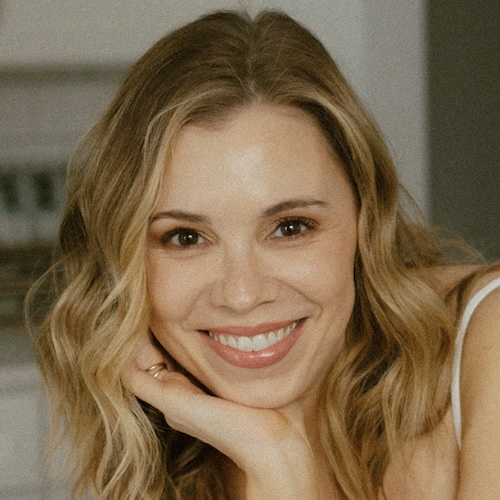
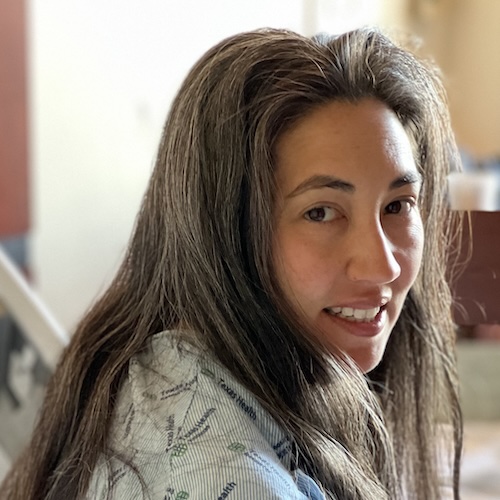
Leah was 25 and a new mom who had just moved to Canada for her husband’s job, when her mother suggested she get a skin check. A dermatology physician assistant removed a dark, fast-changing spot that had appeared near her bra strap, telling her it probably wasn’t anything to worry about. A week later, the phone rang: The biopsy showed stage 3 melanoma, a kind of skin cancer. Her case needed to move to the University of Michigan immediately because of how deep it was.
Interviewed by: Taylor Scheib
Edited by: Chris Sanchez
She was told the cancer had reached a sentinel lymph node under her arm, which is what put her at stage 3. Leah had surgery about a month after her diagnosis to remove the area around her scar and the affected node, and weight restrictions afterward meant she could not lift her one-year-old son for weeks. Because the cancer had been caught and acted on so quickly with surgery, her medical team gave her a choice: remove the rest of the lymph nodes under her arm as a precaution, or pursue immunotherapy. She chose to do neither, and her cancer has not returned in eight years.
The diagnosis was more complicated than she thought, though. Leah and her husband had just decided to try for a second child, and doctors told her she would need to wait five years before having another baby, since melanoma can affect a pregnancy and her risk of recurrence was highest in the first two years. A hospital tumor board, consulted at her request, ultimately agreed she needed to wait. Two and a half years later, with clear scans and a cautious green light from her care team, Leah and her husband decided they were willing to take the risk. Her daughter was born healthy, and testing confirmed no melanoma in the placenta.
Today, eight years out from her diagnosis, Leah has graduated from frequent scans and turned her experience into advocacy work, including an Instagram page connecting young and newly diagnosed melanoma patients. She also works with the University of Michigan as a patient advocate and advisor, and credits that work with helping her heal from a diagnosis that upended the stay-at-home life she never expected to live.
Find out more about Leah’s melanoma story by watching her video and reading the edited transcript of her interview.
- When Leah’s doctors found a small amount of cancer in her sentinel lymph node, they didn’t just hand her a treatment plan. They gave her a real assessment of the surgery and a choice between removing the rest of her lymph nodes or pursuing immunotherapy, both as precautionary steps, and trusted her to help decide. That partnership is rarer than it should be, and it’s part of why she still credits her care team eight years later.
- Finishing active treatment didn’t mean the fear of melanoma ended. A stubborn lung infection years later brought back the same question doctors and Leah both had to sit with: Is this an infection, or is the cancer back? This sparked anxiety that Leah has experienced over the years.
- A diagnosis doesn’t look a certain way, and neither does a patient. Leah was active and energetic, chasing a toddler through the same months she was being treated for cancer. It’s a reminder that illness rarely matches the picture people expect.
- Leah spent her first few years after diagnosis deliberately avoiding information, and her more recent years seeking it out and sharing it with others. Both were the right call for her at the time. She just needed different things from different seasons of healing.
- Being told she’d have to wait five years to have another baby was nearly as hard for her to hear as the cancer diagnosis itself. She and her husband ultimately decided together with their medical team, weighing the real risk against the family they still wanted to build.
Leah’s Diagnosis Facts
- Name: Leah K.
- Age at Diagnosis:
- 25
- Diagnosis:
- Melanoma
- Staging:
- Stage 3
- Symptom:
- Appearance of a dark, bleeding, fast-changing mole on the back
- Treatment:
- Surgery: wide local excision
This is not medical advice. Please consult with your healthcare provider to make informed treatment decisions.
- Leah’s Diagnosis Facts
- Diagnosed with stage 3 melanoma at 25, one year into motherhood
- Understanding that melanoma is cancer and deciding what to believe
- Leaning on family, books, and a social worker at the University of Michigan
- Undergoing surgery and not being able to lift my son afterward
- Being part of the decision: Lymph node removal or immunotherapy
- Eight years of scans, skin checks, and the scares in between
- Turning pain into purpose: Why I started sharing my melanoma story on Instagram
- What cancer taught me: “You can only plan so much”
- Hearing I’d have to wait five years to have another baby
- Eight years later: Full circle and not taking a single day for granted
- Hear from people living with melanoma
Diagnosed with stage 3 melanoma at 25, one year into motherhood
Hi, my name is Leah. I was diagnosed with stage 3 melanoma in 2018.
Life was different than it looks now, that’s for sure. My husband and I had our first baby about a year after we got married. About a week after our son was born, my husband’s job offered him an opportunity to go to Canada for three years; we live in Michigan. I had taken my three months off to be home with our son. Literally, by the time I needed to go back to work, we needed to decide if we were moving to Canada or not. We ended up making the move to Canada so that my husband had more promotional opportunities in the future.
Because of that, I made the difficult decision to quit my job and stay home. I had a thriving career. I was climbing the corporate ladder. I never expected to be a stay-at-home mom, never saw that in my future. Having all of that happen, having it happen so quickly, needing to decide in a week was quite a bit, especially when you’re a new mom and you’re just trying to navigate that in itself. We moved to Canada four months after that.
The skin check my mom insisted on
Sometime shortly after my son was born, my mom had just said, “Hey, now that you’re a mom and you’re getting older, you should start getting a skin check. You can go where I go. Let’s just make the appointment.” We were in Canada at that point, but knowing it was only a couple of years that we were going to be there, we kept all of our doctors in Michigan and would try and plan those doctor’s appointments for when we were home for other things.
I had my first ever skin check when my son was about a year old. I didn’t think much of it. It was just my mom telling me to do this. I don’t feel either way strongly, so I’m just going to listen to my mom and get it done.
A spot under my bra strap that wouldn’t stop bleeding
The physician’s assistant (her name is Chelsea, I am friends with her to this day) noticed a spot right here on my shoulder and said, “We’re going to take it off. We’re going to biopsy it. I’m not that worried about it, but let’s just take it off.” Knowing nothing about skin cancer or melanoma, I left that appointment and did not think twice about it. She told me not to worry, so I was not going to worry. At the end of that week, we came back to Canada. We went back to doing all the things, and it was not on my radar at all.
The only reason that I noticed it is because it popped up about a month before this dermatology appointment, and it was under my bra strap. It was in a spot that was irritated and would get rubbed, and it would bleed occasionally because my bra strap would cut it off. I noticed it, but it was only because of that location, and it looked more like a skin tag than it did a mole. But it popped up and it got dark very, very quickly.
The phone call: “It’s melanoma, and we’re concerned about how deep it is”
It was a week later. I remember it being a Friday, and the doctor called and just came right out with it and said, “The biopsy came back from your mole. It’s melanoma. We’re actually concerned about how deep it is. And we need to transfer your case over to the University of Michigan immediately.” I think I blacked out. I don’t think my brain was processing much of anything. She was super sweet about it. She said, “I know this is a lot to take in. I’ll be here for another hour or so, so if you have questions, feel free to call the front office back and they will get you connected to me.”
I remember it like it was yesterday. Thankfully, my son was down for a nap. I called my husband right away, and he came home from work, and then I called my sister-in-law. Then I tried to figure out questions. There’s not much other than them being concerned about how deep it is; that’s all that they know, so there’s really not much that anybody can do in that moment. But I do remember calling her back. I don’t know what I asked, but I do remember calling her back and having another conversation with her once I had a cry and came to terms with, “Oh, shoot, this is happening.”
That was the longest weekend ever. Thankfully, U of M was on top of it. They called me on Tuesday, because I remember Monday checking my phone obsessively, “Please call me, please call me, please call me.” I had an appointment for the following week and was already in to see them. They moved quickly, which is exactly what I needed at that time.
Not knowing how far it had spread
I was very much like, “Let’s just take the cancer out right now. Let’s just do it right now. I will come in after hours. We can do this back door. Whatever we need to do. Just get it out.”
Cancer is serious regardless, but not knowing how serious or where the cancer potentially had traveled? It was totally up in the air.
Understanding that melanoma is cancer and deciding what to believe
It’s interesting because the mom of my sister-in-law, the one who I called shortly after, had passed away from melanoma. I knew that it was serious or that it could be. I didn’t know anything about it, though.
Melanoma gets grouped into skin cancer. It’s a weird one to understand until you’re forced to understand it, because you hear so many misconceptions about, “Oh, it’s just a mole that you had to get cut off. I’ve had to get so many moles cut off. It’s not a big deal.” There was this weird confusion and panic around. “I’ve heard that you just get the mole off and everything’s okay.” But my sister-in-law’s mom passed away before I was a part of my husband’s family, so I didn’t see any of that. I just knew that that was a part of her story.
There was this confusion of, “It can’t be that serious because everybody just talks about how it’s a mole that just gets cut off, but I know somebody who died from it. So what now? I’m confused.” And then also, I had to wonder if I was going to die from this. I have a one-year-old. Is this it for me?
As you can imagine, the roller coaster up and down every two minutes is a real thing.
Looking healthy while cancer was growing inside me
I was pretty active then. Exercise-wise, I’ve always tried to incorporate movement into my life, so I was doing all the things. I was chasing around my one-year-old. We were exploring our new city. We were doing all the things.
That’s another big misconception when it comes to just cancer in general. You see these movies where the cancer patient can’t get out of bed and looks very sick. What I have learned in the past eight years is that there could be somebody running down the sidewalk who has cancer. There’s not one single look. I had so many people tell me, “Oh, you look so good for having cancer.” What am I supposed to look like? It’s weird, right? I think you’re complimenting me, but also, were you expecting that I was going to look sick?
It’s hard to wrap your brain around it, especially being diagnosed at 25. I definitely went through a period where I felt like I was the only person in the world who was a brand-new mom and diagnosed young with cancer, which is obviously not true. But I felt like I was supposed to be navigating mom life in this new city and this stay-at-home mom life, and I had to navigate cancer on top of this. I didn’t think I was going to have to deal with this until I was a grandparent or older. The combination of all of that was very difficult.
The isolation of a new diagnosis at 25 with a one-year-old at home
It’s so tough. In 2018, social media was different than it is now. Facebook was around, Instagram was around, but it’s not how it is today, especially Instagram. I shared on my Facebook a few times, more like a PSA: Get your skin checked, because it turns out that skin cancer and melanoma are actually very serious.
I went to some online forums just from Googling. Everybody was talking about how they were going to die or how their cancer came back and it came back worse. It was so negative that I could not participate, because it was making it so much worse for me.
I truly spent the first two to three years from my initial diagnosis being in my ignorance-is-bliss era. I knew what the doctors were telling me. I knew what I needed to know from my medical team, and that’s it. I tried to stay off of Google. I tried to stay off of anything additional. It was extremely overwhelming for me and I didn’t need to know. I didn’t want to know unless I needed to know.
Then around the five-year mark, I decided that I needed to turn into my knowledge-is-power era. I wanted to learn more about all the things when it comes to melanoma. I created my Instagram page to connect with other people who were also young, diagnosed with melanoma, or honestly, any cancer, because I think that there’s still a lot to be shared between two young people who have had cancer, regardless of whether it’s the same kind or not. But I created that Instagram page so that I could connect with people outside of my community and outside of Michigan, and be a resource for people that I did not have when I was diagnosed.
Leaning on family, books, and a social worker at the University of Michigan
Any chance I get to share my story, I always make sure to give my mom a shout-out. I always make sure to give her the credit. I just took it day by day. I started focusing on what was making me feel good in that moment. We started doing some more clean eating. My patient advocacy actually started with Imerman Angels, because I could do it virtually. And then I started doing some things after a few years with the University of Michigan as a patient advocate and patient advisor.
I needed to do things for other people that felt good. I’ve always been like a helper, so I focused on what I could do to help other people, because that’s what was making me feel good during that time. I love to read books, so I read books constantly; I still do that today. That’s my way to tune out the world and focus on somebody else’s crazy world.
I started talking to a social worker at U of M about a year after my diagnosis. There was the PA and the oncologist, and the oncologist was more of like an in-and-out, “How’s your scare looking?” And the PA was the one that was really there to work through all the things with us. She sat me down and said, “I think you need to talk to somebody. You have so much on your plate. Would you like me to refer you to somebody?” U of M has a complimentary service for their oncology patients where you can talk to a social worker. It’s phenomenal. I started doing that.
Through that, I started journaling. I would write down thoughts just so that I could share them with my social worker at our next appointment. I did whatever brought me joy or whatever I felt like I needed in that moment. Some days, it was the same thing; other days, I switched it up. The positive side of having a one-year-old and being diagnosed with cancer is that the kid keeps you going full steam ahead, regardless of how you’re feeling, so that was a blessing. I couldn’t just sit there and feel sorry for myself. He needed me to keep moving with him.
A full day of testing at the University of Michigan
I had my first appointment about a week and a half after the dermatologist called me to tell me the diagnosis. Looking back on that, it’s impressive how quickly they got me in. For my first appointment, my husband and my parents both went with me, and it was a full day. I can’t even tell you the amount of tests that I had or what the names were. Like finding out about the cancer, you black out a little, or you want to remove it from your brain. I remember being there, and I remember doing a bunch of tests and having a bunch of doctor’s appointments, but the specifics of that, I do not know.
Thankfully, we were able to do it all in the same day, because they knew that we were traveling. It was from sun up to sun down, but we got all the things done. Then, based on all of those appointments and tests, I had surgery scheduled for a month after that. At the end of May 2018, I was having surgery to remove the surrounding area of where my scar was, and then my sentinel node underneath my armpit, as that tested positive for cancer as well.
Undergoing surgery and not being able to lift my son afterward
I was nervous beforehand. I had family who came and stayed in the lobby, which was super supportive. I remember waking up and all I wanted was my husband, and the nurse kept saying, “Can I get you anything? Can I get you water?” I was like, “Nope, just my husband, just my husband.” It was an outpatient surgery, which was great.
The surgery itself was fine; it is what it is. But being that it was in the spot that it was, the scar was underneath my armpit and then on my chest and shoulder area, I had weight restrictions, so I couldn’t pick up my son for weeks. Coming home from the hospital that first night, him running up to me and being excited to see me, and me being sad that I couldn’t lift him, overwhelmed with the emotion of the day, and happy to see him and all that was very, very difficult, especially because I was staying home then. When your primary stay-at-home person can’t do something as simple as lifting their toddler, it’s hard. It was hard.
Being part of the decision: Lymph node removal or immunotherapy
It was after the surgery. I got in so quickly for surgery that they felt like, we got in quickly; we removed the sentinel node underneath your armpit, which had a small percentage of cancer; it had not filled the whole lymph node. Between that and acting so quickly, they felt like that they had gotten it all.
I was given the option to either have all of my lymph nodes underneath my armpit removed as a precautionary thing and/or to do immunotherapy. This was in 2018, so medicine and science weren’t necessarily as advanced as they are now. At that time, they had given me the option that I could do either, but they didn’t feel that the pros necessarily outweighed the cons, being that they felt pretty strongly that they got it all because we were able to act so quickly.
I want to give a shout-out to them for even giving me the option, because talking to others, that’s not always a given. It’s more of, “Here’s what you’re going to do, and don’t challenge me as a provider.” Looking back, I’m so thankful that they weren’t just like, “We’re going to do all these extra things to you.” And my cancer has not come back in eight years, so they were on to something.
I would say their having included me in the conversation and decision is the most important thing that a health system can do for a patient. There are obviously situations where there’s not an option, and extra treatment needs to happen because of the stage, severity, or subtype, whatever it is. But in the moment, having this be my first full-blown experience with the health system… Of course, I had my yearly dentist appointment, my family doctor appointment, and that sort of thing, but this was my first time having so much health stuff done at once. I don’t think I realized that it can be very rare for the team to include you like that, and to let you be a part of making the decision. At the time, while I appreciated it, I remember feeling a little bit like, “Oh gosh, you’re making me make this decision? You’re the healthcare provider. You know this better than I do. You make the decision.”
But ultimately, I was happy that we had that choice. And then now, fast forward, and having been in that knowledge-is-power era, you understand how many side effects can come up with having all your lymph nodes in an area removed, or doing immunotherapy. Those can potentially cause huge side effects to your body that are totally unrelated to the cancer.
I appreciate them thinking of me as a human being and taking that into account, instead of me being another to-do list that they need to check off: “Let’s get through this appointment, Leah. Okay, yep, we’re done. We talked to her. We’re out of here.” Because they’re not the ones that have to live in my body every day. For them it’s like, “Oh, let’s do X, Y, and Z.” But they actually took the time to think about, “Okay, she’s young. She’s a mom with young kids. She wants to expand her family. There are a lot of moving parts here. She’s not just another body.”
Eight years of scans, skin checks, and the scares in between
For the first three years, I did skin checks with my dermatologist every three months, a CT scan at U of M every four months, and an MRI every year. Around the three-year mark, that got pushed back to skin checks every six months, a CT scan every six months, and an MRI every other year. All of that to say, we ended up having a baby during that time, which is a whole separate conversation, and I had quite a few scares come up.
Originally, when you hit the five-year mark, you’re supposed to “graduate” to doing fewer scans and fewer skin checks. I didn’t actually graduate until 2025 when I hit my seven-year mark. I just had my eight-year mark checkup, the first time that I went a whole year without having scans with U of M.
The health scares were deeper. They were internal. One of them was a lung infection that, at first, was thought to be a sinus infection. My family doctor gave me a steroid and an antibiotic, and it would not clear up. There was stuff showing on the X-ray and on the CT, so there was a concern for a while that the cancer had gotten into my lungs. Thankfully, it did not, and it just ended up being a nasty infection that needed a different set of medication to be cleared up.
But it’s those types of examples that I feel like are a perfect way to explain the after-treatment side of things, because, no, it is not me being a hypochondriac. When an infection in your lungs comes up that does not clear, there is a possibility that that is cancer, that that is melanoma. That was a very real fear for the medical team and me. I don’t know how to put it into words, that something simple that should just be a cold or a sinus infection has now turned into potentially cancer coming back. And that’s something that cancer survivors have to deal with, especially with melanoma. It’s a sneaky cancer.
Living with scanxiety: “The short answer is: I don’t know”
When we got confirmation that there was definitely something on my chest CT that was an issue, we needed to wait. I was put on a heavy steroid, and we needed to wait to see: If this steroid clears it up, then we know it’s not cancer. If it goes away, it’s not cancer, but if it doesn’t go away, then we have to biopsy to see what that is that’s in there.
We had, after going through all of this, this two-week period where we just have to wait. It’s the worst. This is either just an infection that is being a stinker and is taking longer to clear up, or this is cancer. We’re talking about two completely different things here. How can we not figure this out?
I had my first-ever panic attack. My husband and I went away for the night for our anniversary, which was pre-planned, and I remember having a complete panic attack because I was so incredibly stressed and overwhelmed with the what-ifs.
I don’t know how I navigated it. I felt my feelings. I definitely talked to a social worker. I have a therapist that I talk to now. I don’t have a good answer. I just did the things. I tried to talk to people. I tried to talk to my husband. I love helping other people, so being able to help other people was a good way for me to help myself.
I wish that I had a book that I could write that was like, “This is what you do. These are the steps that you take to heal from this cancer diagnosis. This is how you get through it better on the other side.” I would love to solve the puzzle or to have a simple answer for anybody in a similar situation. But I don’t know. The short answer is: I don’t know.
Turning pain into purpose: Why I started sharing my melanoma story on Instagram
I think I needed to tell my story on Instagram. I think I needed it to heal.
The silver lining with melanoma is that, while there’s absolutely a genetic component, most of the time, we know that melanoma is caused by tanning beds and getting sunburns. We have a little bit more of a cause-and-effect there than we do with other cancers. Being that there is such a preventative component to melanoma, I felt like this allows me to help people and to try and help somebody before they get melanoma.
Wear your sunscreen. Wear your hats. Wear your UPF clothing. Take shade breaks. Being able to share that knowledge and education with people ultimately has really helped heal me.
Healing my stay-at-home-mom heart through advocacy
I think it has helped heal my stay-at-home mom heart. I had no desire ever to be a stay-at-home mom. While I don’t regret it, and I am so thankful that I had the opportunity, that it happened, and that it is exactly what we needed at that time, I struggled with it. I went to college, a business degree, and a minor in entrepreneurship, and I’m not using it. I like to use my brain, and I like to have adult conversation. And I struggled with that for a lot of years, on top of my cancer diagnosis.
The advocacy work that I do now, and the impact I’ve been able to make, whether it’s in my community or nationwide, has helped heal that part of me that was saying to myself, “You’re not doing anything with yourself. You’re not using the degree that you spent all this time and money on.” Cancer aside, I think it’s helped me with that.
But then, from a cancer perspective, I have connected with so many young people who have had a similar experience or have similar thoughts or feelings to me, and having that validation has healed me so much, knowing that I am not alone. You’re not the only 25-year-old in the whole world who has been diagnosed with cancer. You’re not the only young mom who is trying to navigate that cancer diagnosis while also wanting to make sure she’s around for her kids.
I’ve been able to do a lot of cool projects with researchers, scientists, physicians, and all these different people, and being able to be on that side of it geeks me out. My degree’s in business. I never thought medical was something that I cared about, but I’m learning that I find it fascinating. There are a lot of pieces in the medical world that I am diving into and learning all about. That goes back to the whole thing of me using my brain. I need that to keep myself going.
It’s the dream. It’s what I’ve always wanted. I’m using my business degree every single day with all of this advocacy work that I’m doing, and that lights me up. I went to college. I had things that I was interested in, but I didn’t have. Some people, from when they were little, knew that they wanted to be a police officer or a doctor. They have this calling of what they’ve always wanted to do; I never had that, and I struggled with that.
Now, seeing where my life is today, this is it. This is exactly where I’m supposed to be and what I’m supposed to be doing. That feeling of that full-circle moment of it all happening so that you could be exactly where you’re sitting today, it’s just the best feeling.
What cancer taught me: “You can only plan so much”
I’m very much a planner and an organizer. I’ve always been that way.
Cancer has taught me that you can only plan and organize so much, and that’s okay. That is okay.
Hearing I’d have to wait five years to have another baby
A fun fact about melanoma is (and by fun, I mean the opposite of fun) that melanoma is one of the few cancers that can get to the fetus during pregnancy. There is also some connection around the increase in hormones during pregnancy and melanoma cells. I obviously had no idea about any of this when I was first diagnosed. (EDITOR’S NOTE: The American Academy of Dermatology explains that melanoma is among the few cancers that can cross the placenta. However, even in cases where the mother has stage 4 or metastatic melanoma, the baby is rarely born with melanoma.)
When we went in for my first appointment, I ended up having to take a pregnancy test, because two months before my diagnosis, my husband and I had decided to start growing our family. I thought I might have been pregnant at that first-ever appointment. I was not, which ended up being a very good thing. But once it was confirmed that the cancer had gotten to my sentinel node, making it stage 3, we were told that we had to wait five years to have another baby, and that was if the cancer did not come back.
The likelihood of melanoma coming back in the first two years is over 50%, which is significantly high. That was probably as hard to hear as the actual cancer diagnosis itself. I’m an only child and I did not enjoy being an only child. I always said to anybody who would listen growing up that I was going to have at least seven children. Hearing that news was like, “Okay, so you’ve told me I have cancer. Now you’re telling me that I can’t expand my family.” Circling back to me being organized and a planner, that threw me completely off the edge. (EDITOR’S NOTE: The AIM at Melanoma Foundation says that even after surgery for stage 3 melanoma, there is an intermediate to high risk of local recurrence or distant metastasis. Intermediate risk is defined as 20% to 50% risk of recurrence, whereas high risk is above 50% risk of recurrence.)
Another thing that U of M did that a lot of hospitals don’t do is to tell me about the tumor board, which is a board of a bunch of physicians within the hospital that you can take an issue to or a question to, and basically say, “Do I have to wait five years?” There’s not a ton of evidence with women in childbearing years who get diagnosed with melanoma at a later stage, so we just don’t know. Again, eight years ago, we only knew what we knew then.
The PA was wonderful. She said, “I can take it to them and get that second opinion,” because I was struggling to accept that. She did take it, and she called and said, “They unanimously agreed that you need to wait. You cannot have another baby right now.” The heartbreak of that, I cannot put into words. It might have been just as hard to hear as the actual cancer diagnosis.
Deciding to have another baby and the longest nine months of my life
Fast forward two and a half years, my cancer did not come back. I was being extremely diligent with my scans, my skin checks, and all the things. And we started having conversations with the medical team at my checkups, like, “We think we want to do this. We are past the two-year mark. We’ve hit two and a half. My scans are clear.” They never said, “We’re giving you our biggest blessing,” because the stats are the stats. But they said, “We understand that this is your life and that this is your family, and we need to just be extremely diligent while you’re pregnant to make sure that nothing pops up. If it does, you need to come in or you need to go to your dermatologist ASAP.” Do not be stupid about this, in short.
We ended up getting pregnant and having my daughter, and it was the most stressful time of my life. I am not a good pregnant person to begin with. I was very sick my whole pregnancy; I was both times. But then that constant stress for nine months of “What if something pops up?” We had so many conversations, my husband and I. I worked with my social worker a lot on this whole topic. To the point where I sat my husband down one day after talking to my social worker, and I said, “Are we willing to have this baby knowing that I might die because of it? Are you going to be okay raising two small children? Is that the risk that we’re willing to take?” Because that’s the hard conversation that needed to be had. That’s literally what we’re dealing with right now. Are we willing to sacrifice me to have another baby?
We ultimately decided that we were going to take that chance. Thankfully, by the grace of God, she was born. She and I were healthy. Nothing came back on me. Her placenta was sent to U of M for testing the second she was born. We got news five days after that everything came back negative, and there were no traces of melanoma in the placenta. That was the first deep breath that I had taken since I was diagnosed. Being able to have her, and having everything come back okay… The biggest deep breath of my life.
Eight years later: Full circle and not taking a single day for granted
It’s incredible. I love being able to have these stories and to talk about my experience.
When you’re in the day-to-day with the kids, doing mom life, and in 25 different directions because there are 12 sports happening and six school activities and all this nonsense in the day-to-day, you forget sometimes how lucky you are, how blessed you are, and what the alternative could have been. These conversations help bring me back to that perspective.
I shouldn’t say I forget, because of course it’s always on my mind, but it’s the hustle of the day-to-day. We’re required to do so many things in a day, and it can be easy to lose sight of the moment.
This interview has been edited for clarity and length. The views and opinions expressed in this interview do not necessarily reflect those of The Patient Story. This content does not replace professional medical advice.
Inspired by Leah’s story?
Share your story, too!
Hear from people living with melanoma
Real experiences with diagnosis, treatment choices, side effects, and life beyond melanoma — in their own words.

Leave a Reply