
Sid Sadler Thought It Was a Kidney Stone, But It Was Kidney Cancer: A 10-Centimeter Tumor
Sid Sadler was 32, starting to think about growing his family with his wife Rachel, when a strange morning changed everything. He woke up unable to urinate, noticed blood, and within two days was in the emergency room passing blood clots. The ER ran tests but didn’t scan him. It was Sid’s primary care doctor, prompted by his wife, who ordered a stat CT scan. It found a 10-centimeter tumor on his left kidney and led to a kidney cancer diagnosis Sid never saw coming.
Interviewed by: Lynn T.
Edited by: Chris Sanchez
After his first urology visit, he researched online and connected with other young kidney cancer patients, several of whom pointed him toward Vanderbilt-Ingram Cancer Center. Rather than wait for a referral, Sid found a specialist’s email address, wrote him directly, and was seen within a month. His care team planned a radical nephrectomy, which is done to remove an entire kidney along with the fat around it. They were initially concerned that the tumor’s attachment to his spleen and pancreas might require open surgery. In February 2024, what was expected to be a four-hour laparoscopic robotic surgery took closer to six hours, as his surgeon worked carefully to spare both organs. Sid was home within two days.
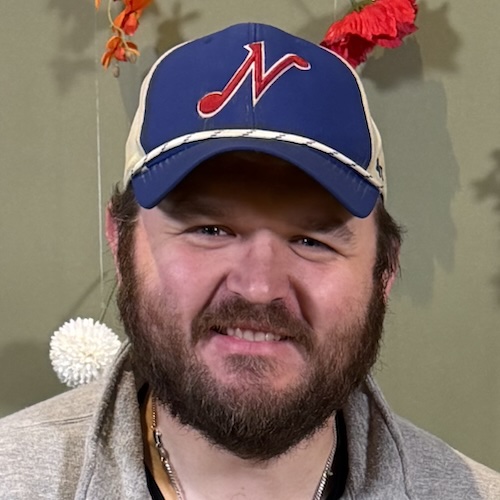
Nearly a month later, pathology confirmed clear cell renal cell carcinoma (ccRCC). Sid was told the tumor was classified as stage 2, specifically T2b, because it measured larger than 10 centimeters. His oncologist estimated that there was about an 80% chance that the cancer wouldn’t return. Genetic testing, run because of Sid’s youth, came back negative. Follow-up scans became a new rhythm, and so did the anxiety with them; Sid says that waiting for results is more stressful than the original diagnosis.
In 2026, a scan found a new, tiny growth on Sid’s remaining kidney. A biopsy confirmed the same clear cell type and staging as his original cancer, just 1.4 centimeters this time. Sid is now preparing for cryoablation, expected in November 2026. Sid has also become active in the kidney cancer community, and speaks openly about the lack of men’s voices in cancer support spaces. He and Rachel welcomed a daughter 11 months after his surgery, and Sid now balances fatherhood, a job he loves, and ongoing surveillance of a disease still part of his life.
Watch Sid’s video or read the edited transcript of his interview to learn more about his kidney cancer story.
- A plan might not erase fear, but it can change what fear feels like. Sid has said that once a treatment plan was in place, the fear doesn’t disappear, but it becomes something you can carry rather than something that consumes you. It’s a distinction that shapes how he still approaches every new scan.
- Learning more about your disease can be a double-edged sword. When a second tumor appeared on Sid’s remaining kidney in 2026, his medical knowledge from the first diagnosis made the news easier to process, even as it meant he understood exactly what he was facing. Knowledge didn’t remove the fear, but it changed how he carried it.
- A small ritual can carry a lot of weight. Sid and Rachel turned every scan day into something they do together, coffee and music on the way, lunch in between, instead of a day defined only by dread. It’s a small structure that gave shape to some of his hardest days.
- Sid noticed who wasn’t in the room, and decided to say something about it. After realizing how few men showed up in kidney cancer support spaces, he started writing about his own experience because he believed it could help even one other guy feel less alone.
Sid’s Diagnosis Facts
- Name: Sid Sadler
- Age at Diagnosis:
- 32
- Diagnosis:
- Kidney Cancer (Clear Cell Renal Cell Carcinoma or ccRCC)
- Staging:
- Stage 2, T2b
- Symptoms:
- Gross hematuria, or visible blood in urine
- Passage of blood clots
- Urinary pressure
- Difficulty urinating
- Treatments:
- Surgery: radical nephrectomy, left kidney
- Upcoming ablation therapy: cryoablation
- Sid’s Diagnosis Facts
- Life in Nashville before the diagnosis: Family, travel nursing, and a fresh start
- Blood in my urine and a 10.5-centimeter tumor: How my kidney cancer was found
- What self-advocacy looks like: Asking questions and trusting the team
- Rare at 32: Clear cell kidney cancer, a biopsy, and radical nephrectomy
- Getting the pathology report: Stage 2 and an 80/20 chance of recurrence
- Scanxiety and coffee dates: Coping with the wait before every follow-up scan
- Diagnosed at 32: Genetic testing, no answers, and making peace with “bad luck”
- Finding Katie Coleman: How one fellow kidney cancer advocate changed everything
- Why I started talking about men’s mental health and kidney cancer
- A new tumor on my remaining kidney: Surveillance, a biopsy, and planning for cryoablation
- What gives me hope now: Fatherhood, a job I love, and staying in the advocacy space
- My advice to anyone newly diagnosed with kidney cancer
- Hear from people living with kidney cancer
Life in Nashville before the diagnosis: Family, travel nursing, and a fresh start
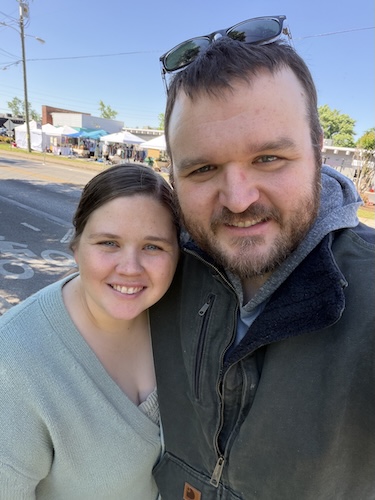
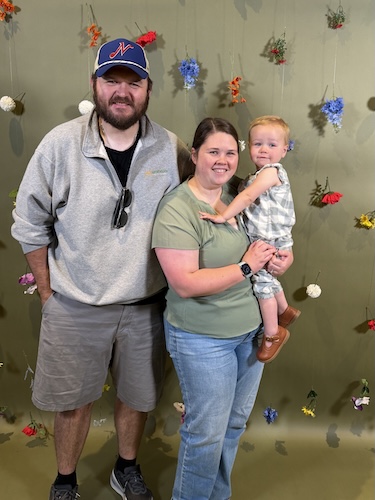
I was born and raised in Nashville, Tennessee. My wife was also born and raised in the area. We have one kiddo, who is a year and a half old, and she is all over the place. I usually work from home on Fridays. We have two dogs. My wife is a former ICU nurse. She’s now a nurse practitioner. She practices in the county and is tremendously brilliant, and I’m very lucky to have her in my corner. And then myself, I have a degree in nonprofit management, so I work in the nonprofit space.
We did do some travel nursing as well. My wife was a travel nurse for a bit back when she was a nurse, so we got to visit all around the country. It was an amazing experience. Very lucky to be able to tag along with her. Got to visit some great places, meet some great people, and have some great experiences.
We moved back home in May 2020, right after COVID started. It seems like it was so much longer ago, but it really wasn’t that long ago. My mom, unfortunately, passed away at the age of 57. She passed away in December 2019. COVID happened, so we said, “Why don’t we move back home?” We started chit-chatting about maybe trying to start a family, getting settled into the home, etc., and that’s when cancer popped up.
Blood in my urine and a 10.5-centimeter tumor: How my kidney cancer was found
I still have messages from the day that things started to happen. I don’t know if other people do that. I’m assuming some people do as well, but it was either December 6th or 7th, 2023.
I should preface this by saying that I’d never had any crazy blood work, no symptoms, no craziness going on; the usual annual doctor’s visit, what have you. And I woke up one morning getting ready for work, tried to go urinate, and I couldn’t, and there was some blood in my urine. I was like, “That’s weird.” Not really painful; it was more of pressure.
I turned to my wife, and she said, “Oh, maybe it’s a kidney stone or a UTI.” We were going down the list. Since she works in medicine, I went, “Okay. This sucks, but she’s probably right.” I drank a bunch of water, went into work that day, and it still wasn’t feeling right. And then the pressure started to mount, and I started to really not feel great. I think it was my body’s way of saying, “Hey, we need to go pee, and you can’t go pee.”
So I went to a local ER and passed two large blood clots. It was pretty traumatic, looking back on it. If you’ve been diagnosed with kidney cancer and you’ve had symptoms before, you might have had blood in your urine as well, so I don’t have to go into detail there. Unfortunately, when I went to the ER, they saw that I was the weird patient who got those blood clots and showed them to the doctor… I was like, “Hey, just so you know, I did this. I’m not making it up.” So they did some cultures, urinalysis, blood work, but they didn’t scan me.
Looking back on it, it’s shocking. At the time, I was just like, “Whatever.” But my wife was like, “They should at least do an ultrasound or something to look at your kidneys,” but they didn’t do that. They thought maybe it was an acute kidney injury. It was a younger doctor. They were nice; they weren’t pushy or anything, and I was kind of just accepting, like, “Okay, that’s the thing.”
The next day, the same thing happened. I could urinate after that, but kind of the same thing happened. I texted my wife, stayed home from work, and I got an appointment with my PCP, who I have a really good relationship with. Very lucky to have that doctor in my corner. And even my wife reached out to them and said, “Hey, I’m not trying to step on any toes, but I think he should probably get a CT done of his abdomen.” He agreed, we got a stat CT done, and that’s when they found a 10.5-centimeter tumor on my left kidney.
He called me that same day and said, “Hey, can you come back to the office? Can you bring your wife with you?” That’s never a good sign, right? Unfortunately, she was seeing patients at the time, so we had to FaceTime her while I was in the office with him. He had to let us know that it was likely kidney cancer. And the referrals started happening, all that kind of stuff.
Having a nurse practitioner wife by my side through a kidney cancer diagnosis
She would joke and be the first person to say that I probably know more now about kidney cancer and cancer in general than she does. She’s a nurse practitioner, so she sees basic primary care patients. If you’re sick or need a referral, she’ll send one out. With all that being said, though, while I might know more about kidney cancer than she does, having somebody who is grounded in medicine and can weed out this doctor or that doctor, etc., having somebody on your side who can digest that information with you matters. I think the second or third day, she had told me, “Hey, we haven’t seen everything yet. We just know that there’s a tumor there. It’s likely cancer, but we can get surgery or whatever. We can get it out and go from there.”
She kept wanting to see the report, the impression on the report. All we knew was I had a tumor on my kidney. I had not seen the actual report that a lot of patients see on their portals. So when we got that physically, she looked at it, and she said, “Okay, I know what’s going on here, basically. There’s no metastases right now. We can address this with surgery.” Hearing that, even though I was still scared out of my mind, losing sleep, and all the things that everybody has probably gone through, having that in your corner is just one little extra boost during a terrible time, so it was very helpful.
I was probably asking her 7 million questions every single night. Now, I know that even if you are a doctor or nurse practitioner, you might not be well-versed in cancer, or specifically kidney cancer, or what have you. So I’m sure it was stressful for her as well, but she was tremendous during the experience.
Cold-emailing a kidney cancer specialist: Getting to Vanderbilt and meeting my surgical team
I saw my doctor; we had the visit where he went, “This is likely kidney cancer, or according to the CT scan, it looks like kidney cancer.” He referred me out to a urologist in Nashville that he went to school with and he knows. I’ll give him credit for this. But he also, on the front end, said, “Hey, given your age, etc., this might be a little bit more of an interesting case, a rare case if you will, so it might not be a bad idea to visit the Vanderbilt-Ingram Cancer Center. I just don’t know anybody directly at Vanderbilt. I know this guy, so let’s get you in with this guy.”
I saw the urologist the next day. He was nice, and so were the nurses. He said that we’re probably going towards a radical nephrectomy, and that’s what we ended up doing in the long run anyways. But after that visit, I went online, did what any 32-year-old does, went on Instagram and TikTok, and tried to find anybody my age who has gone through this, and I started running into patients; some my age, some not my age. A couple of patients had reached out to me and said, “Hey, you’re not that far away from Vanderbilt University Medical Center.”
Growing up in this area, I always knew Vanderbilt is one of the top in the country as far as cancer treatment goes. I did the crazy thing. I kept being told to see this doctor, Dr. Brian Rini. I kept hearing his name, so I Googled him, went on Vanderbilt’s website, found his email somehow, and emailed him out of the blue.
I didn’t go through any proper channels that you probably should, and I emailed him out of the blue. I said, “I’m 32 years old, I have a 10.5cm tumor on my kidney, they’re thinking it’s likely kidney cancer, yada yada yada, can I come and see you?” And this was in December. We know that in the medical field, December is always a crazy month anyway. So he says, “I’m sorry to hear that. I’ll get you with the person that you need to speak with to get you an appointment with me.” And I saw him in early January, less than a month after my tumor was found. So very thankful for that. And Dr. Rini is an oncologist who specializes in kidney cancer. He sees GU cancers as well, but specifically kidney cancer.
And he had said, “Okay, from the looks of it, it doesn’t look like you have metastatic disease right now. We’re going to get a clearer view of your chest, and then we can for sure stage it and go from there. But you’re likely heading towards surgery with a doctor named Dr. Sam Chang.”
Dr. Chang is a Nashville native as well. He’s a urological oncologist, so he specializes in cancer surgery to remove tumors. I had an appointment with him. I can vividly remember the first appointment with him, because obviously I was terrified, nervous, still Googling things, waiting for him to come into the room. And he comes in just like a ray of sunshine, happy. And I’m like, “How can this guy be so happy?” And he comes in, and he’s got a forward-thinking attitude. And he admits, “Yeah, this is kind of a crappy situation, but we’re gonna have a plan, we’re gonna get through this, this is what we’re looking at, these are your options right now, this is what I’m comfortable with, this is what I think might be challenging, etc.”
And hearing that at the moment might be a little stressful, but looking back on it, I really do appreciate the way that conversation went. And even my wife mentioned to me afterwards, “I think he might have some of the best bedside manner that I’ve ever interacted with,” and she’s interacted with a ton of doctors and surgeons, so that was kind of a green flag. Lo and behold, after that meeting, we had talked to some nurses that had worked directly with him in surgery, and they said he was tremendous.
After that, I got my chest CT done. From what we could see, there was just this large tumor on my left kidney, so we decided to plan a radical nephrectomy, which would happen in February 2024. The tumor itself was attached to my spleen and the tail of my pancreas, so there was talk that we might have to do open surgery versus laparoscopic or robotic. Dr. Chang specializes in robotic surgery. He was like, “We could go in, and we might have to have another surgeon there to help with the pancreas and spleen. We could do open surgery. We could do it all laparoscopic. We’ll see from there.” But going into February, it was obviously a little bit nerve-wracking, because I felt like we had a plan, but we weren’t sure which plan we were going to go with.
I’m lucky. Being in the space that I’ve been in now for the last two-plus years, being in advocacy, working with other patients, or speaking with other doctors, I do credit those first couple of patients that I ran into that said, “Hey, Vanderbilt would be a good option for you.” Not even because my cancer looked aggressive or this or that. It’s just, “Hey, you’re 32, this is a large tumor, this is unusual, maybe get seen at Vanderbilt.”
Even with my wife working in the medical field, I’ve heard story after story about people lagging or symptoms not being addressed or this, that, etc. I think everybody has their own annoyances with medicine in general, but overall, I’ve been extremely lucky to have a team and doctors that listen to me. Even now, when I see Dr. Chang, I feel like a part of the conversation. He doesn’t talk to me; he speaks with me and says, “What do you think? How do you feel about this?” Even with my scan intervals or this or that. At first, it shocked me, but it was very empowering to be able to feel like I had a voice in that conversation.
What self-advocacy looks like: Asking questions and trusting the team
Sometimes we patients or caregivers view second opinions as saying the doctor is wrong. It’s not that the doctors are wrong. Unfortunately, with kidney cancer, even cancer in general, there are so many different pathways. There are some instances where it’s very much black and white. But even in the metastatic setting, there are different treatments, different things you can go through, clinical trials, etc., or a doctor might have access to a clinical trial that maybe your doctor doesn’t.
Getting that second or even third opinion is invaluable if it’s needed. If a patient feels uncomfortable about asking a question, they shouldn’t. The doctor that they’re seeing more than likely has had that same question asked to them dozens, hundreds of times, and they shouldn’t feel uncomfortable. I understand the feeling, but they shouldn’t feel uncomfortable.
“Advocacy” has such a strong connotation. A lot of patients, especially somebody who’s newly diagnosed, might hear the word or the phrase “advocate for yourself,” and they might think that it’s going to be speaking in front of Congress or going in front of 500 people and telling your story. Those things are powerful. Those things are great. Those things are needed. We need patients to do that.
But advocacy can also be something smaller. That can just be simply asking your doctor a question. You might be thinking about seven different questions before you go into your appointment, but there’s only one or two that you really want to ask, but you’re a little afraid to. Any doctor worth their salt will listen to those questions. I always tell patients when they reach out to me: If you don’t feel comfortable, let your team know and get a second opinion. I’ve never had to or felt like I needed a second opinion, thankfully. But I do know that if I felt like I needed one, my team and my doctors would listen to me, and they would encourage it.
Rare at 32: Clear cell kidney cancer, a biopsy, and radical nephrectomy
I have clear cell renal cell carcinoma (ccRCC), the more common type. My presentation was rare, though. Typically, we see this kind of cancer in 60- to 65-year-old people. My presentation was rare, so that raised some red flags. (EDITOR’S NOTE: The Kidney Cancer Association says that although the average age of a patient diagnosed with kidney cancer is 65, the number of people under 40 with kidney cancer is increasing. Renal cell carcinoma, or RCC, in young adults is increasing at 3-5% per year; the rates of kidney cancer in this age group doubled between 2000 and 2016.)
We always see people afraid of getting biopsies because they think they’re unsafe or this or that. My doctors ordered a biopsy for me before my surgery, and I had those same worries because I had read the stuff on the internet and heard people say this and that. I talked with my doctors, and they made me feel extremely comfortable about it, so I got a biopsy about a month-ish before, sometime in January, before my surgery. It went off without a hitch, and it showed that it was likely clear cell.
They couldn’t get a grade on it, even though it was a large tumor and they took a lot of samples. They couldn’t get a grade, but they said it was likely clear cell. So going into my surgery, we knew that it was likely clear cell. We didn’t know how aggressive necessarily. That was something that was always a hang-up, because that leads to what your treatment pathway is, whether you get adjuvant therapy or what-have-you after your surgery.
I’d never had surgery before. I’d had my wisdom teeth out, that’s it. I had never been put under or anything. So when I was starting to get these calls from anesthesia and blood work, I went, “Oh my God.” I’m talking with my wife, and she went, “You’ll be fine. You’re in good hands. If for some reason they thought there would be an issue during surgery, they would tell you, or they would not do the surgery.”
It’s still hard to get over that hump when you’ve never gone through it, so leading up to it, I was very nervous. I want to say that about a week or two out, I was still nervous, but I started to feel this feeling of something like excitement, as weird as it is to say, for after surgery, when it would be over, and it would be out of me.
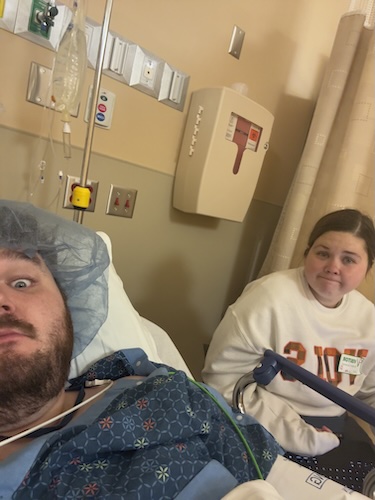
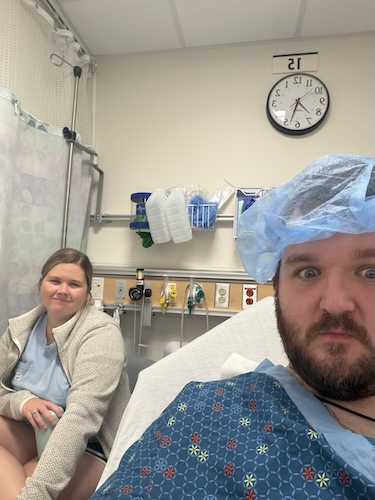
I had my surgery February 19, 2024. It was on a Monday. Got me prepped and everything. My wife was with me, and then my dad and Rachel’s parents were with us as well. The doctor had said, “We might have to take out your spleen. We might have to do something with the tail of your pancreas; we’re not sure,” so a lot of what-ifs going into it. But again, that is credit to my doctor being upfront with what the possibilities are as far as what the surgery could look like and what we might have to do.
Going into it, I was hoping that it was going to be robotic, laparoscopic, just my tumor and kidney, and let’s see where the dice land afterwards. My surgery started around 12:00 or 12:30 that day. I remember being so nervous about anesthesia. I said, “I don’t even know what this is.” Sure enough, I was out like a light. When I woke up, the first thing I asked my wife, who was next to me, was, “What did they do? What happened?”
She was like, “They just took out the kidney and tumor. They didn’t have to do anything else.” I asked if it was laparoscopic, because at the time I couldn’t feel anything and I was higher than a kite. So she was like, “It was laparoscopic robotic.” Everything that I wanted to happen, happened.
I’m the weird patient who reads over the surgery notes afterwards. As my surgery notes were being posted by Dr. Chang, I read all of his notes about the surgery and what happened. To his credit, the surgery was very technically difficult, for a variety of reasons. Technically difficult doesn’t mean it was dangerous; it just means that he took his time.
I was slated for about a four-hour surgery, and the surgery took about six hours because he took the time to make sure that my spleen and pancreas were okay. He took the time to look at my liver to make sure that looked okay, that there was no gross metastatic disease on my liver. The procedure took about six or 6.5 hours.
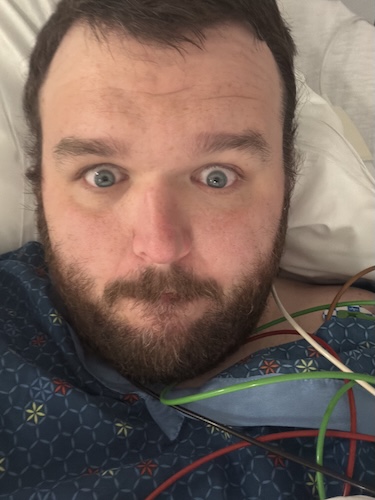
I had to wait for a room, which was annoying; it just is what it is. I remember I had to wait to eat. I don’t know if that’s everybody, but I had to wait to eat until the next day. I could only have a popsicle, and I was starving because I had to prep the day before for surgery. I remember that being the biggest annoyance, which, looking back, is funny, because I just went through a huge surgery for cancer.
The next day, I did some walking around the facility to get up, all that fun stuff. I had a medical assistant. My nurses were great. They had a medical assistant there who was younger than me. He was probably in his 20s. I remember it being very humbling, because I had to ask him to help me get up to go to the bathroom. This dude is like 24 or 25, and we were talking about sports and video games and all this stuff, and I was like, “This is a very humbling experience.”
Honestly, arguably in a good way and in a bad way, you kind of lose that dignity. They’re there to help you, and they’ve seen this time and time again, so you kind of lose that dignity a little bit. You’re just like, “Okay, I have to do this; he doesn’t care, he’s seen a thousand different things; I’m a patient. I’m a person and a patient.”
So thankfully, the surgery was on a Monday; I went home by Wednesday. They were actually going to discharge me Tuesday, but they just wanted to make sure everything was looking right, making sure I had no blood in my urine, etc., so I went home Wednesday morning and started to recover.
I credit my recovery not only to my doctors but to the fact that I was younger. I think we take our age for granted sometimes, and that recovery from surgery tends to be a little bit easier if you’re younger. And my doctors did a tremendous job. They actually allowed Rachel, my wife, to take out my staples at home. I had staples in my larger incision. My smaller ones for the lap surgery were glued together. But for my larger incision, where they actually took the tumor out, they allowed Rachel to take the staples out. So that was nice, because I didn’t have to go back to get that done.
The surgery experience overall was still traumatizing, but I think it was a best-case scenario for what we were looking at. I was literally on the bed, and they gave her the green light. I got a message, and they were like, “Yeah, sure, she can.” We asked at the hospital if she could. She asked, and they were like, “Yeah, sure, I don’t see a problem.” They knew that she was a nurse practitioner. So sure enough, she did remove the staples, and it really wasn’t that bad. It did feel a little weird, but I still thought, “Man, this is like VIP treatment a little bit while I’m at home.”
Getting the pathology report: Stage 2 and an 80/20 chance of recurrence
I was told that it would be like a week or so. Knowing what I know now, nobody knows how long the pathology report will take. It could take four days or a month, and that doesn’t necessarily mean something’s rarer and more aggressive; they might be behind or whatever.
We waited about 28 days, almost a month after my surgery, and I got the pathology report in. At the time, I had done so much researching and talking to patients and even doctors about kidney cancer that I was able to adequately read my pathology report and digest it as I was getting it.
Sometimes, especially if patients aren’t as well-versed in their disease, it can be a stressful time. You get it, you’re sitting at home or at work, and you’re like, “Oh my God, what do all these numbers and words mean?” I was sitting at the kitchen table, I got it, and it was clear cell renal carcinoma, so it was what we were expecting, and it was stage 2, T2b. It was stage 2, but the “b” is because it was larger than 10 centimeters.
I got a call from Dr. Chang five minutes after it hit my portal, and he said, “Hey, I got your pathology report.” And I said, “Yeah, I already read it,” and I told him what I thought. This goes back to him listening to me, or us having a conversation, versus him just talking at me. And I said, “Well, I feel like this is kind of a best-case scenario.” The best-case scenario was that it’s not cancer, but if it is cancer, it seems to be a larger tumor, which gives us pause, but it seemed to be on the less aggressive side.
We scheduled an appointment with both Dr. Rini and Dr. Chang afterwards. With Dr. Rini to talk about adjuvant therapy, to see if he thought that was a good idea for me, and then with Dr. Chang, obviously, because he’s my surgeon and I’m following up with him post-procedure.
We went to Dr. Rini’s appointment first, and he said, “Listen, I could give you percentages here and there,” and he did give me a percentage of how likely it could come back versus not coming back. But he said, “At the end of the day, cancer will come back, or it won’t come back. I can give you percentages, but this is what we’re looking at.” He gave me about an 80% chance that it won’t come back and about a 20% chance that it could. (EDITOR’S NOTE: According to Cleveland Clinic, studies show that among patients who’ve had surgery to remove renal cell carcinoma that hasn’t spread beyond the kidneys, 20% or 1 in 5 will get kidney cancer again.)
I felt good hearing that. And he said, “At this time, I don’t need to see you anymore. You can just be with Dr. Chang and follow up with him with your scans every X amount of months,” or whatever we decide on, so that was good to hear. So I followed up with Dr. Chang, and we got on a scan schedule that was basically starting every four-ish months, and then it moved to five or six months, and I’ve been on that schedule since. Follow-up was great. It was a little empowering to be able to read that and come to my own conclusion before I spoke with my doctor, and that they agreed with what we were looking at.
Scanxiety and coffee dates: Coping with the wait before every follow-up scan
I would argue that leading up to scans, especially the first couple that I had every four months or so, was almost more stressful than me finding out that I had cancer. I always tell newly diagnosed patients, “These next weeks will be very hard days. But once you get a plan in place, you will feel better. You might not feel 100% better. You’re not just going to be like, ‘Oh, okay, great, everything’s fine now,’ but you will feel better. You’ll know that there’s a plan in place. If you trust your doctors and you like them, then you know that you’re on their radar and that there’s a plan in place for you.”
With scans, I guess there’s a plan in place, but there’s so much unknown, right? Especially being younger, you lose the trust that you have in your body to do what it’s supposed to do, i.e., kill cancer cells that aren’t supposed to be there, and for a variety of reasons, our bodies didn’t get that memo. (EDITOR’S NOTE: Memorial Sloan Kettering Cancer Center discusses why and how tumors may evade detection and destruction by the immune system.) You go into these scans crossing your fingers. We know that medicine and science say that the more scans you get where you’re clear, the greater your chance of staying clear is, but it still doesn’t take away that feeling of dreadfulness.
My wife and I typically do the same thing every scan that I get. We’ll get a coffee at the local coffee shop on the way there. I don’t think I’m technically supposed to have coffee, but my doctor has told me that I can have coffee. We listen to some music that we usually listen to. We make a day out of it.
Usually, how it’s worked out a lot of times, which is nice, is I’ll get my scans in the morning, Rachel and I will go out and grab some lunch or something, and then I’ll meet with my doctors after lunch to talk about the scans. Sometimes they’ve hit my portal, sometimes they haven’t, but Dr. Chang will at least give them a look over and say, “I feel good about this,” or, “Hey, we have something here to look at.”
As it was with surgery where there’s a plan in place, you start to feel better. With each scan, you do feel better, but I know patients who are 10 years out from either metastatic disease or their original diagnosis, and they still get nervous. I don’t foresee a patient never being nervous about a scan. But for me, I was very nervous even if it was four months away. And then after that scan, I didn’t really start getting nervous until like a month out or two and a half months out. And then the next one, I didn’t really get nervous till like a week out. As you continue to get your scans, for me at least, I started getting nervous a lot later than earlier for my scans coming up.
Diagnosed at 32: Genetic testing, no answers, and making peace with “bad luck”
I’m 35 now. I was 32 when I was diagnosed. When I originally met with Dr. Chang and Dr. Rini, before my surgery, they had ordered some genetic testing to be done after my surgery, so we got that done. I don’t know if every facility does this, but I somehow got lucky in that my blood work was done at home for me. I had a nurse come to my house and draw blood at the kitchen table.
Dr. Rini and Dr. Chang both told me, just doctor to patient, as far as what their opinions were of it, and they both said that they don’t think there’s any genetic component here. They didn’t know 100%, but they didn’t think so, based on just what they’ve seen in their history. But my age was a red flag. Besides being overweight here and there, I’m not a smoker; I don’t have any known exposures or anything like that.
But we got the test, and we got it back, and we didn’t find any mutations. They tested everything under the sun, and I actually asked them to do the markers for colon cancer too, because I was like, “Hey, colon cancer is on the rise, so why don’t we just throw that in there?” Nothing came back, which was a good thing. But it also led me to be like, “What’s going on here then? If my age is a big red flag, but they didn’t have any type of genetic component to it, what’s going on here?”
For a while, that played some tricks on my brain, because now there’s really no explanation; it’s just bad luck, if you will. I do think that with age, there are so many things going on in your life. We were starting to talk about having children, I was getting into the prime of my career, Rachel the same way, and then we kind of had this big roadblock after we found out that I had cancer. So all these different questions pop up, like, “Am I still going to be able to work?”
At the beginning, on the onset of my diagnosis, I was like, “Am I getting chemo? Am I gonna get sick?” You start thinking about all these things with cancer. There were a lot of questions after my diagnosis about how this was going to shape our life. It’s still mind-bending whenever I tell people that I was diagnosed with cancer; they say, “Oh my God, you’re so young.” And I’m like, “Yeah, I know. I’m here too, so I know.” So it’s been a mind freak here and there. But as time passes, you just settle into your way. You don’t become okay with it. I’m not okay with it, but you accept that there are things at play that we just don’t understand currently.
Finding Katie Coleman: How one fellow kidney cancer advocate changed everything
At the beginning of my diagnosis, before I even thought about Vanderbilt, I spoke with Katie Coleman, who is a tremendous advocate in the space. She was diagnosed with a rare kidney cancer. I connected with her, and she really made me feel heard in general. It was very validating to not only have a patient who’s going through similar things as you and has gone through those same thought processes, etc., but it was also very empowering to have that conversation with her.
She led me away from the edge of the cliff, if you will, and it was very helpful. I still stay in contact with her daily, or now that we’re both very busy, maybe weekly. But it was great to have her in my corner, just as another person by my side to go over scans or go over this or that that I didn’t necessarily understand.
It’s invaluable. I hope everybody can find a Katie, somebody to walk with them, regardless. We connected so well, because of our age and everything else, but that doesn’t really matter. As long as you can connect with somebody who’s been there and done that, I think it’s very, very empowering.
Why I started talking about men’s mental health and kidney cancer
That came about because, as I was going into these support groups or meetings, I started to notice that, for better or worse, there weren’t a lot of men in these meetings. It was either caregivers for their husbands or women in general. We’ve always had this notion that women are better at talking about how they’re feeling, usually. We’ve always had that in the sphere of everybody’s life. And I don’t really subscribe to that notion.
When you have something as life-changing as this happening, you must be able to speak about it. And I don’t fault anyone. If you feel like you’re in a good space and you feel like you don’t necessarily need to do that, that’s okay. I don’t want to pressure somebody into talking; I don’t think that’s going to help anybody. But I think it’s very empowering, from that perspective. Because my viewpoint was, “Okay, if one guy sees my post and they’re like, ‘Oh, I can talk about this,’ or, ‘Oh, this person’s feeling this,’ I think that it’s worth it.”
I don’t care about numbers. I don’t care if 5,000 men see it or one guy sees it. The point is that it helps somebody who sees it. That’s how I view it; that’s how I jumped on it. Sure enough, as I’ve talked to other organizations, whether it’s the Kidney Cancer Association (KCA), Judy Nicholson Kidney Cancer Foundation (JNF), or KidneyCAN, or any organization, they always say that we lack men. Whether it’s caregivers, patients, advocates, etc., we lack men. So I’ve just dug a little bit more into that space and tried to let men know it’s okay; you can talk about it.
It’s not something that’s going to change overnight, right? It’s not something that’s just going to magically happen. But I think continuing to have that representation will eventually peel back that Band-Aid a little bit, more by more each day, hopefully.
A new tumor on my remaining kidney: Surveillance, a biopsy, and planning for cryoablation
I was on routine six-month scans, and it popped up in my portal. My doctor actually looked at the scans and said that they didn’t see anything too concerning, and I was like, “Okay, that makes me feel good,” but we had to wait for the official results, and I know that. We got the official results. The rest of my body looked clean, no sign of metastatic disease, but there was a mass denser than a cyst on my remaining kidney. It was approximately 1.4 centimeters. And I got that result while I was at work, which is the best place to get a result like that.
I very quickly got a message from Dr. Chang. I didn’t even message him; he messaged me. And he said, “Hey, I saw the results. Let’s get a closer look at this. Let’s get a renal MRI along with your next scans at a closer interval, like in four months.” That original scan was in March 2026. He said, “Let’s get one in June to get a closer look at your kidney and the rest of your body, obviously for your regular scan.” In June, we got that MRI done. I alternate between chest, abdominal, and pelvic CT, or chest CT, abdominal, and pelvic MRI. It’s just my doctor’s preference; I don’t necessarily care that much.
We got that done, and it said that it was likely a small kidney cancer on my remaining kidney. I’m like, “Okay, here we go again.” No genetic component, nothing that would explain anything here. What I will say is, credit to me for learning more and more about my disease, I was able to digest this a little bit better than my original diagnosis, because I knew at the time the rest of my body looked okay. I didn’t have anything else going on. We have this thing on my kidney. What are we going to do with it?
After that official result came in June, Dr. Chang messaged me and said, “This thing is really small. I’ll see you in for an appointment soon, but let’s go in and get a consultation with interventional radiology to talk about cryoablation.” I met with him after, and he said, “Yeah, this thing’s really hard to see. I don’t think that it’s aggressive, because it stayed the same size for a minute.”
Actually, this thing, according to my interventional radiologist, might actually have been there since my original tumor; it was just below the threshold of coming up on a scan. He relooked at my previous scans, and he says that he thinks he can see it, basically very slowly growing. If you know how small a centimeter is, it’s tiny.
I had an appointment with interventional radiology. Dr. Chang gave me the option. He said, “I can present this to a tumor board, and they’re probably going to tell me, ‘You could watch and wait, or you could do a cryoablation.’ We could watch and wait, or we could go in and biopsy and cryoablate. If I were you, I would biopsy and cryoablate, but tell me what you want to do.” And I was like, “I want to biopsy and cryoablate.”
I got the biopsy done. It confirmed that it was the same type and same grade as my original cancer. It was clear cell as well, grade two, 1.4 centimeters. We are now waiting to get my cryoablation scheduled. They’ll call me in early October to schedule it, hopefully for November.
Obviously, not something I want to hear. I have one kidney left, so I’m like, “On one hand, I don’t have metastatic disease, but on the other hand, I have one kidney, so what are we looking at?” Thankfully, knock on wood, my kidney function has been abnormally tremendous. My kidney has decided to work very well. I think I had my GFR in April, and it was like 96 or 97, which is really good for one kidney. (EDITOR’S NOTE: The National Kidney Foundation defines eGFR, or estimated glomerular filtration rate, as how well the kidneys are operating. An eGFR of 90 or higher is in the normal range.) We got that done, and I’m just waiting to get scheduled for this cryoablation. Once the cryoablation happens, we likely will scan in about a month after that to see if it did kill everything and if everything was effective.
The nice thing that happened, too, is that because I got that biopsy, my IR doctor was able to see: Can he accurately get to this tumor, because it’s so small? It’s a little endophytic, which means it’s growing into the kidney instead of outside of the kidney. So that was kind of like a test run, if you will, for the cryoablation, because a cryoablation is like a biopsy, except they’re freezing something and it’s a little bit more invasive. (EDITOR’S NOTE: Mayo Clinic describes cryoablation as a procedure that exposes cancer cells to extreme cold, which kills them.) It’s still a long needle, and you go home the same day or the next day. You still have to be put under for it, which I hate. But I feel like I’ve been put under for a large surgery, so surely to God this should go fairly smoothly.
That’s where we’re at now. After that, we should go back on some type of scan schedule and closely watch this kidney that has decided to grow a tumor.
One kidney left: Weighing pain, recovery, and kidney function before a second procedure
Unfortunately, with medicine, everybody’s body is different, everybody’s pain is different, everybody’s doctor’s different, everybody’s this and that is different. I’ve been lucky enough to be blessed with a decent pain tolerance. I’m not going to be over here and say I’m some tough guy. I will take pain medication. I will ask for the pain medication and take it. Thankfully, my pain threshold is decent.
I’m more worried about my kidney function, because I have one kidney. I’m 35 now, and I hopefully have some years left, so I want to make sure that that kidney is able to function properly. When you stick a large needle into an organ, you always are a little nervous about that.
What I’m hoping for is that after we’re done with that and we get back on my scans, we’re able to make sure that my kidney is okay. I know my doctors have weighed the pros and cons, so I know that if they thought that there was any type of pause there, they would let me know, or they would be able to say, “Hey, this might be a little bit too crazy right now. Let’s just watch and see what it does.”
How facing a second kidney tumor feels different from the first time
It’s cancer, it’s stressful. It makes you wonder a lot, especially at this age, and another tumor on your kidney. It’s pretty rare for somebody to have a secondary tumor on their kidney that doesn’t have a genetic marker or genetic predisposition to kidney cancer, or to have tumors on your organs. So that has been a little stressful.
But I will say, with the knowledge that I’ve gotten in the last two and a half years, it’s made it a little bit easier to go through, whether it be my wife or my team. As weird as it sounds, it’s been easier to digest because I have that knowledge of what to expect and what my doctors are thinking.
At my meeting with Dr. Chang a couple of months ago, he told me, “I’m kind of surprised at how well you’re taking this.” And I responded, “Well, it’s just I know a little bit more now about what we’re looking at. I know that it’s cancer and it’s still concerning, but we have a plan in place, and if we didn’t feel comfortable about it, we wouldn’t be doing it.
It’s a double-edged sword, where you learn more information, and that can be scary, but it can also be very empowering if you ever have to go through it again, which is what I’m doing currently. I would say this second time around, I’m staying up every night thinking about it, but it’s still stressful.
What gives me hope now: Fatherhood, a job I love, and staying in the advocacy space
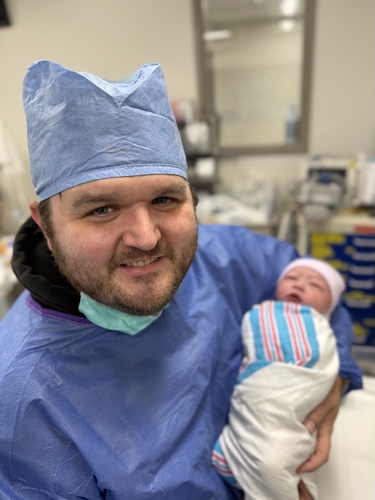
There are always the clichéd yet true answers. We have a daughter now, who is just making me have more gray hair every day, but in a good way. My daughter was born 11 months after my surgery, which is a crazy emotional whiplash, going from cancer to a baby being born. Good whiplash, but also, “Oh, now I have a human that I have to take care of.”
With that being said, about nine months ago, I started at my new job, which is the first full-time job I’ve had in about two years. It’s a job I love doing and that I’m passionate about. I love the people I work with. The people I work with know about my diagnosis and have been supportive, which is a huge fear of mine, being the age that I am. Unfortunately, not to discourage people from going into advocacy, but if you Google my name, it’s all about kidney cancer. When I was thinking about prospective employers when I was applying for this job, I was very fearful. I know that’s not a legal thing to do, but I do worry sometimes about people’s preconceived notions about cancer in general.
My family, my daughter, and the job that I have. I love going into work, and it’s very rare to find that nowadays, making a difference in people’s lives with the work that I’m lucky enough to be able to do, and to continue in the advocacy space.
I’ve taken steps back here and there. I was very full-fledged in the advocacy space at the onset of my diagnosis, because I had the time. I didn’t have a child, I wasn’t working full-time, and I was working hybrid at home. But I still do love talking with other patients, doctors, advocates, and caregivers about their stories and what they’ve gone through, because I think it’s very empowering. That gives me hope as well to continue in the space.
My advice to anyone newly diagnosed with kidney cancer
Whether it’s kidney cancer or another cancer, or you’re a caregiver, you’re going to have tough days or weeks. You’re going to have appointments where you have more questions than there’s time. Talk to your doctor and communicate with your team. Know that when there’s a plan in place, you will feel better. Don’t hesitate to get a second opinion. Those are things that I always tell newly diagnosed patients.
It’s a scary time when your brain is running at a million miles an hour. Don’t be afraid to take notes or to have questions in your phone beforehand. All of this stuff you might think is silly, but I guarantee you, your team and your doctors have seen it a thousand different times, because what they’re seeing every day are people going through life-changing diagnoses and situations.
Anything that will make you comfortable, whether it’s a silly routine or taking questions on your phone or whatever, do that thing. It’s not going to make the situation 100% better; I can’t say that, but it will make you feel better and more confident going into your appointment, scan, or meeting with your doctor.
This interview has been edited for clarity and length. The views and opinions expressed in this interview do not necessarily reflect those of The Patient Story. This content does not replace professional medical advice.
Inspired by Sid’s story?
Share your story, too!
Hear from people living with kidney cancer
Real experiences with diagnosis, treatment choices, side effects, and life beyond kidney cancer — in their own words.
Leave a Reply