
Nancy’s Rare Sarcoma Diagnosis Started With a Lump Her Friend Saw
Nancy was in her 20s and living in New York when her friend noticed a large lump in her armpit. What followed was months of uncertainty: an inconclusive workup at an urgent care clinic in Texas, conflicting opinions from doctor after doctor once she got home, and a biopsy result her primary care doctor delivered right before the holidays. She was told it wasn’t breast cancer, but that it was cancer, and within weeks she learned it was a rare sarcoma, though even her doctors couldn’t yet say which type.
Interviewed by: Taylor Scheib
Edited by: Chris Sanchez
Nancy chose to see a sarcoma specialist rather than stay with a general oncologist. Surgeons removed a tumor that turned out to be closer to the size of a tennis ball than the golf ball they had expected going in, and cut extra tissue around it to lower the chance it would return. The surgery left her with lasting nerve sensitivity loss from the elbow up, though she was spared the chemotherapy and radiation she had feared going in. She now returns for scans every six months, a schedule her care team expects to continue for five years total.
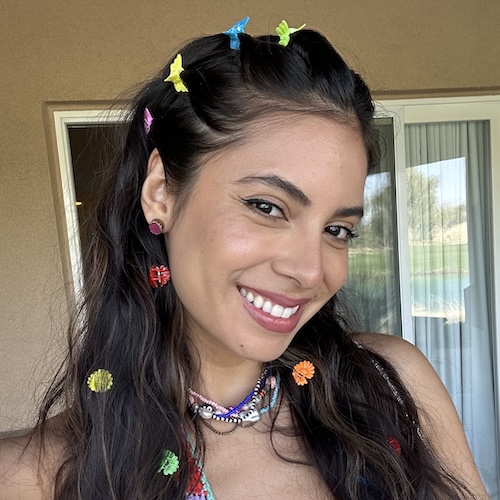
After six weeks of not being able to lift more than five pounds, Nancy decided to take a break in her fast-moving entertainment career. She took a six-month sabbatical to travel alone and rebuild, including regaining the strength to do a pull-up again. She came back to New York with a renewed focus on acting, new hobbies, and the friendships that actually fit where she was in life.
Three years out from her diagnosis, Nancy talks openly about what she once couldn’t bear to hear. She has become an advocate for soft tissue sarcoma that many people, including her at the time, had never heard of, connecting with other patients through online support groups and giving talks for a cancer charity she had volunteered with even before her own diagnosis. She still describes therapy as the thing that got her through the hardest parts, and says she’s grateful now for ordinary days in a way she wasn’t before.
To learn more about Nancy’s sarcoma experience, watch her video and then read the edited transcript of her interview.
- Nancy chose the most specialized surgeon she could find, the director of a hospital’s sarcoma program, over general oncologists who had only studied cancer broadly. She reasoned that a rare diagnosis called for someone who had actually treated a case like hers.
- The surgery that removed Nancy’s tumor also left her with lasting nerve sensitivity loss from the elbow up that she has never fully regained. Even now, three years later, she describes the numbness as something she has learned to live with rather than something that resolved.
- Nancy took a six-month sabbatical from her career to travel alone and heal, something she says had never even crossed her mind before her diagnosis. Coming back, she rebuilt her life around acting, new hobbies, and friendships that actually fit who she had become. She describes herself as a different person from who she was three years ago, in the best way.
- Nancy still reminds herself, and the people around her, that nobody is guaranteed anything, healthy or not. A persistent symptom or a sudden diagnosis can upend a life at any age, and treating each ordinary day as worth noticing is something she carries forward regardless of whether cancer ever touches your life directly.
- Weekly therapy sessions gave Nancy a place to fall apart that was not in front of the family she was already trying to protect from her own fear. She says that having a space to process what she was feeling, instead of holding everything together for everyone else, is what let her stay strong through the hardest stretch.
Nancy’s Diagnosis Facts
- Name: Nancy M.
- Age at Diagnosis:
- 29
- Diagnosis:
- Soft Tissue Sarcoma
- Symptoms:
- Unexplained fatigue
- Tingling sensation in the left arm
- Shooting pain down the left arm
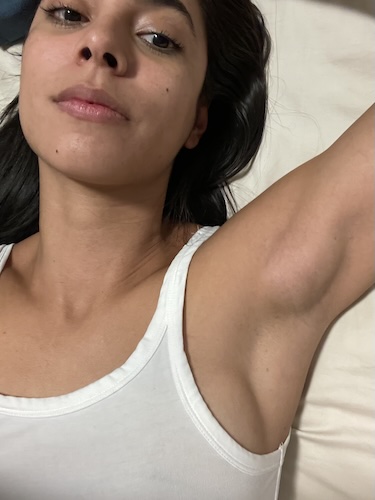
- Appearance of a lump in the left armpit
- Treatment:
- Surgery: tumor excision
This is not medical advice. Please consult with your healthcare provider to make informed treatment decisions.
- Nancy’s Diagnosis Facts
- Looking back at the symptoms I almost missed
- Getting back to New York and facing conflicting opinions
- Hearing the word “cancerous” just before Christmas
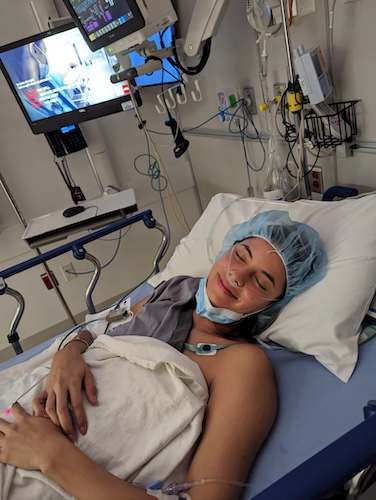
- Preparing myself for my first surgery ever
- Losing feeling in my arm, and avoiding chemo and radiation
- Scans every six months: What follow-up care looks like now
- Taking a six-month sabbatical to heal
- Rebuilding my life and learning to live alone
- Gratitude, fragility, and why more young people are getting cancer
- What I’d tell someone going through something similar
- “I created this life”: Advocacy and a full-circle moment
- Hear from people living with soft tissue sarcoma
Looking back at the symptoms I almost missed
I think I didn’t realize I had symptoms until something was found. Then I went back and realized, “Oh my God.” Certain things might have been signaling that something was off.
I realized that in the past, I don’t know, I want to say a year and a half before the tumor was found, I just happened to be extremely tired, and it wasn’t like I was doing anything crazy. I didn’t even work as much as I work now. And I was always really, really exhausted to the point where I would just get home and I had to take a nap, and then I would wake up, and I was still really exhausted anyway. I started thinking it was my diet. I started sleeping at a certain time, enough hours for me to not be tired, but that didn’t seem to work.
Then I also started noticing some shooting pains and tingling sensations on the side where the tumor was. I thought I pulled a muscle at some point, and then it would shoot down my arm, so I thought I pulled something. At the time, I had a personal trainer, so I thought I got injured lifting too much or something.
But then, when everything was found, it all just made sense in that moment. I thought, “Everything’s been on the left side of my body.” Mostly, that was what was signaling that something was off.
The lump my ex-boyfriend found
I actually didn’t find it. My ex-boyfriend found it. He was like, “What the hell, Nancy? What is this? Have you ever noticed you have this huge lump?” And I went, “No.” And so I remember running to the mirror and checking, and he went, “Was that there yesterday?” And I went, “No!”
Once we saw it, we couldn’t unsee it, so we thought it was an emergency, like life or death. So I was rushed into urgent care. We weren’t in New York; we were in Texas, I remember, and that was also not ideal because we weren’t home, so they just took me where they could. Thankfully, he has family there, so they were able to get me in with their family doctor.
They did all these kinds of tests and stuff because everyone was asking me, “When did this appear?” And I went, “Well, I’ve never seen this in my life, so I don’t know if it appeared overnight.” So they thought it would be really dangerous. They told me that sometimes lymph nodes can swell up like that, and it’s very dangerous. So I was so scared. I went, “Oh my God, no, I don’t know. This was not here. I’ve never seen it in my life. So I cannot tell you how long it’s been there.”
They were all really scared with me too, so that didn’t help either. All the tests they did that day were inconclusive. They said, “Well, it’s not a lymph node, but also, we don’t know what it is, and you’re not in immediate danger, but you also should not sleep on this. You should go back to New York and get more tests.” They did all these superficial tests they could do at the clinic, but they said, “You should get a biopsy. We cannot do that here, but go back and take all this information.” And so we did that.
But everyone was like, “Oh no, it’s fine, you’ll be fine.” I was like, “Guys, what do you mean?” Because I was getting inconclusive answers, I couldn’t sleep. They should just be able to tell me, “Oh, it’s a lymph node,” but they were not saying that, so I didn’t think it was just a lymph node. Something in my gut told me it wasn’t good news. I know everybody around me wanted to stay positive, but I said, “Guys, this is crazy. I shouldn’t have this crazy thing here.”
I was trying to go back in time mentally and check. Did I really not see it? I was trying to find pictures to somehow see, but I don’t have photos of myself with my arms up. So I was trying to go back and figure out if it was there, and I just didn’t see it because I didn’t feel it. Obviously, I would have checked, but it gave me so much anxiety not knowing when this appeared. And it was so big that I was saying, “How did it even get here?”
It’s not like my armpit is like my back, which I couldn’t see, so I think that was the most anxiety-driving thought. I put on deodorant, so I was like, “How did I not see this? There’s no way this was here overnight.” And so I just kept trying to figure out how we even got here.
Getting back to New York and facing conflicting opinions
We were in Texas for a wedding. We came back to New York, and then we just called everybody and their mother to see different opinions. And I just kept getting different opinions, which was also crazy, because if everybody had the same perspective, then I’d be like, “Okay, they know what they’re doing,” but they were not.
One day I would get one diagnosis, and then the doctor would go, “This is what we would do,” and I’m like, “What?” And then this other doctor would be like, “No, I would do this,” and I’m like, “What?” And so they had me choosing between very extreme things, and I’m supposed to choose this to make the right decision to live.
So it was a lot to go through, and not stress everybody else around me at the same time. I didn’t tell many people, because every person that I would tell would break down, and they’re concerned, but I’d tell them, “Girl, I’m the one going through this.” So I found myself taking care of people every time I told them what was going on.
I would say, “Please do not tell anybody else; I want only you guys to know; don’t even tell my uncles and aunt.” I didn’t want more people just bombarding me with life advice and things that I didn’t need. I was already taking care of the people closest to me.
They would call me, crying, “Oh my God, this is happening to you,” and I would respond with, “Yeah, yeah.” It was a lot of holding it together for everybody else. I think there was a big part of me that thought, “F*** my life, I wish I hadn’t told anybody.”
Choosing a sarcoma specialist over general oncologists
This doctor was, I think, the most specialized, at least in the field of sarcoma. All the other doctors were oncologists, but they were not as specialized as he was. I said, “Okay, he’s the most educated in this field. The other ones, yeah, they studied cancer. But everyone’s saying that this is rare.” My primary care physician told me, “I’ve never seen this in my whole career.” And I thought, “I’m gonna die.”
So then I decided, “Okay, I need to roll out the non-specialized ones.” Even though they’re oncologists, that doesn’t mean they know what’s going on. I was getting different treatment plans, and I was like, “I don’t know.” I found out that this guy was not only in the sarcoma department, but he was also the sarcoma director. So I thought, “I think this is the best option.”
How was I able to get in there? I was delusional. I just called and told them, “Hi, guys, can you look at my case?” They were very interested in my case, and the director wanted to take it.
They also asked me, “Would you mind letting us research it?” So they made me sign a bazillion documents so they could study it. I went, “Yeah, sure, why not?” But I think that was me narrowing it down to choosing who. This seems to be what makes the most sense, because it was also a rare case of sarcoma. They were like, “We can’t name it until it’s out.”
Hearing the word “cancerous” just before Christmas
The tumor was found in November, and it was named cancerous in December, based on the biopsy done by my primary care doctor. She was like, “It’s not breast cancer; that’s the good news. But the bad news is that it is cancer. I just don’t know how to interpret it. I’ve never seen this in my whole career. And I just wanted you to know this before the Christmas break. I highly suggest you see an oncologist in the new year and get it removed, but that’s up to them to interpret. I can only help you till here.” So I told her, “Okay.”
When the new year came around, that’s when I was calling everybody who was more specialized. I don’t remember where it was named a sarcoma. When I sent all my findings, every place was asking, “Oh, have you done any tests?” And I went, “Yeah, I have all the tests.” They asked me, “Can you send us all the tests so we can see them?” That’s when they reached out, and they were like, “Oh, we’re sending you to the sarcoma department, and this doctor wants to take your case.” I said, “Oh.”
So then I went in there, I remember, and I’m like, “So it’s a sarcoma?” And he was like, “Yeah, it’s sarcoma; we just don’t know what type, blah blah blah blah blah blah.” And I was like, “Okay.” And once I met him, he just gave me good vibes. One of the doctors I met with only over the phone because she was based out of Texas. The other doctor was at a different hospital, and I met her in person, and she just didn’t give me good vibes. I was like, “Oh, I don’t know.” I could have gone with any of those three.
But yeah, I think, once I sent all the tests and stuff, they sent me to the right department.
Not being able to hear the word “cancer”
Back then, I couldn’t even hear anything that started with a C, you know what I mean? I remember, before the surgery, when I would come across anything that was cancer-related, I would just run away and start crying. I would go, “No, no, no.”
Everyone around me had to be so aware that I was so sensitive, and I didn’t realize it until it was happening. I couldn’t even hear it. I guess it’s less likely you hear sarcoma, because you don’t hear about sarcomas, but you do hear a lot about people having cancer. So even when people were talking about astrology, and they would be like, “Oh, I’m a Cancer,” I’d respond with, “Don’t say that.”
I could not hear the word cancer around me for a long time. Even after, it was very triggering to me. But at this point, it’s been three years now, and I’ve done so much healing. I think it takes a long time to get back in your body and feel like a human again. Because for a while you’re like, “Oh, I’m a cancer patient. What do I do now?” For a long time, it was a weird in-between. You’re like, “What if I had died?” But I didn’t, and now I’m here, and I could get it again. You’re in this limbo for a while, so I think getting back to my life took me a while.
Preparing myself for my first surgery ever
Before this time, I had never gotten surgery. I know people would say, “Oh my God, it’s surgery. They just put you under. You don’t even feel it.” And I would respond with, “Guys. I’ve never gotten surgery in my life. I hate hospitals. I don’t like hospitals at all.”
So knowing that I had to be in a hospital and the surgery was for me, that’s something I had to mentally prepare for with my therapist. Oh, my poor therapist, wherever she is. I was having mental breakdowns every other day, and there are only so many sessions my insurance would cover, so she did her best to try to get me in there as soon as she could, also with her other clients.
Once we had a surgery date, that was a big weight lifted, in a way. But also I was very scared. Part of me was also just over it, because, as I said earlier, everybody around me was just falling apart and crying and drama. I went, “Why are people fighting? This has nothing to do with you.” They responded with, “Who’s gonna go take care of her?” It’s like when someone dies and people don’t know how to act; this was like the living drama. My family was just falling apart. They’re in San Diego, across the country, so they’re like, “Who’s gonna go and take care of her?” And I went, “Guys, you don’t have to come.”
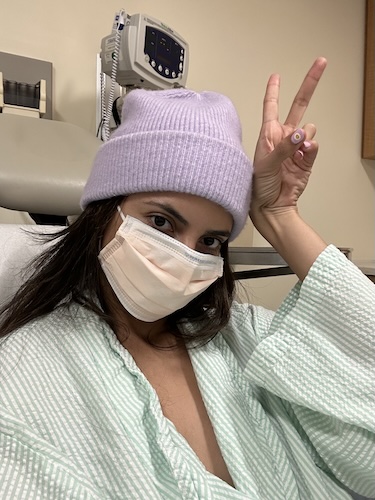
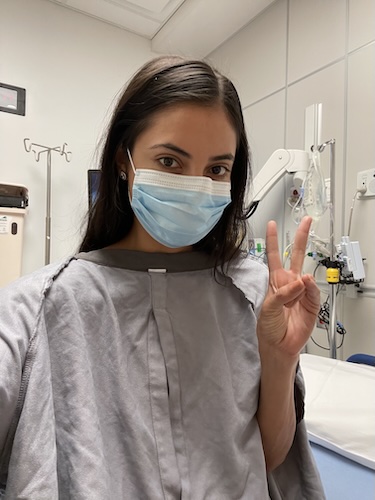
Then the nurse was like, “No, you’re gonna need help, because it’s your arm. You’re gonna need help with basic things, like taking your clothes off, putting your clothes on, and taking a shower.” And I was like, “What the f***?” Things that you would never think about. And she’s like, “And you can’t lift more than 5 pounds.” I have a 9-pound dog. She’s like, “You’re going to need help cooking and things that you do every day with all of your body parts; you’re not going to be able to do that for 4 to 6 weeks.” I think that’s where it hit me that I’m gonna be handicapped, so my mom came to help and was here for everything. They sent a nurse, but my mom was the one who was here.
A surgery that ran long, and my sister left waiting outside
It was longer than they said it would be, which freaked everybody out. They only let one person in, and my younger sister was the one who was communicating with everybody. It was originally supposed to be, I believe, like 45 minutes, and it went over an hour and a half more than it should have, so everybody was texting her every minute. They were like, “Is she out? Is she out? What’s happening?” And then I think my sister stepped out to get something to eat or something, and then they came to look for her, and they’re like, “Oh, Nancy’s out,” and nobody was there.
So I woke up, and they’re like, “Nancy, how do you feel?” I was so sedated. I was like, “Where’s my sister?” That was the first thing I said, because I knew that my whole family was waiting. And they’re like, “Your sister? There’s no one out there for you.” I’m like, “Yes, there is. Where’s my sister?” So they went to search for her, they found her, and then she was able to tell everybody, “She’s alive.” But I was under so many drugs; I was laughing, and I went, “Haha, I’m in so much pain.” My sister responded with,, “You’re crazy.”
When they put you under, you go so fast. The next thing you know, you wake up, and you go, “What the f***, man? I have a hole. I feel like I was shot.” I was in pain, so they did have to give me a little bit more painkillers. But the doctors were worried that I would lose some mobility. They did say sensitivity, but obviously, you always run the risk of something else. So they’re like, “Nancy, can you give us a thumbs up?” And I’m like, “It hurts!” They’re like, “Okay, good, good, put your arm down.”
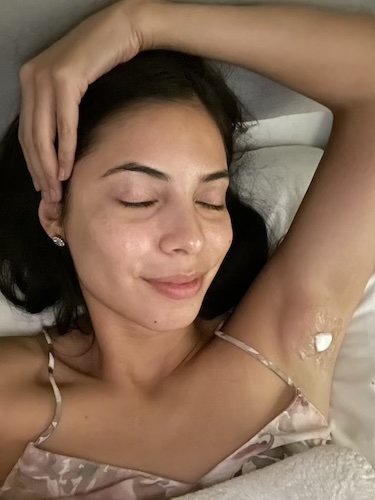
I did lose sensitivity from the elbow up to my armpit. A lot of it came back, but not 100%. In the beginning, I’m like, “Pinch me. I really don’t feel anything,” and my sister’s like, “Are you serious?” Twisting my skin. I’m like, “I don’t feel anything.” I want to say I probably got maybe 75% back, but it feels numb there. They’re like, “It probably won’t come back. So just so you know.” Before they did the surgery, they told me. and I just went, “Okay.”
Losing feeling in my arm, and avoiding chemo and radiation
The doctor advised, “Maybe we’ll do some radiation, if it’s needed, but don’t worry about that right now.” He didn’t stress me out like the other doctors were doing, saying things like, “You’re gonna need maybe chemo, radiation, this and that.” And I was like, “What?” When they said that, I was just like, “No!”. I know people go through it, but nobody wants to go through that. Nobody wants to be told that they have to do that.
I had a family member go through it; you might see your own, go through it, too, and no one enjoys that. The fact that they went, “Oh, you might,” and I responded, “Absolutely not. This just feels wrong.” I felt like I was in the wrong timeline. I would go, “No, there’s a mistake in the timeline. This is wrong. What do you mean this is happening to me? What the hell?”
It took a while to get out of denial, because, like I said, even my parents were like, “No, it’s not cancer.” I’m like, “I’m in the cancer department right now. I’m sorry. I don’t know what else to tell you.” They’re like, “No, no, no, it’s not. You’re gonna be fine.” And I’m like, “Mom, I don’t know what else to tell you.” My parents were in denial. And I was like, “If you’re in denial, I’m in denial; I don’t know where that puts us.”
Thankfully, since that, they were like, “There’s a 10% chance it can come back. We cut extra,” just to get it even more than they should have, just to remove everything so nothing would be in there. (Editor’s Note: According to the American Cancer Society (ACS), it isn’t usually possible to say exactly how likely it is that cancer will recur. It depends on the type of cancer a patient has, its stage, how aggressive the cancer is, and how effective the initial treatment was. The ACS adds that the chance of recurrence is higher for some types of cancer, including soft tissue sarcoma.)
They initially thought the tumor was golf ball-sized, but then when they opened it, they found that it was larger, more like a tennis ball. It was squished in there and hitting nerves. The doctor said, “Maybe that’s why you were feeling all those tingling sensations, because it didn’t have anywhere else to grow, so that’s when it started popping out. You’re lucky that it popped out,” because a lot of these don’t pop out, and then when they’re found, it’s too late.
I was just questioning everything in existence at that point. I blurted out, “Did you guys take a photo? What did it look like? I want to see what was in there.” They didn’t take a photo. But they went online and showed me a similar tumor, which I was disgusted by, but still wanted to know about it. I wanted to know what was in there, but they said that they were still going to study it.
Scans every six months: What follow-up care looks like now
Every six months for the next five years, I have to get an MRI, a CT scan, and an ultrasound, basically. It’s been three years, and he no longer makes me do an MRI, just scans, which is good; I go in there and get out faster. Every time I go in there, I ask them, “So what’s up, guys? What did you find?” And they just keep updating me as they go along.
At the beginning, they went, “Oh, it was like a genetic mistake, or something could have put that area in a lot of trauma, but that’s all we know.” They’re still studying why sarcomas even happen. Maybe a year and a half ago, once I was ready to talk about it more, I realized I wanted to raise awareness about it, because it’s a type of cancer that not a lot of people know about; even I didn’t know about it. I was like, “Sarcoma? What is a sarcoma? And how and why do people get them?”
Once I shared it on social media, a lot of young people responded, even people whose babies were born with sarcomas. I received so many stories and questions from different people asking me different things. And thought, “Oh my God. I don’t know if I’m ready for this.” So then I replied with the best of my advice. But I was surprised by how many young people are getting sarcomas.
And I don’t know how, but someone added me to some group or sent me a group of people who had the specific type of sarcoma that I had, and I was like, “Wow, there are Facebook groups for this?” So everyone on there was sharing either their story or that of someone else, like a family member who also has this kind of cancer. They were comparing treatments, diagnoses, where they might have gotten it, and what life has been like post-sarcoma. It’s a scary thing to go through, and it helps to find others who also have it.
Any kind of cancer, I think, just puts your whole life on hold, and you don’t know the answers to anything. And when you’re getting multiple treatments or solutions, or not, you’re like, “What is life about? What does all this mean? How am I supposed to choose my path?”
So I think it’s a very confusing and sensitive time for people. And so at least when you find someone who went through maybe a little bit of the same thing, you’re like, “Okay, you get me a little bit.”
Taking a six-month sabbatical to heal
I took a sabbatical after surgery. I didn’t take it before surgery. I took it once I couldn’t do anything for six weeks. I was sitting there, thinking about my whole existence, and just being home with my mom feeding me. I just felt like I was born again.
And I went, “Oh my God.” It just came to me. Everything just worked out, incredibly. I don’t know; sometimes life does these things. I don’t even know how I pulled it off, but I did.
I was able to tell all my clients in New York, “Hey, I’m taking a sabbatical.” And they were all supportive: “We’re gonna be waiting for you here when you come back.” That just doesn’t happen in a busy place like New York City. The fact that everybody told me, “Go take your time. Take as much time as you need, and when you’re ready to come back to work, we’ll be here,” was astonishing. So that was very nice.
But at the same time, even when I didn’t know when I was gonna return, just being able to say I need rest and I need to think about what I want to do next was the hardest. I’m in entertainment, fashion, and media, and I’ve always been go, go, go, so just even thinking of stopping was never a thought that went through my mind.
My mom said, “What? Are you sure? What are you gonna do with your apartment?” I just went, “Mom, someone will rent it. It’s fine.” And my mom couldn’t put two and two together. I told my therapist, and she said it’s a great idea, and I was like, “Okay, I have one supporter. That’s great.” And then, so I took six months off. I traveled.
It was a strange six months. I was traveling alone. Well, I’ve traveled alone since I was 19, because of my career. I started modeling really young, so I had to travel alone very young. And so traveling alone for six months was nothing new. What was new: new people meeting me and asking, “Oh, why are you here?” Usually you’re just like, “Oh, I’m on vacation,” or “I’m here for whatever.” I would respond with, “Well, I’m just doing nothing. I’m just living life.”
They did not expect that response. I’d elaborate, “Yeah, I’m just here to focus on life and living, you know?” And they’re like, “What are you talking about?” I would tell those I trusted about the surgery, and when they would ask about it, I would say that I was doing okay and just trying to heal.
I couldn’t really work out for a while, so I was just finding things to do. I needed to travel, to go walk around and find new places to explore to the best of my physical capabilities.
Rebuilding my life and learning to live alone
But once the doctor told me, “Yeah, you can start lifting weights again,” that also motivated me. When I was able to do a pull-up again, I was like, “Oh my God, we’re back. We’re back!”
A person doesn’t realize how much you need both arms until you cannot do everything with just one. So for a while, I felt unbalanced because I was stronger in one arm than the other, so just getting that rebalance was my main focus.
I also wanted to be more selective with who I was hanging out with or what I was doing in New York. There were a lot of friends whom I just realized I wasn’t aligned with anymore. I came back to New York after six months, wanting to pursue acting more seriously, so that’s another realization I had in those months. I was doing it, but not as fully as I should be. And so when I came back, I put my foot down and said, “No, I want to do this, I want to do that.” And I realized I wanted to pay more attention to more hobbies.
It was also the first time I had lived alone, so just enjoying that for the first time was great. At the beginning, it was really hard, because not only was I going through the surgery and all that stuff, but it was the first time I’d done it. Once I was back, I celebrated living alone, since most generations before me didn’t get to do so.
I was finding simple things really meaningful. I just enjoy so many little things more now. People tell me, “Oh my God, you’re so happy. You’re alive. You’re not sick. Wow, you’re so intense.” And if they don’t know what I’ve been through, they have no idea. They say, “Oh, she’s just positive.” And I say, “No, guys, I’ve seen the other side.”
Gratitude, fragility, and why more young people are getting cancer
It could have been worse, you know, and it wasn’t.
I remind other people and myself that we complain too much and we take a lot of things for granted. You need to enjoy life and enjoy the things you want to do. Nobody’s guaranteed anything here. Even if you’re the healthiest right now, you could walk outside and a car could hit you. That would have nothing to do with your health. You could be a great person and then that kind of thing would happen to you. You don’t know. So stop wasting time being with people and doing things you don’t want to do, and all that stuff.
I started learning how to play tennis. I started learning how to ride horses. I’m still learning Italian, traveling, hanging out with friends who are more aligned with where I am in life, and pursuing my acting career, writing, and reading, and doing more things that fulfill me, I guess.
It’s crazy. I think I pinch myself now; I think, “Oh my God, life is so beautiful. Everything is so beautiful.” And I’m just so grateful every day.
Now, even when I get so much as a cold, I grit my teeth and go, “No, no, my health,” because I realize how fragile we are. When you’re young, you don’t care about anything. But the fact that this happened to me in my 20s made me think, “I’m supposed to be healthy. I’m not supposed to be going through this s***.” And the fact that it did made me realize, “Oh my God, this could happen at any point in your life.”
People associate cancer with older people, but now a lot of younger people are going through this, and it’s scarier. What is going on? That’s also something that kind of was awakened in me. Why are so many young people getting this? Is it lifestyle? Is it environment?
I’ve gone down the rabbit holes, so I’ve done everything to the best of my ability to create a world, I would say, where I feel like I’m doing the best to nourish my body. I’m focusing on rest, mental health, and having things in my home that are better ingredients and non-toxic; baby-proofing my house, basically. Things about which I can say, “No, this is better not only for the environment, but for me; it doesn’t have toxins, and this and that.” I just became crazy in that sense. But I think it’s better in the long run.
I’m also reading books and stuff on how the body and mind are connected. And sometimes, for example, all these chronic illnesses can be caused by our thoughts, stress, and things around us that we’re not even aware of. I would think, “Oh my God, that makes sense.”
I’m just trying to be at peace as much as possible in this crazy world to not trigger anything else. I don’t want to go through anything else anymore. That was good. I learned my lesson. I was able to live to tell the story. I just don’t want to relive it or cause anything else if I can do stuff to prevent it.
What I’d tell someone going through something similar
When I found out I had this, and even when I was going through all of it, I think being told, “Oh, you’re going to be okay,” is the last thing on earth that you want to hear or that you want to believe, because you’re the one going through it. I would be like, “Stop telling me that. That doesn’t help. It does not help.” I would never do that to someone going through what I went through. But I would say: feel everything.
I think if I were not in therapy, I don’t know what I would have done, because I tend to hold stuff and hold it together. My once-a-week was my way to release it and talk about it with her, to not break down in front of everyone else, because me breaking down in front of everybody doesn’t help anybody.
Some people are better at processing experiences on their own, but I’m not; that’s why I go to therapy. It’s helpful to have a space where you can process everything you’re feeling and realize what you’re feeling. Sometimes you don’t even realize that you were feeling that until you’re there.
I think it’s the most important thing, because I think it will help you stay strong, not only in that moment, but in the long run. And I think that’s very important for overall health, whether you’re going through this or not. I think it’s my main takeaway.
“I created this life”: Advocacy and a full-circle moment
People have met me where I am right now, and they think, “Wow, you have an amazing life.” No, guys, I created this life. Because I am not the same person I was three years ago, not at all.
I’m doing well now because of my experiences. But I think that continues to be weird for me, for people who just meet me at this point. And if they don’t know what happened before, for some reason, they tend to think I’m entitled. I’ve heard multiple things. I was even called a trust fund baby because of how I decided to reroute my life, for some reason. There’s no trust. What are you talking about? That’s an interesting take.
Why am I even getting these kinds of comments? Whatever the reason, I’m giving off good energy. At the end of the day, I’m doing me. If people get to even try to know me, they’d know that this happened. Although it’s been shared on social media, you would have to scroll down really deeply to even know.
I am part of a charity that raises money for cancer, which I was part of before I had cancer, which is a crazy thing. We support the hospital that I was treated at. It was just like a full-circle moment. In 2025, the charity invited me to give a speech, and I tried to turn them down. “No, guys, I don’t like speeches, please.” They went, “If you’re comfortable enough, we know it’s been some time now.” And I gave it some thought and reconsidered. “Okay, fine, I’ll speak.”
I’m at a point right now where if this information can help someone in whatever way, I think that’s my way of changing the world. Because for a long time, I think I was trying to find ways of how I can change the world. I never thought it would be this way, but if this is the way that I have to do so, I think I want to do my best.
This interview has been edited for clarity and length. The views and opinions expressed in this interview do not necessarily reflect those of The Patient Story. This content does not replace professional medical advice.
Inspired by Nancy’s story?
Share your story, too!
Hear from people living with soft tissue sarcoma
Real experiences with diagnosis, treatment choices, side effects, and life beyond soft tissue sarcoma — in their own words.

Leave a Reply