
Brice Was Too Weak to Hold His Daughter; He Was Diagnosed with Multiple Myeloma at 31
Brice was working toward a career in audio engineering when persistent fatigue, weight loss, and severe lower back pain sent him looking for answers. What he initially dismissed as being run down turned out to be early multiple myeloma symptoms: his heart raced every time he stood up, and he eventually fainted outside his apartment after a dental procedure. Blood tests revealed he was severely anemic. Further workup, including a bone marrow biopsy and a urine test for M protein, an abnormal antibody made by cancerous plasma cells, led to his diagnosis in 2021.
Interviewed by: Tory Midkiff
Edited by: Chris Sanchez
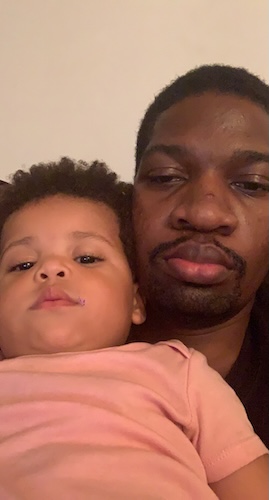
Brice had never heard of multiple myeloma and turned to his phone for answers, which only deepened his fear. Nobody in his family had a history of cancer, so it wasn’t something he had considered. The disease’s physical toll became impossible to ignore when he grew too weak to carry his young daughter through a store.
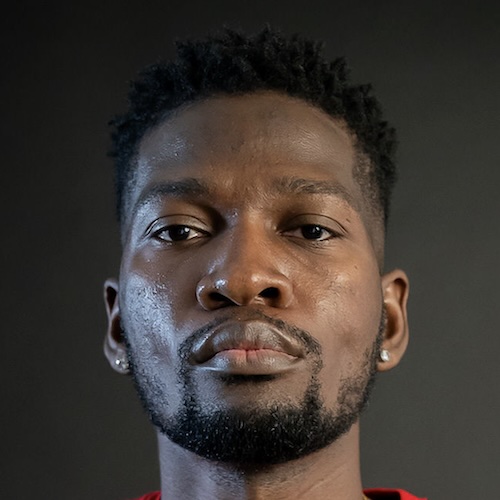
Treatment began with rounds of chemotherapy in six-week cycles, which brought nausea, night sweats, insomnia, and a moon face from the steroids. When his body didn’t respond enough to chemotherapy alone, his care team moved him toward an autologous stem cell transplant at Ohio State, an hour from home. The two-and-a-half-week inpatient stay was, in his words, the hardest part of treatment: constant nausea, a lost sense of taste, and being tethered to a machine around the clock.
Underneath the physical toll was a deeper fear: that he wouldn’t be there for his daughter, who he was fighting for full custody of throughout treatment. Brice responded positively to the transplant and entered a form of remission. He has stayed on low-dose maintenance therapy with lenalidomide, based on his oncologist’s guidance that it improves long-term outcomes. After years of routine monitoring, a recent lab check brought news that his myeloma may require treatment again soon, though his care team is taking a “watch and wait” approach for now.
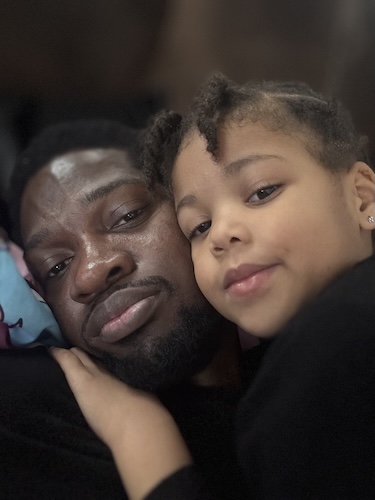
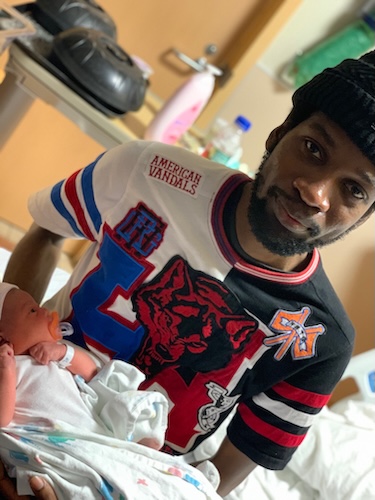
Today, Brice has full custody of his daughter, volunteers with multiple myeloma advocacy organizations, and published a memoir, “Rise Anyway,” about his experience with illness, mental health, and fatherhood.
Watch his video and read the edited transcript of his interview for more about his multiple myeloma story.
- Brice’s fatigue, back pain, and unexplained weight loss were dismissed as generic issues by his early doctors, and it wasn’t until a fainting episode revealed severe anemia that testing uncovered multiple myeloma. His experience is a reminder that persistent, worsening symptoms deserve a specific answer, not just general reassurance.
- The stem cell transplant, not the chemotherapy that came before it, was the hardest part of Brice’s treatment: constant nausea, a lost sense of taste, and being tethered to a machine for two and a half weeks straight. He got through it by giving himself small things to do: a laptop, a movie, anything to break up the silence.
- Not knowing how your body will respond to treatment, or for how long, is one of the heaviest parts of a cancer diagnosis, and that uncertainty doesn’t fully lift just because treatment ends. Brice still carries it every time his oncologist mentions a lab result.
- Brice was diagnosed decades earlier than most people with multiple myeloma, and instead of letting that isolate him, he has turned it into the reason he now shows up for other newly diagnosed patients through Blood Cancer United and HealthTree. Sharing his experience with people meeting this diagnosis for the first time has become part of how he makes sense of his own.
- The fear that shaped Brice’s diagnosis more than anything else wasn’t his own prognosis. It was the thought of not being there for his daughter.
Brice’s Diagnosis Facts
- Name: Brice D.
- Age at Diagnosis:
- 31
- Diagnosis:
- Multiple Myeloma
- Symptoms:
- Worsening fatigue and weakness
- Bone pain
- Lower back pain
- Inexplicable weight loss
- Poor appetite
- Shortness of breath
- Severe anemia
- Treatments:
- Chemotherapy: D-VRd (daratumumab, bortezomib, lenalidomide, and dexamethasone), KRd (carfilzomib, lenalidomide, and dexamethasone), melphalan
- Autologous stem cell transplant
- Immunotherapy: lenalidomide

This is not medical advice. Please consult with your healthcare provider to make informed treatment decisions.
- Brice’s Diagnosis Facts
- Life before multiple myeloma: Audio engineering, fatherhood, and a different kind of normal
- Hearing “multiple myeloma” for the first time and Googling my way into fear
- Too weak to carry my daughter through a Walmart
- What a bone marrow biopsy actually feels like
- Getting the diagnosis at a small hospital, then meeting an oncologist who explained it
- Six-week rounds of chemotherapy and the news that I’d need a stem cell transplant
- Traveling to Ohio State for the stem cell transplant
- A kind of remission that’s “always there,” a port I kept, and a choice about maintenance therapy
- Living in watch and wait
- Night sweats are back, but we’re taking a minimal approach to them
- The fear of not being there for my daughter
- Finding community through Blood Cancer United and HealthTree
- Writing “Rise Anyway” and turning my multiple myeloma story into something useful
- What I’d tell someone who was just diagnosed
- Hear from people living with multiple myeloma
Life before multiple myeloma: Audio engineering, fatherhood, and a different kind of normal
I’m Brice. I’m 36 years old. I was diagnosed with multiple myeloma when I was 31 years old. That was back in 2021. Before that, I was pursuing a career in audio engineering. I was a slightly outgoing person. Since my diagnosis, things have dramatically changed, as well as me having my daughter full-time. So my before and after is totally different. And from there, I’m just trying to figure out what’s next for me, what I want to do, and how I can bring things forward.
The fatigue, the back pain, and the day I collapsed outside my apartment
I noticed that I was tired a lot. There’s a difference between knowing your baseline of being tired and just being fatigued all the time. I was getting a lot of lower back pain that was pretty extreme. I was losing a lot of weight. My appetite wasn’t quite right. I would feel hungry, but I just couldn’t force things down.
There were two particular moments that really made me seek a doctor. I was already seeing doctors, but they were giving me generic advice, and it wasn’t really helping me. There was a moment when I was getting my wisdom teeth pulled out, and my daughter and my mom were with me. I told them to go ahead and go into the apartment before me. As I was walking toward the apartment, in a split second I was on the ground, staring upward. I had no idea what was going on.
In retrospect, come to find out, I was extremely anemic, and I had very low hemoglobin. My heart rate was always increasing when I would get up, and that’s what led me to at least take the initiative to get serious about talking to a doctor. They did different sorts of tests, from a heart monitor to drawing blood, which is something I never did. I had a fear of needles, and that fear caused me to withhold getting my blood drawn for so many years, which I do regret doing. I ended up having a bone marrow biopsy and the M protein spike test in my urine. They just started testing different things. Ultimately, that’s what led to my diagnosis.
Hearing “multiple myeloma” for the first time and Googling my way into fear
I absolutely had no idea what multiple myeloma was. In fact, when I was told I had multiple myeloma, the first thing I did was pull out my phone and look it up, which was a big mistake. At the time, AI wasn’t as big. It was around, but it wasn’t as big as it is now, so I got some pretty outdated information and found out quickly that it was a form of cancer. From there, I thought the worst. I thought it was over for me, if I’m being honest.
No family history of cancer, so it was the last thing on my mind
I didn’t think anything of cancer, or that it would be related to cancer. Nobody in my immediate family has cancer. I’ve even done an ancestry thing and went back into my past generations, and nobody had passed from cancer, so the last thing on my mind was cancer. And I was kind of relieved that we figured out what it was after so long. But at the same time, that’s also not something I wanted to hear either.
Too weak to carry my daughter through a Walmart
I’m 6-foot-2, and I’m normally around 170 pounds. I’m a pretty small guy. And when I was diagnosed, I was in the 140s. I was carrying my daughter inside a Walmart, and I was just way too weak. My heart rate was going so quickly due to the low hemoglobin, and it felt like I was going to drop her. I was pacing through Walmart as quickly as I could because I started getting a pretty heavy migraine. My heart was going 100 miles per minute. My arms were shaking because I was getting so weak. The first moment that I could lean her against a cart, I took it.
I know, to other people, that might sound insane. But earlier that day, we had a family gathering, and I actually had to ask my brother to hold my daughter the whole time because I tried to have her strapped to my chest, because that was the only way I could hold her. After all, I was so weak. That’s the ultimate moment that inspired me to want to tell my doctor, “Hey, can we go to a specialist? I really want to figure this thing out.”
That really did it for me. It started to hit me. I wasn’t even strong enough to carry a baby around. Something’s gotta be wrong. There’s no way you can continue going on like this. I had to figure out what was going on with me.
What a bone marrow biopsy actually feels like
I actually had a couple of those. They told me initially that I would be knocked out or in a twilight, as they say. In my mind, I was thinking initially that I wouldn’t remember it or that I would be asleep. But no, I remembered every moment of it. It’s kind of weird. They put you on something so you’re calm and relaxed. You don’t see it because you’re lying on your stomach, and there’s a drill that goes into your back. You can hear it. You can feel it. It’s a very strange thing. It’s like they drill to get a sample of your bone marrow. Afterward, you can’t really walk too well. I had to be pushed in a wheelchair due to the back pain that was associated with it. But it goes away after a couple of hours. It’s definitely something that, if you don’t have to do it, I definitely wouldn’t recommend it.
Getting the diagnosis at a small hospital, then meeting an oncologist who explained it
I was in a doctor’s office, but the thing was, they didn’t describe it as cancer upfront. They just said “multiple myeloma,” and they didn’t really explain to me too much what it meant. That’s what led me to go into my phone. But the hospital I went to was like a small local hospital. It wasn’t until I went to a bigger hospital that actually had a center for cancer patients, where they went into more detail and introduced me to an oncologist. That’s what really broke things down for me: why I couldn’t keep blood in my body, because it was blocking it, and that was making me anemic, which I had no idea I was anemic for so many years. I just thought I was always cold. I didn’t think much of it.
Sitting across from an oncologist who couldn’t promise me anything
I had my brother with me. At the time, I was so stressed about this new information that was hitting me all at once. I couldn’t really make sense of it. It was just too much at once, so I had to have my brother be there with me and talk to the doctor with me. His memory’s a lot better than mine, especially when he’s not under stress. I’ve always dealt with anxiety since I was a teenager, so already being an anxious person mixed with this high-stress event, I definitely was having trouble keeping up with all the medications the doctor was talking to me about.
If anything, I just had a lot of questions for him so I could understand the treatment. He pretty much couldn’t promise me anything, and that was pretty daunting to hear, because every question that I asked him was pretty much, “It just depends on how your body responds. We don’t really know.” There was definitely a lot of anxiety behind not knowing what the future held with treatment or how long I would be on it. That was the bigger question for me.
The questions everyone asks first: Is this curable? Is it treatable?
I would say the most common questions that most people would ask would be: Is this curable? Is it treatable? You find out it’s more something that you treat than something that gets cured. How long will I be on medication? How many medications do I have to take? What effects would these medications have on my body? At the time that I was diagnosed, I was actually plant-based, because I was already trying to go a natural way, from what I saw online, of healing myself. But once he told me the severity of the diagnosis, because I do believe that I had it years prior, and the fact that they needed me to gain a little bit more weight for the treatment, I decided not to continue with that and went the traditional route.
Six-week rounds of chemotherapy and the news that I’d need a stem cell transplant
You would go through, I want to say, six-week periods of taking three different medications. Then there was a time period where, once that ran out, they would start me off with another six weeks on something else. From there, the way my body responded caused me to have to get a stem cell transplant afterward.
Nausea, night sweats, and a steroid-driven heart that wouldn’t slow down
Treatment was kind of brutal at times. There were moments where I was okay, but there was a lot of nausea involved, which was something I never experienced before. I was getting a lot of stomach pains and a lot of night sweats. I would be lying in my bed, and I would have to turn to the other side of the bed just to dry off, because my body would just sweat and sweat and sweat. The steroid caused my heartbeat to speed up, so there was a lot of insomnia involved. I had a really difficult time sleeping because my heartbeat just wouldn’t settle down. I already had something called SVT (supraventricular tachycardia), so my heart was already fast naturally, and that just added on to it.
It did increase my appetite in some ways, but at the same time I was nauseous, so that didn’t necessarily fix the appetite problem. As far as the side effects go, I would describe it more like IBS-like symptoms, like irritable bowel syndrome. Even when I was eating food, it just wasn’t sitting in my stomach right, like it was before I was being treated. I was dealing with a lot of stomach pain, a lot of constipation, something I didn’t have before. That’s just something that came with it.
I would say, obviously, fatigue. That was times two of what it was before, just because of all the medications I was on.
There were definitely a lot of side effects for sure that I got after taking the chemotherapy. I definitely got a moon face. I believe that was from the steroid as well, where my face got pretty puffy, and that was kind of weird to see. Over time, I was able to successfully gain weight, though, and I think the steroid had a lot to do with that.
I noticed my feet were getting dark, and I was getting pains in awkward places that I didn’t experience beforehand. Going through treatment definitely had a lot of additional side effects that I didn’t experience prior.
What fatigue really feels like when it’s not just “being tired”
Fatigue to me just feels like, without just saying that it’s tiredness, usually throughout the day, you kind of have an idea of your body’s energy levels. If you’re a morning person, you can be up, and then around noon, you might be the type to have a decline. I know I’m like that, because usually around 1 or 2 p.m., I get a little bit tired. Then I get a little boost, and I’m up.
For me, fatigue is pretty much a flat-line tiredness, where you just don’t have the extra energy to do certain things. Not to say that there weren’t moments where you’d be more energized to do things, but for the most part, it’s pretty much your baseline. It’s just always low. And so that may affect your behaviors, as far as what you get done in a day and what you want to do in a day. That’s one of those things nobody thinks about. We don’t think about, “Oh, how tired I am,” or “How energized I am” to go do this or go do that. But once you’re experiencing something like that, you definitely don’t have any choice but to do that.
Traveling to Ohio State for the stem cell transplant
Throughout the whole treatment, I was hoping I wouldn’t have to do the stem cell transplant. I was hoping chemotherapy would be enough and I could go back to living a regular life. Unfortunately, they told me I would have to get the stem cell transplant. I had to go to Ohio State, which was an hour away. I would say the stem cell stay lasted about two and a half weeks, which is actually pretty quick from what I’m told in comparison to other people. I was told that’s because I’m younger, and since I’m a little healthier than the average person diagnosed, I was able to recover a lot quicker.
I couldn’t have done that part without help from my support system, which is my mom and my brother, because without them, I don’t know how I would have gotten back and forth so many times to Columbus, which is about an hour away from where I live in Ohio. Without them, I don’t know how I would have been able to do it, because you need a caregiver by your side when you go to the appointments.
I did the collection, and then that’s when I started. Once they collected enough, I believe it took them two days to get enough. I ended up doing inpatient for two and a half weeks at the hospital.
Losing my sense of taste and learning to sit with silence
That’s probably the worst part of treatment for me. Chemotherapy wasn’t that bad in comparison to the stem cell transplant. With the transplant, you gotta get your blood drawn every four hours, I believe, and it doesn’t matter if you’re awake or asleep. You’re confined to a bed. They encourage you to walk around, because if you lie down for too long, it’ll be harder to walk around when you get up.
Nausea was times ten. With food, you lose your ability to taste. Everything tasted horrible. There’s not a single thing I enjoyed during that stretch of time, because your taste buds are just gone, so everything tasted awful. It didn’t matter what it was. There was no go-to. That was something that happened slowly over time.
You always have a machine hooked to you everywhere you go, even to the bathroom. Even when you take a shower, you’ve got to have it still connected to you, and you try to make sure certain parts don’t get wet. It was pretty difficult.
You’ve got to find a way to keep yourself busy. If you don’t, then it can be a lot. I’m used to sitting in silence, so I just brought a laptop, and I was able to play games, which I didn’t do beforehand, and watch movies, which I didn’t do beforehand either, to pass the time. For the most part, it’s just sitting in a room all day, and you have nurses that occasionally come in and out. It’s a very long, drawn-out process.
A kind of remission that’s “always there,” a port I kept, and a choice about maintenance therapy
I reacted positively to the stem cell transplant. There was a form of remission that I was placed in. It’s not complete remission, but when you have a blood cancer, it’s always there. My oncologist gave me two options. One, I could get the port removed from my chest, which my local oncologist suggested I keep, just in case, so I did listen to my local oncologist. And the other option was staying on a maintenance drug, like lenalidomide.
I mean, the second option was to take a few months off lenalidomide after the stem cell transplant, and that was something I was hoping to get off, because I felt like I was closer to being normal if I wasn’t doing anything medication-related. But unfortunately, I asked my oncologist, “Hey, is it better to stay on maintenance or is it better to be off of it?” And he said that statistically, people tend to respond better when they stay on maintenance, so that was the choice I made afterward: to stay on the lowest dose of lenalidomide, to try to keep it from coming back anytime soon.
Blood draws every few months, then a phone call on Juneteenth
After my stem cell transplant, I got my blood drawn routinely, so that meant they would check my levels every three months. Then three months turned into six months. Recently, it was on Juneteenth when I went, and that’s when he hit me with the news. Now, I got the stem cell transplant in 2022. In June 2026, I was told that he expects I will be starting treatment again, but he wants to wait until I start experiencing symptoms and for it to affect my levels before we decide to do that again.
Living in watch and wait
It’s dreadful. I’ve always dealt with anxiety, so I think that’s probably been the worst place mentally, getting that kind of news. It’s not one of those things where I could just tuck it away. Like most problems, you can deal with it later or compartmentalize it, but this is something that just stays in the back of your mind, like, “Oh, I’m going to have to start treatment again soon. I’m gonna have to go through all these different things again.”
A month later, I ended up messaging him, and I asked him, “Hey, will I just do chemotherapy, do I have to do the stem cell, or both?” And he couldn’t promise me anything. He said it depends on how I respond to treatment, whether or not I would have to do those things again.
It’s been mentally weighing on me for a long time. But these past couple of weeks, I’ve been fine in the sense of coming to grips with it and accepting that things may be different, but you know what to expect this time. Before, you had no idea what to expect. You had no idea how your body would respond to these things. And now that I have a better idea, I’m okay with it.
Night sweats are back, but we’re taking a minimal approach to them
I did notice the night sweats have been coming back lately, but for the most part, I haven’t really noticed too many symptoms coming back. He did give me the option that we could start treating it now, but we both agreed that it may be better to take more of a minimal approach instead of being too proactive about it. We decided to wait to see what my body does instead of reacting as soon as it comes back. He was telling me that if it doesn’t affect anything, then for now, I can stay off it a little bit longer.
The fear of not being there for my daughter
The worst part about being diagnosed and not knowing what to expect was the fact that I did have a one-year-old daughter. I had shared custody at the time. Throughout my entire treatment, I was going to court. Ultimately, I ended up getting her full-time, but throughout the whole process, I was fighting to get her. The thought of me not being there just bothered me a whole lot. When I was first diagnosed, that was the biggest fear that crept into my head.
If I’m being perfectly honest, my mind went so extreme, thinking, “What if what Google was saying is true and you only have a couple of years left?” The thing that I couldn’t sit well with was the idea of me not being there for my daughter, so that definitely gave me the inspiration to want to fight harder, to be here more. I can accept certain things being out of my control, but that was just the one thing I couldn’t accept being out of my control: not being here for my daughter.
Explaining the word “cancer” to a six-year-old
She has a little idea of what’s going on with me now. I talked to the news about it once, and the story got out, so I thought that was the perfect opportunity, because people would say things to me in the streets about it. I explained to her that I’ve got something going on with me, but that doesn’t mean it’s something to worry about. But I did talk to her in a way that she has an understanding of what’s going on, as much as a six-year-old can understand.
Especially the word “cancer,” because from her understanding, she’s had family members who passed from it, outside my immediate family, like my dad’s wife. So hearing that, you would think that she’d think the worst, but she doesn’t have a full understanding of it, to the point where she went around saying it out loud, like, “Hey, my dad has cancer.” I know she didn’t mean any harm by it, nor does she fully understand the impact of what she’s saying. But I was honest with her and had a talk, as much as I felt like she could understand, being six years old. I plan on having her with me when I go to events or do anything that has to do with multiple myeloma.
Finding community through Blood Cancer United and HealthTree
Blood Cancer United, which used to be The Leukemia & Lymphoma Society, is having an event on October 1, 2026. I will be attending that. I just got involved with them, as well as HealthTree. I’ll be talking to other patients who are newly diagnosed and just telling them what to expect, and then guiding them through it, because that’s just something I wish I had when I was going through it, especially being 36 years old, since people are normally diagnosed at 69, so I wanted to give more of a perspective of a patient who’s a lot younger, a different demographic. Anything I can do to spread awareness, I’ve been volunteering and putting myself out there more.
(Editor’s Note: The American Cancer Society says that multiple myeloma is most common in older people, and people younger than 35 make up fewer than 1% of those diagnosed. Most people diagnosed with multiple myeloma are older than 65, with the average age of people diagnosed being 69.)
Writing “Rise Anyway” and turning my multiple myeloma story into something useful
I ended up writing a book about it. I wrote a memoir called “Rise Anyway,” and it covers my experiences with mental health, dealing with multiple myeloma, and fatherhood at the same time. I definitely thought that was important to talk about and get out there.
Right now, I’m promoting it, trying to do as much as I can while being a father. I’ve noticed the balance is pretty difficult, but I’m gonna make it.
What I’d tell someone who was just diagnosed
The first thing I kind of think of is how I reacted when I was first diagnosed. I was pretty pessimistic about the future, and for a long time, I was saddened by the news. You have a lot of people who can be diagnosed with certain types of cancer, and it’s like it doesn’t even affect them. My dad’s wife was like that. I used to have to talk to her just to try to understand how she doesn’t allow it to bother her so much. Yet here I am; I have way less cancer than what she had, and I can’t seem to mentally grasp it and put myself together. There were a lot of moments where I was sad.
If I had to talk to somebody else who was going through it, there is light on the other side of the tunnel. A lot of uncertainty and anxiety comes because there’s so much unknown. You don’t know what to expect. You don’t know how you’re going to respond. You don’t know if you can live the life you lived before being diagnosed. And from my personal experience, all those things came back. It’s just for a short period of time, which doesn’t feel like a short period of time, but in retrospect, it was. I had to go through some treatments, and I had to explore the best options for me.
My advice to anybody who’s been diagnosed would be: There is light at the end of the tunnel. It’s going to feel like it’s not there. You’re not going to see any kind of peek of light there. Trust me when I say: Nobody’s less resilient than I am. I’m not the strongest person when it comes to mental health and whatnot, and I can 100% say that there is light at the end of the tunnel, and life doesn’t have to be what it was before. It can be better, with the new awareness you gained from going through something like this. You’ve got to take all the encouragement you can get, especially if you have a support system. That will help tremendously.
This interview has been edited for clarity and length. The views and opinions expressed in this interview do not necessarily reflect those of The Patient Story. This content does not replace professional medical advice.
Inspired by Brice’s story?
Share your story, too!
Hear from people living with multiple myeloma
Real experiences with diagnosis, treatment choices, side effects, and life beyond multiple myeloma — in their own words.
Leave a Reply