
Finding His Voice Again: Nicolas Dromard’s Tongue Cancer Experience as a Performer
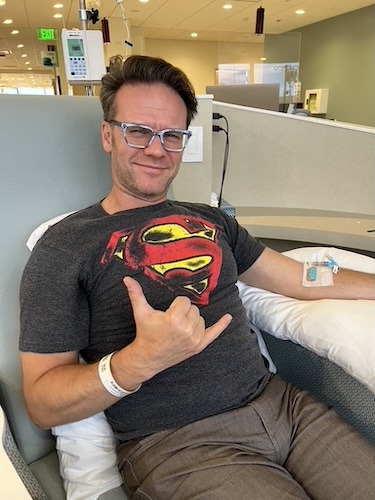
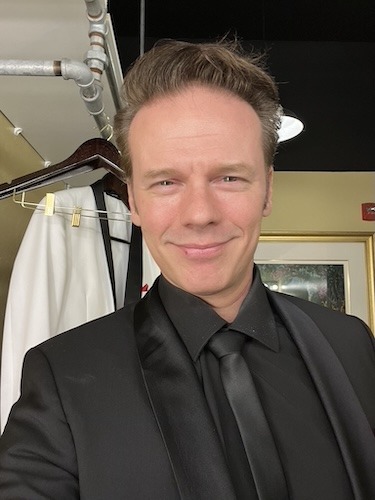
Broadway performer Nicolas Dromard’s tongue cancer experience began with a feeling as small as a hair on the back of his tongue, and a swollen lymph node that didn’t make sense for someone who felt otherwise healthy. He and his wife had just moved from New York City to Southern California to be closer to family and focus on their two-person show, a dance- and song-filled celebration of their love story and real-life struggles. An ENT told him, with poor bedside manner but clinical clarity, that it was likely cancer. The diagnosis was eventually confirmed as tongue cancer: squamous cell carcinoma of the tongue, linked to HPV.
Interviewed by: Taylor Scheib
Edited by: Chris Sanchez
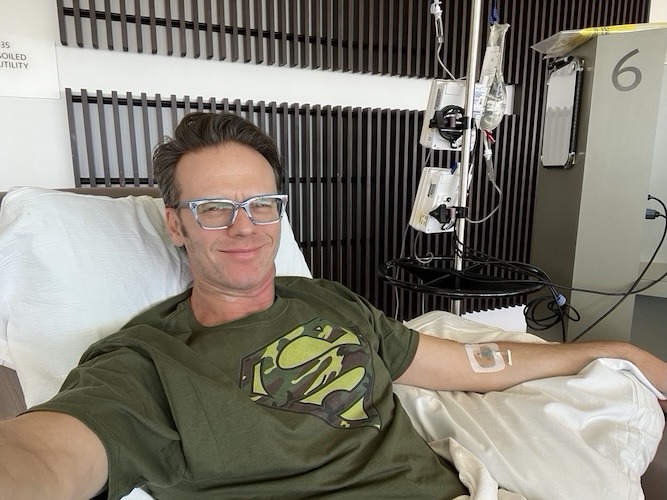
Nicolas had always treated his body as his instrument. Years of dancing and performing meant eating well, working out, and caring deeply about his voice. Hearing the term “tongue cancer,” a kind of head and neck cancer, could have shattered that connection, but his first instinct was to ask, “What do we need to do?” He met with a surgeon, medical oncologist, and radiation oncologist to build a treatment plan. A robotic surgery at the base of his tongue removed a small tumor and lymph nodes in his neck, followed by chemotherapy and seven weeks of radiation. The radiation stripped his sense of taste for about five months, turning meals into “cardboard,” and an anesthesia tube bruised his vocal cords, delaying the full return of his singing range.
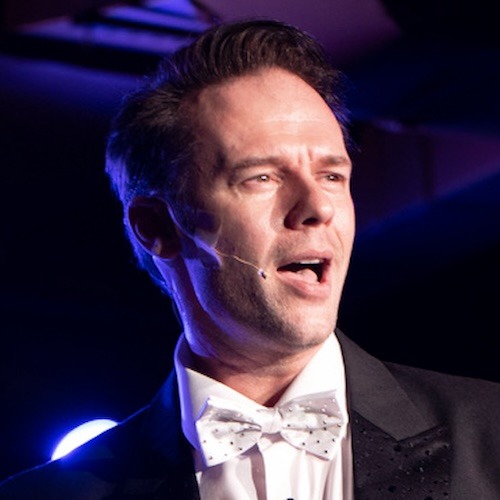
Through it all, Nicolas stayed grounded in the mindset that had carried him through being the only boy in his childhood dance studio and the ups and downs of a performing career: focus on the goal, not the obstacles. His tongue cancer experience also sparked a commitment to advocacy, especially around HPV vaccines and the reality that many people did not hear about them when they were younger. He refuses to blame himself or others for the disease, emphasizing instead that sometimes there is simply “no rhyme or reason.”
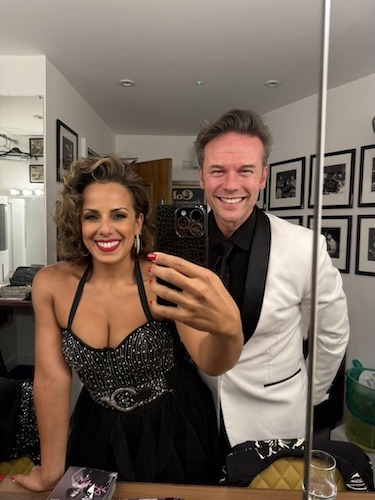
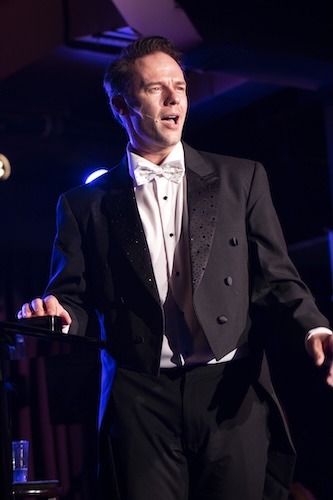
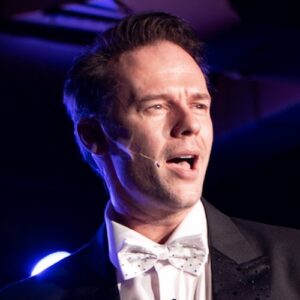
Today, Nicolas is in remission and back on stage with his wife, folding his cancer experience into their show. From the edge of the stage, they talk openly about surgeries, fear, recovery, and the power of listening to your body. Audience members leave feeling seen and uplifted, reminded that it’s okay to feel the hard feelings and just as okay to escape for 90 minutes of song, dance, and connection.
Watch Nicolas’ video above and read through the transcript of his interview below. You’ll gain more insight into his tongue cancer story.
- Listening to subtle symptoms like a lingering “hair on the tongue” sensation and an unexplained swollen lymph node helped Nicolas catch his squamous cell carcinoma of the tongue at an early, more treatable point.
- Even for someone whose body and voice are central to their livelihood, it can help to focus on the next step — meeting with specialists, understanding options, and choosing surgery, chemotherapy, and radiation based on detailed medical advice.
- Treatment can affect more than the tumor; in Nicolas’ case, an anesthesia tube bruised his vocal cords, and radiation took away his sense of taste for months, showing how side effects can reshape daily life.
- There is no value in self-blame; many cancers, including HPV-related tongue cancers, can arise without anything a person could have done differently.
- Nicolas’ transformation is evident in how he now uses his platform as a performer to advocate for cancer and HPV awareness, encourage people to listen to their bodies, and help audiences feel less alone through honest storytelling and joy-filled performance.
Nicolas’ Diagnosis Facts
- Name: Nicolas Dromard
- Age at Diagnosis:
- 42
- Diagnosis:
- Tongue Cancer (Squamous Cell Carcinoma of the Tongue)
- Symptom:
- Tickling sensation on the tongue and at the back of the throat
- Treatments:
- Surgeries: partial glossectomy, neck dissection, lymphadenectomy
- Radiation therapy
- Chemotherapy
This is not medical advice. Please consult with your healthcare provider to make informed treatment decisions.
- Nicolas’ Diagnosis Facts
- Who I am
- How it felt to be a performer diagnosed with tongue cancer
- The first signs and symptoms of tongue cancer
- How my wife and mom reacted to the tongue cancer diagnosis
- Fear of losing my voice and what really affected it
- My treatment plan for tongue cancer
- Recovery, speech therapy, and voice exercises
- My comeback: Returning to the stage after tongue cancer
- Our mission: Helping people feel less alone through song and story
- Hear from people living with head and neck cancer
Who I am
My name is Nicolas Dromard. I am from Ottawa, Ontario, Canada originally, but I’m now living in Anaheim, California. I was diagnosed with tongue cancer, squamous cell carcinoma of the tongue, in August of 2023.
My performing career and life with my wife and daughter
I started tap dancing when I was six years old in Canada, and then moved to New York City when I was 20 and started performing on Broadway. So I’m a singer, dancer, performer, a triple threat. My wife and I, we have our two-person show that we tour across the country. So the Nick and Desi shows are where we sing and dance, share our story, and share our struggles and our ups and downs. My wife’s had three knee surgeries, ACL and MCL tears that she’s had to have reconstructed. So she’s had to put her career on pause for three years in total.
And then just last year, so 2023, we were doing our shows across the country, and I got diagnosed. So we canceled basically everything so I could heal and get better and get rid of the cancer and come back being healthy. As soon as I was diagnosed, it was just like, “Okay, what do I do? What do I have to do to keep singing, to keep performing, and to keep living?”
So that was what happened. And I’m happy to say that two and a half, two and a half years later now, we are still completely in remission, no sign of the cancer coming back, and we are performing our faces off and back at it. So it’s good.
Turning our real-life struggles into a show
Our show is very autobiographical about how we met and fell in love, and about our ups and downs. At first, it was about the struggles of living in Manhattan and auditioning, performing, and our lives. We had our daughter, who is now almost eight years old, and we incorporate her and talk about her, talk about my wife’s ups and downs, and struggles with surgeries, giving birth, and getting back to performing.
And then now as well, we very candidly share what happened to me in my diagnosis and what we had to do, and just what the treatment I went through was, kind of uplifting and inspiring people at the same time as we sing and dance. So we entertain, but we get really, really candid and really personal with our story, so people connect to that. Everyone’s been struggling. Everyone has struggles in their lives, health-wise, financially, or anything. So they get to connect and really get personal.
How it felt to be a performer diagnosed with tongue cancer
It was surreal. I’ve always been very healthy. I’ve always eaten well, worked out, and taken care of my body because my body is my tool. I need my body to perform. I need it to sing and dance and have my voice. So when that diagnosis came through, I was just like, “Oh, okay.”
Everybody knows this about me: I’m very positive. I’ve always been very, very optimistic with everything.
So, first thing, the doctor gave me the diagnosis, and I was like, “Okay, so what do we need to do? What are the steps? Let’s go. Let’s take care of this now and not wait and not dwell.” And my wife was like, “That’s it? You’re not upset?” I’m like, “I mean, what’s that going to do if I get upset? No. Tell me what the treatments are. Tell me what I need to do, and let’s focus on the end, the light at the end of the tunnel, and not on the obstacles.”
Where my positivity comes from
My wife says she wishes I could bottle it up and sell it on eBay. I’ve just, my whole life, just been like this. I’ve always focused on the goal and not the obstacles. So if something’s in the way, if I have to do something, I’ll just make sure that it doesn’t stop me. It’s like, “Okay, so I have to do this and that, or there are speed bumps. That’s okay. I’ll do that to get to what I want to achieve.”
It’s just a mindset, just the way I grew up, I guess, and the struggles growing up. Being the only boy in the dance studio for 20 years and being teased, and still dancing. I just knew what I wanted to do, and I loved doing it. So I just put a smile on my face and did it.
You’ve got to control the controllables, but there’s so much you can’t control. So you just have to let it roll off your skin, have a thick skin. After every interview, audition, whatever it is you focus on, you take five minutes to say, “What could I have done better? What happened? Why didn’t I get it?” Or, you know what, “What’s the outcome? If I get it, great. If not, did I do my best? Was I as well prepared?” Then close the door and move on. That’s it.
My life right before tongue cancer symptoms started
We were actually moving from New York City to California. My wife is from Mission Viejo. During the pandemic, we actually spent a lot of time here, close to family, close to her family. We went back to New York. Things reopened in New York City, and after a year and a half of being back full-time, we kind of saw that, “You know what? We want to be close to family.”
Our priorities had shifted and changed. We weren’t pursuing the eight-shows-a-week Broadway career. We have both been on Broadway and performed leading roles. So we just wanted to kind of focus and do our two-person show and be close to family. We made the decision to move in February of 2023. So when my daughter finished school in June, we were all ready to go, and we moved to California. And it’s when I was driving cross-country that the symptoms came in, and I was like, “Oh, I should get that checked out.”
The first signs and symptoms of tongue cancer
I felt as if I had a hair at the back of my tongue that I couldn’t scratch off. I kept thinking, “What is that?” You know when you have something stuck on your tongue, like a hair or a piece of dust or a kernel from popcorn that’s at the back, but it’s not, it’s very light, it’s not very distinct. I was like, “What is that? What is that?”
That was for a couple, two, three weeks. It kind of came and went, and I was just like, “Oh, okay. It’s nothing.” Then I got to California, and my lymph node was swollen. I didn’t have a cough. I didn’t have bronchitis. Usually, when these get swollen, it’s like they’re fighting infections, right? They’re filtering bad stuff. And I was like, “I don’t like this. I really don’t like this swelling for no reason.” So I went and saw a doctor. I was getting new doctors anyway, and I got my general physical, and I said, “Hey, this is swollen. I’d like to get this checked out.” She said, “Okay, yeah, go see an ENT.”
My HPV-related tongue cancer diagnosis and my ENT experience
The ENT had no bedside manner. He felt my neck. Then he scoped the back of my neck or, you know, my tongue. Then he said, “There’s an irregular swelling on the left side of your tongue, and I don’t like this swelling. It’s probably cancer.” Right away, that’s the first thing he said to me. “It’s probably cancer.” I was like, “Oh, okay. Thanks. No drink or no, you won’t buy me dinner first?” No bedside manners.
He said it with a kind of smile on his face. I was like, “What?” I got the biopsy. Then, a week and a half later, I came back into the office and, with a big smile, he said, “I was right. It’s cancer.” I was like, “Why are you smiling at me?” And he explained. He’s like, “Listen, of all the cancers to have, the markers you have, and how early you picked this, this is the one with the highest rate of remission, of cure.” So I was like, “Okay, great. So what do we do?” That was it. That was from feeling the symptom to diagnosis.
So that was August. June was when I felt it. When we moved in the middle of July, I saw my doctor. At the end of July, I had the ENT, and the results came two weeks later. So, it was in the middle of August that I got the full diagnosis.
How my wife and mom reacted to the tongue cancer diagnosis
My wife came with me for the second time to the ENT. The first time I drove by myself, and then the second time she said, “I’m coming with you this time.” She was there. I was right away like, “Okay, what do we need to do? Let’s get rid of this. What are the treatments?” My wife is emotional and more feeling-driven, whereas my brain is logical, just optimistic. So yeah, she was upset.
And my mom too. My mom got really upset. She’s like, “Oh my God.” Because my mom had a son from a first marriage. My brother was 10 years older than me, and he passed away when I was 23, so 33, from an overdose. So in her head, she’s like, “I don’t want to lose another son.” That was a lot for my mom. But I was like, “Mom, it’s okay. Here’s the treatment. This is what they said. Here’s the percentage of recovery.” For the first year, she was very upset, and it was hard for her to navigate.
My wife saw me, the way I was being optimistic. With all the research and the studies and everything, the treatments and percentages, etc., it’s going to be fine. We just had to do what we had to do and go through it together. So we canceled shows, adjusted things, and had to take time off and a medical leave of absence while I had my treatments. Then it was done. Then it was recovering and getting the sense of taste back in my mouth and working out again, getting strong. Then we started performing again, which is great.
Fear of losing my voice and what really affected it
That’s what we love to do. We love to entertain. We love to perform together and do what we love together. So when I was talking with my surgeon and the radiation therapist, I asked, “Is this going to affect my voice? Am I still going to be able to perform?” That was one of my big first questions.
Both of them said, “Listen, the afflicted area, your tongue is there, your vocal cords are there.” They were very honest. They said, “We’ve never treated a singer, but of all the surgeries, of all the treatments we’ve had, no patient has come back saying their voice had changed.” So I was like, “Okay, great. I’ll trust you. Let’s go.”
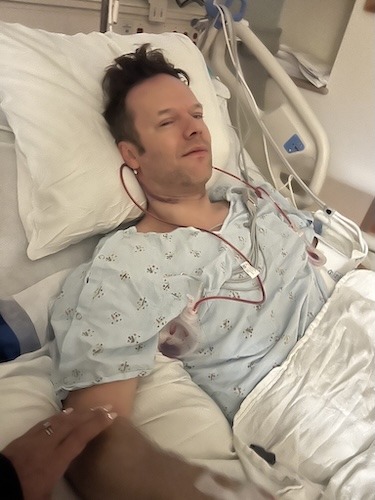
Come to find out, the worst thing was that my vocal cords got bruised because of the anesthesia tube. So it wasn’t the treatment. It wasn’t the surgery. It wasn’t the radiation. It’s because the anesthesia tube was basically on my vocal cords for the surgery, and then they were bruised. So it was about a six-month recovery because of the tube, not because of the surgery or anything else. It was because of the anesthesia. That’s what affected my voice the most.
Six months waiting for my voice to fully return
Bruised or damaged, I never really found out. They scoped after because I was like, “When’s my voice going to come back?” It took literally six months.
October 3rd was the date of my surgery. May is when I finally started to get my voice, my range, back. One day, I was vocalizing just to warm up and kind of soothe and heal, and all of a sudden, I had notes I hadn’t sung in eight months. I was like, “Oh my God.” I ran downstairs, and I sang a song for my wife. I’m like, “Listen, listen, I got my notes back.” And she was like, “Great, okay.”
I was still performing, and we adjusted the material. I was getting back to performing, but I could not do some of the songs that had a higher range, or we had adjusted. I was so frustrated. I was really, really angry and just wanted to sing what I knew I could sing, how I could sing before. For seven, eight months, it was so frustrating.
It was really frustrating because I was constantly trying to get better. At one point, I was like, “If this is my range, if I can’t sing anymore or can’t sing what I used to, we’re going to have to adjust, and it’ll be fine. The audience won’t know what they’re missing, but I know what my capabilities are and what I can do.” So when it came back, I was so happy. It was really like tears in my eyes. I was like, “Yes, oh gosh, it’s back.”
Grappling with “Why me?” and HPV-related tongue cancer
It’s curveballs in life. You just gotta grab your bat and try to hit them. That’s it. There’s no rhyme or reason. It’s not selective. It’s not anything I could have done or changed in my life. It’s not like, “Oh, I should have done that.” The markers were derived from HPV. So it’s a sexually transmitted disease that usually flushes out of your system. It takes two years, and sometimes it doesn’t. More and more, it’s very, very common now.
The famous person who was in the media about this was Michael Douglas. His was a throat cancer from that same thing, derived from markers of HPV. If I had known, I would have had a vaccine when I was young, but I don’t think it was very advertised when I turned into a teenager or became sexually active. It wasn’t like, “Oh, this is a precaution.” It really wasn’t. Now it’s much more in the media, much more in the news, and there’s more information about it. So yeah, I’m going to be an advocate for it.
From this diagnosis, I’ve made some friends who have had tongue cancer, and even recently, a friend of my wife was diagnosed with squamous cell carcinoma of the tongue after I was. She reached out on Instagram, and we chatted. To this day, I’ve been following her journey. It’s just been a great way to connect and share and inform and share my information, share my journey with people.
Why we can’t blame ourselves
There are precautionary things you can do, but when it does happen, there’s literally nothing you can do.
There’s no rhyme or reason why it pops up, why some bodies can flush out this or that, and why it comes in like this. So it’s really that you’ve got to deal with it, 100%.
My treatment plan for tongue cancer
The first thing I said to the doctor was, “Well, how do we take care of this? Let’s get rid of it.” So I met with a radiation oncologist, an oncologist, and a surgeon. Based on how the tumor was at the base of my tongue, really far back, the surgeon said, “Yes, we can operate.” UCI in California has robotics, so it’s a robot surgeon that goes, boom, to the tongue.
After speaking with the surgeon, she said, “There’s a chance I’ll be able to get the perimeter, and we won’t need additional treatment. There is a chance that you don’t need chemo, that you don’t need radiation.” I was like, “Good. I’ll take that chance. If I do need it, I’ll do chemo or radiation.” The oncologist for chemotherapy said, “Get the surgery, and we’ll go from there.” And the radiation therapist said, “You probably won’t need radiation either. I’m here, and we’ll assess.”
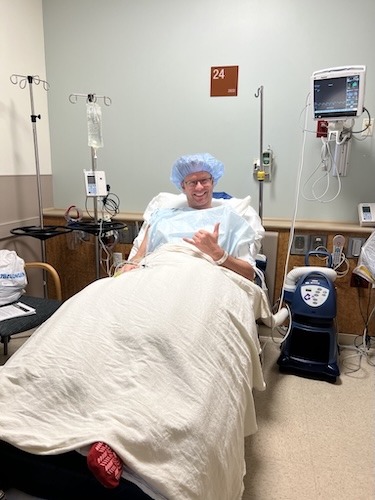
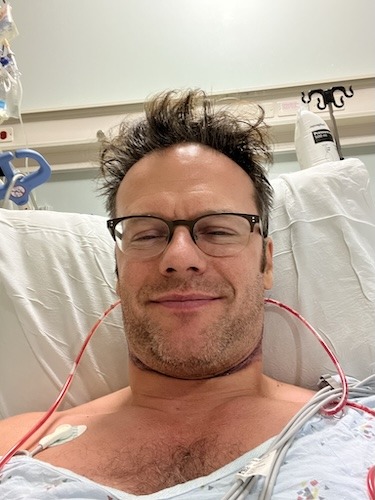
I got the surgery. It was so far at the back of my tongue that they only got a 1-millimeter perimeter instead of the three that they wanted. After that, they did the neck dissection to remove a bunch of the lymph nodes. They analyzed the pathology and saw that it hadn’t spread. It was just in the one node right there, and then the rest was clear. So they just removed those nodes as a precaution. On the other side, where the tongue tumor was this side, the tongue cancer was on my left. On the right side, they still opened me up and only took one.
Then they saw no sign of cancer there, nothing. So they were like, “Good, we don’t have to take any more on this side, just a bunch there.” After that, in the pathology report, my oncologist sat down with me, and I said, “Listen, if you were in my shoes right now, would you get chemotherapy?” She said, “You’re 43 years old. You’re young. Let’s do everything we can so this never comes back. Yes, I would get chemo in your position.” I was like, “Okay, let’s do that.”
I went to the radiation therapist and said the same thing. He was the first one to say, “I don’t want to do radiation if we don’t need to. I don’t want to overtreat for something we don’t need.” But he said, “For you in your position, you’re again, you’re young. We don’t want this to come back. If we do this, it won’t come back, or the odds are it won’t come back are very high.” I was like, “Okay, let’s do radiation and chemo,” even though I didn’t want to do any. I was hoping for just the surgery.
Radiation and chemotherapy schedule, and side effects
I started chemo and radiation at the same time. Radiation started four weeks after, and everything started at once. I did radiation five times a week, Monday through Friday, where I’d go, and I’d sit down. The hardest part — radiation is fine, you know, the cream and everything. The hardest part was losing my sense of taste. It was worst right before Thanksgiving.
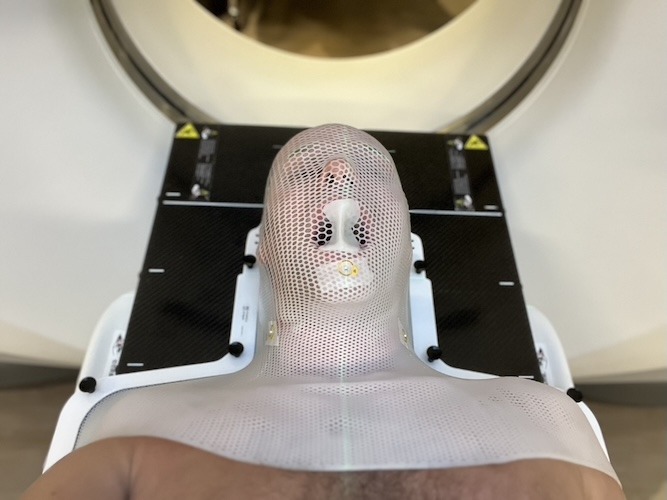
Radiation was five times a week, Monday through Friday. I would go to the treatment center and put the robe on, and I’d sit down and put that mask on. I had my mouth open for literally a minute and a half. “Okay, thanks, Nick. See you tomorrow.” 35 treatments, so seven weeks of that.
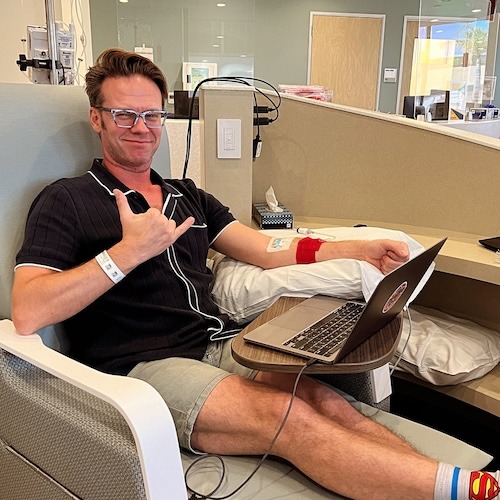
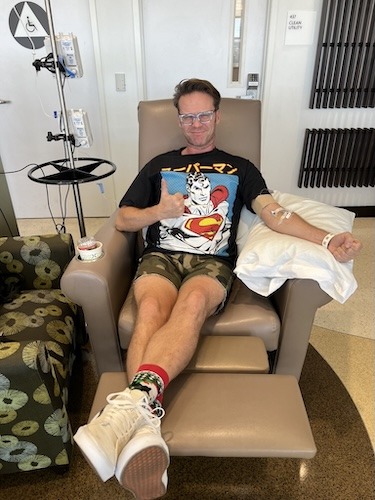
And then I did five weeks of chemotherapy. I took the nausea pills and everything. Chemo was fine, didn’t affect me at all. It was the radiation that did. My skin was a little tender, but I could have dealt with the pain or whatever. Not being able to taste my food, that was the worst. The worst.
Five months without taste
I lost my sense of taste. It didn’t come back, fully come back, until March. I started tasting salt again right before Valentine’s Day, like February. All of a sudden, I was eating, and right at the tip of my tongue, I was like, “I can taste salt. Oh my God, it’s coming back finally.” Then it slowly kind of crept back through the rest of my tongue. I was like, “Okay, great.”
The doctor said, “You’ll start hopefully tasting by Valentine’s Day, not fully, but you’ll have your taste coming back.” And yeah, it was early March when I could finally taste everything normally again, which is great.
Losing my sense of taste was the worst. I love food. I love fine dining. My wife says she loves cooking for me because every time I eat, I’m just like, “I love food.” For five months, it was literally just like eating cardboard, because I wasn’t tasting anything. I was forcing myself to eat because I didn’t want to lose too much weight. After all, if I lost beyond a certain point, then my doctor said, “We’ll have to do a G tube, a feeding tube.”
But I kept enough weight on that it was like, “Good, you don’t need a feeding tube.” So I had protein shakes. I’d just blend everything and eat it as much as I can. Even though it was steak and protein, it didn’t taste good. It smelled good. That’s the worst. I could smell it. “Oh, it smells so good,” but I could not taste it. It was so awful.
How much of my tongue was removed
I had a tiny tumor at the base of my tongue, right back there, really far back. It was so small. It literally was like, “Yeah, we don’t need to do reconstruction. There’s nothing, no need to graft.” It’s literally a tiny little corner of my tongue on the side. So I was lucky with that.
There was actually never a time in my head where I was like, “Oh, I’m going to have to lose my tongue or part of it or relearn to talk or anything.” They said, “It’s small.” They never said anything else. They just said, “It’s very small, we’ll literally just cut it out. There’s your tongue. It’s a tiny percentage. It’s nothing.”
So I’m very lucky that way because I’ve seen and heard of people who had to have reconstructive surgery. I’ve met people who have speech impediments because of the loss of their tongue, where they’re not able to fully talk. There’s an artist I follow on Instagram who literally has no tongue. Beautiful artist. She talks and uses subtitles, but you can kind of understand her after a bit.
Again, doing what I do, it was very lucky to hear, “We caught it so early. It’s a small tumor. It’s not going to affect your speech.” I was like, “Okay, great. Thank God, knock on wood.” I mean, what if I start having to perform and not being able to enunciate and talk in the same way? It would have been really hard.
Recovery, speech therapy, and voice exercises
So after surgery, for four weeks, nothing happened. They wanted me to heal before radiation and chemo started. For those four weeks, literally, it was exercises, stretching as much as I could. It was still very tender, but I started just stretching a bit of the skin on my neck and doing my exercises. During that time, I also saw a speech pathologist or a therapist. It was mostly about exercises for swallowing, moving the tongue around to re-strengthen it if anything needed to be re-strengthened.
Again, I was very lucky. It was a very small incision of the tumor that was there. The exercises were pulling my tongue out and so on. Then, because of the bruising or whatever the injury on my vocal cords from the anesthesia, it was exercises with a straw and pressure, vocalizing in a little jar of water with a straw. Being a singer, I knew what to do on my own. So it was very mild vocalizing, testing my range, going up and down, and stopping when my voice would crack or would feel like it hurt.
Part of that recovery took four weeks, and then the radiation and chemo started. I still did the exercises. I still went to see the therapist, did my stretches, grabbed my tongue, pushing it up to the top of the roof of my mouth, down, sideways, seeing where the weaknesses were, and growing on that, doing swallowing exercises. I kept focusing on that and kept doing it. When my wife did all her surgeries, her ACL/MCL repairs, her physical therapists were like, “Do this once a day or twice a day.” She did it three to four times a day to get stronger faster. So I kind of had that mindset.
It was not just, “Do it once and that’s it.” It was, “I’ll do it before breakfast, lunch, and dinner. Do it as much as I can without overexerting or injuring it.”
My comeback: Returning to the stage after tongue cancer
It’s been great. The first time I got back on stage, we did our two-person show in New York with my wife.
A lot of people came to support. It was really great to have a “welcome back,” especially after being off for seven or eight months. I came back when my voice wasn’t fully there. I was still able to sing. I was performing again. I was super skinny, and I didn’t look healthy. My mom was like, “Your skin was gray. You didn’t look healthy.” “Thanks, Mom.” But now I’m back to my dad bod. It’s good. I got my dad bod.
It was amazing to be able to come back and perform and have a “homecoming.” Now it feels like we’re back with a vengeance. Not to have a chip on my shoulder, but it’s like, now also, we’re not getting younger. I’m not thinking this way, but what if it comes back and I have to take some time off again in the future? So it’s like, “Let’s get everything we want to get done and be aggressive about it and perform and push and really hit the ground running.” So it’s great.
We’re performing a lot in Palm Springs. We’re going to San Francisco at the end of the month. We perform all over in New York and keep getting calls, and we share our story and we share our struggles. I want to do more and perform at galas and fundraisers for cancer research. We just want to keep sharing and keep performing as much as we can and sharing and inspiring. Our stories are amazing.
How we weave my tongue cancer story into our two-person show
Basically, there’s a moment where we grab some stools, we sit at the edge of the stage, and talk about things, especially our struggles. That leads us into some inspiring songs that we sing. Kind of the format of our shows: we sing a song, and then we introduce ourselves and talk about where we’re from and our journey.
Our shows are usually anywhere from 60 to 90 minutes. It’s a long time for my wife and me to be up on stage. So we really get candid, and we start chatting about who we are. A lot of people in the audience have never seen us before, have never seen us perform. So we really start getting personal and talking about where we’re from, what we’ve done. Then literally it’s just like, “Hey, so if you don’t know us, the last two years we’ve had some mountains to climb. We’ve had some roller coaster rides.” Then my wife mentions her knee surgery, how she got injured, and how it affected her. Then I go and, on my end, I kind of say what happened.
I say, “A couple of years ago, I was driving, and I started feeling like there was a tickle at the back of my throat. I saw a doctor, and I was diagnosed with squamous cell carcinoma. I had tongue cancer surgery,” and I talk a bit about recovery quickly. We basically say, “At the end of the day, always listen to your body.” We talk about, “Don’t be scared to go see your doctor and focus on the light at the end of the tunnel, no matter what the diagnosis. Focus on the recovery, stay positive.” And singing and dancing help.
Our mission: Helping people feel less alone through song and story
That’s what we love to do. People see our show, and they say it’s the best show they’ve seen. They leave feeling inspired and just happy because it’s escapism. It really is. There’s so much going on in the world, and we don’t know what struggles people are going through. So we just love to share our story to inspire and to say, “Hey, you know what, it’s okay. It’s okay to feel how you feel, but also it’s okay to be able to escape and just be entertained and forget about it for a second.”
Healing is not just focusing and being angry or always saying, “Woe is me,” and “Why did this happen to me?” Those questions won’t help. Focusing on the problem or saying, “Why did this happen to me? Why me?” is not going to help. What helps is focusing on healing and on saying, “What will make me feel better?” So that’s what we love to do with our show. We love to provide entertainment, to have people be like, “Hey, you know what, let’s just go hear this story, hear some great songs, see some great tap dancing, be inspired, see this couple who are having so much fun on stage, no matter what struggles they went through, no matter what things life threw at them. Here they are still doing what they love to do and sharing that passion with people around.”
We just love doing that. Whatever everyone’s going through, we don’t know. So they can come here, forget their troubles, come on, get happy, and then just share that experience and know that there are other people around going through other stuff and it’s okay, and it’ll get better.
This interview has been edited for clarity and length. The views and opinions expressed in this interview do not necessarily reflect those of The Patient Story. This content does not replace professional medical advice.
Inspired by Nicolas’s story?
Share your story, too!
Hear from people living with head and neck cancer
Real experiences with diagnosis, treatment choices, side effects, and life beyond head and neck cancer — in their own words.


Leave a Reply