
From Nighttime Chest Rattle to Boston Marathon: Roy’s KRAS+ Non-Small Cell Lung Cancer Story
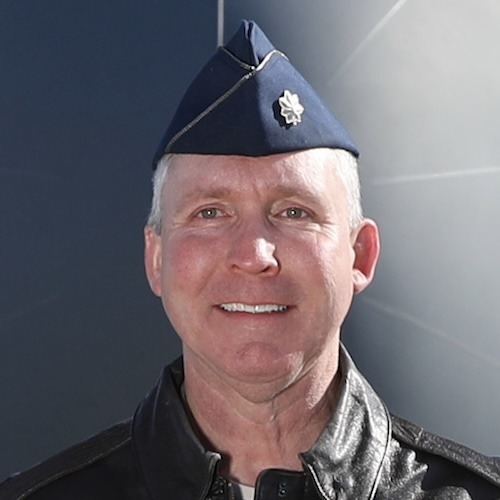
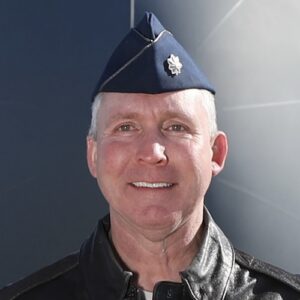
When Roy first noticed a faint rattle in his chest at night, non-small cell lung cancer was nowhere on his radar. He was 49, a non-smoker, had completed a 21‑and‑a‑half‑year Air Force career, and was busy working as a commercial pilot, running, and traveling. The X‑rays initially looked like pneumonia, and without classic warning signs like coughing, coughing up blood, or shortness of breath, there didn’t seem to be a reason for alarm. Looking back, he realizes that the subtle rattle was mucus from an adenocarcinoma with mucinous features, quietly growing in his right lower lobe.
Interviewed by: Nikki Murphy
Edited by: Chris Sanchez
About a year to a year and a half later, an annual checkup and repeat X‑ray finally raised red flags. A CT scan revealed a primary tumor with two satellite nodules, and a bronchoscopy confirmed stage 2B non-small cell lung cancer (adenocarcinoma with mucinous features) and, later, a KRAS G12D mutation. Roy remembers taking the life‑changing phone call on speaker with his wife, hearing the words, “It is lung cancer,” and immediately wondering whether his upcoming 50th birthday would be his last. He describes those early days as devastating, full of unknowns about staging, mutations, and what the future might hold.
Further testing brought a measure of relief. A PET scan showed that the cancer had stayed isolated in his right lower lobe. Moreover, his oncologist described the cancer as indolent and slow‑growing. That meant Roy was a strong candidate for surgery. He underwent a video‑assisted right lower lobectomy using a da Vinci robot, followed by four rounds of cisplatin‑based adjuvant chemotherapy and then adjuvant immunotherapy that had just been FDA‑approved for his type of non‑small cell lung cancer. The chemo felt like a “wrecking ball.” The immunotherapy led to autoimmune issues, including dry mouth from salivary gland damage and vitiligo, that forced him to stop the drug early.
Despite those challenges, Roy calls that March 2021 day “life‑changing for the better.” Lung cancer pushed him to prioritize diet, nutrition, and exercise, and even led to the incidental discovery of mild coronary artery disease that is now being monitored. Today, after going from five‑minute walks to completing his fifth marathon in Boston, he wants other people with non-small cell lung cancer, especially nonsmokers like him, to know that a diagnosis is not an ending. With medical care, self‑advocacy, and a mindset of “just keep showing up,” he believes life can become bigger, healthier, and more grateful than before.
Watch Roy’s video or browse the edited transcript of his interview below for more on his story.
- Subtle symptoms like a nighttime chest rattle can be early signs of stage 2B non‑small cell lung cancer, even without classic symptoms like coughing or shortness of breath.
- A stage 2B lung cancer diagnosis as a nonsmoker can still be treatable and localized, and imaging and biomarker testing (like finding a KRAS G12D mutation) help guide surgery, chemotherapy, and immunotherapy decisions.
- Treatments such as lobectomy, cisplatin‑based chemotherapy, and immunotherapy can be physically and emotionally demanding, but they may significantly reduce the risk of recurrence.
- Medical news rarely improves with time, so listening to your body, seeking second opinions, and getting symptoms checked quickly are essential acts of self‑advocacy.
- Roy describes how he transformed from fear and stigma to gratitude and purpose: finding “silver linings” in lung cancer, improving his lifestyle, and going from five‑minute walks to running marathons.
- Managing long‑term scanxiety by focusing on what he can control helps Roy keep living fully, reminding himself not to “invent bad news” and to let gratitude, not cancer, have the last word.
Roy’s Diagnosis Facts
- Name: Roy B.
- Age at Diagnosis:
- 49
- Diagnosis:
- Non-Small Cell Lung Cancer (NSCLC) (Adenocarcinoma of the Lung with Mucinous Features)
- Staging:
- Stage 2B
- Mutation:
- KRAS G12D
- Symptom:
- Nighttime chest rattle when lying prone
- Treatments:
- Surgery: VATS (video-assisted thoracoscopic surgery) lobectomy
- Chemotherapy: cisplatin
- Immunotherapy
This interview has been edited for clarity and length. This is not medical advice. Please consult with your healthcare provider to make informed treatment decisions. The views and opinions expressed in this interview do not necessarily reflect those of The Patient Story.
- Roy’s Diagnosis Facts
- Introduction
- My early non-small cell lung cancer symptom: A nighttime chest rattle
- Hearing “You have lung cancer”: The life‑changing phone call
- KRAS G12D mutation and biomarker testing
- My right lower lobectomy through video‑assisted thoracic surgery (VATS): Surgery and recovery
- Clear margins and starting adjuvant chemotherapy
- Adjuvant immunotherapy: A newly approved option and tough choices
- Scan schedule and scanxiety after my non-small cell lung cancer treatment
- Finding the silver lining: Lung cancer and heart disease detection
- Running after my lobectomy: From five‑minute walks to running the Boston Marathon
- Life after treatment: Breathing, exercise, and thriving with one less lobe
- My biggest message: Lung cancer is not the end
- Why I’m sharing my lung cancer story now
- Hear from people living with KRAS+ non-small cell lung cancer
Introduction
Hi, I’m Roy. I was diagnosed with non-small cell lung cancer, adenocarcinoma with mucinous features, in March of 2021.
My life before my non-small cell lung cancer diagnosis: Military service and commercial flying
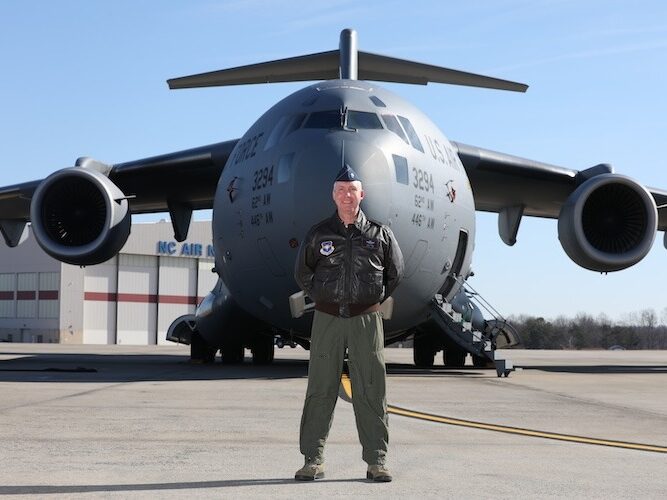
I tried to live a somewhat healthy lifestyle. I was on active duty in the Air Force at the time, served a full 21.5 years, and retired from the Air Force. And then I say I failed at retirement because my wife put me back to work, and I parlayed my Air Force job into the commercial airline job I do now. So I was just busy flying, running, traveling, and the like.
My early non-small cell lung cancer symptom: A nighttime chest rattle
The first symptom that I remember would be when I would lie prone in bed at night. Occasionally, I would get a little rattle in my chest when I would breathe. Almost like I was congested or had a cold, but I knew I wasn’t sick. Maybe I had just run a 5K that day, maybe I did a workout on the stationary bike. But in the evenings, I’d have this little rattle, and that would be the only thing I thought was strange.
So finally I decided to go get that checked out, and they did an X-ray. There was something on the X-ray that looked to them like pneumonia, like I was recovering from pneumonia. Then they wanted to rule out tuberculosis. They were watching me recover, and they gave me a sputum test, all those things.
I had no other symptoms that you sometimes get with the stages of lung cancer: the coughing, the coughing up blood, the shortness of breath, any pains in the shoulders, and those sorts of things. I didn’t have any of those symptoms.
Looking back: Subtle signs of lung cancer
I definitely was experiencing symptoms. Once it all made sense, once they had the diagnosis of non-small cell lung cancer, that adenocarcinoma with the mucinous feature, what was rattling was the extra mucus in my lungs from that tumor. We all have a lot of mucus lining the lungs anyway, to filter and help the particulates that we breathe. But I had extra mucus because of that tumor, and so that’s what it was.
But it took a while, which is part of the reason why I wanted to share my story. No one seemed to be alarmed because I was 49 at the time. I was about to turn 50. I was a nonsmoker with no family history, not knowing that lung cancer is not just a smoker’s disease, and being so young that no one seemed alarmed by it. So, I think timeline‑wise, I went about a year to a year and a half before I went back to address it again.
Annual checkup, repeat x-ray, and CT scan
The symptoms stayed the same, just occasionally having that rattle again. Finally, I was at an annual checkup, and I wanted to mention this again, and they did another X-ray. Then it looked bigger than in the previous X-ray. So they wanted to do a CT scan.
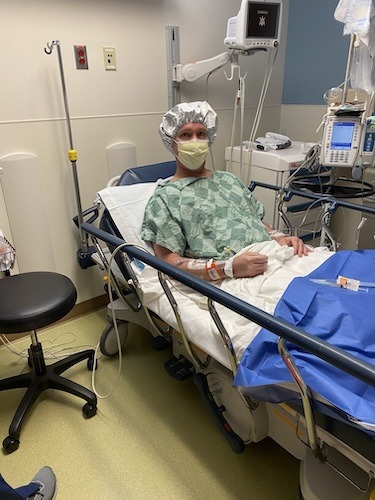
Once they did the CT scan and they saw what the images produced, there were two satellite nodules in there that they didn’t see on the X-ray. Everyone seemed to be very alarmed at that point. Then things started to happen rapidly as far as getting me in for a bronchoscopy to go down and get tissue out of my lung so they could biopsy that.
Once I got that official diagnosis, I think it came in on March 8th of 2021. Then I turned 50 on March 12th of 2021. Things were moving very, very rapidly as far as getting the lobectomy done and starting chemo.
What a bronchoscopy is like for non-small cell lung cancer diagnosis
I did not realize how involved the procedure could be. Sometimes they can go in on the side with a needle and get the tissue and things they need to test for. There is a small chance of a collapsed lung in that situation, and due to my job, they were trying to make sure they didn’t collapse my lungs. So they thought a bronchoscopy would be better.
They put you under, you’re sedated, and then it goes all the way down into the lung. They have a computer screen with a little map of where they’re going to go and how they’re going to get there. It’s really very interesting how all that works. But anyway, they get down there, they grab the tissue, they pull it up, and then you wake up, and you go home, and you wait while it gets tested.
I’ve heard of some patients receiving news from emails and things like that. I actually did receive a phone call from my pulmonologist with not good news, devastating news. When you receive that initial diagnosis, at least for me, I had no background knowledge of lung cancer. I didn’t know what that meant. I didn’t know if it meant that this birthday coming up in a few days was going to be the last birthday that I celebrate, or if I even get to celebrate, or if I make it six months. There are so many unknowns at that point, because the type of cancer you have makes a big difference, the small cell versus the non‑small cell. I was just trying to figure that piece out.
So it’s just devastating in the beginning. But that’s why I wanted to share my story. If you get that news, it doesn’t mean all hope is lost. You can do a little bit of research and background, and forge a path forward from there.
Hearing “You have lung cancer”: The life‑changing phone call
My wife and I were upstairs, and I got the phone call, put it on speaker, and he just said, “Roy, I’m sorry, I’ve got some bad news.” He goes, “It did come back adenocarcinoma with mucinous features. So it is lung cancer.”
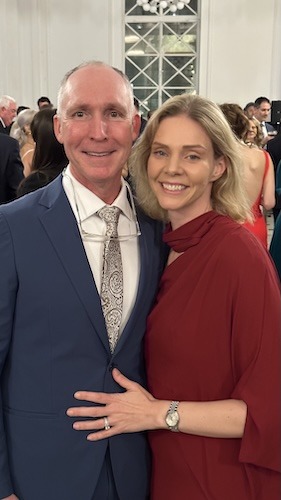
I’m just looking at my wife, and she immediately hugs me, and I’m kind of speechless for a moment, not sure what to say because it’s just something you’re not expecting. It was a day that changed my life forever, and for sure, and for the better — for the better. So keep that in mind. It changed my life for the better. I didn’t know it at the time, but that’s the way I found out.
Then I thanked the pulmonologist for letting me know and for the phone call. After that, of course, we started making phone calls to the oncology department in our local area.
Staging and a PET scan, and relief that the lung cancer had not spread
There was further testing. That’s the other unknown. When you get that, it’s like, “How far advanced am I? What type of mutation do I have?” There are so many unknowns when you get that initial word that you are positive for lung cancer.
I got scheduled right away for a PET scan to determine if it had metastasized. Luckily for me, it was residing in my right lower lobe. It was growing, and there were two satellite nodules, but according to my oncologist, I had an indolent, very slow‑growing cancer. That was to my benefit, especially with the time that had elapsed from that first X-ray to the time when I actually got the diagnosis, thank goodness, because that’s a lot of time for cancer to metastasize to lymph nodes or elsewhere.
Lung cancer is notorious for going to the brain first; there’s a high percentage of it going to the brain. So I was very, very lucky in that regard that it stayed isolated in that right lower lobe.
KRAS G12D mutation and biomarker testing
Genetic testing came later. I can’t remember the exact date, but I just remember that as the process continued forward, my oncologist told me I had the KRAS G12D mutation. So that was the type that I had.
Grounded from flying: The impact on my career as a commercial pilot
It did sideline me. At the time, it seemed devastating to me, but looking back on it now, it’s okay because it gave me time to really focus on getting better. With my particular job being a commercial pilot, obviously, I’m not going to go fly airplanes. So it took me out of my job for two and a half years, and when I came back, I was even stronger than I was before. I needed that time for obvious reasons before I could get cleared by the FAA to fly again.
Flying with undiagnosed non-small cell lung cancer symptoms
Typically, at a cruising altitude, we’re going to be at the higher elevations inside the flight deck and the airplane. We’re going to be sitting at around 6,500 to 7,700 feet sometimes inside the airplane. But I never noticed a difference. I never had any symptoms other than once in a while, that little rattle at night, lying prone. That was my only symptom.
I’m really, really glad that I finally got that looked at, because if not, it would have eventually metastasized and turned a lot worse. That’s another reason why I wanted to share this — to make sure that people, at the first sign of anything wrong, remember, you know your body better than anyone else. Don’t wait. Medical news, I’ve learned, does not typically get better over time. You want to face it head‑on and go get checked out the moment you notice something that’s not right with your body.
Choosing a cancer care team and getting second opinions
I did get multiple opinions. I was seen at the Veterans Administration because of my retired Air Force career. I was also on the burn pit registry. I had been around a lot of burn pits in Afghanistan and Iraq, so everyone thinks that something environmental may have set this off.
But I have nothing but praise for the VA. I had excellent care. They sent me for care in the community. I went to Novant Presbyterian Hospital, downtown Charlotte, and had one of the best surgeons I think I could ever have, Dr. Kraut — amazing. Then, with my oncology team at Novant Cancer Institute, just an amazing team. Dr. Brownley — she’s been my oncologist the whole time — an amazing oncologist, amazing nurses and infusion nurses, the whole works. I’ve had very positive experiences with my medical care, thank goodness, through the whole process. I just wanted to share that piece because it is positive.
They scheduled everything for me and then got that second opinion from another doctor. Actually, that was a surgeon, because they wanted to find out if I would be a good candidate for surgery. That was the whole process of going, “Am I a good candidate?” We had two different doctors saying, “Yes, you’re a perfect candidate. With your age, you’re healthy, it’s isolated in the right lower lobe, let’s get that lobe out, let’s get that cancer out.” Then that led to my adjuvant chemo, immunotherapy, and the rest of the treatment.
My right lower lobectomy through video‑assisted thoracic surgery (VATS): Surgery and recovery
The lobectomy takes a little time to get over. It’s a pretty serious surgery. Obviously, you’re going in and taking out part of your lung, but the body is resilient, and it really does heal a lot faster than I anticipated.
I had the diagnosis in March. I had the lobectomy in April, and I started chemo in May of 2021, so it all kind of rolled together.
My lobectomy was performed via VATS, the video‑assisted thoracic surgery, with the robot arms. I’m very thankful that we had that technology available, the da Vinci robot. That helped me recover a lot faster than doing what they call a thoracotomy, where they basically open you up completely.
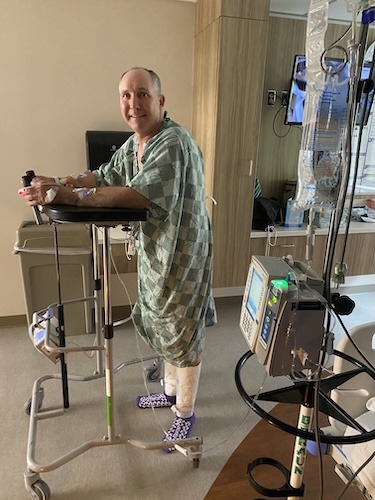
I was in the hospital for four days, recovering from the lobectomy. Then I was allowed to go home after the fourth day, and spent my time for the next four weeks just recovering at home. I did end up having what they call a pleural effusion, where I had some buildup in there, so I had to go back to the hospital one additional time to get that drained. They go in with the needle in the back and drain that excess fluid off. After that, things felt a lot better again, and that went away. I did not have that issue again, which was good.
Then, just slowly, the breathing, shortness of breath — but each day they give you a device that they want you to use to breathe in and out of, and they want you walking around and using your lungs. So that’s what I did, and I just slowly got better, following what the doctors wanted me to do.
Clear margins and starting adjuvant chemotherapy
I was very fortunate again that my margins were good after they took the lung out and tested everything. All the margins were good on that. The recommendation was to go to the next phase, which they call adjuvant chemotherapy, to clean up anything that may have been released microscopically during the surgery. It’s kind of mopping up anything that may have been released.
I did four rounds of chemotherapy with a drug called cisplatin, and there was an additional drug that pairs with it. It’s a brutal chemotherapy drug that’s been around, I think, since the 70s. It’s been around for a very long time. It goes in like a wrecking ball. It’s not targeted therapy at all; it just doesn’t know which cells it’s attacking. But it’s cumulative.
The first one didn’t seem too bad. The second round got a little bit worse. The third round got a little bit worse. By the fourth round, I’m glad it was only four rounds. I’m not even sure I could do a fifth, to be honest. The fourth round is like what you see in the movies, where you’re standing up, throwing up in the shower, and things like that, where you’re just really sick. You’re like, “Okay, yeah, the cumulative effects have taken hold.”
But I’m so glad that I was able to do that particular drug because of where I’m at now, and giving me the best chance of my cancer not coming back. My understanding is they won’t give it to patients 65 or older or somewhere in there; they’ll give a different drug called carboplatin because cisplatin is just so hard on the body. They’re both good drugs, but I’m glad that I was able to stick with the treatment that my oncologist recommended for me.
Adjuvant immunotherapy: A newly approved option and tough choices
I was very lucky to be able to do the immunotherapy drug. There were about four things, if I remember correctly — the genes and the checking of the boxes for my particular type of cancer. This particular immunotherapy drug had just been FDA-approved. With me coming off the chemo within a month, my oncologist said, “Hey, this thing has just been FDA approved, and I want to start you on it. I recommend that you do it.”
I was kind of gearing back to get my life going back to how it was before, and then knowing it was going to be another year. I chatted with my wife, and I said, “At the end, if I don’t do this immunotherapy drug and my cancer comes back, I will question myself. Did I make the right decision? Why would I not do everything in my power at the time to make sure that I did every drug available to me to help make sure that my cancer stays in remission?” So, long story short, I decided to go ahead and do the immunotherapy drug.
Immunotherapy side effects: Drying up my salivary glands, and vitiligo
It was supposed to be 12 months of treatment. I think I made it about eight months before I had to come off the drug due to some autoimmune responses that I had. It dried up my salivary glands. It was like you’re at the dental office with the cotton balls in your mouth. I didn’t realize how much we need saliva in our mouths. I had to get special toothpaste because everything burned my mouth. I didn’t have any saliva.
It gave me vitiligo, which you can see, but I’m fair‑skinned, so it doesn’t present as much as maybe a dark complexion would, but I have vitiligo all over my body now. It started attacking the melanin in my skin — an autoimmune response — but it’s just cosmetic and a very small price to pay to have the benefits of firing up the immune system to target bad cells that could be cancerous. My salivary glands all returned to normal slowly after I came off the drug.
Stopping the immunotherapy early: Balancing goals and side effects
I was a little afraid. I’m kind of a goal‑oriented guy. I’m like, “This is supposed to be for 12 months, and I’ve got to get those 12 months in.” I really wanted to complete the full course of treatment. I think with the vitiligo, if it were only the vitiligo, I would have stayed on it.
But when my oncologist was recommending coming off at that point because the autoimmune responses were getting stronger, and with that salivary gland issue, she said, “You’ve got the bulk of it. You’re not missing many treatments.” I didn’t want to come off it because I wanted to finish the full course of treatment to give myself what I felt like was the best chance of that drug being successful. But at the same time, there’s a balance with the other parts of your body and with the drug.
I felt like I hit the sweet spot after the discussion with my oncologist. In the end, I was okay with it because I really didn’t want to do permanent damage.
Scan schedule and scanxiety after my non-small cell lung cancer treatment
Once I finished that, they were going to monitor me. I think I was set up on a three‑ to four‑month schedule for a little while for the CT scans, then went to a six‑month schedule, then I went to a yearly schedule. I’m still on the yearly right now. I’m going to see what happens now that I’ve hit the five‑year mark.
There’s a little apprehension when you go in for those because you never know. You’re like, “Oh gosh, am I going to have some new nodule, or is something coming back?” But thank goodness I have not had any symptoms or any CT scans that showed anything bad. So that’s good.
Finding the silver lining: Lung cancer and heart disease detection
If I’m being completely honest with myself and thinking back through all of this over the last five years, I’m trying to say now — which sounds a bit crazy — that lung cancer probably saved my life. For one, not that I was living really unhealthily, but I’m living a much healthier lifestyle now. After you have that health scare, diet, nutrition, and exercise are at the forefront of everything that I do.
But having lung cancer with all the CT scans of my chest, it did find something ancillary, which was coronary artery disease, which runs in my family. It’s all mild, non‑obstructive. I’m 55 now, but my understanding is that when that atherosclerosis process starts, you might not have symptoms until you actually have a heart attack. Maybe you’re in your mid‑ to late‑60s, maybe you’re in your early 70s. We hear all the time of people just falling over in their chair or walking up a flight of steps and collapsing, and having a heart attack. I don’t have to worry about that now because we’re monitoring mine.
I’m doing everything I can do to stop or slow that process, and it’s genetics for me. When it gets to a certain point, we can do what needs to be done, whether that be a stent or some other course of treatment that will hopefully not end in a heart attack for me.
That’s why I brought my little sign. We keep this up in the house, where both my wife and I try to find the silver lining in everything. I think there are positives that you can find even if you’re going through something devastating. There’s always a way to look at things in a positive light. For me, in my particular situation, the lung cancer has me on a much healthier path, and also found the start of the atherosclerosis and the heart disease path that I would expect to be on anyway, but it would have been a guessing game had I not had lung cancer.
Stigma, statistics, and the education gap about lung cancer
Looking back for me, I think it’s an educational piece that was missing. I think we grow up being taught that lung cancer is a smoker’s disease. I felt the need to always say “lung cancer as a nonsmoker.” I would always throw in the “nonsmoker.” I always felt like there was a stigma associated with it or that I was being judged for having lung cancer, and I don’t think that’s how you should feel.
After looking at some of the stats and the research, I did not realize how prevalent lung cancer was and how many new cases there are each year, over 200,000 each year. I didn’t realize the higher propensity for women to get lung cancer. I think it’s 1 in 5; it’s double the rate of breast cancer. I think the rates for men are about 1 in 12. Another stat I saw recently was that 80% of people who have lung cancer either have quit smoking or have never smoked. So it’s not just a smoker’s disease, and I’m learning that.
For me, in the beginning, it was a knowledge thing. I thought it was a death sentence as soon as I heard “lung cancer”. I didn’t realize that. What I wanted to do by sharing is hopefully help others realize that when you get that diagnosis, it doesn’t have to be the end.
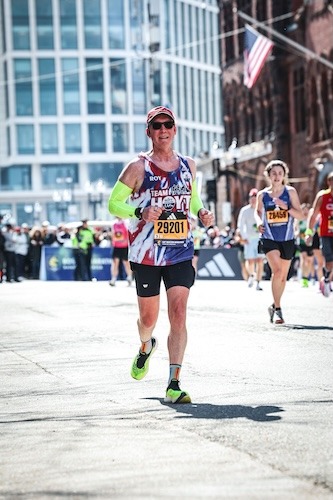
It can be a new beginning. You can thrive. You can be joyous. Life can be bigger and better than it was even before. I’m using the motto of “showing up,” and that’s what I’ve tried to do through my treatment over the last five years — just keep showing up every day. I went from five‑minute walks to just finishing my fifth marathon at the Boston Marathon this year. So, five‑minute walks to running over five marathons now, just by showing up each day.
Progress is not linear, but if you show up every day, you will increase your ability to do these exercises and to thrive. I realize everyone’s situation is different — mutations are different, ages are different, those sorts of things — but that’s where I’m coming from. My most difficult part was the educational piece, which you typically don’t know much about until it affects you. I’m hoping to get more information out there now for people.
Running after my lobectomy: From five‑minute walks to running the Boston Marathon
I was really happy with Boston. I set a personal best.
I ran one marathon 13 years ago just to check the box. In Boston, I beat that one by six minutes — before the lobectomy, before lung cancer and all that. I just beat it, and I’m 13 years older. So don’t give up. Keep showing up. You can thrive after a lung cancer diagnosis.
How non-small cell lung cancer changed me physically and emotionally
As I said earlier, my mindset went from just kind of plugging along to actually really thinking about being goal‑oriented, with diet, nutrition, and exercise at the forefront of everything that I do. I try to do things that are good and healthy for my body instead of things that are bad. That’s just the way I look at it now.
I don’t know if it’s because of the chemotherapy experience, putting that toxic medicine inside your body and dealing with that. You don’t really want to do that unless you have to; you don’t want to willingly do that. So I’m just trying to live a healthier lifestyle now.
Staying healthy on the road as a commercial pilot
It can be challenging because I have training plans. I have certain days that I need to do things. For instance, during my marathon training, I usually do my long run on a Sunday. If I’m flying all day on Sunday or if I’m in a very hot spot on Sunday, or I’m landing after a longer day, or what have you, maybe I’m not going to feel like running for two and a half hours.
But I found that you can make minor adjustments to your schedule and still find ways to get it done. So if it’s a Sunday long run and I can’t do it because of work, that’s okay. I’ll just move it to Monday, and I’ll get it done Monday. I’m still showing up, I’m still getting it done. Seeing those improvements along the way keeps you motivated to keep going.
Life after treatment: Breathing, exercise, and thriving with one less lobe
I was kind of guilty of this myself. I felt like once you have a lung cancer diagnosis, you would never be the same again. You’re not going to be able to breathe as well, and you’re not going to be able to do extended exercises. You’re going to be walking around gasping for air or with shortness of breath all the time, or having a tight chest all the time.
Now, I still have a tight chest sometimes. Some days I go running, and my chest is really tight; other days it’s not. But as I said, I keep showing up. For me, when you hear “lung cancer,” your mind automatically goes to “Your life is never going to be the same again,” and that doesn’t necessarily have to be true.
If you want more information on that, you can always look to others online — people who have been through similar experiences as mine. They’re out there thriving, setting goals, breaking records, and enjoying life even though they had that diagnosis.
Managing scanxiety: Balancing hope and fear
I just try to sell myself on the idea: don’t invent bad news. When it’s not in my control, if the scan is going to show something that’s not good for me, I really, at this point, don’t have any control over that because I’m doing everything I can do to stay healthy.
I’ve tried to fake myself out and say, “Don’t worry about things you have zero control over. Worry about being there and going to your scan and being on time and talking to your doctor, and then just see what the results are.” Over the last five years, the apprehension and anxiety with these scans have been a lot better for me, going in with that mindset and realizing that whatever the scan shows, we will deal with it. We’ve dealt with it before, and we’ll deal with it again.
I don’t have control over that, so I’m not going to let that permeate every thought that I have and put me in a bad place. I want to think about and worry about things where I can make decisions and have some control, versus the ones I can’t.
My biggest message: Lung cancer is not the end
The biggest message is to realize that your life is going to change, yes, but it doesn’t have to be all bad. I’ve seen everybody from patients like myself who have had lobectomies and have been cancer‑free to people living with stage 4 and hiking through mountains and running and still having a great life, even though they’re currently going through lung cancer.
I don’t want people to think that life is the end. It can definitely be a new beginning. It was for me, and it has been for other people that I’ve connected with online. It’s been a new beginning for them as well.
So take that initial information, and then educate yourself, go through your treatments, and do everything you can to help make yourself better and stronger. Realize one of the sayings I use is that cancer didn’t get the last word for me — gratitude did. If you come at it from that angle — let gratitude win — you’ll be better for your experiences in life. It can be a new beginning.
Self‑advocacy for men: Listen to your body and don’t delay
When you’re in your 20s and 30s, you’re invincible, right? You’re usually healthy. You haven’t had anything go wrong, so when you do have something, you’re just like, “I’ll just blow that off.” Particularly for flyers and the Air Force in particular, we don’t want to be grounded, so you work through things more.
But as we age, I tell them we’re all going to have something that goes wrong in our bodies. That’s the natural part of aging. You have something that’s going to go wrong, and you have to listen to your body. Again, bad news in the medical community doesn’t get better with time. You have to face it and make those appointments, even if it’s not convenient for you. You’ve got to take care of yourself first and make sure that you’re listening to your body, and just go in and get things checked out. It’s imperative.
Returning to the cockpit: Flying again after non-small cell lung cancer
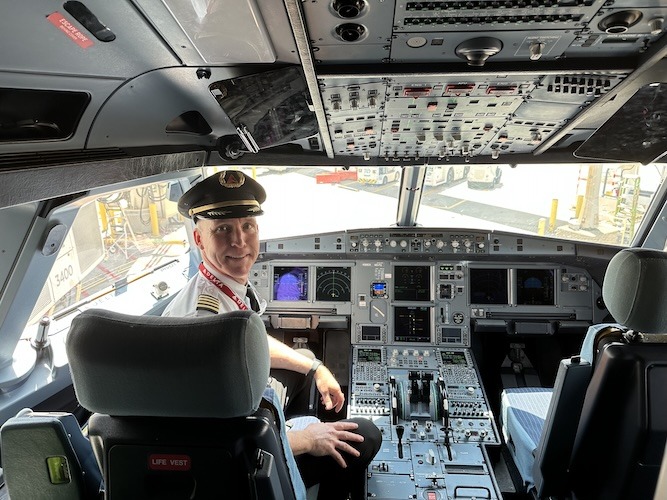
It was wonderful. I was already retired from the military, but with my commercial job, I was taking pictures of myself in the airport, going back to training, and I was very excited. I think I took a picture of myself sitting in the simulator for the first time after two and a half years to get back into the flying game.
For me, I’m like a little kid around airplanes. I have always been that way since I was age 13. It was really great to get back to my professional job, being cancer‑free, being back stronger and better than I was. It was bittersweet.
Why I’m sharing my lung cancer story now
The reason why I’m sharing is to make sure that people realize you want to get checked out immediately when something goes wrong. Lung cancer doesn’t have to be a death sentence. You can be stronger and better at the end of it. If you keep that positive attitude and remember that movement beats stillness — especially with anything involving the lungs — and come at it from an angle of, “This is going to set me on a different path. I’m going to be bigger and stronger than I was,” and go forth and interact with others.
I regret somewhat keeping my story silent for five years. When I initially went out there, I didn’t really have the knowledge, and it was a little scary reading some of the things online, so I just kind of turned it off. Coming back five years later, I’ve embraced it now, and I’m sharing the story. I already have people contacting me with similar issues and things, so I’m able to share, which really makes me feel good that I’m able to potentially help someone as they navigate their course of treatment and things like that. So it’s been good.
Inspired by Roy’s story?
Share your story, too!
Hear from people living with KRAS+ non-small cell lung cancer
Real experiences with diagnosis, treatment choices, side effects, and life beyond KRAS-positive non-small cell lung cancer — in their own words.



Leave a Reply