
Sian’s Neuroendocrine Carcinoma Diagnosis Was Followed by HER2+ Breast Cancer and a Recurrence
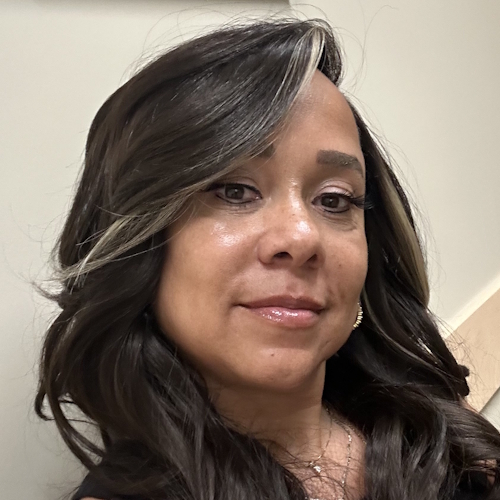
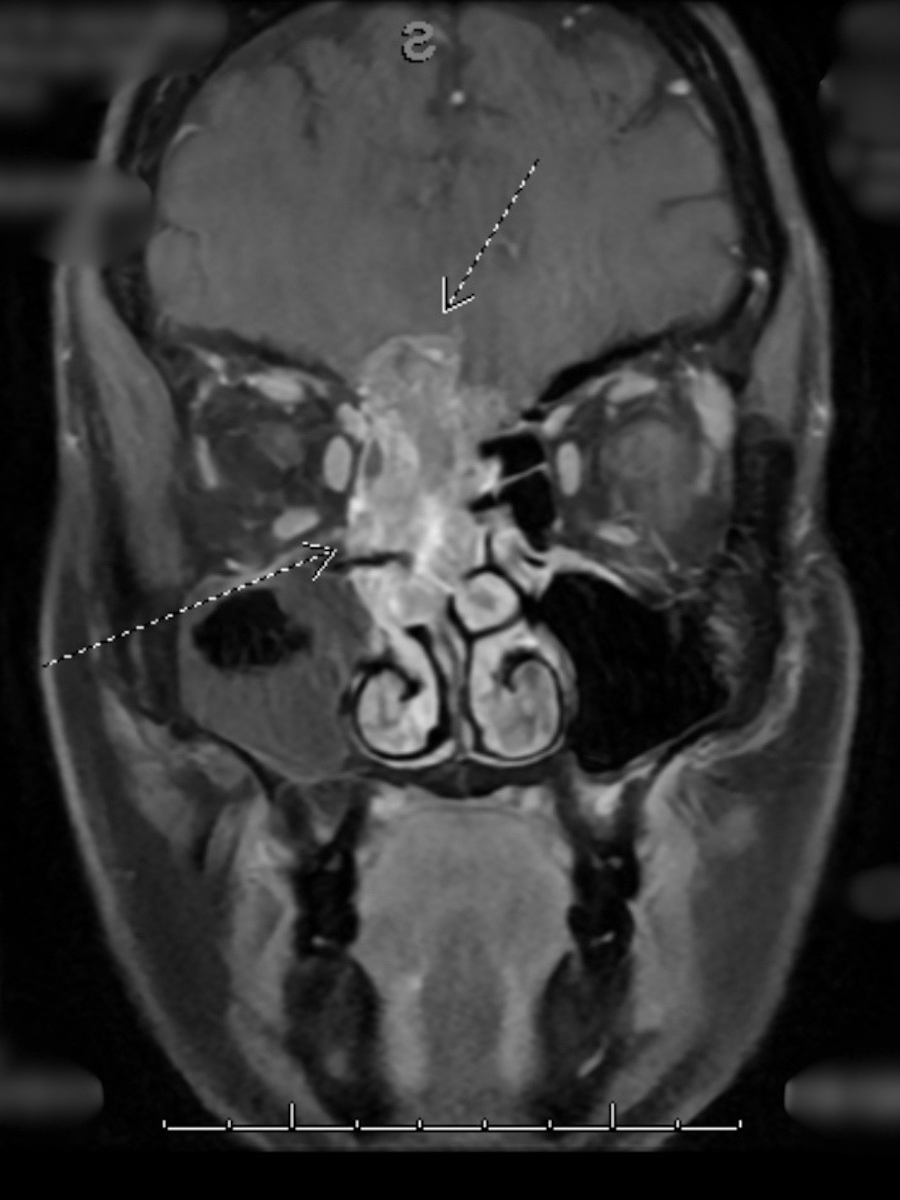
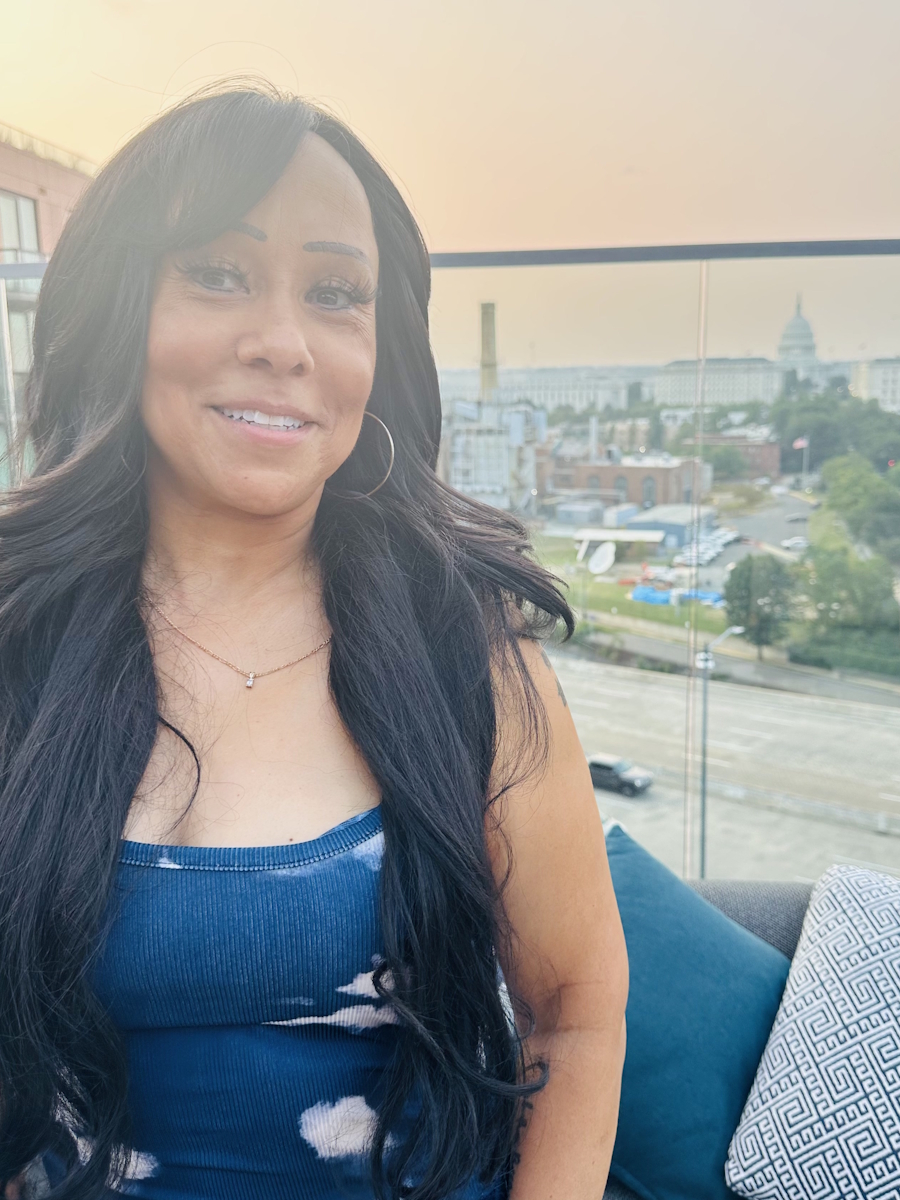
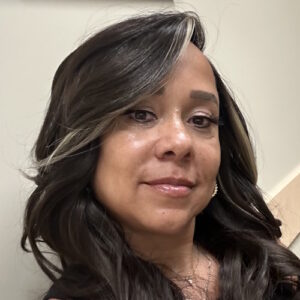
Sian was living a healthy, active life when she started having a persistent sinus infection. Two rounds of antibiotics didn’t get rid of the congestion, and she even completely lost her sense of smell. A referral to an ENT and a biopsy revealed that she had a rare stage 4 cancer: neuroendocrine carcinoma. The tumor was located in the area between her eyes and had begun to press against her brain.
Interviewed by: Tory Midkiff
Edited by: Katrina Villareal
Sian underwent six months of treatment, including four months of chemotherapy, followed by two months of concurrent chemo and radiation therapy. By June 2024, imaging showed no evidence of disease (NED).
A routine mammogram ordered during her post-treatment follow-up then revealed a small tumor in her right breast, and a biopsy confirmed stage 1A HER2-positive breast cancer. Sian had surgery to remove the tumor and nearby lymph nodes, completed a year of chemotherapy, underwent targeted therapy, and finished 10 days of radiation therapy, all while continuing to monitor for any recurrence of her neuroendocrine carcinoma.
In February 2025, one week after completing breast cancer treatment, she received a call about a potential recurrence of the neuroendocrine carcinoma. A 12-hour surgery successfully removed the tumor endoscopically, while also repairing damage to her skull base, nasal tissue, and dura caused by her prior treatment. Sian is now waiting on her first post-surgical MRI results and navigating life with three-month scan surveillance, a new granddaughter on the way, a cancer support group she founded, and a daily practice of gratitude.
Watch Sian’s video or read the edited transcript of her interview to find out more about her story:
- A persistent symptom turned out to be stage 4 cancer. Sian’s first sign that something was wrong was losing her sense of smell. When two rounds of antibiotics didn’t resolve what seemed like a sinus infection, she pushed further. That persistence led to the biopsy that caught a rare cancer of stage 4 neuroendocrine carcinoma near her brain.
- Facing a second cancer diagnosis, Sian made a conscious choice to reframe the moment. When the HER2 breast cancer diagnosis came in while she was packing to move across the country, she let herself cry and then chose to change the story she was telling herself. Having survived stage 4, she decided stage 1A would not define or derail her.
- Advocating for yourself with your surgical team can change the outcome. When surgeons told Sian there was a high probability she would lose her left eye, she broke down in the hallway. Then she went back and told them clearly that she wanted to keep it. Her insistence became part of the surgical plan. They removed the tumor entirely through endoscopic surgery, and she kept her eye.
- Living through multiple diagnoses revealed strength she didn’t know she had. Sian had always thought of herself as emotionally fragile. Three cancers, two major chemotherapy regimens, a 12-hour surgery, and years of uncertainty later, she describes herself as balanced. Her transformation is something that she now carries into every conversation she has with newly diagnosed patients in online support groups.
Sian’s Diagnosis Facts
- Name: Sian M.
- Diagnoses:
- Neuroendocrine Carcinoma
- Breast Cancer
- Staging:
- Stage 4 (Neuroendocrine Carcinoma)
- Stage 1A (Breast Cancer)
- Biomarker:
- HER2 (Breast Cancer)
- Symptoms:
- Neuroendocrine Carcinoma:
- Loss of smell
- Persistent congestion
- Breast Cancer:
- None; detected via routine mammogram
- Neuroendocrine Carcinoma:
- Treatments:
- Neuroendocrine Carcinoma:
- Surgeries: tumor removal, endoscopic skull base surgery with dura and tissue repair
- Chemotherapy: cisplatin and etoposide
- Radiation therapy
- Breast Cancer:
- Surgeries: lymph node and tumor removal
- Chemotherapy
- Targeted therapy: trastuzumab and hyaluronidase-oysk (Hylecta)
- Radiation therapy
- Neuroendocrine Carcinoma:

This is not medical advice. Please consult with your healthcare provider to make informed treatment decisions.
- Sian’s Diagnosis Facts
- I’m Sian, and I had three cancer diagnoses in three years
- Why I went to the doctor and the moment I knew something was wrong
- Hearing the word cancer for the first time
- My treatment plan: Cisplatin, etoposide, and six months that changed everything
- Discovering breast cancer through a routine mammogram
- Facing a rare cancer recurrence and being told I might lose my eye
- Finding my purpose and building community for other cancer patients
- What I kept from my parents and what I learned about family support
- Hear from people living with rare cancers
I’m Sian, and I had three cancer diagnoses in three years
Since 2023, I’ve had three cancer diagnoses. The first was neuroendocrine carcinoma, a rare form of cancer. I had a tumor sitting in the orbit area of my nose, between my eyes, and it started to touch my brain. I was diagnosed on September 20, 2023.
Six months later, after I was cleared from that, I was diagnosed with HER2-positive breast cancer in December 2024. In the same month that I finished treatment for breast cancer, I had a follow-up MRI for neuroendocrine carcinoma, where they found a potential recurrence. The tumor was a lot smaller and closer to the side of my eye, probably about the size of a dime. I got that diagnosis a week after finishing breast cancer treatment. That was February 2026.
Why I went to the doctor and the moment I knew something was wrong
Initially, I thought I had a sinus infection because I had a lot of mucus. I went to my primary care physician, who tried two different antibiotics, but neither worked. Then I realized that I had lost my sense of smell. I kept thinking that something was wrong with the products I was buying. But when I asked my daughter if she could smell something and she said yes, that’s when I realized that I couldn’t smell anything.
After that realization and after the second antibiotic didn’t work, I was referred to an ENT (otolaryngologist) who did a biopsy. My heart dropped because I could see it in his face. It probably took about two to two-and-a-half weeks to get the results. Because it’s rare, I think they had to send it to two different pathologists. I got the call on September 20th from my ENT and he said, “You have neuroendocrine carcinoma. I don’t know how to treat this. It’s rare. I’m going to refer you to some doctors at UC Health in Denver.”
Hearing the word cancer for the first time
Everything blurred. I couldn’t believe it. I thought, “This is not possible. I’m a healthy person. I go to the gym. How is it possible that I got a rare form of cancer? How does this happen?”
I went through a bunch of emotions. I was numb and in disbelief at first. When I got off the phone with my ENT, I literally sat and stared into space for a minute. Then I cried. I reached out to my daughter and told her, and then my brother. I was terrified.
Then I went through a phase of, “I’m not doing chemo. I’m not doing radiation. I’m not going to go through this.” I started reading a ton of books about my options. But I was absolutely terrified. I was pretty certain I was going to die.
Navigating a rare diagnosis and finding limited resources
I didn’t find much information about neuroendocrine carcinoma. The books I read at the time of my initial diagnosis were more focused on chemotherapy and radiation treatment. But because my tumor was between my eyes and near the brain, that’s what made it so rare. My focus was: Do I do chemo? Do I do radiation? Am I going to survive this? It was stage 4.
Finding out my cancer stage and standing frozen at the hospital window
The staging came later. My initial ENT referred me to an ENT surgeon at UC Health. I went to him and he did a scope. Then I had an MRI done soon after. That was around the time they gave me the staging.
I was mortified. When I left after meeting with both of them, I literally had to stand still. I was looking out a hospital window and couldn’t say anything. I didn’t want to move. I couldn’t move. I felt like I was literally going to drop, so I stood there for a little while and tried to contain myself.
I walked to the car in tears. I had to sit in the car for a little bit before I could go home. Then I thought that I was for sure going to die. I’m stage 4. How could I possibly survive this?
My treatment plan: Cisplatin, etoposide, and six months that changed everything
They gave me two options. I could do surgery, or I could do chemotherapy first to shrink the tumor, and then do surgery afterward. They told me that I would be doing six months of treatment: four months of chemotherapy and two months of chemo and radiation therapy together. The chemo regimen, which was a combination of cisplatin and etoposide, was very strong. Every time I went to get my chemo treatments, I would usually be knocked out for about seven days afterward.
Because of where my tumor was, there was a lymph node that was slightly affected. The radiation was targeting that area for about two months. I completely lost my sense of taste. I couldn’t taste anything, so I was drinking shakes to keep myself from losing weight. But at the end of treatment, I lost about 30 pounds.
They foresaw that I wouldn’t need surgery, because the chemo and the radiation combined would remove it, which it did.
Ringing the bell and in disbelief that I made it
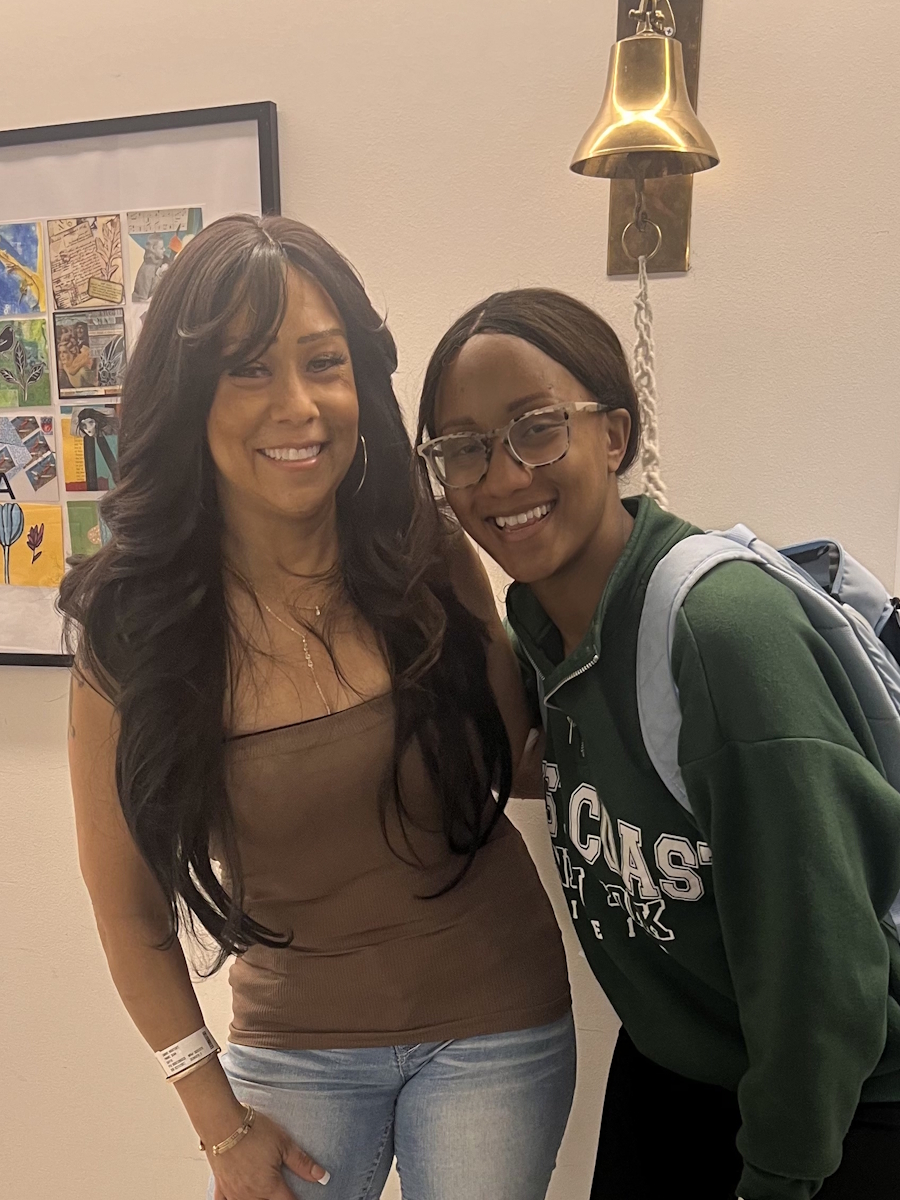
I waited to ring the bell until my radiation therapy was completely done. It was very emotional. My brother and my niece came; my daughter was on FaceTime because she lives in Maryland. All the staff came out and clapped for me. I cried and was in disbelief that I reached that point. I didn’t think I would make it.
Discovering breast cancer through a routine mammogram
In June 2024, I had an MRI and they said, “Okay, it’s gone. There’s no evidence of cancer.” I thought, “Great!” But they said, “You haven’t done a mammogram while you were on treatment and it’s been a while since you’ve done one.”
They found a very, very small tumor, ductal carcinoma in situ (DCIS), in the right breast. They thought they could take it out and it wouldn’t be an issue. But when they removed it and performed a biopsy, they found it was HER2-positive. I had to have a second surgery to remove some of my lymph nodes under my arm to ensure the cancer hadn’t spread, which it hadn’t. It was stage 1A.
Hearing cancer for the second time and changing the narrative
I got the call while my daughter was visiting me in Denver. I decided to move to Maryland to be closer to her, so she was helping me pack. I got the call in the middle of packing. My daughter wasn’t at the house at that time, as she had gone to visit some friends.
I sat down and cried. I thought, “You have got to be kidding me. This is not possible. I just got through stage 4 neuroendocrine carcinoma and now I have breast cancer? Can I have a little bit of time cancer-free? I can’t move. This is too much.”
Then something clicked. I changed the narrative. I said, “I just beat stage 4 cancer. This is stage 1A, and I will beat it.” It came from a little bit of anger, honestly, but instead of feeling sorry for myself, I said, “Forget this. I’m not going to let cancer run my life.”
Undergoing breast cancer treatment: A year of chemotherapy, targeted therapy, and radiation therapy
Monitoring for the neuroendocrine carcinoma was ongoing simultaneously and still is. Although they removed the tumor and the lymph nodes that weren’t infected, I had to go through a year of chemotherapy. Then the last four months of that year, I had targeted therapy (trastuzumab and hyaluronidase-oysk), which was an injection. The chemo for the breast cancer honestly was like a walk in the park compared to what I dealt with during the cisplatin and etoposide treatments. Then I did about 10 days of radiation therapy, which was also very easy to tolerate.
I finished treatment in February 2026. I thought, “Okay, this is absolutely it. I’m good. I survived two cancers.”
Then my ENT called me and said, “I think we have a recurrence.” That pretty much did it for me. At that moment, I was devastated and terrified.
Facing a rare cancer recurrence and being told I might lose my eye
They wanted to do another scope and MRI to better determine where the tumor was. They recommended surgery. At one point, they told me there was a high probability that I would lose my left eye, which devastated me. I broke down in the hallway of the doctor’s office and almost couldn’t stand up.
Then I started researching the different surgical options. I realized that if I didn’t want them to remove my eye, I could tell them that. I could say, “Continue with the surgery, but I don’t want you removing my eye.” They also told me that if they couldn’t remove the tumor endoscopically, they would have to either make an incision above my eye or do a transcranial incision, which completely freaked me out.
I told them, “Okay, we can go ahead with the surgery. If you’ve got to make an incision above the eye, transcranial, go for it. But I want to keep my eye.”
Undergoing a 12-hour surgery and waking up with my eye
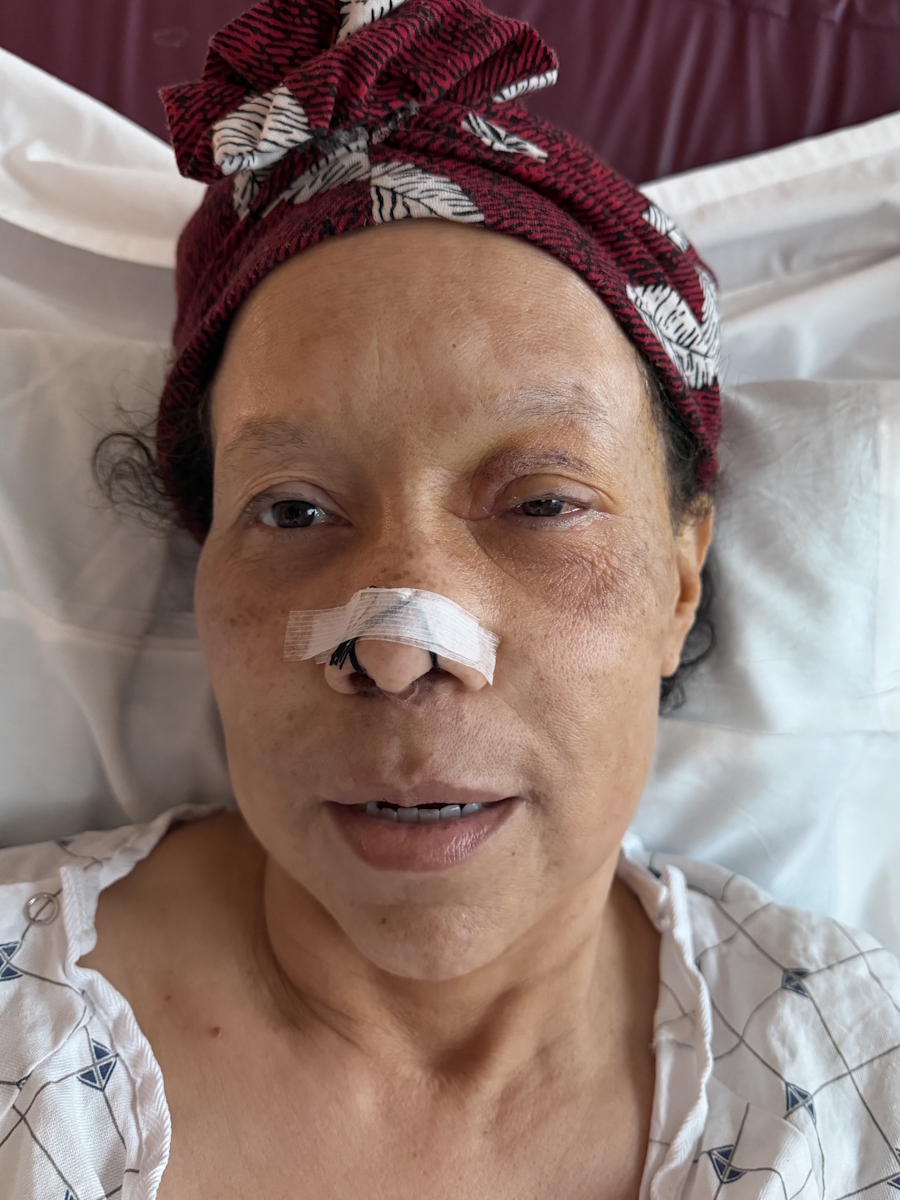
On March 24, 2026, I went into a 12-hour surgery. They were able to remove the tumor endoscopically. Prior to surgery, they had seen a lot of deterioration in the surrounding area from the chemo and radiation I had previously received, so they repaired the tissue in my left nostril and the skull base in that area, and took some tissue from my stomach and repaired the dura, which had also been damaged. Then I was in the ICU for seven days.
I had an MRI on June 16, 2026, which was my first since the surgery. I’m still waiting for the results as they are apparently short-staffed with radiologists. I have been stressed out, but I’m trying to manifest some positivity.
Scanxiety and inner strength: Learning I was stronger than I knew
One thing I learned through all of these cancer diagnoses was that I had a lot of inner strength that I never thought I had. I always viewed myself as very emotionally fragile and now I feel like I’m very balanced. I take the time to exercise gratitude in any way that I can. That’s a big part of what I do between scans, as I have to do them now every three months.
I try to manifest, even speaking it, that I’m going to be okay. I have survived three cancers. I’m thriving. I’m going to the gym. I’m able to experience nature. I’m able to be with my family. My daughter and her husband are expecting a baby in a couple of weeks, so I’m going to meet my granddaughter. There are all of these wins, even though it’s been a traumatic three years. There are all these things in my life that I used to take for granted and am now incredibly grateful for. I try to focus on positivity between scans, even though it’s still stressful.
Finding my purpose and building community for other cancer patients
I’ve started doing advocacy work. I’m still in the early stages. I also created a cancer support group called Stronger Together. I host virtual happy hour every Thursday from 6 to 7 p.m., where people can talk about what they’ve been through. I can share my experience and offer support.
I’m also part of several Facebook groups focused on head and neck cancers and breast cancer. People join those groups to ask for support. I saw a post where someone asked, “I’m about to start chemo. What do I need to do to prepare?” Another one asked, “My cancer is spreading. Is there hope?” I try to respond to at least 10 a day. I don’t give any medical advice, but I try to let people know, “I survived three cancers. You can survive this too. Be positive. Manifest positive. Surround yourself with good energy.”
I feel like that’s my purpose now. I always wondered what my purpose was. But if cancer has done anything for me, it’s made me a better person. Now I have something to give back.
Living my life with gratitude every single day
It’s important to live life to the fullest and exercise gratitude every single day. When I get up in the morning, I thank the universe for another day, for the sun, for the rain, for the snow, whatever is happening, for my family, for my doctors, for the chemo, and for the radiation. Even though it was awful, I’m here because of those treatments and that’s incredibly important to me.
Before cancer, I probably focused on things that brought me negative energy. I definitely allowed people in my life who exuded negative energy. You never realize how much that can affect you to the point that it can make you physically ill. Now I’m very protective of my peace.
I have little reminders on my phone that pop up three times a day, saying, “Lead with love.” I’m focused on making sure that I’m exuding that and lifting my energy frequency. I’m enjoying every minute of every day. The beach is incredibly therapeutic for me. I love being able to sit there, watch the waves, and be in silence.
What I wish I could have heard on the day I was diagnosed
The very first thing that comes to mind is that I should have told myself, “You will survive. You can survive, and you’re stronger than you think.” Those would have been the things I would have said to myself.
What I kept from my parents and what I learned about family support
My mom had had a heart attack about six months before I got my first cancer diagnosis. She was 85 then. When I found out about my neuroendocrine carcinoma, I didn’t tell her or my dad initially. I thought, “If I tell them I have stage 4 cancer, I’m going to put my mom back in the hospital.” She was barely recovering. She had stents put in. I decided to tell my daughter, my brother, and a few close friends, which was incredibly difficult.
I told her for the first time about this cancer recently. But I have not told her the full severity of what the last three years have been. What I’ve learned from that is that I wish I had told her. Because if it was the other way around and it was my daughter, I would want to know, regardless of what I had been through.
I give myself a little bit of grace because I know I was protecting her. But it’s so important to have family support and to have people in your corner. They’re the ones who are going to be feeding you positive energy and nurturing you.
It happened at the worst time. Not that cancer happens at a good time, but it was the worst time. On top of navigating what I had heard, what I was going through, and what I was about to go through, I was also navigating my mom’s heart attack and what sharing my cancer diagnosis would have done to her.
Finally sharing the burden and the relief that came with it
I talked with my daughter and my brother. I realized that I was putting a lot of weight on them, expecting them to be the only ones who knew and not be able to share that with my parents. When I had the 12-hour surgery, my daughter told me afterward, “If something had happened, grandma and grandpa would have been so disappointed because you didn’t tell them. They would have been devastated.” At that point, I thought, “Wow. I need to take this burden off of her.” It felt great once I told my mom and dad.
This interview has been edited for clarity and length. The views and opinions expressed in this interview do not necessarily reflect those of The Patient Story. This content does not replace professional medical advice.
Inspired by Sian’s story?
Share your story, too!
Hear from people living with rare cancers
Real experiences with diagnosis, treatment choices, side effects, and life beyond a rare cancer — in their own words.
Leave a Reply